



The mole hanging photos dividing social media
For decades, mole catchers in the countryside have hung their carcasses on fences to be counted for payment and as evidence of their trapping prowess. But when hill walker Simon Lucas shared a photograph of the tradition on social media, he was unprepared for the ferocity of the response.

Secret son of Bee Gees star Maurice Gibb hits back at Lulu’s claims he was ‘conceived during their marriage’
THE secret son of late Bee Gees star Maurice Gibb has refuted singer Lulu’s claims that he was conceived during the time she was married to him.
Sixties icon Lulu told Louis Theroux on his latest podcast that she only recently learned Maurice had another son and that he might have been the product of a one-night stand during their marriage.
But Nick Endacott-Gibb, 57, insists he was conceived around two years before Lulu and Maurice’s romance began.
He told the Mirror: “I was born in April 1968, conceived in August 1967. Lulu and Maurice weren’t married until 1969, after what has been described for decades as a ‘whirlwind’ romance.
“Were you together with him, Lulu? Two years does not a whirlwind make. I’m as curious as she is about whether Maurice was with her at the time I was conceived. It was the summer of love, after all!”
Hove-based Nick was adopted from a children’s home at 18 months old by secretary Peggy and her chartered quantity surveyor husband David.
READ MORE ON THE BEE GEES


Nick’s biological mum is former music studio manager Patti Nolder, who he met for the first time in 2003 after uploading his details onto the Missing You database — a long-running message board style online community that helps reunite families.
Initially, she told him his dad was Chris Andrews, guitarist and vocalist of 60s psych-pop band The Fleur de Lys, but a DNA test confirmed this was not the case.
It was Patti’s sister who threw Maurice’s name into the mix and, after uploading his DNA to an ancestry website, he matched 100 per cent with Maurice’s other son Adam, who had uploaded his own DNA.
Further matches with cousins of the Gibb brothers followed and Nick struck up a close relationship with their older sister Lesley and her daughter Debbie, who live in New South Wales, Australia.
Nick never got the chance to meet Maurice before his death from a heart attack in 2003, but he said: “I’m sad he died before I got the chance to meet him, but his memory lives on in the songs.”
Lulu was married to Maurice for six years, with their relationship officially ending in 1975. They never had children together.
She admitted the news of Nick’s existence came as a complete surprise decades after their relationship ended.
Louis said: “You know, we’re not always our best selves and that Maurice, I think it’s openly acknowledged now, had a fling with Barbara Windsor while he was with you.”
Lulu admitted: “I think he’s got a son. It might have happened when we were married.”
She continued: “I just found out someone showed me something with a guy, and I can’t remember the year he impregnated this girl after a one-night stand, and she has a son who has had his genes taken.
“It’s proven he’s 100 per cent Maurice.”
A shocked Louis asked: “While he was with you?”
Lulu answered: “I didn’t do the math because it wasn’t that important.”
Louis replied: “Why isn’t it important?”
Lulu responded: “Today, c’est la vie.”
The Bee Gees are one of the most successful bands of all time, dominating the charts with a string of global hits.
From disco anthems like Stayin’ Alive and Night Fever to timeless ballads, the group sold over 200 million records worldwide and helped define an entire era of music.
He had two children — daughter Samantha and son Adam — with his second wife, Yvonne Spenceley.
Following her divorce, Lulu went on to date celebrity stylist John Frieda but the romance was rocked by a short-lived affair with David Bowie.
She continues to perform live, with shows lined up in the UK, including a major concert at London’s Royal Albert Hall in 2026.
As well as music, she’s been opening up about her life in recent years, releasing her memoir, If Only You Knew, and speaking candidly about her past struggles, including her battle with alcoholism and journey to sobriety.

Monday 23 March Pakistan Day in Pakistan
On March 23rd 1940, the Lahore Resolution was passed which rejected the concept of a United India and proposed the creation of an independent state for Muslims, even though it did not actually mention Pakistan at all.
The resolution paved the way for the creation of Pakistan on August 14th 1947, when Pakistan became the world’s first Islamic republic. August 14th is celebrated as a holiday – Independence Day.
To mark the resolution, the Minar-e-Pakistan (pictured above) was constructed during the 1960s on the site in Iqbal Park where the All-India Muslim League passed the Lahore Resolution

Bigger tax refunds touted by Trump will probably be spent on gas
WASHINGTON — The U.S. economy was supposed to start the year with a bang, fueled by a jump in tax refunds from President Trump’s tax cut legislation. But soaring gas prices are on track to eat up those refunds, leaving most Americans with little extra to spend.
“Next spring is projected to be the largest tax refund season of all time,” Trump boasted in a prime-time speech in December intended to address voter concerns about the economy and stubbornly high prices, though exaggerating the anticipated refunds.
But that was before the Iran war, which the U.S. and Israel began on Feb. 28. Oil and gas prices have skyrocketed since then, with the nationwide average price of gas reaching $3.94 Sunday, up more than a dollar from a month earlier.
Gas prices are likely to remain elevated for some time, even if the war ends soon, because shipping and production have been disrupted and will take time to recover. Economists now expect slower growth this spring and for the year, as dollars that are spent on gas are less likely to be used for restaurants, new clothes or entertainment.
Lower- and middle-income households are likely to be hit particularly hard, because they receive smaller refunds and spend a greater proportion of their earnings on gas.
“The energy shock is to going to hit those who have the least cushion,” said Alex Jacquez, chief of policy at the left-leaning Groundwork Collaborative and a former economist in the Biden White House. “And it doesn’t look like those tax refunds are going to be here to save them.”
Neale Mahoney, director of the Stanford Institute for Economic Policy Research, calculates that gas prices could peak in May at $4.36 a gallon, based on oil price forecasts by Goldman Sachs, followed by slow declines for the rest of the year. The notion that gas prices decline much more slowly than they rise is so ingrained among economists that they refer to it as the “rocket and feathers” phenomenon — rising like a rocket before falling like a feather.
In that scenario, the average household would pay $740 more in gas this year, nearly equal to the $748 increase in refunds that the Tax Foundation has estimated the average household will receive.
Through March 6, refunds have risen by much less than that, according to Internal Revenue Service data: They have averaged $3,676, up $352 from $3,324 in 2025. Still, average refunds could rise as more complex returns are filed.
Other estimates show similar impacts. Economists at Oxford Economics, a consulting firm, estimate that if gas prices average $3.70 a gallon all year, it will cost consumers about $70 billion — more than the $60 billion in increased tax refunds.
The gas price spike comes with many consumers already in a precarious position, particularly compared with 2022, when gas prices also soared because of Russia’s invasion of Ukraine. At that time, many households still had fattened bank accounts from COVID-19 pandemic-era stimulus payments and companies were hiring rapidly and sharply lifting pay to attract workers.
Now, hiring is nearly at a standstill and Americans’ saving rate has steadily fallen in the last few years as many households borrow more to sustain their spending.
“When you start looking across the perspective from a consumer side, you’re seeing people who have maxed out their credit cards, are using ‘buy now, pay later’ to purchase their groceries,” said Julie Margetta Morgan, president of the Century Foundation think tank. “They’re making it work for now, but that can fall apart quite quickly.”
The consequences are likely to worsen the “K-shaped” phenomenon in the U.S. economy, analysts said, in which higher-income households have fared better than lower-income households. The bottom 10% of earners spend nearly 4% of their incomes on gasoline, Pantheon Macroeconomics estimates, while the top 10% spend just 1.5%. The Trump tax breaks also benefited the wealthiest taxpayers most.
For now, most analysts still expect the U.S. economy to expand this year, even if more slowly, given the gas price shock. Higher gas prices will probably worsen inflation in the short run, and over time weaker spending will also slow growth.
American consumers and businesses have repeatedly shaken off shocks since the pandemic emergency — soaring inflation, rising interest rates, Trump’s tariffs — and continued to spend, defying concerns that the economy would tip into recession. Many economists note that the proportion of their incomes that Americans spend on gas and other energy has fallen significantly compared with a decade ago.
Data from the Bank of America Institute released Friday showed that spending on gas on the bank’s credit and debit cards shot 14.4% higher in the week ended March 14 compared with a year ago. Before the war, such spending was running 5% below the previous year, a benefit to consumers.
Spending on discretionary items — restaurants, electronics and travel — is still growing, the institute said, evidence of consumer resilience. But there is little sign it is accelerating, as many economists had hoped.
“The longer these gasoline prices persist, the more that will gradually sap consumer discretionary spending,” said David Tinsley, senior economist at the institute.
Other analysts expect growth will slow because of the war. Bernard Yaros and Michael Pearce, economists at Oxford Economics, forecast that the U.S. economy will grow just 1.9% this year, down from an earlier estimate of 2.5%.
“We had anticipated a lift in spending from a bumper tax refund season,” they wrote, “but the rise in gasoline prices, if sustained, would more than offset that boost.”
Rugaber writes for the Associated Press.

Match of the Day analysis: Elliot Anderson stars for Nottingham Forest
Kelly Cates, Joe Hart and Danny Murphy discuss why Nottingham Forest midfielder Elliot Anderson is “the favourite” to be in the starting XI for England in this summer’s World Cup.
WATCH MORE: Forest win sinks Tottenham closer to relegation danger
Available to UK users only.
Experts urge ‘strategic ambiguity’ in South Korea’s response

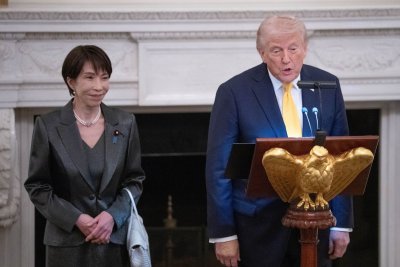
President Donald Trump (R) makes remarks as he stands with Prime Minster Sanae Takaichi of Japan during a dinner in the State Dining Room of the White House in Washington, DC, on Thursday, March 19, 2026. Earlier in the day, the President and Takeuchi exchanged views on Iran, energy, and issues in the Indo-Pacific region. Photo by Aaron Schwartz/UPI | License Photo
March 22 (Asia Today) — South Korea should maintain “strategic ambiguity” in responding to U.S. pressure over the Middle East crisis, experts said, as tensions surrounding Iran and the Strait of Hormuz intensify.
The call comes after Donald Trump urged allies including South Korea, Japan and European partners to play a greater role following U.S. and Israeli strikes on Iran, raising concerns in Seoul about balancing its alliance with Washington and broader diplomatic interests.
South Korean officials said they are taking a cautious approach and have not received formal requests from the United States regarding potential military deployment to the Strait of Hormuz.
The government is focusing on assessing the intent behind Trump’s remarks while weighing the risks of deeper involvement in the region.
The Strait of Hormuz, a critical global energy shipping route, has long been vulnerable to disruption. Analysts say any effort to secure maritime traffic would likely require multinational coordination rather than unilateral action.
Foreign ministers from the Group of Seven nations recently condemned Iran’s attacks on civilian infrastructure and said they are prepared to take steps to support global energy supplies, though the timing of any direct action remains unclear.
A Foreign Ministry official said stability in Middle Eastern shipping lanes is vital for South Korea and other major economies, noting that ensuring safe passage is a challenge that cannot be addressed by a single country.
Experts pointed to Japan’s approach under Sanae Takaichi as a potential model. Tokyo has prioritized its alliance with the United States while limiting direct military involvement, balancing energy security, international law and domestic public opinion.
Lee Ki-tae, a senior researcher at the Sejong Institute, said South Korea should similarly avoid automatic military intervention and instead preserve flexibility.
“Maintaining strategic ambiguity allows South Korea to uphold its alliance while avoiding immediate alignment with any one side,” he said.
Park Won-gon, a professor at Ewha Womans University, said logistical and political constraints also support a cautious stance. He noted that deploying naval forces would require parliamentary approval, a process that could take about two months.
He added that evolving and sometimes inconsistent messaging from Washington further underscores the need for careful deliberation.
— Reported by Asia Today; translated by UPI
© Asia Today. Unauthorized reproduction or redistribution prohibited.
Original Korean report: https://www.asiatoday.co.kr/kn/view.php?key=20260323010006558

The Trump Corollary: Imperialist Offensive and the Assault on Venezuela
Trump gathered loyal Latin American allies for a “Shield of the Americas” summit. (Archive)
The “Trump Corollary” to the Monroe Doctrine is a central feature of U.S. strategy designed to secure hegemony and limit Chinese and Russian influence in Latin America and the Caribbean. It does not, however, represent a decisive shift in Washington’s relations with the region. Although the corollary does not make this explicit in its formal statement, in practice it makes more evident what liberal rhetoric has long sought to mask: military and covert interventions aimed at preserving U.S. domination in the Western Hemisphere, undermining progressive movements and governments, and backing right-wing regimes. In this sense, it abandons even the pretense of respect for international law and human rights. In what follows we argue that the Trump Corollary constitutes not only an ideological and imperialist offensive against decolonial and multipolar currents in Latin America, but also a strategic project whose assault on Venezuela has broader geopolitical implications.
The ideological backdrop
Although Washington’s unrestrained militarism, which enjoys bipartisan support, is indeed cause for alarm, the erosion of even the pretense of commitment to liberal-democratic values, human rights, and international law did not begin with the Trump administration. The live-streamed Israeli genocide in Gaza, enabled and backed by the Biden administration, has made this difficult to deny. Moreover, it highlights how the U.S.-European axis has normalized impunity for systematic violence against non-combatants. This erosion of even its own professed liberal values has helped consolidate a political climate in which the Trump administration could intensify its offensives against Venezuela and Cuba and pursue a war of aggression against Iran.
This normalization of necropolitics can be better understood through the ideological logic used to justify it. We can make sense of this logic by distinguishing between two different tendencies within Western Eurocentric modernity. On the one hand is the myth of European supremacy, what Enrique Dussel calls the “developmentalist fallacy,” which has been used to justify colonization, with its racial hierarchy, since the invasion of Amerindia in 1492. On the other is a rational, emancipatory current rooted in ideas of community, equality, and liberty. As critical historians have shown, these emancipatory traditions did not originate solely in Europe; they were also present among some Indigenous peoples, such as the Haudenosaunee Confederacy, whose Great Law of Peace established participatory forms of government centuries before European contact. Historically, these ideals were never extended fully to colonized peoples, nor to people of color within the metropole. This contradiction persists. Washington’s recent rhetoric justifying attacks on Venezuela, Cuba, and Iran expresses the colonial, violent side of modernity while discarding its emancipatory, humanist dimensions.
Civilizational rhetoric and the objectives of the Trump Corollary
It is this myth of European supremacy, often expressed with religious fervor even when stripped of its humanist facade, that serves as the ideological justification for the offensives launched this year. This worldview was crystallized in a speech delivered by Secretary of State Marco Rubio at the 62nd Munich Security Conference on February 14, 2026. That speech anticipated the inauguration in Miami, on March 7, of Shield of the Americas, a new U.S. partnership with right-wing allies in Latin America and the Caribbean, to be led by former Secretary of DHS Kristi Noem. Rubio, in effect, called for a rejection of historical accountability, stating:
We do not want our allies to be shackled by guilt and shame. We want allies who are proud of their culture and of their heritage, who understand that we are heirs to the same great and noble civilization, and who, together with us, are willing and able to defend it. . . . The great Western empires had entered into terminal decline, accelerated by godless communist revolutions and by anti-colonial uprisings that would transform the world and drape the red hammer and sickle across vast swaths of the map in the years to come.
This rhetoric illustrates Rubio’s disdain for anti-colonial struggles that commenced not with the Cold War and communism, but at the very start of the European invasions of Amerindia. Indeed, the “guilt and shame” surrounding the subjugation and exploitation of Indigenous peoples was expressed as early as the sixteenth century, when Bartolomé de Las Casas documented and denounced the tortures inflicted upon them in the name of a European civilizing mission. The same civilizational appeal surfaced again at the Miami summit, where Secretary of Defense Pete Hegseth called upon members of the Shield to defend their shared cultures and, in particular, “Western Christian civilization.” By casting anti-colonialism as an insidious force, Rubio’s rhetoric functions to blunt decolonial critiques of the Trump Corollary.
Despite Washington’s zeal for exporting Western ideals, decolonizing currents in Latin America’s political, economic, social, and cultural life have taken deep root. Since the 1960s, Marxism, along with liberation theology, liberation philosophy, and Indigenous struggles for self-governance, have helped articulate ethical and political critiques of colonial domination, racial hierarchy, and dependent forms of development from the perspective of the Global South. Indigenous cosmovisions and the philosophy of buen vivir have influenced constitutional and political life in the region and beyond. For example, the United Nations now recognizes the concept of the rights of nature as central to sustainable development. The recognition of the rights of Mother Earth has also been incorporated into the constitutions of both Bolivia and Ecuador, and the plurality of Indigenous and Afro-descendent nationalities is recognized in several Latin American constitutions.
The Trump Corollary emerges in direct opposition to these decolonial currents. It seeks to restore U.S. primacy over the hemisphere’s governance and resources by curtailing the region’s expanding commercial and diplomatic ties with China, Russia, and other non-Western partners. To advance this agenda, Washington has worked to destabilize or overthrow progressive governments while favoring right-wing administrations more aligned with its interests, in some cases through intimidation, electoral interference, or direct military intervention. Much like the Alliance for Progress, Operation Condor, and the invasion of Panama before it, this latest evolution of the Monroe Doctrine invokes the pretext of security to reassert Washington’s influence over hemispheric political and economic life while limiting the region’s turn toward greater autonomy. Yet that effort confronts a regional reality that Washington cannot easily reverse. Trade relations transcend political divisions in Latin America and the Caribbean. And in South America, China has become the principal trading partner for much of the subregion. This complicates Washington’s efforts to rein in Latin America’s turn toward multipolarity. China’s Third Policy Paper on Latin America and the Caribbean presents the region as an “essential force” in the move toward a multipolar world and economic globalization, and describes the bilateral relationship in terms of equality, mutual benefit, openness, and shared well-being. This stated approach stands in clear contrast to the Trump Corollary’s posture of coercion, Western supremacy, and geopolitical subordination. It is, in part, this regional turn toward multipolarity that the assault on Venezuela seeks to counter.
Venezuela: The central case
The violent reality of the Trump Corollary has been most clearly revealed in Venezuela. Washington’s campaign of deadly strikes against maritime vessels in the Caribbean, a series of extrajudicial killings that claimed the lives of more than 145 people, served as a prelude to the January 3 surprise aerial assault on Caracas, named Operation Absolute Resolve. The maritime victims included people from nations such as Colombia, Saint Lucia, Trinidad and Tobago, and Venezuela who were targeted without public evidence of narco-trafficking or due process. Operation Absolute Resolve itself claimed the lives of more than 120 people, including civilians and security forces, and culminated in the kidnapping of President Nicolás Maduro and First Lady Cilia Flores. In Venezuela, the Trump Corollary deploys military force, coercive diplomacy, and control over strategic resources. It also deals a blow to the Bolivarian cause by making an example of a state that has stood as the leading force of regional independence and integration for more than two decades.
Rather than moving, in the short term, to dismantle Chavista institutions, as many Venezuelan opposition hard-liners in Miami and Madrid expected, the Trump administration in the aftermath of Operation Absolute Resolve instead has resorted to “deal-making” with Acting President Delcy Rodríguez. The recognition of interim president Delcy Rodríguez as “the sole Head of State” of Venezuela might be part of an effort by the Trump administration to strip President Nicolás Maduro and First Lady Cilia Flores of the presidential immunity to which they are entitled. Despite Trump’s praise for a supposedly mutually beneficial relationship with the Chavista government, this is not a win-win situation. Acting President Rodríguez is attempting to balance Washington’s demands for unfettered access to the country’s natural resources with Venezuela’s own economic interests and the long-term survival of the Bolivarian Revolution. That coercive political context also affects the economic arrangements now taking shape in Venezuela.
As new economic agreements are being “negotiated,” major Venezuelan state assets previously frozen, seized, or placed beyond Caracas’s control remain unrecovered. Prior to Operation Absolute Resolve, the U.S. seized Venezuelan aircraft and targeted ships carrying Venezuelan oil that U.S. authorities said were involved in sanctions evasion. The most egregious case is that of Citgo, Venezuela’s most valuable foreign asset. Caracas has already lost real control over it, and U.S. courts are now overseeing proceedings that could permanently strip Venezuela of ownership to pay creditors.
More recently, a series of Trump administration officials have gone to Caracas to press for greater U.S. influence over Venezuela’s oil industry. They have also “negotiated” with the Chavista government to bring about legal reforms that will facilitate U.S. investment in the extraction of critical minerals and other natural resources. According to Venezuela Analysis (02/20/26), “The Trump administration is forcing all royalty, tax, and dividend payments from Venezuelan oil production [to] be paid into accounts managed by Washington.” For Venezuelan critics of U.S. intervention, these arrangements may result in a significant transfer of national wealth under pressure. Other observers argue that renewed investment could bring Venezuela badly needed revenues. In any case, there is no doubt that these economic arrangements are being carried out in a coercive context.
Regional extensions of the corollary
The offensive against Venezuela did not occur in isolation. It was soon followed by a strangling energy embargo on Cuba designed to provoke a humanitarian crisis to bring about “regime change.” After more than sixty-six years of U.S. embargo against Cuba, this latest escalation is intended not only to destabilize and isolate the island but also to shatter the morale of the forces of resistance throughout the region. At the same time, it has galvanized worldwide solidarity, despite the betrayals of governments that have succumbed to U.S. pressure to expel Cuban doctors and dismantle other forms of Cuban internationalist assistance. Meanwhile, the administration has been pressuring Mexico with the specter of unilateral military strikes against drug cartels, signaling a disregard for Mexico’s repeated insistence on its own sovereignty. In Colombia, Washington antagonized President Gustavo Petro with politically charged drug-trafficking allegations and threats of military intervention, a confrontational posture that later gave way to rapprochement after Petro met with Trump at the White House. In Honduras, the U.S. intervened to back the presidency of the right-wing candidate Nasry “Tito” Asfura who won the presidential election in December 2025 and took office on January 27.
The latest example of this interventionist regional posture was the U.S.-Ecuadorian military operation launched on March 3, which conducted bombings near the Colombian border in northeastern Ecuador, ostensibly aimed at narco-terrorists and illegal mining. In Ecuador, as in Peru, small-scale artisanal mining is often practiced within Indigenous communities living near mineral deposits and employs methods with a far lighter environmental impact than industrial-scale extraction. Whatever its stated purpose, the operation may have the effect of displacing artisanal mining and opening mineral-rich territory to large North American transnational corporations. In brief, by convening twelve compliant right-wing regional leaders in Miami, the Shield of the Americas summit serves to institutionalize Washington’s renewed drive toward regional hegemony. But the significance of this offensive is not only regional.
Geopolitical implications
The Trump Corollary has geopolitical importance because the recent offensive to consolidate U.S. hegemony in the Americas has served as a strategic prelude to the U.S.-Israeli war against Iran. The offensive in Venezuela not only stops Venezuelan crude from reaching Cuba, thereby sharpening the knife of the subsequent energy embargo, but also secures strategic leverage over the largest oil reserves in the world ahead of Iran’s restrictions on passage through the Strait of Hormuz. In this sense, Venezuela is not peripheral to the wider conflict, but central to it. This does not, however, mean that the Trump administration ever had a clear, coherent rationale for starting this war of aggression against Iran.
The ever-shifting rationale for the war was at first framed in terms of protecting demonstrators in Iran, then became an effort to overthrow the government, and has now dissolved into incoherence, with no consistent justification offered at all. In any case, the war may also carry broader geopolitical implications, insofar as prolonged disruption in Gulf oil exports would place pressure on China, whose energy needs depend heavily on Middle Eastern crude shipments. It is also beginning to generate visible political strains within NATO, as doubts about the direction of the war grow in Europe, with Spain as the clearest example. It has likewise raised concerns among some U.S. allies in the Gulf about the wisdom of continuing to host major U.S. bases.
Taken together, the shifting rationale for the war, the U.S.-Israeli callous disregard for civilian life and infrastructure, its mounting economic costs, and the danger that the conflict could spiral out of control and raise the specter of the possible deployment of nuclear weapons suggest that the decision to wage war on Iran was a profound miscalculation, one harmful not only to Iran and the wider region, but also to the people of the U.S. and the global economy. It also exhibits in stark relief the same colonial ideology that underlies the Trump Corollary. For these reasons, opposition to the war, as well as to the Trump Corollary, is growing both at home and abroad.
William Camacaro is a Venezuelan-American National Co-Coordinator in the Alliance for Global Justice. He was a co-founder of the Bolivarian Circle of New York “Alberto Lovera” and Senior Analyst for the Council on Hemispheric Affairs (COHA). He holds a Master’s Degree of Fine Arts and a Master’s Degree in Latin American Literature from City University of New York. William has published in the Monthly Review, Counterpunch, COHA, the Afro-America Magazine, Ecology, Orinoco Tribune and other venues. He has organized delegations to Ecuador, Bolivia and Venezuela. He has been a long-time activist for social justice in the United States, such as organizing protests against police brutality in NYC, for the independence of Puerto Rico, and for the freedom of political prisoners. William has also been a leader in defense of progressive governments and social movements in Latin America.
Frederick B. Mills, Ph.D., is professor of philosophy and a member of the Philosophy of Liberation Association and the American Philosophical Association. He has received awards for excellence in teaching and international outreach from Bowie State University. Mills has published articles on philosophy of mind, ethics and public policy, Descartes, Spinoza, Kant, Sartre, Merleau-Ponty, Mario Bencastro, Enrique Dussel as well as political analysis on contemporary Latin American politics. He has contributed articles to Counterpunch, the Council on Hemispheric Affairs, and other independent media.
The views expressed in this article are the author’s own and do not necessarily reflect those of the Venezuelanalysis editorial staff.
Source: Orinoco Tribune

Amazon MGM Studios’ ‘Project Hail Mary’ rockets to the top of the box office
The Ryan Gosling-led “Project Hail Mary” rocketed to the top of the box office this weekend, marking a big win for Amazon MGM Studios.
The film — which stars Gosling as a science teacher who embarks on a space mission to save humanity — hauled in $80.5 million in the U.S. and Canada, making it the biggest domestic debut of the year so far. Globally, “Project Hail Mary” brought in $140.9 million.
The movie is an adaptation of a novel by Andy Weir, author of “The Martian” — another successful book-to-screen adventure. The big opening weekend for “Project Hail Mary” is a boost for Amazon MGM Studios, which had heavily promoted the film as an example of the big blockbusters it could produce.
“We believe deeply in the Hail Mary, and it’s clear audiences do as well,” Kevin Wilson, head of domestic theatrical distribution for Amazon MGM Studios, said in a statement. “What we’re seeing in theaters —the energy, the exit scores, the word of mouth — is everything we believed this film would deliver.”
Walt Disney Co. and Pixar’s “Hoppers” came in second at the box office this weekend with a domestic total of $18 million. The original animated film has now garnered $120.4 million in the U.S. and Canada since it debuted in theaters earlier this month.
Indian action film “Dhurandhar The Revenge” came in third with $10 million, followed by Disney-owned Searchlight Pictures’ horror film “Ready or Not 2: Here I Come” and Universal Pictures’ romance “Reminders of Him” rounding out the top five.

Young immigrants face concerning conditions at Texas site, lawyers say
Nearly 600 immigrant children were held in a Texas family detention center in recent months without enough food, medical care or mental health services, as their time inside stretched beyond court-mandated limits, according to court documents.
Children and families held at the detention facility in Dilley, where 5-year-old Liam Conejo Ramos and his father were sent this year, also faced virus outbreaks and lasting lockdowns in December and January, although the total number of children held there has fallen in recent weeks, according to the attorney reports and site visits.
The case of Liam, a preschooler who was wearing a blue bunny hat and Spider-Man backpack when he was picked up in Minnesota by U.S. Immigration and Customs Enforcement agents, stoked protests over the Trump administration’s immigration crackdown, including among detainees who gathered and held up signs in the yard behind the Dilley facility’s chain-link fences.
Last week about 85 children remained detained at the Dilley facility, but concerning conditions continued, said Mishan Wroe, directing attorney at the National Center for Youth Law, who visited in mid-March. In early February, a legal advocate for the children observed about 280 children.
The filings Friday cited numerous poignant cases, including that of a 13-year-old girl held at Dilley who tried to take her own life after staff withheld prescribed antidepressants and denied her request to join her mother, as reported by the Associated Press. The government reported there had been “no placements on suicide watch,” according to the filing. The AP obtained Dilley facility discharge documents that described a “suicide attempt by cutting of wrist” and “self-harm.”
The filings were submitted in a lawsuit launched in 1985 that led to the creation in 1997 of court-ordered supervision of standards and eventually established a 20-day limit in custody. The Trump administration seeks to end the Flores settlement, as it is known.
“For years, the Flores consent decree has been a tool of the left that is antithetical to the law and wastes valuable U.S. taxpayer funded resources,” the Department of Homeland Security said in a statement. “Being in detention is a choice.”
Attorneys for detainees highlighted the government’s data showing longer custody times for immigrant children, and also cited worms in food and poor access to medical care or sufficient legal counsel as reported by families and monitors at federal facilities.
“Dilley remains a hellhole,” said Leecia Welch, the chief legal director at Children’s Rights, who visits the center regularly to ensure compliance. “Although the number of children has decreased, the suffering remains the same.”
The Homeland Security spokesperson said the Dilley facility is retrofitted for families, who receive basic necessities including adequate food and water while in detention, and the Trump administration is working to quickly deport detainees.
A report from U.S. Immigration and Customs Enforcement showed that about 595 immigrant children were held in custody for more than the 20-day limit in December and January, with some stretching into months, per the court filings.
“Approximately 265 of these children were detained for more than 50 days and a shocking 55 children were detained more than 100 days,” the filings state.
That is up from a previous government disclosure late last year that showed that from August to September, 400 children had been held at the Dilley facility beyond the 20-day limit. Homeland Security did not respond to questions seeking comment on the data.
Chief U.S. District Judge Dolly Gee of the Central District of California is scheduled to hold a hearing on the case later this month.
Burke writes for the Associated Press.

Jim Michaelian, Long Beach Grand Prix founder and president, dies at 83
Jim Michaelian, the race car driver who helped launch the annual Acura Grand Prix of Long Beach, has died. He was 83.
The Grand Prix Assn. of Long Beach confirmed his death on Saturday, just weeks before this year’s race, which is scheduled for April 17-19.
Michaelian joined the Grand Prix Assn. of Long Beach in 1975, a then-fledgling competitive race, and grew it into one of the most popular street racing events in the world. The annual three-day event draws thousands of race car enthusiasts and brings tens of millions of dollars into the city of Long Beach.
“Jim was a leader of a small, passionate group who believed in the concept of bringing elite open-wheel competition to Long Beach in the 1970s,” said Roger Penske, Penske Corporation chairman, in a statement. “His vision and energy surrounding this great event remained boundless for 50 years.”
Penske Entertainment acquired the Grand Prix Assn. of Long Beach in 2024.
Michaelian was a competitive sports car racer for more than 25 years, competing in endurance events at tracks including Le Mans, Daytona Beach, Nürburgring, Dubai and Sebring in Florida. He told The Times in 2019 that he was still racing sports cars at 76.
“As long as I can achieve some level of success, I’m going to continue doing it until they tell me I can’t anymore,” he said then.
A native of Monterey Park, Michaelian (pronounced meh-KAY-lee-un) graduated from UCLA with a bachelor’s degree in physics. But he turned his attention to business and went on to earn an MBA there. Driven by a love of motor racing, Michaelian eventually talked his way onto the staff of the Long Beach Grand Prix.
He served as the association’s controller and chief operating officer before being appointed president and chief executive in 2001. During his 51-year tenure, Michaelian transformed Long Beach into an iconic stop in the world of motor racing.
A variety of races are run during the three days on the city’s seaside streets, culminating with a big-league IndyCar Series race Sunday. The races feature different types of cars, and one is for trucks, to appeal to a broad audience.
But the Long Beach Grand Prix is more of a festival that’s been built up around the racing. There are concerts, a lifestyle expo, a kids’ zone with go-karts and other activities, along with an array of food and drink spots, all centered on the Long Beach Convention Center and Shoreline Drive.
Michaelian said he kept the pulse of the crowd by constantly walking the track to monitor how the grand prix’s fans were enjoying the activities. He would survey for problems that might need fixing or whether changes needed to be made for the following year.
“Many young people don’t want to sit in the seats now,” he told The Times in 2019. “They’re out taking selfies, they’re chronicling their experience at Long Beach, and the only way to do that is for them to get around.
“So, if they’re moving around, I’m moving around” by creating more places where they can gather, listen to music and having food options nearby, he said then.
Last year, Michaelian was inducted into the Long Beach Motorsports Walk of Fame.
“Jim was a racer’s racer and a dear friend to IMSA and the motorsports community at large,” John Doonan, president of International Motor Sports Assn., said in a statement. “We will sorely miss his presence at Long Beach and racetracks everywhere.”
The Grand Prix Assn. of Long Beach did not release his cause of death.
Michaelian is survived by his wife, Mary, and his sons, Bob and Mike.
Former Times staff writer James F. Peltz contributed to this report.

Who’s left running Iran? | US-Israel war on Iran
Many of Tehran’s top leaders – from Supreme Leader Ali Khamenei to senior security figures – have been assassinated by the United States and Israel,
US President Trump and Israeli Prime Minister Netanyahu have framed the killings as victories in their war on Iran.
But Iran says its governance structure is designed to withstand such blows.
And that means the loss of any individual should not lead to the downfall of the system.
But how does this unique leadership structure work?
Who is keeping the government running, and how?
And what does it mean for the ongoing war?
Presenter: James Bays
Guests
Hamid Reza Gholamzadeh – director of House of Diplomacy, a think tank
Ali Vaez – director of the Iran Project at the International Crisis Group
Tim Ripley – defence analyst and editor of Defence Eye
Published On 22 Mar 2026
Vinicius strikes twice as Real Madrid edge Atletico 3-2 in pulsating derby | Football News
Real stay within four points of league leaders Barcelona with hard-fought win in Madrid derby.

Published On 22 Mar 2026
Vinicius Jr scored twice as Real Madrid fought back to beat Atletico Madrid 3-2 in a breathless Spanish capital derby on Sunday, keeping Alvaro Arbeloa’s side within four points of La Liga leaders Barcelona.
Atletico’s Ademola Lookman opened the scoring in the 33rd minute on Sunday, finishing a slick counterattack involving Matteo Ruggeri and a delightful backheel from Giuliano Simeone.
Recommended Stories
list of 4 itemsend of list
Vinicius equalised from the penalty spot in the 52nd minute after David Hancko clumsily tripped Brahim Diaz, and Federico Valverde capitalised on a Jose Maria Gimenez error three minutes later to make it 2-1 to Real.
Nahuel Molina silenced Real’s Bernabeu stadium with a thunderous 30-metre strike in the 66th minute, but Vinicius restored Real’s lead with a cracking solo effort six minutes later.
Valverde then saw red for an inexplicable challenge on Alex Baena, and Julian Alvarez struck the post as Atletico pressed, but Real held firm.
Arbeloa praised his side for showing “pure Real Madrid mentality” to emerge with a difficult win.
“We’re in a good moment, it wasn’t an easy match at all. The opponent made it very difficult for us,” he said.
“We had to show a very strong mentality, they equalised again fiercely and we had to press again. That’s what I liked the most – the mentality of this team.”
Atletico Madrid boss Diego Simeone said his side deserved to come away with more from the game.
“We could have defended their goals better and done more in attack,” he said.
“We’re facing teams that play well, and if you give them anything, they’ll hurt you. We deserved more.”
Earlier on Sunday, Barcelona edged Rayo Vallecano 1-0 as Ronald Araujo headed in the winner in the 24th minute at Camp Nou, and Barcelona goalkeeper Joan García’s impressive performance showed why he is most likely heading to the World Cup with Spain.
Araújo jumped over his marker and scored after Joao Cancelo’s corner to the far post.
Raphinha came close on three occasions to also scoring for the hosts in the first half. He shot wide on the break, forced goalkeeper Augusto Batalla to tip a shot over the bar, and hit the woodwork shortly after Araújo’s goal.
Garcia saved a shot by Carlos Martin in the game’s opening minute, blocked Unai Lopez’s header early in the second half and got just enough on a low strike from Jorge de Frutos in the final moments to push it wide.
Garcia was included in Spain’s squad for the first time on Friday ahead of two friendly matches which will serve as warmups for this summer’s World Cup.
Elsewhere on Sunday, Alaves achieved one of the club’s most memorable wins after it erased a three-goal deficit at Celta Vigo to secure a 4-3 victory. The stunning result lifted Alaves out of the relegation zone.
In Bilbao, Dani Vivian and Oihan Sancet scored to give Athletic a 2-1 win over Real Betis in the first match since Athletic coach Ernesto Valverde said he would leave the Basque club at the end of the season.

Netflix doubles down on original storytelling in 2026
Rather than chasing sequels and reboots, Netflix is betting its 2026 film strategy on a massive investment in original storytelling and a renewed focus on the theatrical comedy.
The streaming giant’s need for original content is one of the main reasons Netflix fought fiercely to acquire Warner Bros. But even after losing the bid to Paramount earlier this month, the priority remains.
“We’re zigging where legacy studios are zagging,” Dan Lin, Netflix’s film chairman, said Wednesday at Netflix’s slate event in Hollywood.
Last year, 18 of the top 20 theatrical films were based on already established intellectual property, like with sequels and remakes. The only two original ideas to break through were Ryan Coogler’s “Sinners” and Zach Cregger’s “Weapons.” Both of these films were received well by audiences and earned golden statues at this year’s Oscars.
Lin said that at Netflix, 2025’s slate was the “exact opposite,” where half of the films it released last year were based on original storytelling.
“We have a very healthy content budget. So if there’s a great movie out there, we’ll go out and either build it or acquire it,” Lin said.
Bela Bajaria, the company’s chief content officer, said the company isn’t too concerned with the theatrical element that other studios can offer when hunting for these original stories, as Netflix is a streaming-first company.
“We’ve always had competition. This isn’t really any different,” said Bajaria. “It’s to understand what the competition is, not head in the sand at all. [We have] to understand what the market is and continue to look ahead.”
It’s not just original ideas that Netflix is scouting; the streamer’s also looking to fill gaps in genres. In recent years, comedies have fallen out of favor with major studios — leaving room for streamers like Netflix to expand. This year, Netflix is looking to break through with upcoming comedy productions like Kevin Hart’s bachelor party-driven “72 Hours,” John Cena and Eric André’s buddy comedy “Little Brother” and Eva Longoria’s “Fifth Wheel,” which Lin describes as “our version of ‘Bridesmaids.’”
“We’re taking the chance, and we’re making the movies,” Lin said. “It’s what we’re delivering, I hope, [it’s] what audiences want and what they’re craving. There are a lot of genres that you just can’t find in theaters anymore. So, we’re making those kinds of movies.”
In addition to emphasizing comedies, there’s a lot of opportunity to develop young adult films, Lin said. Netflix has upcoming titles such as “Voicemails for Isabelle,” starring Zoey Deutch and Nick Robinson, and “Roommates,” with Sadie Sandler, to draw in younger movie watchers.
One genre in which Netflix doesn’t see much success is live musical adaptations, so it’s “not an area that I’m leaning into,” Lin said. He first joined the company in 2024 and has since green-lighted 88 films.
Netflix subscribers watch about seven movies a month, according to the streamer’s data. So, with the push for original stories, the streamer is hoping to meet its consumers’ demands.
The current strategy is to release up to four “event films” a year. For 2026, Netflix is looking at Greta Gerwig’s “Narnia” adaptation and David Fincher’s follow-up to “Once Upon a Time … in Hollywood” as its big hitters.
“It’s all very under wraps right now, but it’s something that I’m just so thrilled about because it was the book of my childhood. It was the book series that I loved, and I lived through, and I spent so much time imagining myself inside of Narnia,” Gerwig said in a video message during the Netflix event. “It’s been a joy and an honor to be the person who gets to imagine this universe.”
Gerwig’s “Narnia” is set to hit Imax this Thanksgiving and start streaming on Netflix come Christmas.
For airline travelers, the shutdown answer is simple: Pay TSA officers
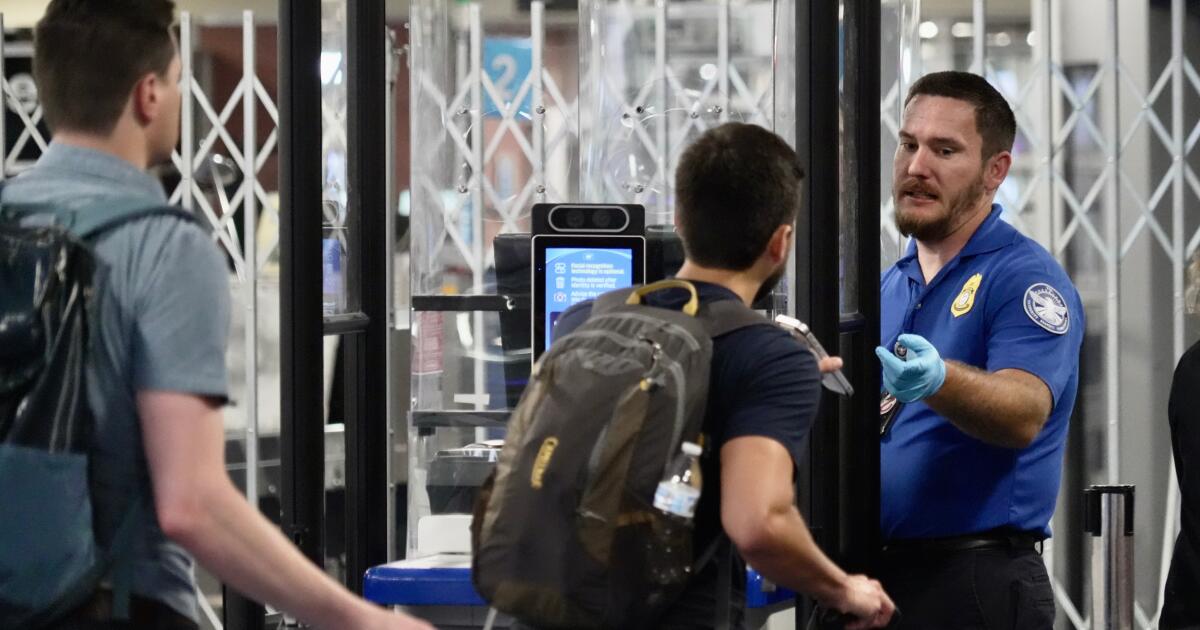
ATLANTA — Regardless of politics or destination, American air travelers are unified by one desire: It’s time to pay Transportation Security Administration employees.
“Everybody got bills they have to pay, and it’s horrible,” said Patrice Clark, whose trip to Las Vegas began Saturday with a nearly four-hour wait in a security line at Dallas Fort Worth International Airport. “Times are hard for everybody at this point. Working and not getting paid and gas prices are extremely high — like everybody needs their money. They need to pay them.”
TSA officers haven’t gotten a paycheck since the Department of Homeland Security partly shut down on Feb. 14. Democrats balked at funding the agency, demanding changes to immigration enforcement by federal agents after the shooting deaths of Alex Pretti and Renee Good in Minneapolis.
Some travelers arrive 4 hours early
Christian Childress is a private flight attendant, so when he is working, he doesn’t wait in TSA lines. But he frequently goes through a checkpoint when flying commercial to get to his job.
Childress, who lives in Redwood City in Northern California, said shutdown effects have been “hit or miss” thus far. He came to the Atlanta airport nearly three hours before his 1:30 p.m. Saturday flight to Nashville for a leisure trip. Some passengers have been arriving even earlier in Atlanta — the world’s busiest airport — worried about missing flights.
“Issue No. 1 should be paying the people who need to get paid and keeping our air travel system secure,” Childress said. “Then they can debate whatever they want to debate about Homeland Security.”
Democrats have tried to advance legislation to fund TSA separately, but Republicans have refused, saying funding for the entire Department of Homeland Security must be approved. So the shutdown continues.
Some passengers said it is time for Democrats to relent.
“I don’t want to go between the Democrats and the Republicans, but I think the Democrats are holding everything up because they can’t get their way,” said Tyrone Williams, a retiree from the Atlanta suburb of Ellenwood. He was queued up for screening before his flight to Philadelphia on Saturday.
Atlanta’s checkpoint wait time was as high as 90 minutes Saturday morning before melting away to nothing in the afternoon on what is typically one of the slowest days of the week for air travel. Staffing shortages have forced some airports to close checkpoints at times, with wait times swinging dramatically.
ICE at airports
Concerns about long airport lines are increasingly capturing attention.
President Trump has announced plans to order Immigration and Customs Enforcement officers to take a role in airport security starting Monday, which he says will continue until Democrats agree to fund the Department of Homeland Security.
He said ICE agents would bring the administration’s immigration crackdown into the nation’s airports, arresting “all Illegal Immigrants” with a focus on those from Somalia.
“I look forward to moving ICE in on Monday, and have already told them to, “GET READY.” NO MORE WAITING, NO MORE GAMES!” Trump wrote.
Funding for the whole department failed to advance in the Senate on Friday after Democrats declined to support a bill. On Saturday, in a rare weekend session, the GOP-led Senate rejected the Democrats’ motion to take up legislation to fund TSA.
Travelers ‘grateful’ for unpaid TSA workers
The vast majority of employees at TSA are considered essential, and roughly 50,000 continue to work without pay during the funding lapse. Nationwide on Thursday, about 10% of TSA officers missed work, the department reported. Absentee rates were two or three times higher in places.
Merissa Thomas arrived in Las Vegas on Saturday after a quick trip through a checkpoint at Reagan National Airport near Washington, D.C.
“I’m so grateful for people who are willing to sacrifice a lot to make sure we’re safe,” Thomas said.
Union leaders and federal officials say TSA officers are under financial pressure. Airport screeners have spent nearly half of the last 172 days with paychecks delayed by politics — 43 days last fall during the longest government shutdown in history, four days earlier this year during a brief funding lapse, and now 37 days and counting during the current shutdown.
At least 376 officers have quit since this shutdown began, according to officials, exacerbating turnover at an agency that historically has had some of the U.S. government’s highest attrition and lowest employee morale.
“From now on I would drive wherever I have to go until they get this figured out,” said Clark, the delayed traveler. “It was horrible.”
Amy writes for the Associated Press. AP writers Collin Binkley in West Palm Beach, Fla., Ty O’Neil in Las Vegas and Mary Clare Jalonick in Washington contributed to this report.

Luka Doncic avoids suspension after NBA rescinds 16th technical
DETROIT — He’s the hottest player in the NBA. Not even the NBA’s technical foul rule can slow Luka Doncic down.
The NBA rescinded Doncic’s 16th technical foul, the league announced Sunday, allowing Doncic to avoid a mandatory one-game suspension that would have kept him out of Monday’s game against the Eastern Conference-leading Detroit Pistons.
Doncic and the Lakers appealed the call after he was given a technical for taunting against Orlando Magic forward Goga Bitadze in Saturday’s Lakers win. Bitadze’s technical foul was also rescinded after the European players were arguing while Doncic was shooting free throws. Doncic claimed Bitadze made a vulgar comment toward Doncic’s family in Serbian while Bitadze said he first heard inappropriate comments from Doncic and only repeated what he heard the Lakers guard say.
Often criticized for arguing with officials, Doncic remains at 15 technical fouls this season, second in the NBA behind Phoenix’s Dillon Brooks. In 2023, Doncic also had his 16th technical foul rescinded, avoiding a one-game suspension.
Doncic’s historic scoring run has fueled the Lakers’ nine-game winning streak, their best since the 2019-20 season that ended with an NBA championship. Doncic, the NBA’s leading scorer, is averaging 40 points per game during the winning streak while shooting 40.3% from three-point range. His 60-point outburst against the Miami Heat last Thursday was the first 60-point game in Lakers history since Kobe Bryant’s last game in 2016. He was just the seventh Lakers player to record a 60-point game, joining legends Bryant, Elgin Baylor, Wilt Chamberlain, George Mikan, Jerry West and Shaquille O’Neal.
The winning streak has vaulted the Lakers from sixth in the West to third. They have navigated the most difficult stretch of their schedule with seven wins over playoff-bound teams.
The Pistons, poised to earn the No. 1 seed in the Eastern Conference playoffs for the first time since 2007, are without their own star player as guard Cade Cunningham is sidelined for at least two weeks with a collapsed lung. Detroit is 2-0 without him with wins over Washington and Golden State.
Note: Rui Hachimura (right calf soreness), Maxi Kleber (lumbar back strain) and Marcus Smart (right ankle soreness) are questionable for Monday’s game.
Slovenia’s Freedom Movement Party takes narrow election lead: Exit poll | Elections News
Governing liberals edge ahead of opposition conservatives in a race too close to call, according to exit poll.

Published On 22 Mar 2026
Slovenia’s governing Freedom Movement (GS) is on track to win a parliamentary election but will need to find more coalition partners to form a government, according to an exit poll.
GS was set to secure 29.9 percent of the votes, or 30 seats in the country’s 90-seat parliament, in a dip from its previous result of 41 seats, according to the poll, published by TV Slovenia and Pop TV on Sunday.
Recommended Stories
list of 3 itemsend of list
The opposition Slovenian Democratic Party, led by populist Janez Jansa, is expected to come second and secure 27 seats in parliament, according to the Mediana polling agency.
As he voted, incumbent Prime Minister Robert Golob, 59, called on citizens to cast their ballots.
“Democracy and Slovenia’s sovereignty cannot be taken for granted any more,” he told reporters.
Jansa welcomed the exit poll results and said he would wait for the final result.
“If someone wants a government like the one we’ve had so far, then they are probably satisfied with what these parallel results indicate,” Jansa said.
“Whoever wants change will likely have to wait for the final results, just as we will, and then we will analyse the situation. But we have done everything that was within our power,” he said.
The opposition party leader has served as prime minister three times, most recently from 2020 to 2022.
Ahead of the vote, the election had been marred by controversy after a report last week alleged that Jansa met with officials from the Israeli spy firm Black Cube in December.
Golob told journalists after the report: “The fact that … foreign services are interfering in the elections of a democratic member state of the European Union is something unheard of.”
Israeli settlers target Palestinian villages in occupied West Bank, attacking people and properties
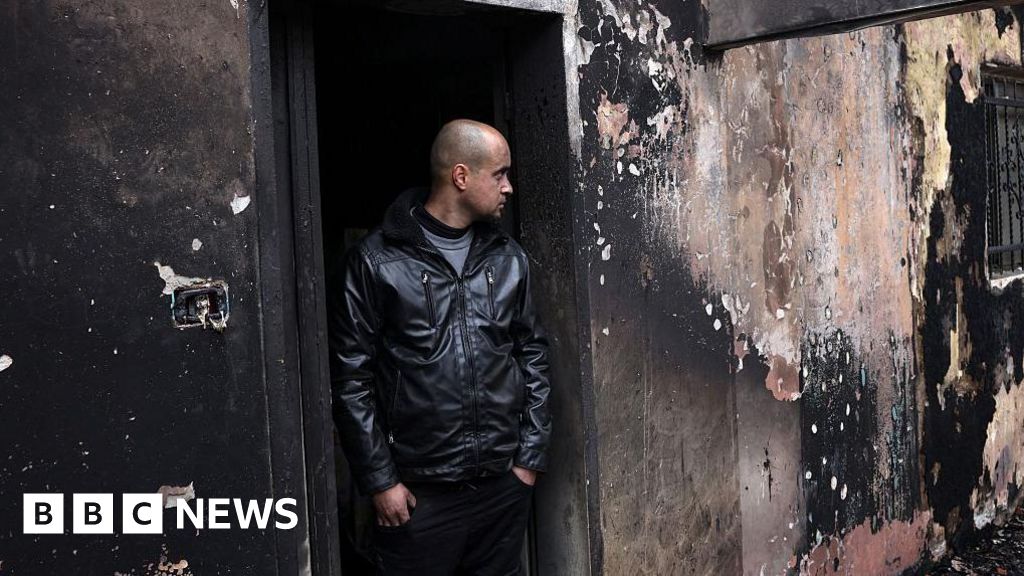
The violence began after 18-year-old settler Yehuda Sherman was killed after reportedly being hit by a vehicle driven by a Palestinian while on his quad bike.
Source link

Family appeals to Arizona community for clues to find Nancy Guthrie
TUCSON — Savannah Guthrie is renewing pleas to neighbors, friends and residents of Tucson to jog their memories in hopes of sparking new leads in the disappearance of her mother, Nancy.
The “Today” show co-host posted a new family statement on her personal Instagram account Sunday morning, hours after the show’s Instagram account shared it.
After expressing gratitude to the community, the family said in its statement that it believes someone in Tucson or in southern Arizona may “hold the key to finding the resolution in this case.”
“Someone knows something. It’s possible a member of this community has information that they do not even realize is significant.”
The family urged people to go over their memories of Jan. 31 — when Nancy Guthrie was last seen — and Feb. 1 as well as the evening of Jan. 11.
“Please consult camera footage, journal notes, text messages, observations, or conversations that in retrospect may hold significance,” the statement said. “No detail is too small.”
They also acknowledged in the statement that their family’s matriarch may no longer be alive.
“We cannot grieve; we can only ache and wonder.”
Nancy Guthrie was reported missing Feb. 1. Authorities believe the 84-year-old was abducted or otherwise taken against her will. The FBI released surveillance videos of a masked man who was outside Guthrie’s front door on the night she vanished.
The Guthrie family has offered a $1-million reward for information leading to the recovery of their mother.
On March 5, Savannah Guthrie visited the NBC “Today” show studio in New York City for the first time since her mother’s disappearance. The show said she plans to return to the air at some point but “remains focused right now supporting her family and working to help bring Nancy home.”
Tucson is a little more than 100 miles south of Phoenix and 70 miles north of the Mexico border. The Catalina Foothills, the neighborhood where Nancy Guthrie lives, is known as an affluent area with popular hiking trails.
Savannah Guthrie has been a co-anchor of the longtime NBC morning show since 2012. One of her former colleagues, Hoda Kotb, has returned to “Today” to fill in during Guthrie’s absence.

Nonprofits, unions and airports rally to feed TSA officers
Across the country, collections are popping up to help Transportation Security Administration officers who have been without full pay for more than a month due to the partial government shutdown affecting the Department of Homeland Security.
The charity World Central Kitchen, more accustomed to feeding those in war zones and disaster areas, started providing meals to Washington, D.C.-area airports after many TSA officers missed their first full paycheck.
On Thursday, Feeding San Diego began distributing 400 boxes with pasta, beans and peanut butter as well as fresh produce such as strawberries and potatoes to affected agents near the airport after a request from TSA and the San Diego County Regional Airport Authority.
Nonprofits are stepping in to help and coordinating with airports and local TSA offices because ethics rules around giving gifts to federal employees make it difficult for those affected by the shutdown to receive help directly.
Carissa Casares from Feeding San Diego said communicating with the airport means they can better tailor their resources and response to TSA workers’ needs.
“We need to work directly with the people who have direct access to these employees and get this food to them at a time and location that is most convenient to them,” Casares said.
Sunday marks the 37th day that the Department of Homeland Security has been shut down after Democrats refused to fund Immigration and Customs Enforcement and Customs and Border Protection without changes to their operations after the killings of Alex Pretti and Renee Good in Minneapolis. Democrats this weekend tried to advance a bill to fund TSA separately, but Republicans balked, saying all of Homeland Security needed to be funded.
More than 120,000 Homeland Security employees are working without pay, including roughly 50,000 TSA officers, as negotiations between lawmakers and the White House on limits to immigration enforcement drag on.
The funding lapse comes just months after a 43-day government shutdown, the longest in the nation’s history, which caused long lines at food banks across the U.S. as more than 700,000 federal workers worked without pay.
Rules limit what help TSA officers can accept
For those wanting to help, it’s not as simple as going to the airport and giving cash or gift cards directly to TSA officers, who are prohibited from accepting gifts at screening locations, according to a Homeland Security spokesperson.
But Aaron Barker, president of the AFGE Local 554 in Georgia, said TSA officer unions don’t have the same restrictions and can accept donations to distribute to their members. Barker recommends those who want to donate look up their local union district on the AFGE website, or give through their local labor council.
“For some people it can be life or death,” said Barker. “It’s just sad and terrible that this is happening.”
Union members have told Barker they’re unable to cover utility bills or pay for their children’s medical procedures. They’ve received eviction notices or had cars repossessed, and they’re having trouble affording routine items.
“People don’t think about the things they just naturally have in their home, like toothpaste, bathroom tissue, milk, detergent, dish liquid,” he said. “I’m sure those things are a necessity for every TSA officer.”
Nonetheless, no donation can be as effective as an end to the shutdown. “The first thing they want is their paycheck,” said Barker. “The money is the most immediate need.”
Coordination between nonprofits and TSA
Operation Food Search is working closely with TSA to safely deliver food and set up a temporary pantry at St. Louis Lambert International Airport.
The Missouri hunger relief nonprofit’s chief executive, Kristen Wild, said it is the first time the group has distributed directly to TSA employees where they work.
“It removes their need to make an extra trip and drive here,” Wild said. “So we’re really excited that the airport allowed us to directly serve right there.”
They gave away just over half their 400 prepared food bags during a two-hour period last week, according to Wild. Each bag contained nearly $20 worth of nonperishables such as apple sauce, pasta, rice and beans. Rules prohibit federal employees from soliciting or accepting gifts or items of monetary value greater than $20 if the gift is related to their government position.
Wild said she thought the $20 limit might be waived since they were distributing food through airport-approved channels.
“We didn’t know for sure,” she said. “But to play it safe we just kept it right under the $20 per bag amount so there would be no challenge to it.”
Airport communities band together
Seattle-Tacoma International Airport officials were fielding PETA donations and local food banks’ pallets on Friday afternoon as they stocked their private pantry for off-shift TSA staff.
But they’ve also seen dining vendors, usually tasked with feeding hungry travelers, step up. Airport tenants have offered discounts and donated through TSA to cover entire shifts’ meals, according to airport spokesperson Perry Cooper.
“You know a lot of these people,” Cooper said. “You see faces … throughout the day as you’re wandering through. And then to realize that some of these folks are here and they’re not getting paid, you know, really tugs at your heart to think what’s a way that we can help.”
The airport community’s support adds to the roughly $6,000 they’ve received in cash and gift cards plus another $10,000 worth of food and household products, Cooper said. That includes donations from the labor union for air traffic controllers, whose jobs are unaffected by this partial shutdown but understand the strain of working without pay, as they did during last year’s full government shutdown.
More than 460 people picked up fresh produce when local nonprofit Food Lifeline brought a truckload recently, according to Cooper. Most of the attendees were TSA staff, Cooper said, though some might have been homeless. Boxes including pineapples and broccoli lined folding tables along the airport’s main drive.
Regular travelers like Musie Hidad said he thinks about the TSA agents working unpaid every time he enters through security.
“The work they are doing is serious and they aren’t getting paid for it,” said Hidad, an Amarillo, Texas, resident, who was traveling to Ohio for work. “My heart goes out to them.”
Angueira, Beaty and Pollard write for the Associated Press. AP video journalist Patrick Aftoora-Orsagos in Columbus, Ohio, contributed to this report.

Arsenal 0-2 Man City: Will Carabao Cup final win pile pressure on Arsenal?
The first 45 minutes was the epitome of two teams cancelling each other out – but once the second half began the landscape was set for City’s win.
They were the more progressive, aggressive side. Their attacking intent started to overwhelm Arsenal, the pressure became impossible to resist. Smoother on the ball and more cohesive than an Arsenal side based on organisation, the traffic only flowed one way.
Arrizabalaga already had Arsenal’s nerves on edge with an injudicious dash from goal which resulted in a yellow card for a panicked foul on Jeremy Doku.
Much, much worse was to come for Arsenal and their goalkeeper.
It remains six years since Arteta won his one and only trophy as Arsenal manager, and the way in which his team went into their shell here will be a concern that he must hope is not repeated as the pressure mounts in the closing weeks of the season.
Former Manchester City goalkeeper Joe Hart told BBC Sport: “Manchester City played to win. I think that’s what they’re bred to do over ten, 15 years. I think now they’re very much bred to win. I think they’ve been really disappointed with the FA Cup final at the end of last season [when they lost to Crystal Palace].
“A lot will be read into it putting a marker down or whatever, but I don’t think so. I think it was just about Manchester City winning trophies, which is what they’ve done so regularly recently – and this is another big one.
“It is also a huge day for Pep Guardiola, who’s won everything, but now stands alone in terms of managers winning the League Cup. He’s won it five times, going one clear of Sir Alex Ferguson. How much of a testament is that to his ability, his special touch and what he’s done over the years with Manchester City?”
Arteta is braced for the battle to recover from this setback and focus on three trophies, saying: “We had eight amazing months with this team. Today is a disappointment. We need to use that fire in the belly for the next two months to have an incredible season.”
He told BBC Radio 5 Live: “It’s painful, especially for our players and supporters, because we really wanted to lift that trophy. It was two very different halves, especially the first half when I think we were better than them and had the best two chances of the game.
“We didn’t capitalise on that. Credit to them for what they have done. A really sad day.”
He must hope it is the last sad day of what has been an outstanding season so far – for Guardiola, he will hope City’s win, and the manner in which it was achieved, will play on Arsenal’s nerves.
Emerging from latest blackout, Cuba says ready for any potential US attack | Oil and Gas News
US President Trump, who cut off oil supplies to Cuba after abducting Venezuela’s President Maduro, has threatened to take over the island-nation.
Published On 22 Mar 2026
The Cuban government has said it is prepared for any potential United States attacks as the island-nation begins to recover from yet another blackout under a punishing oil blockade imposed by Washington that has pushed its economy to the brink.
Deputy Foreign Minister Carlos Fernandez de Cossio responded on Sunday to US President Donald Trump’s threats this week to take over Cuba, insisting that it had “historically been ready to mobilise as a nation for military aggression”.
Recommended Stories
list of 3 itemsend of list
“We don’t believe it is something that is probable, but we would be naive if we do not prepare,” de Cossio told NBC’s Meet the Press.
His comments were aired a day after the latest collapse of the country’s ageing nationwide grid that had left millions of people in the dark. Saturday’s outage was the second in the past week and the third in March.
The state-run Electric Union and the Ministry of Energy and Mines said some 72,000 customers in the capital, Havana, including five hospitals, had electricity again early on Sunday. But the number represented only a fraction of Havana’s total population of approximately two million.
The Cuban Electric Union, which reports to the Ministry of Energy and Mines, said the total disconnection of the national system was caused by an unexpected shutdown of a generation unit at the Nuevitas thermoelectric plant in Camaguey province, without providing details on the specific cause of the failure.

Trump, who started blocking oil from reaching the island after abducting Cuba’s ally, Venezuelan President Nicolas Maduro, early this year, has warned potential oil exporters that they could face high tariffs.
According to President Miguel Diaz-Canel, Cuba has not received oil from foreign suppliers for three months. The country produces barely 40 percent of the fuel it needs to power its economy.
On March 16, Trump escalated his rhetoric against Cuba, arguing the leadership was on the verge of collapse and saying he expected to have the “honour” of taking the country.
De Cossio denied that the nature, structure, or makeup of the Cuban government was up for negotiation in what Havana has called a “serious and responsible” dialogue with Washington launched earlier this month. He added that a change of the ruling system was “absolutely” off the table in discussions.
This week, General Francis Donovan, head of the US Southern Command overseeing armed forces in Latin America, told lawmakers at a US Senate hearing on Trump’s military action in the region that troops were not rehearsing for an invasion of Cuba or actively preparing to take over the Communist-run island.
But, he added, the US stood ready to address any threats to the US embassy, to defend its base at Guantanamo Bay, and aid US government efforts to address any mass migration from the island, if needed.
The Cuban government reportedly refused a request by the embassy in Havana to allow it to import diesel for its generators in response to the oil blockade, The Associated Press reported on Saturday, citing two US officials.
Displaced families shelter in tents in Beirut amid Israeli strikes | Benjamin Netanyahu News
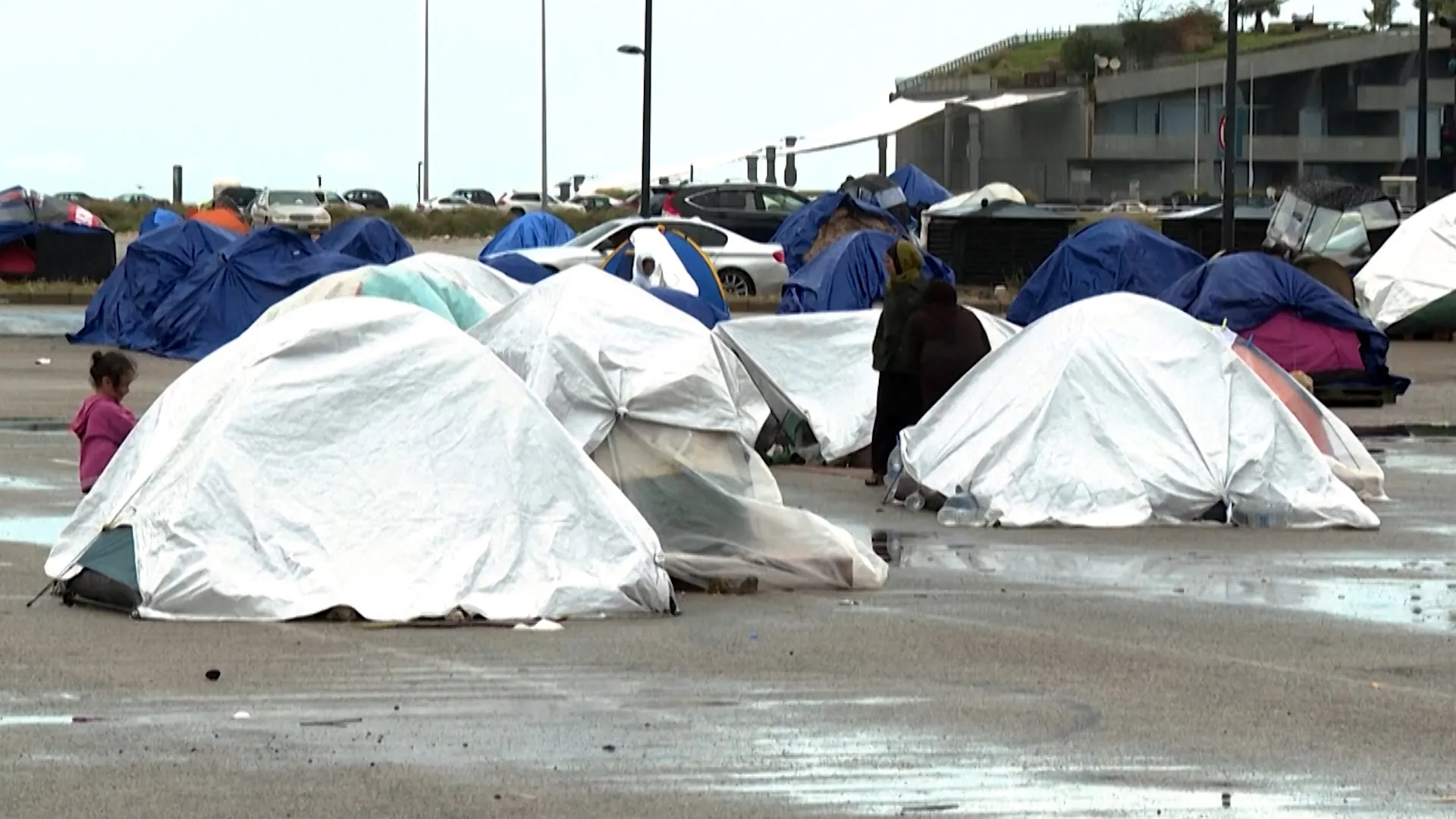
Families displaced by Israeli strikes are sheltering in tents across Beirut, as rain falls, with residents describing difficult conditions, limited aid and uncertainty over when they can return.
Published On 22 Mar 2026