



Newspaper headlines: ‘Stark warning’ over ADHD and ‘Andrew wins legal fight’
Several of today’s papers lead with the government’s review of ADHD and autism diagnoses. A “stark warning over rising demand for NHS autism and ADHD care” tops the Guardian. Elsewhere, it reports that two Latvians have been arrested after they were “found inside RAF base”. And, after it was revealed that the three sisters who died in the Brighton sea had taken their own lives, the paper describes their “final pilgrimage”.

HBO orders ‘Crazy Rich Asians’ show with Constance Wu, Henry Golding
“Crazy Rich Asians” will officially be back on screen, with some familiar faces joining for the ride.
HBO announced on Thursday that it had ordered an original drama series of the same name based on author Kevin Kwan’s book series eight years after director Jon M. Chu’s “Crazy Rich Asians” film adaptation marked a watershed moment for Asian representation in Hollywood. The series will see stars Constance Wu and Henry Golding reprise their roles as lovebirds Rachel Chu and Nick Young; Ronny Chieng as Nick’s cousin Eddie Cheng and Oscar winner Michelle Yeoh as the hard-to-please Young family matriarch, Eleanor.
Although not exactly the movie sequel some fans were hoping for, the series will pick up after the events of the 2018 film and will be based on Kwan’s books, HBO announced. Adele Lim, who co-wrote Chu’s 2018 film, will serve as showrunner and will executive produce the series alongside Kwan, Chu and “Crazy Rich Asians” movie producers Nina Jacobson and Brad Simpson.
HBO announced its series order just days after parent company Warner Bros. Discovery closed its $111-billion deal with Paramount Skydance.
The official series order comes more than a year after Golding shared that he and some of his “Crazy Rich Asians” collaborators had reunited to discuss the future of the franchise, including a meeting with Lim. The Times confirmed last year that the series was in early development.
The “Crazy Rich Asians” series could fill the void left by the onetime promise of a “Crazy Rich Asians” sequel. Prospects of a sequel crumbled in 2019 when the Hollywood Reporter broke news that Lim left the sequel over pay disparity.

Lions Bay Capital faces cease trade order over late filings (TSXV:LBI:CA)
- Lions Bay Capital Inc. (LBI:CA) received a failure-to-file cease trade order from the British Columbia Securities Commission on October 5, 2026.
- The order follows the company’s failure to file its audited annual financial statements, management’s discussion and analysis, and CEO/CFO certifications for
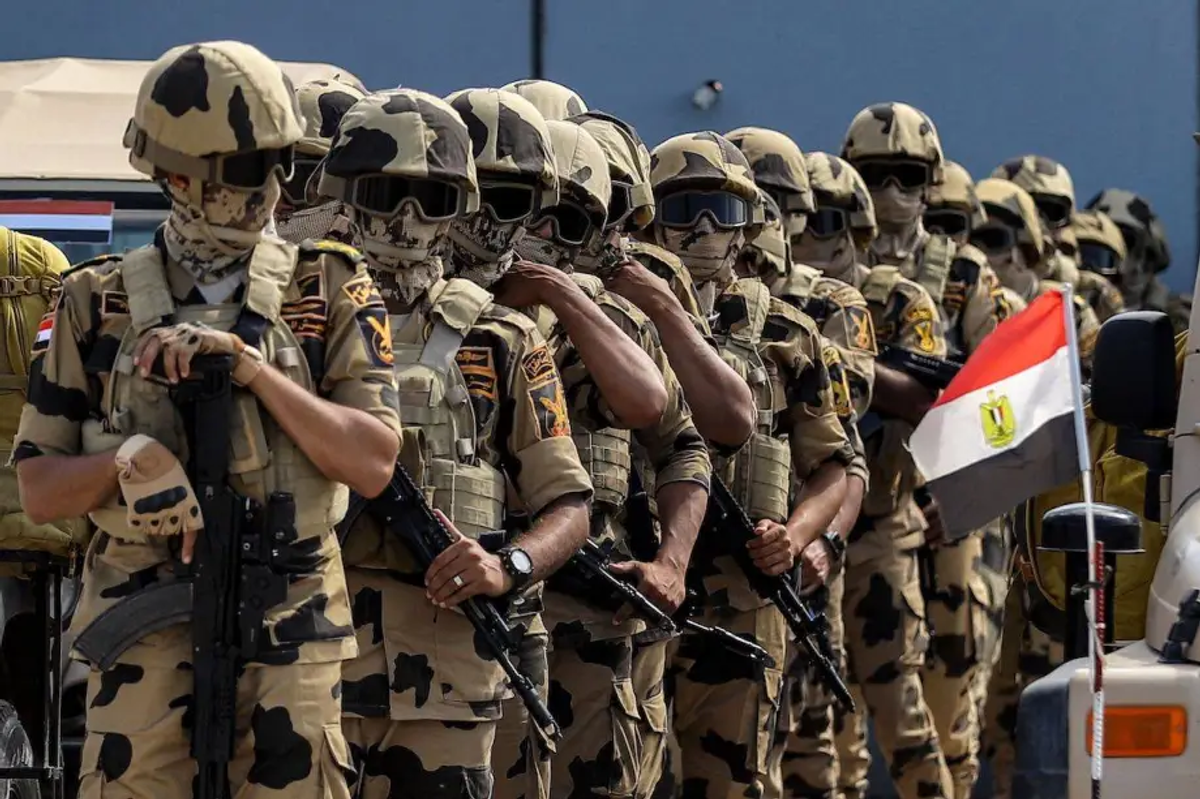
Friday 9 October Armed Forces Day in Egypt
During the Six-day War with Israel in June 1967, Egypt had lost control of the Sinai Peninsula.
In an attempt to regain the territory, Egyptian President Anwar Sadat carried out a surprise attack on 6 October 1973. The attack was supported by the Syrians and met with initial success when more than 80,000 Egyptian troops breached the fortifications set up by the Israelis and took control of the Sinai territory. After two days, the Egyptians were forced to retreat when the Israeli army counterattacked and surrounded the Egyptian forces.
The war ended in a cease-fire brokered by the United States. The assault proved unsuccessful in liberating the Sinai Peninsula, but the conflict directly led to talks at Camp David organised by US President Jimmy Carter. These talks resulted in the Israeli-Egyptian peace treaty of 1979 which eventually saw the return of the Sinai Peninsula to Egypt.
The holiday is marked by large military parades and fireworks. It was during one of the parades on Armed Forces Day in 1981, when President Anwar Sadat was assassinated by opponents of the peace with Israel.

NFL is urging Supreme Court to rule on prediction markets
The NFL is urging the Supreme Court to rule on the regulation of prediction markets, arguing in an amicus brief filed Thursday that states — which already regulate legal sports books — are better positioned to oversee sports-related contracts “given the current landscape.”
The NFL is supporting New Jersey’s request for the Supreme Court to rule on the governing authority for prediction markets, which provide an opportunity to trade — or wager — on the result of future events. The Commodity Futures Trading Commission has maintained it has exclusive federal jurisdiction, while states have argued that the array of typically yes-or-no questions is akin to gambling and falls under their purview.
“Absent the clarity that only this Court can provide, (prediction market) operators will continue exploiting the gap between state and federal regulation, endangering consumers and the integrity of sports events across the country,” lawyers for the NFL wrote.
According to the NFL’s brief, on the first Sunday of this season, more than half of the trading volume on prediction markets — $1.8 billion out of $3.3 billion total — was related to the league.
“Any delay from the Court will result in increasing consumer harm and risk to game integrity,” the NFL wrote in its brief.
Kalshi spokeswoman Elisabeth Diana said its top priority is market integrity, and she pointed to its partnerships with the NHL, Major League Baseball and other sports organizations as evidence.
“Contrary to the NFL’s statements, the CFTC is actively policing sports-related markets, which are now listed on nearly every U.S. commodities exchange,” Diana said. “The CFTC’s ongoing rulemaking addresses many of the NFL’s supposed concerns. And those rules sit atop the same comprehensive system of federal enforcement that protects trillions of dollars of transactions in U.S. markets.”
A Polymarket spokesperson said the operator “shares the NFL’s commitment to preserving the integrity of the game,” and it is working on “a harmonized federal framework that delivers a stronger, more consistent form of integrity compared to a patchwork of disconnected state laws built for a bygone era.”
Ohio filed a brief on Wednesday urging the high court to side with New Jersey and preserve the power of all states to regulate prediction markets, as they do casino gambling and sports betting. The filing was backed by 38 states, including Republican and Democratic attorneys general from states including Arkansas, California, Illinois, Missouri, New York, South Carolina and Pennsylvania.
Roughly 20 states are involved in litigation over prediction markets, and a split has formed between appeals courts, making it more likely that the Supreme Court will take up the issue. The 6th and 9th U.S. Circuit Courts of Appeals have ruled in favor of states seeking to regulate prediction markets, while the 3rd U.S. Circuit Court of Appeals agreed with Kalshi in a ruling earlier this year.
“As between the two approaches, the NFL believes the Sixth and Ninth Circuits got it right, given the current landscape,” lawyers for the league wrote in their brief.
The NFL also is questioning the CFTC’s enforcement capabilities. In its filing, the league writes that the commission has 543 employees and their responsibilities include a range of derivatives beyond event contracts.
“Without adequate staff engaged in oversight and enforcement, even the best regulations cannot meaningfully ensure game integrity and consumer protection,” lawyers wrote in the NFL brief.
A message was left by the AP seeking comment from the CFTC.
The NFL has urged the CFTC and prediction markets to adopt a list of prohibited wagers that it feels pose the greatest threats to game integrity, according to the brief, but they have declined thus far. It also has asked the commission to adopt an age limit of 21 for trading on prediction markets, up from the current 18.
Diana said Kalshi has tried to collaborate with the NFL on market integrity, but it has received no response.
Cohen writes for the Associated Press. Associated Press writer Marc Levy contributed to this report.
USS Lincoln returns to US after long deployment supporting war on Iran | US-Israel war on Iran News
Crew members express relief upon return from record-breaking deployment of 265 days that strained conditions on board.

Published On 9 Oct 2026
The United States aircraft carrier USS Abraham Lincoln has returned to its home port after a 322-day deployment, including a record 265 consecutive days at sea, during which it helped wage the US-Israel war on Iran.
The vessel returned to Naval Air Station North Island in San Diego, California, on Thursday, where members of its crew were greeted by family and friends.
Recommended Stories
list of 3 itemsend of list
“It feels amazing,” 20-year-old Abel Ramirez told The Associated Press news agency, adding that his parents had driven from Texas to meet him. “There was a certain point when I never thought I would come off.”
The record-setting deployment of the USS Lincoln became a symbol for larger criticisms of the US war effort, which has dragged on since February with no clear end in sight and has strained US military stockpiles.
The prolonged deployment prompted a series of news reports calling attention to deteriorating conditions, food shortages and a series of reported suicide attempts by crew members.
Pentagon chief Pete Hegseth praised the sailors on Wednesday in remarks that accused the media of trying to turn the ship into “a symbol of dysfunction or a symbol of low morale or a symbol of a failed mission”.
President Donald Trump and members of his administration have frequently lashed out at the news media for critical reporting on the war on Iran. Trump himself has called the reporting about the USS Lincoln “fake news”.
“The Lincoln has been out there for a period of time, a good period of time,” he said at an Oval Office meeting on August 17. “I know people on the Lincoln, and they say it’s beautifully maintained and beautifully taken care of.”
Earlier that month, when confronted with the amount of time the USS Lincoln had spent at sea without a port stop, Trump quipped that its deployment was “not nearly long enough“.
The reports of mental health strain on the USS Lincoln come as public opinion polls show low approval ratings among US voters for the war against Iran.
On Thursday, the Pew Research Center released a poll that found 65 percent of Americans disapproved of Trump’s handling of the war, compared with 33 percent who approved.
The war has also fuelled concerns about the cost of living ahead of the upcoming midterm elections. Since the war began, Iran has hindered commercial traffic through the Strait of Hormuz, a critical waterway for the trade of fuel, fertiliser and other goods.
Sailors returning home on the USS Lincoln said that they were looking forward to fresh meals and spending time with their families.
Alma Solano Velez said that her husband, one of the US service members on board, shared a list of foods he had been craving over his 10-month deployment: oxtail, barbecue chicken, broccoli and shrimp empanadas, among others.
She added that he had spoken about “the lack of food and showers” and was looking forward to seeing their four-year-old daughter.
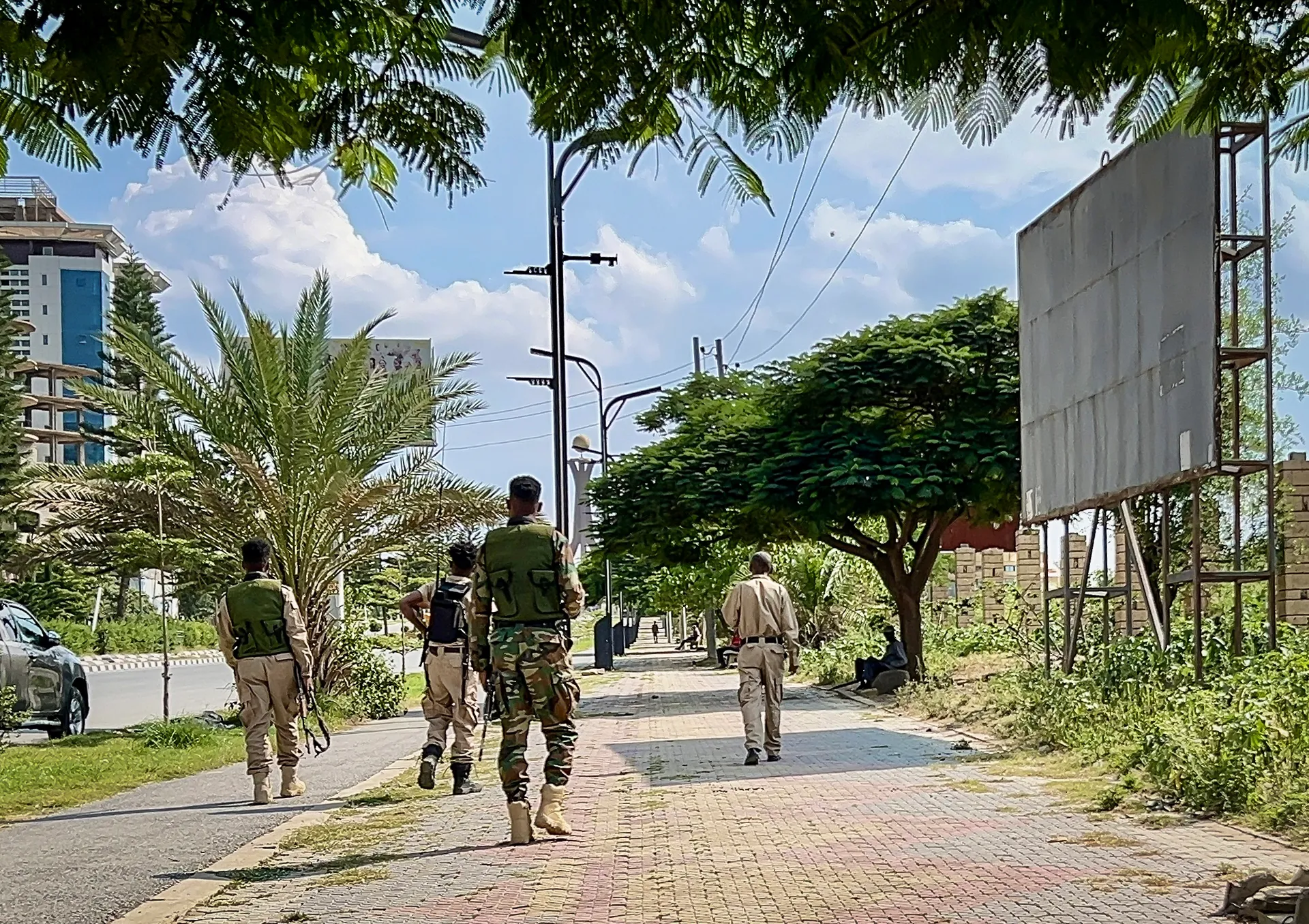
Will Ethiopia’s neighbours intervene as Tigray war escalates? | Armed Groups News
Addis Ababa, Ethiopia – After nearly two weeks of fierce fighting, Ethiopian federal forces entered the Tigrayan capital of Mekelle as forces from an alliance of rebel groups, including the Tigray People’s Liberation Front (TPLF), withdrew from the city.
The fighting that erupted late last month has effectively ended the 2022 Pretoria ceasefire and the fragile peace that followed the devastating Tigray war.
But Mekelle’s capture may mark the end of conventional warfare rather than the end of the conflict. Fighting has continued elsewhere in Tigray, while reports of Eritrean troops entering northern Tigrayan towns have added a potentially more dangerous regional dimension.
Ethiopian federal forces used air power and ground forces to advance across Tigray. After suffering successive defeats around the towns of Alamata and Kobo, rebel forces withdrew into the surrounding countryside. They have pledged to continue fighting.
“We will confront the enemy on our terms and where we choose,” TPLF leader Debretsion Gebremichael said.
A war that may not be over
There are echoes of the war that began in 2020, when Prime Minister Abiy Ahmed’s government declared victory after federal forces captured Mekelle. Tigrayan forces subsequently regrouped in the mountains, retook much of the region and recaptured the capital, prolonging the war for nearly a year and a half.
The renewed conflict could follow a similar trajectory, particularly if the TPLF and other armed groups succeed in turning the mountainous terrain into a prolonged armed rebellion. Ethiopia is already fighting insurgencies in Amhara and Oromia, raising the prospect of its federal forces being stretched across multiple fronts.
But the battlefield reversals suffered by the rebels could have implications well beyond Tigray. They have raised concern in Egypt and among other Ethiopian rivals, according to Hossamaldeen Ibrahim, an African analyst at the Bloomsbury Intelligence and Security Institute.
“Egypt views the Renaissance Dam, and any Ethiopian [army] move towards the Red Sea, as a strategic threat, so it has allied with Eritrea, Sudan and Somalia against any Ethiopian unilateralism,” Ibrahim told Al Jazeera.
“Ethiopia is seeking a sea outlet; Eritrea sees this as an existential threat.”
Ethiopia’s Red Sea ambitions
Ethiopia has been landlocked since Eritrea won its war of independence in 1991, leaving Addis Ababa heavily dependent on neighbouring countries for access to international trade.
Abiy has increasingly made access to the Red Sea a strategic priority since 2023, raising concerns in Eritrea over Ethiopia’s ambitions, particularly over the port of Assab.
Ethiopia currently relies heavily on Djibouti for maritime trade, while also pursuing alternative arrangements, including through Kenya and Somaliland.
After being sworn in on Monday for another five-year term following his party’s victory in the June 1 election, Abiy again put the issue at the centre of his parliamentary address.
“Based on the principle of give and take, we will work diligently to ensure that Ethiopia has an outlet to the sea,” he told parliament.
The issue has increasingly become part of a wider regional contest.
A loose regional alignment
In recent months, Egypt, Eritrea, Sudan and Somalia have found themselves sharing concerns over Ethiopia’s regional ambitions. On October 4, the leaders of the four countries met for a quadrilateral consultative summit in New Alamein, Egypt, where they discussed regional issues and pledged to strengthen political, economic and trade cooperation as well as consultation and coordination.
The meeting does not amount to a formal military alliance, and the four countries have different interests in their dealings with Addis Ababa. The summit’s joint declaration also called for respect for sovereignty and territorial integrity, noninterference in internal affairs and the peaceful resolution of disputes.
But their concerns increasingly overlap around Ethiopia’s ambitions in the Red Sea, the Nile and the wider Horn of Africa.
Relations between Ethiopia and Eritrea have also deteriorated sharply since the Pretoria ceasefire. Ethiopia closed its embassy in Eritrea and expelled Eritrean diplomats on October 1, accusing Asmara of hostile acts and involvement in the renewed fighting. Eritrea responded by severing diplomatic ties, while denying that it supported the opposition alliance. Egypt and Sudan have also denied Ethiopian accusations that they are backing the alliance.
The Ethiopian army’s advance into Tigray has added another layer to that rivalry.
“The [Ethiopian army’s] advance in Tigray directly threatens [Eritrean President] Isaias [Afwerki] and the Eritrean state,” said Etana H Dinka, an assistant professor of African history at the University of Miami.
Eritrean forces fought alongside Ethiopian troops during the 2020–22 Tigray war, but relations between Abiy and Isaias have since deteriorated. Eritrean troops have reportedly been seen in towns in northern Tigray, adding a potentially significant new dimension to the conflict. The Associated Press news agency reported Eritrean troops entering Adigrat and Idaga Hamus after crossing into Ethiopia, while Eritrea has neither confirmed nor denied the troop movements.
Eritrea’s role could be decisive
For Eritrea, the location of the fighting matters as much as its outcome.
A prolonged conflict in Tigray could keep Ethiopian forces tied down and limit Addis Ababa’s ability to pursue its Red Sea ambitions. But a decisive Ethiopian victory could leave the federal government with greater freedom to turn its attention towards regional rivals.
“With reports that Eritrean troops are moving into Tigray, Eritrea seems keen on boosting TPLF forces withdrawing northwards, so that the engagement between Ethiopian and Eritrean soldiers takes place in Tigrayan territory, and not in Eritrea,” said Mohamed Kheir Omer, a researcher focused on the Horn of Africa.
That could create an incentive for Eritrea to support forces capable of keeping the Ethiopian army tied down, without necessarily entering a direct confrontation of its own.
Sudan adds another layer
Sudan’s war adds another dimension to the regional rivalry.
Egypt has provided political backing and logistical and technical support to Sudan’s army, according to the Reuters news agency, while the Rapid Support Forces (RSF) have been accused of atrocities in Darfur.
Ethiopia has faced accusations of facilitating support for the RSF. A Reuters investigation reported in February that Ethiopia was hosting a camp in its western Benishangul-Gumuz region where thousands of fighters linked to the RSF were being trained. Reuters cited eight sources, including a senior Ethiopian government official, who said the United Arab Emirates financed the camp’s construction and provided military trainers and logistical support. The UAE denied the allegations, and Reuters said it could not independently verify the UAE’s role.
Those competing relationships are part of a broader contest over the Nile, Sudan, the Red Sea and access to trade routes.
For Egypt, its dispute with Ethiopia over the Grand Ethiopian Renaissance Dam remains a major strategic concern. For Eritrea, Ethiopia’s search for a Red Sea outlet is viewed through the lens of national security. For Sudan’s neighbours, the conflict threatens to reshape regional power balances.
Will Egypt, Eritrea, Sudan and Somalia intervene?
The shared interests of Ethiopia’s regional rivals do not necessarily translate into direct intervention.
Egypt has its own calculations over the Nile and Sudan. Eritrea has a direct security interest in developments in Tigray. Somalia is dealing with its own security challenges and a complicated relationship with Addis Ababa. Sudan remains consumed by its devastating civil war.
At the same time, Ethiopia’s federal forces now face the possibility of fighting on several fronts.
The TPLF, Amhara Fano and the Oromo Liberation Army (OLA) have each sought to challenge the federal government in different parts of the country. If they can maintain pressure on the army while retreating from major population centres, the fall of Mekelle could prove to be only the first phase of a much longer conflict.
For Ethiopia’s rivals, the question is whether to exploit that vulnerability or avoid being drawn into another regional war.
The extent of any regional involvement may ultimately depend on whether the TPLF can keep federal forces tied down in Tigray, and away from the Eritrean border.
“It isn’t difficult to understand Cairo’s commitment to prevent Ethiopia from succeeding in the current warfare, whatever its army’s intended goals, including Abiy’s acclaimed access to the Red Sea, are,” University of Miami’s Dinka said.
The question now is whether those regional calculations will remain largely diplomatic or spill into the battlefield.

Michael Jackson’s iconic red Thriller jacket and famous rhinestone glove set to fetch millions at auction
FANS of Michael Jackson will be looking at the competition and hoping to beat it when his latest memorabilia goes under the hammer.
The late King of Pop’s original Thriller jacket and Motown 25 glove are being put up for Auction in Abu Dhabi.
On December 7, the iconic garments will headline Julien’s Auctions’ Fashion Legacy Evening Sale.
Created by Deborah Nadoolman Landis, the red leather jacket was one of two created for Michael’s 1983 video – with the other shredded for the zombie scenes and now on display at the Rock and Roll Hall of Fame.
Estimates for the jacket up for auction are only available upon request by interested bidders. It last sold in 2011 for almost £1.4million.
Michael wore the white rhinestone glove, tipped to fetch £700,000, the same year at the taping of Motown 25: Yesterday, Today, Forever.
READ MORE ON MICHAEL JACKSON


In 2022, a massive collection of Michael Jackson memorabilia was being auctioned with an estimated value of £2.5million.
The 32,000 items linked with the King of Pop were being sold as a single lot in a private online auction on behalf of an anonymous owner.
The collection was originally intended for a museum in Los Angeles, but plans fell through and it was auctioned through House of Consultants.
The owner said: “This is a rare opportunity to buy cultural heritage from the most influential artist of the century.”

Oil finishes sharply higher even as Trump says no attacks on Iran before midterms
Oil finishes sharply higher even as Trump says no attacks on Iran before midterms
Source link

Football gossip: McTominay, Olise, Gabriel, De Jong, Quansah, Woltemade
Real Madrid are interested in former Manchester United midfielder Scott McTominay and France forward Michael Olise, while Chelsea are keen on Frenkie de Jong of Barcelona.
Real Madrid are keeping tabs on Scott McTominay’s contract talks at Napoli, with the Spanish giants interested in signing the 29-year-old Scotland midfielder at the end of the season. (Tuttomercato), external
Manchester United are unlikely to now bring McTominay back to Old Trafford as they are targeting younger signings. (Football Insider), external
Bayern Munich want to extend 24-year-old France winger Michael Olise’s contract, which runs until 2029, and it is likely he will stay with the German club unless a move to Real Madrid materialises. (Sky Sports Germany), external
Manchester United have made attacking midfielder JJ Gabriel, 16, an official scholarship contract offer but could get only £350,000 for him if he decides not to stay at the club and moves abroad. (Guardian), external
Chelsea are keen on signing Barcelona and Netherlands midfielder Frenkie de Jong, 29, as a belated replacement for Enzo Fernandez, who moved to Manchester City on transfer deadline day. (Sport – in Spanish), external
Liverpool have a £59.5m buyback clause for Bayer Leverkusen defender Jarell Quansah, 23, but the England international – who has been linked with Real Madrid and Chelsea – is reluctant to return to Anfield. (Football Insider) , external
Juventus have doubts over 24-year-old Germany striker Nick Woltemade, who is on loan at the club from Newcastle United, and are looking at alternatives, including 25-year-old Monaco and United States forward Folarin Balogun. (Gazzetta dello Sport – in Italian), external
Newcastle and Everton are both keen on Galatasaray midfielder Gabriel Sara. The 27-year-old Brazil midfielder spent two years with Norwich City before moving to Turkey. (Webaslan), external
Hull City are close to signing Deniz Donmezer, an 18-year-old goalkeeper at Turkish side Kayserispor, for a fee of £1.5m. (Teamtalk), external
Man City charges: Mourinho jokes Premier League case will outlast him | Football
Jose Mourinho, one of most outspoken against Man City spending when United manager, jibes EPL appeal to outlast him.

Published On 8 Oct 2026
Real Madrid manager Jose Mourinho joked that he may not live to see the end of Manchester City’s legal battle with the Premier League after the club appealed against a ruling that found it guilty of serious financial rule breaches.
An independent commission found City guilty of all charges relating to breaches of Premier League financial regulations between the 2009-10 and 2017-18 seasons, as well as three of four charges relating to failures to cooperate with the investigation. City have denied wrongdoing and lodged an appeal.
Recommended Stories
list of 4 itemsend of list
The Premier League said that City used “sham” commercial agreements to inflate revenue and understate costs by more than 900 million pounds ($1.19bn) over nearly a decade, resulting in inaccurate financial reporting and breaches of spending rules.
Mourinho managed Manchester United from 2016 to 2018 and led them to a second-placed Premier League finish behind Pep Guardiola’s City in 2017-18.
“I would rather laugh about it,” Mourinho said when asked about the case in an interview with Italy’s Corriere dello Sport.
“I think we will eventually get an ending, but we are both in our 60s, and we’ll need to be lucky enough to still be around when the final verdict arrives.
“There will be a verdict, then appeals, then more appeals.”
Mourinho has long maintained that one of his greatest achievements in football management was finishing second behind Guardiola’s side, given their spending power at the time.
The Portuguese manager, now 63, said in 2024 that he had not given up on being awarded a winner’s medal for the 2018 season.
“I think we still have a chance to win that league because maybe they punish Man City with points and maybe we win that league,” he quipped at a press conference ahead of a Europa League match against United with his then-club, Fenerbahce.
“Then they have to pay me the bonus and give me the medal.”
The appeal process will be conducted in private, and it remains unclear whether any sanctions would be imposed before it is heard, or whether any punishment would take effect immediately.
City, seeking a sixth successive league win, are top of the Premier League with 15 points from five matches and travel to Liverpool on Sunday.
Holders Arsenal entertain Leeds on Saturday, while United host Tottenham later the same day.
Mourinho’s Real Madrid trail fierce rivals and La Liga leaders Barcelona by six points, with five wins and two defeats from their seven league matches this season.
Both Barca and Real are in action on Saturday, with Getafe and Villarreal visiting, respectively.
Israel kills or wounds Palestinian every 90 minutes in Gaza since ceasefire | Gaza News
Islamic Relief calls for international action as Gaza endures deadly Israeli attacks and worsening humanitarian conditions.
Published On 8 Oct 2026
Israeli attacks have killed or wounded a Palestinian in Gaza every 90 minutes on average since the ceasefire was announced in October last year, the aid group Islamic Relief says.
Islamic Relief, a United Kingdom-based charity, said on Thursday that at least 1,454 Palestinians were killed and more than 5,000 wounded over the year. At least 320 of those killed were children, close to one a day.
Recommended Stories
list of 3 itemsend of list
Gaza’s Health Ministry reported that 1,471 Palestinians have been killed and 5,189 wounded since the ceasefire, including four killed and 28 wounded in the past 24 hours.
Israel has killed at least 74,254 people since October 2023, the ministry added.
On Thursday, Israeli forces killed a Palestinian southeast of Deir el-Balah, in central Gaza, and an Israeli air strike on a house in central Khan Younis wounded several people, the Palestinian news agency Wafa reported.
In the occupied West Bank, a 13-year-old boy was shot in the foot during an Israeli raid on Yamoun, west of Jenin, the Palestinian Red Crescent said.
Islamic Relief said Israel has used the so-called Yellow Line, which marks the area under Israeli military control, to push Palestinians out of 65 percent of Gaza, crowding its nearly 2.1 million people into the remaining 35 percent.
According to the report, an Islamic Relief aid worker in Gaza whose name is withheld for their safety said: “There is no ceasefire in reality. They target displacement camps and crowded areas, so there is still a lot of fear.”
Israel continues to block shelter materials, fuel and medical supplies, the group said.
About 82 percent of Gaza’s structures are damaged or destroyed, more than half of health services have shut down and more than 20,000 severely ill patients are denied permission to leave for treatment.
The charity urged world leaders to increase pressure to protect civilians and uphold international law.
“A ceasefire in name only cannot be an excuse for international inaction,” it said.

Minka Kelly and Imagine Dragons singer Dan Reynolds break up
Minka Kelly and Dan Reynolds have ended their four-year relationship.
A source close to the couple confirmed the breakup, People first reported on Wednesday.
The “Friday Night Lights” actor and Imagine Dragons frontman first met in 2022 through a mutual friend — although their first month interacting was over phone calls as Kelly, 46, was in the U.K. for work and finishing her memoir, “Tell Me Everything,” which delved into her complex relationship with her mother.
Reynolds, 39, asked to read the book.
“You’ll either be terrified and run for the hills or you’ll see the beauty in all of it,” Kelly shared on “The Drew Barrymore Show” in November 2025. “He fortunately was the latter.”
The pair was first publicly spotted in November 2022 leaving Cafe Stella in Silver Lake; a month earlier, Reynolds announced his split from his wife, indie singer Aja Volkman, whom he married in 2011. His divorce from the Nico Vega vocalist was finalized in March 2024.
Although the “Euphoria” star and “Believer” singer kept details of their personal life under wraps, they were often photographed cozying up at sports events including the 2024 Super Bowl, the Inter Miami soccer match against the Los Angeles Galaxy in 2024, and the UFC 303 event in 2024.
In July, Kelly shared an Instagram post of Reynolds featuring his four children (whom he shares with Volkman) at Disneyland, with the caption, “No place I’d rather be.”
In a 2024 interview with People, Reynolds shared that his kids had grown fond of Kelly.
“We view it as kind of bonuses to the family: more people to love, more people to help. We’ve just been really careful with that and slow with navigating how to bring Minka into that conversation,” he said. “She’s done a really incredible job of being sensitive and careful on her end as well.”
In 2025, Reynolds made a guest appearance on the first season of Netflix’s “Ransom Canyon,” which starred Kelly as Quinn O’Grady, a former concert pianist, opposite Josh Duhamel, who played rancher Staten Kirkland.
The show was canceled after two seasons this September.



Pentagon says the firing squad execution of Fort Hood shooter Nidal Malik Hasan will be livestreamed
WASHINGTON — The Pentagon says the firing squad execution of Fort Hood shooter Nidal Malik Hasan will be livestreamed after Defense Secretary Pete Hegseth said the execution would be “public.”
Hegseth, speaking to the conservative TV outlet Real America’s Voice News on Wednesday, said the execution of Hasan will take place at Fort Hood on Dec. 3. Hasan was convicted of killing 13 people and injuring 32 others in a shooting at the military base in 2009.
“We’ll make sure that people are able to watch it, that it’s public,” Hegseth said.
Hegseth spoke to the outlet aboard the USS Abraham Lincoln aircraft carrier while visiting the long-deployed crew, who supported the Iran war, before their arrival at their home port in San Diego.
When asked if Hasan had made any final requests or reached out to the Trump administration, Hegseth simply replied: “Don’t care. We’ll see him on December 3rd.”
Officials in the Pentagon clarified Thursday that the execution will be livestreamed and that more details would follow.
Pentagon spokesperson Sean Parnell had said Monday that President Trump had approved the execution of Hasan.
Trump has previously been critical of public executions in Iran, at times using the possibility of protesters being killed by the Iranian government as a possible rationale for military action. Those warnings preceded his ultimate choice to attack Iran at the end of February over its ballistic missiles and the risk of it developing nuclear weapons.
“We’ve been told that the killing in Iran is stopping,” Trump told reporters on Jan. 14 of this year. “It’s stopping and there’s no plan for executions.”
He repeated that claim on Jan. 20 at a White House press briefing, saying: “We let them know that if that happens, that will be a very bad day for them. And they decided not to do it. They didn’t hang the people.”
Slightly more than a month later in his State of the Union address, Trump said, “We stopped them from hanging a lot of them with the threat of serious violence.”
The White House on Thursday immediately referred questions about the plans for the livestreamed execution to the Pentagon.
However, experts on military law said Hasan could choose to resist execution and file a habeas petition in civilian court, which could significantly delay the execution.
“It frankly might outlast the current administration, and who knows if the next one will have the same penchant for executions,” said Eugene R. Fidell, a visiting lecturer at Yale Law School specializing in military law.
Hasan, an Army psychiatrist who held the rank of major, walked into a medical building where soldiers were waiting in long lines to receive immunizations and medical clearance for deployment. He shouted “Allahu akbar” — Arabic for “God is great!” — and opened fire with a laser-sighted handgun.
During the trial it was revealed that Hasan spent weeks planning the deadly attack, and his preparation included videotaping a sales clerk showing him how to change the magazine on the pistol that he purchased. He would later go to a gun range outside Austin and ask for advice on how to reload with speed and precision from an instructor.
Soldiers later testified that Hasan’s rapid reloading made it all but impossible to stop the shooting. Investigators recovered 146 shell casings inside the building and dozens more outside, where Hasan shot at the backs of soldiers fleeing toward the parking lot.
Hasan said it was an effort to stop them from going to Afghanistan and killing his fellow Muslims. A military judge barred him from presenting that as a defense during his trial. Hasan made almost no effort to defend himself in court, telling jurors when he acted as his own counsel that evidence would show he was the shooter and describing himself as a soldier who had “switched sides.”
Hegseth said the military hasn’t executed a servicemember by firing squad since World War II. The last military execution took place on April 13, 1961, when Army Pvt. John Bennett was executed by hanging.
Toropin writes for the Associated Press.

Tottenham: Xavi Simons enrols at Harvard University while out injured
Tottenham midfielder Xavi Simons has enrolled on a course at prestigious American university Harvard while he continues his recovery from a long-term knee injury.
The 23-year-old Netherlands playmaker has been sidelined since rupturing his anterior cruciate ligament in April – an injury that forced him to miss the World Cup.
Simons has now joined, external Harvard’s Crossover into Business programme, a course tailored for professional athletes to develop their commercial skills.
The online course pairs athletes with Harvard MBA students to mentor them through practical case studies and enterprise management.
“I’m going back to school,” Simons wrote on LinkedIn.
“During my recovery, I’ve been trying to use my time in the best way possible. Football is still my main focus, but I also want to keep learning and improving away from the pitch.”
Simons recently travelled to the United States to step up his physical rehabilitation while visiting Harvard’s Boston campus.
“Getting back on the pitch is still my number one priority,” Simons added.
“At the same time, I want to use this period to keep learning and invest in myself beyond football. Looking forward to getting started.”
Putin pledges Russia’s support to end US-led war on Iran | Politics News
The Russian and Iranian presidents met in Turkmenistan ahead of regional summit.
Published On 8 Oct 2026
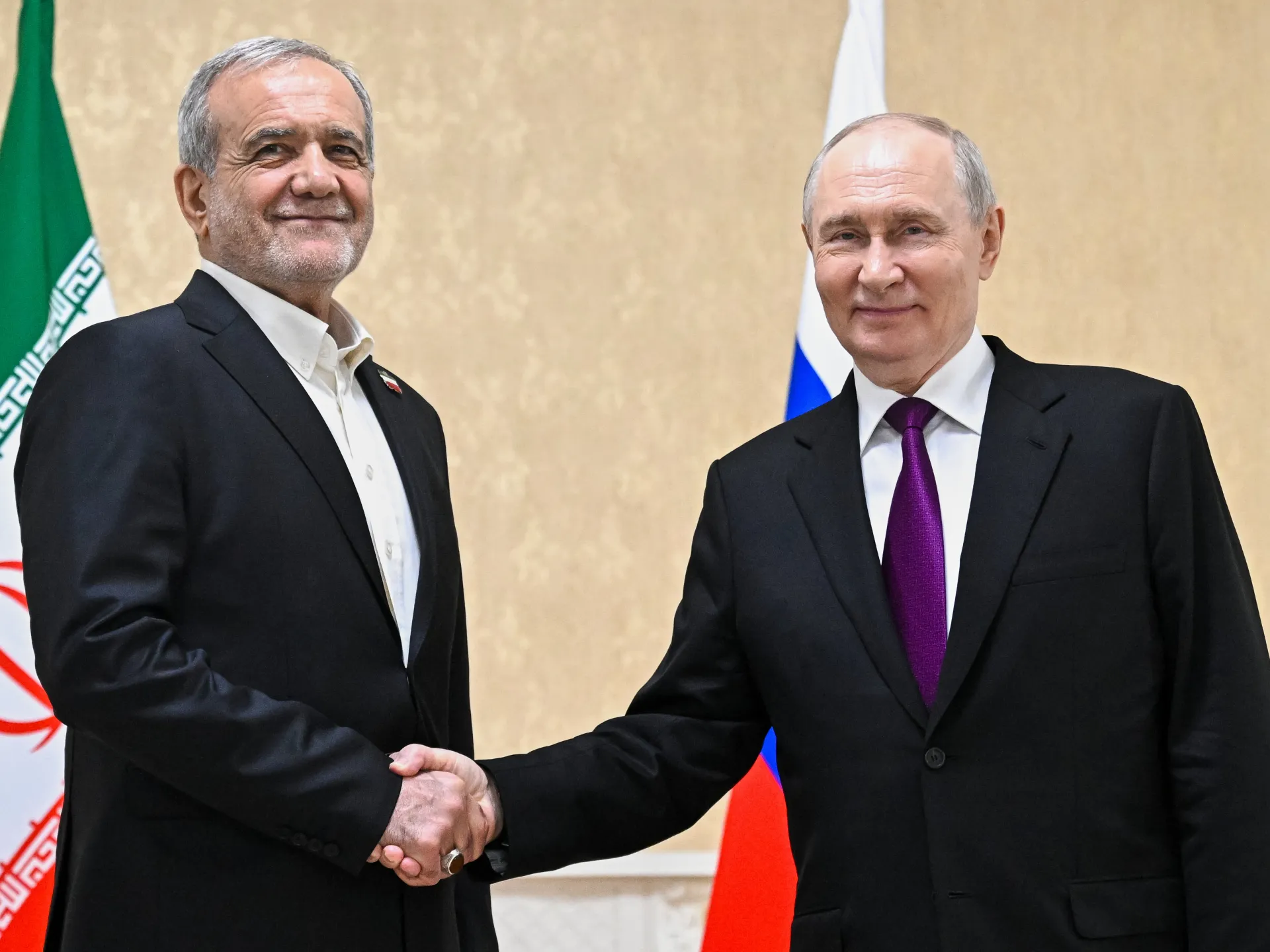
Russian President Vladimir Putin has told Iranian President Masoud Pezeshkian that Russia will “do everything” to help end the United States-led war on Iran, Russian news agencies reported.
The two leaders met in Turkmenistan on Thursday ahead of the summit of the Commonwealth of Independent States, a group of former Soviet nations.
Recommended Stories
list of 3 itemsend of list
“You know our position. On our part, we are ready to do everything we can to help you resolve this situation,” Interfax news agency said Putin told Pezeshkian.
“We know that Iran is making real efforts to end the conflict, which broke out through no fault of its own, no fault of Iran’s,” Putin said, according to Russian media.
Putin also noted what he called a “positive evolution” in Iran-Russia relations.
In a call on Wednesday, Putin told Pezeshkian that Moscow is prepared to mediate efforts to end the war in the Middle East, Iran’s IRNA news agency reported.
Putin and Pezeshkian also met on the sidelines of the Shanghai Cooperation Organisation summit in Kyrgyzstan last month.
Strategic partnership
The two countries, which are under heavy Western sanctions, have reinforced diplomatic and military ties.
Last year, Moscow and Tehran signed a “comprehensive strategic partnership treaty” that covers areas from trade and military cooperation to science, culture and education.
Ukraine and Western countries have accused Iran of supplying Russia with Shahed drones and short-range missiles for use in the Ukraine war. Russia has also been accused of supplying data to Iran for its attacks on US targets in the Middle East.
The meeting came as Iran-US talks stand at an apparent impasse.
US President Donald Trump said on Thursday that the US will not launch an attack on Iran before the November 3 US midterm congressional elections, saying the two countries are holding “productive” talks about ending the ongoing war.
Diplomatic efforts to resolve Russia’s offensive in Ukraine also appear deadlocked, even as both sides intensify attacks.

Four astronauts return to earth after an eight-month space mission | Space
Four astronauts returned to Earth on Thursday from an eight-month mission to the International Space Station. The crew completed a parachute-assisted splashdown in the Pacific Ocean off the coast of California.
Published On 8 Oct 2026
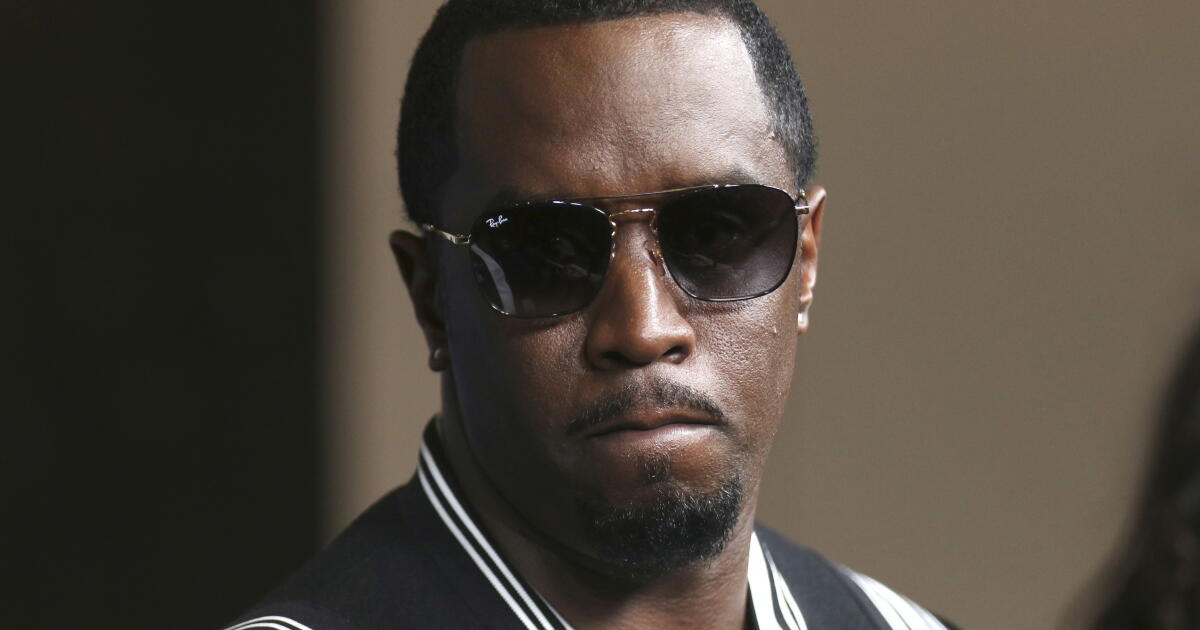
Sean Combs release delayed after posh prison lifestyle allegations
Sean “Diddy” Combs’ release date has been pushed back following allegations of a plush prison lifestyle.
The disgraced music mogul is currently serving a 50-month sentence after he was convicted of transporting prostitutes across state lines for drug-fueled sex performances known as “freak-offs.”
While earlier October reports indicated that the artist and producer would be released on Jan. 21, 2028 — which shaved months off his original June 2028 discharge — an updated search on the Federal Bureau of Prisons inmate database reveals his new revised date as March 2, 2028.
News of his release date comes as the “Bad Boy for Life” singer was reportedly placed and remained in solitary confinement at FCI Fort Dix, a low-security federal prison in New Jersey, following allegations of a pampered prison lifestyle.
On Sept. 29, an NBC report detailed the accounts of four anonymous inmates who claim that the 56-year-old had been paying men for special services.
Sources told NBC News that Combs paid inmates to clean and cook special meals for him, including curry chicken, pizza and empanadas, and that the hip-hop and R&B music producer also receives Chinese-style massages.
To pay for the labor, inmates allege that individuals outside of the prison are depositing thousands of dollars into the commissary accounts of those waiting on the “Satisfy You” singer.
The news outlet also published an image of Combs using a contraband phone, a prohibited item across state and federal prisons; multiple inmates said that he uses it to scroll Instagram and view explicit nude content shared by an old girlfriend.
Two sources also shared that Diddy has access to a “jailbroken” tablet where he watches movies and documentaries, including “Sean Combs: The Reckoning,” the Netflix docuseries produced by his adversary Curtis “50 Cent” Jackson.
Sources also allege that Combs is smuggling an illegal stash of alcohol and purchasing an antidepressant drug known as Remeron, or “rem-roms,” from other inmates.
“This is not some normal s— you see in jail. This is some rich s—. It looks crazy, but again, it’s Diddy,” one source told NBC.
The Times reached out to Combs’ representatives, but did not hear back.
A representative from the Federal Bureau of Prisons said they “do not comment on the conditions of confinement for any incarcerated individuals, including quarters assignment, release plans, or whether a particular individual is the subject of allegations, investigations, or sanctions.”
Legal troubles hit a high note last year for Combs when he was involved in a lengthy and public trial involving allegations of sexual assault and other violence. His former girlfriend Casandra “Cassie” Ventura and producer Rodney “Lil Rod” Jones lodged civil complaints against the music tycoon.
In July 2025, Combs was found guilty on two counts of a prostitution-related charge, but not guilty of racketeering conspiracy and sex trafficking, which carried heavier penalties, including a maximum sentence of life in prison.

Homeland Security targets Democratic campaign after ICE arrest in Pennsylvania
HARRISBURG, Pa. — When the U.S. Department of Homeland Security publicized the arrest of a Nigerian man for indecent exposure this week, it included a political attack that’s drawing complaints from Democrats and a nonpartisan government watchdog.
The department’s news release alleges that the man worked for a Democratic congressional candidate in a Pennsylvania battleground district, an unusual reference to a high-profile midterm contest.
“It’s unbelievable that Janelle Stelson would employ an illegal alien to work on a congressional campaign, let alone a pervert who exposed himself in public,” Charles Wall, deputy director for U.S. Immigration and Customs Enforcement, said in the news release.
A police report said the man had fliers for Stelson in his vehicle. Stelson denied that the man was a campaign employee.
The Department of Homeland Security did not respond to questions about how it established the man worked for Stelson. Its news release cited a news report quoting a conservative activist who asserted the connection.
Citizens for Responsibility and Ethics in Washington filed a complaint Thursday with the U.S. Office of Special Counsel, calling the department’s attack on Stelson a blatant violation of the Hatch Act, which prohibits government officials from using their official positions to influence elections.
Donald Sherman, who leads CREW, said he’d never seen anything like the department’s statement, where a law enforcement agency “goes out of its way” to reference a campaign affiliation in a news release that has nothing to do with election-related crimes.
The news release is “consistent with the message that the administration and that the president has sent from the top that ICE is to be involved in elections, regardless of what the law says,” Sherman said.
Stelson, a former local television personality, is running for the second time against Republican Rep. Scott Perry in Pennsylvania’s 10th Congressional District. It’s expected to be one of the races that determines control of the U.S. House in the November midterms.
“If he is an illegal immigrant who committed a crime he should be deported,” Stelson’s campaign said. “We never heard of him prior to the news of his arrest. We are grateful to law enforcement for acting swiftly to arrest him.”
President Trump’s administration is already under scrutiny for using federal resources for political purposes. The Department of Homeland Security has spent millions of taxpayer dollars on advertisements glorifying Trump and promoting his campaign messaging, drawing a pair of lawsuits and bipartisan backlash.
According to a police report obtained by the Associated Press, Chimaobim Adedayo Igbojekwe was arrested by an East Pennsboro Township police officer on Sept. 27 after a report of a suspicious vehicle parked next to a public park on a residential street in the Harrisburg suburb.
The officer wrote that, when Igbojekwe opened the door to talk to the officer, he noticed that Igbojekwe’s “genitals were exposed.”
Igbojekwe told the officer he was “in the neighborhood for work and that he was waiting to hand out [fliers] for Janelle Stelson’s political campaign,” according to the report. Igbojekwe produced a stack of fliers, the officer wrote.
It’s not clear whether the man was working as a paid canvasser for another organization.
Igbojekwe was charged with disorderly conduct and indecent exposure. He pleaded guilty to disorderly conduct, courts records say, and later was arrested by ICE.
Homeland Security said Igbojekwe entered the country legally in 2017 but remained past his “authorized period.” He was granted deferred action in 2021.
Igbojekwe’s public defender did not return a call about the case.
Levy writes for the Associated Press.

In NLCS, four reasons to believe in Dodgers, and four reasons for concern
The Milwaukee Brewers are up next for the Dodgers in the NLCS, so here’s a reminder that nothing is guaranteed in October.
Source link
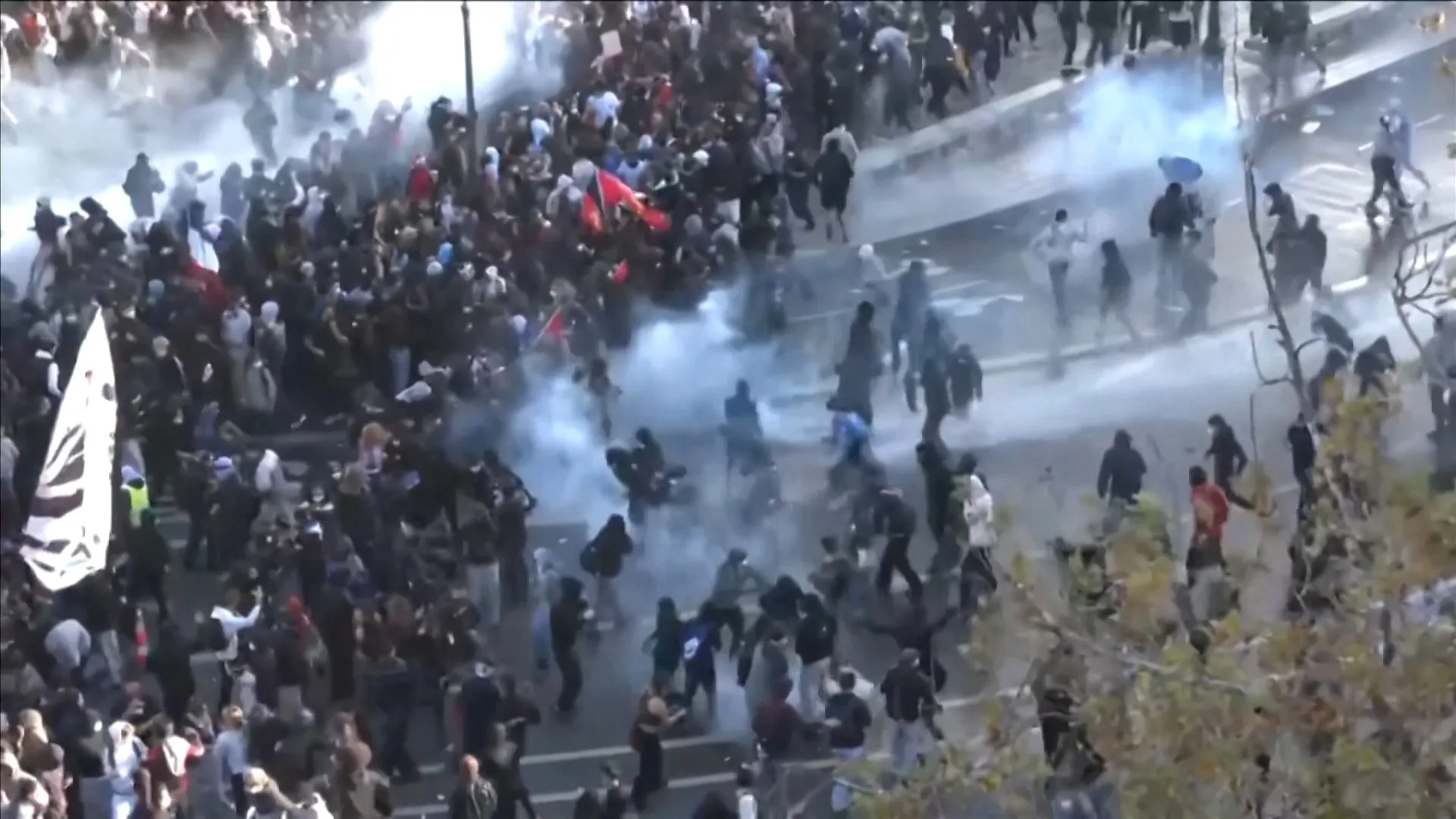
Police use tear gas and water cannons on student protestors in Paris | Police News
Police fired tear gas and water cannons as demonstrators gathered in Paris to demand more funding, teachers, and better conditions in schools. The movement has entered its third week, with police tactics under scrutiny after several teenagers were seriously injured.
Published On 8 Oct 2026