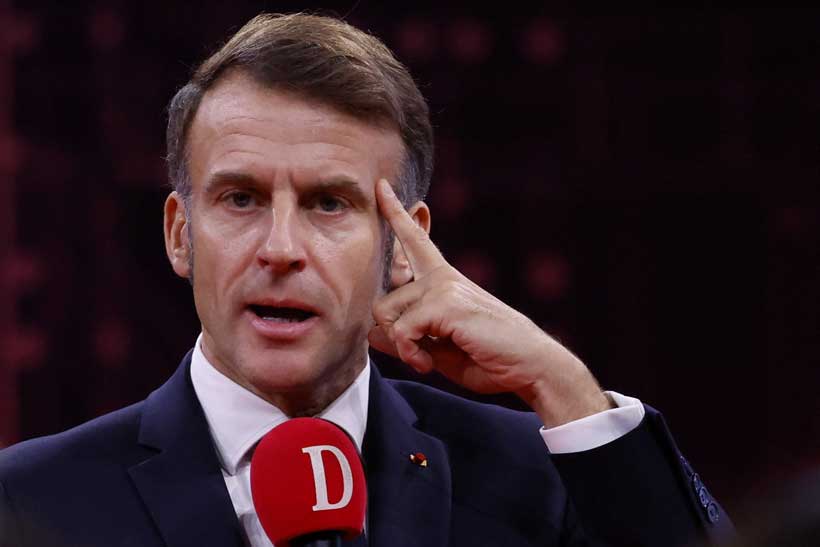
When French President Emmanuel Macron inaugurated France’s Space Command in Toulouse on 12 November 2025 and declared that “space is no longer a sanctuary; it has become a battlefield,” few expected such swift validation. Two weeks later, at the ESA Ministerial Council in Bremen on 26–27 November, member states delivered the largest budget in the agency’s history—€22.1 billion for 2026–2028, a 30% increase over the previous cycle—with an unprecedented focus on security, defense, and strategic autonomy. The Bremen decision has transformed Macron’s stark warning from rhetoric into funded reality and confirmed that Europe is finally awakening to the fact that the next decisive domain of great-power competition lies far above the Earth’s atmosphere.
Paris is preparing to invest about €4.2 billion in military space activities from 2026 to 2030 and around €16 billion in civilian and dual-use programs by the end of the decade. The ambition is to strengthen Europe’s resilience in orbit, reduce dependence on non-European systems, and create an industrial base capable of supporting long-term security objectives.
French planners are betting on a new generation of proximity‑inspection satellites to anchor this strategy, with demonstration flights envisaged in the second half of the decade and operational testing to follow. These satellites can approach, observe, and, if required, interdict suspicious objects in orbit. France is also exploring non‑kinetic tools—lasers and electromagnetic systems among them—designed to disrupt hostile platforms without creating debris. Paris has rejected destructive anti-satellite testing and argues that Europe must enhance space security without undermining international norms.
The European Union is entering this field late. Russia and China have already developed advanced inspection and interference capabilities. In September 2025, German Defence Minister Boris Pistorius revealed that two Russian Luch or Olymp satellites were shadowing Intelsat platforms used by the Bundeswehr. The episode underscored Europe’s lack of awareness and defensive capacity in orbit.
In Brussels, officials are floating the idea of a “European Space Shield”—a more integrated architecture to protect satellites and align EU and NATO postures. Success will depend on the willingness of member states to coordinate procurement, share data, and harmonize strategic objectives. Europe’s current system remains fragmented and is often slowed by national industrial preferences.
Macron has also called for reform of the European Space Agency’s geographic return rule, which distributes contracts according to member-state contributions rather than technical merit. The French position is that this rule limits innovation and prevents Europe from responding quickly to fast-moving threats in orbit.
There are challenges. Even non-kinetic defenses can be misinterpreted as escalatory. The orbital environment is crowded, vulnerable to miscalculation, and poorly regulated. France has therefore paired its military investments with calls for new rules of behavior and a European proposal for an orbital code of conduct. Such a framework would help prevent misunderstandings and promote transparency.
The ESA Ministerial Council that concluded in Bremen on 27 November delivered what many had doubted was possible: a €22.1 billion envelope for 2026–2028 that explicitly prioritizes space security, resilient navigation (FutureNAV), Earth-observation continuity, and dual-use technologies. Germany increased its contribution by nearly a third despite domestic fiscal constraints, while the package includes more than €1 billion for programs directly supporting defense and sovereignty. Crucially, ministers opened the door to greater flexibility on the controversial “geographic return” rule for critical security projects—a French demand that had been resisted for years. Bremen did not create a fully unified European space-defense policy overnight, but it transformed Macron’s Toulouse rhetoric into funded reality and gave the proposed European Space Shield its first serious financial and political tailwind.
Satellites underpin critical EU functions, including climate monitoring, secure communications, trade logistics, and border management. Rivals are developing tools that can dazzle, jam, or disable them. Europe cannot assume that these systems will remain safe without deliberate action.
Macron’s announcement in Toulouse should be seen as a strategic warning. Europe has the capacity to protect its interests in orbit, but only if it acts with coherence and political determination. The challenge for the European Union is not technological. It is the ability to work collectively and with a sense of urgency. In an era in which conflict begins long before military forces deploy, the EU’s strategic autonomy may depend on decisions made far above the atmosphere.