





France

Women’s Six Nations: ‘Fine margins’ – What cost Ireland in France defeat?

After the big talk in the build-up, Ireland blew France away in the opening 40 minutes but, largely, were left unrewarded for their efforts.

Cliodhna Moloney-MacDonald crossed for Ireland but had two efforts chalked off, while Brittany Hogan and Fiona Tuite were also denied first-half scores.

France, who are tipped to meet England in a Grand Slam decider on the final day of the Six Nations, showed a clinical edge and moved clear after the restart through Carla Arbez, Anais Grando and Lea Champon, while Ireland could not back up their first-half performance and fell short.

Under head coach Scott Bemand, Ireland have moved up to fifth in the world and stunned New Zealand and Australia in 2024, but the elusive Six Nations scalp goes on.

England had too much on the opening day, when a slow start was punished, and defeat by France shows there is still work to be done.

“In these kinds of Test matches the margins become finer, so we’re after finer margins than we were,” Bemand said.

“Nail your kick to touch and nail your exit – they are the type of things that don’t let France in.

“We will keep going after the finer margins and keep trying to get better. I’ve got a group who is up for that.”

Source link

Women’s Six Nations 2026: Coach Scott Bemand says Ireland are ‘ready’ for big-game pressure in France

Head coach Scott Bemand says Ireland are “ready” for the pressure of facing France in Clermont on Saturday after learning from a string of big-game experiences.

Ireland began their Women’s Six Nations campaign with a 33-12 loss to England in front of a record 77,120 at Twickenham’s Allianz Stadium.

Bemand’s side also faced New Zealand and France in front of near-capacity crowds at the World Cup last year – and the coach feels those days will stand to his squad as they bid for a first win on French soil.

“We’ve got the benefit now with our group having come through the World Cup piece where we had full stadiums, a lot of noise and a lot of expectation, internal expectation,” said Bemand.

“Going away to France is a class experience. We were away in England two weeks ago so we’ve had a recent opportunity of stepping into that sort of arena.

“I saw a completely different group to two years ago walking into that space, so as we continue to evolve, continue to get more confident in ourselves and our performances, I think we’re ready for this one.”

Bemand, who has made one change from last week’s nine-try win over Italy, added the team feel “excitement and anticipation rather than nerves”.

“We’re ready for this, we’ve trained well this week,” he added.

“We’re now recovering, we’ll travel, we’re going to enjoy it. The weather looks good over there and we’ll be absolutely gunning to start and get out of the blocks when the whistle goes on Saturday night.”

Source link

Hair dryer trick behind €25,000 win? France probes potential weather data scam linked to Polymarket

Published on

Météo-France has initiated an inquiry to determine whether the meteorological infrastructure managed by them was targeted by individuals seeking to influence prediction markets.


ADVERTISEMENT


ADVERTISEMENT

This development follows reports of highly unusual temperature spikes that triggered significant financial payouts on the blockchain-based site Polymarket, where users place wagers on real-world events.

Investigators are examining if the integrity of the national weather network was breached through physical or digital interference, as the precision of the winning bets suggests the actors involved may have had direct control over the reported data.

Online rumors, which remain unverified for the time being, claim the temperature reading was manipulated by someone using a hair dryer to generate a higher temperature.

Polymarket reportedly settles Paris temperature bets on a single Météo-France sensor sitting near the Charles de Gaulle airport perimeter.

On 6 April, the reading from the sensor abruptly rose 4°C in twelve minutes, crossing the 22°C threshold despite data from other sources showing different figures.

A user on Polymarket aggressively bet on readings above 21°C on that specific day, even though the consensus was lower at 18°C, and profited almost €30,000.

A second similar anomaly occurred on 19 April leading to suspicions that the sensor was tampered with.

Météo-France announced that it has filed a complaint with the Roissy air transport gendarmerie brigade “for [the] alteration of the operation of an automated data processing system,” after an analysis of sensor data.

Polymarket suspended its reliance on the compromised weather data source for Paris, shifting its resolution metric from the sensor in Charles de Gaulle airport to the one in Paris-Le Bourget airport.

However, it did not cancel the contracts or refund the bets, leaving the resolved contracts final, even though on previous occasions it has suspended the resolution of certain bets until further clarification on the rules and circumstances.

Decentralised ‘oracles’ and prediction markets

This incident has reignited the debate over the reliability of the “oracles” that feed data to prediction markets in order to settle bets.

In decentralised finance, an oracle is the mechanism that feeds external, real-world information into a smart contract to determine a financial outcome.

Polymarket relies on these feeds to settle its contracts, often pulling data directly from official government websites. If the primary source of that data is corrupted, the betting market lacks any internal mechanism to verify the truth.

Additionally, the decentralised nature of these platforms makes it difficult to freeze assets even if an investigation identifies the individuals behind suspicious trades.

This is the latest case that highlights a new frontier of white-collar crime, where the manipulation of the physical world is used to exploit the vulnerabilities of automated prediction markets in order to win bets on real-world events.

Source link

France’s foreign minister says 85-year-old widow detained by ICE returns home

French Foreign Minister Jean-Noël Barrot said an 85-year-old French widow of an American military veteran who was in immigration custody in the United States returned home on Friday.

U.S. Immigration and Customs Enforcement agents detained Marie-Thérèse Ross in Alabama on April 1 after she overstayed her 90-day visa, according to the U.S. Department of Homeland Security.

“She returned to France this morning, this is a satisfaction for us,” Barrot told reporters during a visit to the southern city of Montpellier on Friday.

Barrot said he would not comment on the specific case, but said some of ICE methods are “not in line” with French standards and “not acceptable to us.” Barrot referred to “violence that raised our concerns,” without elaborating.

Ross was being held at a federal immigration detention facility in Louisiana.

She was among the thousands of people targeted by the Trump administration’s mass deportation agenda that has detained the spouses of U.S. soldiers and military veterans who previously received greater leniency under scrapped policies.

Ross married Alabama resident William Ross in April last year, Calhoun County marriage records show. Ross died in January, according to an obituary from his family, which says he was a former captain in the U.S. Army.

Source link

Full list of airports as easyJet warns of ‘longer queues’

easyJet issued an ‘important update’ earlier this month

easyJet has issued an alert to passengers travelling to more than 100 destinations with the airline after a major rule change that has come in post-Brexit.

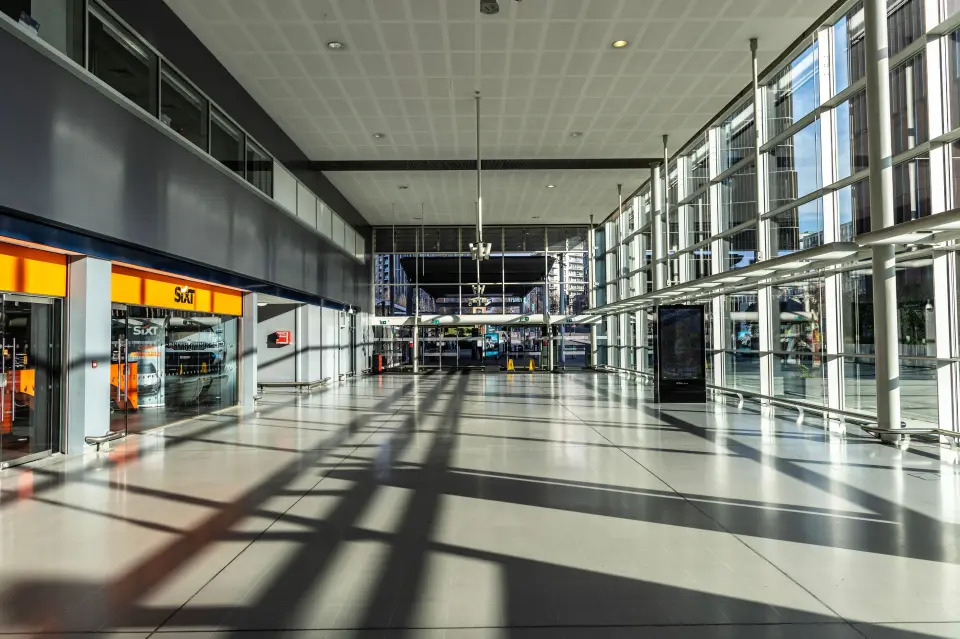
In an “important update” issued earlier this month, easyJet warned queue times may be affected and said: “Airports across Europe may experience longer queues at passport control whilst the new European Entry/Exit System (EES) border checks are being completed. This will mean you may need to have your biometrics taken including your face and fingerprints scanned.”

Passengers are advised to plan travel to and through the airport, factoring in that they may have to queue for longer than previously. Anyone who needs to use Bag Drop should do so as soon as it opens, and travellers should make sure they have all necessary documents to hand.

easyJet is also urging people to go through security as early as possible and to head to the gate or boarding area as soon as it is announced. The travel operator further said there may be additional checks at passport control before your gate and added: “You may experience longer queues in your arrival airport”.

Full list of easyJet destinations under the new EES

  • Ajaccio, Corsica (AJA) – France
  • Akureyri (AEY) – Iceland
  • Alicante (ALC) – Spain
  • Almeria (LEI) – Spain
  • Amsterdam (AMS) – Netherlands
  • Athens (ATH) – Greece
  • Barcelona (BCN) – Spain
  • Bari (BRI) – Italy
  • Basel (BSL) – Switzerland
  • Bastia, Corsica (BIA) – France
  • Berlin Brandenburg (BER) – Germany
  • Biarritz (BIQ) – France
  • Bilbao (BIO) – Spain
  • Bordeaux (BOD) – France
  • Brest Brittany (BES) – France
  • Brindisi (BDS) – Italy
  • Brussels Intl (BRU) – Belgium
  • Budapest (BUD) – Hungary
  • Burgas (BOJ) – Bulgaria
  • Calvi, Corsica (CLY) – France
  • Copenhagen (CPH) – Denmark
  • Corfu (CFU) – Greece
  • Costiera Amalfitana Salerno, Naples (QSR) – Italy
  • Crete Chania (CHQ) – Greece
  • Crete Heraklion (HER) – Greece
  • Dubrovnik (DBV) – Croatia
  • Dusseldorf (DUS) – Germany
  • Evenes-Lofoten (EVE) – Norway
  • Faro (FAO) – Portugal
  • Figari, Corsica (FSC) – France
  • Frankfurt International (FRA) – Germany
  • Friedrichshafen (FDH) – Germany
  • Fuerteventura (FUE) – Spain
  • Geneva (GVA) – Switzerland
  • Gibraltar (GIB) – Gibraltar
  • Gran Canaria (LPA) – Spain
  • Grenoble (GNB) – France
  • Hamburg (HAM) – Germany
  • Ibiza (IBZ) – Spain
  • Innsbruck (INN) – Austria
  • Kalamata (KLX) – Greece
  • Kefalonia (EFL) – Greece
  • Kittila (KTT) – Finland
  • Kos (KGS) – Greece
  • Krakow (KRK) – Poland
  • La Coruña (LCG) – Spain
  • La Rochelle (LRH) – France
  • Lamezia (SUF) – Italy
  • Lanzarote (ACE) – Spain
  • Lille (LIL) – France
  • Lisbon (LIS) – Portugal
  • Ljubljana (LJU) – Slovenia
  • Luxembourg (LUX) – Luxembourg
  • Lyon (LYS) – France
  • Madeira Funchal (FNC) – Portugal
  • Madrid (MAD) – Spain
  • Majorca Palma (PMI) – Spain
  • Malaga (AGP) – Spain
  • Malta (MLA) – Malta
  • Marseille Provence (MRS) – France
  • Menorca Mahon (MAH) – Spain
  • Milan Linate (LIN) – Italy
  • Milan Malpensa (MXP) – Italy
  • Montpellier (MPL) – France
  • Munich (MUC) – Germany
  • Murcia Intl (RMU) – Spain
  • Mykonos (JMK) – Greece
  • Nantes (NTE) – France
  • Naples (NAP) – Italy
  • Nice (NCE) – France
  • Oslo (OSL) – Norway
  • Paris Charles de Gaulle (CDG) – France
  • Paris Orly (ORY) – France
  • Pisa (Tuscany) (PSA) – Italy
  • Porto (OPO) – Portugal
  • Porto Santo (PXO) – Portugal
  • Prague (PRG) – Czech Republic
  • Preveza (PVK) – Greece
  • Pula (PUY) – Croatia
  • Rennes (RNS) – France
  • Reus (REU) – Spain
  • Reykjavik Keflavik (KEF) – Iceland
  • Rhodes (RHO) – Greece
  • Rimini (RMI) – Italy
  • Rome Fiumicino (FCO) – Italy
  • Rovaniemi (RVN) – Finland
  • Salzburg (SZG) – Austria
  • Santa Cruz de la Palma (SPC) – Spain
  • Santiago de Compostela (SCQ) – Spain
  • Santorini (JTR) – Greece
  • Sardinia Cagliari (CAG) – Italy
  • Sardinia Olbia (OLB) – Italy
  • Scandinavian Mountains (SCR) – Sweden
  • Seville (SVQ) – Spain
  • Sicily Catania (CTA) – Italy
  • Sicily Lampedusa (LMP) – Italy
  • Sicily Palermo (PMO) – Italy
  • Skiathos (JSI) – Greece
  • Sofia (SOF) – Bulgaria
  • Split (SPU) – Croatia
  • Strasbourg (SXB) – France
  • Tenerife South (TFS) – Spain
  • Thessaloniki (SKG) – Greece
  • Toulouse (TLS) – France
  • Tromsø (TOS) – Norway
  • Turin (TRN) – Italy
  • Valencia (VLC) – Spain
  • Venice Marco Polo (VCE) – Italy
  • Verona (VRN) – Italy
  • Vienna (VIE) – Austria
  • Zadar (ZAD) – Croatia
  • Zante Zakynthos (ZTH) – Greece
  • Zurich (ZRH) – Switzerland

The EES applies to 29 countries: Austria, Belgium, Bulgaria, Croatia, Czechia, Denmark, Estonia, Finland, France, Germany, Greece, Hungary, Iceland, Italy, Latvia, Liechtenstein, Lithuania, Luxembourg, Malta, Netherlands, Norway, Poland, Portugal, Romania, Slovakia, Slovenia, Spain, Sweden, and Switzerland. The above list of airports are the Schengen area destinations you can fly to with easyJet from the UK, as of the airline’s website at the time of publication.

Source link

France arrests suspect over 1982 attack on Jewish restaurant | Crime News

Mahmoud Khader Abed Adra, sought for over four decades, was surrendered by Palestinian authorities

A man suspected of organising a deadly attack on a Jewish restaurant in Paris has been arrested and placed in custody in France after being handed over by Palestinian authorities.

Mahmoud Khader Abed Adra, also known as Hicham Harb, arrived in France on Thursday after Palestinian officials surrendered him to French authorities, a handover that French President Emmanuel Macron linked directly to France’s recent recognition of Palestinian statehood.

Recommended Stories

list of 3 itemsend of list

On August 9, 1982, three to five men threw a grenade into Jo Goldenberg, a Jewish-owned restaurant in the Rue des Rosiers, in Paris’s historic Marais district, before opening fire on the street outside.

Six people were killed and 22 wounded in the incident.

The attack was blamed on the Fatah-Revolutionary Council, a Palestinian armed faction that had split from the mainstream Palestine Liberation Organization (PLO).

Adra was arrested in the West Bank by Palestinian security forces in September last year.

French antiterrorism prosecutors filed an extradition request days later, and he was flown to the Villacoublay military airbase outside Paris on Thursday, where he was taken into custody.

His lawyer described the extradition as “a serious violation of Palestinian fundamental law”.

“Forty-four years is too long,” said David Pere, a lawyer representing several families.

Two other suspects are already in French custody, and in February, France’s highest court confirmed that a trial will proceed, a ruling that had been challenged by the defendants.

Macron praised the Palestinian Authority’s cooperation, saying it reflected a commitment by President Mahmoud Abbas to work with France on counterterrorism.

Abbas had told French newspaper Le Figaro late last year that France’s recognition of Palestinian statehood in September 2025 had “created an appropriate framework” for the extradition request.

Source link

Hugo Ekitike injury: France striker to miss to miss rest of season and World Cup with ruptured Achilles

France striker Hugo Ekitike will miss the World Cup after suffering a rupture of the Achilles tendon during Liverpool‘s Champions League defeat by Paris St-Germain on Tuesday.

Ekitike left the pitch at Anfield on a stretcher after slipping in the first half and Liverpool fear a long absence for the 23-year-old, which could also rule him out of the start of next season.

He went for scans on Wednesday, which confirmed the extent of the damage.

In a statement on Thursday, Liverpool did not give a timeline for the recovery.

“Scans on the issue have subsequently confirmed a rupture of the Achilles tendon,” the club said.

“Ekitike will therefore be sidelined for the remaining weeks of the club season and unable to participate at this summer’s World Cup with France.

“Further updates will be provided at the appropriate time.”

On Wednesday night, France manager Didier Deschamps said in a statement published by the French Football Federation that Ekitike was out of this summer’s tournament in the US, Mexico and Canada.

He said: “Hugo is one of the dozen young players who have made their debuts with the national team in recent months. He had perfectly integrated into the group, both on the pitch and off it. This injury is a huge blow for him, of course, but also for the France team.

“His disappointment is immense. Hugo will regain his top form, I’m convinced of it. But I wanted to express all my support to him, as well as that of the entire staff. We know he’ll be fully behind the France team, and we’re all thinking of him very strongly.”

Source link

French government seeking release of French widow, 86, held by ICE

The French government is pressing the U.S. Department of Homeland Security to release the 86-year-old French widow of a military veteran from immigration custody after she was detained this month.

U.S. Immigration and Customs Enforcement agents detained Marie-Therese Ross in Alabama on April 1 after she overstayed her 90-day visa, according to Homeland Security. Ross is now held at a federal immigration detention facility in Louisiana.

She is among the thousands of people targeted by the Trump administration’s mass deportation agenda that has led to the detentions of the spouses of U.S. troops and military veterans who previously received greater leniency under scrapped policies.

Rodolphe Sambou, the consul general of France in New Orleans, told the AP that the French government has “fully mobilized” to push for her release. He said he has visited her in detention twice so far.

“Given her age, we really want her to get out of this situation as soon as possible,” Sambou said. “We want to get her out of jail.”

Sambou said that he has been communicating frequently with Ross’ family and French officials in Washington, Atlanta and Paris to try and coordinate Ross’ release and ensure she has access to sufficient food and healthcare. He said the French government has also contacted Homeland Security.

He declined to comment on her legal status or other details of her case.

Ross married Alabama resident William Ross last April, Calhoun County marriage records show. Ross died in January, according to an obituary from his family, which says he was a former captain in the U.S. Army.

A lawyer who is representing Ross in a separate legal matter did not immediately respond to a request for comment. Ross’ family did not respond to requests for comment.

Brook writes for the Associated Press. AP writer Samuel Petrequin in France contributed to this report.

Source link

Iran citizen held in France over pro-Palestine comments returns home | Prison News

Release of Mahdieh Esfandiari comes a week after Iran released two French citizens held on espionage charges.

Iranian national Mahdieh Esfandiari has returned home after being held in France for more than a year as part of what appears to be an exchange of detainees between the countries.

Iran’s state television reported on Wednesday that the “rights activist”, sentenced to one year in prison after making online comments supportive of Palestine and the 2023 Hamas attack on Israel that prompted the genocidal war on Gaza, had returned to Iran.

Recommended Stories

list of 2 itemsend of list

The University of Lyon graduate, who had been living in France since 2018, where she worked as a translator, was arrested in February last year on charges of promoting “terrorism”, and released on bail in October.

“I think it’s clear for everyone that there is no freedom of speech, at least not in France where I was. The court’s ruling was very unjust,” Esfandiari told state television in a Wednesday broadcast.

Esfandiari’s release comes a week after French citizens Cecile Kohler, 41, and Jacques Paris, 72, arrived in France after being held for more than three years in Iran.

Kohler and Paris were arrested by Iranian authorities in May 2022 but were freed in November last year, after more than three years in prison on espionage charges that their families vehemently deny.

They were taken by French diplomats to France’s mission in Tehran, where they lived under house arrest until their full release on April 7. Upon their release, they were driven from Iran to neighbouring Azerbaijan before taking a flight to Paris.

President Emmanuel Macron’s office said their release was the outcome of a “long-term effort”, but talks accelerated in recent weeks due to pressure from the US-Israel war on Iran, giving a sense of urgency to the situation.

While an exchange was not explicitly acknowledged by France, Iran’s state-run agency IRNA had previously said Tehran reached an agreement with Paris for the release of the French citizens in exchange for Esfandiari.

Source link

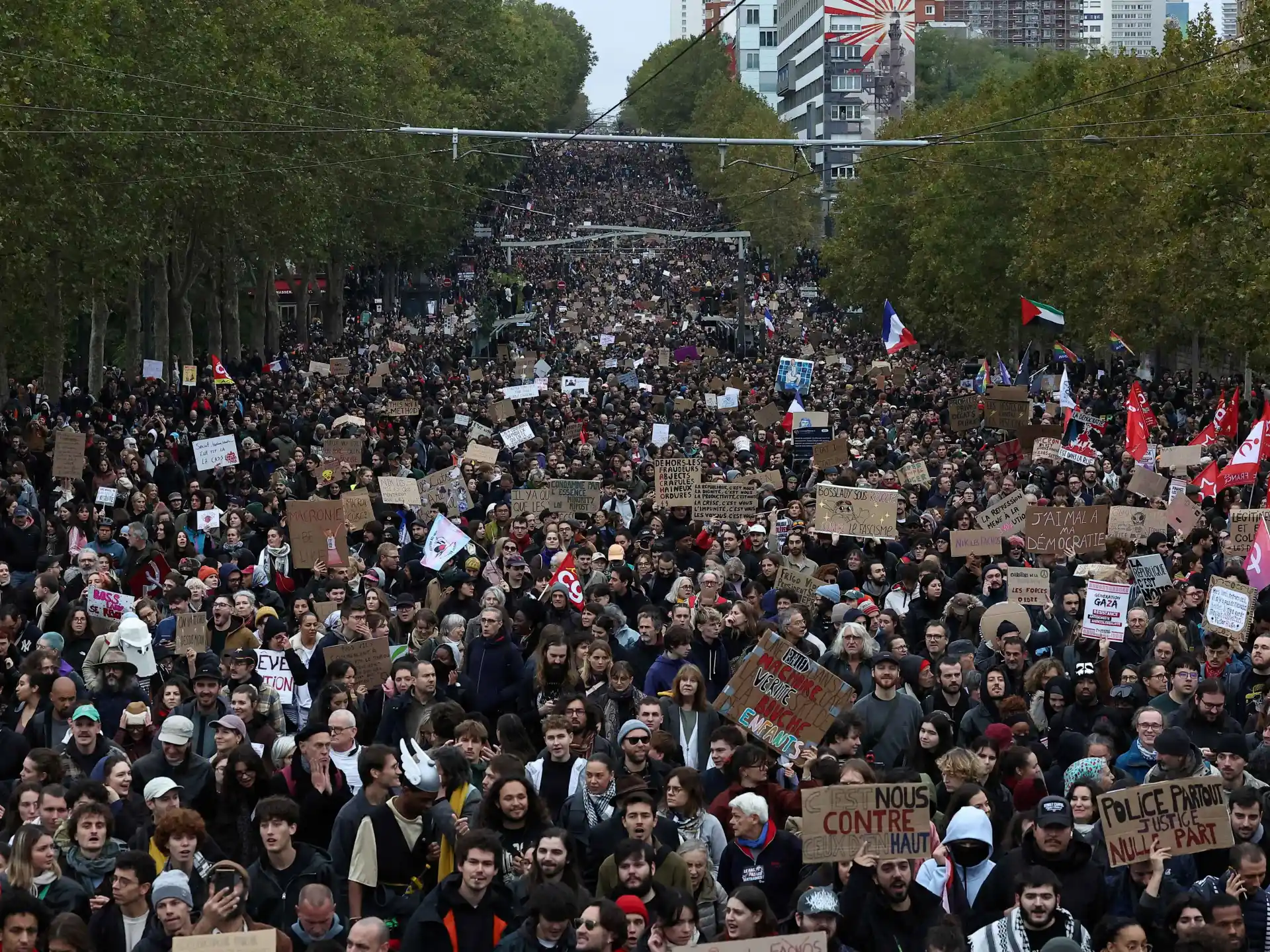
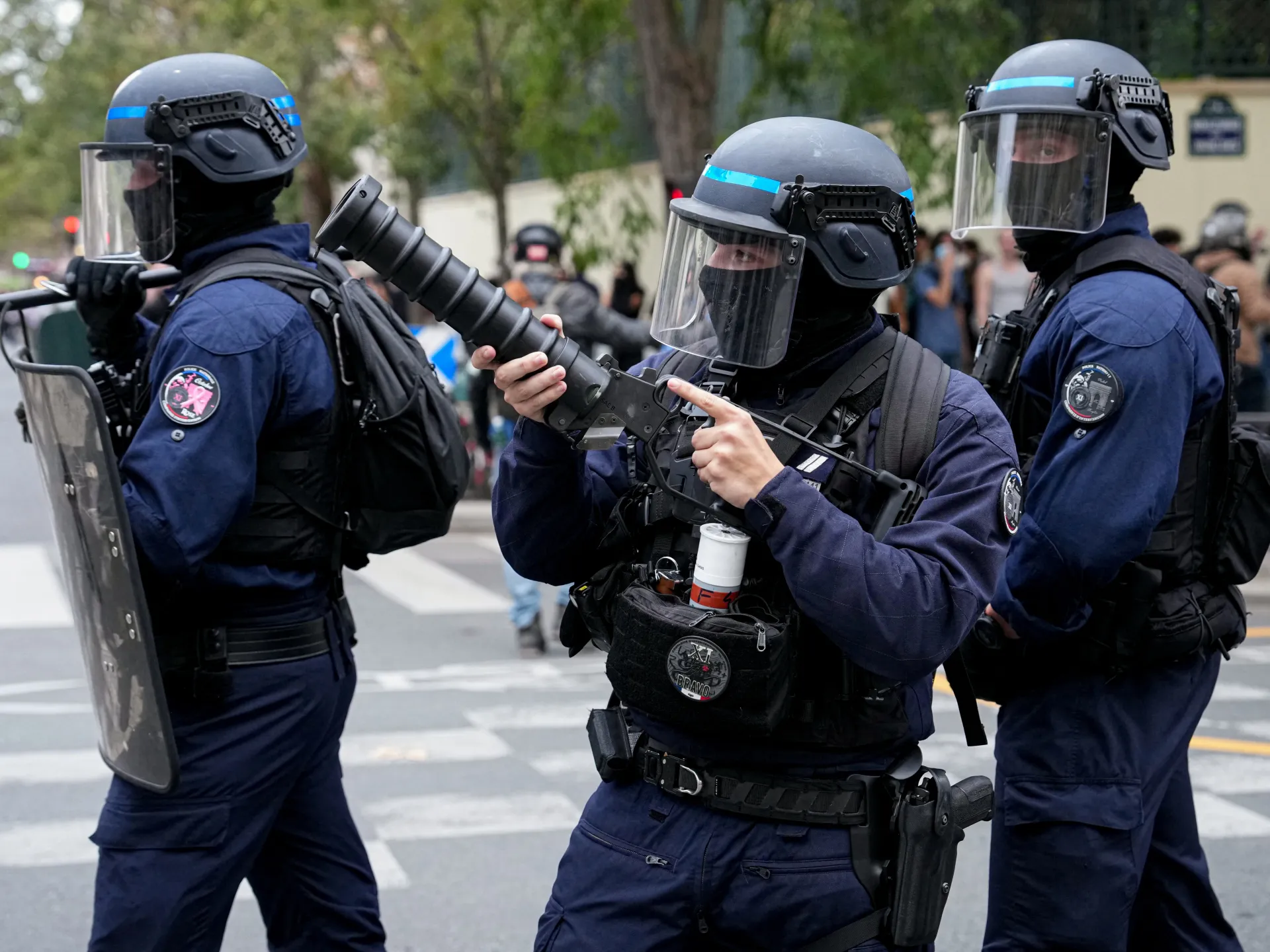
French police arrest students protesting anti-Semitism law | Protests News

Police in France have arrested students at Sorbonne University, Sciences Po and Paris-Saclay University during a sit-in against a controversial anti-Semitism bill that could outlaw criticism of Israel. Lawmakers are set to vote on the ‘Yadan law’, named after a pro-Israel French MP who sponsored the bill, on April 16.

Source link

Cement company Lafarge found guilty in Syria terrorism financing case | Syria’s War

NewsFeed

A French court has found cement company Lafarge guilty of financing armed groups during the Syrian war. Prosecutors said the company paid millions of dollars to ISIL and the al Qaeda-affiliated Nusra Front between 2013 and 2014 to keep its factory operating.

Source link

New April 2026 rules in France could see you fined €500 – full list

Tourists could get caught out by tough new legislation

Holidaymakers heading to France are being warned about strict new rules that could result in on-the-spot fines of up to €500. France remains one of the most popular destinations for UK travellers, but a nationwide ban on oral nicotine products, which came into force on April 1, 2026, is expected to catch out many visitors.

A spokesman for tobacco product retailer Northerner said: “Under the new law, nicotine pouches and similar oral nicotine products are completely banned in France. Despite objections from many European countries, the ban includes the sale, import, possession, and use of oral nicotine products, meaning holidaymakers could fall foul of the law just by having pouches in their possession.

“Possible consequences include fines, which some sources suggest can be around €100–€500+ on the spot, and potentially criminal penalties. If you’re going to France, don’t pack nicotine pouches at all.

“Any products containing nicotine (synthetic or natural), packaged for sale, and designed for oral use are included within the ban. This includes non-medicinal pouches, gums, lozenges, beads, pastes, strips, and liquids. The ban does not apply to smokeless tobacco products such as chewing tobacco.”

Separate from the pouch ban, France is also tightening smoking rules. Smoking is banned in many outdoor public areas such as beaches, parks, areas near schools, outdoor sports venues, and bus stops. Fines for breaking these rules are typically around €90–€135, rising to much higher amounts if unpaid.

Markus Lindblad, Head of External Affairs from Northerner, said: “France still has an exceptionally high smoking rate, around 23% compared to about 12% in the UK. Nicotine pouches are an effective alternative to cancer-causing cigarettes, so completely banning them removes the option for French smokers.

“Absurdly, this ban doesn’t include chewing tobacco, which is known to be cancer-causing. If the French government’s goal really is to improve public health, then given the harms we know are caused by alcohol, it would actually make much more sense for them to ban champagne rather than nicotine pouches. We want to see strong regulation of nicotine pouches, not total prohibition.”

Source link

European city with £28 UK flights and 20c temperatures in April dubbed ‘capital of cool’

A city nestled in the south of France has seen a major transformation over the last 13 years, ditching its reputation and seeing a major investment, bringing in ‘chic’ and ‘hip’ food spots

A stunning European city with UK flights and 20C temperatures in April has been branded the “capital of cool”. Marseille in the south of France secured half a billion euros of investment after being crowned the European Capital of Culture in 2013.

Since then the world famous port has become known for being “chic” and “hip”. It blends a mix of history thanks to the bustling Vieux-Port, which sits at the bottom of the Canebière, a kilometre-long main street in the city.

Visitors can take a selfie under the Ombrière – a giant umbrella at the port – and a stroll along the quayside before watching the fishing boats head out to sea. Towering above the port is the historic Notre-Dame de la Garde basilica, which offers 360 degree views of the stunning city.

The port however blends history with modern, boasting a range of “cutting-edge museums,” reports the Daily Mail, along with “foodie-approved restaurants” and “trendy bars”. The paper, which describes the city as the “capital of cool”, reports: “Marseille is wonderful for a short break at this time of year, with average daily highs of around 19C-20C – and the seafood is second to none.”

One popular dish in the city in particular is bouillabaisse, an “iconic” fish soup that is served in two dishes. One contains the fish and the other a broth on a stove, with the fish itself traditionally cut up in front of diners.

Bouillabaisse is then served with rouille or aioli sauces with croutons for dipping. The influence of the Mediterranean is also evident in the local cuisine, with anchoïade, a traditional dish made with anchovies, capers, olive oil and garlic, said to contain the “iodine taste of the sea” in “every bite,” reports Ville De Marseille.

Away from the food scene, visitors to Marseille can visit the Le Panier, the oldest district of the city which now boasts small café terraces, street-art coloured facades, and designer shops. Having now become an “open-air museum” the area was first inhabited by the Greeks in 600BC.

It developed a reputation for violence and prostitution in the 20th century but has seen a massive overhaul in the past 13 years. It is now described as one of Marseille’s “must-see districts”.

For nature lovers, the cliffs of the Calanques have been described as a “natural wonder”. The Calanques boast fine sandy beaches, miniature fjords and turquoise waters.

It is the perfect area for people who want to sun-bathe or enjoy a spot of kayaking. YouTuber Nathan Frank, who posts as On World Travel, described Marseille as a “city that doesn’t care if you like it or not”.

He said: “We’ve been here for three days now and I’ve spoken to quite a few locals and they’ve been so friendly. Like more friendly than a lot of places we’ve been to and super down to earth and friendly. Our first impressions of Marseille have been really positive, we have some really good food on the agenda.”

Marseille boasts average temperatures of around 19 to 20C in April. And according to Skyscanner, prices from Manchester Airport start from around £28.

Source link

UK police arrest man after four die during Channel crossing attempt | Migration News

The National Crime Agency (NCA) said a Sudanese man was detained on suspicion of ‘endangering another during a journey by sea to the UK’.

British police have arrested a Sudanese man on suspicion of “endangering another” person after four people died while trying to cross the English Channel from France.

The National Crime Agency (NCA) said on Friday that a 27-year-old man, who remains unnamed, was detained at a migrant processing centre in Manston, southern England.

Recommended Stories

list of 3 itemsend of list

According to an NCA statement, the suspect was arrested on suspicion of “endangering another during a journey by sea to the UK” under the Border Security, Asylum and Immigration Act.

The arrest comes a day after two men and two women were swept away by the current after trying to board a small boat with dozens of others off the coast of Saint-Etienne-au-Mont, near Calais in northern France, on Thursday.

So-called water-taxis are inflatable boats that cruise along the coastline picking up migrants and refugees who wade into shallow waters to climb on board, in a method to avoid security forces from stopping the boats from launching.

Last week, two men, one Sudanese and the other Afghan, died trying to make a similar crossing in the first reported deaths in the Channel this year.

The NCA said the suspect was being held and interviewed by officers who are also speaking to those who made the journey, which included 74 people, of whom 38 were returned to France.

The statement added that there was an ongoing investigation into the circumstances of the deaths of the four people and the launch of the boat, led by French prosecutors.

NCA Deputy Director Craig Turner said the agency would work with “colleagues at home and abroad” to do “all we can to identify and bring to justice those responsible for these four tragic deaths”.

The minister for migration and citizenship, Mike Tapp, said law enforcement teams would continue to prevent these “perilous journeys and bring those responsible to justice”, adding that every death in the Channel was a “tragedy”.

“Through our Border Security Act, officers now have stronger powers to act earlier and disrupt, intercept and take down the operations of criminal smuggling gangs who bring illegal migrants to our shores,” he said.

Source link

‘I moved from UK to France for a better life but there’s one issue I didn’t see coming’

Debbie Dawtrey moved from Cambridgeshire to south-western France in 2023 and opened a hotel, but she’s found that one of the most significant problems has been difficult to overcome

Many of us dream about relocating to some idyllic corner of Europe to soak up the sun and embrace the advantages of Mediterranean living. However, beyond the complications of European red tape – and the considerable cost – there’s another significant obstacle that numerous people fail to consider.

Debbie Dawtrey, who relocated from Buckden in Cambridgeshire to south-western France in 2023, reveals that one of the most substantial challenges she’s faced is feeling socially cut off.

Debbie, 64, established a boutique hotel in the Charente, situated in the charming village of Confolens, and explains that while she remains extremely occupied throughout the tourist season, the colder months can prove incredibly isolating.

She told The Times: “I didn’t know anyone in the area and while the summers are busy with guests, contacts are transient and the winters are especially hard as people hunker down and close the shutters.”

Debbie, who is unmarried, explains she’s discovered a method of reconstructing her social connections by arranging a monthly supper club for fellow expats: “Every month we’d take turns in hosting a dinner and had lots of fun,” she explains, “it helped broaden our social circle.”

Debbie emphasises that becoming isolated is remarkably easy when relocating far from relatives and friends, and recommends “you have to really make an effort to put yourself out there”.

Even when you’ve attempted to master the native tongue, the capacity to initiate spontaneous conversations can prove far more challenging than forming friendships back in Britain.

While some individuals might frequent a neighbourhood pub, or perhaps become members of a fitness centre, these are more readily available in bigger towns and cities. Establishing a fresh existence in the French countryside – or indeed in a remote UK community, can prove quite demanding.

Even those working with substantial financial resources can find themselves yearning for what they’ve left behind. Earlier this year, Kate Ferdinand spoke candidly about her homesickness following her relocation to Dubai with her footballer husband Rio.

On her ‘Blended’ podcast in February, Kate became emotional and confessed she was pining for her family and friends back home. Kate and Rio relocated to the UAE last August and while her husband is “loving” his new existence there, matters aren’t quite as positive for Kate.

“I am enjoying it, but I miss home quite a lot,” she acknowledged. “I can’t talk about it because I get upset. I feel like we’ve opened our eyes to a different world. But I love London. I do feel happy in Dubai, but I’m just missing a part of me.”

A source close to the pair told The Mirror that the Dubai move hasn’t turned out as Kate had anticipated, and she considers the gleaming Middle Eastern metropolis “soulless.”

They revealed: “She’s struggling. She’s really missing home. She’s not enjoying it. And even though she’s got the kids and she’s got Rio there, she’s homesick. She can’t stop it and it’s very difficult. It’s just not home.” Kate is also feeling the absence of her stepsons. While Rio’s daughter Tia, 14, made the transition to the UAE alongside the family, his elder sons Lorenz, 19, and Tate, 17, stayed behind in the UK to pursue their promising football careers – a decision that has caused Kate considerable heartache.

Opening up on her podcast, she admitted: “I miss the big boys a lot and I’m struggling with that. I know this decision is right for my younger children and as a family we are settled there, but the boys are following their football careers. So they’re doing what they want to do, otherwise they’d be with us.”

She went on to say: “But it’s very hard because we’ve been through so much as a family and we’ve always been together and that’s a huge adjustment.”

Source link

Macron welcomes US-Iran ceasefire and urges Lebanon’s inclusion | Israel attacks Lebanon

NewsFeed

French President Emmanuel Macron welcomed the US-Iran ceasefire as “very good news,” saying it appears to be holding, but warned the situation in Lebanon remains critical and must be fully included in any regional truce. He also praised Iran’s readiness to reopen the Strait of Hormuz.

Source link

PSG beat Liverpool as Champions League defence maintains pace | Football News

UEFA Champions League holders Paris Saint-Germain claim 2-0 first-leg lead over English Premier League champions Liverpool.

Paris Saint-Germain’s UEFA Champions League defence remains on course after a dominant 2-0 victory against Liverpool in the first leg of their quarterfinal tie.

The home side took the lead thanks to a deflected effort in the 11th minute on Wednesday, after Desire Doue’s effort from outside the box looped over the helpless Giorgi Mamardashvili.

Recommended Stories

list of 4 itemsend of list

The Reds are long out of their own title defence in the English Premier League this season and left only with the Champions League as a faint hope of silverware, but Arne Slot’s side rallied in response to the Parisians’ fortune until the half-time whistle.

The second period was a far different matter, and all too familiar to Liverpool fans this season. Khvicha Kvaratskhelia deservedly doubled the advantage in the 65th minute when the Georgian international dribbled into the box before rounding the keeper.

A total of 18 shots were registered by the home side, with six on target. Liverpool managed just three efforts on goal with none on target in reply.

It was far from the most fluent display by Luis Enrique’s side in the French capital, despite relentless passing and a 74 percent share of the possession, but their second-half showing was a vast improvement from the first.

Achraf Hakimi’s 82nd-minute drive was one of the biggest moments to settle the tie, but drew a fine save from Mamardashvili, low to his left, which keeps his side in with a chance as the teams head to Anfield for the second leg next Tuesday.

There was little the Reds’ keeper could do other than hope, as Ballon d’Or winner Ousmane Dembele produced a moment of brilliance with two minutes to play when he exchanged a one-two with substitute Lee Kang-In in the box only to see his fierce strike rebound off the post.

It was Liverpool’s fourth consecutive defeat away from home, a first for the Merseyside club since April 2012

The winner will face either Real Madrid or Bayern Munich in the next round, with the latter holding a 2-1 advantage following the first leg of their quarterfinal in the Spanish capital on Tuesday.

Source link

From volcanic wilds to world-class art: 10 fun and fabulous reasons to visit France in 2026 | France holidays

Ride a dragon in Calais

You don’t need to venture too far into France to find its wow factor. Indeed, within minutes of exiting the ferry or Channel Tunnel, you can be staring a fire-breathing dragon in the face. The Dragon de Calais is a 25-metre-long mechanical beast that stomps along the renovated sea front carrying 48 passengers on its back (adult ticket €9.50), emitting jets of fire, steam and water from its nostrils. It was created by the team behind Les Machines de L’île, a collection of steampunk wonders including a 12-metre elephant, in Nantes.

This year, Calais’ dragon is joined by Le Varan, a giant iguana that crawls around the town and the old fishing district with room for 25 passengers (adults €8.50). While you’re there, explore the beaches along the coast at Hardelot-Plage and visit the Chateau d’Hardelot, with its history of Franco-British relations.

Celebrate Monet in Rouen

Rouen cathedral, which Monet painted more than 30 times. Photograph: SC Stock/Getty Images

This year marks the 100th anniversary of Claude Monet’s death and many galleries and venues in Normandy and Paris have events planned. You don’t need to face the crowds at Giverny or the Musée d’Orsay to appreciate the great artist’s work, though. Instead, visit Rouen, where Monet found the ever-changing, silver-grey light on the intricate and imposing facade of the cathedral so inspiring he painted it more than 30 times (from the window of what was, at the time, a ladies’ undergarment shop opposite).

The Musée des Beaux-Arts de Rouen has the largest collection of French impressionist works outside Paris, including one of the cathedral paintings and works by Camille Pissarro and Alfred Sisley. While you’re there, explore the Boucles de la Seine natural regional park, where you can cycle between the loops of the River Seine through orchards and past the ruined Abbaye de Jumièges.

Visit a postman’s palace in Drôme

The Palais Idéal, created by Ferdinand Cheval. Photograph: DV Travel/Alamy

The Dauphiné region, close to Grenoble, combines breathtaking scenery and curious attractions. Chief among them is the Palais Idéal, a whimsical monument built over 33 years from the late 19th century by Ferdinand Cheval, a postman whose inspiration came from the travel journals and postcards he delivered on his 20-mile round. On the facade of the 10-metre-high palace, you’ll see mythical creatures and mysterious grottoes, Egyptian temples and Swiss chalets, while the small on-site museum recounts the stories of Cheval’s tragic life, and those who fought until the 1960s to have the structure recognised as a listed monument.

Nearby, explore the jaw-dropping Vercors mountains, with precipitous roads such as the Combe Laval route, which was chiselled out of the rock in the 19th century to transport timber. Also visit the fascinating Grotte de Choranche underground caves, with curious, spaghetti-like stalactites, and the town of Pont-en-Royans, where medieval houses hang high over a gorge.

Discover Brittany by bike

A cyclist on the Traversée Bretonne passes a chateau in Nantes. Photograph: Un Monde à Vélo

Cyclists have always been spoiled by the smooth, car-free cycle paths throughout France, and now the Traversée Bretonne, a new route through the heart of Brittany, offers a fresh challenge. Starting in the city of Nantes, the 14-stage route takes riders past the curious mid-century architecture of Saint-Nazaire (such as the Soucoupe, a sports centre shaped like a flying saucer), then on to the “Atlantic Riviera” at La Baule, with its belle époque villas and vast beach.

Further along, the lively city of Rennes is perfect for rehydrating: Rue Saint-Michel is nicknamed Rue de la Soif (thirsty street) because it has a bar approximately every 7 metres. The route finishes with a nice flat stage at Mont-Saint-Michel.
traversee-bretonne.com

Celebrate figs in the Var

Figs for sale at the Fête de la Figue in the village of Solliès-Pont. Photograph: Laurent Parienti

Plan a late-summer sojourn in the Vallée du Gapeau, inland from Toulon, which is renowned for its fig orchards: local people say the trees like their heads in the sunshine and their feet in the water. At the end of August, the start of the harvest is celebrated with the lively Fête de la Figue in the village of Solliès-Pont. As well as the bountiful market, there are tours of the groves and a lively four-course dinner with music in the village’s main square.

While you’re there, hike in the wooded valley and admire the curiously shaped “elephant rock”. Visit the local olive oil mill at Moulin à Huile du Partégal (entry free) to explore its ancient grove and taste its oils; and stroll the unspoiled villages of Solliès-Ville and Solliès-Toucas.
valleegapeau-tourisme.fr

Taste cheese in the Jura mountains

Cheese at La Maison du Comté. Photograph: Hemis/Alamy

To truly understand the flavours of French cheeses, it pays to visit the landscapes in which they are made. One of the most enchanting areas for a foray in fromage is the Jura mountains, the home of comté cheese. Here, as part of the Routes du Comté, you can visit the so-called cathedral of comté at the Fort Saint-Antoine (tour reservations essential, €11), where Fromageries Marcel Petite ages its 100,000 wheels of comté between the stone arches of a 19th-century military fort. Nearby, next to the Lac de Malbuisson, Restaurant du Fromage offers a comté and savagnin wine fondue in its Swiss-chalet-like surrounds.

An hour west, the town of Poligny is home to La Maison du Comté, a visitor centre dedicated to explaining how the cheese is made and infused with the flavours of the 130 plants from the spectacular landscape on which the cows graze.
montagnes-du-jura.fr

Hunt for bric-a-brac in Normandy

A flea market in Honfleur. Photograph: Peter Andrew Richardson/Alamy

Take a road trip to the bucolic Perche regional natural park in southern Normandy, an area of rolling hills, cider farms and charming villages. It is ideal, too, for those who love hunting for vintage treasures and bric-a-brac. Near the towns of Bellême, Mortagne-au-Perche and along the D923 road between La Ferté-Bernard and Nogent-le-Rotrou, you will find many brocante shops and warehouses with artfully displayed items on offer.

The area is a popular weekend destination for Parisians, hence the abundance of good restaurants. In the village of La Perrière, La Maison d’Horbé B&B and wine bar (rooms from €142.50) is set in an antiques shop, while in Saint-Hilaire-le-Châtel, the Hotel les Prés has its own restaurant (rooms from €142).
perche-tourisme.fr

Relive history in the Vendée

Cahriot racing at the Puy du Fou theme park. Photograph: Arthur Aumond

You need never utter the word Disney once you’ve discovered the Puy du Fou, a theme park like no other, in the countryside of the Vendée. With bombastic historical re-enactments of Viking invasions, Roman chariot races, medieval jousting and more than 2,500 actors across the park, many of the shows are big on wow factor.

Yet there are also experiences that evoke a quieter sense of wonder – walk through the cabins and hull of the 18th-century ship La Pérouse and see its myriad flora and fauna gathered from around the world, before it sinks in a storm in the South Pacific. Moving, too, is the Amoureux de Verdun experience, which puts you in the trenches of Verdun in the first world war, where actors play out a love story.
Adult tickets from €47, puydufou.com

Swim in a tidal pool in Brittany

Saint-Malo’s Piscine de Bon Secours. Photograph: JJ Farquitectos/Getty Images

There are several tidal swimming pools along the Emerald Coast in Brittany. At Dinard, the Piscine de Mer overlooks the vast main beach, alongside stately belle époque villas and maritime pines; and from Saint-Malo’s Piscine de Bon Secours, you can walk at low tide to the island of Grand-Bé for a great view back to the walled town.

The Emerald Coast is good for hiking too, so make a point to stroll out to the dramatically perched Fort La Latte on the Cap Fréhel headland.
dinardemeraudetourisme.com

Explore the wild Aubrac plateau

The volcanic landscape of the Aubrac plateau. Photograph: Hemis/Alamy

Many holidaymakers speed through the centre of France on the autoroute known as La Méridienne (A75), bound for busy beaches of the Med. Those who prefer more solitude, however, should exit sooner (exit 39 to be precise) and venture west on to the extraordinary, volcanic landscape of the Aubrac plateau. Here, stone-walled meadows abound with wild flowers and the buron huts that once housed cowherds and cheesemakers have been converted into welcoming rustic restaurants, such as the Buron de Born, serving local potato and cheese dishes such as aligot and truffade. At night, the total absence of light pollution makes it ideal for stargazing.
tourisme-en-aubrac.com

Carolyn Boyd is the author of Amuse Bouche: How to Eat Your Way Around France (Profile, £10.99). To support the Guardian, order your copy at guardianbookshop.com. Delivery charges may apply.

Source link

A cruise through history on the Canal du Midi | France holidays

Centuries before Donald Trump started playing around with the world economy, “tariff” was a levy paid to Spain by ships using the strait of Gibraltar; it was named for Tarifa, the town near the strait’s narrowest point. France’s kings had long dreamed of a waterway linking the Atlantic to the Mediterranean: as well as depriving the Spanish monarch of easy money, it would save ships a long voyage around Spain and Portugal, risking storms and pirates.

From the Atlantic, vessels can reach Toulouse from the Gironde estuary (on the Garonne River), but not until the 1660s did anyone have a viable plan for the remaining 200km to the Med. Considered one of the biggest engineering feats of the 17th century, Pierre-Paul Riquet’s Canal du Midi (finished in 1681 and called the Canal Royal du Languedoc until the revolution) rewrote the history of transport and commerce in the south of France – for centuries it carried wheat and wine, people and post.

Illustration: Guardian Graphics

In 1996, Unesco added the canal to its world heritage list, citing the way Riquet “turned a technical achievement into a work of art”. Today, the canal attracts more than 70,000 visitors a year, almost three-quarters of them from outside France. From La Ville Rose (as Toulouse is known) to the sea, here is how to enjoy it, however you decide to travel.

Toulouse-Carcassonne

The canal south-east of Carcassonne sees the most tourists; the Toulouse side has fewer attractions, but is enjoyably quieter, all sunflower fields and old windmills. In centuries past, horse-drawn barges would make their first stop at Négra lock; it’s a good place to clock the unusual oval shape of the lock basins, which helps the stone walls withstand water pressure. The inn that served passengers lunch is now a Locaboat rental firm, which hires out barges sleeping from two to 12.

A stretch of the canal south-west of Toulouse near Négra. Photograph: ImageBroker/Alamy

The technically minded will enjoy the Seuil de Naurouze, the canal’s highest point, where it crosses the watershed between the Atlantic and the Med. Key to Riquet’s plan was feeding the canal with water channelled from the Montagne Noire, north-east of here. It’s a peaceful spot, with an avenue of plane trees leading to an obelisk commemorating the engineer. A short walk away, Le Pas de Naurouze offers a meaty (this is south-west France) but excellent set lunch for €23.

Eight miles on is Castelnaudary, home of rib-sticking bean cassoulet, invented while the town was besieged by the English in 1355: try it at the renowned restaurant Chez Marty. The coming of the canal boosted this town’s fortunes: waterside terraces on its lake-like Grand Bassin have an expansive feel, and a 10-minute climb to the restored 17th-century Cugarel windmill offers great views. Across the water, Le Grand Bassin is, in high season, an eco-friendly holiday let sleeping 15, but in shoulder season it lets out individual en suite rooms from €90. Handy for the station and boat jetty, it also offers cycle storage and repairs, and luggage transfers.

Carcassonne – and on

Much has been written about Carcassonne’s medieval citadel, but it is best avoided in the summer season. The canal grows more attractive from here though, even if the towpath gets bumpier. Sleepy villages in golden stone include Trèbes, between the canal and the Aude River, with its 13th-century church, marina and Sunday market. A lovely walk south-east takes in the Domaine des Pères olive oil mill (book visits online), and a three-lock flight on which boats drop seven metres of their 80-metre descent to the Mediterranean.

A room at Château de Paraza.

Paraza, 25 miles on, is an arty village, home to several studios and the unfortunately named CLAP gallery (Centre Local d’Art Parazanais). Château de Paraza winery offers tastings – and luxury castle rooms for a splurge. Cheaper options include Domaine Méditerranée (from €85) with a pool and dinners on request.

Toulouse is just under 200km from the sea, but the canal’s many loops and meanders add another 40km. One loop, just after Paraza, runs to France’s first canal aqueduct, the 1676 Pont-Canal de Répudre, the parapets of its one-arch bridge spanning the river of the same name.

Escape the canal

There’s a holiday feel to the route after Capestang. The countryside is more open, there are more pleasure craft on the water, and plenty of attractions.

It’s worth detouring a few miles to the village of Saint-Chinian, in Languedoc’s oldest winemaking area. It has narrow streets, shady squares and a Benedictine abbey, but also lots of ways to get active. Rock climbers can tackle any of 15 routes up the magnificent west-facing Notre-Dame cliff nearby. There’s kayaking on the Vernazobre and Orb rivers, horse riding and cycling among the vines on Oenovélo 1, a mostly off-road bike route that links Saint-Chinian to the canal at Colombiers (see below). This makes a nice change if you have been riding the towpath for days.

The village of Capestang is one of many great stop-offs as the canal nears the coast. Photograph: CW Images/Alamy

South of here is the circular, spiral-built village of Puisserguier, topped by its 1,000-year-old battlemented castle (entry free but hours can be erratic; try +33 6 62 14 70 96). Then it’s back to the canal at Capestang, with its chunky stone bridge and great market (Wed and Sun) by the tall Saint-Étienne church. There’s good food at Le Pourquoi Pas, right by the canal a few miles west, while La Pause Sous le Pin (doubles from €90 B&B) is a welcoming B&B with a pool and garden, five minutes’ walk from the centre.

To Béziers and the coast

The area around the ancient village of Colombiers used to be classic Insta-worthy Canal du Midi – curved stretches of waterway reflecting rows of tall planes – but severe canker stain infection saw about 1,600 trees felled. Many have been replanted, though, and are now thriving. Before Colombiers, there are two sites of note. The Oppidum d’Ensérune is a Gallic hill fort dating from the sixth century BC (€9 including museum). A scenic walk away (and free) is the world’s oldest canal tunnel, the Malpas, bored through a ridge. Finished in 1680, it takes just a few minutes to pass through but is a unique experience for boats, bikes and walkers.

The Canal du Midi at Colombiers. Photograph: Alan Gardiner/Alamy

Colombiers is the place to take to the water if you haven’t already. Sunboat offers permit-free day boats for 4-12 people from €35, all with cushions and sunshade; larger ones have a Bluetooth speaker and table for musical lunches. There are also rowing boats, kayaks and paddleboards to hire – and guided sightseeing trips. Colombiers’ 12th-century chateau is mostly closed for restoration, but there are guided tours on Wednesdays. Check out the wine cellars, glazed in multicoloured metro tiles.

Just outside Béziers is maybe the canal’s most remarkable sight: the “nine locks” of Fonseranes, allowing boats to drop 21 metres. It’s a lively spot, with plenty of spectators on the banks. Boats now enter and leave via basin seven, so the flight is six locks, but it’s impressive all the same.

And relax …

The Canal du Midi at its final destination in Sète. Photograph: SFL Travel/Alamy

The canal empties into the Étang de Thau at Les Onglous, but boats would then cross the lagoon to unload at Sète harbour, which Riquet also designed. Sète is a pretty, lively port town, with train links on to Marseille and Avignon or back to Toulouse. It has canals of its own, sandy beaches, a covered market and traditional water jousting tournaments (great fun to watch). Les Terrasses de Saint-Clair is a peaceful B&B with three bedrooms (from €130), pool and boules court on the hill between the port and lagoon. After a canal odyssey of any kind, Séte makes a great place to stay still for a few days.

Find information about this year’s events at canal-du-midi.com

Source link

Center Parcs UK vs Center Parcs Europe – which is actually cheaper for school holidays

While Center Parcs is a great family choice, it’s certainly not the cheapest. So, could a short journey to Europe actually save you money? We compared the price of a break in the school holidays at the two holiday parks

Center Parcs may be famous for its massive swimming pools, endless family activities, and beautiful lodges, but it’s also notorious for being a bit expensive, especially once you hit the school holidays.

Despite its prices, the five Center Parcs in the UK and one in Ireland has no trouble attracting families. But if you’re on a budget, you might be wondering if it’s possible to enjoy the Center Parcs experience without the premium prices.

One option that many families with school-aged kids will be looking at is staying in a European Center Parcs.

Although it is run by a different company, there are 28 Center Parcs holiday parks across Europe, and they can be found on the Belgian and Dutch coast, deep in Germany’s forests, and even close to Disneyland Paris, so there are lots of locations to choose from.

While accommodation prices are lower than those at Center Parcs in the UK, I was curious whether, once travel costs were included, it would still be a cheaper option.

READ MORE: Health alert in Spain as Easter holidays create ‘ideal breeding ground’READ MORE: Cornwall’s ‘most beautiful’ village with unmatched views and Michelin Guide food

Which is cheaper?

Firstly, I looked at a short break in May half-term week, from Monday, May 25, for four nights. I priced this up as a family of four with two school-aged children and looked for the cheapest options.

In the UK, the cheapest park seemed to be Whinfell Forest, Cumbria, and the least expensive accommodation was a two-bedroom Woodland Lodge, which comes with a dishwasher, private patio, and pretty much everything you need for a family staycation.

This came in at £1,349 and the price includes entry to the famous subtropical swimming pool, adventure playgrounds, and cycle routes.

It does sting a little that the same break a week before is £599, showing just how dramatically the price differences can be for the school holidays.

Onto France, and for a short break, most parents would likely opt for somewhere without too long a journey. Center Parcs Les Bois-Francs is about two hours from Le Havre ferry port or three-and-a-half hours from Calais. For the same four nights in a Premium Cottage, the price is €440 (about £380), for about the same grade of accommodation as the UK.

Of course, you then also have your travel costs. A ferry from Dover to Calais can be found on those dates for four plus a car at £164, if you don’t mind driving in France. Fuel costs can vary a lot, especially with the current global situation, but a quick calculation shows the journey to and from Calais in my car would cost about £70 in fuel.

This puts the cost of a Center Parcs break in France for four at £614, including accommodation and travel, nearly half the cost of the UK. If you don’t live near the south coast, then your travel times could vary, but if you’re close to a ferry port and enjoy the adventure of exploring a new country, it could be a fun break.

Next, I looked at a longer break in the six-week holidays, which are notoriously expensive wherever you go. I wanted to see how a seven-night break would compare in Center Parcs UK versus Europe on these premium dates.

I chose breaks starting Friday, August 7, in the middle of the summer holidays, and again looked at prices for a family of four. A Woodland Lodge in Woburn Forest, Bedfordshire, is priced at £2,378 for a week.

But would the cost of a European break be any less painful on your pocket?

One of the cheaper European options for this week is Le Lac d’Ailette in the Picardy region of France. This pretty lakeside park is big on indoor and outdoor water activities, and being at the heart of the Champagne region means adults can enjoy stocking up on bottles to take home.

A Comfort Cottage is €1872 for the week (about £1,634) plus the cost of fuel to and from Calais, which is about a two-and-a-half-hour drive. A return ferry from Dover to Calais on these dates comes in at about £241 for four people in a standard car, so again, it’s cheaper than the UK option, but involves a longer journey.

READ MORE: Spain airport strikes warning as Easter travellers face severe delaysREAD MORE: Brit lad books Airbnb stay in someone’s garage – and sums it up in 2 words

In conclusion

While my basic calculations show that a Center Parcs holiday in Europe could be cheaper, it’s worth also bearing in mind the additional costs of travel abroad such as passports. And for families short on time and annual leave, the UK parks are likely a better option simply because it’s a shorter drive.

Food in supermarkets also tends to be more expensive in France than the UK, apart from the wine, although you can often eat out more affordably thanks to prix fixe menus.

However, if you’re a Center Parcs fan and fancy a change, or don’t mind the extra time spent on a ferry and in the car, you might want to consider trying one of the parks on the continent for your next break.

Have a story you want to share? Email us at webtravel@reachplc.com

Source link