The claim marks the first time a UK prime minister has publicly acknowledged Russia’s interference in the vote to leave the EU.
Published On 12 Oct 202612 Oct 2026
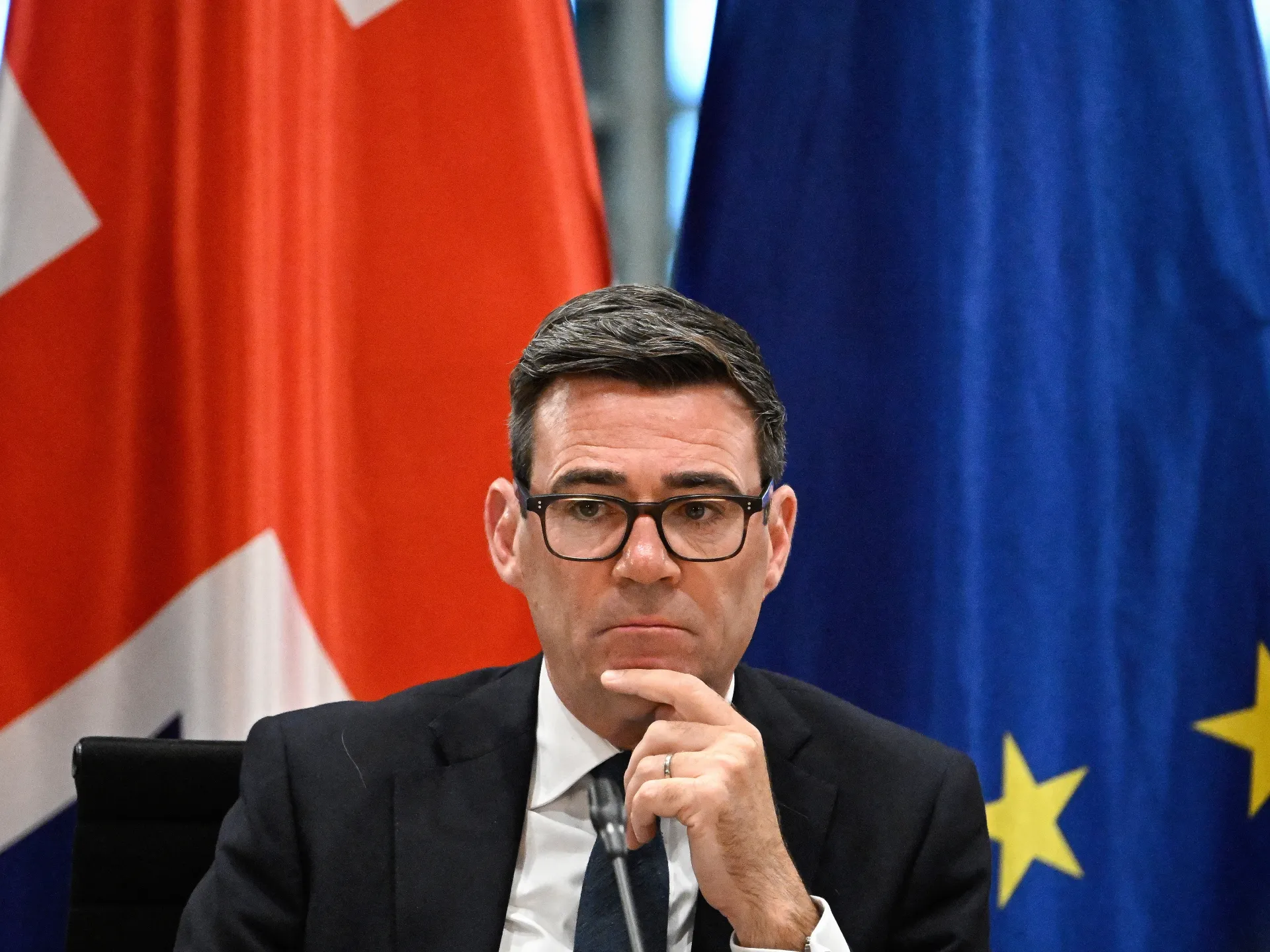
UK Prime Minister Andy Burnham has said it is “clear” that Russia interfered in the country’s 2016 Brexit vote, warning French and German voters of the same threat.
“I asked the question coming to Downing Street: Was there interference in the 2016 referendum from Russia? And I’ve had the clear answer that yes, there was,” Burnham said in an interview with The Rest Is Politics podcast released on Sunday.
Recommended Stories
list of 3 itemsend of list
Burnham’s comments mark the first time a UK prime minister has publicly acknowledged that Russia interfered in the UK’s vote to leave the European Union. Burnham did not provide evidence for or details on the claim.
He said that “these things are important now to put clearly on the record, and, I believe, help voters in Germany and France understand that some of this politics is instigated via our enemies, namely Russia.”
Burnham said he spoke with German Chancellor Friedrich Merz about possible links between Russia and the far-right Alternative for Germany party when the two leaders met last week in Berlin.
In his address to the United Nations General Assembly in September, Burnham also condemned Russia’s attempt to interfere in the UK’s 2019 general election.
According to a 2020 report by Parliament’s Intelligence and Security Committee, the UK government had failed to ask for a deep assessment of Russia’s interference in the 2016 referendum. The report did confirm that Russia had meddled in the 2014 Scottish independence referendum, however.
Russia has repeatedly denied meddling in Western democracies or interfering in another country’s elections or referendums, casting the UK as being gripped by “anti-Russian hysteria”.
UK reconsiders Brexit
Last month, Burnham argued that the UK should reconsider options for a future relationship with the EU, including rejoining the bloc, reigniting the decisive debate more than a decade after the historic vote.
He said that the UK’s departure from the bloc had failed to fulfil Brexit supporters’ pledge of “taking back control”, and instead has made the UK weaker economically and on immigration.
The recovered Renoir paintings, valued at millions, were stolen in a daring heist at Cagnes-sur-Mer last month.
Published On 10 Oct 202610 Oct 2026
Two paintings by the French Impressionist artist Pierre-Auguste Renoir that were stolen from a museum in southern France a month ago have been recovered, the town’s mayor said.
“These two paintings are not simply works of art. They are part of our city’s history,” Bryan Masson, the mayor of Cagnes-sur-Mer, near Nice, said on Friday. “Knowing they have been recovered is an immense relief.”
Recommended Stories
list of 3 itemsend of list
Six people have been arrested in connection with the theft, local authorities said. Masson did not say where the paintings were found or in what condition.
How the theft unfolded
Two thieves broke into the Renoir Museum a little before 6am on September 8, cutting through a fence to enter the grounds, smashing a window and using an electric saw to cut the clips securing the frames, Masson said at the time.
He described them as “well equipped” and “well informed”.
The museum alarm sounded at 5:48am, and municipal police arrived five minutes later, forcing the thieves to flee.
They had taken four paintings, valued by the mayor at about nine million euros ($10.5m).
Two of the stolen works – Renoir’s “Portrait of Madame Pichon” and “Coco Reading” – were later found dropped in the museum garden, the prosecutor’s office said at the time.
The two works that remained missing were “Portrait of Madame Colonna Romano” and “Young Woman at the Well”, the office said.
Police said last month that the thieves were not first-time offenders and had scoped out the premises.
The Marseille prosecutor opened a theft investigation into an organised gang, and the national office for trafficking in cultural goods joined the probe.
A string of museum heists
The museum, opened in 1960, is in the painter’s last home, where he died in 1919.
“This incident should serve as a warning about the protection of our museums,” Masson said after the robbery.
The theft came less than a year after jewels worth about $100m were stolen from the Louvre in Paris in a daylight robbery.
The four suspected robbers have been arrested, but the jewels have not been found.
In August, Italian police said they had recovered paintings by Renoir, Cezanne and Matisse worth more than $10.4m that were stolen from a museum in March.
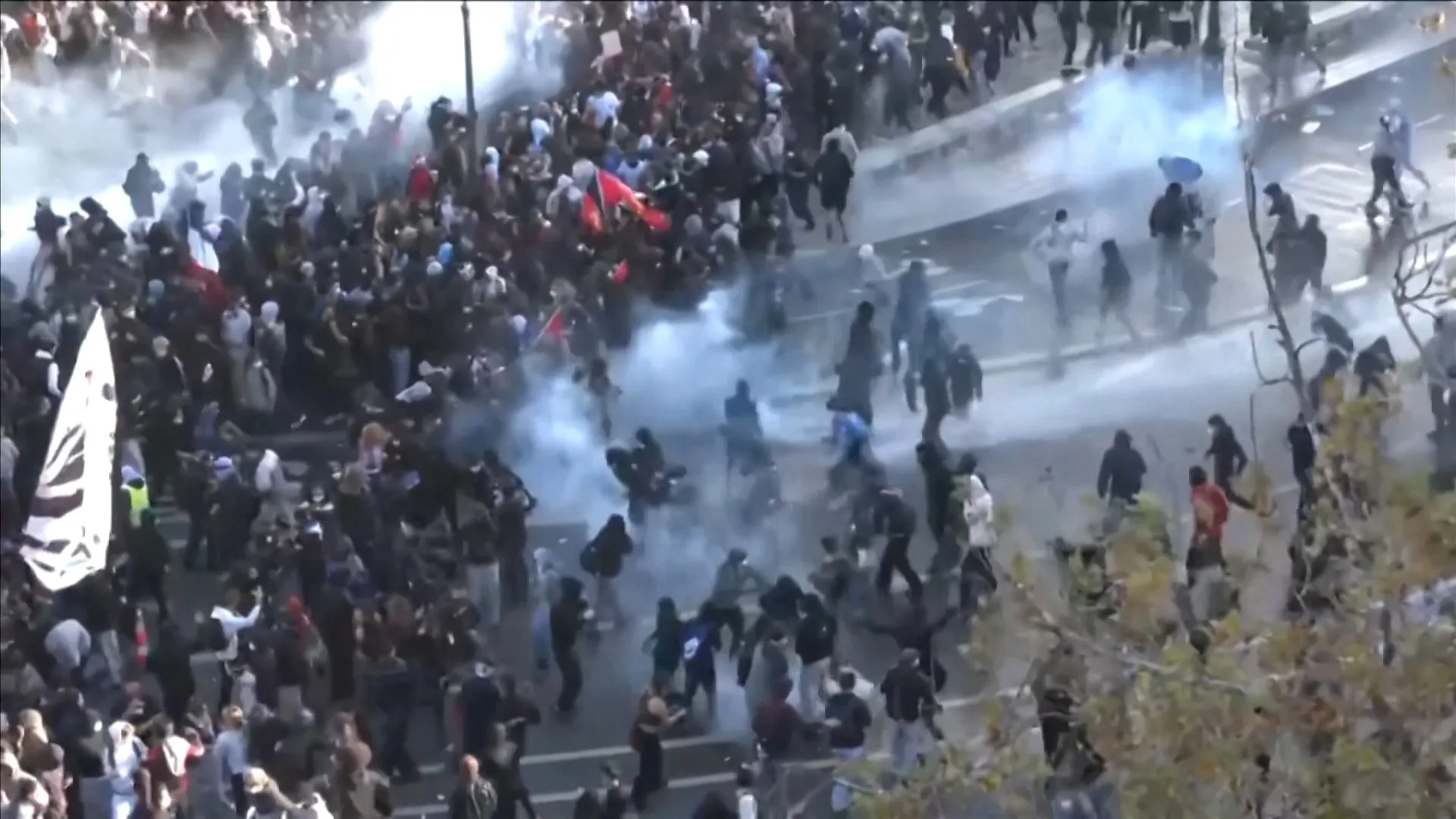
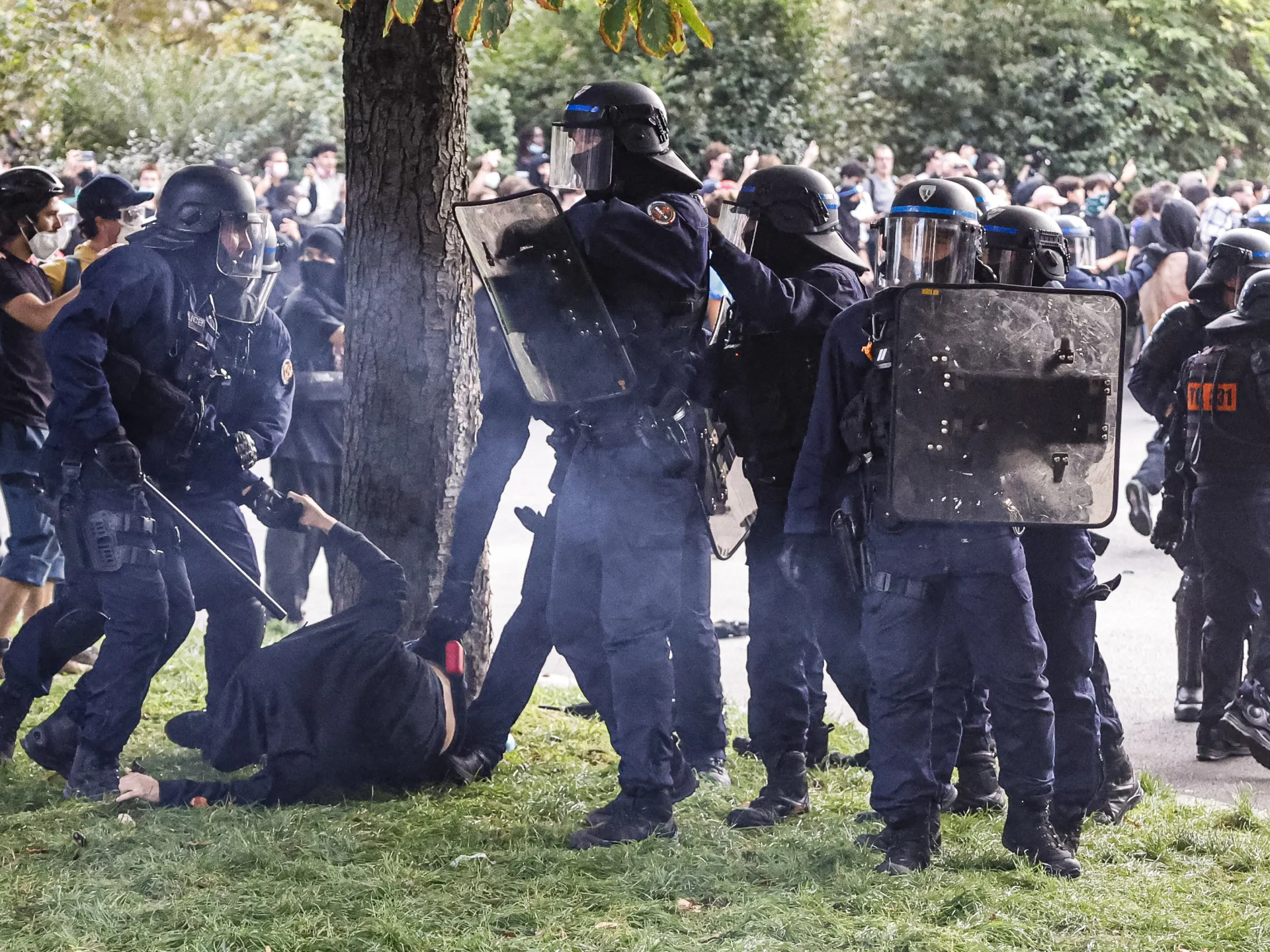
Police fired tear gas and water cannons as demonstrators gathered in Paris to demand more funding, teachers, and better conditions in schools. The movement has entered its third week, with police tactics under scrutiny after several teenagers were seriously injured.
French Prime Minister Sebastien Lecornu has promised to address student concerns as growing protests force hundreds of schools to close. Students are demanding better school conditions and more teachers, while criticism grows over how police are handling the demonstrations.
Dozens of people have been injured in the protests, including students, teachers, and police officers.
Published On 8 Oct 20268 Oct 2026
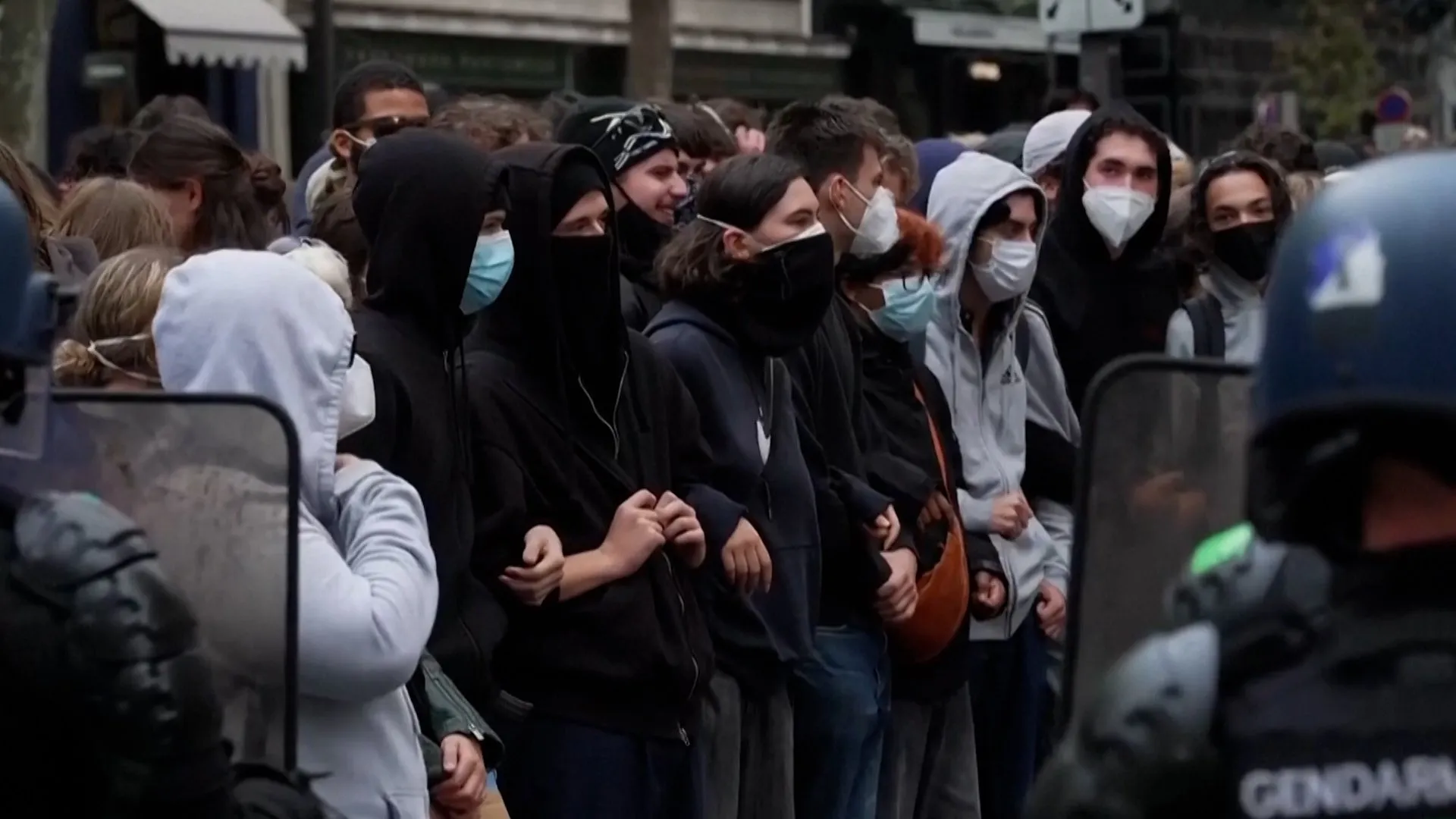
Protests have resumed at schools across France as high school students press on with demands for more education funding and better conditions, the day after the country’s prime minister ordered ministers to provide an action plan.
Reporting from Paris, Al Jazeera’s Natacha Butler said university students and more trade unions have joined the nationwide protests and that a large rally is expected in the capital on Thursday.
Recommended Stories
list of 4 itemsend of list
“They are moving around, trying to block off the streets,” Butler said from outside one school, where university students were barricading a large area.
“They are out, they say, in solidarity with high school students because they say it’s important that as many young people join in the protests as possible,” she added.
The wave of protests began in a high school in a deprived area of Paris on September 21 . Tens of thousands of students across the country have since marched with a range of demands, from renovated school buildings to fewer classroom hours.
Police response under scrutiny
Rights groups have accused security officials of using disproportionate force against protesters.
Several demonstrators have been injured, including one teenager who lost a hand and another whose jaw was shattered by an exploding stun grenade. They have since been banned at marches.
Police officers and teachers have also been injured, authorities say, accusing students of committing violent acts. At least 6,600 arrests – mostly of minors – have been made so far, according to the Interior Ministry.
Authorities said 375 schools were either fully or partially closed on Thursday, and that two dozen had been burned or destroyed.
The demonstrations are increasing pressure on the cash-strapped outgoing government of Emmanuel Macron ahead of April elections.
Prime Minister Sebastien Lecornu condemned the violence in a TV address on Wednesday. He faulted “political leaders who use this anger to conduct their electoral battles”, after opposition leader Jean-Luc Mélenchon called for protesters to keep marching.
Lecornu has ordered ministers to provide an action plan responding to students’ demands by the end of the month, but protesters remain unconvinced.
“As far as they are concerned, the government only talks about solutions but never actually comes up with concrete actions, so they say they are going to keep coming out onto the streets until their demands are met,” Butler said.
French high school students have been protesting for more than two weeks over conditions in schools, including overcrowded classrooms and staff shortages, and they show no sign of stopping.
The unrest began on September 21 when pupils blockaded a school in the Paris suburb of Creteil, and within a week, their protest had spread across the country with students and police clashing violently.
On September 29, the demonstrations coincided with a nationwide public sector strike, in which teachers joined other state workers against a proposed pay freeze. More than 6,100 people have since been arrested.
With the government under pressure to rein in spending as its debt rises, Al Jazeera looks at how much France invests in education, how it compares with the rest of Europe and how it measures up against what the country spends on healthcare and defence.
How much does France spend on schooling?
According to the latest data from Eurostat, the European Union’s statistics agency, France’s public spending on education amounts to 5.1 percent of its gross domestic product (GDP). That figure does not include private spending, such as school fees paid by families.
The French Ministry of National Education uses a broader measure, known as domestic expenditure on education, which counts all the money that goes into education, whether from the state, local authorities, businesses or households. As well as teaching, it covers adult and continuing training and related costs such as school meals, boarding and transport.
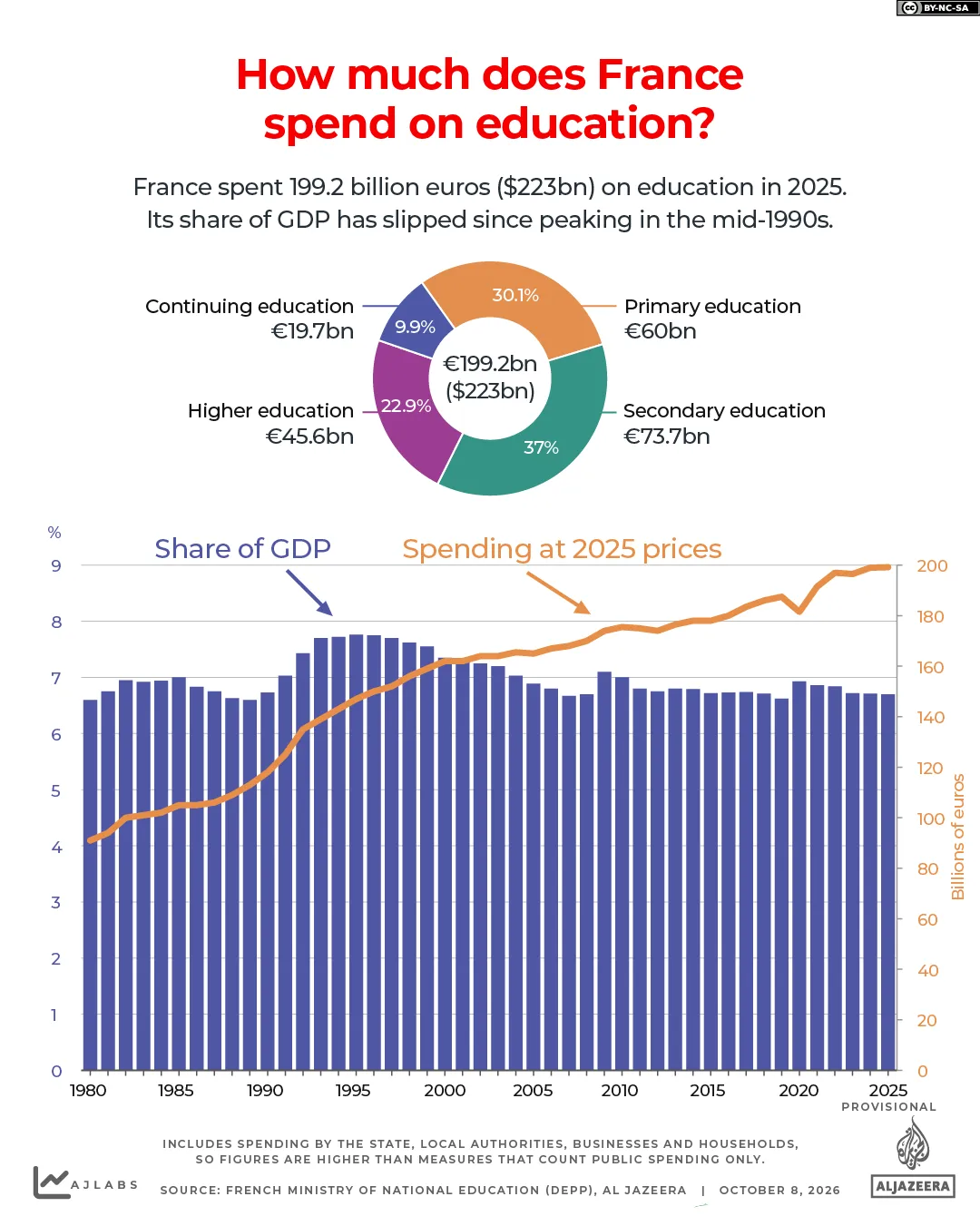
By this measure, France spent 199.2 billion euros ($223bn) on education in 2025, equivalent to 6.7 percent of its GDP and 2.4 billion euros more than in 2024, according to provisional ministry figures.
(Al Jazeera)
Spending has more than doubled since 1980, even after accounting for inflation. But the economy has grown too, so education spending’s share of GDP is lower today than it was in the mid-1990s.
Secondary education accounted for the largest share of spending at 73.7 billion euros (37 percent), followed by primary education at 60 billion euros (30 percent), higher education at 45.6 billion euros (23 percent) and adult and continuing education at 19.7 billion euros (10 percent), according to the National Education Ministry.
How much do other European countries spend on education?
Among European countries, Sweden spends the largest share of its GDP on education at 7.3 percent in 2024, followed by Iceland (7 percent) and Belgium, Estonia and Finland (6.3 percent each), according to Eurostat.
The lowest spenders are Ireland (2.7 percent), Greece (3.9 percent), Romania and Italy (4 percent each), and the United Kingdom and Spain (4.1 percent each).
At 5.1 percent, France is joint 13th, level with the Netherlands and Slovakia, and above the EU average of 4.8 percent.
But above-average spending has not shielded France from a problem affecting much of the developed world. Teacher shortages are growing across countries in the Organisation for Economic Co-operation and Development, according to the OECD’s latest Education at a Glance report.
Rather than leaving posts empty, many countries are filling them with teachers who lack full qualifications. In the 2024-2025 school year, 9 percent of primary and secondary teachers across the OECD were not fully qualified.
In France, the strain is most visible in secondary schools. About 11 percent of secondary teachers are not fully qualified, compared with less than 3 percent in primary schools. Furthermore, lower secondary classes average 26 pupils, compared with 23 across the OECD.
That echoes what pupils have been saying during the latest protests: Classes are large, and absent teachers are not being replaced. Some also described dilapidated buildings, a shortage of tables and chairs and, in some schools, rodent infestations. The intense heatwaves that hit France this year exacerbated existing problems in neglected buildings, many of which have no air conditioning, students said.
Teachers also feel undervalued. Only 4 percent said their profession is valued in society, the lowest share of any country surveyed and far below the OECD average of 22 percent.
How much has spending changed?
Historical UNESCO data showed France’s education spending slipped from 5.5 percent of GDP in 2017 to 5.3 percent in 2022 although it remained the ninth-highest among 29 European countries with data. A brief rise to 5.7 percent in 2020 reflected the pandemic shrinking the economy, not extra spending.
France was one of 14 countries where the share fell. Norway and Denmark saw the steepest drops while Slovakia, Slovenia, Lithuania and the Czech Republic recorded the biggest rises.
What else are these nations spending on?
The protests have coincided with nationwide public sector strikes over the government’s proposed 2027 budget, which seeks 54 billion euros ($61.3bn) in savings as French President Emmanuel Macron’s government tries to rein in a large public deficit.
Unions and public sector workers object in particular to a plan to freeze state employees’ salaries, which is expected to save about 2 billion euros ($2.27bn).
Across Europe, most governments spend more on education than on defence, but healthcare takes the largest share of national income of the three, according to 2022 data from the World Bank and UNESCO.
France spent 11.9 percent of its GDP on healthcare in 2022, one of the highest shares in Europe.
Talks will focus on the €1 billion daily deficit and rare earth export restrictions.
Published On 7 Oct 20267 Oct 2026
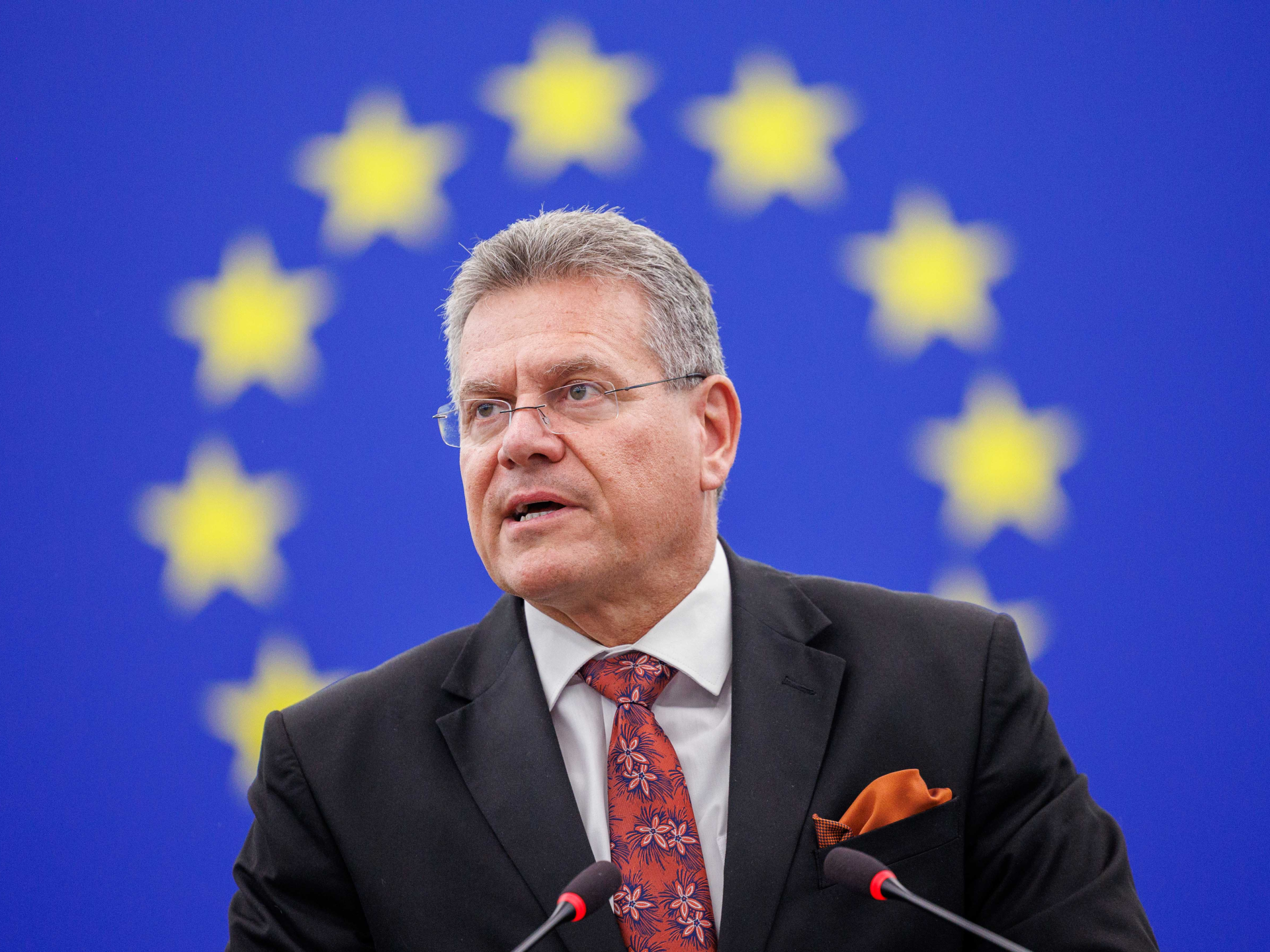
European Trade Commissioner Maros Sefcovic has arrived in Beijing for talks on the European Union’s (EU) growing trade deficit with China.
Sefcovic will meet Chinese Commerce Minister Wang Wentao on Thursday and Friday after months of discussions over the EU’s trade deficit of more than €1bn ($1.12bn) daily, as well as Chinese curbs on exports of rare earths and other critical minerals.
Recommended Stories
list of 3 itemsend of list
Meanwhile, Chinese companies are increasingly challenging Europe’s top car brands. China rejected the EU request for voluntary curbs on Chinese hybrid car exports as the two sides enter negotiations, the Financial Times reported on Wednesday. The European Commission now hopes to get Beijing to accept a unilateral EU measure to cap hybrid imports instead, the outlet said, citing two diplomats briefed on the plan.
The two days of discussions come just as a majority of EU lawmakers called for a more assertive trade policy towards Beijing in a non-binding resolution on Wednesday. China vowed a “resolute response” to safeguard its industries if the European Union goes ahead with restrictions against Chinese companies or products, according to its commerce ministry.
Germany and France propose rapid EU measure
French President Emmanuel Macron and German Chancellor Friedrich Merz, leaders of the bloc’s two biggest powers, on Tuesday urged the EU to prepare a “credible instrument” that could be quickly activated to strike back against countries that harm the bloc economically.
The new measure would not target any specific country. German officials said the EU needed a tool as powerful as the Section 301 tariffs imposed by the United States or China’s restrictions on critical-mineral exports.
The proposed weapon – to be discussed at an EU leaders’ summit next week – would give the European Commission the power to respond to a trade aggression within days.
China responded to the letter by urging Paris and Berlin to steer clear of “protectionist” measures.
“We hope that France and Germany, as major economies in the world, will uphold openness, cooperation and free trade,” the commerce ministry said in a statement.
“They should avoid going down the wrong path in the wrong way, only to ultimately suffer the consequences themselves.”
G20 finance leaders, except China’s, agreed in September to act against “non-market” distortions that exacerbate imbalances. Beijing says that hyping up issues such as economic imbalances and overcapacity is a form of protectionism designed to exert pressure on and restrict China.
Ongoing trade talks
EU and Chinese officials have been discussing trade imbalances since June. Sefcovic said he wanted “tangible results by October” as well as some form of commitment that can be put to EU leaders meeting in Brussels.
Trade relations with China top the summit’s agenda next week, as ballooning debt has prompted auditors to warn about the next seven-year EU budget and has spurred protests in France.
European Commission President Ursula von der Leyen told the European Parliament last month that the trade imbalance had reached a tipping point and that Europe would use every tool at its disposal to rebalance the relationship.
THE top cities in the WORLD have been announced from far-flung Asia to the ‘city of love’ that has cheap UK flights.
Readers of Conde Nast Traveller voted for their “favourite urban sprawls across the planet” to decide which ones are the best and it might be time to book that bucket list trip to Thailand.
The best city in the world is Bangkok – you can pick up street food for as little as £1Credit: AlamyThe second best city in the world is Paris – which has £13 flights from the UKCredit: Alamy
Taking the number one spot on the list is Bangkok which was praised for its “buzzy markets, glittering palaces and captivating religious sites unite – street food sellers dishing up tasty food between them all, of course.”
When Assistant Travel Editor Sophie Swietochowski visited Bangkok she picked up tasty dishes for the equivalent of £1 – you can also pick up beer for as little as £1.14 according to Wise.
Sign up for the Travel newsletter
Thank you!
She said: “Within an hour of being in Thai capital Bangkok’s Chinatown we have sampled street food including noodle soup splashed with vinegar, fish sauce and sugar; crunchy corn parcels.
“A bowl of salty critters, displayed next to a row of scorpions on sticks; purple mashed potatoes shaped into doughy, salty balls; and traditional sweet luk chup, made with mung beans.”
She also visited Lebua Hotel’s Sky Bar, which was the filming location from 2011 buddy comedyfilm The Hangover 2 and it’s home to the “world’s highest open-air whisky bar”, Alfresco 64.
The city coming second on the list is much closer for Brits to visit, it’s Paris.
The French capital is said to have “topped bucket lists of international travellers for centuries thanks to an unrivalled food culture, grand monuments, world-class museums and subtly seductive atmosphere.”
From the UK it’s easy to reach the French capital either on the Eurostar or plane with one-way flights as little as £13.
There’s so much to do in Paris from sight-seeing landmarks like the Eiffel Tower or wandering around the Louvre.
When Travel Reporter Alice Penwill ventured to Paris for an extreme daytrip on the Eurostar she had some suggestions on how to spend time there.
Valletta in Malta came in fifth – and it gets 300 days of sunshine each yearCredit: Alamy
She said: “To start the morning off right, it would be a crime not to pop into one of Paris’ many bakeries, or boulangeries, for a croissant and a coffee.
“Take one to go and stroll along the Seine before heading into the Musée d’Orsay where you can see work by artists like Monet, Renoir and Van Gogh.
“Afterwards, head back along the Seine to see the beautiful Notre Dame which has now reopened to visitors. And if you’re a fan of books, pop across to the famous bookshop, Shakespeare And Company.”
Turkey’s capital, Istanbul was named the third best city in the world which was called “chaotic in all the best ways.”
The publication said: “Centuries of history sit alongside a vibrant contemporary culture, with new waves of artisans luring travellers into chic boutiques after tours of places like Topkapı Palace, the Blue Mosque and the sweet-scented Grand Bazaar.”
She described it as a “trendy pocket of an otherwise busy, but beautiful city.”
If you wander into Karaköy’s backstreets and climb towards neighbouring Galata, you’ll find that cobbled lanes and historic buildings lead to the landmark Galata Tower.
Istanbul came in third spot and is divided by the Bosphorus straitCredit: AlamySouth Africa’s Cape Town is a popular winter sun spots for Brits with no jet lagCredit: Getty
Head up for spectacular views across the Golden Horn, Bosphorus and historic peninsula – it’s especially beautiful in the late afternoon.
Valletta in Malta comes in at number five and it’s a popular spot for Brits thanks to its 300 days of annual sunshine.
Even in November it can see highs of 18C – and it’s reachable from the UK in just over three hours and flights are as little as £15.
It was voted last year’s top city thanks to its mix of ancient but also modern feel and architecture.
Other popular winter sun destinations that made the list include Cape Town in South Africa which in January and February has highs of 25C – while the UK shivers in highs of 8C.
There’s also no jet lag because Cape Town is either one or two hours in front of the UK – depending on the time of year.
When Head of Travel (Digital) Caroline McGuire visited, she saw Table Mountain, lots of wildlife, vineyards and was impressed with an area called Kalk Bay.
She said: “At the town’s upmarket Harbour House restaurant, we dined on seafood and good wine for the price of a Pizza Hut meal in the UK — all while watching seals swimming in the harbour.
“Our accommodation was the charming Chartfield Guesthouse, staying in a huge two-bedroom apartment. It was bigger than my house back home, and cost only £94 a night.
“Kalk Bay is a prime spot for visiting the endangered African penguins of neighbouring Simonstown – there must have been around 100 on the town’s shoreline.”
These are the top 20 cities according to Conde Nast Traveller…
Scientists honoured for solving mystery of asymmetric ‘mirror image’ molecules that has helped in manufacture of pharmaceuticals.
Published On 7 Oct 20267 Oct 2026
Scientists Henri Kagan and Kenso Soai have won the 2026 Nobel Prize in Chemistry for solving a longstanding riddle of asymmetric “mirror image” molecules, a discovery hugely important for pharmaceutical manufacturing.
The Royal Swedish Academy of Sciences said on Wednesday the pair – Kagan, 95, from France; and Soai, 76, from Japan – were honoured “for the discovery of nonlinear effects and autocatalysis in asymmetric organic synthesis”.
Recommended Stories
list of 2 itemsend of list
Their findings showed how chemical reactions can be driven to favour a single molecular mirror image, work that has been key for chemists who design reactions for the manufacture of pharmaceuticals.
Many of the molecules essential to life exist in two forms that are mirror images of each other, like left and right hands. Yet living organisms almost exclusively use only one version, a phenomenon known as “homochirality” – from the Greek word for hand – that has puzzled chemists for more than a century.
“The left-handed version of the drug can have one effect, and the right-handed version can have another effect, and then we need methods for selectively preparing them,” said Peter Somfai, a member of the Nobel Committee for Chemistry.
“In developing such methods, the findings of this year’s laureates are important. They provided powerful tools for that,” he said.
Heiner Linke, chair of the committee, said the two scientists provided “a solution to a chemical mystery that is over a century old: how homochirality can emerge spontaneously”, calling the chemical reactions they developed “spectacular”.
‘Most exciting day’
Soai, speaking by phone to the Nobel Prize news conference, said he had been out shopping when he received the news.
“This is the most exciting day in my life, I am very glad to share this prize with Professor Henri Kagan,” he added.
Last year’s chemistry award went to scientists Susumu Kitagawa, Richard Robson and Omar Yaghi for the development of so-called metal-organic frameworks, molecular constructions that can help tackle challenges such as climate change and lack of freshwater.
The chemistry Nobel is always the third prize to be awarded during Nobel week, following those for medicine and physics.
The literature laureate will be revealed on Thursday, while the keenly anticipated peace prize is due on Friday.
Established in the will of Swedish inventor and businessman Alfred Nobel, the prizes for achievements in science, literature and peace have been awarded since 1901, with a few interruptions mostly due to the world wars.
Nobel, a chemist by trade, amassed huge wealth in the 19th century from inventions primarily tied to warfare, most notably dynamite. The economics prize is a later addition funded by the Swedish central bank.
Prime Minister Sebastien Lecornu to make public address after hundreds of thousands rally to demand more funding for education.
Published On 7 Oct 20267 Oct 2026
France has temporarily banned police from using stun grenades at student-led protests, the interior minister said, amid growing accusations of police brutality following several days of student demonstrations nationwide.
The announcement on Wednesday came a day after hundreds of thousands of students and supporters marched across France to demand more funding for education and better conditions in high schools, prompting President Emmanuel Macron to convene an emergency meeting with Prime Minister Sebastien Lecornu and other key ministers to try to defuse the crisis.
Recommended Stories
list of 3 itemsend of list
Lecornu will make a public address later on Wednesday on the school protests as well as the country’s finances, his office said.
Interior Minister Laurent Nunez told radio broadcaster RTL early on Wednesday that he had suspended police use of stun grenades at the protests.
A 15-year-old lost a hand in the northern city of Lens on Monday after police fired a stun grenade.
Earlier, a 14-year-old student was hit in the face by a tear gas grenade at such close range that he lost several teeth. A policeman was charged on Tuesday over the incident in the capital, Paris.
Police have opened 18 internal investigations into allegations of misconduct since the protests began, Nunez said.
Rights groups, students and parents’ groups have accused authorities of using disproportionate force against minors. The government says the protest movement has been hijacked by outsiders and morphed into urban violence.
The Ministry of the Interior said 6,100 people have been arrested since the protests began last month, the overwhelming majority of them minors.
More than 1,800 people are being prosecuted, including 1,483 minors, the Ministry of Justice said, without specifying the crimes.
At least 715 police officers and 215 teenagers have been injured in clashes, according to Lecornu’s office.
Students demand school funding
Protests started in late September with students blocking entrances to hundreds of high schools for 15- to 17-year-olds over complaints of dilapidated facilities and teacher shortages and demands for more funding for education.
Parents, teachers and union workers joined the demonstrations in Paris and other cities on Tuesday amid accusations that police were using disproportionate force.
Sporadic violent clashes have broken out between police and protesters at what otherwise have been largely peaceful demonstrations.
Lecornu on Tuesday condemned the violence and told lawmakers that it would not be tolerated, while also rejecting accusations that the government had ordered “police repression” against protesters.
Tens of thousands have taken to the streets across France as unions and teachers joined high school students who, for days, have been demanding better learning conditions in protests punctuated by violent confrontations.
The French Ministry of the Interior said 86,000 people had already joined demonstrations across the country early on Tuesday, while the General Confederation of Labour (CGT) union put the figure at 260,000.
Students have blocked the entrances to hundreds of high schools since late September, complaining of missing teachers, overloaded timetables, dilapidated classrooms and buildings unable to cope with rising temperatures.
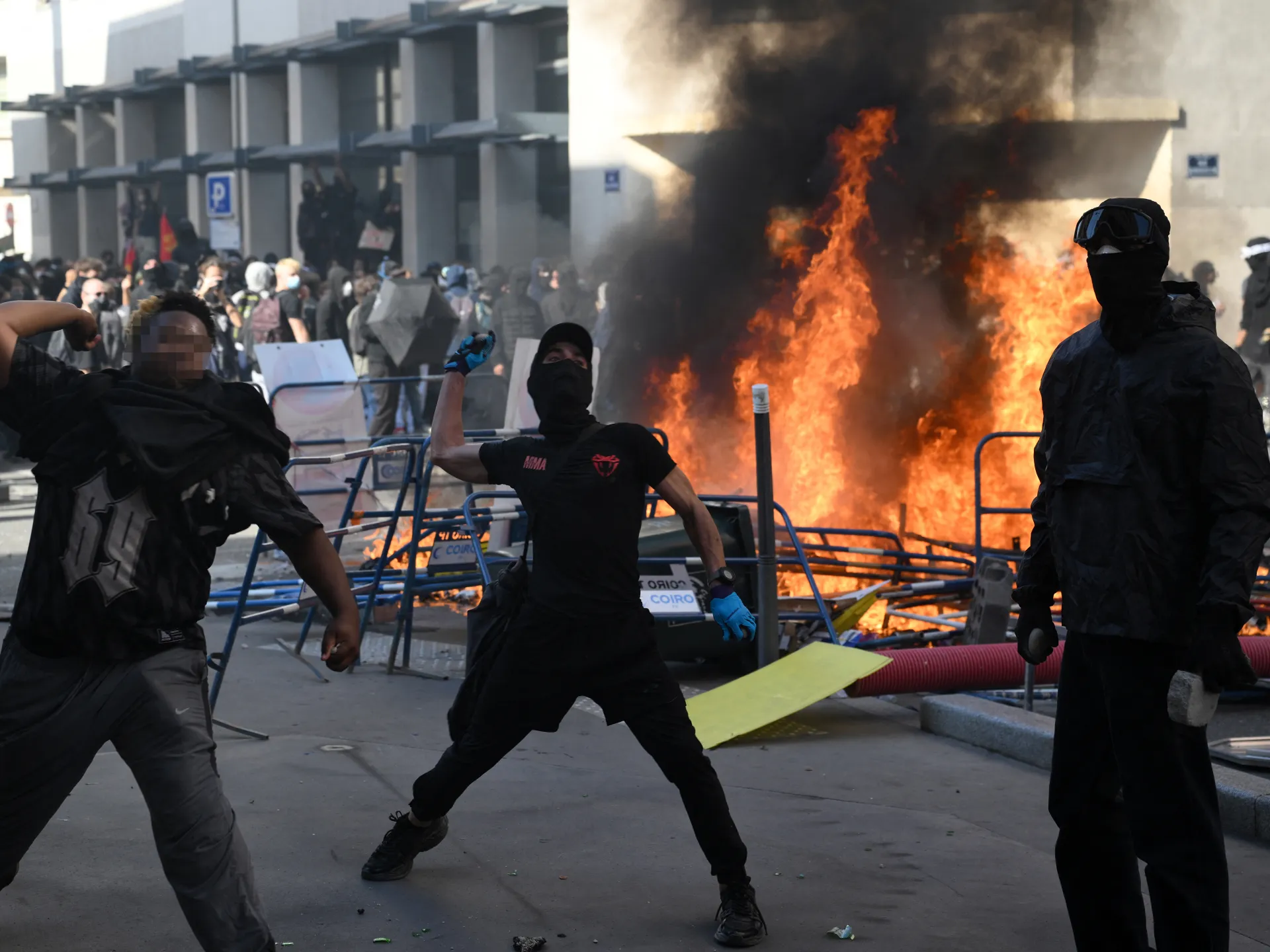
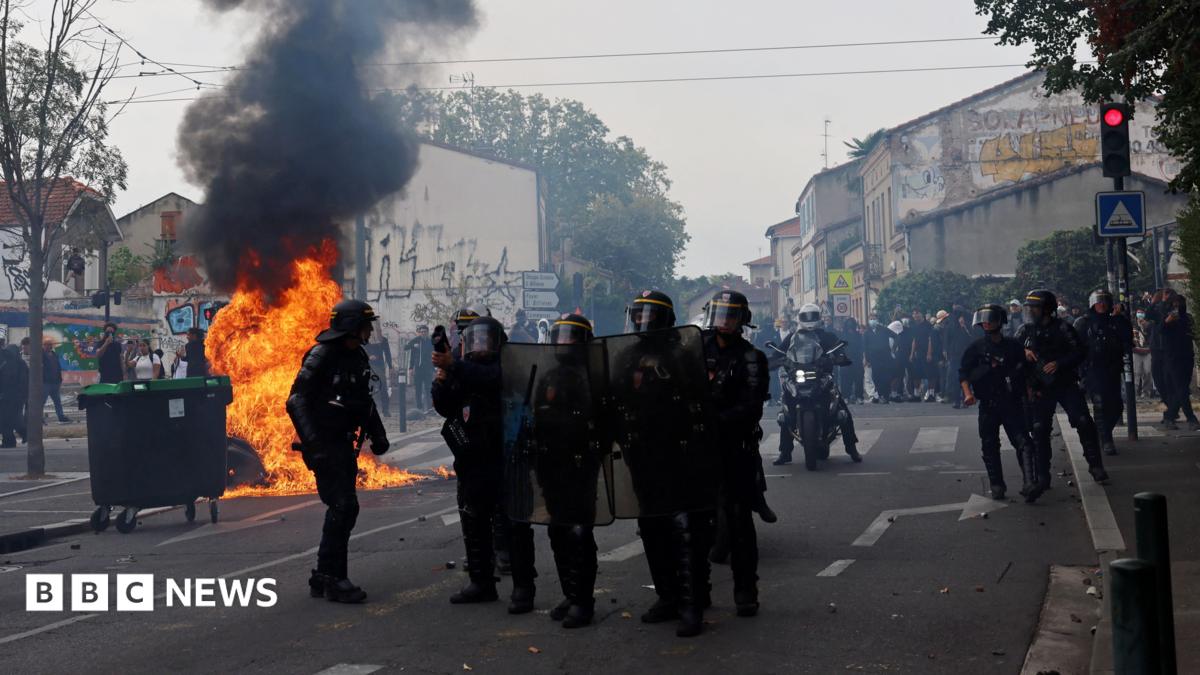
While many protests have been peaceful, some demonstrators have started fires, destroyed bus shelters or clashed with riot police.
Police have responded with batons, tear gas and riot-control rounds.
Injuries, investigations
The government says 215 students and 715 police officers have been injured since the start of the movement.
Unions, rights groups and students have accused the authorities of using disproportionate force.
A 15-year-old lost a hand to a stun grenade fired by riot officers in the northern town of Lens on Monday.
Police have launched 10 internal investigations into allegations of brutality since the protests began, Interior Minister Laurent Nunez said late on Monday.
Since the start of the movement, 24 schools have been burned or ransacked, according to the Ministry of Education.
More than 5,000 people, 87 percent of them minors, have been arrested.
Prime Minister Sebastien Lecornu’s office said 85 members of teaching staff have also been injured.
The government is also pushing legislation to make those responsible for damaging public property pay for repairs themselves, instead of using public funds.
Protests have continued across France for a third week as tens of thousands of school pupils and trade unionists have taken to the streets across many cities.
Students initially began boycotting classes in deprived areas of Paris on September 21 over teacher shortages and poor conditions, but protests have quickly morphed into a nationwide movement, with some of the largest demonstrations taking place on Tuesday.
Recommended Stories
list of 4 itemsend of list
School blockades have turned violent, with protesters accused of hurling items at police and officers allegedly responding forcefully using batons, tear gas and rubber bullets. In one case, a teenager lost his hand in a grenade explosion.
The mass demonstrations, which also coincided with a public sector strike over government budget plans last week, have presented another challenge for President Emmanuel Macron’s cash-strapped government ahead of next year’s elections, amid an ongoing fiscal crisis as government debt has rocketed in recent years.
Here’s what we know:
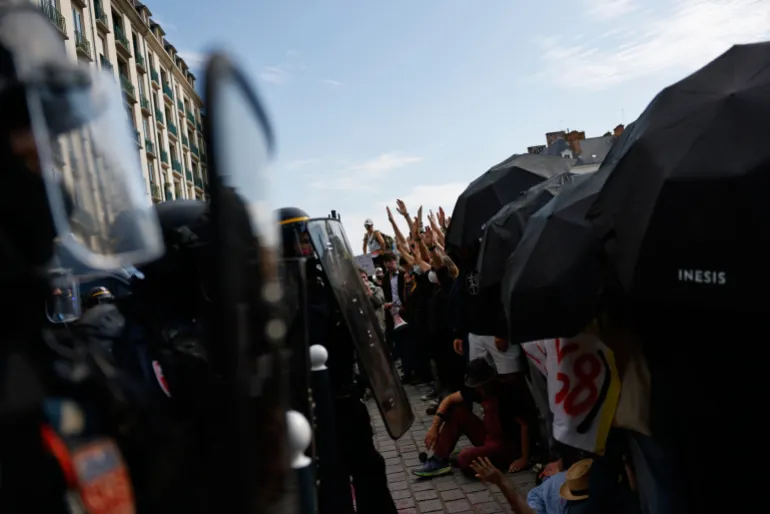
Riot police face students during a protest against under-resourced schools in Rennes, western France, on October 6, 2026 [Jeremias Gonzalez/AP]
What do protesters want?
Students have been protesting over what they say are poor conditions in France’s high schools – or lycees – especially in poorer areas. Protests have been held in Strasbourg, Bordeaux, Nantes, Marseille, Lyon and other towns and cities.
Students say absent teachers are not replaced, dilapidated school buildings are sometimes rodent-infested, there are inadequate tables and chairs, large class sizes and long classroom hours.
The intense heatwave which hit France in the summer exacerbated existing problems in neglected school buildings, which also suffer from a lack of air conditioning, school pupils say.
The protests have coincided with ongoing nationwide public sector strikes over a proposed 2027 cost-cutting budget that aims to achieve 54 billion euros ($61.3bn) in savings as Macron’s government races to bring a large public deficit under control.
Public sector staff and unions object in particular to a government plan to freeze salaries to save about two billion euros ($2.27bn).
Parents are also increasingly present at protests amid widespread anger about the police response to demonstrating minors.
But the protests are happening amid wider discontent over soaring fuel and commodity prices and reduced public spending under Macron.
Government officials have meanwhile accused political opposition groups and unionists of taking advantage of the student movement. Prime Minister Sebastien Lecornu accused political opponents last week of encouraging escalation.
What has happened so far?
At least 6,100 people had been arrested by early Tuesday, many of them under the age of 18, as police tactics come under intense scrutiny.
Serious injuries have also been reported.
A 15-year-old lost a hand in the northern city of Lens on Monday after he reportedly came into contact with a police stun grenade, which then exploded. Public prosecutors say investigations are ongoing into whether the youth actively picked up the grenade or if it landed on him.
Overall, at least 190 high school students have been injured, Education Minister Edouard Geffray said on Monday. On Sunday, he said 78 teaching staff had been injured, and 24 schools had been burned or ransacked.
Some 715 police officers have been injured, according to Interior Minister Laurent Nunez on Tuesday.
Officials said as many as 589 schools have been disrupted this week, down from 735 on Friday last week.
Rights groups, including Amnesty International, have criticised the use of force against minors amid media reports of students being hit with batons and rubber bullets, as well as sprayed with tear gas.
What happened on Tuesday?
Protesters again blockaded schools on Tuesday as thousands demonstrated over their demands.
Placard-waving crowds were reported in southern Marseille, eastern Strasbourg and other major cities.
In Paris’s 20th district, protesters outside the shut Helene Boucher lycee tipped over rubbish bins and bicycles and created a makeshift barricade, The Associated Press news agency reported. Parents, meanwhile, positioned themselves between the demonstrators and police to protect their children.
“They are our children. Teachers, parents, federations, we all share the same goal: the protection of children’s rights, and it is a legitimate right to demonstrate and to make demands,” said Emilia Sichili Suriam, one member of a parents’ association.
Interior Minister Nunez rejected criticism of the police on Tuesday, saying the response has been proportionate in “almost all cases”. He claimed that the protests were transforming into “riots”.
What does this mean for the French government?
These are only the latest in a series of high-profile protests that have marked Macron’s presidency and undermined his government’s reform efforts ahead of elections in April and May.
Macron will not run in next year’s elections, but his image and that of his government have no doubt been tainted by photos of police chasing students in the streets, France expert Jacob Ross, from the German Council on Foreign Relations (DGAP), told Al Jazeera.
“He is not taken seriously any more because many think of him as already out of government,” Ross said of Macron. “But this is still very significant for his government because it has become clear that they don’t have the capacity to calm things down. There’s clearly little fiscal room to manoeuvre.”
Macron’s terms have long been beset by political and financial instability. Successive prime ministers have faced difficulties in pushing through policies in the highly polarised National Assembly where Macron’s centrist Renaissance party and allied blocs lack a majority.
Critics have taken aim at Macron’s deeply unpopular austerity measures, which have seen drastically reduced government spending taking a toll on pensions and healthcare. Officials, however, have defended these policies amid rising debt following COVID-19-era spending.
On Sunday, Lecornu said the government had kickstarted initiatives to address the protesters’ demands and that a report was expected by the end of the month. He, however, added that Paris would not “yield an inch” to violence.
Meanwhile, frontrunner and opposition leader Marine Le Pen of the far-right National Rally party submitted a shadow budget on Tuesday promising 140 billion euros ($157.6bn) in cost savings by 2032 if elected next year.
Michael Olise and Desire Doue help France score four goals in closing stages to overturn 1-0 deficit at home to Belgium in Nations League Group A1.
Published On 5 Oct 20265 Oct 2026
France came from a goal down to beat Belgium 4-1 in their Nations League Group A1 meeting at the Stade de France on Monday.
Zinedine Zidane secured his first home win in charge, three days after a 1-1 draw against Italy, thanks to his substitutes.
Recommended Stories
list of 4 itemsend of list
Belgium’s Dodi Lukebakio put the visitors ahead in the 35th minute, but Desire Doue, Rayan Cherki and Michael Olise, all on the bench at kickoff, turned the match on its head in the final 15 minutes.
Doue levelled with a left-footed shot from the edge of the box in the 77th minute. Four minutes later, Cherki put his side in front, finishing from an Olise cross.
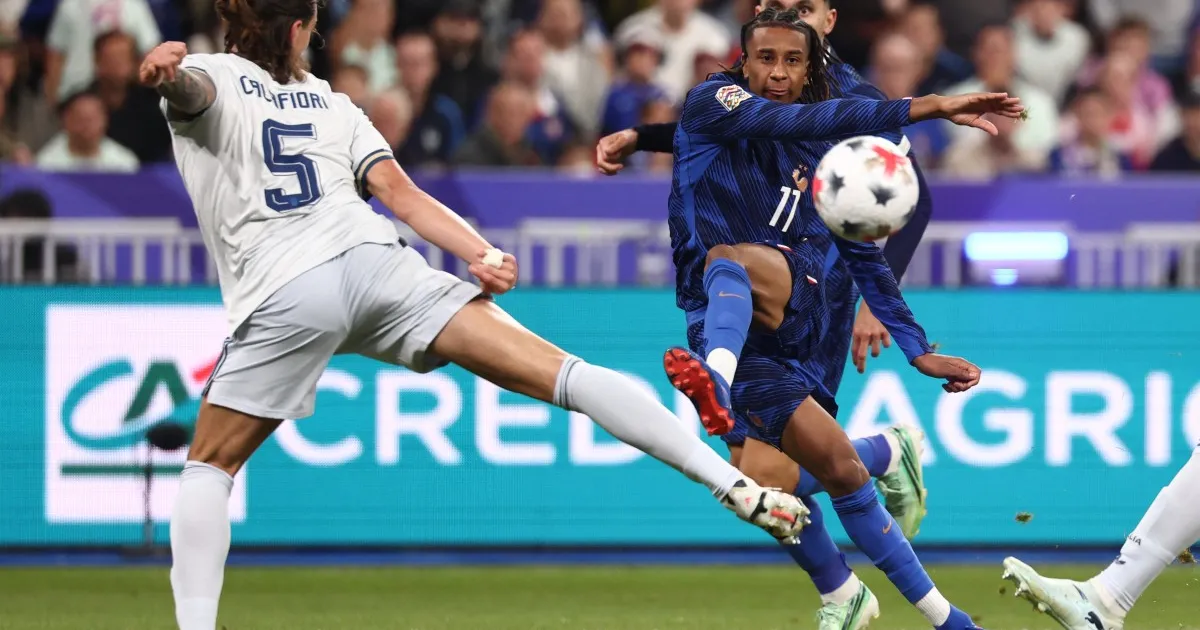
Olise then completed a brace just before and during stoppage time, the second latching onto Doue’s slick pass after a clinical break.
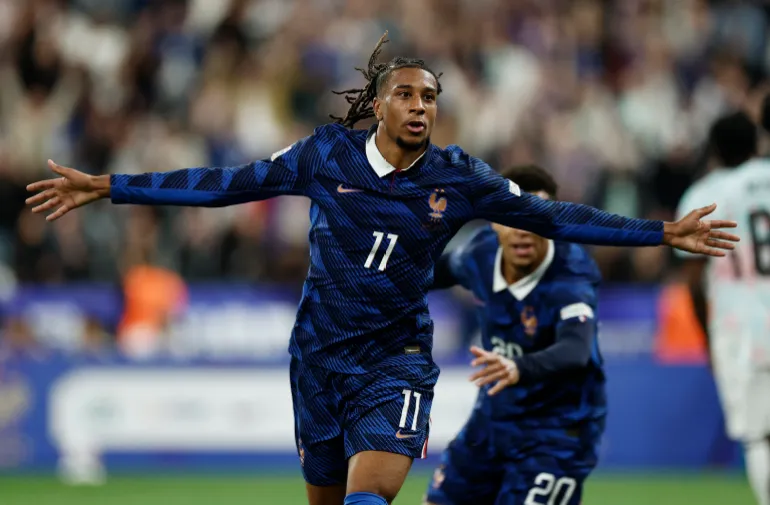
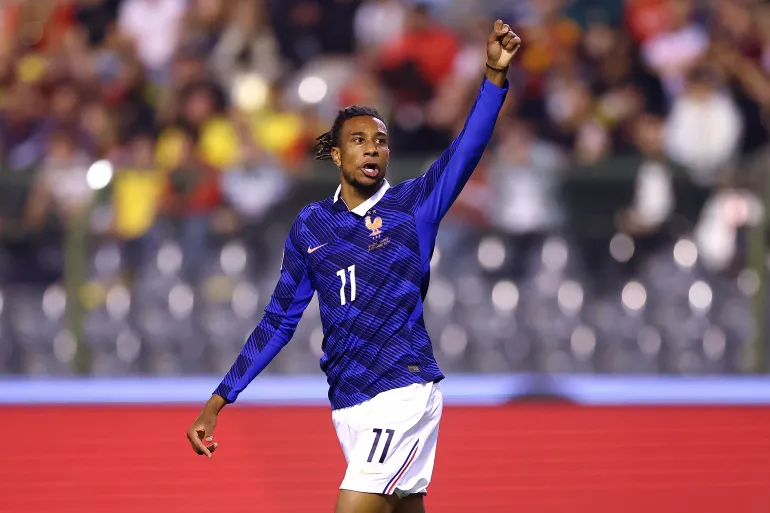
France’s Michael Olise celebrates scoring their third goal [Benoit Tessier/Reuters]
In the same Nations League group, Italy secured a 3-1 victory over Turkiye with Gianluca Scamacca, Riccardo Calafiori and Pio Esposito scoring. Turkiye’s Aral Simsir had equalised earlier, just after the hour mark.
France sit top of Group A1 with 10 points, three ahead of Italy and four clear of Belgium. Turkiye are at the bottom with four defeats from four matches.
France head to Milan to face the Azzurri in their penultimate group game next month before hosting Turkiye.
Education Minister Edouard Geffray said on Sunday about 500 schools likely to be fully or partially closed on Monday.
Published On 5 Oct 20265 Oct 2026
Hundreds of high schools in France are closed as student protests continue against rundown schools and teacher shortages.
Government spokesperson Maud Bregeon told CNews television on Monday that the priority was to “restore order”.
Recommended Stories
list of 3 itemsend of list
Earlier, National Education Minister Edouard Geffray said on Sunday evening, of the 3,700 schools, 400 to 500 were likely to be closed fully or partially on Monday.
Geffray said 24 schools had been burned or ransacked, while 78 teaching staff had been injured since the beginning of the protests.
Nationwide demonstrations erupted at the end of last month at a high school in a Parisian suburb over teacher shortages, before spreading nationwide.
Reporting from a high school in Paris, Al Jazeera’s Natacha Butler said students had set up a barricade in front of the building’s entrance using dustbins and fences.
“We’ve been talking to many of the students who have come out here, and what they say is that they are here to have their demands heard by the government. They say they are fed up with teacher shortages and often don’t have teachers for subjects like maths and English,” she said.
“They also tell us that they’re here to demonstrate to show solidarity with other high school students who are in perhaps poorer areas in France with less adequate facilities or in France’s overseas territories. They say all young people should have an equal right to education,” Butler added.
French news channel BFMTV showed images of police and students clashing in Lille, northern France, tear gas being used in Toulouse in the southwest and of a fire being set alight as people tried to break into a school in central Paris.
Carole Zerbib, head of the vandalised Lycee Vauquelin in Paris’s 13th district, said a “very determined” group wearing hoods and masks attacked her school.
While police and firefighters quickly put out the fire and the school was evacuated, suspending classes, Zerbib said it was “very violent and happened very quickly”, adding that the attack lasted 15-20 minutes.
Since September 28, about 5,000 people, mostly teenagers, have been arrested across the country and dozens have been injured.
French newspaper La Voix du Nord reported on Monday that a teenager lost a hand after picking up a police stun grenade.
Teachers and members of the public have also been attacked, while estimated costs of property damage are in the tens of millions of euros.
Student unions have called for a national day of demonstration on Tuesday.
Only one point separates Group A1 leaders France and second-placed Belgium before Monday’s clash.
Published On 5 Oct 20265 Oct 2026
Who: France vs Belgium What: UEFA Nations League 2026-2027, Group A1 match Where: Stade de France, Saint-Denis, France When: Monday at 8:45pm (18:45 GMT) How to follow: Al Jazeera Sport will bring you all the build-up and live updates from 15:45 GMT.
Two-time world champions France host Belgium in the last of four Nations League games played over this extended international window.
Recommended Stories
list of 4 itemsend of list
Monday’s clash in Saint-Denis pits the top two teams in A1 against each other with France looking to complete the double in this league phase after their initial victory in Brussels in late September.
France and Belgium both enter this match with their creative stars in red-hot form. Michael Olise scored a goal in back-to-back matches while Kevin De Bruyne’s double steered Belgium to victory last time out.
However, Belgium will have to do without De Bruyne for the Les Bleus test with the midfield sensation suspended alongside their captain, Youri Tielemans.
Here’s all you need to know about France vs Belgium:
What is the UEFA Nations League?
The UEFA Nations League was founded in 2018 to reduce the number of friendlies and give nations competitive matches against equally ranked teams.
In this competition, countries from across Europe participate in a league structure that features promotion and relegation.
How does the UEFA Nations League work?
The teams compete across four divisions, facing every other team in their group twice: once at home and once away. The league phase ends in November.
In the top-most league, League A, the top two teams from each group go through to the quarterfinals, which will take place in March.
The finals will again be contested between four teams. The host and the dates of the finals have not been confirmed yet.
How have France and Belgium played in the Nations League?
France lead Group A1 with seven points from three games.
Zinedine Zidane (France): “We always want to win. We are competitors. The most important thing is to prepare well for matches and to feel comfortable on the pitch. I am very satisfied with the mentality I have seen so far. I have clear convictions. I love the French national team, and I have top-class players, but I know it will take time. I am very happy with what I have seen.”
French head coach Zinedine Zidane has led the team to two wins and a draw in this year’s Nations League [AFP]
Mark van Bommel (Belgium): “France have an exceptional amount of quality. They’re a complete team. In the first match, however, we should have taken at least a point. So it is possible tomorrow. We have to be top in all areas.”
Team news and predicted lineups
France
Matteo Guendouzi and Dayot Upamecano are suspended, and Warren Zaire-Emery is out with a thigh injury.
Probable France XI: Mike Maignan; Pierre Kalulu, Jeremy Jacquet, Maxence Lacroix, Adrien Truffert; Rayan Cherki, Lucas Da Cunha, Eduardo Camavinga; Michael Olise, Ousmane Dembele, Desire Doue
Belgium
De Bruyne and Tielemans are both suspended after picking up two yellow cards in successive matches.
Probable Belgium XI: Senne Lammens; Timothy Castagne, Nathan Ngoy, Brandon Mechele, Maxim De Cuyper; Nicolas Raskin, Romeo Lavia, Hans Vanaken; Dodi Lukebakio, Charles De Ketelaere, Mika Godts
Up to 500 schools across France will be partially or totally closed on Monday after clashes between riot police and student protesters in recent days, the French education minister said on Sunday.
Lessons will be “totally or partly suspended” in some “400 to 500” high schools as security conditions “have not been fulfilled”, Édouard Geffray said.
He also said 24 schools had been “burned or ransacked” since the start of the protests.
Thousands of students have been demonstrating over education standards and the protests, which started last week, have spread from Paris to other cities, including Montpellier, Nantes and Marseille.
High school pupils and others have objected to a lack of teachers, overcrowded classrooms and run-down buildings.
On Friday, French Justice Minister Gérald Darmanin said 735 of France’s 3,700 schools had been affected “one way or another” by violent protests.
The education minister warned the number of schools potentially affected on Monday could be comparable to Friday’s figure but promised a “partial, progressive return to lessons”.
“There are activists – particularly from the far-left – who have infiltrated the high school student movement, hijacked it from the students themselves, and engaged in extreme violence,” Édouard Geffray claimed.
“Clearly, this poses a risk to both our staff and our students,” he said. Geffray added that 78 staff members in education had been wounded, which he described as “something we have never seen before”.
On Friday 1,747 people were arrested, according to French Interior Minister Laurent Nuñez.
Security threats prompt US and Australia to suspend diplomatic operations in Brazil before pivotal election day.
Published On 3 Oct 20263 Oct 2026
The United States has suspended consular services in Brazil, prompting Australia to close its embassy in the Brazilian capital, two days before Brazil’s presidential election on Sunday.
In a statement released on Thursday, the US embassy said it would suspend consular services starting on Friday and advised American citizens seeking assistance not to visit its embassy, consulates or other diplomatic facilities.
Recommended Stories
list of 3 itemsend of list
The statement cited security concerns but gave no further detail on the nature of the threat or any link to the election.
The US State Department said it was working closely with Brazilian counterparts to address the security concerns, adding that embassies and consulates routinely issue alerts about local threats and developments.
Australia’s ambassador to Brazil, Sophie Davies, said on social media that the Australian embassy would also close on Friday, citing the US alert, and advised Australians to avoid US diplomatic facilities.
Brazil’s federal police said they carried out preventive search and seizure warrants in Sao Paulo and the Federal District, the administrative region surrounding the capital, Brasilia, as part of an investigation into suspected plans that could threaten US diplomatic facilities.
Police said the operation followed cooperation with foreign intelligence agencies, but that investigators had found no evidence corroborating the initially reported threat, nor identified any suspects linked to criminal organisations.
An investigation was continuing after the seizure of communications equipment, according to the police.
The closures came two days before the Brazilian presidential election, which pits incumbent Luiz Inacio Lula da Silva, who is seeking re-election, against Senator Flavio Bolsonaro, son of former President Jair Bolsonaro. Jair Bolsonaro is serving a 27-year sentence for attempting a coup.
If neither candidate wins more than 50 percent of the vote on Sunday, a runoff will be held on October 25.
Edinho Silva, president of Lula’s Workers’ Party, called the closures “unprecedented”, saying: “It makes no sense at all. It’s one of Trump’s ways of trying to influence Brazilian public opinion.”
Lula’s allies have pointed to US tariffs and an effort by Washington to send officials to Brazil to “discuss electoral integrity” as evidence of foreign interference.
Brazilian intelligence officials briefed French and German delegations in Brasilia this month on what they described as US and Russian interference in the race.
US President Donald Trump has publicly praised Flavio Bolsonaro, a close ally, without formally endorsing him, saying he is “watching that election very closely”.
Italy’s Alessandro Bastoni cancels out Michael Olise’s opener for France in 1-1 UEFA Nations League draw in Saint-Denis.
Published On 2 Oct 20262 Oct 2026
Michael Olise scored another superb goal but France were held to a 1-1 draw by Italy on Friday in Zinedine Zidane’s first home game since being appointed coach of Les Bleus.
Four days after coming off the bench to score a stunning solo effort to give France a 1-0 win in Belgium, Bayern Munich star Olise again showcased his spectacular talent by smashing a shot in off the crossbar from a free kick early in the second half.
Recommended Stories
list of 4 itemsend of list
However, Inter Milan defender Alessandro Bastoni equalised for Italy midway through the second half to prevent Zidane from making it three wins out of three in charge of his country.
France, who had defender Dayot Upamecano sent off late on, lead UEFA Nations League Group A1 with seven points, with Belgium just behind on six points after a 3-0 win over Turkiye.
France and Belgium meet on Monday in their last match of this two-week international window. Italy have four points before hosting Turkiye next.
Zidane was the focus of attention as his home debut, before a packed crowd of 77,118 at the Stade de France just outside Paris, came against the same opponents as in his final game as a player.
The now 54-year-old icon and former Ballon d’Or winner never played again after being sent off for an infamous headbutt on Marco Materazzi in the 2006 World Cup final in Berlin, which Italy won on penalties.
It was a first appearance for the former Real Madrid playmaker at France’s national stadium since he played in a friendly against Mexico in May 2006, winning his 100th cap in the process.
Beyond the spotlight on his past, Zidane is trying to stamp his mark on the France team in this Nations League campaign, with one eye on the next major tournament, Euro 2028.
He was again without captain Kylian Mbappe here with the Real striker having returned to his club after suffering a knee injury while scoring the winner in Turkiye last week.
Olise returned to the starting lineup in one of six changes from the Belgium game, but new faces Jeremy Jacquet, the Liverpool defender, and Como midfielder Lucas Da Cunha again played.
Italy are rebuilding under Roberto Mancini, who has returned for a second spell as coach of a nation who have failed to qualify for the last three World Cups.
They will be the happier of the two teams with the draw in this game, although they had goalkeeper and captain Gianluigi Donnarumma to thank for keeping them in it with a host of saves in the second half.
Moise Kean should have given Italy an early lead after a sweeping move, only for his disappointing finish to be saved by Mike Maignan.
Davide Frattesi also came close in the first half while Kean had a goal disallowed for offside, as an Olise cross that landed on the bar was as close as France came.
The hosts turned up the volume after the break and Donnarumma saved from Desire Doue, Ousmane Dembele and Olise before the latter crashed in the opener on 55 minutes when Rayan Cherki laid off a dead ball.
However, Bastoni caught Da Cunha in possession just outside the France box and was left with an easy finish to pull the visitors level.
Donnarumma, formerly of Paris Saint-Germain, then produced more magic to save from Adrien Rabiot and twice from Eduardo Camavinga, before Upamecano walked for a second yellow on 85 minutes.
US President Donald Trump says Europe agreed to release a ‘massive amount’ of diesel from emergency stockpiles as the US seeks to lower fuel prices. The proposed release could involve roughly 100 million barrels amid the US war on Iran and elevated fuel costs.
It takes between 15 and 20 minutes to drive across
15:15, 02 Oct 2026Updated 15:45, 02 Oct 2026
Europe’s longest submerged road disappears under the sea twice a day
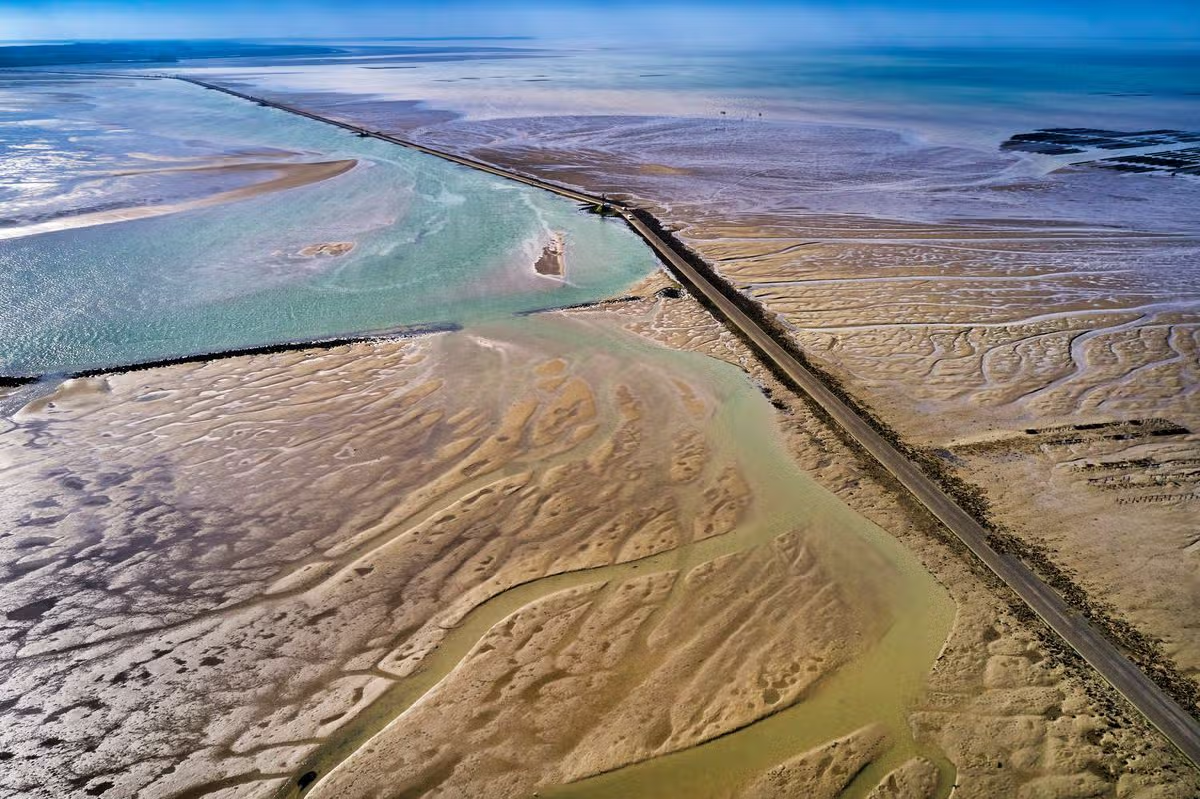
The Passage du Gois, in France, is one of the most popular underwater roads connecting the Île de Noirmoutier to the French mainland. The 2.6 miles road vanishes under the sea twice every day, turning a scenic drive into a journey that must be timed around the tide.
High tides submerge the Passage du Gois under 1.5 to four meters (five to 13 feet) of Atlantic Ocean water most of the day. Drivers have to carefully plan their journey as they can only cross during a short window of about three hours.
Nine raised refuge markers stand along the Gois for people caught by rising water. Officials warn that the road should never be treated as passable when it’s flooded, just because another vehicle has entered it.
Alternatively, visitors can use the Noirmoutier bridge to reach Île de Noirmoutier, located 5.3 miles from the Passage du Gois.
Travel experts at Lapland Famille warned drivers and holidaymakers to plan their trips carefully. Alex Dyer, managing director at Lapland Famille, said: “A tide window can look generous until a meal stop runs late or a child needs an unexpected break.
“I’d keep the bridge route ready and treat the Gois as a bonus, because that removes the pressure to race the final minutes with the sea already on its way back in.”
On TripAdvisor, a visitor described the road as “absolutely unique”. They said: “I have known the Passage du Gois since I was a little girl; it is absolutely incredible and unique in the world.
“This road is revealed every six hours, depending on the tide. Of course, you absolutely must know the tide times and coefficients to know how much time you have to be able to cross it and not be caught off guard by the sea.
“The island of Noirmoutier was connected for years only by this passage before the bridge in 1971.
“Many people stop there for shore fishing. Magnificent photos can be taken, and every year, there is a race organised against the clock on the Passage du Gois.”
Other famous underwater roads in Europe are the Lindisfarne Causeway and the Strood, both in England.
The Lindisfarne Causeway is a three-mile paved road connecting the Northumberland mainland to the Holy Island of Lindisfarne, as the North Sea tides cover the road twice daily. The Strood, in Essex, is covered by water during high spring tides, temporarily cutting access to Mersea Island.
Who: France vs Italy What: UEFA Nations League 2026-27, Group A1 match Where: Stade de France, Saint-Denis, France When: Friday, October 2, at 8:45pm local time (18:45 GMT) How to follow: Al Jazeera Sport will bring you all the build-up and live updates from 15:45 GMT.
It’s time for Zinedine Zidane’s homecoming.
Recommended Stories
list of 4 itemsend of list
Two-time world champions France face neighbours Italy in Friday’s Nations League match, with Zidane taking charge for the first time on home soil.
Appointed in late July as successor to Didier Deschamps, ex-captain Zidane has guided France to back-to-back away wins. Now he has the chance to complete a hat-trick of victories in front of Les Bleus faithful.
Despite losing captain Kylian Mbappe to injury, France have maintained their winning start, all thanks to their squad depth and talent across positions.
Like France, four-time World Cup winners Italy are also managed by a former player – Roberto Mancini – who is back in the job for the second time. Mancini’s first game back in charge ended in Roman jeers, but the Azzurri responded in style with an emphatic win in their second game.
Friday’s match is expected to be played in front of what will be a sell-out crowd of close to 80,000 fans at the national stadium north of Paris.
So, can Italy build on their dazzling display or will France give Zidane more reasons to rejoice?
Al Jazeera breaks down everything in this match preview:
What is the UEFA Nations League?
The UEFA Nations League was founded in 2018 to reduce the number of meaningless friendlies and give nations competitive matches against top-ranked teams.
In this competition, countries from across Europe participate in a league structure which features promotion and relegation.
How have France and Italy played in the Nations League?
France are on top of this group with six points after identical 1-0 wins over Turkiye and Belgium.
Italy, on the other hand, are second-to-last with three points after losing 2-0 to Belgium and thrashing Turkiye 4-1.
When did France and Italy last meet?
They last met in a Nations League group match in November 2024.
France defeated Italy 3-1 in Milan then, with a double from Adrien Rabiot and a Guglielmo Vicario own goal. Andrea Cambiaso netted the consolation goal for the Italians.
France vs Italy: Head-to-head
Matches: 41
France wins: 12
Italy wins: 20
Draws: 9
France vs Italy: Form guide
(Last five games, latest results first)
France: W-W-L-L-W
Italy: W-L-W-W-D
Who are the top players to watch?
Michael Olise and Desire Doue (France): Olise’s outrageous finish in Monday’s Belgium game had Zidane going berserk on the sideline. Such is his talent. He has been involved in both goals France scored in this year’s Nations League and is also enjoying a flying start at Bayern Munich this term with eight goals and four assists. Doue, 21, is equally impressive – he assisted Olise in the last game, earning player of the match.
Michael Olise of France celebrates scoring against Belgium in the match in Brussels on Monday [Dean Mouhtaropoulos/Getty Images]
Francesco Pio Esposito and Davide Frattesi (Italy): Pio Esposito not only scored a goal in the last game but also celebrated a sweet bit of history – he and his older brother Sebastiano played against Turkiye, marking the first time two brothers started for Italy in more than a century. Inter Milan striker Pio already has five goals in 10 Azzurri appearances. Italian fans should also watch out for Frattesi, another scorer from the last game who has also netted three times for Lazio in this year’s Serie A.
What have the coaches said?
Zinedine Zidane (France): “It is going to be really emotional,” said Zidane, whose last appearance at the Stade de France came as a player in a friendly against Mexico in 2006.
Roberto Mancini (Italy): “Facing Zidane will be a pleasure, but this isn’t a duel between us,” assured Mancini in his press conference.
“It is going to be a great game between France and Italy, teams who are still trying to figure things out. Whatever happens, I feel that this match will be very useful for the process.”
Team news and predicted line-ups
France
Mbappe is the biggest name missing from the France squad. He picked up a knee injury after scoring the winning goal against Turkiye and has since been sidelined for two weeks.
Elsewhere, central midfielder Warren Zaire-Emery is out with a thigh injury, and Matteo Guendouzi remains suspended.
Probable France XI: Mike Maignan; Jules Kounde, Jeremy Jacquet, Maxence Lacroix, Adrien Truffert; Rayan Cherki, Manu Kone, Adrien Rabiot; Desire Doue, Ousmane Dembele, Bradley Barcola
Michael Kayode (right) of Italy celebrates scoring his team’s third goal with teammate Sandro Tonali during last week’s game against Turkiye in Bursa [Ahmad Mora/Getty Images]
Italy
Italy have a fully fit squad.
Probable Italy XI: Gianluigi Donnarumma; Michael Kayode, Giorgio Scalvini, Alessandro Bastoni, Matteo Ruggeri; Sandro Tonali; Davide Frattesi, Nicolo Fagioli; Giacomo Raspadori, Francesco Pio Esposito, Sebastiano Esposito
France vs Italy: TV channel, livestreaming
France: la chaine L’Équipe, TF1+
Italy: RAI PLAY, Mediaset, Sky Italia
United Kingdom: Prime Video UK
United States: FOX Sports, FuboTV, ViX
India: Sony Sports Network
Middle East and North Africa: beIN SPORTS
South Africa: DStv Stream
You can find your regional broadcaster on UEFA’s official broadcaster listing.
Police have detained hundreds as students protest overcrowded classrooms, teacher shortages and crumbling facilities.
Published On 1 Oct 20261 Oct 2026
French students have set fire to bins and erected blockades outside schools in several cities, protesting overcrowded classrooms, teacher shortages and crumbling facilities.
Several school principals were injured, harassed or assaulted during blockades at high schools on Thursday, according to reports from regional education authorities, prefectures and union representatives.
Recommended Stories
list of 2 itemsend of list
Police have already detained hundreds of protesters at the lycees, which students aged 15 to 18 attend for their final three years of secondary education in France.
At Marseille’s Victor Hugo high school, the teachers were inadvertently splashed as a student attempted to throw petrol into a rubbish bin, local authorities said. Earlier, the prosecutor’s office had said the teachers had been assaulted and “doused in petrol”.
At another school in the city, Saint-Exupery high school, hundreds of young people surrounded a firetruck that had arrived to put out a blaze in the morning, police said. The attackers forced the firefighters to flee the vehicle, then set it alight.
In Nantes, firefighters extinguished a fire at a high school entrance following what regional education officials called a gathering “marked by violence towards staff”. In Strasbourg, trams were halted to “restrict the movements of rioters and demonstrators”, and students burned barriers on tram tracks, authorities said.
“There are 35 of us per classroom. With 35 degrees Celsius [95 degrees Fahrenheit] in summer, it’s unbearable. There aren’t enough toilets, and there are water leaks in some rooms,” Raphael, a 17-year-old who withheld his surname for fear of reprisals, told the AFP news agency outside a protest in Strasbourg.
“The building is falling apart, the cafeteria is too small. There’s zero budget, zero resources, not enough supervisors.”
His frustration echoes a wave of student anger that has spread across France since last week, as high school pupils protest and grievances snowball into nationwide unrest.
Some 340 demonstrations were under way outside high schools by mid-morning on Thursday, with more than 160 schools shut down as a result, police said.
University students joined in, blocking access to about 30 campuses, including in Paris and Marseille, according to a student union.
Authorities have reported many dozens of injuries – some from thrown objects, others reportedly from police riot-control projectiles.
Interior Minister Laurent Nunez said police have opened internal investigations into brutality allegations involving three students.
Prime Minister Sebastien Lecornu convened a crisis meeting and asked ministers to cancel upcoming official travel so authorities could focus on the demonstrations, his office said.
French Education Minister Edouard Geffray said that he would successively meet representative staff unions and parent and student associations on Friday.
The unrest has become entangled in the race to succeed President Emmanuel Macron next May. The government has accused the far-left France Unbowed party of encouraging the protests. Presidential candidate Jean-Luc Melenchon said Wednesday that his party “called for nonviolent methods of struggle” and criticised the government’s response as repressive.
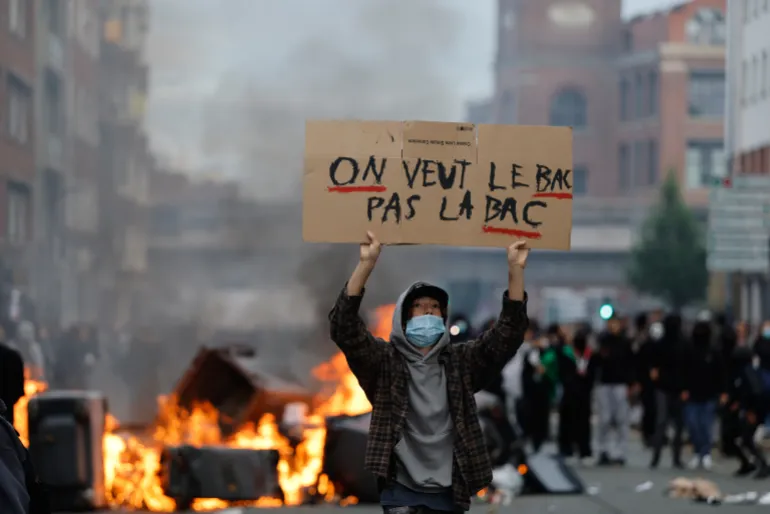
A student holds a board reading, ‘We want the BAK [high school diploma], not the BAC [anti-criminality units]’ during a protest to demand more resources at school, in Lille, France [Jean-Francois Badias/AP]