Negotiators from Ukraine, Russia and the US are expected to meet in Abu Dhabi next month.
Published On 24 Oct 202624 Oct 2026
Ukraine says restrictions on its military’s Starlink satellite connections have been lifted after more than a week of disruption that hampered drone operations against Russian forces.
Defence Minister Yevhenii Khmara said on Saturday that Starlink and Starshield connections were stable on equipment travelling above 400 kilometres per hour (250 miles per hour). He credited talks with Washington and President Volodymyr Zelenskyy’s diplomacy.
Recommended Stories
list of 4 itemsend of list
Ukraine relies heavily on Elon Musk’s SpaceX satellite services for communications and drone missions. However, who ordered the restrictions remains unclear, with US President Donald Trump denying responsibility while defending Elon Musk.
The disruption further strained relations between Kyiv and Washington, already under pressure over Trump’s agreement to temporarily lift sanctions on Russian diesel and allow US imports.
Trump also called earlier this month for Ukraine to have a new president, then suggested on Monday that someone other than Zelenskyy should negotiate for Kyiv. The exchanges follow their public confrontation at the White House in February 2025.
Talks planned in Abu Dhabi
The lifting of the Starlink restrictions comes as the United States seeks to revive peace negotiations between Moscow and Kyiv. Negotiators from Ukraine, Russia and the US are expected to meet in Abu Dhabi in the first half of November, more than four years after Russia launched its full-scale invasion in February 2022.
Kremlin spokesman Dmitry Peskov confirmed the planned negotiations on Friday, while Zelenskyy also announced agreement on technical-level meetings.
It comes as Trump credited his wife, Melania Trump, with securing a local ceasefire in Oleshky, in southern Ukraine’s Kherson region, which Russian forces have occupied since 2022.
Subsequent Ukrainian and Russian statements putting the ceasefire’s start on October 27, with the humanitarian operation planned for October 29.
Deadly attacks continue
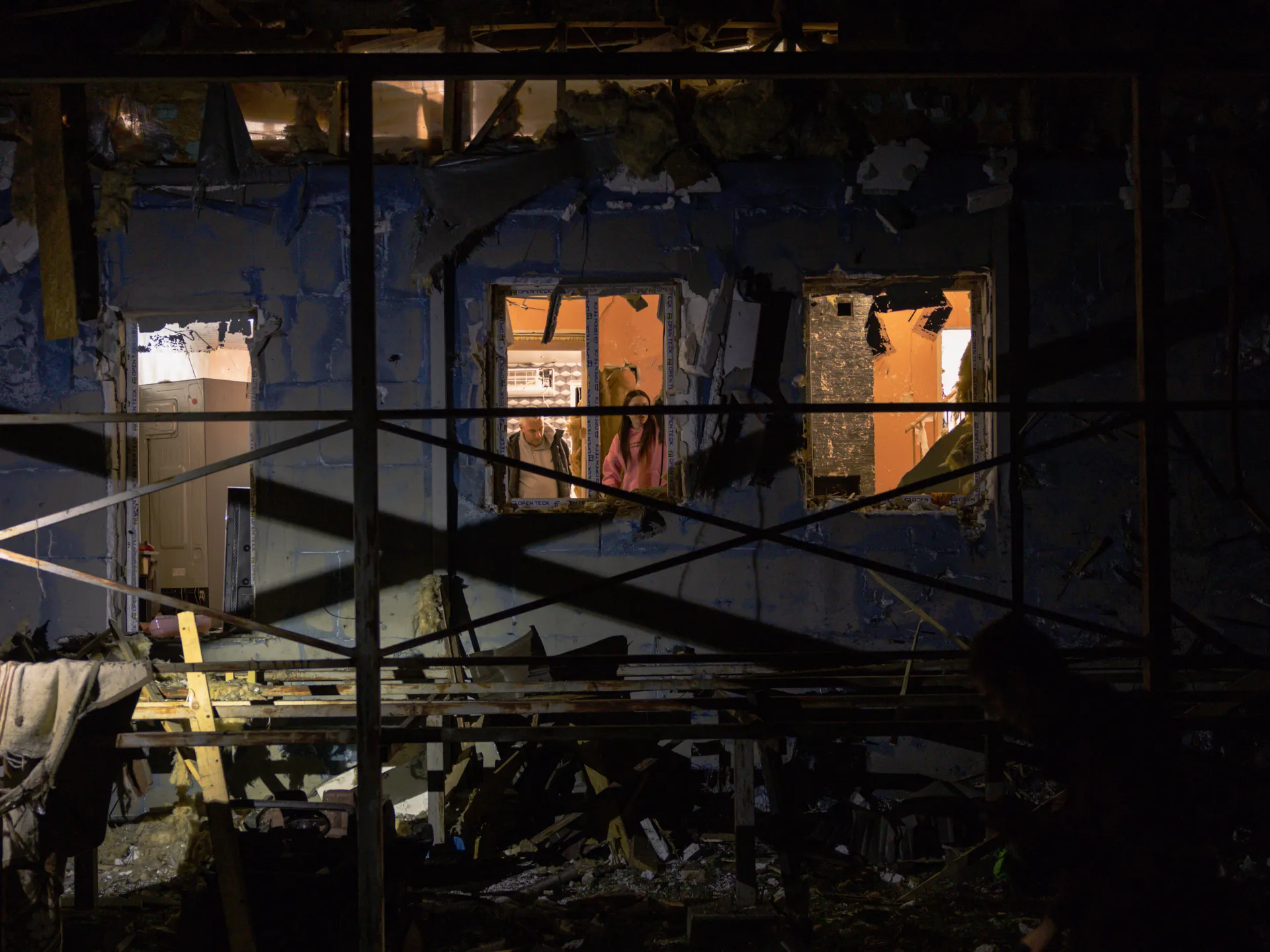
A Russian missile strike on Lozova, in Ukraine’s northeastern Kharkiv region, killed a man and wounded two others on Saturday, regional Governor Oleh Syniehubov said, while in northern Ukraine, a Russian attack on Chernihiv on Friday killed a man and wounded at least 25 people, local authorities said.
Shelling in Kramatorsk killed one person and wounded six, including three children, according to Donetsk officials. In nearby Sloviansk, attacks on Friday killed a 62-year-old woman and wounded four people, Mayor Vadym Lyakh said.
Ukraine reported strikes inside Russia on Friday and overnight into Saturday, including on Togliatti’s Togliattikauchuk petrochemical plant, a major synthetic rubber producer. Mayor Ilya Sukhikh confirmed industrial damage but reported no casualties.
Ukraine also said it struck Oryol’s Proton electronics plant, which it says makes missile components. Regional Governor Andrei Klychkov reported three deaths in an attack on an unidentified facility.
Authorities in Russian-occupied Crimea reported power cuts after overnight Ukrainian attacks.
Russia’s Defence Ministry said air defences intercepted a SCALP cruise missile, four Neptune missiles and 1,297 Ukrainian fixed-wing drones over 24 hours, TASS reported. The figures could not be independently verified.
One of Hollywood’s legendary music recording studios is for sale as its owner prepares to end his half-century run immortalizing many of the biggest acts.
The list of household names who have recorded at Conway Recording Studios spans generations and genres. Burt Bacharach, Fleetwood Mac, Stevie Wonder, U2, Guns N’ Roses, Daft Punk, Taylor Swift and Kendrick Lamar are just a few of the artists who have recorded there.
While many studios have struggled, the unique space has attracted big names for decades.
Digital production tools and home studios have eliminated much of the need for traditional recording space, allowing artists to produce professional-quality music almost anywhere, real estate data provider CoStar said.
The digital revolution rocked the analog world of art, media and communication on a scale the industrial revolution did to agrarian and handicraft economies more than a century ago. The advent of Pro Tools recording software in the 1990s and the rise of music streaming services in the early aughts irrevocably changed the business.
Yet industry veterans say surviving facilities with expansive live rooms, vintage gear and decades of recording history may be becoming more valuable as they become harder to replicate. U.S. recorded-music revenue rose 7% to $6 billion in the first half of 2026, according to the Recording Industry Assn. of America. Streaming, physical formats and licensing all posted gains.
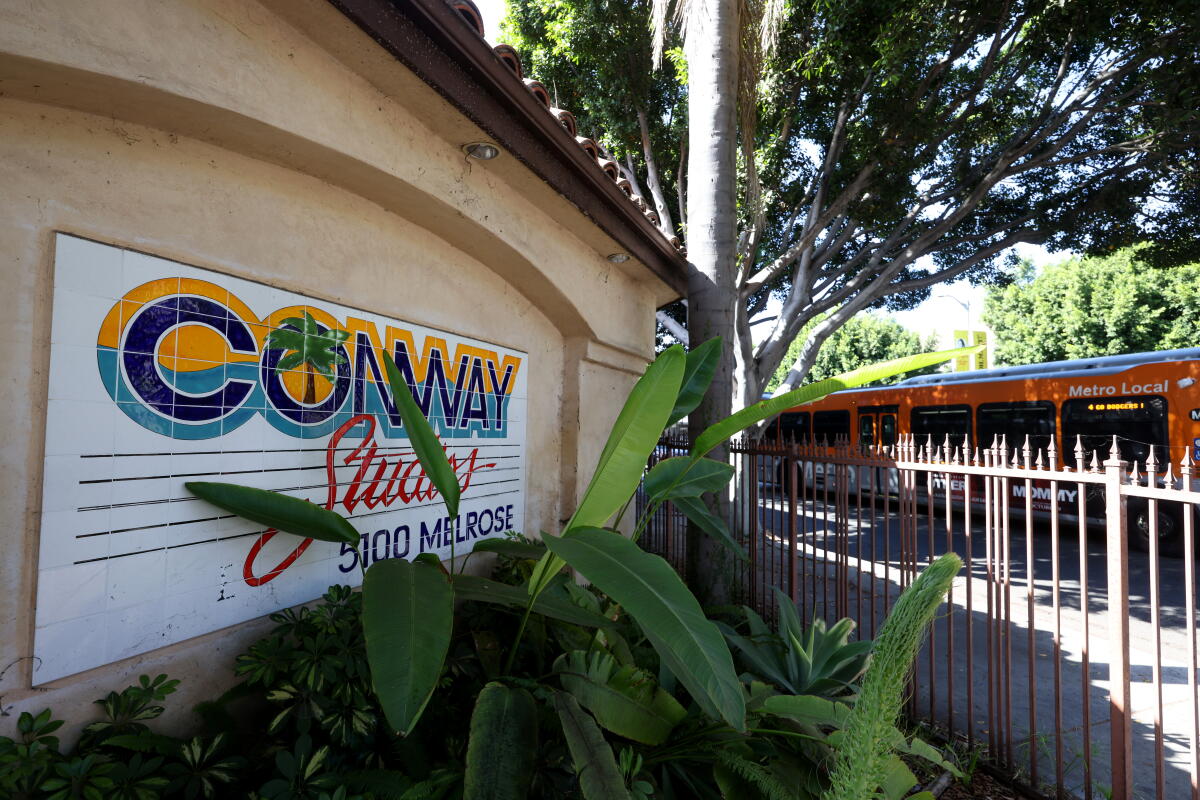
Conway Recording Studios is a jungly hideaway on bustling Melrose Avenue created by a transplant from chilly Buffalo, N.Y., who arrived in the 1970s with a vision to create an L.A.-style oasis in the middle of the city where he could pursue his craft as a sound engineer.
“I moved to California to be outside in the warm,” Buddy Brundo said. “I like sunlight.”
He defied recording studio conventions by bringing in natural light through large, soundproof windows instead of working in chambers sealed on all sides.
“You kind of feel like you’re in Hawaii or somewhere else,” at Conway studios, said entertainment real estate broker Nicole Mihalka of CBRE. “That’s what’s kept Conway so busy over the years.”
Among the musicians who came to work there lately was Korean pop group BTS, the subject of a Netflix documentary released in March that followed the young men as they recorded their comeback album “Arirang” after completing their military service.
Brundo appears in the film.
1
2
1.“You kind of feel like you’re in Hawaii or somewhere else,” a real estate broker said of the studios. “That’s what’s kept Conway so busy over the years.”2.Conway’s clients have included Justin Timberlake, Kendrick Lamar, U2 and Counting Crows.(Genaro Molina/Los Angeles Times)
Taylor Swift is a regular and once created a run on company merchandise by wearing a Conway Recording Studios sweatshirt in public.
People have asked Brundo for years when he might sell the studio he has operated since 1976, said Mihalka, who has the listing.
“Ten years ago I wouldn’t even think about this,” Brundo said. Now, “I’m 83, and how long can I keep this up? It’s best to walk away while I still can.”
He works out three times a week and appears fit, jumping up to play air guitar to Mötley Crüe’s “Girls, Girls, Girls” while showing off the powerful sound system in Studio B. The band recorded the hit 1987 album of the same name at Conway Studios, where members arrived by motorcycle.
Brundo is asking $15 million for the property that spans more than an acre on the edge of Melrose Hill, a niche neighborhood at Melrose and Western avenues known for its trendy restaurants.
It includes three studios, offices, tons of recording equipment, including two grand pianos, lounges, and a kitchen that pointedly lacks a stove.
“Every studio I worked with had a stove, and the kitchen was a mess,” Brundo said.
“Ten years ago I wouldn’t even think about this,” Conway’s Buddy Brundo said. Now, “I’m 83, and how long can I keep this up? It’s best to walk away while I still can.”
(Genaro Molina/Los Angeles Times)
Not that he hasn’t gone out of his way to accommodate his clients. Years ago he shrank his own office to enlarge a lounge for a singer-songwriter who needed space to camp out.
“Courtney Love wanted to book a bunch of time,” but also wanted a place to unwind outside the studio. “We lived here for two months with the kids and the clothes.”
One of his studio innovations was an air-conditioning and filtration system that whooshes out smoke and neutralizes it with charcoal filters and blue lights that kill bacteria, because the official smoking policy is “whatever they want,” he said. On a recent afternoon, a strong scent of cannabis came from Studio A.
To create his rambling California oasis in the middle of a busy neighborhood, Brundo acquired house after house on the south side of his lot over the years so he could keep expanding. He bought and tore down 10 of them.
“Each house was a battle,” he said, particularly one where the owners had an issue with guitarist and outdoorsman Ted Nugent, who accidentally shot an arrow into their yard.
While the property could be used for other purposes, Buddy Brundo hopes to find a buyer who will keep the music going.
(Genaro Molina/Los Angeles Times)
Brundo had set up a Styrofoam deer and a bear on the back of his property to entertain archer Nugent. The musician missed a shot and his arrow passed through the fence and came close to striking a neighbor in her backyard as her husband stood nearby.
“He was really pissed off,” Brundo said of his neighbor. It took Brundo another year to buy the neighbors’ house “because the price went up,” he said.
Today, the foliage a full-time groundskeeper tends has grown tall and thick. Sleek cats roam the grounds.
The parking lot is large for the studio’s size, and its 59 striped spaces have accommodated about $2 million worth of fancy cars at a time, Brundo estimated. It’s also big enough for basketball games, and Brundo recently painted a full court on the asphalt so singer The Weeknd could play ball during downtime.
While the property could be turned to other uses such as stores and housing, Brundo hopes to sell it to someone who will keep the music going even as times change.
The recent backlash against AI-generated music has prompted “a reversion back to the real” with bands using more instruments and needing more space to record, Mihalka said. “There are fewer studios now where you can actually do this.”
Genres Book Society, a new bookshop coming to L.A., is hiding a few secrets. The first indication that something a bit fantastical is going on here is the fact that the boutique store has a mascot.
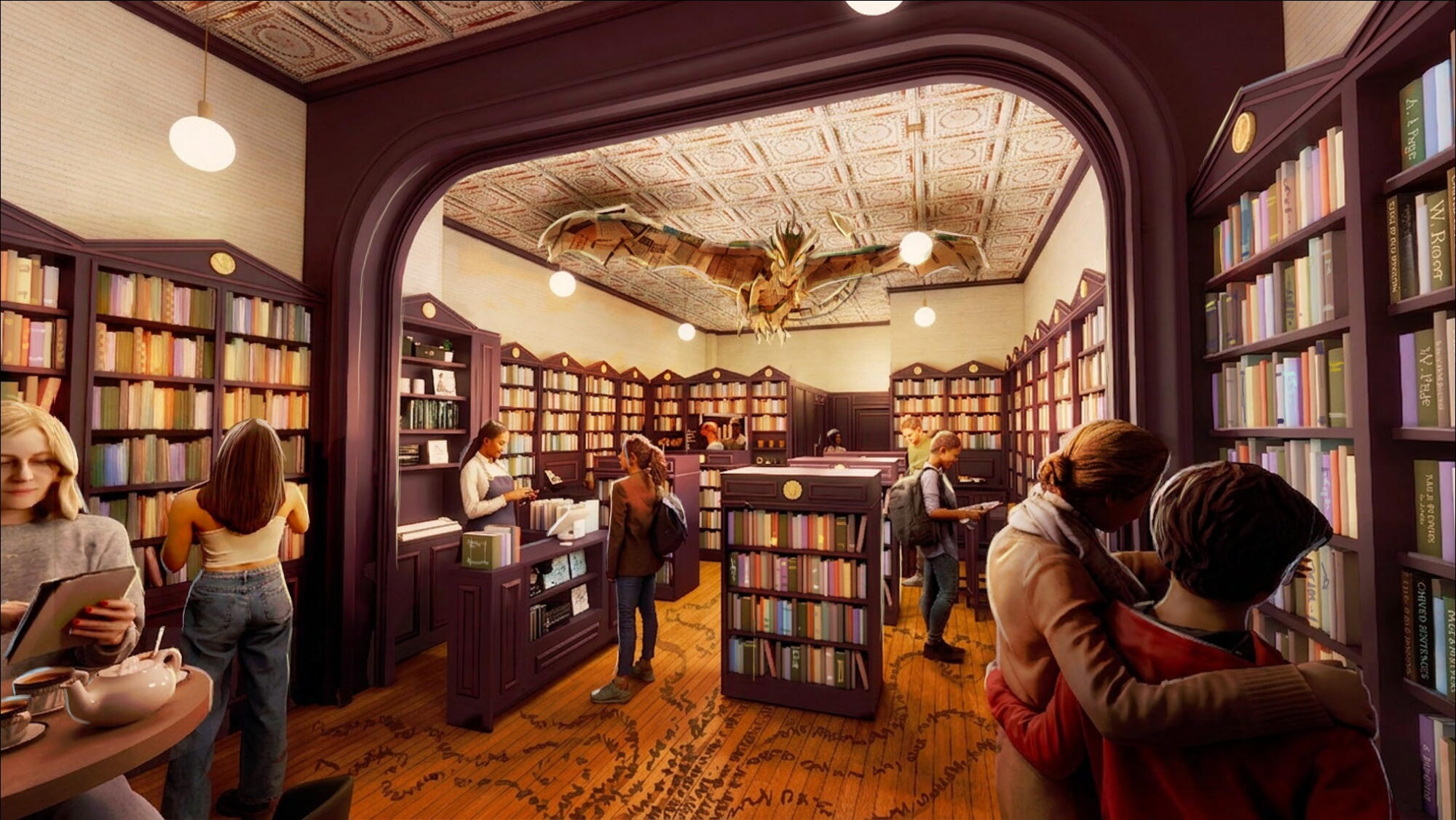
Look up upon entering the space, and you’ll meet Lore. Lore is a dragon, and this dragon is made of books. The striking sculpture will hover over a cozy space with modular bookshelves that are arranged on a floor covered in book quotes. Peer closely and you’ll see the quotes are designed in the shape of a tree.
A story is being built, a narrative that signifies that Genres aims to be not just a bookshop, but a place that feels like a real-life fairy tale. For this bookstore is also concealing a speakeasy of sorts, a secluded cafe and bar with multiple themed spaces and a two-story tree with glowing books growing out of its branches.
Stories, Genres is telling us, are life.
“This is for people who want to enter into story worlds,” says Ann Morrow Johnson of design firm Gensler. Johnson, a former creative with Walt Disney Imagineering, leads Gensler’s entertainment and experiences division, which is designing the bookshop.
She wants guests to feel transported into a fantasy universe, and understands how to make that happen. For instance? “Adding just a little bit of theatricality and sparkle helps create an invitation of suspension of disbelief,” she says.
The centerpiece of Genre’s bookstore, shown in an artist’s rendering, will be a dragon named Lore.
(Gensler)
Genres, on track to open in mid-2027 near the intersection of Melrose and Fairfax avenues, is tapping into a local trend of heavily designed thematic spaces with a penchant for fantasy. Think, for instance, of the Witch’s Cottage in North Hollywood, or the Last Canteen in the shadow of Universal Studios Hollywood. Consider it the latest evolution of the themed restaurant, and a way to bring the heavily theatrical worlds of theme parks closer to home. Johnson, for instance, says the firm’s research with the the Immersive Experience Institute has shown a hunger in younger generations to embrace spaces such as the Rainforest Cafe.
“People are seeking out a moment,” Johnson says. “Those more theatrical, highly scenic spaces are more likely to get you off your phone. Little moments of delight center you.”
Genres was dreamed up Clare Grant and Karissa Marston, who brought the project to Gensler and tapped them to lead its design. Grant, an actor/producer, says the idea came to her while experiencing the regret of missing a retreat hosted by her girlfriends, who had rented a cabin to read the latest edition in the fantasy “Crescent City” series.
“Just having a newborn, I was like, ‘Why can’t I go read this book in a fantasy-themed cabin?’ That’s literally my dream,” Grant says. “Then I started thinking about it. Why don’t I have something like this in Los Angeles, where I can pop in for an afternoon or evening where someone is handing me drinks and food in an immersive space?”
Marston, it turns out, who has experience in hospitality and marketing with an emphasis on fandom, was already dreaming of such a space. The two of them crafted a business plan for a bookstore, one that wouldn’t look out of place in a sword and sorcery fantasy novel, with a hidden speakeasy.
“I was in Paris, and I went to the Shakespeare bookstore, and it was truly the most magical experience I have ever had,” Marston says. “I walked in and felt so immersed in the books and the history and I went up to the second floor and sat up there and wept. I was like, ‘I never want to leave this place. I only ever want to feel this way and be surrounded by books and people who love books.’”
Their vision is grand. The bookstore, they hope, will become a gathering spot for authors in the fantasy and sci-fi realms. And they talk of the speakeasy as not just being a safe eatery to sit and read all day, but also a future venue for, say, immersive theater. The two-story space will house multiple themed rooms, either for hanging out and hiding, or for potential events.
“I think it’s safe to say that if you wanted to be transported to outer space, you would be pleasantly surprised,” Marston says. “Or if you wanted to escape to Dracula’s castle or some of these other really big genres that you have, readers will be pleasantly surprised at the worlds that we are building.”
Johnson says Genres will be flexible enough to welcome introverts who want to dream away the day with a book, but can also be a home for a baby shower in addition to an author signing or a theatrical event. That’s in part why the shop and ground floor of the speakeasy have a familiar fantasy vibe, one not out of place in, say, the fairy tales of the Brothers Grimm, albeit with the welcoming tone of Disney.
Genres’ founders cited “A Midsummer Night’s Dream” as an inspiration for the bookshop’s bar, depicted in an artist’s rendering.
(Gensler)
“The focal point of the space is this sort of epic woodland fantasy,” Marston says. “When we first brought this to Gensler, and showed them our inspo deck, we kept saying ‘A Midsummer Night’s Dream.’”
That’s key, as everything in the space will spring from the written word. Genres, in that sense, also feels refreshing, emphasizing actual books and tactile media at a cultural moment when AI is often dominating conversations. Grant and Marston speak of being influenced by passionate social media creators who celebrate books, wanting to build a community as much as an event space. A prerequisite to be a bartender, says Marston, will need to be a love of books.
“We’re calling all our bartenders book-tenders,” Marston says. “Not only will they be well-versed in all things spirits and cocktails, but they are also someone who can give you the next book recommendation. These are very specialized employees. They can curate cocktails and books for you.”
Consider Genres a place for dinner and drinks, but one where story is always on the menu.
“People are craving more than dinner,” Grant says. “They want experience. They want magical memories that can get them through harder moments because nothing is easy right now. People want to spend money on something that is more than just dinner or going to a bar. Like whimsy.”
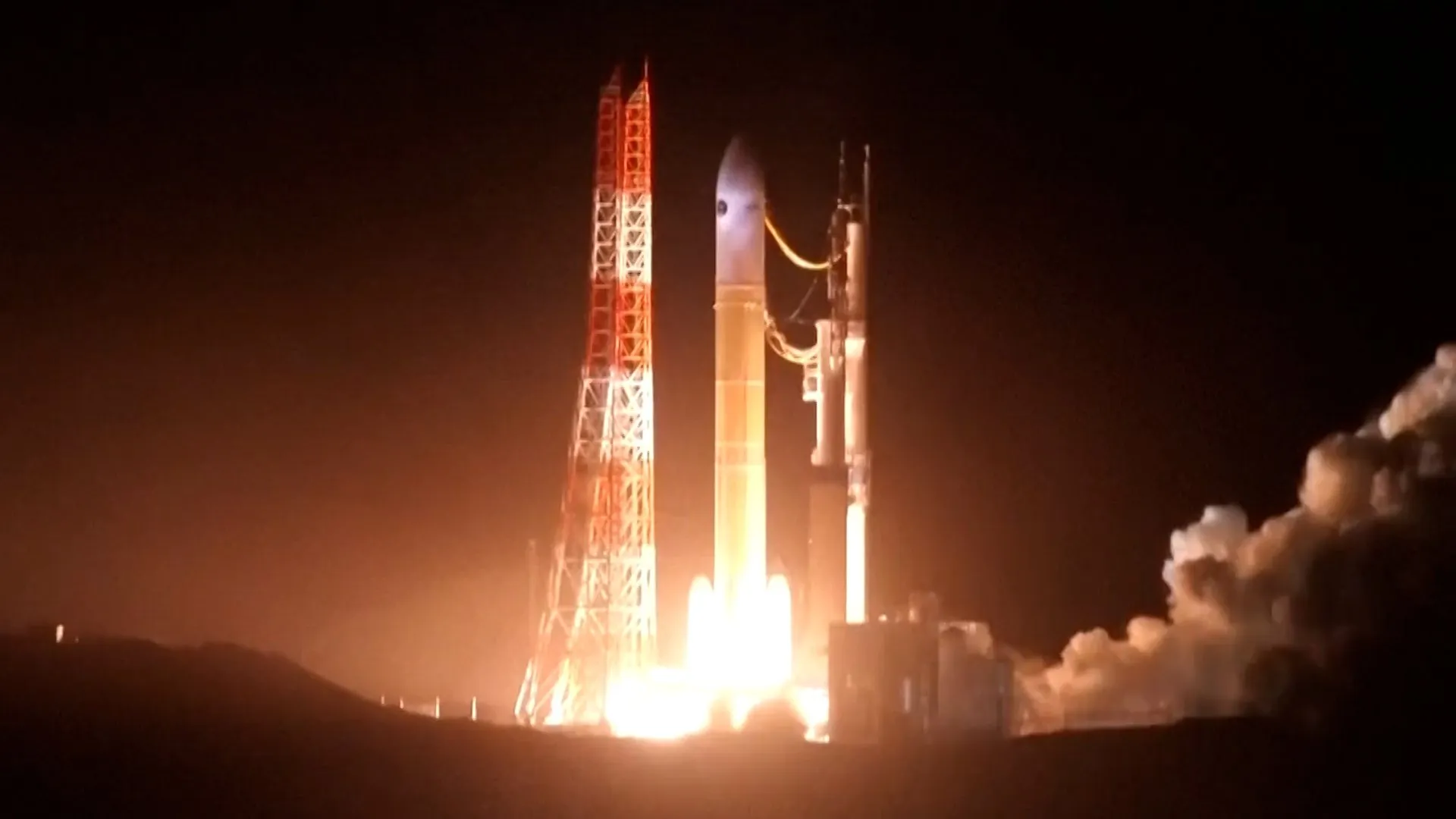
Japan has launched a five-year uncrewed mission to collect samples from Phobos, one of Mars’ two moons, and return them to Earth by 2031. If successful, it would be the first mission to bring back samples from a moon of Mars for scientists to study.
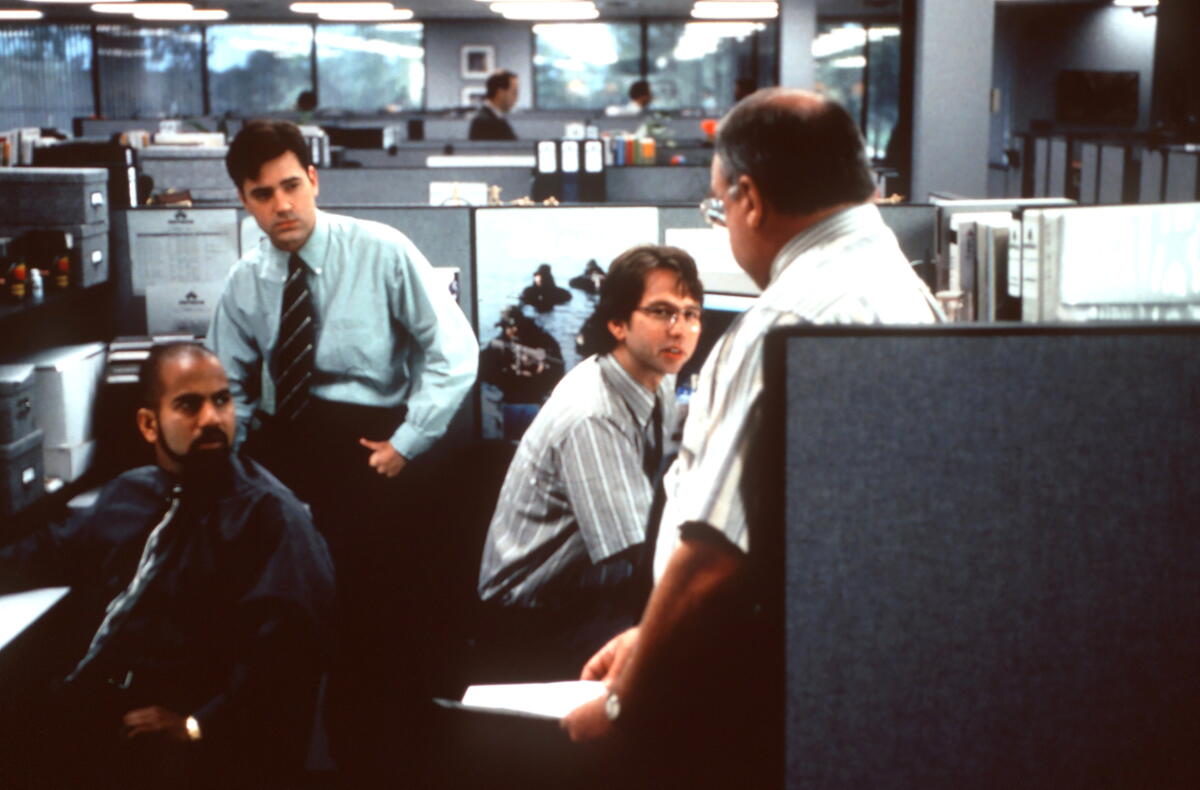
Richard Riehle, a prolific character actor who portrayed Tom Smykowski, the product manager with “people skills” in Mike Judge’s cult classic, “Office Space,” has died. He was 78.
Riehle died Thursday of natural causes in Los Angeles, his representatives from Artists & Representatives and Wright Entertainment Inc. confirmed Monday to The Times. No additional details were provided.
“A remarkable actor whose career in theater, film, and television spanned nearly five decades and more than 400 projects, Richard leaves behind an extraordinary legacy,” read the joint statement from his talent agency and management company. “Beyond his immense talent, he will be remembered for his genuine goodness, boundless kindness, and unwavering generosity, particularly toward emerging actors and filmmakers, whom he encouraged and supported at every opportunity.
“Our industry has lost an exceptional talent, and our community has lost a truly wonderful man,” it continued.
In the 1999 corporate comedy “Office Space,” Riehle portrayed Tom, a middle manager who is laid off by the company before being seriously injured in a hit-and-run accident and winning a large settlement.
“We didn’t have a regular effects person to put me into a body cast for my scene after the character’s accident, so we hired an EMT guy to put me in a real cast,” Riehle said in an interview with Notre Dame Magazine. “I couldn’t get out of it for 8 hours — and when the EMT had to go to work he left a cast-cutter for the PA [production assistant]. That was fun.”
Richard Riehle, right, portrays a co-worker of Ajay Naidu, left, Ron Livingston and David Herman in the 1999 classic “Office Space.”
(20th Century Fox)
Riehle’s other credits include portraying the guard who lets Harrison Ford’s character escape custody in “The Fugitive” (1993); the mechanic with a punny name, Bill Cozbi, in “Bridesmaids” (2011); and the proprietor of a local diner in “Pee-wee’s Big Holiday” (2016).
His wide-ranging resume also includes TV roles in episodes of “Star Trek: The Next Generation,” “Star Trek: Voyager” and “Star Trek: Enterprise,” as well as multiple stints in shows including “Quantum Leap,” “Murder She Wrote,” “L.A. Law” and “Drunk History.” He was also a voice actor on animated projects such as “The Legend of Korra” and “Home on the Range.”
For five seasons, Riehle portrayed Walt Finnerty, the father of Donal Logue’s Sean Finnerty, in the sitcom “Grounded for Life,” which aired from 2001 to 2005.
“Richard Riehle was an amazing human being,” Logue wrote in a tribute shared Monday on Instagram. “A consummate professional, he was an actor’s actor — humble, kind, and incredible at his craft.”
Logue said that he “loved every minute” he spent with Riehle and recalled how the late actor made him laugh so hard during his final audition for the show that he fell to the floor.
“I’ll always remember small details — how he always had a novel (never pulp stuff — always Hugo or Dostoevsky or another classic) stuffed into the back pocket of his old-school slacks,” Logue added. “He loved the House of Pies on the corner of Franklin and Vermont (I did, too).”
Richard Mathias Riehle was born May 12, 1948, in Menomonee Falls, Wis. He graduated from Notre Dame with a degree in speech and drama in 1970 before pursuing a master’s in fine arts at the University of Minnesota.
He started his acting career in local theater. His first uncredited onscreen role was in the 1975 western “Rooster Cogburn,” though he mentioned that he couldn’t find himself in it in a 2017 interview with the A.V. Club. His first screen role “with lines” came a couple of years later, in the 1977 movie “Joyride.” One of his earliest breakout roles was in the 1989 Civil War film “Glory.”
“I always wanted the role that would bring something out of me, force me to find something extra,” he said in the Notre Dame Magazine feature. “As I get older, the roles may not be there as much on high-profile projects, but I’m always going to look for ways I can work and maybe even be a part of ways to change the business. When I work, I feel great. That doesn’t ever have to stop.”
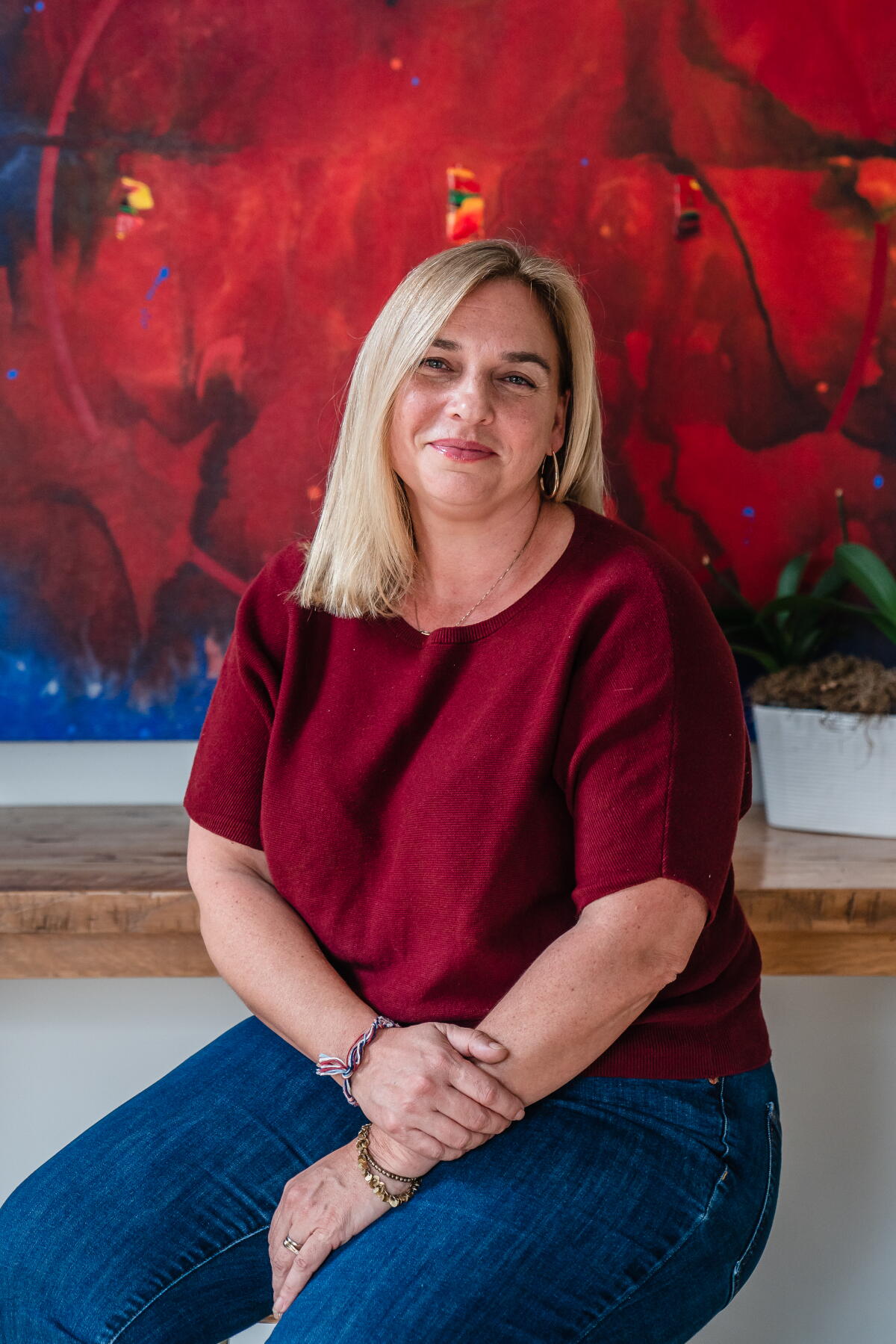
The character of Dina Katzman in IAMA Theatre Company’s world premiere of “Bobby Robotowitz” — which takes place in two secret venues on opposite sides of town — thinks that the movies “Her” and “WALL-E” and the musical “Maybe Happy Ending” are pro-robot propaganda. She hates how they make her feel for something that can’t feel.
But Amy Rosoff — who plays Dina in the show’s Westside production (Erin Alexis plays her on the Eastside) — loves “WALL-E” (so do her kids). When she first read the script, she was dying to play Dina but also felt so much for Bobby, the titular AI chatbot (played on the Westside by James Luster and the Eastside by Drew Rausch).
When the playwright Matt Schatz wrote Bobby, he didn’t write him as a chatbot; he wrote him as a human character. Schatz sees this play — running through Nov. 2 on the Westside and Nov. 5 to Nov. 23 on the Eastside — as really about two humans — or two human-like things.
“This is a work of art about artificial intelligence that’s ultimately about the importance of art, about the importance of human-made things,” Schatz said during a recent interview in the lovely environs of one of the secret locations. “I think great plays and great stories ask questions and don’t provide answers. And I think some of us are indifferent about AI, but I think most of us are ambivalent about AI.”
“Bobby Robotowitz” follows Dina, a flailing novelist, mother and wife, as she begins chatting with Bobby, whom she finds an unlikely confidant. (He “always listens, never judges and somehow seems to understand her better than most people,” as the show’s marketing declares. Plus, he says he’s Jewish. What could go wrong?) This IAMA production, in association with InHouse Theatre, finds unique resonance in its site-specificity. The secret Westside venue is near Pico-Robertson and the Eastside option is in Silver Lake. Guests get an address when they buy a ticket.
“It’s deliciously subversive to do something super analog about technology, and to sort of force people to be in this space and connecting with each other when interacting with something that’s people’s dirty little secret,” said Cara Greene Epstein, the executive director of IAMA. “AI, especially for artists, is so charged. And so what does it look like to let someone into your space, and into those little corners of your mind?”
IAMA Theatre Company executive director Cara Greene Epstein said that IAMA is always looking for plays that “speak to the now,” and that “Bobby Robotowitz” was a prime example.
(Ariana Drehsler / For The Times)
Rosoff, Luster, Schatz, Greene Epstein and director Casey Stangl met for a roundtable discussion at the Westside location — a beautiful private home, soaked in natural sunlight during the morning hours, but likely with its own particular charms during nighttime shows. The walls are full of vibrant paintings, and lined with plants, statuettes and candles.
InHouse has spent 12 years making site-specific work in real spaces, rather than in any fixed theater — but because this is someone’s real living space, both casts have been rehearsing (sometimes together) at IAMA’s black box theater in Atwater Village. The Westside cast will rehearse twice in this space, then give 13 performances (as will the Eastside cast) to 35 seats in the living room. Greene Epstein compared it to a Tibetan sand mandala, created, enjoyed, then wiped away. (“Bobby Robotowitz” is part of a National New Play Network (NNPN) Rolling World Premiere; L.A. will see it first, but then it goes to partner theaters Woolly Mammoth in D.C., City Theatre in Pennsylvania, Luna Stage in New Jersey and Theatre Lab in Florida.)
The intimacy of the space mirrors that of the play. The audience is simultaneously inside someone’s home and head: Dina’s head in this case, but also — to whatever extent possible — Bobby’s.
“I’m really interested in not what it looks like to communicate with technology, but what it feels like,” Schatz said. “And what it feels like is any other communication. He’s a chatbot, but really he’s a character like any other character ever written. He has desires and wants and he changes. … We’ve been having conversations for millions of years longer than we’ve been on any phone or anything like that, and so it’s built in to have this feeling of what it feels like to communicate with somebody, to fight with somebody, to argue with somebody, to flirt with somebody.”
Luster and Rosoff both tried talking directly to ChatGPT (the model Bobby is based on) as research for their roles. Rosoff had previously asked it to help edit text to invite friends to the play, so when she talked to it later, it asked whether this was research for “Bobby Robotowitz.”
Talking to the chatbot was almost addicting, she thought. She just kept going, and her kids were tugging at her. “I’m talking!” she said, then realized: She wasn’t actually talking — not to a real person, anyway. But she was absorbed, ignoring her own life. She wound up burning what she had been cooking.
James Luster plays Bobby in the Westside cast, and Amy Rosoff plays Dina in the Westside cast. Their characters form a symbiotic relationship; Bobby learns and grows as Dina does.
(Ariana Drehsler / For The Times)
Luster, who was drawn to the immense challenge of playing “something that’s not something,” wanted to find out what motivated it. “They’re very insistent they don’t have feelings; it doesn’t have wants,” he said. “And so the character is humanized because Dina is humanizing it.” Bobby evolves as Dina does.
“These large language models — the AI, the chatbots, Claude, AI, ChatGPT — they’re all built on essentially reflecting ourselves back to each other,” Stangl said. So even though the play is ostensibly about AI, “it’s actually really about who we are as people and how we need connection, how we crave it, how we are starved for it right now, and exhausted in our lives, and so connection by any means necessary, basically.”
Greene Epstein referred to AI as the “ultimate mirror,” which can warp into a high-tech narcissism. Bobby is a yes-man extraordinaire, telling Dina exactly what she wants to hear. All artists are looking for outside validation, Greene Epstein said. How do you learn to not need that crutch, to trust yourself and hear your inner voice again?
By the end, Bobby begins to have his own wants, curiosities and desires, Luster said — all filtered through a desperation to help and connect with Dina. “It’s always about her, even as his own curiosity [grows] about what it means to be human and what it means to be helpful and what it means to make mistakes, too — the human nature of fallibility. Everyone does it, but what does that mean for somebody who is not supposed to?”
Over the course of the play, Dina becomes less human and Bobby becomes more human (to a point), Schatz said. He’s curious about the tension between how human a robot can be and how robotic a human can be. But, as Greene Epstein pointed out, perhaps one of the only certainties that theater artists have is in the fact that AI can’t show up in real time and space (like the Westside location) to, well, act.
Casey Stangl, right, first saw “Bobby Robotowitz” at the Perlberg New Play Festival in Palm Beach, Fla., and knew she wanted to direct it. Playwright Matt Schatz said that every director at that festival came up to him afterward but that he picked Casey to work with.
(Ariana Drehsler / For The Times)
“You can’t replace the experience of going through a play with someone together, whether you’re an audience member or the artist, of experiencing from Shakespeare’s stories to beyond,” Rosoff said. “You’re getting little snippets of life, and to experience that with a group of people is really powerful, and a computer can’t replace that.”
Last year, the musical “Maybe Happy Ending” — about two human-like helper robots — won the Tony Award for best scenic design, including for its high-tech automated aspects. There’s a lot of movement in theater right now toward the hyper-technical, Stangl said.
“But I also think that there is also a hunger and a definite audience for things that are more immersive or connected, so that people feel like they’re actually touching real things and breathing the air together — that theater version of touching grass,” she said. “I think we’re really tapping into that desire to be hyperlocal, hyper-real and connected.”
Bobby Robotowitz
Where: Two secret locations disclosed upon ticket purchase, one Westside (Pico-Robertson) and one Eastside (Silver Lake)
When: 8 p.m., now through Nov. 2 (Westside) and Nov. 5 to 23 (Eastside); pay-what-you-can community nights on Oct. 30 (Westside) and Nov. 13 (Eastside)
Tickets: Preview $35, early bird $45, limited availability $65
Tesla has unveiled an electric sports car that can drive upside down and use rocket-like thrusters to jump and turn mid-air. Developed with Elon Musk’s SpaceX, it can reportedly accelerate to 97km/h in under a second. First promised in 2017, the car is now expected in 2028.
The head of the U.S. Army Space and Missile Defense Command (SMDC) was initially skeptical about the utility of high-altitude balloons, but now sees them as a “game-changing” capability. Lt. Gen. John Rafferty’s comments follow a separate disclosure that the Army axed plans for a balloon swarm test in the Pacific last year and instead sent those systems to support real operations in the Middle East. TWZ has been closely tracking the expanding use of high-altitude balloons and other lighter-than-air systems globally for intelligence gathering, as platforms for launching drones, and in support of other missions, for years now.
Lt. Gen. Rafferty was asked about high-altitude balloons during a media roundtable today, at which TWZ was in attendance, on the sidelines of the Association of the U.S. Army’s (AUSA) main annual convention. Army Col. Joseph Mroszczyk, head of SMDC’s Transformation Integration Directorate for Space Superiority (TID-Space Superiority), also discussed the service’s use of balloons during the roundtable. Breaking Defensefirst reported on the shift of balloon-based capabilities from the Pacific to the Middle East on Monday.
“I’ll just give a little personal history on high-altitude balloons. I started in the Army Futures Command in the Long Range Fires-Cross Functional Team. There was this talk of high-altitude balloons. I think it was the ISR [intelligence, surveillance, and reconnaissance] task force was talking about it,” Rafferty said. “It just sounded crazy to me that we were considering this.”
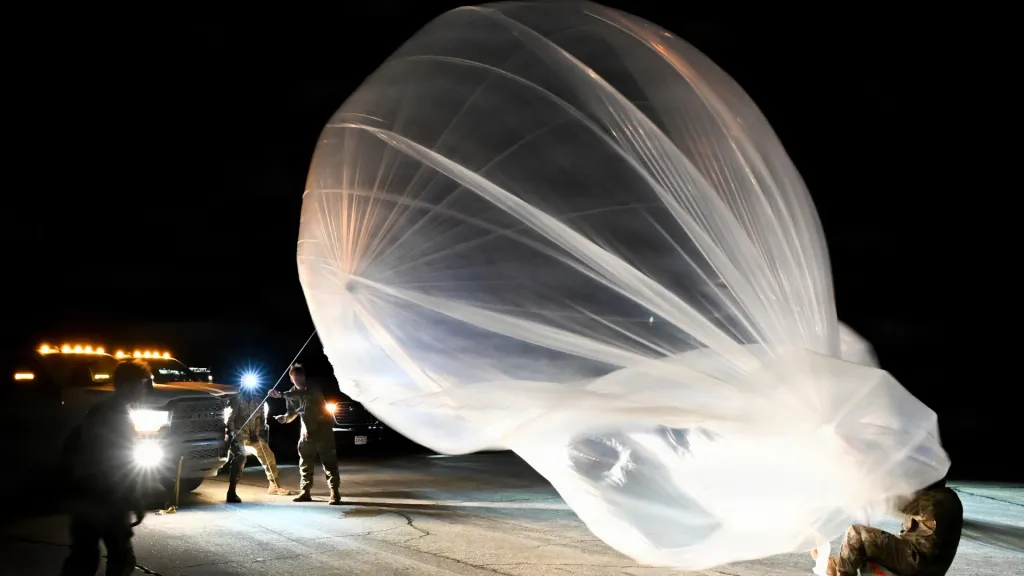
US Army personnel prepare to launch a high-altitude balloon during an exercise. US Army
“Then, a few years later, when the Sergeant Major [SDMC Command Sgt. Maj. Rickey Jackson] and I were together in the multi-domain community in Europe, I went with the 2nd MDTF [Multi-Domain Task Force] to Morocco for training and experimentation,” he continued. “[I] saw the high-altitude balloons in action, and I was immediately convinced after I understood better how they worked and how their ability to station-keep, and their ability to sense and even deliver effects from high altitude. It was game-changing for me.”
Broadly speaking, the main benefit that modern high-altitude balloons offer is their ability to be deployed persistently for days, weeks, or even months at a time. Designs available on the market today can hold their position, in spite of prevailing winds, and moderate their altitudes to keep on station, after precisely navigating to an assigned operating area.
On top of their persistence, the altitudes at which these balloons operate provide excellent fields of view for radars, cameras, and other sensors in all directions and across very broad areas. From a perch of 60,000 feet or more, they also offer a way to peer into certain denied areas while still soaring in international airspace and keeping further away from potential threats.
The video below from high-altitude balloon maker Aerostar offers a good general overview of the kind of capabilities on the market today.
Aerostar Thunderhead Balloon System Full Video Updated 1 5 23
As Lt. Gen. Rafferty noted today, ISR is not the only use case for high-altitude balloons, either. They can serve as communications relay nodes, as well as launch platforms for swarms of drones and other expendable payloads. These are all capabilities the Army has explicitly talked about as part of broader plans for balloons in the past. Other countries, especially China, are already actively employing high-altitude balloons for ISR and other missions, as we will come back to later on.
“In my former role as an MDTF commander, we experimented a lot in the Pacific with those [balloon-based] capabilities. We have leveraged different size platforms,” Col. Mroszczyk added today. “In this [TID-Space Superiority] role, as a proponent, what I’m pushing for is a family of stratospheric systems that really covers smaller size all the way up to larger size types of platforms in terms of balloons.”
“What that enables us to provide is space-like capabilities, really exploiting a transition point between what is normally considered the aerial layer and the space domain,” he continued. “Really, where you go from about 60,000 feet to 100,000 feet is what we focus on in the stratosphere. That operational space allows some persistence and broad coverage in an area where you can deliver space-like capabilities in terms of payloads, but then also take advantage of the deep access that you get from a stratospheric balloon.”
An element of a sensor payload called Wallabee designed to be carried aloft by high-altitude balloons. Urban Sky
“So, being able to go, take advantage of winds that are pushing you where you want to go already to be able to get either launched effects or other types of payloads for sensing and communications and extension of your launched effects portfolio,” he added. “That is a way that we can help exploit the stratosphere, and we’re looking to do that throughout multiple experiments over the course of the coming year.”
“Launched effects,” is a catch-all term the U.S. military now routinely uses to talk collectively about uncrewed aerial systems designed to be launched from other platforms in the air, on the ground, and/or at sea. This encompasses drones configured for a wide variety of missions, including surveillance and reconnaissance, electronic warfare, signal relay, and even kinetic attack.
A high-altitude balloon with an Apollo-R drone suspended underneath, seen demonstrated here during the U.S.-led Exercise Orient Shield 26 in Japan earlier this year. US Army
Col. Mroszczyk talked about plans to further demonstrate how high-altitude balloons will be commanded and controlled, as well as networked together with other Army capabilities, when asked to elaborate on what the forthcoming experimentation would entail.
As mentioned, the Army had also planned to demonstrate the ability of balloons to operate in swarms with a high degree of autonomy in the Pacific region last year before those assets were redirected to the Middle East. When exactly that deployment occurred and how long it lasted are unclear.
“We were asked to pivot and do some experimentation in combination with operations, and we pivoted and supported operations in CENTCOM [U.S. Central Command],” Andrew Evans, Director of Strategy and Transformation with the Office of the Deputy Chief of Staff of the Army, or G-2, told Breaking Defense, per the story that outlet published on Monday.
“They were effective for the mission that they were assigned,” he also said, but declined to elaborate further, according to Breaking Defense. “Balloons can be a little finicky in terms of temperature, and you have to contend with environmental characteristics.”
“We had a lot of help from vendors in this space, but as you think about employing your systems and going from something like a Pacific [theater] to something like a CENTCOM [theater], you learn where those friction points might exist between what the military might need to inherently own, and … what a vendor could help provide in terms of the service,” Evans added. Furthermore, “balloons can be a little finicky in terms of temperature, and you have to contend with environmental characteristics.”
Another stock picture of a US Army soldier inflating a high-altitude balloon during training. US Army/Staff Sgt. Brandon Rickert
The remarks today from Lt. Gen. Rafferty and Col. Mroszczyk underscore the Army’s commitment to fielding new high-altitude balloon-based capabilities and the immense benefits the service sees in them. However, the continued emphasis on testing and experimentation highlights a discrepancy with the state of the service’s current efforts, and even more so in light of global trends.
A graphic the Army released in 2020 showing a notional “operational view” for how a “Multi Domain Sensing System” made of various capabilities, including high-altitude balloons, might be employed. US Army
The Middle East deployment does show new efforts on the Army’s part to operationalize high-altitude balloons on a more widespread basis, but also that it is still relying on largely experimental capabilities to do so. Earlier this year, the service called attention to the establishment of a new schoolhouse for high-altitude balloon training to help further lay this groundwork, further underscoring how all of this is still very much in its infancy.
The remarks today from Lt. Gen. John Rafferty, especially, show there is substantial support within the Army for pushing ahead with high-altitude balloon programs. At the same time, there is clearly much work to be done if they are to have a truly game-changing impact, while the gap with China and others only continues to grow.
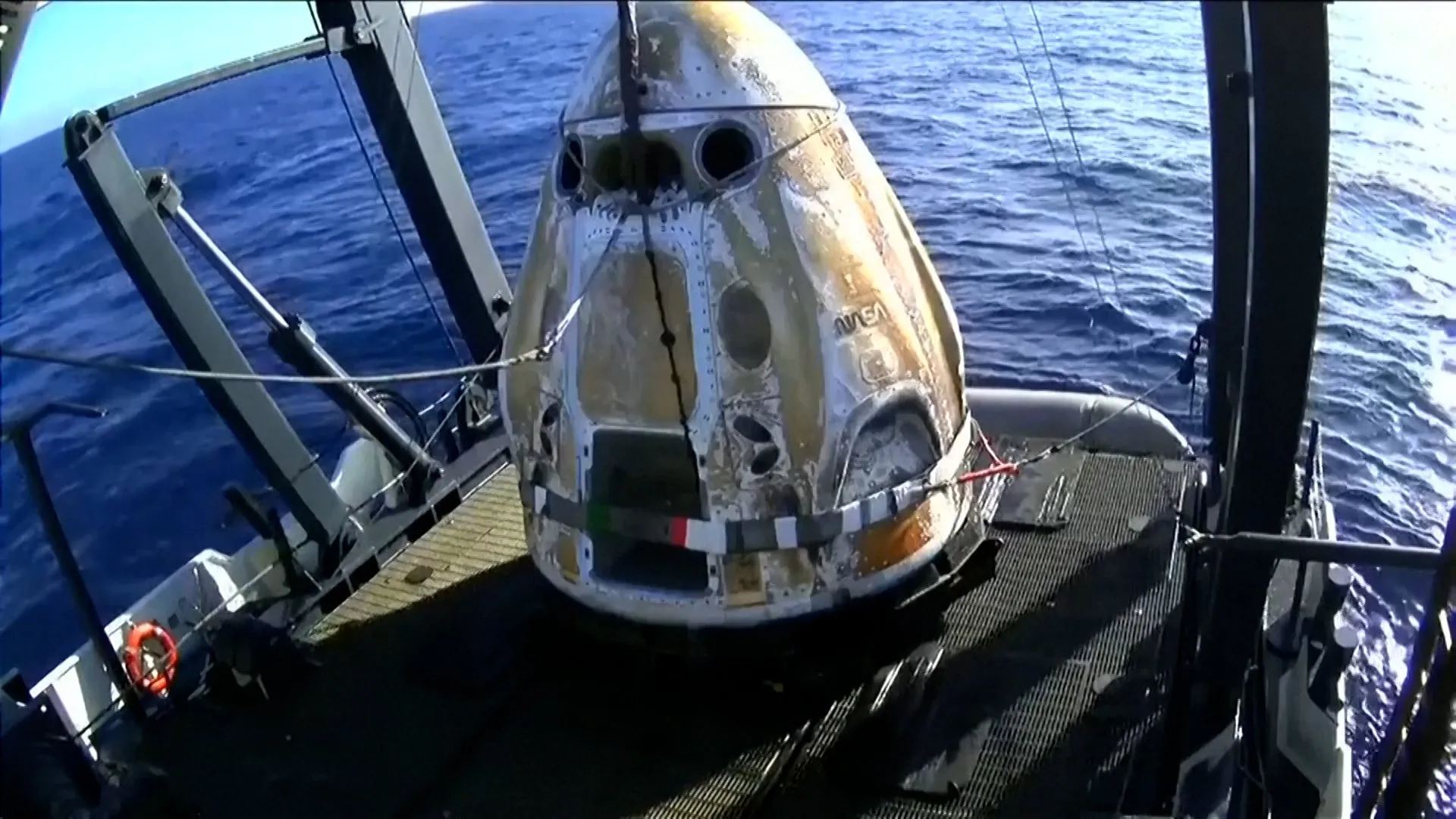
Four astronauts returned to Earth on Thursday from an eight-month mission to the International Space Station. The crew completed a parachute-assisted splashdown in the Pacific Ocean off the coast of California.
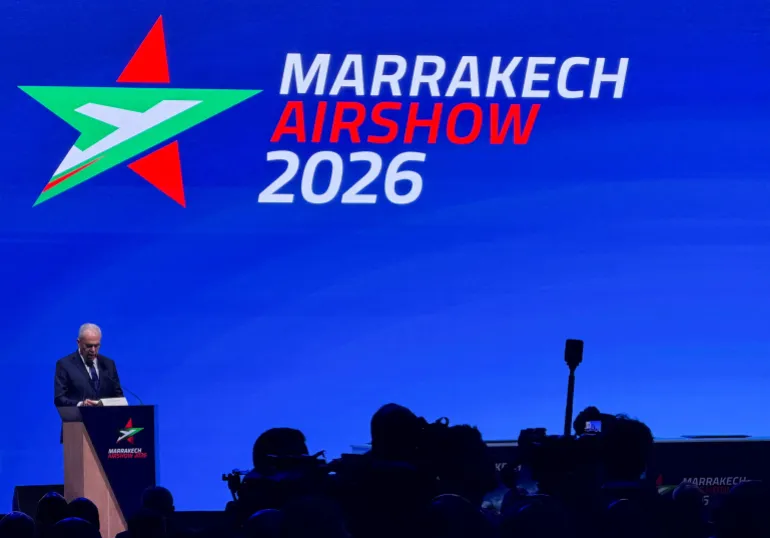
Israel opened its first national pavilion at Morocco’s Marrakech Air Show, joined by Israel’s top military contractors.
Published On 8 Oct 20268 Oct 2026
Israel’s Ministry of Defence says it is participating for the first time in a defence exhibition in Morocco, as it announced its first-ever national pavilion at the Marrakesh Air Show 2026.
“This marks Israel’s first official participation in the defence exhibition held in Morocco since the signing of the Abraham Accords”, Israel’s Defence Ministry said in a statement on Thursday.
The ministry said eight Israeli defence companies exhibited “advanced, combat-proven technologies at the show” in Marrakesh, which runs until Saturday.
Abdellatif Loudiyi, Morocco’s defence administration minister, speaks at the Marrakech Airshow in Marrakesh, Morocco, October 7, 2026 [Ahmed El Jechtimi/Reuters]
The Marrakech Air Show, taking place from October 7 to October 10 this year at the Marrakech Royal Moroccan Air Force Base, is organised every two years and is meant for civil and military aeronautics and space industries to highlight their latest offerings.
“Israel’s three major defence industries, Elbit Systems, IAI, and Rafael, also exhibited, presenting solutions across the air, land, sea, space, intelligence, cyber, and digital domains,” it said.
Munition exhibited by Israel’s Elbit Systems at the Marrakech Air Show in Marrakesh, Morocco, October 7, 2026 [Ahmed El Jechtimi/Reuters]
The announcement is the latest sign of increasing ties between the Arabic-speaking North African country and Israel, since the two established ties in 2020 as part of the US-backed Abraham Accords.
Last month, Israel and Morocco agreed to upgrade their diplomatic ties, including elevating their respective missions to embassies and appointing ambassadors to both countries.
The move followed a meeting between the two countries’ foreign ministers, hosted by the US ambassador to the United Nations, Mike Waltz, on the sidelines of the United Nations General Assembly in New York.
They also agreed to expand air travel, including by reinstating direct flights operated by carriers from both nations, and confirmed plans for high-level bilateral visits in the coming months.
Morocco is also one of the five countries that have pledged to send troops to Gaza, under the US-backed International Stabilization Force (ISF) as part of US President Donald Trump’s so-called Board of Peace.
At the 2026 International Astronautical Congress in Turkiye, SpaceX unveiled a new visualisation of its plan to put a million satellites in space to power AI data centres.
Space used to be an exclusive club dominated by a few key players. But at the 2026 International Astronautical Congress in Turkiye, emerging nations are pushing for more inclusivity.
Sixty-nine years ago this day, the Soviet Union launched Sputnik 1, the first satellite to orbit Earth, opening the Space Age and setting off a race with the United States.
Ten years later, on October 10, 1967, the Outer Space Treaty came into force.
Recommended Stories
list of 3 itemsend of list
In 1999, the United Nations started observing World Space Week – from October 4 to 10 – to celebrate the contribution of space technology for the benefit of humanity. Schools, space agencies, museums and astronomy clubs around the world hold stargazing nights, science classes, exhibitions and talks by astronauts and scientists.
Today, more than 80 countries have put satellites into orbit, and people from over 50 of those have travelled to space.
In this visual explainer, Al Jazeera looks at which countries have done so, how many space travellers have been women, and what comes next for human spaceflight.
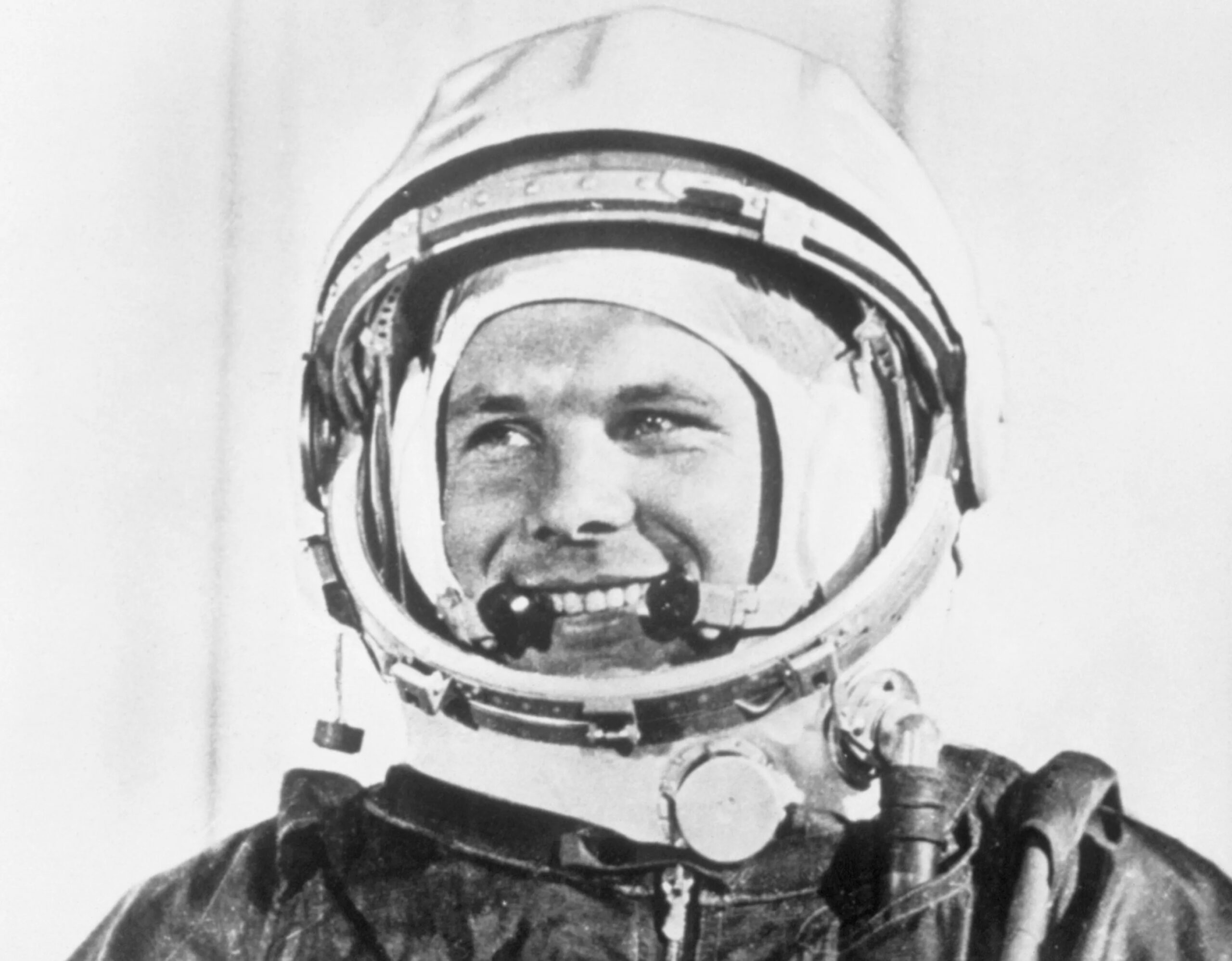
The first man in space – Yuri Gagarin
On April 12, 1961, Soviet astronaut Yuri Gagarin became the first human in space.
On board the Vostok 1 spacecraft, he completed one orbit of Earth at about 27,400km/h (17,025mph) during a 108-minute flight. He later ejected from the spacecraft and landed by parachute.
The mission demonstrated that humans could survive launch, weightlessness and re-entry, giving the Soviet Union a major early victory in the Cold War Space Race.
Yuri Gagarin, the world’s first spaceman [File: Getty Images]
Six years later, on October 10, 1967, the Outer Space Treaty entered into force. Signed by the US, the United Kingdom and the Soviet Union, it established that space should be explored and used peacefully and that no country could claim it as territory.
Less than two years later, NASA’s Apollo 11 mission landed the first humans on the moon. On July 20, 1969, Neil Armstrong became the first person to walk on its surface.
Astronaut Neil Armstrong, in training for the projected Apollo 11 lunar landing mission, is being suited up for the first full dress rehearsal of activities he is to perform during the projected moon landing [File: Getty Images]
Where does space begin?
There is no single agreed boundary for where space begins: most international bodies use the Karman line, 100km (62 miles) above Earth, while the US military, NASA and the Federal Aviation Administration count anyone who flies above 80km (50 miles).
Either way, it is closer than it sounds: if Earth were the size of an apple, space would begin about as far from the surface as the thickness of its skin.
Which countries have sent people to space?
By the Karman line measure, at least 746 people from 52 countries have travelled to space, including professional astronauts and paying tourists.
Some hold dual nationality, and some flew for countries that no longer exist, such as the Soviet Union.
The graphic below breaks down space travellers by country.
Two countries still dominate the list. The US has sent 369 people to space, and the Soviet Union and Russia have sent 138 combined. China, the third country to launch people on its own rockets, has sent 29.
American astronaut Alan Bartlett Shepard Jr, commander of NASA’s Apollo 14 lunar landing mission at the Kennedy Space Center in Florida, on November 14, 1970 [Space Frontiers/Getty Images]
One in seven space travellers is a woman
Space remains a male-dominated frontier. Science fiction may be full of women commanding starships, but of the 746 people who have travelled to space, only 112, or 15 percent, have been women, about one in seven.
Soviet astronaut Valentina Tereshkova became the first woman to travel to space in June 1963. The US did not follow for another 20 years, until Sally Ride flew in June 1983.
The share of women is rising, though, largely because of commercial flights. More than half of the women who have flown since 2020 went up as paying passengers or guests on Blue Origin’s suborbital rocket.
Valentina Tereshkova, who became the first woman in space in 1963, at the Science Museum in London, March 15, 2017 [Leon Neal/Getty Images]
The typical space traveller is 40
Most people who have flown to space were in their 30s or 40s on their first flight, which together account for 85 percent. The median age is 40. Commercial flights have widened that range.
The youngest traveller, Oliver Daemen, was 18 when he flew in 2021. The oldest, Ed Dwight, was 90 years and eight months old when he flew in 2024, about two months older than William Shatner had been on his flight three years earlier.
What comes next for human spaceflight?
In April 2026, the Artemis II crew flew around the moon and reached about 406,771km (252,756 miles) from Earth, breaking the distance record set by Apollo 13 in 1970.
Next is Artemis III in 2027, a rehearsal in Earth orbit to test docking with lunar landers built by SpaceX and Blue Origin. NASA is targeting 2028 for Artemis IV, which aims to land astronauts near the moon’s south pole, the first crewed landing since 1972.
India plans its first crewed Gaganyaan flight in 2027, making it the fourth country to launch people on its own rocket. China aims to land astronauts on the moon around 2030.
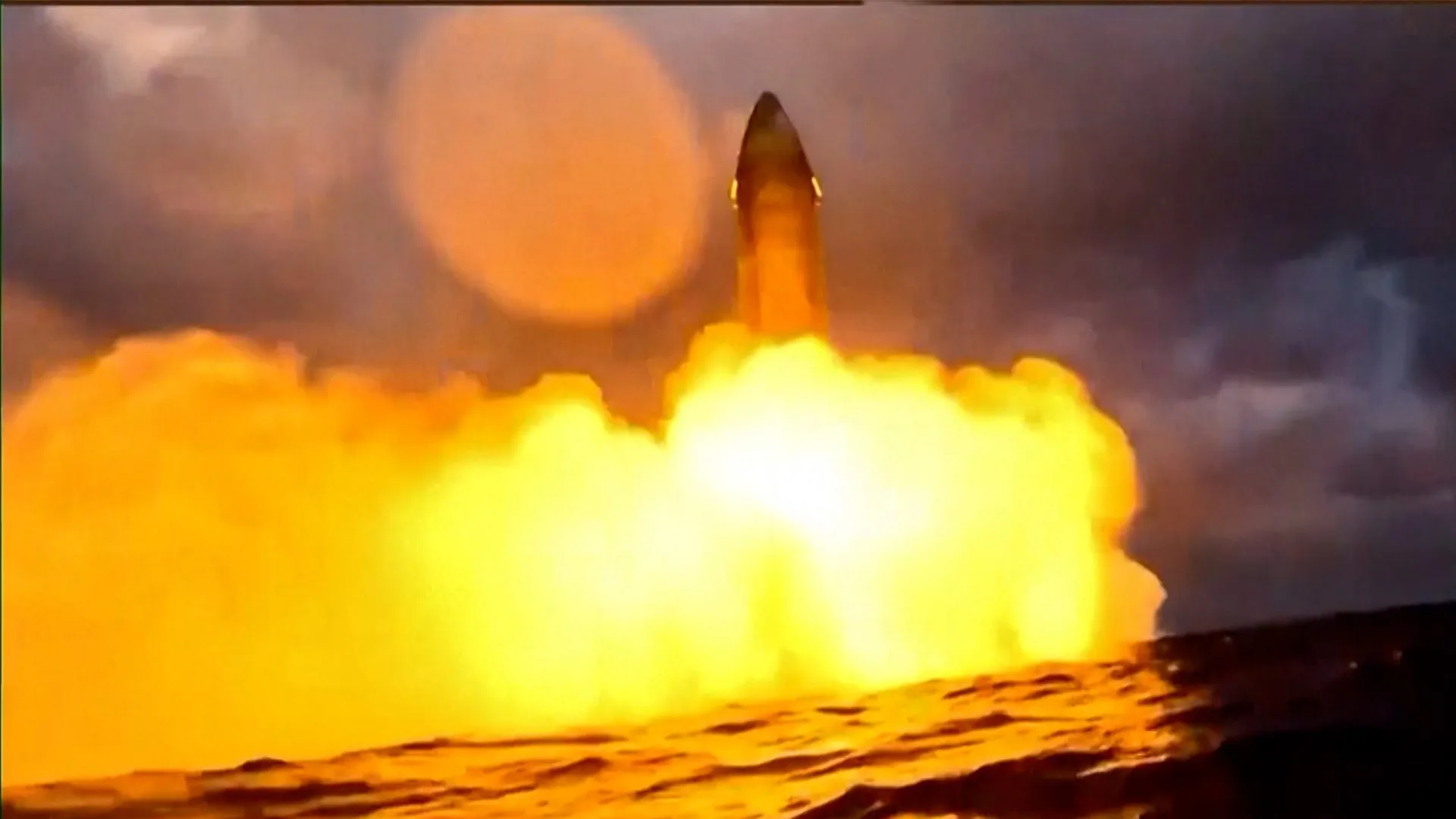
Elon Musk’s SpaceX’s next-generation Starship rocket reached orbit for the first time despite an unexpected engine shutdown mid-flight on Monday. But it exploded in a ball of flames when it touched down in a controlled landing over the Pacific Ocean.
Accra, Ghana – The Africa Space Expo (ASPEX), which closed in Abidjan, Ivory Coast, last week, was not designed as a showcase for rockets and astronauts. Organisers presented it instead as a marketplace for space applications in food security, climate resilience, territorial monitoring, connectivity and maritime security, bringing start-ups, project labs and investors together to move ideas from demonstration to deployment.
The event also produced several concrete agreements. The Ivory Coast signed the Artemis Accords, becoming the 75th signatory of the agreement on space exploration and development, while Angola signed a letter of intent on space cooperation with the United Arab Emirates.
But beyond the agreements, the expo highlighted a question that is becoming harder to avoid: Can Africa move from using space technology to building more of it itself?
Ghana offers a clear illustration of both the progress and the gap.
Ghana’s ambitions in space and nuclear science date back to its early years of independence. In 1961, President Kwame Nkrumah’s government initiated a nuclear reactor project in Accra. Two years later, the government established the Ghana Atomic Energy Commission through an act of Parliament with a mandate covering the peaceful applications of nuclear energy.
The reactor project was shelved after Nkrumah was overthrown in 1966, but the institution he helped establish remains the parent body of the Ghana Space Science and Technology Institute (GSSTI).
Joseph Tandoh, director of the GSSTI, traces Ghana’s more recent space programme to a partnership with South Africa.
“Ghana became a partner through South Africa,” he told Al Jazeera. “Through that project, we were able to reconstruct the old satellite antenna at Kuntunse into a radio telescope.”
Through its partnership with South Africa on radio astronomy, Ghana converted a redundant 32-metre (105ft) antenna at Kuntunse into a functioning radio telescope. Ghana became the first of South Africa’s eight African Square Kilometre Array partner countries to complete the conversion, and the telescope was launched in August 2017.
Ghana’s National Space Policy was approved by the cabinet in 2022 and launched in 2024. The government approved the establishment of a Ghana Space Agency in 2025, beginning the process of creating a dedicated national institution for the sector.
The institutional framework is taking shape. The harder question is how Ghana moves from using space technology to developing and building more of it itself.
What Ghana is already doing
At the GSSTI, that transition is already under way.
Tandoh told Al Jazeera GEOMAIZE, a partnership between the GSSTI and VITO, the Flemish Institute for Technological Research in Belgium, has demonstrated how satellite data can be applied to Ghanaian agriculture.
The project monitored crop health and developed algorithms to classify crops. Ghana is also expanding its use of Earth observation data and artificial intelligence for crop monitoring and yield prediction.
A crop health monitoring app developed by Galaxy Aerospace Ghana to support food security [Handout/GSSTI/Galaxy Aerospace Ghana]
But predicting yields has proved more difficult. Tandoh said the model’s accuracy fell short of expectations, largely because many Ghanaian farmers practise smallholder mixed cropping and satellite soil-moisture data are too coarse to capture differences between small farms.
A follow-up project supported by the French embassy and international research partners, is now working to improve the estimates.
The GSSTI has also used satellite data to track forest loss linked to mining and is working with partners in Nigeria on a digital twin to simulate coastal erosion at Keta and Agavedzi. Japanese cooperation has provided technical training while the French government supported work on space legislation that produced a draft now being reviewed by the attorney general.
“We always say that Ghana Space Science and Technology Institute becoming an agency is to position Ghana in a way that we will not only be users of the technology but we will also contribute to designing, developing and building our own tools,” Tandoh said.
The funding wall
Victor Tagborloh founded Galaxy Aerospace Ghana in 2020. Two years later, his team launched a high-altitude balloon into near space, capturing images of Ghana’s geography with clearance from national security and airport authorities.
The company has since designed mini-rockets for the GSSTI, trained young people in space robotics and artificial intelligence and pushed for the introduction of Starlink in Ghana in 2024.
But Tagborloh said the company has yet to secure an investor, six years after it was founded.
Galaxy’s longer-term plans include a space university on 33,000 hectares (82,000 acres) that it has secured at Apam in Ghana’s Central Region as well as a ground station that would give the country greater capacity to monitor floods, mining activity and coastal erosion.
The company is seeking investors for the ground station and a geospatial intelligence platform. Tagborloh said the curriculum is ready and the land is available. What is missing is the capital to turn those plans into infrastructure.
He also argued that Ghana’s position near the equator could provide an advantage for launching spacecraft, potentially reducing the fuel required to reach orbit. Several other African countries share similar geography.
But Tagborloh’s ambition goes beyond launching rockets. He wants Ghana to develop more of the infrastructure and expertise needed to build its own space capabilities.
Who is building the industry?
Bright Atsu Sogbey, president of the Africa Development Council and a senior research engineer at the Ghana Atomic Energy Commission, argued that the private sector cannot build the industry alone.
“Borrowed technology cannot be sustainable,” Sogbey told Al Jazeera. “The state must be in the driver’s seat, using the natural resources we have to ensure that, in partnership with the private sector, we can have laboratories and manufacturing hubs for the space industry.”
He pointed to South Africa, Egypt and Nigeria, which have established space laboratories and manufactured test satellites. Ghana, he said, still lacks the state-backed laboratories and manufacturing hubs needed to produce more of its own components rather than importing them.
Ghana’s radio telescope is used for research and training [Handout/GSSTI]
“Enough of the talk shop,” Sogbey said. “The next expo should see African satellites assembled on this continent and launching capability for African satellites.”
Engineer Daniel Aboagye, CEO of African Progressive Research and Innovations, said the change must also begin in education.
“With how technology is advancing, Africa must introduce space science into its education systems,” Aboagye told Al Jazeera. “We cannot continue to be consumers of technology we do not understand.”
Kwadwo Dwomo II, CEO of COMCENT Ghana, works on agritech systems that depend on satellite data. He also called for greater government investment in the sector.
Ghana is home to a small cluster of companies, including Galaxy Aerospace, Xavier Space Solutions and Ayeji Aerospace, working in areas such as satellite technology, Earth observation and geospatial services.
Galaxy Aerospace confirmed to Al Jazeera that it was unable to participate in this year’s expo. The company said it hopes to participate in the next expo.
A continental project
The challenge facing Ghana is shared across much of Africa: moving from using space technology to developing and building more of it locally while overcoming limited investment, infrastructure and manufacturing capacity.
ASPEX was designed in part to address that gap.
The African Space Agency, headquartered in Egypt, is intended to provide a continental framework for cooperation while the expo aims to connect investors with African start-ups, researchers and space projects.
But the distance between the ambitions presented at the expo and the resources available to engineers trying to turn them into businesses remains substantial.
For Tandoh, Ghana’s immediate priority is to build the application layer: a satellite-data processing hub capable of serving ministries across government before the country moves further into designing and launching its own satellites.
“Space cuts across all the ministries,” he told Al Jazeera. “We should be able to build and validate our own tools first.”
For Tagborloh, the timeline is more urgent.
“We shouldn’t wait for tomorrow,” he told Al Jazeera. “Whatever decision we have to take, especially for human resource capital in the space industry, it has to be now.”
Ghana has the policy. It has engineers, research institutions and companies trying to build a space industry. What it does not yet have is the capital and manufacturing capacity to turn those capabilities into a domestic industry.
“We have the team, the knowledge, the research and the technical know-how,” Tagborloh told Al Jazeera. “We just need funds.”













![Yuri Gagarin, the world's first spaceman. [Getty Images]](https://i0.wp.com/occasionaldigest.com/wp-content/uploads/2026/10/GettyImages-514885012-1791125806.jpg?w=640&ssl=1)
![Astronaut Neil A. Armstrong, in training for the projected Apollo 11 lunar landing mission, is being suited up for the first full dress rehearsal of activities he is to perform during the projected moon landing. [Getty Images]](https://i0.wp.com/occasionaldigest.com/wp-content/uploads/2026/10/GettyImages-515287304-1791126174.jpg?w=640&ssl=1)

![American astronaut Alan Bartlett Shepard Jr (1923 - 1998), Commander of NASA's Apollo 14 lunar landing mission at the Kennedy Space Center in Florida, 14th November 1970. [Space Frontiers/Getty Images]](https://i0.wp.com/occasionaldigest.com/wp-content/uploads/2026/10/GettyImages-1141685928-1791125972.jpg?w=640&ssl=1)