JUMP into river swimming, bear-watching and space simulators on a family road trip to Belgium, says Acting Senior Designer Sasha Cunningham.
Sunlight bursts through the tree canopy as enormous furry paws pad silently across the forest floor.
Credit: Getty ImagesThere’s lots to lake in NeufchâteauCredit: Greg Van Oz
Elevated safely on a viewing platform, my family and I quietly watch as two Eurasian brown bears climb trees, paddle in the stream and stalk through the lush landscape.
We’re at Forestia in Theux, Belgium, which has 44 hectares dedicated to the conservation of animals originally found wild in the area.
Sign up for the Travel newsletter
Thank you!
Later the kids get to hand-feed deer, too.
Tickets cost from £22 for adults, and £16 for children (Forestia.be).
The grass is greener at these luxe lodgesCredit: Supplied by PRScandi cool at Landal Hillview Resort GrandvoirCredit: Supplied by PR
This is just one of the highlights we find in our week spent in the wilds of Belgium’s Ardennes region.
We’re staying about four hours from Calais – a drive that takes us along winding roads and through luscious pine forests – kipping in a stylish six-person self-catering lodge at Landal Hillview Resort Grandvoir, near the town of Neufchâteau.
Nestled among wildflower meadows teaming with butterflies, our lodge feels super-private, with just the sound of the birds and the occasional cricket for company.
It’s decked out with hygge decor in earthy shades, plus has its own cosy infrared sauna.
My sons Oscar, eight, and Ben, five, splash around in the ankle-deep stream running alongside our pad, and there’s plenty of wildlife to spot.
Wild boar, deer, raccoons and beavers all frequent the site, and I’m excited to spy a badger scampering across the field as husband Grant and I settle down on our large deck for a sundowner.
Later, we try a game of boules by the resort’s Bois Des Bois restaurant, which serves up regional dishes for dinner and a buffet of delicious pastries, yoghurts, eggs, meats and cheeses if you’re feeling lazy one morning.
Breakfast costs £19 for adults, £16.50 for children.
There’s also a playground, on-site shop and bike hire, plus a boutique hotel if you want to splash out.
Water Find
Elevated safely on a viewing platform, my family and I quietly watch as two Eurasian brown bears climb trees, paddle in the stream and stalk through the lush landscapeCredit: Getty Images/iStockphotoYou’ll have a pawsome time spying deer and bears at ForestiaCredit: Biosphoto/roberthardingDo go chasing waterfalls at Cascades de CooCredit: Getty Images
Just 25 minutes’ drive away is L’Antrogne, a wild swimming spot popular with locals.
The river La Semois glistens in the sun, and after a pebble-skimming contest we paddle in the crystal-clear shallows, baby trout weaving around our legs.
The boys also delight in floating down the gentle rapids as dragonflies hover around them.
Another day, we hire top-of-the-range Bosch ebikes, £32 each per day, plus £13 for a kids’ trailer, to tackle the hilly terrain to Lake Neufchâteau.
Whizzing through the quaint village of Grandvoir and beautiful tree-lined tunnels is great fun, and we make it to the man-made reservoir in 40 minutes to find both a lido and sandy beach.
We jump into the water to cool off, as the boys eye up kayaks and pedal boats, from £7 for 30 minutes’ hire, before we picnic on cheese-filled croissants by the water’s edge.
Meanwhile, a worthy detour on our way back from bear-watching at Forestia proves to be Cascades de Coo, the highest natural waterfall in Belgium.
With a 15-metre drop down to the Amblève River, the thundering rapids are a must-see – but without doubt the kids’ favourite bit is Brasserie Au Vieux Moulin’s chocolate crêpes served with Nutella and fresh cream, £8.25, which we devour with a glorious view of the falls from the terrace (@Brasserieauvieuxmoulin).
Blast off
Buckle up for adventure at the Euro Space CenterCredit: Supplied by PRCompiled by: Catherine Bennion-Pedley Photography: Greg Van Oz, Christian Cabron/Biosphoto/Robertharding, Getty ImagesCredit: Getty Images
On our last day, a 25-minute drive transports us from our tranquil forest camp to the surface of Mars and the fascinating astronaut training camp at Euro Space Center.
We don orange spacesuits and test our minds and agility to see if we have what it takes to be astronauts.
As we are taken through computer logic tests, physical balance trials and even try on space pants to check whether we’d be able to correctly use a spaceship toilet, our family competitiveness is properly revealed.
Tickets cost from £30 for adults, £26 for children (Eurospacecenter.be).
We also get to wander through the Mars village to operate our very own rover, but the best bit is finding out what it feels like to walk on the moon and experiencing take-off in the space shuttle simulator.
The G force of the space rotor leaves our legs feeling pretty wobbly and, if I’m honest, I’m not sure any of us would cut it as real astronauts.
Still, the kids certainly think our trip across the channel was an out-of-this-world adventure.
FYI
Family stays in a forest lodge at Landal Hillview Resort Grandvoir cost from £399 for three nights (Landal.co.uk).
Tickets from Folkestone to Calais on LeShuttle cost from £98 each way for a vehicle with up to nine passengers (Leshuttle.com).
Veurne rules
The medieval town of Veurne makes for an excellent pit stop when driving back to the UK, with its Flemish language and Dutch-style architecture reminiscent of Amsterdam.
Nestled between St Walburga and St Nicholas churches is De Soetasse Brasserie, where you can tuck into rich croque monsieurs, £8, and croûte aux champignons with a curry twist, £10.50 (@Desoetasse).
A three-armed spacecraft rockets into orbit to rescue a NASA telescope that’s in danger of crashing back to Earth.
By AFP and The Associated Press
Published On 3 Jul 20263 Jul 2026
NASA has launched a robotic mission to try to prevent one of its ageing telescopes from burning up in the atmosphere in a complicated operation expected to last several months.
Northrop Grumman launched the Link spacecraft – built by United States-based Katalyst Space Technologies – from the Marshall Islands in the Pacific Ocean on Friday.
Recommended Stories
list of 4 itemsend of list
A Pegasus rocket blasted off from the belly of a modified aircraft putting Link on course to reach and capture NASA’s Swift Observatory in about a month.
Initially scheduled for Tuesday, the robot’s launch was postponed due to weather, then technical issues. Blast-off happened on Friday at 0836 GMT from an atoll in the Pacific Ocean.
The unprecedented $30m effort involves sending a robot to rescue the Swift space telescope that is falling towards Earth. If successful, the mission could pave the way for giving other satellites a second life.
Launched in 2004, Swift is sinking faster than ever because of recent solar storms. The $250m telescope studies gamma-ray bursts, the most powerful explosions in the universe.
Once it reaches an orbit close to Swift’s, the robot will deploy its solar panels and perform a series of checks.
It will then have to locate the Swift telescope in the vastness of space, circle around it and dock using three robotic arms – manoeuvres expected to take several weeks.
Finally, it will attempt to propel the satellite approximately 300km (186 miles) higher above the Earth, roughly to its initial orbital position. That operation is expected to last at least a month.
“This is a lot of firsts stacked on top of each other,” Shawn Domagal-Goldman, director of NASA’s astrophysics division, told reporters on Tuesday. “I’m just deeply thankful that we’re even giving this a go.”
Korea AeroSpace Administration Administrator Oh Tae-seok speaks during a briefing by the National Space Council, chaired by President Lee Jae Myung, in Jinju on Friday. Pool Photo by Yonhap
South Korea aims to establish a low-Earth orbit satellite communications network composed of hundreds of satellites by 2035 and accelerate the country’s first lunar landing to 2030, the state-run space agency said Friday.
The Korea AeroSpace Administration (KASA) unveiled the plan during a public briefing on advanced industry development held in the southeastern city of Jinju. The strategy was approved earlier in the day by the National Space Council, chaired by President Lee Jae Myung.
KASA said building the network will help strengthen South Korea’s domestic satellite and launch vehicle development and manufacturing ecosystem as the country pushes to build its own version of SpaceX‘s Starlink network.
“Leading space nations are making all-out efforts to build low-Earth orbit satellite communications networks, which are critical infrastructure for safeguarding national security and communications sovereignty, as well as a strategic foundation for the 6G era,” KASA Administrator Oh Tae-seok said.
The agency said it plans to launch between 128 and 512 satellites, which cost at least 4 trillion won (US$2.62 billion) and up to 13.2 trillion won every five years.
The government also said it plans to set up a special purpose company (SPC) along with private firms for the sale of information amassed through satellites.
The SPC, to be more than 70 percent owned by private firms, is expected to generate over $1.7 billion in sales by 2034, the agency said.
KASA also aims to bring forward South Korea’s first lunar landing to 2030, two years ahead of schedule.
Instead of waiting for the next-generation launch vehicle, which is scheduled to debut in 2032, the government plans to send a privately developed small lunar lander aboard the three-stage Nuri rocket in 2030.
Oh also said South Korea plans to launch a lunar communications orbiter in 2029 and an Earth-moon scientific exploration probe in 2031 to lay the groundwork for an expanded lunar exploration program.
Copyright (c) Yonhap News Agency prohibits its content from being redistributed or reprinted without consent, and forbids the content from being learned and used by artificial intelligence systems.
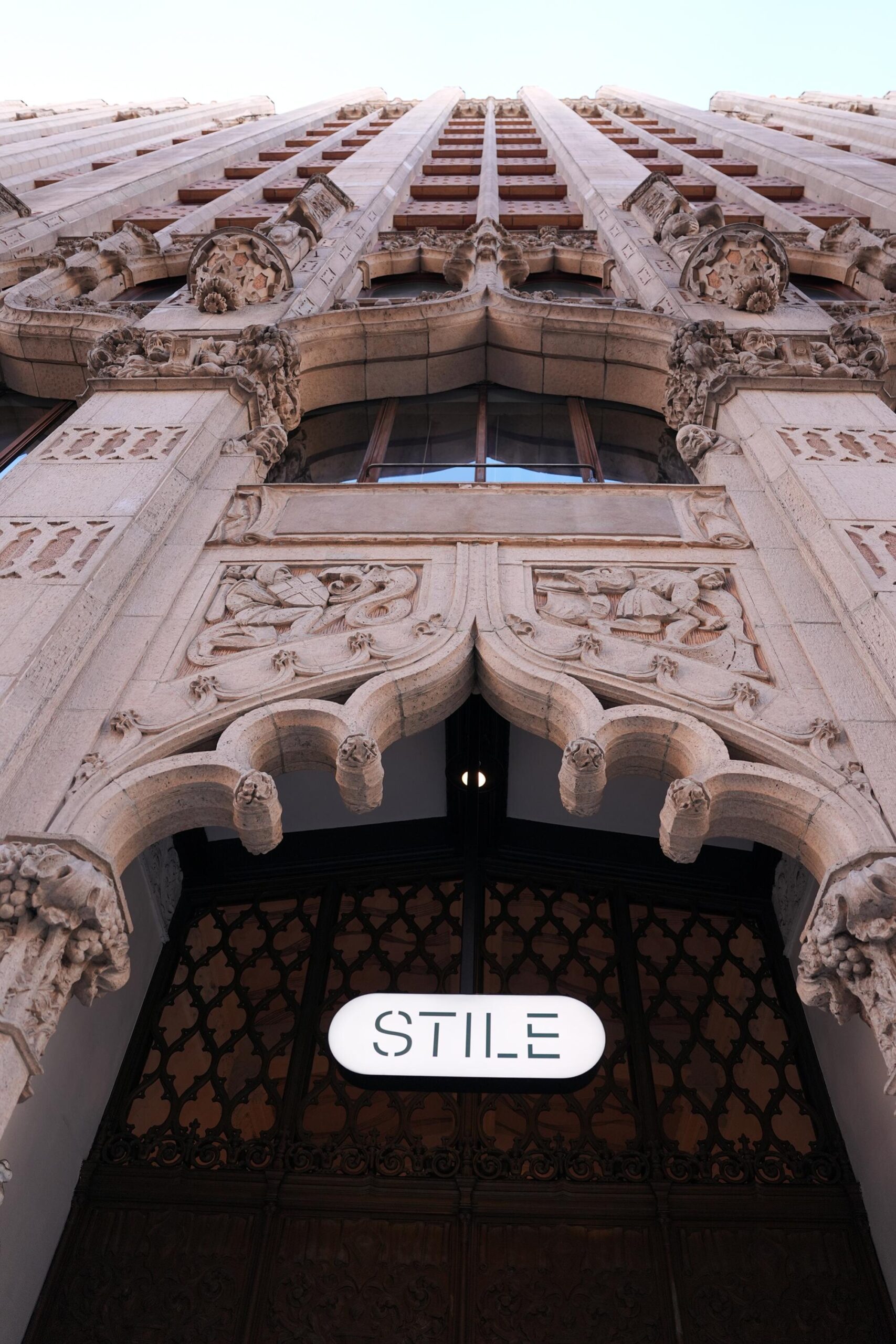
The historic 1920s tower that once housed the beloved Ace Hotel is entering a new era just in time for the summer.
Two years after opening in the iconic Spanish Gothic building on South Broadway, Stile Downtown Los Angeles has unveiled its multimillion-dollar renovation and its expansion from a limited-service hotel to a full “creative hub.” The makeover adds a 24/7 membership-based creative lab with state-of-the-art music studios, co-working lounges, an updated rooftop bar called Somewhere Special, a restored theater and a curated retail shop for the community.
“We don’t really want to call it just a hotel — it’s more of a hub,” says Jaisun Ihm, CEO of AJU Continuum, the investment company that purchased the historic space.
Throughout the space are throwback touches — for instance, hotel guests can borrow a Walkman and browse the curated cassette library with titles like Sade’s “Promise,” Paula Abdul’s “Forever Your Girl” and the Isley Brothers’ “Between the Sheets.”
Behind the massive overhaul is South Korea-based AJU Continuum, which purchased the property in 2019 but didn’t change the name until 2024. The project marks the investment company’s first U.S. expansion.
“We don’t really want to call it just a hotel — it’s more of a hub,” says Jaisun Ihm, CEO of AJU Continuum, which is best known for its culture-forward Ryse Hotel in Seoul. With Stile, Ihm says their mission was to “connect L.A. to Seoul.”
Ryse, Ihm says, encapsulates today’s eclectic lifestyle hotel: “It’s grounded in street culture. We say it’s iconoclastic. It’s youthful in nature.”
AJU Continuum teamed up with L.A. architecture and interior design studio Design, Bitches — the group behind the chic Checker Hall in Highland Park and Verve Coffee Roasters in the Arts District. Ihm didn’t care that it was Design, Bitches’ first hotel venture. After working with several firms over the years, he was tired of seeing the same aesthetic everywhere and wanted to work with a team that would bring a “bold” perspective, he says.
When the creatives at Design, Bitches got the invitation, they were all in. “I’ve always wanted to do a hotel,” says RA Rudolph, the studio’s co-founder. “I love hotels and I have opinions,” she adds laughing.
For Angelenos who frequented the Ace Hotel, a maverick venue that helped revitalize downtown L.A. for a decade beginning in 2014, walking through Stile will feel both familiar and new. While the building’s bones remain intact — a requirement of its historic-cultural monument designation — the space has an industrial-modern twist inspired by L.A.’s creative spirit.
For example, the United Theater on Broadway, which was once the 1927 flagship movie palace for the influential United Artists collective (Mary Pickford, Charlie Chaplin, Douglas Fairbanks and D.W. Griffith), now features fresh carpet, modernized sound and stage equipment and roughly 125 new light fixtures inspired by the lobby’s original Spanish Revival-style chandelier. As a nod to the building’s legacy, where Hollywood’s earliest icons broke away from major studios to control their own work, AJU Continuum has launched its own in-house booking team for the live entertainment venue. Also, the giant neon “Jesus Saves” sign that has sat atop the building since its days as a church is still there — and the owners have no plans to remove it.
1
2
3
4
5
1.A clawfoot tub inside the Loft King Suite.2.Lounge chairs inside the Loft King Suite.3.Hotel guests lounge in the rooftop pool. 4.Adriana Castellanos and friends hanging out in the lobby bar.5.Photos taken in the photo booth at the Somewhere Special rooftop bar.
Some of the most significant changes can be found in the hotel lobby, which features a curated convenience store called the Goodie Shop, which is adorned with throwback boomboxes. Located next to the front desk, which was significantly condensed, the store is filled with a selection of California-sourced snacks and beverages, lifestyle goods, Stile-branded merch and travel essentials (phone chargers, toothpaste, hair care, etc.).
On the opposite side of the lobby is SparkHouse, a private members club and creative hub for up-and-coming musicians and creatives. The two-story space features professional recording studios, podcast and video suites, co-working lounges and meeting spaces, which are slated to open by early next year once permits are approved, Ihm says. SparkHouse’s cafe and bar is open to the public and sells tea, coffee (try the honey matcha latte), wine, beer cocktails and small bites. Ihm says programming at SparkHouse will include listening sessions, live showcases and even a mentorship program for rising artists.
“I’ve always wanted to do a hotel,” says RA Rudolph, the co-founder of Design, Bitches.
The rooftop bar, which offers stunning skyline views of the city and a pool, is now called Somewhere Special. The design team removed about 90% of the plants that used to pack the area to maximize space for dancing and mingling. Also, the pool area, now painted in a playful shade called Carrot Orange, has more seating and a photo booth nearby.
All 182 guest rooms were given a fresh coat of dusty rose paint, new custom carpet, furniture and upgraded bathrooms. In each room, you’ll find Korean amenities like face masks, a custom robe by a local brand called Room Service Los Angeles and books from the former Los Angeles University Cathedral that occupied the space from 1991 to 2011. With the hotel motto being “stay by your own rules,” Rudolph says it was important for them to make the rooms adaptable to each guest’s needs and to prioritize comfort. The result is uncommon room layouts like the tri-suite king room equipped with two twin-sized beds and a king bed split by a privacy divider that doubles as a playful art installation. Rudolph, who used to travel often with her now-adult children, says that’s the type of room she always wished had existed.
Stile’s arrival comes at a precarious moment for downtown L.A. In recent years, the neighborhood’s once buzzy hospitality and nightlife scene has experienced dwindling foot traffic, slow pandemic recovery and increased vacancies. Some business owners say crime and neglect are driving away customers. Nearly 1,000 businesses left downtown in 2024. Launching a high-concept lifestyle hotel is a bold gamble.
The Goodie Shop, a new curated convenience store, is filled with a selection of California-sourced snacks and beverages, lifestyle goods and travel essentials.
But Ihm says he hopes that Stile will help rejuvenate the area and create an ecosystem that will support neighboring businesses as well. Rudolph says she’s already starting to see that change.
“It’s been nice to see that in the last year that I’ve been coming here to work on the project, it’s livened back up again,” she says. “Especially this block, it feels better.”
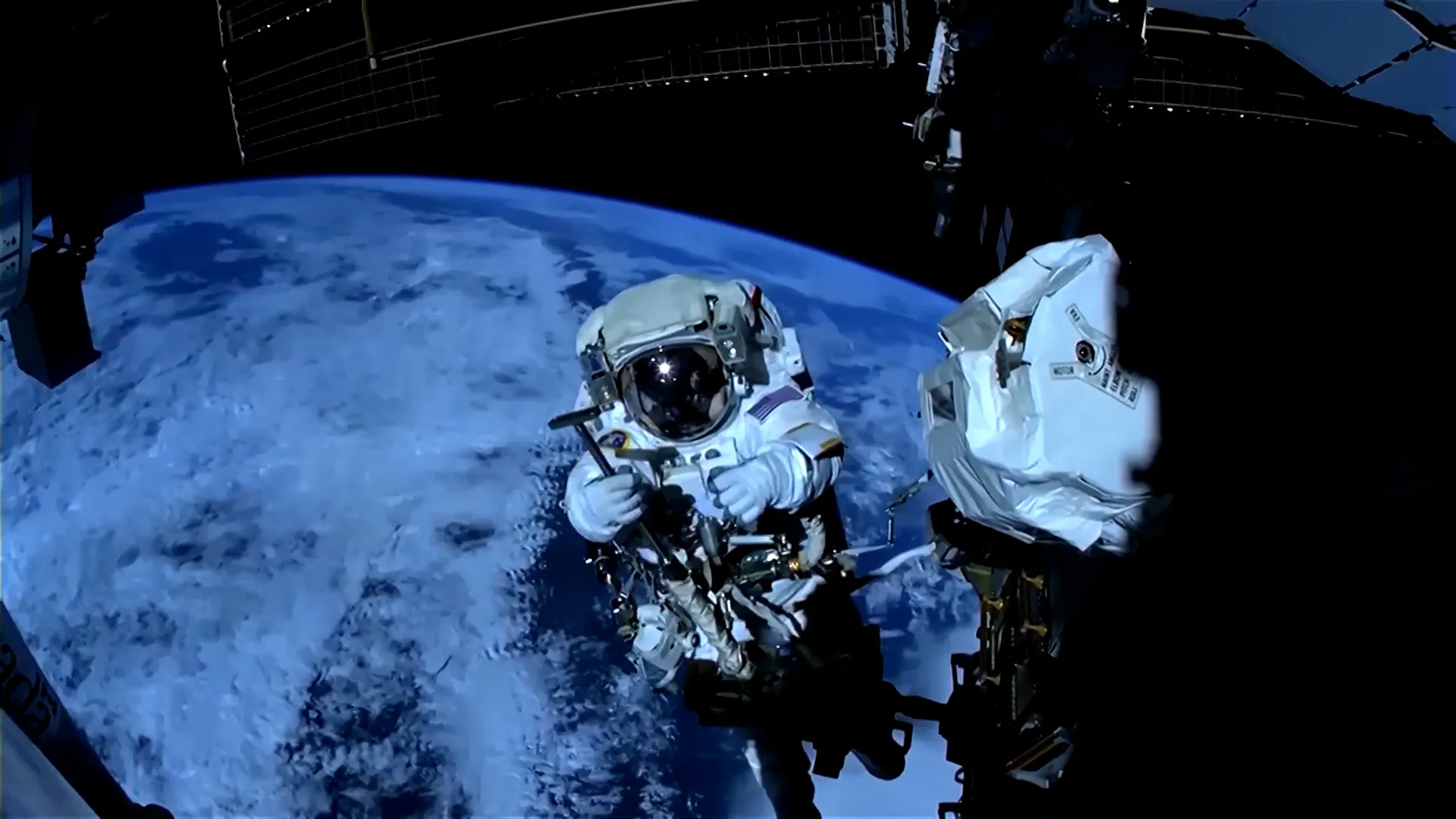
Footage shows two NASA astronauts stepping outside the International Space Station to replace a malfunctioning wrist joint on a robotic arm. The joint failed during normal operations and did not move as expected. It took 7 hours and 20 minutes.
Hyunjoon Kwon, director general for aerospace policy at the Korea AeroSpace Administration, speaks during an interview with Asia Today on Friday. Photo by Asia Today
June 30 (Asia Today) — South Korea is seeking to connect the growth of its commercial space industry with stronger national security capabilities as emerging technologies blur the boundaries between the private and public sectors.
The expansion of security concerns into space, drones and artificial intelligence has increased the importance of the Korea AeroSpace Administration, which is responsible for developing the country’s aerospace industry.
The agency is working with the National Intelligence Service and other government organizations on satellite cybersecurity and broader aerospace security policies.
Hyunjoon Kwon, director general for aerospace policy at the agency, told Asia Today in an interview Friday that space is no longer solely a scientific field.
“Space has moved beyond science to become a domain that can affect both security and industry,” Kwon said. “We need a mutually reinforcing relationship between the market and the public sector.”
Asked how the global space security environment is changing, Kwon said competition is no longer limited to the number of satellites a country possesses.
“The key question is how reliably a country can use and protect satellite communications and satellite imagery,” he said.
Space-based services have been used directly in military operations and critical national infrastructure since the start of the Russia-Ukraine war, Kwon said.
Countries also face increasingly complex threats, including GPS jamming and spoofing, disruptions to satellite communications, cyberattacks and the collision or uncontrolled reentry of objects in space.
Kwon said the agency is developing a national space situational awareness system to strengthen South Korea’s ability to monitor and predict space-related risks.
It is also preparing a cybersecurity response framework to protect space-based services used by the private sector, government and military.
South Korea has rapidly accumulated capabilities in launch vehicles, satellite development and satellite data applications, Kwon said. Its military space capabilities have also expanded.
However, the country still needs to strengthen its domestic production of critical materials, components and software, he said.
Other areas requiring improvement include space situational awareness, satellite cybersecurity and the creation of a sustainable commercial market for space services.
“That is why the growth of private space companies and greater independence in core technologies are becoming even more important,” Kwon said.
Cooperation among the private sector, government and military has entered a stage of institutional development since the establishment of the Korea AeroSpace Administration, he said.
The cooperative channels include a future defense science and technology policy council with the Defense Ministry, an aerospace project memorandum with the Defense Acquisition Program Administration and a satellite cybersecurity consultative body with the National Intelligence Service.
Kwon said the cooperation now extends beyond individual projects to include policy, technology and security.
The agency is seeking to create a structure in which private-sector technology is connected to government and national security requirements, while public and defense demand supports the growth of commercial companies.
Kwon also discussed the government’s recently announced strategy to foster innovative companies in emerging security industries.
“Aerospace is a strategic field that influences both security and industry, extending beyond the boundaries of science and technology,” he said.
Satellite communications, satellite data, unmanned aircraft and space materials and components have significant commercial growth potential while also meeting direct security needs, Kwon said.
The agency plans to focus on establishing a cycle in which the creation of new industries strengthens national security capabilities and security demand encourages further technological innovation.
The plans include developing core technologies for a space data center under the K-Moonshot initiative and building a national platform that will make satellite information available for broader use.
The agency also plans to develop artificial intelligence-powered unmanned aircraft and electric or hybrid vertical takeoff and landing aircraft.
Weekly insights and analysis on the latest developments in military technology, strategy, and foreign policy.
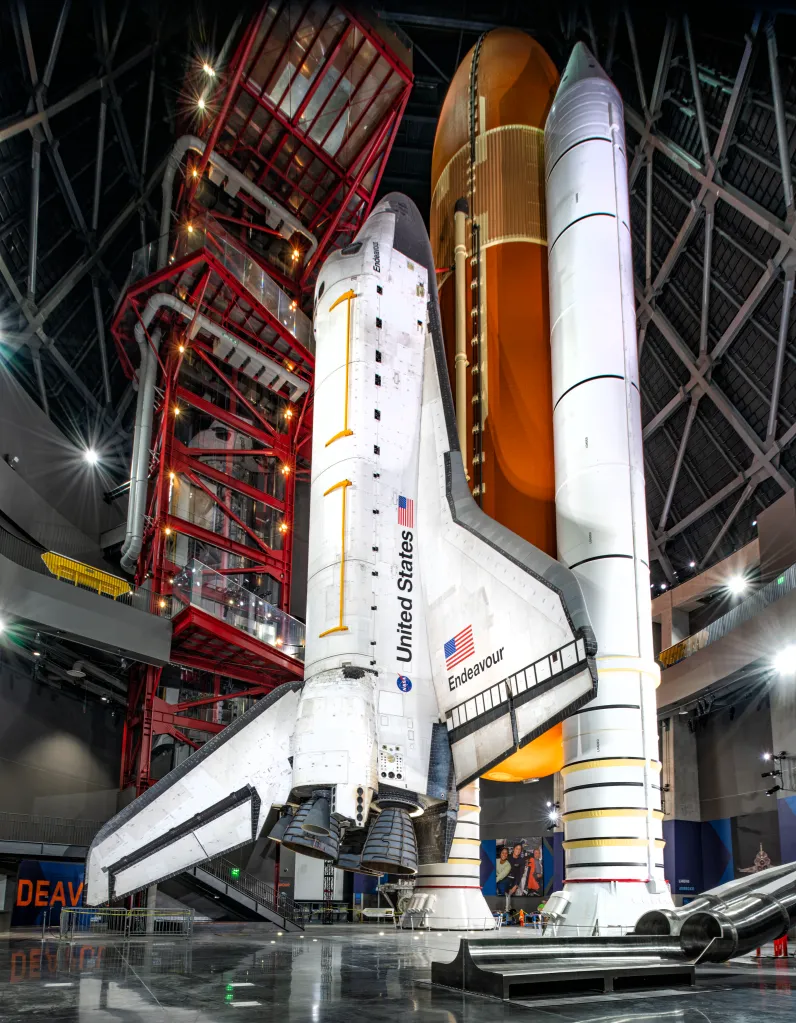
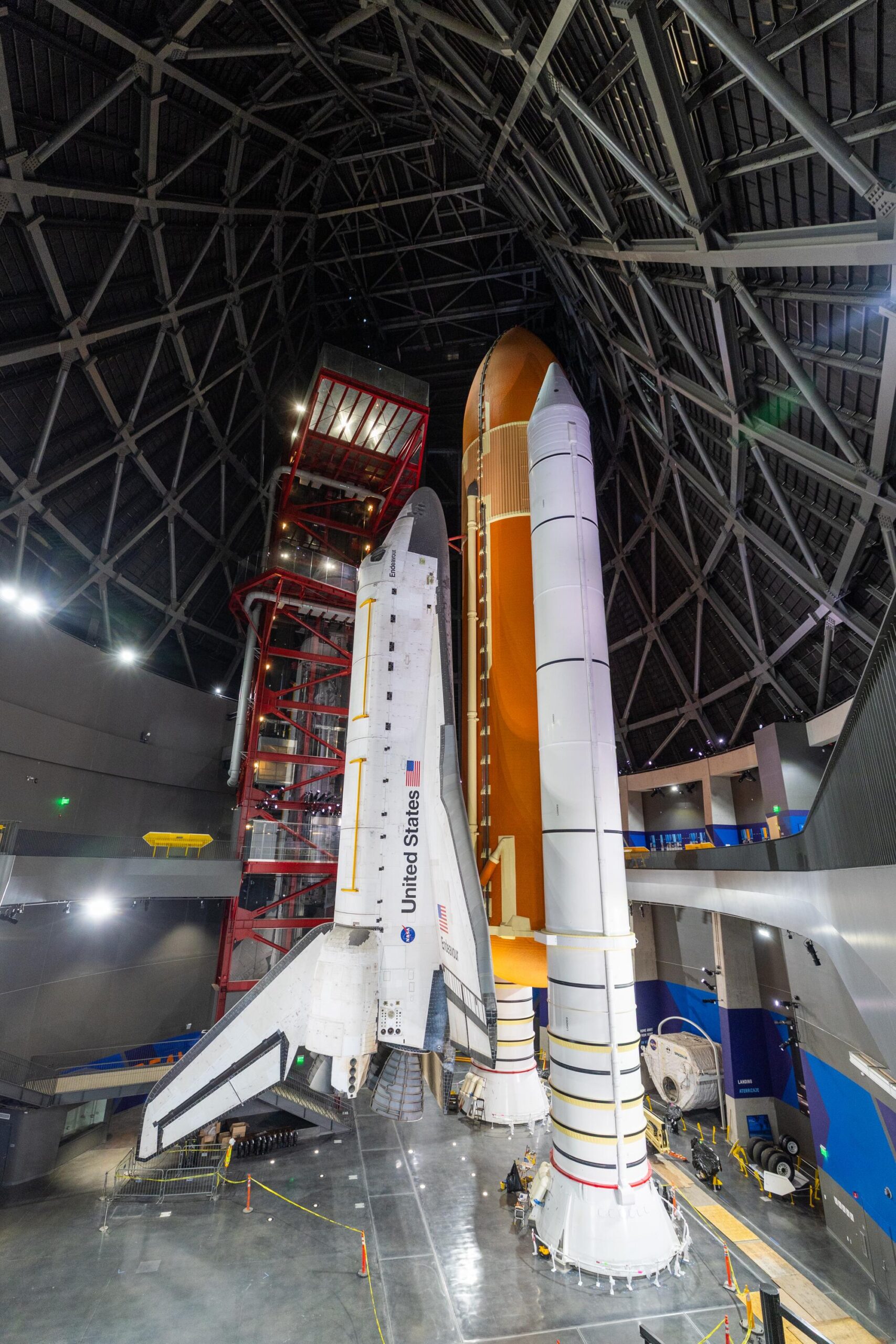
The California Science Center (CSC) in Los Angeles gave a sneak peek today of its long-awaited, much anticipated attraction — the towering Space Shuttle Endeavour in its ‘full stack’ configuration. The spacecraft was the last of five orbiters ever built and the most advanced. After a long wait, the public will soon be able to view it in all its glory inside its purpose-built permanent display building.
Endeavour is the centerpiece of The Samuel Oschin Air and Space Center. It is a 200,000-square-foot expansion of the museum and will be “the only place in the world to see a complete, authentic space shuttle system, displayed in a 20-story launch position,” CSC said in a media release on Wednesday.
The exhibit is set to open on Nov. 13, 2026.
California Science Center California Science Center California Science Center Mike Kelley Mike Kelley
Endeavor was born out of the tragic loss of Challenger on January 28, 1986. NASA had to figure out how to replace the doomed orbiter. It looked at several options.
Feb. 1, 2003: Space shuttle Columbia disaster
The first shuttle, Enterprise, was built as a developmental test vehicle and made its first independent flight from the back of the converted 747 Shuttle Carrier Aircraft (SCA) on Aug. 12, 1977. Enterprise was also used for fit checks on the launch pad and many other engineering and testing activities, but it was not built to fly into space. Although it was available for modification and could feasibly be altered for full duty, NASA decided converting it for orbital work was not the best move. Instead, the all new orbiter that would be named Endeavor was authorized for construction in 1987.
Endeavour lifted off on its maiden voyage on May 7, 1992, and flew 25 times, with its final flight coming in May 2011. As the last of its breed, it incorporated new features and upgrades, including being the first shuttle to carry a Station-Shuttle Power Transfer System (SSPTS), according to Space.com. Endeavour also had “the first fully activated Advanced Health Management System to watch over the shuttle’s three main engines during launch, as well as a three-string global positioning system (GPS) for pinpoint navigation during landings,” the publication added. In addition, the last of the orbiters was built with the most advanced avionics, with glass displays, when it entered service.
Space Shuttle Enterprise – Free flight Test – ABC News – 8/12/1977
During its time in space, Endeavour performed a variety of tasks, including helping to construct and sustain the International Space Station. Throughout its career, it spent 299 days in space, orbiting the Earth nearly 4,700 times and logging close to 123 million miles, according to NASA.
“Among Endeavour’s missions was the first to include four spacewalks, and then the first to include five,” the space agency added. “Its STS-67 mission set a length record almost two full days longer than any shuttle mission before it. Its airlock is the only one to have seen three spacewalkers exit through it for a single spacewalk. And in its cargo bay, the first two pieces of the International Space Station were joined together.”
The Space Shuttle Endeavour, docked to the Pressurized Mating Adapter (PMA-2) on the International Space Station, is featured in this photograph taken by a crewmember during the mission’s first planned session of extravehicular activity (EVA) August 15, 2007 in Space. (Photo by NASA via Getty Images) NASA
During an 11-day mission in 2000, the astronauts “used the radar instruments in Endeavour’s payload bay to obtain elevation data on a near global scale,” NASA noted about the mission with a military connection. “The data produced the most complete, high-resolution digital elevation model of the Earth. The SRTM comprised a cooperative effort among NASA with the Jet Propulsion Laboratory (JPL) in Pasadena, California, managing the project, the Department of Defense’s National Imagery and Mapping Agency [now the National Geospatial Intelligence Agency], the German space agency, and the Italian space agency. Prior to SRTM, scientists had a more detailed topographic map of Venus than of the Earth, thanks to the Magellan radar mapping mission.”
Endeavour, like the rest of the orbiters, always captured the public’s imagination. In December 2008 the spacecraft made its voyage back to Kennedy Space Center in Florida after landing at Edwards AFB. A photo of that trip, taken from an F/A-18B Hornet flying overhead, was once described by TWZ as “Arguably The Most Spectacular Photo Of NASA’s Shuttle Carrier Aircraft Ever.” You can read more about that picture and the flight in our story from the time here.
While plans had been in the works for a while to house Endeavour in a purpose-built exhibit, a major issue developed.
“An earthquake-resistant building large enough to house a 184-foot-tall Shuttle stack had a staggering cost estimate of $400 million,” AmericaSpace.com explained. “The California Science Center was unable to raise enough money to build the facility prior to Endeavour’s arrival. The museum still needed to protect the orbiter from the elements, so it built a metal hangar to temporarily house the spacecraft. The more aspirational exhibit would be conducted at a later date.”
That later date will be in November, as we noted earlier.
Space shuttle Endeavour’s trek across LA: Timelapse
The CSC is one of four locations where the surviving shuttle fleet is being displayed.
The Space Shuttle Endeavour is approaching its final mission. But this time, it won’t be blasting into a different atmosphere.
The California Science Center on Wednesday announced its Samuel Oschin Air and Space Center will open to the public on Nov. 13. The $450-million, 200,000-square-foot addition will permanently house the Korean Air Aviation Gallery and the Kent Kresa Space Gallery. But its centerpiece will be the Samuel Oschin Shuttle Gallery, where the Space Shuttle Endeavour will be on permanent display in its vertical “ready-to-launch” position.
When it debuts, the gallery will be the only place in the world with a complete shuttle stack, including orbiter, solid rocket boosters and an external tank.
“I’ve been here a long time. We’ve done a lot of great stuff, but this just keeps getting better. Everybody on our team was so proud of it,” said Jeffrey Rudolph, the Science Center’s president and chief executive. “We are incredibly excited, and we actually think people are gonna come from all over the world to see this thing.”
The Samuel Oschin Air and Space Center will open to the public on Nov. 13. The $450-million, 200,000-square-foot space includes the Samuel Oschin Shuttle Gallery, where the Space Shuttle Endeavour will be on permanent display in launch position.
(Allen J. Schaben / Los Angeles Times)
The Air and Space Center opening will mark the completion of the master plan adapted by the Science Center in 1993. One of three surviving space shuttles, the Endeavour made 25 successful missions into space between 1992 and 2011. In 2012, the shuttle arrived at LAX atop a modified Boeing 747 before being taken on a procession through the streets of Los Angeles to reach Exposition Park. Construction on the Samuel Oschin Air and Space Center, a sleek, 20-story building designed by ZGF Architects, finished in April.
“This shuttle really represents everything that my husband loved,” said Lynda Oschin, the widow of Samuel Oschin. “He was very involved in relativity, exploration, inspiration, children, math, science.”
Dennis R. Jenkins, project director at the California Science Center, estimated that at the height of construction, the team averaged about 400 construction workers a day. For Jenkins, who spent 30 years of his career as a NASA contractor working on space shuttles, seeing the Endeavour in its vertical position is “particularly special.”
“I walk in there 50 times a day, and 50 times a day it takes my breath away,” Jenkins said. “Especially when we have the theatrical lights on instead of the work lights, it is just so stunning to me. I’ve been around space shuttles for exactly 50 years now, and it still takes my breath away.”
Retired astronaut Barbara Morgan, who flew aboard Endeavour in 2007, said the shuttle will inspire space enthusiasts.
“This takes me back! I am right there again, strapped in, excited to launch,” Morgan said in a statement. “But this is even better, because here now is Endeavour for our future generations. She will launch big dreams.”
Jeff Rudolph, president and CEO of the California Science Center, gets a close-up view of the aft section and main engines of the Space Shuttle Endeavour, displayed in a vertical, launch-ready configuration at the new Samuel Oschin Air and Space Center at the California Science Center.
(Allen J. Schaben / Los Angeles Times)
The gallery will open with a video of the shuttle’s history, produced by J.J. Abrams’ company, Bad Robot. The video ends with a simulated launch of the shuttle — complete with fog machines — before the walls retract, letting visitors take in the Endeavour in all its massive glory.
The Endeavour is visible from several angles. Visitors walking around the bend of the center’s second-floor gallery can peek inside the payload bay, which was used to transport cargo like satellites into space. Step downstairs, and viewers can walk underneath the shuttle’s massive engines. To catch a bird’s-eye perspective of the Endeavour, guests can take a glass elevator to the 20th story to look at the shuttle through a glass floor.
“You go up slowly, [the elevator] stops at different levels. You see inside where the payload is, and at every stop you see something else, and when you get to the top and you look down,” Oschin said, the view is just unbelievable. It’s breathtaking. I don’t know what other word I could use.”
Despite the grandeur of the Endeavour, the Science Center didn’t want to glorify it either. Rudolph explained that the tiles on the shuttle’s wings, which were part of its thermal protection system, show the damage on each launch. The shuttle reflects the physical toll space took on the vessel.
“This thing went 25 missions into space, and you can see,” Rudolph said. “When we first got [the Endeavour] at LAX and had it in the United hangar a couple of weeks before we moved it through the street, the United guy said, ‘Do you want us to paint it?’ and we said ‘No! We wouldn’t think of it.’”
Jeff Rudolph, president and CEO of the California Science Center, walks through a doorway toward the Space Shuttle Endeavour during a tour and preview of the new Samuel Oschin Air and Space Center at the California Science Center.
(Allen J. Schaben / Los Angeles Times)
The center’s goal is to present the shuttle as close to mission-ready as possible. Rudolph explained that the exhibit’s hardware, including its bolts and nuts, are unique and extremely specialized. Since the space shuttle program concluded in 2011, many of Endeavour’s missing pieces are no longer produced. Jenkins spent years sourcing pieces of equipment.
However, the largest artifact of the exhibit was the most challenging to source. ET-94 — the exhibit’s ginormous, bright orange external fuel tank— was particularly difficult to get a hold of because it shouldn’t still exist.
“External tanks were only used once. … We jettisoned them on the way to orbit, and it burned up in the atmosphere before it hit Earth,” Jenkins said.
Jenkins explained that the ET-94 was built for a future Columbia Space Shuttle mission, but after the Columbia was destroyed, the fuel tank was used for research. To complete the Endeavour’s full shuttle stack, Jenkins persuaded NASA to donate the $65 million to the Science Center.
The Endeavour will not be alone in the gallery. Plans are in the works for a variety of unique, ancillary creations including a 15-second slide that mimics the path of reentry as a space shuttle descends back into Earth’s atmosphere. Visitors will start inside a dark slide that gives way to an orange glow followed by a double sonic boom. The slide finishes with an S turn, which the Endeavour executed to burn energy.
For Rudolph, the effort represents a giant leap toward the Science Center’s goal of making space exciting for “the next generation of scientists, engineers and explorers.”
“I just can’t wait to stand there and watch people come in, and kids especially. There are going to be a lot of tears looking at this, that I can tell you, happy tears,” Oschin said. “It’s something for children. Children are our future and our hopes for the future. This is going to be very inspiring for them and extremely exciting for them to see.”
At the beginning of Mary H.K. Choi’s wildly entertaining presentation for her new novel “Pool House’” at Skylight Books, she reveals she won’t be reading.
“Readings are boring,” she says, tapping her Prada loafers. “It’s like you’re watching someone else play video games.”
Instead, she and Yasi Salek, host of the hit podcast “Bandsplain,” spend the evening riffing on literature, coolness, autism diagnoses and a literary perennial: unrelenting pain.
“How is your mother wound?” Salek asks in her signature vocal fry most often heard ad-libbing about the band Weezer. Salek reveals she is in Jungian therapy, adding, “What Carl says, goes.”
Throughout the discussion, Choi describes her novel as a challenging read — calling it a “gross, decaying meat soup.” She jokes that her career as an author feels like a “Make-A-Wish Foundation wish,” bewildered by any attention her work has garnered. Yet dozens of eager readers have packed into the independent bookstore, spilling into the aisles with copies of the novel balanced on their laps.
“Publishing is so slow, it’s like giving birth to a lawn chair,” Choi remarks. Later, she professes tedium with the resurgence of an alt-lit scene.
“Don’t you find that everyone has to be cool right now? Why is everyone so cool?” Choi asks Salek.
Let’s be clear: Salek and Choi are very cool. Salek sits cross-legged, dressed in all black, with a heart tattoo on her forearm that reads “books.” Before “Pool House,” Choi authored three New York Times bestselling novels. Salek recounts dropping out of her MFA program at Bennington College in 2020 to start what would become a cult-classic podcast.
Book-themed sugar cookies sold at a past Little Literary Fair at Hauser & Wirth.
(Francine Orr / Los Angeles Times)
“I love that you started a podcast instead of getting an MFA,” Choi replies.
Like Skylight Books, independent bookstores across Los Angeles have become gathering places for readers and writers alike. Authors ranging from household names to debut novelists regularly draw enthusiastic crowds. Increasingly, bookstores are functioning not only as retail spaces but as community hubs.
A few blocks from Echo Park Lake, local favorite A Good Used Book has transformed Sunday mornings into one of the neighborhood’s liveliest recurring gatherings. Visitors browse used books while enjoying charcoal portraits, handmade jewelry and Hawaiian shaved ice. Buy a book and you might even end up on the store’s coveted Instagram Story — the hottest plug in town.
“It feels like in a city as big as Los Angeles, books are still underrepresented. So there’s a lot of room to grow, and that’s exciting,” says Chris Capizzi, who founded the bookstore in 2017.
Earlier this month, the Los Angeles Review of Books hosted its annual Little Literary Fair at SCI-Arc, drawing hundreds to literary panels and workshops on zine-making, publishing and finding an agent. Vendors from across California filled the space, representing independent presses, bookstores and literary magazines.
“I find writers based [in the L.A. area] to be socially incisive in equal measure as being experimental, innovative and just fun,” says Emily VanKoughnett, the events director at the Los Angeles Review of Books. “I love the L.A. lit scene because it invites people to explore pockets of the city and connect over writing.”
This summer, literary events across Los Angeles are continuing to draw readers into bookstores, community spaces and alternative venues alike. The city’s literary scene remains as weird, profane and sentimental as ever.
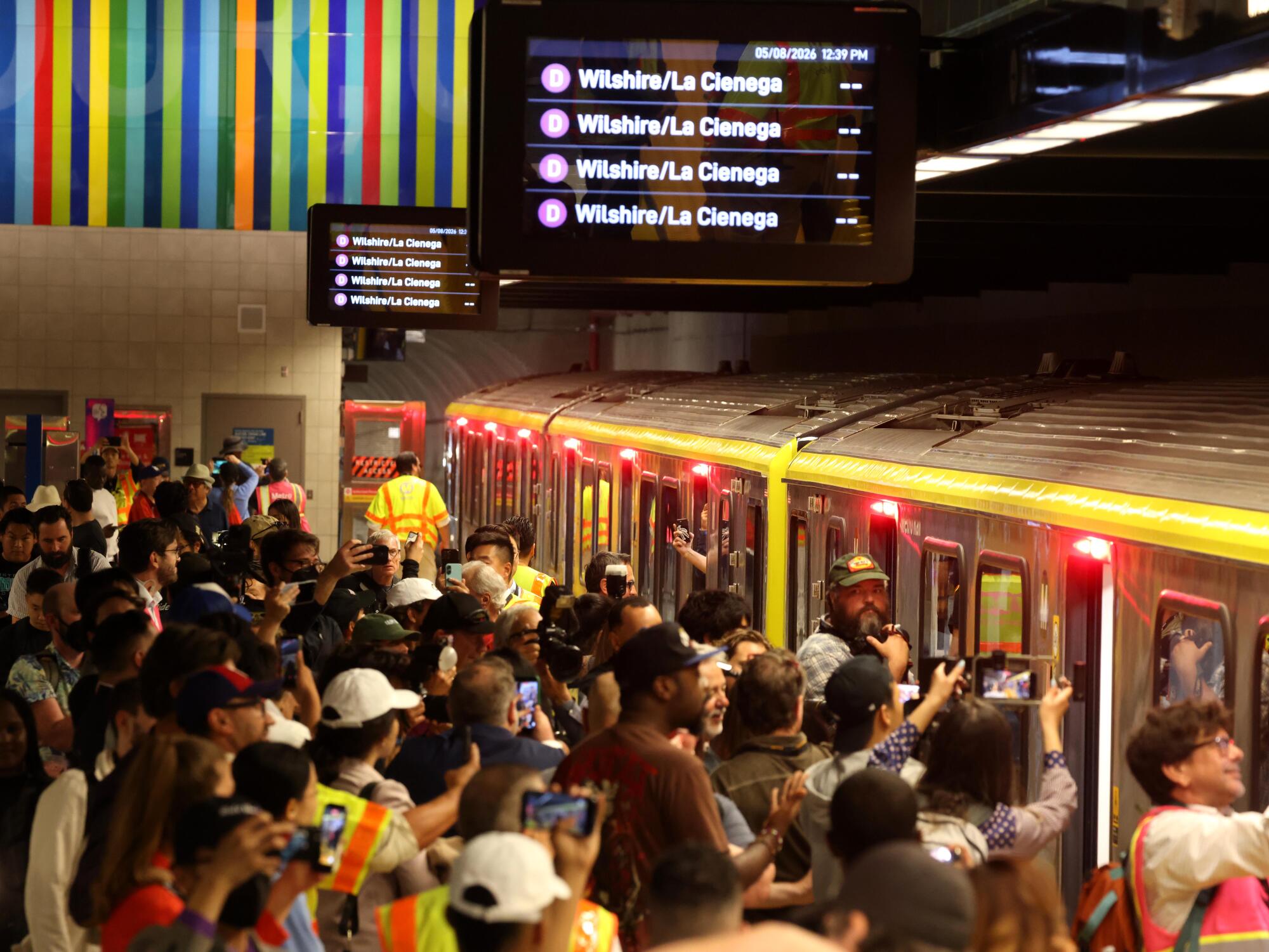
The Westside subway extension has long been L.A’s most stubborn urban fantasy: an infrastructural mirage chugging toward the sea, and then, with less sex appeal, Westwood. Stalled since the ‘80s, the first western leap of the elusive project is now real. And in the month or so since the Metro D Line pushed beyond Wilshire/Western to three new stations — Wilshire/La Brea, Wilshire/Fairfax, and Wilshire/La Cienega — multiple rides have made the benefits, and shortcomings, clear.
Suddenly the city feels different. Not transformed, exactly. But more connected. The fracturing grip of the city’s incomprehensible expanses, clogged arteries, and stagnant governance — all intimidating barriers to healthy civic life — feels a little looser. The dense belt tying the city together more complete, a critical mass of movement, still expanding, where there used to be a vestigial nub.
The stations, too, feel more connected, with art, architecture and infrastructure blending seamlessly into a cohesive experience, a tribute to Metro’s sharpened design approach and its ever-evolving commitment to public art. But above ground, it’s a tale of two (transit) cities. Outdoor plazas lack the kind of textured civic presence that’s been created below. Metro, which has become the most dominant regional force for urban transformation, is still less ambitious once it leaves the station box.
Passengers wait to board the first train to arrive at the Metro D Line at the Wilshire/Fairfax station in Los Angeles in early May.
(Genaro Molina / Los Angeles Times)
Before descending into the new stations, you might want to take a moment to appreciate that they exist at all, surviving, among other trials, a massive methane explosion, federal and local bans, major delays, and a battalion of lawsuits. Then notice how their myriad components work together. Art, for instance, is not simply attached to walls, but forms them, its patterns tracing your descent through space. Lighting doesn’t just illuminate surfaces, but becomes an artful complement to what’s around it. Escalators are not just conveyances, but reflective surfaces forming a utilitarian palette for art and light. The line between each piece becomes blurred, creating a sense that all is working together — a layered place that is intuitively easy to use.
This fluent incorporation of art builds on the long-running L.A. Metro Art program (formerly Metro Art in Transit), which since the early ‘80s has commissioned and installed over 200 artworks across the sprawling system, from mosaics and photography to multi-story murals. In fact, it’s quietly hummed along as one of the most successful public art programs in the country.
Artist Fran Siegel’s artwork at the Wilshire/La Brea Metro station is part of one of the most successful public art programs in the country.
(Carlin Stiehl / For The Times)
In many of its earlier iterations, art and architecture were conceived together to create strange, jaw-dropping, one-of-a kind spaces, like Peter Millar and Ellerbe Becket’s Santa Monica/Vermont station. Opened in 1999, this Red line stop featured among other things, a goliath stainless steel wing canopy topping a 42-foot-tall, raw concrete-clad escalator cavern, lit by massive skylights, etched with row after row of enigmatic questions.
Another personal favorite is Stephen Antonakos’ “Neons for Pershing Square,” a postmodern wonderland of suspended neon sculptures in the depths of downtown’s Pershing Square station that creates a kind of 3-D sculpture playing off the ‘80s gridded ceilings and Miami Vice white columns.
Wild creativity aside, these 20th century stations are marked by inconsistency in quality, comfort, and maintenance — and the lack of predictability can be confusing. (Wait, where do I go now?) This includes Metro’s inaugural A line, in which art-driven architecture, though fun, often feels like a quixotic gesture, unable to compete with loud, uncomfortable, concrete-dominated settings.
A man waits for a train on a platform at the Wilshire/Vermont station, which is along Metro’s B Line, formerly the Red Line.
(Brian van der Brug / Los Angeles Times)
Lines opened in the 2010s had their own issues. The Expo line (now the E line), barely 14 years old, features rather tentative wavy canopies and surface wraps and comparatively small spaces for artworks. With the new extension, Metro has found a balance between completely foregrounding art and relegating it to background. The new designs are guided by a “kit of parts,” a shared language of materials, lighting, signage, and wall systems that was developed first by local architects Johnson Fain and later by the global architectural firm Gensler, which served as the D Line’s systemwide station designer.
Yes, I miss the epic scale and immersive feeling of those older stations. But the tradeoff is a cleaner, brighter, more legible and human-scaled version, lending long-needed coherence to both the stations themselves and the system at large. And by the way, the art is still fantastic.
At the descending entryway of Wilshire/La Brea, for instance, the cosmic, angled lines of Eamon Ore-Giron’s “Infinite Landscape: Los Angeles Para Siempre,” which are embedded into porcelain enamel, channel not only the geometric forms of Wilshire’s Art Deco Buildings, but the visceral one-point perspective of a train speeding into a tunnel, and even the angled geometries of adjacent escalators.
Artist Eamon Ore-Giron’s “Infinite Landscape: Los Angeles Para Siempre,” at the Wilshire/La Brea Metro station.
(Carlin Stiehl / For The Times)
Heading down allows you to ponder its shifting mysteries. Circular abstractions might suggest headlights zooming along Wilshire, or perhaps a train’s fast-approaching lights? Its artfulness expands outward. Frosted glass panels wrapping the entry portal are clad with a similarly mystical language, accentuated by neon strips of light, with the lightweight canopy above reflecting the colorful lines. Art and architecture are working together, each feeding off the other.
A particularly fertile locale for drama at each station are the wide bands of art topping the tunnels themselves: beacon-like destinations for your eyes, not to mention invitations to occupy more of the platform. In the same station, Mark Dean Veca’s “Miracle of La Brea” takes its cues from the curvy ornament and stepped motifs of the nearby Wilshire Tower’s Art Deco façade. Look closer, and those crisp patterns dissolve into swirling, viscous forms that evoke the La Brea Tar Pits, flowing oil, and even barley-shaped references to the area’s agricultural past. The mural’s repeating forms also mirror the station’s rigorous order, its clean, syncopated forms and linear perspectives.
Another hallmark of the new stations is how they subtly make infrastructure itself into art. Celebrating — whether intentionally or not — the improbable engineering feat of carving a subway under one of the most dense, congested, and geologically and politically complicated parts of Los Angeles. Jogging white lines along concourse floors, meant as tactical guides for the vision impaired, rhythmically and playfully lead you forward. Glinting stainless steel railings, gridded perforated metal ceilings, and thin bands of suspended light bouncing off polished terrazzo floors, pull you forward on stairs and platforms, tracing the speed and linear movement of trains. Corduroy concrete walls, etched with endless vertical grooves, give tunnels a tightly rhythmic texture while still exposing their hefty bones.
The Wilshire/La Brea Metro station is part of the D Line extension and features evenly lit spaces, with porous surfaces and long sight lines to improve navigation and safety. Glass fare gate doors organize entry without turning the stations into fortresses.
(Carlin Stiehl / For The Times)
The quality of surfaces and experiences has been upgraded too. Unlike most older Metro stations, where low light and heavy surfaces can feel tired and oppressive, spaces are more evenly lit, with porous surfaces and long sight lines to improve navigation and safety. Glass fare gate doors organize entry without turning the stations into fortresses. Glass elevators and large cuts between levels create a sense of connected, kinetic openness.
Sometimes this palette feels too uniform and predictable. The heroic scale and quirkiness of older stations can be more exciting; more unique to their place. A surprise or two never hurt anyone. But overall it’s a good balance of unity, utility and identity, allowing the art to sing, but as part of a chorus, not a soloist.
The tune, however, shifts dramatically above ground. Station plazas wrap handsome modern architecture—clean, controlled, well-detailed portals of beveled stainless steel, frosted glass, and art peeking above entryways and on peripheral panels. But the hard plazas themselves are barren; lacking enough shade, art, greenery and invitation. Benches, where they exist, are tiny and defensive.
Pedestrians walk past the Metro D Line at Wilshire and LaBrea, which features a barren plaza lacking the beauty and design of the art-filled stations below.
(Kayla Bartkowski / Los Angeles Times)
These places seem scared to let people linger — clearly trying to avoid some of the city’s intransigent challenges, like homeless encampments, disorder, maintenance burdens, and controversy. This is understandable, but in avoiding those risks, the areas also avoid the purpose of public space: to create a place for everyone, not just a zone for people passing through.
Yet life appears anyway. At Wilshire/Fairfax, a dance class from a nearby studio recently gathered in a thin sliver of shade around the station. It was beautiful, and improvised, but also indicative of the underlying problem. Civic life was there, but the space had failed to make enough room for it. Imagine if that plaza had real shade, generous seating, creative sculpture, plantings, water, and edges that encouraged people to stay.
Another unresolved question is service. On multiple visits trains were not crowded. They also didn’t come often enough. Ten or 12 minutes of stagnant wait time does not feel like freedom if you are trying to lure Angelenos out of cars.
The last-mile problem doesn’t help. There is no easy parking near stations for those who don’t live close, no seamless transfer or final step. The bikes that Metro provides still have share docks, meaning you’ll need to find another dock on the far end (good luck). This remains, as it should, a system for people who already need transit. But for an institution struggling to add ridership, you wonder if it can become a system for people who have choices.
The Wilshire/La Cienega Metro station is part of L.A.’s new D Line extension. The outdoor plazas are not conducive to community or gatherings.
(Carlin Stiehl / For The Times)
Still, we should not understate what has happened. Los Angeles finally has subway stops that serve some of its densest, most public destinations, and Metro is still growing. The D Line makes the Miracle Mile feel less like a traffic corridor and more like a metropolitan spine. It suggests a Los Angeles in which neighborhoods, jobs, cultural destinations, and sidewalks begin to connect physically and with surprising immediacy. (Twenty minutes from LACMA to downtown feels like light speed!) It makes the city feel more like a city.
It also reveals the imbalance of power and imagination in Los Angeles. Metro, for all its flaws, has the ability to marshal money, planning, engineering and art at a scale the city itself generally cannot. All the more reason to branch more boldly beyond its tracks and stations.
The question remains: Can the agency coordinate with government, developers, cultural institutions, and neighborhoods to make these stations into places rather than portals?
The new stops prove that Los Angeles can design infrastructure artfully below ground. Above ground, however, it too often retreats into caution. The subway has arrived. The city around it still has to catch up.
Canadian space technology provider MDA Space (MDA) has announced a $620M deal to acquire Blue Canyon Technologies LLC, a U.S.-based spacecraft and satellite component manufacturer owned by RTX (RTX).
The all-cash transaction worth C$874M is expected to add more than
The first at the clubhouse is on June 25 and features an Open Water Masterclass with Olympian Katy Sexton.
There’s a spot to grab a bite to eat by the pool as well with breakfast dishes including mushroom and avocado flatbread (£11) and build-your-own-lunch bowls from £11.
Sea Lanes Canary Wharf is a ‘floating’ lido that is 50 metres longCredit: PA
The pool will be open from 6am to 9pm Monday to Friday and from 7am to 7pm at the weekends.
Make sure to check the website before you visit as well, for the latest details about the weather and water temp.
With this weekend’s weather expected to hit highs of 30C, the current 16.4C water makes for a refreshing dip.
There are a number of different memberships available including the Swim and Sauna membership, which gives unlimited access to the pool and saunas all year round.
It costs £90 per month.
Alternatively, visitors can pay-per-swim, which will cost £10 for a swim session, £10 for a sauna session or £18 for both.
There’s also two saunas onsite and a place to grab a bite to eat and something to drinkCredit: PA
If visitors want to rent a wetsuit, they can do so at a small store too.
The first visitor at the pool today said: “First one in the water on opening day.
“What a fantastic facility in the middle of Canary Wharf!
“The pool was the perfect temperature for swimming without wetsuit.
“The changing facilities were bright and clean with lovely hot showers, hairdryers and lockers.
“Love the two saunas with whole wall picture windows facing the pool.
“From the chats with other swimmers, I can picture a wonderful community developing here.”
June 12 (UPI) —SpaceX began trading Friday at $150 and has gone as high as $176 as SPCX in its initial public offering, the largest one in history.
Elon Musk and SpaceX President and COO Gwynne Shotwell rang the opening bell Friday. Musk was in Texas and Shotwell was at the Nasdaq in New York City.
After trading opened, the stock topped $160, sending the company to more than a $2 trillion market cap. By early afternoon, the stock was at $176.52.
“I love the incredible people of SpaceX beyond words,” Musk wrote Friday afternoon on X.
The company had traded more than 360 million shares as of 2 p.m. EDT Friday. It has more than 172 million shares on the Nasdaq alone, CNBC reported. Polymarket bettors believe, at 70%, that SpaceX will close at more than $2 trillion Friday. Five other U.S. companies have reached the $2 trillion market cap: Nvidia, Apple, Alphabet, Microsoft and Amazon.
Already a trillionaire, Musk is about to be CEO of two of the Top 10 most valuable publicly traded companies at the same time.
Musk said before the IPO that SpaceX had been cash-flow positive since around 2015, CNBC reported. He said he chose to take the company public now to raise capital for “a significant growth phase.” Some plans for that growth include putting more than 100,000 satellites in orbit for communications and building artificial intelligence data centers in space.
“Having a private company was important to us early on because we weren’t really focused on quarterly financials, we were so focused on the long-term outlook for the company,” Shotwell told CNBC in an interview.
Shotwell said interest from investors also helped drive the decision.
“We’ve been feeling, over the last few years, a lot of pressure from everyday Americans and our friends that wanted to buy stock, and there was just no way for these folks to get in,” Shotwell said.
According to its prospectus, SpaceX has had a total loss of $41.3 billion since it was founded in 2002. Originally founded as a maker of reusable rockets, the only profitable part of the business has been the Starlink satellite Internet service.
In February, SpaceX acquired Musk’s startup xAI, which has been embattled this year for its ability to undress people in AI-generated images. Several countries and people have sued the company to force it to not allow the bot to do so against the victims’ will.
Citadel Securities, which helps execute trade orders, processed more retail activity for SpaceX than any other IPO auction on record, CNN reported the company said. Retail investors are regular people trading stocks instead of professionals.
SpaceX lands on public markets as the sixth largest US company by market value.
Published On 12 Jun 202612 Jun 2026
SpaceX has debuted on US markets with a market valuation of more than $2 trillion, minting CEO Elon Musk as the world’s first trillionaire.
Shares are set to open on Friday at $150 per share, marking a 6.6 percent increase from the initial public offering (IPO) price, valuing the company at $1.96 trillion putting the aerospace company on track to become the sixth-largest company in the United States.
Recommended Stories
list of 4 itemsend of list
The company sold $75bn in shares, immediately valuing it at $1.77 trillion. The IPO was oversubscribed four times higher than was otherwise expected, according to the Reuters news agency.
Of the institutional investors allocated, according to Bloomberg News, as much as 70 percent went to what are called long-only investments — a strategy in which holders buy assets based on the expectation that their value will grow over time — and sovereign wealth funds, including those from Saudi Arabia and Kuwait as well.
SpaceX President Gwynne Shotwell and Chief Financial Officer Bret Johnsen rang the Nasdaq MarketSite in New York City opening bell at 9:30am local time as US markets opened.
On Thursday, protesters gathered outside the MarketSite to protest the IPO amid continued allegations that Grok, part of xAI, a subsidiary of SpaceX, allowed users to create non-consensual deepfake sexualised images before the IPO debut.
Shares of SpaceX did not trade until the middle of the trading day as the exchange collected buy and sell orders and underwriters delayed trading until supply and demand were balanced.
“We would expect SpaceX to see an immediate pop in trading due to the hype around the deal, north of 20 percent perhaps,” said Samuel Kerr, global head of equity capital markets at Mergermarket. “Anything lower would actually make me nervous.”
Exchanges and trading firms are eager to avoid the technical mishaps that marred Meta’s 2012 debut. With SpaceX widely viewed as a dress rehearsal for a new generation of mega-listings, market participants will also be watching for signals on investor appetite in advance of forthcoming IPOs for AI heavyweights Anthropic and OpenAI.
The landmark listing cemented Musk’s status as the first trillionaire ever and propelled SpaceX into the ranks of the world’s most valuable companies — even though the firm posted a loss of nearly $5bn last year and generated only a fraction of the revenue brought in by similarly valued tech giants.
The surge comes amid growth driven by its Starlink subsidiary, which drives as much as 80 percent of its revenue.
On Friday, SpaceX launched its Falcon 9 rocket with 29 satellites into space from Cape Canaveral in Florida.
Obsession is maybe too hard-edged; interest too soft. But from “Close Encounters of the Third Kind” and “E.T” to his new sci-fi thriller “Disclosure Day,” Steven Spielberg has spent nearly the entire length of his career returning to the possibility that we are not alone in the universe. Even “Firelight,” the amateur movie he made as an Arizona teenager in 1964, revolved around extraterrestrial visitors.
That recurring fascination stands out partly because Spielberg has never been a filmmaker who stays in one lane. Across 36 features as a director, he has pivoted between science fiction, war films, historical dramas, adventure movies, thrillers, comedies and even a musical while somehow retaining the same famed Spielbergian sense of emotional wonder that defined his earliest work.
Which makes “Disclosure Day” — opening Friday and built around mysterious transmissions, buried government secrets and the possibility of alien contact — feel less like a detour than a return to one of Spielberg’s oldest creative preoccupations. Speaking about the film in March at SXSW, Spielberg admitted that while he has no special knowledge about extraterrestrial life, he nevertheless has “a very strong, sneaking suspicion that we are not alone here on Earth right now. And I made a movie about that.”
So with Spielberg once again looking skyward, we decided to revisit the director’s long cinematic relationship with aliens, as figures of astonishment, terror, transcendence and, occasionally, giant crystal skulls from another dimension.
Melinda Dillon and Cary Guffey in 1977’s “Close Encounters of the Third Kind.”
(Columbia Pictures)
Josh Rottenberg: I don’t really remember a world without Spielberg’s aliens. I was 6 when “Close Encounters of the Third Kind” arrived in 1977, not much older than the little boy played by Cary Guffey who is carried off by visitors from another world after his toys mysteriously come to life. Five years later, I was exactly Elliott’s age when “E.T. the Extra-Terrestrial” landed in theaters in 1982.
“Close Encounters” made aliens feel weirdly plausible, not just creatures in a “Star Wars” cantina or rubber-suited monsters from old sci-fi movies but something that might turn up in ordinary American life through blinking kitchen appliances, strange lights in the sky and suburban middle-class dads who can’t explain why they suddenly need to drive to Wyoming.
What surprises me now is how hopeful the movie feels. It came out of the post-Watergate ’70s, when distrust of institutions was running high, but Spielberg directed most of that suspicion toward the government, not the alien visitors. Richard Dreyfuss sculpting Devils Tower out of mashed potatoes should seem completely insane — and it kind of is. But Spielberg somehow makes you understand why Dreyfuss’ Roy Neary is willing to walk away from his entire life and family over something he can’t explain.
With “E.T.,” Spielberg scaled that cosmic yearning down to a California cul-de-sac. I recently watched the movie again at Hollywood Forever Cemetery with my wife and younger daughter, who’s in college now. I’d seen it several times since 1982 but not on a big screen, and I was startled by how much of it I still knew by heart: E.T. shuffling through the kitchen drinking cans of Coors, Elliott freeing the frogs in science class, Drew Barrymore introducing the alien to her dolls like he’s a new kid who just moved in next door. Somewhere along the way, “E.T.” became less a movie to me than part of the background texture of childhood itself.
Spielberg turned one of science fiction’s grandest ideas — first contact with alien life — into the story of a boy and his weird little space-faring goblin best friend. Mark, we’re of the same Gen X vintage. Did Spielberg permanently convince you that aliens were basically on our side?
A scene from the 1982 movie “E.T. the Extra-Terrestrial.”
(Universal Pictures / Photofest)
Mark Olsen: I didn’t see “Close Encounters” when it was first in theaters, but I remember any kid with a piano learning those five notes of John Williams’ alien theme music and then the movie becoming a staple rental of the early VHS era.
When I revisited the film for its 2017 re-release — an overwhelming experience in the sorely missed Cinerama Dome, where the movie also played when it first opened — I was struck by how homespun and handmade it felt, grounded in a naturalistic sense of realism. For as much as Spielberg may be fascinated by aliens and whatever could be out there, he always uses them as a way to reconsider what is going on down here: to reconnect with the elemental aspects of humanity and our common bonds.
I’ll be honest and say that “E.T.” is a movie I have always struggled with. I clearly remember seeing the movie when I was young and being very disturbed by the scene when the government arrives and drapes the family’s house in plastic sheets and tubing. I distinctly recall recognizing that the film itself wanted me to feel bad — I didn’t like that. (Perhaps thus was a young critic born.) Spielberg is often so proud of his mechanics, he lets them show, which is why even then I was resistant to moments when he wants the relationship between Elliott and his new friend to truly take flight.
Tom Cruise in Steven Spielberg’s 2005 sci-fi thriller “War of the Worlds.”
(Paramount Pictures)
Rottenberg: By 2005 and “War of the Worlds,” the wonderment was gone. Spielberg took H.G. Wells’ downbeat vision of extraterrestrials as exterminators and updated it for post-9/11 America: nightmarish scenes of alien tripods clawing their way up through the pavement, blaring air-raid horns, entire crowds vaporized into clouds of dust.
This time, nobody is trying to communicate through music or empathy. Tom Cruise spends the movie running through New Jersey with two terrified kids while ash drifts through the streets and giant alien war machines scoop humans into dangling metal cages. “E.T.” had turned aliens into plush toys and breakfast cereal. “War of the Worlds” turned them back into the menacing aggressors of 1950s sci-fi films like “Earth vs. the Flying Saucers” and “Invaders From Mars.”
Which made it all the more jarring when, three years later, Spielberg suddenly swerved back toward old-school flying-saucer mythology with 2008’s “Indiana Jones and the Kingdom of the Crystal Skull,” shoehorning an extraterrestrial plot into one of his most beloved series. Seeing Cate Blanchett march into a glowing alien chamber to commune with giant crystal skeletons from another dimension, I could understand why some fans reacted like they’d just watched someone spray-paint a UFO on the Ark of the Covenant.
But looking back, the inclusion seems almost inevitable. Spielberg keeps circling back to aliens no matter what genre or franchise he’s working in. Even 2001’s “A.I. Artificial Intelligence” eventually reveals itself as a kind of inverted first-contact story, with humanity becoming the vanished civilization studied by synthetic descendants of the machines.
Mark, were you able to roll with Indy suddenly colliding with Area 51 mythology, or did Spielberg lose you at that point?
Harrison Ford and Shia LaBeouf in the 2008 movie “Indiana Jones and the Kingdom of the Crystal Skull.”
(David James / Paramount Pictures / Lucasfilm)
Olsen: There was something so eye-rollingly whatever about the finale of “Kingdom of the Crystal Skull” that you couldn’t even really be mad about it. On a storytelling scale of Spielbergian preposterousness, the moment lands somewhere between the Wrath of God sequence in “Raiders of the Lost Ark” (totally legit) and the time traveling of “Dial of Destiny” (throws hands in the air).
“War of the Worlds” remains a fascinating film within the director’s space alien canon because it has an anxiety and uncertainty that isn’t often found elsewhere. Even his core interest in creatures, so often a well of amazement and positivity, couldn’t pull him up. Much has been made of the film as a response to the aftermath of 9/11 and Spielberg followed it up with the existential thriller “Munich,” a further exploration of the darker aspects of the national mood, before the year was even up.
This seemed to be a moment of malaise for Spielberg, one he worked his way out of with an unpredictably wide-ranging series of films including “Lincoln,” “Bridge of Spies” and “The Post.” It was as if he were left reeling from cynicism and was trying to reclaim some youthful confidence that he would eventually rediscover with the autobiographical “The Fabelmans.” Josh, do you feel that “Disclosure Day” serves as the final word on Spielberg’s alien interests?
Emily Blunt and Josh O’Connor in the movie “Disclosure Day.”
(Niko Tavernise / Universal Pictures)
Rottenberg: What makes “Disclosure Day” interesting to me — even though I wasn’t fully sold on it — is that Spielberg is returning to these ideas at a moment when UFO culture has already evolved far beyond him.
Screenwriter David Koepp has cited “Three Days of the Condor” as a touchstone, and for long and often gripping stretches, the movie really does play like a paranoid 1970s conspiracy thriller: cryptic transmissions, shadowy government programs, Josh O’Connor racing to expose buried secrets, Colin Firth strapped into a chair using alien technology to manipulate people from afar.
But while “Close Encounters” arrived at a time when UFOs still occupied this hazy space between science fiction, Cold War anxiety and New Age mysticism, “Disclosure Day” lands in a world where self-described UFO abductees have their own support groups and Congress has held multiple hearings about “unidentified anomalous phenomena.” Meanwhile, earlier this spring, the U.S. government declassified another batch of UFO files and the response was roughly equivalent to a collective shrug.
In recent interviews, Spielberg has said he now considers the circumstantial evidence for UFOs “overwhelming” and no longer views “Disclosure Day” as science fiction at all. In his earlier alien films, extraterrestrials represented mystery and escape. Here they feel more like vaguely benevolent interstellar therapists trying to help humanity get its act together. The film’s climax reaches for the same sense of civilizational awe as the mothership landing in “Close Encounters.” For me it didn’t quite get there.
But maybe that’s partly because it’s harder now to experience these ideas with the same innocence they carried in 1977 or 1982. Rewatching “E.T.” at the Hollywood Forever Cemetery, I still wanted to believe that an encounter with an alien intelligence could elevate us. But we’re a long way from Reese’s Pieces and flying bicycles. Mark, did “Disclosure Day” manage to pull you back into Spielberg’s orbit this time?
Olsen: I have to just get it out of the way that as someone from Kansas City, I will be eternally annoyed that Emily Blunt plays a TV weatherperson in KC and Spielberg did not actually shoot there. Having said that, for me the movie is at its best as a chase thriller — a sequence in which O’Connor escapes a remote farmhouse is particularly well-executed.
“Disclosure Day” is first and foremost just a lot of fun, a showcase for Spielberg’s gifts as a filmmaker and his longstanding collaborations with cinematographer Janusz Kaminski and composer John Williams. The film is deeply interested in who knows what. There are longtime tightly held secrets being kept from the rest of us for whatever reason. Though the film is framed as a conspiracy thriller, Spielberg’s essential goodheartedness continually peeks out, as if he can only play at being hard-bitten for so long.
Where the film becomes less sure-footed is when it grabs for its bigger meaning, attempting to render something deeper from Spielberg’s longstanding fascination with aliens and what they might have to teach us.
The real disclosure of “Disclosure Day” turns out to be our own inability to listen: how everyone gets so wrapped up in themselves they often miss the larger picture. But the idea that the entire world could latch onto something together feels too far-fetched in our own current fractured news environment. That is likely less the fault of Spielberg and more one of ourselves. His career-spanning interest in aliens always brings him back to trying to better understand us.
The National Aeronautics and Space Administration, better known as NASA, has unveiled the crew for its upcoming Artemis III spaceflight, a preparatory mission as the United States plans to return to the Moon.
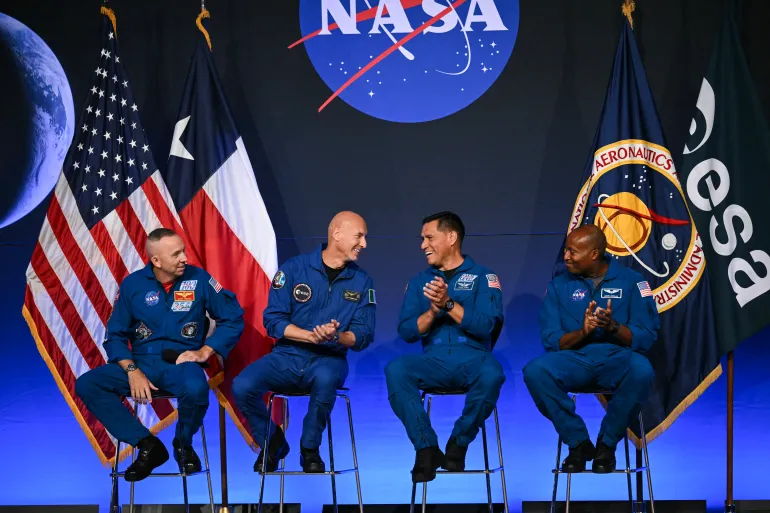
On Tuesday, it was revealed that astronauts Andre Douglas, Frank Rubio, Luca Parmitano and Randy Bresnik will be leading the flight. Serving as a backup is veteran test pilot Bob Heintz, who is able to substitute into any role.
Recommended Stories
list of 3 itemsend of list
Their two-week mission will focus on collecting research and practising in-space docking procedures in preparation for a future Moon landing.
While no women were named to the Artemis III flight, the newly announced crew represents a range of experiences and backgrounds.
Making his first spaceflight is Florida-born engineer Douglas, 40, who was a backup crew member for NASA’s last major spaceflight, Artemis II, which flew a loop around the Moon.
Douglas will serve as mission specialist on Artemis III, and his presence on the flight will make him one of roughly two dozen African American people to travel to space, out of a population of hundreds of space travellers so far.
Also serving as mission specialist will be Rubio, a 50-year-old Salvadoran American physician who used to pilot Black Hawk helicopters for the US Army. He currently holds the record for the longest single-duration spaceflight by a US astronaut, at 371 days.
The oldest member of the four-man crew is its 58-year-old commander, Bresnik. A former US Navy test pilot and Marine, Bresnik is the only Artemis III crew member to have participated in a space shuttle mission, back in 2009. That programme has since been retired.
More recently, in 2017, Bresnik served as the commander for the International Space Station.
The fourth and final member of the Artemis III mission is its pilot, Parmitano, 49. He will be the only astronaut on the mission who is not a US citizen.
Born in Paterno, Italy, Parmitano has a background in his country’s air force. In 2019, he too served as commander on board the International Space Station, becoming the first Italian to do so.
“ Each of you possess a unique background,” said NASA administrator Jared Isaacman, who introduced the astronauts. “Your vast experience and unwavering dedication to NASA’s mission enables you to help make us and take this next great step in space exploration.”
The Artemis III mission will be a public-private partnership. Three rockets will blast off as part of the initiative.
One will carry the four-man crew into orbit around Earth in an Orion spacecraft. Another two rockets will bear aloft Moon lander models from Blue Origin and SpaceX, private firms owned respectively by tech entrepreneurs Jeff Bezos and Elon Musk.
The Orion spacecraft will then practice rendezvous procedures with each of the two landers, in preparation for similar manoeuvres during future Moon missions. The Artemis III flight is set to take off before the end of 2027.
“Artemis III will be an extraordinary demonstration of what is possible when the greatest aerospace companies across the United States, alongside our European partners, come together to showcase the technological might and ambition of the free world,” said Isaacman, a Trump appointee who has experience commanding private space flights for SpaceX.
From left: Randy Bresnik, Luca Parmitano, Frank Rubio, and Andre Douglas speak during a news conference at NASA’s Johnson Space Center, on June 9, in Houston, Texas [AFP]
Explosion prompts concern
The mood at Tuesday’s unveiling ceremony was celebratory, as each newly announced astronaut took the stage to soaring music and standing ovations.
But looming over the event were concerns related to the explosion of an uncrewed Blue Origin New Glenn rocket in Florida on May 28.
That blast sent a mushroom cloud billowing above the city of Cape Canaveral, and it caused severe damage to a launchpad complex where the takeoff was scheduled.
Representatives from both NASA and Blue Origin, however, took the stage to wave aside any concerns.
“While we recognise there are questions about how Blue Origin’s recent anomaly impacts our plans, setbacks are a learning opportunity,” said Jeremy Parsons, NASA’s acting deputy administrator.
He added that NASA was taking an “active role” with its partners to “ensure the right outcomes are achieved”. The private firms, in turn, were granted “unparalleled access” to NASA experts, technology and test facilities.
“We are confident that New Glenn will be ready for Artemis III, together with Blue Origin,” Parsons said.
John Couluris, a representative for Blue Origin, likewise described the May 28 explosion as an “anomaly”.
“We’ve redoubled our efforts and are moving forward,” Couluris said, describing Blue Origin’s factories as “running around-the-clock shifts” to be ready for the Artemis III launch.
“We will measure ourselves not only by our successes but how we respond to setbacks.”
The Artemis II mission in April made a loop around the Moon, capturing images of Earth [File: NASA via AP Photo]
Race to the Moon
The race to beat China’s space programme was another theme that cropped up during Monday’s ceremony.
Several speakers alluded to China’s growing lunar landing programme, a rival to NASA’s efforts.
Earlier this year, the China Manned Space Agency announced its intentions to place a person on the Moon by 2030. Already, in 2024, China became the first country to retrieve soil samples from the far side of the Moon using robotics.
But lunar missions have been a point of pride for the US, which holds the distinction of completing the first crewed mission to the Moon in 1969.
Last April, the Artemis II flight marked the US’s return to lunar travel. For the first time since 1972, a crewed capsule flew beyond low Earth orbit, and it broke records for the farthest crewed flight into space.
Next year’s Artemis III mission is set to build on that effort. The administration of US President Donald Trump has signalled it would like to see astronauts land on the Moon before the Republican leader’s term ends in January 2029.
NASA officials have also described the Artemis programme as a stepping stone to establishing a permanent base on the Moon. Various speakers on Monday highlighted that vision.
Couluris, the Blue Origin representative, called the Moon an “eighth continent” for humans to explore.
NASA scientist Nicky Fox, meanwhile, described the Artemis III mission as part of the preparatory work that would enable the US “to plant astronaut boots back on the lunar surface — to stay”.
But the US’s lunar programme has faced numerous setbacks, as NASA engineers work to address technical issues that could otherwise cause life-threatening situations in deep space.
Originally, Artemis III was supposed to mark the US’s return to the Moon, bearing a crew to the lunar surface. But in February, that plan was scrapped in favour of the present-day project, which focuses on conducting practice drills in low Earth orbit.
“We will use this mission to reduce risk for our future crewed Moon missions with lander test articles from both Blue Origin and SpaceX, to ensure we will beat China back to the Moon,” Parsons said on Tuesday.
“This mission is deliberately designed to take calculated risks so that future crews will be safer and ultimately successful when we put boots on the lunar surface.”
Still, officials applauded Artemis III as a major step towards human beings reaching the Moon once more.
In a recorded statement, Senator Ted Cruz suggested that the Artemis III mission would also put the US a step ahead of China.
“At a time of growing competition with China in space, this mission will strengthen America’s leadership, expand our economy, and help secure a lasting American lunar presence,” he said.
“When America commits to a mission, we lead and we succeed.”
A woman was left fuming after a fellow passenger encroached on her seat space for more than half of a three-hour flight, sparking a heated debate about airplane etiquette
16:02, 07 Jun 2026Updated 16:02, 07 Jun 2026
The male passenger was ‘manspreading’ while he slept (stock image)(Image: Getty Images/iStockphoto)
A woman has sparked a debate after calling out a passenger for ‘manspreading’ during a three-hour flight while he was asleep. Branding his behaviour as ‘inconsiderate’, she revealed how she found herself crammed into a middle seat with barely any legroom, as he repeatedly encroached on her space.
However, a number of Reddit users feel she’s being ‘too harsh’ on the man, arguing he may be completely unaware of his manspreading given that he was asleep. In her post, she wrote: “My mother was a legitimate pre-boarder on a recent flight. I accompanied her to help manage baggage and get her settled. We sat in the bulkhead so she could have more space for her braced knee.
“I sat in the middle seat to provide a buffer and keep her knee protected. The gentleman to my left took up a third of my space for more than half of a three-hour flight.
“He was asleep with headphones and didn’t respond when I tried to wake him up and ask him to move.”
In a pointed message directed at men, she called for greater self-awareness and urged them to “check their ego”, where she stated: “Women go out of their way to make others around them more comfortable and not take up literal and metaphorical space. You absolutely do not need the extra space.”
Responding to her post, one user remarked: “I’ve seen plenty of men and women take more than their fair share of space on a plane. Everyone is capable of being inconsiderate. You are not the main character.”
Another added: “You have the armrest up, lay in your bed.” Another commenter wrote: “Fair to be annoyed by this. Fair to ask, expect him to comply, and feel you shouldn’t have to ask. I’d probably wake him up. But how’s he being egotistical while asleep?”
Elsewhere, a fellow user said: “Girl, if you don’t repeatedly and passive-aggressively start stepping and kicking his foot away.”
ED Sheeran has been dealt another blow in his ongoing struggle to build a rehearsal space near his mega estate “Sheeranville”.
The Shape of You singer faces painfully slow construction on his new rehearsal studio due to eco-rules.
Sign up for the Showbiz newsletter
Thank you!
Ed’s new rehearsal space is being held back by protected newts living nearbyCredit: Deadline via Getty ImagesThe rehearsal space is set to be near his 16-acre ‘Sheeranville’ estate (pictured)Credit: SplashNews.com
Builders having to begin construction by hand because of the prescence of endangered newts.
And they will be given special “toolbox talks” on what to do if they come across the tiny 15cm critters.
Planning bosses say the tiny 15cm critters could be disturbed by his plans to knock down a historic but dilapidated barn and turn it into a personal rehearsal space.
Council chiefs said the measures were normal for any countryside development – and not “unreasonable”.
Ed’s builders will have to use hand tools instead of machinery, remove all debris by hand.
The popstar’s problems with amphibians date back as far as 2018 0 when protected great crested newts were found near his Suffolk estate.
Planning permission for the project was granted, but with a string of conditions to protect the species.
Sheeran bought the £1million farm in 20245 – which included a 19th century dilapidated piggery.
Mid-Suffolk Council have forced the pop-star to put a range of measures in place to protect the newtsCredit: sandra standbridgeEach builder will be given a “tool box talk” explaining how to protect the newtsCredit: Laszlo Bokor
The brick and wood debris will also be entirely removed by hand to stop the newts from accessing it.
The ‘Great Crested Newt Method Statement’ filed with Mid-Suffolk District Council states: “The removal of any debris e.g. rubble, wood, will be undertaken by hand as far as possible, and with care, checking beneath all removed items for newts.
“Careful use of machinery will be necessary to lift large debris and to remove the existing concrete building base, with the area beneath checked for the presence of GCN as each section is lifted.”
The method statement also gives a time limit restricting project work to March, April and May when most newts will be in ponds away from construction.
Other eco measures Ed’s having to put in place include creating a “species rich, flowering lawn” with 19 different species of flowers.
Plus he’s got to plant 12 fruit trees, two bat boxes and a triple-house sparrow tower.
A spokesperson for Mid-Suffolk District Council told The Sun: “This is certainly NOT a case of any unreasonable ‘eco-friendly measures’ being demanded by our council – simply normal requirements that would be expected of any countryside developers.”
They explained there had been no conflict between Ed Sheeran and the council at any stage and that he had not complained about the restrictions.
NASA ordered astronauts on the International Space Station to enter their spacecraft and prepare for possible evacuation due to a worsening air leak in the Russian section of the station. This notice was given to the four astronauts of the Crew-12 mission at 9:04 a.m. ET. They include two U. S. astronauts, a French astronaut, and a Russian cosmonaut, who were instructed to wear their spacesuits.
NASA and Russia’s space agency, Roscosmos, have been discussing the air leaks in the Zvezda service module, which is an important part of the station. While the leaks had been minor recently, the situation escalated on Monday, with the air loss increasing from one pound per day to two pounds, according to a senior NASA official.
June 5 (UPI) — NASA briefly moved five of the seven crew members aboard the International Space Station to the docked SpaceX Crew Dragon “Freedom” while Russian cosmonauts planned to repair leaks in a transfer tunnel in the Russian module.
The Russian crew members decided to only perform measurements Friday, so Mission Control told the crew members it was OK to exit the safe haven configuration.
“Roscosmos has paused Friday’s structural repair efforts … as more measurements and data is assessed. Given this development, NASA has instructed the crew members inside the Dragon spacecraft to end the safe haven procedures and return to planned operations aboard the International Space Station. We look forward to working with Roscosmos on a collaborative approach to address the leaks,” NASA Spokesperson Bethany Stevens posted on X.
The cracks have created a small air leak on and off for about six years and is a safety risk.
“The Zvezda service module transfer tunnel, known as PrK, has suffered from cracks and leaks for some time, and has been mitigated by Roscosmos as much as possible to date. The cracks have always been a concern that NASA watches very closely. NASA and Roscosmos have been working to determine the root cause of the cracks, and Roscosmos manages the issue through operational mitigation measures and periodic partial-repair efforts,” Steven wrote in another post.
The NASA Crew-12 members on the ISS include: Jessica Meir, Jack Hathaway, Sophie Adenot and Andrew Fedyaev. Astronaut Chris Williams went to the Dragon spacecraft, Stevens said.
Roscosmos noticed a slow pressure drop in the tunnel last month after a Russian cargo ship arrived, CBS News reported. NASA and Roscosmos have been working on “operational mitigation measures and periodic partial-repair efforts.”
President Donald Trump discusses renovations to the Lincoln Reflecting Pool and makes an announcement on coal in the Oval Office at the White House on Thursday. Photo by Samuel Corum/UPI | License Photo
Cape Fear,” premiering Friday on Apple TV, is a 10-episode limited series remake of a 1991 Martin Scorsese remake of a 1962 film adapted from John D. MacDonald’s 1957 novel “The Executioners,” and as in a game of telephone each subsequent version adds new material and moves a little farther from the original. (The credits to the series, created by Nick Antosca, note all previous sources and screenwriters.) Thirty-four years having passed since the last go-round, we are treated to such modern advances as catfishing, drones, deep fakes, social media and pushy true-crime podcasters.
In each iteration, a family is menaced by a recently released ex-con who blames one or more of them for his incarceration. Antosca fills his extra-long take on the material with complications and inventions; though the series is also chock full of borrowings from and allusions to its predecessors — you can hardly call them Easter eggs, lying there as they do in plain sight. (And sound: Bernard Herrmann and Elmer Bernstein‘s earlier scores share space with Jeff Russo’s new one.)
In every version, the antagonist is a now-charming, now-menacing psychopath named Max Cady (Javier Bardem), memorably played by Robert Mitchum in 1962 and Robert De Niro in 1991. In the novel and movies, Cady was serving time for rape; here it’s for the murder of his wife and unborn child, when new evidence suddenly springs him from prison after 17 years. We are invited to suspect this evidence from the very beginning, though this suspicion will itself become suspect. “Or is it?” is a question you’ll be prompted to ask through the series.
The objects of Cady’s slow-boiling vengeance — seemingly — are married lawyers Tom (Patrick Wilson) and Anna Bowden (Amy Adams), sharing the position previously represented solely by Gregory Peck and Nick Nolte in turn. Anna, who had unsuccessfully represented Cady, ironically works for an Innocence Project-type nonprofit, whose chief, Noa Toussaint (CCH Pounder), is only too delighted to fundraise on the back of Cady’s celebrity. Cady, claiming no hard feelings, insinuates himself into their world, apparently friendly, apparently helpful, so that it’s not always clear what’s sincere and what’s strategy. Is he a wolf in sheep’s clothing, or just a creepy, sometimes violent sheep? (“Killed his wife, didn’t kill his wife,” a minor character will volunteer, “he’s an arrogant bastard either way.”)
There are now two Bowden children in the picture, doubling earlier versions. Natalie (Lily Collias), Anna’s daughter from a previous relationship, is a good girl looking to go just a little bad, who feels unseen by her busy parents. Sad, sullen younger half-brother Zach (Joe Anders), unrecovered from a social media misstep, is acting more strangely than teenage boys usually do.
This is a cat and mouse — or cats and mice — melodrama, with customized stock characters given dark secrets and backstory traumas less as explanation than complication. (Good, bad, whatever, everyone’s got issues.) Cady, who has a prison-acquired brain injury — cue flashback, in black and white, naturally — suffers from headaches and hallucinations, reacting painfully to flashbulbs (a Chekov gun, I wondered?), seeing visions of his dead wife and son, whom he pictures grown. (He is sad about it, whether or not it’s his fault.) And is that masked woman in green he keeps seeing real or imagined?
On a nuts and bolts level, it’s all screwed together tight, even the pieces that stick out at weird angles. (Is there a reason to make Cady an apparently talented chef, other than to demonstrate his knife skills?) The actors fill their parts with feeling. Bardem gets the most, and most extreme attitudes, to play, whether cozying up individually to the Bowdens, threatening a groupie, undergoing a religious conversion, acting normal or being weird. Adams is low-key forceful as his primary opponent. (Tom’s comparatively weak character is underscored by his secret habit of microdosing LSD and a nothingburger flirtation with a colleague.) Collias is impressively real. The dialogue is well-crafted, the Southern atmosphere (Atlanta doubling Savannah, with Savannah here and there standing for itself) suitably oppressive.
Nevertheless, it’s fair to ask whether this story, even with its yards of extra material, could be told in under nine hours? The answer, most assuredly, is yes. And might it be better shorter? It might.
Not that I’ve ever been a fly on the walls of the executive conference or dining or washrooms where such deals are made, but I suspect the length has less to do with artistic necessity than A) the obscure economics of streaming and B) the not unrelated habits of viewers, who, to judge by questions I get asked, abhor a vacuum. A 10-episode series will put off the moment when they have “nothing to watch,” while the streamer gets to keep them in the ecosystem longer. “Cape Fear” is hardly the only series to which this applies. As I imagine the series will do well — mystery with a smattering of horror seems very much what the people want — more may be just the ticket for some people. Still, there’s a sense that the story has expanded to fill the space, with plotlines for all and crazy side trips (snakes! drugs!) in escalating levels of nuttiness.
That might be more feature than bug, but I can’t say I felt much of anything for the characters, or was concerned whether the Bowdens would emerge from their ordeals a stronger family. (Whatever the outcome, I’d say they have work to do.) Having been given only eight of 10 episodes to review, I’m interested, in a disinterested way, how this all will shake out, when the story finally moves to the Cape Fear River, and whatever final twists — that there will be twists, I am certain — an inevitably Action Packed Finale has in store.