Hi, and welcome to another edition of Dodgers Dugout. My name is Houston Mitchell. I’m back! Who missed me? No one? That’s sad.
Are you a true-blue fan?
Get our Dodgers Dugout newsletter for insights, news and much more.
By continuing, you agree to our Terms of Service, which include arbitration and a class action waiver. You agree that we and our third-party vendors may collect and use your information, including through cookies, pixels and similar technologies, for the purposes set forth in our Privacy Policy such as personalizing your experience and ads.
Game 4 thoughts
—Sorry I missed the first three games, I was sick and had to rest. A combination of Nyquil, Theraflu, Zinc and vitamin C had me seeing three Dodgers on the mound. I guess I could have written about the one in the middle. But I’m back for the duration.
—Best wishes to Joe Davis, who lost his voice. I like the Davis-John Smoltz combo, though Smoltz tends to use 20 words to say something he could say in five.
—Some online complain that the Dodgers announcer gets to call the Dodgers’ postseason games. They must have missed the Vin Scully years. Plus, no one seems to be complaining that a Braves Hall of Famer is the commentator. I detect no bias from either of them.
—This recap is written as the game is going on. I don’t go back and change things to make me look good …. or bad. It’s just what I’m thinking at the time.
First inning
—Tyler Mahle was 4-1 with a 1.99 ERA in nine starts with the Braves. He throws a lot of strikes, so being patient will be extra difficult for the Dodgers today.
—Will we get the good Tyler Glasnow or the bad Tyler Glasnow?
—My mom could steal a base off Glasnow.
—You ever notice how great it is when Dodger fans stand up and cheer when their pitcher has two strikes, but how annoying it is when other fans do it?
—That’s OK. The Dodgers were going to have to score a run to win anyway, now they need to score two.
Second inning
—Watching Shohei Ohtani swing makes me think we are going to hear that his injuries were a lot more serious than let on. Sort of like in 2024 when he hurt his shoulder much worse than they said.
—Ohtani still hasn’t learned to slide without jamming his left arm into the ground.
—Rare back-to-back errors by the Braves. Not exactly how you’d predict the teams would score their first runs. Dodgers 1, Braves 1.
—Glasnow seems to be effectively wild so far.
Third inning
—We seem to be in the settling-in phase of the game now.
—Glasnow has made 44 pitchers. 22 balls, 22 strikes. That’s not really sustainable. Michael Harris II reaches on a walk. Will he steal on the first pitch?
—Whoever runs Atlanta’s in-game noise is stuck in the 1980s. An air horn? I half-expect a sound effect from Pac-Man.
—And Harris didn’t try to steal at all. Surprising.
Fourth inning
—The Dodgers are chasing too much.
—I like the Danny DeVito Jersey Mike’s commercials. Not a big fan of Jersey Mike’s though.
—Speaking of fast food, when is Carl’s Jr. bringing back the steak sandwich?
—Great. Now I’m hungry.
—All three Dodgers struck out.
—Do you think the Dodgers brain trust has had any conversations about giving Ohtani a game off?
—Suddenly, both pitchers are locked in.
—As soon as I write that, Glasnow walks Mike Yastrzemski (worth 29 points in Scrabble).
Fifth inning
—Nice at-bat by Kiké Hernández, even if it did end in an out. The Dodgers need to make Mahle work.
—Andy Pages is scorching the ball. He needs to get off this list though:
Worst career postseason batting average, minimum 80 plate appearances:
Dan Wilson, .091 Dal Maxvill, .114 Brandon Lowe, .115 Andy Pages, .123 (10 for 81) Yasmani Grandal, .127 Rhys Hoskins, .141 Austin Meadows, .145 Jason Heyward, .145 Mike Bordick, .148 Mark McLemore, .152
—Glasnow walked Austin Riley. These walks are going to cost him at some point.
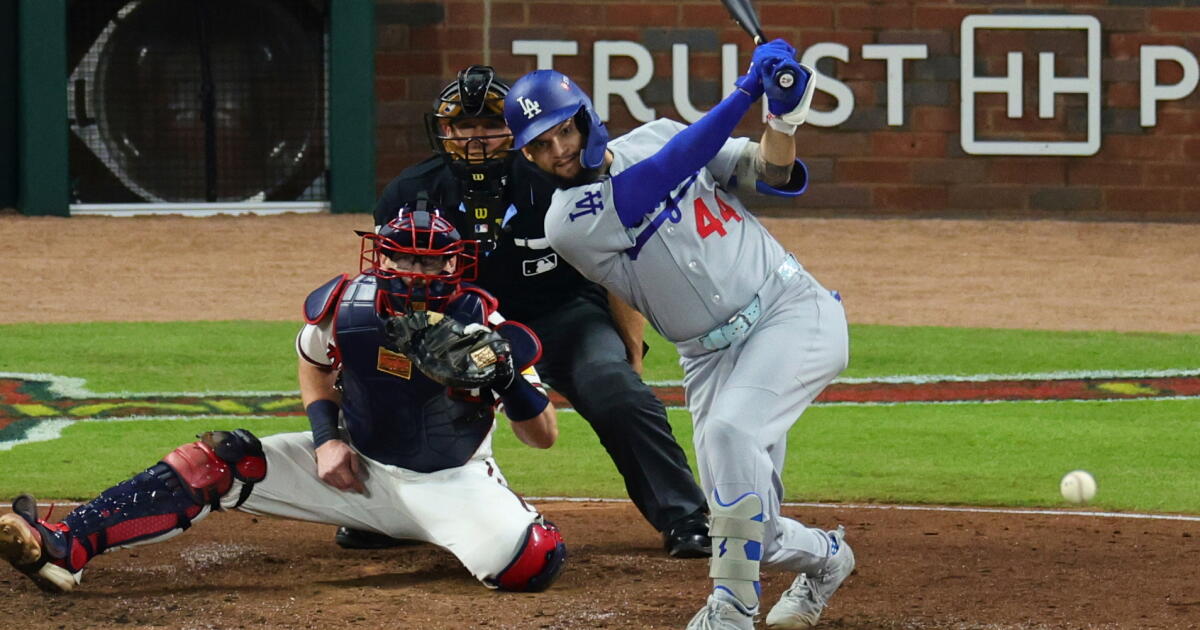
—Mookie Betts never swings at the first pitch. Michael Harris II swings at every first pitch.
—I’m not sure how the Tomahawk Chop chant is still a thing.
—Ronald AcuñaJr. walks. And that’s it for Glasnow. Only one hit, but five walks.
—Matt Olson creamed that ball. If any of us had been playing second, we’d have said, “What? A ball was just hit by us? Never saw it.” These guys make fielding seem so easy.
Sixth inning
—Will Smith is one for 16 this series. It’s amazing the Dodgers are up 2-1, because it feels like no one is hitting.
—The Dodgers were hitting .218 coming into this game, the Braves .160.
—Ozzie Albies could have been at third if he had run hard out of the box on his double off the wall. Will it cost the Braves?
—Edgardo Henriquez tries to get out of the inning. This feels like a pivotal moment.
—The Braves hit ball hard twice, but right at people. And at the two worst fielders. But they are out of the inning.
—That inning seemed to last a million years.
Seventh inning
—This will probably be Mahle’s last inning.
—Ohtani swings at the first pitch.
—Teoscar gets a hit, and that’s it for Mahle, who pitched very well.
—I’m not sure of the wisdom of pinch-hitting for Super Kiké. But Josue De Paula walked. Tommy Edman runs for him.
—Now it’s Kyle Tucker. Is this his moment?
—Teoscar almost has an all-time base-running blunder.
—Tucker walks. New pitcher for Atlanta, to face Pages. Time to get off that worst 10 list.
—He gets off it! Two RBIs. 2025 is a distant memory. Dodgers 3, Braves 1.
—Now, who comes out of the bullpen to hold it?
—Just want to circle back to De Paula. He’s 21 and spent most of the season in double A. But he doesn’t chase any pitches and works an important walk. Impressive.
—Henriquez stays on the mound for the bottom of the inning.
—Hard shot to Max Muncy, who is so much better as a fielder compared with two years ago.
—Henriquez shakes off Will Smith twice and then throws a meatball up to the plate. Maybe listen to Smith.
—After a booming double by Harris, Acuña swings at the first pitch and bounces out. Thanks.
Eighth inning
—The Dodgers go down quietly, and turn to Tanner Scott for the bottom of the eighth.
—Scott made Olson strike out on a pitch that was almost in the dugout.
—Scott looks dominant. Three outs away.
Ninth inning
—Braves bring in their close to maintain the two-run deficit. It’s former Angels closer Raisel Iglesias.
—He failed. Muncy crushed that ball. Dodgers 4, Braves 1.
—I see all these ads for betting sites and prediction markets and still wonder why sports allows these ads.
—Can Edwin Díaz get the final three outs and send the Dodgers to the NLCS?
—Díaz always starts the game with PitchCom problems.
—Rowdy Tellez is a large human being.
—Strike out, fly out, fly out. See you Sunday in L.A. or Milwaukee.
—By the way, how much longer is the postseason nowadays? Today (Thursday), is the 70th anniversary of Don Larsen’s perfect game in Game 5 of the 1956 World Series.
Farewell, Fred Claire
Former Dodgers general manager Fred Claire died this week. He was 91. Claire took over the Dodgers in April 1987 when Al Campanis made a fool of himself on “Nightline,” making racist remarks. The Dodgers had a poor season, but Claire was subtly changing the Dodgers, signing players such as Mickey Hatcher and acquiring Tim Belcher. Before the 1988 season, Claire signed Kirk Gibson to a three-year, $4.5-million deal (doesn’t that contract sound quaint nowadays). He acquired Alfredo Griffin, Jay Howell and Jesse Orosco, among other moves. And we all know how the 1988 season ended.
More important, Claire may have been one of the nicest people in history. He took part in the “Ask… “ series in this newsletter, and would check in with critiques and compliments throughout the history of this newsletter. If I needed to contact a retired player for an “Ask…” interview, he invariably had their number. He will be missed.
Former Dodgers owner Peter O’Malley, on Claire: “We hired Fred in 1969 as publicity director when he was the beat writer covering the Dodgers for the Long Beach Press-Telegram. He then began a distinguished 30-year career with the Dodgers. Fred was a talented team player and everyone in the organization enjoyed working with him. We were all happy when he was Executive Vice President and named major league Executive of the Year after the 1988 Dodgers won the World Series. Our thoughts are with his wife Sheryl and the entire family.”
Have a comment or something you’d like to see in a future Dodgers newsletter? Email me at houston.mitchell@latimes.com. To get this newsletter in your inbox, click here.
Jon Kay and Sally Nugent were back on the red sofa for the latest edition of BBC Breakfast
Jon Kay returned to screens on Wednesday(Image: BBC)
The hosts of BBC Breakfast shared some sad news this week.
Jon Kay and Sally Nugent were back in the studio on Wednesday (October 7) to deliver the latest headlines from across the UK and around the world. Later in the show, the presenters announced the death of an acting legend.
Eva Marie Saint, one of the last survivors of Hollywood’s golden age of the 1940s and 50s, has died at the age of 102. Her work on screen spanned six decades. She made her screen debut alongside Marlon Brando in On the Waterfront, and also starred in North by Northwest and Superman Returns.
Representatives of the star said that she died on Tuesday (October 6) of natural causes at her Los Angeles home, surrounded by her loved ones. Sharing the news on BBC Breakfast, Sally said: “Tributes have been paid to one of the last stars of Hollywood’s golden age, the American actor Eva Marie Saint, who has died at the age of 102.”
Jon added: “In a career spanning nine decades, the oldest surviving Oscar winner became best known for her roles in the 1954 hit On the Waterfront with Marlon Brando, and later with Cary Grant in the spy thriller North by Northwest.” BBC culture correspondent Charlotte Gallagher then looked back on Eva’s life.
In the pre-recorded tribute, Charlotte said: “Eva Marie Saint, the ice-cool femme fatale, who meets Cary Grant on a train in Alfred Hitchcock’s Cold War spy classic North by Northwest. She seduces him, betrays him, but ultimately falls in love, after a terrifying escape from enemy spies across Mount Rushmore.”
Eva was the daughter of a tyre salesman from New Jersey. She initially thought of becoming a teacher, but modelling led to a small part in television, alongside former silent screen legend Lillian Gish.
As her acting career took off, Eva became known for appearing in Exodus, The Sandpiper, 36 Hours, and Grand Prix. She soon won a Primetime Emmy Award and an Academy Award.
Back in the studio, Sally then said, “Eva Marie Saint, whose death has been announced. The star of so many incredible films.”
Jon went on to say, “True end of an era stuff,” before Sally agreed, “Yeah.” The hosts then continued with their bulletin.
Tributes have flooded in for Eva, following the news of her death. “Oh no… But what a magnificent life!” one person wrote on X.
Another added: “No! I was just talking about how amazing it was that she was over 100 to my father yesterday!” A third said: “This is such sad news, what a wonderful actress and beautiful lady she was, RIP Eva Marie.”
Someone else echoed the sentiment, saying: “Damn. Not many left. Enjoyed her on Turner Classic. Great actress.” A fifth fan shared: “They just don’t make them like that anymore. What a loss.”
The Dodgers are better than you. They’re smarter than you. They’re richer and deeper and more popular than you. You know it, they know it, there’s no point pretending otherwise.
So, yes, they went into the National League Divisional Series looking past the threadbare Atlanta Braves and thinking about the National League Championship Series.
Who does that? In the playoffs?
Your two-time World Series champions with the world’s best starting pitching rotation and a 1-0 NLDS series lead, that’s who.
The way the Dodgers did the math, it made sense to save their ace of aces, Yoshinobu Yamamoto — who last postseason went 5-1, had an ERA of 1.45 and 33 strikeouts in six appearances and won the World Series MVP — for Game 3 of the NLDS.
Not for the tone-setting Game 1 and, potentially, Game 5 on regular rest.
But Game 3.
Because to the Dodgers, that’s not even much of a calculated risk. It was a math problem specific to them, before they beat the Atlanta Braves 5-3 in Game 1 in 100-degree heat Saturday afternoon.
They figured they’d be able to throw two consecutive left-handers at the lefty-averse Braves lineup, starting Saturday with recently acquired two-time Cy Young winner Tarik Skubal, followed Sunday by Blake Snell, also a two-time Cy Young winner.
Additionally, this way they could have Yamamoto pitch Tuesday on the road, where his ERA is 1.77 instead of at home, where it’s 3.13. And where he’s given up 14 home runs compared with six on the road, where he’s made four fewer starts.
But mostly the Dodgers’ calculus was that having Yamamoto pitch Game 3 means it will line up so that they’ll have him for Game 2 in the NLCS and, if necessary, Game 6 against the Milwaukee Brewers or San Diego Padres. (Or, if you really want to plan ahead — and the Dodgers with their leaky bullpen absolutely should not — for Game 1 of the World Series.)
“That just sets up the rotation and Yamamoto better looking forward,” Dodgers manager Dave Roberts explained before Saturday’s game.
“Not discounting this series, because you’ve got to win this series first, but you start from the fact that they’re all going to pitch — the three [Skubal, Snell and Yamamoto] are going to pitch for sure … and then what sets them up going forward.”
It feels like a faux pas, to be that forward-thinking, and to be saying the quiet part out loud!
“If you can kind of line it up in such a way to give guys ample rest, it puts you in a better position for more options down the road,” Roberts said. “That’s kind of some of the math we had.”
I mean, it adds up. And for these Dodgers — whose fourth starter, Tyler Glasnow, was a key cog in last year’s World Series-winning rotation — it’s a fair assessment.
Though it’s nice of Roberts to pay enough lip service that he’s not totally discounting the best-of-five current series they’re in.
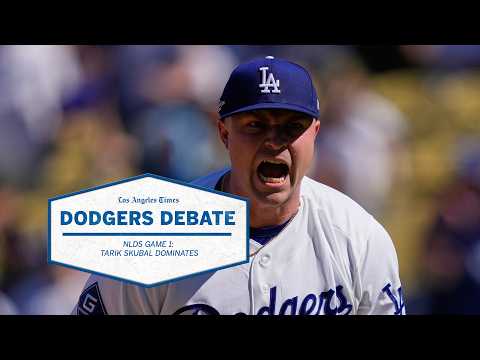
Predictably on Saturday, Skubal, who previously had a 2.04 ERA, a 0.73 WHIP and 56 strikeouts in 39⅔ playoff innings for the Detroit Tigers, brought his own October heat.
The 29-year-old from Kingman, Ariz., gave up just one run and two hits, walked two and struck out seven — giving him 64 in the postseason, the second most in his first seven postseason appearances behind only Bob Gibson (74), per MLB’s Sarah Langs.
Skubal retired 15 consecutive, hit 101 on the radar gun in the second inning and didn’t have a three-ball count until the fifth inning.
“We knew,” Braves manager Walt Weiss said, “it was going to be a rough ride.”
But Weiss did not know, immediately after Saturday’s loss, when he’d be able to deploy his sole ace, 37-year-old Chris Sale, the 10-time All-Star who just pitched in the Braves’ Game 3 wild-card closeout.
“To me it’s not that big a deal when he pitches,” Weiss said. “The Dodgers can’t win it in two.”
A true statement and a matter of fact: The Dodgers can’t win in two, but they’re not shy about expecting to win.
“It’s prudent to kind of map out potentially how they could line up,” Roberts said Friday. “And that’s just doing your due diligence.
“We are very fortunate because we have four guys essentially that you could really kind of pick through to figure out what’s the best way to deploy all four starters, that’s the exercise. But it starts with having four talented guys.”
Andrew Friedman, the Dodgers’ president of baseball operations, reveled in the notion that his club might actually be disproving the rule that you can never have enough pitching — at least when it comes to their elite quartet of starters.
And that, Friedman said, “is very impactful for quality of life.”
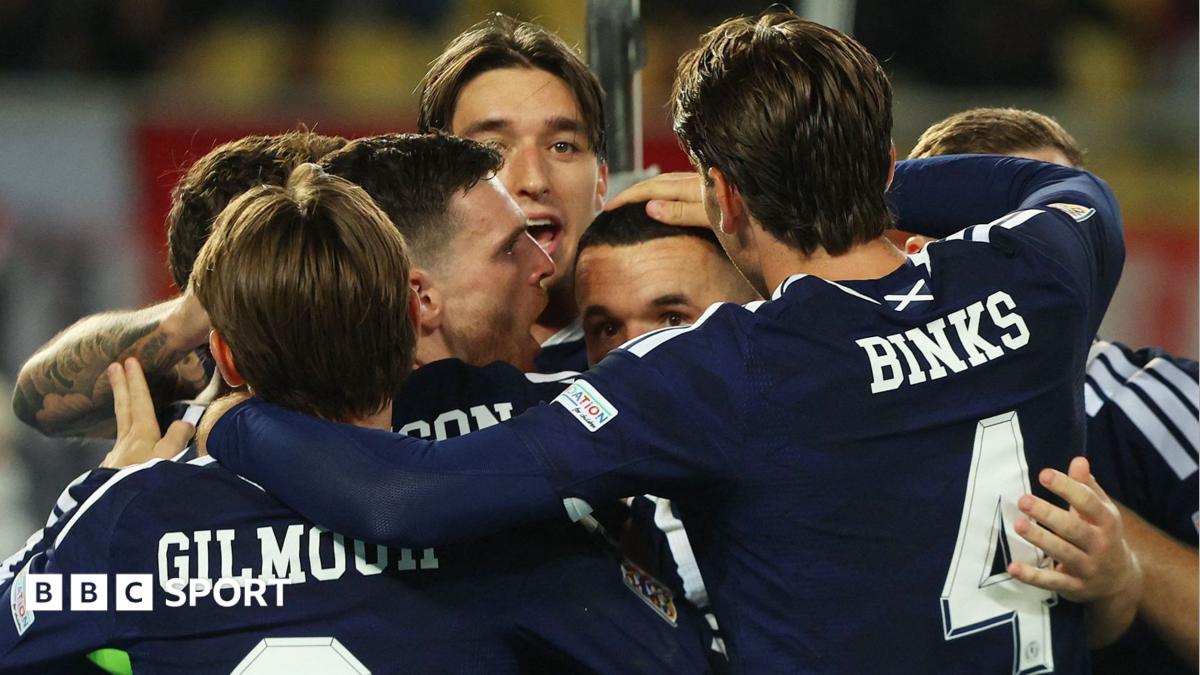
Ben Gannon-Doak turned North Macedonia inside out and upside down. He is woefully short of minutes for his club, Bournemouth, and lacks sharpness and ruthlessness as a consequence. His delivery has always lacked accuracy.
His raw materials, though, are exhilarating. His pace, his involvement, his number of touches, his chances.
He never left North Macedonia alone. They survived only because he blasted over with one of his chances, shot tamely with another, lost composure with a third one. Having tormented North Macedonia, he allowed them off the hook, but he was a one-man thrill-fest.
He’s 20, that can’t be forgotten. He’s going to be around for a lot of years and will play a heap of big games, but with his club he’s got some decisions to make.
Two minutes against Liverpool, 19 against Sociedad, eight against Brentford, one minute against Newcastle and Man City. The only game he has started this season was a League Cup tie against Lincoln.
Bournemouth is a tough team to get into, but he needs more time on the grass, more opportunity to develop. Maybe a loan move in January would make sense for him, if his club allows him to go. A big ‘if’.
That’s a situation Gannon-Doak needs to resolve for himself – and for Scotland.
Hi, and welcome to another edition of Dodgers Dugout. My name is Houston Mitchell. A good Tommy Lasorda quote: “You have got to love what you’re doing. No matter what it is. Whatever you undertake in life, if you don’t love it, and you don’t enjoy it, you are making a big mistake. You have got to love what you are doing. You have to appreciate what you are getting, and you have to do it to the best of your ability.”
Are you a true-blue fan?
Get our Dodgers Dugout newsletter for insights, news and much more.
By continuing, you agree to our Terms of Service, which include arbitration and a class action waiver. You agree that we and our third-party vendors may collect and use your information, including through cookies, pixels and similar technologies, for the purposes set forth in our Privacy Policy such as personalizing your experience and ads.
It’s that time of year
The Dodgers will face the Atlanta Braves in the NLDS starting Saturday, with Game 1 set to start at 1 p.m. Pacific, with the temperature forecast to be around 100 degrees. So, bring a sweater. People have complained that the 1 p.m. start is unfair because it will be too hot, but unless it is going to be 75 degrees on the Braves side of the field, it will be even. Personally, I would have put Padres-Brewers at 1 p.m. and Dodgers-Braves at 5:30 p.m., but no sense crying over spilled milk (Editor’s note: How many clichés can this guy work into one paragraph?)
The Dodgers faced the Braves six times during the season and lost five.
May 8 at Dodgers 3, Atlanta 1 Emmet Sheehan and five relievers combined to outpitch Braves ace Chris Sale. Freddie Freeman homered.
May 9 Atlanta 7, at Dodgers 2 Blake Snell gave up five runs in three innings and the Braves got 12 hits overall, 11 of them singles. Snell went back on the IL after the game, staying there for three months. Spencer Strider started for the Braves. He is currently on the IL.
May 10 Atlanta 7, at Dodgers 2 Justin Wrobleski took one for the team, giving up all seven Braves runs in 8 2/3 innings. Bryce Elder started for the Braves, going 5 2/3 innings. Drake Baldwin and Matt Olson homered for Atlanta.
Aug. 25 at Atlanta 4, Dodgers 3 Tyler Glasnow gave up three runs in five innings and Tanner Scott gave up the go-ahead run in the bottom of the eighth. Bryce Elder got the start for the Braves, giving up three runs in six innings. The teams combined for 19 hits, but only two extra-base hits.
Aug. 26 at Atlanta 6, Dodgers 5 Roki Sasaki gave up four runs in 3 1/3 innings, but Tanner Scott got the loss when he gave up a walk-off single to Ha-Seong Kim in the bottom of the ninth. AJ Smith-Shawyer started for the Braves, giving up three runs in five innings. Matt Olson and Sean Murphy homered for Atlanta, Tommy Edman for the Dodgers.
Aug. 27 at Atlanta 1, Dodgers 0 The only run came in the first inning by Drake Baldwin, Atlanta’s leadoff hitter. Yoshinobu Yamamoto pitched 6 1/3 innings, giving up the lone run and four hits while striking out eight. Chris Sale pitched a shutout, giving up five hits and striking out 11.
Dodgers against the Braves this season
Batting Hunter Feduccia, 3 for 5, 2 RBIs Mookie Betts, .333/.429/.417, 14 plate appearances, 1 double, 1 RBIs Teoscar Hernández, .333/.467/.333, 15 PA’s Ben Rortvedt, 1 for 3 Andy Pages, .300/.364/.600, 11 PA’s, 1 homer, 2 RBIs Tommy Edman, .273/.429/.636, 14 PA’s, 1 double, 1 homer, 3 RBIs Alex Call, .273/.429/.364, 14 PA’s, 1 double, 1 RBI Santiago Espinal, 1 for 5 Shohei Ohtani, .192/.192/.308, 26 PA’s, 1 double, 1 triple, 1 RBI Freddie Freeman, .174/.240/.348, 25 PA’s, 1 double, 1 homer, 1 RBI Will Smith, 1 for 7 Kyle Tucker, .133/.278/.200, 18 PA’s, 1 double, 1 RBI Alek Thomas, 1 for 8, 1 RBI Miguel Rojas, 1 for 8 Max Muncy, .118/.211/.294, 19 PA’s, 1 homer, 2 RBIs Hyeseong Kim, 0 for 6 Kiké Hernández, 0 for 3 Alex Freeland, 0 for 7 Dalton Rushing, 0 for 5 Team, .196/.281/.299, 6 doubles, 1 triple, 4 homers, 2.5 runs per game
Inherited runners who scored% Atlanta, 20.9%, 36 of 172 (1st) League average, 71 of 226, 31.4% Dodgers, 35.8%, 69 of 174 (23rd)
The two teams are pretty evenly matched.
So who’s going to win?
The last NL team to win the World Series before the Dodgers? The Braves in 2021. They were led by some guy named Freeman.
If the Dodgers go into one of their team-wide funks, they could get swept. But here’s guessing they won’t do that in the postseason. It will be a tough series, but I’m going with…… Prediction: Dodgers in 5.
Poll results
We asked, “Which two of these four players would you pick to be on the postseason roster?”
After 18,543 votes:
Josue DePaula, 94.3% Alex Call, 64.6% Hyeseong Kim, 35.1% Dalton Rushing, 6%
Up next
Saturday: Atlanta at Dodgers, 1 p.m., Fox, AM 570, KTNQ 1020 Sunday: Atlanta at Dodgers, 5 p.m., FS1, AM 570, KTNQ 1020 Tuesday: Dodgers at Atlanta, 3 p.m., FS1, AM 570, KTNQ 1020 *Wednesday: Dodgers at Atlanta, 3 p.m., FS1, AM 570, KTNQ 1020 *Friday: Atlanta at Dodgers, 5 p.m., Fox, AM 570, KTNQ 1020
Freddie Freeman hits a walk-off home run in the 18th inning to win Game 3 of the 2025 World Series. Watch and listen here.
Until next time …
Have a comment or something you’d like to see in a future Dodgers newsletter? Email me at houston.mitchell@latimes.com. To get this newsletter in your inbox, click here.
When the Dodgers acquired left-hander Tarik Skubal at the trade deadline, they expected him to be a big part of their postseason plans. But they didn’t necessarily pencil him in as their Game 1 starter.
After mulling over their options this week, the Dodgers are expected to announce Friday that Skubal will take the mound in Game 1 of the National League Division Series, confirmed a person with knowledge of the situation who was not authorized to speak publicly.
Their plans for a sweltering 1 p.m. start Saturday against the Braves were first reported by the Athletic.
The rest of the Dodgers’ rotation order was not immediately clear, but right-hander Yoshinobu Yamamoto — who had seemed a strong option for Game 1 after his World Series heroics last year — pitched to batters during the Dodgers’ workout Wednesday. If he takes his usual five days of rest, that would line him up to pitch Game 3 in Atlanta on Tuesday. So, left-hander Blake Snell could pitch Game 2 Sunday at Dodger Stadium.
“To be honest, we can kind of really put all four guys in a hat and run them out there,” manager Dave Roberts said Tuesday. “But I think there is going to be more thought behind it.”
Skubal, who the Dodgers acquired from the Tigers for three prospects, has posted a 2.61 ERA in 10 starts for Los Angeles. He finished his regular season with a gem against the Giants last week: seven three-hit innings on just 75 pitches.
Left-hander Martín Pérez (9-9, 3.04) is on the injured list with back inflammation and isn’t expected to be activated for the National League Division Series but right-hander Bryce Elder (8-8, 4.11), who underwent knee surgery in early September, could be available, which would strengthen a rotation that’s missing four starters.
Fortunately, the Braves have a Cy Young candidate in Sale (14-9, 2.16 ERA in the regular season). The left-hander gave Atlanta a solid 6 1/3 innings in the Game 1 win over Philadelphia in the wild-card series this week. Journeyman Tyler Mahle, who went 4-1 with a 1.99 ERA after coming over from the Giants in August, allowed just a run in 6 2/3 strong innings in Game 2 in his postseason debut.
After that, however, Weiss will have to lean heavily on his bullpen and fortunately he has a good one: Atlanta relievers were second in the National League in ERA (3.44) and saves (49) during the regular season. Cuban closer Raisel Iglesias had 34 of those saves (in 37 regular-season opportunities), blowing just one save chance since July 26.
Set-up man Robert Suárez missed more than three months with elbow inflammation but made two appearances in the final week of the regular season to finish the year 4-0 with a 1.06 ERA in 33 games. Ahead of him, Didier Fuentes (7-2, 2.45), Dylan Lee (6-1. 3.09), Dylan Dodd (4-1, 2.54) and Brent Suter (2-0, 1.63 with the Braves) give Atlanta perhaps the deepest bullpen in the playoffs.
Hi, and welcome to another edition of Dodgers Dugout. My name is Houston Mitchell. A good Tommy Lasorda quote: “There are three types of people in the world. Those who make it happen, those who watch it happen and those who wonder, ‘What happened?’ ”
Are you a true-blue fan?
Get our Dodgers Dugout newsletter for insights, news and much more.
By continuing, you agree to our Terms of Service, which include arbitration and a class action waiver. You agree that we and our third-party vendors may collect and use your information, including through cookies, pixels and similar technologies, for the purposes set forth in our Privacy Policy such as personalizing your experience and ads.
Some random questions
While we await the winner of the Braves-Phillies series, it’s time to get a different viewpoint. I reached out to Times columnists Mirjam Swanson and Bill Plaschke to get their answers to a few Dodgers questions.
Q. Which team is the one the Dodgers would rather avoid playing in the NL playoffs?
Swanson: The San Diego Padres, actually. Weird stuff happens with rivalries. Weird stuff has happened against the Padres. Add a rivalry to the high-stakes NLCS? Guaranteed weirdness.
So the Padres concern me more than the Brewers, a talented group headlined by ace Jacob Misiorowski that nonetheless does itself in with its poor-little-us talk. The Padres have swagger — and substance — and they just finished the season on a heater, going 41-18 to close the season.
I still like the Dodgers in that series, and then against whomever comes out of the American League too.
It’s the NLDS that’s of most concern — less for who the opponent will be and more for the fact that it’s a best-of-five series. That squeezes the already small sample size of a playoff series and makes it so there’s less room for error and more room for baseball to happen.
Plaschke: The one team the Dodgers should avoid playing is the Philadelphia Phillies. They have all those left-handed starters who can shut down the best Dodger hitters. They only lost the NLDS to the Dodgers last year because one of their relief pitchers lost his mind. They have a veteran lineup that is long overdue. Play them at your peril.
Q. Does Josue De Paula find a space on the postseason roster, and what do they do with him next year, with the positions he plays seemingly taken?
Swanson: Yes, absolutely, JDP will be on the roster in the postseason. For his incredible energy. For his incredible bat. Both much-needed.
Next year? Are they going to play professional baseball next year?
OK, let’s hope they do play ball. And as long as they do, I can see the Dodgers giving De Paula run in the outfield — so long as he puts in the work in the offseason (however long that is) to train and study and make himself a playable outfielder.
His hitting is so elite, he needs only to be a competent fielder to justify his regular presence in the lineup. He’s a great young athlete and if he understands and tackles the assignment with the gusto that he approaches hitting, I don’t see what could hold him back.
Plaschke: De Paula has to be on the roster this October and in a position to take some high-leverage at-bats. I think he’s potentially good enough that you trade Teo and put him in left.
Q. How would you rank the bullpen in terms of trust (top three)?
Swanson: Roki Sasaki and Edgardo Henriquez are both coming back from injuries and basically jumping right into the postseason fire so … fingers crossed. But let’s assume Sasaki’s blister is a thing of the past, as it appears to be, and that Henriquez’s back isn’t aching, I’ll pick them and make a call for Evan Phillips, who looks great and looks like he’s feeling great; I just saw him hit 100 mph for the first time this season, striking out the San Diego Padres’ Jackson Merrill looking in the Dodgers’ loss Thursday.
Plaschke: In the bullpen I trust, in order, Roki Sasaki, Alex Vesia, and Evan Phillips. I don’t trust Tanner Scott. Would you?
Q. The Dodgers won last year despite not getting a first-round bye. So was it really important for them to get the bye this year?
Swanson: Yes! This team is “old.” They know it, everyone knows it — and they know they’ll benefit from getting off their feet for a few days. To them, it’s a reward for a job well done. As a thankful Freddie Freeman chuckled Thursday night: “Rest for all of us is always nice. We’ve been grinding since February, getting ready for the season. Then you go through a 162-game schedule. It’s a lot. So we played really good baseball for six straight months and we get rewarded for that. So we’ll take it in, rest up and get ourselves ready to go for Saturday.”
Plaschke: The bye is hugely important. This is the oldest team in baseball. This is the most exhausted team in baseball. They desperately need those five days off.
Q. Finally, predictions. Who wins the World Series this year?
Swanson: The club that won the past two World Series.
Plaschke: Milwaukee wins the World Series. Nobody beats the Miz.
Who makes the roster?
We will predict the postseason roster after we know who the Dodgers are playing, but, it appears the final two spots among position players could come down to Josue De Paula, Alex Call, Dalton Rushing and Hyeseong Kim. Which two would you choose to make the team?
Every year around this time, this newsletter mentionsMakenna Martin, who holds an online bracket (much like the NCAA bracket) where people can fill out their choices for the best-looking Dodger. She added a charitable aspect to it, raising money for a charity for women who are the victim of domestic violence.
Martin, now a college graduate, has continued the bracket, and this year is using it to raise money for “Peace Over Violence,” another charity that helps victims of domestic abuse. You do not have to donate to take part in the bracket challenge. Whether you donate or not, it’s a lot of fun to do. There’s also a raffle to raise funds, with a lot of Dodgers prizes to win. A tip of the cap to Martin and to all young people who try to make the world just a little bit better.
Freddie Freeman hits a walk-off grand slam to win Game 1 of the 2024 World Series. Watch and listen here.
Until next time …
Have a comment or something you’d like to see in a future Dodgers newsletter? Email me at houston.mitchell@latimes.com. To get this newsletter in your inbox, click here.
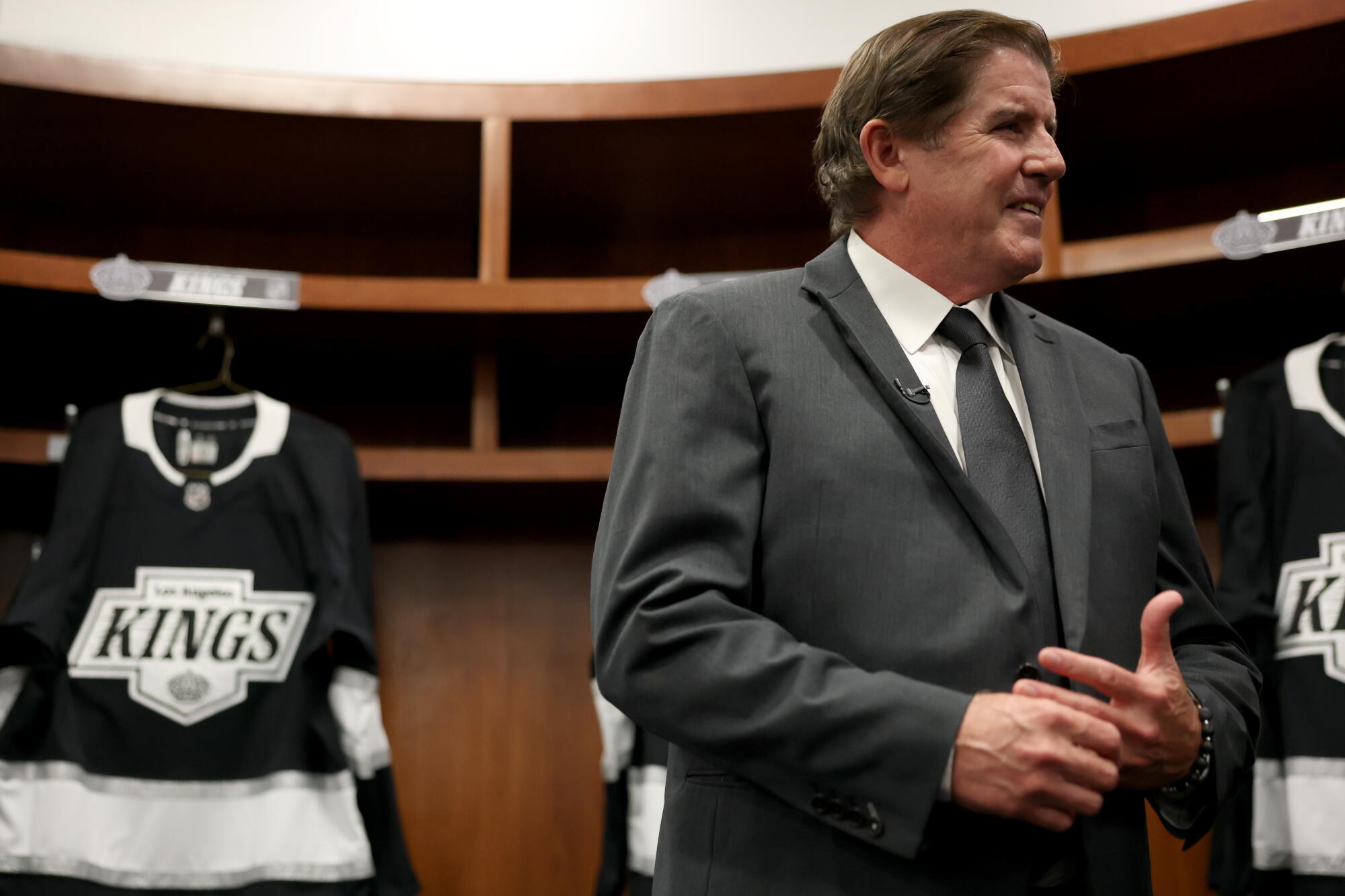
And that won’t be the only difference from last season because Laviolette, the winningest American-born coach in NHL history, has inherited an aging team in transition, one he and his new staff have immediately tried to put their stamp on.
“The coaching changes brought a lot of excitement,” goaltender Darcy Kuemper said. “It’s new drills, new systems, so it kind of makes everyone turn on their brain and challenge themselves, which is fun for guys at this level.”
Not all of the changes are positive, however.
Kings coach Peter Laviolette stands in the team’s locker room at their practice facility in El Segundo in June.
(Eric Thayer / Los Angeles Times)
For the first time in 20 years, the Kings are starting a season without Anze Kopitar, the franchise leader in games, assists and points and a two-time Stanley Cup champion. That has left a big hole on the ice and in the locker room, where Kopitar’s leadership was invaluable.
Also gone are wingers Andrei Kuzmenko and Jeff Malott, who left as free agents, and center Trevor Lewis, who retired. High-scoring winger Kevin Fiala, meanwhile, will miss the first couple of months, at least, after experiencing a setback in his return from a gruesome leg injury sustained at the Milan-Cortina Olympics.
That could hurt Laviolette’s effort to transform the Kings from the defense-first system they’ve been for years into a quicker, more aggressive offensive-style team. The Kings, whose scoring has declined in each of the last four seasons, had just 225 goals in 2025-26, fourth-fewest in the NHL, while the power play converted fewer than 18% of its chances, fifth-lowest in the league.
Two of the key pieces in turning that around will be forwards Adrian Kempe, who led the team in scoring the last three seasons, and Artemi Panarin, who had his best offensive season under Laviolette with the New York Rangers, scoring 49 goals and 120 points in 2023-24. The Kings are also counting on young forwards Quinton Byfield and Alex Laferriere, both 24, to take the next step in their development.
For Laferriere, change has been the main constant in his time in Los Angeles.
Kings right wing Alex Laferriere shoots in front of Philadelphia right wing Travis Konecny on March 19.
(Jessie Alcheh / Associated Press)
“This is going to be my fourth year with my fourth different coach,” said Laferriere, who had career highs in goals (21), points (44) and average TOI (18:18) last season. “It kind of reminds me a little bit of my rookie year. It kind of gives me that fresh slate, just trying to prove myself and try to gain the coach’s belief.”
In the dressing room, the Kings have given Kopitar’s crown to defenseman Drew Doughty, who will take over as captain in his 19th NHL season. At 36, he’s the third-oldest player on one of the NHL’s oldest teams and the last holdover from the 2014 Stanley Cup team.
“I’m not changing anything about myself when it comes to leadership,” he said. “I’ve been a leader on this team for a long, long time and been the loudest voice in the locker room and the guy that people come up to.
“One thing I will change: I always had Kopi as kind of the even-keel guy, where my emotions kind of go up and down. I’m going to be more aware of that and try to keep more of an even-keel.”
Whether a new coach, a new system and a new leader will be enough to get the Kings to the playoffs for a sixth straight season remains to be seen.
Laviolette, a Stanley Cup winner with Carolina two decades ago, has missed the postseason just three times when he’s been behind the bench the whole season. But the makeover he faces with the Kings is shaping up as one of the most challenging of his career, and most of the preseason prognostications have the Kings failing to make the cut.
If Fiala comes back early and healthy and if the team adapts quickly to the change in style, those predictions may prove overly dire. If not, the transition to the Laviolette Era could be more difficult than expected.
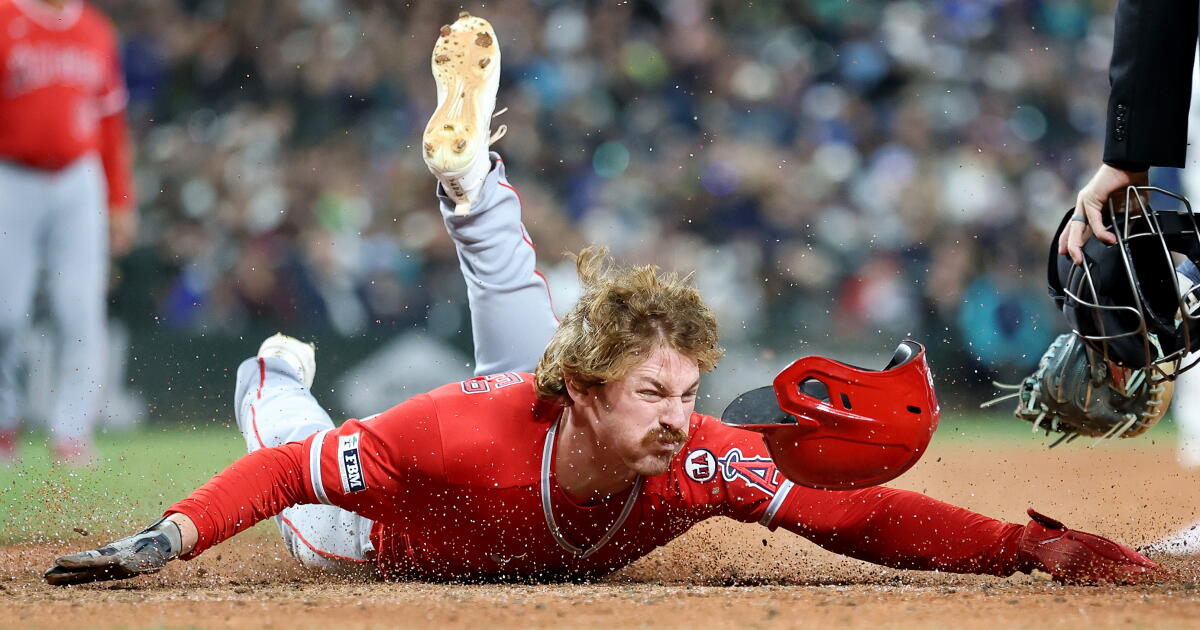
SEATTLE — Taylor Ward put Seattle ahead with a pinch-hit two-run single in the seventh inning, J.P Crawford followed with a two-run homer and the Mariners beat the Angels 8-4 on Saturday night.
Mariners left-hander Kade Anderson threw 3⅓ scoreless innings but left in the fourth after taking a 104-mph line drive to the left arm hit by Christian Moore. Michael Rucker came on in relief. The Mariners (75-86) said Anderson had a left forearm bruise.
Ward, who has struggled since joining the Mariners from Baltimore at the trade deadline, drove in Cole Young and Michael Arroyo with his hit off Angels lefty Mitch Farris (1-4).
Crawford hit Farris’ next pitch into the right field stands.
The Angels (62-99) tied the game with four runs in the sixth. Bryce Teodosio drove in a two-run single off reliever Jose Ferrer, Wade Meckler scored from third on a sacrifice bunt from Tyler Heineman and Jose Siri tied it on a groundout to third base that scored Teodosio.
In the ninth inning, Josh Naylor reached on a walk and stole second base, becoming the first first baseman since George Sisler in 1920-1922 to have consecutive 30-steal seasons.
Gabe Speier pitched a scoreless ninth inning for the Mariners. Carlos Vargas (3-0) got the win.
Up next: Angels left-hander Yusei Kikuchi (1-6, 4.88 ERA) will face Mariners right-hander Logan Gilbert (12-11, 3.81 ERA) in Sunday’s season finale.
It was nearly a half decade ago now that Lincoln Riley, dressed in a slick blue suit and glossy cardinal tie, stood atop the Coliseum’s rooftop deck, grinning as he gazed out across the field below. He’d just been introduced as USC’s new head coach, and in that moment, anything felt possible for the future of Trojan football. Riley, at the time, was one of the most renowned young coaches in college football. And as he surveyed the scene, he painted the picture of a day when the Trojans were back on top and the Coliseum was hallowed ground once again.
But less than five years later, as final seconds ticked away on a 41-27 loss to Oregon on Saturday, fans trudged towards the exits, and that very same stadium sat in hushed disbelief. The Trojans’ season wasn’t over by any means — not after a single loss to No. 20 Oregon — but in that moment, the future that Riley had envisioned felt as far away as ever.
There would still be chances for Riley and his Trojans to make their statement this season. But the stakes on Saturday had arguably never been higher for USC’s coach, who spent all off-season explaining how this season would be different. There were no more excuses, no more explanations for why USC was still falling short — even he seemed to agree to that. Everything he’d been pointing towards in the distance was now here, culminating all at once.
With a gauntlet of a Big Ten schedule ahead, there was no better time for Riley to prove he had USC moving in the right direction and no better matchup to help catapult the Trojans into College Football Playoff conversation than Oregon, its newest — and still maybe most bitter — rival. The whole college football world was watching, waiting to see if USC’s coach could deliver in the most critical of moments.
Instead, the Trojans found themselves in an all-too-familiar, all-too-painful position, one they’d experienced many times before during Riley’s tenure. Mistakes piled up. Ill-timed penalties, too. And worst of all, USC’s defense still couldn’t get a stop. It gave up 505 yards to Oregon, the third-most it had allowed over the past three seasons.
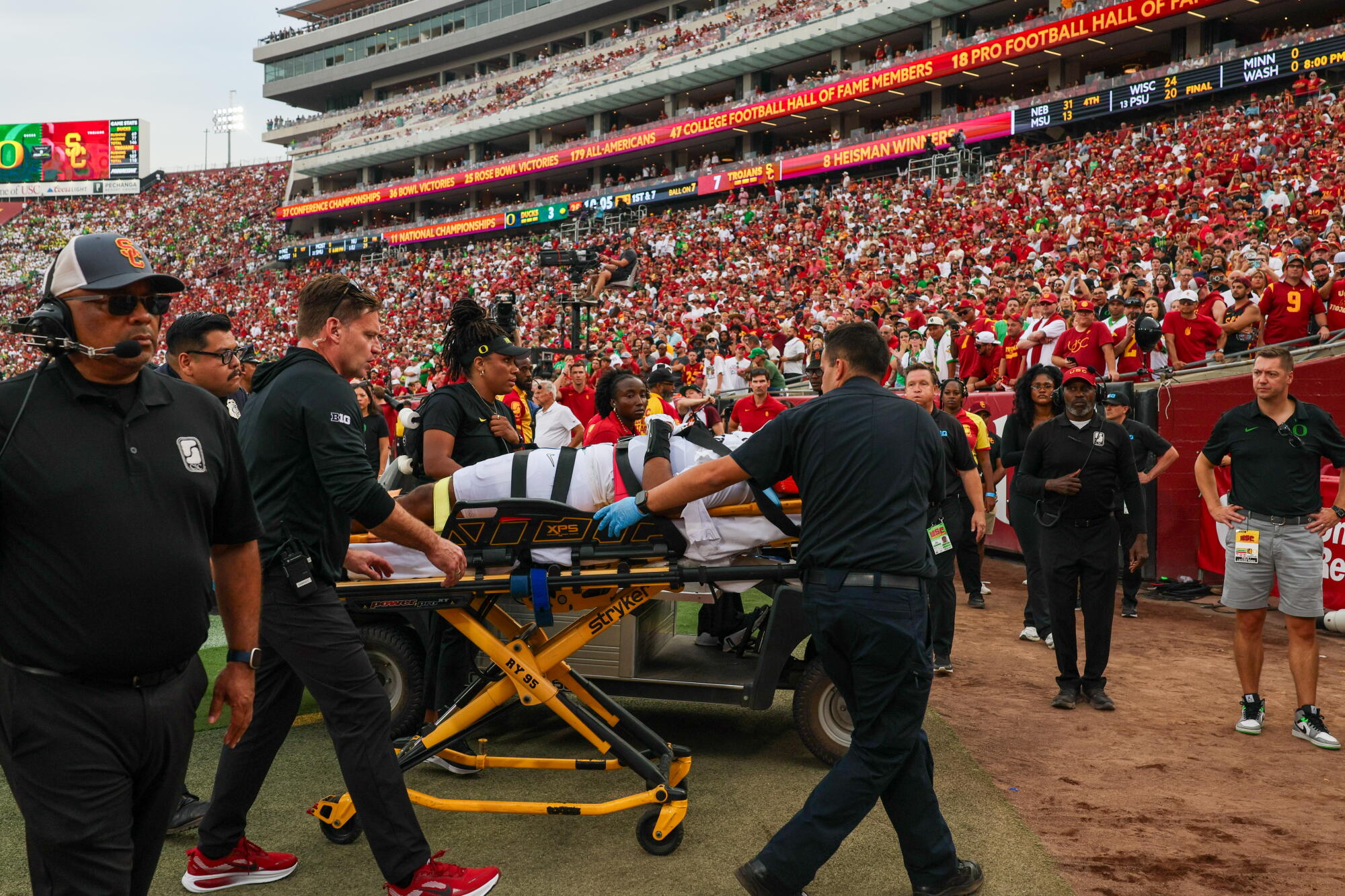
The Ducks would score on six of their last seven drives, almost all of which featured their backup quarterback at the helm. That was after Oregon star quarterback Dante Moore was knocked out of the game early in the second quarter following a brutal hit by USC linebacker Desman Stephens. The hit started a shoving match between players from both teams.
Stephens, who was seen celebrating after the play, was kicked out of the game, but remained on the sideline in the second half.
Oregon quarterback Dante Moore is taken off the field on a stretcher before being transported to the hospital after taking a hit from USC linebacker Desman Stephens in the second quarter. Stephens was ejected from the game.
(Ronaldo Bolanos / Los Angeles Times)
The play would cast a pall over the whole game, but Raiola managed to throw for 289 yards and two touchdowns against USC’s defense. Jayden Maiava, meanwhile, had 326 yards and two touchdowns, but completed just 23 of 42 passes.
The rushing attack wasn’t much better, as the Trojans averaged a mere 3.6 yards per rush.
The afternoon began on a bitter note for USC. After marching down the field on a 13-play opening drive, a third-down sack forced the Trojans to settle for a field-goal attempt. But Caden Chittenden missed an easy kick wide right. It was just the latest in a string of recent special teams slip-ups for the Trojans.
The defense, however, would hold early. Even after Oregon running back Jordon Davison burst out of the backfield for a 45-yard run on the Ducks’ first play. Oregon finished that drive with a field goal, the only points either high-scoring offense managed in the first quarter.
Unable to get anything going on the ground, the Trojans turned to their stud freshman receiver to pace the offense. Five of Maiava’s first seven completions went to Kayden Dixon-Wyatt, one of which came on a 31-yard strike down the seam to the freshman, who reeled in a touchdown in spite of tight coverage.
USC quarterback Jayden Maiava passes during the first quarter against Oregon on Saturday.
(Ronaldo Bolanos / Los Angeles Times)
Oregon was mounting a response when Moore took off on a quarterback scramble. But as he slid, Stephens decked Moore with a direct hit to his helmet, even after he already gave himself up. Moore spent several minutes on the field before being loaded onto a cart and taken to Los Angeles General Medical Center by ambulance.
Raiola, the backup, would take the reins of Oregon’s offense in Moore’s place, leading the Ducks to the doorstep of the goal line. But once again USC’s defense stood tall in the red zone, holding Oregon to a field goal.
It wouldn’t have as much luck in the second half, as Raiola found a rhythm. He led the Ducks on two consecutive touchdown drives in just 11 total plays.
But USC responded with three straight scoring drives of its own, and even added a stop from its defense in between. The third — an 11-yard strike to Tanook Hines — tied the score 27-27 with less than 13 minutes remaining.
USC looked to have Oregon stopped in its tracks on the ensuing possession. Then, on a third-and-long incompletion, defensive tackle Jide Abasiri was flagged for rushing the passer. The penalty gave Oregon just the opening it needed. The Ducks scored five plays later, as Raiola lofted a prayer to the corner of the end zone that was answered by one of his wideouts, Dakorien Moore.
A failed fourth-down attempt for USC would all but end it, as Maiava’s desperation pass was swatted away, along with the Trojans’ hopes.
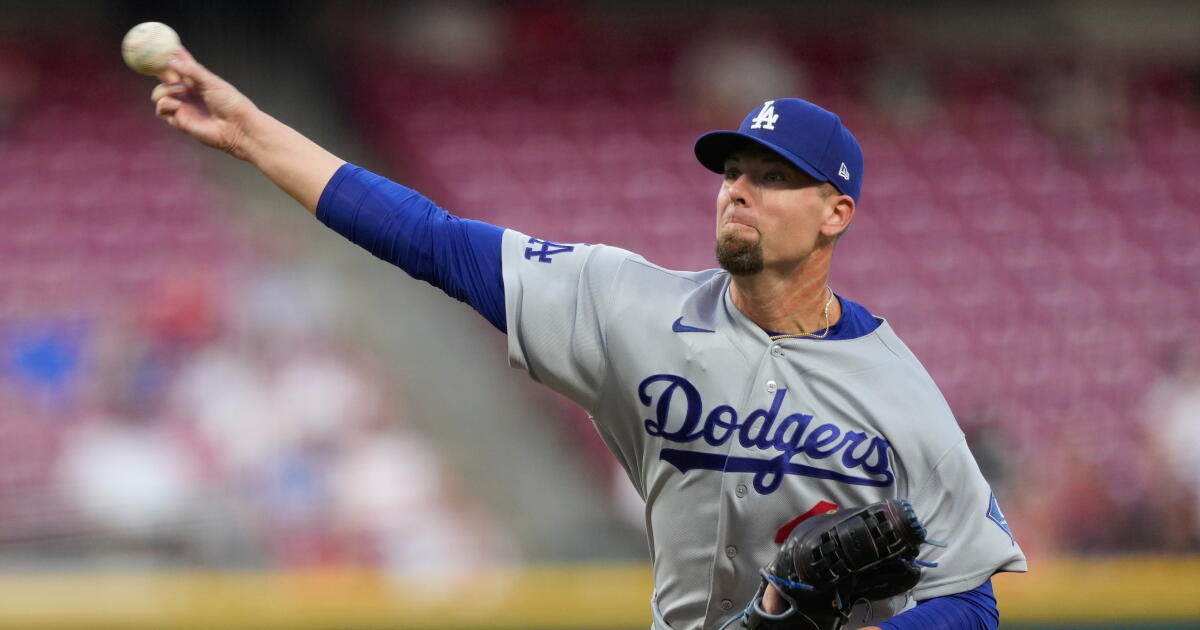
SAN FRANCISCO — Dodgers reliever Blake Treinen is likely out for the postseason, after injuring his right shoulder warming up in the bullpen Saturday.
“I don’t know if it was a complete blowout, but really unfortunate,” manager Dave Roberts said after the Dodgers’ 4-3 win against the San Francisco Giants.
The Dodgers plan to put Treinen on the injured list Sunday, Roberts said. And he’ll undergo imaging to diagnose the injury.
“It just popped up,” Roberts said.
Treinen, 38, is the longest-tenured Dodgers pitcher on the roster. He spent over two months on the IL earlier this season with inflammation in his right elbow. But in 36 appearances this season, he posted a 3.64 ERA.
Treinen has a history of shoulder injuries and underwent right shoulder labrum and rotator cuff repair surgery after the 2022 season.
Hi, and welcome to another edition of Dodgers Dugout. My name is Houston Mitchell. I was reading my Bible, and baseball was mentioned almost immediately. “In the big inning, God created the heavens and the earth.”
Are you a true-blue fan?
Get our Dodgers Dugout newsletter for insights, news and much more.
By continuing, you agree to our Terms of Service, which include arbitration and a class action waiver. You agree that we and our third-party vendors may collect and use your information, including through cookies, pixels and similar technologies, for the purposes set forth in our Privacy Policy such as personalizing your experience and ads.
The postseason awaits
There are still three games left in the season, but let’s jump ahead and talk about the postseason a bit. We will have more in the run-up to the NLDS next week. The good news is the Dodgers have clinched a first-round bye and will open the postseason on Saturday, Oct. 3. The NLDS is best-of-five on a 2-2-1 format, so the Dodgers will host Games 1 and 2, and if necessary, Game 5.
Who will they play? The winner of the series between the No. 3 seed (Atlanta) and the No. 6 seed, which has yet to be determined. There are four teams vying for the three wild-card spots.
Should the Dodgers fear any one team more than the others this postseason? Let’s see how they have fared against all the other potential postseason teams. In fact, let’s see how all the postseason teams have fared against each other.
Dodgers vs. Arizona, 6-7 (-5 run differential) vs. Atlanta, 1-5 (-11) vs. Chicago, 2-4 (+2) vs. Milwaukee, 3-4 (+2) vs. Philadelphia. 4-2 (+11) vs. San Diego, 8-5 (+19) Total, 23-27, (+18)
Arizona vs. Dodgers, 7-5 (+5) vs. Atlanta, 4-3 (-8) vs. Chicago, 2-4 (-11) vs. Milwaukee, 2-4 (-22) vs. Philadelphia. 3-3 (-5) vs. San Diego, 5-5 (+5) Total, 18-19, (+25)
Atlanta vs. Dodgers, 5-1 (+11) vs. Arizona, 3-4 (+8) vs. Chicago, 3-3 (-1) vs. Milwaukee, 3-3 (-5) vs. Philadelphia. 9-4 (+23) vs. San Diego, 3-4 (-7) Total, 26-19 (+29)
Chicago vs. Dodgers, 4-2 (-2) vs. Arizona, 4-2 (+11) vs. Atlanta, 3-3 (+1) vs. Milwaukee, 4-9 (-9) vs. Philadelphia. 6-1 (+22) vs. San Diego, 5-1 (+27) Total, 26-18, (+50)
Milwaukee vs. Dodgers, 4-3 (-2) vs. Arizona, 4-2 (+22) vs. Atlanta, 3-3 (+5) vs. Chicago, 9-4 (+9) vs. Philadelphia, 4-2 (+14) vs. San Diego, 2-4 (-5) Total, 25-18, (+43)
Philadelphia vs. Dodgers, 2-4 (-11) vs. Arizona, 3-3 (+5) vs. Atlanta, 4-9 (-23) vs. Chicago, 1-6 (-22) vs. Milwaukee, 2-4 (-14) vs. San Diego, 6-0 (+11) Total, 18-26, (-54)
San Diego vs. Dodgers, 5-8 (-19) vs. Arizona, 5-5 (-5) vs. Atlanta, 4-3 (+7) vs. Chicago, 1-5 (-27) vs. Milwaukee, 4-2 (+5) vs. Philadelphia, 0-6 (-11) Total, 19-29, (-50)
This serves as a basic guideline for you. We would really have to dig deep to find hidden meanings here, since a lot depends on who started for each team. Philadelphia started the season poorly, fired their manager, named Don Mattingly manager and turned things around. So, when did these teams face the Phillies? I could do that for every team, but I can just hear people closing the newsletter and deleting it if I get too far into the weeds. Just as an example, San Diego is 0-6 against the Phillies, but were outscored by only 11 runs, while the Dodgers have losing records against Chicago and Milwaukee, but outscored both teams. And every Dodger fan from that era can tell you that the Mets were 10-1 against the Dodgers in the regular season in 1988, but lost to them in the playoffs.
But, stuff like this is fun. And remember when stats were sometimes just for fun, and not every stat had to look at launch angles and elevation rates?
The postseason roster?
The final position player spot on the postseason roster will be very interesting. Does it go to Josue De Paula, who hit .323/.500/.581 with three doubles, one triple, one homer and seven RBIs in 42 plate appearances. He also walked an impressive 11 times while striking out only five times.
He is back in the minors now, but the Dodgers can bring him back for the postseason, as long as he is replacing an injured player, such as Dalton Rushing. They would need to petition the Commissioner’s Office to allow it, but that kind of petition has never been denied in the past.
Of course, De Paula is blocked at DH, left field and right field now that Kyle Tucker and Teoscar Hernández are hitting better. But he did seem to bring a shot of energy to the team, as if he reminded them “Hey, this is supposed to be fun.”
Does the final spot go to Rushing? I don’t see how, because he can’t play in the field right now because of his elbow injury.
Does it go to Hyeseong Kim? His name was brought up this week by Dave Roberts, because Kim brings speed, versatility and good defense. He could be this season’s Justin Dean, appearing in almost every game and never hitting.
And the bullpen? If you have Yoshinobu Yamamoto, Tarik Skubal, Tyler Glasnow and Blake Snell in the rotation, that means Roki Sasaki goes to the bullpen. Does Justin Wrobleski get a bullpen spot? What about Emmet Sheehan, who has pitched great in his return (one earned run in 17 innings, giving up six hits and walking three while striking out 24)? Do you need all three of them in the bullpen in anticipation of the inevitable injury to Snell and Glasnow? We’ll know more about Snell when he starts Saturday.
Can Yamamoto pitch in every postseason game?
A lot of questions, no answers yet.
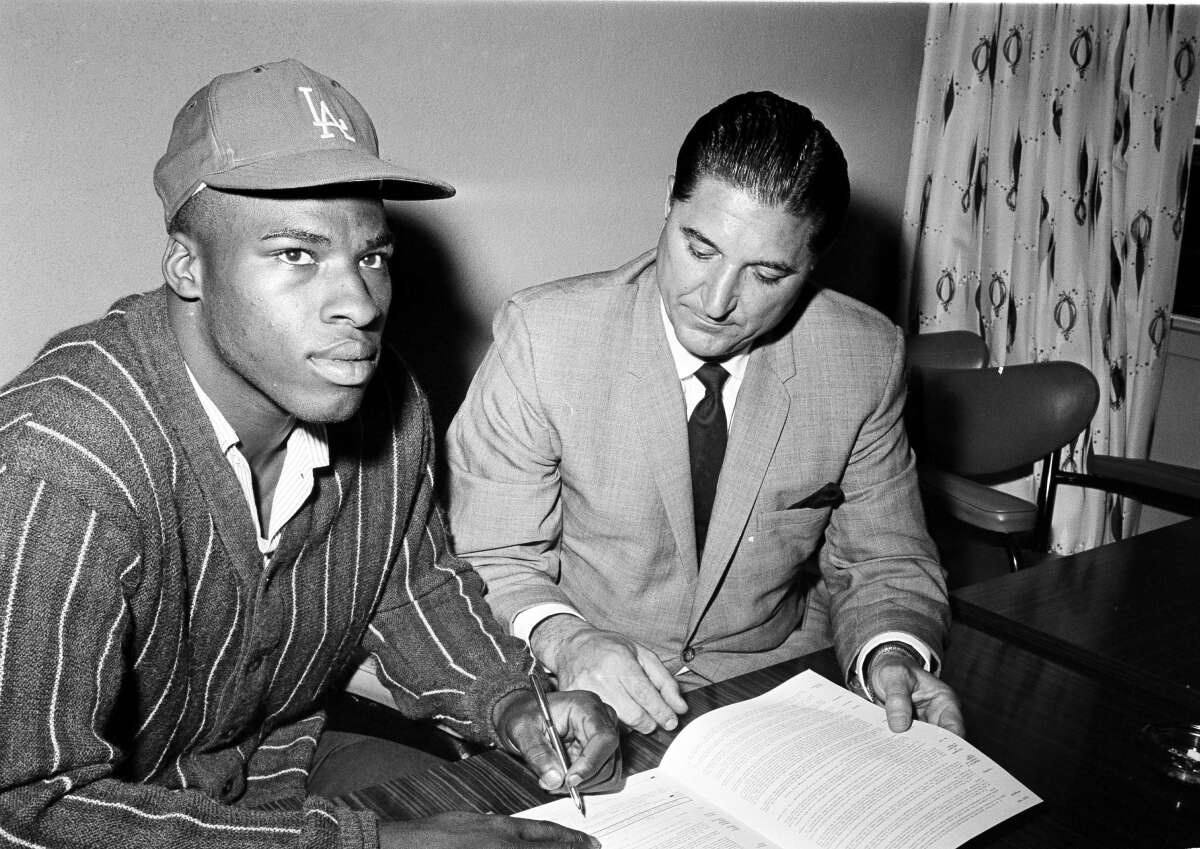
Forgotten Dodger: Willie Crawford
Willie Crawford, 17, who hit .444 for Fremont High, signs a $100,000 deal with the Dodgers in 1964 as Al Campanis watches.
(Associated Press)
We won’t go quite as far back in time for this one as the previous ones.
Willie Crawford is one of those guys who was good at a lot of things but not great at anything, and those types of players tend to be overlooked. But you need players like that every year in order to win.
Crawford first played for L.A. as a 17-year-old in 1964 and had his best season in 1973, when he hit .295/.396/.453 with 14 homers and 66 RBIs. He was solid defensively, playing more shallow than most right fielders to cut down on bloop singles and relying on his speed to catch any balls hit over him.
“He was big and powerful, and he could hit a ball as far as anybody. Boy, was he something,” Tommy Lasorda once said of Crawford, who the Dodgers signed out of Fremont High. Crawford was signed out of high school for $100,000, and the rules at the time said if you signed for at least that much, you had to stay on the major league roster for a season, which hampered his development. In 1965, the 19-year-old Crawford got a World Series ring for being on the Dodgers roster, but he batted only 27 times in the regular season. He had a pinch-hit single in Game 1 of that series.
In his first four seasons as a Dodger, he played in 72 games.
He was a productive player for many years and retired after the 1977 season. Crawford died of kidney disease at age 57 in 2004. You can read more about him here.
The postseason race
Here are the postseason seedings as of Thursday’s games. The three division winners get the top three seeds, followed by the three teams with the best records. The top two division winners get a first-round bye. Milwaukee and the Dodgers have clinched division titles and first-round byes.
Mikwaukee has clinched the No. 1 seed and home-field advantage throughout the postseason. The Dodgers have clinched the No. 2 seed and the Braves the No. 3 seed.
The Padres and Cubs have clinched wild-card spots. If the season ended today, Atlanta would host Philadelphia in one best-of-three wild-card round, with the winner taking on the Dodgers. The Padres would host the Cubs in the other wild-card round, with the winner playing Milwaukee.
In their final three games of the season, the Padres host the Diamondbacks, Philadelphia hosts Tampa Bay and Chicago plays at Boston.
Five of the six teams in the AL have been decided, with Tampa Bay and Cleveland clinching the top two seedings and the first-round bye. The third seed will be the AL West champion, either Texas or Houston (no relation), who are both 79-80. The Astros have the tiebreaker advantage. The three wild-card teams are the Yankees, Boston and the Chicago White Sox, in that order.
The Cat Man is back
Reports of the demise of Tony Gonsolin were greatly exaggerated. He’s back in the majors.
Gonsolin was an All-Star with the Dodgers in 2022, finishing the season 16-1 with a 2.14 ERA. He was having a mediocre 2023 before he was shut down and had Tommy John surgery. After missing the 2024 season, he came back in 2025, made seven starts and had internal brace surgery on his elbow. The Dodgers let him go. He was busy rehabbing his arm for the last year, and finally the Kansas City Royals decided to give him a chance. They sent him to the minors in August, and called him up to the majors this week.
He came in for a relief appearance on Tuesday and, after pitching two scoreless innings, gave up five runs and four hits, with two walks, ending the outing on a sour note.
“Essentially, I’m trying out for next year,” Gonsolin told reporters before the game. “It has been a while since I’ve thrown before this many fans. Just looking forward to the excitement and the adrenaline.”
These names seem familiar
This will be the final time this feature runs this season. It will be back next season. How many names will have joined it then? How notable players who were with the Dodgers the last few seasons are doing with their new teams (through Wednesday). Click on the player’s name to be taken to their full stats page:
Anthony Banda, Twins: 2-0, 4.46 ERA, 2 saves, 34.1 IP, 31 hits, 15 walks, 33 K’s, 95 ERA+, out for the season
Friday: Dodgers (*Tarik Skubal, 11-7, 2.85 ERA [4-2, 2.95 ERA with Dodgers]) at San Francisco (Yunior Marte, 0-1, 4.66 ERA), 7:15 p.m., SportsNet LA, AM 570, KTNQ 1020
Saturday: Dodgers (*Blake Snell, 4-1, 1.86 ERA) at San Francisco (*Matt Wilkinson, 1-3, 3.65 ERA), 7:15 p.m., SportsNet LA, AM 570, KTNQ 1020
Sunday: Dodgers (TBD) at San Francisco (TBD), 12:05 p.m., SportsNet LA, AM 570, KTNQ 1020
Have a comment or something you’d like to see in a future Dodgers newsletter? Email me at houston.mitchell@latimes.com. To get this newsletter in your inbox, click here.
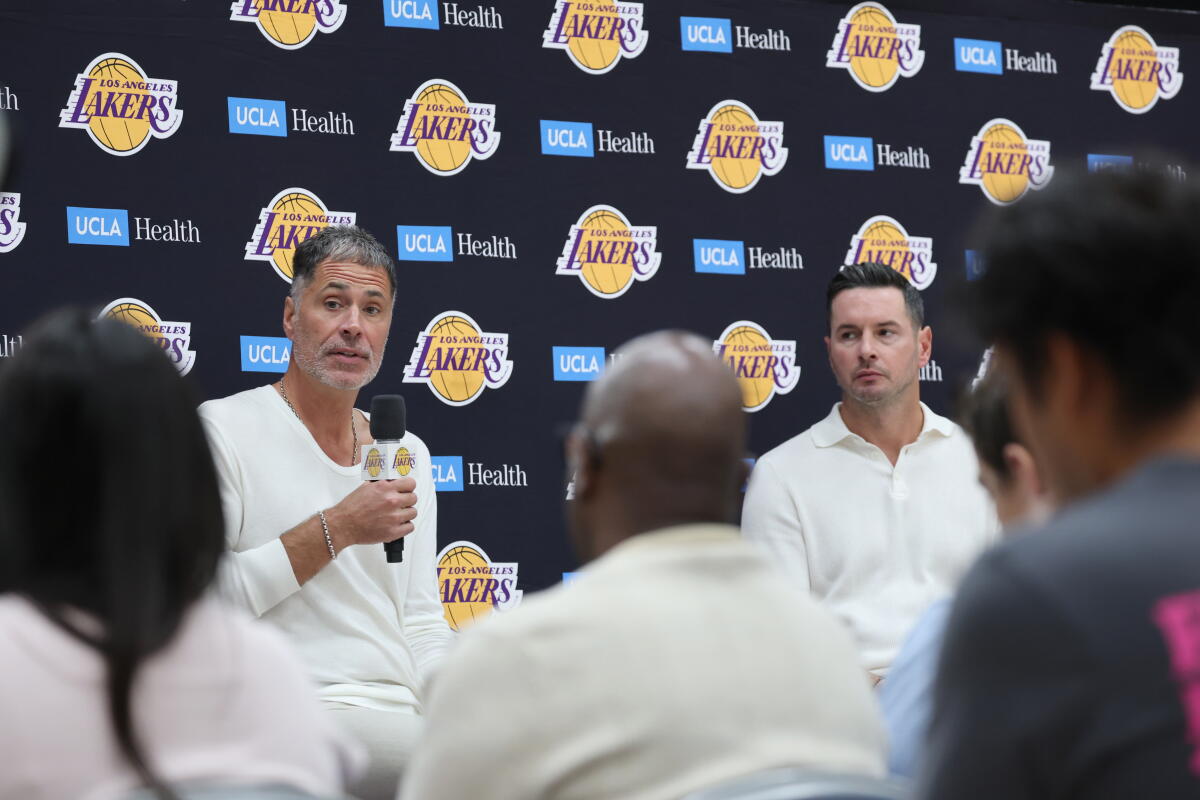
The news conference Thursday began with Lakers president of operations Rob Pelinka saying he wanted to “express gratitude” to LeBron James for the eight years he spent playing for Los Angeles before departing to Philadelphia as a free agent over the summer.
It didn’t take long for Pelinka to pivot into Luka Doncic and Austin Reaves, and how they are now the leaders of the Lakers with James gone.
James informed the Lakers on June 30 that he had plans to play elsewhere, and thus began a new chapter for the Lakers. James, who signed with the 76ers, won an NBA championship with the Lakers in 2020. He led the Lakers to the Western Conference second round of the 2026 playoffs.
Over the course of his 23-year NBA career, James’ longest tenure had been with the Lakers.
And for that, Pelinka was thankful.
“I think before we get into the questions, it’s been a few weeks since I’ve last seen you guys. I thought it would be appropriate at the front to express gratitude for the LeBron era here,” Pelinka said. “Clearly, new team and new players, and that’s what we’re going to talk about today. But we as an organization are still grateful for the run that we had with him here. The Lakers have become — as they should — a perennial playoff team — won a championship, went to the Western Conference finals. It was a great era, and we’re grateful for it. I think it’s important to say that at the onset as we turn into a new chapter.”
Pelinka said he collaborated with Lakers coach JJ Redick to build a team around Doncic, using a three-pronged approach.
They wanted to re-sign Reaves, which the Lakers did at four years and $180 million, the largest contract ever for an undrafted player in NBA history.
They wanted to acquire a top-notch center, which the Lakers did by getting Walker Kessler from the Utah Jazz in a sign-and-trade deal. The Lakers sent two unprotected first-round picks and two first-round pick swaps to the Jazz for Kessler and then signed him to a four-year, $130-million contract.
They wanted to add quality depth, which the Lakers did by getting Quentin Grimes, Jaden Hardy, Collin Sexton, Matisse Thybulle, Ziaire Williams, Sandro Mamukelashvili and Kevon Looney.
Pelinka said this was the “thesis” on how they wanted to build the Lakers for the 2026-27 season.
“And there were three fundamental pillars of what we wanted to accomplish in the offseason: We wanted to retain Austin Reaves. That was a really big thing for us,” Pelinka said. “We wanted to find a way to acquire a franchise center and then we wanted to develop a roster of JJ Redick dribble-pass-shoot players that were younger and add depth to our roster. That was sort of our three-prong thesis basketball-wise for the offseason, and we felt like we accomplished all those things.
“Re-signing Austin, putting together a trade to acquire Walker Kessler, and then building out our team with young players that could dribble-pass-shoot, and have brought the average age of our roster to around 26 or 27, which lines up so perfectly with building a team around Luka Doncic. That’s what we’re here to talk about today, is our offseason and the excitement heading into this year.”
Lakers top executive Rob Pelinka, with reporters in the foreground, addresses the media at the team’s training facility in El Segundo on Thursday.
(Allen J. Schaben / Los Angeles Times)
Pelinka, who held the news conference with Redick by his side, was asked about the new Lakers ownership group of Bob Iger and Joshua Kushner, who purchased the franchise for a record $12.5 billion from Dodgers owner and Guggenheim Partners’ Mark Walter, who owned the Lakers for about a year. The deal hasn’t been finalized but is expected to be approved by the NBA’s Board of Governors.
“We have had introductory meetings with Bob and Josh, and those have been excellent,” Pelinka said. “With a pending transaction, we’re not at liberty to talk more about that under league rules. But we’ve had preliminary discussions with them that have been really, really positive. In terms of day-to-day, nothing’s changed. We’re operating with Lakers excellence.”
The biggest change is James not being with the Lakers.
After the Lakers were eliminated by the Oklahoma City Thunder in May, James expressed interest in re-signing with the team.
Pelinka even said the Lakers wanted James to retire with the franchise.
But that didn’t happen.
“Again, we’re grateful for the LeBron era,” Pelinka said. “I think the communications with him this offseason were held diplomatically, professionally and honestly. I’m so thankful for the partnership that we had that continued up until this summer when a decision was made for him to play for another team. It was done amicably, professionally, gracefully. We looked at the whole thing with gratitude, because it’s been an incredible era for us here.”
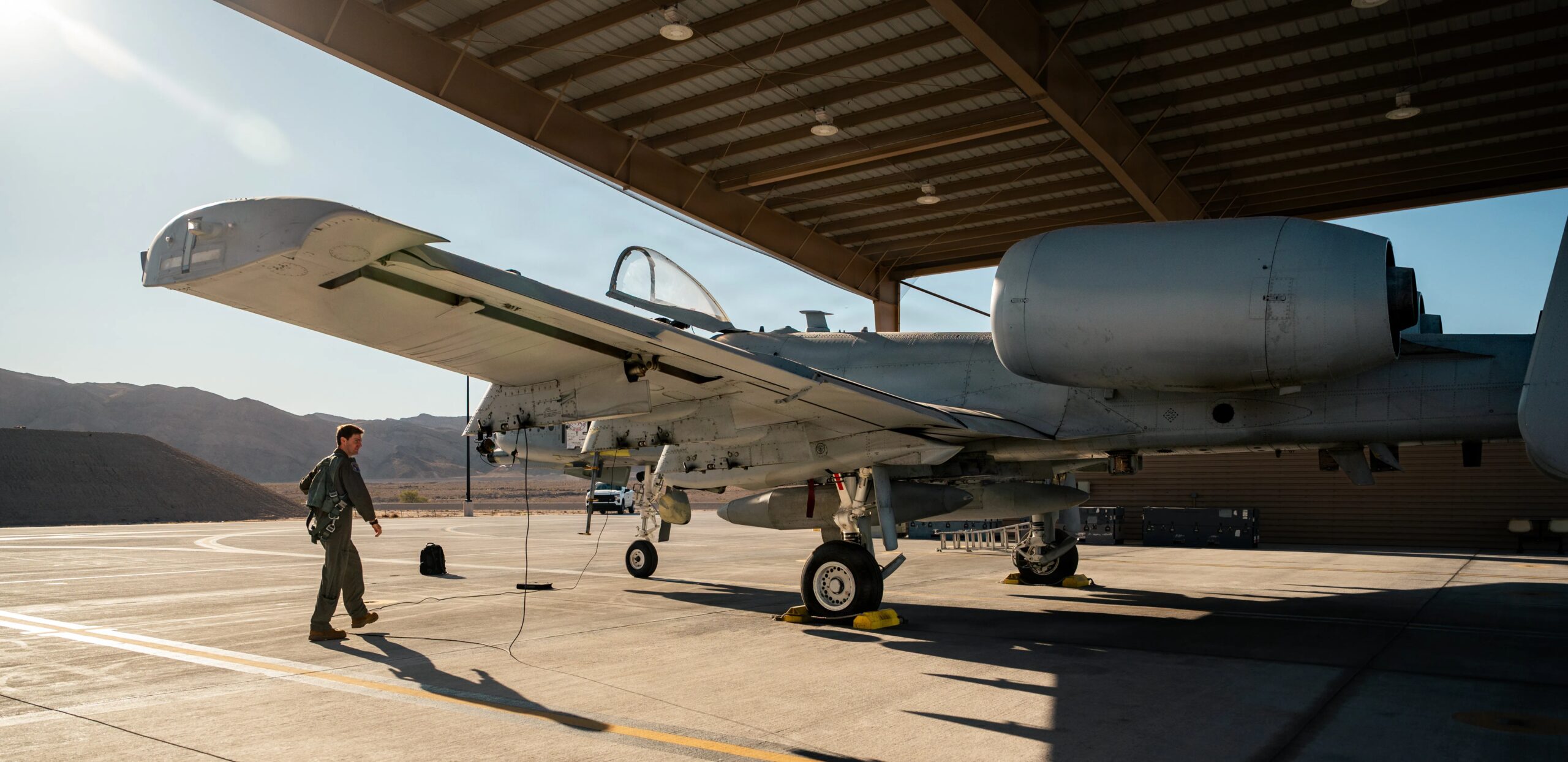
The last A-10 Thunderbolt II assigned to Nellis Air Force Base, Nevada, left the installation on September 22. The departure marks the end of nearly five decades of Warthog operations, including tactics development and testing, at the Air Force’s most high-profile fighter base. It also reflects a broader shift in which close air support expertise and some associated missions are supposedly being distributed among the F-15, F-16, and F-35 communities, although the move is controversial, to say the least.
Nearly 70 airmen assigned to Nellis gathered along the flight line to salute the aircraft as it departed. The final takeoff closes a chapter that began in 1977, when the first A-10 arrived at the base, which subsequently became a major center for developing and refining the aircraft’s operational employment.
U.S. Air Force Maj. Kyle S. Adkinson, a weapons and tactics officer assigned to the Nevada Air National Guard’s 232nd Combat Training Squadron, conducts pre-flight checks on an A-10 Thunderbolt II aircraft at Nellis Air Force Base, Nevada, Sept. 22, 2026. U.S. Air Force photo by Airman Annika Schermerhorn
Over the decades, Nellis-based units worked on the A-10’s software, avionics, and precision weapons capabilities, while the U.S. Air Force Weapons School’s 66th Weapons Squadron trained more than 300 A-10 weapons officers through approximately 100 classes. Many of the tactics in the A-10’s playbook emanated from the base.
The A-10’s departure consequently represents more than the retirement of another aircraft from a Nellis ramp. It also marks the end of a dedicated training and institutional ecosystem that developed around an aircraft specifically designed for close air support.
Earlier this year, Jamie Hunter of TWZ visited the U.S. Air Force A-10 Weapons Instructor Course as it was in the process of closing down, as documented in these exclusive videos:
A-10 Cockpit And Walk-Around Tour With A Warthog Weapons Instructor
The Last Days Of The A-10 Warthog Weapons School
The Air Force is now attempting to carry at least some of that expertise into a force built around multirole fourth- and fifth-generation fighters.
“We are maintaining the culture of the A-10 by involving as many other fighter communities involved in the close air support mission,” Lt. Col. Ridge Flick, commander of the 66th Weapons Squadron, said. “We are also training F-15 Eagle, F-35 Lightning II and F-16 Fighting Falcon pilots to take on some roles we have had in combat search and rescue.”
U.S. Air Force Maj. Kyle S. Adkinson, right, a weapons and tactics officer assigned to the Nevada Air National Guard’s 232nd Combat Training Squadron, salutes Senior Airman Segio Lopez, a crew chief assigned to the 757th Aircraft Maintenance Squadron, before a flight at Nellis Air Force Base, Nevada, Sept. 22, 2026. U.S. Air Force photo by Airman Annika Schermerhorn
The A-10 was developed specifically for close air support, with its design emphasizing survivability at relatively low altitude, weapons employment against ground targets, and the ability to persist in the vicinity of friendly forces. In contrast, the F-16C/D and F-15E/EX were developed primarily as multirole fighters, while the F-35 combines strike, air-to-air, intelligence, surveillance and reconnaissance, and networking capabilities with a low-observable design.
Rather than replacing the A-10 with a single successor, the Air Force is therefore distributing elements of its former mission set across several aircraft and communities. The service insists its close air-support capability is not being reduced as the Warthog fleet retires, but at the very least the transition does represent a significant change in how that capability is generated and employed.
U.S. airmen assigned to Nellis Air Force Base salute an A-10 Thunderbolt II aircraft at Nellis AFB, Nevada, Sept. 22, 2026. U.S. Air Force photo by Airman Annika Schermerhorn
Regardless, the USAF’s claim that the impact of losing the heart of the A-10’s braintrust will not dramatically impact key mission sets in a negative manner has been viewed with extreme skepticism by some. It’s not uncommon for subject matter experts to believe the close air support and ‘Sandy’ aircrew recovery mission braintrust that the Warthog community represents is a far bigger loss than the aircraft itself, and that the USAF is not prepared to preserve this critical expertise, regardless of the service’s stated intentions.
The end of A-10 operations at Nellis also put what may be the final nail in the A-10’s coffin, as reconstituting these operations would be very challenging and costly. All this points to the Warthog being on its final glide path to retirement, once and for all.
You can read all about this controversy in our past special feature linked here.
U.S. Air Force Maj. Kyle S. Adkinson, a weapons and tactics officer assigned to the Nevada Air National Guard’s 232nd Combat Training Squadron, taxis an A-10 Thunderbolt II aircraft at Nellis Air Force Base, Nevada, Sept. 22, 2026. U.S. Air Force photo by Airman Annika Schermerhorn
Beyond the redistribution of Nellis’s A-10 pilots, the transition is also affecting the maintainers who supported the base’s A-10 fleet. Airmen assigned to the 757th Aircraft Maintenance Squadron’s Thunder Aircraft Maintenance Unit are being reassigned to other squadrons and airframes, including the F-35 and F-16. The Air Force is consequently moving not only personnel, but also decades of experience maintaining an aging and structurally demanding aircraft into programs supporting newer fighters.
For Staff Sgt. Eva Kehn, a weapons load crew chief with the 757th AMXS, the end of the A-10 era has an especially personal dimension because of her family’s connection to the aircraft and to aviation.
A U.S. Air Force A-10 Thunderbolt II aircraft takes off from Nellis Air Force Base, Nevada, Sept. 22, 2026. U.S. Air Force photo by Airman Annika Schermerhorn
“Working on the A-10 is meaningful to me because that is something that I share with my grandfather,” Kehn said. “I’m very excited to have that new chapter and bond over that again with my grandfather.”
Kehn is transferring to an F-35 unit at Nellis, where that connection will continue in a different form. Her grandfather is now a civilian F-35 instructor, giving the two an opportunity to remain professionally connected even as the A-10 disappears from the installation.
U.S. airmen assigned to Nellis Air Force Base salute an A-10 Thunderbolt II aircraft at Nellis AFB, Nevada, Sept. 22, 2026. U.S. Air Force photo by Airman Isabella Borrillo
Master Sgt. Aaron Edmonds, an aircraft section chief with the 757th AMXS, is also moving on from the Warthog after spending the past five years maintaining the aircraft. Edmonds previously worked on the F-16 earlier in his career and will now return to the Viper community.
“It’s a bittersweet moment,” Edmonds said. “I enjoyed my time with the A-10, but I’m excited because this departure marks the closing of one chapter and the start of another.”
Edmonds said the experience gained on the A-10 should be carried into the next aircraft rather than left behind with the airframe. “The advice I would give airmen who are transitioning from one airframe to another is to be open-minded, willing to learn and carry on the great work ethic from your previous aircraft over to your new one,” he said.
U.S. Air Force Maj. Kyle S. Adkinson, a weapons and tactics officer assigned to the Nevada Air National Guard’s 232nd Combat Training Squadron, taxis an A-10 Thunderbolt II aircraft at Nellis Air Force Base, Nevada, Sept. 22, 2026. U.S. Air Force photo by Airman Isabella Borrillo
With the A-10 no longer present at Nellis, at least some of the expertise attached to it is being incorporated into a fighter force in which other aircraft types can contribute to the close air support mission in very different ways. An F-35, for example, can use its sensors and networking capabilities to identify and share information about targets and the battlespace, and it can go where other fighters can’t. An F-15 can contribute heavier weapons and longer endurance, among other capabilities, depending on the mission. This is not exactly new, either, as all types of aircraft provided CAS during the Global War on Terror-era, although the masters of exactly how to do it and how to execute the critical airborne forward air control (FAC-A) mission existed in the A-10 community. Still, the resulting force will be considerably different from the one centered on the Warthog, even where the underlying requirement to support troops on the ground remains.
A U.S. Air Force A-10 Thunderbolt II aircraft takes off from Nellis Air Force Base, Nevada, Sept. 22, 2026. U.S. Air Force photo by Airman Isabella Borrillo
The ongoing retirement of the A-10 is bringing a fundamental change in how the Air Force organizes and executes the missions for which the Warthog became synonymous. Nellis will remain an important center for developing those capabilities, even though the aircraft around which that expertise was built is no longer part of the equation.
Alan Roden hit a three-run homer and drove in a career-high four runs, and Dean Kremer yielded one hit over six stellar innings in the Minnesota Twins’ 8-0 victory over the Angels on Sunday.
Josh Bell had three hits and two RBIs for the Twins (73-83), who have won three of five overall after splitting four games at Angel Stadium with two shutout victories. Brooks Lee added three hits and scored three runs.
Roden had three hits in his first major league game this month, punctuated by a shot to right in the seventh for his third career homer, his first since Aug. 6, 2025.
Kremer (3-1) shut down the Angels in the third consecutive strong start by Minnesota’s deadline acquisition. He walked three, but struck out eight for his most in a start since April.
Minnesota allowed just two singles by the Angels, with Bailey Ober pitching the final three innings to earn his first career save.
Ryan Johnson (5-9) yielded three runs on seven hits and couldn’t get out of the fifth inning despite striking out six for the AL-worst Angels (60-96) in the home finale of their 11th consecutive losing season and their 12th straight non-playoff campaign, both the longest active streaks in the majors.
Bell and Roden singled in runs with two outs in the third, and Bell added another two-out RBI single in the fifth to chase Johnson.
Emmanuel Rodriguez got credit for a double in the sixth even though Jose Siri dropped his catchable fly ball to the warning track in center. Rodriguez beat Siri’s throw to score on a single by Ben Ross, who then stole second and scored when Zach Neto let the throw trickle into center.
Up next for the Angels: Yusei Kikuchi (1-6, 5.02 ERA) makes the 13th start of his injury-plagued season in West Sacramento against the Athletics on Tuesday night.
Hi, and welcome to another edition of Dodgers Dugout. My name is Houston Mitchell. Thirteen division titles in 14 seasons, and in the year they didn’t win, they had 106 victories. We don’t have a lot to complain about.
Are you a true-blue fan?
Get our Dodgers Dugout newsletter for insights, news and much more.
By continuing, you agree to our Terms of Service, which include arbitration and a class action waiver. You agree that we and our third-party vendors may collect and use your information, including through cookies, pixels and similar technologies, for the purposes set forth in our Privacy Policy such as personalizing your experience and ads.
Division titles and Ryan Ward
—The Dodgers won the division title again, clinching it Thursday with their win over the Reds. Remember the olden days of yesteryear when winning the division was a huge deal? Now it is blasé. Dodgers fans live in a time where they have an embarrassment of riches,
Let’s look at how many NL West titles each team has won since divisional play began in 1969:
Dodgers, 24 San Francisco, 9 Cincinnati, 7 Arizona, 5 Atlanta, 5 San Diego, 5 Houston, 2
There was no official winner in 1994, which was ended by a labor dispute.
I guess I’m feeling extra nostalgic today, but I remember growing up the Dodgers’ biggest divisional rival was the Cincinnati Reds, who moved to the Central division in 1994 and have since won a grand total of zero division titles.
If we narrow NL West titles since 2000, we get:
Dodgers, 16 San Francisco, 5 Arizona, 4 San Diego, 2
Poor Colorado.
—The Dodgers made room for pitcher Kris Bubic on the 40-man roster by designating outfielder Ryan Ward for assignment. Ward has been a favorite of newsletter readers for a couple of seasons now, but he really had no place on the team anymore. He’s too old (28) to really be a prospect and his best triple-A season came in his third season at that level. His numbers declined in triple-A this season (you can see his numbers here).
He’s not great defensively, and the team already has corner outfielders who aren’t great defensively. They passed him over for Josue De Paula when they needed someone to fill in for Shohei Ohtani, and there are several outfielders in the system who are considered better than Ward.
In all likelihood, another team will pick him up and give him more playing time in the majors, something he wasn’t going to get with the Dodgers. Hopefully we see him next season in the “There names seem familiar” section of this newsletter.
Evidence of Dave Roberts’ growth
One of the knocks on Dave Roberts has always been his poor postseason managing. But his postseason managing has dramatically improved the last few seasons, and I’m not just saying that because they won the last two World Series. His decisions appear to not always be guided by analytics, like they are during the regular season. And it appears Roberts has indeed learned some things during his tenure. He recently appeared on the 6-1-1 podcast, hosted by former major leaguers Ryan Howard and Jimmy Rollins, and had this to say:
“When you’re talking about winning 11 games in October, I couldn’t believe more that it’s about people, and players you can bet on,” Roberts said. “The heartbeat that the analytics doesn’t line up with. I think that early on, my mistake was I continued to use that same method of the regular season in the postseason….
He also had high praise for two of his players.
“Mookie has said to me, ‘Doc, we wouldn’t have won the World Series if it wasn’t for Shohei and Yamamoto. And his point was, the discipline that they had every single day, how they worked with intention every single day … it raised the level even higher for our guys.”
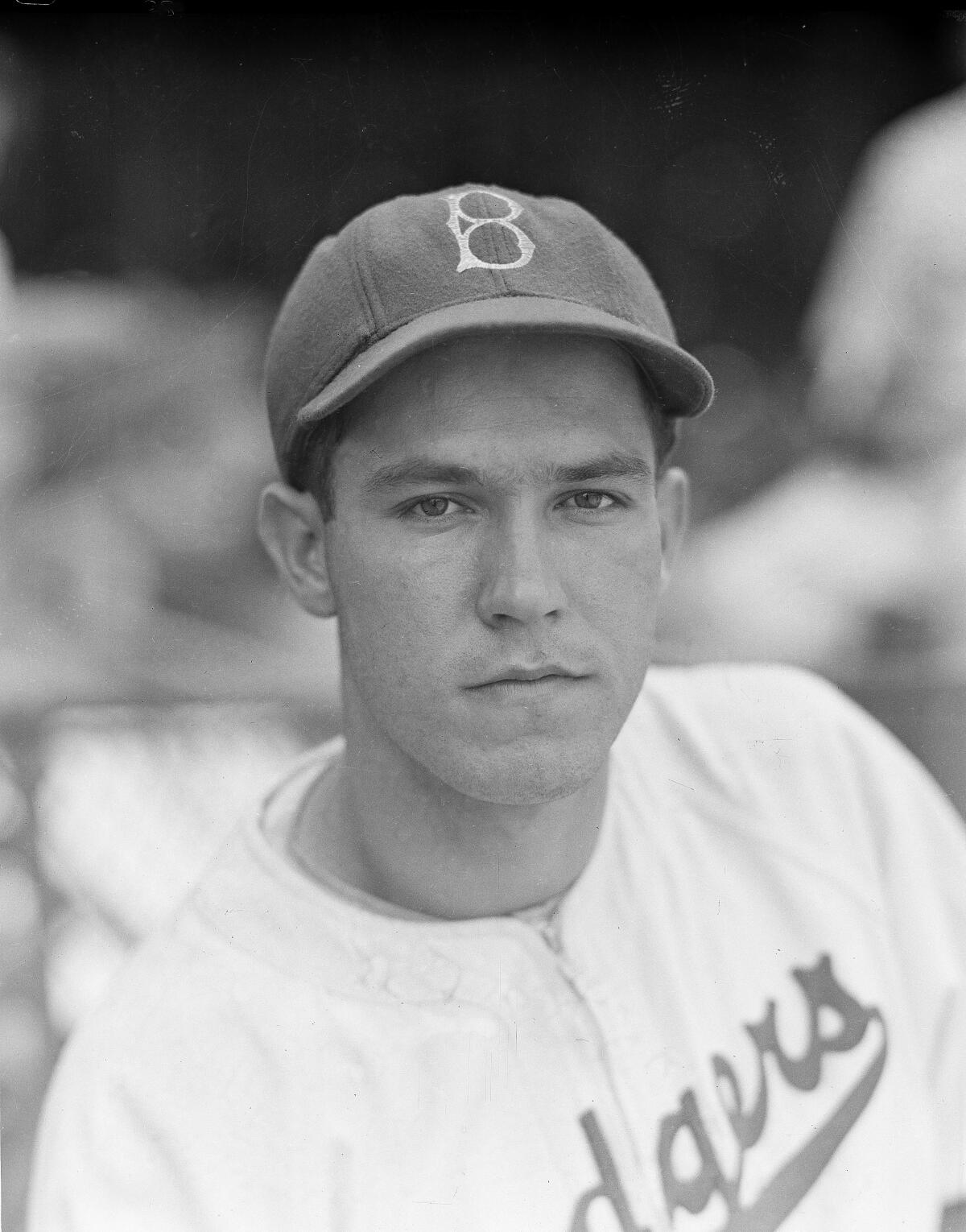
Forgotten Dodger: Pete Reiser
Pete Reiser in 1941.
(Associated Press)
Pete Reiser never met an outfield fence he didn’t like crashing into and it may have cost him a Hall of Fame career.
Harold Patrick Reiser was born on March 17, 1919, in St. Louis. He loved westerns and as a child often walked around wearing a cowboy hat and carrying toy guns, so people started calling him Pistol Pete, which stuck with him throughout his baseball career.
After playing in 58 games with the Dodgers in 1940, Reiser came into his own in 1941 when he hit a league-leading .343 to go with 117 runs, 39 doubles, 17 triples, 14 homers and 76 RBIs. He also played great defense in center. That got him second place in NL MVP voting behind teammate Dolph Camilli (Reiser should have won). Reiser led the league in nine categories.
He followed that by hitting .310 with 33 doubles and 10 homers in 1942, leading the league with 20 steals and making his second straight All-Star team. However, on July 18 of that year, he crashed full speed into the center-field fence, which was made of concrete, while chasing a fly ball. He ended up with a separated shoulder and fractured skull. In those days though, you didn’t let little things like a fractured skull slow you down. He returned to the lineup a week later, but he wasn’t the same. He hit .244 the rest of the season.
He then enlisted in the Army and spent three years there. In 1944, after a long march in below-zero weather, Reiser was diagnosed with pneumonia. The Army decided to put him in Fort Riley, Kan., so he could play for the camp’s baseball team. With Reiser on the team, they were virtually unbeatable and Reiser was given his own room and excused from all other duties.
Reiser returned to the majors in 1946 and broke his leg while stealing second. He crashed into the fence in St. Louis and missed some time. But he still led the league with 34 steals, though his batting average dropped to .277.
In 1947, he was chasing another fly ball when he crashed into the wall face first. This caused another fractured skull. He was given the Last Rites by a priest in the hospital before making a miraculous recovery. He ended up playing 110 games that season.
He was a bench player the following season, as he had put on a little weight and had been slowed tremendously by his numerous injuries. The Dodgers traded him to the Boston Braves after the season for Nanny Fernandez and Mike McCormick.
By unofficial count, Reiser’s injuries over the years included four fracture skulls, multiple dislocated shoulders, two broken ankles, torn ligaments in both knees and and two beanings. He was carried off the field on a stretcher eleven times—five times when he was unconscious.
He retired after the 1952 season and came back to the Dodger organization as a roving minor-league hitting instructor. He joined Walter Alston’s coaching staff in L.A. in 1960 and helped tutor Maury Wills on how to steal bases. In an interview with this newsletter a few years ago, Wills made sure to give praise to Reiser as being a big part of his 104-steal season.
Reiser had a heart attack in 1965, went on to coach for other teams. He smoked a pack of cigarettes a day throughout his adult life and died of emphysema in Palm Springs in 1981. He was only 62.
The postseason race
Here are the postseason seedings as of Thursday’s games. The three division winners get the top three seeds, followed by the three teams with the best records. The top two division winners get a first-round bye. Milwaukee and the Dodgers have clinched division titles.
Remember, there are no extra games to break ties anymore. It all comes down to tiebreakers. Atlanta and Milwaukee have the tiebreaker over the Dodgers. For the wild card, the Cubs have the advantage over the Phillies, having won six of seven games against each other. The Diamondbacks and Padres have split 10 games, but their final three games this season are against each other, so that very well could determine the final wild-card spot.
These names seem familiar
How notable players who were with the Dodgers the last couple of seasons are doing with their new teams (through Wednesday). Click on the player’s name to be taken to their full stats page:
Anthony Banda, Twins: 2-0, 4.46 ERA, 2 saves, 34.1 IP, 31 hits, 15 walks, 33 K’s, 95 ERA+, out for the season
Have a comment or something you’d like to see in a future Dodgers newsletter? Email me at houston.mitchell@latimes.com. To get this newsletter in your inbox, click here.
Iraola’s preference is to name the team on the morning of the game and he saves the post-match debrief with his players for the day after the match.
There is a sense of pragmatism with his media interactions, too, after a situation where his comments to LFC TV following a pre-season friendly against Monaco were widely reported.
Iraola conceded Liverpool had run out of steam after 30 minutes and did not have the energy levels at the time to play with the intensity that he wants. It wasn’t meant to be a dig at his players – rather an admittance that they were working on building that intensity up.
But there is a realisation that at a club like Liverpool, every word you say can end up shared across social media and taken in a different way than you meant. That said, Iraola comes across as calm in his news conferences and open to discussion.
It is very much a case of Iraola adapting to the club as much as the other way round.
One of the main reasons they went for Iraola was his ability to develop young talent and the average age of Liverpool‘s players in the Premier League this season is 25.3 – only five teams have a lower average.
Youngsters like Rio Ngumoha, 18, Trey Nyoni, 19, and Koumas, 20, all started against Tottenham in the Carabao Cup and all three will play bigger roles this season than last.
Intensity is a buzzword under Iraola and that is a non-negotiable but he is already aware that, with such a brutal schedule, Liverpool will need to find ways to adapt and occasionally win games with a set-piece or an individual moment of brilliance.
Going into this weekend, they have made the most sprints in the Premier League but looked flat against Fulham last weekend in a goalless draw, less than 72 hours after beating Atletico Madrid in the Champions League.
Sunday’s game against Bournemouth will be a fourth in 12 days and, after the international break, Liverpool have a spell of four games in 10 days. Between 11 October and 7 November, they will play nine times.
Iraola would no doubt have had a smile seeing Bournemouth win on their Europa League bow against Real Sociedad on Thursday, in the Basque region where he grew up.
Perhaps he will have a moment on the flight down from Liverpool on Saturday to think about how far he has come.
Liverpool haven’t exactly had a dream start under Iraola but they are yet to lose. Becoming a team that is hard to beat is undoubtedly a step in the right direction after 12 league losses last term, but as vice-captain Alisson said last week, draws aren’t good enough for Liverpool.
And Iraola, who is unbeaten in the Premier League since January across his two clubs, knows that a win on familiar territory on Sunday would be the perfect way to head into the international break.
Chelsea announce that Clearlake will acquire the stakes of Todd Boehly and director Mark Walter.
Published On 17 Sep 202617 Sep 2026
Xabi Alonso said Chelsea’s ambition was “very clear” after Clearlake Capital took full control of the Premier League club, ending Todd Boehly’s chairmanship.
Chelsea announced late on Wednesday that Clearlake, led by co-founders Behdad Eghbali and Jose E Feliciano, would acquire the stakes of Boehly and director Mark Walter.
US billionaires Boehly and Walter partnered with Clearlake to buy the London club from Roman Abramovich in May 2022 in a sale mandated by the British government.
Prior to the new deal, private equity company Clearlake had owned 61.5 percent of the club, with Boehly and Walter carving up the remaining shares with another investor, Swiss billionaire Hansjorg Wyss.
Chelsea said Wyss would “remain an important stakeholder and partner in the ownership group”.
Boehly and Walter are among the co-owners of the Los Angeles Dodgers baseball team, while Walter recently sold the Los Angeles Lakers basketball franchise for $12.5bn.
The Financial Times reported that the pair were set to receive 950 million pounds ($1.27bn) for their combined stakes in Chelsea, in a deal that values the club at about five billion pounds, including debt.
In a new statement on Thursday, Chelsea said: “Our ambition is clear: to compete at the highest level, to win major trophies, and to build sustained success”.
Blues boss Alonso, who started at Chelsea on July 1 , told reporters that the change was “an important day for the club”.
“Thanks to the former owners for what they’ve done. I was not here, but I know they played an important role,” he said on the eve of Chelsea’s Premier League match at Brentford on Friday.
“And now that Behdad is taking more control, almost full control, I think it’s good that the main one is clear.
“I have very good relations with Behdad. He was the one that came to Madrid to explain to me the project, to convince me and we are working well together.”
“We know where we want to be, we know that everything takes time, but the ambition for that is very clear,” the Spaniard added.
Since the takeover in 2022, Chelsea’s highest Premier League finish is fourth in 2024/25, when the club won the UEFA Conference League and FIFA Club World Cup.
Former Real Madrid and Bayer Leverkusen coach Alonso has a brief to revitalise the underachieving Chelsea squad, which finished a dismal 10th in the Premier League last season.
The Blues have made a mixed start to the new campaign, taking seven points from their four Premier League games to sit sixth in the table.
Boehly and Walter have also sold their stakes in Chelsea’s partner club, French Ligue 1 side Strasbourg, giving full control to Clearlake.
Brian Wolfe, a standout pitcher at Servite who played three seasons with the Toronto Blue Jays, has died at age 45, his wife shared Tuesday on Facebook.
“I’m am sorry to write this but after a really really difficult and torturous battle Brian Wolfe passed away early this morning,” Rachell Wolfe wrote.
No other details have been provided.
Wolfe was one of Orange County’s most dominant high school pitchers during the late 1990s. After going 8-0 with an ERA of 0.27 as a sophomore in 1997, he was the Friars’ ace the next two seasons.
Honored both years as a member of The Times’ All-Orange County team, Wolfe went 11-2 with a 1.37 ERA and a county-best 139 strikeouts as a junior and was 12-0 with a 1.30 ERA and nearly 100 strikeouts as a senior.
After committing to Cal State Fullerton in the fall of 1998, Wolfe opted to sign with the Minnesota Twins organization after being drafted in the sixth round (179th overall) the following summer. He spent the next several years working his way up through the minor leagues with the Twins, Milwaukee Brewers and Blue Jays before making his major league debut with Toronto as a relief pitcher in 2007.
Wolfe appeared in 72 games over three seasons with the Blue Jays, compiling a 5-5 record and a 3.81 ERA in 82.2 innings pitched. He became a free agent after the 2009 season and spent the next nine years playing in Japan with Nippon Professional Baseball, playing for the Hokkaido Nippon-Ham Fighters (including the 2013 season as teammates with Shohei Ohtani), Fukuoka SoftBank Hawks (winning the Japan League title in 2014 and 2015) and Saitama Seibu Lions.
Former MLB outfielder Brandon Barnes posted a tribute to Wolfe on Wednesday, calling his fellow Orange County native “one of my best friends and a mentor.”
Hi, and welcome to another edition of Dodgers Dugout. My name is Houston Mitchell. There are only 13 games remaining in the regular season. Time flies when you are having fun.
Are you a true-blue fan?
Get our Dodgers Dugout newsletter for insights, news and much more.
By continuing, you agree to our Terms of Service, which include arbitration and a class action waiver. You agree that we and our third-party vendors may collect and use your information, including through cookies, pixels and similar technologies, for the purposes set forth in our Privacy Policy such as personalizing your experience and ads.
A different opinion
Throughout the season, I like to occasionally reach out to others to see what they think of the Dodgers so the readers are not exposed to just my viewpoint. This time I reached out to two of my favorite sports people.
I have listened to sports talk radio for about 50 years. Bud Furillo, Superfan, Rick Talley, Joe McDonnell, Steve Edwards, Fred Wallin, Steve Somers and many, many others. For me, “The Mason and Ireland Show,” hosted by Steve Mason and John Ireland and currently on ESPN Radio, surpasses them all. They can talk knowledgeably about any of our local teams, and the Dodgers are no exception. They were kind enough to answer a few questions.
Q. With the postseason rapidly approaching, how would you assess the Dodgers’ season so far?
Ireland: Surprising, in this sense: the Dodgers are heavy favorites to win it all, but they rarely beat good teams. Since the All Star break, they are 6-16 against teams with winning records. That’s obviously not good, and doesn’t bode well for the postseason. But having said that, for the Dodgers, the regular season is basically a dress rehearsal for the playoffs. I’m not sure they’re motivated until October. Maybe they’ll “flip a switch” and turn it on when it counts. We’ll see.
Mason: The Dodgers seem to be in a good groove right now. Mookie is starting to look like Mookie. Teo has come around. But hard to judge this team without a healthy Andy Pages and with Ohtani on the IL. I worry that as an organization, they didn’t get Shohei off his feet sooner. He has wrestled with injury for the last couple of months, and his biggest at bats are coming in October. They still have a chance to win 100 games, and they’re in position to three-peat, but with the playoffs, it’s a crapshoot. It’s a historically good rotation, but will those bats be clicking at the right time?
Q. The Dodgers have won two World Series in a row. Winning a third would be great, but if they don’t, does winning two in a row make up for it?
Ireland: Absolutely. Let’s face it, most teams want to be the Dodgers. A seemingly unlimited payroll, best manager in baseball, best front office. It’s incredibly hard to win two World Series in a row, and almost impossible to win three straight. No National League team has ever done it. So if they pull it off, it’s icing on the cake. But the cake has been great.
Mason: When the Yankees clinched their three-peat in 2000, they only won 87 games and lost 15 of their final 18. That shows you how hard it is. Honestly, the odds are strongly stacked against anybody winning three in a row, but if they fail, it is not a waste of a season. When you go back-to-back, you’ve got to show a lot of gratitude to the organization and to those players. A lot has to go right to win it all.
Q. Do you think Shohei Ohtani should just stop pitching altogether and focus on hitting the rest of his career?
Ireland: Selfishly, I hope he does both. That’s what makes him the best baseball player I’ve ever seen in person. But it’s obviously hard, and he’s had to shut down pitching at least three times since he came over from Japan. This year, it seemed to me that he was going for the Cy Young Award, while trying to keep up his offensive numbers, and it didn’t work. So maybe they do just let him hit moving forward, but I hope not. One thing that complicates things is that at least so far, the Dodgers have let Shohei do what he wants. And my sense is that he wants to continue to pitch and hit, so that figures into this too. It may not be a Dodgers decision — it might be Shohei.
Mason: I really want Shohei to do both, but in a specific way. He’s never going to give you 25 starts, and as good as he is, I cannot imagine him winning the Cy Young. He started 14 games to start the season this year — I say, instead, put those 14 starts at the end of the season. Ramp him up after the All-Star break, and have him ready to contribute on the mound in October. I was there for the magical night in the playoffs last year, when he hit three home runs and struck out 10. As a baseball fan, I really want to see him do both.
Q. If you were put in charge of the Dodgers and could make three immediate changes to the organization, be it on field, the stadium, whatever, what would you choose?
Ireland: For starters, I would address affordability. Most Dodgers fans have been priced out. They lead the league in attendance every year, so they have a business model that works. But I would take two or three sections in the upper deck and make those $5 tickets. They can afford it, and I think the gesture alone would score major points with fans.
On the field, they need to get younger. Freddie Freeman is 36, and so is Max Muncy. Mookie Betts, Teoscar Hernández, and Blake Snell are all 33. Andrew Friedman has been great at roster building, so they have the right guy. But it isn’t easy to say goodbye to great players as they age out, and he’s facing that now.
Finally, everybody I know thinks there’s a lockout coming. To me, that would ruin all of the progress baseball has made over the last five years. The game has never been better. All of the rule changes have worked, and the pitch clock has been brilliant. Most people feel the Dodgers are the main reason for the lockout. They outspend everybody, have a sweetheart TV deal, and most small market teams can’t keep up. The Dodgers need to lead the charge to avoid this lockout. I’m against a salary cap, but everything should be on the table. I would lock both sides in a room and tell them not to come out until they have a deal. It’s a huge story that we probably don’t talk about enough.
Mason: First I would expand the number of retired jerseys. It would be great to see guys like Maury Wills, Steve Garvey, Bill Russell, Davey Lopes, Orel Hershiser and other Dodger greats receive that honor.
Andrew Friedman is a genius, but he has overspent on guys like Kyle Tucker and Edwin Díaz. I’d like to see them consider more of their minor league talent employed. Love that Rushing and Freeland have had strong moments this year, but instead of signing Tucker, why not find a way to use De Paula or Tibbs or Sirota. I know they are unproven, but once upon a time, so was Andy Pages.
Pet peeve of mind, but I don’t like the brand of Dodger Dogs being served. Farmer John hot dogs had a better taste and texture than the ones they are using now. Plus, Dodger Dogs are much better when grilled, so why are there so many boiled hot dogs at the stadium?
Q. Favorite Dodger of all time?
Ireland: Can I say Vin Scully, or is that cheating? I say all the time that I grew up going to Sportscasters School, but I just didn’t know it. For years, I listened to Vin call the Dodgers, Chick Hearn call the Lakers, Dick Enberg call the Angels and Bob Miller call the Kings. FOUR Hall of Fame announcers — I didn’t know what a bad announcer sounded like until I moved out of L.A. But I had this exchange with my Dad before he died in 2017:
Dad: “If you want to be a sports announcer, you better study more than just the sports page.”
Me: “Not necessary — I just need to call the games.”
Dad: “Listen to Vin Scully — he talks about EVERYTHING.”
Of course, my Dad was right. Listening to Vin was a history lesson every time he did a game. I learned more from him than I did from a lot of my professors at UCLA.
Mason: Back in the day, I would have said Sandy Koufax, who I had the pleasure of meeting at Dodgertown in Vero Beach, but nobody, in the history of the game has awed me the way that Shohei Ohtani has. His performance in NLCS Game 4 last year is the greatest I have ever witnessed in person. Better than any athlete in any sport. I have been a baseball fan all my life, and I could never have even imagined that was possible. I also love Ohtani’s Harada chart, basically his goals in life and career. One of his goals has been to “be someone people root for.” Hard to find anybody who is not amazed by both his talent and his humility.
Q. I have long said that the Mason and Ireland show is the best sports talk show of all time. Do you guys remember when you first met? First impressions? And remind the readers where they can listen to you now.
Ireland: Mason and I were kind of a weird shotgun wedding in the beginning. In the early ‘90s, he moved to XTRA in San Diego from Toledo, Ohio, to do mornings. After a few months, the station decided they didn’t like him. So they moved him to nights in an effort to try and get him to quit.
I was a TV guy in San Diego, who filled in on the radio station when they needed somebody. They called me and said, “We’re going to put you on at night with Steve Mason, but he’s not happy with us. Anything could happen.” On the first night, I walked in and Mason was working on a screenplay on his computer and he told me, “Just have fun and say anything you want — I won’t be here for long anyway.” So we just started goofing around, and I asked Mase on the air why he thought mornings didn’t work. He started making fun of himself, then me, and we just clicked.
After it was over, I called the program director and said, “You guys are idiots — Mason is fantastic. If you can’t build a show around him, you don’t get it.” The more Mason stopped caring, the better he got. They came back to him and said, “That’s the guy we thought we were getting from Ohio.” They told him they wanted him to stay, and told him he could pick his partner. He picked me, and we were off and running. The first week was pretty bad, but we were following a failed show, so they let us work through it, and we’ve been at it ever since.
We’re on every day from noon to 3 p.m. on ESPN LA, and we post a podcast of every show as soon as it ends. You can also listen live on the ESPN LA app from anywhere in the world, which is a free app that works great. Also, you can find Mason’s podcast, “Mason Plus,” on that app, which has some great deep dives with a lot of cool people in and out of sports.
Mason: Thank you for the kind words. John’s story of our meeting and partnership is right on. In radio, there is this idea that you can throw any two people in a studio and they will automatically do great radio. It just doesn’t work like that. John and I clicked immediately. The show has always been good because John and I are so different. He’s Corona del Mar, and I am a kid from Toledo. Even now, he’s very Manhattan Beach, and I’m very Venice. We see the world differently, which leads to healthy debate, but we have a deep respect for each other and for what we have built.
The postseason race
The Dodgers’ magic number to clinch the NL West is four. Here are the postseason seedings as of Thursday’s games. The three division winners get the top three seeds, followed by the three teams with the best records. The top two division winners get a first-round bye. The division winner with the worst record plays the wild-card team with the worst record, and the other wild-card teams play each other in the best-of-three wild-card round that begins Tuesday, Sept. 29.
Remember, there are no extra games to break ties anymore. It all comes down to tiebreakers. Atlanta and Milwaukee have the tiebreaker over the Dodgers. For the wild card, the Cubs have the advantage over the Phillies, having won six of seven games against each other. The Diamondbacks and Padres have split 10 games, but their final three games this season are against each other, so that very well could determine the final wild-card spot.
The Dodgers won it all last season without a first-round bye, but with all the injuries, it would be nice to get that bye this season. They have only three games remaining against a team with a winning record, so they really have no one to blame but themselves if they don’t get it.
Up next
Monday: Dodgers (*Tarik Skubal, 9-7, 2.84 ERA [2-2, 2.93 ERA with Dodgers]) at Cincinnati (*Nick Lodolo, 3-4, 5.12 ERA), 3:40 p.m., SportsNet LA, AM 570, KTNQ 1020
Vin Scully is interviewed by the Braves announcers during his final season. Watch and listen here.
Until next time …
Have a comment or something you’d like to see in a future Dodgers newsletter? Email me at houston.mitchell@latimes.com. To get this newsletter in your inbox, click here.