Amid the steady drumbeat of reports pointing to the growing likelihood of strikes on Iran, there are indications that officials from Washington and Tehran will meet this week for another round of talks centered on the Iranian nuclear program. While the two sides remain generally at loggerheads, Iranian officials are now openly talking about possible concessions on their nuclear program in return for sanctions relief and the right to enrich uranium for peaceful purposes.
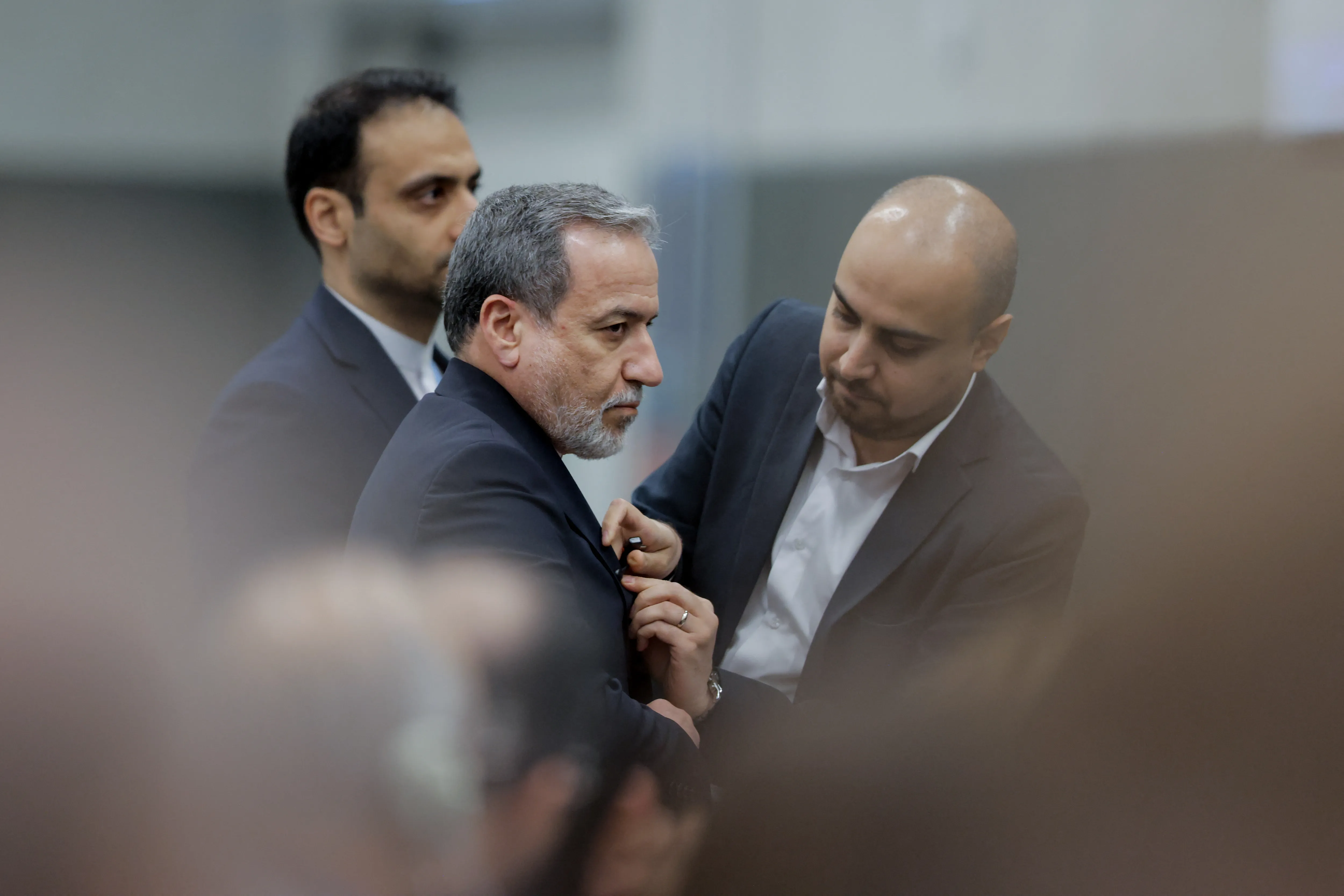
The Iranian foreign minister, Abbas Araghchi, told CBS over the weekend that U.S. and Iranian negotiators would likely hold more discussions in Geneva on Thursday, with the aim of making “a fast deal.” Iran and the United States resumed negotiations earlier this month.

Now, Araghchi says that he thinks there is still a good chance of finding a diplomatic solution in planned talks with U.S. special envoy Steve Witkoff. However, he added that “If the United States attacks us, then we have every right to defend ourselves.” Iran has repeatedly threatened to strike U.S. bases in the region if it is attacked.
Aragachi raised the possibility of a new nuclear deal that would see Iran committing to keep its nuclear program “peaceful forever.” This would be a major advance over the previous, time-limited agreement, which was negotiated by the Obama administration in 2015, but from which U.S. President Donald Trump withdrew in 2018, during his first term in office.
Araghchi’s growing importance reflects the belief of U.S. officials that Iran’s supreme leader, Ali Khamenei, together with the country’s president, Masoud Pezeshkian, are increasingly being marginalized within the negotiations.
Overall, the development comes as U.S. military assets continue to flow into the region as part of a massive deployment of forces.
Among the latest movements, it appears that additional U.S. Air Force KC-135 Stratotankers are being repositioned from the Indo-Pacific region and closer to the Middle East. These refueling assets would be vital to sustaining any kind of air campaign against Iran.
Other tankers and transports also continued to pour into the wider region after transatlantic flights over the weekend.
In terms of aircraft basing, the apparent postponement of planned runway reconstruction work at Diego Garcia in the Indian Ocean might point to one of the windows of opportunity for U.S. airstrikes. Work at the base, which could be important to any U.S. plans for a sustained campaign of airstrikes against Iran, has been pushed back successively from February to March, and now to April, according to notices to airmen (NOTAMs). As well as the long-range bombers that periodically operate out of Diego Garcia, the facility would need to host cargo and refueling support aircraft, as well as assets to defend the island from possible Iranian attack. As we reported last week, the United Kingdom has apparently said it would not allow the use of the island for strikes on Iran, although this position could certainly change. It is worth noting, too, that satellite imagery available to TWZ does not reveal any visible changes in terms of deployments to Diego Garcia.
There are also reports, currently unconfirmed, from Israel’s Channel 12, of U.S. Air Force KC-135s at Ben Gurion Airport in Israel. Photos apparently show at least two of the tankers on the tarmac at the civilian airport, one of them wearing the markings of the 452nd Air Mobility Wing from March Air Reserve Base, California. The presence of U.S. KC-135s in Israel reflects the fact that Israel will likely be fully integrated into any upcoming operation against Iran, so putting tankers or even fighter aircraft there makes sense. Moreover, the United States has limited basing options in the region, including countries that have said they would not allow operations to run out of their airspace. Meanwhile, the threat of Iranian short-range missiles and drone strikes also limits where these U.S. assets can go.
Elsewhere in Israel, Prime Minister Benjamin Netanyahu today delivered brief remarks in the Israeli parliament. He said Israel is facing “complex and challenging days,” but expressed confidence in the public. “We have pushed back an existential threat from the Iranian tyrant,” Netanyahu continued. “No one knows what tomorrow will bring. We are keeping our eyes open.”
Meanwhile, the aircraft carrier USS Gerald R. Ford, its embarked airwing, and elements of its carrier strike group (CSG) are still in transit. Last Friday, TWZ reported on its transit into the western Mediterranean via the Strait of Gibraltar. As of today, the carrier was in Souda Bay, Crete, in the eastern Mediterranean. The Ford CSG will eventually be joining the Lincoln CSG, already deployed to the Middle East, as well as other Navy ships and scores of tactical jets, surveillance planes, tankers, airborne early warning and control aircraft, and additional air defense assets.
President Trump has consistently refused to rule out potential strikes against Iran, while stressing that no final decision has been made.
“The most I can say — I am considering it,” Trump said last Friday when asked if he was thinking about a “limited strike” against Iran. The president did not provide details of what that could entail or when it might be launched.
As to how “limited” a strike on Iran might be, the Washington-based Center for Strategic and International Studies (CSIS) think tank assesses that the assets currently deployed would not be sufficient for an extended, multi-week air campaign.
Indicative of growing fears of a new conflict in the region, it was reported today that the U.S. Embassy in Beirut had evacuated “dozens” of non-essential personnel as “a precautionary measure due to anticipated regional developments.”
In contrast, in other public statements, Trump and administration officials have been pushing for a diplomatic resolution to the current Iranian crisis.
Speaking over the weekend, special envoy Witkoff said that the U.S. president was unsure why Iran had not yet yielded to U.S. pressure to curb its nuclear ambitions. “He’s curious as to why they haven’t … I don’t want to use the word ‘capitulated,’ but why they haven’t capitulated,” Witkoff told Fox News.
“Why, under this pressure, with the amount of sea power and naval power over there, why haven’t they come to us and said, ‘we profess we don’t want a weapon, so here’s what we’re prepared to do’?”
Also this weekend, the New York Times published a report stating that Trump is eyeing a smaller initial set of strikes in order to pressure Iran to make a deal, prior to a much larger follow-on campaign if that pressure didn’t work. Our analysis sees that as being either unlikely to be true or a very poor decision if it is indeed in the works as reported.
However, the fact that more talks are being lined up suggests that the U.S. government is more confident that Iran will demonstrate that it’s not seeking to develop a nuclear weapon, including a commitment to diluting its stockpile of highly enriched uranium, which is critical to producing such a device.
Iran wants to retain the right to enrich uranium for peaceful purposes. This would involve a new verification process overseen by the International Atomic Energy Agency (IAEA), the United Nations nuclear inspectorate. As well as diluting its highly enriched uranium, the process would provide the IAEA with access to Iranian nuclear facilities, while sanctions placed on Tehran would be eased. The Iranian facilities would include the three nuclear sites that were targeted by U.S. strikes in June last year.
Last year, the IAEA estimated that Iran had stockpiled more than 970 pounds of uranium enriched to up to 60 percent fissile purity. A purity of 90 percent is considered weapons-grade.
According to Reuters, one option includes Tehran sending half of its most highly enriched uranium abroad, while the remainder is diluted, as well as establishing a regional enrichment consortium.
A senior Iranian official also told Reuters that Iran is willing to offer U.S. companies the opportunity to participate as contractors in its oil and gas industries.
With the possibility of a new nuclear deal, Republican lawmakers who have been pushing for a new military campaign against Iran are finding themselves being increasingly sidelined.
However, the Iranian government remains worried that, despite apparent progress being made on the nuclear issue, the Trump administration may still sanction an attack.
As well as U.S. pressure on its nuclear program, the Iranian regime is also facing serious problems closer to home, including a wave of protests, with violent clashes between demonstrators and the state-backed Basij militia. Most recently, violence has flared at universities in Tehran and the northeastern city of Mashhad.
Thousands of deaths have been reported in Iran since the protests began in December.
The full extent of the violence remains unclear, however, since the Iranian government has refused to permit a UN-led fact-finding team access to the country.
When the protests began, Trump made statements in support, telling the protesters that “help is on its way.” So far, however, a threatened military intervention has not materialized.
Now, Iran’s nuclear program is the subject of renewed focus, with talks likely later this week. Meanwhile, a significant U.S. military presence remains in the region, meaning that a large-scale attack on Iran is very much still an option.
For the time being, it looks like Iran’s offer of new concessions may be a last-ditch effort to keep diplomacy alive and avoid the prospect of a new military conflict.
Contact the author: thomas@thewarzone.com