Trump calls for Zelenskyy to be replaced as negotiator, while Ukraine’s president says arms shipments delayed.
Published On 20 Oct 202620 Oct 2026
United States President Donald Trump says someone other than Ukrainian President Volodymyr Zelenskyy should negotiate on Kyiv’s behalf in talks to end Russia’s war.
“Zelenskyy is a man that should have had settled this war a long time ago. If he would’ve listened to me, he would have made a much better deal a long time ago,” Trump told reporters outside the White House on Monday. “Maybe it’s time for Zelenskyy to get somebody else to negotiate.”
Recommended Stories
list of 3 itemsend of list
The US president has been verbally swiping at his Ukrainian counterpart for several days as a rift between the leaders deepens.
On Sunday, Trump claimed on Truth Social that Zelenskyy does not want to end the war. Earlier this month, he called for him to be replaced as president, and labelled him a “warmonger” over Ukraine’s attacks on Russian oil refineries.
Trump has also defended sanctions waivers for Russia, saying in the same Truth Social post that he wants to keep Moscow at the negotiating table.
Zelenskyy said the decision “will hurt Ukraine” and strengthen Russian President Vladimir Putin’s war effort.
Trump also announced plans on October 9 for Russia to supply more than 300,000 metric tonnes of diesel to US and global markets to tackle fuel prices that have soared since the US and Israel launched a war on Iran in late February.
The decision has angered not only Kyiv, but also European partners and US officials, who say it rewards Moscow while it continues its four-and-a-half-year war on Ukraine.
Zelenskyy told US senators at a meeting on Monday that decisions taken by the Trump administration “are hard to explain between friends”.
He said arms shipments had been delayed and intelligence sharing restricted.
“We also know that … the Pentagon is delaying the delivery of missiles that our partners have already paid for through the PURL (Prioritised Ukraine Requirements List) programme,” he said.
To his knowledge, he added, one missile package was waiting for the signature of US Defense Secretary Pete Hegseth.
He also said several European countries were ready to transfer Patriot interceptor missiles from their own stockpiles but were awaiting US approval.
People walk in front of a damaged shopping mall following an air attack in Kyiv on October 19, 2026, amid the Russian invasion of Ukraine [Oleksii Filippov/AFP]
In remarks posted in a video on Telegram, Zelenskyy said that on three occasions in the past week, Ukraine had not received the advance warning of Russian attacks generally provided by its partners.
Last week, Zelenskyy suggested a disruption of Starlink services in Ukraine was “deliberate”. US Secretary of State Marco Rubio rejected the claim.
The sparring comes as Trump’s special envoy Steve Witkoff is set to travel to Norway this week for the next round of negotiations on ending the war in Ukraine, the Reuters news agency reported, citing three people familiar with the matter.
Two of the sources said they expected Zelenskyy to attend the meetings.
The Oslo discussions are expected to include Zelenskyy, Norwegian Prime Minister Jonas Gahr Store, representatives of the E4 – made up of the United Kingdom, France, Germany, and Poland – the European Union, and NATO.
LOVE Island star Ciaran Davies has met with show bosses about a THIRD stint in the villa.
He won January’s All Stars’ series with Samie Elishi but they split three weeks later – and today the loved-up beauty announced she was pregnant with Aftersun panellist boyfriend Tyrique Hyde.
Love Island star Ciaran Davies has met with show bosses about a THIRD stint in the villaCredit: Instagram/ciarandaviesssHis ex Samie Elishi is now pregnant with Aftersun panellist boyfriend Tyrique HydeCredit: Instagram/@samieelishi
Ciaran has held talks about returning for 2027’s legends run in Cape Town, South Africa.
A source said: “It’s early days but bosses have met with Ciaran who is considering a third try at finding love.
Sign up for the Showbiz newsletter
Thank you!
“Execs have met with a variety of Islanders but the line-up won’t firm up until December.
“Obviously Samie has very much moved on and so has Ciaran and he hopes to find the same happiness too.”
Ciaran and Samie on All Stars earlier this yearCredit: Shutterstock EditorialTyrique and Samie may not have been on the show together, but he’d always admired her from afar and consistently named her as his top IslanderCredit: instagram./@tyriquehydeCiaran was a runner-up on Love Island’s 11th season, going on to win All Stars this year with Samie, following his second stint in the villa (pictured)Credit: Shutterstock EditorialSamie is thought to be due to give birth in spring 2027Credit: Snapchat
Ciaran – a 23-year-old former surveyor from Pencoed, South Wales – was a runner-up on Love Island‘s 11th season, going on to win All Stars this year with Samie, following his second stint in the villa.
Tyrique appeared on Love Island during the summer of 2023, with Samie’s first appearance coming on the winter version the same year.
While they may not have been on the show together, he’d always admired her from afar and consistently named her as his top Islander.
As Puerto Rico continues to grapple with the long aftermath of Hurricane Maria — from an unreliable electrical grid to ongoing water shortages — the need for stories that see the island as more than a backdrop feels especially urgent.
That’s part of what makes “Hurricane Seasons,” an intimate new independent film about a Puerto Rican family returning home, feel so timely. The film, which screens Sunday at the Newport Beach Film Festival, stars comedian Aida Rodriguez as Glori, a Brooklyn-based artist and community-center worker. She returns to Puerto Rico to help her sister (Justina Machado) care for their terminally ill mother (Priscilla Lopez).
When their matriarch convinces the family to embark on a bucket-list road trip around the island, old family secrets surface as the 2019 protests following Hurricane Maria unfold around them. Directed by Nicole Gomez Fisher and written by Xavier Ortiz — with Rodriguez also serving as a producer — the film is both a story of a multigenerational family and a love letter to Puerto Rico.
For Rodriguez, who is best known as a stand-up comedian, “Hurricane Seasons” also marked a return to a part of her artistic identity that existed long before comedy — her love of acting. But she admits that stepping back into acting, especially as the film’s protagonist, wasn’t an easy transition.
Aida Rodriguez, left, and Priscilla Lopez in a scene from “Hurricane Seasons,” directed by Nicole Gomez-Fisher.
(Laura T Magruder)
“It was terrifying. It was very scary because as a stand-up comedian, I work very hard at trying to obtain my most authentic self so that I can share it with everybody — to be my truest self, my truest Aida,” she says. “And when you loan yourself to a character and the art form of acting, you’re loaning yourself to that character and bringing yourself to that character, of course, because that is why they choose you. But you are telling a story from the perspective of another person.”
Rodriguez had pursued acting before going into stand-up comedy. Upon moving to Los Angeles, she quickly booked acting work, signed with an agency and began taking classes.
But comedy eventually taught her to do almost the opposite of what acting required.
“When I started doing standup, the direction and the notes were always like: ‘Release any character you have in mind and just access yourself,’” she says. “So it was a battle for me. Coming back to becoming an actor and giving the character Glori what Glori deserved — and allowing Glori to live, and Aida to sit in the back — became something important for me to do.”
She adds that it took a lot of work with coaches and classes for her to relax into acting again, allowing Aida the comedian to rest while focusing on what this role required of her.
The film’s protagonist, Glori, is a Brooklyn-born-and-raised Puerto Rican woman whose connection to the island runs deep, despite her living stateside. This is something Rodriguez, who is half Puerto Rican and half Dominican, born and raised in the States, also personally relates to.
That tension — between where you live, where your family comes from, and who gets to decide whether you are “Puerto Rican enough” — is one of the film’s central themes and one reason the script resonated with Rodriguez.
“My testimony through my art has always been finding unity, solidarity, power and connection with other people,” she says. “I think that the story of growing up in the States and connecting to the island is a universal story that most people, regardless of where they come from, experience. [There’s this] idea that you’re never American enough nor whatever you are — in this case Puerto Rican enough — because there’s always a judge and jury on both sides.”
Rodriguez sees those tensions as a consequence of a much larger and complex history. She believes so much of the judgment on both sides is a lingering effect of colonization.
“For me, that was one of the most attractive things about the script — [it] was being able to engage in a conversation about what being Puerto Rican really is,” she says. “Is it based on colonial standards? Or is it based on maintaining our cultural richness and our legacy, that is handed down to us regardless of where we are?”
That question takes on even more weight today as Puerto Rico sits in the aftermath of Hurricane Maria, which Rodriguez believes shifted the relationship between Puerto Ricans on the island and those living stateside.
“There was a shift, because there are wounds from both places,” she says. “There are wounds from the people on the island that stayed and stuck it out. [They want to ask] the ones who left, ‘why do you get to claim this, if you’re not here sticking it out with us?’ Then the people who leave feel like, ‘we had to do this, so that we can not only survive, but send money back to the island.”
Rodriguez explains that, in many ways, the aftermath of the hurricane sparked arguments on both sides that were necessary to begin healing the tension. She believes it highlighted issues that Puerto Ricans, as part of a diaspora, could no longer ignore; it also highlighted an island and a community that Americans outside of the Latine community paid little to no attention to.
“It took a hurricane for people to know what Puerto Ricans were,” she says. “I think there was a cultural shift and there was a conversation that needed to be had, about what happens on the island. And what that means to those of us who are not there.”
That conversation serves as the meat and bones of “Hurricane Seasons,” in which Puerto Rico isn’t simply a location. It’s an integral presence in the story. Rodriguez, Ortiz and Gomez Fisher all agreed that filming most of the movie on the island was essential, not only creatively but also economically and culturally.
“The other thing that was very important about taking the movie back to Puerto Rico was to invest in Puerto Rico and to stimulate some sort of revenues for the island and that the crew was a Puerto Rican crew,” she says. “The DP [director of photography] was a Puerto Rican DP — all people that live on the island.”
It was important to them that if they were going to tell a story about Puerto Rico that was also shot in Puerto Rico, that Puerto Ricans on the island actually benefited from the production.
“It’s not cool to go to Puerto Rico and shoot a movie and bring in your own people from the States, and the people in Puerto Rico have to be inconvenienced with their roads being blocked and things shut down and an influx of Americans that come there to be disrespectful and them not making anything out of it,” Rodriguez says.
This commitment shows in the protest scenes. Rather than using background actors, the film features real Puerto Rican residents, including a local activist and singer.
“It didn’t feel rehearsed. It didn’t feel fake,” she says. “I just think that the feelings and the passion and the rage and the sense of urgency is still there.”
Ortiz’s commitment to specificity extended to the family casting, intentionally matching the actors to the real-life relatives they are based on.
“It wasn’t performative. It was actually real because that’s what all of our families look like,” she says. “Puerto Ricans, Dominicans, we just have that diversity because of all the stuff that’s happened in the past.”
Glori’s character also represents a refreshing departure from the way Latina women are often portrayed onscreen. She is a mother, a daughter, a community center worker, an artist — and a woman with a complicated romantic and family history. She is beautiful and desirable, but her sexuality isn’t the defining characteristic of her existence — something we don’t see enough when it comes to Latina roles.
“For me, I didn’t have to step outside of myself for the role, which was really refreshing because every audition that I ever get, I do have to step out of myself because when people write Latinas in Hollywood, they tend to write them one way,” says Rodriguez. “They look a certain way, they talk a certain way, and that’s not the reality of what being Latino, especially in America, is like.”
Rodriguez could freely inhabit a Latina character without feeling as though she had to perform her Puerto Rican-ness for the audience.
“I didn’t feel like I had to perform my Latinidad. I could just exist in it,” she says.
Rodriguez adds she’s ready for a Hollywood that wants Latina actors to have the same range of characterization that white actors have long been afforded. She’s open to seeing Latinas being everything in TV and film, where can they exist in a world in which they can just be people who just happen to be Latinas.
“I really do look for a day when we can just be people and not just be the funny, spicy friend,” she adds. “Some Latinas are not spicy. Some Latinas are nerds, and some Latinas are quirky, and some of them are goofy and some of them are clumsy. And just like everybody gets to see the spectrum of whiteness with all the different kinds of characters, I would love to see that for our people. For all people of color, actually. I think it’s important to see us all as full human beings, and that means that we can be anything.”
The film’s multigenerational story touches on the cultural inheritance passed between mothers, daughters and grandmothers — whether through old traditions or ordinary rituals. It’s something audiences, regardless of background, can likely relate to.
“The most important message that I’ve kept from my [foremothers] was never to lose my sense of Puerto Rico; that, even if I don’t live in Puerto Rico, Puerto Rico lives in me,” she says. So much of that inheritance lives in the little things she remembers about her Puerto Rican grandmother, she says, from the té de tilo she’d make for an upset stomach; the recao that grew on her grandmother’s balcony because she didn’t have a backyard; or the azabache she still wears to this day for spiritual protection. They are the same small traditions she has passed on to her kids.
“My daughter makes better arroz con gandules than all of us,” Rodriguez says. “And her recipe is true to what my grandmother’s recipe was. That will continue to live on, until we are able to go back to our island and live in peace.”
That freedom is one reason Rodriguez believes independent film is so important for stories like “Hurricane Seasons.” Without a studio machine making decisions based primarily on commercial expectations, filmmakers have more room to tell a story on their own terms.
“Once the studio gets involved, they start thinking about dollars, which they got to make money, but they prioritize the dollars,” Rodriguez says. “And I think that’s why a lot of these big projects that they spend a lot of money on have failed because they don’t honor the storytelling. They don’t honor the authenticity of the world, the authenticity of the stories.”
Her hope is that “Hurricane Seasons” encourages more people to tell their own stories — especially Puerto Ricans.
“Puerto Ricans are not a joke; we’re not a punchline. You don’t get to tell us we don’t speak correct Spanish and make fun of our songs. Then, years later, appropriate our culture and become big time doing what we do, using our terms and our colloquialisms because it brings you capital,” she says. “We are people. We’ve been doing this for a very long time, and our grandmothers and our tias and tios matter, and they’re not [a] costume that you can just put on [to] make money off of it.”
Before we wrapped up the call, Rodriguez paused for a moment when I asked her what Puerto Rico means to her. Then her eyes lit up, and her voice softened as she described why the island means so much to her — and why so many people, even outside of the diaspora, find themselves drawn to it.
“Puerto Rico is a very special place, which is why so many people want to kick us out, so they can move [in],” she says. “But they’ll never have the magic, because the magic is us.”
Lisandro Martinez meets with his Manchester Untied manager Michael Carrick before apologizing for criticism of the club.
Published On 15 Oct 202615 Oct 2026
Manchester United defender Lisandro Martinez apologised on Thursday for criticising the club’s hierarchy following their Champions League defeat by Atletico Madrid, after holding talks with manager Michael Carrick and senior officials.
“Today I met with the club’s leadership and the manager,” Martinez said in an Instagram post, in his second statement since the interview.
“It was a very positive conversation where we were able to exchange views and speak openly about what happened after Tuesday’s game.”
A club source said that any internal disciplinary action would remain private, adding that it had been Martinez’s decision to apologise publicly and that all parties considered the matter closed.
British media, including the BBC, reported that United fined the defender over the outburst.
Martinez acknowledged that his frustration following the defeat had got the better of him and apologised for choosing the wrong moment to air his feelings.
“Everyone knows that I am a passionate person and that I live football with great intensity,” he said.
“The frustration of the defeat led me to express how I felt at a time and place that perhaps were not the right ones, and for that I want to apologise.”
The Argentina international had singled out director of football Jason Wilcox in the post-game interview, saying United needed more signings to compete with their rivals and build a squad capable of challenging in Europe.
Martinez said his comments had not reflected the unity required at Old Trafford and stressed his belief that everyone at the club was working towards the same goal.
“Our club is at its best when we are all united, and I recognise that my words in that moment did not help with that,” he said.
“I know that every single person at Manchester United is doing everything possible to achieve our shared ambition, bringing the success that this club and its supporters deserve.”
Martinez finished his statement by drawing a line under the episode.
“With this situation now behind us, we are fully focused on winning together.”
United are 13th in the Premier League after six games in their worst start in 40 years. They travel to seventh-placed Leeds United on Sunday.
But a union representing shopworkers warned that the retailer could fall into administration if that deal falls through, putting thousands of jobs at risk.
This outcome would be “a disaster for our members”, the Usdaw union said.
Poundland has about 600 stores in the UK and Ireland, and 12,000 employees.
The chain has been struggling for a number of years due to pressures including rising costs and competition.
However, it expects sales to have grown more than 3% in 2026 compared with the previous year, which managing director Barry Williams said earlier this month was evidence that its recovery plan “is working”.
The retailer was sold for £1 last summer by previous owner Pepco to US investment firm Gordon Brothers.
The current owners are in the process of seeking buyers, with the Poundland management attempting a buyout, a spokesman said.
Mr Williams, along with the firm’s leadership team and Andy Bond, a former chairman of Pepco, have been working with Irish real estate firm Martin Property Group on a management buyout.
Martin Property Group is the management team’s “preferred partner”, the spokesman said, but the team will “work with whoever can deliver the best result for the business, colleagues and suppliers and build on the successful recovery that’s already taking shape,” he added.
However, Bally Auluk, a national officer at Usdaw, said there are “deep concerns that the business could go into administration” should this buyout fail.
“We are aware that a management buy-out has been attempted and we are told that their offers are being turned down,” he added.
A Poundland source disputed this, however, saying the Martin Property Group is part of the sale process and remains the management team’s preferred partner.
Iran has offered to facilitate talks between Saudi Arabia and Yemen’s Houthi group after a series of deadly attacks on the kingdom, raising questions about Tehran’s diplomatic calculations as fighting intensifies across the region.
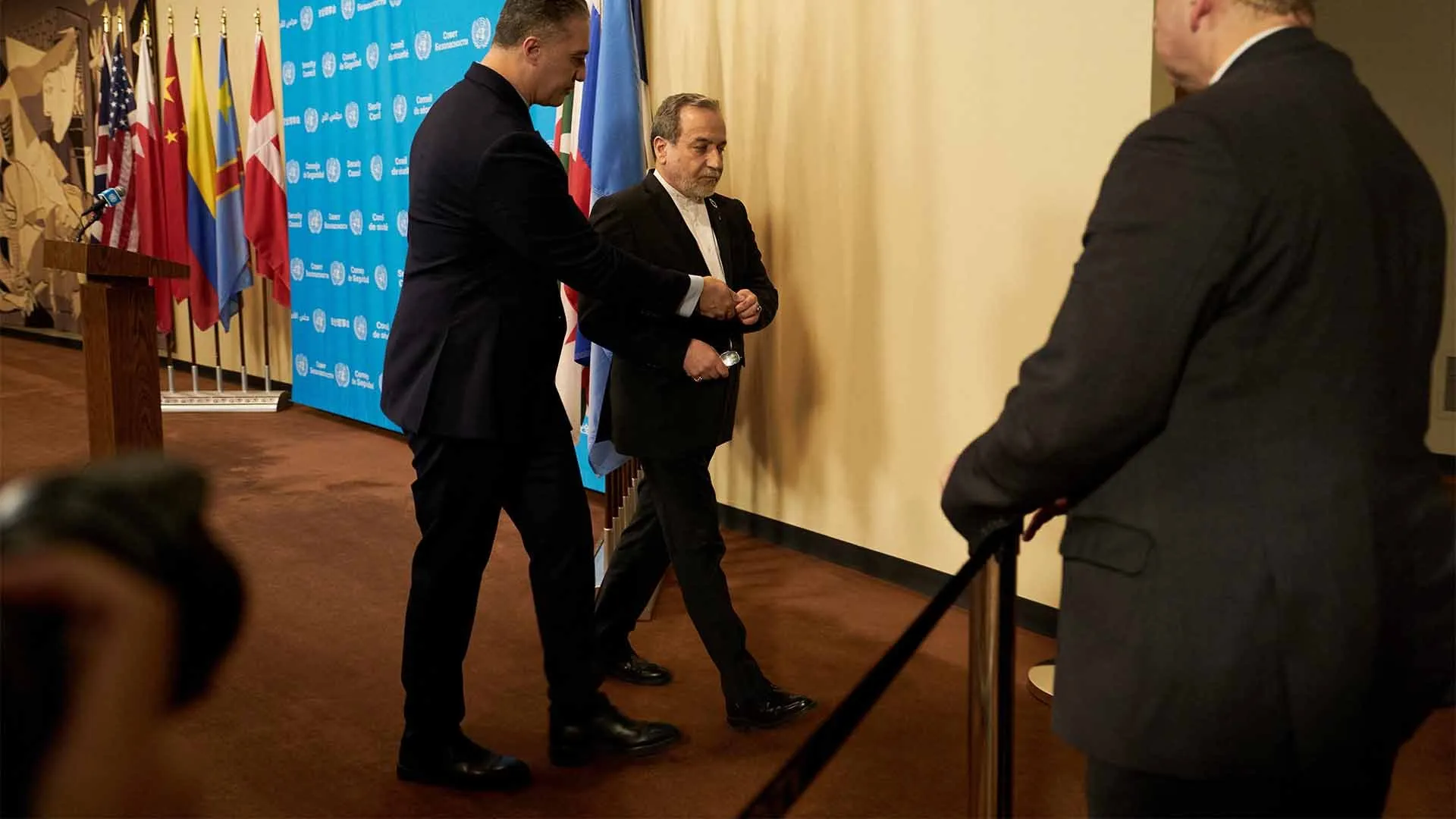
Iranian Foreign Minister Abbas Araghchi spoke with his Saudi counterpart, Prince Faisal bin Farhan Al Saud, on Sunday, in their first publicly reported contact since the Iran-aligned Houthis stepped up attacks on Saudi Arabia.
Recommended Stories
list of 3 itemsend of list
The diplomatic outreach comes after strikes on Riyadh’s international airport over the weekend killed 14 people and wounded hundreds, while Saudi-backed forces continued their offensive against the Houthis, also known as Ansar Allah, in Yemen.
The talks also come against the backdrop of the wider US-Israel war on Iran, with Tehran potentially seeking to avoid being dragged into another confrontation.
“Tehran is an ally of Ansar Allah and has influence with the movement, although it does not control its decisions,” Negar Mortazavi, senior fellow at the Washington, DC-based Center for International Policy, told Al Jazeera.
“By offering to facilitate talks with Riyadh, Iran is positioning itself as an indispensable party to a broader regional settlement.”
So what discussions are happening between Riyadh and Tehran, and why is Iran offering to facilitate talks?
What did Iran and Saudi Arabia talk about?
According to the Saudi state news agency, the two foreign ministers discussed the recent escalation in the region and efforts to reduce tensions. Iran’s Foreign Ministry also confirmed the development.
Following the discussions, Araghchi on Sunday warned against pursuing a military solution to the conflict and offered Tehran’s assistance in facilitating dialogue between Saudi Arabia and Yemen.
“Insisting on a military approach and disregarding a political solution would only further complicate the situation,” Araghchi said, according to Iran’s Foreign Ministry.
On Monday, ministry spokesman Esmaeil Baghaei reiterated Tehran’s willingness to mediate, saying Iran was deeply concerned about developments in the Arabian Peninsula.
“We absolutely do not want hostilities and war to continue between two Islamic countries,” Baghaei said, urging dialogue to resolve the conflict.
What is Iran’s stance on the war in Yemen?
Iran has repeatedly called for a diplomatic settlement to Yemen’s conflict and says it supports a political solution rather than continued military action.
Tehran backs the Houthis, who control Yemen’s capital, Sanaa, and other parts of the country.
The armed group forms part of the Iran-aligned “axis of resistance”, which also includes Lebanon’s Hezbollah and armed groups in Iraq.
Saudi Arabia, meanwhile, has led a military coalition supporting Yemen’s internationally recognised government since 2015.
Baghaei said on Monday that the conflict served Israeli interests, framing a negotiated settlement as preferable to further fighting.
What is the latest in the Yemen fighting?
Fighting has intensified in Yemen, after the internationally recognised government’s forces announced Operation Dawn of Yemen on October 4 to reverse recent Houthi territorial gains, including the capital, Sanaa.
Government forces, backed by Riyadh, have reported advances near the strategic Bab al-Mandeb strait, a vital international shipping route. However, competing battlefield claims remain difficult to independently verify.
The Houthis have responded with missile and drone attacks on Saudi airports, energy infrastructure and other targets.
A Houthi fighter participates in an offensive against Saudi-backed Yemeni forces in Taiz province, Yemen [Handout screen grab from video made available by the Houthi-run Al Masirah TV, October 8, 2026/EPA]
Two strikes on Riyadh’s King Khalid International Airport on Saturday and Sunday killed 14 people and wounded more than 300. The casualties included foreign nationals from Bangladesh, Pakistan and Palestine.
The escalating violence has also disrupted commercial flights, businesses and schools in Riyadh, underlining the growing economic and civilian consequences of the conflict.
UN Special Envoy for Yemen Hans Grundberg warned on Friday that Yemen had returned to “full-scale war”, with civilians bearing the brunt of the attacks.
Why is Iran willing to facilitate talks between Saudi Arabia and the Houthis?
Iran’s offer to facilitate talks between Riyadh and the Houthis could be an attempt to strengthen Tehran’s diplomatic position and secure a wider regional agreement that extends beyond Yemen.
“I think Iran is trying to turn Yemen from a military liability into a diplomatic asset,” Andreas Krieg, a Middle East security analyst at King’s College London, told Al Jazeera.
He said Tehran recognises that Saudi Arabia is struggling to reverse Houthi territorial gains, particularly around Taiz and Bab al-Mandeb, despite intensifying its military campaign.
“Araghchi’s offer is an attempt to position Iran as part of the solution to a crisis in which it has also helped sustain the problem,” Krieg said.
Analyst Mortazavi, meanwhile, said Iran’s diplomatic outreach is part of a broader effort to link the conflicts unfolding across the region.
“The larger political objective is an informal non-aggression arrangement between Iran and its allies on one side and the United States and its regional partners on the other,” she said.
Such an agreement, she argued, would require an end to hostilities across multiple fronts, including Yemen and Lebanon, rather than a settlement confined to the US-Iran conflict.
Moreover, academic Krieg said there was also an important “Saudi dimension” to the discussions.
“Riyadh is increasingly uncomfortable with its dependence on Washington, frustrated by the limited American willingness to intervene in Yemen and reluctant to become dependent on the UAE again,” he said.
“Iran sees an opportunity to demonstrate that engagement with Tehran can deliver something Saudi Arabia’s traditional security partnerships have struggled to provide.”
There are also economic considerations, the analysts noted. Iran is under significant pressure from the US blockade, while Gulf countries are gradually recovering their energy exports to pre-war levels despite Iranian disruptions.
“Offering Riyadh a way out of Yemen potentially gives Iran leverage well beyond the Yemeni theatre, particularly in negotiations over Hormuz, sanctions relief and the wider regional security architecture,” Krieg said.
However, Krieg cautioned against overstating Iran’s influence over the Houthis, who have their own political ambitions and demands.
“Ansar Allah is not simply an Iranian proxy awaiting instructions,” Krieg said. “Its leadership has its own political ambitions, increasingly sees itself as a regional military actor and believes its recent territorial gains have strengthened its negotiating position. Iran can facilitate talks and potentially influence the intensity of escalation, but it cannot simply order the Houthis to surrender their gains around Mocha or Bab al-Mandeb.”
For Mortazavi, the broader message is that regional security cannot be addressed in isolation.
“Ultimately, Tehran’s message is that regional security cannot be divided,” she said. “Saudi Arabia cannot obtain security from attacks, while Iran and its allies remain under military and economic pressure.”
EU Trade Commissioner Maroš Šefčovič announced a deal with China on Friday to curb imports of Chinese hybrid vehicles into the EU and facilitate access to rare earths.
ADVERTISEMENT
ADVERTISEMENT
While the understanding signals a preference for a diplomatic resolution to the growing trade imbalance, European leaders are pushing for stronger measures to level the playing field. They are expected to review the details at a summit in Brussels next week.
The EU has also floated retaliatory measures if the outcome falls short of expectations.
Šefčovič travelled to Beijing on Wednesday for two days of intensive talks with his Chinese counterpart, Wang Wentao, in a bid to rebalance EU-China trade relations.
The EU is facing a record trade deficit with China of €1 billion a day, as a surge in low-cost Chinese imports threatens entire sectors of European industry.
“We have reached a shared understanding to moderate China’s export of hybrids and plug-in hybrids to the European Union,” Šefčovič said. “This opens up the prospect of cutting China’s exports by more than half.”
The commissioner said the deal would also improve access to the Chinese market for a range of EU products, from “car parts to olive oil and footwear”, representing almost €4 billion in current export value. It should generate at least €225 million in duty savings, he added.
Market access has been at the heart of EU-China discussions since negotiations began last June. Beijing has been reluctant to relinquish access to the EU’s 450-million-consumer market, which provides an outlet for its excess production.
Meanwhile, Brussels has proposed several legislative measures aimed at restricting Chinese companies’ access to the European market, while pressing Beijing to open up its own market to EU businesses.
Šefčovič also said China had agreed to facilitate exports of rare earths, which are essential to Europe’s green technology, defence and automotive industries.
“We have reached a shared understanding to further facilitate China’s export licensing for rare earths and permanent magnets,” he said.
The EU has accused China of “weaponising” its dependence on Chinese rare earths after Beijing restricted exports in 2025 amid a trade war with the US.
Šefčovič described the agreement as the conclusion of a “first phase of negotiations”.
The deal comes ahead of a meeting of EU leaders in Brussels next week, with expectations running high for concrete results from negotiations led by the European Commission on their behalf since last June.
A consensus on China has been emerging across the EU this week.
All EU countries now run trade deficits with China. On Monday, Germany and France urged the European Commission to take strong action against unfair Chinese trade practices that cause severe market distortions.
In a joint document, Paris and Berlin called for measures that could include “an immediate cut-off from the internal market if needed”.
On Wednesday, MEPs overwhelmingly adopted a resolution calling for resolute measures against Beijing.
Meanwhile, 44 EU industries, including chemicals, machinery, metals, solar, glass and cement, issued a joint statement on Friday warning that “Europe cannot maintain and grow its industrial base, quality jobs, and attract investment without the ability to respond effectively to unfair trade practices and distortions”.
Negotiators aim to present a proposal to Russia in the coming weeks, meanwhile Putin says resumption of talks unlikely.
Published On 10 Oct 202610 Oct 2026
Russian President Vladimir Putin has said an immediate resumption of peace talks with Ukraine is unlikely, citing drone attacks on Moscow during parliamentary elections last month.
In a phone call with US President Donald Trump on Friday, Putin said Moscow was ready to resume negotiations with Kyiv after the parliamentary elections. However, the drone attacks on the capital made the resumption of trilateral peace talks between Russia, Ukraine and the US unlikely.
Recommended Stories
list of 3 itemsend of list
“By launching a large-scale drone attack on Moscow, other cities and polling stations on the most important day of the elections, and by targeting some people involved in organising the elections, the Kyiv regime has, in reality, interrupted the possibility of an immediate resumption of the negotiation process,” said Kremlin foreign policy aide Yuri Ushakov about the call with Trump.
“As the president said, we will now assess when these negotiations can resume,” he added regarding the trilateral talks.
US Secretary of State Marco Rubio said on Thursday that Russia’s war in Ukraine is at a dangerous stalemate and the United States will keep working towards a deal to end the war.
Ukrainian President Volodymyr Zelenskyy said earlier this week that the country was ready to hold trilateral talks with the United States and Russia this month.
US-Russia diesel deal
Earlier on Friday, Donald Trump announced after the call with Putin that Russia agreed to deliver more than 300,000 tonnes of diesel to American and global markets.
The deal was criticised by US lawmakers, Zelenskyy and European allies.
Zelenskyy called the agreement a “gift to Putin”.
“All that money goes toward the war against people, against Ukraine, against all of us. I believe our team is simply being used as a smokescreen. And that is certainly not fair,” he said in a statement.
In response to the US-Russia diesel deal, a government spokesperson said the United Kingdom would continue to “maintain pressure on Russia through the toughest sanctions regime ever imposed by the UK.”
Burnham is set to be greeted with military honours at the German capital’s Chancellery ahead of his first face-to-face meeting with the chancellor.
On Thursday, the two leaders will formally ratify the 2025 Kensington Treaty, a partnership committing both countries to tackle hostile activity through deeper cooperation on science, technology, defence, security and growth.
Speaking ahead of the visit, Burnham said the UK and Germany were “joining forces to find, expose and disrupt” threats.
He continued: “Attacks on our infrastructure, our businesses and our democracies are not a distant threat.
“They reach into people’s homes and workplaces, and they are designed to make us weaker and more divided.”
European leaders have warned the threat of hybrid attacks against Europe by Russia has intensified in recent weeks.
Hybrid warfare or hybrid attacks are loose terms which tend to describe non-military methods designed to exert pressure and destabilise an adversary – for example cyber attacks, sabotage or misinformation.
Last month, a senior Russian diplomat was summoned by the British government over an “egregious and reckless attack” on Leipzig airport.
It is a major international freight hub used for providing support to Ukraine. Moscow has denied any involvement in the incident.
Meanwhile, questions have also been raised this week about Germany’s reliability as an intelligence partner, following the bombshell arrest of a former spy chief on suspicion of espionage.
August Hanning has been accused of espionage, treason and obtaining classified information for a foreign power, the German Federal Prosecutor’s Office says.
He ran the Federal Intelligence Service (BND) from 1998 to 2005 and has since been working as a private consultant.
The talks also come during a period in which Merz’s own political future has come under intense scrutiny.
Burnham replaced Prime Minister Sir Keir Starmer in July after the former leader was forced out by his own MPs just two years after winning a landslide election victory.
Similarly, Merz has faced persistent rumours he could be replaced by his party due to his poor approval ratings and following setbacks in regional elections.
Although the chancellor appears to have overcome an immediate crisis in his leadership, questions remain over his future.
Talks will focus on the €1 billion daily deficit and rare earth export restrictions.
Published On 7 Oct 20267 Oct 2026
European Trade Commissioner Maros Sefcovic has arrived in Beijing for talks on the European Union’s (EU) growing trade deficit with China.
Sefcovic will meet Chinese Commerce Minister Wang Wentao on Thursday and Friday after months of discussions over the EU’s trade deficit of more than €1bn ($1.12bn) daily, as well as Chinese curbs on exports of rare earths and other critical minerals.
Recommended Stories
list of 3 itemsend of list
Meanwhile, Chinese companies are increasingly challenging Europe’s top car brands. China rejected the EU request for voluntary curbs on Chinese hybrid car exports as the two sides enter negotiations, the Financial Times reported on Wednesday. The European Commission now hopes to get Beijing to accept a unilateral EU measure to cap hybrid imports instead, the outlet said, citing two diplomats briefed on the plan.
The two days of discussions come just as a majority of EU lawmakers called for a more assertive trade policy towards Beijing in a non-binding resolution on Wednesday. China vowed a “resolute response” to safeguard its industries if the European Union goes ahead with restrictions against Chinese companies or products, according to its commerce ministry.
Germany and France propose rapid EU measure
French President Emmanuel Macron and German Chancellor Friedrich Merz, leaders of the bloc’s two biggest powers, on Tuesday urged the EU to prepare a “credible instrument” that could be quickly activated to strike back against countries that harm the bloc economically.
The new measure would not target any specific country. German officials said the EU needed a tool as powerful as the Section 301 tariffs imposed by the United States or China’s restrictions on critical-mineral exports.
The proposed weapon – to be discussed at an EU leaders’ summit next week – would give the European Commission the power to respond to a trade aggression within days.
China responded to the letter by urging Paris and Berlin to steer clear of “protectionist” measures.
“We hope that France and Germany, as major economies in the world, will uphold openness, cooperation and free trade,” the commerce ministry said in a statement.
“They should avoid going down the wrong path in the wrong way, only to ultimately suffer the consequences themselves.”
G20 finance leaders, except China’s, agreed in September to act against “non-market” distortions that exacerbate imbalances. Beijing says that hyping up issues such as economic imbalances and overcapacity is a form of protectionism designed to exert pressure on and restrict China.
Ongoing trade talks
EU and Chinese officials have been discussing trade imbalances since June. Sefcovic said he wanted “tangible results by October” as well as some form of commitment that can be put to EU leaders meeting in Brussels.
Trade relations with China top the summit’s agenda next week, as ballooning debt has prompted auditors to warn about the next seven-year EU budget and has spurred protests in France.
European Commission President Ursula von der Leyen told the European Parliament last month that the trade imbalance had reached a tipping point and that Europe would use every tool at its disposal to rebalance the relationship.
Workers at Antofagasta’s (ANFGF) Centinela copper and gold mine in Chile are poised to begin a strike Wednesday after government-mediated negotiations failed to produce an agreement.
The Minera Esperanza and Distrito Centinela unions said the key sticking point is a discrepancy
At least 10 civilians were killed in West Kordofan and 5,500 displaced in Blue Nile as clashes widened on Tuesday.
Published On 7 Oct 20267 Oct 2026
Sudan’s military chief, Abdel Fattah al-Burhan, has promised to seize “every inch” of territory under the control of the paramilitary Rapid Support Forces (RSF), rejecting negotiations to end three and a half years of war.
Al-Burhan made the comments on Tuesday while addressing a gathering in Village 5, located in the northern Sudanese locality of Merowe, according to the Sudan News Agency.
Recommended Stories
list of 2 itemsend of list
He said the “military option” would continue until the RSF was removed from Sudan.
The Sudanese army and the RSF have been fighting since April 2023 after leaders of the groups fell out over plans to integrate the paramilitary force into Sudan’s army. The conflict has killed tens of thousands of people and displaced around 13 million, according to UN and international estimates.
Al-Burhan’s pledge to continue fighting came as 10 civilians were killed and several others were wounded in an attack by the RSF in Sudan’s West Kordofan state, according to a local charity group.
Women gather for a meal in al-Rahmaniyah camp for displaced people, near the city of el-Obeid in Sudan’s North Kordofan state, on July 7, 2026 [File: AFP]
In a statement, the Dar Hamar Emergency Committee accused the RSF of multiple violations against civilians in Abu Ajal village in the southeastern countryside of En Nahud.
The RSF has been massing in West Kordofan as Sudan’s army advances towards the cities of En Nahud and Al Khuway after gains in neighbouring North Kordofan.
In Sudan’s Blue Nile state, more than 5,500 people were displaced from villages over three days amid deteriorating security, the International Organization for Migration (IOM) said on Tuesday.
Meanwhile, an envoy of US President Donald Trump said Sudanese parties must take the lead in talks to end the war.
In a post on X on Monday, Massad Boulos, the US senior adviser for Arab and African affairs, said peace could be achieved “through an inclusive Sudanese-owned and Sudanese-led national dialogue, transition toward a civilian-led government”.
The US State Department said last month that neither the Sudanese Armed Forces, the RSF, nor their respective leaders “represent legitimate, constitutional governance for Sudan”.
Government warns of crackdown as supporters of jailed former prime set off from northwest Pakistan towards Islamabad.
Supporters of jailed former Pakistani Prime Minister Imran Khan have set off on a protest march from the country’s northwest after talks with the government to call off the demonstration failed.
More than 5,000 were reported to have begun the rally on Sunday. The march, planned by Khan’s Pakistan Tehreek-e-Insaf (PTI) party, was originally scheduled for September 27 but was postponed until October 4 to allow talks between the government and the PTI leadership to take place.
Recommended Stories
list of 3 itemsend of list
However, two rounds of talks over the weekend failed to break the deadlock, and the PTI decided to carry out its plan, which is the latest attempt to pressure the government into releasing Khan, the country’s most popular political figure according to polls, who has been behind bars since August 2023 following a series of convictions that his party calls politically motivated.
All but one of the convictions against the former PM have since been suspended or overturned on appeal.
Videos posted on the PTI’s official social media showed supporters joining the march in different areas of Khyber Pakhtunkhwa (KP) province, which is ruled by the party, and setting off in convoys.
Sohail Afridi, the region’s chief minister, had earlier posted on social media that the demonstration in support of Khan would go ahead.
He said the march will make its way to Khairabad, 80 kilometres (50 miles) west of Islamabad, by Thursday, where the plan for the “next phase” will be announced.
Government warns protesters
The government has been preparing for weeks for the arrival of PTI demonstrators in Islamabad. It has erected barriers using shipping containers to block main access routes to the capital.
Interior Minister Mohsin Naqvi confirmed earlier on Sunday that the talks between the two sides had failed. He accused Afridi of “sabotaging” the negotiations, and added that the government would not allow the PTI to “create a disturbance”.
He also cited an Islamabad High Court order from September 14, ruling that no political party or its leadership has the “lawful right to occupy public roads, highways, interchanges, toll plazas and buildings in Islamabad”.
“If they violate the orders, whether they are workers or politicians, whether they are protesting within KP or outside KP, we will pursue them one by one. This time, we want to ensure that these repeated episodes of creating disturbance in Islamabad come to an end,” Naqvi said.
Traffic moves past shipping containers used to block a planned march by former Prime Minister Imran Khan’s Pakistan Tehreek-e-Insaf party, in Islamabad [File: Reuters]
Concerns about the 73-year-old Khan’s health, in particular the condition of his right eye that has required months of specialist treatment, have prompted the PTI’s campaign for his release.
The party has also called for the release of Khan’s three sisters, whose arrests last month further heightened tensions.
James Dorsey, a fellow at the National University of Singapore, said Khan was “essentially a populist leader” with “a genuine popular movement that had broad popular support”.
That is behind the “determination by the government to prevent [the protesters] from entering Islamabad,” he told the AFP news agency.
Given Pakistan’s security concerns, particularly following its unresolved February 2026 conflict with Afghanistan, Islamabad wants to avoid escalation in the face of the protests, he added.
“It’s a problem for the government, but I don’t think it’s an existential threat,” he said.
Trilateral talks could happen this month in UAE or another US-proposed venue, says the president.
Published On 4 Oct 20264 Oct 2026
Ukraine is ready to hold trilateral talks with the United States and Russia this month, President Volodymyr Zelenskyy has said.
The Ukrainian president made the comments on Sunday during a news conference alongside German Chancellor Friedrich Merz in Kyiv. He said Ukraine supports a swift timeline for returning to talks to try to end the war fought for over four and a half years.
Recommended Stories
list of 3 itemsend of list
US efforts to broker a ceasefire have been paused since Washington launched its war on Iran. However, Washington is now pushing for technical-level talks by the end of October, Zelenskyy said.
He confirmed earlier reports that the United Arab Emirates, which has hosted previous talks, could again be the setting for a meeting.
“I confirmed to [the US] that our side is ready to support this timeline,” Zelenskyy said, adding that Kyiv is open to meeting in the UAE or “another country proposed by the American side”.
Washington had also been in touch with Moscow about the plan, Zelenskyy said. The Kremlin said last month that it did not rule out the possibility of three-way talks this month.
Despite suggestions of their willingness to discuss an end to the conflict, both Russia and Ukraine have also said they will ramp up long-range attacks on military and related targets.
Moscow has said it is targeting Ukraine’s energy sector as winter approaches. Last year, similar attacks knocked out power and heating for days on end as temperatures plummeted to minus 20C.
Zelenskyy on Sunday said he was “amazed” by Russia’s “savage desire to escalate the situation every day”.
He yet again accused Moscow of targeting “civilian infrastructure, including data centres and mobile network facilities”.
“Honestly speaking, I am not surprised by this approach to the war – by Russia’s hatred towards Ukraine – but I am surprised by the specific tactics used”, the Ukrainian leader said.
Alongside the return of the US to efforts to broker a ceasefire, India on Sunday said that it aims to step up its efforts to play a larger role in mediating an end to the conflict.
Speaking at the Munich Security Conference in New Delhi, Foreign Minister Subrahmanyam Jaishankar said his country had become more involved in recent months, specifically regarding shipping in the Black Sea, which has been plagued by mines and attacks on commercial vessels.
India was also “going beyond that,” said Jaishankar, including with discussions on grain and energy exports and “on non-attack possibilities,” he said.
When it comes to the future of Tail 844, the SR-71 Blackbird that mysteriously disappeared from NASA’s Armstrong Flight Research Center, few people have more insights than Tim Conners. When he worked at NASA in the 1990s, Conners was the lead propulsion engineer for the agency’s Blackbird program. He worked extensively on 844 and has an intimate knowledge of what made the iconic aircraft tick. Now, he brings an insider perspective on NASA’s secretive work to get the Blackbird back in the air and speculates on what it would take to do so, as well as the famed jet’s possible flight test role for the agency after 27 years of dormancy.
In an exclusive interview with TWZ, Conners, now technical director for advanced weapons systems at Tiberius Aerospace, gave us his take on NASA’s Blackbird revelations and insights into what NASA is working on and how far along they are in the process.
Some of the questions and answers have been slightly edited for clarity.
Tim Conners
Q: Tell me about your background with the SR-71 program. How did it begin? How long did it last? And what did you do?
A: So that basically fell in my lap when I was an engineer at NASA’s Dryden [Flight Research Center] back in the early ’90s when NASA took delivery of three of the airframes when the Air Force was retiring the fleet. So NASA got two A models and a trainer. Obviously, tail number 844, which is NASA’s designation, is the one that’s getting all of the attention right now. But those came to Dryden in the early ’90s.
By luck of the draw, I was in the propulsion group. We were short-staffed for a number of reasons, and they needed an engineer on Blackbird. And I had been with NASA for about three or four years at that point, and I got tapped to prepare the NASA side of the mission for the upcoming research flights. So I had a few years to get familiar. That was a part-time job, by the way. I also owned the F-15 fleet at NASA as a propulsion engineer, and that was occupying a lot of my time, but it did give me an adequate amount of time to get familiar with the way that the airplane operated, at least from the propulsion standpoint. And then we began doing research missions in ’96. I left NASA in ’98, but I was able to support the program through two years of flight testing and all the years of preparation for those two years.
Q: Tell me more about your role with the Blackbirds.
A: I was lead propulsion engineer on the NASA side. So what NASA would do is they would assign disciplinary leads across from their industry and government counterparts. So Dryden’s disciplinary leads, their job was basically to make sure that any experimental packages were integrated safely with the airframe, and that we could execute the proposed test missions safely and successfully. I owned propulsion and I also owned performance. So if you recall the Lockheed Linear Aerospike rocket engine activity, that package weighed 20,000 to 25,000 pounds and was mounted externally on the back of the SR-71. That was a drag issue, obviously. So part of my role was to make sure that we could actually accelerate through the transonic drag rise with that package and get out to the target test conditions.
SR-71 tail number 844 during its service with NASA. This picture was taken on October 31, 1997, during a flight in support of the NASA/Rocketdyne/Lockheed Martin Linear Aerospike SR-71 Experiment (LASRE). NASA
Q: There is a tremendous amount of interest in seeing the Blackbird fly again. The biggest question seems to be why? What kinds of experiments or research would an SR-71 provide that couldn’t be done more effectively with a modern aircraft, rocket or unmanned vehicle? Can you walk us through some of the reasons NASA would like to see it in the skies again?
A: Yeah, that’s a question that everybody’s been asking. Why? I’m speculating, although I do have a good feel for where this is going. So bear with me.
They probably are not going to do this for — or trying to do this — for aerodynamic reasons. You can do CFD [computational fluid dynamics]-based modeling in this speed regime all day long and very accurately in this day and age. It does not take a lot of time or money to do that. What you cannot do is an accurate representation of a new type of engine integrated into a high-speed airframe. You can do the conceptual modeling of it. Of course, it’s difficult to get the final installed answer, especially if it involves an engine that operates at long duration. That is where I think they’re going with this. I believe that they’re developing basically a high-speed engine test bed. That would make the most sense to me.
Q: That’s something you couldn’t do with a more modern aircraft or rocket or unmanned vehicle?
A: That’s a good question. But you know, probably two-thirds of that battle is just developing the airframe. It does depend on the size of the engine that you’re after.
Obviously, if this were a Williams engine or that size class, you could get by with probably a bespoke drone to do your testing. That wouldn’t be that expensive. If your goal is to test something that’s man-rated or very large, like a J58-size engine, what better way to do it than use an airframe that’s already proven to fly at that speed?
SR-71 Blackbird. (Courtesy photo via USAF)
Q: Were you asked to join a team at NASA tasked with getting a jet back in the air? Who else was asked, and what kind of team were they building?
A: I did not receive an offer. There was a tongue-in-cheek text that I got earlier in the year that said, ‘Hey, Conners, how would you like to help get the Blackbirds flying again?’ And that was from somebody who was positioned with inside information. That is where I first heard of this. This was back in spring, but nobody formally reached out to me.
I believe that the only one that’s been tagged so far, as far as a retiree, was Mike Relja. Mike was a crew chief on the Blackbird, and that makes sense that they would potentially want to pull on him. But there was no formal offer, and I tell you what: If somebody approached me to work it, I don’t think I could turn them down.
Q: Do you know where the idea for this project came from and who is in charge?
A: I don’t have an answer. I’d love to know as well.
Q: What can you tell me about this effort? What are the latest developments in this project that you know of?
A: So what I’m hearing is that they’re looking at doing power-on testing fairly soon. That’s pretty big. So of course that’s not engine power on. That’s external power applied to the airframe, seeing which systems still live, which ones don’t, and then moving from there. So that would be an expected first step.
It’s an encouraging step. That means NASA would have gotten beyond cracking open all the bays, inspecting the interior, making sure that the thing at least passes visual inspection for airworthiness from that standpoint.
Q: Have they actually gotten any systems working?
A: No, they’ve done the visual inspection, actually, putting electrons on the airframe. [To get systems working] would be the next step, but it is forthcoming, from what I understand.
(NASA) Courtesy Photo
Q: What is the timeline?
A: That’s supposed to happen within the next couple weeks.
Q: Really? Where is this work taking place?
A: That I do not know for sure. Although I assume it’s happening at [NASA’s] Armstrong [Flight Research Center].
Q: So what is going to happen?
A: That’s a good question. Let me tell you about what I heard more recently, and then you can begin to connect the dots. JP-7. People ask about the fuel. I think it’s pretty well known that NASA had a huge amount of JP-7 stockpiled that they received from the Air Force back in the early ’90s. So much that it was in a dedicated tank, like one of the giant jet fuel tanks at Edwards Air Force Base. You know, the tanks up on the ridge.
From what I understand, that supply unfortunately was discarded about 20 years ago, and JP-7 is a unique fuel. Obviously, low volatility. When I poked at what might be the way forward there, it didn’t sound like that was a showstopper. I got the impression that there’s been dialogue underway with refineries for a replacement or a surrogate that would work. So I went from being deflated, hearing that the fuel was gone, to being encouraged that potentially there was a surrogate workaround.
A statically mounted Pratt & Whitney J58 engine with full afterburner on disposing the last of the SR-71 JP-7 fuel prior to the program’s termination. (NASA)
But that led to the question regarding the engines themselves, so the feedback there was more discouraging in that it looks like the engines are indeed unserviceable. I don’t believe that is based on an actual attempt to run them. It is based on inspection. Probably no surprise. They’ve sat idle, you know, for 27 years. That is what led to questions going back and forth regarding how the airframe would be powered. And that’s what led into where, if you connect the dots, that’s where the airframe would be used as an engine test bed.
So different engines, they would have to be high-Mach bypass systems. We can speculate on which engine company might be developing those systems, but yeah, I don’t want to give it too much away because I don’t want us to lose the inside information that we got.
Q: Are they working on a completely different engine to power Blackbird?
A: I don’t know that for sure. I think if the J58s are not an option for powering the Blackbird, you either button it back up and walk away from it, or you go bring in engines that are already under development that we’re not privy to at this point in time. But there’s no other option. So what are we going to use? It’s not like we can slap in F100s or F110s. They’re not going to cut it.
The Pratt & Whitney J58 – The Engine of the SR-71 Blackbird
Q: Obviously, restoring an aircraft sitting out in the elements for years into one able to withstand the rigors of Mach 3 flight is one hell of an undertaking. In your mind, what are the biggest hurdles to this endeavor?
A: Number one would be the engines for sure. Number two would be anything that’s made of elastomerics. Plastics, wiring. Covering connectors. All that stuff degrades and oxidizes with time. You can imagine what frayed wiring and broken wiring insulation – what kind of havoc that would create. What Blackbird has going for it is that all those casings and connectors were built for the rigor of sustained Mach 3.2 flight for an hour, an hour plus, so they are not going to deteriorate quickly. The question is: Have they deteriorated in 27 years? So, if the answer is not a significant amount, then we’ve probably addressed one of the biggest questions – other than the engines – regarding reviving the airplane.
Q: Do you think NASA is going to attempt to just fly Tail 844 largely in its original configuration, or will they deeply modify it or build something new based on it?
A: Completely unknown. They definitely have the ability to modify the airframe, right? They did it before in the ’90s to carry the Linear Aerospike package. That was a huge undertaking on the airframe itself. They did it successfully. Armstrong still has a pretty deep bench in that area, so if they wanted to take on modifying the titanium structure, I think they could do it.
View of the Linear Aerospike SR Experiment (LASRE) pod on NASA SR-71, tail number 844. (Photo by Heritage Space/Heritage Images via Getty Images) NASA
But it’s a good question. Again, that would probably point to aerodynamic studies, and if it were me and my dollar as a taxpayer, I would lean on computational studies to get those answers. That’s what I tend to do in my day job is forego testing in lieu of computational when it involves external aero, but it’s when you do the integrated propulsion in this speed regime, that’s really when you need test data from the actual operating conditions.
Q: As opposed to digital modeling?
A: Yes. For instance, say the aerodynamic databases for Blackbird are gone, which they might be. I know there are simple aerodynamic models that still exist, but like a true high-fidelity model that would go into a piloted simulator, that could probably be regenerated fairly quickly. Probably on the order of months computationally in this day and age. So I think simulation capability could be stood up in fairly short order. That, of course, will be foundational for the pilot training task.
Q: We’ll talk more about pilot training later, but first I want to ask about modernization. If NASA were to inject modernized features into the SR-71, what would you like to see? And what makes the most sense in terms of material science, avionics, propulsion and so on?
A: I’m not a materials expert. I think it would be really interesting to see how the airframe could be optimized using adaptive flight control capabilities. So, if the flight control system could be digitized, I think that would lead to some very interesting in-flight experiments. I doubt that that would be. I could be wrong, but if the goal is to get the airframe back up as a propulsion test bed, you don’t need to cut out the hydromechanical flight control system and replace it with a digital one.
A left-side view of an SR-71 aircraft from the 9th Strategic Reconnaissance Wing landing. The aircraft is silhouetted against the sunset. (U.S. Air Force) U.S. AIR FORCE
That all said, what I would like to see is what we talked about a few minutes ago, and that’s basically modern high-speed engine technology. So what could be done? The J58s were low operating pressure ratio systems. What could be done with a modern, digitally controlled, multistream, high-Mach engine, I think, would be truly trailblazing.
One of the reasons why there’s interest in this speed regime, it was neglected for a number of years. The focus was on hypersonics. If you proposed anything going back, say, 15 years in the Mach 3.5 speed regime, it was ignored. The glitz and glamor was on hypersonics. Hypersonics is great tactically for certain scenarios, but the weaknesses of hypersonics are now becoming apparent.
And as far as countermeasures, hypersonics still has a place. Don’t get me wrong, but every system cannot be hypersonic from an affordability standpoint. So, now you’ve seen it over the last, say, five years. A lot of systems are coming back on the scene that operate in the Mach 2 to Mach 4 regime, and there’s a reason they’re all fitting in there, right? You stay below the speed limit that requires more exotic metallics. You stay in the titanium regime. You can fly, of course, up to [Mach] 3.5 with brief excursions up to about [Mach] 4, so that is tactically relevant against a lot of military targets and defensive systems. So here it is. You know we now have a potential flying test bed that can carry engines in the J58 size class.
The Mighty J58 – The SR-71’s Secret Powerhouse
Q: How much could a project like this cost, and is it really economically feasible? How long do you think it could take?
A: I’ve been thinking that over, and I think it depends on who does it. I don’t want to disparage my former government brethren. I had great respect for the folks at NASA when I worked with them, but one of the reasons why I left the agency is because it was becoming so risk-averse. That was adding bloat to everything. And what we used to do quickly, we no longer could do quickly or cheaply at what was Dryden Flight Research Center, so that is what concerns me.
If NASA could operate with the agility that it had, if Dryden/Armstrong could operate with the agility it had 30 years ago, they could do this work in probably a few years. I would say again, it would depend on what exactly they need to do to the airframe. If it’s to resurrect the airframe and bolt in new engines using existing interface hardpoints, that would go much, much more quickly than doing extensive airframe modifications.
Q: Given that 844 has been sitting idle since 1999, what would be the very first thing you would want to inspect or test before even considering putting it back in the air?
A: Exactly what I’m hearing the rumor is that they’re doing this. What is the condition of all the components in the airplane that are flowing electrons? Because if the entire airframe is shorted out, you know how it is.
If you have a car where you’ve hooked up the battery cables backwards – I had a car once where somebody jumped in and did that. It ruined the car because I was chasing shorts constantly, constantly breaking down in the months that followed because the wiring was compromised, melted, bubbled all over the vehicle. And then it would get wet. You get shorts. That, I believe, is what one of the objectives of power-on testing is. To make sure continuity still exists, reliable continuity throughout the airframe. So that’s exactly the first step.
I would say the second would be hydraulics. That vehicle is hydromechanical. So what is the state of the actuators and whatnot?
Q: And you said that work is taking place now?
A: It’s certainly being inspected. That was one of the reasons why they pulled it off of the display pad at Armstrong. But that work has been going on for a couple of months, and it certainly seems that there was at least reason to be encouraged and to go forward with this next step. Otherwise, they would have just towed it back to the parking spot.
The SR-71 Blackbird, Tail 844, when it was on display at NASA’s Armstrong Flight Research Center (Google Earth)
Q: And the next step is testing the systems?
A: That is correct.
Q: We touched on this a little before, but how realistic is it to get an SR-71’s J58 engines operational again after nearly three decades of inactivity? What would worry you most about those engines? How many are left?
A: Well, that’s a good point. As far as [engines] that are readily available, there are several that are at the [Air Force Flight Test (AFFT) Museum at Edwards AFB]. I believe they’ve been stored outside. But if you consider all the museums around the world with Blackbirds on display, almost all of them have installed J58s, and there’s usually one sitting alongside the airframe on display, so there are plenty of engines. Whether or not they’re serviceable, that of course is the question.
But probably the biggest problem with an engine – well, there are several with a gas turbine that sits unmoved for decades – it’s going to be that you’re going to flatten the bearings. Probably not visible to the eye, but rotating turbo machinery doesn’t like flats on the bearings. So for obvious vibration reasons, you got that. And you’ve got the seals. Seals are going to crack. Trapped fuel is going to turn to gunk and clog up lines. That engine was all hydromechanical, of course, or no digital controls on that because of the heat involved. So fuel hydraulics played a big role in that engine.
There is likely a lot of goo in those lines. I believe that’s why they’ve essentially been written off as unserviceable. I was discouraged because one of the questions I asked that I didn’t get an answer to was: Did anybody try to run the engines or pull them apart? But I don’t even know if the instructions exist to unstack a J58 at this point. I’m sure it could be figured out with the right people, but you know how it is. Pulling something apart is a lot easier than putting it back together.
Q: So there’s no manual for that anymore?
A: I don’t know if there’s a manual specific to that. Like I told Steve [Trimble] at Aviation Week, there certainly are operating manuals. You’ve probably seen the pilot’s manual for the SR-71A. It’s a beauty. There are a lot of copies online. You can get PDFs of those. They are very well-written, huge manuals. I know prints exist for the airplane. Those were in the keeping of the Edwards Museum. I believe those have been handed back over to NASA. So, it’s not like there’s a complete dearth of information.
SR-71 Blackbird 844 basks in the evening moonlight at Edwards Air Force Base, California. (Air Force photo by Todd Schannuth) Todd Schannuth
When I was at NASA, I was the person who received everything that Pratt & Whitney had left on the J58s when the Air Force decommissioned the program, and that information was in two or three smallish boxes and consisted of hard copy code printout or printout of numerical data, along with some magnetic reels of code. It was not much. And I was told at the time the only reason I received that information was somebody missed it when the Air Force gave the destruct notice. It was under somebody’s desk, so it was not much in the way of knowledge transfer, unfortunately.
Q: What did you do with all that?
A: I left it behind in 1998 when I left NASA.
Q: What happened to it?
A: I have no idea. Hopefully, somebody scanned it. But again, that was J58 info, right? So if they’re going with a new engine, they’ll have the full digital models for those new systems. And I do believe that recreating the aerodynamic database, including inlet performance, that kind of data can all be regenerated fairly quickly with computational tools.
Q: We touched on this a little bit before, but how difficult would it be to reproduce the JP-7 fuel that powered the Blackbird? It would need designated tankers too, correct?
A: So that was one of the questions I asked is whether or not that formulation exists still. The answer I got back was that essentially a refinery should be able to recreate a suitable surrogate. If you think about it, JP-7 was unique in that it had a very low volatility characteristic.
What I’ve learned about Jet A from some of the ramjet work that I’ve been doing is that it has a ridiculously low volatility too, of course, by design. So I don’t know that JP-7 is that far apart from the chemical characteristics of a Jet A-class fuel, JP-8-type fuel. JP-8 was a significant change from JP-4, so the Air Force was using JP-4 in their fleet, and then moved to JP-8 to be consistent in the ’90s with the Navy with their formulations. That’s a lower volatility fuel, and at NASA we had to recharacterize the flight performance of all of our jets with JP-8, but it worked fine.
We were concerned about operability – that we were going to have flameouts and engine relight and flight relay problems. Those did not materialize, so I don’t want to oversimplify it, but I am thinking that you might be able to take an existing Jet A and with the right additives knock down the volatility to a level that’s safe for flying in the Blackbird.
Airman 1st Class James Douds, a fuels specialist with the 386th Expeditionary Logistics Readiness Squadron, offloading JP-8 jet fuel. (U.S. Air Force photo by Tech. Sgt. Jonathan Hehnly) Senior Master Sgt. Jonathan Hehnly
Q: What would need to happen to have aerial refueling jets be able to handle fuel for the Blackbird?
A: There were dedicated JP-7 tankers for the Blackbird. I don’t know if they can take an existing system and flush it. It would depend on the formulation, right? JP-7 was notorious for its unseemly characteristics. It was toxic.
I had a shirt that got dripped on when I was standing under the wing of the Blackbird once, and I had to throw it out. I could not get the stink out of that shirt from the JP-7. It was a weird fuel. So if you can get one that’s more aligned with the fuels used in the service, then I don’t believe that’s going to be a showstopper as far as tanker support, but you do know tanker support is going to be required for that airplane.
Q: You said the JP-7 fuel stank. What did it smell like?
A: I just remember it turning my stomach. Like I kept smelling something as the day went on, and I reached over and saw a stain on my shoulder. I don’t recall what happened the rest of the day, but I just remember being repulsed by the odor and then not being able to get it out when I washed the shirt.
Q: Beyond the fuel, the SR-71 depended on a huge ecosystem of specialized equipment, fluids, personnel and procedures. Which parts of that infrastructure would be hardest to recreate today?
A: That was something that Mike Relja pointed out when he talked to Steve Trimble. That’s a good one. You probably heard that the J58s were started with a start cart that was basically a bank of Buick 12-cylinder engines, all next to each other. It’s a beautiful-sounding system, but very unique. But what is starting, you know, other than you’re either doing a power takeoff via shaft, or you’re using compressed air. It depends on what the engine demands. So I think the start cart development would be fairly straightforward.
But there is a lot of specialized equipment, like Mike pointed out, the wings when they’re split up, they are held in place by a specific scaffolding. The way the engines were craned out of the wing required special equipment. Pulling the inlet spike off that required a special cradle. Those are not insurmountable, but you don’t want to wait till the last minute to realize you need unique equipment. So it’s all got to be taken into consideration.
This engine starter cart was developed specifically for the SR-71 family of aircraft. It used two Buick V-8 racing car engines, linked together through a common gear box, to deliver power to the starter drive shaft of the aircraft engine. More than 600 hp from the two V-8 engines was required to “spool up” the J58 to about 3,200 rpm for starting. (U.S. Air Force photo)
Q: Could existing SR-71s in museums realistically be used as sources of spare parts for 844, or would cannibalizing those aircraft create more problems than it solves? Were those airframes left structurally intact?
A: I believe that was the agreement with the Blackbirds. If a museum were to put one on display, there was a certain expectation regarding care and maintenance. Not so much maintenance, but care and preservation. If you think about it, many of them are under [a] roof in climate-controlled facilities. I know several of them that are preserved like that, including one here in Tucson. That, of course, is the best place for preserving anything with elastomerics and plastic. So I think it’s encouraging that so many of them have been so well cared for. Again, it’s going to come down to which components, regardless of whether or not they’re indoor or outdoor, which components are going to fail first, and I believe that’s the exercise NASA is looking at.
Then you’ve got to start beating down, chasing supply chain sources for some of this, and you know the nightmare that’s out there with supply chain and aerospace. So it’s not going to be an easy task. I don’t want to act like it is. I don’t think it’s insurmountable though.
Q: So these aircraft can be used as sources of spare parts?
A: Sure, absolutely.
Q: Is anyone with a Blackbird already contributing parts?
A: I know that the Edwards Air Museum is contributing what they can as far as spares and prints. I don’t know who else, although I believe the second NASA SR-71A went to the Evergreen Aviation & Space Museum in Oregon. I would expect them to be in the loop.
(TWZ reached out to the Evergreen to find out what, if anything, it is contributing to this effort.)
An extremely well preserved Blackbird on display inside at the North American Aerospace Museum in Oregon (formally the Evergreen Airventure Museum). (NAAM) Stephanie Tassone
Q: How difficult will it be for modern test pilots to fly Tail 844, or whatever aircraft is created from this project? What would actually be the hardest part of training a pilot to fly the aircraft today? Do you think they will convert it into an unmanned configuration?
A: Well, that would be a difficult airplane to convert to unmanned, unless it went with a digital backbone, and like I said, I think that would be an enormous undertaking. It’s not unheard of. NASA, along with McDonnell Douglas, converted a couple of F-15s to all-digital backbones before the F-15E program began. It can be done. It’s just expensive. It’s not easy.
But the piloting task starts with a good simulator, right? The piloting task is absolutely a big deal. I saw it firsthand at Dryden. That said, it took a couple years, probably two. I would say that’s about right for the Dryden pilots, who are pretty good at what they do, to learn to fly the Blackbird safely, and that was with the use of the two-seat trainer, which we’re not going to have this time.
So I think the key to this happening is getting a digital sim together very quickly, and it wouldn’t surprise me if NASA has begun this process already. Getting that together, plus getting the former pilots who are still with us in the seat to make sure that it aligns with what they recall as far as the unique features of the airplane.
I have 100 hours of stick time on the Air Force Blackbird simulator. I’m not a pilot, but I used to pre-fly the maneuvers for the pilots and NASA on the high-drag missions, so I’m familiar with the way the airplane flies up and away, and it is a bear to fly. It is not easy. So training is not insurmountable. Like I said, it takes a good, high-fidelity sim. NASA is expert at building those kinds of simulators, modular simulators quickly. In this day and age, we should be able to put a high-fidelity sim together fairly quickly for training.
If you recall, the cockpit is an analog nightmare on a Blackbird. Breakers everywhere. Dials everywhere. I doubt that somebody suggested that we go with an all-digital cockpit. That would be so much work to do. But if we go for it with just a pure analog cockpit that we used previously, that’s going to require a lot of familiarity. I do believe that the training systems might still exist for that. It would just be for that airplane. It would just be getting them all cobbled back together.
SR-71 Cockpit Checkout
Q: What made the Blackbird so difficult to fly?
A: It’s a low-G airframe, so you got to baby it. It’s easy to get an angle of attack out of range. And then with those chined surfaces, it’s easy to get a pitch-up with the airplane. That’s how I always managed to wreck it in the sim. I would let alpha get away from me.
Q: Do you know if any of the pilots have been recalled for this effort to get this thing flying again?
A: No, I don’t know.
Q: It has been close to 70 years since the A-12 Oxcart first flew. There had to have been other high-speed aircraft that at least came and went in the classified test environment. Considering all the work in hypersonics today, it isn’t hard to believe new platforms exist. Why would the SR-71 still have relevance here, and why not use one of those aircraft instead, if they exist? If they do, is it because the SR-71 is declassified?
A: Yeah, that could very well be what we’re looking at here. I’ve had friends ask that question this week. We were talking about the SR-72. Where is that at? I don’t know. I know people who went to work on it years ago. I’ve never heard anything since. So it could be that that’s so deep black that there’s no way that platform could be used as a test asset. So I think it’s precisely what you said. The Blackbird’s no longer classified, and that it’s possible that the engines that might be used in Blackbird wouldn’t be classified either.
A rendering of the proposed SR-72. Lockheed Martin
Q: Would any of those engines be applicable for this SR-71 reboot?
A: Certainly.
Q: Do you know if they exist anywhere?
A: No. But from what was leaked or hinted at regarding the size of the vehicle, it would seem that whatever was the power plant for that aircraft, it would be about the right size.
Q: What do you think generally about the renaissance of sorts in high-speed aerospace capabilities in recent years?
A: I worked on HAWC [Hypersonic Airbreathing Weapon Concept] at Raytheon, which became HACM [Hypersonic Attack Cruise Missile]. One of the systems that I helped design was the inlet isolator used on HACM, which is not operational yet, but it will be. But it’s an air breather by Raytheon. That gave me a lot of exposure to the level of exquisite technology that’s required to field a system like that.
It is expensive. It’s difficult. Supply chain is a challenge. There’s a reason why they cost what they do per unit. So you see the push to develop lower-cost hypersonic systems like Castelion’s Blackbeard [lower-cost hypersonic missile]. It’s not an air breather. So I think it’s an easier problem than what we dealt with at Raytheon with an air breather. But nevertheless, it’s impressive that they’ve gotten a price point down to what they’ve gotten, so you see that happening in hypersonics.
You’re kind of stuck in the same block of speed, but the price is dropping. And then meanwhile, you’ve got this massive group of munitions that are setting up camp in a Mach 2 to Mach 4 speed regime for reasons I mentioned. Those are running much cheaper per shot and per effect, which is why that’s happening. So that you give up something on survivability by pulling down into that speed range, but the price point allows you to volley at such a level that you overwhelm the defensive systems.
To date, this is the only picture the US Air Force has released showing an actual air-breathing hypersonic cruise missile test article related to the Hypersonic Attack Cruise Missile (HACM) program and/or the Defense Advanced Research Projects Agency’s preceding Hypersonic Airbreathing Weapon Concept (HAWC) effort. (USAF)
Q: If an SR-71 took to the skies again, would it not be one of the highest-profile aviation moments in a generation? It would certainly capture the imagination of many young and old. What do you think about the social aspect of all this?
A: I have yet to find anybody who isn’t excited by the prospect. Certainly, everybody within aviation thinks it’s cool. Some of my family who don’t know much about airplanes – they all think it’s cool. Everybody thinks it’s just super. That said, everybody also wonders why we’re doing it. But what’s funny is everybody still says, ‘Let’s do it anyway because it’s such an iconic airplane, beautiful airplane, an inspiration.’ Hopefully, there would be a good reason to spend the money. But I think even if it’s a bad reason, everybody wants it to take to the skies again.
Q: If you were a betting man, Tim, what would you say are the odds of this thing flying again?
CNN Chairman and Chief Executive Mark Thompson could remain in his role at the news network after Paramount completes its deal to acquire the news network’s parent company, Warner Bros. Discovery.
Thompson, 69, is said to be in early stages of a discussions with Paramount Skydance Chief Executive David Ellison about continuing in the job he has held since April 2023, according to two people familiar with the matter who were not authorized to discuss it publicly.
The Wall Street Journal was first to report Thursday that Thompson has been approached by Ellison about staying with the network. A representative for Paramount declined to comment.
Retaining Thompson in his role would provide short-term relief to CNN staffers who are concerned about the change in ownership. As Paramount pursued its $111-million deal to acquire Warner Bros. Discovery — which is moving forward following a judge’s decision to settle an antitrust suit filed by state attorneys general who wanted to block the deal — the Ellison family have reportedly had discussions with President Trump about altering the network’s coverage, which he has often deemed as unfair.
As part of the settlement, Paramount agreed to the formation of an editorial oversight board that will monitor adherence to editorial independence from its owners and shareholders. The editorial board is part of an agreement to end the states’ antitrust fight that threatened to delay the completion of the deal for months.
Keeping Thompson at CNN raises questions of how CBS News Editor-in-chief Bari Weiss will be integrated into the new company.
Weiss, who joined the storied news division after Paramount acquired her contrarian digital news site the Free Press last year, has made major changes at “CBS Evening News” and the top rated newsmagazine “60 Minutes,” with no audience gains to show for it.
CNN insiders have been skeptical over how Weiss could take over the vastly larger and more profitable news organization based on her CBS track record so far.
CNN and CBS News are expected to consolidate some of their operations, such as its overseas bureaus. But there are obstacles to a rapid consolidation, as many CBS News employees work under union contracts. Most of CNN is not unionized.
But if Thompson remains, its likely he we will have the task of reducing costs, as the traditional TV audience that provides the bulk of revenues for both CNN and CBS News continues to shrink.
Thompson has been behind a major effort to generate more revenue from CNN’s digital operations, which now include a subscription streaming service that makes the channel available without a cable or satellite TV package. He oversaw the New York Times’ successful transformation into a dominant digital news product during his run as president and chief executive from 2012 to 2020.
The Paramount-Warner deal will close soon after a judge signed a settlement that ended the antitrust lawsuit brought by Calif. Atty. General Rob Bonta and 11 other attorneys general. The detente , however, has not cooled tensions between CNN and the White House.
CNN was scheduled to provide press pool coverage of Trump’s trip to Texas and Oklahoma on Thursday. But the White House removed the network from the pool, despite a judge’s order last week to block the administration’s attempt to ban access for some media outlets.
Last week, CNN, MS NOW and Politico were banned from White House grounds. Trump cited the outlets’ ongoing negative coverage of him as the reason for the ban. The administration later tried to argue in court that their coverage was a threat to national security.
Just last week, Joey Porter Jr. told reporters he “definitely” would play for the Pittsburgh Steelers this season despite a contract standoff and a lingering back issue.
That’s not going to happen. The Steelers have traded the fourth-year cornerback to Dallas for a second-round 2028 draft pick and a sixth-round 2027 pick, the Cowboys announced Thursday morning.
“Here I come…… Dallas,” Porter wrote on a post to his Instagram Stories early Thursday.
The son of a former Steelers great — Joey Porter Sr. won a Super Bowl with the Steelers during his 13 years as an NFL linebacker and spent several years with the team as a defensive coach — Porter was selected by Pittsburgh in the second round of the 2023 draft. He broke up 31 passes over his first three seasons.
Porter missed all of training camp and preseason while on the Steelers’ physically unable to perform list because of the reported back issues. During the same period of time, he and the Steelers were unable to come to terms on a contract extension on the rookie deal that was set to expire after this season. The Steelers do not negotiate contracts once a season has begun.
Since the season started, Porter has been a limited participant in practices but was inactive in all three games. As the Steelers prepared to face the Cleveland Browns on “Thursday Night Football” this week, Porter was listed as a full participant in practice, although the team added a back injury to Porter’s injury status on Wednesday.
Porter is the third Steelers player traded to the Cowboys in the last two years, following receiver George Pickens last year and offensive lineman Broderick Jones just before this season started. First-year Steelers coach Mike McCarthy was the Cowboys coach from 2020 to 2024.
Last year, a contract dispute led Dallas to deal star edge rusher Micah Parsons to the Green Bay Packers just before the start of the regular season.
Indirect talks between the United States and Iran aimed at ending the seven-month-long war continue – most recently via Qatar as mediator on the sidelines of the United Nations General Assembly (UNGA) in New York – but the two sides still disagree about the agenda.
Iranian Foreign Minister Abbas Araghchi left New York on Tuesday after telling state-run Islamic Republic of Iran Broadcasting (IRIB) that he expects an official response to Tehran’s proposal to reopen the Strait of Hormuz by the end of the day. The proposal, which Iran said would see the strait reopened within seven days, was first passed to the US via Qatari mediators last week.
Recommended Stories
list of 3 itemsend of list
United States President Donald Trump was reported to have rejected that offer, under which Tehran would reopen the strait in return for Washington lifting its naval blockade, waiving sanctions, releasing an estimated $12bn in frozen Iranian assets and enforcing a wider regional ceasefire that includes Lebanon.
Under Iran’s proposal, wider peace talks, including discussions of its nuclear programme, would begin only then
Despite Trump’s public rejection, Araghchi says he has not yet received a formal response from Washington. Meanwhile, US media reports that Trump may well be willing to relax sanctions and unfreeze Iranian assets have been strongly denied by the US president.
Instead, US officials say, the US wants a deal that resolves all outstanding issues, particularly Tehran’s nuclear programme, in one go, rather than pursuing a gradual, step-by-step approach.
Here’s what we know about the talks:
Qatari mediators met Araghchi in New York on Monday to discuss how to advance Tehran’s proposal for reopening the Strait of Hormuz and then progressing to wider peace talks.
In a post on Telegram, Araghchi insisted that the talks focused solely on the Strait of Hormuz. He denied that the US had formally rejected the Iranian proposal.
“Despite what the US president said, I said that we were waiting for the official US response through the mediators … They [Qatar] had ideas, and we discussed them. They are going to raise this issue with the American side again, and then the final response from the American side will be conveyed to us through the Qatari mediator,” Araghchi said late on Monday.
Araghchi also said negotiations had become more “serious”, but cautioned that Tehran’s position has not changed.
“I state firmly that there has been no change in Iran’s position. Our conditions for opening the strait are clear. Our position on other issues is also clear. At present, there has been no discussion at all about flexibility,” he added.
Tehran’s proposal includes elements of the Islamabad memorandum of understanding (MoU), which was signed by both the US and Iran on June 17.
Is Trump willing to accept some Iranian demands?
A US official told The Associated Press news agency last week that Trump is not willing to make a final peace deal with Iran until the issue of its nuclear programme is addressed. According to the official, who has not been named, the US president would be willing, however, to grant Iran sanctions relief and release some frozen funds if progress is made on the nuclear file.
Then, on Monday, US-based news outlet Axios also reported that Trump had offered Iran sanctions relief in return for concessions on its nuclear programme. The report also cited US officials, one of whom told Axios that the indirect talks had been “positive and constructive”, adding that Tehran had indicated it was “flexible” on nuclear issues.
Trump, however, angrily denounced the story as a “hoax” in a post on Truth Social, the social media platform he owns. He said the story was “not true” and demanded Axios remove the article.
Iran has been heavily sanctioned for decades. The restrictions have severely affected Iranians’ quality of life, including their access to essential medicines and healthcare.
In August, the US announced yet more sweeping economic sanctions on Iran and countries that trade with it as it sought to apply more economic pressure to isolate the country from the global economy during the diplomatic deadlock in their war.
US Treasury Secretary Scott Bessent described the campaign as the “economic asphyxiation” of Iran.
It is difficult to quantify exactly how many Iranians have been killed by what Tehran views as “economic warfare”. However, a study published last year by the highly regarded medical journal The Lancet Global Health concluded that more than 564,250 people worldwide die annually as a result of US sanctions.
What does the US want?
In late February, just before the US launched its first strikes on Iran, the two sides were already holding talks hosted by Oman, which included the issue of Iran’s nuclear programme.
But before those talks could conclude, the US and Israel launched strikes, triggering the closure of the Strait of Hormuz, through which one-fifth of the world’s oil and natural gas is shipped in peacetime, by Iran. The closure of the strait has since become the primary point of contention between the two sides, when it had not been an issue before the war began. The strait is currently subject to blockades by both sides.
Throughout the war, Trump has repeatedly expressed his desire to strike a deal with Tehran. However, serious differences between the two sides will need to be resolved first, including the order in which issues are addressed for the purpose of peace talks.
Iran wants to establish its control of the Strait of Hormuz, have sanctions lifted and assets unfrozen, as well as ensure an end to US-Israeli strikes before it will go back to negotiating other issues, such as its nuclear programme. This was the order of events laid out in the MoU agreed between Iran and the US in June, but which quickly fell apart.
The US, however, wants everything to be on the table at the same time – it does not want to agree to anything relating to these Iranian demands before it addresses the other issues.
Scott Lucas, professor of US politics and international relations at University College Dublin, told Al Jazeera that Washington effectively wants Iran to surrender.
“The Strait of Hormuz has become a fundamental issue. The question here is, will both sides give? The memorandum of understanding clearly gave Iran a role in the management of the strait,” Lucas said.
“When the Trump administration pulled away from negotiating on the basis of the memorandum, they effectively went back to the idea of Iran having to completely allow passage through the Strait of Hormuz with no guarantees over it, in terms of not only what it means for Iran financially, but [also] in terms of Iranian security. The Iranian government is not going to agree to that, so we’re stuck in this limbo right now,” he added.
“Are the Trump folks going to come back to the talks on the basis of the memorandum of understanding or something that is a revised version of it, or are they going to try and break the government with economic warfare until at least after the US elections in November? That’s where we are right now.”
What does Iran want?
After half a century of bitter enmity with Washington, Iran wants to consolidate what it sees as the strategic gains it has made during a war it did not start. This specifically includes its newly established ability to close the Strait of Hormuz, sending global energy markets into a tailspin and placing additional pressure on the Trump administration.
Since US-Israeli strikes on Iran began on February 28, Hormuz has dominated talks aimed at ending the war and emerged as Tehran’s greatest point of leverage. Prior to the conflict, Iran did not exert control over the waterway and all commercial shipping passed through freely.
For this reason, Iran will not move on to wider peace talks until it has leveraged its control of the strait to get its demands met. “Our discussion is clear. Right now, it is only about the Strait of Hormuz,” Araghchi said late on Monday.
“The opening of the Strait of Hormuz is also subject to the fulfilment of a series of conditions that we announced to the other side.”
Ali Salehian, director of the Center for Intellectual Diplomacy at the Governance and Policy Think Tank in Iran, told Al Jazeera that Tehran does not believe Washington will honour any future deal as it did not honour what was agreed under the Pakistan-brokered June MoU.
“For Iran, the bottom line of every negotiation with Trump, considering all of his misbehaving and [military] targeting of Iran during negotiations, is the Islamabad MoU,” Salehian said.
“Tehran thinks that if the US doesn’t fulfil its commitments based on the MoU, there is no guarantee that any kind of future deal would be sustainable.”
Iranian-made Zolfaghar missiles are seen on display beside a large portrait of Iran’s Supreme Leader Mojtaba Khamenei at Baharestan Square in Tehran on September 28, 2026 [AFP]
What is likely to happen next?
It does not look likely that the diplomatic standoff will be eased anytime soon, analysts say.
Both the US and Iran have indicated throughout the war that they would prefer a diplomatic settlement to a continuation of the war. However, Trump has continued to threaten Iran with more strikes if it does not agree to a deal, and Araghchi told US news outlet NBC on Sunday that Tehran is also prepared to resume fighting, even though it has not abandoned diplomacy.
“We are fully prepared for the time for the war to be resumed, and I repeat, we stand firm in the face of any new aggression, even if it comes to a doomsday war,” he said.
Trump said last week that he expects a deal will be reached, but not until after the US midterms on November 3.
“For the moment, the Trump administration is going to try to make the Iranian government capitulate through economic warfare,” Lucas said.
However, a deep sense of distrust remains between the two sides. Senior Iranian officials believe Trump will restart the war after the midterms on a far greater scale and that Israel would also participate.
If that theory proves true, Tehran may well prefer the fighting to resume before November’s elections, as it would allow Iran to impose a greater cost on Trump.
“The reaction of the Iranians to that might be to actually trigger the war themselves, early, right before the midterm elections in order to maximise the pain that [it] will impose on the US president,” Trita Parsi, executive vice president of the US-based Quincy Institute for Responsible Statecraft, told Al Jazeera earlier this month.
Iran’s President Masoud Pezeshkian told Al Jazeera that Tehran no longer trusts talks with the US after previous negotiations were followed by attacks and sanctions. His comments came shortly before Donald Trump rejected Iran’s proposal to reopen the Strait of Hormuz within seven days.
US State Department Spokesman Tommy Pigott says President Donald Trump ‘holds all of the cards’ in talks with Tehran. Officials from both countries met with mediators on the UNGA sidelines, but so far, there is no deal.
The pact stipulates that an attack on one of the three countries is considered an attack on all of them.
Saudi Arabia, Turkiye and Pakistan have announced they are planning an urgent meeting of their chiefs of staff to discuss ways to support the kingdom under the Mecca Joint Defence Agreement.
The announcement followed a meeting on Thursday in New York between Saudi Foreign Minister Prince Faisal bin Farhan Al Saud, Pakistan’s Deputy Prime Minister and Foreign Minister Ishaq Dar and Turkish Foreign Minister Hakan Fidan, according to the Saudi Press Agency.
Recommended Stories
list of 4 itemsend of list
The statement did not say when the military chiefs would meet or what form of support could be considered.
Saudi Arabia, Turkiye and Pakistan signed the Mecca Joint Defence Agreement on August 7 to strengthen collective deterrence and expand defence cooperation.
The pact stipulates that an attack on one of the three countries is considered an attack on them all.
The three countries have since begun setting up mechanisms under the pact. Their foreign and defence ministers and military chiefs met in Istanbul on August 31 for the first meeting of the Strategic Political and Defence Committee, agreeing to establish a secretariat in Saudi Arabia and to deepen military cooperation.
Thursday’s foreign ministers’ meeting also condemned attacks targeting Mecca as well as civilian and economic facilities in Saudi Arabia, and it affirmed the kingdom’s right to defend itself under Article 51 of the UN Charter.
The diplomatic moves came as Saudi Arabia reported a fresh wave of attacks from Yemen.
Saudi Arabia said its air defences shot down six ballistic missiles launched towards Taif and Yanbu on Thursday.
Major-General Turki al-Malki, the coalition spokesman, said further Houthi escalation would be “dealt with firmly”. Saudi Civil Defence authorities had issued alerts in several areas before later saying the danger had passed.
The Houthis separately claimed missile and drone attacks on a “sensitive target” in Riyadh and Saudi Aramco facilities in Yanbu.
France has also offered to provide defensive support to Saudi Arabia. President Emmanuel Macron said Paris would send military assets to help protect Yanbu.
“We are going to send military assets, meaning soldiers, radars and defence systems to protect this site,” Macron said in an interview with TF1 on Thursday.
Yemen clashes drive rising casualties and displacement
The cross-border attacks have coincided with some of the heaviest fighting inside Yemen since hostilities escalated again.
Fighting across several fronts in Yemen killed at least 150 Houthi fighters and members of government-aligned forces in the 24 hours leading into Friday, according to an AFP news agency tally.
The toll compiled by AFP included 98 fighters on the government side and 52 from the Houthis, with clashes reported around the Kahboub Mountains and areas between Lahj and Taiz overlooking the Bab al-Mandeb strait.
The Houthis have also expanded their presence along Yemen’s Red Sea coast, including by taking the port city of Mocha and strategic islands. The gains have strengthened the group’s position around Bab al-Mandeb, one of the world’s busiest shipping corridors. About 12 percent of global trade normally passes through the waterway, according to AP.
Yemen’s internationally recognised government has urged greater international involvement, warning at the UN General Assembly that Houthi control around the strait poses a wider economic risk.
Vice President Abdullah Abdulkader Al Alimi-Bawzer accused the Houthis of using freedom of navigation as leverage, saying their actions were “taking hostage the entire global economy”.
The renewed fighting has forced more than 230,000 people from their homes since the beginning of September, according to UNHCR, as clashes spread across multiple front lines. The agency said the latest displacement has added to about 5.2 million people already internally displaced across Yemen.
A drone view of a camp for internally displaced people, who fled fighting between the Houthis and government forces, erected near Aden, Yemen, September 19, 2026 [Stringer/Reuters]
UNHCR said families have been uprooted across governorates, including Hodeidah, Taiz, Lahj, Aden, Abyan, Marib, al-Dhalea and Shabwah, with many fleeing at short notice and leaving with few belongings.
Shelter, food, clean water, healthcare and protection services are among the most urgent needs, while host communities and displacement sites are becoming increasingly overstretched.
The Kremlin has signalled that Russia’s position on potential peace talks with Ukraine remains unchanged, despite a planned meeting between US Secretary of State Marco Rubio and Russian Foreign Minister Sergey Lavrov in New York.
Kremlin spokesman Dmitry Peskov said there were still no conditions for formal Ukraine peace talks to begin, while insisting that Moscow remained open to negotiations.
His comments came ahead of the Rubio Lavrov meeting, which is expected to provide an opportunity for Washington and Moscow to discuss the prospects for ending the war.
However, Peskov said there were no concrete plans for further high level meetings involving either the United States or Ukraine to discuss a potential peace agreement.
Stay ahead of the geopolitical week.
MD Briefing delivers expert analysis across five global fronts — the Indo-Pacific, energy, geoeconomics, European security, and the Middle East — every Monday morning. Free.
Moscow Maintains Its Position
The Kremlin also said there had been no change in its position regarding a possible direct meeting between Russian President Vladimir Putin and Ukrainian President Volodymyr Zelenskiy.
Peskov reiterated that Zelenskiy could travel to Moscow for such a meeting and said Russia would provide the necessary security guarantees.
He also said the Ukrainian president was aware of the decisions that Moscow believes would be necessary before meaningful progress could be made.
The comments underline the continuing gap between the two sides over the conditions for direct negotiations.
Ukraine has repeatedly rejected the possibility of holding talks in Moscow and has instead proposed a neutral location for any direct meeting between the two presidents.
US Diplomacy Faces a Difficult Path
The Rubio Lavrov meeting comes as Washington continues to engage both Moscow and Kyiv over the possibility of a diplomatic settlement.
The meeting itself does not necessarily indicate that formal peace negotiations are imminent. Russia continues to say that the conditions for talks have not been established, while Ukraine has maintained its own requirements for any negotiations with Moscow.
That leaves the United States attempting to maintain communication with both sides while the basic framework for potential negotiations remains unresolved.
The disagreement over the location of a Putin Zelenskiy meeting is also significant because it reflects broader differences over the political conditions surrounding any future negotiations.
For Moscow, the latest statements reinforce its existing position that Ukraine must address Russian demands before a presidential meeting can produce meaningful progress. Kyiv, meanwhile, has rejected Moscow’s proposed setting and continues to favour a neutral venue.
What Comes Next
The Rubio Lavrov meeting could provide an indication of whether Washington and Moscow can narrow some of their differences, but the Kremlin’s latest statements suggest that Russia is not currently changing its stated position on the conditions for peace talks.
The immediate diplomatic focus will therefore be on whether the US Russian dialogue can establish enough common ground for further discussions involving Ukraine.
Until the disagreement over the conditions and format of negotiations is addressed, the prospect of a direct Putin Zelenskiy meeting remains uncertain. The New York meeting may keep diplomatic channels open, but it does not by itself resolve the fundamental differences separating Moscow and Kyiv.
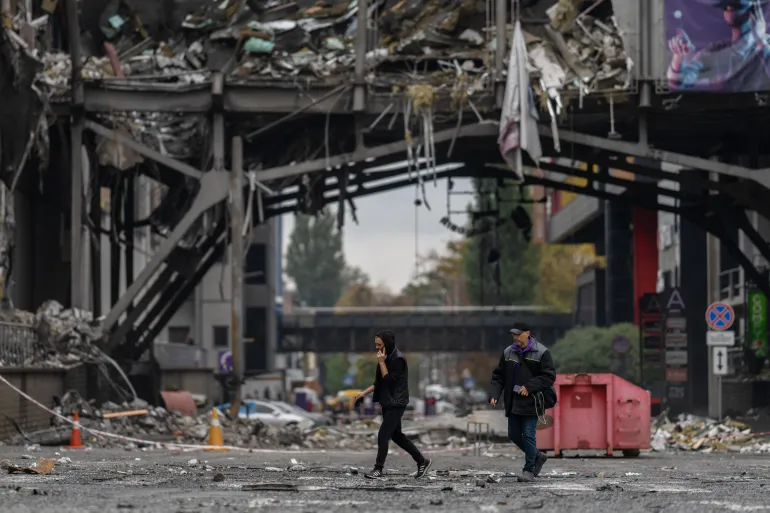
![People walk in front of a damaged shopping mall following an air attack in Kyiv on October 19, 2026, amid the Russian invasion of Ukraine [Oleksii Filippov/AFP]](https://i0.wp.com/occasionaldigest.com/wp-content/uploads/2026/10/AFP__20261019__D3PR8JC__v1__HighRes__UkraineRussiaConflictWar-1792469703.jpg?w=640&ssl=1)








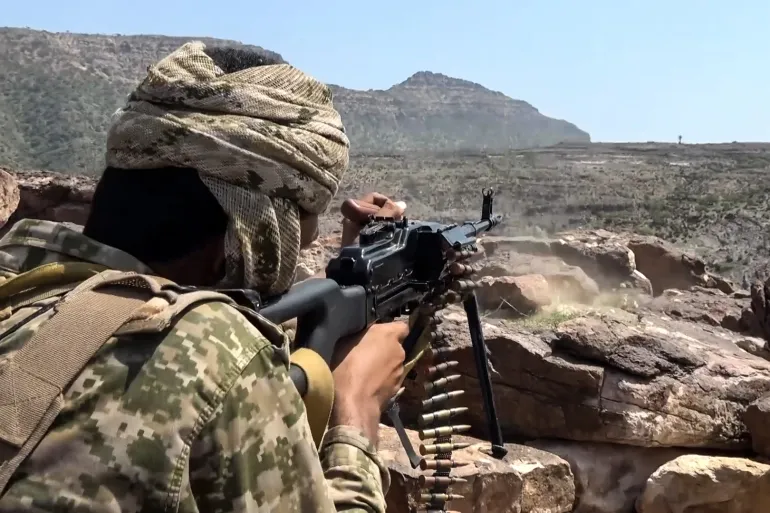



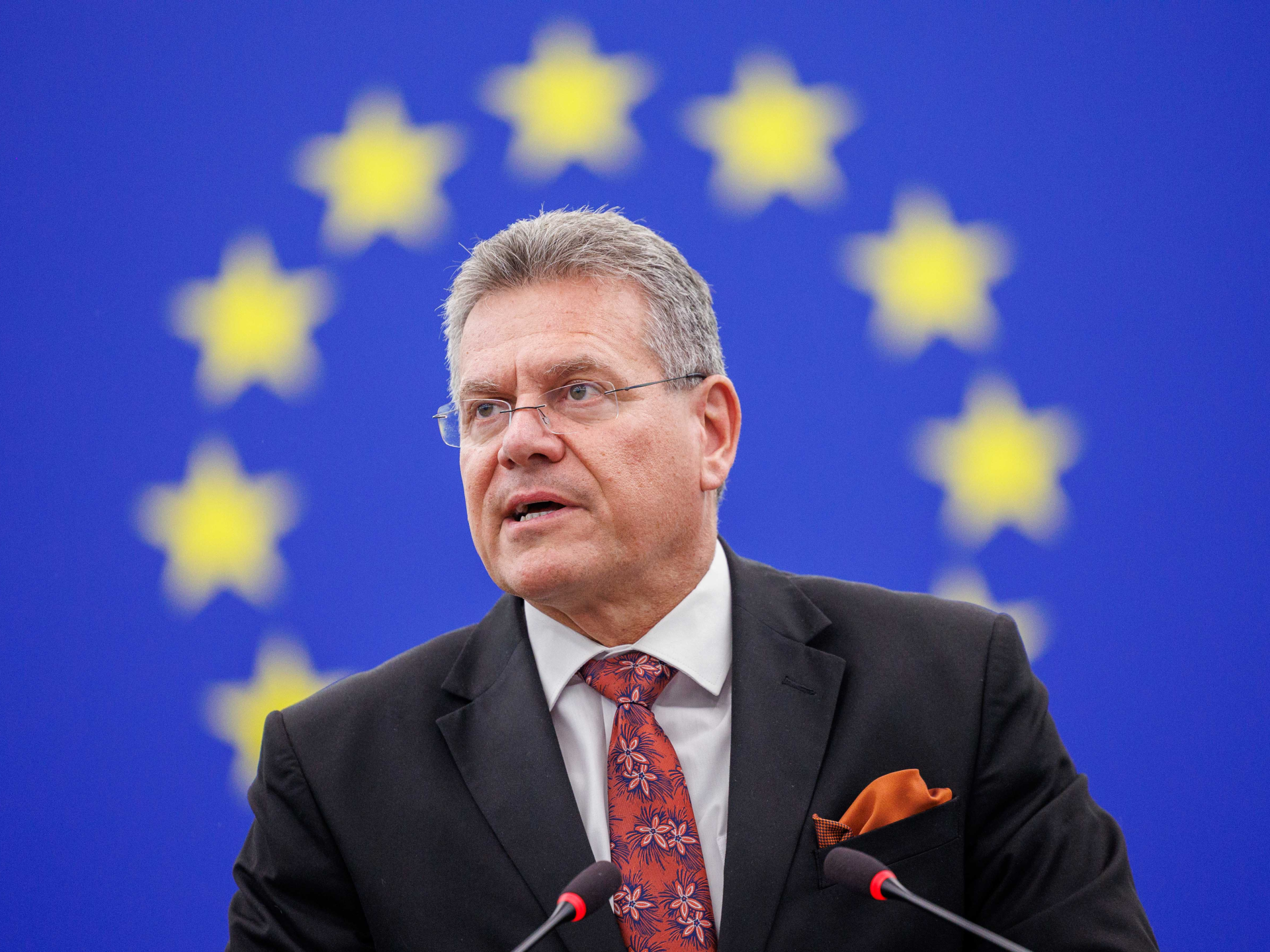




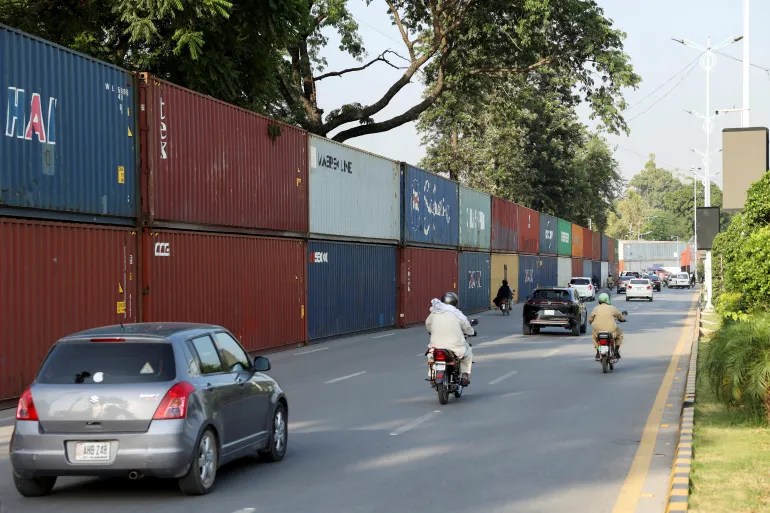
![Traffic moves past shipping containers used to block the area, ahead of a planned march by jailed former Prime Minister Imran Khan's Pakistan Tehreek-e-Insaf (PTI) party, in Islamabad, Pakistan, on September 30, 2026 [Reuters]](https://i0.wp.com/occasionaldigest.com/wp-content/uploads/2026/10/2026-10-02T070015Z_265516849_RC2NTNAKEGKJ_RTRMADP_3_PAKISTAN-PROTESTS-CONTAINERS-1791131201.jpg?w=640&ssl=1)
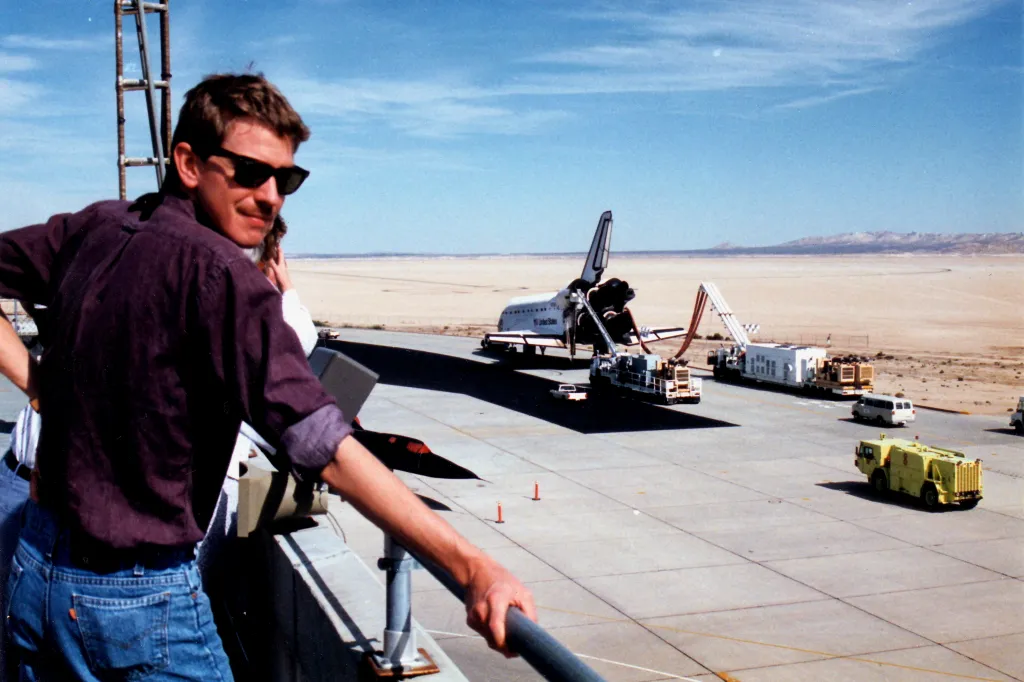






![Iranian-made Zolfaghar missiles are seen on display beside a large portrait of Iran’s Supreme Leader Mojtaba Khamenei at Baharestan Square in Tehran on September 28, 2026 [AFP]](https://i0.wp.com/occasionaldigest.com/wp-content/uploads/2026/09/afp_6abbb983ec1b-1790687619.jpg?w=640&ssl=1)