fast

Coronavirus mortgage relief: Banks act fast for unemployment

With coronavirus cases continuing to rise across much of California and many workers unemployed indefinitely, several major banks and other lenders have agreed to provide mortgage relief to homeowners struggling to make their monthly payments.

The assistance arrives as more than 1 million Californians applied for unemployment benefits over the course of just 12 days through Wednesday because of layoffs or reduced hours amid the pandemic, Gov. Gavin Newsom said Wednesday.

Eligible homeowners would be able to defer mortgage payments for at least three months and perhaps longer if they suffer hardship due to the pandemic. Late payments would not be reported to credit agencies.

Along with the mortgage assistance, Newsom is urging the lenders to extend financial relief to small businesses and student loan recipients “in the days and weeks to follow,” according to an email sent recently to financial institutions by state Department of Business Oversight Commissioner Manuel P. Alvarez.

The moves came as public health officials reported a continued increase in COVID-19 cases, including in Los Angeles County, where the county health officer on Wednesday ordered that all those who test positive for the coronavirus self-isolate, along with those in close contact with the infected.

Officials confirmed 138 new COVID-19 cases Wednesday in the state’s most populous county, for a total of more than 800. Three additional deaths brought the total in Los Angeles County to 13. Statewide, more than 3,100 of those tested have been confirmed to have infections, while 67 have died.

Public health officials emphasized that the actual number of people infected is almost certainly higher, but an accurate count is impossible because so few tests have been given.

The mortgage relief package that Newsom described at an afternoon news conference will come from four of the nation’s largest banks — Wells Fargo, U.S. Bank, Citibank and JPMorgan Chase — as well as 200 state-chartered banks and credit unions.

“We still have people that are struggling to get back to where they were before the Great Recession,” Newsom said of the financial struggles Californians have experienced, now exacerbated by the coronavirus outbreak.

Newsom noted that another huge lender, Bank of America, agreed only to allow customers to defer mortgage payments for one month, but said he is hopeful the institution “will do the right thing” in the near future.

Bank of America disputed Newsom’s assertion that it resisted providing more generous mortgage relief to homeowners. “Bank of America is deferring mortgage payments on a monthly basis until the crisis is over,” spokesman Bill Halldin said.

The continued spread of the coronavirus and the resulting wreckage of the economy suggest the need for even greater financial relief for consumers, Alvarez said in his email.

“As we continue the battle on the public health front, we must also brace ourselves for a financial crisis that is only beginning,” Alvarez wrote. “Now is the time for all institutions, public and private, to do our part in staving off a tsunami of financial harm barreling toward California consumers.”

The governor’s announcement came a week after he ordered all California residents to stay home to help stem the spread of the virus, with limited exceptions for essential workers, including doctors, nurses, grocery store employees and truckers.

Thousands of Californians have lost their jobs or have seen their working hours dramatically reduced, particularly in the hospitality and service industries. And the hardships fall on millions in the state who already struggle to make mortgage and rent payments, given skyrocketing housing costs.

The federal government this month announced that Americans with loans backed by the government-sponsored agencies Fannie Mae or Freddie Mac would be eligible to defer mortgage payments and be shielded from foreclosure if they could not afford to make payments because of the outbreak.

More than 30 state lawmakers on Wednesday sent a letter to Newsom asking for a statewide eviction moratorium. They say fewer than 50 local governments — out of the 539 cities and counties statewide — have passed moratoriums, as the governor urged last week.

Housing advocates called for an eviction ban statewide, particularly for those who aren’t working as a result of the coronavirus. Newsom has said he will take additional steps if he believes local jurisdictions are failing to protect their residents.

Officials warned that the worst days of the pandemic in California are yet to come.

Los Angeles Mayor Eric Garcetti said the city could be six to 12 days from seeing a spike in infections and hospitalizations like the one now afflicting New York City, where the death toll has dramatically increased in recent days.

“It’s coming,” Garcetti said. “The peak is not here yet. The peak will be bad. People will lose their lives.”

San Francisco leaders issued a similar warning, saying it was “plausible” the city could face a crisis similar to the one in New York and fall 1,500 ventilators and 5,000 hospital beds short of the numbers needed.

“It is not even a question as to whether we will need more,” Mayor London Breed said during an hourlong news conference. “Sadly, things are going to get worse.”

Anticipating a surge of patients in the coming days, government officials were working to find additional hospital beds. More than 1,000 beds will be provided by the Navy ship Mercy, which will arrive in Los Angeles on Friday, earlier than expected, according to Pentagon Press Secretary Alyssa Farah.

Officials in Los Angeles and San Francisco rejected suggestions from President Trump that there could be a quick easing of restrictions.

Garcetti said Angelenos should be “prepared for a couple months like this.”

“I know that everybody is hopeful, and some are putting out that hope of us being back in churches by Easter or synagogues by Passover or restarting the economy in a couple weeks,” Garcetti said. “I think we owe it to everybody to be straightforward and honest. We will not be back to … that level of normal in that short period of time.”

Dr. Grant Colfax, director of health for San Francisco, concurred.

“I know there are people out there who will lead you to believe our efforts are too aggressive,” Colfax said, “but I cannot stress enough just how vital they are.”

Los Angeles County Public Health Department Director Barbara Ferrer also said residents should not expect an immediate return to normality.

We would be foolish to not prepare for a similar scenario in L.A. County,” she said. “We talk about numbers, but these aren’t numbers — these are people’s lives.”

Times staff writers Rong-Gong Lin II, Maura Dolan, Taryn Luna and Colleen Shalby contributed to this report.

Source link

Trump holds fast to Tuesday deadline, threatening Iran’s bridges and power plants

President Trump said Monday that the United States and Iran are at a “critical point” in negotiating a potential ceasefire agreement, but the chances of reaching a deal by a Trump-imposed deadline on Tuesday evening appeared uncertain.

In a lengthy news briefing at the White House, the president echoed an expletive-laden Easter Sunday warning to strike Iran’s vital infrastructure if Tehran does not agree to open the Strait of Hormuz by 5 p.m. PDT on Tuesday.

“The entire country can be taken out in one night and that night might be tomorrow night,” Trump told reporters.

Mediators from Egypt, Pakistan and Turkey sent the United States and Iran a draft proposal of the 45-day ceasefire on Friday, the Associated Press reported. Its prospects seemed dim amid the president’s threats and a lukewarm response from Iranian leaders, who dismissed the president’s diplomatic overtures as “unrealistic” and denying direct talks with the United States.

Iranian Foreign Ministry spokesman Esmail Baghaei rejected the latest ceasefire proposal, saying Monday that the American demands were “both highly excessive and unusual, as well as illogical.”

Still, Trump continued to assert that Iranian leadership has been negotiating in good faith. He characterized newly installed leaders as an improvement over their predecessors.

“The people that we are negotiating with now on behalf of Iran are much more reasonable,” he said Monday.

Trump declined to comment further on the ceasefire proposal at the news conference, but told reporters that Iran is negotiating ahead of his Tuesday deadline.

“I can tell you they’re negotiating, we think in good faith,” Trump said. “We are going to find out.”

The president did not say whom the United States is negotiating with, but said the most difficult challenge so far has been establishing a reliable channel of communicating with Iranian officials who he said have “no method of communicating.”

Trump also declined to say whether he was prepared to offer Iran assurances to wind down the conflict, or whether he would escalate by following through with his threats to bomb critical Iranian infrastructure, leaving the door open to both diplomacy and military action.

“I can’t tell you — it depends on what they do. This is a critical period,” he said,

Central to the negotiations is Iran’s control of the Strait of Hormuz, a choke point that, if left blockaded, could continue driving oil prices higher and further destabilizing global energy markets.

Trump, in characteristically unorthodox fashion, floated the possibility of the United States seizing operational control of the waterway and charging tolls for passage, a proposal that he provided without much detail.

“Why shouldn’t we?” Trump said. “We have a concept where we’ll charge tolls.”

He also mused openly about seizing Iranian oil, as he has in recent social media posts in which he floated the idea of using the war to claim Iranian energy resources. He acknowledged public pressure was holding him back from that course.

“Unfortunately the American people would like to see us come home,” he said. “If it were up to me, I’d take the oil, keep the oil and make plenty of money.”

In addition to reopening the Strait of Hormuz, Washington is also demanding the permanent decommissioning of Iranian nuclear sites and an end to its uranium enrichment programs. The proposal also requires Iran to halt support for regional proxies and accept strict ballistic missile limits.

In exchange, the United States says it will provide sanctions relief and assistance with civilian energy production, according to media reports.

Speaking at the White House Easter Egg Roll earlier Monday, Trump showed no signs of softening his posture to bring “hell” to Iran if a deal doesn’t materialize.

“We are obliterating their country. And I hate to do it, but we are obliterating. And they just don’t want to say uncle. … And if they don’t, then they’ll have no bridges, they’ll have no power plants, they’ll have nothing,” he said, adding ominously that “there are other things that are worse than those two.”

Iran has warned of “more severe and expansive” retaliations if Trump follows through on the threats.

Also at Monday’s briefing, Trump celebrated the dramatic rescue of the American officer whose fighter jet was downed by Iran last week. He told reporters the operation to retrieve the wounded officer from “one of the toughest areas in Iran” was possible with a mix of “talent” and “luck.”

The president, however, was angered that a news outlet, which he did not name, reported that the weapons system officer had gone missing and was stranded behind enemy lines. Trump vowed to root out the source of that information, including by threatening to jail the journalist who broke the story.

“We have to find that leaker because that is a sick person,” Trump said. “We are going to find out, it is national security. The person who did the story will go to jail if he doesn’t say.”

Also Monday, Israel struck Iran’s largest petrochemical facility in Asaluyeh and killed Gen. Majid Khademi, the head of the Islamic Revolutionary Guard Corps’ intelligence organization.

The Israeli military also hit three Iranian airports, purportedly targeting dozens of helicopters and aircraft it said belonged to the Iranian air force.

Iran responded with missile strikes targeting Haifa, Israel, and energy infrastructure in Kuwait and Bahrain.

Source link

Gloucester 17-36 Leicester: Fast start helps Tigers secure Prem win

Leicester’s early four-try burst laid the foundations for a fourth successive Prem victory as they overcame Gloucester at Villa Park to retain the Slater Cup.

Wing duo Will Wand and Gabriel Hamer-Webb both scored tries before a quickfire double from Jamie Blamire put the rampant Tigers 22-0 up inside the opening quarter.

Matias Alemanno responded for the Cherry and Whites, but Orlando Bailey grabbed a fifth Leicester try to cement their grip just before half-time.

Gloucester improved after the interval and Will Joseph and Dian Bleuler went over to give them hope, but it was not enough and Harry Wells’ late score sealed the Tigers’ win.

They tore Gloucester to shreds during the early exchanges, with Wand taking only two minutes to open the scoring as his swerving run on the left took him clear of two defenders to race over.

Hamer-Webb soon followed suit on the opposite flank, latching onto a perfectly-timed pass from Billy Searle and streaking clear, before Blamire’s double secured his side’s bonus point with only 16 minutes on the clock.

With Ollie Chessum dominating at the lineout, Leicester’s pack swung around for Blamire to crash over the line, and the hooker grabbed his second following a deft one-two with Hamish Watson.

Alemanno finally got Gloucester on the scoresheet from close range after a spell of pressure on the Tigers’ line, but many of their attacks floundered because of untidy passing, and they fell further behind on the stroke of half-time.

The impressive Wand began the move with another darting run and played a key role in its climax, offloading while on the ground for Bailey to dance through a gap in the Gloucester defence and extend the Tigers’ lead to 24 points.

The Cherry and Whites began strongly after the turnaround, building phases and reducing the deficit when Caolan Englefield set up Joseph to force his way over in the corner.

Leicester appeared to ease up and Seb Atkinson made ground to create renewed pressure that resulted in Bleuler, a half-time replacement for Val Rapava-Ruskin, dotting down with eight minutes still to play.

But it made little difference to the outcome and Wells’ converted score late on, which was allowed to stand after initial suspicions of offside, finally ended Gloucester’s hopes.

It means the Slater Cup – contested twice each season in honour of Ed Slater, who captained both clubs and is now living with motor neurone disease – remains in the Tigers’ possession.

Leicester Tigers head coach Geoff Parling told BBC Radio Leicester:

“It was a great start. Somebody told me it was our fastest-ever bonus point, and we were completely on top and playing well.

“We had nearly 70% territory in the first 15 minutes. We were forcing errors and playing off the back of that.

“There was frustration in the second half. At times we probably lost a bit of control around the set-piece and turning the ball over. We couldn’t really get a foothold in the game, when I think one more try would have put them to the sword and they’d have been overplaying.

“But obviously to come away on a big occasion with the five points was the result we wanted. It’s difficult, but the very best teams keep up that intensity for 80 minutes and that’s our challenge now.”

Gloucester head coach George Skivington told BBC Radio Gloucestershire:

“The first 20 minutes was as bad as we could have had. We missed some easy tackles out wide, gave them too easy tries and got pinged off the park in the scrum, which has been an area of strength for us recently.

“If we had a game next week, there are definitely a few lads who wouldn’t be starting for Gloucester after the way they came out of the blocks.

“If I’m honest, I think it was centred around a couple of individual performances in that first 20. A lot of the lads were putting it in and by the end of that first half we’d opened Leicester up a lot.

“Our passing wasn’t accurate enough to take advantage of it. Throughout the whole game there were a lot of dropped balls, a lot of little forward passes, and that was frustrating.”

Source link

I got my new UK passport in under 2 weeks without fast track – here’s how

If you are planning a holiday abroad, you will want to double check your passport is valid

If you’re planning a trip overseas soon, it’s crucial to ensure your passport is valid for travel. This means, depending on your destination, you might need to renew it earlier than anticipated.

For example, if you’re jetting off to Spain, the Foreign Office warns travellers that the country adheres to Schengen area rules. This means your passport must have a ‘date of issue’ less than 10 years before the date you arrive.

If you renewed your passport before October 1, 2018, it may have a date of issue that is more than 10 years ago. The rules also mean that you should have an ‘expiry date’ at least three months after the day you plan to leave the Schengen area – the expiry date does not need to be within 10 years of the date of issue.

In other places, like Cyprus, you need to have “at least one blank page for stamping”. So if you need to get a new passport, here’s what you need to know before you’re set to travel abroad.

How long did it take me to get my new blue UK passport?

I submitted an application for a new passport on July 13 last year and posted my old passport, as directed, on July 14. The Passport Office received my old one on July 15 – this step is necessary as you cannot possess two passports.

I received my next update on July 23, informing me that my passport application had been approved. This was followed by an email on July 24 letting me know my new passport had been printed.

The next day, I received my blue passport with a new photo I had taken myself at home. So it took me less than two weeks to get my new travel document – and I didn’t pay for fast track.

So I was pleasantly surprised at how swift and straightforward the entire process was. You can check how long it will take to get a passport before you apply.

And if you need a passport urgently, you can opt for their Online Premium or 1 week Fast Track services. They warn: “Do not book travel until you have a valid passport – your new passport will not have the same number as your old one.”

How to apply for a new UK passport?

You can submit an application via the GOV.UK website. It caters for various needs, whether you need to apply for, renew, replace or update your passport, and you can also pay for it online.

How much does a UK passport cost?

If you’re looking to save money, it’s worth knowing that it’s £12.50 cheaper to apply for a passport online than by post. It’s worth noting that prices increase on April 8, 2026.

Apply Online

  • Adult (16 and over) standard 34-page passport – £94.50
  • Adult (16 and over) 54-page frequent traveller passport – £107.50
  • Child (under 16) standard 34-page passport – £61.50
  • Child (under 16) 54-page frequent traveller passport – £74.50
  • Passport for people born on or before 2 September 1929 – Free

Apply by paper form

  • Adult (16 and over) standard 34-page passport – £107
  • Adult (16 and over) 54-page frequent traveller passport – £120
  • Child (under 16) standard 34-page passport – £74
  • Child (under 16) 54-page frequent traveller passport -£87
  • Passport for people born on or before 2 September 1929 – Free

Can I get my passport quicker?

If you’re due to travel abroad soon and are concerned it won’t arrive in time, you can opt for a premium service. Again, prices rise on April 8.

  • When you’ll get your passport: Usually within 3 weeks (delivered securely to your home)
  • Cost: £94.50 (or £107.50 for a 54-page frequent traveller passport)
  • Needs an appointment: No
  • When you’ll get your passport: Delivered by courier to your home 1 week after the appointment
  • Cost: £178 (or £191 for a 54-page frequent traveller passport)
  • Needs an appointment: Yes
  • When you’ll get your passport: Collect it 4 hours after your appointment
  • Cost: £222 (or £235 for a 54-page frequent traveller passport)
  • Needs an appointment: Yes

How can I get a free passport?

If you were born on or before September 2, 1929, you can get or renew a British passport for free if you’re a British national. You can also utilise the Post Office Check and Send service for free and receive free secure delivery.

You must pay a fee if you need a passport urgently or want a frequent traveller passport, which provides 54 pages instead of 34.

Source link

Montana senator pulls a fast one to boost preferred successor

For months, the senior U.S. senator from Montana pondered his political future.

Or so he said.

Wrapping up his second term and facing a glide path to a third, Steve Daines unexpectedly opted this month against seeking reelection, saying in an aw-shucksy video he planned to spend more time back home in Montana and enjoy more cherished moments with his seven grandkids.

Notably, after long “wrestling with this decision,” Daines announced his intent a scant two minutes after the deadline passed for candidates to put their names on the ballot. March 4 at 5:02 p.m local time, to be precise.

More notable still, Daines’ preferred successor, Republican former U.S. Atty. Kurt Alme, jumped into the race at 4:52 p.m. that very same day.

There are relay runners who might learn a thing or two from their timing and coordination.

As part of the seamless handoff, Alme was swiftly endorsed by President Trump, Montana’s Republican governor, Greg Gianforte, and its other Republican senator, Tim Sheehy, for all intents settling the GOP contest and, quite likely, choosing the state’s next member of the U.S. Senate.

Never mind what voters might have wished, or other prospective candidates might have had in mind.

“There are a lot of Republicans in the state, folks with political ambitions, who are extremely peeved right now,” said Kal Munis, a Montana native and political science professor at Auburn University, who closely tracks politics in his home state.

Moreover, Munis said, with enough notice a heavy-hitting Democrat might have entered the contest, instead of the lowly bunch now running hopeless campaigns.

Montana, which has a rich Democratic history, has become a solidly Republican state, though the makeover took some time to complete.

As recently as 2008, Barack Obama made a serious run there, losing to John McCain by less than 3 percentage points. Montana had a Democratic governor until Gianforte was elected in 2020 and a Democratic U.S. senator until Jon Tester was defeated in 2024.

Still, while Daines’ seat hardly appeared at great risk for the GOP, a fight for the party’s nomination might have been a costly distraction, diverting money and attention that could go elsewhere as Republican prospects for the midterm election grow increasingly dim. (An unpopular war and shaky economy that’s been knee-capped by a sudden spike in oil prices will do that.)

Of all people, Daines certainly appreciates the bigger political picture, having led Republicans’ Senate campaign committee during the 2024 cycle. So he and his allies short-circuited the election process by laying hands on Alme, who stepped down as U.S. attorney to sidle into the Senate.

Seth Bodnar was among those who quite rightly criticized Daines for, as Bodnar put it, having “so little respect for Montana Republicans that he withdrew at the last minute to coronate his handpicked successor instead of giving them a voice at the ballot box.”

It just goes to show, Bodnar suggested, “the disgusting arrogance of Washington politicians and their party bosses who trade power back and forth like candy.”

Bodnar, the former president of the University of Montana, is running for Senate as an independent, conspicuously steering clear of the toxic Democratic brand. There is speculation the high-handed behavior of Daines, Trump and other Republicans might be enough to give Bodnar’s steep-odds candidacy a decent shot in November.

Munis, for one, is doubtful.

“There are a number of activist types who are deeply angered by this,” he said. “But when it comes to tallying votes in an election, that’s just a drop in the bucket.”

Unfortunately, Daines’ scheming, stick-it-to-the-voters approach isn’t just a Montana Republican thing.

Democratic Rep. Chuy Garcia of Illinois announced in the fall that he would not seek a fifth term this year. The last-second move — which came after Garcia had earlier filed paperwork to run for reelection — made it so his chief of staff and preferred successor, Patty Garcia (no relation), was the only major Democrat to appear on the ballot, virtually guaranteeing her election in November.

The cynical maneuver so disgusted Rep. Marie Gluesenkamp Perez, a maverick Democrat from rural Washington state, that she defied party leaders and introduced a resolution rebuking Garcia.

His actions were “beneath the dignity of his office and incompatible with the spirit of the Constitution,” said Gluesenkamp Perez, who was jeered and booed by fellow Democrats during the floor debate for having the temerity — heavens to Betsy! — to put principle above knee-jerk partisanship. The measure passed the House, 236 to 183, with only 22 Democrats joining Gluesenkamp Perez in support.

In California, the law prevents incumbents from pulling off the kind of underhanded stunt that Garcia and Daines managed. That’s because the filing deadline is automatically extended for an extra five days whenever a sitting lawmaker opts against seeking another term.

So, for instance, when Rep. Darrell Issa suddenly announced this month he would not run for reelection, he endorsed his favored replacement, San Diego County Supervisor Jim Desmond, but couldn’t grease the process to see to it that Desmond takes his place.

Legislators in other states should pass a law like the one in California to prevent the undemocratic shenanigans that in effect neutered voters in Montana and the Chicago area.

That is, if they truly believe elections matter and voters should have a choice and not stand by powerless as their government representatives are anointed from on high.

Source link

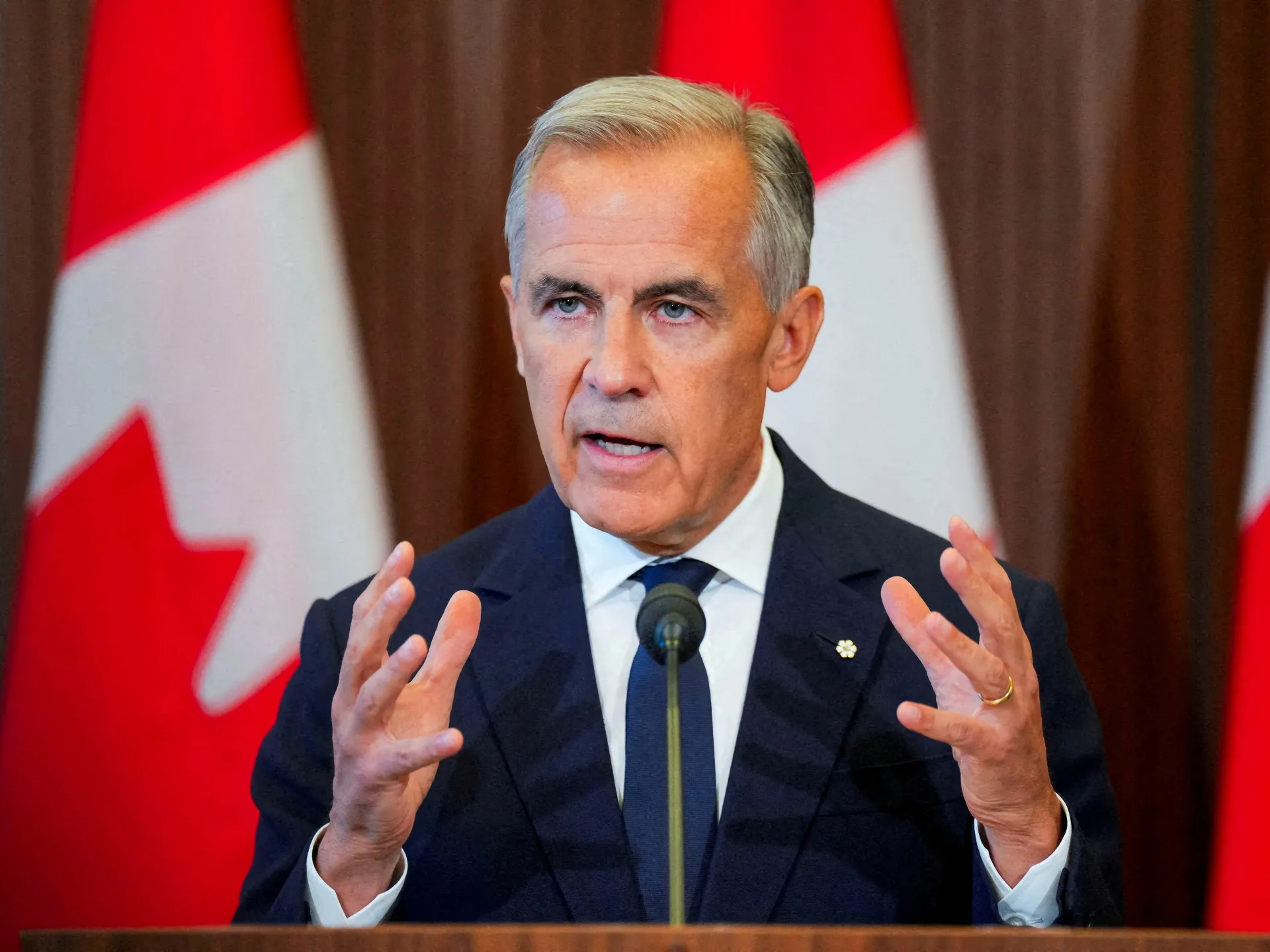
How Carney’s ‘build fast’ push divides Canada’s Indigenous peoples | Business and Economy

Vancouver, Canada – Prime Minister Mark Carney’s efforts to unite Canadians around protecting the nation’s economy from the US are hitting roadblocks as he nears one year in power.

Indigenous peoples across Canada are increasingly divided over Carney’s aggressive push to expand resource extraction and projects on their ancestral lands.

Recommended Stories

list of 4 itemsend of list

Some experts question how his government can advance its agenda while respecting Indigenous rights enshrined in the country’s constitution.

March 14 will mark one year since Carney, former head of Canada’s central bank, was sworn into office.

After an election last year, his centrist Liberal party formed a minority government with the highest share of the popular vote in 40 years.

A key to Carney’s victory was his pledge to “stand strong” against US trade threats and grow Canada’s economic sovereignty, an assertive approach the prime minister has called “elbows up”.

“In the face of global trade shifts … we will build big and build fast to create a stronger, more sustainable, more independent economy,” Carney said in a statement on March 6.

Part of that push was to create a Major Projects Office to speed up approvals of economic developments, starting by fast-tracking 10 mega-projects.

They include two massive liquefied natural gas (LNG) plants and an open-pit mine in British Columbia, a nuclear plant in Ontario, a Quebec shipping terminal, and wind power in Atlantic Canada.

Those developments are worth 116 billion Canadian dollars ($85bn), the government estimates.

‘Our rights get pushed to the side’

Carney’s approach to the US trade war has gained support from Canadians, according to recent opinion surveys.

A March 3 poll of 1,500 citizens by Abacus Data found that 50 percent say Carney is protecting Canada’s core interests when dealing with Trump — compared with 36 percent with negative views.

“Whenever Canada is threatened, the protectionist nature of the state kind of re-emerges,” said Shady Hafez, assistant politics professor at Toronto Metropolitan University.

“Self-preservation of Canada becomes the priority.”

Hafez, a research associate with the Yellowhead Institute, is a member of the Kitigan Zibi Anishinabeg First Nation in Quebec.

He said there are growing concerns in his community and others about Carney’s push to accelerate mega-projects across the country.

“For that to happen, Canada needs land, and it needs resources,” Hafez said, “and it takes those lands and resources from us.”

Blowback was swift after Carney pledged to build a highly controversial oil pipeline to the west coast in a late November deal signed with Alberta, Canada’s oil powerhouse.

Carney’s culture minister swiftly resigned, decrying “no consultation” with Indigenous nations and “major environmental impacts”.

And the Assembly of First Nations (AFN), which represents more than 600 Indigenous chiefs, unanimously passed an emergency resolution opposing a new pipeline.

“First Nations people, we stand with Canada against Trump’s illegal tariffs, but not at the expense of our rights,” AFN National Chief Cindy Woodhouse Nepinak told Al Jazeera in an interview. “If you want to fast-track anything, you better make sure that First Nations are being included right off the bat.

“Trying to sideswipe or push aside First Nations people when there’s agreements between provinces and the feds — they have to remember that First Nations are here … and they are to be respected in their own homelands.”

The rights of Indigenous people in the country are enshrined in Canada’s constitution.

But too often, Hafez said, in the name of national prosperity, “Indigenous communities have to suffer.”

“Whenever there’s somewhat of an emergency, our rights get pushed to the side.”

But the resistance to the major projects push isn’t universal.

The First Nations Natural Gas Alliance praised Carney’s “much more aggressive” approach compared with his predecessor on developing energy resources.

But the group’s CEO, Karen Ogen, acknowledged there’s a “highly charged environment” on such issues.

“First Nations communities continue to face significant socioeconomic barriers”, stated the former chief of Wet’suwet’en First Nation. “LNG and natural gas development are not just an opportunity; they are a national imperative.

“Billions of dollars in procurement benefits and revenues are flowing to First Nations.”

Call for collaboration ‘on all major projects’

The trade war with the US has galvanised and united many Canadians — but with little acknowledgement of the impacts on Indigenous communities, said Sheryl Lightfoot, political science professor at the University of Toronto.

Lightfoot is vice-chair of the UN Expert Mechanism on the Rights of Indigenous Peoples.

“These projects, by many accounts, are advancing without full consultation or transparency”, she told Al Jazeera.

“It appears that economic or geopolitical pressures … are being used to justify bypassing Indigenous rights and environmental safeguards.”

But Canada’s Major Projects Office insists it will “seek input, hear concerns and ideas, and work in partnership moving forward” with Indigenous communities — and “will not be skipping over vital project steps including consultations with Indigenous Peoples,” an agency spokesperson wrote in an emailed statement.

“We are unlocking Canada’s economic potential, while respecting our environmental responsibilities and the rights of Indigenous Peoples,”

A significant number of projects on Carney’s fast-track list are concentrated in British Columbia (BC).

Those include two liquefied natural gas (LNG) terminals on the Pacific coast — LNG Canada and Ksi Lisims LNG — as well as the electric transmission line to power the sector, and a copper and gold mine.

BC is unique in the country because, historically, very little of its land was subject to treaties between the Crown and First Nations. Canada’s top court has repeatedly ruled in favour of First Nations rights and title in the westernmost province.

All four major projects in the province have proven divisive among the region’s Indigenous peoples — even though several have the backing of individual First Nations governments.

One of those is the massive Ksi Lisims LNG plant, in which the Nisga’a Nation is a direct partner.

Co-developed with Texas-based Western LNG, the mega-project will “benefit all Canadians,” said Nisga’a President Eva Clayton.

In 2000, her nation became the first in BC to reach a modern self-government treaty.

“We are co-developing the Ksi Lisims LNG project on land that our nation owns under our treaty,” she told a parliamentary committee on February 24.

“This project is expected to bring in 30 billion [Canadian] dollars [$22bn] in investment, create thousands of skilled careers, and strengthen Canada’s leadership in low-emission LNG.”

‘Elbows up’ meets opposition

But LNG is fiercely opposed by other nearby First Nations.

Tara Marsden is Wilp sustainability director for the Gitanyow Hereditary Chiefs, traditional leaders of the 900-member Gitanyow community.

“We have a lot more concerns and evidence regarding impacts in our territory,” she said.

“The federal government has done zero consultation on their fast-track list and the projects that actually affect our territory.”

Gitanyow oppose the BC projects on the fast-track list as harming their interests.

She said Ottawa cannot ignore First Nations opposition, even if there is support from others like the Nisga’a.

“They have a right to develop in their own territories”, said Marsden. “But if you have maybe 20 to 30 First Nations whose territory would be crossed — and you get maybe three on board — that’s not a resounding consensus.

“They’re just trying to use this small handful of nations to steamroll over everybody else.”

If Canada truly wants to strengthen its sovereignty and economy, she said, it must do so alongside Indigenous people.

“This is something that First Nations across the country have been saying since Carney took the ‘elbows up’ approach,” Marsden said.

“The government has really just ignored that … and actually now back-stopping these mega-projects with taxpayer dollars.”

McGill University economics lecturer Julian Karaguesian served for decades in the Department of Finance and Canada’s Embassy in Washington, DC.

He agreed that most Canadians support Carney’s attempt to boost the economy with “nation-building” projects.

“I think they’re a fantastic idea”, he told Al Jazeera. “But we’ve committed to consultations with First Nations, Metis and Inuit people.

“Once we’ve started compromising on economic and social justice … we can create bitterness. First Nations leaders understand the situation we’re in, and I think [Ottawa] can work with them.”

Even on projects endorsed by some First Nations, the international legal principle of “free, prior and informed consent” must still apply to other communities impacted, said Lightfoot.

That’s “not simply a procedural requirement” to rubber-stamp projects, she said.

“It is a substantive right, anchored in Indigenous peoples’ self-determination and their ability to make decisions about matters that affect their lands, communities, and futures.”

And that could risk slowing down Carney’s hopes to speed through projects if there is no Indigenous consensus — potentially tying more divisive ones up in the courts.

“Failure to include Indigenous knowledge and decision-making early in the process,” Lightfoot said, “can undermine the legitimacy and fairness of project approvals.”

Carney’s ratings among First Nations are “mixed,” says AFN’s national chief. One positive, she noted, is his openness to meeting Indigenous leaders raising concerns.

But with many of the prime minister’s economic hopes dependent on building “national interest” infrastructure on First Nations homelands, Woodhouse Nepinak said the relationship needs care.

“Carney is at a crossroads in his personal relationship with First Nations,” she said.

“And we understand First Nations rights are under threat in new ways by this government.”

Source link