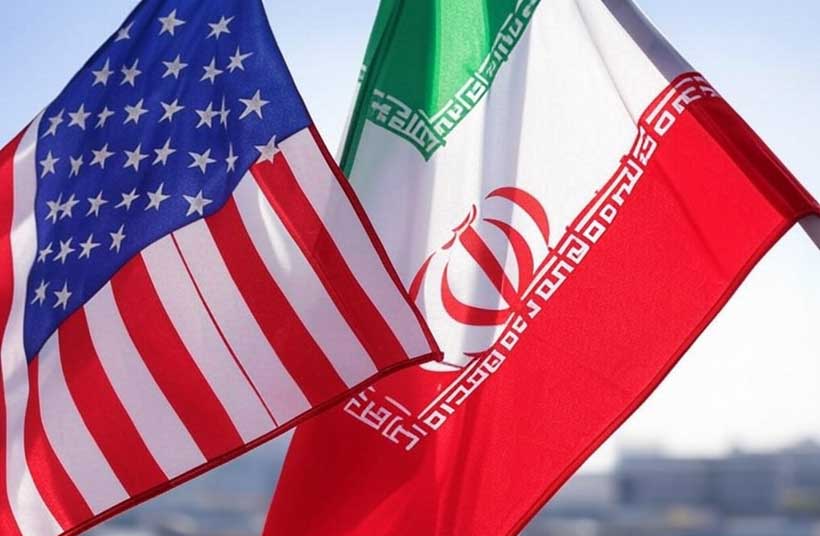
Iran on Monday denied that any negotiations were taking place with the United States, directly contradicting U.S. President Donald Trump’s claim that talks were scheduled later in the day and exposing fresh uncertainty over Washington’s strategy after months of military confrontation.
The conflicting statements came after Trump once again backed away from threatened military action against Iran, saying he preferred diplomacy over escalation. Tehran, however, insisted that no negotiations were planned and that no meetings with American officials had been arranged.
Iran Rejects Trump’s Claims
Speaking aboard Air Force One on Sunday, Trump said the United States would begin negotiations with Iran on Monday afternoon, describing diplomacy as preferable to launching another round of attacks.
Iran swiftly dismissed the claim.
Stay ahead of the geopolitical week.
MD Briefing delivers expert analysis across five global fronts — the Indo-Pacific, energy, geoeconomics, European security, and the Middle East — every Monday morning. Free.
Foreign Ministry spokesman Esmail Baghaei said there were no negotiations under way with Washington and no plans to host American officials or dispatch Iranian negotiators abroad. He added that, apart from Foreign Minister Abbas Araqchi, who is currently on a religious pilgrimage in Iraq, all Iranian negotiators remain inside the country.
A senior Iranian source also told Reuters that no talks had been scheduled and that Araqchi would remain unavailable until at least the end of the week.
According to Tehran, the only ongoing discussions involve Oman and focus exclusively on managing shipping through the Strait of Hormuz.
A Familiar Cycle of Escalation and Retreat
The latest episode mirrors a pattern that has defined the five month conflict between Washington and Tehran.
Since launching Operation Epic Fury alongside Israel, Trump has repeatedly threatened major military action before stepping back at the last moment, often citing diplomatic efforts as justification.
Iran has consistently rejected direct negotiations since the collapse of a U.S. backed memorandum of understanding in early July, arguing that Washington has failed to uphold previous commitments while continuing military pressure.
The repeated cycle of escalation followed by de escalation has left uncertainty hanging over regional security and global energy markets.
Hormuz Remains the Central Dispute
At the heart of the dispute remains the Strait of Hormuz, the world’s most strategically important oil shipping route.
Washington argues that the failed June agreement required Iran to reopen the waterway to unrestricted international shipping. Tehran maintains that the document explicitly preserved its authority over traffic through the strait, allowing it to retain significant leverage.
The inability of the United States to secure unrestricted access has become one of the most significant unresolved issues of the conflict.
For the Trump administration, failure to reduce Iran’s influence over Hormuz would represent a strategic setback after months of military operations aimed at weakening Tehran’s regional position.
Strategic Goals Remain Unfulfilled
Five months into the conflict, many of Washington’s stated objectives remain largely unmet.
The United States has sought to dismantle Iran’s nuclear programme, reduce its capacity to strike regional rivals, protect commercial shipping, and increase pressure on Iran’s leadership.
Instead, Iran has continued to demonstrate its ability to disrupt regional energy infrastructure and maritime trade while maintaining leverage over one of the world’s most critical energy chokepoints.
Each round of military escalation has been followed by Iranian retaliatory actions targeting shipping, Gulf energy infrastructure, or U.S. interests in the region, complicating Washington’s efforts to establish deterrence.
Despite the diplomatic confusion, financial markets welcomed Trump’s decision not to proceed with further attacks.
Brent crude prices fell more than 4 percent to around 84 dollars per barrel as traders anticipated a reduced immediate risk of supply disruptions in the Gulf.
Nevertheless, tensions remain elevated.
The British maritime security organisation UKMTO reported that a commercial vessel in the Strait of Hormuz detected an explosion in nearby waters overnight, although no injuries or damage were reported.
Diplomatic Uncertainty Persists
The contradictory messages from Washington and Tehran highlight the absence of a clear diplomatic pathway toward ending the crisis.
While Trump continues to present negotiations as an alternative to military action, Iran’s categorical denial suggests that no formal channel currently exists between the two governments.
With the Strait of Hormuz still contested and military incidents continuing across the Gulf, the conflict remains caught between diplomacy and confrontation, leaving regional stability and global energy markets vulnerable to further shocks.
With information from Reuters.