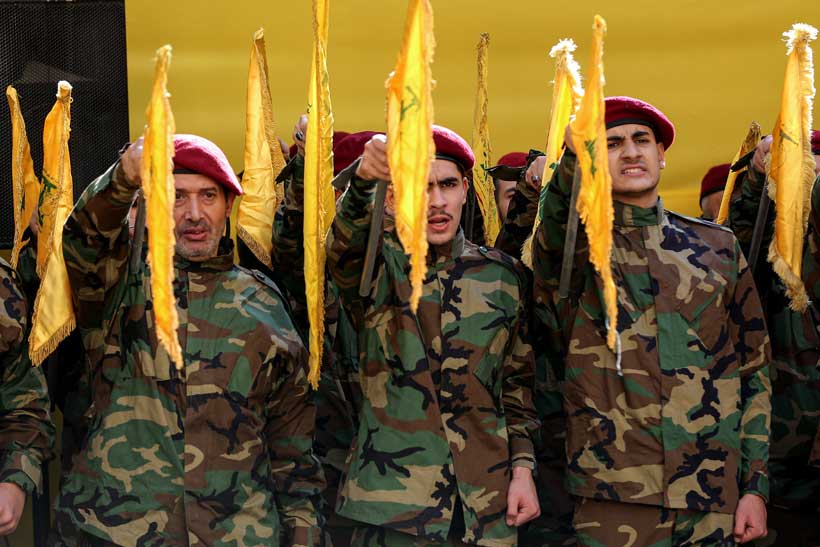
Hezbollah reported on Monday that its fighters engaged Israeli troops in eastern Lebanon during an overnight airborne raid, marking the second such operation in the area in recent days. The conflict between Israel and the Iran-backed group has drawn Lebanon deeper into the regional war, which began after Hezbollah opened fire to avenge the killing of Iran’s former supreme leader.
The Israeli military has not immediately commented on the latest Hezbollah claim. In previous operations, the military carried out airstrikes across Hezbollah-controlled southern Beirut, including targeting financial institutions like Al-Qard Al-Hassan. Lebanese authorities report nearly 400 people have been killed in the country since March 2, including 83 children and 42 women, though the toll does not distinguish combatants from civilians. Israel confirmed two soldier deaths in southern Lebanon—the first Israeli military casualties since the outbreak of hostilities.
Expanding Operations
Hezbollah stated that around 15 Israeli helicopters flew over eastern Lebanon after midnight, deploying troops observed approaching Lebanese territory from Syria. The region, the Bekaa Valley, is a stronghold of Hezbollah’s political and security apparatus. This follows a similar Israeli raid near Nabi Chit on March 2–3, which Lebanese officials said killed 41 people. Israel described that previous operation as an attempt to recover the remains of Ron Arad, a navigator missing since 1986.
Civilian Displacement and Urban Strikes
The war has prompted mass displacement, with hundreds of thousands fleeing southern Lebanon and Beirut’s southern suburbs, known as Dahiyeh. Israeli strikes have also hit locations outside Hezbollah strongholds. On Sunday, a drone strike in Beirut’s Rouche seafront district reportedly killed five senior commanders of Iran’s Revolutionary Guards Quds Force, illustrating the widening geographic and operational scope of the conflict.
Strategic Posturing
Israel has reinforced its military presence in southern Lebanon, establishing forward defensive positions in anticipation of potential Hezbollah attacks into Israel. The military maintains troops at five positions in the region, a posture originating from the 2024 war with Hezbollah.
Analysis: Escalation Risks
The repeated incursions and airstrikes signal a deepening and increasingly unpredictable phase of the Israel-Hezbollah conflict. Hezbollah’s engagement of Israeli forces in eastern Lebanon demonstrates its capacity to operate beyond the southern front, potentially broadening the battlefield.
For Israel, the operations appear aimed at both tactical objectives such as neutralizing high-value targets—and broader deterrence, signaling its intent to strike Hezbollah assets and Iranian-linked operatives throughout Lebanon. For Lebanese civilians, however, the widening conflict exacerbates humanitarian pressures, including casualties, mass displacement, and infrastructure destruction.
The situation underscores the risk of further regional escalation, with Syria and Iran-linked actors already drawn into the conflict, raising the possibility of a protracted war with extensive human and geopolitical costs.
With information from Reuters.