Iran’s Foreign Ministry spokesperson said overnight clashes in the Gulf between Tehran and Washington showed how Iran will respond to the enemy with strength and power.
Police crack down down on supporters of the Joint Awami Action Committee, which plans to hold a rally Tuesday.
Published On 8 Jun 20268 Jun 2026
At least 11 people have been killed as police clashed with supporters of an outlawed group in Pakistan-administered Kashmir, officials said on Monday, a day before a planned protest over political rights and legislative representation.
Dozens of others, including police officers and civilians, were wounded in the violence that erupted Sunday after the Supreme Court of Pakistan-administered Kashmir ruled that 12 legislative seats reserved for Kashmiri refugees living in Pakistan are constitutionally protected and cannot be abolished without a constitutional amendment.
Recommended Stories
list of 3 itemsend of list
The landmark ruling came before a rally planned for Tuesday by the outlawed Joint Awami Action Committee, or JAAC, which has long demanded greater political rights for people in the region and the abolition of the refugee seats, on the grounds that the refugees have disproportionate influence.
The group has organised large protests in recent years, a number of which have turned violent.
“Four police officers and a passer-by died after miscreants shot at them,” Sardar Waheed Khan, commissioner of the Poonch sector in the region, told the Reuters news agency. “As the result of the law enforcers’ response, six protesters were killed,” he said.
Police Chief Liaqat Malik said 23 security officials and 50 protesters were among the injured in Sunday’s incident, with 30 offenders arrested in the Himalayan region that is a flashpoint with neighbouring India.
According to the regional police, armed supporters of the JAAC opened fire on security forces in Rawalakot, a city in Pakistan-administered Kashmir, and later surrounded the Combined Military Hospital, disrupting medical services.
Authorities said security forces eventually dispersed the crowd and restored order.
Police accused protesters of setting fires and damaging government and private property.
“The state has begun a massacre of our people in Rawalakot,” Shaukat Nawaz Mir, a JAAC leader, said in a video message on X, referring to the district where the incident happened. He pledged that the group would stay united to take part in the June 9 rally.
On Friday, the regional government designated the JAAC as a proscribed group under an anti-terror law, and advised domestic and foreign tourists to leave the region before June 9.
Mass demonstrations in the last two years by the JAAC against the rising costs of flour and electricity have turned deadly after violent crackdowns on protesters by security forces.
Khan, the police commissioner of the Poonch sector, said, “The JAAC leadership is misleading the masses by terming it a massacre. The state’s action was meant to restore law and order.”
When security forces tried to disperse the protesters, activists used automatic rifles, petrol bombs, and other weapons to target them, he said.
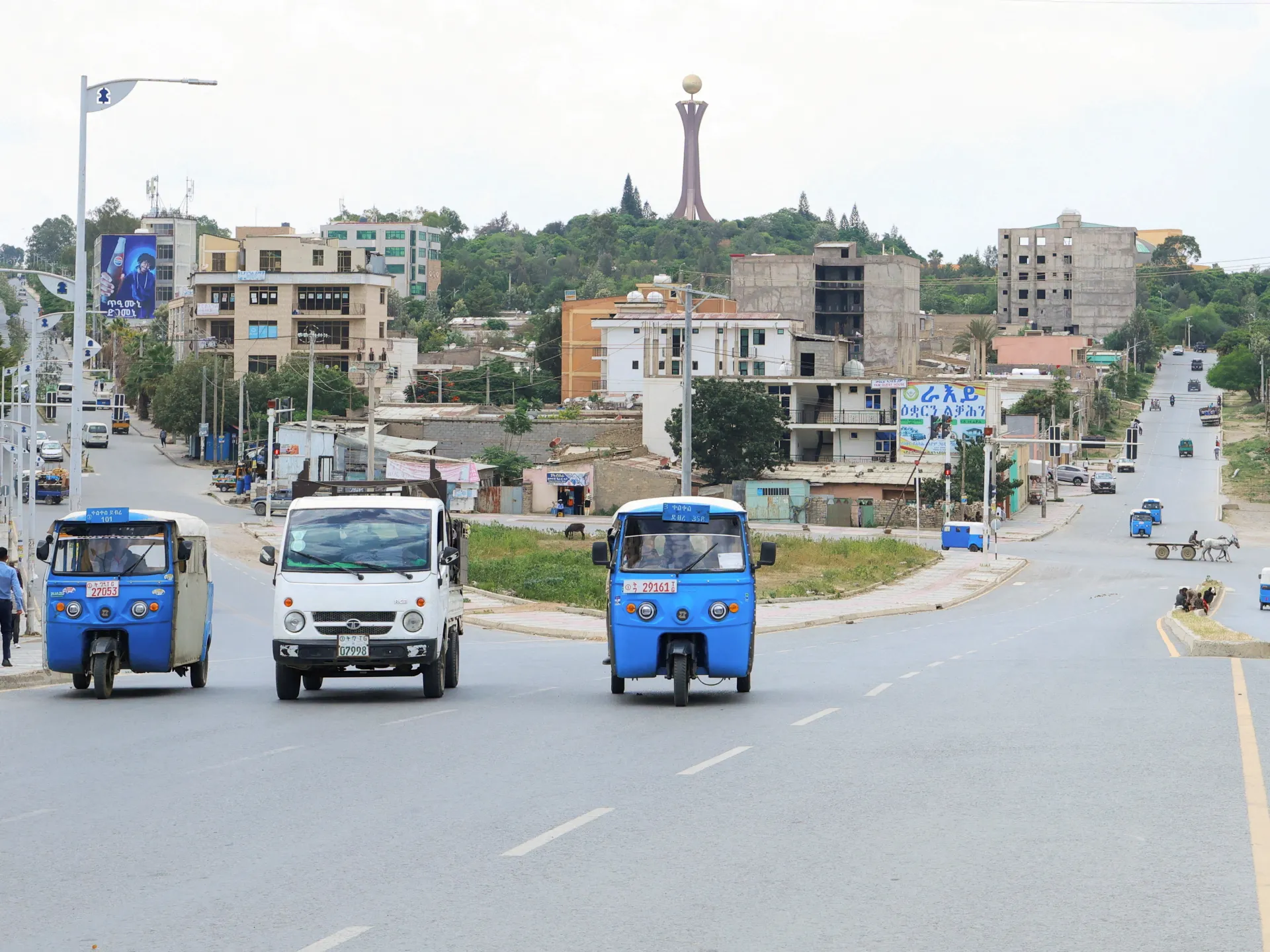
Mogadishu, Somalia – Mustafa, 33, dreads election time in Somalia. He drives a bajaj — a three-wheeled taxi — and says that when tensions rise, as they always do when polls are near, the whole city feels it, and drivers like him are among the first.
On Wednesday, he was passing through the Hawl Wadaag district when heavy gunfire between government and opposition forces erupted all around him.
Recommended Stories
list of 2 itemsend of list
“I couldn’t even think. Everyone was shouting and running for their lives, and we all fled from the bullets,” he told Al Jazeera. “We haven’t seen fighting this bad in years.”
The shooting that began that afternoon around the homes of former Prime Minister Hassan Ali Khaire and, later, former President Sheikh Sharif Sheikh Ahmed, came as opposition figures were planning to organise protests against what they describe as an illegal term extension by incumbent President Hassan Sheikh Mohamud.
Khaire and Sharif Sheikh Ahmed were among opposition leaders spreadheading the planned protests amid rising tensions with the federal government.
The government said the planned protests would undermine security in a city still grappling with persistent armed violence.
Hundreds of families fled neighbourhoods near the fighting, and by the next day, many of the capital’s central areas had emptied. The sudden eruption of violence ended a period of improving security in Mogadishu, shattering the perception that the city had begun turning a corner.
“The most frustrating thing is that we have nothing to do with it, and it impacts so many of us,” Mustafa said. “We make our living in this city”.
Security forces sealed Maka al-Mukarama Road, one of Mogadishu’s main arteries, while Bakara market, the largest commercial hub in the city, was effectively closed for business.
Maka al-Mukarama Road, Mogadishu’s main thoroughfare, is usually a bustling commercial hub, but recently, it has been largely empty, with the exception of military vehicles [Faisal Ali/Al Jazeera]
“Look, it’s midday, and there’s almost no one here, shops are closed, and usually by this time the place is jammed,” Ahmed, a street vendor at Bakara market, told Al Jazeera, gesturing at shuttered stalls.
Ali Wardheere, the deputy central bank governor, estimated the direct cost to businesses and services at $3.8m, though he stressed the figure was a model-based projection, not an official or final tally.
Like most Somalis, Mustafa has never voted for a president or a member of parliament. The country has not held a direct election for national leadership since the late 1960s.
Since the state was re-established in 2012 after its 1991 collapse, leaders have been selected through an indirect system negotiated by clan elders and political elites.
As presidential terms near their end, low trust among political actors often leads to intense competition over power — and at times violence — as disputes over the electoral timetable come to a head.
At a press conference in late May, Sharif warned that the political deadlock could turn violent if negotiations failed.
“Where do things stand? [We say] Leave, and [you say] I won’t leave. What comes next? Bullets.”
The warning echoed events in 2021, when then-President Mohamed Abdullahi Farmaajo remained in office more than a year beyond the end of his term, triggering clashes in Mogadishu before a political agreement was reached.
Higher stakes this election
This time, the political standoff carries higher stakes.
President Hassan Sheikh Mohamud says that constitutional amendments approved by parliament extended his mandate by an additional year from May 15. The opposition rejects that and has begun referring to him as a “former president”.
Two of Somalia’s most influential federal states also reject the amendments, leaving the country divided over the constitutional framework governing the next election, with no constitutional court to resolve the dispute.
After parliament approved the changes, Mohamud declared that the “provisional constitution, and the provisional era, was a sun which set yesterday,” signalling that his administration would press ahead despite objections from its opponents.
Tensions had been building for days. Ahead of a protest planned for Thursday, opposition leaders left the heavily fortified “green zone” near Mogadishu’s airport and returned to their residences across the city.
Some opposition figures said they would deploy their own armed guards at the demonstration, a proposal Mohamud rejected. The dispute heightened fears of a confrontation before fighting eventually broke out.
Both sides blame the other for starting the clashes. Khaire accused Mohamud of directing a “sustained and indiscriminate military assault” that lasted more than 20 hours, a claim Sharif echoed after fighting reached his own residence.
Ahmed Moalim Fiqi, the defence minister, accused the opposition of militarising the standoff, likening it to Sudan’s Rapid Support Forces and alleging that opposition figures had “distributed mortars and artillery across the capital”.
“Force and militias,” he said, would no longer be allowed to “seize power or block the state.”
How it came to this
The roots of the crisis run back to the 2012 provisional constitution, which set up a federal, parliamentary system built on broad consensus and clan-based power-sharing, which every government since has promised to achieve and failed to attain.
This year, after a long review, parliament amended the constitution through a disputed process that split the political class. The government has insisted that the new constitution advances the statebuilding process and that the Somali public should be allowed to directly elect its representatives.
For Ahmed Abdi Koshin, a federal MP who boycotted the draft, the danger is that the whole settlement comes apart. The process, he said, “clearly doesn’t have buy-in,” and the original constitution, for all its faults — “an imperfect product of compromise” — was the “only glue holding Somalia together”.
Koshin is not against a direct vote in principle, he said, but does not believe the country is ready for one. “We don’t have legislation for a direct vote; censuses and the security situation remains compromised. It really is up to the president to either reach a deal and save Somalia, or watch it fall apart,” he said.
The opposition, organised as a coalition known as the Somali Future Council and including two serving federal-state presidents, former prime ministers and a former president, has pressed Mohamud to accept that his mandate has ended and negotiate a new electoral framework, as in past transitions.
It alleges that his push for a direct vote is a pretext for extending his term and potentially securing another.
The government rejects that, casting a national one-person, one-vote election — the first since the 1960s — as essential to a drawn-out state-building project. When electoral talks collapsed on May 15, the Ministry of Information accused the opposition of bringing demands that ran counter to “the citizen’s fundamental right to vote and to be voted for”, and vowed to press ahead.
Mohamed Ibrahim Moalimuu, a lower-house MP who backed the amendments, said further delay could not be justified. “We’ve waited for more than 12 years,” he told Al Jazeera.
“If they had arguments against them, they should have taken part in the process and raised their issues. A constitution isn’t a Quran, and they should come back and work through parliament to make their views clear.”
A whole generation of Somalis, he noted, have never cast a ballot, and a real election “would be a major milestone and would bring some hope”.
The old indirect system, he added, was notoriously corrupt, with parliamentary seats changing hands for anywhere from $100,000 to as much as $1.3m. “This system is too dirty and keeps people out,” said Maliumuu. “It needs to be changed.”
A deeper problem
A regional official, speaking on condition of anonymity because he was not authorised to talk to the media, described an elite “divided strategically over what type of country they want, whether a strong centralised state or a weak decentralised one, and tactically over who the right candidate is to take them there”.
Mohamud, the official said, had moved from a decentralised vision for Somalia that embraces federalism towards a stronger executive, and his early, promising relationships with the federal-state leaders had since soured.
Those fractures have opened on several fronts at once.
Somaliland, which declared independence in 1991 and has stayed out of the constitutional review entirely, was recognised by Israel late last year after earlier courting Ethiopia.
Puntland and Jubaland, two of Somalia’s six federal states, have withdrawn from the federal system over the new constitution, while more than 100 MPs and senators from both boycotted the final vote.
Broader regional crises, from Sudan’s civil war to disease outbreaks elsewhere on the continent, have pushed Somalia further down the list of international priorities, leaving international engagement more fragmented and inconsistent.
The country is also grappling with a deepening humanitarian crisis and aid cuts, prompting famine monitors to warn of a heightened risk of hunger in parts of Somalia.
Yusuf Aynte, a veteran religious leader and former MP, said Somalia’s leaders needed to build consensus rather than push through changes that risk deepening divisions.
“The president says what he is doing is good, and that may be so,” he told Al Jazeera. “But the most important thing is what everyone can agree on.
“At the moment, Somalia has too many problems, and can’t afford to be distracted like this.”
Jamal Shiil, a youth activist, told Al Jazeera that Somalia’s large youth population would ultimately bear the cost of the persistent instability.
“Young people want to make a living here, for Somalia to be peaceful and not to have to leave because of the problems,” he said. “But if things don’t change it won’t leave them much of a choice”.
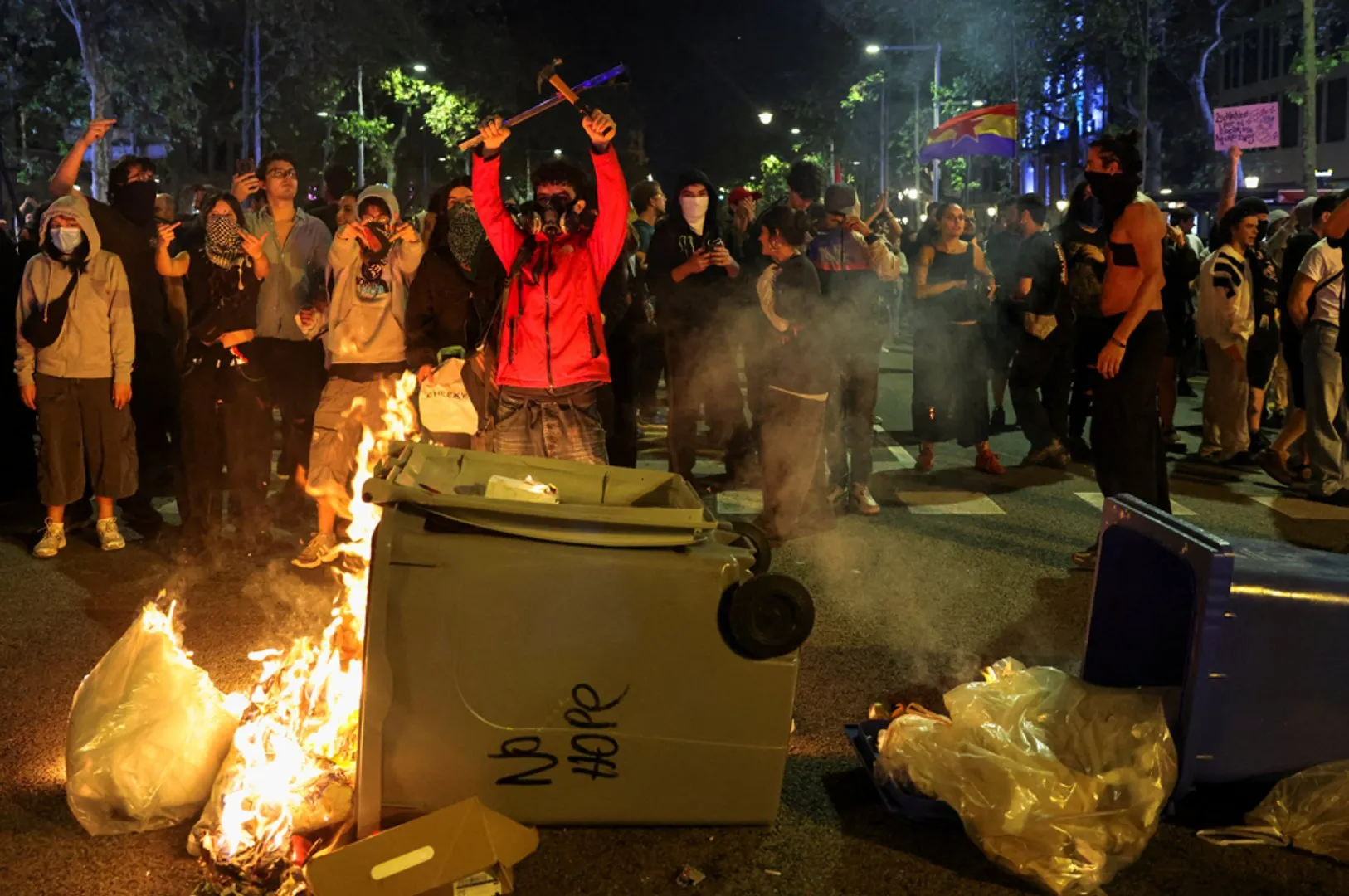
NEWARK, N.J. — The mayor of Newark imposed a curfew early Sunday around an immigration detention center in New Jersey after a series of intense clashes between protesters and police.
The curfew around Delaney Hall will be in place between 9 p.m. and 6 a.m. until further notice, Mayor Ras Baraka said in a statement.
The move came after another night of standoffs between law enforcement and demonstrators at the facility, as protesters could be seen in photographs and videos fighting over barricades as police used riot shields to push them back. A video posted on social media showed police on horseback marching into crowds, attempting to break up groups of demonstrators.
The high-profile demonstrations at Delaney Hall began this month after advocates said detainees launched a hunger strike over poor living conditions at the 1,000-bed facility, the latest focus of opposition over the federal government’s immigration crackdown.
The private company GEO Group operates the lockup under the supervision of U.S. Immigration and Customs Enforcement. The shuttered facility reopened for immigration detainees in February 2025.
New Jersey state police on Friday replaced federal immigration enforcement agents who had been facing off against protesters at the facility for days.
In a statement Sunday morning, New Jersey Gov. Mikie Sherrill said masked people attacked a barrier in a designated protest area set up by state police and were “throwing projectiles, utilizing the barriers as weapons, and lighting tires on fire in the street.”
“These actions put both peaceful protesters and law enforcement in danger,” Sherrill said, urging calm to focus on advocating for “better conditions for the detainees, for their families, and ultimately, for the closure of Delaney Hall.”
Sherrill also said that the federal government has reopened family visits at Delaney Hall starting Sunday.
Asked about visitations resuming, the U.S. Department of Homeland Security said in a statement, “To be clear: Visitation was only suspended because of violent riots. Now that we have a secure perimeter, visitation can resume.”
EastEnders’ Danny Dyer has teamed up with Hollywood star Rob Lowe for a hilarious ad campaign ahead of the launch of the World Cup where the two actors have something of a culture clash
Ex-EastEnders star Danny Dyer has joined forces with Rob Lowe for a new ad campaign ahead of the World Cup(Image: Paddy Power)
Danny Dyer faces off against movie star Rob Lowe for a hilarious World Cup ad campaign. The Rivals actor, 48, and Hollywood star, 62, battle over cultural differences to promote bookie Paddy Power.
Pitted as a clash of cultures, the ad explores everything from having a “pint and a slash” in a pub on the British side, to the glamour of halftime shows that tend to take place in the US. Eventually, Danny takes his shirt off whilst Rob keeps his on and rocks a cowboy hat amid their tense culture clash. At one point, Danny shouts out: “It can’t go on like this, can it?”
Then, former Wolves manager Mick McCarthy responds: “It can!” as a sad-looking Peter Crouch pops up amid the threat that the French could take the cup.
Rob admitted had not seen Danny in anything, but told the Daily Star: “I’d heard he was a bit of a legend over here in the UK and I have to agree, he is really funny, genuine, and a very good actor.
“When he walked on set, within about four minutes I’m thinking he’s got this energy and presence about him. Completely magnetic. As an American, you think you’re prepared for big personalities, but Danny’s got this very specific British edge to him and it was great working with him.”
Rob explained: “I’ve been to a Chelsea game at Stamford Bridge. It’s a great old stadium. I know they’re supposedly building another one, but Stamford Bridge is pretty sick.”
He then addressed the age-old issue of what the beautiful game shout be called, as it differs dramatically on each side of the Atlantic. He said: “If I’m in America, I call it soccer, but if I’m anywhere other than America, I call it football. Football becomes American Football when I’m abroad too.”
Hollywood film star Rob Lowe stars as the face of Paddy Power’s new World Cup ad campaign alongside UK national treasure Danny Dyer. The ad will air from Saturday 30th May across TV and online.
Clashes have broken out between protesters and riot police after an antigovernment rally in the Serbian capital, Belgrade.
Large crowds of demonstrators poured into central Belgrade on Saturday, many carrying banners and wearing T-shirts emblazoned with the “Students win” motto of the youth movement that organised the gathering.
Serbian President Aleksandar Vucic has sought to rein in mass demonstrations that have challenged his hardline rule in the Balkan country. The size of Saturday’s turnout suggested that dissent remains strong more than a year after protests first began with demonstrators demanding accountability for a train station tragedy in northern Serbia in November 2024 that killed 16 people.
Anticorruption protests forced then-Prime Minister Milos Vucevic to resign in January 2025 before the authorities moved to clamp down on the movement. Many in Serbia blamed the concrete canopy collapse at the station on alleged corruption-fuelled negligence during renovation work carried out with Chinese companies.
On Saturday, Serbia’s state railway company cancelled all trains to and from Belgrade in what appeared to be an effort to prevent at least some people from travelling to the capital from other parts of the country.
In a video posted on Instagram on Saturday, the president said protesters “have shown their violent nature and that they cannot stand political opponents”. Vucic, who was en route to China for a state visit, added: “The state is functioning and will continue to work in line with the law.”
Students on Saturday demanded early elections and the rule of law, accusing the government of crime and corruption. They said they now plan to challenge Vucic in this year’s elections, which they hope will unseat his right-wing populist government. Vucic said on Thursday that the parliamentary elections could be held between September and November.
Clashes were first reported near a park camp of Vucic loyalists outside the Serbian presidency building. The camp was set up before another large antigovernment rally last March as a human shield against protesters. Folk music blared from a fenced-off area surrounded by rows of riot police in full gear.
The Serbian president has come under international scrutiny for his hardline tactics against demonstrators over the past year, including arbitrary arrests and the use of excessive force. The Council of Europe’s commissioner for human rights, Michael O’Flaherty, criticised Serbia’s government in a report after he visited the country last week and said he “will monitor the situation closely”.
O’Flaherty also cited “reports of police protecting unidentified and often masked attackers of journalists and protesters”. He said the overall human rights situation has deteriorated since his previous visit in April 2025.
Serbia is seeking to join the European Union while cultivating close ties with Russia and China. Democratic backsliding under Vucic could cost the country about 1.5 billion euros ($1.8bn) in EU funding, the bloc’s top enlargement official warned last month.
US Navy veteran Marisol, who Katie Price’s missing husband Lee Andrews followed on InstagramLee Andrews and Katie Price haven’t spoken since last WednesdayCredit: Instagram
However, The Sun can reveal Marisol blocked Lee’s account.
When users block someone on Instagram, they are automatically unfollowed and removed from following them.
Katie’s fans noticed Lee Andrews had started following another account on InstagramHe had only been following Katie until her fans noticed the change and alerted her
Thousands of protesters gathered in India’s northeastern Manipur state to mark three years since ethnic violence erupted in May 2023 between the majority Meitei and minority Kuki-Zo communities. The conflict, driven by disputes over land and political power has killed nearly 260 people and displaced around 60,000.
Violent clashes between fans and police caused the abandonment of a match between the top two sides in Paraguay on Sunday.
Hundreds of spectators escaped onto the pitch as police fired rubber bullets and tear gas into the stands at the Superclasico, played between Olimpia and Cerro Porteno, both based in capital city Asuncion.
According to witnesses, the trouble began when firecrackers were detonated in the section of the Defensores del Chaco Stadium which was allocated to Cerro Porteno supporters.
The police detained around 100 people, and while it was not immediately clear whether any fans had been injured, security forces reported that at least six officers were hurt, with one in a serious condition.
David Torales, a spokesperson for a local hospital, said the “officers sustained head injuries, lacerations, including possible stab wounds, and other injuries”.