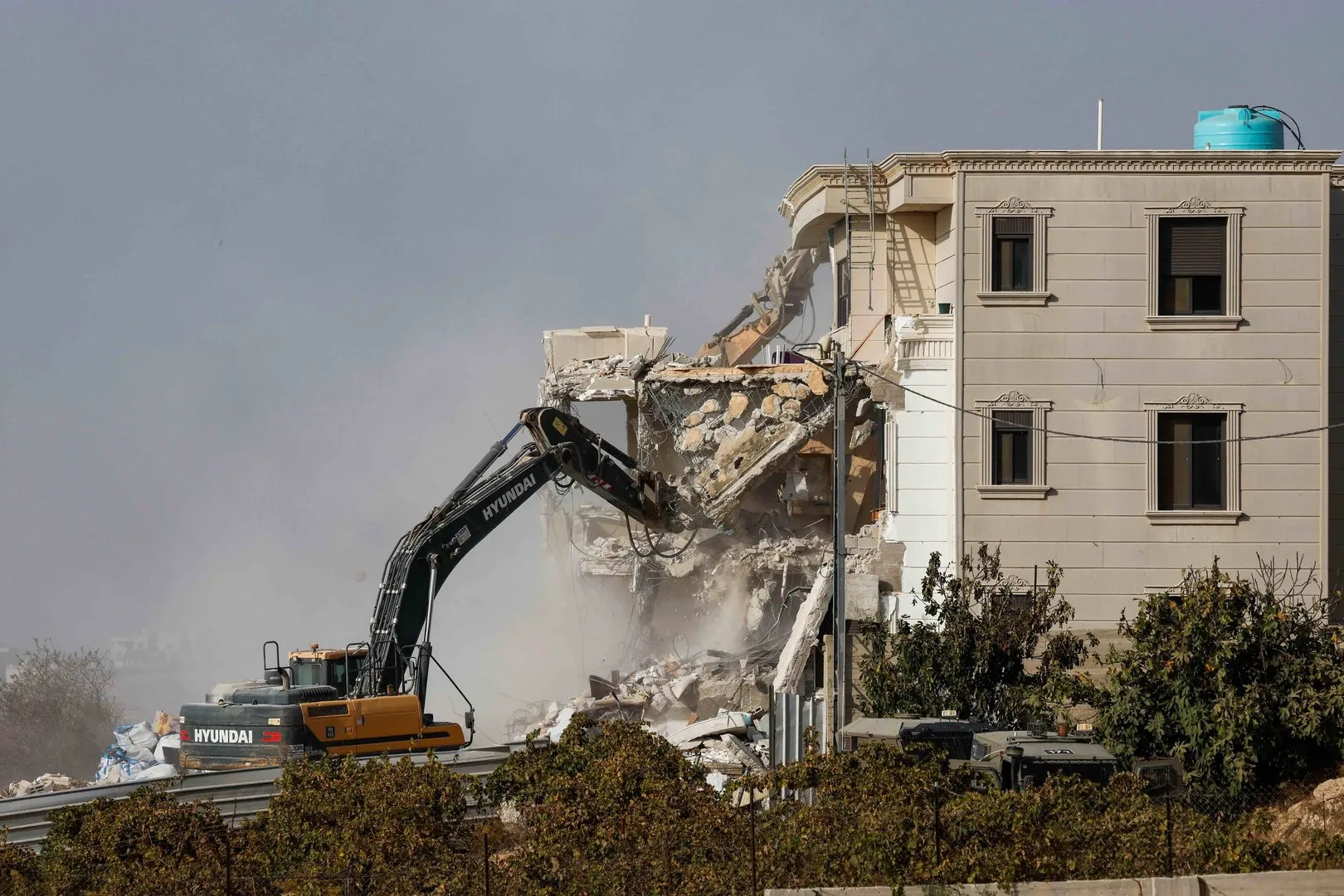
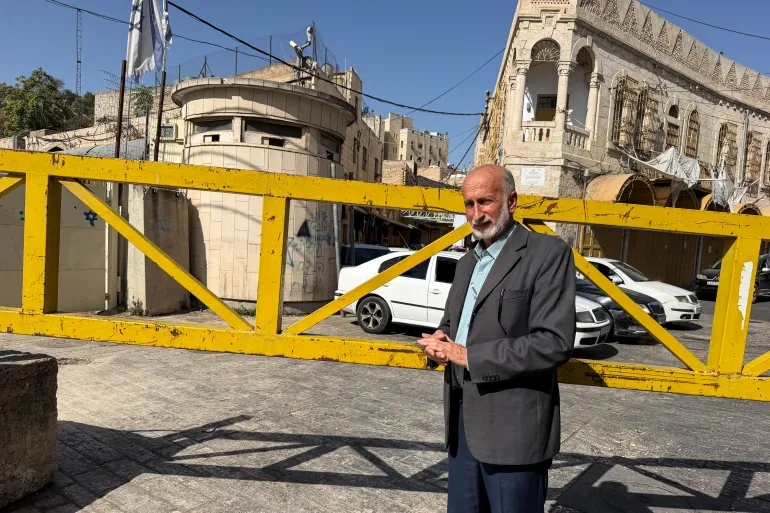
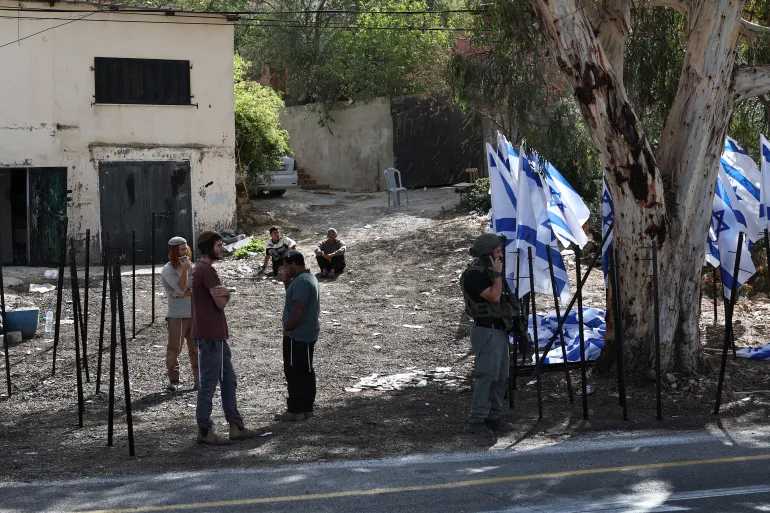
Israeli soldiers beat and injured Hijazi Shawer, a 70-year-old Palestinian shopkeeper and community leader, during a raid in Hebron, in the occupied West Bank. The assault comes amid house-to-house searches and the forced displacement of more than 2,000 people.
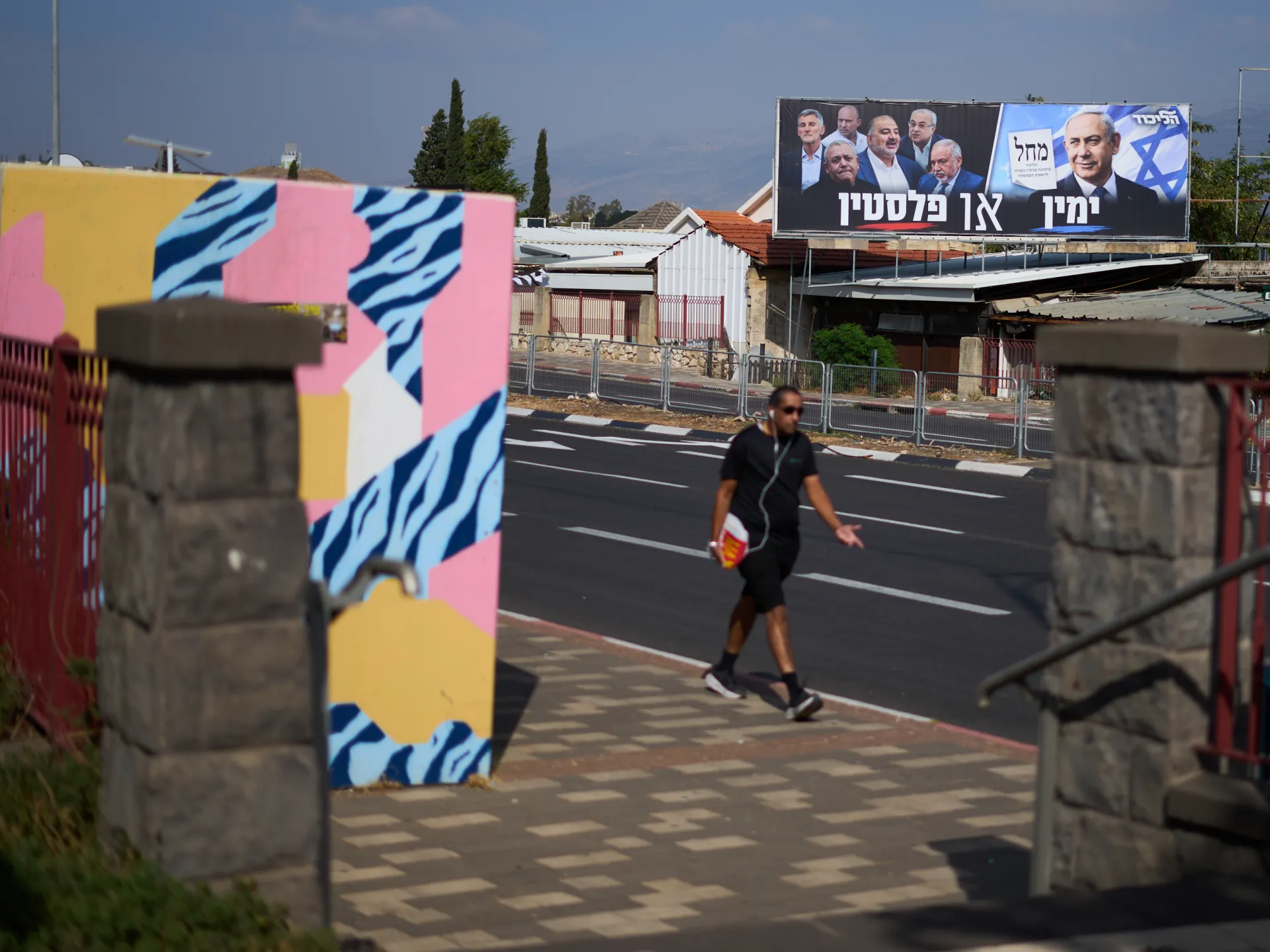
Israel is heading to the polls on October 27 in an election that could end Prime Minister Benjamin Netanyahu’s long grip on power.
The vote for all 120 seats in the Knesset is the first since the Hamas-led attacks of October 7, 2023, the onset of Israel’s subsequent genocidal war on Gaza and a wider conflict that has seen Israel carry out attacks in several countries across the region.
Recommended Stories
list of 3 itemsend of list
Opinion polls suggest his right-wing bloc is in a close race against a Jewish-led opposition alliance. But defeating Netanyahu at the ballot box does not necessarily mean removing him from power.
Israel’s proportional representation system means parties must negotiate alliances to secure a governing majority in the Knesset. No single party has ever won an outright majority of at least 61 seats.
According to recent polling, the opposition bloc is projected to win 52 seats, compared with 50 for Netanyahu’s religious-nationalist alliance. Palestinian-led parties could, therefore, determine who governs.
Here are eight possible outcomes:
Netanyahu forms another government
Despite slightly trailing in opinion polls, Netanyahu could remain prime minister if his Likud party assembles enough parliamentary support from existing allies or new coalition partners.
His traditional partners include far-right National Security Minister Itamar Ben-Gvir’s Jewish Power party and Finance Minister Bezalel Smotrich’s Religious Zionism party.
Ultra-Orthodox parties Shas and United Torah Judaism – which have previously joined his coalition multiple times but also walked away, most recently in 2025 – could also play an important role.
An opposition-led majority government
In late September, four opposition parties signed a non-aggression pact, agreeing to work together in a bid to unseat Netanyahu.
The rival movements – the Yashar party, the Democrats, the Yisrael Beytenu party and the Together alliance – said they are united in their goal to “preserve and strengthen Israel as a Jewish and democratic state”.
The bloc has not announced who would lead a future governing coalition, but former army chief Gadi Eisenkot, leader of the Yashar party, is seen as its most likely prime ministerial candidate.
Former Prime Minister Naftali Bennett, who heads the Together alliance with Yair Lapid, is another potential candidate.
A coalition involving Ra’am
The Joint List and Ra’am – the two Arab-led parties representing the Palestinian citizens of Israel, who make up about 20 percent of the population – are projected to win about 13 seats.
Ra’am, also known as the United Arab List, made history in 2021 by joining Bennett’s coalition, becoming the first Arab-led party to participate in an Israeli governing coalition.
Mansour Abbas, leader of Ra’am, has signalled a willingness to repeat that arrangement if the opposition-led alliance needs additional seats.
He has said his priorities include combatting the wave of violent crime that has been allowed to engulf Palestinian communities, as well as addressing discriminatory government policies, including on housing.
However, most opposition leaders, including Eisenkot, have ruled out such an alliance.
A minority government
If a coalition falls short of 61 seats, it could seek outside parliamentary support from other parties without including them in government, such as the Palestinian-led parties.
Joint List, which includes the Hadash, Ta’al and Balad factions, has said it could provide a so-called safety net to the anti-Netanyahu coalition by agreeing not to stand against it in a confidence vote, even if the alliance does not join the government. In return, it has said it would demand certain conditions, including a path to Palestinian statehood and fighting organised crime.
However, any such arrangement would leave the governing coalition vulnerable to defections and disputes over major policies.
A national unity government
A national unity government, according to Israel’s parliament, is a “government based on a broad coalition, the members of which also include representatives of rival parliamentary groups”.
This is usually formed at times of national emergencies, such as war, natural disasters or economic crises.
In May 2020, Netanyahu and Benny Gantz formed a unity government following three inconclusive elections. That agreement collapsed within a year.
However, in 2023, following the Hamas-led attacks on Israel, Gantz and members of his party joined Netanyahu’s coalition – seen as an emergency unity government – despite Gantz previously bitterly opposing it.
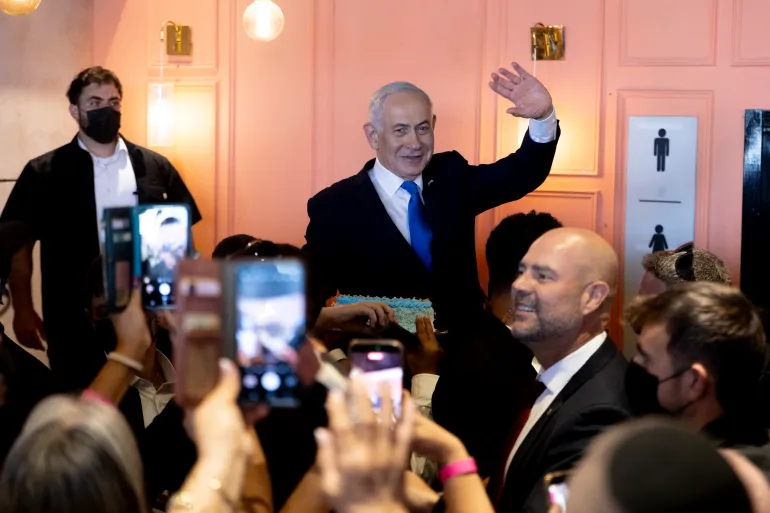
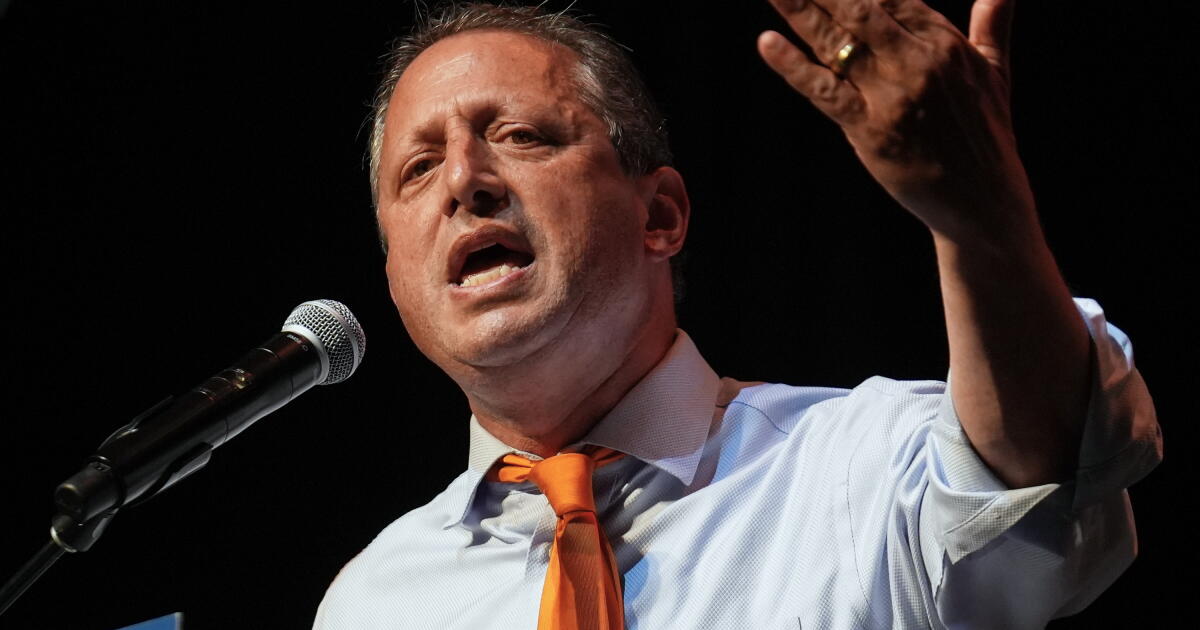
Israeli Prime Minister and Likud Party leader, Benjamin Netanyahu, greets supporters during an election campaign [File: Amir Levy/Getty Images]
A rotating premiership
Two political leaders could agree to alternate as prime minister under a power-sharing arrangement.
Netanyahu and Gantz agreed to such a rotation in 2020, but their coalition collapsed before Gantz could take over.
Bennett and Lapid made the same arrangement for the prime minister’s office to change hands after the former came into power in June 2021. After Bennett’s coalition lost its parliamentary majority in June 2022, Lapid took over as caretaker prime minister in July that year.
A different prime minister from the same political camp
In Israel, the prime minister is voted in by members of the Knesset after an election.
If negotiations stall over forming a government, parties could agree to support another Knesset member from Netanyahu’s political camp or that of an opposition bloc, someone who is more acceptable to future partners.
No agreement – another election
If no leader can assemble sufficient support in the Knesset, Israel could face another period of political turbulence and head for a new election.
The country held five elections between 2019 and 2022 as rival blocs repeatedly struggled to form stable governments.
In such a scenario, Netanyahu would remain caretaker prime minister until a new administration took office.
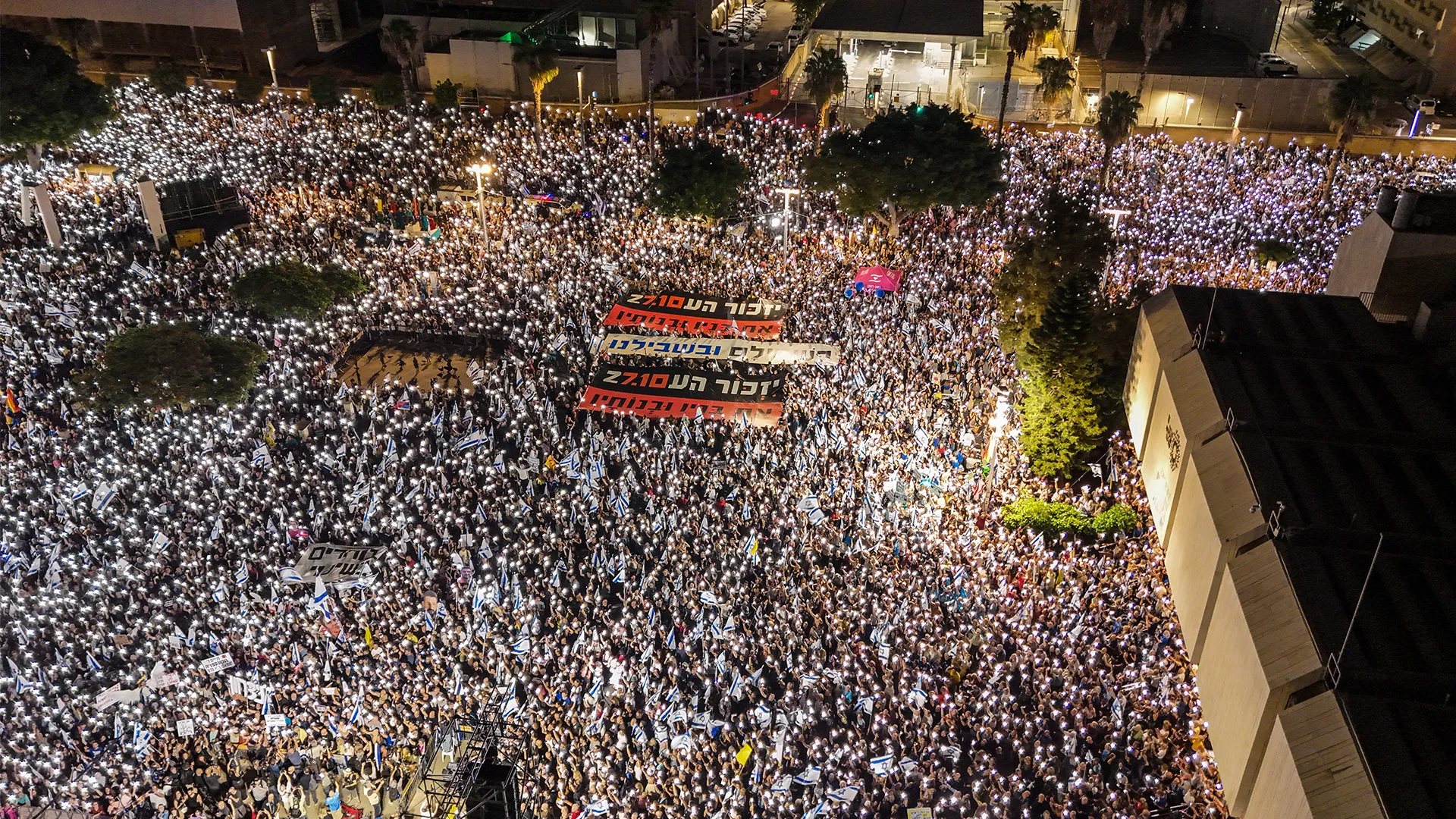
Thousands of Israelis rallied against PM Benjamin Netanyahu, demanding a change of government and an independent inquiry into the security failures surrounding the Hamas-led October 7th attacks. The election will be held on Tuesday October 27.
The first Israeli elections in four years have brought with them a record number of first-time voters – most of whom are keen to make their voices count.
But while youth around the world are leaning to the left, young adults in Israel are heading in the opposite direction, according to recent polls.
Recommended Stories
list of 3 itemsend of list
The Israeli Central Elections Committee says more than half a million voters were added to the roll since the last elections in 2022. They are aged between 18 and 22 and polls show that 80 percent of them plan to vote in the October 27 legislative election.
Although their political activism and engagement in the public sphere are limited, a survey by the think tank, Israel Democracy Institute (IDI), found that a majority of young Jewish Israelis feel that the ballot box can influence reality and shape their country’s future.
But what does the future they hope for look like?
Around three quarters of Jewish first-time voters polled identified as “right or centre-right”, according to a recent poll for Israel’s Channel 12. That’s significantly higher than the rest of the Israeli population, which has already been shifting to the right for years.
Now the title “Generation Right” is being used to reference Israel’s Jewish youth – though not the Palestinian citizens of Israel.
Mainstreaming far-right views
The first Israeli elections since the October 7, 2023 attack are contentious and polarising – and they will be decisive for Prime Minister Benjamin Netanyahu’s political survival and his right-wing approach.
Critics of the longest-serving PM in Israel’s history accuse him of supporting “far-right” politicians to stay in power. They say that his handing of key government positions to extreme politicians such as National Security Minister Itamar Ben-Gvir and Finance Minister Bezalel Smotrich helped empower those camps and make their policies mainstream.
In 2017, Smotrich laid out his position for the future of Israel where the Israelis are the only ones who will have self-determination, whereas Palestinians will have to emigrate, stay without political representation, or be treated as “terrorists” if they refuse either of the two options. In 2022 he secured a portfolio in the defence ministry where he facilitates land grabs and empowers the illegal settlement enterprise in the occupied West Bank.
Indeed, this incitement and view of Palestinians has become more prevalent.
A recent video published by the Israeli satirist Lior Schleien shows a young man saying he would kill Arabs in Israel.
Schleien, a left-wing activist, has been visiting schools and speaking with young people often before their army service. His videos are giving Israelis, and the world, a chance to understand the younger generation.
In the video, Schleien asks the student how he proposes to kill Arabs. The answer: “Give me a knife and I will do it.”
Schleien asks whether October 7 changed his views. “I’ve always been racist,” the young man answers, adding that Arabs shouldn’t be allowed to live in the state of Israel. Even though the young man’s face is slightly covered, shielding his identity, Schleien removed the video after a public backlash.
In another town hall meeting, Schleien addresses the question of whether there are innocent people in Gaza. When asked if Israel is committing a genocide in Gaza, Schleien denies it, only for a female student to ask, “Do you think it should be done?”
Schleien looks unimpressed, but the student assures him that she is asking a serious question. Her friend, next to her, chuckles.
Speaking the language of the youth
At a recent meeting of young supporters of the left-leaning Democrats party in Tel Aviv, 18-year-old Gili told the AFP news agency that she believed Israeli society had abandoned the idea of peace.
She said the scars of October 7 instilled fear among people, making it hard for them to believe peace could ever be achievable.
While the October 7 attack may have accelerated the country’s push to the right and far-right, many say Israeli society has been heading this way for years.
A survey by the Israeli newspaper Yedioth Ahronoth shows more than 16 percent of new voters plan to cast their ballot for far-right parties.
From a large field in southern Israel, 18-year-old Amihai was wearing a shirt with far-right minister Ben-Gvir’s photo. The event he was attending called for the establishment of illegal Israeli settlements on Palestinian territory.
Talking to other young activists from a place overlooking the destroyed parts of the Gaza Strip, Amihai said he plans to vote for Otzma Yehudit, a party led by Ben-Gvir, who himself lives in an illegal settlement in the occupied West Bank.
Although Ben-Gvir did not pass the threshold of the 2020 elections, he was given a central position in the 2022 government of Netanyahu.
In the years since, the minister seems to have learned to speak the language of Israel’s youth. Despite having been convicted of supporting “terror” organisations as well as other criminal offences, Israeli surveys show that a chunk of his potential supporters in this election are first-time voters.
Ben-Gvir has also made sure to use his position to lobby for his “I am not mincing my words” policies.
As a minister, he often visits Israeli jails and detention centres to threaten Palestinian prisoners as well as international activists – all the while making sure that it is caught on camera.
His videos often go viral, a move that has earned him more youth support – and not just from his usual base of settlers, such as the violent “Hilltop Youth”, some of whose members have been sanctioned by the European Union and the United Kingdom.
The IDI survey found that social media and messaging apps such as WhatsApp and Telegram are key sources of information – often exposing young people to political content through their feeds rather than through active searching.
Benjamin Netanyahu’s opponents are promising to shake up Israeli politics, but how different are their policies? Is Israel’s election simply a contest between right and right?
Al Jazeera’s Mohammad Saleh examines the candidates running in Israel’s 27 October elections.
An Israeli settler was filmed shouting at and assaulting a Palestinian child during an attack on a family east of Yatta, in the occupied West Bank, where settler violence has surged in recent years. Rights groups say perpetrators are rarely held accountable.
Israeli forces detained U.S. Democratic congressional candidate Brad Lander on Wednesday as he helped Palestinian farmers harvest olives in the occupied West Bank, releasing him hours later while dozens of other volunteers, including a group of American rabbis, remained in custody.
The incident was the latest in an annual olive harvest that has been marked by violence between Israeli settlers and Palestinian villagers attempting to gather their crops.
The Israeli military said the farmers and volunteers had failed to seek prior approval for the harvest and were detained “due to the security risk posed by conducting an uncoordinated harvest near an Israeli community.” It later added that it viewed “the arrival of dozens of activists as an act intended solely to provoke, which undermines the harvesting process.”
Lander is running in the U.S. elections on Nov. 3 to represent a heavily Democratic New York district in the U.S. House of Representatives.
“The occupation is a crime under international law,” Lander wrote on social media after he was detained. “Harvesting olives isn’t a crime under any law I know.”
“These detentions by the IDF are one more attempt to undermine Palestinians’ right to harvest their olive groves, travel on their roads, and live in their homes,” he added in a post after his release.
This year, Palestinians have been required to coordinate with the Israeli military to access more of their privately owned farmland than in previous years. The anti-settlement group Peace Now said last week that the army had expanded by nearly 30% the area of farmland that Palestinians cannot enter without prior approval, to 34 square miles. The Israeli military declined to comment on the exact figures but said Palestinian farmers must coordinate access to areas under Israeli security control.
The detained volunteers were taken to a police facility. Lander was among them but “released after it became known that he was a congressional candidate,” the Israeli police said in a statement.
Israeli rights group Yesh Din and the Palestinian Farmers’ Union have said the 2026 harvest has been the most violent in recent history, with hundreds of reported thefts, clashes and arson attacks.
Much of the violence has unfolded on land outside Palestinian villages, where Palestinians have historically harvested olives and Israeli settlers have increasingly erected outposts without authorization from Israel’s government.
But there were no clashes before Israeli forces arrived Wednesday, according to Beck Strober, a spokesperson for Protect the Harvest, the advocacy group that organized the volunteers at the grove.
Jill Jacobs, one of a dozen American rabbis detained, condemned the Israeli government restricting the ability of Palestinians to harvest freely.
“The Israeli government is actively advancing the forced displacement of Palestinian communities across the West Bank, using its military to deny Palestinians access to their land and intimidate those who stand alongside them,” Jacobs, chief executive of T’ruah: The Rabbinic Call for Human Rights, said in a statement.
Lander, who was endorsed by New York City Mayor Zohran Mamdani and U.S. Rep. Alexandria Ocasio-Cortez, defeated U.S. Rep. Dan Goldman in a primary for New York’s 10th congressional district. The race was viewed as a referendum on the Democratic party’s support for Israel. Both candidates are Jewish and have criticized Israel, but only Lander called the war in Gaza a genocide.
Lander was not the first U.S. politician detained in the West Bank this year. U.S. Rep. Ro Khanna, a California Democrat, said Israeli forces detained him during a visit in July.
Athens, Greece – Tonia Katerini, a 69-year-old architect, leaned into her computer, scrolling through the property contracts that she said are remaking her neighbourhood.
Across Exarchia, the Athens district long known for its radical left-wing politics, flats are being bought up and turned into short-term rentals, pushing out the people who live there.
For months, Katerini and a group of neighbours have been digitally mapping foreign purchases using public records, marking them with red dots.
She zoomed out from her street on the map; it was a sea of red.
The balcony doors of her flat, where she has lived since 1986, were open and noise from the cafes below drifted in past the plants and stacks of architectural plans.
Her group says much of the money behind the rentals is Israeli; by their count, more than half of the area’s new company-run hotels and rentals .
In a neighbourhood where Palestinian flags hang from balconies and solidarity slogans cover the walls, that has caused friction.
On her own cobbled street, where the noise of arriving tourists rolling their suitcases wakes her in the morning, Israeli investors have bought two buildings, she said. The flat below hers belongs to one such company.
“They are nice guys we have downstairs,” she said. “It’s an Israeli company.”
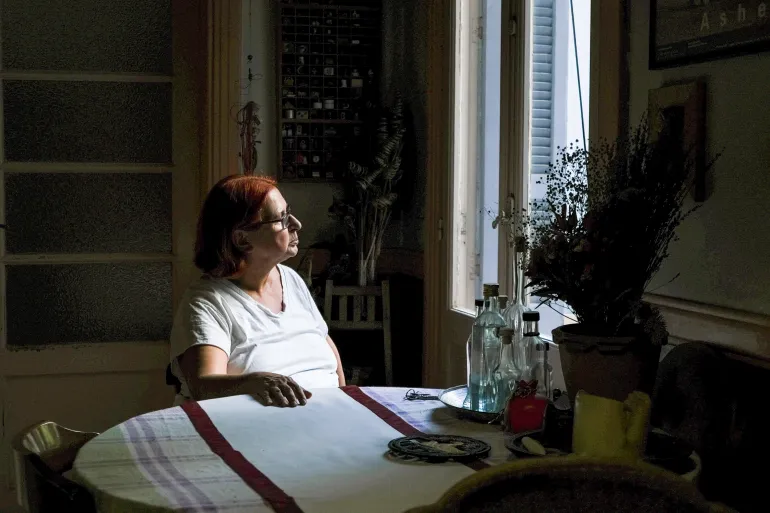
Tonia Katerini in her flat in Exharchia in Athens [Nils Adler/Al Jazeera]
A few streets away, a residential building is streaked with black paint.
“Airbnbs leave us homeless,” reads one slogan across its facade. “Zionists not welcome,” reads another.
Such buildings are easy to spot. Instead of residents’ names, the buzzer panels show only numbers and a keypad by the door releases keys for Airbnb guests.
Across the neighbourhood, activists have splattered keypads and facades with red paint.
They say short-term rentals are driving an aggressive gentrification that is pricing out locals and erasing the area’s identity.
Foreign money has poured into Greek property in recent years: non-residents invested a record 2.75 billion euros ($3.2bn) in Greek real estate in 2024, according to the Bank of Greece, before easing last year.
No official figures break down foreign buyers in Athens by nationality. But an annual survey of completed sales by the agency network RE/MAX Hellas found that Israelis were the largest group of foreign buyers in Attica, the region around the capital, ahead of buyers from Turkiye and Lebanon, reported the Greek weekly To Vima.
Exarchia’s political activism runs deep. In 1973, students at the nearby Athens Polytechnic rose up against the US-backed military government, which fell the following year.
In 2008, police shot dead Alexandros Grigoropoulos, a 15-year-old Greek student, in Exarchia, provoking protests that spread across the country. It came, Katerini said, like “fire on dry land”.
As Greece’s debt crisis deepened, that anger on the streets helped propel the left-wing Syriza party to power in 2015.
A protester confronts riot police in Athens, December 7, 2008 [John Kolesidis/Reuters]
‘Tenants displaced, apartment blocks emptied’
Chrysoulla Papageorgiou, a schoolteacher who has lived in Exarchia for 24 years, is a familiar face on its streets. Earnest and straight-talking, the 46-year-old remembers it as “a neighbourhood of solidarity”.
The change came slowly, then quickened. At first, small owners rented out a spare room. After the COVID-19 pandemic, companies began buying entire blocks.
“Overnight, tenants were displaced and apartment blocks emptied,” she said.
Bars opened, spilling tables and chairs across pavements on streets that had once been quiet.
Rents rose and migrants and low-income families, many living in basements and on the lower floors, were the first to go. Schools lost pupils and old bookshops, traditional cafes and grocers closed.
For years, Exarchia residents sheltered refugees in occupied buildings. Sitting on prime real estate, they were among the first buildings police emptied and then sold, Papageorgiou said.
“Half were squats,” she said. “Now we have only one.”
That last building is draped in painted sheets declaring solidarity with the families inside. Neighbours help make sure the children get to school.
The last building in Exarchia where migrants and refugees without housing can stay [Nils Adler/Al Jazeera]
Since 2022, Exarchia Square, long the heart of the neighbourhood’s protests, has been a fenced-off construction site for a new metro station that many residents fought against. Riot police, Papageorgiou added, are now a daily presence.
The aim, she believed, is to turn central Athens into somewhere “purely touristic”.
In recent years, buyers have been “almost only Israeli”.
Riot police walk through Exarchia [File: Nils Adler/Al Jazeera]
Near the square hangs a large Palestinian flag. Tourists sometimes scrawl anti-Palestinian messages on its white stripe, and activists paint it white again.
Foreign buyers, Katerini said, see Greece as a safer place for their money than Israel itself, and in Athens “the government is very friendly with Israel”. In August, Athens signed a missile deal with Israel worth $3.5bn.
‘A very good opportunity’ for investors
Vagelis Lazaridis, a stocky real estate agent who heads a branch of the Athens-Attica Real Estate Agents’ Association, talks about his trade with passion. He said the reasons for the investments were purely practical.
Exarchia “was a run-down area” which made it “a very good opportunity”, he said.
It is beside the centre, close to the metro and to universities full of students from abroad. Unlike Plaka, beneath the Acropolis, it has few building restrictions.
Once a handful of buyers arrive, he said, others follow.
One of the many slogans criticising short-term rentals in Exarchia, Athens, Greece [File: Nils Adler/Al Jazeera]
Greece to become ‘far less appealing’ for Israeli buyers
The government is now trying to cool the market.
Prime Minister Kyriakos Mitsotakis announced last month that the transfer tax for homebuyers from outside the European Union would rise from 3 percent to 15 percent from next July.
“The party is over in Greece,” The Jerusalem Post wrote in a recent report. “The country, which in recent years has become a preferred destination for Israelis seeking real estate investments at reasonable prices and with attractive yields, is about to become far less appealing.”
Lazaridis said agents’ associations oppose the plan, which has yet to become law. It “may not take effect, or may be postponed”, he said.
Agents expect some non-EU buyers to speed up purchases before the deadline, reported the Greek news site in.gr.
A ‘tourists go home’ poster in Exarchia, October 10 2026 [Nils Adler/Al Jazeera]
‘Fewer Airbnbs’
Not everyone in the trade sees an unstoppable tide.
Iryna Rondyak, who is originally from Ukraine, runs her own estate agency near Exarchia. She said that when Israeli buyers began arriving about a decade ago, they made up about 60 percent of her foreign clients, many buying whole office buildings to turn into hotels.
Until around 2024, foreigners accounted for about 70 percent of her sales, she said.
This year, it is about 30 percent, as state-backed mortgages for young Greeks, under a scheme called “Spiti mou” (My Home), attract local buyers back.
Iryna Rondyak in her office in Athens, October 10, 2026 [Nils Adler/Al Jazeera]
She credits new rules for the turnaround.
No new short-term rental licences are being issued in central Athens, including Exarchia, and in September the freeze was extended to the end of 2027, reported To Vima.
Properties bought under Greece’s “golden visa” residency scheme can now only be let long-term. While a cheaper route into the scheme, at 250,000 euros ($280,000), rewards investors who convert empty office buildings into flats.
“Anyone living in Greece couldn’t find a home in the centre. Everything was on Airbnb,” she said. “Now there are far fewer.”
It is “a little better,” she said, but “the problem still exists”.
Rents remain high, at 10 to 15 euros ($12 to $17) per square metre, even in the southern suburbs, she said. Many flats sit empty because owners find renting them out is not worth the tax bill.
A building in Exarchia converted into Airbnb rentals has been pelted with paint by activists, October 10, 2026 [Nils Adler/Al Jazeera]
Residents are less convinced.
The rental freeze is temporary, they say, and investors with enough money can still find ways in. Nor does it undo what has already happened: many of the neighbourhood’s buildings are already short-term rentals.
Back in Exarchia, Papageorgiou counts herself lucky.
Her landlady, whose family has lived in the area for generations, refuses to raise the rent as an “act of resistance”.
Papageorgiou said jokingly that her landlady’s accountant has told her she is ruining the market.
US President Donald Trump has issued an official endorsement of Israel’s Prime Minister Benjamin Netanyahu for the upcoming Israeli election. Al Jazeera’s Patty Culhane reports from Washington DC.
In a social media post ahead of Israel’s October 27 election, Trump calls Netanyahu a ‘Strong, Brave, and Brilliant’ leader.
United States President Donald Trump has issued an endorsement of Israel’s incumbent Prime Minister Benjamin Netanyahu, who is facing a close race in parliamentary elections scheduled for October 27.
In a post on Truth Social on Sunday, Trump praised the Israeli leader for being an ally of the US in its war on Iran. He added that he was giving his “Complete and Total Endorsement” to Netanyahu.
Recommended Stories
list of 3 itemsend of list
“BIBI NETANYAHU WILL NEVER LET YOU DOWN!” Trump wrote.
The US president’s backing comes nine days before the Israeli election — and after speculation that it might not come at all.
Trump had refused to endorse Netanyahu earlier this month, when asked repeatedly about the Israeli leader’s job performance in an interview with Time magazine.
Instead, when pressed by his interviewer, Trump avoided the subject, shifting the focus instead to his own popularity or security in the Middle East.
The two leaders have met more than a half dozen times since January 2025, but there have been reports of disagreements, including over the war against Iran and other conflicts.
In June, Trump acknowledged calling Netanyahu “f***ing crazy” in a phone conversation where he expressed frustration about Israel’s attacks on Lebanon.
Trump had reportedly asked Netanyahu not to take further action in Lebanon, in an apparent attempt to preserve a short-lived April ceasefire with Iran.
The two leaders had jointly launched a war against Iran on February 28, but the conflict has cost Trump domestic support.
The war has upended the global oil and gas supply, with no clear end in sight.
A Pew Research Center poll found this month that roughly two-thirds of US voters disapprove of Trump’s handling of the war, which has driven up consumer fuel prices and raised concerns about draining military stockpiles.
Trump’s Republican Party is facing a critical midterm election on November 3 that will decide whether it maintains control of the US Congress, as well as other key state and local offices.
Experts have speculated that Trump’s prior reticence to endorse Netanyahu may have come from public perception that Israel may have coaxed the US into the war.
Netanyahu’s Likud Party and its far-right coalition are also facing the prospect of losing the October contest to an opposition bloc led by Yashar party head Gadi Eisenkot.
In his endorsement on Sunday, Trump said it was only a matter of time before Iran would have attacked both the US and Israel.
The war, Trump argued, had already left Iran “systematically destroyed, both Militarily and Financially, and unless they change their ways, rapidly, we will soon finish the job”.
“If Israel has the wrong Leader, which would be anyone other than Bibi, America will have to do this work ourselves, and I am not inclined to do so,” Trump wrote.
“Bibi Netanyahu has been Strong, Brave, and Brilliant in the face of tremendous opposition, including that coming from even Israel, itself.”
Just visiting a page or refreshing an app can be enough to fall victim to a malware attack in which your personal data is stolen from a laptop or phone, researchers have found. You are not even required to “click” on anything.
An Israeli spyware firm has been found to be behind the first-known instance of “zero-click” targeted advertising in which fraudsters or spies can steal private data and send it to external servers, with Al Jazeera journalists among the victims.
Recommended Stories
list of 3 itemsend of list
In June 2025, 45 devices used by Al Jazeera staff – including several who reported on sensitive subjects – were targeted with spyware which installed itself without the need to open or download any files.
An investigation by the Canada-based academic research unit Citizen Lab, prompted by Al Jazeera’s initial internal probe into the issue, discovered that the Israeli company Candiru was behind the attacks.
Analysts say the findings are “incredibly concerning”, as they confirm the existence of a new global security threat. “We knew we were headed in this direction and now it is out in the public,” Remesh Srinivasan, professor of information studies at the University of California in Los Angeles, US, told Al Jazeera.
“This is the next level, because people are being microtargeted,” he said. “This is the point we’ve come to when it comes to surveillance.”
How ‘zero-click’ malware works
Al Jazeera’s in-house technology team first discovered unusual patterns on devices used by some journalists in 2024. Analysis of network logs provided to the Citizen Lab by Al Jazeera in 2025 provided a clear temporal signature of how the attack was executed.
Malicious advertisements were bought by Discover-Tech, an Israeli company presenting itself as a legitimate advertising firm, but which actually operates as a facilitator for mercenary spyware partners.
Its advertisement network identified Al Jazeera staff, then quietly redirected them to an infected server belonging to Candiru. The spyware firm was blacklisted by the US government in 2021, when Citizen Lab found it was responsible for the illegal hacking and surveillance of at least 100 activists, journalists and political activists across 10 countries.
Al Jazeera Media Network has condemned the targeting of its staff members’ devices and called for those responsible to be held accountable.
Cybersecurity analyst and author Eddy Willems said the advertisements used automatically infect devices the moment they pop up on the screen, but there is an important technical nuance. “Executing code inside the browser does not automatically give an attacker full control over the computer,” Willems told Al Jazeera.
“To escape the browser’s isolated environment – the ‘sandbox’ – the attacker may need a second vulnerability,” Willems said, adding that an advanced spyware operation can combine several vulnerabilities.
“The attacker attempts to exploit vulnerabilities to bypass security boundaries. This is precisely what makes this type of attack so dangerous,” the analyst said.
Once the device is infected, the malicious software is designed to collect a wide range of sensitive data, including files, documents, and browser data such as cookies, bookmarks, and saved credentials.
It can also capture keystrokes, take screenshots, record microphone and webcam input, and extract emails and messages from popular communication platforms. To avoid triggering security mechanisms, the spyware often uses encrypted communication channels and breaks up stolen data into smaller chunks sent over time.
Advertising: A new global security threat?
Analysts say Citizen Lab’s findings point to the escalation of an existing threat, which expands the scale and reach of traditional cyberattacks and makes them much harder to detect.
While “zero-click” attacks are not completely new, the findings outline a new technique through which online advertisements are used as a route to infection.
Stephen O’Shaughnessy, a lecturer in cybersecurity at the TU Dublin Blanchardstown campus in Ireland, explained that when a user opens a website or app, an automated auction sells the advertisement space in a fraction of a second. That auction shares data about the victim, including the device ID, IP address, rough location and the app or site they are on.
“Discover-Tech posed as an ordinary advertiser, used that data to find their target and win the auction for that person’s screen,” O’Shaughnessy told Al Jazeera. “Anyone with a phone or browser that shows ads can be reached, without the attacker needing their phone number or email.”
“Because no message or link is involved, there is almost nothing for the victim to notice,” he added.
Discover-Tech appeared on lists of “certified” and “approved” vendors maintained by Google and advertising industry association IAB Europe, and has served advertisements via major networks such as Google, Yandex and Beeswax.
In its report, Citizen Lab said this illustrates the structural flaws in the online advertising system, which essentially failed to detect or prevent the abuse.
Discover-Tech advertisements have popped up on devices used by personnel in national-security-sensitive networks around the world, including those of various ministries of defence, armed forces, national cyber agencies, intergovernmental organisations and media outlets, Citizen Lab found.
The research unit said these advertisements have also appeared on networks used by the United Nations, NATO, the European Parliament, the European Commission and the Council of the European Union’s General Secretariat.
‘Almost nobody was watching’
Government networks have also been targeted in at least 24 countries, including the United States, Italy, Denmark, Norway, Australia, Russia, Mexico and Israel itself. Networks of media organisations have also been targeted, mainly in Australia, Denmark and Sweden, according to Citizen Lab.
In a separate report, New York-based advertising security firm Confiant said its own investigations had found that some of Discover-Tech’s advertisements also appeared in critical networks used by the Pentagon, the United Nations International Atomic Energy Agency and the International Criminal Court.
O’Shaughnessy said infection has not been confirmed there – only profiling of users. “But that alone is concerning, he said. “The ad system was built to send code from strangers to billions of screens with pinpoint targeting. Almost nobody was watching it from a security angle.”
The analyst said the risk remains low for most people as these attacks are expensive and aimed at specific targets. “For individuals at high risk, like journalists and officials, the best first defence is to install an ad blocker, switch off their advertising ID through their phone’s privacy settings, keep everything updated, and turn on Lockdown Mode or Android’s Advanced Protection,” he said.
Precautions also need to be taken within the industry and at government level. “To combat this, the ad industry needs to properly vet who’s buying ads,” O’Shaughnessy said, while “regulators need to stop personal data being sprayed out to thousands of unknown bidders in every auction.”
An Israeli spyware disguised as a digital advertisement firm has targeted journalists’ devices at Al Jazeera and other companies. Here is what we know.
Citizen Lab investigation says dozens of Al Jazeera devices were infected by malware planted through advertisements.
Published On 15 Oct 202615 Oct 2026
Israeli advertising technology company Discover-Tech helped place spyware on dozens of devices used by Al Jazeera and other companies, a Citizen Lab investigation prompted by Al Jazeera’s own initial internal probe has confirmed.
Al Jazeera Media Network on Thursday said it “condemns the targeting of devices belonging to several of its employees with spyware”.
“The network voluntarily collaborated with the researchers, and this cooperation, according to the report, contributed to verifying these attacks and publicly documenting them.”
Al Jazeera will continue to “protect its employees and systems”.
The network said targeting journalists is an “assault on press freedom and the public’s right to knowledge” and called for those responsible to be held accountable.
Spyware from Candiru, a firm blacklisted by the United States government in 2021 for its malicious cyber activities, was planted on these devices, using what Citizen Lab described as the first-known instance of “zero-click” targeted advertising.
The Citizen Lab, an interdisciplinary research unit at the University of Toronto, concluded in its report that Discover-Tech purchased the advertisements that had the spyware built in. It then directed devices to Candiru’s malware through these advertisements. The millions of devices that were pointed to the malware include several that belonged to Al Jazeera’s journalists – including several who reported on sensitive subjects.
Al Jazeera’s internal technology team first discovered unusual patterns on devices used by some journalists in 2024. The pattern continued into 2025. Al Jazeera reached out to Citizen Lab for a more detailed investigation into its suspicions that spyware was responsible.
“Analysis of network logs provided to the Citizen Lab by Al Jazeera collected during the attack period provides a clear temporal signature of how the attack was executed,” the University of Toronto-based team said ints report published Thursday.
The “zero-clock” nature of installing this spyware means that once an infected advertisement appears on a device, that device, too, is infected — spying on, and feeding, all the data and information available on that platform to those stealing it.
Meanwhile, New York-based security firm Confiant said in a separate report that some of Discover-Tech’s advertisements also appeared in critical networks used by the Pentagon, the International Atomic Energy Agency and the International Criminal Court.
Candiru’s spyware has previously been used to carry out surveillance on at least 100 journalists, dissidents and others in several countries.
The woman’s young daughter was rescued from a large fire inside the apartment caused by the attack.
Published On 14 Oct 202614 Oct 2026
An Israeli air strike on an apartment block in Gaza has killed a woman and wounded two other people, hospital officials said.
Reem Asaad Awad, 33, was killed in the attack early on Wednesday in the Al-Rimal neighbourhood of Gaza City, the Turkish state news agency Anadolu reported, quoting a source at Al Shifa hospital.
Recommended Stories
list of 3 itemsend of list
The source said the strike caused extensive destruction to the targeted apartment and nearby buildings.
The daughter of the woman who was killed was rescued from a large fire that broke out after the attack.
Israel says it is investigating the strike and claims it targeted a member of Hamas, without providing evidence.
Reporting from Gaza City, Al Jazeera’s Ibrahim al-Khalili said the strike happened at 4am (01:00 GMT).
Israel has killed 1,501 Palestinians in Gaza since it agreed a “ceasefire” with the Palestinian group Hamas last October. The truce was part of a wider United States-backed proposal to end Israel’s genocidal war against Palestinians in Gaza.
Talks aimed at advancing to the second phase of the US plan, which includes the withdrawal of Israeli forces and the disarmament of Hamas, have stalled.
The agreement states that 600 trucks of humanitarian aid are to be allowed into Gaza each day, but Israeli authorities have continued to impose severe restrictions on supplies entering the enclave, and reconstruction of the war-shattered territory has not begun.
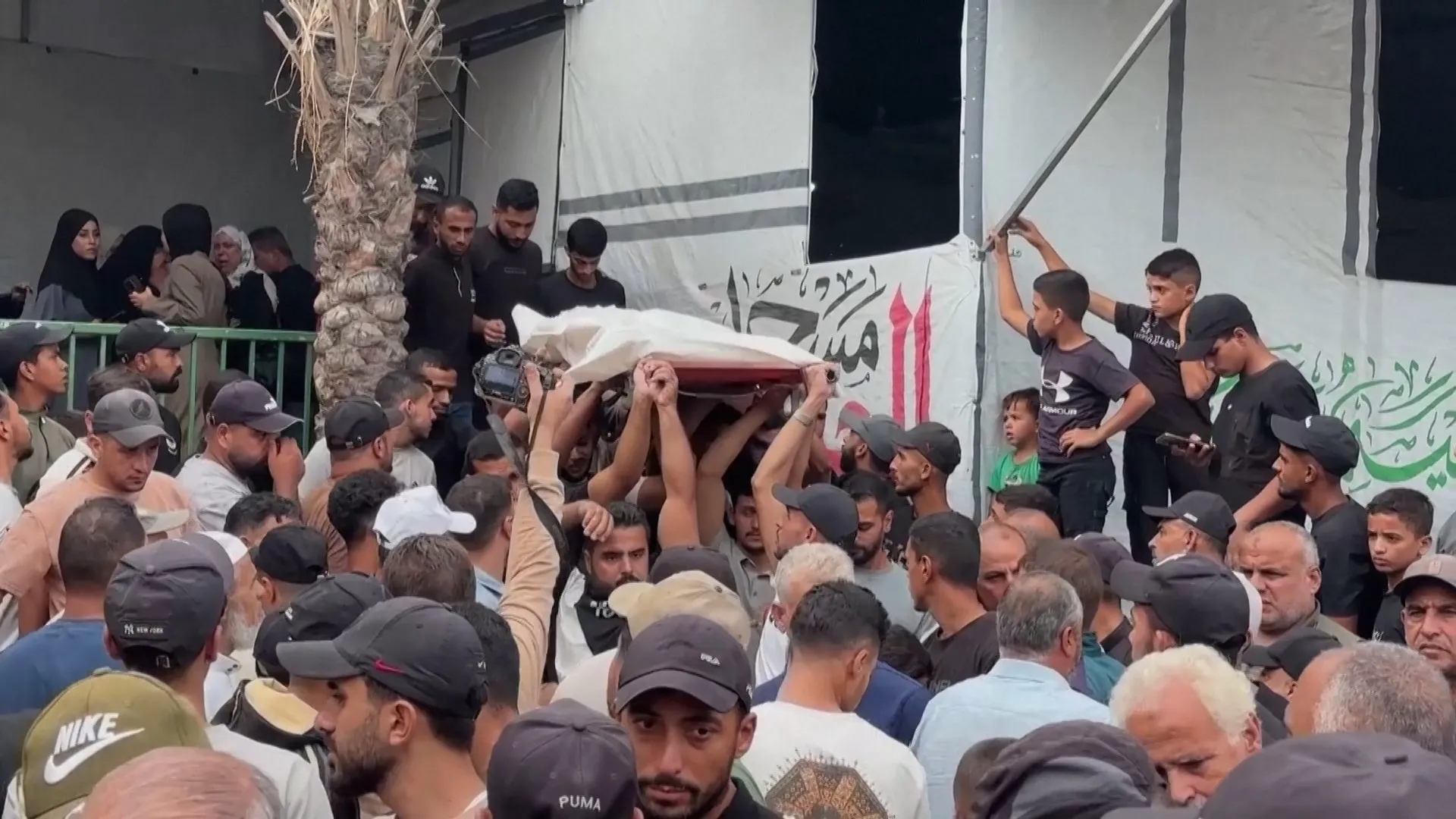
Palestinians attended funerals Monday of three people killed in an Israeli airstrike on a tent in Khan Younis a day earlier, as well as victims of other attacks. The latest strikes come amid mounting tensions over the Gaza ceasefire.
An Israeli settler was filmed abusing and reportedly poisoning livestock in the village of Al-Mughayyir, northeast of Ramallah in the occupied West Bank. The animals reportedly belonged to Israelis and were poisoned in an attempt to frame Palestinians for killing them.
Israeli attacks force Palestinians in Gaza to flee in panic, while home demolitions in occupied East Jerusalem and settler violence across the occupied West Bank further threaten Palestinian communities.
Hebron, occupied West Bank – Badr al-Tamimi, 60, lives in Hebron’s Old City, where Israeli checkpoints, iron gates and road closures turn the simplest tasks into a dispiriting daily ordeal for Palestinian residents.
The situation goes beyond mere restrictions on movement. Israel has created a ghost town in parts of Hebron, where residents feel they are being driven out. This is most pronounced in an area known as H2, where Israel has complete control and Palestinians are subject to the dictates of the military.
Recommended Stories
list of 3 itemsend of list
A few days ago, Israeli authorities installed three iron gates across a 200-metre (656-foot) stretch of Hebron’s Old City – amounting to just 0.2 dunams (200 square metres) – as part of Israel’s apparent attempts to restrict Palestinians’ freedom to move around the city.
Hebron Mayor Yousef al-Jabari told Al Jazeera that one gate was erected on al-Zahid Road, the only route accessible to vehicles reaching the Old City entrance. A second was placed at the start of al-Shalala Street, which leads to shops connecting to the Bab al-Zawiya area in the city centre. A third towers over another section of al-Shalala Street, a thoroughfare used by pedestrians to access the shopping area.
They are part of a wider web of travel restrictions across the occupied West Bank, but Hebron, which has a strong settler presence, has suffered more than most Palestinian cities.
Approximately 40 percent of the 89 checkpoints in the West Bank and 11 percent of all 925 movement obstacles are located in the H2 area of Hebron, which is under tight Israeli control, according to the United Nations Office for the Coordination of Humanitarian Affairs (OCHA).
About 7,000 Palestinians in an area of Hebron where hundreds of settlers live are affected by the latest travel restrictions. Since October 2023, when the genocidal war on Gaza began, only Palestinians with specific identification numbers could enter this area. Checkpoints at the entrance to this zone are generally only open from 7am to 8pm.
Badr al-Tamimi is forced to move between iron gates to reach other parts of the Old City where he lived his whole life [Sari Jaradat/Al Jazeera]
Al-Tamimi, who lives in the al-Sheikh neighbourhood adjacent to the city’s famed Ibrahimi Mosque, owns a shop in the Old City.
Palestinians can be kept waiting for hours at the checkpoints, and the mood of a soldier manning one can decide the commute time of a Palestinian. Worshippers attempting to enter the Ibrahimi Mosque can be held up for hours by soldiers.
“They might allow a limited number of people to enter while others are forced to wait, whereas resident movement comes to a halt during incursions, Jewish holidays, and the associated security measures,” he added.
Repeated closures have paralysed economic activity in Hebron, making it increasingly difficult for shops and companies to do business.
“Our presence in the Old City is a matter of steadfastness, not the availability of the elements needed for economic life,” al-Tamimi said.
Even after Israel’s occupation of the city in 1967, Hebron was once a bustling city with lively shops and markets. Residents could move more freely between neighbourhoods, which helped with economic life in the city.
From that point, the Old City’s geography changed, becoming isolated from its surroundings, al-Tamimi said.
He points to Shuhada Street, once a vital artery for transport and commerce in the city before road closures and restrictions transformed the area’s reality.
“They committed the crime, yet they continue to punish us for it,” he said.
In 1997, the Hebron Protocol was signed between the Palestine Liberation Organization (PLO) and Israel, dividing the city into two zones: H1, which was under relative Palestinian jurisdiction, and H2 – an area which includes the Old City, the Ibrahimi Mosque, and illegal settlements – remained under Israeli security control.
Issa Amro, coordinator of the Youth Against Settlements group, said Israeli prohibitions intensified with the outbreak of the second Intifada in 2000 when Hebron became a centre of the uprising.
During this period, vast areas of the city were sealed off, shops were forced to close, and residents often remained confined to their homes or neighbourhoods.
Since Israel’s genocidal war on Gaza began on October 7, 2023, the number of checkpoints has risen to 32, while other obstacles impeding Palestinian movement now exceed 130.
Israel installed new iron gates in Hebron’s Old City to restrict the movement of Palestinians [Sari Jaradat/Al Jazeera]
The “closed zones”, designated by Israeli authorities as areas of military activity with restricted access to Palestinians, have expanded around the Ibrahimi Mosque and the illegal settlements that lie in the heart of the city.
“The movement restrictions are effectively holding residents as hostages,” Amro said.
Mayor al-Jabari said approximately 10,000 Palestinians in the Old City and the surrounding closed zones are affected by these measures.
Some parts of Hebron are inaccessible to vehicles, and Palestinian residents are subject to curfews two or three days a week, usually over the weekend.
He believes these restrictions are aimed at hindering Palestinians’ ability to return home and stifle life in parts of Hebron.
Meanwhile, Israeli authorities have helped settlers expand in the area, imposing a new suffocating reality for Palestinians in the city.
Al-Jabari said Israel’s current government could be doing this to curry favour with settlers ahead of this month’s election.
Control of Hebron, its Old City, and the Ibrahimi Mosque is a key issue for settlers, and politicians in this group occupy key posts in the Israeli government.
This has coincided with a concerted effort by Israeli authorities to cement the settler presence in and around the city.
“The seizure of buildings and land, along with the installation of gates, is a continuation of Israeli policies that have been in place for decades,” al-Jabari said.
“These include the closure of Shuhada Street and the shutting down of over 500 shops, as well as the establishment of settlement outposts and military positions within the Old City.”
He has seen more restrictions on Palestinians’ freedom of movement over the past month, measures that will undoubtedly appease settlers.
Hebron municipality has responded to this by filing lawsuits in Israeli courts, despite its scepticism about the impartiality of the judiciary.
With these measures continuing, life for Palestinians is getting worse, making work, life and education a daily struggle.
Israel cites the security situation as a pretext for erecting more checkpoints and iron gates in Hebron, but there are no such restrictions on settlers.
Since 2015, Israel has limited the number of Palestinian residents of closed zones who can pass through these checkpoints. Students and teachers frequently have their bags searched by Israeli soldiers or are detained.
Ayat al-Jabari, a 40-year-old science teacher, worked for a year at Qurtuba School, located near the closed Shuhada Street, before transferring to her current position at Al-Fayha School, near the Ibrahimi Mosque.
Although reaching Qurtuba School from her home should have been a five-minute journey, it often took an hour.
On her unsettling morning route through a nearby cemetery, often in darkness during the winter months, settlers and soldiers often appear in the graveyard to block the path of Palestinians or abuse them.
“Every day, I was forced to take a long route and walk through a cemetery to avoid passing the checkpoint, as I don’t hold a [special identification card] number. Even those who do hold numbers are sometimes forced to take this path to escape the soldiers’ moods,” she said.
After moving to Al-Fayha School, al-Jabari hoped her commute would improve, but the situation is no better than before.
“Whenever Jewish holidays arrive, these schools are closed because all the students live in areas subjected to a total lockdown, to the point where residents are even forbidden from opening their front doors,” she said.
Five Syrians and one Lebanese wounded in latest Israeli attack, officials say.
Published On 10 Oct 202610 Oct 2026
An Israeli drone attack has wounded six people in Lebanon’s Hermel district, close to the Syrian border, according to the Lebanese health ministry.
The ministry said on Friday that the six wounded included five Syrian nationals, two of them women, and one Lebanese.
Recommended Stories
list of 3 itemsend of list
Lebanon’s state-run National News Agency (NNA) reported that the drone attack targeted a car.
It added the area has largely been spared such attacks since an Israel-Hezbollah ceasefire was agreed in June.
Israel’s military claimed it struck “a Syrian terrorist” who “operated under the direction of the Iranian regime”, alleging that the man “planned and advanced attacks” against Israeli forces in Syria’s southern territory.
Since the ouster of longtime Syrian ruler Bashar al-Assad in December 2024, Israel has carried out hundreds of strikes against Syria. It has sent troops into a UN-patrolled buffer zone that had separated Israeli and Syrian forces in the Golan since 1974, and has carried out repeated incursions deeper into Syrian territory, sometimes seizing residents.
Israel has also continued to attack Lebanon since a ceasefire with Hezbollah was agreed in June.
It has vowed to keep troops in so-called security zones along its border in both Syria and Lebanon.
Syria’s President Ahmed al-Sharaa told the UN General Assembly last month: “We reject Israeli attempts to impose a fait accompli. We reject their aggressions, which undermine peace and security.”
He said Israel had carried out “500 air strikes, more than 1,200 incursions and 300 detentions” in Syria.
He also called for Israeli withdrawal from Syrian territory and for the international community to commit to a 1974 agreement that created a UN-supervised separation zone between Israeli and Syrian forces.
Israeli settlers have carried out attacks and pogroms disrupting the Palestinian olive harvest in the West Bank, while Israeli forces separately detained several Palestinians across the occupied territory.
At least 19 settler attacks were recorded on Friday by the Palestinian Colonization and Wall Resistance Commission, a Palestinian government body operating under the Palestine Liberation Organization (PLO).
Recommended Stories
list of 3 itemsend of list
The commission said the incidents included attacks on Palestinian olive harvesters, the burning and uprooting of olive trees, and the theft of crops and livestock. Other Palestinians and their vehicles were also targeted.
Settlers set fire to Palestinian-owned groves and stole olives in what is considered the most important season for harvesting the single-seeded stone fruit.
More than 50 olive trees were uprooted by settlers in Qusra, the commission said.
Settlers also assaulted and injured Palestinian farmers involved in the harvest in the Tal, where a Palestinian-owned vehicle was set on fire, it added.
Additionally, olive harvesters were attacked in Jorish, Beita, Naqoura, Birzeit, Deir Bzeih and Farata.
An Israeli security personnel member and Israeli settlers stand near Mou’ayad Mahmoud’s shop in al-Lubban Asharqiya, near Nablus in the West Bank, October 8, 2026 [Atef Safadi/EPA]
A farmer was injured in reported gunfire in Kafr ad-Dik, and the use of live ammunition was reported during a settler pogrom, backed by Israeli forces, in Deir Ballut.
Elsewhere, an elderly Palestinian woman in Berin, east of Hebron, was injured after settlers set their dogs on farmers while sheep were stolen in Ein Qinya.
A Palestinian man and his child were attacked and their vehicle stolen by settlers in Yabrud. Settler attacks on Palestinian-owned vehicles were also reported in the towns of Sarda and al-Rihan.
Brazen attacks against Palestinians
Al Jazeera’s Nida Ibrahim reporting from Ramallah in the occupied West Bank said settlers, backed Israeli forces, have grown more brazen in their attacks against Palestinians during the olive harvest despite the presence of foreign activists and observers.
“Palestinians have to go about the harvest in large groups, that include international solidarity activists, to try to stop settler intimidation and attacks,” Ibrahim said, adding that the settlers wait for the groups to start leaving at the end of the harvest, before springing into action.
“It has become a very difficult journey, as the Palestinians try to leave the harvesting areas, Israeli settlers continue to intimidate them under the protection of the Israeli army,” she said.
As Ibrahim reported, a Palestinian family was under attack by Israeli settlers who recently started building an illegal settlement outpost near Ramallah, “using it as a base to attack Palestinians”, she said.
“No one is being spared,” said Ibrahim.
For Palestinians, the olive harvest is supposed to be a joyous season, but instead, they fear settler attacks and intimidation backed by the Israeli forces.
Sixteen Palestinians arrested
As settler attacks and pogroms continue, the Israeli army arrested 16 Palestinians in raids across the occupied West Bank on Friday, according to the Palestinian Wafa news agency and local sources speaking to the Anadolu news agency.
In Hebron, southern West Bank, Israeli forces arrested nine Palestinians after raiding and searching their homes, including Ibrahimi Mosque Director Moataz Abu Sneineh and Hammam Abu Markhiya, an official responsible for the mosque’s custodians, Wafa reported.
In the city of Qalqilya, Israeli forces arrested five Palestinians during a raid, local sources said.
Two other Palestinians were arrested after Israeli forces raided and searched several homes in Beita, south of Nablus, the sources said.