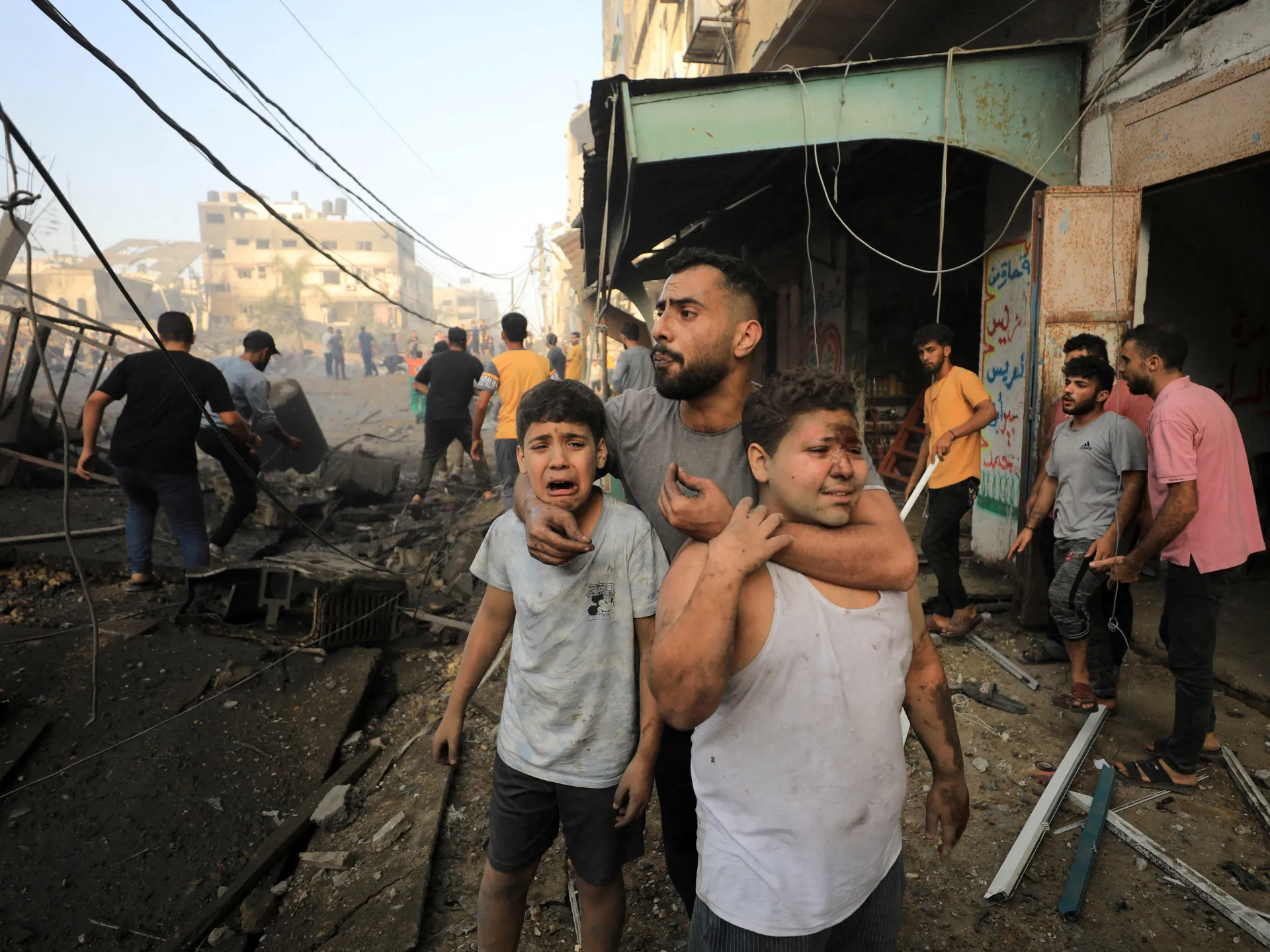
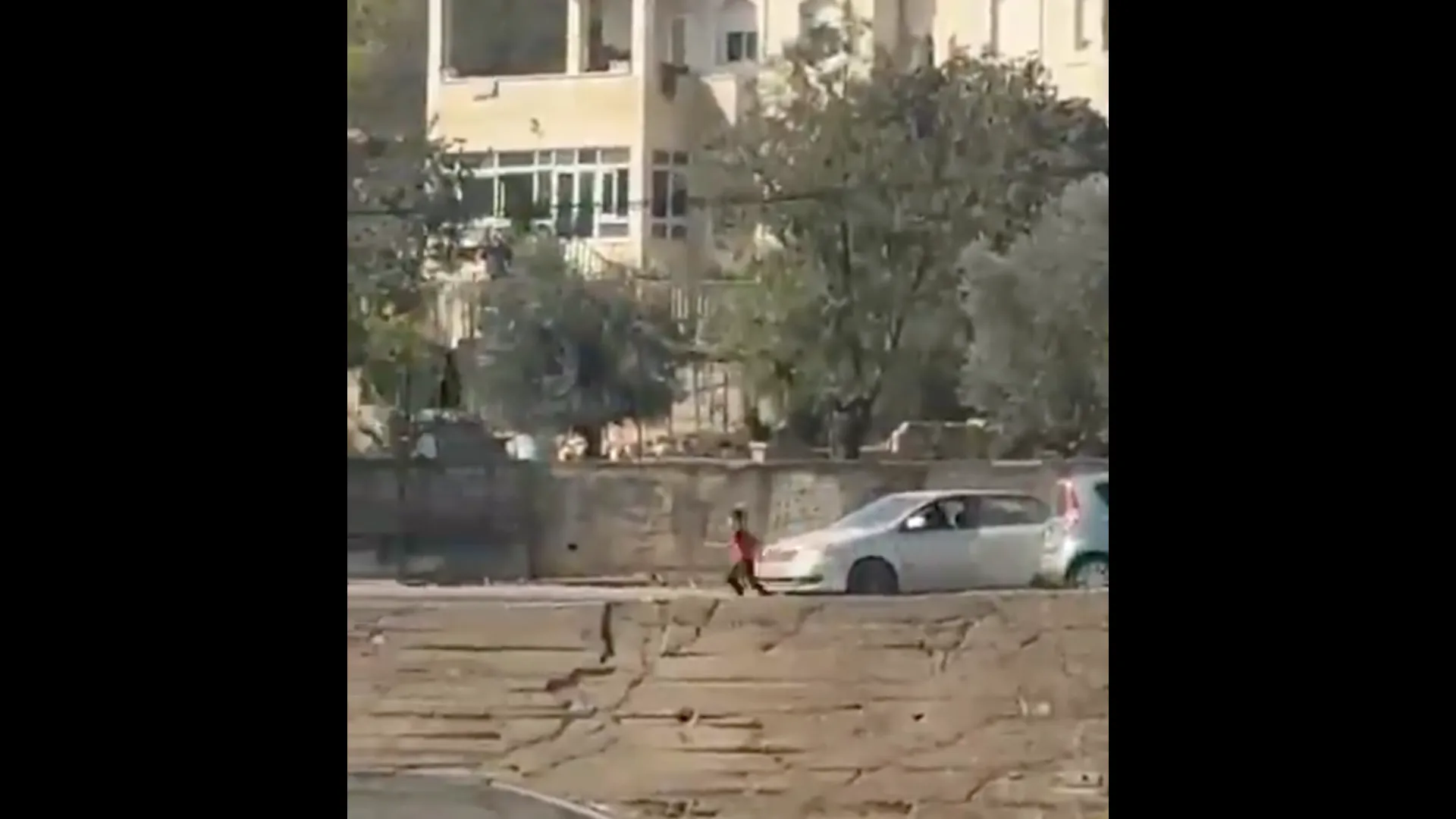
A Palestinian boy was seen fleeing after Israeli settlers attacked his father and stole their car in Ramallah. At least 19 pogroms by Israeli forces and settlers were reported across the occupied West Bank on Friday morning.
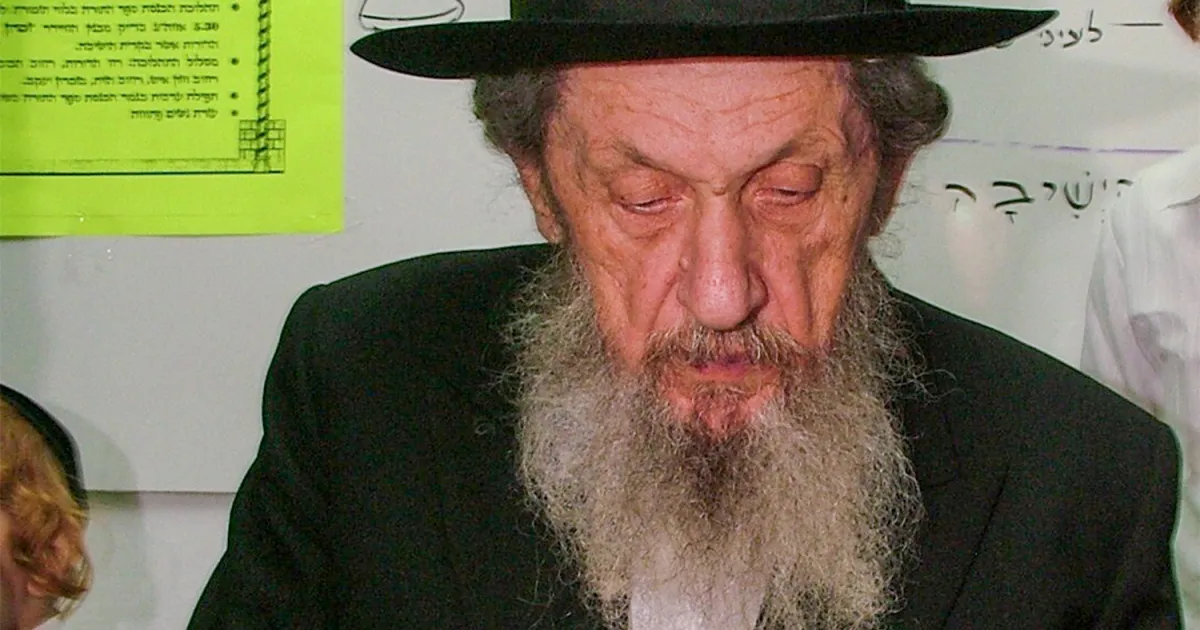
One of Israel’s top ultra-Orthodox rabbis, Dov Lando, has become the centre of controversy in Israel after comments emerged in which he denigrated Zionism.
In a recently released video recording, the 96-year-old rabbi is heard saying the ideology of Zionism caused the Jewish people to suffer “disasters”, and that Jewish Israelis may have been better off without a state.
Recommended Stories
list of 3 itemsend of list
The remarks have drawn rebukes from Israeli politicians weeks before landmark legislative elections, in which the role of the country’s growing ultra-Orthodox community – particularly over military service – is a major issue. The political alignment of ultra-Orthodox parties could also prove crucial to the formation of the next government.
So, who is Lando and why are his comments significant?
Who is Dov Lando?
Dov Lando is a 96-year-old rabbi regarded as the leader of Israel’s Lithuanian ultra-Orthodox community. Born in Poland and raised in the Lithuanian-style ultra-Orthodox tradition, Lando heads a yeshiva – a traditional Jewish academy – in the Israeli city of Bnei Brak.
He is a member of Moetzes Gedolei HaTorah, a council of senior ultra-Orthodox rabbis that offer religious guidance to the community, as well as the spiritual leader of Israel’s Degel HaTorah party. That party is part of the United Torah Judaism (UTJ) alliance, which is a member of Prime Minister Benjamin Netanyahu’s coalition.
What has Lando said about Zionism?
Earlier this week, Israeli media released a video of Lando making year-old comments that harshly criticise Zionism, military service and secular Israelis.
Lando, who has made similarly critical remarks before, is heard in the video saying that Zionism “caused the Arabs to hate us” and brought physical as well as spiritual “disasters” on the Jewish people.
“It is possible to live well with the Arabs without a state,” Lando said, adding that international or Palestinian rule would have been “the best situation” for Jews.
Lando went on to castigate soldiers who adhere to Religious Zionism – a strand of Orthodox Judaism that upholds Zionism – saying “they are killed because their rabbis teach them a distorted Torah.” Many military operations, he said, are carried out “not for saving lives, but for the honour of the state”.
The veteran rabbi also had harsh words for secular Israelis, who he said have “no connection to Judaism at all”. He described them as having built “a state of apostasy and heresy”.
What has been the reaction in Israel?
Lando’s remarks have drawn fierce criticism from numerous Israeli politicians, including all major figures that have joined an opposition alliance challenging Netanyahu.
Gadi Eisenkot, head of the Yashar party who is viewed as the opposition bloc’s most likely candidate for prime minister, said Lando’s “outrageous statements” were “the embodiment of anti-Zionism”.
Yair Lapid, the head of Israel’s opposition in the Knesset, called the comments “a disgrace to every Jew”.
Former Prime Minister Naftali Bennett, who leads the Together alliance co-founded with Lapid, said Lando’s remarks are “anti-Semitic, anti-Zionist” and against the Israeli military.
Netanyahu has not commented on Lando’s latest reported remarks, but he publicly condemned earlier statements by the rabbi in July, when Lando accused the Religious Zionism movement of “incitement to murder” for its support for drafting religious seminary students into the military.
Could the controversy impact Israel’s upcoming elections?
Potentially.
Members of the anti-Netanyahu opposition bloc have called for the UTJ, which Lando’s party is part of, to be cast out of any future government, and criticised Netanyahu for staying aligned with the group.
Yair Golan, head of the Democrats party, said Netanyahu is “silent because without Rabbi Lando and his emissaries, he has no government”.
Netanyahu’s “political survival is more important to him than Zionism, more than equality in service, and more than the blood of our soldiers”, Golan said.
But breaking with the UTJ would come at a huge political cost to Netanyahu, whose coalition is already in for a tough election battle on October 27 and is polling well below the 61-seat threshold needed for a majority.
UTJ is projected to win 8 seats in parliament, according to an October 5 poll by Israel’s Channel 12.
“If Netanyahu attacks Lando forcefully, he pays a price with the Haredim (ultra-Orthodox) he needs to form a government,” said Ehab Jabareen, a researcher on Israeli affairs. “If he stays silent, he hands his rivals material to tell right-wing voters that the man who speaks of Zionism and security depends on a religious leadership that doubts Zionism itself.”
Colombian President Abelardo De la Espriella had promised closer ties with Israel on the campaign trail.
Published On 8 Oct 20268 Oct 2026
Israel has announced that Colombia will open an embassy in Jerusalem, becoming the latest country to establish a diplomatic mission in the disputed city claimed as a capital by Israelis and Palestinians. Most countries have their embassies in Israel in Tel Aviv.
Israeli Foreign Minister Gideon Saar said Thursday the Latin American country’s embassy would open next week as he touted expanding relations with the region.
Recommended Stories
list of 3 itemsend of list
“Next Wednesday, we are going to inaugurate … the Colombian embassy,” Saar told attendees at a conference in Jerusalem.
An official at the Colombian Foreign Ministry in Bogota told AFP news agency the country’s Foreign Minister Omar Bula Escobar would travel to Jerusalem on Sunday ahead of the opening.
Colombian President Abelardo De la Espriella, who was sworn in as president in August, promised close relations with Israel during his election campaign. When he came into office, he restored diplomatic ties between Colombia and Israel. Colombia had previously severed ties with the country over Israel’s genocidal war in Gaza.
The announcement comes as a small but growing list of countries has opted to route their diplomatic ties with Israel through Jerusalem.
Since 2018, the US, Guatemala, Paraguay, Kosovo, Honduras, Papua New Guinea, Fiji, Nauru and Somaliland, which has been recognised as an independent entity only by Israel, have opened embassies in the city.
Other countries that have diplomatic relations with Israel have located their embassies in Tel Aviv, as Jerusalem is not recognised by the international community as Israel’s capital.
“We will work hard because this is the diplomatic battle over the truth. And the truth is, Jerusalem was always the capital of one nation,” Saar said, dismissing Palestinian claims to the capital.
The Israeli minister said the Democratic Republic of the Congo would open its embassy in Jerusalem “very soon” and hinted at another opening.
“I think that with the possible results in Brazil, they might have the same move,” he said after right-wing Senator Flavio Bolsonaro won the first round in the country’s presidential election.
Protesters in Colombia took to the streets of Bogota on Wednesday to rally against the new far-right government’s policy towards Israel, including the decision to open the Jerusalem embassy.
“When diplomatic relations with Israel were broken off, the message was that we would not be a nation complicit in their atrocities,” Nicolas Isaza, who took part in the protest, told Al Jazeera.
“Today our government is no longer drawing a line against the atrocities being committed in Palestine,” he added.
The United Nations Interim Force in Lebanon said there were no casualties after small arms fire targeted a border post.
Published On 7 Oct 20267 Oct 2026
The United Nations Interim Force in Lebanon (UNIFIL) says one of its posts on the Lebanon-Israel border was targeted by small arms fire, with no casualties reported.
The UN force said the incident occurred on Wednesday morning with several rounds of small arms fire targeting a UNIFIL position near Kfar Shouba along the UN-drawn border with Israel, known as the Blue Line.
Recommended Stories
list of 3 itemsend of list
“Such deliberate attacks gravely endanger the lives of peacekeepers,” UNIFIL said in a statement, adding that it was investigating the incident.
Under pressure from the United States and Israel, the UN Security Council decided earlier this year to set December 31 as the end of the mandate for the UN peacekeeping force in Lebanon.
UNIFIL was initially created to oversee the withdrawal of Israeli troops from southern Lebanon after Israel’s 1978 invasion, and its mandate has been renewed annually since then.
The mission was expanded after the 2006 war between Israel and Hezbollah. Proponents say it remains important to maintaining a demilitarised buffer between the two sides along the volatile Israeli and Lebanese border.
Israel has long accused UNIFIL of failing to prevent threats posed by Hezbollah and has increasingly pushed for the end of its mission since cross-border fighting escalated in the wake of the October 7, 2023, Hamas-led attacks on Israel and the start of Israel’s war on Gaza.
UNIFIL currently has 7,500 peacekeepers from around 50 countries operating in Southern Lebanon.
Last month, Lebanon’s Prime Minister Nawaf Salam pressed the UN on the need to “avert the vacuum” that would be caused by withdrawing the mission from the country’s south without a viable replacement.
Violence has decreased since a ceasefire following a June memorandum of understanding in the US-Iran war. Lebanon and Israel concluded a US-sponsored framework agreement later that month.
The Israel-Lebanon deal involves the disarmament of Hezbollah, a gradual withdrawal of Israeli forces from Lebanon’s south and the deployment of the Lebanese army to the region, starting in test areas known as “pilot zones”.
Israeli air strike kills Palestinian Civil Defence rescue volunteer as he was travelling to help wounded people near Kamal Adwan Hospital in Beit Lahiya, northern Gaza, a medical source says.
Published On 7 Oct 20267 Oct 2026
Israeli attacks have killed at least four Palestinians, including a rescue worker, and wounded several others across Gaza.
The Palestinian Civil Defence rescue volunteer was killed in an air strike as he was travelling to help wounded people near Kamal Adwan Hospital in Beit Lahiya, northern Gaza, a medical source said on Wednesday.
Recommended Stories
list of 3 itemsend of list
The Civil Defence identified the victim as Mohamed Tamous.
Meanwhile, an Israeli drone strike in the southern city of Khan Younis killed Hisham Ibrahim Abu Mustafa, 60, and injured several others, Nasser Hospital said.
The body of a 17-year-old Palestinian was also brought to Nasser Hospital after he was killed in an Israeli drone strike in the Qizan Abu Rashwan area south of Khan Younis, Turkiye’s state news agency Anadolu reported, citing a medical source.
A teenage boy died from wounds sustained last month when Israeli forces opened fire east of Khan Younis, Anadolu reported, citing a medical source.
Also on Wednesday, a girl was injured by Israeli gunfire directed at displaced Palestinians’ tents in the Al-Amal neighbourhood, Anadolu reported.
Additionally, in Khan Younis, the Israeli military carried out two demolitions in the northeastern and eastern parts of the city.
The military also carried out demolitions east of Gaza City’s Tuffah neighbourhood.
Israel has killed more than 74,245 Palestinians since it launched its genocidal war on Gaza in response to the Hamas-led October 7, 2023, attack on Israel.
Syrians released from Israeli detention have described abuse including sleep deprivation, violent searches, and dog attacks, while dozens of others remain detained. Al Jazeera’s Heidi Pett met with some of them, who recounted the torture they suffered behind bars.
Israel ordered East Jerusalem consulate to be closed in retaliation for British sanctioning of settlements in the occupied West Bank.
Published On 5 Oct 20265 Oct 2026
The United Kingdom has threatened to expel 27 Israeli diplomats should Israel proceed with plans to close the British consulate in occupied East Jerusalem, according to unverified Israeli media reports.
The Ynet outlet reported on Monday that the British Ambassador to Israel, Simon Walters, had conveyed the warning to Israeli officials. Israel ordered the closure of the consulate by October 8 in retaliation for the British decision to sanction illegal settlements in the occupied West Bank.
According to the report, the British government has threatened to expel one Israeli diplomat for each of the 27 British diplomats whose diplomatic status at the consulate would be terminated in the event that it is shut.
Israel ordered the consulate’s closure after Britain imposed sanctions targeting illegal Israeli settlements in the West Bank, including a ban on imports.
The consulate operates separately from the British Embassy in Israel and handles relations with Palestinians in East Jerusalem, the occupied West Bank and Gaza, including political and consular affairs.
Britain’s National Security Adviser, Jonathan Powell, travelled to Israel last week in an undisclosed attempt to persuade Israeli officials to reverse the closure, the Reuters news agency reported on Monday. The talks did not produce an agreement, although discussions are continuing.
The British embassy in Israel has declined to comment on the reported threat, according to Ynet.
Maysa Abu Daoud and her daughter Mary al-Najjar among five Palestinians killed in Gaza City attack.
Published On 4 Oct 20264 Oct 2026
The Latin patriarch of Jerusalem, Cardinal Pierbattista Pizzaballa, has expressed his “deep sorrow and grief” over the “tragic” killing of two Christian women in an Israeli air attack on Gaza City.
Maysa Abu Daoud and her daughter Mary al-Najjar were among five Palestinians killed in the attack that hit the ground floor of a building in the Remal neighbourhood on Saturday, in the latest Israeli violation of a United States-brokered “ceasefire” agreement with the Palestinian group Hamas.
In a statement, the patriarch extended his “heartfelt condolences” to the loved ones of the two women and to the Christian community in Gaza.
Their funeral took place on Saturday at Saint Porphyrius Church in Gaza City’s Old City.
The two women were Palestinian Christians from Gaza City who devoted their time to helping parishioners and displaced people sheltering at the Holy Family Church, according to Palestine’s Higher Presidential Committee for Church Affairs.
The committee’s chairman, Ramzi Khoury, described their deaths as a “painful loss” for their families, the church and its parishioners.
People inspect the damage after an Israeli attack on a residential apartment in the Remal neighbourhood of Gaza City [Omar al-Qattaa/AFP]
Mary’s son, 14-year-old Fouad al-Najjar, told the Anadolu news agency the strike hit the building at about 1:30am (22:30 GMT).
“My grandmother and my mother died. May God have mercy on them,” he said.
Al-Najjar appealed for an end to Israel’s genocidal war on Gaza, saying Palestinians were losing their loved ones every day.
“We are exhausted by this war and have endured so much,” he said. “For almost three years, we have been living through the same destruction, the same grief and the same war.”
Palestinian Lutheran pastor Munther Isaac, who serves in Ramallah and directs the Bethlehem Institute for Peace and Justice, wrote on X: “The genocide continues in Gaza.”
Civil Defence members carry the bodies of Maysaa Abu Daoud and her daughter Mary al-Najjar during their funeral at the Greek Orthodox Church of Saint Porphyrius in Gaza City [Omar al-Qattaa/AFP]
The Gaza Strip is home to fewer than 1,000 Christians. The community was already small before the war, and many of its members have been killed since then in attacks on their homes and churches throughout the war that began in October 2023.
On October 19, 2023, an attack on the Saint Porphyrius Church compound killed at least 18 people. Two months later, the Latin Patriarchate of Jerusalem said an Israeli sniper shot dead a woman and her daughter inside the Holy Family parish compound in Gaza.
An Israeli strike on the Holy Family Catholic Church compound on July 17, 2025 also killed three people and wounded others, including parish priest Father Gabriel Romanelli.
According to the Ministry of Health in Gaza, Israeli attacks have killed at least 74,228 people, including at least 1,445 since the start of the “ceasefire” in October 2025.
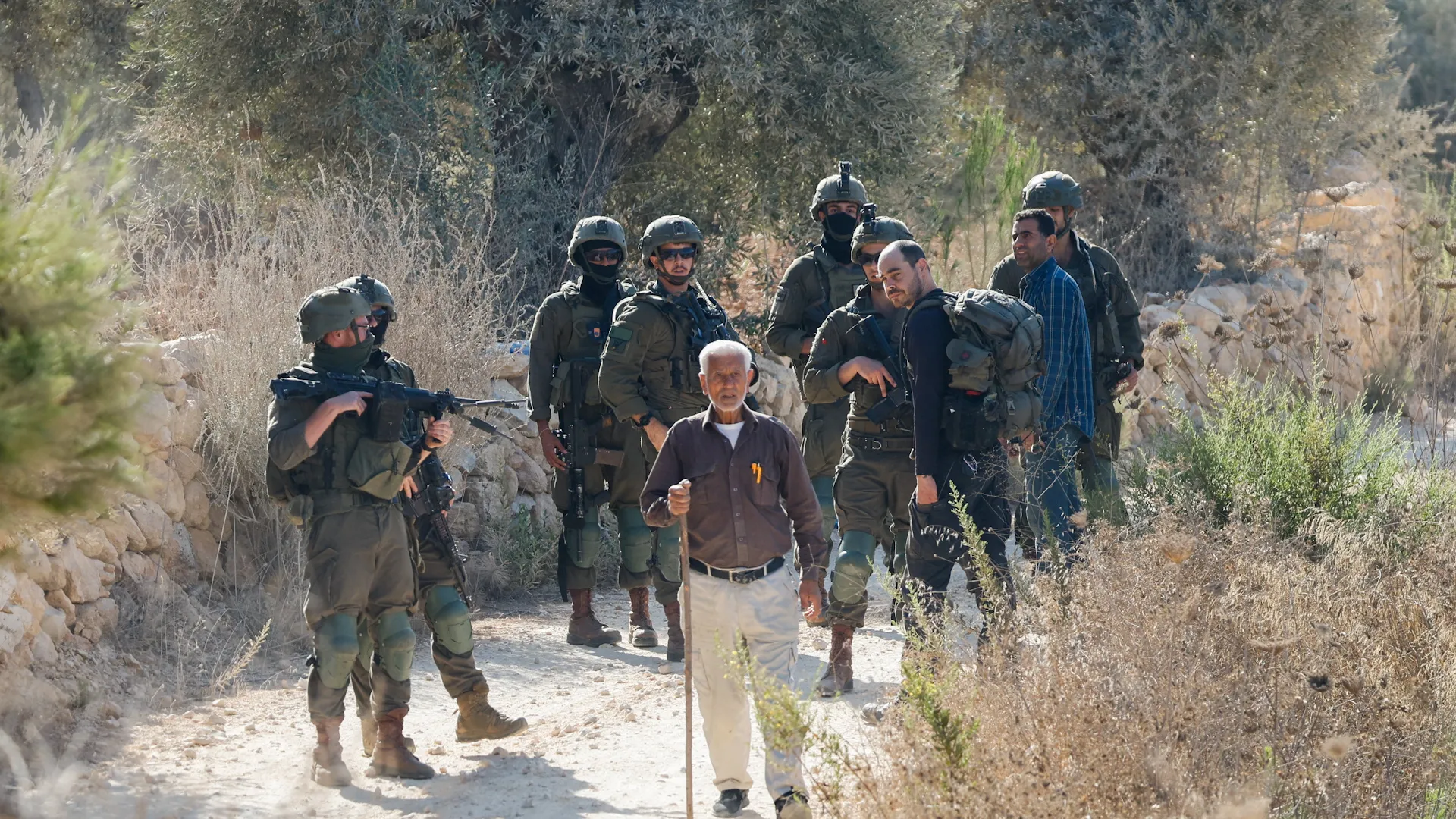
Israeli settlers and soldiers have attacked and blocked Palestinian farmers from harvesting olives as the season begins. More than 80,000 Palestinian families rely on the olive harvest as a source of income.
Israeli journalists asked coach Hallgrimsson about the Flydubai attack and alleged racist abuse by Ireland’s players.
Published On 3 Oct 20263 Oct 2026
Members of an Israeli media contingent heckled Republic of Ireland head coach Heimir Hallgrimsson’s news conference prior to the UEFA Nations League football match, causing it to end abruptly amid growing political tensions and protests against the fixture.
During the media event on Saturday, an Israeli journalist asked Hallgrimsson about his views on an incident onboard a Flydubai flight to Israel earlier this week.
Recommended Stories
list of 4 itemsend of list
According to the prosecutor general of the United Arab Emirates, the Flydubai co-pilot “attempted to carry out a terrorist act”, using an axe against the pilot to take over the aircraft’s controls.
The plane carrying 174 passengers was on its way from the Dubai in the UAE to Tel Aviv in Israel on Wednesday when the copilot wounded Indian pilot Smit Machchhar, who opened the cockpit door to seek help.
The aircraft briefly plunged about 17,000 feet (5,180 metres) before it was brought back under control.
The attacker was not officially identified, but media reports quoting unnamed sources said he was an Omani national, Hamam al-Hammami.
“What do you say about the people that you support? Their ideology is based on murder,” the journalist asked, purportedly hinting at Ireland’s stance on Palestine and attempting to link it to the aviation incident.
Before the Irish team’s coach could answer, the Football Association of Ireland’s communications manager Kieran Crowley stepped in and asked the journalist to refrain from asking questions not linked to the match.
The journalist persisted, carrying on with her question before Crowley stopped her again.
“We respected your questions at the last press conference, but we are doing football questions today,” he said, referring to Israeli journalists’ pointed questions about the calls to boycott the first leg of the European match.
Icelandic coach Hallgrimsson later termed the incident a “verbal attack”.
Following the match, Israeli supporters were accused of directing racist chants towards Ireland player Adam Idah and were filmed raising military slogans, but evaded disciplinary action from the competition’s organisers.
However, another Israeli journalist turned the incident on its head during Saturday’s news conference and accused the Irish team of calling Israel’s players “monkeys” during the match.
FAI’s Crowley was quick to shut out the accusation and ended the media event.
“That’s a lie. You’ve just broadcast a lie,” Crowley said before getting up to walk away.
According to Irish media reports, the FAI is continuing to investigate allegations that Irish players Adam Idah and James Abankwah were racially abused by Israeli fans.
An Israeli supporter also led chants about his country’s military from the stands as he attempted to brush aside the team’s drubbing on the football pitch.
The day before the first leg, goalkeeper Gavin Bazunu publicly withdrew, saying he felt “it would be wrong to participate in the upcoming fixtures against Israel”.
The second leg will be played at the TSC Arena in Backa Topola in Serbia on Sunday.
Ireland’s Hallgrimsson termed it “a game with a lot of emotions attached to it”.
He said the team was focused on winning the second leg as well.
“There’s been a lot of emotions from the people in Ireland about this and obviously that affects the players as well. We want to do good, but it’s always going to be a challenge when the environment is as noisy as it is.”
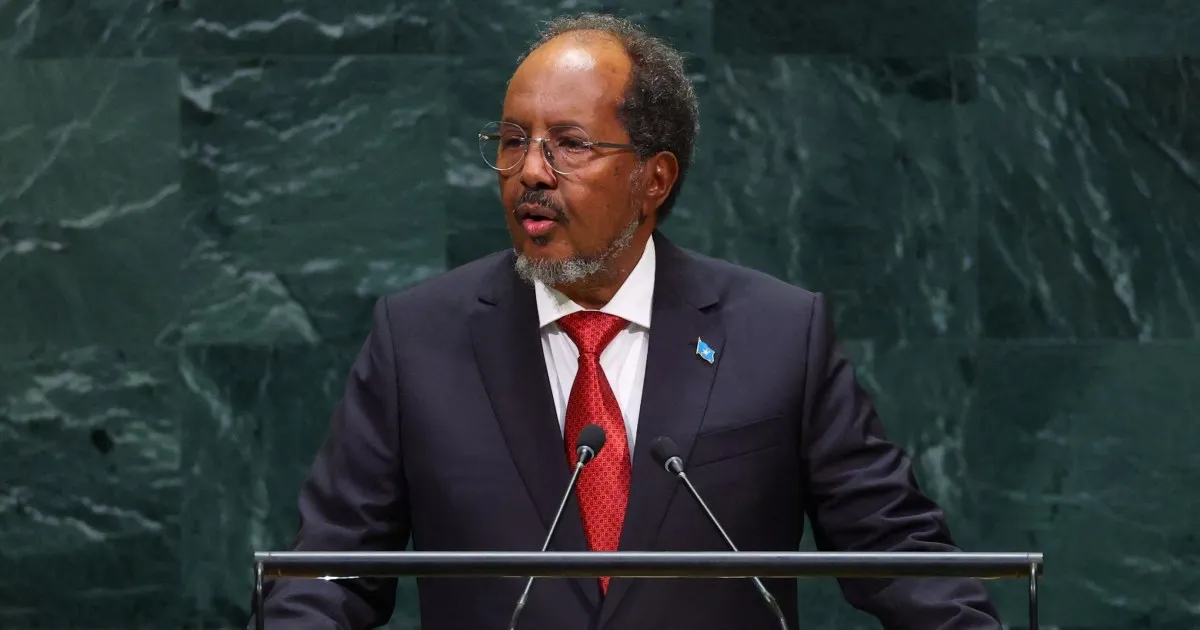
In exclusive Al Jazeera interview, President Hassan Sheikh Mohamud says attempts to pull Somalia into Middle East crises won’t succeed.
Somalia will not accept Israeli presence in the country “under any circumstances” and will resist any attempts to be pulled into the Middle East’s crises, its President Hassan Sheikh Mohamud tells Al Jazeera.
Speaking in an exclusive interview, Mohamud said that Israel was planning to establish a naval base in Berbera and use the city’s airport, adding that its real aim was to get closer to the Gulf states and Iran.
Recommended Stories
list of 3 itemsend of list
Berbera is a port city on the Gulf of Aden coast in Somaliland – the self-declared republic in northwestern Somalia that Israel recognised last year, but which is claimed by Mogadishu.
Berbera faces Yemen across the water near the strategic Bab al-Mandeb strait. The Iran-aligned Houthis have previously enforced a blockade on Israel-linked ships in the area.
“We will overcome the challenges posed to our country by Israeli moves,” Mohamud said in his wide-ranging interview.
He added that the Israeli plans fall under the “Greater Israel” project – referring to a term for various proposals, often rooted in biblical interpretations, for Israeli control over territory beyond its current borders. Some versions extend from the Nile to the Euphrates.
Israel has not adopted it as official policy, but Prime Minister Benjamin Netanyahu said in an August 2025 interview that he felt connected to the vision, prompting condemnation from Arab governments.
The Somali president described Israel as a “destabilising force” that does not abide by international law.
He also criticised Tel Aviv’s recognition of Somaliland in December.
No country other than Israel recognises Somaliland, while the region’s own residents are completely opposed to an Israeli presence, Mohamud said.
Somaliland declared independence from Somalia in 1991 and has governed itself independently for more than three decades. But it had not secured recognition from any United Nations member state until Israel’s move.
Fight against armed groups
The Somali president told Al Jazeera the United States remains his country’s strongest partner in the fight against “terrorism”, and added that al-Shabab has no presence in the major cities, leaving no possibility of the group taking control in Somalia.
Al-Shabab is a Somali armed group that emerged from the Islamic Courts Union in the mid-2000s and pledged allegiance to al-Qaeda in 2012. It has fought Somalia’s federal government for years, holds territory in parts of southern and central Somalia, and has carried out deadly attacks, including in Mogadishu and in neighbouring Kenya.
Regarding the East Africa region, Mohamud said Somalia’s relations with neighbouring Ethiopia are good, and Mogadishu does not object to Addis Ababa gaining access to the sea through Somali territory.
Ethiopia has been landlocked since Eritrea became independent in 1993 and relies largely on Djibouti’s ports for trade. In January 2024, Addis Ababa signed a memorandum of understanding with Somaliland on sea access, which Somalia condemned as a violation of its sovereignty. Somalia and Ethiopia later agreed to ease tensions.
Houthis ‘destabilising’ region
Mohamud also accused Yemen’s Houthis of “destabilising” the region and disrupting navigation in the Bab al-Mandeb strait.
His comments come as the group attempts to build on its lightning offensive that captured the country’s Red Sea coast last month.
Thus far, Yemeni government forces have been able to hold their positions on the front lines and even claimed to have inflicted heavy losses against the Houthis.
The Houthis have also intensified their attacks on Saudi Arabia, but the kingdom’s Crown Prince Mohammed bin Salman (MBS) has promised not to compromise on its security, saying the Yemeni rebels chose “chaos and destruction, threatening the Yemeni people and the region”.
The full interview with President Mohamud will be broadcast on Al Jazeera Arabic on Sunday.
No warning given before Israeli deadly strike hit Rimal area, one of Gaza City’s most densely populated neighborhoods.
Published On 3 Oct 20263 Oct 2026
An Israeli air attack on a residential apartment in western Gaza City has killed at least five people and severely wounded at least six others, according to medical staff at al-Shifa Hospital.
The strike hit the al-Asala building in the Remal neighbourhood early on Saturday without prior warning, according to Al Jazeera’s Hani al-Shaer, reporting from Khan Younis.
Recommended Stories
list of 3 itemsend of list
Remal is one of Gaza City’s most crowded residential areas, home to thousands of displaced people sheltering in makeshift camps across the neighbourhood.
Al-Shaer said the attack came in the middle of the night, when residents were asleep.
“We heard fighter jets getting louder, then three strikes followed, hitting the apartment and killing those inside,” he said.
The strike penetrated the targeted apartment and tore through the floors below, causing further destruction throughout the multi-storey building.
Fires burned for at least an hour before Palestinian Civil Defence crews managed to put them out.
Al-Shaer described the scene as “horrific”, with people buried under the rubble as they slept.
Civil defence crews were still searching the site for missing people and bodies, he said, as Israeli drones continued flying over the area and fighter jets were heard flying low across the Strip.
Al-Shifa Hospital said the dead included four women, among them an elderly Christian woman and her daughter.
The six wounded were taken to al-Shifa Hospital for treatment.
Saeed Ayed* watches over his livestock herd. The animals are starving and parched due to a two-week-long Israeli siege on the Ras al-Ahmar Bedouin community in the occupied West Bank’s Jordan Valley.
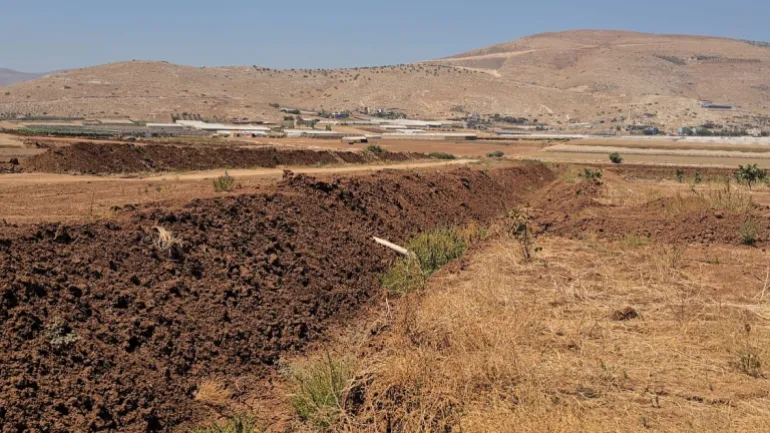
Access to the community has been blocked since mid-September, as Israeli forces continue building a barrier through Palestinian land in the area, including a road for military patrols, trenches and embankments.
Recommended Stories
list of 3 itemsend of list
Since the road closures began, movement for Palestinians has been severely restricted. They are forced to move around at night, transporting water, fodder and milk via donkeys under the cover of darkness to avoid detection by Israeli soldiers and settlers.
Ayed told Al Jazeera that no water had entered the community over the past three days after Israeli forces sealed the access points residents had been using to bring in supplies.
“The situation is dire. We are completely besieged, and the livestock cannot survive without water and food for this long,” Ayed said. “We own 15,000 head of livestock, and we fear they will perish because of the siege.”
Ras al-Ahmar is a 300-person village home to around 50 families who have lived off livestock and herding since the 1970s. Ayed said that Israeli settler attacks – part of a wider pogrom against Palestinians across the West Bank – had intensified since February, accusing settlers of trying to force residents out to seize their land.
“We have faced livestock theft, attacks on our dwellings, beatings of residents and vandalism of our homes. This was happening almost daily, yet we refused to leave. Now, they are completely besieging us to force us out,” he added.
The greatest challenge facing residents is restricted access to medical care as a result of the siege, a particular concern for the elderly.
Disease is also rampant among livestock, particularly newborn animals. And with veterinary teams unable to reach the area and treat the animals, deaths have been reported.
The military barrier – which Israel calls Crimson Thread and says it is needed for security – runs for roughly 20km (12 miles) through the northern Jordan Valley, with a width of up to 50 metres (165 feet).
Construction expanded early this year, including the digging of trenches and the bulldozing of agricultural land that damaged wells, water networks and greenhouses. The Israeli military seized nearly 115 hectares, 85 percent of which is privately owned Palestinian land, according to Kerem Navot, which monitors Israeli land policies in the West Bank.
Abdullah Bisharat, head of the village council of Ras al-Ahmar and Atuf, a nearby rural area also facing the military blockade, told Al Jazeera that the Israeli blockade has stopped 51 schoolchildren from attending classes for two weeks because vehicles can no longer reach them.
Israeli forces confiscated a tractor belonging to the village council on Sunday, detaining its driver as he was delivering animal fodder and water to Ras al-Ahmar, Bisharat said.
“We reached out to human rights organisations, but unfortunately no one was able to break the siege. Hundreds of people there are suffering, the majority of whom are women and children,” Bisharat added.
A trench dug by Israel around the rural Bedouin community of Ras al-Ahmar has restricted their movement [File: Moath Ghannam/Al Jazeera]
Broader context
The targeting of Bedouin and herding communities in the Jordan Valley is part of a mounting pressure campaign on residents to abandon their properties by restricting access to land and pastures. The tactics include settler violence, the demolition of structures and the closure of roads and access points.
The United Nations Office for the Coordination of Humanitarian Affairs (OCHA) has described Bedouin and herding communities as among the groups most vulnerable to displacement in the West Bank. Dozens of Palestinian communities across the West Bank have been entirely or partially displaced since 2023, when Israel began its genocide in Gaza and ramped up its attacks on the West Bank after the October 7 Hamas attack.
OCHA has reported that at least 130 Palestinian communities have experienced full or partial displacement since January 2023, with 48 communities completely displaced, including 12 from January to August.
According to OCHA, more than 2,500 Palestinians were displaced in 2026 due to settler attacks and related access restrictions, out of a total of more than 6,400 displaced since 2023.
As the Israeli elections – scheduled for October 27 – approach, Palestinian analysts and rights advocates argue that the measures being implemented on the ground are entrenching a new reality that may persist regardless of the next government.
Hassan Mleihat, chairman of the al-Baydar Organization for Defense of Bedouin Rights, told Al Jazeera that settlers appear to be rapidly intensifying measures aimed at displacing Bedouin communities in the lead-up to the elections.
Mleihat said that Israel’s objective was to expel as many Palestinians as possible and seize control of their land.
“The road being constructed near Ras al-Ahmar aims to dominate the area’s land under security pretexts and to isolate Palestinian communities into tiny geographical pockets, effectively confining their presence there,” he said.
A new reality
Observers believe the significance of these Israeli measures against Palestinian communities extends beyond their immediate impact on the population, creating demographic, geographic and security-related changes that may prove irreversible even if the Israeli political landscape shifts after the elections.
Adel Shadid, an expert on Israeli affairs, told Al Jazeera that Israel currently exercises an unprecedented degree of control over Palestinian territory in the West Bank. Palestinians, he said, live in small, fragmented and scattered enclaves with Israeli control over security, military and economic matters, as well as the minutiae of daily life.
He said the change was not only limited to geography but also entails normalising the presence of illegal Israeli settlements in the West Bank so that they are viewed as an integral part of the region’s fabric, rather than a temporary presence or a reality subject to change.
“This shift is accompanied by the entrenchment of the perception that the West Bank is no longer viewed as a Palestinian area – or even a disputed one – but rather as a territory where Jews have the right to live in safety and security,” he said.
Shadid argued that this perspective also shapes how Israeli and Palestinian communities in the West Bank are perceived by the Israeli state. Israeli settlers are presented as a population requiring protection, while Palestinians are increasingly framed primarily as a security threat.
“This logic extends to how the land and the very elements of life are treated. A tree, for instance, might be viewed as a potential resource for acts targeting the Jewish community; consequently, cutting it down is seen, within this framework, as a security measure that warrants no intervention,” he said.
Shadid said this was also changing perceptions of the role of the Israeli army and police in the West Bank. He argued that the security forces’ role was increasingly seen as protecting settlers against a so-called “Palestinian threat”, rather than restraining settler aggression against Palestinians.
“This new reality is not tied to the current Israeli government. Rather, it creates a dynamic that will persist beyond the elections, regardless of the outcome,” Shadid said.
*Saeed Ayed is a pseudonym used at the individual’s request for security reasons.
Palestinian participation in upcoming Knesset vote continues to shrink with withdrawal of Sami Abu Shehadeh.
Published On 2 Oct 20262 Oct 2026
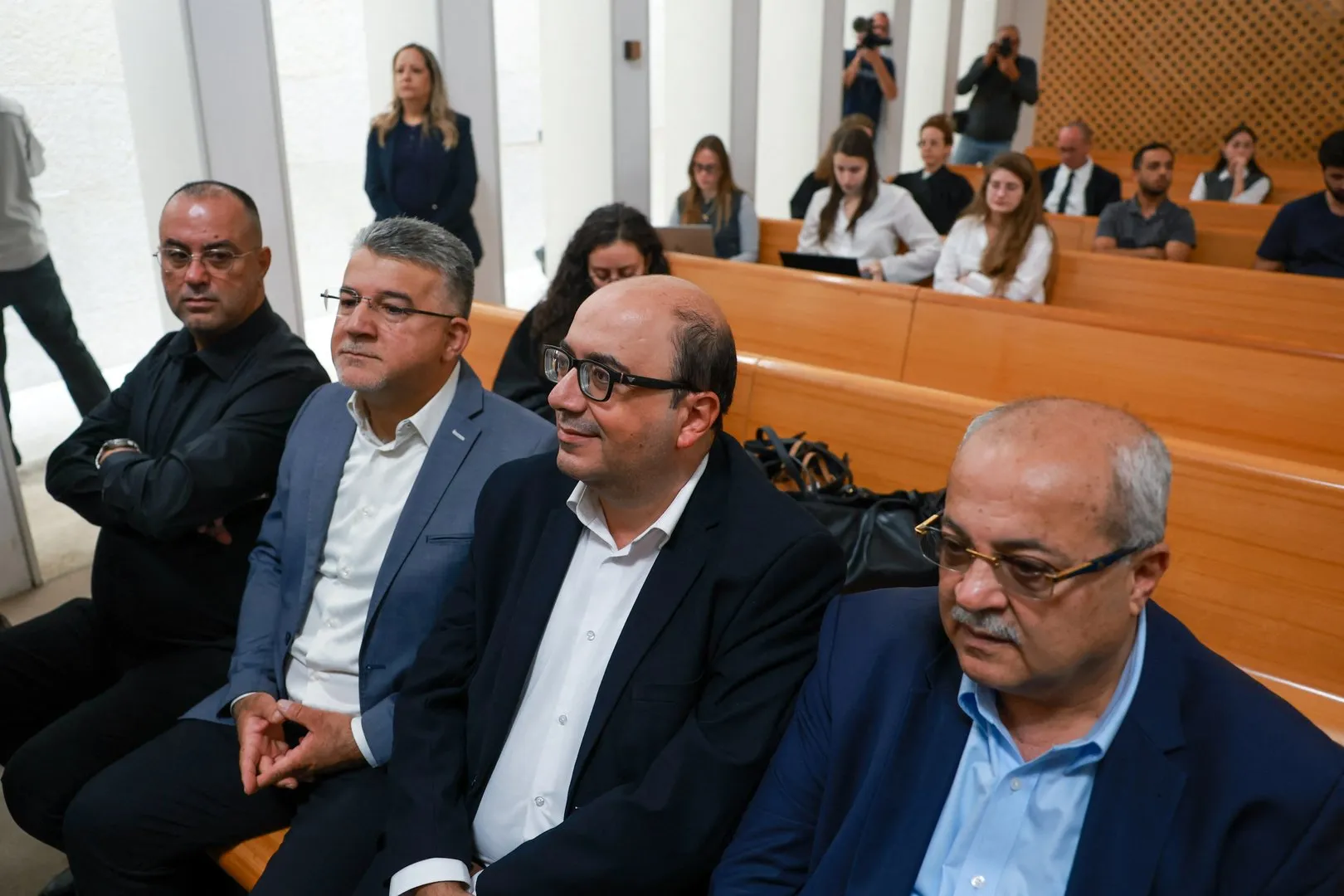
Arab Israeli politician Sami Abu Shehadeh has withdrawn his candidacy for the upcoming Israeli elections after the Supreme Court advised him to drop out.
The leader of the left-wing Palestinian Balad party announced on Friday he was dropping his bid for election to the Knesset on October 27. His withdrawal, which came after the court threatened to disqualify him, comes amid increased efforts by Israeli authorities to block Arab Israeli parties from taking part.
Recommended Stories
list of 3 itemsend of list
Political analysts view Arab Israeli parties as potential kingmakers in the election, with polls showing neither Prime Minister Benjamin Netanyahu’s coalition nor the main opposition bloc on course for an outright majority.
The withdrawal came after the Supreme Court indicated that a majority of its judges agreed with a September 23 decision from Israel’s Central Elections Committee to oust him from the race after nationalist political rivals accused him of supporting Hamas’s attack on October 7, 2023.
Adalah, a rights organisation representing Abu Shehadeh, condemned the court, saying the evidence it presented had no legal basis.
“The court has effectively decided to remove a Palestinian leader, a citizen of Israel, from the Knesset,” Adalah said in a statement.
“The court’s clear intention to disqualify him,” it added, was “a direction that would have set a dangerous legal precedent with devastating consequences.”
Sami Abu Shehadeh, leader of the Balad party, arrives at the Supreme Court in Jerusalem on October 1, 2026 [AFP]
Abu Shehadeh served in the Knesset from 2019 to 2022. Balad confirmed he was withdrawing his candidacy but stressed that the decision did not mark the end of his political struggle and that he would remain party leader.
The elections committee voted to disqualify him at the request of far-right National Security Minister Itamar Ben-Gvir, who accused him of supporting the Hamas attack due to an article issued the following day in which Abu Shehadeh called it an “important historical event”.
Speaking to the Supreme Court on Thursday, Abu Shehadeh said he did not support “armed struggle” but acknowledged that a paragraph in the article had been incorrectly worded. He said his intention was to call for moving the conflict towards a political process.
Adalah labelled his withdrawal from the election “a severe blow to the right of Palestinian citizens to be represented and to stand for election”.
The elections committee has also barred two Arab electoral lists: the United Arab List and the Joint List, a three-party alliance that includes Abu Shehadeh’s party Balad. The Supreme Court is due to continue hearing appeals from the parties on Friday.
Adalah has questioned why the Palestinian candidates are being disqualified but far-right Israeli candidates were “cleared to run” despite openly calling for violence against Palestinians and making statements “amounting to incitement to genocide”.
FAO director said he was informed his contract would not be renewed because of allegedly breaching impartiality rules.
Published On 2 Oct 20262 Oct 2026
A senior UN agency director has said that he lost his job because he criticised Israeli policies in Gaza.
Ben Davis, who had been Director of Rural Transformation and Gender Equality at the Food and Agriculture Organization (FAO), told AFP news agency on Wednesday that he was informed in July that his contract would not be renewed because he had allegedly breached impartiality rules.
Recommended Stories
list of 3 itemsend of list
He said that he was accused of organising weekly silent protests at the Rome-based organisation.
“They accused me of organising these moments of silence on the situation of starvation and famine in Gaza,” Davis said.
Davis was also criticised for a report he worked on about food availability in Gaza and humanitarian law, published in May.
“We were told to take it down,” he said. “We weren’t allowed to make any references to humanitarian law.”
‘Game of human rights’
FAO Director-General Qu Dongyu appeared to warn FAO staff on Tuesday that “we don’t allow you to play the game here of human rights”.
He was speaking in public comments made at the start of a filmed session on forestry.
“Of course, human rights is very important, but we have the human rights agency in Geneva,” he added. “If you want to take care, go there.
“That’s why some senior members play the political game here, I fire him … You should follow the FAO constitution … You are against staff regulations … But I’m a very soft person, I didn’t fire that many,” he said.
“I will fire more people if they are against the law,” he added.
Director-General of the Food and Agriculture Organization of the United Nations Qu Dongyu delivers his speech during a World Food Forum meeting [File: Andrew Medichini/AP]
FAO did not respond to an AFP request for comment.
Asked if he thought the director-general’s comments were about him, Davis said “absolutely”.
“He has already scolded me in public in the past for being too political.”
Davis also said he was “concerned” about the director-general’s comments on firing more people.
Hundreds of people attended the moments of silence at their height, while now there are only 30 to 40 people coming on a weekly basis, he said.
Israel’s genocidal war on Gaza has killed over 74,000 people since October 2023, and at least 1,431 Palestinians have been killed in Israeli attacks since the so-called ceasefire between Hamas and Israel was agreed upon in October 2025.
Gaza’s health toll mounts, with 1,439 dead and 5,052 injured since the ceasefire began in October 2025.
Published On 1 Oct 20261 Oct 2026
An Israeli drone strike has killed a Palestinian man and wounded several others in southern Gaza while settlers shot dead another Palestinian man near Ramallah in the occupied West Bank.
The body of Tamer al-Hamayda, 42, and three wounded people were brought to Nasser Medical Complex on Thursday after the strike hit a tent sheltering displaced Palestinians in the al-Mawasi area, west of Khan Younis on the southern coast of the Gaza Strip.
Recommended Stories
list of 3 itemsend of list
Another Palestinian succumbed to wounds sustained in an earlier Israeli drone strike on Tuesday that targeted a gathering of Palestinians in Jabalia refugee camp in northern Gaza, according to medical personnel in Nasser Medical Complex.
Israeli forces also carried out a large-scale demolition operation targeting buildings east of Gaza City’s al-Tuffah neighbourhood.
The Gaza Health Ministry reported eight new deaths and 26 wounded over the past 24 hours, putting the toll since the “ceasefire” took effect in October 2025 at 1,439 killed and 5,052 wounded, with 834 bodies recovered from the rubble.
Israel’s war on Gaza has killed at least 74,040 Palestinians and wounded 175,168 since October 2023, the ministry said.
Occupied West Bank pogroms
In the occupied West Bank, Israeli settlers shot dead a Palestinian man and wounded another during a raid on the village of Yasuf, north of Ramallah, on Thursday.
51-year-old Mashhour Yassin was shot dead by settler gunfire, the Palestinian Health Ministry said.
Describing the attack, the Palestinian Ministry of Foreign Affairs said Israeli forces had detained an ambulance, seizing its key and throwing it aside, “in a crime that reflects clear coordination between the settlers and occupation forces.”
It said the killing “falls within the framework of a serious and continuous escalation in organised settler crimes,” saying Israel gives free rein to settler “terrorism against our people in the service of settlement, annexation, forced displacement and ethnic cleansing plans.”
Yasuf Mayor Jumaa Abdel Fattah told the AFP news agency that dozens of Israeli settlers armed with sticks and firearms had attacked the village, which lies between four Israeli settlements.
“Yassin was at his doorstep when the settlers attacked the village homes. He went out to defend his house,” Abdel Fattah said, adding that Yassin’s nephew was also wounded in the attack.
Abdel Fattah said the settlers had come from Havat Anton, an illegal Israeli settlement established in July that has previously attacked the village’s residents.
Palestinians in the occupied West Bank have reported a surge in settler pogrom attacks in recent months.
More than 500,000 Israelis live in West Bank settlements considered illegal under international law.
According to the UN, at least 1,112 Palestinians in the occupied West Bank have been killed by Israeli forces or settlers in the territory since October 2023, including at least 37 killed by settlers.
Israel imprisons hundreds of Palestinian children at a time, holding them indefinitely in military detention systems that traumatise the children. Their suffering was discussed during an event on the sidelines of the UN General Assembly High-Level Week.
Coffins containing the remains of those killed will be carried in a funeral procession involving family members.
Published On 1 Oct 20261 Oct 2026
Palestinians are preparing to bury the remains of 105 people killed in a devastating Israeli attack on Gaza City in October 2023.
The victims were killed in a series of Israeli air strikes involving at least 20 bombs that levelled the seven-storey Al Taj 3 building and destroyed several other residential buildings in the Yarmouk Square neighbourhood on the afternoon of October 25, 2023.
Recommended Stories
list of 3 itemsend of list
Coffins containing the remains of those killed will be carried in a funeral procession involving family members on Thursday, the General Directorate of Civil Defence said.
The remains will be buried in the Sheikh Radwan cemetery, northwest of Gaza City.
Gaza’s civil defence said the recovery operation was carried out in coordination with an Egyptian committee.
Al Jazeera correspondent Ibrahim Khalili, reporting from Gaza City, said the recovery operation was the fifth largest of its kind since Israel launched its genocidal war against Palestinians in Gaza in October 2023, in terms of the number of bodies recovered.
Civil defence operations director Abdul al-Majdalawi said it had been “impossible” to reach the bodies at the time of the attack.
“Bulldozers, excavators and other heavy machinery used by civil defence teams in Gaza were directly and deliberately targeted,” he said.
Osama Sharaf said 37 members of his family were killed in the attack.
“We recovered some of them at the beginning of the war, and today [Wednesday] 16 more were recovered, including my father, my mother, and all of my siblings. My sister’s son was also there with them,” he said.
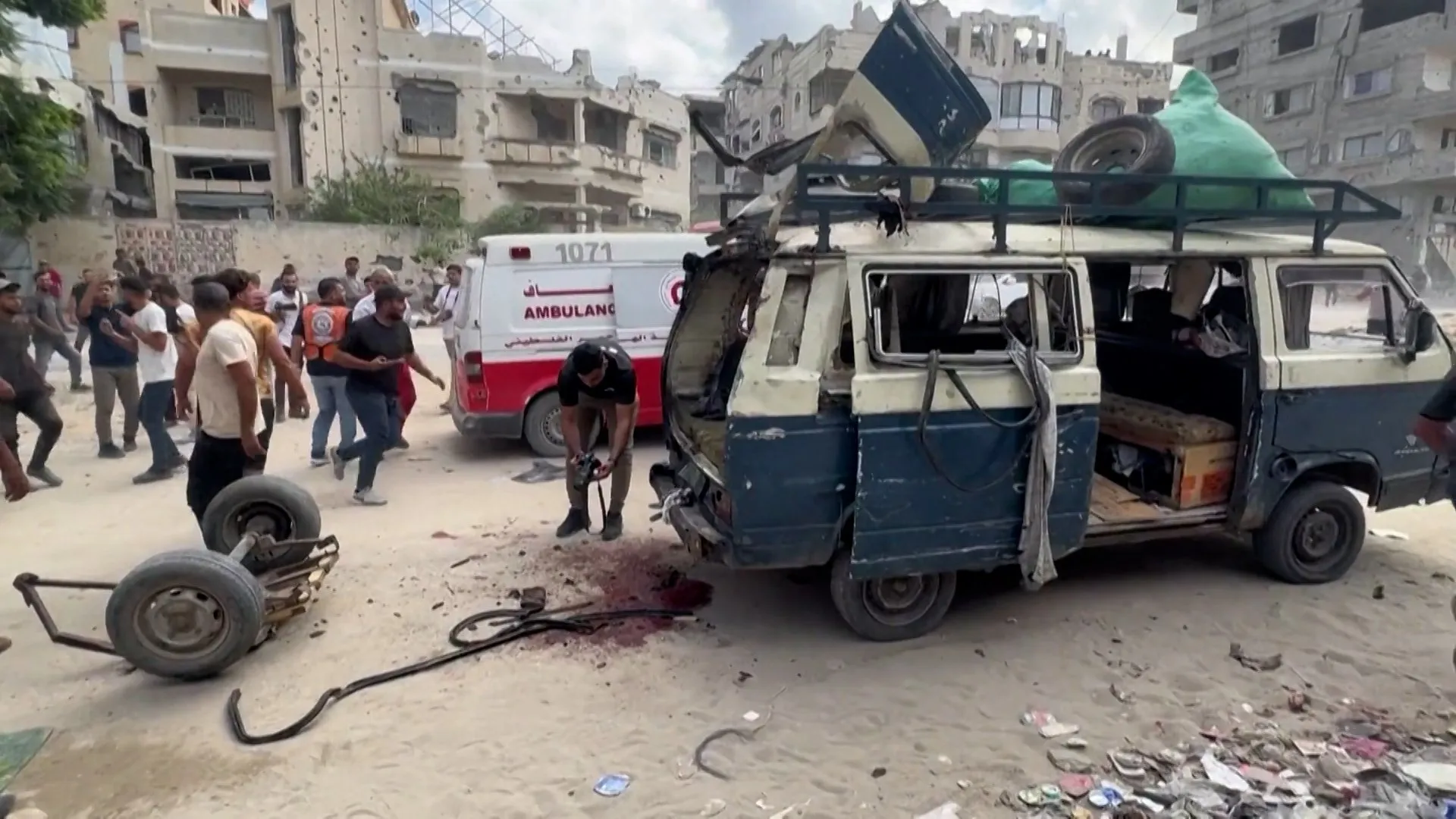
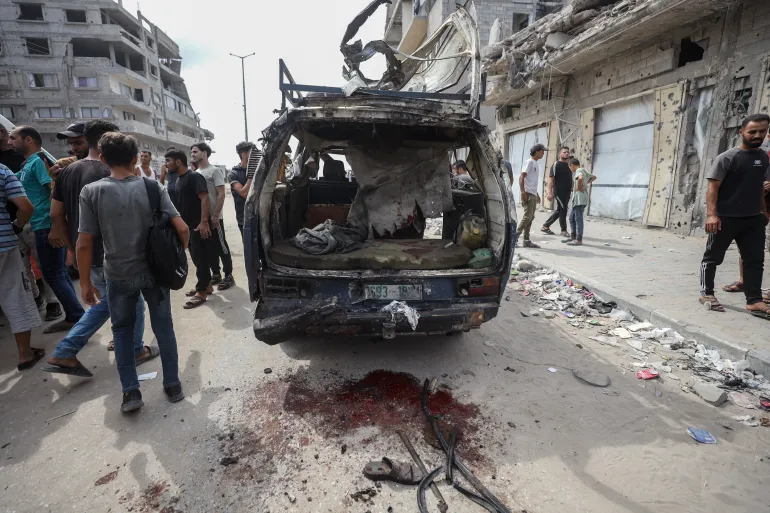
Israeli attacks on residential areas across Gaza killed at least eight civilians and wounded others on Wednesday. In Gaza City, an Israeli strike hit a minibus in the Tel al-Hawa area, killing six people and wounding 15 others, according to Palestinian medical officials.
At least six people killed in drone attack on passenger van and one person killed in strike on residential apartment.
At least seven Palestinians have been killed and more than 10 wounded in Israeli attacks on the Gaza Strip as Israel continues to violate a nearly year-old “ceasefire”.
Six of the victims were killed in an Israeli drone attack on a passenger van in Tal al-Hawa, in southwest Gaza City, on Wednesday, according to witnesses and medical sources.
Recommended Stories
list of 2 itemsend of list
The Palestine Red Crescent Society, a humanitarian group that runs ambulance and emergency services, said its crews took 13 wounded people to al-Quds Hospital.
Medical sources told Al Jazeera the injuries sustained by the victims of the attack are “critical”.
“Doctors say it’s difficult to save the lives of the wounded because the health system is decimated by years of Israeli attacks and the blockade,” said Al Jazeera’s Hind Khoudary, reporting from Gaza City. “The number of dead in the strike could rise in the coming hours.”
Earlier, the official Palestinian Wafa news agency reported that an Israeli attack on a residential apartment near al-Shifa Hospital in Gaza City killed at least one woman.
Elsewhere, four Palestinians, including two children, were wounded when an Israeli drone hit a shelter for displaced people in southern Gaza, according to local sources cited by Wafa.
Two other Palestinians were seriously wounded by Israeli forces southeast of Deir el-Balah in central Gaza, while Israeli tank fire was also reported in southern Khan Younis, in the southern part of the Strip.
The attacks came as the Ministry of Health in Gaza, which compiles casualty figures from hospitals across the territory, said in its latest daily update early on Wednesday that the bodies of at least nine people had arrived at hospitals during the last 24 hours.
While eight people were killed around the reporting period, one woman had died from earlier wounds, bringing the number of people killed since the start of the “ceasefire” between Israel and the Palestinian group Hamas in October last year to at least 1,431.
An Israeli strike targeted a vehicle in Tal al-Hawa, in southwest Gaza City [Khames Alrefi/Anadolu]
At least 5,026 have been wounded over the same period, including 31 in the past 24 hours, the ministry said.
“There is supposed to be a ceasefire in Gaza, but the Israeli army’s violence is endless. Every day, Palestinians are killed, injured, and the humanitarian situation is deteriorating,” said Khoudary, describing “terrifying” conditions for Gaza’s residents.
“Everyone inside the Strip is afraid to go to the supermarket, to take their children to school, and to live their everyday lives,” she added.
Overall, Israel’s genocidal war against Palestinians in Gaza has killed at least 74,032 people since October 2023, with another 175,142 wounded, according to health officials.
In August, an analysis by the United Nations Satellite Centre found that the number of destroyed structures across Gaza has increased by 9 percent since the “ceasefire” took effect.
Overall, about 82 percent of structures in Gaza, roughly 200,000 buildings, have been damaged, and about two-thirds of those have been destroyed since the start of the war, according to the UN.







![Sami Abu Shehadeh, leader of the Balad party, arrives at the Supreme Court in Jerusalem on October 1, 2026 [AFP]](https://i0.wp.com/occasionaldigest.com/wp-content/uploads/2026/10/afp_6abe81d70b9e-1790869975.jpg?w=640&ssl=1)