Forces

What’s driving attacks against gov’t and Russian forces in Mali? | Conflict

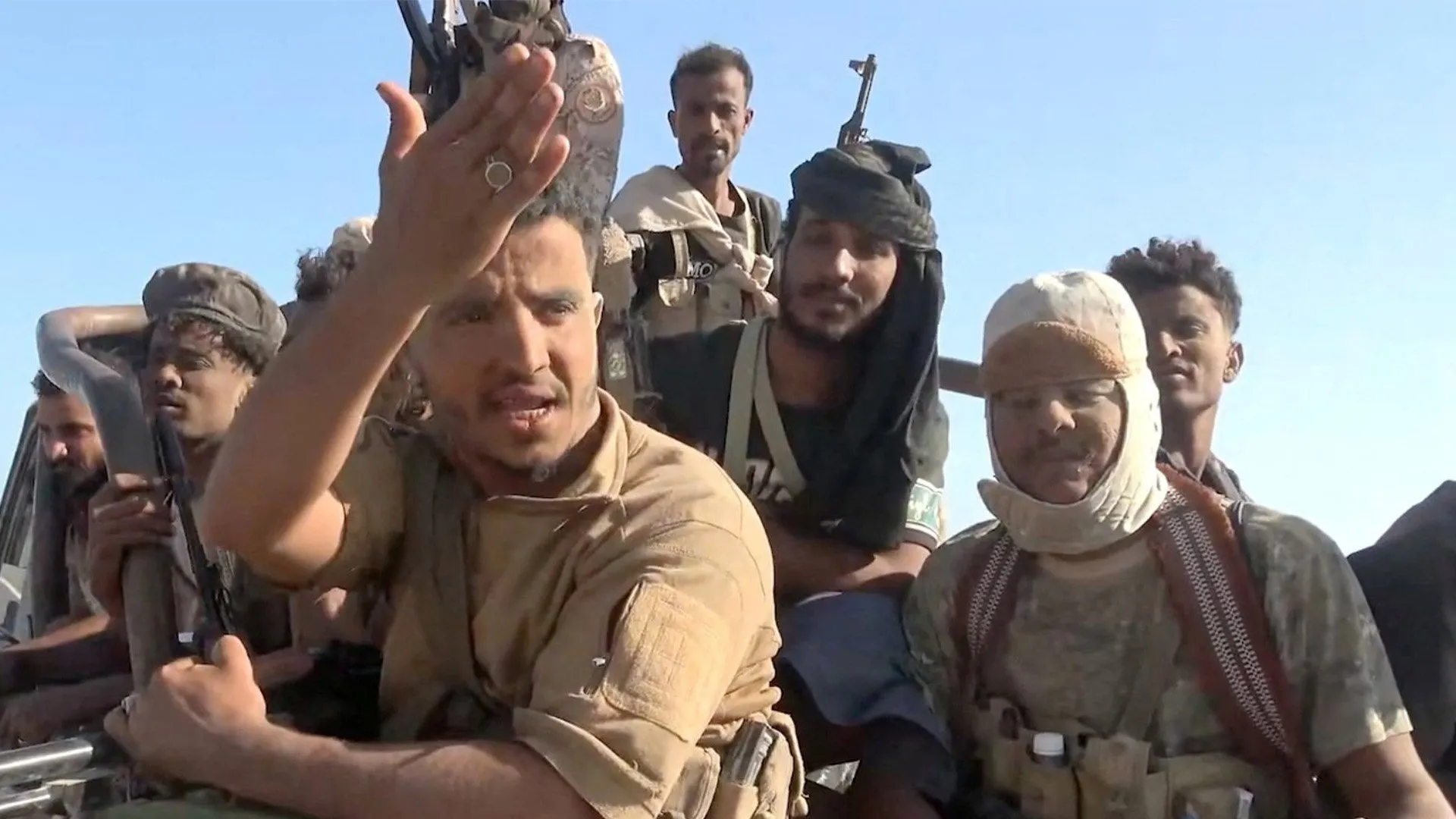
Opponents, including an al-Qaeda-linked group, join forces.

Former enemies in Mali, including an al-Qaeda-linked group, have join forces to target military sites.

The defence minister has been killed.

Russian mercenaries backing the government have come under attack.

What are the implications of this unrest?

Presenter:

Imran Khan

Guests:

Oluwole Ojewale – Regional co-ordinator for West and Central Africa at the Institute for Security Studies

Nicolas Normand – Former French Ambassador to Mali and vice president of the Friends of Mali Association

Ovigwe Eguegu – Policy analyst at Development Reimagined, an independent African think tank, and a specialist in West Africa and Sahel geopolitics

Source link

Iran war forces job losses, reverse migration in India’s ceramic hub | US-Israel war on Iran News

Morbi, India – For seven years, Pradeep Kumar would walk into the ceramics factory in western India at 9am, load raw materials – clay, quartz and sand – into the kiln, and spend the day around the heat and dust of the furnaces.

He handled the clay at different stages, sometimes feeding it into machines, sometimes moving semi-processed pieces towards firing. The work was repetitive and demanding, with no protective gear, such as gloves and masks, against the high temperatures.

Recommended Stories

list of 4 itemsend of list

“It would be very challenging in the summers since the heat would be at its peak,” he told Al Jazeera.

But on March 15, he lost his job – not because of anything he or the company behind his factory had done, but because the United States and Israel attacked Iran, triggering another war in the Middle East and a global fuel crisis.

Barely two weeks after the war began, the ceramics company where he worked shut down due to a shortage of propane and natural gas. The company, in Morbi in Gujarat state – like all of its peers in the ceramics industry – depends on these critical ingredients.

Morbi is the centre of India’s ceramics industry that employs more than 400,000 people. More than half of these workers, like Kumar, are migrants from poorer Indian states like Uttar Pradesh and Bihar.

India ceramics Morbi
Workers inside a ceramics factory in Morbi [Jigyasa Mishra/Al Jazeera]

Five days after Kumar lost his job, the 29-year-old took his wife and their three children back to their home in Uttar Pradesh’s Hardoi district.

“I am here until every other migrant worker who came back home with us goes back,” he told Al Jazeera.

“We don’t want to suffer like dogs, like we did during the COVID-19 pandemic,” he added, referring to the 2020 and 2021 exodus of migrant workers from India’s more industrialised western states to the poorer east, with millions of starving families, including children, walking on foot for days and sometimes weeks to reach their homes amid a coronavirus lockdown.

About 450 of 600 companies shut

With more than 600 companies, Morbi produces about 80 percent of India’s ceramics in the form of tiles, toilets, bathtubs and wash basins. But at least 450 of those companies have been forced to shut down as a standoff on the Strait of Hormuz, a lifeline for India’s gas imports, continues.

Meanwhile, the war continues, with the US on Sunday capturing an Iranian cargo vessel, even as Washington says it is willing to hold another round of talks with Tehran in Pakistan to reach a deal. Tehran has refused to commit to peace talks after its ship was seized.

The developments came as a fragile ceasefire agreed by Iran and the US after a month of fighting expires on Wednesday. But a re-escalation in hostilities has seen Iran shutting down Hormuz for traffic, disrupting global fuel supplies and raising oil prices.

“All manufacturing units in Morbi rely on propane and natural gas to fire kilns at high temperatures. While propane is supplied by private companies, natural gas is provided by the state to those with connections. Around 60 percent of manufacturers use propane because it is comparatively cheaper,” Siddharth Bopaliya, a 27-year-old third-generation manufacturer and trader in Morbi, told Al Jazeera.

India ceramics Morbi
With more than 600 companies, Morbi produces about 80 percent of India’s ceramics [Jigyasa Mishra/Al Jazeera]

Manoj Arvadiya, president of the Morbi Ceramic Manufacturers Association, said they had shut down the units till April 15, hoping that the Middle East crisis would be resolved by then.

“But even today, only around 100 units have opened, and most have still not begun the manufacturing process. For at least another 15 days, it is likely to remain the same,” he told Al Jazeera.

Arvadiya said the closure has impacted 200,000 workers, with more than a quarter of them forced to go back to their homes in other states.

India’s ceramic industry is valued at $6bn.

“About 25 percent of Morbi’s ceramics are exported to countries in the Middle East, Africa and Europe, with a net worth of $1.5bn. But exports are now delayed and, in some cases, completely halted, especially to Middle Eastern countries, due to the production slowdown over the past month,” Arvadiya told Al Jazeera.

Factories that rely on propane remain shut in Morbi. Though natural gas is mostly available, many units have not made the switch yet, as new connections are being priced at 93 rupees a kilo, while existing users receive it at about 70 rupees.

Khushiram Sapariya, a manufacturer of washbasins who relies on propane, said he will wait this month before deciding on reopening his factory.

“Because then I have to call hundreds of staff who have gone to their homes, and I want to be sure before taking their responsibility,” he said.

Returned home with ‘Morbi disease’

Among the workers who left Morbi last month is 27-year-old Ankur Singh.

“The shutdown of my company did not send me back alone, but with a Morbi disease – silicosis. I would often have fever and cough but kept ignoring it, until I came back to my hometown near Patna in Bihar and found after a check-up that it was silicosis,” he told Al Jazeera.

Silicosis is an incurable lung disease caused by inhalation of silica dust found in rock, sand, quartz and other building materials. One of the oldest occupational diseases in the world, it kills thousands of people every year.

Gujarat-based labour rights activist Chirag Chavda says the disease is “widespread in Morbi because workers are routinely exposed to fine silica dust generated during ceramic production”.

“Even those not directly involved in moulding or kiln work often inhale the particles due to poor ventilation and prolonged exposure across factory spaces,” he told Al Jazeera.

Chavda said most ceramic companies do not follow the government regulations regarding the safety of workers.

Harish Zala, 40, had worked in different ceramic companies in Morbi for two decades before he got silicosis two years ago. He said he received no help from his employer, who allegedly abused and threatened his father when he visited the company after the diagnosis.

“Every year, at least one labourer dies of silicosis in each company, while several get detected for silicosis,” Zala told Al Jazeera. “Some like me get lucky and survive, but have no choice but to quit the job immediately.”

India ceramics silicosis
Harish Zala has silicosis and struggles to walk due to severe breathlessness [Jigyasa Mishra/Al Jazeera]

Zala said many companies do not provide the workers with written proof of employment, such as appointment letters, salary slips, or identity cards. “This is done so that if a worker later demands labour rights or legal entitlements, they have no concrete evidence to prove that they were employed by the company.”

Chirag added that such workers are also denied social security under various Indian laws regarding salaries or pension funds, since doing so would establish proof of employment.

“As a result, even after working for years, workers are deprived of their labour rights due to a lack of evidence. This leaves employers with little to no legal accountability,” he said.

In Morbi, there are also migrants like Sushma Devi, 56, who did not go back to her home in West Bengal because the tile company her son works at has promised to continue giving them shelter and food as it waits for manufacturing to resume.

“I am here with a few more people because we did not want to spend money on travelling. Here, at least our ration is sorted,” she said as she walked with a bundle of dry twigs, wood and discarded plywood for the cooking.

“We step out to collect these every day to be able to cook our two-time meal,” said Devi. “I hope the kilns and manufacturing resume soon, but I also hope they don’t stop giving us rice and potatoes even if the kilns don’t start running anytime soon.”

Devi’s husband, Debendar, and their son Ankit live in a one-room set given to them by their company. The family has access to a common toilet for 10 families on one floor.

Kumar, meanwhile, is running out of his meagre savings and fears he could fall into a debt trap.

“Initially, we ate from whatever we had saved. But the house needed repair and we had to borrow 20,000 rupees ($214) from a relative, which we have no idea when or how we will repay,” he said, looking at the reworked roof of his brick house in Hardoi.

Source link

US forces attack and seize Iranian ship Touska near Strait of Hormuz | US-Israel war on Iran

NewsFeed

US Central Command has published a video said to show a guided-missile destroyer firing at an Iranian-flagged cargo ship near the Strait of Hormuz. The USS Spruance fired several rounds into the Touska’s engine room for ‘violating the US blockade’, before marines boarded it.

Source link

UNICEF ‘outraged’ after Israeli forces kill water truck drivers in Gaza | Gaza News

UN Children’s Fund calls on Israeli authorities to investigate and ‘ensure full accountability’.

The United Nations Children’s Fund says it is “outraged” after Israel killed two drivers it had contracted to deliver clean water to families in Gaza.

UNICEF said in a ⁠statement the incident occurred during routine water trucking on Friday morning at the Mansoura water filling point in northern Gaza, which supplies Gaza City. Two other people ‌were wounded in the attack.

Recommended Stories

list of 3 itemsend of list

The agency said it had suspended activities at the site and called on Israeli authorities to investigate and “ensure full accountability”.

“Humanitarian workers, essential service providers, and civilian infrastructure, including critical water facilities, must never be targeted,” it said.

It said that “the protection of civilians and those delivering life-saving assistance is an obligation under international humanitarian law”.

More than 750 Palestinians have been killed by Israeli forces since the US- and Qatar-brokered “ceasefire” in Gaza took effect last October, according to Palestinian health authorities.

More than 72,000 people have been killed since Israel launched its genocidal war against Palestinians in Gaza on October 7, 2023, following a Hamas-led attack on southern Israel.

Meanwhile, in the occupied West Bank, a Palestinian man was shot and killed by Israeli forces in Khirbet Salama, the official Palestinian news agency WAFA reported.

Muhammad Ahmad Suwaiti, 25, was pronounced dead at the scene, WAFA said.

Israel’s military said a person carrying a knife in the illegal settlement of Negohot was killed. It did not say who was responsible.

Using the biblical term for the West Bank, the Israeli military said in a statement that “a terrorist who infiltrated the community of Negohot in Judea and Samaria was identified and eliminated in a rapid response”.

Israeli forces and settlers have killed more than 1,060 Palestinians in the occupied West Bank since the start of the Gaza war in October 2023, according to the Palestinian Ministry of Health.

Source link

‘Sent to be killed’: How Russia forces migrants to fight in Ukraine | Russia-Ukraine war News

Kharkiv, Ukraine – Hushruzjon Salohidinov, 26, was working as a courier in Saint Petersburg, Russia’s second-largest city and President Vladimir Putin’s hometown.

But last year, the Tajik man and practising Muslim says he was arrested while picking up a parcel which police claimed contained money stolen from elderly women.

Salohidinov says he never interacted with the alleged criminals, but nevertheless spent nine months in the Kresty-2 pre-trial detention centre about 32km (20 miles) from the city, while a judge refused to start his trial because of the “weak evidence” against him.

But instead of releasing him after that, prison wardens threatened to place him in a cell with HIV-infected inmates who, they said, would gang-rape him – unless he “volunteered” to fight in Ukraine.

“They said, ‘Oh, you’ll put on a skirt now, you’ll be raped,’” Salohidinov, who has raven black hair and a messy full beard, told Al Jazeera at a centre for war prisoners in northeastern Ukraine, where he is now being held, having been captured in January this year by Ukrainian forces.

Using a carrot-and-stick tactic, the wardens also promised him a sign-up bonus of 2 million rubles ($26,200), a monthly salary of 200,000 rubles ($2,620) and an amnesty from all convictions.

So, in the autumn of 2025, Salohidinov signed up as he “saw no other way out”.

Officials in Kresty-2, St Petersburg’s prosecutors’ office and Russia’s Ministry of Defence did not respond to any of Al Jazeera’s requests for comment.

Russia migrants
Hushruzjon Salohidinov, 26, a Tajik man forced to fight for Russia, at a prisoner of war facility [Mansur Mirovalev/ Al Jazeera]

‘Catching migrants’

Salohidinov is just one of tens of thousands of labour migrants from Central Asia coerced by Russia to become soldiers as part of the Kremlin’s nationwide campaign, according to human rights groups, media reports and Russian officials.

Hochu Jit, a Ukrainian group that helps Russian soldiers surrender, has published verified lists of thousands of Central Asian soldiers like Salohidinov.

“They are literally sent to be killed, no one considers them soldiers that need to be saved,” the group wrote in a 2025 post on Telegram. These soldiers’ life expectancy on the front line is about four months. “Losses among them are catastrophic,” the group reported.

With its low birthrate and large oil wealth, Russia has for years been a magnet for millions of labour migrants from ex-Soviet Central Asia, especially Tajikistan, Uzbekistan and Kyrgyzstan.

The campaign by the Kremlin to force Central Asians to fight in Ukraine dates back to 2023 – the year after Russia’s invasion of Ukraine – when police began rounding up anyone who didn’t look Slavic and charging them with real or imagined transgressions such as a lack of registration, expired or “fake” permits or blurred stamps on their documents. Sometimes, migrants are simply bused straight to conscription offices.

In 2025, Al Jazeera interviewed another Tajik man who said he had been detained with an expired work permit and was then tortured into “volunteering” while being subjected to countless xenophobic and Islamophobic slurs from his officers.

Migrants say they are abused, tortured and threatened with jail or having their entire families deported.

“The main way of recruiting as many migrants as possible is pressure on them with threats of deportation,” Alisher Ilkhamov, the Uzbekistan-born head of the London-based Central Asia Due Diligence think tank, told Al Jazeera.

Sometimes, migrants are simply duped.

Salohidinov said one serviceman in his squad was an Uzbek who “didn’t speak a word of Russian” and was fooled into “volunteering” while signing papers at a migration centre.

In their reports about “catching” migrants, officials frequently use derogatory terms about them, and also when they describe men who have obtained Russian passports but skipped registration at conscription offices. Since the Soviet era, such registration has been obligatory for all men and, since 2024, a newly naturalised Russian national can lose his citizenship if he fails to do it.

“We’ve caught 80,000 such Russian citizens, who don’t just want to go to the front line, they don’t even want to go to a conscription office,” chief prosecutor Alexander Bastrykin said in May 2025, referring to the migrants’ alleged patriotic sentiments.

He boasted that 20,000 Central Asians with Russian passports were herded to the front line in 2025.

The year before, he said 10,000 Central Asians had been sent to Ukraine.

Such remarks resonate with the Russian public that lives with “a high level of xenophobia in the stage of fear and helplessness,” Sergey Biziyukin, an exiled opposition activist from the western city of Ryazan, told Al Jazeera.

“For them, such phrases from Bastrykin are a form of sedative.”

What makes Central Asians easy targets is that they hail from police states, which depend on Moscow politically and economically, observers say.

“While the migrants are frightened into signing contracts, their motherland doesn’t really pay any attention,” Galiya Ibragimova, an Uzbekistan-born, Moldova-based regional expert, told Al Jazeera.

Despite hefty signup bonuses and relentless propaganda, the number of Russians who want to fight in Ukraine fell by at least one-fifth this year, and Moscow will strive to recruit more Central Asians, she said.

Russia conscripts
Russian conscripts called up for military service attend a ceremony marking their departure for garrisons from a recruitment centre in Saint Petersburg, Russia, on October 15, 2025 [Anton Vaganov/Reuters]

‘We’ll have our fingers broken’

After signing the contract and leaving his debit card with his sign-up bonus with his parents, Salohidinov was sent to the western city of Voronezh for three weeks of training that did little to prepare him for the war.

“We just kept running back and forth with guns,” he said.

Their drill sergeants, he says, told the conscripts that the standard-issue flak jackets, helmets, boots and flashlights were of subpar quality and urged them to pitch in a million rubles ($13,100) each for “better” gear.

The incident corroborates reports on dozens of similar cases in Russian military units.

Salohidinov was ordered to work in a kitchen – and was verbally abused and beaten for the slightest transgression.

Of 28 men in his unit, 21 were Muslims – but their ethnic Russian officers ignored their pleas not to have pork in meals, repeating a decades-old practice of ignoring religion-related dietary restrictions dating back to the Soviet army.

The commanders demonised Ukrainians, telling them “that if we surrender, we’d be tortured, have our fingers broken, maimed, get [construction] foam up our a**, have our teeth yanked out one by one, have our arms broken”, Salohidinov says.

In early January this year, the conscripts were bused to the Russia-occupied Ukrainian region of Luhansk.

Salohidinov says he was tired, frightened and disoriented – Ukrainian drones were “always” above them and a grenade explosion nearby damaged his left eardrum.

Ukraine prisoner swap
A woman waits for news about a missing loved one as some Ukrainian soldiers return during a prisoner of war (POW) swap, amid Russia’s attacks on Ukraine, in an undisclosed location in Ukraine, on April 11, 2026 [Thomas Peter/Reuters]

‘Glad I got captured’

On the fourth day of his service, Salohidinov was ordered to run beyond Ukrainian positions as part of Russia’s new tactic to send two or three servicemen to infiltrate the porous front line.

The mission was suicidal because the terrain was open, dotted with landmines and the bodies of dead Russian soldiers, while Ukrainians were firing machineguns and flew drones above them.

“I ran and ran and saw we were being shot at,” he said. “Me and my commander decided to surrender voluntarily instead of dying for nothing.”

They detached their assault rifles’ magazines, raised their hands and yelled they were surrendering.

What followed was “a calm feeling, beautiful”, he said. “They fed us, let us have a smoke, gave us food and water and even cake.”

Now, Salohidinov hopes to return to Tajikistan and panics at the thought of being made part of a prisoner swap – these have taken place several times each year – and returning to Russia because he would be sent back to the front line.

Tajikistan and other Central Asian nations have never endorsed Russia’s war in Ukraine, but nor have they openly criticised it.

In August 2025, Tajikistan’s Prosecutor General Habibullo Vohidzoda declared that no Tajik national would be charged for fighting in Ukraine.

So, what Salohidinov needs right now is an extradition request.

“I’m even glad that I got captured, because I’m not fighting anyone now, not risking anything,” he said. “I’ll even say thanks to Ukraine for taking me prisoner.”

The Tajik embassy in Kyiv did not respond to Al Jazeera’s request for comment.

Source link

Israeli forces fire stun grenades at journalists in occupied Nablus | Newsfeed

NewsFeed

Video shows Israeli forces firing stun grenades towards journalists who were reporting on the army’s raid of Nablus. Palestinian media outlets say soldiers accompanied an Israeli settler incursion to Joseph’s Tomb, in Area A of the occupied West Bank, under full PA control.

Source link

US forces kill 4 people in latest strike on vessels in eastern Pacific | Donald Trump News

The killings mark the fourth US deadly strike in the past four days on vessels in the eastern Pacific Ocean.

The US military has killed four more people in its fourth deadly attack on vessels in the eastern Pacific Ocean over the past four days.

US Southern Command (SOUTHCOM) announced the attack in a social media post on Tuesday, alongside a video that showed a stationary boat with outboard engines being hit by a missile and exploding into a huge ball of flames.

Recommended Stories

list of 4 itemsend of list

SOUTHCOM, which is responsible for US military operations in Latin America and the Caribbean, claimed that the four people killed were “narco-terrorists”, but provided no evidence to support its claims.

Justification for the lethal attack, according to SOUTHCOM, was due to intelligence – details of which were not provided – that confirmed that “the vessel was transiting along known narco-trafficking routes in the eastern Pacific and was engaged in narco-trafficking operations”.

The latest killing of people on board vessels in international waters in the eastern Pacific Ocean and Caribbean brings the overall death toll to at least 175 since early September, when US President Donald Trump ordered the attacks to stop what the White House claims are Latin American cartels transporting drugs to the US.

Tuesday’s killings came after two people were killed in a US strike on Monday, and five people were killed in two separate strikes on Saturday, also in the eastern Pacific.

The Associated Press news agency reported that the US coastguard has suspended a search for one survivor from the two attacks reported on Saturday.

International legal experts and rights groups say the US military campaign amounts to “extrajudicial killings” in international waters and that the attacks have targeted civilian fishing boats.

Legal experts have said that if some vessels were involved in drug trafficking, those on board should face the law, rather than deadly attacks.

Critics have also questioned the effectiveness of the US military operation in part because the fentanyl behind many fatal overdoses in the US, which Trump has used to justify his campaign, is typically trafficked to the US over land from Mexico, where it is produced with chemicals imported from China and India.

Source link

Jack Draper: Injury forces Briton to retire from first-round match at Barcelona Open

Britain’s Jack Draper had to retire in the third set of his first-round match against Tomas Martin Etcheverry at the Barcelona Open because of a knee injury.

Draper, playing his first match of the clay-court season, won the first set against Argentina’s Etcheverry 6-3 but began to have difficulty with his movement and lost the second set 6-3.

The 24-year-old received attention from a physio and had tape applied to an area below his right knee shortly before the deciding set started.

His serve was broken twice by Etcheverry in the third set and, after struggling to get around the court, he conceded the contest at 4-1 down.

Draper, ranked 28th in the world, has been cautious during a return from an arm injury and pulled out of the recent Monte Carlo Masters before the tournament.

He was absent for six months because of a bruised bone in his left serving arm, before returning to competitive action in February.

The Barcelona Open was Draper’s fourth event since he made his comeback.

Etcheverry said Draper is a “great competitor” and is keen to see him back on court again in the near future.

“I like how he plays – he’s a great fighter,” he said. “Hopefully he can recover as soon as he can to get back on tour because the tour likes him.”

Cameron Norrie, who replaced Draper as British number one last month, beat Switzerland’s Stan Wawrinka 6-4 6-7 (5-7) 6-4 to progress through his first-round tie.

Norrie served out for the match at 5-4 in the second set but let the 41-year-old back into the contest before he got himself back on track in the deciding set.

“I put myself in a winning position serving at a set and 5-4 up,” said Norrie, 30, who will play Ethan Quinn of the United States in the second round.

“I played a little tentatively in two shots and then I was very tight in the tie-break. I probably should have won it then, but credit to him. I played at a really good level in the third set.”

Source link

Inside The Air Force’s Elite Ghost Tanker Unit

In this episode of TWZ: Special Access, Jamie Hunter visits the world-famous Edwards Air Force Base, the heart of the USAF’s flight test operations, in California’s Mojave Desert, to fly a mission in a KC-135 that’s become known as the “Ghost Tanker.” 

This is the U.S. Air Force’s only dedicated test tanker that’s instrumented to certify new aircraft types to tank from a flying-boom-equipped, in-flight refueling aircraft. It was recently seen conducting aerial refueling trials with the new B-21 Raider bomber.

Operated by the Air Force Reserve Command’s 370th Flight Test Squadron, this KC-135 is the Air Force Test Center’s flagship. It forms the centerpiece of an elite tanker test team at Edwards that performs a critical role in supporting a wide range of flight-testing.

We Fly With A Famous USAF Tanker Test Squadron | Riding With The KC-135 Known As “The Ghost”


Contact the host: Jamie.Hunter@teamrecurrent.io

Source link

MQ-28 Ghost Bat Gains Major European Foothold As Rheinmetall Joins Forces With Boeing

Boeing Australia has teamed up with Rheinmetall, the largest arms manufacturer in Germany, to offer the MQ-28 Ghost Bat drone to the German military. The Ghost Bat collaborative combat aircraft (CCA) is the latest contender for a German requirement, and is likely to face competition from the XQ-58A Valkyrie drone and potentially the homegrown Airbus Wingman.

In a statement today, Rheinmetall said that the plan was to pitch the MQ-28 as “a mature solution for the Bundeswehr’s procurement of collaborative combat aircraft (CCA) into Germany by 2029.” Describing the Ghost Bat as “a world-leading, proven CCA,” Rheinmetall noted that the drone “can be modified to meet Germany’s sovereign requirements” — as we have discussed before, the highly modular nature of the MQ-28 is a key part of its design.

An MQ-28A Ghost Bat taxis prior to flight at Woomera, South Australia, in September 2025. Australian Department of Defense

Should Germany select the MQ-28 for its CCA requirement, Rheinmetall would serve as the system manager for the aircraft in Germany, overseeing system integration into the country’s existing and future command and weapon systems, and adaptation to national requirements. The company would also provide operational, maintenance, and logistical support. A major benefit of the platform is the fact that much of the development has already been paid for by Australia, and the resulting drone is more mature than anything else in Europe.

“With Boeing Defense Australia as a partner, we are laying the groundwork to optimally tailor the MQ-28 to the Bundeswehr’s requirements,” said Armin Papperger, CEO of Rheinmetall AG. “As a system integrator, we ensure that integration, operation, and further development come from a single source while simultaneously strengthening industrial value creation in the form of an industrial hub in Germany and Europe. We see revenue potential for Rheinmetall in the range of three-digit millions of euros.”

At this point, the MQ-28 has completed more than 150 test flights, including high-profile trials in which one of the drones completed a first live-fire weapons shot, launching an AIM-120 Advanced Medium-Range Air-to-Air Missile (AMRAAM) against a target over a range in Australia.

An AIM-120 is launched from an MQ-28A Ghost Bat during Trial Kareela at RAAF Base Woomera, South Australia. Australian Department of Defense

The Royal Australian Air Force is the Ghost Bat’s launch customer.

Australia has already acquired eight Block 1 MQ-28s, which are configured as pre-production prototypes.

The first nine Block 2 drones, now in production, are seen as a pathway to an operational capability, although when that might actually materialize remains unclear.

Australia has also contracted for the development of the enhanced Block 3 MQ-28, which will include an internal weapons bay. This will be scaled to accommodate one AMRAAM or two GBU-39/B Small Diameter Bombs (SDB) or equivalents, in terms of size. A pair of SDB IIs, also known as the GBU-53/B StormBreaker glide bomb, would be another option.

An AIM-120 AMRAAM loaded on an MQ-28A Ghost Bat. Australian Department of Defense

The next big milestones for the Royal Australian Air Force should come in 2028, with the planned service introduction of the Block 2 aircraft and the initial production of the Block 3 aircraft.

Interestingly, the Rheinmetall press release describes the MQ-28 being “ready to deliver air-to-ground capability to Germany by 2029.” It’s unclear at this point if this reflects Berlin’s requirement for an exclusive air-to-ground CCA platform, or if an air-to-air capability will be added at a later point.

In terms of sensors, some Block 2 aircraft have already been seen sporting an infrared search and track (IRST) sensor fitted in the nose. This is understood to be a Selex system.

A quartet of MQ-28s, the two in the middle having IRST sensors on top of their noses. Boeing

For Block 3, Boeing is working on three or four alternative sensor payloads, too. Integration of these would be facilitated by the fact that the entire nose can be swapped out to accommodate different payloads.

Speaking earlier this year to journalists, including from TWZ, Glen Ferguson, MQ-28 program director at Boeing, said he was unable to talk about any potential future customers other than Japan, but noted that the company was pursuing sales elsewhere in the Indo-Pacific region, specifically.

Meanwhile, in 2022, the Pentagon confirmed that it had acquired at least one MQ-28 to be used to support the U.S. Air Force’s advanced uncrewed aircraft and autonomy efforts. Meanwhile, the U.S. Navy has deployed a test and evaluation squadron to Australia to work on the aircraft, and an MQ-28 has also been operating out of Naval Air Station Point Mugu, California.

As we have discussed in the past, the MQ-28 seems uniquely suited for a cooperative production and operation program across multiple allied nations, and it’s perhaps not a coincidence that the Bundeswehr is increasingly looking at future operations in the Indo-Pacific region, something that has seen recent deployments of Luftwaffe Eurofighters, for example.

Ein Kampfjet vom Typ F-18 von der Royal Australian Air Force und der Eurofighter "Air Ambassador" vom Taktischen Luftwaffengeschwader 74 fliegen gemeinsam während der Übung Pitch Black 2022 über die Royal Australian Air Force Base in Darwin/Australien im Rahmen von Rapid Pacific 2022, am 05.09.2022. ©Bundeswehr/Christian Timmig
A Luftwaffe Eurofighter flies alongside an F/A-18F from the Royal Australian Air Force over Darwin, Australia, during the Pitch Black 2022 exercise. Bundeswehr/Christian Timmig

The Luftwaffe has long been seen as a candidate for a CCA-type drone. In the medium term, this would involve an uncrewed companion to work alongside the Eurofighter, which would be especially relevant for its forthcoming Eurofighter EK electronic warfare jets.

A rendering of a Typhoon EK for the German Air Force. Airbus

A drone of this kind could also be harnessed by other German Eurofighters, which undertake a range of air defense and air-to-ground missions, as well as the F-35A stealth fighters it also has on order. The F-35 is designed very much with CCAs in mind, with the combination of the stealth jet and complementary drones being a key part of the planned future U.S. Air Force force posture.

A CCA could be even more important for Germany depending on the fate of the pan-European Future Combat Air System (FCAS) program, at the heart of which will be the crewed New Generation Fighter (NGF). Both are expected to be in service by 2035, although that target is looking increasingly unlikely.

Concept artwork of the NGF fighter that is the centerpiece of the pan-European FCAS. Dassault Aviation

In fact, there is a good chance that rifts between France and Germany on the course that FCAS should take, especially when it comes to workshare, could see Germany walk away from the program entirely.

That would leave a significant gap in combat air ‘mass’ that a CCA could help mitigate.

With Germany in the market for a drone in this class, another partnership, announced last year, sees Airbus Defense and Space team up with Kratos Defense and Security Solutions to provide the stealthy XQ-58A to the German Luftwaffe.

Kratos says the new version of the Valkyrie would be “tuned” for the European mission, suggesting that it will feature specific modifications for operators in the region. New versions of the XQ-58 will be capable of runway launch, and the platform can be scaled to a degree, too.

A U.S. Marine Corps XQ-58A Valkyrie conducts a test flight with a U.S. Air Force F-16. U.S. Air Force photo

The same would likely apply to the MQ-28, which Rheinmetall could potentially offer to a range of other European nations, alongside Germany, potentially filling an emerging niche for ‘loyal wingman’-type drones, along with other roles, with several air forces. Again, depending on the fate of FCAS, that requirement could become even greater, and the new partnership gives the MQ-28 an anchor in Europe and an increasingly lucrative market.

Last year also saw the emergence of another possible contender for the Luftwaffe CCA, when German defense startup Helsing unveiled its CA-1 Europa. The company is targeting a first flight in 2027 for the drone, which looks very similar to the MQ-28.

CA-1 Europa: Autonomous Air Dominance


Meanwhile, in 2024, Airbus unveiled a stealthy CCA-like concept of its own, known as Wingman. At the time, the company said that the Luftwaffe had “expressed a clear need” for a drone that would be able to operate in conjunction with crewed fighters before the arrival in service of the FCAS. Airbus says the Wingman should provide a unit cost that’s equivalent to one-third that of a modern crewed fighter.

The Airbus Wingman concept aircraft at the Berlin Airshow in 2024. Thomas Newdick 

Somewhat larger than the XQ-58A, the Wingman currently exists only as a concept aircraft, and its future is less certain now that Airbus is collaborating with Kratos on the Valkyrie.

Drones of the kind that are now referred to as CCAs are not entirely new territory for Germany.

Before the Wingman concept, Airbus worked on other advanced uncrewed aircraft programs, including the Barracuda, work on which began in 2003, initially as a ‘black program.’ The Barracuda was retired after six test campaigns. Experience and data from the drone have been fed into FCAS, which is also planned to include interaction of crewed and uncrewed aircraft, with “remote carrier” drones of different sizes being among the latter.

Ground crew working on the Barracuda technology demonstrator. Airbus

Whether Germany opts for the MQ-28 Ghost Bat or another rival solution, if current plans materialize, the Luftwaffe looks set to be operating some kind of advanced collaborative combat aircraft before the end of the decade.

Contact the author: thomas@thewarzone.com

Thomas is a defense writer and editor with over 20 years of experience covering military aerospace topics and conflicts. He’s written a number of books, edited many more, and has contributed to many of the world’s leading aviation publications. Before joining The War Zone in 2020, he was the editor of AirForces Monthly.


Source link

‘Trump has to open the Strait of Hormuz’ with ground forces | US-Israel war on Iran

Quotable

‘Once the US starts capturing territory in Iran, all bets are off.’
Kenneth Katzman, a senior fellow at the Soufan Center for Strategic Dialogue, says US war objectives in Iran that cannot be met with air power can be met with a limited ground invasion.

Source link

Israeli forces blow up mosque minaret in southern Lebanon | Israel attacks Lebanon

NewsFeed

Video shows Israeli forces blowing up a mosque’s minaret in Khiam in southern Lebanon. Israel says it is fighting Hezbollah but has forcibly displaced more than a million people and stands accused of trying to depopulate the entire south of the country.

Source link

‘Life covered in soot’: Gas shortage forces Gaza families to cook over wood | Israel-Palestine conflict News

Gaza City, the Gaza Strip – Shortly before the call to sunset prayer, Islam Dardouna stretches her hand towards a pot hanging over a makeshift stove fashioned from a battered metal can, with scraps of paper and pieces of wood feeding the fire beneath it.

Then she pauses. She turns her face away from the rising tongues of smoke. Her face stained with a thin layer of soot and her clothes steeped in the lingering smell of fumes, she takes a deep breath but does not immediately lift the lid.

Recommended Stories

list of 3 itemsend of list

In her right hand, Dardouna holds an asthma inhaler as though it were a ladle or tongs. With her other hand, she tries to prepare food for her three children.

“I can no longer tolerate the fire at all,” the 34-year-old says in a strained voice as she raises the inhaler to her mouth.

“We heat water on it, cook on it … everything. It completely destroyed my health,” she said, pointing to her chest.

Islam Dardouna suffers from respiratory problems that have worsened significantly due to constant exposure to wood smoke and relies regularly on asthma inhalers
Islam Dardouna suffers from respiratory problems that have worsened significantly due to constant exposure to wood smoke, and relies regularly on asthma inhalers [Abdelhakim Abu Riash/ Al Jazeera]

Dardouna has been displaced from Jabalia in northern Gaza since the start of Israel’s genocidal war against Palestinians in the territory in October 2023.

She now lives with her husband – 37-year-old Muath Dardouna – and their children in Sheikh Ajleen, west of Gaza City.

A year and a half ago, their home was destroyed. Since then, the family has moved from place to place until they eventually settled in this camp alongside other displaced families.

Everything changed after the war began. But for Dardouna, having to cook daily over an open fire in the face of cooking gas and fuel ranks among the worst.

“Our entire life now is a struggle, searching for wood and things we never imagined we would need one day,” she says. “There is no cooking gas and no gas cylinders. We lost all of that during displacement.”

What makes the situation even harder is that she suffers from asthma and chronic chest allergies, conditions she says began during Israel’s 2008 war on Gaza when she inhaled the smoke of a phosphorus bomb that dropped on her house. Her situation improved over the years, but has dramatically worsened during the current war.

“I developed airway obstruction, and recently there were masses found in my lungs,” said Dardouna, who in January was hospitalised for six days after suffering from oxygen shortage.

“The doctors prescribed an oxygen cylinder for me,” she says, quietly. “But unfortunately, I cannot afford it.”

A prolonged shortage

Like so many others across Gaza, Dardouna is struggling amid a prolonged shortage of cooking gas and fuel that has persisted since the start of the war.

Supplies have remained severely limited even after a “ceasefire” came into effect in October that included provisions allowing the entry of fuel and essential goods into the territory.

However, the quantities that have entered since then remain far below the population’s actual needs, according to official sources in Gaza and United Nations agencies.

The UN Office for the Coordination of Humanitarian Affairs says the availability of cooking gas in Gaza remains “critically constrained”, with the limited quantities entering the territory covering less than three percent of what is required.

As a result, many families have been forced to rely on alternative and often hazardous cooking methods.

UN data indicates that about 54.5 percent of households rely on firewood for cooking, roughly 43 percent burn waste or plastic, and only around 1.5 percent are able to cook with gas.

Humanitarian groups warn that such unsafe alternatives endanger people’s health and the environment due to prolonged exposure to smoke and toxic fumes produced by burning plastic and other waste.

Amid these conditions, cooking over open fires made from wood, scrap materials or plastic has become a daily reality across displacement camps and neighbourhoods throughout Gaza.

The crisis has intensified during the Muslim holy month Ramadan, when families must prepare both suhoor meals before their daily fast and iftar meals afterwards.

Firewood has become expensive, requiring a daily budget. Lighting the fire before dawn is also often difficult due to the lack of lighting and unfavourable weather conditions, so the family often skips the pre-dawn meal entirely.

“Today, for example, it’s raining and windy. I couldn’t light the fire,” said Darduna’s husband, Muath, who is also helping out with the daily cooking.

“Even when we break our fast, we wish we could drink a cup of tea or coffee afterwards, but we can’t, because lighting the fire again is another struggle.”

A former psychosocial support worker for children, Muath says it pains him to see his children fasting without suhoor.

“Every detail of our lives is literally suffering,” he says. “Fetching water is suffering. Cooking is suffering. Even going to the bathroom is suffering. We are truly exhausted,” he added.

“Our lives are covered in soot,” Muath says, pointing to the black smoke stains left by the fire.

Soot and black smoke stains left by wood fires cover the hands and skin of Islam and many other women forced to cook over open fires since the war on Gaza began
Soot and smoke stains left by wood fires cover the hands of Islam Dardouna and many other women forced to cook over open fires since the war on Gaza began in October 2023 [Abdelhakim Abu Riash/ Al Jazeera]


He describes gas as “one of our dreams”, recalling how “it felt like Eid day” when the family got a gas cylinder a few months ago. “
But we don’t even have the stove to use it, and many families are like us,” he said.

“We are living on the edge of nothing. Displacement and war stripped us of everything,” he adds. “We are willing to live with the simplest rights in tents. But there is no heating, no gas, no lighting. It feels like we are living in open graves on Earth.”

Serious implications

In a statement on Wednesday, the General Petroleum Authority in Gaza warned of the “catastrophic and dangerous consequences of the continued halt in cooking gas supplies” to the territory, stressing that the crisis “directly affects the lives of more than two million residents” amid already dire humanitarian conditions.

The authority said Gaza had already been facing a shortfall of about 70 percent of its actual gas needs compared with the quantities that entered after the “ceasefire” announcement.

It added that the “complete suspension of gas supplies places the Gaza Strip before a looming disaster that threatens food and health security”, particularly during Ramadan.

The authority also said that preventing gas from entering the enclave constitutes a “clear violation of the ceasefire understandings”, calling on mediators and international actors to intervene urgently to ensure the regular flow of cooking gas into Gaza.

Across Gaza, many families now rely on ready-made meals from aid distributions and charity kitchens because of economic collapse and the difficulty of cooking.

“Even when food arrives ready hours before iftar,” Muath says, “heating it becomes another problem.”

The frustration of daily survival pushes Muath to the brink.

“As a father now, I cannot even provide the most basic things,” he says. “Imagine my son simply wants a cup of tea … even a little wind can stop me from making it.”

‘The fire suffocates you’

In a nearby tent, Amani Aed al-Bashleqi, 26, sits watching food being cooked over an open fire for iftar while her husband stirs the pot.

She said cooking on fire makes food taste “flavourless” – not because the taste changes, but because “exhaustion and suffering have become part of every bite”.

“We start cooking early so we can finish by iftar, and after breaking the fast, my husband and I are completely exhausted and covered in soot.”

At times, Amani says she cannot boil water for her baby’s milk because lighting the fire is difficult and not always possible
At times, Amani Aed al-Bashleqi says she cannot boil water for her baby’s milk because lighting the fire is difficult and not always possible [Abdelhakim Abu Riash/ Al Jazeera]

Like Dardouna, al-Bashleqi says the smoke causes severe headaches and health problems.

“The fire suffocates you. All the women in the camp suffer health problems from cooking on fire,” she says. “But we have no choice.”

She has a seven-month-old baby, and her biggest worry is boiling water for his milk.

“Sometimes I boil water and keep it in a borrowed thermos, but I don’t always have one,” she says. “And sometimes when he wakes up at night, I mix the milk with water without boiling it, even though I know that’s not healthy. But what can I do?”

Nearby, Iman Junaid, 34, displaced from Jabalia to western Gaza City, sits with her husband Jihad, 36, in front of the fire preparing food.

Junaid blows on the flames while she pushes an empty plastic oil bottle under the fire.

Behind them, bags full of plastic bottles are piled up. The family collected them to fuel the fire because cooking gas has been unavailable for months.

A mother of six, Junaid says she knows the health dangers of burning plastic, but has “no other choice”.

Iman Junaid and her husband Jihad rely on empty plastic bottles to fuel their cooking fire because they cannot afford the rising price of firewood
Iman Junaid and her husband Jihad rely on empty plastic bottles to fuel their cooking fire because they cannot afford the rising price of firewood [Abdelhakim Abu Riash/Al Jazeera]

“My little daughter is one year old, and her chest always hurts because she inhales the smoke,” she says. “Our life is collecting and burning plastic and nylon.”

“With the price of wood rising, we now wish we could even find wood. Gas has become almost impossible … we’ve forgotten it.”

She said there were many promises that gas would enter Gaza after the “ceasefire”, but “nothing happened”.

For Dardounah, the solution is not simply bringing cooking gas into Gaza. “What we need is for life to become possible again,” she says.

“Let gas enter. Let goods enter at reasonable prices. Let there be basic necessities for a normal life.”

Source link