Global crude prices continue to climb, with Brent benchmark hitting $117.30 a barrel to build on four-year highs as market fears grow over a potential resumption of the US-Israeli war on Iran.
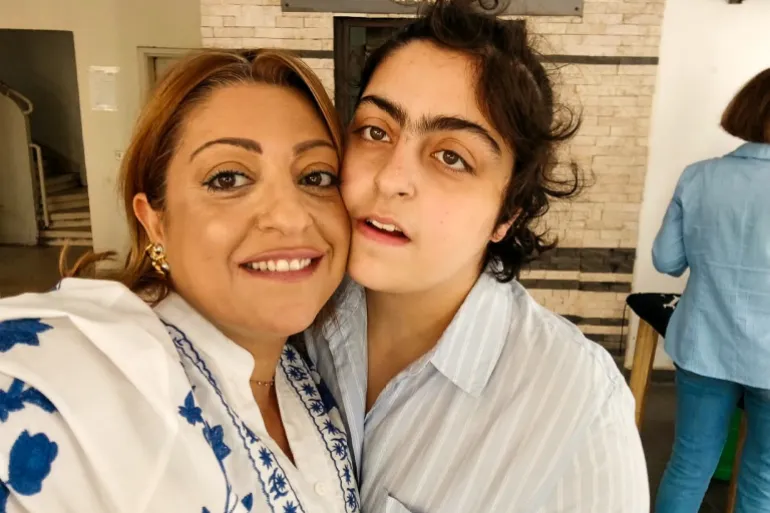
Beirut, Lebanon – After her husband died from COVID-19 in 2020, Lena Kouyoumjian moved back to her parents’ house in Mazraat Yachouh, a village 20 minutes’ drive from Beirut. For Lena, energetic and outgoing, the move was difficult, but she accepted that she needed help to care for her 20-year-old daughter, Vana, who is autistic and non-verbal.
Lena first noticed her daughter’s symptoms when she was two years old. Vana is still unable to communicate verbally how she feels, but her mother does her best to understand her.
Recommended Stories
list of 3 itemsend of list
Like many autistic individuals – and neurodivergent people in general – Vana needs a supportive and stable environment, alongside a structured routine, to feel well.
Lebanon has been engulfed in war since October 2023, with bombings across the country and an economic crisis continuing to impact all Lebanese, particularly neurodivergent people.
When Israel escalated its attacks on southern Lebanon in March, as a trainer for children with disabilities, Lena understood that this could impact her autistic daughter.
“Any sudden change in routine, loud noises, fear, or uncertainty can increase their anxiety and make them feel unsafe,” Lena told Al Jazeera.
“I can see this in my daughter. Since the situation became more difficult, she has become more anxious and sensitive to the changes happening around her.”
Lena Kouyoumjian poses for a selfie with her non-verbal autistic daugher Vana, whose symptoms have worsened due to Israel’s war in Lebanon, as the 20-year-old fears loud noises or “any sudden change in routine” [Courtesy of Lena Kouyoumjian]
Challenging a social stigma
The symptoms of autism and attention-deficit/hyperactivity disorder (ADHD) vary depending on the person and condition, but they frequently include sensory issues and emotional dysregulation. ADHD and autism often occur together, combining to make AuDHD, where traits from both conditions can be seen.
People with these neurodevelopmental conditions are often stigmatised by societies that do not fully understand them, including in Lebanon.
While the pressures caused by Israel’s war on Lebanon and mass displacement have led to psychological issues for many, neurodivergent people are more vulnerable due to their need for consistent support and routine.
“Being a parent of an autistic child isn’t something every parent can handle. A challenge I often face is deciding the amount of time and energy I should allocate to my child,” said Lena.
Lebanon’s Autism Awareness Association (AAA) has provided support for both mother and child. Vana has attended classes at AAA, a nonprofit based in Antelias, outside Beirut, for the past six years, which serves as an alternative school for young autistic people.
But rising costs in Lebanon during the war have prevented Vana from attending classes regularly. “Even transportation to her centre became very difficult, especially with the increasing financial challenges. At times, it became impossible for her to go, so she had to stay home,” Lena said.
Ghada Hayek Makhoul, who co-founded AAA with other parents of autistic children in 2015, said the group has made constant efforts to increase awareness about the condition in Lebanon.
“Many people don’t know what autism really is. They don’t know the spectrum; how it can vary from mild to moderate to severe,” Ghada told Al Jazeera.
A teacher for young autistic people high-fives Anthony at the AAA after he scores a basket [Alex Milan Durie/Al Jazeera]
Sensory overload
Ghada’s son, Anthony, is a calm 27-year-old autistic, non-verbal man who relies heavily on helpers. Although he is unable to speak, his mother said it is clear when he is distressed, putting his hands over his ears when he is in pain due to sensory discomfort.
Autistic people can be more sensitive to noises than neurotypical people. During the war, people in Lebanon have been subjected to a harrowing range of sounds, from Israeli bombs exploding on the ground to the sonic booms of warplanes flying overhead.
“So, imagine the drones all the time [for autistic people], the bombs, and the vibration of the bombs … all of this that we were hearing, so of course it affected him a lot,” Ghada said.
“My son can’t listen to the TV any more due to the news. He switches it off and removes the remote control. It’s too triggering for him.”
Anthony’s mother said he senses tension and anxiety, even if his understanding of what is being said or happening is limited.
“[It affects] all the senses, everything. He doesn’t want to go into a pool any more. He used to love the water. And now, he doesn’t want to go into the pool any more,” Ghada said.
“I don’t know what changed. Because it’s outside? Because of the sound? I don’t know.”
A non-verbal autistic girl practices her writing in French as a teacher at the AAA holds her hands to support her [Alex Milan Durie/Al Jazeera]
Mental health support as a luxury
Israel’s war on Lebanon has had a direct economic impact on the AAA and other organisations providing neurodivergent or psychological support.
Lebanon’s economic crisis, with inflation potentially reaching 17 percent this year, has also led to a brain drain of professionals who could support neurodivergent people.
AAA is a crucial support base for families with autistic children. But it comes at a significant cost of $700 per month for children attending five days a week. With 80 percent of the population living in poverty, few can afford such services.
“We need more trained staff, and we also need to keep the staff that are leaving the country. So, we need to have better salaries, but we cannot afford it, because we will have to increase the load on the parents,” said Ghada. “Things are in crisis mode for everybody during the war.”
The same thing is being seen with other mental health services. While many nongovernmental organisations (NGOs) provide free therapy, private consultations can cost more than $100 for a single 50-minute session.
Nour Toukan, a public health researcher at Enmaeya, a media platform focused on sustainable development, told Al Jazeera that care for people with autism or even for ADHD is “very much an out-of-pocket expense.”
While the government did launch a National Disability Allowance in 2023, with funding from the European Union and the United Nations Children’s Fund (UNICEF), the allowance of $40 per month is not enough to cover even the basics in Lebanon. People with autism can get a personal disability card, issued by the Ministry of Social Affairs, making them eligible for support, but those with ADHD cannot.
Lebanon’s National Mental Health Programme, established in 2014 by the Ministry of Public Health, is trying to bridge gaps in support caused by economic and geographic variables.
Dr Rabih El Chammay, the founder and director of the programme, told Al Jazeera a national mental health strategy for children and teenagers is being finalised.
“National studies addressing autism and ADHD have also been conducted, providing evidence to inform this work. We are meeting with several organisations, particularly organisations representing families of persons with autism, to understand priorities and build momentum for further coordinated action,” Dr Rabih said. “War makes this work more difficult because it can increase support needs while disrupting the services people depend on.”
Nour Toukan, a public health researcher at Enmaeya, a Lebanese media platform focused on sustainable development, told Al Jazeera that “at the moment, care for autism or even for ADHD is very much an out-of-pocket expense” [Alex Milan Durie/Al Jazeera]
Developmental regression
Displaced people have been the most impacted, but all of those in Lebanon whose schooling and routines have been disrupted are affected.
Adham Faraj, a 23-year-old psychology student at the Lebanese American University in Beirut, who was diagnosed with ADHD in 2024, said that when his classes moved online due to the war, he found himself staying at home more and more.
“It’s less engaging, especially if you struggle with attention. You’re less motivated to go out, so you just attend classes from bed,” Adham said.
Adham said the intensity of Israeli air strikes in Lebanon unsettled him, along with concerns about the rising price of medicine.
“There’s always a cheaper alternative, but it depends on people’s social class. Maybe an $11 box of medication is affordable for some, but not for everyone,” he said.
Rim Ajjour, a psychologist and psychotherapist in Beirut, whose work focuses on young people with autism, has seen that many of the skills neurodivergent people learned before the war are now being lost.
“With the limited resources available in Lebanon and the shift in people’s priorities, there has been more limited access to therapy,” she said.
Rim said that her clinic and others are doing their utmost to keep therapy accessible by freezing consultation fees, even when their own expenses are increasing.
With Israeli attacks continuing in southern Lebanon, which remains occupied by Israeli forces, in violation of a US-brokered June ceasefire, many fear the impact on their work in case of a return to full-scale war.
“I don’t know how we’ll be able to take it again,” Rim said.
Amman, Jordan – Jordanians fear the country’s border with Israel is turning into a major drug-smuggling route amid a surge in high-tech operations by gangs using drones and helium-filled balloons.
Organised networks active in southern Israel’s Negev Desert have links to groups in Jordan and the Sinai Peninsula in Egypt, operating along one of the most heavily surveilled borders in the world, with Jordanian authorities increasingly concerned about the implications this could have for the kingdom.
Recommended Stories
list of 3 itemsend of list
This escalation coincides with changes in the regional drug trade, particularly after the fall of Syrian President Bashar al-Assad in late 2024.
Elements in his regime were linked to the manufacturing and distribution of Captagon, an illegal amphetamine stimulant.
Syria became a hub for the distribution of Captagon to the Gulf, with Jordan a transit point and market for the drug. The Royal Jordanian Air Force carried out periodic strikes on drug manufacturing and smuggling points inside Syria, highlighting the huge security concerns Jordan had about the trade.
Since the collapse of the Assad government and the establishment of a new authority that views the Captagon trade as a national security issue, there has been a decrease in the drug trade from Syria into Jordan.
Although Druze militias in the Syrian province of Suwayda allegedly linked to Israel have been accused of continuing the drug trade, Jordanian security forces are increasingly focused on the Jordan-Israel border.
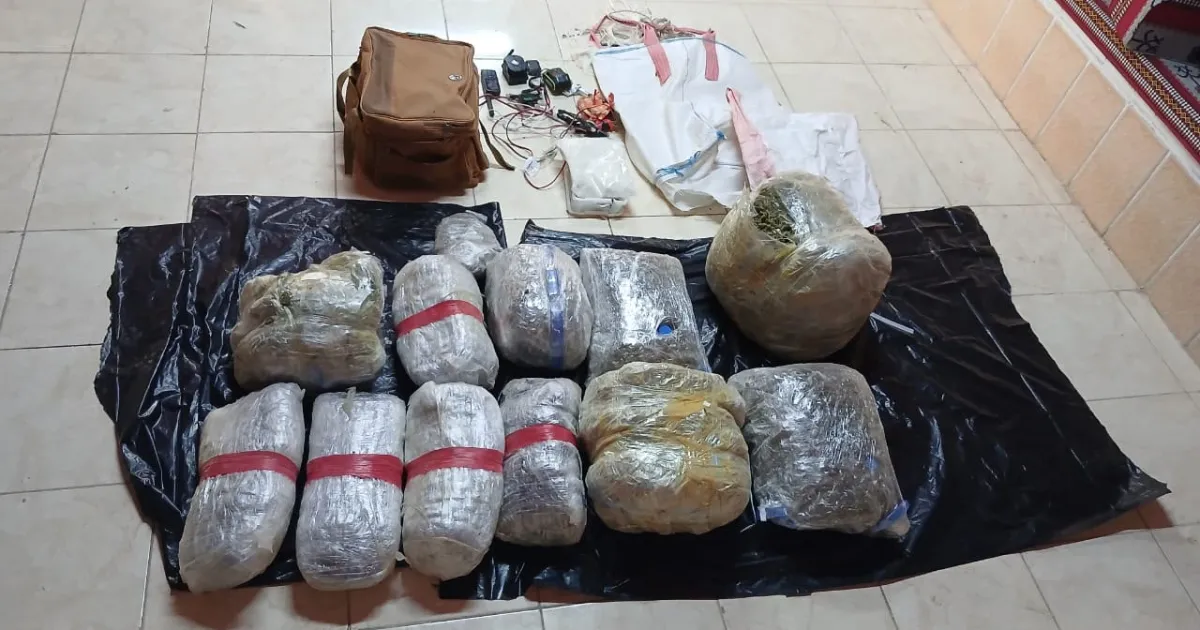
The use of quadcopter drones and balloons is reportedly among the new tactics used by gangs in Israel to smuggle hashish, crystal meth, and amphetamines into Jordan.
Jordanian security forces are said to be increasingly unhappy with the scale of the drug smuggling operations and have accused the Israeli army of not taking the issue seriously.
Initial data from Jordanian forces recorded 17 interception operations linked to drones during the first half of 2026 in Jordan’s southwestern border area with Israel.
They also recorded 231 smuggling and infiltration attempts and downed 56 drones across various borders during the same period.
Interior Minister Mazen al-Faraya told Al Jazeera that Jordanian forces were continuing efforts to prevent drugs from being smuggled into the kingdom. But they are evidently facing more complex activities by drug dealers.
“There is an increase in drug smuggling operations from Israel to Jordan using drones,” he said. “The number of seized drug cases during the current year reached 15,342 cases. Trafficking cases constituted about 28 percent of them, compared with 72 percent for usage cases.”
Israeli media reports indicate that gangs active in the Negev Desert are behind some of the smuggling operations into Jordan, where drugs can fetch higher profits.
There are estimates that 1kg of hashish can sell for approximately 7,500 pounds sterling (almost $10,000), according to the British newspaper The Telegraph, which recently uncovered the drug smugglers’ latest operations. Israeli security services believe that the price of hashish in Jordan is about 15 times higher than in Israel.
Due to widespread disenfranchisement and poverty, elements within Palestinian communities in Israel have been linked to the drug trade, according to reports. Multiple sources have accused Israel of allowing Palestinian towns and cities to become hotbeds of crime to create divisions and prevent calls for greater rights.
Ammar al-Qudah, a member of the Jordanian Senate and retired major-general in the Public Security Directorate, claimed that organised gangs in the Negev had obtained more than 1,000 drones that were originally used for agricultural and security purposes.
“The smuggling networks are linked to other gangs in Jordan, Sinai and the Negev, and rely on a route starting from Sinai, passing through the Negev, and reaching Wadi Araba, in addition to other routes including the Lebanese border with Israel and the Galilee region towards Syria,” he told Al Jazeera.
They are also using a range of sophisticated technology to bypass security on both sides of the border. This includes the use of helium-filled balloons equipped with GPS devices, drones capable of carrying about 50kg of narcotics, including black hashish and crystal meth, al-Qudah said.
He warned that a portion of the black hashish and crystal meth being smuggled into the kingdom is being sold domestically, with the rest going to other markets in the region.
With such high-tech operations, there are accusations that members of Israeli forces know about drug gang activities, based on past experiences in Egypt.
One West Point report said current and former trackers in the Israeli military in the Negev are being recruited by traffickers to provide intelligence to facilitate their operations in Egypt. In 2012, a number of Israeli service personnel were arrested on suspicion of collaborating with drug smugglers across the Egyptian border.
While there is no proof that the same situation is being repeated in Jordan, many have questioned how drones and balloons carrying drugs could cross a heavily surveilled and guarded Israeli border into Jordan.
Jordan’s counternarcotics department, in cooperation with the armed forces, has tracked such cases and made arrests.
Retired Brigadier-General Daifallah al-Daboubi, a strategic and military expert, said Jordan is witnessing a “reverse drug migration”, starting from the Sinai Peninsula, passing through the Negev region, and reaching the kingdom.
“Groups active in Beersheba and the Negev possess great financial capabilities and use advanced smuggling methods, most notably drones,” he said.
The Israeli army’s preoccupation with wars in Gaza, Lebanon and the occupied Golan Heights has provided smugglers with room to manoeuvre on the Jordan border, he added. But he ruled out the direct involvement of the Israeli political or military leadership in any drug smuggling.
Steps taken by Israel to boost security on its eastern border include the establishment of the 96th Division, which began operating in the Jordan Valley in 2025, and the construction of a controversial security barrier with Jordan.
But none of these measures appears to be designed to prevent drugs from leaving Israel; instead, they appear to be designed to prevent weapons and other illicit merchandise from entering the country from Jordan.
Sheikh Mohammed also discussed Israeli ‘violations’ in Lebanese territory with Prime Minister Nawaf Salam.
Published On 16 Oct 202616 Oct 2026
Qatar’s prime minister has announced plans to set up what he described as a “massive” solar plant in Lebanon to help ease its energy crisis.
Sheikh Mohammed bin Abdulrahman bin Jassim Al Thani made the announcement during his visit to Beirut on Friday, after meeting his Lebanese counterpart, Nawaf Salam.
Recommended Stories
list of 3 itemsend of list
“We have agreed to establish a comprehensive framework for cooperation in the energy sector and to present viable solutions,” Sheikh Mohammed said.
QatarEnergy has reached an agreement with French company TotalEnergies to jointly develop a solar power plant in Lebanon as an initial project.
The aim is to develop a major investment project “that would benefit the Lebanese economy, as well as the Qatari companies and entities participating in it”, he added.
Prime Minister Salam said he would put the plans for Lebanon’s electricity sector to the Lebanese Cabinet soon.
“The Qatari side will fund, implement and activate the project without any cost on the Lebanese state,” Lebanon’s leader said, adding that such a move is important because of the country’s financial crisis.
Lebanon’s state electricity company is one of the biggest sources of debt, haemorrhaging about $40bn over past decades with a bloated workforce and outdated infrastructure. The company provides only a few hours of electricity a day and the state, until a year ago, took advances from the Central Bank when diesel fuel ran out.
Sheikh Mohammed said Doha stands in “solidarity with the Lebanese people” and the entire region “in this dire hour”. Lebanon has been struggling with multiple energy crises in recent years and the situation has been compounded by the country’s financial collapse and Israel’s ongoing assault.
Earlier in the day, the Qatari PM also met Lebanon’s president and parliament speaker.
Among the topics discussed was the situation in southern Lebanon, where Israel continues its assault, capturing dozens of towns and villages.
Sheikh Mohammed said “Israeli violations within the Lebanese territories” were a large part of his talks.
He said that Israel should withdraw from Lebanon and cease its attacks, adding that Qatar is working in coordination with the United States to help lay the groundwork for future reconstruction in southern Lebanon to allow displaced people to return to their homes.
Israeli attacks on southern Lebanon have continued despite a ceasefire agreed in June. Under the agreement brokered by the US, the Lebanese government is to disarm Iran-backed Hezbollah. In return, Israeli forces will gradually withdraw from southern areas that they occupy. However, Hezbollah is not part of the agreement and has refused to disarm until Israel withdraws from the country.
Lebanese authorities say Israeli attacks have killed more than 4,300 people in the country since March. About 1.2 million people were also displaced in Lebanon at the height of the war.
Although most have returned home since the June ceasefire, more than 300,000 people remain displaced, according to the International Organization for Migration.
Lebanon’s PM Salam thanked Qatar for its “continuous” support during some of Lebanon’s “darkest hours”.
Lebanon’s president reaffirms the commitment to bring all arms under state control.
Published On 16 Oct 202616 Oct 2026
Lebanon’s President Joseph Aoun has discussed the confiscation of explosives intended for use against Israel during a telephone call with United States Secretary of State Marco Rubio, the Lebanese Presidential Palace has announced.
Aoun received the call on Thursday, assuring Rubio that Lebanese security forces are fully carrying out their duties in confiscating illicit arms across the country.
Recommended Stories
list of 3 itemsend of list
Last week, an explosive-laden truck carrying 780kg (1,720lb) of explosives was intercepted on a highway between Beirut and the eastern Bekaa Valley.
On Thursday, Hezbollah lawmaker Hassan Fadlallah acknowledged the group’s connection to the shipment, stating that the materials were intended for operations against Israel.
Speaking to reporters at the Lebanese parliament, Fadlallah said Hezbollah had immediately contacted security agencies to clarify ownership of the vehicle and cargo, demanding the materials be returned and detained personnel released.
Rubio urged Aoun to hold accountable those who ordered, financed, and directed the shipment, warning that “returning explosives to [Hezbollah] should be out of the question,” a State Department official told US media.
The official added that Rubio also advocated for direct military-to-military communication between Lebanese and Israeli forces “for deconfliction”.
In response, the Presidential Palace reported that Aoun asked Rubio to press Israel to halt its attacks and destruction in southern Lebanon.
Separately on Thursday, Rubio spoke with Israeli Prime Minister Benjamin Netanyahu regarding Iran, according to Israeli media reports.
The explosives-laden truck
On Monday, Prime Minister Nawaf Salam confirmed that Lebanon would conduct an investigation to track down members of Hezbollah linked to the incident.
Judicial officials told The Associated Press news agency that the truck was carrying 780kg (1,720lb) of explosives, including 250kg (550lb) of TNT and 550lb of C4 plastic explosives.
Salam described the transport as a “criminal operation” and praised security forces for intercepting the vehicle along the strategic highway linking Beirut with the Bekaa Valley.
For years, Hezbollah moved weapons freely across parts of the country. However, in March, the Lebanese government declared all military activities by the group illegal. Despite the government’s pledge to bring all weaponry under state control, the group has stated its intention to continue transporting arms in its confrontation with Israel.
Earlier this spring, Lebanese and Israeli envoys met in Washington under the auspices of US Secretary of State Marco Rubio, marking the first direct diplomatic contact between the two nations in decades.
Despite that diplomatic push from Washington, Israel has repeatedly violated the November 2024 ceasefire deal between it and Hezbollah, with Lebanon frequently reporting civilian casualties.
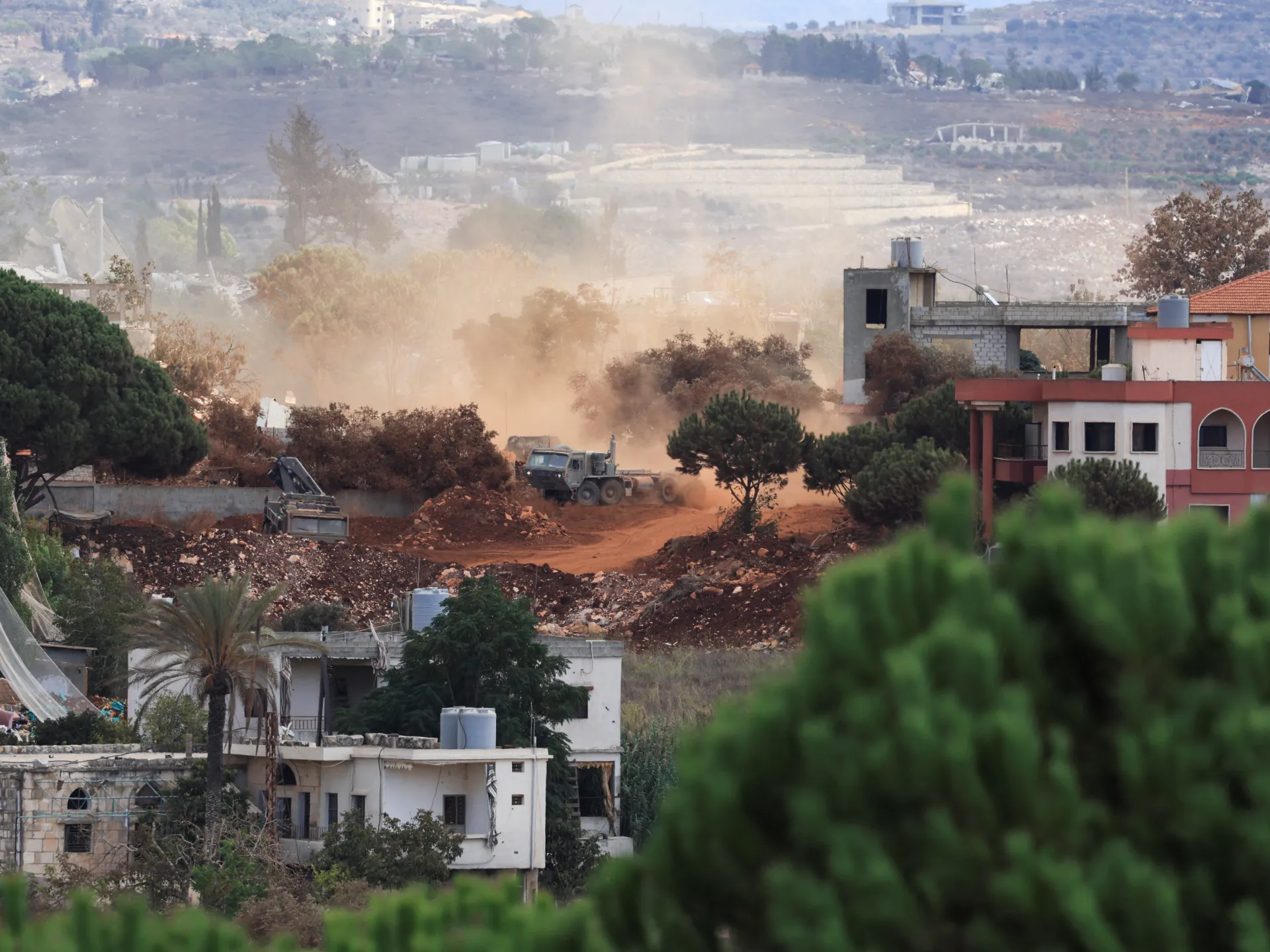
The renewed diplomatic friction comes as heavy Israeli attacks continue across southern Lebanon, where dozens of villages have been systematically demolished and large areas remain under Israeli military occupation, despite a framework agreement signed in June.
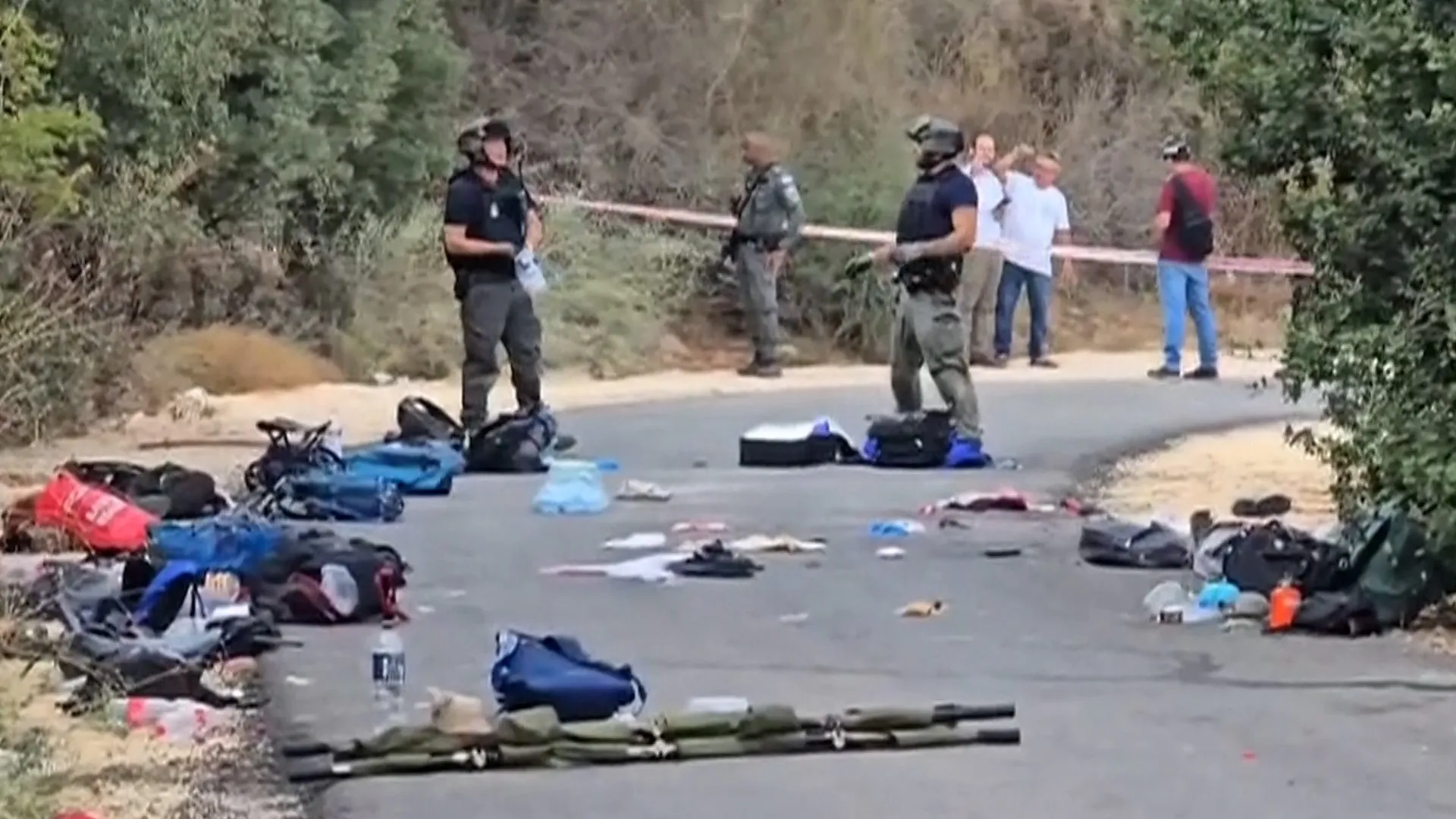
A 15-year-old was killed and around 20 people injured when unexploded ordnance detonated during a school trip in northern Israel. The army is investigating whether the munition came from Hezbollah or Israeli forces, amid recent fighting near the Lebanon border.
Despite a ceasefire agreement reached between Israel and Lebanon in June, Israeli attacks continue.
Published On 11 Oct 202611 Oct 2026
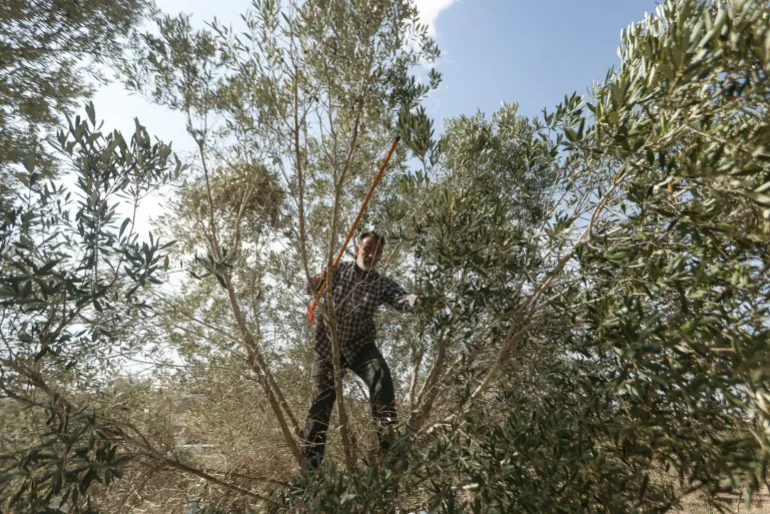
Two men have been killed in southern Lebanon’s Bint Jbeil district while taking part in an annual olive harvest, according to Lebanese state media and local authorities, as attacks by Israel continue.
One of the men died Sunday in the village of Froun from a munition left behind by recent fighting and the other in Yater as a result of Israeli shelling that “targeted the outskirts of the town while he was inspecting his land and olive harvest”, according to the official National News Agency (NNA).
Recommended Stories
list of 3 itemsend of list
The Lebanese army blamed Israeli tank fire and called the ongoing attacks “a flagrant breach of existing agreements”.
Afterwards, the Yater municipality urged residents “to avoid the outskirts of the town and refrain from crossing the earthen barrier separating some unsafe neighbourhoods” for fear of Israeli attacks.
In Froun, the NNA reported that “a foreign object” left over from previous Israeli operations exploded and killed the man, who was an engineer, as he and others tended their trees.
The engineer had come down from Beirut, where he lives, for the harvest, Froun mayor Hassan Bazzi told AFP.
The incident prompted local residents to call off the harvest and wait for “the Lebanese army to complete the decontamination of the village”, Bazzi said.
Displaced people
Since an agreement between Lebanon and Israel was struck in June, violence in the south has lessened, but not stopped.
Lebanon was pulled into conflict on March 2, when Hezbollah struck Israel in support of Tehran during the US-Israel war on Iran. Subsequently, Israel launched a bombing campaign and a ground invasion that authorities say have killed more than 4,300.
In August, Lebanon’s Prime Minister Nawaf Salam accused Israel of intentionally targeting homes and civilian infrastructure across the country. The International Organization for Migration (IOM) recorded nearly 350,000 internally displaced people in late August, a sign of the worsening displacement crisis.
One of the volunteers from Lebanon’s northernmost province of Akkar and the city of Sidon takes part in an olive-picking initiative in the southern Lebanese village of Jebchit near Nabatieh on October 11, 2026 [AFP]
Volunteers from the nearby town of Jebchit and locals came to help their southern neighbours with the harvest in an act of solidarity.
“From north to south, one people and one land,” said organiser Ahmad Chahhal.
Iran’s IRGC says it struck a “giant LPG gas carrier named NV Sunshine” that was “attempting to pass through the illegal route” south of the Strait of Hormuz.
Five Syrians and one Lebanese wounded in latest Israeli attack, officials say.
Published On 10 Oct 202610 Oct 2026
An Israeli drone attack has wounded six people in Lebanon’s Hermel district, close to the Syrian border, according to the Lebanese health ministry.
The ministry said on Friday that the six wounded included five Syrian nationals, two of them women, and one Lebanese.
Recommended Stories
list of 3 itemsend of list
Lebanon’s state-run National News Agency (NNA) reported that the drone attack targeted a car.
It added the area has largely been spared such attacks since an Israel-Hezbollah ceasefire was agreed in June.
Israel’s military claimed it struck “a Syrian terrorist” who “operated under the direction of the Iranian regime”, alleging that the man “planned and advanced attacks” against Israeli forces in Syria’s southern territory.
Since the ouster of longtime Syrian ruler Bashar al-Assad in December 2024, Israel has carried out hundreds of strikes against Syria. It has sent troops into a UN-patrolled buffer zone that had separated Israeli and Syrian forces in the Golan since 1974, and has carried out repeated incursions deeper into Syrian territory, sometimes seizing residents.
Israel has also continued to attack Lebanon since a ceasefire with Hezbollah was agreed in June.
It has vowed to keep troops in so-called security zones along its border in both Syria and Lebanon.
Syria’s President Ahmed al-Sharaa told the UN General Assembly last month: “We reject Israeli attempts to impose a fait accompli. We reject their aggressions, which undermine peace and security.”
He said Israel had carried out “500 air strikes, more than 1,200 incursions and 300 detentions” in Syria.
He also called for Israeli withdrawal from Syrian territory and for the international community to commit to a 1974 agreement that created a UN-supervised separation zone between Israeli and Syrian forces.
Saudi civil aviation authorities say Houthi attacks on Abha and King Khalid International airports have killed three civilians, including two women, and injured 36 others.
The United Nations Interim Force in Lebanon said there were no casualties after small arms fire targeted a border post.
Published On 7 Oct 20267 Oct 2026
The United Nations Interim Force in Lebanon (UNIFIL) says one of its posts on the Lebanon-Israel border was targeted by small arms fire, with no casualties reported.
The UN force said the incident occurred on Wednesday morning with several rounds of small arms fire targeting a UNIFIL position near Kfar Shouba along the UN-drawn border with Israel, known as the Blue Line.
Recommended Stories
list of 3 itemsend of list
“Such deliberate attacks gravely endanger the lives of peacekeepers,” UNIFIL said in a statement, adding that it was investigating the incident.
Under pressure from the United States and Israel, the UN Security Council decided earlier this year to set December 31 as the end of the mandate for the UN peacekeeping force in Lebanon.
UNIFIL was initially created to oversee the withdrawal of Israeli troops from southern Lebanon after Israel’s 1978 invasion, and its mandate has been renewed annually since then.
The mission was expanded after the 2006 war between Israel and Hezbollah. Proponents say it remains important to maintaining a demilitarised buffer between the two sides along the volatile Israeli and Lebanese border.
Israel has long accused UNIFIL of failing to prevent threats posed by Hezbollah and has increasingly pushed for the end of its mission since cross-border fighting escalated in the wake of the October 7, 2023, Hamas-led attacks on Israel and the start of Israel’s war on Gaza.
UNIFIL currently has 7,500 peacekeepers from around 50 countries operating in Southern Lebanon.
Last month, Lebanon’s Prime Minister Nawaf Salam pressed the UN on the need to “avert the vacuum” that would be caused by withdrawing the mission from the country’s south without a viable replacement.
Violence has decreased since a ceasefire following a June memorandum of understanding in the US-Iran war. Lebanon and Israel concluded a US-sponsored framework agreement later that month.
The Israel-Lebanon deal involves the disarmament of Hezbollah, a gradual withdrawal of Israeli forces from Lebanon’s south and the deployment of the Lebanese army to the region, starting in test areas known as “pilot zones”.
The medical condition of dozens of prisoners has deteriorated as inmates protest against suspension of amnesty law.
Published On 30 Sep 202630 Sep 2026
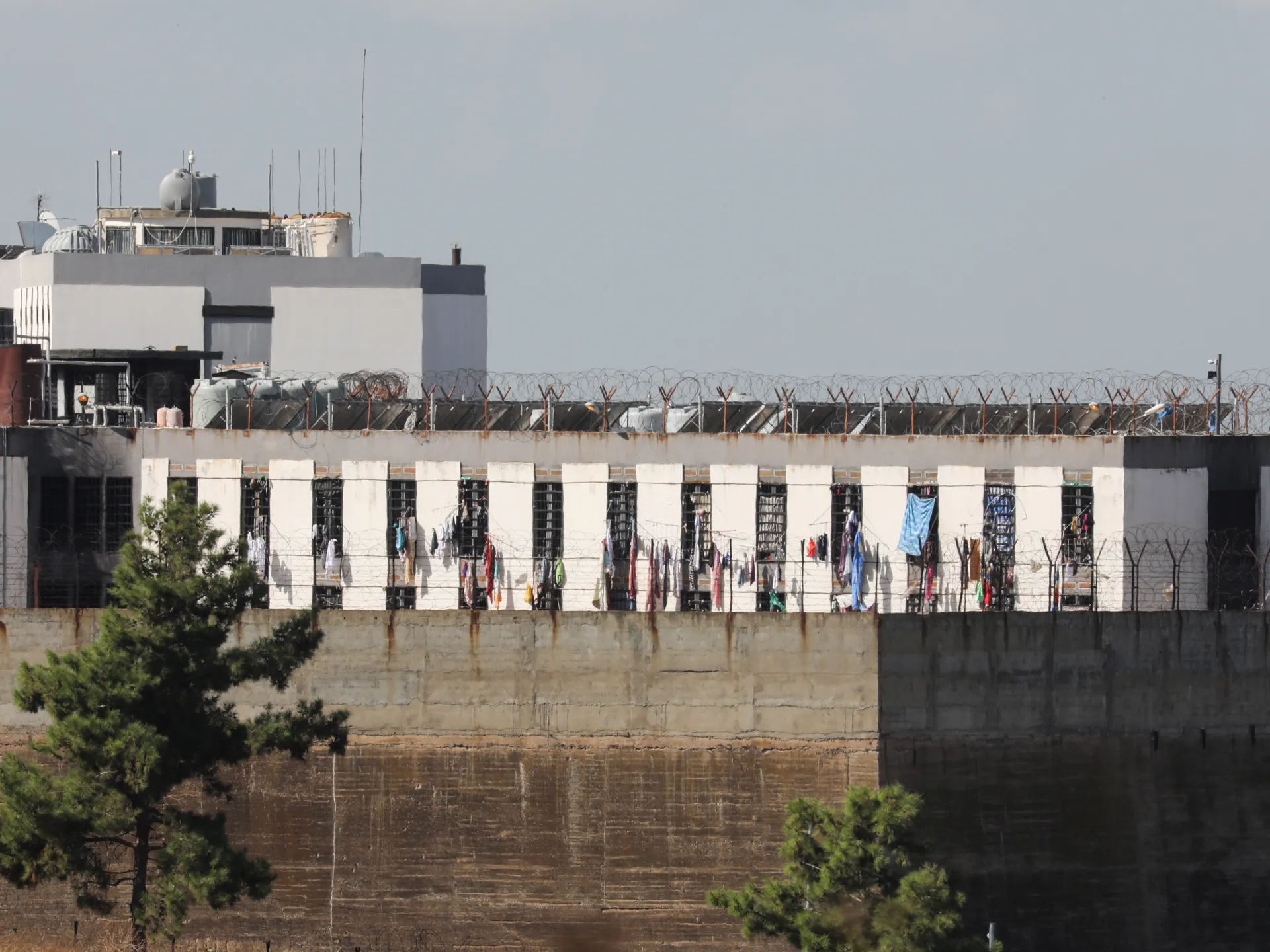
The medical condition of dozens of inmates on a hunger strike for more than two weeks inside Lebanon’s largest prison has become “dire”, according to a legal campaigner.
“About 400 prisoners are on a hunger strike for more than two weeks. Ambulances enter daily to take [dozens of] them away because their condition is dire,” Mohammed Sablouh, a Lebanese lawyer, told Al Jazeera.
Recommended Stories
list of 3 itemsend of list
“The prisoners are refusing medication, food and water,” Sablouh, who is also the director of the Prisoners’ Rights Center at the Tripoli Bar Association, said on Wednesday.
The inmates at Roumieh prison went on a hunger strike on September 12 in protest against the suspension of a general amnesty law, which could have granted an immediate release or reduced their sentences.
Protests have also been staged in Lebanon’s second city of Tripoli against the suspension of the law, which has a provision to release inmates jailed for petty crimes.
Many of the prisoners on hunger strike were arrested for their solidarity with the Syrian revolution against President Bashar al-Assad, who was toppled in December 2024 after more than 10 years of bloody war.
The Free Patriotic Movement, one of the country’s largest parties, filed an appeal before the Constitutional Council over concerns that some of the inmates were charged with “terrorism”.
The Constitutional Council is expected to issue its verdict next month.
Overcrowded prisons
Lebanese prisons are notorious for being overcrowded and thousands of inmates spend years behind bars without trial. Lebanon’s current prison population stands at about 8,500, nearly double its capacity.
The law passed on August 12 aimed to address overcrowded prison conditions in the country.
“Prison overcrowding exceeds 330 percent of the facilities’ actual capacity,” Sablouh said.
“The situation in Lebanon’s prisons is truly tragic, it can no longer withstand any … shock or any overturning of the amnesty law.”
More than 40 prisoners died in 2025. “Some died due to medical neglect, others under torture. Some died by suicide due to prolonged trials and repeated postponements,” Sablouh said.
The Lebanese lawyer blamed judicial delays for the large number of inmates, many of them arrested for petty crimes.
He pointed out the failure of the judiciary “to adhere to Article 108 of the Code of Criminal Procedure, which sets a limit for pre-trial detention: two months for misdemeanours, renewable for an equal period, and six months for felonies, renewable for an equal period [up to a maximum of one year].”
White phosphorus can cause severe burns, ignite repeatedly and produce intense heat and toxic smoke. Here’s how Israel has used it in southern Lebanon, its impact on civilians and farmland, and why its use in populated areas is restricted under international law.
Al Jazeera’s Reem Takieddine explains.


![Lena Kouyoumjian poses for a selfie with her non-verbal autistic daugher Vana, whose symptoms have worsened due to Israel’s war in Lebanon, as the 20-year-old fears loud noises or “any sudden change in routine” [Courtesy of Lena Kouyoumjian]](https://i0.wp.com/www.aljazeera.com/wp-content/uploads/2026/10/Lena-Kouyoumjian-credit-1792403815.jpg?w=640&ssl=1)
![A teacher for young autistic people high-fives Anthony at the AAA after he scores a basketball throw [Alex Milan Durie/Al Jazeera]](https://i0.wp.com/www.aljazeera.com/wp-content/uploads/2026/10/Alex-Durie-photos-Lebanon-Autism-25-1792404535.jpg?w=640&ssl=1)
![A non-verbal autistic girl practises her writing in French as a teacher at the AAA holds her hands to support her [Alex Milan Durie/Al Jazeera]](https://i0.wp.com/www.aljazeera.com/wp-content/uploads/2026/10/Alex-Durie-photos-Lebanon-Autism-15-1792404524.jpg?w=640&ssl=1)
![Nour Toukan, a public health researcher at Enmaeya, a Lebanese media platform focused on sustainable development, told Al Jazeera that “at the moment, care for autism or even for ADHD is very much an out-of-pocket expense" [Alex Milan Durie/Al Jazeera]](https://i0.wp.com/www.aljazeera.com/wp-content/uploads/2026/10/Alex-Durie-photos-Lebanon-Autism-03-1792403759.jpg?w=640&ssl=1)