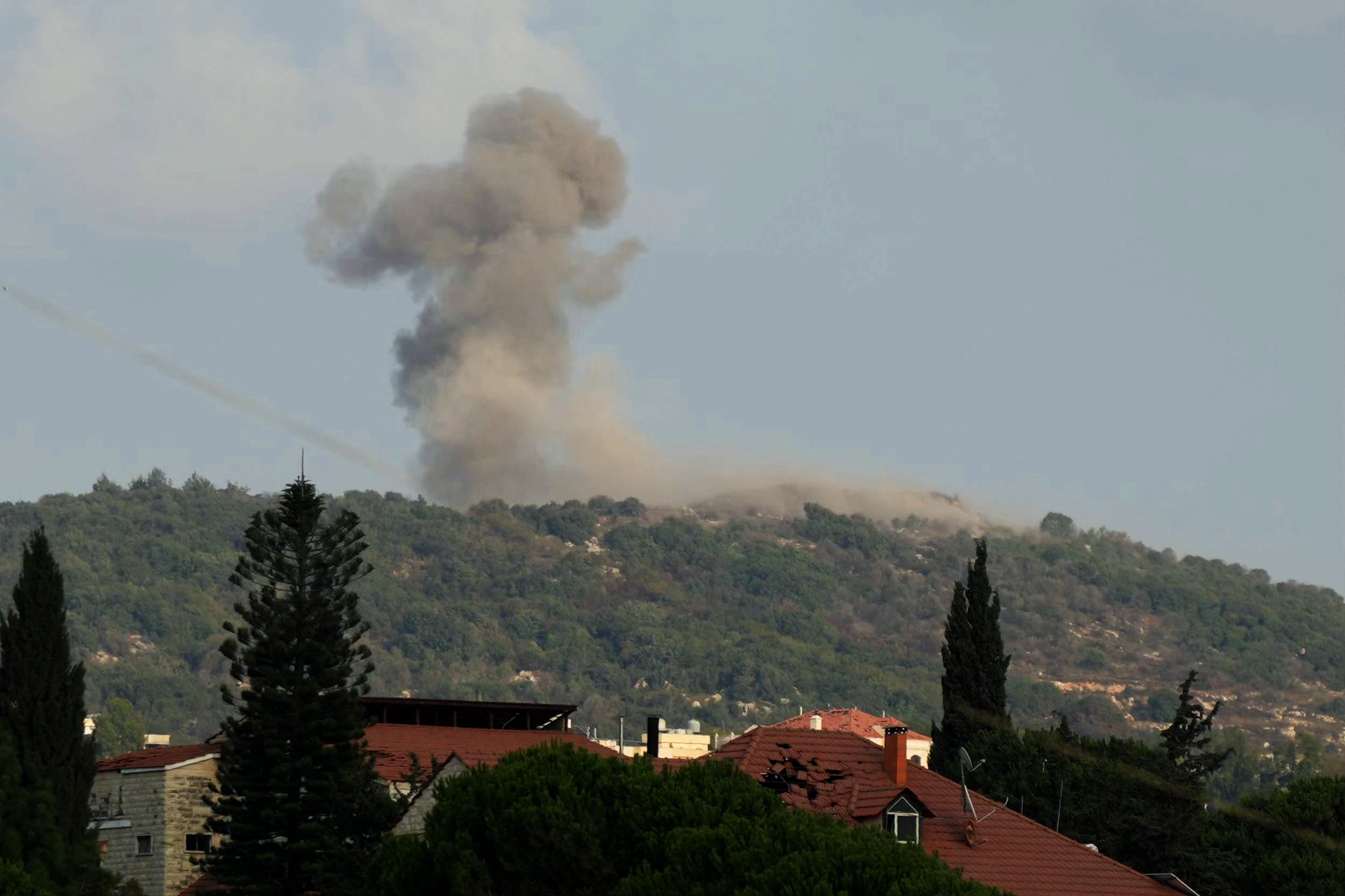
Hezbollah

Hezbollah lawmaker says resistance will eliminate the “yellow line”  – Middle East Monitor

Hezbollah MP, Hassan Fadlallah said that Hezbollah will eliminate the “yellow line” declared by Israel in southern Lebanon, stressing that “no one will be able to disarm the party.”

In an interview with Agence France-Presse, Fadlallah said: “We will topple this yellow line through resistance, through our insistence on our legitimate right to defend ourselves and our country.”

He added: “The Israeli army’s attempt to establish a buffer zone, under the guise of a front line, a yellow line, and a green line—we will break all these lines. We will not accept any of them, and we will reach our villages on the internationally recognized borders, no matter the sacrifices, no matter the cost.”

“There will be no disarmament of the resistance, and no one in Lebanon or abroad will be able to disarm it”, he added.

He said that “it is in the interest of the President of the Republic to withdraw from the path of direct negotiations with Israel,” adding that Hezbollah wants the ceasefire to continue.

“It is in the interest of Lebanon, the President of the Republic, and the government to withdraw from the path of direct negotiations and return to a national consensus on the best option for Lebanon,” he said, describing the move toward direct negotiations as “a unilateral decision on a fateful matter related to Lebanon’s future.”

He added: “We will reject and confront any attempt to impose political prices on Lebanon through concessions offered to this Israeli enemy.”

Fadlallah added he wants the ceasefire to continue, alongside efforts to ensure the withdrawal of the occupation army, the return of displaced persons to their villages, the release of prisoners, and the launch of a reconstruction program.

Source link

Outlines of a deal emerge with major concessions to Iran

Upbeat claims from President Trump over an imminent peace deal to end the war with Iran were met with deep skepticism Friday across the Middle East, where Iranian and Israeli officials questioned the prospects for a lasting agreement that would satisfy all parties.

The outlines of an agreement began to emerge that would provide Iran with a major strategic victory — and a potential financial windfall — allowing the Islamic Republic to leverage its control over the Strait of Hormuz to exact significant concessions from the United States and its ally Israel as Trump presses for a swift end to the conflict.

In a series of social media posts and interviews with reporters, Trump announced that the strait was “fully open,” vowing Tehran would never again attempt to control it. But Iranian officials and state media said that conditions remained on passage through the waterway, including the imposition of tolls and coordination with the Islamic Revolutionary Guard Corps.

Iranian diplomats posted threats that its closure could resume at any time of their choosing, and warned that restrictions would return unless the United States agreed to lift a blockade of its ports. Trump had said Friday that the blockade would remain in place.

“The conditional and limited reopening of a portion of the Strait of Hormuz is solely an Iranian initiative, one that creates responsibility and serves to test the firm commitments of the opposing side,” said a top aide to Iran’s president, dismissing Trump’s statements on the contours of a deal as “baseless.”

“If they renege on their promises,” he added, “they will face dire consequences.”

In an overture to Iran, Trump said Israel would be “prohibited” from conducting additional military strikes in Lebanon, where the Israeli government of Prime Minister Benjamin Netanyahu seeks to prevent Hezbollah, an Iranian proxy militia, from rearming, a potential threat to communities in the Israeli north.

But in a speech delivered in Hebrew, Netanyahu would say only that Israel had agreed to a temporary ceasefire, while members of his Cabinet warned that Israel Defense Forces operations in southern Lebanon were not yet finished. A top ally of the prime minister at a right-wing Israeli news outlet warned that Trump was “surrendering” to Iran in the talks.

It was a day of public messaging from a president eager to end a war that has proved historically unpopular with the American public, and has driven a rise in gas prices that could weigh on his party entering this year’s midterm elections.

Yet, Republican allies of the president have begun warning him that an agreement skewed heavily in Tehran’s favor could carry political costs of its own.

Trump was forced to deny an Axios report Friday that his negotiating team had offered to release $20 billion in frozen Iranian assets in exchange for Tehran agreeing to hand over its fissile material, buried under rubble from a U.S. bombing raid last year.

That sum would amount to more than 10 times what President Obama released to Iran under a 2015 nuclear deal, called the Joint Comprehensive Plan of Action, that was the subject of fierce Republican criticism in the decade since.

“I have every confidence that President Trump will not allow Iran to be enriched by tens of billions of dollars for holding the world hostage and creating mayhem in the region,” said Sen. Lindsey Graham (R-S.C.), a strong supporter of the war. “No JCPOAs on President Trump’s watch.”

Still, Trump said in a round of interviews that a deal could be reached in a matter of days, ending less than two weeks of negotiations.

He claimed that Tehran had agreed to permanently end its enrichment of uranium — a development that, if true, would mark a dramatic reversal for the Islamic Republic from decades developing its nuclear program, and from just 10 days ago, when Iranian diplomats rejected a U.S. proposal of a 20-year pause on domestic enrichment in favor of a five-year moratorium.

He said Iran had agreed never to build nuclear weapons — a pledge Tehran has made repeatedly, including under the Nuclear Nonproliferation Treaty, in a religious decree from then-Supreme Leader Ayatollah Ali Khamenei, and in the 2015 agreement — while continuing nuclear activities viewed by the international community as exceeding civilian needs.

And he repeatedly stated that Iran had agreed to the removal of its enriched uranium from the country, either to the United States or to a third party. Iranian state media stated Friday afternoon that a proposal to remove the country’s highly enriched uranium had been “rejected.”

Iran’s agreement to allow safe passage for commercial vessels through the Strait of Hormuz is linked to a ceasefire in Lebanon that the Israeli Cabinet approved for only a 10-day period. Regardless of whether it holds or is extended, Israeli officials said their military would not retreat from its current positions in southern Lebanon — opening up Israeli forces to potential attack by Hezbollah militants unbound by a truce brokered by the Lebanese government.

The Lebanese people, Hezbollah officials said, have “the right to resist” Israeli occupation of their land. Whether the fighting resumes, the group added, “will be determined based on how developments unfold.”

An Iranian official threw cold water on the prospects of reaching a comprehensive peace deal in the coming days, telling Reuters that a temporary extension of the current ceasefire, set to expire Tuesday, would “create space for more talks on lifting sanctions on Iran and securing compensation for war damages.”

“In exchange, Iran will provide assurances to the international community about the peaceful nature of its nuclear program,” the official said, adding that “any other narrative about the ongoing talks is a misrepresentation of the situation.”

Trump told reporters Friday that the talks will continue through the weekend.

While Trump claimed there aren’t “too many significant differences” remaining, he said the United States would continue the blockade until negotiations are finalized and formalized.

“When the agreement is signed, the blockade ends,” the president told reporters in Phoenix.

Times staff writer Ana Ceballos contributed to this report.

Source link

Israel, Lebanon agree to 10-day cease-fire

April 16 (UPI) — President Donald Trump announced that Israel and Lebanon agreed to a 10-day cease-fire starting at 5:00 p.m., pausing Israel’s six-week war on Hezbollah in that country.

Trump spoke with Lebanese President Joseph Aoun and Israeli Prime Minister Benjamin Netanyahu on Thursday, both leaders confirmed, and agreed to the cease-fire and to work toward a more permanent peace between their countries.

Aoun and Netanyahu spoke to each other separately because Aoun declined to participate in a call with the Israeli leader because Israel was still bombing Lebanon, CNN reported.

“These two Leaders have agreed that in order to achieve PEACE between their Countries, they will formally begin a 10 Day CEASEFIRE,” he said in a post on Truth Social.

Vice President J.D. Vance, Secretary of State Marco Rubio and Joint Chiefs of Staff Chairman Dan Caine have been directed to work with officials of both countries to achieve a more lasting peace.

Lebanese Prime Minister Nawaf Salam in a statement thanked the United States, France, the European Union, Saudi Arabia, Egypt, Qatar and Jordan for helping to accomplish the cease-fire he had pursued “since the first day of the way,” NBC News reported.

After the United States and Israel launched the Iran war, Israel also launched offensives against the Iran-backed militia Hezbollah in Lebanon, from which it often launches attacks at Israel.

This week, delegates from the neighboring countries conducted diplomatic talks for the first time since 1993, meeting in Washington, D.C., to discuss a cease-fire and the larger issue of Hezbollah’s hijacking of Lebanese lands in order to target Israel.

Netanayhu said Thursday in a video statement that Israeli forces would “remain in a 10-kilometer security zone, which will allow us to prevent infiltration into communities and anti-tank missile fire.”

Calling the negotiations potentially historic, Netanyahu said that Israel’s chief goal is to disarm Hezbollah and its ability to invade or launch weapons across the Lebanese border into Israel.

“That is where we will remain,” he said. “We are not leaving.”

After the diplomatic talks on Wednesday, Rubio reinforced that a key part of the meeting and now peace talks between the two nations is to end Hezbollah’s destabilizing influence in Lebanon and the wider Middle East.

“We have to remember the Lebanese people are victims of Hezbollah,” Rubio said, also noting that accomplishing a lasting peace “will take time.”

First lady Melania Trump speaks during a House Ways and Means Committee roundtable discussion on protecting children in America’s foster care system in the Longworth House Office Building near the U.S. Capitol on Wednesday. The bipartisan group of lawmakers are looking to address challenges children in foster care face, including barriers to education and educational advocacy, housing, employment opportunities, financial independence, and technology. Photo by Bonnie Cash/UPI | License Photo

Source link

Iran war: What is happening on day 48 of the US-Iran conflict? | US-Israel war on Iran News

US–Iran talks gain pace as Pakistan mediates, with fresh optimism for a new round of talks in Islamabad.

Efforts to revive US-Iran negotiations are gathering pace, with Pakistan again having an important mediating role as its leaders hold high-level talks in Tehran and the Gulf.

Amid a renewed push to end the war, a Pakistani delegation, led by army chief Field Marshal Asim Munir is in Tehran. He is expected to relay messages from the United States, while Pakistan’s Prime Minister, Shehbaz Sharif, arrived in Saudi Arabia as part of a regional tour that includes Qatar and Turkiye.

Recommended Stories

list of 4 itemsend of list

Iran’s Foreign Ministry spokesman, Esmael Baghaei, said Tehran and Washington have remained in contact since talks in Islamabad ended on Sunday. On Wednesday, Washington signalled optimism about a new round of talks in the Pakistani capital.

But the diplomatic push comes amid increasing tension, as Iran warns it could expand its response to the US naval blockade beyond its own waters.

Divisions in Washington persist, with the US Senate rejecting a measure to limit the war without congressional approval.

Here is what we know:

In Iran

  • Hormuz tensions remain high: Adviser Mohsen Rezaei warned that Iran could target US ships, if Washington continues to enforce its naval blockade in the Strait of Hormuz. The warning comes as the US tightens restrictions on vessels linked to Iranian ports, with ships already being turned back amid the standoff.
  • Nuclear issue shows potential breakthrough: Analyst Abas Aslani says Tehran is open to nuclear transparency if Washington is serious about a deal, but new US sanctions and the blockade of Iranian ports are fuelling distrust.
  • “There is a sense of distrust, and at the moment, Iran is ready for every possible scenario, either progress in the negotiations or returning to the military conflict,” he told Al Jazeera.
  • Iran’s Foreign Minister Abbas Araghchi warned of consequences over US “provocative actions” in the Gulf and the Strait of Hormuz during a call with his Chinese counterpart Wang Yi.

War diplomacy

  • Round two of talks: The US is discussing holding a second round of peace talks with Iran and is optimistic about reaching a deal, the White House said.
  • China supports ‘momentum’ of peace talks: China’s Foreign Minister, Wang Yi, told his Iranian counterpart that Beijing “supports maintaining the momentum of the ceasefire and peace talks”.
  • Saudi crown prince, Pakistan PM meet: Crown Prince Mohammed bin Salman and Shehbaz Sharif met in Jeddah to discuss regional issues, including US-Iran negotiations. Talks hosted by Pakistan were a key focus, said the Saudi Press Agency.
  • US and Qatar: US President Trump discussed regional developments and energy concerns, specifically regarding the oil market and gas prices, with Qatari Emir Sheikh Tamim bin Hamad Al Thani.
Saudi Crown Prince Mohammed bin Salman meets with Pakistan's Prime Minister Shehbaz Sharif in Jeddah
Saudi Crown Prince Mohammed bin Salman and Pakistan’s Prime Minister Shehbaz Sharif in Jeddah, Saudi Arabia [Saudi Press Agency/Reuters]

In the US

  • US President Donald Trump has announced that Israeli and Lebanese leaders will hold direct talks later today – their first such contact in 34 years.
  • New oil sanctions: US officials targeted more than two dozen individuals, along with companies and vessels linked to the oil transport network of Iranian shipping magnate Mohammad Hossein Shamkhani.
  • US says 10 vessels blocked from Iranian ports: The US military’s Middle East command (CENTCOM) said 10 ships were stopped or redirected within the first 48 hours of a naval blockade, with none leaving Iranian ports.
  • US Congress divisions: The Senate rejected efforts to limit US involvement in the war and blocked measures targeting arms sales to Israel, though growing opposition signals shifting political pressure.

In Israel

  • ‘Identical’ goals: Israeli Prime Minister Benjamin Netanyahu said that Israel and the US are fully aligned in their objectives to contain Iran.
  • Ceasefire pressure, no halt in fighting: Despite pressure, Netanyahu said Israel would continue military operations.
  • End of Hezbollah: The Israeli prime minister said the country’s top priority in Lebanon was to secure the “dismantling” of Hezbollah, in its first direct talks with the country in decades.
  • “There are two central objectives: first, the dismantling of Hezbollah; second, a sustainable peace… achieved through strength,” he said.

In Lebanon

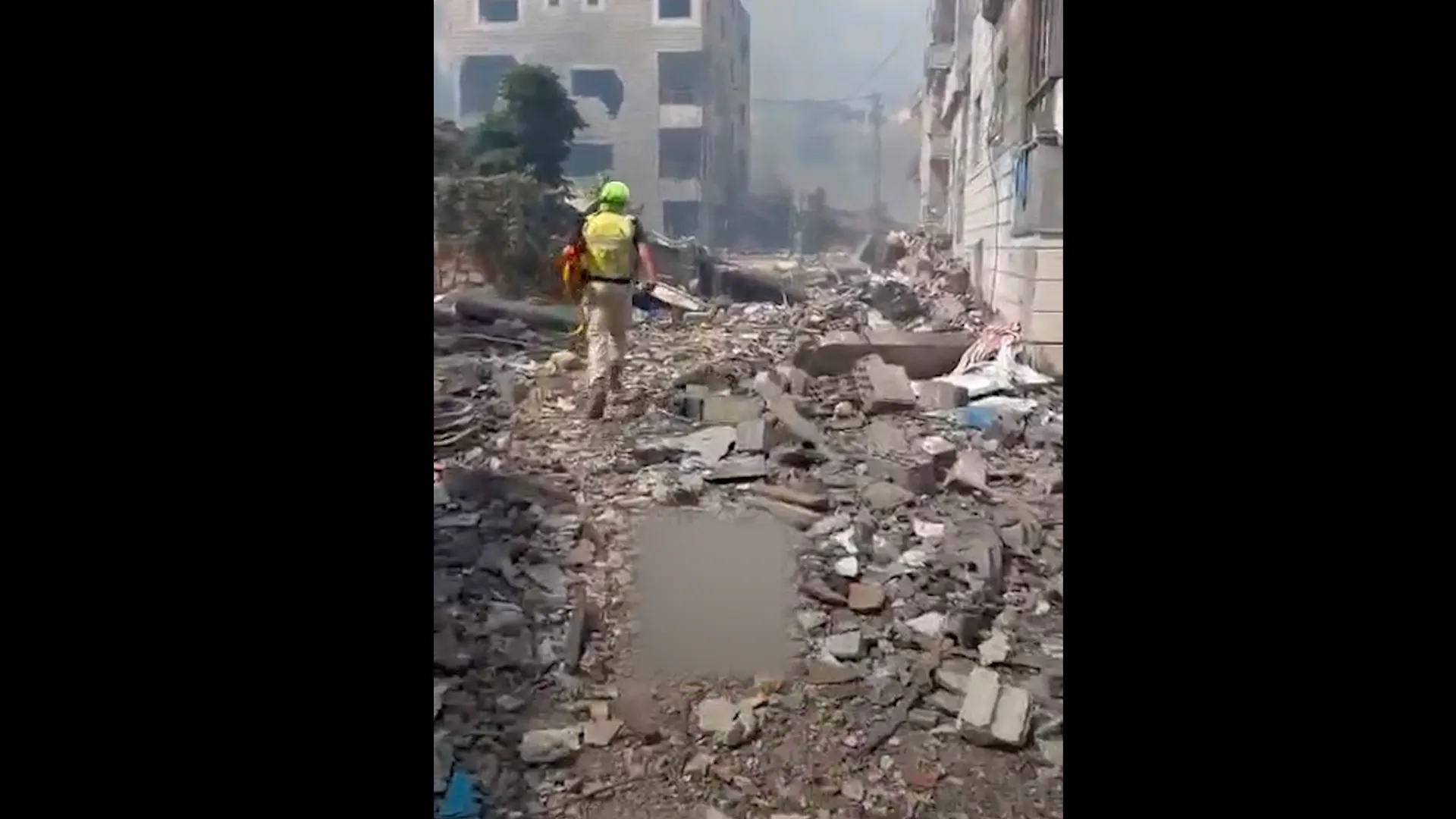
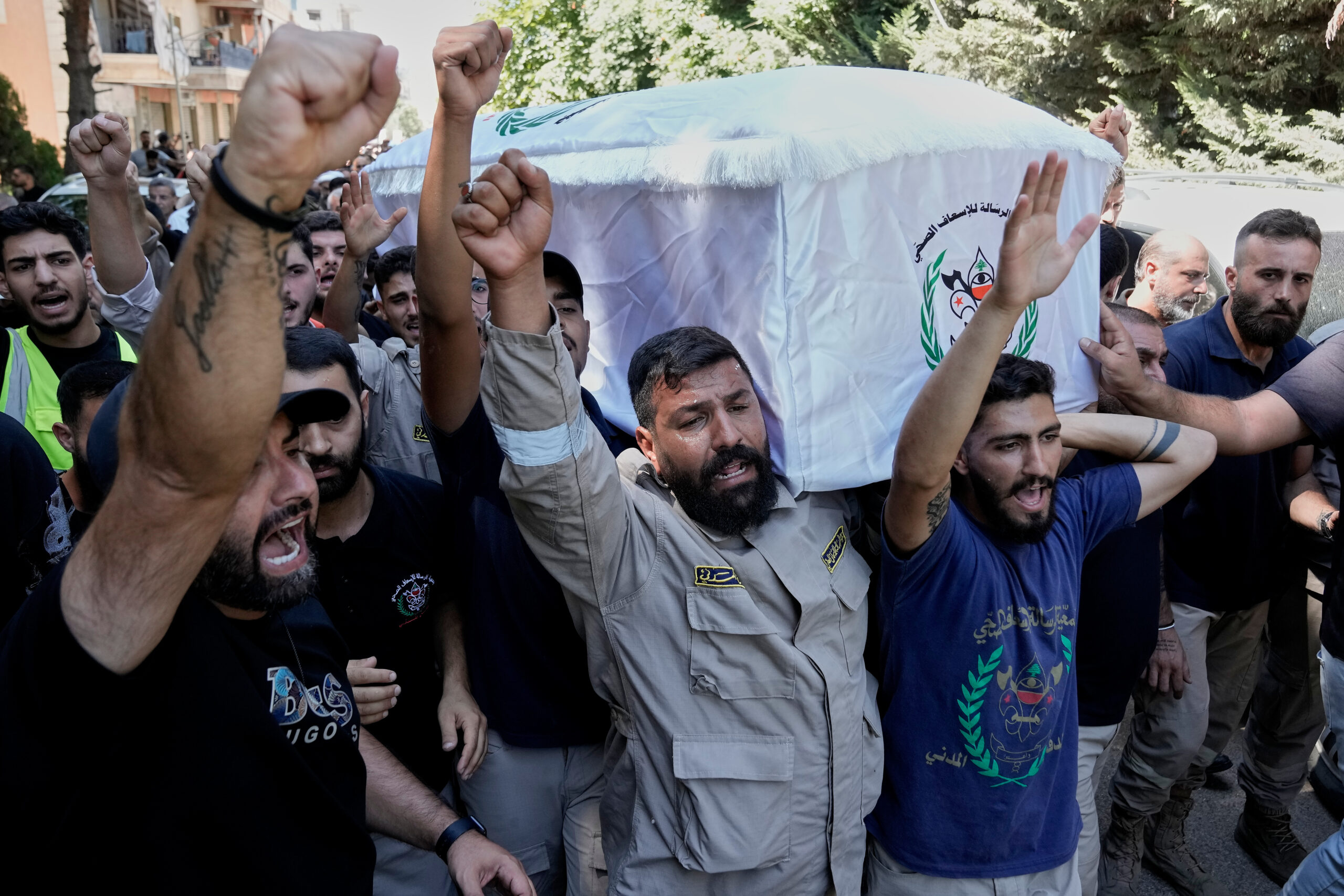
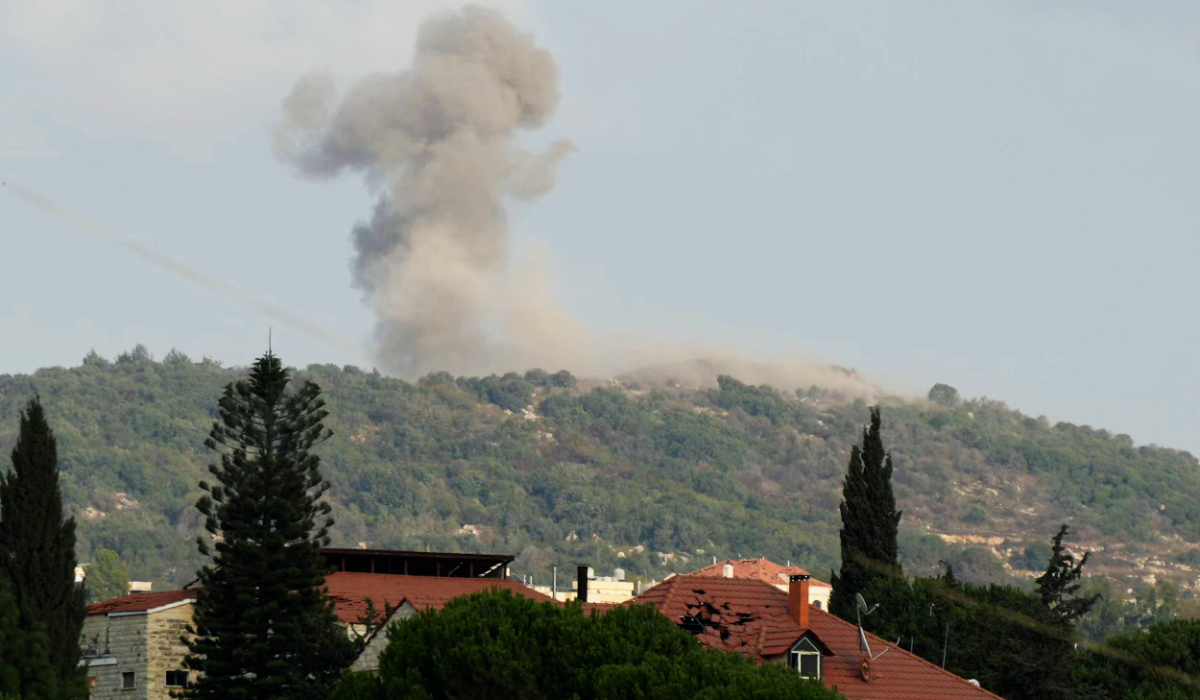
  • Relentless strikes continue: Air raids and shelling hit southern and eastern Lebanon, including Kafr Sir and Nabatieh, while a “triple-tap” strike in Mayfadoun killed four paramedics. Israeli vehicles and bulldozers remain active.
  • Lebanon’s Minister for Administrative Reform Fadi Makki said an Israeli attack that killed four paramedics in southern Lebanon was “a new war crime”.
  • Rising toll: Israeli strikes have killed at least 2,167 and injured more than 7,000 people, according to the Lebanese Health Ministry. About 1.2 million people have been displaced since March 2. Israel has been accused of destroying homes in southern Lebanon, as happened in Gaza.
  • ‘Homes that no longer exist’: “Even if a ceasefire is reached, the reality on the ground is devastating.. entire communities along the border have been destroyed,” Al Jazeera’s Malcolm Webb reported from Beirut. He added that Israel has yet to secure its objective of controlling territory up to the Litani River.
  • Balakrishnan Rajagopal, the UN special rapporteur on the right to housing, has joined other UN human rights experts, calling for Israel to immediately stop its bombing of Lebanon. Rajagopal wrote on social media that the Israeli military is using the “same strategy” in southern Lebanon as in Gaza or the occupied West Bank.
  • Diplomatic tensions grow: Hezbollah has condemned US-hosted Israel-Lebanon talks as “shameful,” while a failed Senate vote to block bulldozer sales to Israel highlights increasing concern over civilian harm.
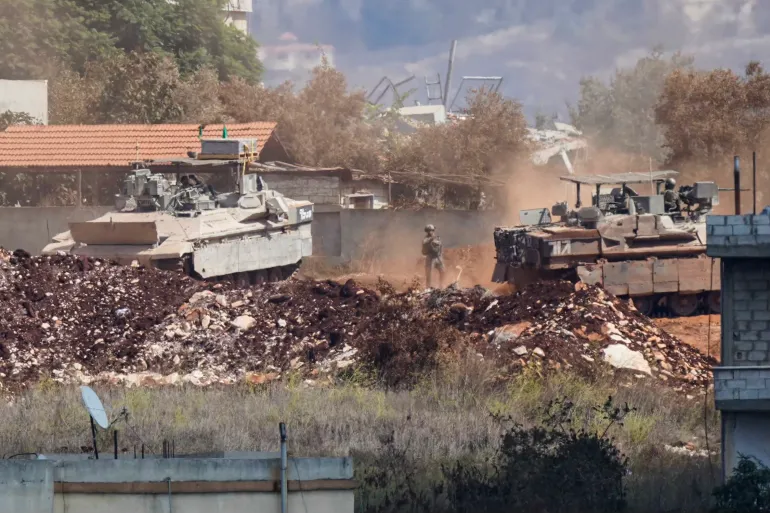
An armoured Israeli military vehicle operates inside Israel, near the Israel-Lebanon border
An armoured Israeli military vehicle near the Lebanon border [Florion Goga/Reuters]

Global economy

  • Growing hunger fears: The war could push millions more towards hunger as its economic fallout reverberates around the globe, the World Bank’s chief economist told AFP.
  • “You have about 300 million people who suffer from acute food insecurity already,” Indermit Gill said.  “That’ll go up by about 20 percent very, very quickly,” as knock-on effects grow.
  • Wall Street records: Major Wall Street stock indices finished at record highs on Wednesday following optimism about an accord in the US-Iran conflict.

Source link

Hezbollah leader urges Lebanon’s government to pull out of Israel talks | Hezbollah News

Naim Qassem says planned talks in Washington, DC, are a ploy to pressure Hezbollah into laying down its weapons.

Hezbollah leader Naim Qassem has rejected an upcoming meeting between the Lebanese government and Israel in the United States, calling such efforts “futile” as Israeli forces intensify their attacks on Lebanon.

In a televised speech on Monday, Qassem called on the government to take “a historic and heroic stance” by not attending the planned talks.

The Lebanese and Israeli ambassadors to the US are scheduled to meet in Washington, DC, on Tuesday to discuss holding direct negotiations between the two countries.

Qassem said the talks are a ploy to pressure Hezbollah into laying down its weapons.

“Israel clearly states that the goal of these negotiations is to disarm Hezbollah, as [Israeli Prime Minister Benjamin] Netanyahu repeatedly states. So, how can you go to negotiations whose objective is already clear?” Qassem said.

“We will not rest, stop or surrender. Instead, we will let the battlefield speak for itself,” he added.

Israel intensified its war on Lebanon in early March following a salvo of rockets launched by Hezbollah. A ceasefire between Israel and the Iran-backed group had ostensibly been in effect since November 2024, but Israel continued carrying out near-daily deadly attacks.

Hezbollah said its March 2 attack was retaliation for the US and Israel’s killing of Iran’s Supreme Leader Ayatollah Ali Khamenei two days earlier, on the first day of the US-Israel war on Iran.

Since then, Israel’s bombardment of Lebanon and a ground invasion in the south have killed at least 2,055 people, including 165 children and 87 medical workers. More than 6,500 others have been wounded, while some 1.2 million have been forced from their homes.

Lebanese authorities insist the priority is to secure a ceasefire, but Israel has said it wants to open formal peace negotiations with Lebanon. It has placed Hezbollah’s disarmament as a priority, with no mention of a ceasefire or withdrawal of its forces from southern Lebanon.

“We want the dismantling of Hezbollah’s weapons, and we want a real peace agreement that will last for generations,” Netanyahu said on Saturday.

Qassem said the planned talks “require a Lebanese consensus to shift our approach from non-negotiation to direct negotiations”, calling them a “free concession” to Israel and the US.

His speech came after hundreds of people in the capital, Beirut, protested on Friday and Saturday against the planned talks. Demonstrators accused Lebanese Prime Minister Nawaf Salam of betraying the Lebanese people by holding direct talks with Israel, while it continues its bombing campaign and expands its invasion.

The Israeli military on Monday said its forces had completely surrounded the key southern town of Bint Jbeil, while Hezbollah continued to claim attacks against Israeli forces there.

Qassem said that northern Israeli localities “will not be safe, even if the Israelis were to enter any area of Lebanon”. He also accused Beirut of “backstabbing” his group by declaring Hezbollah’s military activities illegal at the start of the war.

“Israel and the US clearly said they want to strengthen the Lebanese army to disarm and fight Hezbollah … but the army cannot do that,” Qassem added.

Source link

Israeli strikes kill at least 18 people across southern Lebanon | US-Israel war on Iran News

Lebanon’s Health Ministry says more than 2,000 people have been killed in Israeli attacks since March 2.

Israeli strikes have killed at least 18 people across southern Lebanon, as Lebanese authorities reported that the overall death toll from the war that began last month between Israel and Lebanese group Hezbollah has surpassed 2,000.

Israeli strikes on a village near Sidon in southern Lebanon killed at least eight people and wounded nine others, Lebanon’s Health Ministry said on Saturday.

Recommended Stories

list of 3 itemsend of list

Earlier, it said that at least 10 people, including three emergency workers, had been killed in Israeli strikes in the Nabatieh district.

In its latest tally, the Health Ministry reported that at least 2,020 people have been killed and 6,436 others wounded since Lebanon was drawn into the US-Israel war on Iran on March 2. Hezbollah launched rocket fire at Israel in support of its backer Iran, sparking massive Israeli strikes and a ground invasion.

Meanwhile, Israeli media reported that two Israeli soldiers were wounded during clashes with Hezbollah in southern Lebanon on Saturday.

Israel’s Channel 13, citing the military, said the two soldiers from the Paratroopers Brigade sustained moderate injuries from shrapnel during the confrontation.

The violence comes as Iran-backed Hezbollah renewed its rejection of direct negotiations between Israel and Lebanon aimed at ending the war.

President Joseph Aoun’s office said on Friday that officials from Lebanon, Israel and the United States would meet next week in Washington “to discuss declaring a ceasefire and the start date for negotiations between Lebanon and Israel under US auspices”.

Hundreds of people gathered on Saturday near the government headquarters in central Beirut in support of Hezbollah and to protest against the talks with Israel, some waving the group’s yellow flags or the Iranian standard.

Demonstrator Ruqaya Msheik said the protest was a message that Lebanon “will not be Israeli”.

“Whoever wants peace with Israel is not Lebanese,” she said, adding: “Those who shake hands with the enemy … are Zionists.”

Hezbollah supporters, some waving the party flag and holding up an image of slain Hezbollah leader Hasan Nasrallah, demonstrate near the Governmental Palace to protest the Lebanese authorities' decision to engage in direct negotiations with Israel to end the ongoing war, in downtown Beirut on April 11, 2026.
Hezbollah supporters, some waving the party flag and holding up an image of slain Hezbollah leader Hassan Nasrallah, demonstrate near the Governmental Palace to protest the Lebanese authorities’ decision to engage in direct negotiations with Israel to end the ongoing war, in downtown Beirut on April 11, 2026 [Ibrahim Amro/AFP]

Hezbollah and its ally, the Amal Movement, issued a statement calling on supporters to avoid demonstrating “at this delicate stage”, citing interests of “stability, the protection of civil peace and avoiding any division that the Israeli enemy seeks”.

Earlier, Hezbollah lawmaker Hassan Fadlallah said the decision to hold direct talks with Israel was “a blatant violation of the [national] pact, the constitution and Lebanese laws”.

Israeli Prime Minister Benjamin Netanyahu said that any peace agreement reached with Lebanon must “last for generations” and also call for Hezbollah’s disarmament.

After a ceasefire was announced between the US and Iran this week, Washington and Tehran have been at odds over whether it also applies to Israel’s bombardment and invasion of Lebanon.

The dispute arose during the historic in-person ceasefire talks held in Pakistan’s capital, Islamabad, between the US and Iran on Saturday afternoon.

Al Jazeera’s Ali Hashem, reporting from Tehran, said that Iran was able to secure “a kind of guarantee from the US that Israel is going to decrease its attacks on Lebanon”.

However, he said that “nothing [has] been confirmed … from Israel, with respect to Lebanon.” While “there have been fewer attacks on Beirut and the southern suburbs,” nothing has been “announced with respect to a ceasefire”, he said.

Source link

Vance, Iran delegation begin peace talks in Pakistan

1 of 2 | Vice President JD Vance shakes hands with Pakistani Prime Minister Shehbaz Sharif during a meeting, in Islamabad, Pakistan, Saturday. Delegations from the United States and Iran are meeting in Pakistan Saturday to discuss ending the war in Iran. Photo by the Pakistan Foreign Ministry/EPA

April 11 (UPI) — Talks between the United States and Iran began Saturday morning between the two delegations in Islamabad, Pakistan.

Vice President JD Vance arrived at 10:30 a.m. PKT. At Nur Khan air base, Vance walked down a red carpet and met with Pakistani Prime Minister Shehbaz Sharif. Sharif said Friday that the United States is at a “make or break” moment in a national address Friday.

It’s not clear if the talks are direct or indirect, but CNN reported the talks are a mixture of both.

Though there was heavy security, with road closures and checkpoints, the mood in Pakistan was jubilant, The Washington Post reported.

Both sides have repeatedly accused the other of violating the fragile cease-fire that began last week. The United States has said Iran is violating the agreement because the Strait of Hormuz is not open. Only two ships passed through it on Friday, The New York Times reported. Iran is angry that Israel continues to attack Lebanon, though Israel and the United States say they never agreed to stop fighting in Lebanon.

Israel has hit more than 200 targets in Lebanon affiliated with Hezbollah in the past 24 hours, The Times reported the Israeli military said.

Iran can’t find all the mines it set in the strait, The Times reported that U.S. officials said Friday, causing a snarl in Iran’s ability to comply with American demands.

Saturday morning, President Donald Trump posted on Truth Social that the United States is “clearing out” the strait.

“We’re now starting the process of clearing out the Strait of Hormuz as a favor to Countries all over the World, including China, Japan, South Korea, France, Germany, and many others. Incredibly, they don’t have the Courage or Will to do this work themselves. Very interestingly, however, empty Oil carrying ships from many Nations are all heading to the United States of America to LOAD UP with Oil.”

He didn’t clarify what “clearing out” of the strait means.

On Friday, he said that Iranians must negotiate.

“The Iranians don’t seem to realize they have no cards, other than a short term extortion of the World by using International Waterways. The only reason they are alive today is to negotiate!” Trump said in a Truth Social post.

The U.S. delegation includes envoy Steve Witkoff and Trump’s son-in-law Jared Kushner. The Iranian side has more than a dozen senior officials, including Iranian Parliament Speaker Mohammad Bagher Ghalibaf and Iranian Foreign Minister Abbas Araghchi, along with senior security officials and Iran’s central bank governor, The Post reported.

Both sides seem motivated to see the war come to an end, but they remain at odds on several issues. Control of the Strait of Hormuz, war reparations, Iran’s enriched uranium and withdrawal of the U.S. military in the region are some of the sticking points.

Source link

Hezbollah Ramping Up FPV Drone Attacks On IDF In Lebanon

As Israel continues its ground offensive into Lebanon, it appears that Hezbollah is increasing its first-person view (FPV) drone strikes on IDF armor and personnel. The uptick in these attacks is the latest example of how the use of the small, fast and easy to maneuver weapons has proliferated from the war in Ukraine to battlefields across the globe.

While the militant Lebanese group has used FPV drones against Israel since 2024, it has ramped up these attacks for a couple of different reasons, according to Ryan Brobst, Deputy Director of the Foundation for Defense of Democracies (FDD)’s Center on Military and Political Power.

“The IDF is currently operating further north with more troops than in previous operations, which increases the number and proximity of targets for Hezbollah to strike,” Brobst told us. In addition, there are indications that the Iranian proxy has followed additional lessons from the Ukraine war using fiber optic cables to guide the drones. As we have frequently reported, fiber optic cables mitigate the effect of electronic warfare efforts to jam radio signals as well as some of the limitations imposed by geographical features that can impede the line-of-sight radio connection between drone and operator.

A fiber-optic-controlled drone is designed for the Ukrainian Armed Forces in the Kyiv region, Ukraine, on January 29, 2025. (Photo by Maxym Marusenko/NurPhoto via Getty Images)
A fiber-optic-controlled drone is designed for the Ukrainian Armed Forces in the Kyiv region, Ukraine, on January 29, 2025. (Photo by Maxym Marusenko/NurPhoto via Getty Images) NurPhoto

“One additional consideration may be the rising availability of fiber optic drones,” Brobst explained. “Just to be clear, I am not certain the extent to which Hezbollah has switched to fiber optics vs radio, or that radio models are totally ineffective. But it seems quite unlikely Hezbollah had significant numbers of fiber optics in 2024, given that Russia and Ukraine were just starting to deploy them that year. They are much more available now.”

Several videos recorded by Hezbollah recently have emerged on social media claiming to show its use of fiber optic-controlled FPV drones.

One video claims to show a compilation of Hezbollah FPV strikes that hit two Merkava Mk.4 main battle tanks, a D9 Caterpillar armored bulldozer, and what appears to be a Namer heavy infantry fighting vehicle (IFV).

The extent of the damage is not fully clear from these videos. The feeds end as soon as the drone strikes the target. Unlike both Ukraine and Russia, it would appear that Hezbollah does not have additional drones flying overhead to record the aftermath of these attacks, at least in select instances.

Hezbollah conducted more fiber-optic FPV strikes on Israeli vehicles in Lebanon, including two ‘Merkava’ Mk.4 tanks, a D9 Caterpillar armored bulldozer, and what appears to be a rare ‘Namer’ heavy IFV equipped with a turret mounting a 30 mm Bushmaster Mk 2 cannon.
1/ https://t.co/ms2nagNHrD pic.twitter.com/WDs6M3SpwW

— Roy🇨🇦 (@GrandpaRoy2) April 5, 2026

Another video shows claimed fiber-optic controlled FPV drone strikes on the open hatch of a Merkava as well as on an Eitan Armored Personnel Carrier parked behind a building. Again, there is no clear indication of any damage to either vehicle.

In a scene also reminiscent of the fight in Ukraine, Hezbollah used a fiber-optic controlled FPV drone to fly into a building. This is a tactic that both Ukrainian and Russian troops regularly train on and a skill they repeatedly hone.

🇮🇷🇮🇱🇱🇧 In a similar vein, the fact that Israel operates many very heavily armoured vehicles incentivizes Hizballah to employ its armed “FPV” multirotor drones against IDF personnel, whether in the open or in inside structures. Note that armed “FPV” multirotor drones of the… https://t.co/j9fCoY6Y9g pic.twitter.com/dwwrzpHdnX

— Shahryar Pasandideh (@shahpas) April 6, 2026

While no cables are visible in the drones used in any of these videos, the lack of degradation in their video feeds, even as they approach low to the ground is a good indication of a fiber-optic connection.

It is difficult to know the full extent of Hezbollah’s use of FPV drones of any kind or what damage they are inflicting. Much of the evidence of the attacks, Brobst notes, comes from the release of Hezbollah videos.

“There is evidence that Hezbollah had used FPVs by at least 2024, but significantly fewer videos exist from that time period,” he explained. “If Hezbollah had conducted successful attacks previously, they would likely have been releasing videos of them for propaganda effect, as they are doing now.”

The following video shows one of those Hezbollah FPV drone attacks from September 2024.

🇮🇱🇱🇧 Hezbollah uses a FPV drone to hit an Israeli HMMWV in Jal al-Alam

If Hezbollah has adjusted to new tactics from the Ukraine war and has drones and operators at scale, Israel might be in big trouble … if they move.

Russian instructors in Lebanon would be not surprising. pic.twitter.com/q1RQguqYfg

— Lord Bebo (@MyLordBebo) September 11, 2024

Getting a full picture on the extent of the damage caused is difficult given the IDF’s strict censorship policies. 

“The IDF has not released hard numbers on this unfortunately,” Brobst stated.

While the IDF does not acknowledge these events, its operational updates for March 26 “include a reference to several soldiers of the 7th Brigade sustaining injuries, one of whom was killed,” FDD stated. “It is not clear whether these casualties were the result of a Hezbollah FPV attack, but their unit is an armored brigade known to operate Israel’s Merkava 4 tank.”

A senior IDF official told The War Zone these videos show Hezbollah using FPV drones “with accurate manual control and sensible targeting (top of vehicles, weak points), the clips do show genuine strike capability, and some hits are probably real.”

However, “the videos cannot prove actual damage to a Merkava Mark IV…Footage is selectively edited, so success rates are likely overstated.”

The bottom line, he added is that “FPVs are a credible and growing technical threat, but the clips are evidence of capability — not proof of consistent effectiveness or system failure.”

Israel does have some means of countering drone attacks on armor. In addition to fielding electronic warfare equipment designed to jam drone radio signals (which does not work against fiber optic FPVs), some Israeli military vehicles are equipped with the combat-proven Trophy active protection systems (APS). The system uses radar detect and trigger small hit-to-kill projectiles at incoming threats. It was built mainly to defeat anti-tank missiles and RPGs, but new upgrades of the system have counter-drone capabilities, as well. You can read more about this emerging feature set and its potential here. It is unclear if any of Israel’s armor in Lebanon have this newer active protection system enhancement or if upgrades to earlier systems can also provide some of this capability.

Trophy® APS – The land maneuver enabler


Israel is not alone in being with FPV drones fired by Iranian proxies. As we reported last month, FPV drones targeted a U.S. military Black Hawk helicopter and a critical air defense radar at an American base in Iraq. Khataib Hezbollah, a group separate from the similarly named Lebanese group, is suspected of being behind the attack. This was one of a number of FPV attacks in Arab countries where U.S. forces are based.

You can see one of the drones hit the Black Hawk in the following video.

An Iranian-backed militia carried out a successful FPV drone strike on Camp Victory in Iraq yesterday, successfully hitting multiple targets.

Seen here, one of the FPV attack munitions hits a parked UH-60 Black Hawk. pic.twitter.com/ngY8td9ONZ

— OSINTtechnical (@Osinttechnical) March 25, 2026

The widespread use of FPV drones, both radio- and fiber-optic-controlled, has made maneuver warfare in Ukraine exceedingly difficult for either side. Meanwhile, both Russia and Ukraine have been making improvements to extend the range of their FPV drones, especially those controlled by fiber optic cables. This includes bigger spools allowing longer ranges as well as additions of things like wings to improve aerodynamics which also increases range. Both sides are also using a variety of drones as relays to increase the range of their radio-controlled drones.

You can see one example of a winged Ukrainian FPV drone in the video below.

Another Ukrainian variant of a winged FPP, this time recorded by the Russians on a mission armed with a PG-7 series warhead.
The intention is to dramatically increase the range of a standard FPV, and it is promising to be a very significant development in the small drone war. https://t.co/iVv6EyJq7B pic.twitter.com/sqYZEjcj7N

— Roy🇨🇦 (@GrandpaRoy2) April 8, 2026

At the moment, there is no indication that Israel has any plans to cease its invasion of southern Lebanon, which has emerged as a main sticking point in negotiations to end the war against Iran. On Thursday, Israeli Prime Minister Benjamin Netanyahu announced that there was no ceasefire with Hezbollah.

Prime Minister Benjamin Netanyahu:

“Dear residents of the North, I am proud of you. You continue to stand firm.

I wish to inform you: There is no ceasefire in Lebanon. We are continuing to strike Hezbollah with full force, and we will not stop until we restore your security. pic.twitter.com/k2JeKXEMBQ

— Prime Minister of Israel (@IsraeliPM) April 9, 2026

How Hezbollah’s FPV capabilities will impact Israeli operations isn’t clear at this time, but if anything else, they are another sign of the proliferation of these capabilities and the challenges of defending against them.

Contact the author: howard@thewarzone.com

Howard is a Senior Staff Writer for The War Zone, and a former Senior Managing Editor for Military Times. Prior to this, he covered military affairs for the Tampa Bay Times as a Senior Writer. Howard’s work has appeared in various publications including Yahoo News, RealClearDefense, and Air Force Times.


Source link

Lebanon steps up diplomacy to confirm inclusion in U.S.–Iran cease-fire

People flee from areas the Israeli army has warned could come under attack in Beirut, Lebanon, on Wednesday. Photo by Wael Hamzeh/EPA

BEIRUT, Lebanon, April 9 (UPI) — Lebanese officials engaged Thursday in intensive diplomatic contacts to confirm the country’s inclusion in the Pakistan-mediated U.S.-Iran cease-fire and refusing to let Tehran negotiate on their behalf.

The initiative comes a day after Israel carried out large-scale air strikes on Beirut and across Lebanon.-

Prime Minister Nawaf Salam called on his Pakistani counterpart, Shehbaz Sharif, during a telephone call to emphasize that the cease-fire achieved between the United States and Iran on Wednesday “must include Lebanon to prevent a recurrence of the Israeli aggressions.”

Sharif condemned the recent Israeli attacks on Lebanon and affirmed that Pakistan “is working to ensure peace and stability” in the country.

Lebanese President Joseph Aoun urged Western and Arab officials he had contacted to give his country “an opportunity — just as was given to the United States and Iran — to reach a cease-fire and move toward negotiations.”

Speaking during a Cabinet meeting, Aoun, who last month proposed direct talks with Israel starting with a truce, also called for exerting the necessary pressure to ensure that “Lebanon becomes part of the cease-fire agreement, allowing us to proceed with negotiations.”

Israel has rejected the proposal for direct talks and inclusion of Lebanon in the two-week cease-fire, which is said to call for a cessation of hostilities across multiple fronts, Lebanon among them, while pledging to continue strikes against Hezbollah.

Aoun refused “anyone [who] negotiates on our behalf,” a clear reference to Iran, which threatened to withdraw from the temporary cease-fire with the United States if Israel continues to attack Lebanon.

“We have the ability and the means to negotiate ourselves, and therefore we do not want anyone to negotiate for us. This is something we do not accept,” Aoun said.

In separate comments, Aoun said the only solution is to achieve a cease-fire, followed by direct negotiations with Israel.

Ali Fayyad, A Hezbollah member in Parliament, called on the Lebanese government to “insist on a cease-fire as a prerequisite before moving to any subsequent step.”

Fayyad reiterated his group’s rejection of any direct negotiations with Israel, requesting Israeli withdrawal from south Lebanon, cessation of Israeli attacks and return of the displaced to their villages and towns.

Iranian President Masoud Pezeshkian said in a post on X that his country “will never abandon its Lebanese brothers and sisters” after Israel’s Wednesday strikes on residential areas in Beirut and other Lebanese areas killed more than 200 people and injured over 1,000.

Pezeshkian said the Israeli attacks “blatantly violate the initial cease-fire” and that “such actions signal deception and non-compliance, rendering negotiations meaningless. Our hands remain on the trigger.”

While Pakistan has confirmed that Lebanon is included in the cease-fire it mediated, Israel and the United States have claimed otherwise.

The Lebanese Cabinet decided to file an urgent complaint to the U.N. Security Council regarding the “dangerous escalation” of Israeli attacks that resulted in a large number of civilian casualties and came “in defiance of all international and regional efforts to halt the war in the region.”

It also called on the Army and security forces to immediately take action to strengthen the state’s full authority over Beirut, ensuring that weapons are restricted to legitimate forces and the laws are strictly enforced.

The measure specifically targets Hezbollah, which has refused to fully disarm after its war with Israel that began Oct. 8, 2023, in support of Gaza — a conflict that was supposed to end with the Nov. 27, 2024, cease-fire, which Israel ignored, continuing its strikes against the militant group.

It also came after Israel hit buildings, apartments and hotel rooms in Beirut where Hezbollah and Islamic Revolutionary Guards Corps allegedly were hiding, risking civilian lives.

While Hezbollah announced Thursday that it resumed firing missiles and rockets on settlements in northern Israel for its violation of the truce with Iran, Israeli Defense Minister Israel Katz said the group was “desperate for a cease-fire.”

Katz was quoted by Israeli English-language websites as saying that 200 Hezbollah members were killed in Wednesday’s attacks, bringing the number of “those eliminated” during the new round of fighting since last March to 1,400.

“Hezbollah is stunned by the scale of the blow,” he said.

The Israeli Army said that among those targeted Wednesday in an air strike on a residential building in Beirut was Ali Youssef Harshi, the personal secretary and nephew of Hezbollah Secretary-General Naim Qassem.

It said that Maher Qasem Hamdan, whom it described as the commander of the Hezbollah-affiliated “Lebanese Resistance Brigades,” and seven others also died in a strike on the port city of Sidon in southern Lebanon.

Meanwhile, Israel sparked a new wave of panic by issuing evacuation orders for residents in Beirut’s southern suburbs and surrounding areas, forcing thousands, including already displaced people, to flee in haste.

Early Thursday, rescue teams continued searching in two targeted buildings, one of which collapsed, while many families tried to locate loved ones who have been unaccounted for since Wednesday.

According to medical sources at the government-run Rafik Hariri University Hospital, about 95 bodies, some mutilated, were brought to the hospital and were awaiting identification by their families.

While the health ministry reported Wednesday night 112 killed and 837 injured, the General Directorate of Civil Defense said 254 people were killed and 1,165 wounded, adding that the toll in Beirut reached 92 dead and 742 injured.

Source link

Oil prices plunge after cease-fire, Hormuz Strait reopening announced

A gas station in London, England, displays the latest price for a liter of regular unleaded on Wednesday morning hours after crude oil prices fell sharply on news disruption to the global supply of oil caused by the Iran war may be about to ease. Photo by Andy Rain/EPA

April 8 (UPI) — Global oil prices tumbled after the United States, Israel and Iran agreed to a Pakistan-brokered two-week cease-fire deal that included reopening the Strait of Hormuz to international shipping.

The Brent crude and West Texas Intermediate benchmarks saw double-digit percentage falls following U.S. President Donald Trump‘s announcement of the breakthrough Tuesday evening, and have since stabilized, changing hands at $95.51 and $96.48 a barrel in early trade on Wednesday.

The market reacted to the prospect that oil tankers trapped in the Persian Gulf would be finally be able to transit the 21-mile-wide body of water between Iran and the UAE and Oman, easing major disruption to global supply caused by Iran’s effective blockade of the strait.

However, oil remained well above its $72 a barrel level on Feb. 27, the day before the United States and Israel unleashed their airborne offensive against Iran, amid uncertainty over the mechanism for the resumption of maritime traffic in the strait and the ongoing impact of war damage to energy infrastructure in Gulf countries.

There was also confusion over whether the cease-fire extended to Israel’s military offensive against Hezbollah in Lebanon. Pakistan said it did, but Israel said it did not and that its operations would continue.

Financial markets in Europe rallied Wednesday morning, following very significant gains in Asia, where the Nikkei 225 in Tokyo ended up 5.42%, Korea’s KOSPI surged almost 7% higher and Hong Kong’s Hang Seng Index closed up more than 3%.

Out-of-hours futures transactions in the United States suggested equities would also rally very strongly there when stock exchanges open in a few hours.

Jay Woods, chief market strategist at Freedom Capital Markets in New York, expressed skepticism.

“It wasn’t much of a surprise that there was an announced reprieve in the Iranian conflict. The concern now is if this all too familiar ‘two-week’ timeframe is going to lead to a resolution,” said Woods.

A statement from Iran’s Supreme National Security Council posted on X by the Iranian foreign minister said safe passage of ships through Hormuz Strait would be possible for the duration of the cease-fire, but that it would have to be “via coordination with Iran’s Armed Forces.”

In a post on his Truth Social platform in the early hours of Wednesday hailing the cease-fire, Trump pledged U.S. assistance with the logistical problems.

“The United States will be helping with the traffic buildup in the Strait of Hormuz. There will be lots of positive action! Big money will be made. Iran can start the reconstruction process. We’ll be loading up with supplies of all kinds, and just ‘hangin around’ in order to make sure that everything goes well. I feel confident that it will. Just like we are experiencing in the U.S., this could be the Golden Age of the Middle East!!!” Trump wrote.

MST Marquee analyst Saul Kavonic told the BBC that while the number of ships getting through the Hormuz Strait would increase from a trickle, a return to normal levels of energy production in the region was unlikely without a permanent end to the conflict and warning that repairs to damaged infrastructure could take many months.

Acting Attorney General Todd Blanche speaks during a press conference on the Trump Administration’s efforts to combat fraud at the Department of Justice Headquarters on Tuesday. Last week, President Donald Trump fired Attorney General Pam Bondi over her handling of the Epstein files and the lack of investigation into individuals he felt should face criminal charges. Blanche, a former personal lawyer to Trump, will lead the Justice Department temporarily. Photo by Bonnie Cash/UPI | License Photo

Source link

Lebanon excluded from ceasefire as Israeli strikes continue | Israel attacks Lebanon News

Israel has backed a ceasefire between the US and Iran but made clear it does not extend to Lebanon. Al Jazeera’s Heidi Pett reports that as Israeli strikes continue, residents remain wary after repeated violations of past ceasefires and ongoing displacement.

Source link

Iran-backed Iraqi militia releases kidnapped American reporter Shelly Kittleson

April 7 (UPI) — An Iran-backed militia freed an American journalist it kidnapped last month in a prisoner exchange with the Iraqi government, Iraqi and militia officials announced Tuesday.

The militia, Kataib Hezbollah, confirmed the release of Shelly Kittleson in response to negotiations with Iraqi Prime Minister Mohammed Shia’ al-Sudani. Kataib Hezbollah representative Abu Mujahid al-Assaf said Kittleson was released “on the condition that she leaves the country immediately.”

“This initiative will not be repeated against in the coming days,” Assaf said. “We are in a state of war resembling that imposed by the american enemy against Islam, and in such situations, many considerations are set aside.”

Kataib Hezbollah abducted Kittleson in late March and set her free in a swap involving multiple members of the militia, Iraqi security officials told The New York Times. The Washington Post reported that it was believed Kittleson was held at Turf al-Sakhar, a stronghold of the militia about 40 miles north of Baghdad.

U.S. Secretary of State Marco Rubio said he extends his department’s appreciation to those who had assisted in securing her release, which he framed as a reflection of the Trump administration’s steadfast commitment to the safety and security of American citizens, no matter where they are in the world.”

“We are relieved that this American is now free and are working to support her safe departure from Iraq,” he said in a statement.

The National Press Club said it was “relieved” to learn of Kittleson’s release and hoped for her safe departure from Iraq.

“Today’s development is a welcome update for all those who believe in the ability for journalists to report safely and freely,” club president Mark Schoeff Jr. said in a statement.

“Her ordeal underscores the growing threats journalists face today as they do their jobs and report the truth.”

Kataib Hezbollah is a U.S.-designated terror organization and has links to Iran’s Quds Force, part of Iran’s military. It’s the second kidnapping of a foreign national by the group in Iraq in recent years.

In September, the group released Elizabeth Tsurkov, an Israel-Russian citizen and Princeton University student, after more than two years of captivity.

Kittleson worked as a freelancer reporter for more than a decade in the Middle East.

Amid an escalation of regional violence in response to the war in Iran, the U.S. government urged all American citizens living in Iraq, Bahrain, Jordan, Kuwait, the United Arab Emirates and Qatar to leave as soon as possible.

According Sebastian Gorka, deputy assistant to Trump, 106 Americans held in foreign countries have been released since January 2025.

“No man, or woman, left behind,” he said on X.

Source link

At least 14 people killed in Israeli strikes across Lebanon | Israel attacks Lebanon News

Lebanese armed group Hezbollah fires projectiles at northern Israel while Israeli troops push deeper into southern Lebanon.

Israeli strikes across southern Lebanon and the capital, Beirut, have killed at least 14 people, a day after Israel threatened to hit Lebanon’s main border crossing with Syria, forcing its closure.

Israeli strikes on Beirut’s southern suburbs on Sunday killed at least four people while 10 people – including a family of six – were killed in Israeli attacks on southern Lebanon.

Recommended Stories

list of 3 itemsend of list

A further 39 people were wounded in an Israeli strike on Beirut’s Jnah neighbourhood, according to Lebanon’s Ministry of Public Health. The strike hit about 100 metres (330ft) from Rafik Hariri University Hospital, the country’s largest public medical facility, a medical source told the AFP news agency.

Israel has launched air strikes across Lebanon since March 2 after the Lebanese armed group Hezbollah fired rockets into Israel in response to the United States-Israeli war on Iran. Israeli forces have also launched a ground invasion of southern Lebanon.

Hezbollah on Sunday claimed to have fired a cruise missile at an Israeli warship 126km (78 miles) off the Lebanese coast. There was no immediate comment from the Israeli military. Al Jazeera was not able to verify the claim.

Although most Israeli strikes against Hezbollah have been conducted by jets and drones, some have come by sea.

In a statement, the Israeli military warned it had “begun striking Hezbollah infrastructure sites” in Beirut’s southern suburbs without providing evidence for its claims.

On Saturday, Israel said it would carry out strikes on the Masnaa border crossing between Lebanon and Syria. Masnaa serves as a vital trade route for both countries and a key gateway to the rest of the region for Lebanese people.

The border post was quickly evacuated on the Lebanese side, and the site was virtually deserted early on Sunday with only a few guards still on duty, according to AFP.

In Syria, Mazen Aloush with the General Authority for Borders and Customs insisted that the crossing, known as Jdeidet Yabous on the Syrian side, was “exclusively for civilian use and is not used for any military purposes”.

Aloush said traffic through the crossing would be temporarily suspended due to the Israeli threat.

Israeli attacks on Lebanon since March 2 have killed more than 1,400 people, including 126 children, and displaced over 1.2 million, according to Lebanese authorities.

In the southern Lebanese town of Kfar Hatta, an Israeli strike killed seven people including a four-year-old girl and a Lebanese soldier, the Health Ministry said on Sunday.

The previous evening, the Israeli army issued a forced evacuation order for the town, where many displaced people from other parts of southern Lebanon have fled.

In another air strike on southern Lebanon, at least three people were killed and others injured early on Sunday, Lebanon’s National News Agency (NNA) reported.

As Israeli troops push deeper across their border into southern Lebanon and destroy villages, Lebanese President Joseph Aoun reiterated his call for talks with Israel, saying he wanted to spare southern Lebanon from destruction on the scale seen in Israel’s genocidal war on Gaza.

“Why don’t we negotiate … until we can at least save the homes that have not yet been destroyed?” he proposed in a televised address on Sunday.

Source link

9-year-old boy recounts airstrike in Lebanon that killed whole family | Israel attacks Lebanon

NewsFeed

9-year-old Karim Al-Haj Hussein survived an Israeli strike on his home in Lebanon’s Baalbek that killed his mother, father and other family members. Karim managed to crawl from the rubble of his home, despite being injured himself.

Source link

Israel says four soldiers killed as army pushes deeper into south Lebanon | Israel attacks Lebanon News

Hezbollah attempts to make Lebanon ground invasion ‘costly’ for Israeli army as it continues its advance.

The Israeli military has said four soldiers were killed in combat in southern Lebanon, where its forces are clashing with Hezbollah fighters after launching a ground invasion of the country.

An army statement on Tuesday named three soldiers from the same battalion who “fell during combat”. In a separate statement, it said another soldier had been killed in the same incident and two others wounded, without naming them.

Recommended Stories

list of 3 itemsend of list

Ten Israeli soldiers have been reported killed since fighting between Israel and Hezbollah flared up on March 2, following a United States-Israeli joint attack on Iran. More than 1,200 people have been killed in Israeli attacks on Lebanon, according to the Lebanese Ministry of Public Health, and more than a million displaced.

This comes a day after the United Nations Interim Force in Lebanon (UNIFIL) said two peacekeepers were killed “when an explosion of unknown origin destroyed their vehicle” near the southern Lebanese village of Bani Haiyyan. Another peacekeeper was killed by a projectile on Sunday near the southern Lebanese village of Aadchit el-Qsair.

Israeli Prime Minister Benjamin Netanyahu on Monday ordered the military to expand its invasion in southern Lebanon, pushing deeper to extend what he calls a “buffer zone” reaching the Litani River.

Israel’s far-right ministers have urged Netanyahu to annex southern Lebanon, as the military destroys bridges and homes to cut the area off from the rest of the country.

Al Jazeera’s Lebanon correspondent Zeina Khodr said Monday night marked a new escalation as Israel opened a new front in Lebanon’s Bekaa Valley, targeting roads that link towns known to be Hezbollah strongholds and strategic supply lines for the group.

“In the past weeks, [the Israeli army] hit bridges over the Litani, now they are trying to isolate the west Bekaa from southern Lebanon,” Khodr said, reporting from Beirut.

“Hezbollah Secretary-General Naim Qassem made it very clear they know the imbalance of power. They are not going to be able to stop this invasion, and the Israeli army will most likely reach until the Litani River, but they will not make it easy for them to consolidate control,” she continued.

“What Hezbollah is trying to do is make this a costly war for Israel.”

The escalation in Lebanon comes amid the ongoing US-Israel war on Iran, which has killed more than 1,340 people since February 28.

The Israel Hayom newspaper on Monday reported that Netanyahu told senior US officials that any future agreement between the US and Tehran would not stop Israel’s war in Lebanon.

Israel’s far-right Minister of Finance Bezalel Smotrich last week said in an Israeli radio interview that the war in Lebanon “needs to end with a different reality entirely”, which includes a “change of Israel’s borders”.

Source link

Netanyahu orders deeper Israeli invasion into Lebanon | US-Israel war on Iran

NewsFeed

Israeli Prime Minister Benjamin Netanyahu has ordered the military to expand its invasion in southern Lebanon, pushing deeper to extend what he calls a ‘buffer zone’. As Israeli forces advance towards the Litani River, an explosion at a UN position in southern Lebanon killed a peacekeeper.

Source link

Palestinian refugees in Lebanon face another forced displacement | Israel attacks Lebanon

NewsFeed

After Israel’s bombing of Beirut’s southern suburb of Dahiyeh, Palestinian refugee Dalal Dawali once again finds herself forcibly displaced. She and her children joined hundreds of families fleeing to Beddawi camp in north Lebanon. Al Jazeera’s Justin Salhani tells her story.

Source link

Iranian IRGC’s ties to Hezbollah deepen tensions in Lebanese politics | Israel attacks Lebanon News

Beirut, Lebanon – The accusation from Lebanon’s prime minister that Iran’s Islamic Revolutionary Guard Corps (IRGC) is in charge of Hezbollah’s operations against Israel comes as relations between the Shia group and the Lebanese government are at their lowest in years.

But, according to analysts, that animosity does not mean that Prime Minister Nawaf Salam was incorrect in his analysis of the situation.

Recommended Stories

list of 3 itemsend of list

In comments made on Sunday to the Saudi Arabian television station al-Hadath, Salam said that the IRGC – a branch of Iran’s military that answers directly to that country’s supreme leader – was directing Hezbollah in its fight against Israel, and in launching drones at Cyprus from Lebanon.

Israel’s latest attacks on Lebanon have, since they started in early March, killed more than 1,000 people and displaced at least 1.2 million, more than 20 percent of the country’s population. Human Rights Watch researchers say the mass displacement alone could amount to a war crime.

While Salam’s claims might be hard to definitively prove, analysis from experts and reporting suggest that the IRGC has played a crucial role in Hezbollah’s preparations for reentering the war waged against Lebanon since 2023.

IRGC calling the shots

In his interview with al-Hadath, Salam accused the IRGC of “managing the military operation in Lebanon” and of firing a drone at a British Air Force base in Cyprus, earlier this month. He accused IRGC officials of entering Lebanon with false passports.

On March 2, Hezbollah fired six rockets across the border. The group said that it was in response to the assassination of Iran’s Supreme Leader Ali Khamenei on February 28, and a response to more than a year of unanswered Israeli aggression on Lebanon, which had killed hundreds.

The move shocked much of Lebanon’s population and political establishment, after Hezbollah had reportedly given assurances to its allies in government, including Parliament Speaker Nabih Berri, that it would not enter the war in support of Iran, its close ideological ally.

The Lebanese government – which had already been moving to disarm Hezbollah – responded by banning the powerful group’s military activities and asking some Iranians believed to have links to the IRGC to leave. But the action has had little impact on the ground, where Hezbollah continues its war efforts against Israel, including battling the Israeli military on the ground in southern Lebanon – the fight that Salam believes is managed by the IRGC.

Ties between the IRGC and Hezbollah are longstanding.

Hezbollah was founded in 1982, three years after the Islamic revolution in Iran. The group was created in coordination with the IRGC and has since counted Iran as its benefactor and spiritual guide.

Immediately after a November 2024 ceasefire between Hezbollah and Israel, Iran sent IRGC officers to Lebanon to conduct a post-war audit and restructure, according to reporting by the Reuters news agency.

Hezbollah’s chain of command was reportedly restructured from a hierarchical one to smaller cells with greater decisional autonomy, something also practised by the IRGC and known as the “mosaic” defence.

Nicholas Blanford, a nonresident senior fellow with the Atlantic Council, said that sources in Hezbollah and the Lebanese government had told him that the original Hezbollah rocket attack on March 2 was conducted by the Islamic Resistance, Hezbollah’s military wing, possibly in direct coordination with the Quds Force, the IRGC’s foreign unit. Hezbollah’s senior leadership may not have been aware of the plans for the attack.

“I think the IRGC is calling the shots,” Blanford told Al Jazeera. “They are working together.”

Lebanese government out of options

On Tuesday, Lebanon’s Foreign Minister Youssef Rajji declared the Iranian ambassador to Lebanon a persona non grata and gave him until Sunday to leave the country.

The move indicates that Lebanon is trying to counter Iranian influence in Lebanon and came just hours after Israel’s Defence Minister, Israel Katz, announced that his country’s military would create a “security zone” in southern Lebanon stretching to the Litani River, roughly 30km (20 miles) north of the Israeli border – essentially an illegal occupation of the area.

But analysts and experts said there is little Lebanon can do before the war with Israel ends.

The Lebanese government had worked under heavy international pressure to disarm Hezbollah during the ceasefire period from November 2024 until earlier this month. But Israel violated the ceasefire more than 10,000 times, according to UN peacekeepers in Lebanon. For any progress to be made on disarmament, analysts said, Israel cannot continue attacking Lebanon.

“What the Lebanese government was supposed to do was a gradual disarmament of the party, which is also something that many Lebanese would like to happen,” Ziad Majed, a Lebanese political scientist, told Al Jazeera. “However, it cannot happen while Israel is bombing.”

However, the attacks don’t seem likely to cease in the short term. US President Donald Trump said that his envoys, Steve Witkoff and Jared Kushner, had engaged in talks with Iran on Monday over a possible end to the war. Iran subsequently denied that talks took place.

Many in Lebanon believe that Israel’s campaign in Lebanon won’t be included in any potential agreement between Iran, the US, and Israel to end the war. Katz’s statement on Tuesday seems to suggest Israel plans to carry on its invasion of southern Lebanon until its forces reach the Litani River.

Hezbollah’s threats

The government’s efforts to retake control of southern Lebanon may be even more difficult now that it is dealing with a reemboldened Hezbollah.

Mahmoud Qamati, deputy head of Hezbollah’s political council, compared the Lebanese government to France’s World War II Vichy government, which collaborated with the Nazis. Qamati was criticised for his comments, but later said they were misinterpreted.

More ominous comments came from Wafiq Safa, who was until recently the head of Hezbollah’s Liaison and Coordination Unit. He sent a message to the Lebanese government during a recent press interview.

“We will force the government to backtrack on the decision to ban the party’s military activities after the war, regardless of the method,” he said.

Source link

Moment missile strikes shortly after Israeli president’s visit | Hezbollah

NewsFeed

Israeli President Isaac Herzog was forced to take cover as a missile struck nearby shortly after he gave a press conference in the northern Israeli town of Kiryat Shmona. During the speech, Herzog aid Israel cannot return to last year’s ceasefire and must secure “strategic depth inside Lebanon.”

Source link