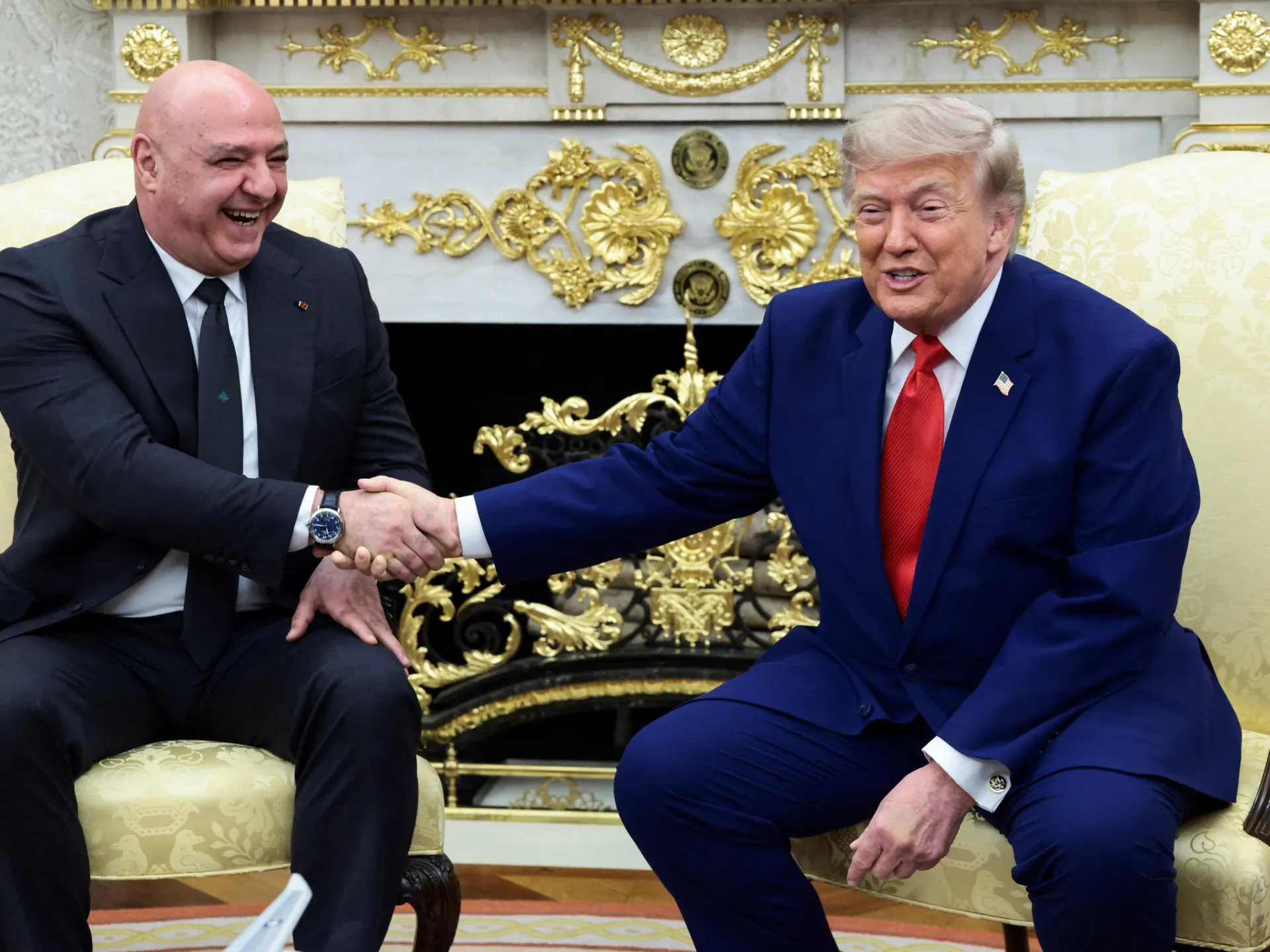
President Donald Trump has promised that the United States will “help” Lebanon as he met with his Lebanese counterpart Joseph Aoun amid continued occupation of the south of the country by Israeli forces.
The US president did not announce any concrete policies towards Lebanon as he spoke to reporters alongside Aoun at the White House on Tuesday.
Recommended Stories
list of 3 itemsend of list
Asked whether there will be a timeline for Israel’s withdrawal from the country, Trump said: “They’re in the process of doing that. They’re in the process of redeploying [to] other sections.”
In reality, Israel has not pulled back from any area it has occupied since March. On Monday, the US State Department announced the establishment of the first “pilot zone” under a Lebanon-Israel framework.
Such areas are supposed to see the Lebanese army deploy to previously occupied towns and ensure that there is no Hezbollah military presence, so reconstruction can begin and residents can return. But the three towns announced in the first pilot zone were not under Israeli control, so Israel did not withdraw from them.
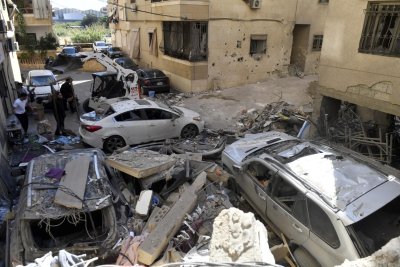
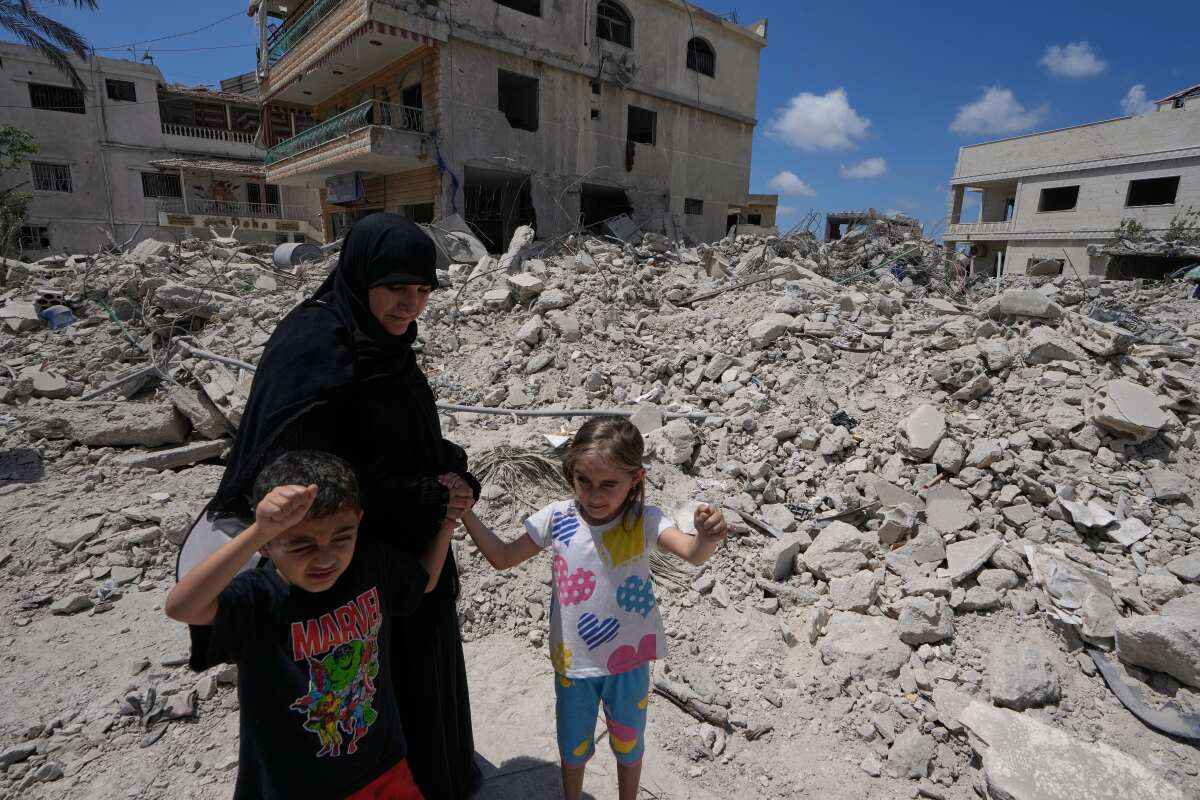
Israel has been systemically razing entire villages in south Lebanon, with Israeli officials openly declaring the objective of erasing Lebanese border towns out of existence.
On Tuesday, Aoun did not mention Israeli abuses in his comments next to Trump. Instead, he heaped praise on the US leader and hailed the US-brokered framework agreement between Lebanon and Israel, which conditions Israeli withdrawal on disarming Hezbollah.
“I would like to thank President Trump, really, and his team for the historic visit and for the historic achievement that we did together by signing the framework with the ultimate objective of ending the state of hostility between Lebanon and Israel forever,” the Lebanese president said.
‘We’re going to help it a lot’
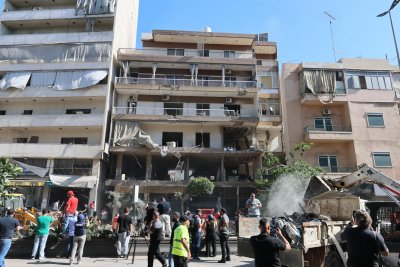
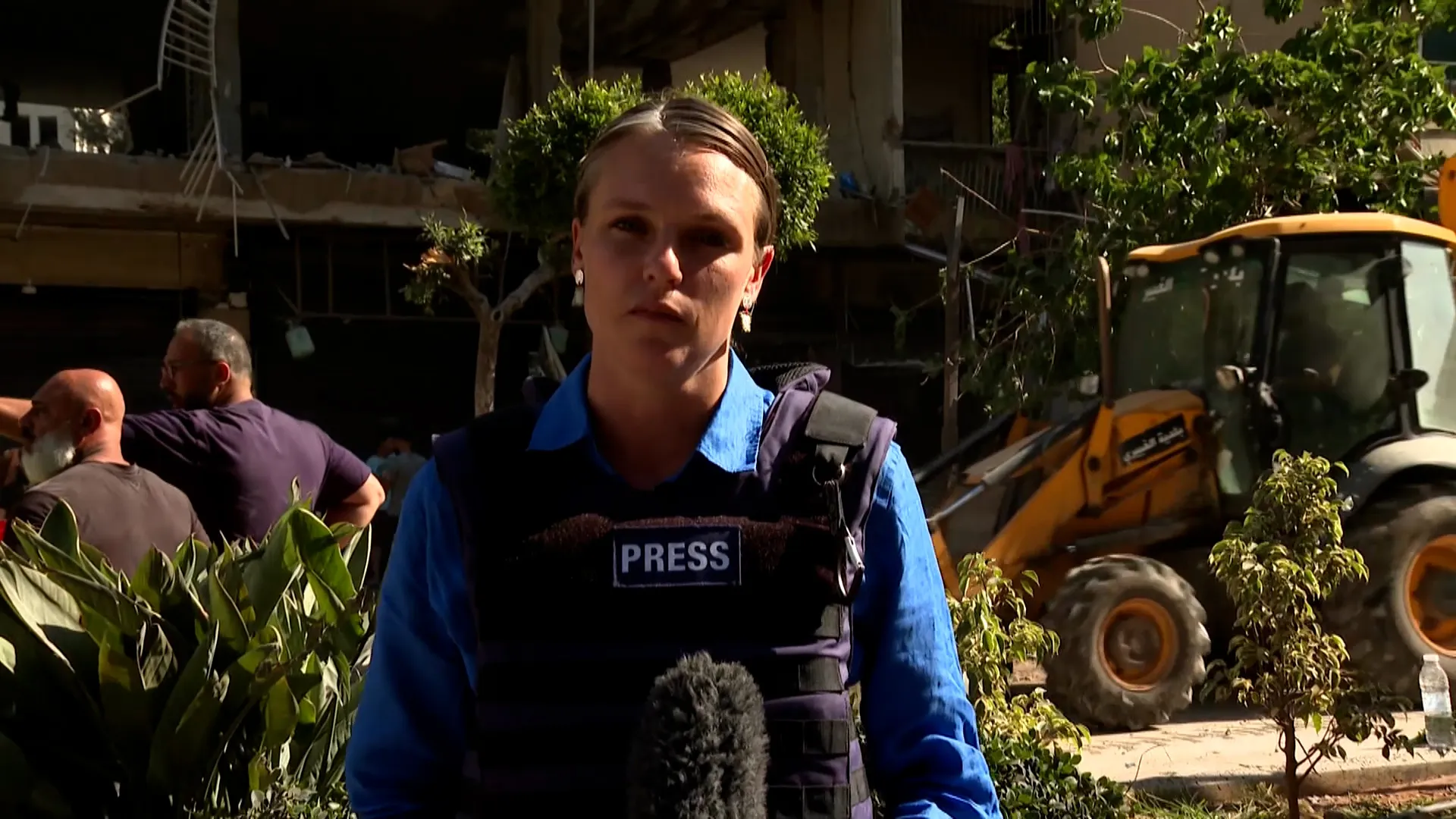
Israel has killed more than 4,000 people in Lebanon since the all-out regional war broke out earlier this year, targeting hundreds of medics and journalists as it invaded the country.
In his opening remarks, Trump said that Lebanon had been “badly treated” for decades without elaborating on the source of the mistreatment.
“We’re going to help it. We’re going to help it a lot,” the US president said. “So it’s an honour to have the president and your representatives here.”
Trump also renewed his suggestion that neighbouring Syria should intervene militarily in Lebanon to help disarm Hezbollah – a proposal that has been repeatedly rejected by Syrian authorities.
Hezbollah and the current government in Damascus – led by President Ahmed al-Sharaa – fought on opposite sides of the Syrian civil war.
The Lebanese group backed the government of President Bashar al-Assad, and al-Sharaa was a rebel commander who, early in the war, led the al-Qaeda branch in the country.
Trump took the opportunity on Tuesday to express his admiration of al-Sharaa once again.
“He’s pulled Syria together. He would like to come in and do something with Hezbollah. You know, they’ve been fighting. He’s been fighting Hezbollah for a long time. I think it’d be very effective. So it’s something I think about,” he said.
A Lebanese reporter asked Trump what concrete support he may offer Aoun during the visit. The US president said, “You’ll find out.”
‘I would speak to Hezbollah,’ Trump says
Trump also said he is open to speaking directly with Hezbollah.
“I would speak to Hezbollah. I speak to everybody,” he told reporters.
“I would say this: If the president wanted me to speak to Hezbollah – you know, he’s lived with Hezbollah for a long time – and if the president wanted me to speak to Hezbollah, I would,” Trump added, referring to Aoun, who previously served as Lebanon’s top general.
Aoun had called for assistance to the Lebanese Armed Forces (LAF), saying that the military remains the “backbone of security and stability”.
Hezbollah has been highly critical of Aoun’s decision to engage in direct talks with Israel, as well as the framework in which Lebanon agreed not to pursue accountability for Israeli abuses in international courts and at the United Nations.
For his part, Aoun has accused Hezbollah of dragging Lebanon to war on behalf of Iran, stressing that the Lebanese military must be the sole armed force in the country.
Syrian authorities say they intercepted a shipment including missiles, rockets, and drones before it entered from Iraq.
Published On 16 Jul 202616 Jul 2026
Syria has seized a shipment of weapons, including missiles, at its border with Iraq, as authorities say they foiled an attempt to smuggle arms to Hezbollah in Lebanon, something the group denies.
Syria’s General Authority of Ports and Customs said on Thursday that the weapons shipment – which included long-range missiles, rockets and drones – was concealed inside “one of the oil tanker-trucks headed to the city of Baniyas”.
Recommended Stories
list of 3 itemsend of list
It was discovered during routine inspection procedures at the al-Tanf border crossing between Syria and Iraq after customs officers subjected the vehicle to a thorough search, Syria’s state news agency reported.
“According to the ministry, preliminary investigations based on evidence collected at the scene indicated that the shipment was intended to transit Syrian territory before being delivered to the Hezbollah terrorist militia in Lebanon,” SANA wrote, citing sources from Syria’s Interior Ministry.
The Iran-backed Lebanese group denied having any activity in Syria, dismissing the accusations in a statement on Thursday as “fabricated narratives with no basis in fact, aimed at harming Hezbollah”.
Syrian authorities are known to be hostile towards the group, as it was an ally of former president Bashar al-Assad before he was ousted in 2024 by members of the current government.
Following the seizure, Iraq said it would form a high-level committee to investigate what happened. The military’s Joint Operations Command said Baghdad would coordinate with Syrian authorities to establish the circumstances of the attempted smuggling, hold those responsible to account, and strengthen security along the shared border.
The Baniyas route, where the tanker was passing through, has been used frequently in recent months for fuel movements between Iraq and Syria, since the main route through the Strait of Hormuz has been disrupted by the Iran war.
“This seizure from Syria is part of a broader reshaping of the region that has occurred over the last couple of years, particularly the fall of the Assad regime in Syria,” said Al Jazeera’s Heidi Pett, reporting from Lebanon.
“It used to be a very popular land route for Iran to traffic weapons and cash to its partner here in Lebanon, Hezbollah. They went from Iran, across Iraq, through Syria, and then here into Lebanon.”
“Under the Assad regime they [Iran] had very little trouble with that, but since the new [Syrian] President Ahmed al-Sharaa took power, he has been cracking down on that crossroad of smuggling,” Pett added.
A source at Syria’s Interior Ministry told SANA that “protecting Syria’s borders and safeguarding its national sovereignty remained a top priority, adding that it would not allow Syrian territory to be used as a transit route or launch point for arms smuggling or other activities that threaten the security of Syria or neighbouring countries”.
US President Donald Trump had spoken to Syria’s al-Sharaa about disarming Hezbollah, which is fighting Israeli forces occupying southern Lebanon. But Lebanese President Joseph Aoun’s office said al-Sharaa had assured him that Syria would not take sides in Lebanon’s internal affairs, including fighting Hezbollah.
Iran and U.S. negotiators will meet with intermediaries Wednesday to discuss the cease-fire agreement. Photo by Abedin Taherkenareh/EPA
July 1 (UPI) — Envoys Steve Witkoff and Jared Kushner and their Iranian counterparts are planning to meet with Qatari negotiators Wednesday for ongoing peace talks.
Iran and Qatar have said that there will be no direct, high-level meetings between United States and Iranian officials and that all discussions will be through Qatari intermediaries, The New York Times reported. Today’s negotiations will be about the cease-fire agreement and getting it implemented, a spokesperson told The Times.
Iran’s negotiator Mohammad Bagher Ghalibaf, in an interview with Iran’s state media Tuesday, laid out the most important provisions of the memorandum of understanding signed on June 17.
Ghalibaf said the most important prerequisite provisions to Iranian negotiators were Articles 1, 4, 5, 10 and 11, CNN reported.
Article 1 demands an end to all fighting, including in Lebanon. Israel and Lebanon signed a cease-fire agreement on Saturday, but Hezbollah hasn’t agreed to it.
Article 4 says that the United States must lift its naval blockade and Iran must allow shipping traffic through the Strait of Hormuz. The U.S. Navy is no longer blocking the strait but it still has a presence there. Article 5 says that Iran will allow passage through the strait with no tolls for 60 days.
The next two articles are about Iranian money and oil sales. Article 10 says the U.S. will allow waivers for Iran to sell its oil, which has happened – at least for 60 days. And Article 11 says that the United States will make frozen Iranian assets available, which is unclear. The United States has said that Iran must fulfill its commitments first.
Traffic through the strait is picking up, with 34 ships passing through on Tuesday, CNN said, though that’s far from pre-war levels, which saw about 100 per day.
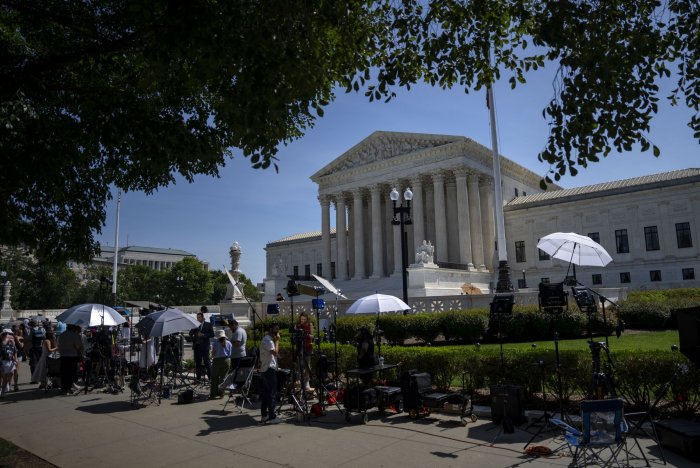
News anchors are seen outside the Supreme Court of the United States as the court releases their final opinions before summer recess on Tuesday. The court upheld birthright citizenship and also state laws banning transgender women and girls from playing on school athletic teams. Photo by Bonnie Cash/UPI | License Photo
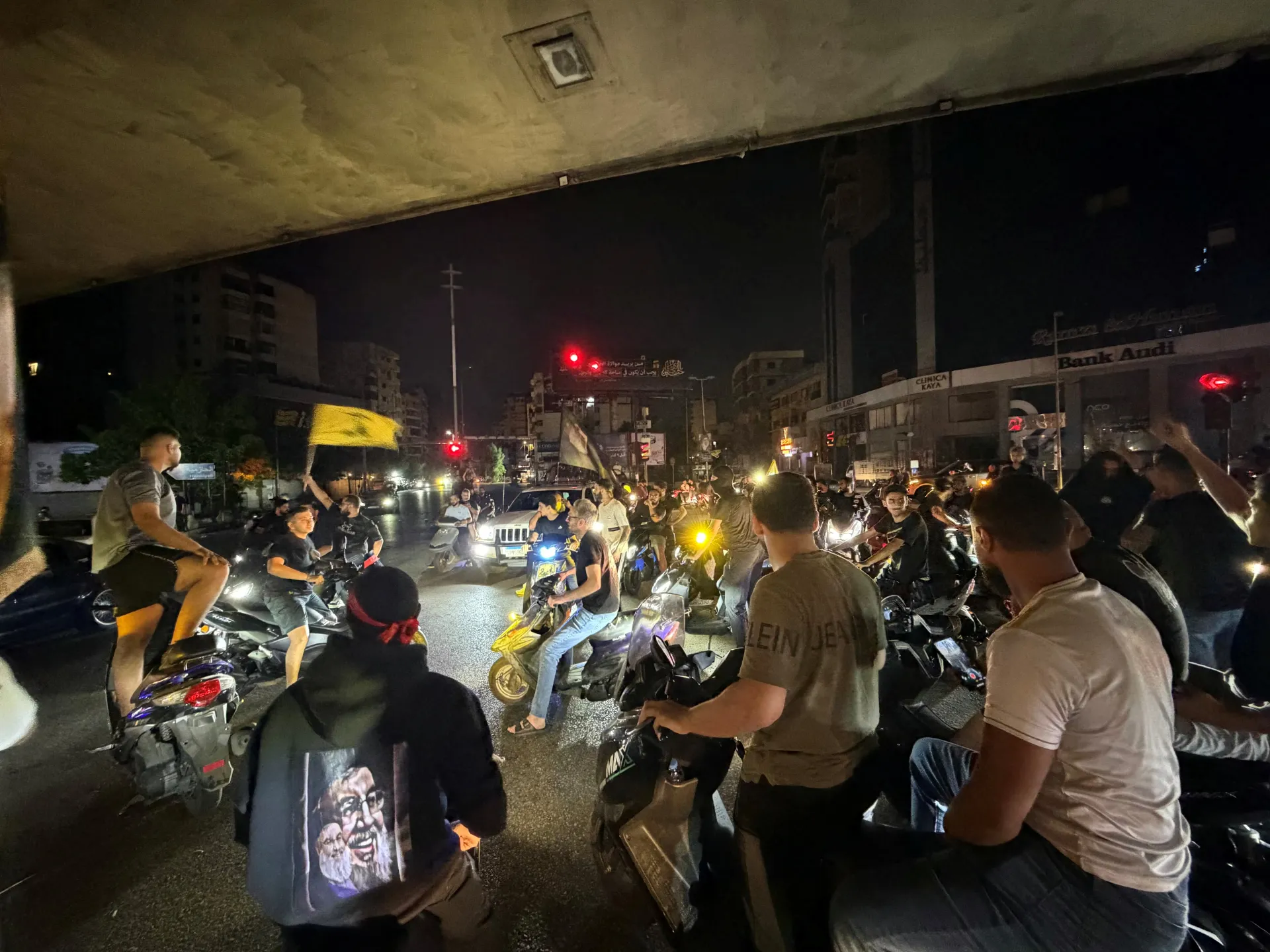
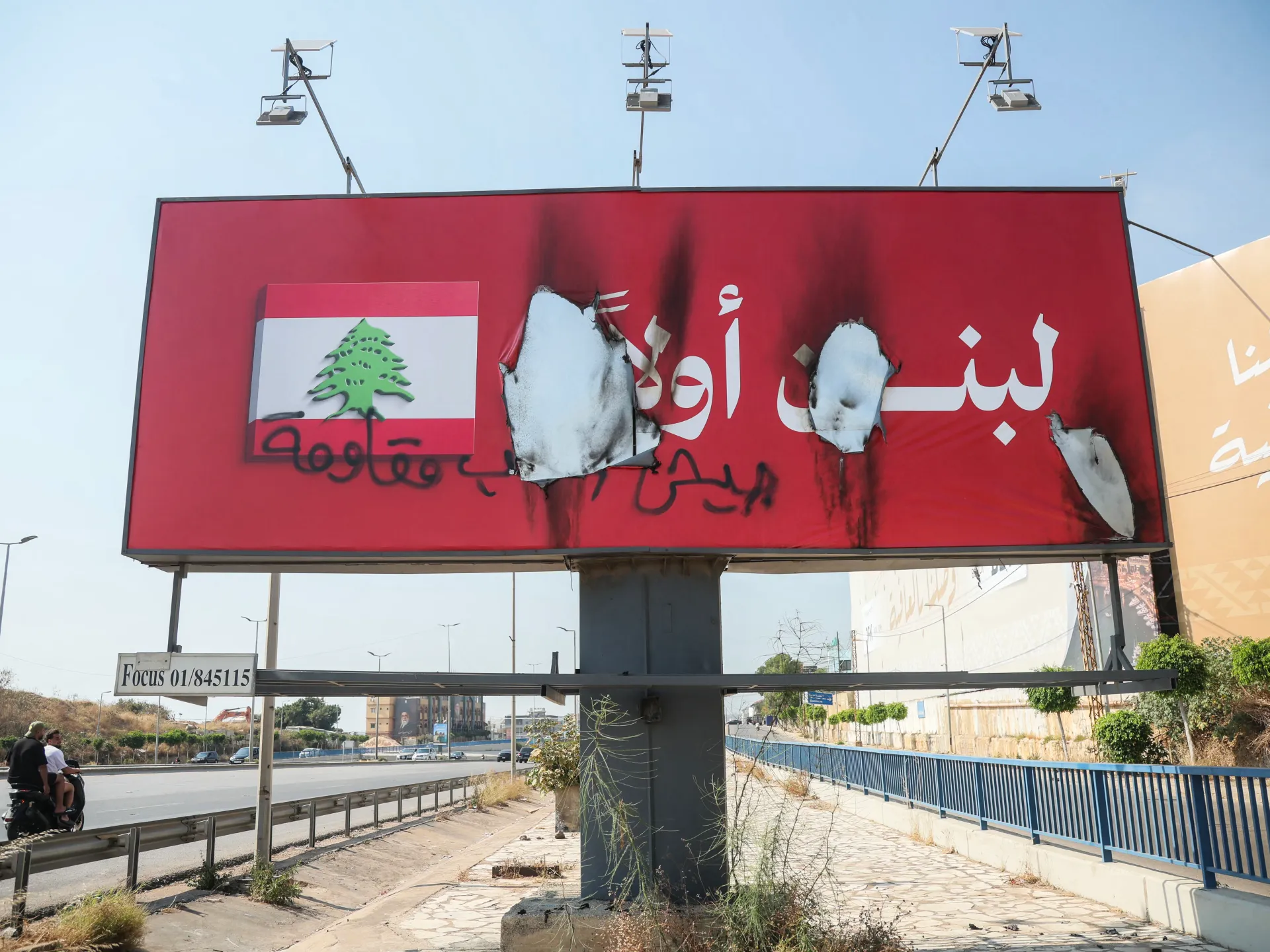
Beirut, Lebanon – After the governments of Lebanon and Israel on Friday signed a United States-brokered framework agreement following months of direct negotiations, protesters took to the streets of the Lebanese capital to express their anger at the deal.
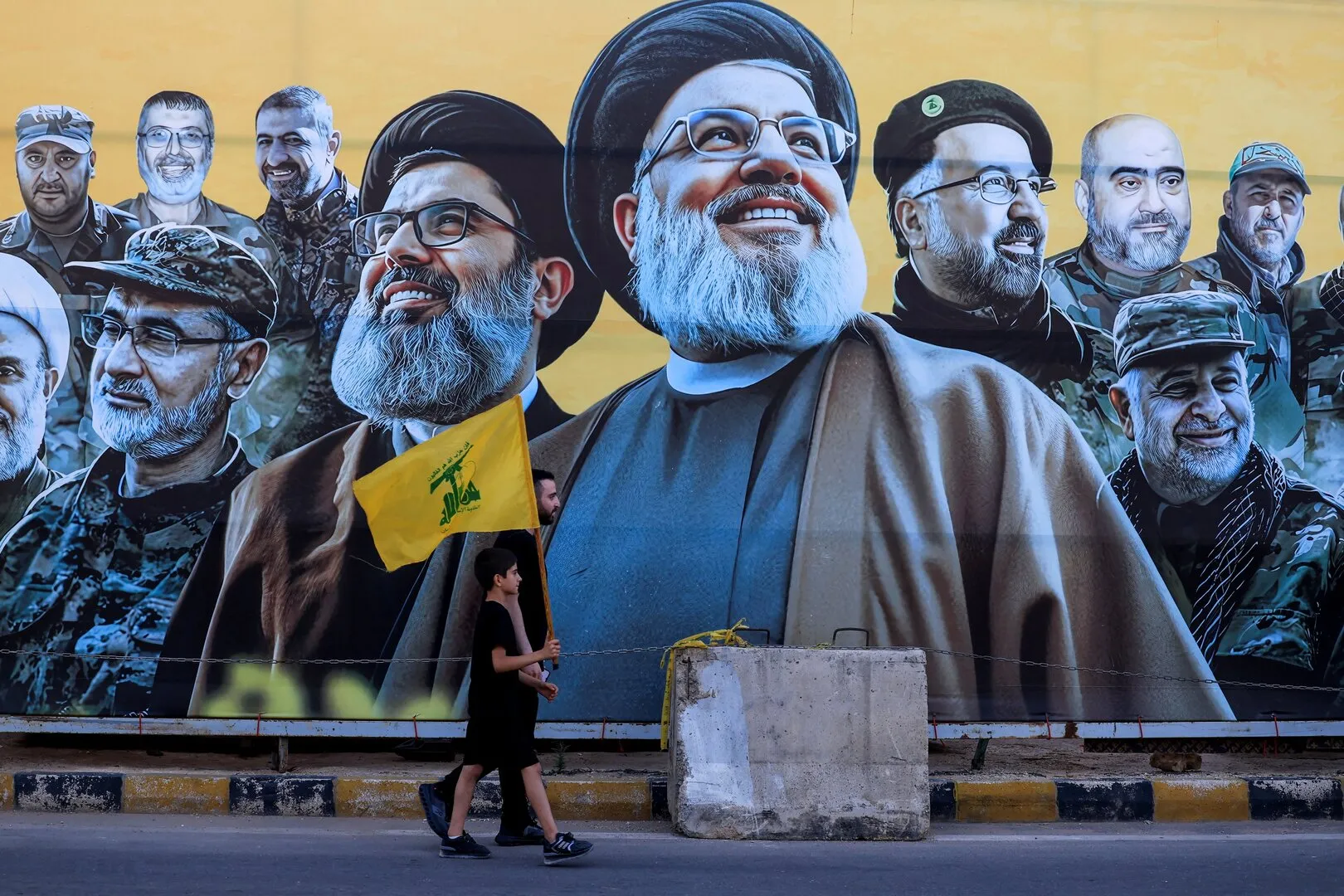
Many of the demonstrators waved flags of the Iran-backed group Hezbollah, which has been militarily confronting Israel’s ongoing invasion and occupation of large swaths of southern Lebanon.
Israel and Hezbollah have been fighting since October 2023, with varying levels of intensity, but the former has twice escalated the conflict – first in September 2024 and then nearly four months ago.
Some of the harshest critics of the framework, which does not force the Israeli army to withdraw from the areas it occupies, have been those most deeply impacted by Israel’s war, which has killed more than 4,200 people and forced hundreds of thousands from their homes since early March.
“After everything my family, my village, the south, and Dahiyeh have endured – the destruction, the displacement, the grief and the loss – it is incredibly difficult for me to accept an agreement with the same state that carried out the military actions that devastated our communities,” said Ali Zaytoun, a resident of Beirut’s southern suburbs, known as Dahiyeh.
Zaytoun, who runs a popular Instagram account called History of Dahieh, said he had been displaced multiple times due to Israeli attacks.
“Imagine someone destroys your home and your life, and then you’re expected to simply move on as if nothing happened,” said Zaytoun. “My protest is about remembering those who suffered, standing up for my community, and expressing that this agreement does not reflect the justice or respect that people who lived through this war deserve.”
A new Oslo?
The Israeli intensification on March 2 came after Hezbollah fired on Israel for the first time in more than a year following the killing of Iranian Supreme Leader Ali Khamenei in a joint US-Israeli air attack on Tehran two days earlier, and as a response to more than 10,000 Israeli violations of a ceasefire reached in November 2024.
On the same day, the Lebanese government declared Hezbollah’s military activities illegal and later tried – unsuccessfully – to expel the Iranian ambassador.
Its position was that Hezbollah’s actions invited Israel’s wrath in a war fought on behalf of Iran and not the people of Lebanon.
Hezbollah, however, continued fighting Israel in southern Lebanon, where the Israeli army has established what it calls a “security zone” that goes as deep as 10km (6.2 miles) into the country.
As attacks continued, Lebanon’s government entered the United States-brokered negotiations with Israel, despite Hezbollah’s objections.
The final text of the 14-point Washington agreement states Israel has no claim to Lebanese territory and that the Lebanese Armed Forces (LAF) will eventually be the authority in southern Lebanon, “pending the verified disarmament of” non-state armed groups such as Hezbollah.
Proponents point to Israel recognising Lebanon’s authority over its own territory, though critics say the framework relies too heavily on the US – Israel’s main military and diplomatic backer and a signatory to the deal – to enforce it.
“The United States is unlikely to act as a neutral mediator and will almost certainly align with Israeli positions whenever disputes arise over the interpretation or implementation of the agreement,” said Karim Emile Bitar, a professor of international relations at the Saint Joseph University of Beirut.
“This creates a fundamentally asymmetric negotiating environment in which Lebanon has little leverage and few effective guarantees.”
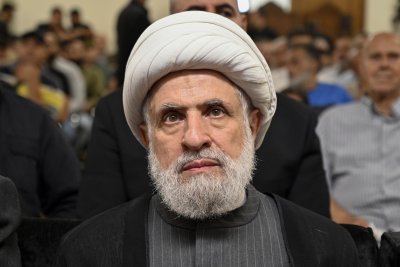
Hezbollah chief Naim Qassem declared the agreement “null and void”, calling it “humiliating, shameful, and a surrender of sovereignty”, while Hassan Fadlallah, a Hezbollah lawmaker, warned of “internal conflict” in Lebanon.
Parliament Speaker Nabih Berri called for calm but also declared that the deal was an attempt to incite strife.
Those who backed the government said it had originally little choice but to enter direct negotiations, given its limited leverage in a war where Israel has technological superiority and unwavering US support.
Lebanese Prime Minister Nawaf Salam wrote on social media after the agreement’s signing that it “aims to achieve Israel’s withdrawal from all Lebanese territories”, while President Joseph Aoun called it “a first step” towards restoring Lebanon’s sovereignty.
Still, the final terms of the deal were criticised by many analysts.
“This framework agreement essentially mirrors the reality of the military and political balance on the ground, which is decisively tilted in Israel’s favour,” said Bitar.
Bitar said the agreement was reminiscent of the Oslo Accords, a series of US-brokered agreements signed by the Palestine Liberation Organization (PLO) and Israel in the 1990s.
“We see a similar pattern here: Israeli negotiators seek recognition and get the other side to relinquish leverage while offering no binding timetable or reciprocal obligations,” he added.
On Saturday, Israeli Defence Minister Israel Katz insisted soldiers will remain in Lebanon until Hezbollah is disarmed.
US reliance
Days before the signing of the Washington framework, Iran and the US agreed on a memorandum of understanding (MoU) that aims to end the war launched by the US and Israel against Iran in late February.
The MoU declared, among other things, “the immediate and permanent termination of military operations on all fronts, including Lebanon”, between the two countries and their allies.
Lebanon’s inclusion in the MoU was reportedly an Iranian priority, while a “deconfliction cell” was formed to bolster the supposed ceasefire in the country.
Throughout the war and the period of negotiations, Lebanon’s government has tried to separate itself from Iran – but some said it may have gone too far in the other direction.
“We are seeing the confirmation of what Hezbollah has been warning all along. Not because Hezbollah got it right, but because the Lebanese state got it so wrong,” said Lebanese writer Elia Ayoub.
“I understand the need to not depend on Iran, but what we’ve instead done is become even more dependent on the US than we’ve previously been,” added Ayoub, the founder of the podcast The Fire These Times.
“And it’s the US that has been bankrolling Israel’s genocide in Palestine and war crimes in Lebanon,” Ayoub added.
Analysts also questioned whether the government would be able to implement the deal.
“It appears that the Lebanese side has come under significant US pressure to sign an agreement that is very likely to remain little more than ink on paper, and very unlikely to be implemented in any meaningful way,” said Bitar.
Karim Safieddine, a nonresident fellow with the Tahrir Institute for Middle East Policy, said the framework left the Lebanese government with “very little agency”.
“It’s Israel imposing a deal,” he added. “It’s very clear what this deal is. It’s just a surrender agreement.”
At the same time, some pointed to similarities to the 2024 ceasefire agreement, expressing doubt whether Israel will be incentivised to respect the framework.
“It’s one thing to sign a declaration of intent; it’s another thing to have it implemented, and I can see all kinds of problems emerging from this,” said Nicholas Blanford, a nonresident fellow at the Atlantic Council and author of a book on Hezbollah.
Last year, Israel repeatedly complained that LAF’s efforts to disarm Hezbollah were either too slow or ineffective. The US often sided with Israel despite diplomatic attempts from European and other officials encouraging it to support LAF.
In a call with his US counterpart, President Donald Trump, on Saturday, Aoun said Lebanon “would assume its responsibilities” in implementing the framework and expressed hope Washington would help ensure that commitments are fulfilled, particularly by pressing Israel to pull out from the areas it occupies.
Point 9 of the agreement states Lebanon’s government commits to a “rigorous, performance-based program to enable the capacity of the LAF to assert full military and security control within Lebanon … to implement the disarmament of all non-state armed groups”.
This provision has some in Lebanon worried about potential confrontations between LAF and Hezbollah, but Blanford said the possibility of a large escalation is currently not likely.
“The Lebanese army and the government are unwilling to use force against Hezbollah,” he said. “Forcibly trying to disarm a group that is refusing to disarm is an act of war. And I think the Lebanese army and the Lebanese government would be extremely wary of that.”
Hezbollah calls the deal a surrender as Israeli forces stay put and continue striking the south.
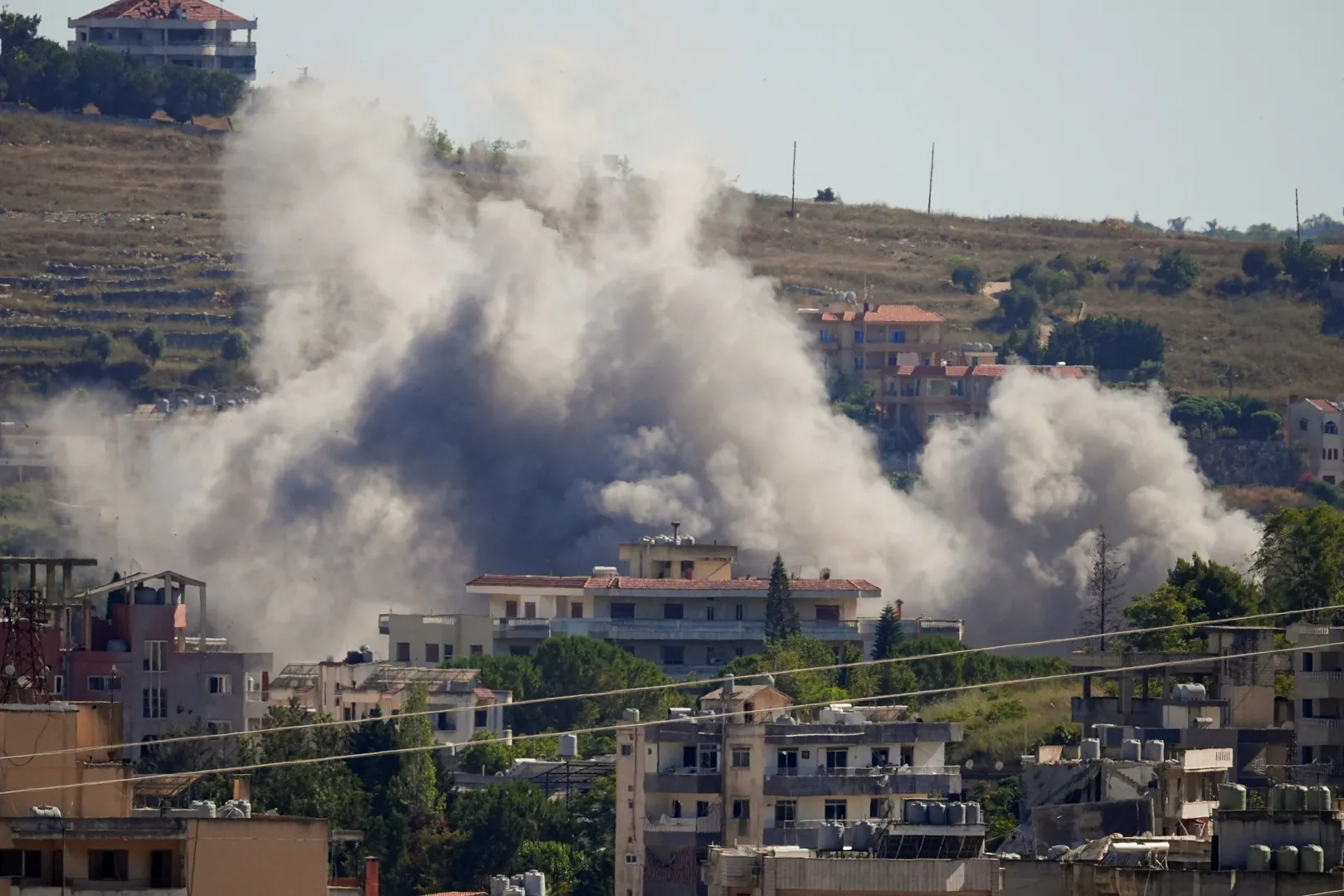
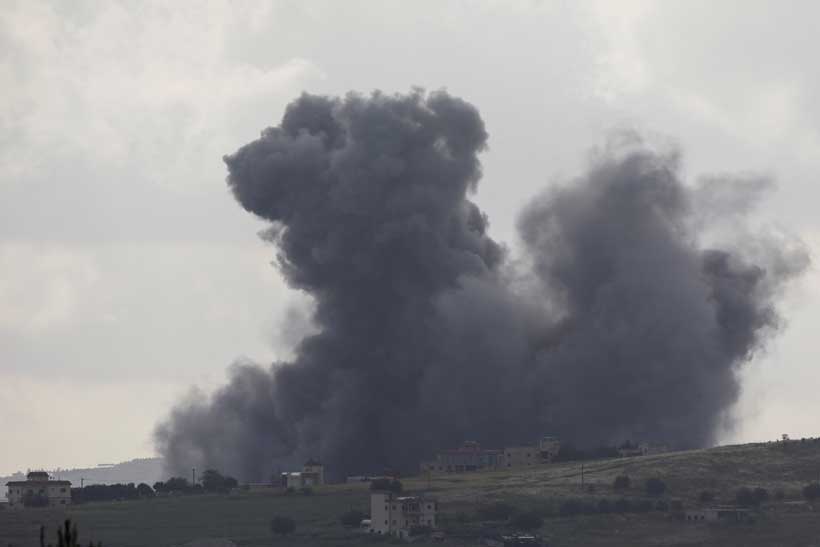
Israel has resumed air strikes on southern Lebanon, only days after signing a US-brokered agreement meant to end its war with the country.
The strikes came on Sunday, two days after the framework was signed in Washington following five rounds of talks.
Recommended Stories
list of 3 itemsend of list
Each side is presenting the same document as a victory on its own terms, and the deal has been rejected by Hezbollah and by far-right Israelis, raising immediate doubts over whether it can hold.
Lebanon’s state-run National News Agency (NNA) reported a series of attacks in the south on Sunday, a day after the Lebanese Ministry of Health said one person was killed in an Israeli attack there, the first death since the deal was signed.
Israeli aircraft were also active, with NNA reporting drones flying over the northeastern city of Baalbek and warplanes staging what residents described as a mock raid over nearby highlands.
Israel said its forces were targeting members of Hezbollah, the Lebanese armed group, near the buffer zone its troops occupy inside the country.
The Israeli military also announced that one of its soldiers had been killed in combat in the south. It named him as Captain David Hazutt, 21, a platoon commander in the Golani Brigade, an elite infantry unit, and said a second soldier was lightly wounded.
Israel’s military chief approved continued operations in the zone, saying they were in line with the ceasefire.
Israeli Prime Minister Benjamin Netanyahu on Sunday called the agreement “historic” and “a massive blow to Iran and Hezbollah”.
An agreement was struck between Lebanon and Israel on Friday in Washington, which was described cautiously by United States Secretary of State Marco Rubio as “the beginning of the beginning”.
At the time, Lebanese Prime Minister Nawaf Salam said that the agreement “aims to achieve Israel’s withdrawal from all Lebanese territories”.
Defence Minister Israel Katz said on Saturday that Israeli forces were preparing for an extended stay in the buffer zone, and would remain as long as the group held on to its weapons.
Hezbollah leader Naim Qassem rejected the deal in a statement on Saturday, calling it “humiliating” and “a surrender of sovereignty” and saying his fighters would not leave the battlefield.
Hassan Fadlallah, a Hezbollah member of parliament, said on Sunday that any move by the Lebanese army to enforce the agreement would push the country towards internal conflict, as supporters of the group protested across the capital against the deal.
Itamar Ben-Gvir, Israel’s far-right national security minister, said the deal handed Hezbollah a “lifeline” and dismissed the idea that Lebanon’s army could disarm the group. He said he had opposed the agreement in cabinet for weeks and would continue to do so.
The war began on March 2, when Hezbollah fired rockets at Israel in response to the killing of Iran’s supreme leader in US-Israeli strikes.
Israel answered with heavy air raids and a ground invasion. More than 4,200 people have been killed in Lebanon since then, according to the country’s Health Ministry.
Iranian Foreign Minister Abbas Araghchi said on Sunday that Washington should force Israel to stop its strikes and pull out of the areas it occupies in Lebanon, citing a separate understanding he said was binding on both Israel and the United States.
Hezbollah deputy leader Naim Qassem has rejected a new cease-fire between Lebanon and Israel. File Photo by Wael Hamzeh/EPA
June 27 (UPI) — Israel and Lebanon have created a framework for a cease-fire, though Hezbollah is already rejecting it because it calls for disarming the organization.
The neighboring countries signed a cease-fire deal in Washington, D.C., Friday without Hezbollah’s input. The deal says that Israel will withdraw from Lebanon if Hezbollah is disarmed. But Hezbollah leader Naim Kassem said the group will keep fighting until Israel is forced to leave Lebanon.
It’s unclear how Lebanon plans to force Hezbollah to disarm.
“The important principle established in the agreement is that there will be no redeployment by Israel in southern Lebanon, no withdrawal, as long as the terrorist organization Hezbollah is not disarmed throughout Lebanon, and the safety of the residents of the north is guaranteed,” Israeli Defense Minister Israel Katz said in a video statement Saturday evening.
“This is the basic condition to which Prime Minister Benjamin Netanyahu and I have pledged and which we are being implemented,” he said.
Israel said it warned its military to plan for an extended stay.
“The test will be in implementing the agreement, and many more challenges are expected,” Katz said. “The Prime Minister and I have instructed the IDF to prepare for an extended stay in the security zone, and to deploy accordingly to protect IDF soldiers and remove threats from northern communities.”
Hezbollah supporters protested in Beirut after the agreement was announced.
A former U.S. diplomat told Al Jazeera that the cease-fire deal benefits Israel more and could be dangerous for Lebanon.
“In the end, I don’t think it will achieve peace. It’s a formula for an open-ended struggle. In the long run, it’s not even really good for Israel, although right now they feel like they have the upper hand,” Middle-East expert Nabeel Khoury said.
But the agreement will allow Israeli troops to return home.
“Essentially, these demands that the Lebanese armed forces do the work that the Israelis couldn’t do, or it proved too costly for the Israelis to do. They want the Lebanese army to do their bidding,” Khoury said.
“If the Lebanese army can go after Hezbollah, all over Lebanon, is what is being demanded of them, and the Israelis simply lend air support, then this is advantageous for Israel,” he added.
The cease-fire framework calls for Israel to initially withdraw from two small areas called pilot zones. But it didn’t say where those areas are. Then, the Lebanese army will gradually take over security for the areas.
Israel and Lebanon have agreed on a new framework agreement after four days of marathon talks in Washington, DC, brokered by the United States, trying to end the months-long conflict.
Israel has been occupying almost 20 percent of Lebanese territory in the south and has killed more than 4,000 people since fighting erupted on March 2. A previous bout of fighting ended in a ceasefire in November 2024, but Israel carried out almost daily attacks and refused to end its occupation in breach of the deal.
The new deal, however, does not specifically call for the withdrawal of the Israeli forces and instead ties it to the disarmament of Hezbollah – a condition repeatedly rejected by the Iran-backed armed group.
Hezbollah chief Naim Qassem on Saturday rejected the framework agreement, calling it “null and void”. Hezbollah has demanded that Israel first end its occupation.
Hezbollah supporters flooded the streets of the capital, Beirut, on Friday evening to oppose the deal.
So, what is the new agreement, which does not include Hezbollah, and can it lead to peace in Lebanon?
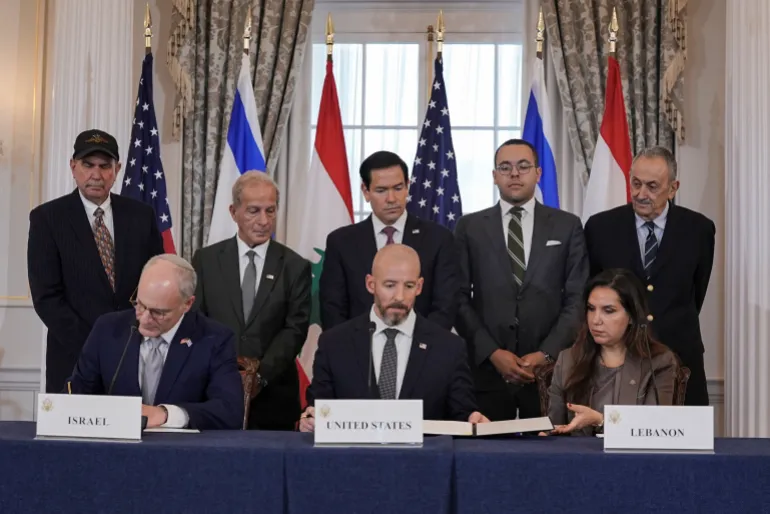
US Secretary of State Marco Rubio looks on as State Department Counsellor Daniel Holler, Israel’s ambassador to the US, Yechiel Leiter, and Lebanon’s ambassador to the US, Nada Hamadeh, sign a framework agreement between Israel and Lebanon, at the State Department in Washington, DC, June 26, 2026 [Ken Cedeno/Reuters]
What’s in the Israel-Lebanon agreement?
After the trilateral signing in Washington, the US Department of State released the text of the agreement, which talks of a “sequenced process” that will see the Lebanese army restore “effective sovereign authority over all Lebanese territory, pending the verified disarmament of non-state armed groups” – a clear reference to Hezbollah.
The deal does not mandate Israeli withdrawal from the fifth of Lebanese land it occupies. Instead, the framework notes that Israel shall “progressively redeploy” out of Lebanon, offering two “pilot zones” where the Lebanese military “will gradually assume full and effective security responsibility”.
“One [pilot zone] is south of the Litani River and outside the security zone altogether, and the other is north of the Litani – a small area in the expanded security zone that we conquered in the last two weeks, and which the [Israeli military] says it does not need,” Israeli Prime Minister Benjamin Netanyahu later said in a statement.
Once these conditions are met, “Lebanese civilians will be able to safely return to these areas under the exclusive control of Lebanese state authorities,” the framework says. More than 1.2 million people have been forcefully displaced.
Israel says that successfully returning southern Lebanon to Lebanese government control would “eliminate any future need for [Israeli military] action or presence in Lebanon” and “[declared] that it has not territorial ambitions in Lebanon”.
The Lebanese government has signed that it rejects “the claims of any state or non-state actor to use force on its behalf without its explicit authorization,” deeming such attacks “illegal” and “contrary to Lebanese national interests”.
Hezbollah supporters block the old airport road in the southern suburbs of Beirut, with burning tyres to protest against the trilateral agreement that was signed between the US, Israel and Lebanon on June 27, 2026 [Ibrahim Amro/AFP]
How have parties to the conflict reacted to the agreement?
Israel
Netanyahu issued a video statement shortly after the agreement was announced, stressing that the framework would allow the Israeli military to remain in the occupied Lebanese land.
“We will maintain [the buffer zone] until Hezbollah disarms and as long as there is a threat to the State of Israel,” Netanyahu said.
It is also a partial, momentary win for Netanyahu, who faced intense domestic criticism after the US and Iran sidelined Israel to sign the Islamabad Memorandum of Understanding, which mandates an end to hostilities in Lebanon as well.
Lebanon
President Joseph Aoun expressed gratitude to Trump and other regional mediators after the signing of the trilateral agreement, which he hailed as “the first step on the path to restoring Lebanon’s sovereignty”.
In a statement from the Lebanese presidency, Aoun noted that the framework also “marks the beginning of the road to fructify [Lebanese citizens’] sacrifices, so that they may return to their fully liberated land”.
His statement has done little to tamp down the tensions in the capital, where supporters of Hezbollah took to the streets, burning tyres and blocking a road leading to the airport.
People react, as they watch Hezbollah chief Naim Qassem deliver a televised speech on a giant screen at the burial site of former Hezbollah leader Hassan Nasrallah, on the outskirts of Beirut, Lebanon, June 17, 2026 [Mohamed Azakir/Reuters]
Hezbollah
Though the armed group is not a party to the agreement, and was not present at the negotiating table, its posture and actions will dictate where the conflict heads in the future.
The Hezbollah leader on Saturday condemned proposals to tie the Israeli withdrawal to the group’s disarmament. “Linking the Israeli withdrawal to the disarmament of the resistance throughout Lebanon is a very dangerous proposition that crosses all red lines,” he said.
“The framework agreement in Washington is humiliating, shameful, and a surrender of sovereignty,” he said.
He added that the framework agreement should be replaced by the Iran-US Memorandum of Understanding (MoU) signed on June 15.
Earlier, Hassan Fadlallah, a Hezbollah representative in the parliament, said Lebanese authorities would not be able to enforce the framework agreement unless, with US support, “they go to civil war”.
In a televised speech before the agreement was signed, Qassem said that Hezbollah would hold its weapons closer, ready to fight Israel for Lebanon, if the Lebanese state fails to do so.
The Iran-US MOU called for the “territorial integrity and sovereignty of Lebanon” – a similar wording has been used in the framework agreement.
United States
US Secretary of State Marco Rubio, Washington’s point person in Israel and Lebanon talks, announced an “immediate” $100m donation by the US towards humanitarian assistance in coordination with the UN.
At the signing ceremony at the State Department in Washington, Rubio appeared to acknowledge the limited scope of the agreement, calling it “the beginning of the beginning.”
“There’s a lot of work ahead. We don’t in any way underestimate the difficulty of the task ahead, but we understand the importance of it, how vital it is, and we are honored to have played a part in bringing this together,” he said.
Two previous ceasefire agreements brokered by Washington failed to stop the fighting in Lebanon, as well as the Islamabad MOU, signed by President Trump and his Iranian counterpart Masoud Pezeshkian, earlier this month.
Iran
Though Tehran is yet to officially react to the agreement, its state media has been pressing against the deal.
Fars news agency noted that the agreement is essentially the US permitting Israel to violate the first clause of the Islamabad MOU, which mandated the cessation of hostilities on all fronts, including Lebanon.
Does the Israel-Lebanon agreement contradict the Islamabad MOU?
Analysts point towards two direct contradictions between the preliminary deal signed by the US and Iran, and the latest agreement between Israel and Lebanon.
In short, the Islamabad MOU mandates the end of hostilities on all fronts, including Lebanon, with no conditions – while the Israel-Lebanon agreement ties it to Hezbollah’s disarmament.
Israel has not adhered to any of the ceasefire agreements, including earlier ones, and continued with its assault on Lebanese territories. On Saturday, Lebanese state news agency NNA reported that the Farah amusement park intersection in Nabatieh al-Fawqa was targeted by an Israeli drone strike.
Israel has killed at least 4,192 people in Lebanon since the start of the war on Iran four months ago.
Secondly, the Islamabad MOU does not refer to or mention any of the Iran-backed proxy armed groups among its listed clauses to take forward the negotiations to end the war.
Tahani Mustafa, a visiting fellow on the Middle East and North Africa programme at the European Council on Foreign Relations, told Al Jazeera that Israel and Washington would “definitely use the fact that Hezbollah refuses to disarm and capitulate to blame Hezbollah for derailing the entire process”.
Mustafa further added that Israel “has also proven that it is acting in bad faith, which really gives no confidence to Hezbollah to disarm or capitulate in the way that is being demanded.”
Washington is not blame-free either, she noted, arguing that “the American negotiators actively work behind the scenes to try and decouple Lebanon and Iran.”
“This has really just been something that both the Israelis and the Americans have attempted to cook up behind the scenes and once again obfuscating the blame for its failure,” she told Al Jazeera.
Mourners put wreaths on the grave during the funeral of Israeli soldier Alexander Filin, who, according to the Israeli army, was wounded and later died in an explosive attack by Hezbollah in southern Lebanon, in Haifa, Israel, June 21, 2026 [Shir Torem/Reuters]
Can a deal work if Hezbollah rejects?
This is not the first time that Hezbollah’s disarmament is on the table – and the existing challenges remain. The 2024 deal also called for Hezbollah’s disarmament, but it could not be achieved as Israel continued to attack Lebanon and refused to withdraw its troops in breach of the deal.
Alon Pinkas, an Israeli former ambassador and consul general in New York, says he is “very doubtful and sceptical” that this will work out because the deal is between Israel and Lebanon with the US; the issue here is Hezbollah.”
Iran’s linking of the Lebanon conflict to the maturation of an agreement with the US, Pinkas says, “complicates things [because] Netanyahu said that [Israel] would not yield to any linkage to Iran and that Israel would defend itself in Lebanon”.
Al Jazeera’s Ali Hashem said that the agreement is an “existential threat” to Hezbollah’s presence.
“Without Hezbollah’s consent, this is not going to happen,” Hashem said. “This is going to be a recipe for another confrontation. The Lebanese government isn’t capable of imposing this deal. It’s not the de facto force on the ground.”
Hezbollah leader Naim Qassem says Israel has “no option” but to “unconditionally” withdraw from southern Lebanon and other areas under its occupation. His statement came after Israeli Defence Minister Israel Katz reiterated there are no plans to leave, even if the US were to demand a withdrawal.
Smoke rises in late May as a result of an Israeli strike in the south of Lebanon as seen from the Israeli side of the border in the Upper Galilee, Israel. The Israeli military says it has trapped dozens of Hezbollah fighters in an underground complex in southern Lebanon. Photo by Atef Safadi/EPA
June 24 (UPI) — The Israeli military has surrounded an underground base in southern Lebanon in which dozens of Hezbollah militants are trapped, Israeli officials said.
The base is located under the village of Tebnit, in an area where fighting taken place despite an Israel-Hezbollah cease-fire, The New York Times reported. The standoff, if it escalates, could disrupt ongoing peace negotiations between the United States, which backs Israel, and Iran, which backs Hezbollah.
Israeli officials said the trapped militants were running out of supplies. On Tuesday, Israeli troops killed at least two people in the area. Israel said those targeted were Hezbollah operatives, while Hezbollah said they were civilians.
The underground base is beneath the Ali al-Taher ridge, not far from the border with Israel and a strategic point. Israeli officials said Hezbollah built the complex of tunnels over 20 years with Iran’s help.
“From this place, you can launch missiles and munitions at Israel,” Sarit Zehavi, president of the Alma Research and Education Center, said to The New York Times.
The Jerusalem Post reported that Israeli leaders are concerned that operatives in the area could carry out a kidnapping attack against Israel’s forces to help their negotiations for those trapped. Soldiers have been told to stay in pairs or groups at all times.
Israel once occupied the ridge after its 1982 invasion of Lebanon. It was once outside the “buffer zone” that Israel established in Lebanon near the border, but Israeli redrew the line last week to include the ridge, The New York Times reported. Israel considers any armed fighter south of the line a threat and a target.
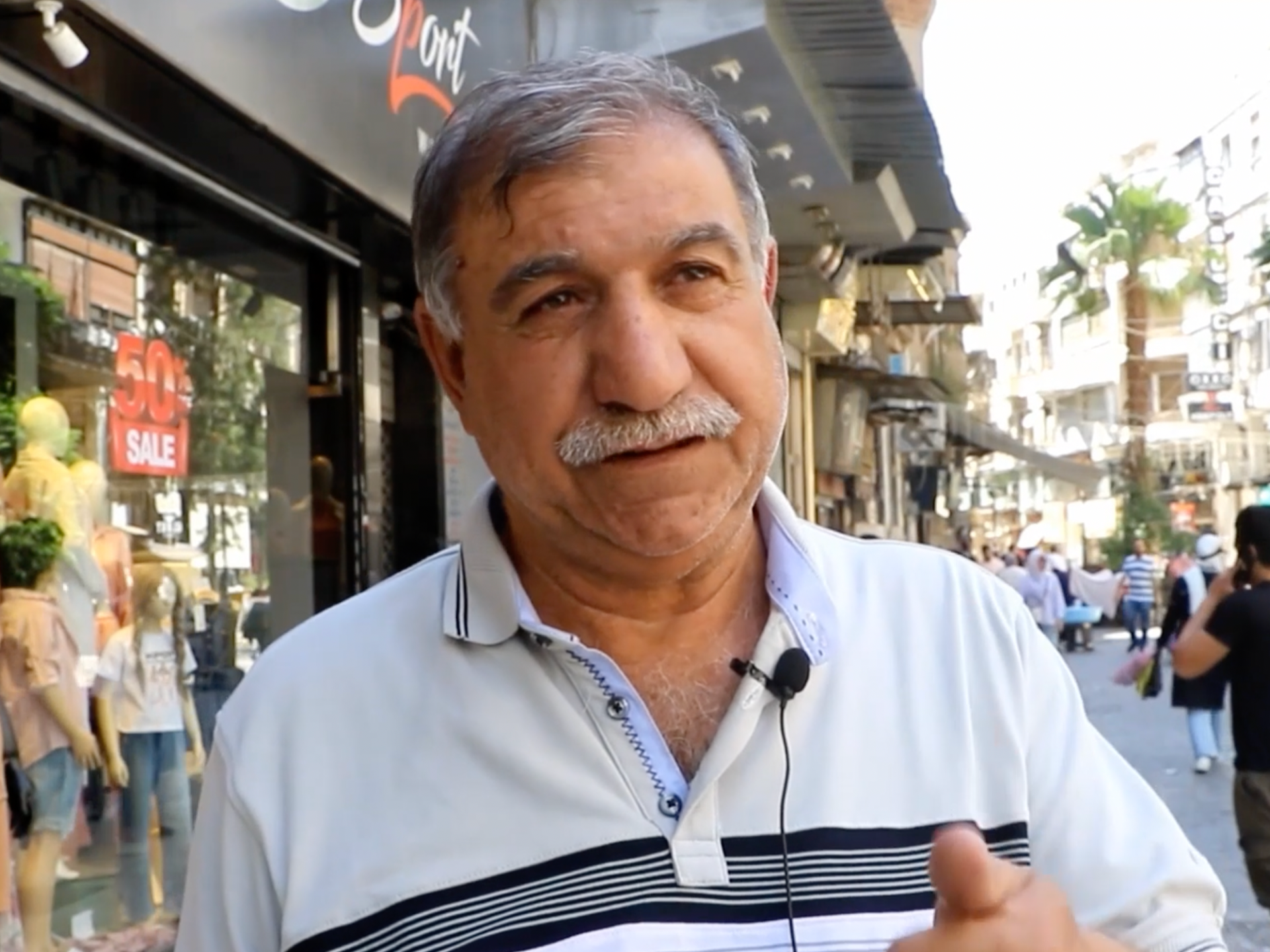
Residents in Damascus rejected US President Donald Trump’s suggestion that Syria should confront Hezbollah in Lebanon. They say Syria should avoid being drawn into new regional conflicts. In a rare critique, Trump told Israel to let Syria take on Hezbollah.
Hezbollah leader Sheikh Naim Qassem delivers a televised speech during a gathering in Beirut, Lebanon, on Sept. 27, 2025. Analysts say southern Lebanon could remain a battlefield and a bargaining chip in regional negotiations despite a preliminary agreement between the United States and Iran. Photo by Wael Hamzeh/EPA
BEIRUT, Lebanon, June 19 (UPI) — The Iran war may be over, but southern Lebanon is likely to remain a battlefield and a bargaining chip in regional negotiations, despite Lebanon’s inclusion in the memorandum of understanding between Iran and the United States — a provision Israel rejected to preserve its freedom of action against Hezbollah, analysts said.
Violence in southern Lebanon subsided after the United States and Iran announced a 14-point preliminary agreement to end hostilities, reopen the Strait of Hormuz, and begin nuclear talks under a 60-day extended ceasefire.
The MOU was signed remotely on Wednesday by U.S. President Donald Trump and Iranian President Masoud Pezeshkian, two days ahead of a formal signing ceremony scheduled to take place in Switzerland.
Rather than a cessation of hostilities, southern Lebanon witnessed a sharp escalation in fighting, with Israel intensifying its airstrikes and Hezbollah targeting Israeli forces seeking to seize the strategic Ali Taher hill in the Nabatiyeh district. Both sides traded accusations of violating the ceasefire established under the MOU.
The overnight exchange left 47 people dead, including women and children, and 97 others wounded in Israeli strikes on several areas of Lebanon, including Nabatiyeh and the eastern Bekaa Valley. Four Israeli soldiers, including a lieutenant colonel, were also killed by Hezbollah fire.
Israeli airstrikes continued beyond a new ceasefire between Israel and Hezbollah, brokered by the United States and Qatar with Iranian assistance, and set to take effect at 4 p.m. Friday.
It remains to be seen how long this new truce will last, as is the case with the U.S.-Iran ceasefire, given ambiguities in the MOU and differing interpretations of its clauses.
Israel, which rejected Trump’s “betrayal” and the agreement with Iran, is seeking to change the arrangement by force in order to preserve its freedom of action against Hezbollah threats in southern Lebanon. It also seeks to maintain control of a security zone in southern Lebanon and is not willing to withdraw its forces unless its northern region is secured and safe.
Riad Tabbarah, Lebanon’s former ambassador in Washington, said Israel believes it has the right, as it usually does, to modify the agreement on the ground after “accepting it on paper, so as not to annoy Trump.”
“This is exactly what they did last time, and what they do every time,” Tabbarah told UPI. “Today, they are doing the same.”
He was referring to the Nov. 27 ceasefire agreement brokered by the United States and France to halt the war that began when Hezbollah opened a support front for Gaza on Oct. 8, 2023.
Despite the truce, Israel continued to carry out strikes against Hezbollah, which refrained from retaliation for 15 months as it sought to reorganize its ranks before resuming fighting on March 2 in support of Iran.
The March escalation increased the human and material toll in Lebanon after Israel applied what was described as a “scorched earth” policy to empty border areas of residents and render them uninhabitable.
More than 3,980 people have been killed and 12,001 injured in the past 109 days, with 1.2 million displaced under Israeli evacuation orders. Large areas were devastated, including the complete destruction of 70 villages and heavy damage to infrastructure.
It would be “pure imagination and illogical” to think that Israel would easily withdraw and relinquish the security zone it is building in southern Lebanon, intended to prevent anyone from crossing its border and carrying out kidnappings like Hamas did from Gaza on Oct. 7, 2023, according to Tabbarah.
What could stop the frustrated Prime Minister Benjamin Netanyahu from sabotaging Trump’s efforts to finalize a lasting peace deal with Iran and continuing his military campaign in Lebanon?
The tension between Trump and his administration on one side, and Netanyahu and his government officials on the other, over the Iran deal “is growing, and we need to wait and see how it will develop,” said Lebanese former foreign minister Fares Boueiz.
As for Iran, Boueiz noted that as long as it believes it is benefiting from the deal with Trump, it “won’t do anything to jeopardize the understanding.”
“It is clear that the U.S.-Iran war is over, with no winner and no loser and no complete victory for anyone,” he told UPI. “The next 60 days will determine whether a final agreement is reached and whether Netanyahu will be able to obstruct it.”
The fear that Lebanon remains an open battlefield and a bargaining chip has grown, despite Iran’s pledge to Hezbollah that it will not proceed with the MOU talks if Israel fails to observe a full ceasefire in Lebanon and withdraw from the southern region.
Lebanese retired Maj. Gen. Abdul Rahman Chehaitli argued that the war in south Lebanon was “an Iran-Israel war sponsored by the U.S.”
“Now that Iran has reconciled with the U.S., signed an agreement, and is negotiating, the battle is over for them,” Chehaitli said in an interview with UPI. “This means that Lebanon should work toward a solution with Hezbollah and engage in serious negotiations to secure Israel’s withdrawal and end any illegitimate armed presence.”
Lebanon, which opted for U.S.-mediated direct talks with Israel to end the war despite Hezbollah’s objections, is preparing for another round of diplomatic talks with Israel scheduled to take place in Washington next week.
While Hezbollah leader Sheikh Naim Qassem has set new terms for the talks, saying they should be limited to “mutual security,” Israel is insisting on disarming the Iran-backed group and keeping it away from its borders.
Hezbollah has also been pushing to drop the Lebanon-Israel direct negotiations in favor of the U.S.-Iran track.
“Hezbollah can say whatever it wants, but Lebanon should negotiate on its own,” Chehaitli said, adding that the militant group “is concerned about the day after, seeking security guarantees or immunity.”
Lebanon has no option but to negotiate its way out of the war, but the process will be long, and southern Lebanon will remain under Israeli fire and a bargaining chip in Iran’s hands until a final deal with Washington is reached, according to some analysts.
Tabbarah argued that Israel did not go through all this war only to back down, while Iran seeks a high price in return for Hezbollah and its other regional armed proxies.
“I don’t think Iran will go to war again. It will find a formula to save face for its armed militias,” he said, adding that the U.S., on its part, will have to restrain Israel and force Netanyahu to accept a full ceasefire in Lebanon.
He explained that a decision by Trump to stop U.S. military assistance to Israel, or “anything of the sort,” would be a serious step.
Tabbarah, however, warned that the solution “is not for tomorrow unless Israel drops its dream of establishing Greater Israel.”
Israel and Hezbollah agreed to a ceasefire in Lebanon after escalating violence threatened to derail potential peace talks regarding the ongoing war in Iran. This ceasefire was announced just before 4 p.m. Lebanon time, with a U. S. official confirming that negotiations, facilitated by the U. S. and Qatar with assistance from Iran, had led to this agreement. Both sides indicated they would uphold the ceasefire, with an Israeli official stating that Israel would remain in southern Lebanon but would not engage in conflict unless attacked.
The recent conflict included intense airstrikes that resulted in 18 deaths and injuries to 33 others in Lebanon. Four Israeli soldiers were also killed by Hezbollah. This violence could complicate U. S.-Iran negotiations, as establishing peace in Lebanon is key to a broader agreement. The recent memorandum signed by the presidents of the U. S. and Iran postponed discussions on critical issues like Iran’s nuclear program, granting parties 60 days to agree on a lasting solution or extend the current deal.
Technical talks were planned in Switzerland but were postponed, and officials from both the U. S. and Iran indicated that their respective negotiators would not be attending. Hezbollah lawmakers suggested that further discussions hinge on a complete ceasefire and urged the Lebanese government to reject any negotiations with Israel as long as hostilities continued.
The interim agreement seeks an end to military operations in various regions, including Lebanon, but Israel maintains that it is not a part of these deliberations. The fighting began when Hezbollah fired at Israel, prompting Israeli military responses, including strikes targeting Hezbollah’s positions.
Lebanon’s health ministry confirmed the heavy toll from recent airstrikes, and its President condemned Israel’s actions while emphasizing the commitment to achieve a comprehensive ceasefire. The broader conflict, which originated on February 28 with U. S. and Israeli attacks on Iran, has reportedly resulted in at least 7,000 deaths, primarily in Iran and Lebanon.
Despite the conflict’s impact on oil prices, which had risen due to concerns over regional stability, the signing of the interim deal resulted in a drop in prices as shipping through the Strait of Hormuz resumed. Under the terms of the agreement, Iran will receive economic relief and unfreezing of assets, with negotiators tasked with addressing the status of Iran’s nuclear program and establishing a reconstruction fund within the next 60 days.
In the face of criticism in the U. S., former President Trump defended the deal, arguing that the war had weakened Iran and affirming that the terms would lead to significant concessions from Iran without offering direct financial support.
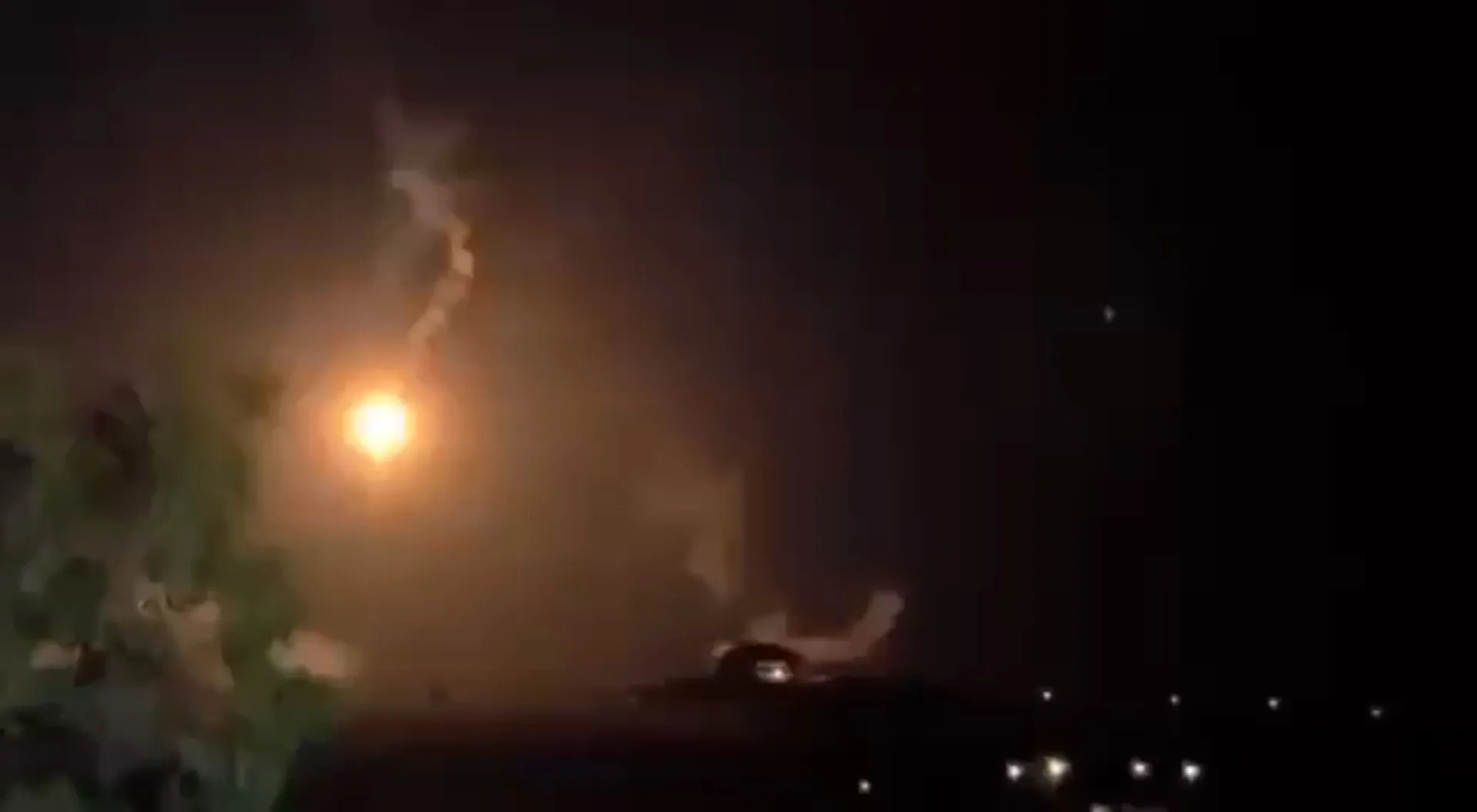
Witnesses say Lebanese citizens have been killed and Israeli soldiers wounded amid a new Israeli offensive in southern Lebanon. Social media video shows rockets and helicopters in the skies above Kfar Tebnit and Ali al-Taher.
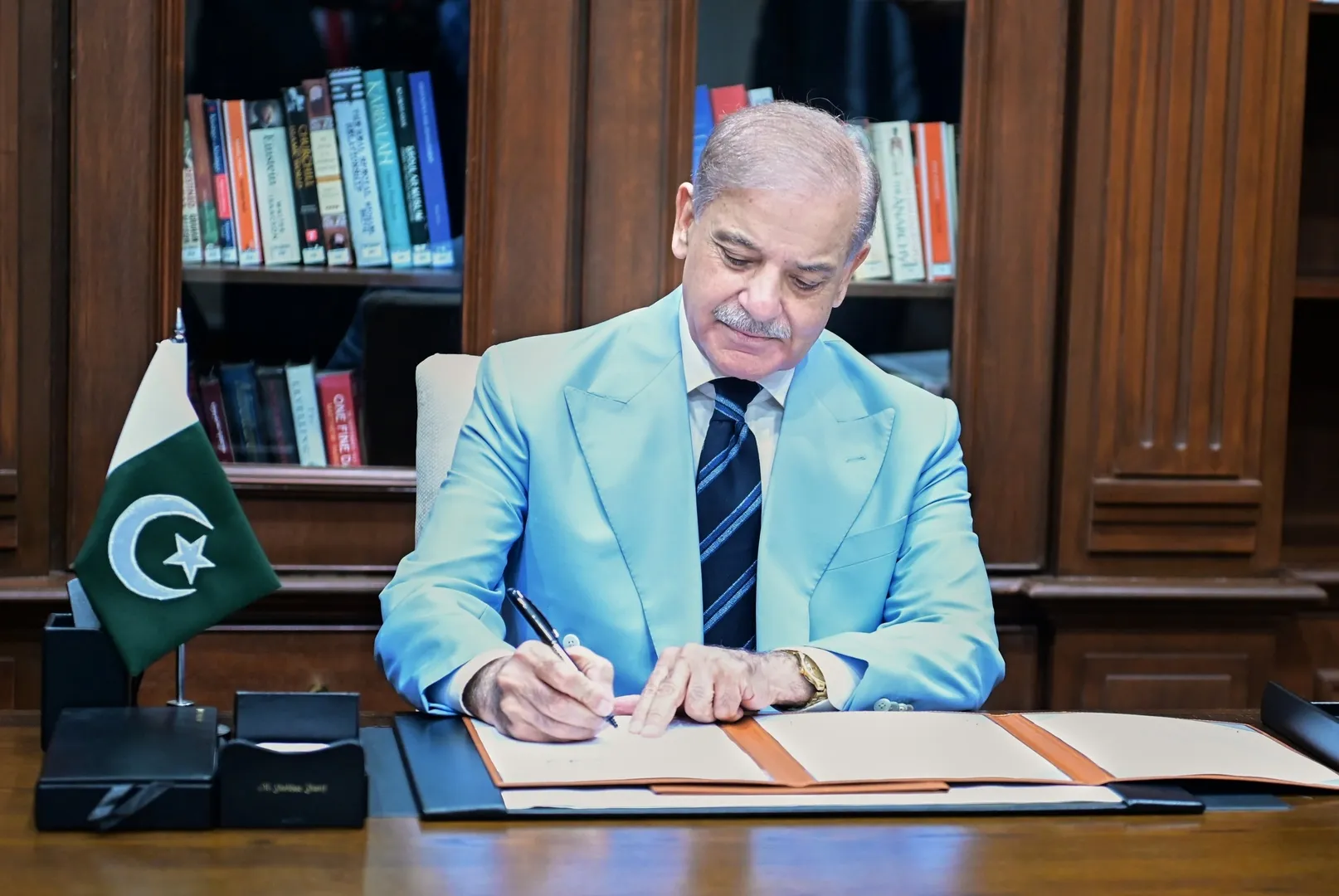
Pakistan’s Prime Minister Shehbaz Sharif has signed a US-Iran memorandum of understanding aimed at ending the war between the two countries. US President Donald Trump and Iran’s President Masoud Pezeshkian signed on Wednesday.
Damaged vehicles are seen following an Israeli airstrike that targeted an apartment in Choueifat, south of Beirut, Lebanon, on May 28. File Photo Wael Hamzeh/EPA
BEIRUT, Lebanon, June 16 (UPI) — Lebanon’s economy, shattered by the 2019 financial collapse, has suffered another major shock from the Israel-Hezbollah war, which has disrupted recent recovery efforts and hit the tourism sector — the country’s main revenue generator — particularly hard.
The war, which began in October 2023 when Hezbollah opened a support front for Gaza, escalated as Israel intensified its attacks and the Iran-backed regime resumed fighting in solidarity with Iran last March after 15 months of inactivity. It further deepened Lebanon’s economic crisis and left the country grappling with its repercussions.
Direct and indirect losses are initially estimated at $20-30 billion, reflecting extensive destruction and mass displacement caused by the conflict, along with severe disruptions to economic activity. Inflationary pressures have also intensified due to the closure of the Strait of Hormuz.
Nearly every sector of the economy has been affected.
The escalation in March dramatically expanded the scale of destruction, with more than 70 villages in southern Lebanon reduced to ruins by advancing Israeli troops. Entire neighborhoods were leveled, while businesses, public infrastructure, schools, hospitals, and roads suffered extensive damage.
Beirut’s southern suburbs and parts of the Bekaa Valley in eastern Lebanon were also heavily targeted by Israeli airstrikes, resulting in similar devastation.
Beyond the heavy casualty toll of 3,826 killed and 11,851 injured since March 2, the widespread physical destruction, and the displacement of 1.2 million people forced to flee their homes and villages under Israeli evacuation orders, the war has also resulted in significant indirect losses.
Unemployment rose as job losses mounted, while recession and inflation eroded household purchasing power, making people poorer.
The tourism sector was also badly hit, and the economy is expected to contract by between 7% and 10% in 2026 if the war continues, according to estimates by Finance Minister Yassine Jaber.
More critically, the recent escalation came as the reform-minded government of Prime Minister Nawaf Salam had begun putting the country on a path to recovery, and the economy was starting to pick up.
Despite the war — largely concentrated in southern Lebanon at that time — 2025 ended on a positive note, with the World Bank reporting modest GDP growth of 3.5 percent and a rebound in tourism.
A key highlight was a visit by Pope Leo XIV, which raised hopes and called for peace, alongside approximately 1.63 million visitors; an increase of 44.6% compared with the previous year.
“That showed that demand for Lebanon was returning… The escalation in March interrupted that momentum,” Tourism Minister Laura Khazen Lahoud told UPI.
Lahoud explained that the collapse became visible in cancellations, empty restaurants, very low hotel occupancy, and travel agencies shifting from selling trips to managing cancellations.
According to figures released by the relevant syndicates, travel and tourism activity declined by around 80%, while hotel occupancy in Beirut fell to roughly 7-10%, occasionally reaching 12%.
Tourism activity became concentrated in “a very small number of spots,” where hotels sought to attract displaced people seeking refuge in safer areas, according to Lahoud.
Charles Arbid, President of Lebanese Economic Social and Environmental Council, explained that the country was in “a state of stagflation,” with little economic activity or production, inflation reaching 20%, and businesses closing down or partially operating.
“This is a catastrophic economic situation, following a prolonged period of weak growth and the accumulation of structural economic problems,” Arbid said in an interview with UPI, referring to the drop in government revenues due to the inability to pay taxes and the complete halt of economic activity in southern Lebanon.
He was particularly concerned about the impact of the war on the population, as many were losing their jobs and depleting their remaining savings to cope with the spiraling inflation.
He said Lebanon is facing “a social and societal crisis,” exacerbated by the massive displacement, and would need a “Marshall Plan” for reconstruction, rehabilitation of its crumbling infrastructure, securing the return of the displaced to their villages, and supporting economic recovery.
In the meantime, many are struggling to keep their businesses afloat and secure an income.
Mohammad Farid, who has been displaced three times with his wife and son from their home in Beirut’s southern suburbs since 2024, has not given up despite suffering heavy losses: $250,000 after an Israeli strike destroyed a solar panel project he had co-partnered in the village of Ansar in southern Lebanon, and about $100,000 from two shops badly damaged in Israeli strikes in Beirut’s southern suburbs.
Farid and his wife, Malak, had started a new business, Oilganic, specializing in cold-pressed organic oils shortly before the 2023 war erupted, importing oil press machines from China and renting their first shop.
Their business began to flourish, expanding into online sales and building a strong reputation.
“That came to a halt when the war extended to our area, forcing us to leave and then return after a truce was reached, rent a new shop, and see it destroyed again months later,” Farid told UPI.
They were again displaced, taking refuge at their friends’ house in the mountains, where they resumed production on a smaller scale using small oil-press machines.
“We are doing our best so as not to lose our clients,” Farid said, determined to grow his business and relocate to his native border village of Naqoura in southern Lebanon after the war ends. “I want to go back to the south, rebuild our house, and continue my oil business there. This is our land, and we will never give it up.”
A glimmer of hope for ending the longest and most devastating war between Israel and Hezbollah emerged after the United States and Iran reached a memorandum of understanding, which was due to be signed in Geneva on Friday.
The agreement includes a full ceasefire in Lebanon, which has not yet been fully observed by either side.
A cessation of hostilities, or even a durable de-escalation, could bring much-needed relief, starting with salvaging part of the summer tourism season, largely relying on Lebanese expatriates and the diaspora.
Lahoud said the diaspora would help sustain the sector but noted that a very large segment of the diaspora, whether in West Africa or northern Europe, originates from southern Lebanon and would be less likely to visit this year.
She explained that the tourism sector has survived repeated shocks, but emphasized that “businesses cannot absorb losses indefinitely,” with hotels, restaurants, travel agencies, transport companies, event organizers, and seasonal workers remaining under real pressure.
As the region is being reshaped by major developments, Lebanon is looking to close the chapter of war and move into a period of peace, engaging in U.S.-mediated direct negotiations with Israel for the first time.
Arbid appeared confident that Lebanon “is heading into a better phase,” one that would require a new political understanding and security stability.
“That would pave the way for reconstruction and recovery… It will be a long journey, but we will make it in the end,” he said.
WASHINGTON — The terms of a deal to end President Trump’s war with Iran remained a secret on Monday as both sides claimed victory and the months-long conflict reached a nebulous end.
The memorandum of understanding, providing a rough framework to conclude the war, was signed digitally Sunday, with a ceremony scheduled to take place on Friday in Switzerland, U.S. officials said.
Trump hailed the document as a breakthrough after months of negotiations. Yet its broad contours remained unclear more than a day after the deal was announced, as each side offered conflicting public messaging about what had been agreed.
Iran said it would continue regulating traffic through the Strait of Hormuz, a strategic paradigm shift from the prewar status quo that was denied by the White House. The two sides expressed disagreement over whether the status of Iran’s ballistic missile program would be addressed in future negotiations, or whether Israel’s withdrawal from Lebanon was a part of the deal.
And Trump administration officials rejected Iranian claims that the United States would provide immediate sanctions relief as misleading “spin.”
Hours later, another U.S. official suggested that Iran, in fact, might receive some relief at the front end.
“We are prepared to release frozen funds, and we are prepared to release sanctions,” a senior U.S. official told reporters on a call. “And we’ll do some small gestures of that in the beginning, if they make some small gestures to us that show they’re willing to meet their commitments as well.
“We’ll know over the next two to three weeks whether those understandings will turn into actual agreement,” the official added.
Trump started the war in February citing Iran’s nuclear program, which had expanded after he withdrew from a prior nuclear agreement negotiated by President Obama. That deal capped more than two years of intensive diplomacy but ultimately failed under the weight of political criticism from Republicans — led by Trump — over its inclusion of sanctions relief for Tehran.
Trump administration officials said the new agreement would include a commitment from Iran not to develop or purchase nuclear weapons — a vow the Islamic Republic has repeatedly made through the Nuclear Non-Proliferation Treaty, the Obama-era deal and a religious edict from the late supreme leader. Yet the enforcement mechanisms for policing Iran’s nuclear work were left to negotiate another day.
Iran could get sanctions relief
In an interview with CBS News, Vice President JD Vance acknowledged that Iran could get significant sanctions relief — and up to $300 billion in reconstruction funds — if they abide by U.S. terms, such as the full reopening of the Strait of Hormuz, one of the world’s most important commercial waterways.
“Our expectation is that the strait is going to be opened in a toll-free way for the long term, and that’s the sort of thing that we’re going to figure out in these technical negotiations,” Vance said.
In a separate interview, he described the president’s policy as “extending an open hand” to Tehran.
“The hard-liners of the Iranian system will overemphasize the benefits that Iran gets,” he added, “while underemphasizing all the things that they have to concede, and all the things that they have to provide, in order to get these benefits.”
Uncertainty across the region
The news of peace came with a sense of bewilderment and uncertainty in a region that suffered as collateral damage through months of war.
Sunni Arab states that once hoped Iran would emerge weakened from the war issued tepid support for an agreement that could ultimately leave the fate of their oil exports at the whims of an emboldened adversary. And Israeli leaders, across the political aisle, expressed deep concerns over the deal in private, warning they would not be bound by an agreement to which they were not a party.
Israel’s decisions moving forward — particularly in Lebanon— may ultimately decide whether the agreement survives over the next 60 days, when Washington and Tehran plan on ironing out its more technical details.
Hours after word of the signing came out, a stream of cars crowded the highway leading to southern Lebanon, full of displaced families desperate to check on homes and villages they hadn’t seen for more than 100 days.
They did so in defiance of Lebanese officials, who called on people to remain where they were until an official end to war in Lebanon — a secondary front in the larger U.S.-Israel war on Iran that has nevertheless seen staggering levels of destruction.
A woman and her children return to their Lebanese village Monday following the ceasefire announcement.
(Mohammed Zaatari / Ap Photo/mohammed Zaatari)
In the more than three months since the Lebanese Shiite group Hezbollah attacked Israel, nearly 3,800 people have been killed, and almost a quarter of the country’s 6 million people are displaced. Israeli troops occupy more than 10% of Lebanese territory, leaving a trail of destruction that has seen swaths of the country’s south all but razed.
‘Everything is gone’
None of that discouraged Hassan Shareef from leaving where he was staying in Beirut at 7 a.m. to head to Nabatieh, one of south Lebanon’s largest cities and a frequent target of Israeli strikes in recent weeks, to check on his tailoring business.
“I wasn’t afraid. I had to come. But what I saw would make you cry,” he said. “Everything is gone. My house, I can’t live in it. And the business is destroyed.”
Aqeel Khalaf, an herbalist, hit the road in the early morning with his brother, son and daughter-in-law. They reached Nabatieh in two hours.
Yet it was less of a homecoming than Khalaf hoped: Israeli troops were still stationed near his village, a few miles down the road from where he stood in Nabatieh’s central market. Their house was tantalizingly close, but for the moment it might as well have been on the moon.
“It’s hard for me, but the Lebanese army told us we can’t go yet. We have no choice,” Khalaf said. “Maybe in 24 hours, when things crystallize with the deal.”
He could at least check on his shop here in the central market, though he already knew there would be damage: The family regularly checked satellite images of the area and saw the building was hit about a week ago.
Standing before it, Khalaf saw how the wall of the adjacent building had toppled onto the ground floor, flooding the shop with rubble and coating everything with a film of fine gray dust. A nearby blast had collapsed the roof.
“Nabatieh was hit very hard this time,” he said. Still, he could salvage something, he said, pointing to his son as he fished out boxes of herbal treatments from under the rubble.
Two ceasefires in the last two months, forged during U.S.-led talks between the Lebanese and Israeli governments but without Hezbollah or Iran’s involved, were broken as soon as they were announced. A previous ceasefire from November 2024 saw Hezbollah stop all attacks while Israel continued military operations in south Lebanon.
This iteration of the truce appeared to have more success: On Monday, Hezbollah launched no missiles but announced an attack on an Israeli force to stop its advance; and the Israeli military mostly stayed its fire as well, barring a number of shelling incidents and a drone strike on a car in the village of Kfar Tebnit that injured a journalist and killed one person, according to Lebanese media.
Obstacles to a durable peace
Lebanese army units, meanwhile, deployed in parts of the south, barring motorists from reaching areas near Israeli troops. Lebanon’s army remained on the sidelines during the war, but 30 soldiers, including a general, having been killed in Israeli attacks since March 2. Hezbollah attacks killed at least 30 Israeli soldiers and one civilian contractor.
Obstacles to a more durable peace remain. Israeli officials insist on freedom of action against Hezbollah, and they will create a so-called security zone in Lebanon indefinitely so to protect Israel’s northern border. For its part, Hezbollah says it will respond to any attack and will continue fighting until Israel withdraws.
Though the truce appeared to be holding for now, Khalaf, who had raced to reopen his Nabatieh shop after the 2024 ceasefire, was waiting this time. For now, he would take what stock he could and open a shop in Sidon or Beirut.
“We have to work and feed our families. But the damage is too much this time. I’ll come back when things are better,” he said. “And my home too. When I get to see it, even if it’s a mound of rubble, I’ll pitch a tent on it and rebuild.”
Wilner reported from Washington and Bulos from Nabatieh.
People stand near the site of an apartment targeted by an Israeli airstrike in Beirut’s southern suburbs on Sunday. Photo by Wael Hamzeh/EPA
June 14 (UPI) — The Israeli military launched an attack on Hezbollah targets in Beirut on Sunday, accusing the group of violating a cease-fire agreement earlier in the day and throwing an Iranian peace deal into question.
The Israeli strikes hit the southern suburbs of Beirut, specifically in Dahiyeh, a neighborhood where Hezbollah holds sway, The New York Times reported.
Lebanon‘s state-run news agency, NNA, reported that two people died and four others sustained injuries in the attack. A strike hit a residential building, the agency said, as reported by NBC News.
Lebanese security sources told NBC News that Israel fired two missiles in a targeted strike. Israel said it hit a Hezbollah command center used to “advance terrorist attacks against the citizens of the state of Israel and [Israel Defense Force] soldiers operating in southern Lebanon.”
Hours before the strike, the Israeli military accused Hezbollah of violating a cease-fire by firing toward Israel.
Israeli Prime Minister Benjamin Netanyahu and Defense Minister Israel Katz issued a joint statement confirming they ordered the strike.
“Israel will not tolerate fire into its territory,” they said.
Sunday’s violence between Israel and Lebanon could complicate U.S. and Iranian negotiations for a peace deal. The United States and Pakistan — which has acted as a mediator — said Saturday the agreement was ready to be signed Sunday in an additional round of talks, but Iranian Foreign Ministry spokesman Esmail Baghaei said there were no plans for Iran’s negotiators to be involved in any talks for the next few days.
Mohammad Bagher Ghalibaf, Iran’s speaker of parliament and chief negotiator with the United States, accused Washington of “giving the green light” to Israel for its attack on Dahiyeh.
“The game of bad cop and good cop is outdated,” he said in a post on X.
“If you lack the will and ability to fulfill your commitments, speaking of continuing the path is not possible.”
President Donald Trump was apparently incensed about Sunday’s attack and issued a rare rebuke against Netanyahu — saying he has “no [expletive] judgment” — in comments to Axios.
Trump called on Israel and Hezbollah to stand down in a post on Truth Social.
“This morning’s attack on Beirut should not have happened, particularly on a special day when we are so close to a Peace Deal with Iran,” he wrote. “Israel has the right to defend itself against threats, but the attack it was responding to was very small and meaningless, nobody was hurt, injured, or killed, and should not disrupt this important process.
“This could be the beginning of a long and beautiful peace — Let’s not blow it!”
Dan Perry: The US ‘may pretend’ that Israel can’t attack Hezbollah ‘in order to get this deal done’. Israeli affairs analyst Dan Perry explains how the US, Israel and Iran may react as they get closer to a potential agreement.
Al Jazeera’s Heidi Pett reports from the site of an Israeli attack on a residential building in southern Beirut, which Israel calls a Hezbollah command centre. The strike came hours before President Trump said a US-Iran deal was meant to be signed.
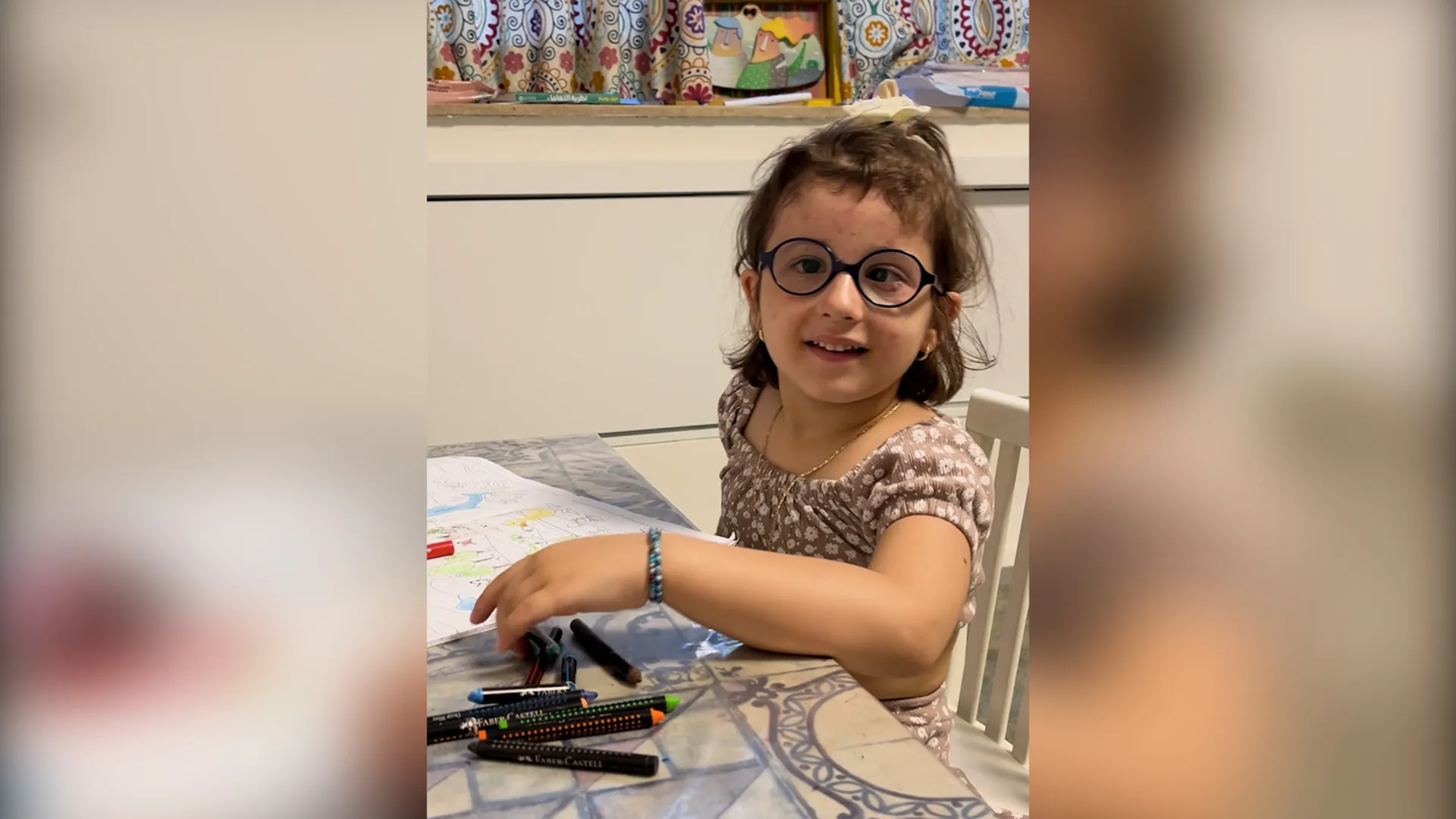
Four-year-old Malika was seriously wounded in an Israeli attack that killed her mother while she shielded her from falling debris. Now, with support from her family and the Ghassan Abu Sitta Children’s Fund, she is recovering from her injuries. Her story reflects the lasting impact of war on children in Lebanon.





![US Secretary of State Marco Rubio looks on as State Department Counselor Daniel Holler, Israel's Ambassador to the US Yechiel Leiter and Lebanon's Ambassador to the US Nada Hamadeh sign a framework agreement between Israel and Lebanon, at the State Department in Washington, DC, June 26, 2026. [Ken Cedeno/Reuters]](https://i0.wp.com/occasionaldigest.com/wp-content/uploads/2026/06/2026-06-26T175227Z_1896892704_RC2T1MA2VJJ9_RTRMADP_3_IRAN-CRISIS-LEBANON-ISRAEL-1782496481.jpg?w=640&ssl=1)