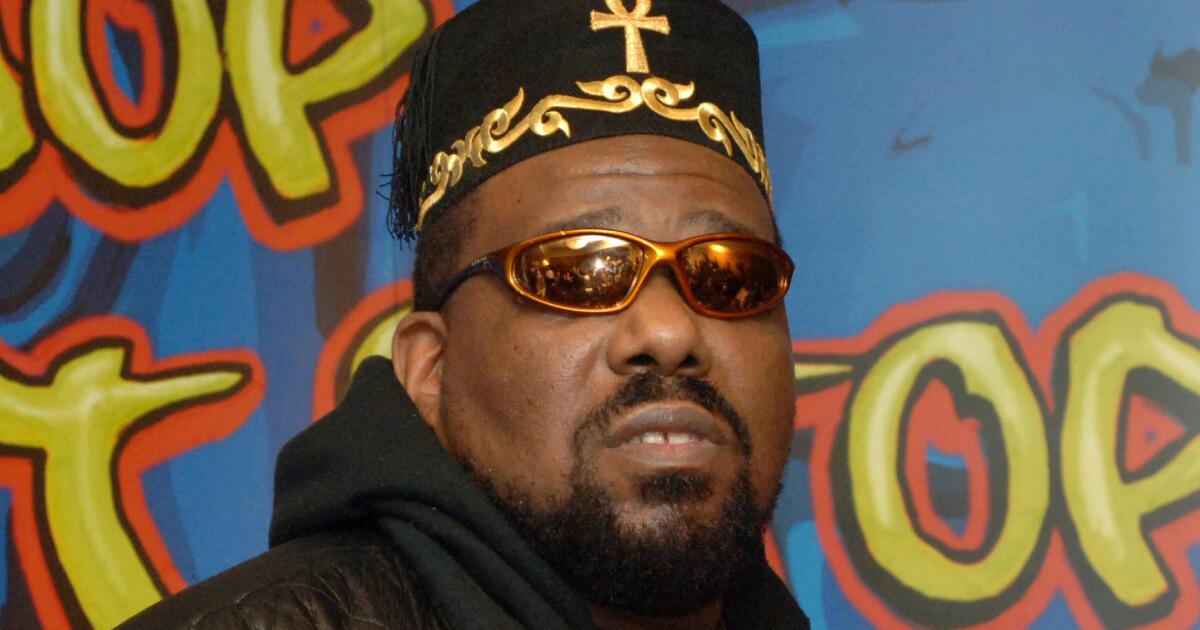
Afrika Bambaataa, the influential rapper and DJ who helped shape the culture of hip-hop via his legendary Zulu Nation block parties in the South Bronx, has died.
Also known for his electro-funk records including “Planet Rock” and “Looking for the Perfect Beat,” the musician — born Lance Taylor — died Thursday “from complications of cancer,” according to TMZ. He was 68.
A Bronx native and former member of the Black Spades gang, Bambaataa was most known for establishing his activist organization Universal Zulu Nation and hosting its block parties through the late ‘70s, gatherings that helped elevate rap from a genre of music to a cultural movement. The first Zulu Nation block party was held in 1977, set against a turbulent time for New York City — one marked by a historic blackout and a series of blazes across the South Bronx. The celebrations welcomed graffiti artists, DJs, emcees and other street performers, offering former gang members a positive outlet and laying the groundwork for what would become the four elements of hip-hop: deejaying, B-boy/girl dancing, emceeing and graffiti painting.
“Rap is about the gangs and the killings that went on until rap music and break-dancing helped end the violence. It brought people together,” Bambaataa told The Times in 1985.
Bambaataa, often named alongside DJ Kool Herc and Grandmaster Flash as a founder of hip-hop, concerned himself with community-building after a prize trip to Africa for an essay competition in 1974 shifted his worldview. He told the Red Bull Music Academy in 2017 that he was greatly inspired by “seeing Black people controlling their own destiny, seeing them get up and go to their own work.” He returned home, his new name a nod to a Zulu chief, with a new rhythm to his work.
The sounds of Bambaataa’s South Bronx block parties soon reached mainstream avenues, spreading beyond the community and eventually beyond New York. In 1982, Bambaataa launched into further fame with the release of “Planet Rock,” a Kraftwerk-inspired creation from him and Soulsonic Force, a group he co-founded. By 2006, he had released more than 20 albums, including compilations, and counted James Brown, Yellowman, John Lydon of the Sex Pistols, Boy George and Bootsy Collins among his collaborators.
Bambaataa’s recording career tapered off in the aughts, but he continued working as a DJ until his death. Bambaataa, a Rock & Roll Hall of Fame nominee, was appointed as a three-year visiting scholar at Cornell University in 2012. Years later, he faced controversy when multiple men in 2016 accused the musician of sexual assault. He denied the allegations at the time. Zulu Nation distanced itself from its founder as the allegations went public but has since remained committed to its mission of hip-hop unity.
Among the accusers who went public with their claims was Democratic Party community advocate Ronald Savage, who alleged Bambaataa assaulted him when he was 14. Savage walked back his claims in 2024, saying he met the musician at a club he had entered using a fake ID.
An anonymous accuser raised additional allegations of sexual abuse and trafficking against Bambaataa in 2021. That case ended last year in favor of the musician’s accuser after Bambaataa failed to appear for a court hearing in New York.