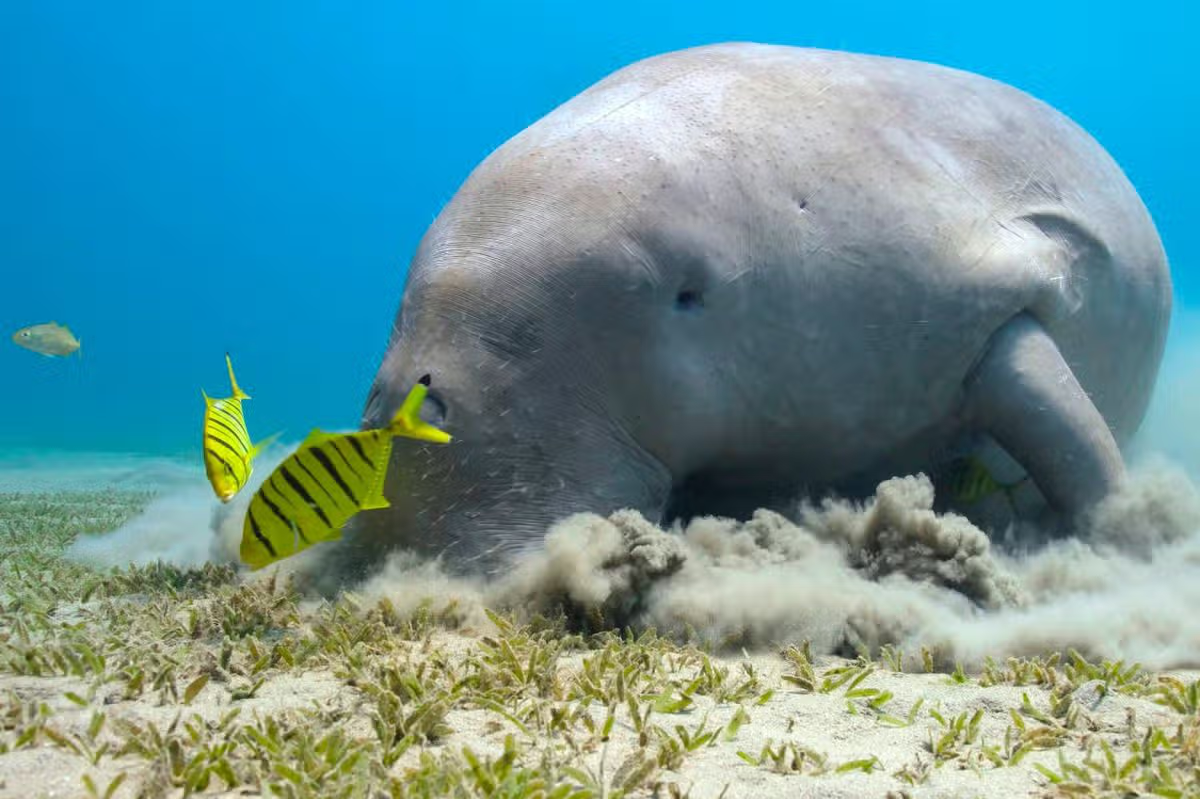
The BBC’s natural history unit appear to have done it again with Blue Planet III and David Attenborough once again telling incredible stories from our oceans

Blue Planet III follows on from Blue Planet II in 2017 and has taken four years to make.
The new natural history series Blue Planet III with David Attenborough has taken four years to create – but it looks worth the wait.
It will build on the groundbreaking legacy of the previous two BBC series, redefining underwater wildlife film-making and telling untold stories and allowing us to see our oceans like never before.
The series will launch in the coming weeks, and follows on from Blue Planet II in 2017 which galvanised a global movement to rid our oceans of single use plastic. After invited guests were given a first glimpse of some scenes, the BBC released a trailer for the TV show.
Sir David, who turned 100 earlier this year, sent a recorded message to the launch event and said: “Twenty-five years ago, when I narrated the first Blue Planet series it didn’t occur to me that I would be narrating a third series in my centennial year. The ocean is an endlessly fascinating place.
To see more of the stories you love from The Mirror and to find them easily in Google then make us your preferred source. Free and easy-to-do, just click on the link here to find more from The Mirror at the top of your feed.
“In these new programmes we uncover a further wonderful array of under-water life, which is more surprising, more sophisticated and even more important than we ever realised. I am proud and delighted to be associated with Blue Planet III.”
The six part series will show remarkable marine wildlife alongside Sir David’s astonishing storytelling. The highly anticipated series was a project Sir David said he was “proud and delighted” to be associated with.
The new series is accompanied by an original score from Hans Zimmer and Bleeding Fingers Music along with an original song, Into The Deep (Seas Cry) co-written by Jade, which features in the trailer.
Zimmer, who also scored Blue Planet II, said the series was the “most important work” he has ever done.
He said: “I’ve worked on a lot of films throughout my career, but nothing affects humanity, our world and our planet as much as the work being done by the Natural History Unit in Bristol.
“I think everybody who comes to Blue Planet comes to it with the knowledge that it is something that changes the world by making you fall in love with the world.
“It’s not something where you’re being lectured or cajoled about things but it’s something that just shows you how spectacular and beautiful our world truly is and how we need to preserve it and how we need to love it and how whatever we love we need to treat with great kindness and great respect.”
Jade, born Jade Thirlwall and best known for being a member of the pop group Little Mix, said she was a “huge fan” of the franchise and praised Sir David as being “a true hero” of hers.
* The six-part series Blue Planet III will air on the BBC later this autumn.
Like this story? For more of the latest showbiz news and gossip, follow Mirror Celebs on TikTok, Snapchat, Instagram, Twitter, Facebook, YouTube and Threads.