The Tulare County elections office in the Central Valley was suddenly getting peppered with questions from baffled voters.
On the afternoon of Oct. 13, residents began calling and showing up in person at the registrar of voters’ office in Visalia, worried they would be accused of committing fraud by trying to vote twice.
That’s because, much to the surprise and chagrin of county elections staff, thousands of voters had accidentally been mailed duplicate ballots for the Nov. 3 midterm election.
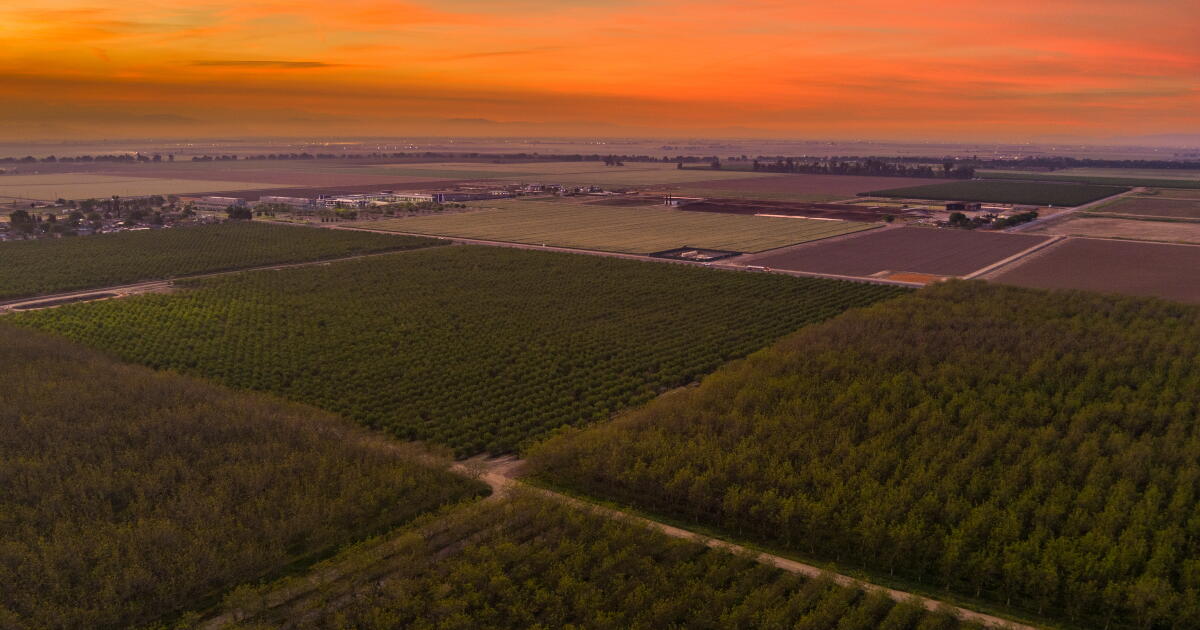
In the agricultural city of Tulare, a place surrounded by walnut and almond orchards as far as the eye can see, 7,791 voters received extra ballots because of an error by the private printing vendor, said Michelle Baldwin, the county registrar of voters, who noted that safeguards were in place to keep the extra ballots from being counted.
The county’s longtime ballot printer, Porterville-based ProVote Solutions, “has accepted full responsibility for the mistake,” she said.
ProVote Solutions did not immediately respond to a request for comment.
“It is unfortunate that it happened,” Baldwin said. “Of course, we would have preferred this didn’t happen, but it did, and we tried to get right on it and respond within 24 hours.”
It’s the kind of error that, in most election years, probably would be just a minor news story. County elections officials would be trusted with their explanation for the mistake, said David Becker, executive director of the Center for Election Innovation & Research and a former senior trial attorney overseeing voting enforcement for the Department of Justice’s Civil Rights Division.
But this midterm has been beset by a growing distrust in the integrity of mail-in ballots following President Trump’s attempt to restrict them before the November election — an effort that was blocked last month by the U.S. Supreme Court.
Trump, who remains fixated on his 2020 election loss, has repeatedly alleged — without providing evidence — that voting by mail leads to widespread cheating and fraud. He has focused specifically on California, where every registered voter automatically receives a ballot in the mail. Seven other states do the same.
On Monday, federal officials charged 28 people with election-related crimes in California, including fraudulent voter registration and making false statements in a naturalization application. Among them were several green card holders, some of whom said they had no recollection of registering to vote, as Trump administration officials accuse them of doing.
In this tense political climate, Becker said, even straightforward election mistakes are magnified on social media and become the subject of conspiracy theories, making the job of local elections officials much more difficult.
“Accidents do happen,” Becker said. “Our elections are incredibly decentralized, run by hundreds of thousands of human beings. As a result, we know there is going to be human error, but our elections are not designed to be perfect. That’s impossible. What they are designed to do is be resilient against human error.”
Becker said it is not unheard of for a voter to receive two ballots. Sometimes, a voter will call the local registrar to request a new one because theirs has not arrived by mail — only to have the original eventually show up. And in other states where voters are required to formally request a mail ballot, they may forget they have done so and show up to vote in person.
That’s why, he said, there are well-established checks to protect against double voting. When a voter casts a ballot, they are “marked immediately” in statewide systems that show they’ve done so, he said.
Ballot errors are rare but not unheard of.
On Monday, the Imperial County registrar of voters announced that a “mailing error” caused duplicate ballots to be sent to 160 voters who requested confidential voter status, meaning that, for safety reasons, their identity and contact information are kept off public voting rolls.
“The error occurred as the Registrar of Voters’ Office was updating its procedures to follow changes in California law,” the elections office said in a statement, adding that, on Jan. 1, elected officials and candidates for public office became eligible for confidential voter status, “requiring changes to how their ballots are processed and mailed.”
Tulare County is a mostly rural place that voted for Trump in the last three presidential elections. Portions of the city of Tulare — population 74,000 — are in the redistricted but perennially competitive 22nd Congressional District, where a close race between Rep. David Valadao (R-Hanford) and Democratic challenger Randy Villegas, a political science professor at College of the Sequoias in Visalia, could determine the balance of power in Congress.
Robert Jones, a strategist for the Valadao campaign, told The Times on Tuesday that the campaign had been in close communication with the registrar’s office and was not overly concerned.
“We have a lot of faith in the Tulare County registrar and elections office,” Jones said, “and we would imagine that, with the extra scrutiny, it will be diligent in making sure that only registered voters vote and that they vote only one time.”
Villegas’ campaign did not immediately respond to a request for comment.
Mark Martinez, a political science professor at Cal State Bakersfield, said conspiracy theories about the error in Tulare add to what is already a tense political climate in the Central Valley, where a recent surge in Immigration and Customs Enforcement operations has disrupted agricultural communities, sent families scrambling to find detained loved ones, and led to a drop in school attendance.
“People will walk away, stay away or avoid political events especially if you look like me — if you look brown or Latino,” Martinez said.
The duplicate-ballot error in Tulare last week quickly went viral in conservative social media circles, with claims that something nefarious was going on in the middle of a House battleground district. One post on X by right-wing media personality Eric Daugherty said, “Trump is right, this is the MESS mass mail-in voting creates!” and “Stop the cheat!” It was viewed more than 450,000 times on that platform, and screenshots of the post were widely shared on Facebook with additional commentary.
The Republican-leaning city of Tulare has just over 34,500 registered voters, according to the California secretary of state’s office. Not all of them are in Valadao’s district.
About 23% of voters in the city received duplicate ballots.
Countywide, about 3% of the 227,000 registered voters were affected.
Baldwin said that as soon as residents started reporting their duplicate ballots, elections staffers immediately contacted the vendor, which confirmed the evening of Oct. 13 that the batch of nearly 7,800 ballots had been accidentally reprinted and mailed.
The vendor, she said, quickly printed postcards explaining what happened and drove them more than three hours to a postal facility in Sacramento so they would be promptly processed and received by voters by the end of the week.
The mailer, in English and Spanish, instructs those who got two ballots to “securely destroy the duplicate ballot” instead of returning it.
Baldwin said that if anybody submits two ballots, “it will be flagged” by safeguards already in place.
The barcode on each voter’s mail return envelope is connected to his or her voter record, she said. Before a mailed ballot is accepted for counting, elections staff scan the barcode, record that the ballot has been received, compare the envelope signature with the signature on a person’s voter record, and check to see if the person has already voted.
“Your vote stays private,” Tulare County elections staff wrote in a Facebook post explaining safeguards against voting more than once. “After verification, your ballot is separated from the return envelope before counting. The envelope barcode tracks your ballot’s return, not your voting choices.”
In the comments section, one resident was frustrated but circumspect.
“I am livid this happened THIS YEAR OF ALL YEARS!!” the resident wrote. “And also, glad there are protections in place in case any fools try to use both. Good grief!!”