VOTERS

Sen. Elissa Slotkin sits down with Trump voters in Iowa while campaigning for Democrats

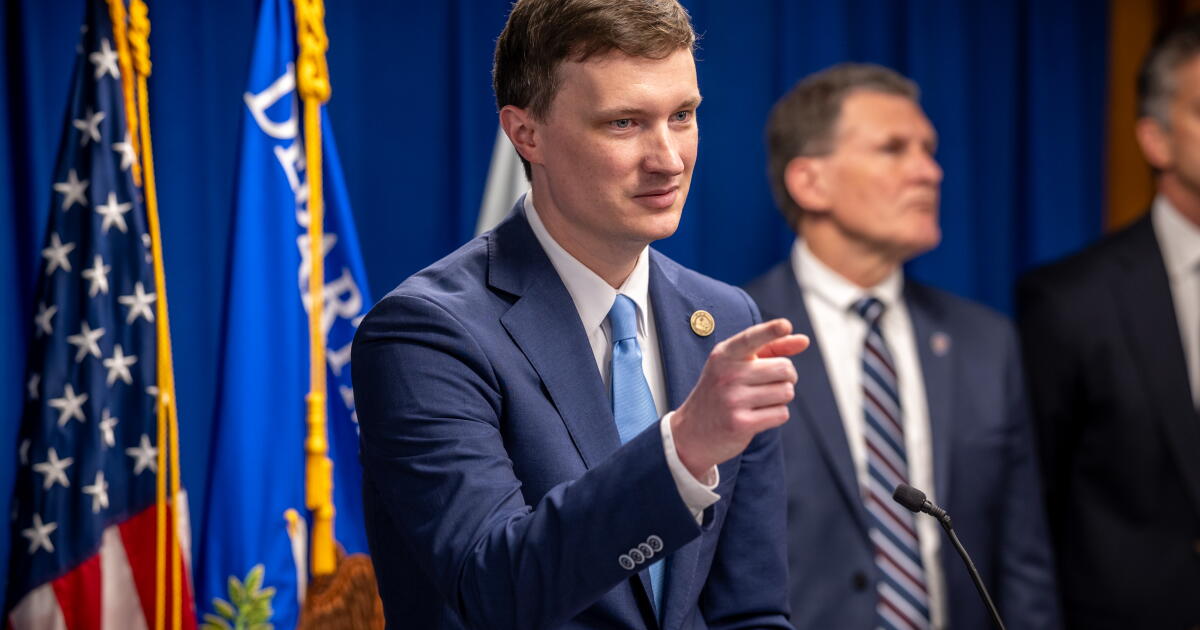
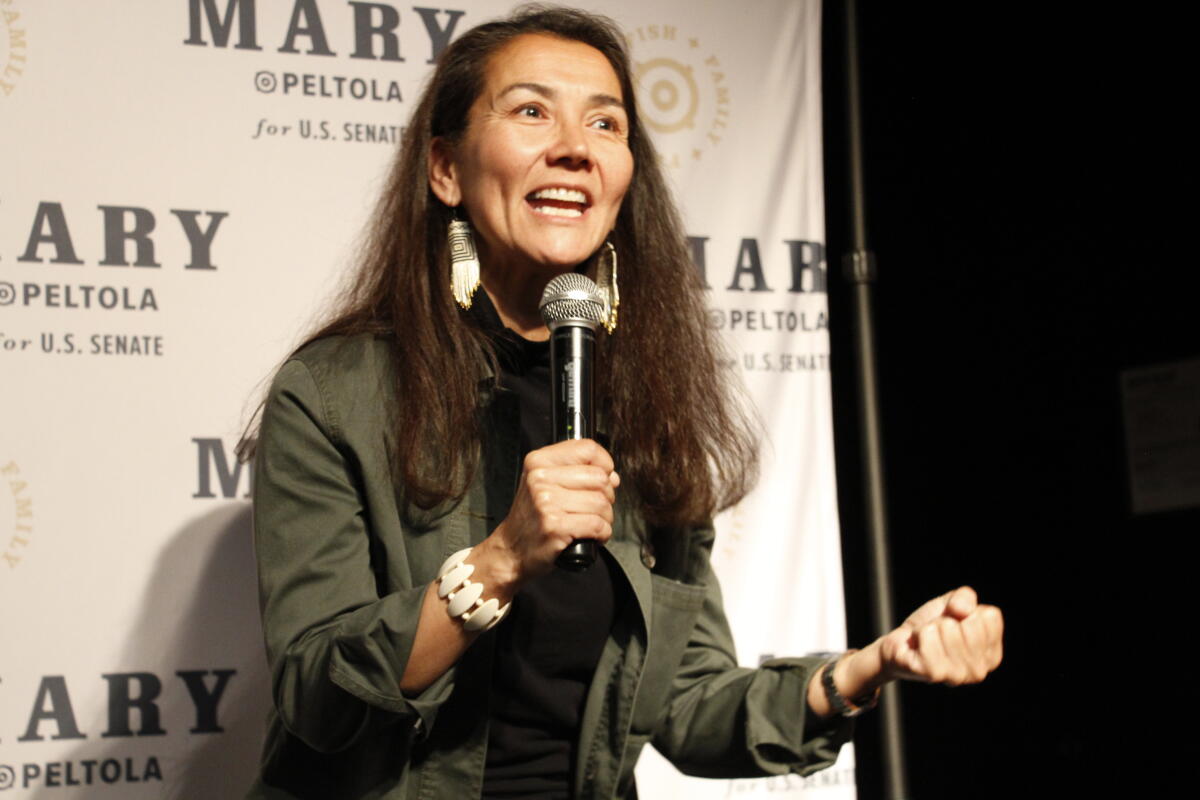
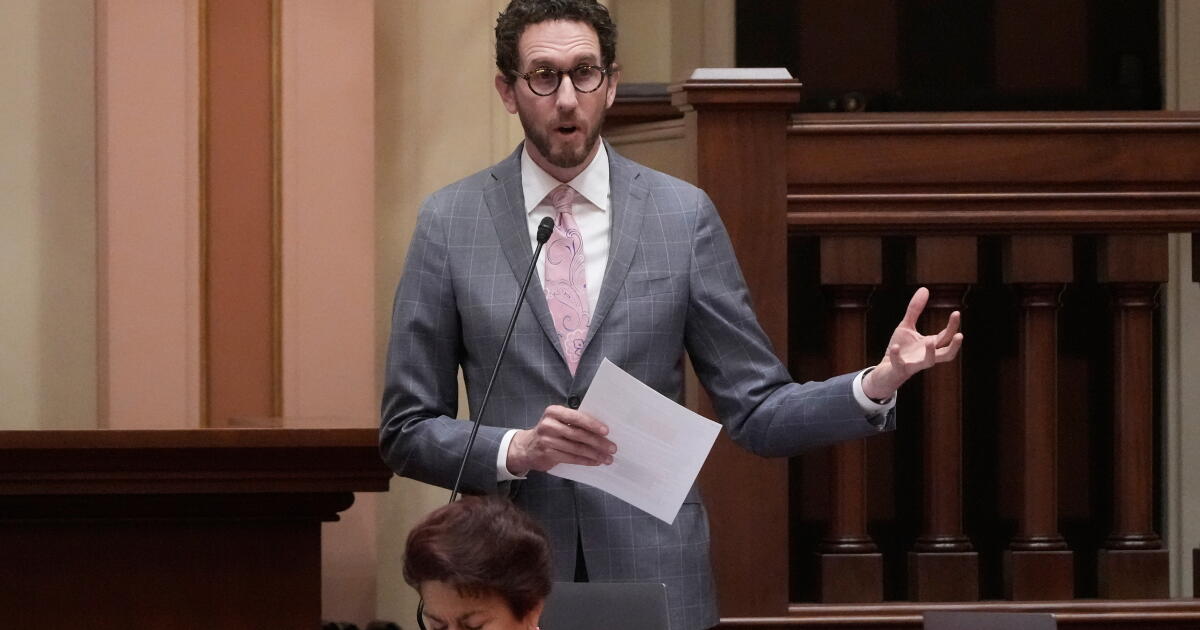
Before Michigan U.S. Sen. Elissa Slotkin spent Tuesday afternoon supporting Democratic congressional candidates in Iowa, she was picking the brains of a table of President Trump’s voters.

Slotkin, a potential Democratic 2028 presidential contender, peppered five Iowa voters with questions about divisiveness in U.S. politics and issues affecting their communities. She also wanted to know what the voters would look for if they could “build a candidate in a test tube” and why they chose Trump over Vice President Kamala Harris in 2024.

“What would have gotten you to actually consider a Democrat?” Slotkin asked as the discussion winded down.

She hadn’t told them yet she was one.

The conversation was one of many Slotkin is having ahead of this fall’s crucial midterm elections. They are a way for the Midwestern Democrat to hear what it might take for the party to win back parts of the country like Iowa, which swung from backing President Barack Obama in 2008 and 2012 to Trump in the last three elections.

Slotkin on Tuesday described a Democratic Party that has forgotten about the middle of the country, has spent too much time rehashing old fights and lacks coordination in delivering a strong counter to Trump.

“I’m pretty clear-eyed about the problems,” Slotkin told The Associated Press in an interview. “I’m interested in being a part of the next generation who’s going to rehab the Democratic brand.”

Slotkin’s sit down with Trump voters in Iowa Tuesday, and a town hall in Ohio Wednesday, was organized by a PAC dedicated to reshaping the party, Majority Democrats. But for Slotkin, the stops in red and purple states also are opportunities for the former CIA analyst to introduce herself to voters outside her home state, many of whom — like those gathered for Tuesday’s lunch — don’t know who she is or what she stands for.

Slotkin was elected to the Senate in 2024 after serving three terms in the U.S. House. She was among six Democrats in Congress with military or national security backgrounds who in a video last year urged U.S. military members to resist “illegal orders.” Trump accused the lawmakers of sedition punishable by death, and the video prompted a Justice Department investigation.

Slotkin said Tuesday that they made the video “for moments exactly like this,” shortly before Trump paused for two weeks his threat to take out Iran’s “whole civilization.”

Democrats want to flip House seats in Iowa

Later Tuesday, Slotkin’s schedule included headlining a fundraiser and a county party dinner. She also held a health care-focused town hall with Iowa state Sen. Sarah Trone Garriott, a Democrat looking to unseat Republican U.S. Rep. Zach Nunn in one of the most competitive House seats in the country.

She shared some of the same themes to the friendly faces in Des Moines as she did earlier with the Trump voters, lamenting that politics is so divisive and describing the bipartisan disappointment over the health care system that she hears across the country.

But she put a finer point on her own views to the Democratic audiences, saying that the U.S. needs a public health insurance option for people of any age and giving advice on how to convince voters that supporting a Democrat is in their best interest.

“I want to win in November,” Slotkin told an applauding audience. “That means being honest about where the Democratic Party needs to go.”

“The debate is not between progressive and moderate,” she said. “It’s fight or flight.”

Slotkin shies away from answer on 2028

Visiting Iowa used to hold more obvious significance for Democrats before the party shook up the early presidential nominating calendar last cycle, bumping Iowa from its place as the first state to weigh in on the nominations. The state party in 2024 did away with the traditional, quirky caucuses that have historically been the first contest for both parties.

Now Iowa Democrats are among those pitching their state should go first in 2028; Michigan is also vying for the first Midwest slot. But it’s still months before the Democratic National Committee will decide the order.

Slotkin is one of many prominent Democrats eyeing a potential 2028 run that have been visiting swing states and those that have traditionally been important in the nominating process.

“I’m not announcing anything,” Slotkin said Tuesday, and even joked about Iowa and Michigan’s “cage match” for the early position.

The ambition didn’t get past Ed Klavins, a Trump voter who participated in the focus group.

“She’s trying to figure out what she can do differently to have a better chance of getting reelected and maybe higher office,” said Klavins, a retiree from Urbandale, Iowa, who didn’t know Slotkin was the guest for Tuesday’s focus group lunch and said he was paid $200, plus lunch, to be there.

Klavins wants politicians on both sides of the aisle that challenge their party’s status quo. He told Slotkin that he wants a candidate who doesn’t pander to what they think voters want. He voted for Trump and thinks he’s succeeding in putting national security first, like closing the U.S.-Mexico border and eliminating the threat Iran poses to national security.

But Slotkin showing up to listen “makes her a little more genuine in my eyes,” he said. “I like her.”

Fingerhut writes for the Associated Press.

Source link

On Hungary visit, Vance urges voters to support Orbán days before pivotal election

Vice President JD Vance on Tuesday urged Hungarians to back Prime Minister Viktor Orbán in upcoming elections, dubbing the populist leader a defender of “Western civilization” during a visit to Hungary meant to help push Orbán over the finish line.

Vance’s two-day visit to Budapest was the clearest sign yet that President Trump’s administration is going all in for an Orbán victory when Hungarians go to the polls on Sunday. With only five days until the vote, Orbán, the European Union’s longest-serving leader and a close Trump ally, is trailing in the polls.

Speaking before over 1,000 Orbán supporters at an election rally at a sports arena in Budapest, Vance campaigned openly for the autocratic leader, telling the crowd: “We have got to get Viktor Orbán reelected as prime minister of Hungary, don’t we?”

Orbán is running for his fifth-straight term as prime minister. He and his nationalist-populist Fidesz party are facing their toughest race in two decades against a center-right challenger, the Tisza party led by Péter Magyar, that could bring an end to his 16 years in power.

Orbán has bristled at the slightest mention of the Hungarian election by any of his EU partners, decrying any expressions of support for his opponent as a grave breach of Hungary’s sovereignty and meddling in the election.

Yet Vance’s appearance alongside Orbán at the election rally — dubbed a “Day of Friendship” event — was an unusual step from a foreign leader, and a break with most politicians who avoid taking an active role in the political campaigns of other countries.

To loud applause, Vance asked rally attendees: “Will you stand for Western civilization? Will you stand for freedom, for truth, and for the God of our fathers?”

“Then, my friends, go to the polls in the weekend. Stand with Viktor Orbán, because he stands for you, and he stands for all these things,” Vance said.

‘I love that Viktor’

Long accused by critics of taking over Hungary’s institutions, clamping down on press freedom and overseeing entrenched political corruption — charges he denies — Orbán has become an icon in the global far-right movement.

Trump has repeatedly endorsed Orbán’s candidacy for reelection, and many in the Make America Great Again movement approve of the Hungarian leader’s opposition to immigration, curtailing of LGBTQ+ rights, and capture of the media and academia.

But with most independent polls showing a double-digit deficit for Fidesz among decided voters ahead of the vote, Orbán has sought to boost his profile by appearing publicly with his international admirers.

Vance spoke at length on Tuesday about what he views as the civilizational dangers posed by progressivism, “faceless bureaucrats” and censorship. He lauded Orbán for his strong stand against immigration, and his adversarial approach to the EU.

“I admire what you’re fighting for,” Vance said. “I am here because President Trump and I wish for your success, and we are fighting right here with you.”

Vance used his phone to call Trump from the lectern, to loud applause. After first reaching an automated message about the caller’s voicemail box not being set up yet, Trump answered the call and told the crowd through a microphone: “I love Hungary and I love that Viktor, I tell you he’s a fantastic man.”

Trump said Orbán had not allowed migrants “to storm” and “ruin” Hungary.

“He’s kept Hungarian people in your country,” Trump said.

Hungarian ‘reconquista’

The Trump administration’s embrace of Orbán reflects its affinity for European far-right parties broadly, and the admiration, from Spain to France to Germany and the Netherlands, has been mutual.

Orbán has long been a thorn in the side of the EU, and has tested the bloc’s system of governance by frequently using his veto power to paralyze decision-making in order to leverage concessions.

Last month, he vetoed a major, 90-billion euro ($104-billion) EU loan to Ukraine, angering the bloc’s leaders who accused him of hijacking the critical aid while undermining the EU in an effort to win his election.

At the rally on Tuesday, Orbán declared that “freedom-loving Americans and Hungarians must unite and save Western civilization.”

“To do this, we must fight the progressives that nest in Brussels,” the EU’s de-facto capital, he continued. He declared that Hungary had launched a “reconquista” of EU institutions which “will bring new patriotic governments to power.”

Late last month, Orbán hosted dozens of allies from around Europe and beyond at the Hungarian iteration of the Conservative Political Action Conference, and at a meeting of the far-right Patriots for Europe party family, the third-largest group in the European Parliament.

Trump sent a video message to Conservative Political Action Conference Hungary, saying Orbán had his “complete and total endorsement” and was a “fantastic guy.”

Still, Trump’s recent approach to foreign affairs has reverberated in Europe, with his actions over Greenland, Venezuela and Iran straining those relationships. Some commentators have suggested support from Vance and Trump may not help boost Orbán’s popularity at home.

Orbán, however, has remained deferential, and echoed Trump’s false claims that he won the 2020 election.

Russian energy

Orbán’s government has broken with most EU countries by refusing to assist Ukraine with financial aid or weapons to ward off Russia’s full-scale invasion. Meanwhile, it has remained firmly committed to purchasing Russian energy despite EU efforts to wean off such supplies.

In November, Hungary received an exemption from U.S. sanctions on Russian oil and gas after a White House meeting between Orbán and Trump.

Yet at a joint news conference with Orbán earlier on Tuesday, Vance seemed to contradict U.S. efforts to push its allies to break with Russian energy, excoriating other EU countries for moving to cease their imports of Russian fossil fuels in response to the war.

“It’s funny to watch prime ministers and leaders in some of the Western European capitals talk about the energy crisis when frankly they should have been following the policies of Viktor Orbán,” he said.

Despite his clear endorsement of Orbán, Vance lashed out at the EU for what he said was “one of the worst examples of foreign election interference that I’ve ever seen or ever even read about.”

Vance did not address numerous recent reports that Russian secret services are meddling in Hungary’s election to tip it in Orbán’s favor.

Spike writes for the Associated Press. Mike Catalini in Morrisville, Pa., contributed.

Source link

‘Cocktail of Hindutva and welfarism’: How Modi’s BJP is wooing Assam voters | Elections News

Assam, India – Amoiya Medhi says attending an election rally organised by the right-wing Bharatiya Janata Party (BJP) in her hometown in India’s northeastern state of Assam is a matter of both religious compulsion and personal gratitude.

On March 29, Medhi was among thousands of men and women who thronged the rally held on the outskirts of Jagiroad, an industrial town in central Assam’s Morigaon district, ahead of the state assembly election scheduled on Thursday.

Recommended Stories

list of 4 itemsend of list

Nitin Nabin, the BJP’s national president and chief guest at the event, trumpeted the welfare schemes launched by Chief Minister Himanta Biswa Sarma’s government – schemes that Nabin claimed benefitted the Assamese people, especially women.

Medhi, 38, nodded in agreement as she listened attentively to the speeches. “This government has done so much for everyone, including women,” she told Al Jazeera. “I am going to only vote for the BJP.”

Amoiya Medhi
Amoiya Medhi wants the BJP to return to power for a third straight term [Arshad Ahmed/Al Jazeera]

Like Medhi, dozens of women attending the rally said they were the beneficiaries of multiple government schemes, including Orunodoi, a direct benefit transfer scheme that saw nearly four million women receive 9,000 rupees each on March 10 – the largest such disbursement in the state’s history, which included a three-month bonus to mark the Bihu festival held in April.

The disbursement came barely a month before Thursday’s vote in which Sarma, 57, is seeking a third consecutive term for his party.

Since becoming the chief minister in 2021, Sarma has been accused of pursuing a hardline Hindu supremacist agenda (popularly known as “Hindutva”) coupled with a xenophobic campaign targeting Muslims. They constitute 34 percent of Assam’s 31 million population, according to the last census conducted in 2011. That’s the highest among Indian states, with only the federally-governed territories of Indian-administered Kashmir and Lakshadweep higher.

An overwhelming nine million of Assam’s 10.3 million Muslims speak Bengali and not Assamese. They historically migrated to Assam in waves – a majority of them moving during British rule, when Bengali-speaking Hindu and Muslim communities moved from East Bengal (now Bangladesh) to work in Assam’s tea estates and rice fields.

‘Protecting our Hindu identity’

For decades, the BJP and other Hindu groups have labelled the Bengali-speaking Muslims as “foreigners”, accusing them of being undocumented immigrants from Bangladesh. Assam founded special tribunals to try these Muslims, sending hundreds to detention centres built across the state.

Thousands of “miya”, as Bengali-speaking Muslims in Assam are pejoratively called, have also been declared “doubtful” voters. The “miya” issue has shaped the BJP’s politics in Assam. Leading the charge against them, Sarma himself publicly admitted that he had instructed BJP workers to file an objection with the Election Commission of India to remove half a million Bengali-speaking Muslims from electoral rolls.

In 2024, Sarma told the state assembly that his government “will take sides” and “will not let miya Muslims take over all of Assam”. Two months ago, a 17-second artificial intelligence-generated video, produced and shared by the BJP on X, showed Sarma holding a rifle and shooting at pictures of two Muslim men, with the caption saying: “No Mercy”. The clip, titled ‘Point Blank Shot’, was deleted after outrage.

Champa Hira, another woman attending the Morigaon rally, said while the BJP’s financial aid and other welfare schemes have been a major draw, her support for the party goes beyond financial benefits.

“For us, it is also about protecting our Hindu identity,” she told Al Jazeera.

“Our Hindu religion is born out of the lotus,” Hira said, referring to the BJP’s election symbol. “We will let the lotus bloom once again for such schemes and also for our Hindu identities.”

In the run-up to the polls, the BJP’s political messaging on roadside billboards, wall graffiti and posters had the party showcase its anti-Muslim policies pursued in the past decade.

The party boasts about clearing around 20,000 hectares of government land – an area more than three-and-a-half-times the size of Manhattan – from the “osinaki manuh” (“strange people” – a veiled reference to Bengali-speaking Muslims). The eviction drives, which intensified after Sarma became the chief minister in 2021, are a part of the BJP’s “war” on Bengali-speaking Muslims to “reclaim every inch of land” allegedly encroached by them. Without providing evidence, Sarma has repeatedly accused the Bengali-speaking Muslims of a conspiracy to change Assam’s demography and reduce Hindus to a minority. The government’s crackdown also saw dozens of Muslims “pushed back” to Bangladesh – their alleged homeland – or their properties bulldozed.

Alongside such hardline policies targeting Muslims, the BJP also touted the launching of various welfare schemes for women and youth. And has promised an increase in financial aid from $13 to over $32 in the Orunodoi cash transfer scheme. In the Udyamita scheme, an entrepreneurial fund reserved for rural women to bootstrap their businesses, the increase is from $107 to $269.

How Modi’s BJP is wooing Assam voters
A BJP election rally in central Assam’s Morigaon district [Arshad Ahmed/Al Jazeera]

Akhil Ranjan Dutta, who teaches political science at Assam’s Gauhati University, says the Hindu nationalist party is using a strategy that mixes “heightened polarisation and a developmental pitch” to woo the Assamese voters.

“To me, it is a cocktail of Hindutva and welfarism,” Dutta told Al Jazeera. “The BJP is experimenting with a brand of Hindutva by co-opting Indigenous armed struggle and cultural nationalism, while solidifying Hindu identity and othering the Bengali Muslims.”

The Bengali-speaking Muslims say the BJP’s election promises have heightened their anxiety. In its manifesto, the party has promised more crackdowns on the community, including a proposal to implement a Uniform Civil Code, which, according to critics, will override Muslim personal laws on marriage, divorce and inheritance.

The Uniform Civil Code, a longstanding demand from Hindu groups, is already in place in two BJP-ruled states, including Prime Minister Narendra Modi’s home state of Gujarat. The BJP has also promised a pushback against “Love Jihad”, an unproven conspiracy theory floated by right-wing Hindu groups, under which Muslim men allegedly lure Hindu women into marriage and convert them to Islam.

A former Assamese parliamentarian from the main opposition Congress party, who requested anonymity fearing reprisal from the government, agreed with political scientist Dutta. “The BJP has managed to turn Hindus against Muslims and enjoy support,” he added.

BJP spokesman in Assam, Kishore Upadhyay, rejected the allegation, claiming the government’s eviction drives were not targeted at any community.

“It is directed only against illegal encroachment, irrespective of religion or identity. Unfortunately, successive Congress governments in the past allowed or even facilitated such illegal settlements, creating today’s challenges,” he told Al Jazeera.

“It is also important to highlight that this is about restoring land rights of indigenous and tribal communities, protecting forest areas and ensuring proper land governance.”

Will welfare schemes help BJP?

Opposition parties and analysts say the BJP is mainly milking two cash transfer schemes – Orunodoi and Udyamita – to influence voters in this election.

In December 2025 and January this year, the government distributed cheques of $107 each under the Udyamita scheme. Additionally, it withheld a monthly honorarium of $13 for poor women under the Orunodoi scheme for three months, but handed it out last month in the run-up to the election.

Isfaqur Rahman of the Communist Party of India (Marxist) said the Sarma government’s disbursement of cash only days before the polls will help it in securing significant numbers of female votes. “If cash is disbursed to them on the eve of the election after making the beneficiaries wait, it will help influence their choice to vote,” Rahman told Al Jazeera. “This is nothing more than vote buying by the BJP.”

Economist Joydeep Baruah agreed, saying that distributing a lump sum of money will “bear a positive political result for the ruling party”, as he estimated that that at least 10 to 15 percent of the scheme’s four million women beneficiaries could vote for the BJP.

“While the rural wages in Assam have been stagnant due to a growing unemployment, the Orunodoi financial aid converts into 10-15 percent of their monthly income,” said Baruah, who teaches economics at state-run Krishna Kanta Handiqui State Open University in Assam’s main city of Guwahati.

Baruah said such populist schemes help in sustaining pro-incumbency.

“That way, the BJP is establishing more of a patron-client relationship, with patrons being the BJP and the clients being the beneficiaries,” he told Al Jazeera. “Such a transactional relationship materialises on the ground.”

Dipika Baruah, a 34-year-old woman in Kathiatoli town in central Assam’s Nagaon district – who is not related to economist Baruah – said the government grants empowered her to live with dignity.

“The money helped me keep the flame in my stove going,” she told Al Jazeera as she shopped at Mama Bazar, a marketplace named after Sarma, who is fondly called “mama” (maternal uncle in Assamese and Bengali) by his supporters. “This was possible because of mama. Women will only vote for Mama.”

How Modi’s BJP is wooing Assam voters
A cutout showing Assam’s BJP Chief Minister Himanta Biswa Sarma as ‘mama’ [Arshad Ahmed/Al Jazeera]

Pre-poll surveys in Assam also suggest that cash transfer schemes will help the BJP consolidate votes in its favour.

An opinion poll conducted by political research firm, Vote Vibe, revealed that 54 percent of respondents believe the government’s cash transfer schemes will consolidate and even attract opposition voters. The survey also showed 38 percent of female respondents saying the schemes had strengthened the BJP’s voter base, while 21 percent of females said the schemes will poach opposition votes.

BJP spokesman Upadhyay told Al Jazeera the allegations of influencing voters by transferring cash before the election are “factually incorrect and politically motivated”.

“It [Orunodoi] is a long-standing welfare initiative aimed at supporting economically vulnerable women-led households, not a last-minute electoral measure,” he told Al Jazeera.

‘Kill us all at once’

Back at the BJP rally in Morigaon, where its leaders delivered fiery speeches calling for the expulsion of “infiltrators from Bangladesh”, Amir Ali remembered his sister Afsana.

On February 18, 1983, one-year-old Afsana was among an estimated 1,800 Bengali-speaking Muslims massacred by a Hindu and Indigenous mob in what came to be known as the Nellie massacre. The killings were in 14 villages, including Ali’s Matiparbat, a 40-minute drive from where the BJP rally was held.

Ali, now in his 50s, said he attended the BJP rally only to prove that he is not an “illegal immigrant” but a citizen of the state.

“When children were massacred, we had no choice but to vote to prove that we are not illegal Bangladeshis,” he told Al Jazeera. “Likewise, we have no choice now but to prove we are not infiltrators or ‘strangers’ as Sarma claims.”

In a quaint corner of Jagiroad town, Noorjamal shares Ali’s sentiments. Two years ago, he was rendered homeless after the houses of nearly 8,000 Muslims were bulldozed during a government eviction drive.

“The chief minister says he is evicting Bangladeshis from government land, but how are we Bangladeshis if my father and forefathers were born and died in India?” Noorjamal’s mother Maherbanu Nessa asked.

“The way Himanta ‘mama’ is bulldozing our homes, he might as well just kill us all at once.”

Maherbanu Nessa feels the Assam CM might as kill them all instead of bulldozing their homes.
Maherbanu Nessa’s infant daughter was killed in the 1983 Nellie massacre [Arshad Ahmed/Al Jazeera]

In a communication sent to India’s Permanent Representative to the United Nations in Geneva, the United Nations Committee on Elimination of Racial Discrimination (CERD) said on January 19 this year that Bengali-speaking Muslims in Assam are facing racial discrimination, resulting in forced evictions, hate speech and excessive use of force by the law-enforcement agencies.

An investigation by The New Humanitarian, an independent news outlet, published on March 24 found that between May 2021, when Sarma became Assam’s chief minister, and early 2026, more than 22,000 structures were demolished and 20,380 families evicted in the state, an overwhelming majority of them being Bengali-speaking Muslims.

As Sarma’s BJP vows to “break the backbone of miyas” after the election, Ali and Nessa worry about survival amid such hostilities.

“We have nothing to resist this cruel government but prayers and our votes,” Ali told Al Jazeera. “But maybe, if not today, then someday we will find peace in this land. We are still hopeful.”

Source link

North Carolina’s electoral future may hinge on rural Black voters who feel ignored by Democrats

Ricky Brinkley has lived in rural North Carolina nearly all of his 65 years, and he likes it “out in the county,” past the street lights and bustle of the small towns that carpet the landscape.

But the former truck driver can feel left out when elections roll around in this battleground state.

“People don’t come out like they should and ask you how you feel about things,” Brinkley said while he manned the counter at his daughter’s beauty supply store down the street from the Nashville courthouse. “You want somebody to vote, but you don’t want to do nothing to get the vote. No, it don’t work that way.”

Brinkley is among the rural Black residents who Democrats have often failed to mobilize as they try to dent Republican advantages here. It’s an urgent demographic puzzle for the party, which is normally strong with Black voters but tends to fall short in rural areas.

Success could help former Gov. Roy Cooper win a hotly contested U.S. Senate race this year and tilt the balance of power in Washington. It could also reshape presidential elections, providing Democrats with a wider path to the White House.

“People want to look at the word ‘rural’ in North Carolina and equate it to the word ‘white,’” said state party chair Anderson Clayton, a 28-year-old who won her job three years ago promising to expand the party beyond cities. “In my vision of a Democratic Party, when you talk about reaching out to rural voters, you are talking about rural Black voters.”

The Rev. James Gailliard, a former state lawmaker who leads a large Black congregation in Rocky Mount, put it even more bluntly.

“You don’t win this state in Durham,” Gailliard said. “You win it in the east.”

It’s about more than Cooper’s Senate bid

North Carolina is known for the university-heavy Research Triangle that includes Durham, Raleigh and Chapel Hill, along with Charlotte’s banking hub. But it also includes large swaths of small towns and rural areas where Democrats have lost ground in recent decades.

That’s not just because of white voters realigning with Republicans. It’s also because Black voters who lean Democratic don’t vote as often as their urban counterparts. Those rural Black voters are concentrated east of the triangle, extending along winding state highways through small towns, flatlands and farmland toward the Atlantic coastline.

Cooper, 68, won two terms as governor and four terms as state attorney general. However, Republicans control the state courts and the legislature, and they’ve redrawn the congressional map to expand their advantage in the U.S. House. Donald Trump carried the state for Republicans all three times he ran for the White House.

A native of rural Nash County, Cooper already in recent months held roundtable sessions with Black farmers, business owners and civic leaders in eastern North Carolina, along with students from North Carolina A&T University, a historically Black school that draws students from across the state. His campaign promises a statewide organizing effort before November.

Gailliard wants a more intentional effort

But Gailliard wants more.

The founding pastor at Word Tabernacle Church, Gailliard was among the Black state lawmakers who lost seats after Republican-led redistricting. He said regaining ground will require neighborhood-level organizing and investment from national Democrats, something he struggled to get from Kamala Harris’ 2024 presidential campaign.

“I couldn’t get any traction,” Gailliard recalled. “I begged them to bring her to Rocky Mount. I said, ‘Listen, Rocky Mount is the gateway to the East. If we crack Rocky Mount, we’ve cracked the East.’ Could not convince them to come. Two weeks later, guess who’s in Rocky Mount? Donald Trump.”

The Harris campaign sent former President Bill Clinton to the area instead.

Gailliard said Cooper needs people like him to get elected.

“Roy is a great friend, and I’m gonna run my butt off to help him in every way, but I’m not banking on his coattails,” Gailliard said. “I’m going to do the opposite. I’m going to grow coattails for him.”

The state party tries to fill gaps

Clayton, the state party chair, said the national party and its donors haven’t prioritized North Carolina early enough in recent cycles.

She said she’s relied mostly on local money to finance 25 full-time staffers, more than three times what the state party had heading into the 2022 midterms.

Bertie County Democratic chairwoman Camille Taylor, whose hometown of Powellsville has fewer than 200 residents, said she’s felt the shift.

She speaks regularly with a field organizer in nearby Greenville, the city closest to the northeastern counties with large proportions of Black residents. But she said it’s especially difficult to persuade rural voters to care about voting beyond the presidency, even though she tells them “these are the races and the people that you’re going to interact with more.”

Democrats have recruited candidates in all 170 legislative districts — two are Democratic-aligned independents — and every U.S. House district. State Supreme Court Justice Anita Earls, a noted civil rights attorney and Black woman, is running statewide for reelection.

Gailliard said he’s identified a few hundred nonprofits, neighborhood associations and other groups that can do issue-orientated work in his district as the election approaches. He wants to match each of them to specific precincts, routing money for them to reach voters and persuade them to vote.

He wants volunteers to get training from Democratic and left-leaning organizations rather than have the outsiders themselves knocking on rural Black voters’ doors.

“We can’t have 21-year-old recent college graduates from Utah knocking doors at $22 an hour in the hood,” Gailliard said. “That just does not work. They’re not a trusted messenger.”

Marginal voting changes add up

About 2 in 10 North Carolina voters in the 2024 and 2020 presidential elections were Black, according to AP VoteCast, as well as in the 2022 Senate election.

Roughly 4 in 10 Black voters in North Carolina’s last presidential election said they live in small towns or rural communities, similar to the share who said they live in the suburbs. Only about one-quarter reported living in urban areas.

Small shifts in persuasion matter, particularly when races are close. In 2008, Barack Obama became the last Democratic presidential candidate to win North Carolina, by a margin of just 14,000 votes out of 4.3 million votes cast.

Voter turnout between the 2020 and 2024 elections declined more in North Carolina counties that have larger Black populations.

Counties where Black voters make up about 30% to 40% of the electorate saw the biggest drop, with turnout falling by more than 3 percentage points. Counties with smaller Black populations saw more modest declines of about 1 percentage point. Overall, turnout remains higher in counties with fewer Black voters.

An old Cooper schoolmate just wants to be asked

Gailliard said Democrats cannot underestimate how much it means for someone to simply get asked for their vote.

“Black and rural voters are not transactional,” he said. “They are relational.”

Back in Nashville at the beauty supply store, Brinkley agreed.

“You get to be a big wheel, and you can forget where you came from,” Brinkley said. “I ain’t gonna say Roy forgot. He’s a hometown guy, so to speak, but I don’t expect to see him out here walking.”

Brinkley made it clear that if he votes, it would be for Cooper and other Democrats — but only if he votes.

“I could. I could. I may vote,” he said. “There’s just so much going on.”

Barrow and Sweedler write for the Associated Press. Sweedler reported from Washington. AP journalist Linley Sanders in Washington contributed to this report.

Source link

Buchanan Poised at the Edge of Political Credibility Gap : Campaign: No matter what polls and receptive New Hampshire voters say, GOP pols insist he’s not electable.

The problem for Patrick J. Buchanan, the silver-tongued Republican who would be President, is people like George Anthes.

“It seems that Pat Buchanan has truly caught fire,” says Anthes, the king of talk radio at station WMVU, introducing the candidate to a listening audience of flinty New Englanders. “There seems to be a change brewing.”

And so Buchanan begins his spiel: The national polls–three of five in August–that peg him No. 2 behind Senate Majority Leader Bob Dole of Kansas in the race for the GOP nomination. His recent endorsement by the Manchester Union Leader, the paper of record for New Hampshire’s hard-core conservatives. A credible showing in the recent Iowa straw poll–in his eyes, No. 3 with a bullet.

“We have crossed the threshold,” said a confident Buchanan, “of credibility and electability.”

Not so fast. Thirty minutes later, with the microphone off and the candidate heading quickly for the door, Anthes gets a little more honest. “I’d love to see Pat as President, but I have my doubts.” A pause. “He is picking up though.”

Well, sort of. Somehow, even when they suffer setbacks or fail to make headway in the polls, Texas Sen. Phil Gramm, ex-Tennessee Gov. Lamar Alexander and California Gov. Pete Wilson get taken seriously as potential nominees. Even when Buchanan is on a roll–like the one that fuels his hopes today–he is rarely accorded the same respect.

The reasons are plentiful. Buchanan rose to prominence as a commentator and author; although he ran for President in 1992, he has never won an elected office. He is an unabashed, uncompromising conservative, and thus a polarizing figure to many. And the disdain he does not hide for some in his own party has cut into his ability to raise money.

Buchanan and his followers are “outsiders, they’re populists,” said political analyst Kevin Phillips. “In terms of the Republican power elite, they’re not Buchananites. He could never be the nominee.”

Striving for Second

Buchanan, 56, is undeterred by such naysayers. And his quest, at least for now, is not to be No. 1, but to come in second in the early primaries and caucuses of 1996–a crucial three weeks, Buchanan contends, that will decide if he can raise the money to continue campaigning.

“I’ve got the resources to go three weeks,” said the candidate, who so far has raised about $3 million and spent an estimated $2.5 million. A bad showing in those crucial contests and contributions will dry up, leaving him at great disadvantage to his cushier competitors who have the money “to sustain the kinds of defeats I can’t.”

Indeed, as of June 30, in the most recent Federal Election Commission statistics available, Dole had raised $13.5 million and had $6.5 million cash on hand; Gramm had raised $16.8 million and had $7.3 million left.

Dole’s and Gramm’s years in public office have given them extensive lists of big-money campaign donors. Buchanan, on the other hand, appeals to ideologically inspired small donors and reports an average contribution of less than $40. “We are appealing to the grass-roots,” said K. B. Forbes, Buchanan’s deputy press secretary.

Buchanan is struggling mightily to claim the crown of true conservative in a crowded field of candidates, to fuse together the disaffected, the religious, the working class, Ross Perot voters, gun owners, the Christian Coalition. He is striving to be second.

“Dole might be ahead of me,” Buchanan contended, “but then the conservatives will say: ‘It’s Buchanan or Dole.’ If they say that, then I can beat Bob Dole.”

Hanging over the upbeat campaign for the past month was the ill health of Buchanan’s mother, Catherine, 83, who was injured in a fall. She died Monday, and Buchanan headed home from a campaign swing in the West.

One recent Sunday morning, he could be found striding into Washington’s National Airport, fresh from a hand-clapping, foot-stomping success at the Christian Coalition’s annual meeting. He was armed with a newspaper and briefcase, garbed in the politician’s standard-issue blue suit. He was headed to New Hampshire for three days of campaigning. No one paid a bit of attention.

This is the conservative made famous by his 1992 declaration of a cultural war “for the soul of America,” a battle that he will likely wage as long as he can breathe–and talk.

“Have you read that U.N. report?” he asked supporters at a Republican town hall meeting in New Hampshire later the same day. “They say there aren’t two sexes, there are five genders.”

He paused for laughter, warmed to his crowd and continued: “They started with heterosexual; I followed them there. They went on to homosexual; I was slowing down. They said transsexual, that’s the third one. I don’t understand the last two. I tell you this: God created man and woman, I don’t care what Bella Abzug says.”

In the circles Buchanan travels, that one always goes over well. So do his stands on affirmative action (against), abortion (vehemently against), the death penalty (oh, yes), the Department of Education (oh, no).

He would bury the North American Free Trade Agreement and erect an ideological wall around the nation to rival the actual wall he would build along the U.S. border with Mexico. No more foreign aid, no more global free trade. In Buchanan’s brand of economic nationalism, “we must stop sacrificing American jobs on the altar of transnational corporations.”

And he would tell the nation about his economic platform, unveiled in a recent Wall Street Journal essay, if only people would tear their attention away from his stand on social issues. His program, he contends, will make America “the enterprise zone for the entire industrialized Western world.”

The highlights: A flat tax on personal income. A flat tax for big corporations. A much lower tax for small ones. No more inheritance tax on family businesses and family farms. He will pay for the plan with a 10% tariff on Japanese imports and a 20% tariff on Chinese goods.

In New Hampshire, with its recent memory of economic privation, of local industries fleeing oversees, the Buchanan plan resonates.

Norma Moreau, 38, stands in front of Martha’s Exchange restaurant and brew pub here in Nashua, waiting for a friend so they can map out the future of her small-business career. Moreau said that she is likely to cast her ballot for Buchanan, even though she disagrees with his rock-solid stand against abortion. Everything else, she says, she likes–particularly the tariffs.

“I think there should be tariffs put on anything from another country,” said the owner of Imprints Ink, a struggling silk-screening firm. “We have to protect our own jobs. All we do is help other countries. Why don’t we take the money and help the United States?”

She has too many friends who have lost their jobs, run out of unemployment assistance, lost their homes. “It’s sad,” she said.

Familiar Territory

Buchanan used this New Hampshire despair, coupled with Republican anger at the 1991 tax increase shepherded by then-President George Bush, to garner an unimaginable 37% of the vote in the 1992 GOP primary here.

He still considers the region his, with its picket fences, clapboard houses, and guys named Charlie who wear shirts and ties when they go to work pumping gas at the local Shell station.

People here still smoke in restaurants; adults are not required to wear seat belts or motorcycle helmets. The state motto is, “Live Free or Die.”

At St. Marie Parish in industrial Manchester, where Buchanan took in Sunday Mass, the homily began with a tale about how burdensome laws in New York City required Mother Teresa to install an elevator for the handicapped in her refurbished community center. The result, according to the priest: She left.

“I notice Pat Buchanan is here,” said Father Marc Montminy to great applause. “Welcome in our midst.”

Charles M. Arlinghaus, executive director of New Hampshire’s Republican State Committee, contends that the race here is still wide open and that Buchanan still has a shot. “Anyone could win New Hampshire,” he said, “with a couple of exceptions I won’t name.”

Phillips concedes that Buchanan was underestimated in New Hampshire in 1992.

But the author of the American Political Report figures that a GOP presidential nomination for the conservative commentator and author is “unlikely.” Chances are, Phillips says, Buchanan will not even win 25% of the vote in the upcoming New Hampshire primary.

“I think 25% would be doing very well,” Phillips said. “It would probably put him second place, clearly put him third. He does have a chance of going that high. On the other hand, the chance of Pat lasting with a lot of pep into March is not very good. He doesn’t have the budget.”

But the lengthy race to choose a President is still in its very early stages, as was painfully evident as Buchanan campaigned in Concord Sept. 11.

Performing the mandatory New Hampshire dance of meet and greet the voters, he introduced himself to Bea McGinnis, 76, a loyal Republican, shook her hand and went on his way. And who does McGinnis like in the Republican race? “Well, you got Bill Wilson, running, right? He’s a Republican. And I like John over there,” she said, glancing at Buchanan’s receding back. “That’s his name, right?”

La Ganga reported this story while on assignment in New Hampshire.

Source link

Voters Reject Schwarzenegger’s Bid to Remake State Government

In a sharp repudiation of Gov. Arnold Schwarzenegger, voters rejected his most sweeping ballot proposals on Tuesday in an election that shattered his image as an agent of the popular will.

Voters turned down his proposals to curb state spending, redraw California’s political map and lengthen the time it takes teachers to get tenure.

With most of the votes counted, Californians were leaning against Proposition 75, his plan to require unions for public workers to get written consent from members before spending their dues money on politics.

The Republican governor had cast the four initiatives as central to his larger vision for restoring fiscal discipline to California and reforming its notoriously dysfunctional politics. The failure of Proposition 76, his spending restraints, and Proposition 77, his election district overhaul, represented a particularly sharp snub of the governor by California voters. It also threw into question his strategy of threatening lawmakers with statewide votes to get around them when they block his favored proposals.

On a Beverly Hills stage Tuesday night next to his wife, Maria Shriver, Schwarzenegger pledged “to find common ground” with his Democratic adversaries in Sacramento.

“The people of California are sick and tired of all the fighting, and they are sick and tired of all the negative TV ads,” he told supporters at the Beverly Hilton. He did not concede, saying instead that “in a couple of days the victories or the losses will be behind us.”

Dogging the governor, as it has for months, was the California Nurses Assn., which organized a luau at the Trader Vic’s in the same hotel. As Schwarzenegger’s defeats mounted, giddy nurses formed a conga line and danced around the room, singing, “We’re the mighty, mighty nurses.”

At labor’s election night party in Sacramento, union leaders were not in a forgiving mood, vowing revenge against the governor next year when he seeks reelection. They were particularly incensed that he had not given union members their due for what they believed to be a clean sweep of his agenda.

“He never apologized once for trashing every one of us,” said Mike Jimenez, president of the California Correctional Peace Officers Assn. “And I can tell you, tomorrow we’re not going to apologize for the way this election turned out. Tomorrow starts Round 2.”

California Teachers Assn. President Barbara Kerr told several hundred activists in the ballroom: “This governor wasted $50 million, and he does not have the courage to apologize to all of you for the trash he talked about you. He doesn’t have the courage to say he was wrong, that we’re the real heroes of California.”

For months, labor and its Democratic allies called Schwarzenegger’s agenda an assault on nurses, firefighters, teachers and other public employees. Labor’s $100-million campaign against the governor this year has battered his public image as he prepares to seek reelection in 2006.

Also on the ballot were four other initiatives. Voters were narrowly defeating Proposition 73, which would bar abortions for minors without parental notification. The state Republican Party promoted Schwarzenegger’s endorsement of the measure among evangelicals and other religious conservatives in a bid to boost turnout of voters who would back the rest of his agenda.

By a wide margin, voters also rejected rival measures on prescription-drug discounts. The pharmaceutical industry spent $80 million on a campaign to defeat Proposition 79, a labor and consumer-group proposal, and pass its own alternative, Proposition 78.

Voters also turned down Proposition 80, a complex measure to revamp rules governing the electricity industry. The initiative, sponsored by consumer advocates, tried to draw on public anger from the state’s 2000 energy crisis, but polls suggested that it confused voters.

Overall, the special election called by Schwarzenegger to win public validation of his agenda sparked a campaign that became the costliest in California’s history. All told, the yes and no campaigns on the eight initiatives spent more than $250 million.

Schwarzenegger put in $7.2 million of his own money. That brings his total personal spending on political endeavors to $25 million since he ran for governor in the 2003 recall race.

Former Gov. Pete Wilson, a political mentor to Schwarzenegger, watched returns with the governor at the Hilton. “It took courage to do it,” Wilson said of the special election. “Why run for office if you’re not going to do anything with it?”

But state Senate leader Don Perata, a Democrat from Oakland, said Tuesday night that Schwarzenegger had “sowed the seeds of his own demise” by taking on the full gamut of public workers, who make up more than half of the union members in California.

“He got a lot of really bad advice,” Perata said.

By the time voters started lining up at neighborhood polling places Tuesday morning, 2.2 million Californians had already cast their ballots by mail. The vote came after months of heavy television advertising, often with back-to-back spots prodding voters in opposite directions on the bewildering set of initiatives.

At a Rancho Palos Verdes polling station, David Berman, a 46-year-old doctor, captured the feeling of many fellow Democrats when he threw up his hands and declared the election pointless.

“It’s a waste of money,” he said.

In Baldwin Park, Renee Martinez, 50, spoke for the governor’s Republican loyalists, saying her goal Tuesday was “to back Arnold.”

“I’m his,” she said. “He tells you like it is, and I believe him.”

The election followed a steep political slide for Schwarzenegger. He sustained stratospheric popularity ratings in his first year as governor by maximizing his appeal as an outsider with a fresh take on the state capital. Facing a severe fiscal mess, he favored bipartisan compromise over pitched battles with Democrats and their union allies.

But late last year, he set in motion a cascade of political misfortunes by aligning himself more closely with the Republican Party, a costly move in a state that strongly favors Democrats.

He championed the reelection of President Bush, widely disliked in California, in a prime-time speech at the Republican National Convention in New York. Days before the divisive national election, he campaigned for Bush in Ohio, a crucial swing state.

In California, meanwhile, Schwarzenegger led the GOP push to wrest seats from Democrats in the Legislature, hoping to bolster his position there. Republicans failed to win any new seats, but the governor succeeded in antagonizing the Democrats who control both the Assembly and Senate.

In January, he deepened his troubles by taking on public-employee unions in his State of the State speech, further annoying the Democratic lawmakers who rely heavily on labor support. He demanded state spending limits and new districts for legislators, along with an overhaul of the state pension system. He threatened to call a special election if Democrats blocked his plans, saying voters would heed his call to “rise up” and reform Sacramento.

Further isolating himself, he went on to break his deal with educators to restore $2 billion taken from public schools to balance the previous year’s budget. At the same time, he kept his pledge not to raise income taxes, a popular stand with Republicans.

By winter’s end, unions had launched a punishing television ad campaign, pounding Schwarzenegger for breaking his promise on schools. The ads also exploited a bungle by the authors of the governor’s pension proposal: It would have denied survivor benefits to the families of firefighters and police officers killed in the line of duty. The governor abandoned it.

Personal missteps added to Schwarzenegger’s woes. He called Democratic lawmakers “girlie men” for bridling at spending cuts. When nurses heckled him, his response provided fodder for a scathing union television ad: “The special interests don’t like me in Sacramento, because I am always kicking their butts.”

To gain publicity as a champion bodybuilder and film star, Schwarzenegger had often made fun of people, but in politics the tactic backfired, said Laurence Leamer, author of “Fantastic: The Life of Arnold Schwarzenegger.”

“It began to turn against him, because his opponents were very, very shrewd and calculating in the way they exploited it,” Leamer said.

Unions made nurses, teachers and firefighters the face of their anti-Schwarzenegger campaign, which only intensified after lawmakers rejected his demands, leading him to call Tuesday’s special election. By last week, his job approval rating had dropped to 40% of likely voters in a Los Angeles Times poll, down from 69% a year earlier.

Schwarzenegger framed the election as a “sequel” to the recall, a package of proposals that would reform state politics and government.

But the centerpiece of his agenda, Proposition 76, offered political grist for the unions: It would have given more budget authority to the governor — a power grab by labor’s account — and make complex changes in the minimum school-spending rules that California voters approved in 1988.

His redistricting plan, Proposition 77, also faced an uphill fight, given California voters’ long history of rejecting plans to reshape the way political maps are drawn.

Schwarzenegger argued that state lawmakers should not be allowed to “pick their voters” by drawing district lines to protect incumbents.

Opponents countered that the governor’s plan to give the job to retired judges would put, for the most part, white elderly men in charge of drawing maps for an increasingly diverse state.

Schwarzenegger’s tenure proposal, Proposition 74, sparked fierce opposition from the California Teachers Assn., which put nearly $60 million into the fight. The governor said it was nearly impossible to get rid of bad teachers, such as one who showed an R-rated movie in the classroom. The union accused him of attacking the profession and jeopardizing the effort to relieve the state’s teacher shortage.

But his labor adversaries were most concerned about Proposition 75, the restraint on union campaign spending.

National union leaders flew to California in recent days to campaign against the measure, underscoring their fear that similar proposals in other states could further weaken organized labor, already torn by a schism in the national AFL-CIO.

“It’s a basic attack on workers in so many ways,” AFL-CIO President John Sweeney told reporters Tuesday in Los Angeles.

Unions have spent about $100 million on the campaign against Schwarzenegger’s ballot measures at a time of vigorous debate over how much money labor should devote to politics.

“We’re still doing what we need to do with collective bargaining and organizing new members, but it is definitely a drain on our treasury,” said J.J. Johnston, California area director of the Service Employees International Union.

Regardless of Tuesday’s results, Schwarzenegger sets out today on his yearlong quest for political recovery, both as governor and reelection candidate.

Other unpopular governors, such as Pete Wilson and Gray Davis, have overcome abysmal poll ratings to win second terms. Few strategists doubt Schwarzenegger’s capacity to do the same, and on Tuesday in Beverly Hills he seemed intent on pursuing the centrist path that worked for him in his early days as governor.

“I recognize we also need more bipartisan cooperation to make it all happen, and I promise I will deliver that,” he said.

Times staff writers Noam N. Levey, Dan Morain, Jordan Rau, Hemmy So and Kelly-Anne Suarez contributed to this report.

*

(BEGIN TEXT OF INFOBOX)

Past turnout

Fewer voters usually turn out for special elections than for regular elections. An exception occurred in 2003, when Gray Davis was recalled and Arnold Schwarzenegger was elected governor.

Turnout in previous statewide elections:

*–* *1962 78.73% *1966 79.20% *1970 76.19% **1973 47.62% *1974 64.11% *1978 70.41% **1979 37.38% *1982 69.78% *1986 59.35% *1990 58.61% **1993 36.37% *1994 60.45% *1998 57.59% *2002 50.57% **2003 61.20%

*–*

*Non-presidential general elections

**Special elections

Source: California secretary of state

Source link

Bass leads the field for L.A. mayor, but many voters view her unfavorably, poll finds

Los Angeles Mayor Karen Bass has a lead over her challengers in her bid for reelection, but more than half of voters view her unfavorably, according to a poll released Sunday.

Bass was supported by 25% of voters, while City Councilmember Nithya Raman drew 17% and conservative reality TV star Spencer Pratt came in third at 14% in the poll by the UC Berkeley Institute of Governmental Studies, co-sponsored by The Times.

About a quarter of voters were undecided, the poll found.

Bass has come under heavy criticism for her handling of the devastating Palisades fire. More than a year later, 56% of those polled said they had an unfavorable view of her, while 31% viewed her favorably.

The survey of 840 likely voters between March 9 and 15 provides one of the first snapshots of the mayoral race, less than three months before the June 2 primary.

Beyond the top three, leftist Rae Huang notched support from 8% of those polled, while tech entrepreneur Adam Miller drew 6%.

Despite Bass’ lead, the poll is “borderline catastrophic” for her, because the field of candidates is so weak, said Dan Schnur, a politics professor at USC, UC Berkeley and Pepperdine.

“That she’s having this much trouble against this field, against such a little-known field of opponents, bodes very, very poorly for her,” Schnur said. “The only thing saving her at this point is that the top tier of potential candidates who were considering running against her decided to stay out of this race.”

The mayoral race solidified in early February, when Raman shocked the political establishment by jumping in against her ally Bass, hours before the filing deadline.

By that time, other well-known politicians, including billionaire developer Rick Caruso and L.A. County Supervisor Lindsey Horvath, had opted to stay out of the race. Former Los Angeles schools Supt. Austin Beutner dropped out following the death of his 22-year-old daughter.

Those decisions have left Angelenos with a field of candidates they hardly know. While they have strong views about Bass, slightly more than half of those polled said they didn’t know enough about Raman to have an opinion. Even more voters were unfamiliar with the other candidates.

Bass was on a diplomatic trip to Ghana when the Palisades fire ignited on Jan. 7, 2025, killing 12 people and destroying thousands of homes. She was unsteady in her initial public appearances and has since come under attack by Pratt, Caruso and others over the LAFD’s management of the fire and the pace of the recovery as well as allegations that she ordered an after-action report on the fire to be watered down.

Bass’ campaign has pointed to declining homelessness and crime as among the successes of her first term as mayor.

“It’s clear Angelenos are frustrated by decades of inaction on major issues,” Douglas Herman, a spokesperson for the Bass campaign, said in a statement. “This campaign will show that it’s Karen Bass who changed the direction on these issues and that others running responded with reports while Karen Bass took action.”

Raman, who represents Los Feliz and parts of Silver Lake and the San Fernando Valley, was viewed favorably by 26% of those polled and unfavorably by 23%. The 51% who said they didn’t have an opinion of her could be an indication that she has yet to expand her name recognition citywide.

She has said that her decision to run was driven in part by her frustration with city leaders’ inability to get the basics right, such as fixing streetlights and paving streets.

“I am very grateful that our campaign to make our city more affordable is resonating with so many Angelenos,” she said in a statement.

Former City Councilmember Mike Bonin, who runs the Pat Brown Institute for Public Affairs at Cal State L.A., said that after the shock of Raman’s entry into the race, the mayoral campaign has taken on a sleepier pace.

“Candidates are raising money and doing their due diligence … but it’s felt like a staid, quiet race,” he said. “This poll reflects that.”

Bonin said the most important number is the gap between Raman and Pratt.

If no candidate gets more than 50% of the vote in the primary, the top two finishers will proceed to a November run off. According to Bonin, Raman and Pratt will likely be jockeying to face off against Bass.

“While voters are clearly looking for an alternative [to Bass], they haven’t chosen one,” Bonin said.

The poll showed Bass — the city’s first female mayor and first Black female mayor — with strong support from Black voters, at 43%, while Raman has 6%.

Raman, who if elected would be the city’s first South Asian mayor, leads with Asian and Pacific Islander voters at 34%, with Bass at 10%.

Bass performs better with older voters, while Raman and Huang are appealing to younger voters, the poll found. Huang led the pack at 19% with voters between 18 and 29 years old.

In the poll, Angelenos ranked their top priorities for the next mayor to address. Building more affordable housing came in first, followed by fixing streets, sidewalks and streetlights and then moving homeless Angelenos indoors.

One potential bright spot for Bass was policing.

The poll found that 39% of Angelenos think the LAPD needs to increase in size, with 29% saying the department should stay the same size and 19% saying it should shrink.

Bass has called on the City Council to hire more police officers.

Raman, meanwhile, has said that she believes the police force is the right size at around 8,700 officers, down from a peak of 10,000 in 2020.

“Bass is going to make Raman look like AOC’s liberal sister,” said Schnur, referring to progressive U.S. Rep. Alexandria Ocasio-Cortez (D-N.Y.). “If she ends up in a runoff against Raman, she can run as a tough-on-crime centrist.”

Source link

Republican bill poses a burden for many U.S. voters

Joshua Bogdan was born and raised in the United States. The only time the New Hampshire resident has left the country was for a day and a half in seventh grade, when he went to Canada to see Niagara Falls.

Even so, that did not mean proving his U.S. citizenship in last fall’s local elections was easy.

The 31-year-old arrived at his voting place in Portsmouth and handed the poll worker his driver’s license, just as he had done in other towns when arriving to vote. She said that would no longer do.

The poll worker said that under the state’s new proof-of-citizenship law, which took effect for the first time during town elections in 2025, Bogdan would need a passport or his birth certificate because he had moved and needed to re-register at his new address. A scramble ensued, turning the voting process that he had always found fun and invigorating into a nerve-racking game of beat the clock.

“I didn’t know that anything had officially changed walking in there,” he said. “And then being told that I had to provide a passport that I’ve never had or a birth certificate that’s usually tucked away somewhere safe just to cast my vote — which I’ve done before — it was frustrating.”

Noncitizen voting is rare

Bogdan’s experience in New Hampshire is a glimpse into the future for potentially millions of voters across the country. That is if Republican voting legislation being pushed aggressively by President Trump passes Congress and a “show your papers” law is put in place in time for the November midterm elections.

The Safeguard American Voter Eligibility, or SAVE America Act, cleared the House last month on a mostly party-line basis. Republicans say it would improve election integrity. Trump has called its safeguards common sense. Democrats and voting rights advocates call it a clear act of voter suppression. The bill is scheduled to come up for debate and voting in the Senate next week.

Republican messaging has mostly highlighted a less divisive provision in the bill that would require voters to show a photo ID. But the mandate for people to provide documentary proof of citizenship to register to vote in federal elections is likely to have the most wide-ranging consequences. Noncitizens already are prohibited from voting in federal elections, and it is not allowed by any state. Cases where it occurs are rare and harshly punished.

Obtaining the necessary documents under the SAVE Act is not as easy as it might sound. A similar effort was tried in Kansas a decade ago and turned into a debacle that eventually was blocked by the courts after more than 30,000 eligible citizens were prevented from registering.

Qualifying documents, with caveats

Rebekah Caruthers, president and chief executive at the Fair Elections Center, said the legislation’s strict documentation requirements could move the U.S. “in the opposite direction” of representative democracy.

“If this bill passes, it would deny millions of eligible Americans their fundamental freedom to vote,” she said in an email. “This includes millions of people who make up your communities, including married women, people of color and voters who live in rural areas.”

The list of qualifying documents in the SAVE Act for proving citizenship appears long, but many of them come with qualifiers.

Under the bill, a Real ID-compliant driver’s license would have to indicate that “the applicant is a citizen,” but not all do. Only five states — Michigan, Minnesota, New York, Vermont and Washington — offer the type of enhanced Real IDs that explicitly indicate U.S. citizenship.

Standard driver’s licenses, generally available to both citizens and noncitizens, often do not include a citizenship indicator. Some states, including Ohio, have recently added them.

The stipulations continue, buried in the fine print.

While military ID cards are listed as qualifying documents under the act, they will not suffice on their own. The bill says a military ID must be accompanied by a military “record of service” that indicates the person’s birthplace was in the U.S.

A DD214, the current standard-issue certificate of release or discharge for all military service branches, does not fulfill that requirement. According to the Pentagon, that document lists only where someone lived at points of entry and discharge and a person’s current home of record. It does not list where someone was born.

Passport requires time and money

For most provisions, the SAVE Act contains no phase-in period that would give voters and local election offices time to adjust. If passed by Congress and signed by Trump, its documentary proof-of-citizenship mandate would apply immediately, meaning it would be in place for this year’s midterm elections.

That could lead to a rush to obtain documents by those who want to register or need to reregister. A 2025 University of Maryland study estimates that 21.3 million Americans who are eligible to vote do not possess or have easy access to documents to prove their citizenship, including nearly 10% of Democrats, 7% of Republicans and 14% of people unaffiliated with either major party.

A passport would most effectively meet the requirement, but only about half of American adults have one, according to the State Department. The SAVE Act requires the passport to be current; an expired one does not count.

Obtaining a passport in time for a looming voter registration deadline is another potential hurdle.

Workers who process passports had layoffs at the State Department reversed, but just last month the department forbid passport processing at certain public libraries that had long helped relieve pressure at the department. Government libraries, post offices, county clerks and others still provide the service.

It takes four weeks to six weeks to get a passport, according to the department’s website, excluding mailing time. A new passport costs $165 for adults and renewals cost $130, while the photo costs $10 or $20 more. The turnaround time can be sped up to two weeks or three weeks for an additional $60 — and for even faster processing, add $22 more. The fully expedited process for a new passport would cost at least $257, a significant burden for many voters.

Birth and marriage certificates

A birth certificate may be a quicker and cheaper choice for most people, but there are twists.

The SAVE Act requires a certified birth certificate issued by a state, local government or tribal government. What does not appear to qualify is the certificate signed by the doctor that many new parents are given in the hospital when their child is born. It provides information similar to a certified birth certificate, but would not meet the letter of the federal legislation.

Like passports, birth certificates can sometimes take weeks to obtain. Those who live near their birthplaces can visit the local vital statistics office, but staffing shortages and escalating demand for Real IDs have caused significant backlogs in some states. In New York, the waiting period for certified copies is four months, the state said. Average processing times for online certificate requests vary widely by state, from as few as three days to 12 weeks or longer.

People whose birth certificates don’t match their current IDs — mostly women who changed their names when they married — would probably need additional documentation to register to vote under the bill. A 2023 Pew Research Center survey found about 80% of women in opposite-sex marriages in the U.S. take their husband’s last name.

Notably, the SAVE Act does not provide any money to help states and local governments implement the changes or promote them to voters.

For Bogdan, that was part of the problem when New Hampshire’s proof-of-citizenship law took effect. People who have voted elsewhere in the state are not required to show proof of citizenship in their new towns if poll workers confirm their registration history. But Bogdan said workers at his polling place did not seem to know that or try to look up the information.

He eventually was able to cast his ballot because, by luck, he had recently retrieved his birth certificate from his parents’ house more than an hour away so he could apply for a Real ID. But he said government notices to voters would help prevent possible disenfranchisement.

“Young voters like myself don’t always carry around our birth certificate, Social Security card, all that important stuff, because it’s not used ever or very often,” he said. “And so all those young kids who are going to go out and try and vote will be held back from that.”

Smyth writes for the Associated Press.

Source link

Most L.A. voters undecided about mayor’s race, with support for Bass at 20%, poll finds

A majority of Los Angeles voters are undecided about the race for mayor, with support for incumbent Karen Bass at 20%, according to a new poll.

The poll by Emerson College Polling/Inside California Politics found that about 51% of Angelenos have not made up their minds about who should lead the city for the next four years.

Spencer Pratt, a conservative reality TV star, came in second to Bass, at just over 10%. City Councilmember Nithya Raman, a former Bass ally who shook up the field with her last-minute entry, polled at slightly more than 9%. Tech entrepreneur Adam Miller was supported by just over 4% of those polled, with leftist candidate Rae Huang at about 3%.

Although Bass had the most support among the candidates in the June 2 primary election, the poll showed that nearly half of Angelenos are unhappy with her performance. She was weakened politically by her handling of the devastating Palisades fire but has touted reductions in homicides and homelessness.

About 25% of those polled said they approve of the job Bass is doing as mayor, while about 47% disapprove. About 28% said they have no opinion or felt neutral.

The poll, based on interviews with 350 likely voters March 7-9, revealed just how up for grabs the mayoral election is, with less than three months before the primary.

“This is a wide open race,” said Zev Yaroslavsky, a former city council member and L.A. County supervisor who runs the Los Angeles Initiative at the UCLA Luskin School of Public Affairs. “The general narrative [of the poll] is that the mayor is not popular for somebody going into reelection, but the majority of people have not made up their mind whether they’ll come back to her or go to someone else.”

Los Angeles Councilmember Nithya Raman meets with reporters after filing paperwork to run for mayor.

City Councilmember Nithya Raman meets with reporters after filing paperwork to run for mayor of Los Angeles.

(Christina House / Los Angeles Times)

Bass campaign spokesperson Doug Herman did not respond directly to the poll. But he said in a statement that the mayor “took on the challenge to change Los Angeles after decades of decline from long ignored issues; resulting in first ever back to back drops in homelessness, 60 year lows in homicides and an unprecedented 40,000 affordable housing units accelerated.”

Pratt said through a campaign spokesperson, “The Emerson poll confirms what we’ve been seeing on the ground — this is a two-person race for Mayor of Los Angeles between me and Karen Bass. Angelenos are frustrated with the direction of the city and it’s reflected in her low approval numbers. Our campaign is gaining real momentum as more voters look for new leadership focused on results and accountability. This race is just getting started.”

Raman’s campaign, however, said she’s the one gaining momentum.

“It’s clear that voters want change, and we’re gaining momentum for our campaign to make L.A. more affordable and to govern with urgency and accountability,” the campaign said in a statement.

The field of candidates did not take shape until the week of the February filing deadline. Billionaire developer Rick Caruso and L.A. County Supervisor Lindsey Horvath both flirted with a run before deciding against it, and former L.A. schoolsSupt. Austin Beutner dropped out after the death of his 22-year-old daughter. With no other major candidate opposing Bass, Raman filed her paperwork with hours to spare.

With petitions still being verified, 13 mayoral candidates have qualified for the June ballot. If no one gets 50% of the vote in the primary, the top two finishers will head to a runoff in November.

“This race could shift dramatically come June,” Spencer Kimball, executive director of Emerson College Polling, said in a statement.

Kimball cited the large percentage of undecided voters of all stripes — 67% of independents, 49% of Democrats and 37% of Republicans are undecided. Pratt is a Republican, and the other major candidates are Democrats in a heavily blue city.

Pacific Palisades resident Spencer Pratt, who lost his home in the Palisades fire, stands with supporters.

Pacific Palisades resident Spencer Pratt, who lost his home in the Palisades fire, stands with supporters after announcing his run for Los Angeles mayor on the one-year anniversary of the Palisades fire in the Palisades Village on Jan. 7, 2026.

(Genaro Molina / Los Angeles Times)

The poll is not the first to show negative views of Bass.

Last year, after the Palisades fire, a poll of L.A. County residents by the UCLA Luskin School of Public Affairs found that 37% held favorable views of the mayor, while 49% held unfavorable views.

The Emerson poll also featured questions on issues such as public safety and homelessness.

More than 82% of Angelenos in the poll said they feel very safe or somewhat safe in their communities, while about 17% said they feel not too safe or not safe at all.

On homelessness, the view was grimmer. Only 15% of Angelenos polled said that homelessness is getting better, while more than 55% said it is getting worse. Almost 30% feel it is staying the same.

Los Angeles has seen significant reductions in street homelessness for the last two years, after years of steady increases.

Bass has attributed the declines to her signature Inside Safe program, which clears encampments and places homeless people in short term housing.

“There is no doubt that Inside Safe, by bringing thousands of people inside and reducing street homelessness by 17.5 percent, has saved lives and helped drive this decline,” Bass said in a statement Tuesday.

The Emerson poll also asked California residents about the governor’s race. Rep. Eric Swalwell (D-Dublin) had the most support at slightly more than 17%, followed by Republicans Steve Hilton at just over 13% and Chad Bianco at more than 11%. Billionaire Tom Steyer came in at about 11%.

Nearly a quarter of California voters were undecided, according to the poll.

Paul Mitchell, a political data expert, called the Emerson poll flawed. Not enough Angelenos were polled, and the sample skewed too heavily toward young people, when older residents are more likely to vote, he said.

Mitchell called the poll an “amuse-bouche.”

“This tells all of the candidates [they] should be doing a poll,” he said.

Source link