president trump

White House use of AI puts words in mouth of U.S. Olympic hockey star

Blame AI or the White House social media employee who put controversial, profane words in the mouth of U.S. Olympic men’s hockey star Brady Tkachuk.

Either way, Tkachuk doesn’t appreciate the doctored video published Sunday on the official White House TikTok account that made it appear he was disparaging Canadians in the aftermath of the stirring U.S. gold medal victory at the Milan-Cortina Olympics.

Tkachuk’s day job, you see, is star player and team captain of the NHL Ottawa Senators.

The video features footage from a year-old news conference, except that Tkachuk’s words are freshened through AI. With U.S. Olympics goal song “Free Bird” playing in the background, Tkachuk was made to say, “They booed our national anthem, so I had to come out and teach those maple syrup eating f—s a lesson.”

The clip included a disclaimer that it used AI-generated media. After it had been viewed by more than 12 million people, Tkachuk indicated the stunt annoyed him.

“Well, it’s clearly fake, because it’s not my voice, not my lips moving,” he said Thursday in Ottawa. “It’s not my voice. It’s not what I was saying. I would never say that.

“That’s not who I am, so I guess I don’t like that video because that would never come out of my mouth, and I never had that thought.”

In its efforts to celebrate the U.S. victory, the White House has come off as tone deaf to many of the players. Sportsmanship and maturity seem less important than disparaging Canadians.

The U.S. players have made it abundantly clear that they respect their Canadian brethren. Several U.S. players — including Tkachuk— play for NHL teams north of the border.

And the men’s players admire the U.S. Olympics women’s hockey team that also won gold despite their spontaneous laughter at President Trump’s attempt at humor during his congratulatory call.

Trump invited the men’s team to the State of the Union address, saying: “I must tell you, we’re going to have to bring the women’s team, you do know that,” adding with a laugh that if he didn’t also invite the women, “I do believe I probably would be impeached.”

It was as if the president was talking to third graders afraid they might get cooties from the girls. Tkachuk explained the wonderful relationship between the men’s and women’s Olympics players while expressing regret at the laughter.

“[We’re] just coming off the ice, and I think it was 15 minutes later, you have the President of the United States calling you,” Tkachuk told reporters Thursday. “You just can’t really believe, you’re still riding the high of being a world champion, and for the President to take the time and call.

“When it comes to the women’s team, one of my favorite memories from the Olympics is after we won and after the women’s team came back from the closing ceremonies, both our teams are just in the dining hall hanging out having fun, just kind of being on top of the world.

“You have two gold medalist teams just hanging out before we’re going back to our respective cities. And it was just great to hear their experience.”


Source link

Contributor: The last shreds of our shared American culture are being politicized

At a time when so many forces seem to be dividing us as a nation, it is tragic that President Trump seeks to co-opt or destroy whatever remaining threads unite us.

I refer, of course, to the U.S. men’s Olympic hockey team winning gold: the kind of victory that normally causes Americans to forget their differences and instead focus on something wholesome, like chanting “USA” while mispronouncing the names of the European players we defeated before taking on Canada.

This should have been pure civic oxygen. Instead, we got video of Kash Patel pounding beers with the players — which is not illegal, but does make you wonder whether the head of the Federal Bureau of Investigation has a desk somewhere with neglected paperwork that might hold the answers to the D.B. Cooper mystery.

Then came the presidential phone call to the men’s team, during which Trump joked about having to invite the women’s team to the State of the Union, too, or risk impeachment — the sort of sexist humor that lands best if you’re a 79-year-old billionaire and not a 23-year-old athlete wondering whether C-SPAN is recording. (The U.S. women’s hockey team also brought home the gold this year, also after beating Canada. The White House invited the women to the State of the Union, and they declined.)

It’s hard to blame the players on the men’s team who were subjected to Trump’s joke. They didn’t invite this. They’re not Muhammad Ali taking a principled stand against Vietnam, or Tommie Smith and John Carlos raising fists for Black power at the Olympics in 1968, or even Colin Kaepernick protesting police brutality by kneeling during the national anthem. They’re just hockey bros who survived a brutal game and were suddenly confronted with two of the most powerful figures in the federal government — and a cooler full of beer.

When the FBI director wants to hang, you don’t say, “Sorry, sir, we have a team curfew.” And when the president calls, you definitely don’t say, “Can you hold? We’re trying to remain serious, bipartisan and chivalrous.” Under those circumstances, most agreeable young men would salute, smile and try to skate past it.

But symbolism matters. If the team becomes perceived as a partisan mascot, then the victory stops belonging to the country and starts belonging to a faction. That would be bad for everyone, including the team, because politics is the fastest way to turn something fun into something divisive.

And Trump’s meddling with the medal winners didn’t end after his call. It continued during Tuesday night’s State of the Union address, when Trump spent six minutes honoring the team, going so far as to announce that he would award the Presidential Medal of Freedom to goalie Connor Hellebuyck.

To be sure, presidents have always tried to bask in reflected glory. The main difference with Trump, as always, is scale. He doesn’t just associate himself with popular institutions; he absorbs them in the popular mind.

We’ve seen this dynamic play out with evangelical Christianity, law enforcement, the nation of Israel and various cultural symbols. Once something gets labeled as “Trump-adjacent,” millions of Americans are drawn to it. However, millions of other Americans recoil from it, which is not healthy for institutions that are supposed to serve everyone. (And what happens to those institutions when Trump is replaced by someone from the opposing party?)

Meanwhile, our culture keeps splitting into niche markets. Heck, this year’s Super Bowl necessitated two separate halftime shows to accommodate our divided political and cultural worldviews. In the past, this would have been deemed both unnecessary and logistically impossible.

But today, absent a common culture, entertainment companies micro-target via demographics. Many shows code either right or left — rural or urban. The success of the western drama “Yellowstone,” which spawned imitators such as “Ransom Canyon” on Netflix, demonstrates the success of appealing to MAGA-leaning viewers. Meanwhile, most “prestige” TV shows skew leftward. The same cultural divides now exist among comedians and musicians and in almost every aspect of American life.

None of this was caused by Trump — technology (cable news, the internet, the iPhone) made narrowcasting possible — but he weaponized it for politics. And whereas most modern politicians tried to build broad majorities the way broadcast TV once chased ratings — by offending as few people as possible — Trump came not to bring peace but division.

Now, unity isn’t automatically virtuous. North Korea is unified. So is a cult. Americans are supposed to disagree — it’s practically written into the Constitution. Disagreement is baked into our national identity like free speech and complaining about taxes.

But a functioning republic needs a few shared experiences that aren’t immediately sorted into red and blue bins. And when Olympic gold medals get drafted into the culture wars, that’s when you know we’re running out of common ground.

You might think conservatives — traditionally worried about social cohesion and anomie — would lament this erosion of a mainstream national identity. Instead, they keep supporting the political equivalent of a lawn mower aimed at the delicate fabric of our nation.

So here we are. The state of the union is divided. But how long can a house divided against itself stand?

We are, as they say, skating on thin ice.

Matt K. Lewis is the author of “Filthy Rich Politicians” and “Too Dumb to Fail.”

Source link

Warner Bros. Discovery shifts gears, says it now favors Paramount deal over Netflix

Warner Bros. Discovery is switching gears, announcing Thursday that Paramount Skydance’s revised bid tops the one on the table from Netflix.

The move is the latest twist in Hollywood’s biggest auction in years — and five months after Paramount Chairman David Ellison began his dogged pursuit of the larger media company. Netflix now has four business days to regroup and potentially submit a higher offer.

Warner Bros. Discovery said its board, in consultation with its bankers and lawyers, determined Paramount’s most recent offer constitutes a “superior proposal,” compared to the Netflix deal.

Paramount on late Monday bid to buy all of Warner Bros. Discovery for $31 a share in cash. Paramount had previously offered $30 a share.

Netflix has offered $27.75 a share — but the streaming giant only wants Warner’s HBO, HBO Max and the Warner Bros. film and television studios in Burbank. Concerns have been growing that Netflix would face push-back from regulators as it seeks to swallow one of Hollywood’s historic film studios behind “Superman,” “Casablanca” and “The Matrix.”

Paramount’s offer includes acquiring Warner’s cable television channels like CNN and HGTV.

“We are pleased WBD’s Board has unanimously affirmed the superior value of our offer, which delivers to WBD shareholders superior value, certainty and speed to closing,” said David Ellison, the chairman and chief executive of Paramount.

The new wrinkle comes as Netflix Co-CEO Ted Sarandos met with White House staffers on Thursday at a pivotal moment for the streaming giant, which has been navigating the high-stakes bidding war to acquire Warner Bros. Discovery.

Sarandos met with White House staff members and Justice Department officials, according to two people familiar with the meeting. The visit was arranged more than two weeks ago and President Trump was not scheduled to attend.

The White House and Netflix declined to comment on the substance of the meeting, but it comes as the media giant has come under pressure by the president to fire board member Susan Rice, a former Biden administration adviser that Trump recently called a “political hack.”

Trump warned that if Netflix did not fire Rice, the company would “pay the consequences.”

The president’s demands to fire Rice marked a shift in the president’s involvement with Netflix’s business as it seek to acquire Warner Bros — a bid that is being countered by Paramount.

In December, Netflix won the bidding for the storied studio and HBO, prompting Paramount executives to launch a multi-pronged strategy to scuttle the Netflix deal.

The Department of Justice has since opened an investigation to determine whether to try to block Netflix’s proposed $82.7-billion deal to take over Warner Bros. Discovery. Netflix has more than 300 million subscribers worldwide, and the addition of Warner’s HBO Max would make the streaming giant even more dominant.

Sarandos’ trek to the White House comes as the auction has taken on political dimensions. Paramount has refused to abandon its campaign to buy Warner, which owns HBO and such popular franchises as Harry Potter, Superman and “Game of Thrones.”

Paramount — which is controlled by the family of billionaire Larry Ellison, a Trump friend — has been angling to thwart Netflix.

During a Senate hearing this month, some Republican lawmakers blasted Sarandos, raising questions about potential antitrust concerns and some of Netflix’s programming. Paramount Chief Executive David Ellison declined an invitation to participate in the Feb. 3 hearing.

This week, he was at the Capitol as a guest of Sen. Lindsey Graham (R-SC) for Trump’s State of the Union address. The two men were pictured giving a thumbs-up in a photo circulating on social media.

Trump has said he would stay out of the Netflix-versus-Paramount battle, but over the weekend he demanded, in a social media post, that Netflix “IMMEDIATELY” fire Rice from its board.

It was not known if the topic of Rice came up Thursday.

Sarandos has sought to downplay the controversy, saying during a BBC interview: “This is a business deal, it’s not a political deal.”
Paramount has enlisted a former Trump administration official, the lawyer Makan Delrahim, who served as Trump’s antitrust chief during the president’s first term.

Source link

The Clintons are about to testify on Epstein ties. Here’s what to know

For the first time in more than 40 years, a former president will appeal directly before Congress to fend off criminal allegations.

Former President Clinton and former Secretary of State Hillary Clinton will testify before the House Oversight Committee this week in its investigation into convicted sex offender Jeffrey Epstein and his co-conspirators.

The couple agreed to appear after a contentious exchange with committee Chair James Comer (R-Ky.), who accused them of resisting congressional oversight and withholding information about their ties to Epstein and convicted co-conspirator Ghislaine Maxwell in previous testimony. The pair have denied wrongdoing and accused Comer of conducting a politically motivated “kangaroo court” designed to keep them in the news and deflect from President Trump’s ties to the notorious sex offender.

“They negotiated in good faith. You did not,” Clinton spokesperson Angel Ureña said in a statement, referring to Comer. “They told you under oath what they know, but you don’t care. But the former President and former Secretary of State will be there. They look forward to setting a precedent that applies to everyone.”

Hillary Clinton will appear Thursday, and the former president is due the following day. The closed-door deposition will be recorded, with video set for release later.

How did we get here?

Bill Clinton has said he “had no inkling of the crimes” Epstein was committing and learned of them only through media reports. The former president took four trips on Epstein’s private jet between 2002 and 2003, which included travel for work related to the Clinton Foundation, a Clinton spokesperson confirmed in 2019.

He is expected to face questions regarding a series of photos released by the Department of Justice, one of which appears to show the ex-president in a hot tub with Epstein and a woman whose face is redacted. Congress only recently gained access to records pertaining to the Justice Department’s Epstein investigation after lawmakers forced the files’ unredacted release late December.

“The Clintons’ testimony is critical to understanding Epstein’s sex trafficking network and the ways they sought to curry favor and influence to shield themselves from scrutiny,” Comer said at a committee meeting last week.

Hillary Clinton maintains that she never met Epstein, but says she encountered Maxwell “many years ago.” She detailed her objections to the Justice Department’s handling of the investigation in a BBC interview last week.

“They are slow-walking it, they are redacting the names of men who are in it, they are stonewalling legitimate requests from members of Congress,” she said, calling the department’s investigation a “cover-up.”

The pair contend that Republicans are using the high-profile interview to draw attention from accusations levied against the president and the Justice Department’s handling of the investigation.

Rep. Robert Garcia (D-Long Beach) accused the department Tuesday of violating both the House Oversight Committee’s subpoena and the Epstein Files Transparency Act when it obscured files related to accusations that Trump sexually abused a minor. Garcia was permitted to review unredacted evidence logs and said the Justice Department “appears to have illegally withheld FBI interviews with this survivor who accused President Trump of heinous crimes.”

“To be clear the claims are unfounded and false and if they have any shred of credibility they certainly would have been weaponized against Trump already,” the Justice Department said in December.

Trump has denied any wrongdoing in connection with Epstein.

Consequences for major players

The interviews come as British police last week arrested Andrew Mountbatten-Windsor, the former prince, the most high-profile person caught up so far in the unfolding saga.

Consequences have been severe in Europe, with former Norwegian Prime Minister Thorbjorn Jagland charged with “gross corruption.” In the United Kingdom, Peter Mandelson, the former British ambassador to the United States, was forced out of the House of Lords before he was arrested Monday.

The files’ release triggered a wave of resignations by business leaders over ties to Epstein and Maxwell, including Hyatt Hotels’ Thomas Pritzker, Goldman Sachs counsel and former Obama staffer Kathy Ruemmler and DP World Chief Executive Sultan Ahmed bin Sulayem.

Stateside, Democrats are crying foul over what they see as the Justice Department holding back crucial case files — 50% by some estimations — and delaying investigations into American elites, including some of the president’s close associates.

“Over two dozen people have resigned — CEOs, members of government worldwide — but I haven’t seen any arrests or investigations here in the United States from this Department of Justice,” Rep. Thomas Massie (R-Ky.) said on the House floor Tuesday.

What comes next?

Regardless of what is revealed in their testimony, the Clintons could still face contempt charges from Congress for refusing to comply with previous committee subpoenas.

“The Clintons must be held accountable for their actions. And Democrats must support these measures, or they will be exposed as hypocrites,” Comer said at a committee meeting last week.

The former first couple hope their appearance will set a precedent for Trump and other key names in the files to appear before Congress.

Rep. Ro Khanna, a Fremont Democrat and co-author of the legislation that compelled the release of the Epstein files, remains hopeful that those who participated in Epstein’s sexual abuses will be held to account for their actions.

In an interview last week, Khanna said the arrest of former Prince Andrew is evidence that it will happen. Khanna called it a “game changer.”

“This sets the standard for accountability,” he said. “I believe you’re going to see the elite of the Epstein class start to fall both in the United States and around the world.”

Source link

Trump threw some elbows in his speech, but hardly beat back his critics

Capitalizing on a grand stage Tuesday night, President Trump delivered a State of the Union speech laced with political broadsides blaming Democrats for the nation’s problems, including on immigration and the economy, and heaping praise on himself and his administration for ushering in “a turnaround for the ages.”

He did not mention that after a year of his holding the White House and his party controlling both chambers of Congress, many Americans remain displeased and financially frustrated, with increasing numbers blaming Trump, according to polling.

The speech was heavy on partisan attacks, but light on any real acknowledgment of — or proposed path out of — the mounting political tensions that are roiling the nation under his leadership and threatening his party’s chances of retaining power in the upcoming midterms.

“President Trump’s State of the Union address was deeply disconnected from the lived reality of most Americans and profoundly insulting to the immigrant communities who strengthen and sustain this country every day,” Angelica Salas, executive director of the Coalition for Humane Immigrant Rights of Los Angeles, said in a statement. “While working families struggle with rising costs, threats to civil liberties, and attacks on fundamental rights, the Trump Administration continues to choose distortion over truth and division over unity.”

Time and again, Trump criticized the Democrats in the room — for not taking his bait and applauding as he waxed on about his immigration agenda, for not agreeing with his pronouncements against transgender athletes, for not being sufficiently adulatory toward members of the U.S. men’s hockey team for winning gold at the recent Winter Olympics.

“These people are crazy,” Trump said of Democrats, after they wouldn’t agree with his comments on transgender athletes. “You should be ashamed of yourself,” he said after they wouldn’t clap for his remarks about “illegal aliens.”

The speech went over well with many Republicans.

“Last Night, President Trump gave the BEST and LONGEST State of the Union speech in history because of ALL the many wins he had to tout,” House Speaker Mike Johnson (R-La.) wrote on X. “In one year, we have REVERSED the damage we inherited from Biden and the Democrats and we are delivering for the American people.”

Democrats watched sedately, or with barely obscured disdain, with brief scoffs and a few vocal rebuttals. But in their remarks afterward, they slammed Trump for ignoring Americans’ mounting displeasure with his agenda.

Senate Minority Leader Chuck Schumer (D-N.Y.) called the speech “Trump’s state of delusion.”

“For nearly two hours, the president inflated his ego, rewrote reality, and offered zero solutions to the problems American families are struggling with every day,” Schumer said.

House Minority Leader Hakeem Jeffries (D-N.Y.) said the speech was “riddled with dirty rotten lies.”

Many other Democrats also bristled over Trump’s rose-colored depiction of the nation as thriving, the economy as “roaring.”

Trump repeatedly mentioned his campaign to crack down on illegal immigration and his administration’s success in reducing border crossings. But he made no mention of one of the largest scandals of his first year in office — the killings of U.S. citizens Renee Nicole Good and Alex Pretti by federal immigration agents in Minneapolis — or the cratering public support for his immigration campaign overall.

He mentioned bombing Iran’s nuclear sites last year and said negotiations against future weapons development are ongoing. But he didn’t explain why the Pentagon has led a buildup of U.S. aircraft and warships in the Middle East, or address mounting concerns that he is preparing to take the nation to war.

He spoke of bringing down healthcare costs through several unproven programs, such as his “TrumpRx” prescription platform, but didn’t mention that under his party’s “Big, Beautiful Bill” and its cuts to Obamacare subsidies, millions of Americans are facing increased healthcare costs.

He talked about violent crime declining under his administration, a trend any president would claim as a success. But he skipped over the fact that the declines are a clear continuation of sharp drops under the Biden administration — the same drops he had vociferously denied during his 2024 campaign.

Every president treats the State of the Union as a chance to highlight their wins, less a venue for mulling over controversies or losses. It is a time-honored tradition, but also political theater — a chance for a president to project strength no matter the headwinds they are facing, as Trump did over and over again in his nearly two-hour speech.

But as many Democrats noted, his assessment also conflicted with the sentiments of many Americans, in poll after poll.

“The truth is that the State of our Union does not feel strong for everyone,” said Sen. Alex Padilla (D-Calif.) in his Spanish-language rebuttal to the speech. “Not when the costs of rent, food and electricity keep rising. Not when Republicans raise our medical costs to fund tax cuts for billionaires. And definitely not when federal agents — armed and masked — terrorize our communities by targeting people because of the color of their skin or for speaking Spanish — including immigrants with legal status and citizens.”

Minneapolis and other parts of the nation have been beset by poorly trained federal forces waging immigration round-ups that have left communities in fear and American citizens detained and even dead in the streets. Anger over those tactics has dominated the political discussion for months. In his speech, Trump never addressed the Minneapolis campaign head-on.

For months, Trump has also rattled key U.S. allies, including North Atlantic Treaty Organization partners, by repeatedly demanding that the United States be given Greenland, a territory of Denmark. He couched the stunning breach of diplomatic norms as a necessity given sweeping U.S. security concerns in the region. But in his speech, he made no mention of his demands or those concerns.

And while Trump asserted the “state of the union is strong,” he gave little explanation for why he has repeatedly denigrated and targeted the cornerstones of its federal system.

In the last year, Trump has cast himself and the executive office as all powerful; a substantial swath of the federal judiciary as “radical left” lunatics; the nation’s state-controlled voting system as corrupt and unreliable; and many Democrats and other political opponents as illegitimate or even criminal.

He has repeatedly asserted the power to reject decisions and reallocate federal spending by Congress, rewrite by executive fiat the Constitution and core rights within it such as birthright citizenship, and command or coerce states and a vast swath of civil society — including universities and law firms — to align with him politically or face devastating financial losses, including by demanding unprecedented mid-decade redistricting by red states to better his chances of Republican victory in the midterms.

Trump has tried to assert his will on the Federal Reserve, which is designed to independently lead the nation’s economy, and called Federal Reserve Chair Jerome H. Powell “incompetent” — which can’t be a good sign for the nation’s economy, no matter how you parse it.

As Trump walked out of the room Tuesday night having addressed few of those unprecedented moves, Republicans showered him with praise — with some telling him he’d just delivered the best State of the Union ever.

Many Democrats, meanwhile, wondered which union the president had been describing.

Source link

“Beautiful”: Watching Trump’s State of Union with Latino supporters

It was the Los Angeles Hispanic Republican Club’s potluck party for President Trump’s State of the Union address, but there was a problem:

Not many Hispanics showed up. Or people, period.

About half of the the 20-some folks who trudged into the club’s Woodland Hills offices were Latino. Four of them were chairman David Hernandez and his family.

“People are sick, hurt, or fed up with politics,” the soft-spoken 77-year-old told me with a laugh before the speech began.

It was a dramatic turn from three years ago, when Trump reclaimed the White House with 48% of the Latino vote, the highest percentage ever captured by a Republican presidential candidate. A record number of California Latinos won legislative seats. The Hispanic Republican Club opened chapters in Ventura and Orange counties. Rodriguez now sits on the California Republican Party board of directors along with former Cudahy mayor and fellow club member Jack Guerrero.

How the quesadillas have flipped. CNN poll released earlier this week showed Latino support for Trump went from 41% last February to just 22% right now.

“It’s the visuals of those raids,” Hernandez acknowledged with a sigh. “It only makes sense that people will feel afraid. Some of our supporters and friends, they’re suffering.”

He turned to his vice chair, Tony Barragan, who reviews restaurants for the club’s weekly radio show. Near them, a table hosted three clipboards fat with paperwork for new members to fill. It had a total of one name. “How many of the places you’ve visited are feeling the crunch?”

“Half,” Barragan replied. His father came to the United States from Mexico illegally then became a pioneering Mexican restaurateur in Los Angeles.

“We gotta win the Hispanic vote. I hope that he [Trump] changes his approach and remembers that all men are endowed by their Creator with certain unalienable Rights.”

Fat chance of that, Tony.

The cheers were muted as the State of the Union pageantry kicked off. When Trump claimed early on that “inflation is plummeting, incomes are rising fast, the roaring economy is roaring like never before,” only one club member offered a golf clap.

Maybe the audience knew that was just too big of a whopper.

No one seemed particularly animated in the beginning except Rolando Salmerón. He sat in the front cheering and fist-pumping and chanting “USA! USA!” every time Republicans gave Trump a standing ovation.

David Hernadez moderates a conservative political radio talk show

Los Angeles Hispanic Republican Club chairman David Hernandez hosts a political radio talk show at the studios of AM Radio 870 in Glendale in 2022.

(Luis Sinco / Los Angeles Times)

The electrical engineer, who gave his age as “over 1,000,” came to the United States from El Salvador illegally in 1975 but was now a citizen. He told me during dinner that Trump had done “more good in one year than Democrats ever did in 30” and especially supported his deportation deluge because MS-13 members assaulted and bullied his son during his high school years.

“Trump deported three million people — Obama deported way more,” said Salmerón. He wore a hat emblazoned with “FIGHT” over the famous photo of a bloodied Trump raising his fist just after a would-be assassin’s bullet grazed his ear. On the bill was an embroidered version of the president’s signature. “Unfortunately, the media that we have — including the L.A. Times — doesn’t say the truth.”

I mean, I think the truth is Trump’s deportation machine might not hesitate to hassle Señor Salmerón over here, like it has other Latinos, if he was in the wrong place at the wrong time.

We watched Trump’s speech on Fox News, which kept cutting to unflattering shots of conservative scapegoats like Rep. Ilhan Omar and Sen. Elizabeth Warren. Those prompts uncorked snide comments from members — “Traitor!” someone yelled when the television flashed an image of Supreme Court Justice Amy Coney Barrett — that turned the atmosphere in the room from reserved to suddenly rollicking.

Hernandez, however, stayed silent.

While Trump bloviated about tariffs, the Hispanic Republican Club chair nibbled on dessert. As the triumphant U.S. men’s hockey team made a cameo, Hernandez was looking at his smartphone. Taxes, illegal immigration, foreign policy — nothing seemed to move Hernandez even as his fellow members got rowdier and rowdier. When Rep. Brad Sherman appeared on the screen, Hernandez finally said something: “There’s our congressman!”

But once Trump began to attack his enemies, Hernandez began to whisper comments with a smile to his daughter, who sat at the lonely check-in table. He laughed after the president gestured to the Democrats sitting glumly before him in the House of Representatives chambers and growled, “These people are crazy.” When Trump announced the awarding of Medals of Honors to a Korean War fighter pilot and a Marine who helped to capture former Venezuela dictator Nicolás Maduro, Hernandez — a Navy veteran — finally applauded.

I thought Trump’s speech, the longest State of the Union address ever, was a giant, xenophobic bore. So did viewers — a CNN survey found it was his worst-received State of the Union address ever and ranked even lower than any of Joe Biden’s attempts. But at the Hispanic Republic Club bash, we skeptics might as well been living in a different dimension.

“I liked the personal touch,” Hernandez told me after. “We need more of that. This is a marathon, not a sprint.”

“It was beautiful,” said 68-year-old Ricardo Benitez, who’s running for a state assembly seat in the San Fernando Valley and greeted Salmerón with a “¿Entonces, cipote? [What’s up, man?] — the only Spanish I heard all night. The Salvadoran immigrant was impressed by “how our president acknowledged victims of crime and how he freed Venezuela…He’s doing a good job regardless of what his enemies are saying.”

Benitez scoffed when I asked if he thought Trump’s immigration raids would cost Republicans Latino support in this year’s midterms.

“Democrats don’t know anything. They think the immigration raids will stop people from voting. That’s not true. Deportations have always happened. Obama deported more people.”

Various political flyers for various Republican candidates

Various political flyers for various republican candidates sit on a table at the offices of L.A. Hispanic Republican Club on Tuesday in Woodland Hills.

(Ronaldo Bolanos / Los Angeles Times)

Nearby, Lani Kane helped to clear tables. “I like that [Trump] honored civilians and our military,” said the 50-year-old, whose T-shirt identified her as a daughter of a World War II veteran. “But in a way, I understand why Democrats don’t like him. The speech was all ‘I, I, I.’”

The Sylmar resident stayed quiet when I asked if she thought Latinos would stay with the GOP for the midterms and beyond.

“If Republicans can continue to promote our values and protect our youth and lower taxes, I hope they do,” Kane finally said.

But did she think they would? This time, Kane nodded vigorously.

“I think Hispanics are starting to wake up.”

Well, I agree with her there. But I don’t think they’re waking up the way Kane thinks.

When myself and a Times photographer thanked the group and left, the number of Latinos at the Los Angeles Hispanic Republican Club State of the Union potluck, already small, dropped by a quarter.

Source link

U.S. Rep. Garcia says DOJ withheld Epstein files on Trump abuse claim

The Department of Justice appears to have withheld from disclosure files on disgraced financier Jeffrey Epstein related to a claim that President Trump sexually abused a minor, a top Democratic lawmaker said Tuesday.

“Oversight Democrats can confirm that the DOJ appears to have illegally withheld FBI interviews with this survivor who accused President Trump of heinous crimes.” U.S. Rep. Robert Garcia of Long Beach said in a statement. “Oversight Democrats will open a parallel investigation into this.”

Garcia is the top-ranking Democrat on the House committee probing Epstein and how federal law enforcement handled its investigation into sex trafficking accusations against the financier.

Trump has repeatedly said he cut ties with Epstein two decades ago and was not aware of the late financier’s activities. The president has also said he didn’t engage in wrongdoing. Last year, Trump strenuously opposed releasing the Epstein files but then signed legislation forcing their release after it was passed by Congress.

A Justice Department spokeswoman said the file that listed all FBI interviews with the victim was temporarily removed in order to do redactions and put back online on Thursday. The spokeswoman said the department has not deleted any of the files and all documents responsive to the law have been produced unless they fall within a category that justifies being withheld.

The White House pointed to a Justice Department social media post saying “ALL responsive documents have been produced” unless there is a legitimate legal reason for withholding them. Democrats on the House Oversight Committee “should stop misleading the public while manufacturing outrage from their radical anti-Trump base,” the statement added.

A White House spokesperson previously cited the release of documents as evidence of its transparency and support for helping Epstein’s victims.

Sara Guerrero, a spokesperson for Garcia, said the department “has yet to respond as to why these documents are missing, despite the active subpoena from the Oversight Committee that does not allow for withholding these documents. They are not addressing the missing files about the survivor and her allegations.”

Legislation Congress passed last year to force disclosure of the Epstein files permits limited redactions for reasons such as to protect victims or classified information and to avoid jeopardizing ongoing criminal investigations.

“Under the Oversight Committee’s subpoena and the Epstein Files Transparency Act, these records must immediately be shared with Congress and the American public,” Garcia said. “Covering up direct evidence of a potential assault by the President of the United States is the most serious possible crime in this White House cover up.”

Tarabay and Strohm write for Bloomberg News. Steven T. Dennis and Hadriana Lowenkron of Bloomberg contributed to this report.

Source link

Casey Means faces the Senate health committee in a confirmation hearing to be U.S. surgeon general

Wellness influencer, author and entrepreneur Dr. Casey Means on Wednesday shared a vision for addressing the root causes of chronic disease instead of feeding into “reactive sick care” during her confirmation hearing to become the nation’s next surgeon general.

“Our nation is angry, exhausted, and hurting from preventable diseases,” the 38-year-old said in Washington before the Senate health committee Wednesday. “If we’re addressing shared root causes, we’re going to be able to stop the whack-a-mole medicine that’s not working for us and that is so costly.”

It’s a message that dovetails closely with that of Means’ ally Health Secretary Robert F. Kennedy Jr. and his “Make America Healthy Again” movement. It also has some bipartisan support, with a wide swath of both Democrats and Republicans agreeing that the rise in chronic disease is a problem that needs solving.

But Means also faced tough questions from senators about more inflammatory topics, such as vaccines and hormonal birth control, as well as about her qualifications and potential conflicts. The Stanford-educated physician’s disillusionment with traditional medicine drove her to a career in which she has promoted a wide range of products, at times without disclosing how she could benefit financially. She has no government experience, and her license to practice as a physician is not currently active.

“I have very serious questions about the ability of Dr. Means to be the kind of surgeon general this country needs,” Vermont independent Sen. Bernie Sanders, the ranking member of the Senate health committee, said Wednesday.

Senators grill Means on vaccines, birth control

As the nation’s doctor, the surgeon general is a leader for Americans and health officials on public health issues. If confirmed, Means would be empowered to issue advisories that warn of public health threats. She also would be tasked with promoting Kennedy’s sprawling MAHA agenda, which calls for removing thousands of additives from U.S. foods, rooting out conflicts of interest at federal agencies and promoting healthier foods in school lunches and other nutrition programs.

Surgeons general also have sometimes used the office to advocate on issues related to vaccination — though the office has no role in creating vaccine policy. Though Means has largely steered clear of Kennedy’s debunked views on vaccines, senators from both parties sought clear answers from her on how she would approach the issue if confirmed.

Sen. Bill Cassidy, the Louisiana Republican who chairs the Senate health committee, asked Means whether she would encourage Americans to vaccinate against flu and measles amid outbreaks across the U.S. She declined to make such a commitment, instead emphasizing the importance of informed consent between patients and their personal physicians.

Cassidy also asked Means whether she believes that vaccines may contribute to autism, a claim that Kennedy has embraced despite overwhelming research to the contrary.

““I do accept that evidence,” she said. “I also think that science is never settled.” She said she looked forward to seeing the results of the federal health department’s effort to study environmental contributors to the disorder.

Sen. Patty Murray, a Democrat from Washington, asked Means to address past comments on a podcast in which she said birth control pills were being prescribed “like candy” and showed a “disrespect of things that create life.”

Means said she thinks oral contraceptives should be available to all women but raised concerns about what she called “horrifying side effects” that can occur in certain populations.

“Doctors do not have enough time for a thorough informed consent conversation,” she said.

Means isn’t a traditional candidate for the role

Means in her hearing said her goal is to “get more whole, healthy foods on American plates.” It’s a worldview that she got from her own unconventional path in the medical field.

After graduating from medical school at Stanford University with a doctor of medicine degree, Means dropped out of her surgical residency program at Oregon Health and Science University in 2018. She has cited her belief that the health care system was broken and exploitative as the reason for her withdrawal.

Means then turned to alternative approaches to address what she has described as widespread metabolic dysfunction driven largely by poor nutrition and an overabundance of ultraprocessed foods. Because she had completed enough postgraduate training to obtain a medical license, she did so and started her own functional medicine practice in Oregon, which later closed. She co-founded Levels, a nutrition-, sleep- and exercise-tracking app that also can give users insights from blood tests and continuous glucose monitoring.

Financial disclosures show she made hundreds of thousands of dollars promoting health and wellness products, including specialty basil seed supplements, teas and elixirs, probiotic products and a prepared meal delivery service. An Associated Press investigation found that while recommending these products, she at times failed to disclose that she could profit or benefit from the sales.

Senators on Wednesday questioned Means about several specific incidents in which they said she didn’t disclose a financial relationship while promoting a product. She said such claims were incorrect, and that she takes conflicts of interest seriously.

In an ethics filing, Means said that if she is confirmed for the post by the full Senate, she will resign from her position with Levels and forfeit or divest stock options and stock in the company. She also pledged to stop working for Rupa, a specialty lab work company for which she developed an online course. While she may continue receiving royalty payments from her book “Good Energy,” she will not promote it, the filing said.

The filing also noted she will “not acquire any direct financial interest in entities listed on the Food and Drug Administration’s prohibited holdings list.”

At least two previous surgeons general have publicly suggested Means is not fit for the job.

In an op-ed in The Hill last May, former Bush administration surgeon general Dr. Rich Carmona wrote that Means’ professional qualifications “raise significant concerns.” Later that month, President Donald Trump’s first-term surgeon general, Dr. Jerome Adams, wrote on the social platform X that the surgeon general’s traditional leadership of the U.S. Public Health Service Commissioned Corps requires a medical license.

Means is seeking to join an administration for which her brother, Calley Means, already works. As a senior adviser to the U.S. Department of Health and Human Services, he has helped promote the Republican administration’s message about the dangers of ultraprocessed foods.

The nomination for Trump’s first pick for surgeon general, former Fox News Channel medical contributor Janette Nesheiwat, was withdrawn after she came under criticism from the president’s allies.

Means was nominated to the role last May. Her confirmation hearing was rescheduled from last October, when she went into labor the day she was set to appear.

Swenson writes for the Associated Press.
Source link

Trump heads weakened into a season of tough political challenges

President Trump headed into Tuesday night’s State of the Union speech projecting confidence in his personal power to “Make America Great Again,” despite the woes he says he’s been saddled with by his Democratic predecessors.

He also stood in a uniquely precarious position — facing some of his lowest approval ratings ever, plummeting support on his signature issue of immigration, unrelenting pressure from the slow rollout of the Epstein files, a sluggish economy, mounting international tensions and looming midterm elections in which Democrats appear poised to make gains, possibly even retaking control in Congress.

Trump remains popular among his base and remarkably infallible in the eyes of his loyalist administration and still commands extraordinary deference from many leaders in his party. Many of his supporters share his confidence and suggest polls showing slipping support are bogus.

“This is what ‘America first’ looks like,” said Paul Dans, former head of the conservative Project 2025 playbook, which Trump has largely adopted. “The last year has been phenomenal. He has done more in one year than most presidents would accomplish in a whole term.”

Nonetheless, political observers see a landscape of vulnerabilities for the second-term president heading into the 2026 elections.

“He stands at a moment of rapidly declining political capital,” said Rob Stutzman, a Republican consultant in California. “From a historical perspective, a president in year six, heading into what looks like a rough midterm, is probably not going to rise any higher again, in terms of their political equity — so he’s probably past his peak of power.”

Trump is in “about as weak a position” as any president heading into a State of the Union address in recent memory, agreed Bob Shrum, a longtime Democratic strategist and director of the Dornsife Center for the Political Future at USC. “I don’t think the country sees Trump as the solution to anything at this point.”

At the same time, however, Trump is not acting like other weakened presidents, Shrum noted.

Instead of taking stock and turning away from unpopular policies, including on immigration and the economy, he is signaling that he simply won’t accept major midterm losses for his party — which leaves the nation in “completely uncharted waters,” Shrum said.

“We have a president who by all traditional standards has been weakened seriously, but who acts as though he had maximum strength,” he said. “We have a president who is deeply unpopular, who by every measure should see his party do very poorly in the midterms, but who seems determined to interfere in the midterm elections in any possible way that he can.”

In the polls

A Washington Post-ABC News-Ipsos poll released Sunday showed 60% of Americans disapprove of Trump’s job performance, with 39% saying they approve. The last time Trump fared so poorly in that poll was shortly after the Jan. 6, 2021, attack on the U.S. Capitol.

A CNN poll by SSRS released Monday found that Trump’s job approval rating stood at 36%, with a 19-point drop in approval among Latinos in the last year, an 18-point drop among Americans younger than 45, and a 15-point drop to just 26% approval among political independents — the lowest it has ever been during either of his terms.

Shrum said such sharp declines in support among Latino and independent voters do not bode well for Trump or for other Republicans on the ballot in November — especially given that the president, who often dismisses polling not in his favor, does not appear inclined to alter his policies.

Dans, who is running for Senate in South Carolina against Republican incumbent Sen. Lindsey Graham, dismissed Trump’s slumping polling numbers as “fake or engineered,” and said if anything, the president should “go full Trump” — doubling down on his agenda.

On immigration

Trump has polled well on immigration in the past. But his heavy-handed crackdown — with Immigration and Customs Enforcement and other federal agents arresting people without criminal records, detaining U.S. citizens and legal immigrants and killing U.S. citizens in Minneapolis — has shifted that. The Washington Post-ABC News-Ipsos poll found 58% of adults disapprove of his handling of immigration.

Stutzman said Trump and his team obviously realize their approach has rubbed voters the wrong way, which is why they recently shuffled the leadership team in Minneapolis. But the broader policy has remained in place and “the numbers are still cratering on them,” he said.

Shrum said that if Trump “were intent on improving his situation, he would change the way ICE behaves, and might put some different faces on the effort that he’s making, and might focus on people who are actually convicted criminals,” but instead, he and other administration officials “seem determined to plow ahead.”

Dans said Trump received “a clear mandate in 2024 with respect to the mass migration, and it was to reverse and end that flow,” and that’s what he’s doing. “Everyone is going back home.”

On Epstein

Trump has repeatedly denied any wrongdoing involving the late disgraced financier and convicted sexual abuser Jeffrey Epstein, a onetime acquaintance. However, questions about Epstein’s ties to Trump and other powerful men have persisted as evidence from multiple investigations into Epstein’s abuses continue to be released.

Republicans in Congress broke with the president and joined Democrats to pass a bill requiring the records’ release last year. Justice Department officials have slow-walked the release by redacting and withholding records, further dragging it out.

The records contained unproven accusations of wrongdoing by Trump, which he has denied. Democrats and Republicans alike have argued more records need to be released.

On the economy

Trump was dealt a blow last week when the U.S. Supreme Court blocked a sweeping set of tariffs he’d imposed on international trading partners.

Trump has said his administration will use other legal authorities to impose similar or even stiffer tariffs, despite polls showing his tariffs are unpopular.

The Washington Post-ABC News-Ipsos poll, which was taken before the court ruling, found that 57% of respondents disapproved of Trump’s managing of the economy, and 64% disapproved of his handling of tariffs.

Dans said that Trump has already tempered inflation and that “the economy is ready to take off like a rocket ship,” especially if Congress gives the president the space to continue rolling out policies aimed at returning jobs to the U.S. that long ago went overseas.

“We’re really focused on reindustrialization,” Dans said. “This isn’t going to happen overnight, but all the building blocks are being put in place.”

Looking ahead

Stutzman said there is already evidence that Trump “doesn’t quite have a grip on Congress” like he used to, given recent votes on the Epstein files and tariffs, and that the conservative-leaning Supreme Court is still willing to rule against him, as it did on his tariffs.

If Democrats win back control in the midterms, Trump will see his influence wane even further as “the next two years turn into a quagmire,” with Democrats stymieing his agenda and launching one investigation after another, Stutzman said.

Dans said people standing in Trump’s way, including in Congress, need to clear out, because they’re “flouting” the will of the electorate. “It’s always about what the people want, and that’s what he’s going to deliver.”

Shrum said Trump trying to avoid losing power by interfering with the vote, including through the handling of mail-in ballots, is a major concern, as is Trump entering the U.S. into an armed conflict overseas in a “Wag the Dog” move — a reference to a 1997 movie of the same name in which an unpopular president uses a foreign war to salvage an election.

However, Shrum said he doesn’t think the latter would actually benefit Trump — “I don’t think that at this point another foreign incursion would make any president more popular” — and that, interference or not, a Republican drubbing in November is likely.

Trump, then, “will just try to govern by executive order,” will get sued and will have his agenda mired in court battles straight through the end of his presidency, Shrum said — a product, in part, of his confident despite all indications, “my way or the highway” approach to governing.

Source link

Retired 100-year-old fighter pilot from Escondido receives Medal of Honor

President Trump honored two storied military veterans during his State of the Union address, including 100-year-old veteran Royce Williams of Escondido, who survived what is believed to be the longest dog fight in military history.

The former Navy fighter pilot, who was seated next to First Lady Melania Trump in the Capitol during the president’s address Tuesday night, flew more than 220 missions in World War II as well as the wars in Korea and Vietnam.

Trump called Williams “a living legend” before describing his war-time heroics.

“In the skies over Korea in 1952, Royce was in the dogfight of a lifetime, a legendary dogfight,” Trump said. “Flying through blizzard conditions, his squadron was ambushed by seven Soviet fighter planes.”

Despite being outnumbered, Williams took down four of the jet fighters as his plane was hit more than 260 times and he was severely injured.

The incident was kept confidential because the Soviet Union was not officially a combatant in the Korean conflict, and American officials feared that if the air battle became known, it could compel the Soviets to formally enter the war.

Williams didn’t speak about the details of the encounter — even with family members — until records about the dogfight were declassified in 2002.

“His story was secret for over 50 years. He didn’t even want to tell his wife, but the legend grew and grew,” Trump said. “Tonight, at 100 years old, this brave Navy captain is finally getting the recognition he deserves.”

Trump then announced that Williams would receive the Medal of Honor, the nation’s highest military decoration. Melania Trump placed the blue-ribboned medal around his neck.

Williams was the guest of Rep. Darrell Issa (R-Bonsall), a fellow veteran.

“My friend, constituent, and lifelong hero Royce Williams is a Top Gun pilot like no other, an American hero for all time, and now, a recipient of the highest honor in the land,” Issa said in a statement. “It was many years in the making, but it is my honor to have fought all these years for Royce to gain a recognition that he has not sought, but so richly deserves.”

Trump also announced that the Medal of Honor would be awarded to Chief Warrant Officer Eric Slover, an Army helicopter pilot who was gravely wounded in the 2026 raid that captured Venezuelan President Nicolás Maduro.

“While preparing to land, enemy machine guns fired from every angle, and Eric was hit very badly in the leg and hip. One bullet after another, he observed four agonizing shots shredding his leg into numerous pieces,” Trump said.

Despite the gunshot wounds to his legs, with blood flowing through the helicopter he was piloting, “Eric maneuvered his helicopter with all of those lives and souls to face the enemy and let his gunners eliminate the threat, turn the helicopter around so the gunners could take care of business, saving the lives of his fellow warriors from what could have been a catastrophic crash deep in enemy territory,” Trump said.

Trump added, “Chief Warrant Officer Slover is still recovering from his serious wounds, but I’m thrilled to say that he is here tonight with his wife, Amy. Eric and Amy, come on in.”

Slover, with the aid of a walker, entered the gallery. “In recognition of Eric’s actions above and beyond the call of duty,” Trump said, “I would now like to ask Gen. Jonathan Braga to present Chief Warrant Officer Slover with our nation’s highest military award.”

Trump added that he too hopes to one day receive a Medal of Honor.

“But I was informed I’m not allowed to give it to myself,” Trump said. “But if they ever open up that law, I will be there with you someday.”

Source link

Team USA hockey goalie awarded Presidential Medal of Freedom

President Trump on Tuesday awarded Team USA’s hockey goalie Connor Hellebuyck the Presidential Medal of Freedom, the nation’s highest civilian honor.

The American team won the Olympic gold medal on Sunday, the first time in 46 years, on the anniversary of the team’s legendary triumph over the USSR, known as the “Miracle on Ice.” They won in a 2-1 overtime game against Canada, with Hellebuyck’s performance widely lauded throughout the tournament. He received credit for the second assist on the tournament-winning goal.

“I just want to say a … very big congratulations to Team USA,” Trump said in the opening moments of his speech, adding that he asked team members to vote on awarding the medal to Hellebuyck. “I just want to tell you that the members of this great hockey squad will be very happy to hear based on their vote and my vote — and in this case, my vote was more important — that I will soon be presenting Connor with our highest civilian honor.”

Hellebuyck, 32, plays for the National Hockey League’s Winnipeg Jets.

The Presidential Medal of Freedom has previously been awarded to politicians, religious leaders, artists, fashion designers and others who have made significant contributions to American society. Prior athletes who have received the honor include soccer legend Lionel Messi, former Los Angeles Laker Magic Johnson and Olympians Katie Ledecky, Simone Biles and Megan Rapinoe.

The men’s team visited the White House earlier Tuesday and several members attended the State of the Union address.

The team has been a source of controversy for the administration after FBI Director Kash Patel was seen chugging beer in their locker room after their victory in the midst of multiple law-enforcement emergencies, including Americans trapped in Mexico in the aftermath of the killing of Mexico’s most powerful cartel leader, Nemesio Rubén Oseguera Cervantes.

In video posted on social media, Patel appears to hold out a phone in the locker room as Trump invites the team to the White House and says he will also have to invite the U.S. women’s hockey team, which also won a gold medal, or “be impeached.”

During his State of the Union address, the president claimed that the women’s team would be visiting the White House “very soon.” The team earlier announced that it had turned down the White House’s invitation this week.

“We are sincerely grateful for the invitation extended to our gold medal-winning U.S. Women’s Hockey Team and deeply appreciate the recognition of their extraordinary achievement,” the team said in a statement. “Due to the timing and previously scheduled academic and professional commitments following the Games, the athletes are unable to participate. They were honored to be included and are grateful for the acknowledgment.”

Rapper-turned-Olympian patron Flavor Flav invited them to party with him and with other Olympic athletes in Las Vegas instead.

Source link

Trump’s plan for rising energy costs: Pump oil, make data centers pay

Energy affordability was in the spotlight during President Trump’s lengthy and at times rambling State of the Union address Tuesday evening as the president promised to bring down electricity prices in an effort to assuage voter concerns about rising costs.

The president announced a new “ratepayer protection pledge” to shield residents from higher electricity costs in areas where energy-thirsty artificial intelligence data centers are being built. Trump said major tech companies will “have the obligation to provide for their own power needs” under the plan, though the details of what the pledge actually entails remain vague.

“We have an old grid — it could never handle the kind of numbers, the amount of electricity that’s needed, so I am telling them they can build their own plant,” the president said. “They’re going to produce their own electricity … while at the same time, lowering prices of electricity for you.”

The announcement comes as polling shows Americans are dissatisfied with the economy and concerned about the cost of living. Experts on both sides of the political spectrum have said the energy affordability issue could translate to poor outcomes for Republicans in the midterm elections this November, as it did in a few key races in New Jersey, Virginia and Georgia last year.

While Trump has focused on ramping up domestic production of oil, gas and coal, residential electric bills have been soaring — jumping from 15.9 cents per kilowatt-hour in January 2025 on average to 17.2 cents at the end of December, according to the U.S. Energy Information Administration.

Through one year into his second term as president, Trump has vastly changed the federal landscape when it comes to energy and the environment, reversing many of the efforts made by the Biden administration to prioritize electrification initiatives and investments in renewable energy via the Inflation Reduction Act and Bipartisan Infrastructure Law.

Among several changes, Trump’s administration has slashed funding for solar programs, ended federal tax credits for electric vehicles and canceled grants for offshore wind power — even going so far as to try to halt some such projects that were nearing completion along the East Coast.

Trump has also championed fossil fuel production and on Tuesday doubled down on his “drill baby drill” agenda, touting lower gasoline prices, increased production of American oil and new imports of oil from Venezuela.

Many of the president’s efforts are designed to loosen Biden-era regulations that he has said were burdensome, ideologically motivated and expensive for taxpayers.

Trump has taken direct aim at California, which has long been a leader on the environment. Last year, the president moved to block California’s long-held authority to set stricter tailpipe emission standards than the federal government — an ability that helped the state address historical air quality issues and also underpinned its ambitious ban on the sale of new gas-powered cars in 2035.

Trump also slashed $1.2 billion in federal funding for California’s effort to develop clean hydrogen energy while leaving intact funding for similar projects in states that voted for him. In November, his administration announced that it will open the Pacific Coast to oil drilling for the first time in nearly four decades, a move the state vowed to fight.

But perhaps no issue has come across voters’ kitchen tables more than energy affordability.

So far this term, Trump has canceled or delayed enough projects to power more than 14 million homes, according to a tracker from the nonprofit Climate Power. The group’s senior advisor, Jesse Lee, described the president’s data center announcement as a “toothless, empty promise based on backroom deals with his own billionaire donors.”

“Making it worse, Trump is continuing to block clean-energy production across the board — the only sources that can keep up with demand, ensure utility bills don’t keep skyrocketing, and prevent massive new amounts of pollution,” Lee said in a statement.

Earlier this month, Trump’s Environmental Protection Agency repealed the endangerment finding, the U.S. government’s 2009 affirmation that greenhouse gases are harmful to human health and the environment, in what officials described as the single largest act of deregulation in U.S. history. The finding formed the foundation for much of U.S. climate policy. The EPA also loosened guidelines around emissions from coal power plants, including mercury and other dangerous pollutants.

The president’s environmental record so far is “written in rollbacks that put the interests of some corporate polluters above the health of everyday Americans,” read a statement from Marc Boom, senior director of the Environmental Protection Network, a group composed of more than 750 former EPA staff members and appointees.

Further, Trump has worked to undermine climate science in general, often describing global warming as a “hoax” or a “scam.” During his first year in office, he fired hundreds of scientists working to prepare the National Climate Assessment, laid off staffers at the National Oceanic and Atmospheric Administration and dismantled the National Center for Atmospheric Research, one of the world’s leading climate and weather research institutions, among many other efforts.

In all, the administration has taken or proposed more than 430 actions that threaten the environment, public health and the ability to confront climate change, according to a tracker from the nonprofit Natural Resources Defense Council.

The opposition’s choice for a rebuttal speaker is indicative of how seriously it is taking the issue of energy affordability: Virginia Gov. Abigail Spanberger focused heavily on energy affordability during her campaign against Republican Lt. Gov. Winsome Earle-Sears last year, including vows to expand solar energy projects and technologies such as fusion, geothermal and hydrogen. Virginia is home to more than a third of all data centers worldwide.

Source link

‘He lied, he scapegoated, he distracted.’ Democrats responds to Trump

The United States, President Trump said Tuesday night, is “bigger, better, richer and stronger than ever.”

“We are the hottest country anywhere in the world,” Trump said in his State of the Union address. “The economy is roaring like never before. America is respected again like never before. We’re winning so much we can’t take it.”

Not so, countered U.S. Sen. Alex Padilla (D-Calif.).

“We just heard Donald Trump do what he does best: lie,” Padilla said.

In a Spanish-language rebuttal delivered on behalf of the Democratic Party, Padilla rebuked the president’s claim that he has brought about the “golden age of America,” accusing Trump of spurring economic uncertainty and plunging U.S. cities into violence.

President Trump gives his State of the Union address.

President Trump gives his State of the Union address to a joint session of Congress at the Capitol in Washington.

(J. Scott Applewhite / Associated Press)

“The truth is that the State of our Union does not feel strong for everyone,” Padilla said. “Not when the costs of rent, food and electricity keep rising. Not when Republicans raise our medical costs to fund tax cuts for billionaires. And definitely not when federal agents — armed and masked — terrorize our communities by targeting people because of the color of their skin or for speaking Spanish — including immigrants with legal status and citizens.”

Padilla and Virginia Gov. Abigail Spanberger, who delivered the Democratic rebuttal in English, countered Trump’s upbeat pronouncements by painting a starkly different picture of a country that is deeply divided months before critical midterm congressional elections.

Trump, whose approval ratings have slumped amid concerns about the economy and the harsh tactics deployed in his mass-deportation campaign, touted what he described as victories on foreign policy, including the U.S. ouster of Venezuelan president Nicolás Maduro, and a slowing of inflation.

Padilla sought to counter those claims and rally support for Democrats, who have struggled to formulate an effective response to Trump as he has dominated national discourse in recent years.

Spanberger, speaking from Colonial Williamsburg in Virginia, questioned whether Trump is working on behalf of Americans — or in his own self-interest.

Trump, she said, repeatedly has sought to deflect attention away from accusations that he is using the Oval Office to enrich himself and his family and the scandal involving Jeffrey Epstein, the disgraced financier and sex offender.

“We did not hear the truth from our president,” Spanberger said. “He lied, he scapegoated and he distracted.”

Spanberger, who beat her Republican opponent in the purple state of Virginia last fall by 15 points, said voters are struggling under Trump’s policies and beginning to turn on him. Political winds, she said, are shifting in favor of the Democrats.

Padilla focused heavily on the Trump administration’s immigration crackdown in cities such as Los Angeles and Minneapolis, where agents this year killed two U.S. citizens who were protesting deportations.

“We see ICE agents using excessive force: entering homes without judicial warrants and shooting at cars with families still inside,” Padilla said. “We are living a nightmare that divides and destroys our communities.”

He was, he said, partly speaking from experience.

Last year, federal agents tackled Padilla to the floor and handcuffed him after he sought to question Homeland Security Secretary Kristi Noem at a news conference in Los Angeles.

Padilla referenced the incident in his speech and encouraged others to defy Trump.

“I am still here standing. Still fighting,” he said. “And I know you are still standing and still fighting too.”

“Trump does not want us to recognize our power,” he said.

Padilla also slipped in a reference to Puerto Rican pop star Bad Bunny, who was criticized by Trump for performing in Spanish during the halftime of the Super Bowl.

“As Bad Bunny reminded us a few weeks ago: ‘Together, we are America.’” Padilla said. “Together, we rise, because our faith is stronger than any disappointment or any obstacle — including Trump. And together, we will build the future our children deserve.”

Source link

Trump set to address the nation as dozens of Democrats say they’ll boycott

As President Trump prepares to deliver his annual State of the Union address Tuesday night, the event will unfold against the backdrop of a widening Democratic protest and mounting resistance from lawmakers who are standing by to balk at the president’s remarks.

More than 30 congressional Democrats have pledged to boycott the address altogether, while others plan to attend alternative events designed to compete with the president’s messaging.

“I think we are going to hear two different States of the Union: One from the president that is going to be full of lies and then you are going to hear the truth,” California Sen. Alex Padilla, who will deliver the Democrats’ Spanish-language response, said at a news conference Tuesday afternoon.

Democrats who plan to skip the president’s formal address to Congress have said their doing so because they do not want to give credence to Trump. Others plan to voice their opposition to Trump by inviting guests who have been affected by his agenda.

California Democrats Rep. Robert Garcia and Rep. Ro Khanna will attend alongside Annie Farmer and Haley Robson, two of the survivors of Jeffrey Epstein, a convicted sex offender whose trafficking crimes have dogged the Trump since he returned to office a year ago.

“I’ve invited Annie to the State of the Union so she can join other survivors and remind the President of his refusal to release all of the Epstein files,” Garcia wrote Monday in a post on X.

The Democratic opposition highlights the tense political moment that Trump is facing early in his second term, when the stakes are high for Republican as they seek to keep control of Congress ahead of the midterm elections.

Trump, who is set to begin speaking at 6 p.m. Pacific time, is expected to frame the moment as one defined by economic successes and fulfilled campaign promises particularly as it related to his administration carrying out an immigration crackdown.

Trump is expected to make an appeal to his religious base as well. He has invited Erika Kirk, the widow of the late conservative activist Charlie Kirk, and intends to use her presence to bring attention to the “tremendous revival of faith” that has taken place since Kirk’s assassination, White House press secretary Karoline Leavitt said on X.

“The president will call on Congress to ‘firmly reject political violence against our fellow citizens’ with Charlie Kirk’s widow in the chamber,” Leavitt said.

The president’s remarks could also shed light on the president’s thinking regarding international conflicts brewing in the Middle East and in Mexico as Trump pressures its southern neighbor to curb drug trafficking.

Another potential issue that could come up in the address is the topic of tariffs, more so after the Supreme Court ruled on Friday that Trup’s preferred tariffs policy was illegal and could not stand without the approval of Congress.

Trump has been adamant that he intends to impose new tariffs in different ways, and has suggested he should not need congressional approval to do so. If Trump insists on imposing new tariffs, his push will be at odds with Republican leaders.

House Speaker Mike Johnson (R-La.) told reporters on Monday that it would be a “challenge to find consensus on any path forward on the tariffs, on the legislative side.”

However Trump handled the issue of tariffs would underscore the existential moment that Congress is in as it navigates the Trump administration’s second term.

In recent months, Trump’s willingness to sideline Congress in major policy decisions — whether it is trade or national security — have exposed fractures within his own party and deepened partisan divisions.

Tuesday night’s even could highlight those tensions.

Sen. Adam Schiff (D-Calif.) has been critical of the Trump’s use of military force without congressional approval since his administration began blowing up alleged drug boats on the Caribbean Sea late last year.

As Trump says he is considering a military attack on Iran, Schiff is once again raising concerns that Trump is stoking broader conflicts abroad.

“Our allies don’t trust us. Our adversaries don’t fear us,” Schiff said on the Senate floor Tuesday. “When the next crisis comes — and it will come, and it may even be caused by this president — we will find ourselves isolated.”

Trump’s push to have the federal government assert more control over elections could also expose some fractures.

In May, at the behest of Trump, the Justice Department began demanding voter registration data from states across the country. Democrats see the move as a pretext for bogus voter fraud claims down the line, as congressional Republicans tee up new barriers to voter registration through the Safeguard American Voter Eligibility Act.

“The Trump administration is not being shy about threatening to undermine and steal this November election,” Padilla said. “They know that their record is not just unpopular but has been so harmful to working families that their only hope to stay in power is to initiate a voter purge.”

Democrats’ concerns have been heightened by comments made by Homeland Security Secretary Kristi Noem last week in which she outlined plans to station federal immigration agents at polling stations “to make sure we have the right people voting, electing the right leaders”

Source link

At San Quentin, Newsom shows off the anti-Trump model of public safety

A strange quirk at San Quentin state prison is that most of those incarcerated behind its towering walls are unable to see the San Francisco Bay that literally laps at the shore a few yards away.

That changed recently with the completion of new buildings — holding among other accouterments a self-serve kitchen, a library, a cafe and a film studio — and third-floor classrooms that look out over that beautiful blue expanse, long a symbol of freedom and possibility.

In the new San Quentin Rehabilitation Center, along with learning job skills and earning degrees, incarcerated men can do their own laundry, make their own meals, and interact with guards as mentors and colleagues of sorts, once a taboo kind of relationship in the us-and-them world of incarceration.

“You want to clothes wash? You wash them,” said Gov. Gavin Newsom, debuting the new facilities, including laundry machines, for reporters last week. “You want to get something to eat. You can do it, whenever.”

“All of a sudden, it’s like you’re starting to make decisions for yourself,” he said. “It’s called life.”

Listen closely, and one can almost hear President Trump’s brain exploding with glee and outrage as his favorite Democratic foil seemingly coddles criminals. A cafe? C’mon. Bring on the midterms!

March 2024 of the East Block of San Quentin's former death row.

March 2024 of the East Block of San Quentin’s former death row.

(Robert Gauthier/Los Angeles Times)

But what Newsom has done inside California’s most notorious prison, once home to the largest death row in the Western Hemisphere, is nothing short of a remarkable shift of thinking, culture and implementation around what it means to take away someone’s freedom — and eventually give it back. Adapted from European models, it’s a vision of incarceration that is meant to deal with the reality that 95% of people who go to prison are eventually released. That’s more than 30,000 people each year in California alone.

“What kind of neighbors do you want them to be?” Newsom asked. “Are they coming back broken? Are they coming back better? Are they coming back more enlivened, more capable? Are they coming back into prison over and over?”

When it comes to reforming criminals, “success looks like more and more people gravitating to their own journey, their own personal reform,” Newsom said, sounding more like a lifestyle influencer than a presidential contender. “It’s not forced on you, because then it’s fake, man. If it’s coerced, I don’t buy it.”

Of course, coming back better should be the goal — because better people commit fewer crimes, and that benefits us all. But coming back over and over has become the norm.

Traditional incarceration, a lock-’em-up and watch-them-suffer approach, has dramatically failed not only our communities and public safety writ large, but also inmates and even those who guard them.

Incarcerated people come out of prison too often in California (and across the country) with addictions and emotional troubles still firmly in place, and no job or educational skills to help them muddle through a crime-free life. That means they often commit more crimes, create more victims and cycle back into this failed, expensive, tough-on-crime system.

Still, it’s a favorite trope of Trump, and the justification for both his immigration roundups and his deployment of National Guard troops in Democratic cities, that policies such as Newsom’s are weak on crime and have led to the decline of American society.

This narrative of fear and grievance goes back decades, recycled every election by the so-called law-and-order party because it’s effective — voters crave safety, especially in a chaotic world. And locking people up seems safe, at least until we let them go again.

But, as Chance Andes, the warden of San Quentin, pointed out last week, “Humanity is safety,” and treating incarcerated people like, well, people, actually makes them want to behave better.

Here’s where the tough-on-crime folks will begin composing their angry emails. Why are we paying for killers to have a view? Why should I care if a rapist has a good book to read? Our budget is bleeding red, why are tax dollars being used for prison lattes? (To be fair, I do not know whether they actually have lattes.)

But consider this: The prison guards back Newsom.

“Done right, it improves working conditions for our officers and strengthens public safety,” said Steve Adney, executive vice president of the California Correctional Peace Officers Assn., the union that represents guards, of the California model, as Newsom calls his vision.

Faced with high rates of suicide and other ills such as addiction, corrections officers have long been concerned about the stress and violence of their jobs. A few years ago, some union members traveled to Norway to see prisons there. I tagged along.

A correctional officer at Halden prison in Norway checks out the grocery store inside the facility.

A correctional officer at Halden prison in Norway checks out the ice cream freezer in the grocery store inside the facility.

(Javad Parsa/For The Times)

The American officers were shocked to see Norwegian prisoners access kitchen knives and power tools, but even more shocked that the guards had built relationships with these criminals that allowed them to do their jobs with far less fear.

Rather than jailers, these corrections officers were more like social workers or guides to a better way of living. Of course, the corrections officers aren’t dumb. That only works with vetted inmates, such as those at San Quentin, who have proved they want to change.

But when you have officers and incarcerated people who are able to coexist with respect and maybe a dash of kindness, you get a different outcome for both sides.

“If we are capable of building this at San Quentin, then we are capable of making the workplace safe for every officer who walks in the gates,” said CCPOA President Neil Flood, a startling statement in favor of radical reform from a law enforcement officer.

But in a moment when most Democrats with ambitions for national office (or even an eye on replacing Newsom) are backing away from criminal justice reform, it would be naive to think the California model won’t be used to bludgeon Newsom in a presidential race, and provide further fuel to the dumpster-fire narrative about the state.

Soon — before the midterms — many expect Congress to move forward on Trump’s expressed desire for a crime bill that would empower police with even greater immunity for wrongdoing, create longer sentences for crimes including those involving drugs and further erode criminal justice reform in the name of public safety.

Trump is going hard in the opposite direction, toward more punishment, always the easier and more understandable route for voters fed up with crime (even though crime rates have been declining since President Biden was in office).

The California model is “a political liability in this environment,” said Tinisch Hollins, a victims advocate who worked on the San Quentin transition and heads Californians for Safety and Justice.

But she retains faith that “the majority of people don’t believe that shoving everyone into prison is how we resolve the problem.”

Newsom deserves credit for standing by that position, when simply backing away and dropping the California model would have been the simpler and safer route — it’s complicated and messy and oh-so-easy to make it sound dumb.

I refer you back to the cafe. If construction had been cut at San Quentin, the budget cited as the reason, no one would have noticed and few would have complained.

Instead, sounding a bit like Trump, Newsom said he “threatened the hell out of them if they didn’t get it done before I was gone.”

“This is not left or right,” he said. “This is just being smart and pragmatic and you know, I just … I believe people are not the worst thing they’ve done.”

Politically at least, San Quentin is a legacy for Newsom now, the best or worst thing he’s done on crime, depending on your personal views of second chances.

But it is undeniably a vision of public safety starkly at odds with Trump, one Newsom will carry into his next political fight — where it is certain to cause him some pain.

Source link

Hiltzik: Why consumers won’t see a tariff refund

The Supreme Court just declared most of Trump’s tariffs to be unconstitutional. But consumers probably won’t be getting any money back

Treasury Secretary Scott Bessent, who has a way of saying the quiet parts out loud in defending President Trump’s economic policies, told the truth again Friday, during a public appearance a few hours after the Supreme Court threw out most of Trump’s tariffs.

Asked about the prospects that Americans would be receiving refunds of the illegal tariffs paid since Trump imposed them in April, Bessent replied with a condescending smirk: “I get a feeling the American people won’t see it.”

A couple of things about that. One is that there doesn’t seem to be any legal question that those who paid the tariffs are entitled to refunds. In his 6-3 ruling invalidating levies imposed on imports under the International Emergency Economic Powers Act of 1977, or IEEPA, Chief Justice John Roberts made clear that those tariffs were unconstitutional and illegal from their inception.

The refund process is likely to be a ‘mess.’

— Supreme Court Justice Brett Kavanaugh

Therefore, there’s no excuse for the government to hold on to the money it has collected — estimated at somewhere between $135 billion and $170 billion. But Roberts didn’t state whether refunds are warranted or, if so, how they should be calculated and distributed.

Trump has dangled the prospect of tariff refunds — actually, tariff “dividend” checks of $2,000 — in front of taxpayers for months. In effect, that would mean returning to taxpayers the money that his tariffs have cost them. Bessent’s comments put paid to that promise.

Get the latest from Michael Hiltzik

Today, no one is arguing seriously that checks should be cut for taxpayers — except Illinois Gov. JB Pritzer, who demanded refund checks totalling $8.7 billion for his constituents. But that has the aroma of a campaign stunt for Pritzker, who is running for a third term and may be positioning himself for a presidential run.

By not specifying a refund process, the Supreme Court decision left a vacuum that Bessent tried to fill. In his comments, he explained why refunds will be nothing but a dream for the average American — and those comments were chilling.

First, he said, Trump has the authority to reimpose the same tariffs under different laws. Indeed, Trump has already announced that he will be imposing 15% tariffs across the board.

He also signaled that although Roberts pushed refund decisions down to the Court of International Trade, the government is poised to challenge importers’ applications for reimbursement, generating litigation that “can be dragged out for weeks, months, years.”

In other words, Bessent implied that, far from resolving the economic confusion Trump has generated through his on-again-off-again tariff policies during 2025, the court’s decision provoked Trump to inject even more uncertainty into U.S. trade relations and domestic business decisions.

That dime appeared to drop for stock market investors Monday. The markets rose modestly in a relief rally Friday after the Supreme Court released its decision, but tumbled Monday as Trump doubled down on tariffs. At the close, the Dow Jones industrial average was down by 821.91 points, or nearly 1.7%, and the Nasdaq and Standard & Poor’s 500 indices both fell by more than 1%.

Bessent didn’t mention the most important reason why American consumers are unlikely to see anything resembling a tariff refund.

Tariffs on imported products are, by any measure, a tax on domestic consumers. Economic opinion is virtually unanimous on that point. As I reported in January, the Kiel Institute for the World Economy, a German think tank, concluded that 96% of the 2025 Trump tariffs were paid by American importers and their domestic clients.

“The tariffs are, in the most literal sense, an own goal,” Kiel’s researchers wrote. “Americans are footing the bill.” Their conclusion was largely echoed earlier this month by the Federal Reserve Bank of New York, which placed the burden on American importers and consumers at “nearly 90%.”

That said, the specifics of tariff payments are in the hands of importers and retailers, which keep records of how much they’ve paid and on what products or parts. Consumers don’t normally know the numbers. (I actually received an invoice last year breaking out the tariffs charged by a Japanese retailer on a set of pens I had bought for a birthday present, but since the sum came to $12 I’m not sure that demanding a refund from the government would be worth it.)

So far, about 1,500 businesses have filed claims for refunds through the Court of International Trade. Most filed these claims to secure for themselves a position in the scrum for refunds, like music fans lining up overnight for tickets to a star’s upcoming concert.

Many of these businesses may not actually have put a number on their claim. Costco, perhaps the biggest retailer to file with the CIT, didn’t say in its Nov. 28 filing how much it thought it was owed, possibly because it was still bound to pay the tariffs until the Supreme Court issued a final decision.

U.S. Customs and Border Protection, which actually computes and collects the tariffs, says it will cease collecting the invalidated levies when the clock strikes 12:01 a.m. Tuesday morning.

What consumers don’t know is how much of the tariffs have been passed down to them. Some sellers decided to eat some or all of the tariffs to keep consumer prices steady. Some may have stocked up on tariff-eligible products ahead of the formal imposition of the levies.

Will retailers seek out customers who paid higher prices on products that were tariffed to hand them refunds? None has said that such an eventuality is in the cards, though it might not be surprising to see some businesses use the end of tariffs as a marketing device — you know, “We’re cutting prices on Toyotas during ‘tariff freedom month!’” etc., etc.

It’s also conceivable that retailers passed imaginary tariff costs on to their customers, putting through price increases that had nothing to do with the levies but could be blamed on them anyway.

That’s what happened after Trump imposed tariffs on washing machines, which were almost all foreign-made, in 2018. According to a 2020 survey by Federal Reserve and University of Chicago economists, the tariffs forced washing machine prices up by nearly 12%, or about $86 each. The researchers discovered, however, that prices on clothes dryers increased by about the same amount, even though they weren’t subject to the tariffs at all.

What happened? The researchers conjectured that because washers and dryers are typically sold as pairs, retailers may have simply spread the washing machine cost increase between the two products to keep their prices similar. It’s also possible that retailers, figuring that consumers would expect to pay more for tariffed washing machines and would assume the same effect held for dryers, charged more for the latter to fatten their profits. One wouldn’t expect consumer refunds in those cases.

Another imponderable is the effect of Trump’s tariffs on the U.S. consumer economy generally. The Trump tariffs cost the average American household the equivalent of a tax increase of about $1,000, the Tax Foundation has calculated.

About $600 of that sum was due to the IEEPA tariffs now struck down. But the new tariffs Trump announced after the Supreme Court ruling will raise the tariff tax for American families by $300 to $700, the Foundation reported — potentially a greater total burden than existed before the court’s action.

All of Trump’s tariffs increased the average tariff rate to 13.8%, the Foundation reckoned. The Supreme Court’s ruling reduced that to about 6% — still the highest U.S. tariff rate since 1971 — but the new 15% tariff Trump announced would raise the applied rate back to 12.1%. By law, the new tariff can remain in effect for only five months unless it’s extended by Congress. In 2022, America’s applied tariff rate was 1.5%.

Perhaps the most immediate question facing businesses is how refund claims will be administered. In his dissent to Roberts’ IEEPA decision, Justice Brett Kavanaugh wrote that “the refund process is likely to be a ‘mess.’”

Possibly Kavanaugh’s concern was that the Court of International Trade will have to adjudicate 1,500 claims one by one. But it need not be so.

In 1998, the Supreme Court declared a Harbor Maintenance Tax on exports, based on the constitutional provision that exports can’t be taxed. Responsibility for those refunds also fell to the Court of International Trade, which established a standardized procedure for claims. Even under the streamlined system, however, the resolution of all those claims took until 2005, or seven years. And that involved only about $1 billion in claims, not the more than $130 billion at stake today.

What remains unexplained in the miasma created by Trump’s tariff policies is why he is doing this. None of his rationales has been borne out. The tariffs haven’t restored manufacturing employment in the U.S., which have fallen throughout Trump’s current term. They haven’t eliminated America’s trade deficit with the rest of the world, which has persisted since 1975 and — despite Trump’s assertions — isn’t anywhere close to an economic crisis.

As it happens, while the overall trade deficit fell modestly last year by less than $3 billion, or about one-third of 1%, most of the reduction was in services; the deficit in goods rose by $25.5 billion to a record $1.24 trillion.

All that’s left is Trump’s inclination to wield tariffs as tools of geopolitical bullying. He has raised or threatened to raise tariffs on Brazil because of that country’s criminal pursuit of former President Jair Bolsonaro for leading a coup attempt; on Switzerland because he felt dissed by a Swiss government leader; and on several European countries for thwarting his effort to annex Greenland.

None of those actions bore fruit (Bolsonaro was convicted and is currently serving a 27-year prison sentence). America’s trading partners plainly recognize that the new tariffs must expire within 150 days and can’t be renewed without action by a Congress plainly queasy about giving Trump his tariffs back after the Supreme Court took them away. They don’t seem to be taking Trump seriously.

They can tell that on tariffs, as on many other things, Trump is increasingly behaving like a lame duck, albeit one with a whim of iron. But as the stock market seemed to be telling us Monday, even a whim of iron can be very, very costly.

Source link

An embattled Trump is set to address a divided Congress

President Trump will deliver his annual State of the Union address Tuesday night at a moment of unusual upheaval, confronting a cascade of crises that have left Washington unsettled and his own political standing diminished early in his second term.

When lawmakers gather to hear the president’s agenda for the year ahead, the scene is expected to reflect an undeterred president under increasing political strain.

The president is facing a partial government shutdown triggered by his administration’s aggressive deportation campaign, rising tensions over the United States’ involvement in foreign conflicts and growing domestic dissent that is fracturing the president’s political alliances and aggravating his rivals.

Adding to the turbulent atmosphere is the economic unease in an election year. The president, who a year ago promised to bring down prices for consumers, insisted Monday that America has “the greatest economy we’ve ever had” even though public polling shows economic pressures are worrying a majority of Americans.

Trump said he plans to talk about the country’s economic successes in his speech, saying “it is going to be a long speech because we have so much to talk about.”

Republicans have recently pushed Trump to focus on the push to lower costs, a message they see as crucial to help them keep control of Congress. What remains to be seen is how much of Trump’s economic message will be colored by a Supreme Court decision last week that struck down his use of tariffs, a key portion of his economic agenda. In recent days, the president has remained defiant on the issue, lashing out at the justices for delivering a legal setback on his tariffs, and looking to impose new global tariffs in a different way.

Trump said Monday he does not need to seek congressional approval to impose new levies, even though the nation’s highest court ruled his tariffs cannot stand without the approval of Congress.

“As president, I do not have to go back to Congress to get approval of Tariffs,” Trump wrote on Truth Social. “It has already been gotten, in many forms, a long time ago!”

Trump’s rebuke underscores the president’s increasingly combative posture toward both the judiciary and Congress, at a time when he is heavily relying on his executive authority to advance sweeping policies on immigration, trade and national security.

His willingness to wield executive authority has been seen in the last year as the president led U.S. forces to capture former Venezuelan President Nicolás Maduro, threatened to seize Greenland, considered an attack on Iran and eyed an armed conflict with drug cartels in Mexico.

At home, Trump has said he thinks the federal government should assert control over state elections as he continues to push false claims of a stolen 2020 election.

Whether that will happen remains to be seen as Republican leaders, and other conservative lawmakers, voice opposition to some of the president’s legislative pitches.

In recent months, Congress has tried to reassert its authority over the executive branch — in some cases led by small Republican defections by lawmakers who have grown concerned about the president’s involvement in foreign wars and his economic policies.

One of the most notable rebukes to Trump’s authority occurred late last year, when a bipartisan group of lawmakers secured legislation that forced the Trump administration to release investigative files related to convicted sex offender Jeffrey Epstein.

While Trump maintains the release of those files cleared him of wrongdoing, the findings have so far ensnared key figures in Trump’s political orbit and reinforced a sense of scandal that continues to loom over his administration. Anger over the administration’s handling of the Epstein case has led to bipartisan backlash, even prompting some conservatives to call for U.S. Atty. Gen. Pam Bondi to resign.

Another sign of the polarized moment Trump will face Tuesday night will be led by Democrats.

About a dozen Democrats in the Senate and House of Representatives plan to boycott the president’s speech and participate in what they have dubbed the “People’s State of the Union.”

“I will not be attending the State of the Union,” U.S. Sen. Adam Schiff (D-Calif.) said in a social media video over the weekend. “We cannot treat this as normal. This is not business as usual. I will not give him the audience he craves for the lies that he tells.”

In recent years, lawmakers who wished to disavow the president’s address would typically stand and shout in protest, disrupt the remarks or coordinate outfits to signal their opposition.

In 2020, for example, former House Speaker Nancy Pelosi (D-San Francisco) stood behind Trump at the podium as he delivered his remarks and then shredded a copy of his script. She later called it a “manifesto of mistruths.”

This year, even the president’s allies appear to be on notice.

While it is a long-standing custom for the Supreme Court justices to attend the president’s annual address, Trump told reporters on Friday that the six justices who voted against his tariffs policy were “barely” invited to the event.

“Three of them are invited,” he said.

Trump’s State of the Union remarks will be dissected to see how he intends to advance his agenda and to deal with a divided Congress that remains at a standstill over how to fund the Department of Homeland Security.

The partial government shutdown was triggered by partisan tensions over Trump’s aggressive immigration crackdown in Minneapolis, where two U.S. citizens were shot and killed by federal agents.

At a White House event Monday, Trump lamented that public polling shows waning support for federal immigration agents.

“It just amazes me that there is not more support out there,” Trump said. “We actually have a silent support, I think it is silent.”

Source link

Paramount ups bid for Warner Bros. as sale veers into politics

As Paramount moved Monday to sweeten its bid for Warner Bros. Discovery, a high-stakes political battle is playing out behind the scenes.

Paramount’s latest offer enhanced its earlier $30-a-share bid, valued at $108 billion, said a person familiar with the process who was not authorized to comment publicly. Details of the revised proposal, first reported by Bloomberg, were not immediately available.

The firm is leveraging both the dynastic wealth of Larry Ellison’s empire and his ties to the Trump administration to dismantle Netflix’s rival $82.7-billion deal for Warner, which owns CNN, HBO and the premier Hollywood film and television studios, according to people close to the auction.

Over the weekend, President Trump turned up the heat, demanding that Netflix “IMMEDIATELY” fire Susan Rice — a former Obama and Biden administration official — who serves on Netflix’s 13-member board or “pay the consequences.”

Trump, in a Saturday night social media post, called the former ambassador “deranged … She’s got no talent or skills — Purely a political hack!”

Trump previously said he would not get involved in the pivotal Warner Bros. auction, instead leaving the matter to the Department of Justice, which is investigating whether a Netflix takeover, or Paramount’s alternative bid, would harm competition. Trump has been an outspoken critic of CNN and many of its on-air hosts.

Netflix won the bidding for the storied studio and HBO in December, prompting the spurned Paramount executives to launch a multipronged strategy to scuttle the Netflix deal.

Netflix co-Chief Executive Ted Sarandos sought to downplay the latest controversy, saying during a BBC interview Monday: “This is a business deal, it’s not a political deal.”

But Paramount, which declined to comment for this article, has not been shy about playing its political cards.

Warner Bros. Studio in Burbank, CA.  (Myung J. Chun / Los Angeles Times)

Warner Bros. Studio in Burbank.

(Myung J. Chun/Los Angeles Times)

The company, overseen by Larry Ellison’s son, David, is trying to convince Justice Department regulators and Warner Bros. shareholders that the Netflix deal is too dicey and that they should instead side with Paramount, said sources who were not authorized to comment publicly.

Paramount has attempted numerous maneuvers to gain the upper hand.

“This deal was never going to be decided on the merits of the offer or rigid antitrust considerations,” said Gabriel Kahn, a professor at the USC Annenberg School for Communication and Journalism. “This was a classic Trump administration deal where proximity to the president counts a lot more than financial terms.”

Trump’s Saturday night outburst came after Rice, during a podcast interview last week, said that “it is not going to end well” for corporations, media outlets and law firms that “bent the knee” to Trump should Democrats regain control in Washington.

The comments of Rice, a Netflix director for eight years, came as Paramount-owned CBS was involved in a headline-grabbing dust-up with late-night talk-show host, Stephen Colbert, over Trump’s Federal Communications Commission chair‘s threat to modify a rule requiring that broadcasters to give political candidates equal time. Colbert has accused his company of kowtowing to Trump, which CBS has denied.

Netflix’s Sarandos and Paramount’s David Ellison have made separate treks to the White House.

In October, Paramount hired a former Trump administration official, Makan Delrahim, who oversaw the Justice Department’s antitrust division during Trump’s first term, to quarterback Paramount’s campaign to win over regulators and politicians.

A formidable ally — Sen. Ted Cruz (R-Texas) — recently visited Delrahim on Paramount’s Melrose Avenue lot in Los Angeles. While there, Cruz said he was a fan of the CBS show “NCIS,” which prompted Paramount executives to put together an impromptu tour of the “NCIS Origins” soundstages, according to a person familiar with the visit.

In December, Delrahim made a tactical move to apply for Justice Department approval of Paramount’s deal — despite the absence of a signed agreement with the Warner Bros. board and the consent of its shareholders. The gambit was meant to speed the agency’s approval should the Netflix deal crumble. Warner stockholders are expected to vote March 20.

Last week, Paramount announced that a major deadline had passed without pushback from the Justice Department. “There is no statutory impediment in the U.S. to closing Paramount’s proposed acquisition of WBD,” Paramount said in a regulatory filing.

Paramount faces a separate deadline late Monday to improve the finances of its proposed takeover to shake the support of Warner Bros. Discovery’s board members for the Netflix deal.

Paramount wants to buy all of Warner Bros. Discovery, including CNN.

Netflix, in contrast, does not want the bulk of cable TV channels beyond HBO, and has offered $27.75 a share. It has the right to match any improved Paramount proposal.

Warner is planning to spin off the bulk of its channel portfolio, including HGTV, TBS and Cartoon Network, in a separate company. Its shareholders will receive stock in that entity, slated to be called Discovery Global.

Concerns over Netflix’s deal have been mounting.

Department of Justice regulators have sent inquiries to the three companies, according to one senior executive who was not authorized to speak publicly. The department is said to be looking at Netflix’s historic business strategy of steering most of its film releases to its streaming platform, often bypassing movie theaters. Sarandos has promised to maintain a 45-day theatrical window for Warner Bros. films.

Bloomberg has reported that regulators also are trying to determine whether Netflix has exerted leverage over creators in negotiations when acquiring programming to build its catalog.

This month, Republican lawmakers blasted Sarandos during a Senate Judiciary Subcommittee on Antitrust, Competition Policy, and Consumer Rights hearing to explore antitrust implications of the Warner Bros. sale. Sen. Mike Lee (R-Utah) sent Netflix a series of pointed follow-up questions, including: “If allowed to proceed, what effect will the merger have on future competition?”

Ted Sarandos, left, and David Zaslav at the 2026 Golden Globes.

Ted Sarandos, left, and David Zaslav at the 2026 Golden Globes.

(Allen J. Schaben / Los Angeles Times)

The hearing also veered into culture wars, with Sen. Josh Hawley (R-Mo.) suggesting Netflix was promoting a “transgender ideology” to children, which Sarandos denied.

Another Missouri Republican, Sen. Eric Schmitt, accused Netflix of making some of “the wokest content in the history of the world.”

“Netflix has no political agenda of any kind,” Sarandos told the lawmakers.

David Ellison also was invited to appear at the Feb. 3 hearing, but he declined — which raised the eyebrows of some members of the panel.

Skydance Media founder and CEO David Ellison

Skydance Media founder and Chief Executive David Ellison, who leads Paramount, is shown in 2023 in New York.

(Evan Agostini / Invision / Associated Press)

Sen. Cory Booker (D-N.J.) challenged Ellison for failing to answer lawmakers’ questions under oath, including about his dealings with the president.

Ellison instead responded with a statement but Booker and other lawmakers wrote back, saying Ellison’s statement “failed to address” the issues raised by Booker.

“The pattern of evasion, combined with Paramount’s apparent confidence that a politically sensitive transaction will clear without difficulty warrants serious scrutiny,” Booker, Senate Minority Leader Chuck Schumer and others wrote in the Feb. 19 letter.

The Democrats instructed Ellison “to preserve records related to the proposed Paramount-Warner Bros. Discovery transaction.”

The move came days after Gail Slater, the Justice Department’s antitrust chief, was bounced from her job, reportedly after becoming a thorn in the side of some business interests. Slater’s former top deputy, who also left the Justice Department, publicly warned that antitrust decisions are being influenced by corporate lobbyists — not in the interest of ordinary Americans.

“We see this happen again and again,” USC’s Kahn said.

“Let’s not forget that Larry Ellison’s Oracle was part of the consortium that purchased the U.S. operations of TikTok. Repeated complaints from the FCC about content at CBS have been heeded by the Ellison regime,” Kahn said, adding: “This is the reality of trying to do any business in the Trump administration: It’s about payoffs and proximity.”

Source link

Newsom rejects ‘MAGA-manufactured outrage’ and racism allegations on book tour

Gov. Gavin Newsom on Monday sharply criticized “fake MAGA-manufactured outrage” over his comments about his low SAT score in Atlanta Sunday during his national book tour.

Conservative commentators, Trump loyalists and right-wing media outlets accused the California governor and potential 2028 presidential candidate of disparaging Black Americans when he was discussing his struggles with dyslexia.

“First MAGA mocked his dyslexia and now they’re calling him racist for talking about his low SAT scores,” said Izzy Gardon, a spokesperson for Newsom, in a statement. “The governor has said this publicly for years — including with [the late conservative commentator] Charlie Kirk and dozens of other audiences.”

During a conversation with Atlanta Mayor Andre Dickens, who is a Black politician, Newsom was asked what he wanted the audience and readers to know about him. The governor, in a long-winded response, said he wasn’t trying to impress anyone, but “press upon you I’m like you.”

“I’m no better than you,” Newsom said. “I’m a 960 SAT guy.”

The governor continued to discuss his dyslexia and struggle to read.

Right-wing personalities pounced.

President Trump’s political operation accused Newsom of calling “black people dumb.” Former Fox News personality Megyn Kelly declared that the comment would “haunt him forever,” and Republican Sens. Tim Scott of South Carolina and Rick Scott of Florida belittled the governor. Rapper Nicki Minaj, an outspoken Trump supporter, criticized him too.

“@GavinNewsom Thinks a 960 SAT Makes Him ‘Like’ Black Americans. Let That Sink In,” Fox News commentator Sean Hannity posted on the social media platform X.

Newsom offered a profanity-laced retort to Hannity, accusing him of long ignoring President Trump’s racist remarks and social media posts, then feigning outrage at Newsom’s remarks.

“You didn’t give a shit about the President of the United States of America posting an ape video of President Obama or calling African nations shitholes — but you’re going to call me racist for talking about my lifelong struggle with dyslexia?” Newsom posted on X. “Spare me your fake fucking outrage, Sean.”

Gardon pointed out that Newsom was speaking to a mixed-race audience during the conversation with Dickens.

Dickens also rejected the allegations that Newsom was being racist.

“Take it from someone who was actually in the chair asking the questions: context matters more than a headline,” Dickens said on Instagram. “The conversation around his new book included him speaking about his own academic struggles, including not doing well on the SAT. That wasn’t an attack on anyone. It was a moment of vulnerability about his own journey.”

Sunday’s event wasn’t the first time Newsom has mentioned his SAT score. The governor has cited his performance on the test many times in conversations about his dyslexia and issues with self-esteem growing up, including during an interview with The Times about his new memoir “Young Man in a Hurry” earlier this month.

“Come on, I’m a 960 SAT guy, governor of the fourth largest economy in the world,” Newsom told The Times. “I’m a guy, you know, with sweaty hands as described in the book, you know, who can’t read a speech, and I’m governor. I’m talking to you. Come on, the whole thing is sort of fascinating.”

Newsom used the low score as an example of the grit and resilience he learned from his mother.

The governor is accustomed to sparring with Republicans on social media. Ring-wing furor over his remarks, whether justified or politically motivated, is likely to continue as he flirts with a 2028 presidential run.

“We’ve gotten so used to loud, chest-pounding politics that when someone speaks about shortcomings, people try to twist it into something else,” Dickens, said in his post on Instagram. “Let me be clear though. This is Atlanta. We don’t need anyone to tell us when to be offended. And history has shown… when we are, you’ll know.”


Source link

After Supreme Court rebuke, Democrats call for government to refund billions in Trump tariff money

A trio of Senate Democrats is calling for the government to start refunding roughly $175 billion in tariff revenues that the Supreme Court ruled were collected because of an illegal set of orders by President Trump.

Sens. Ron Wyden of Oregon, Ed Markey of Massachusetts and Jeanne Shaheen of New Hampshire are unveiling a bill on Monday that would require U.S. Customs and Border Protection to issue refunds over the course of 180 days and pay interest on the refunded amount.

The measure would prioritize refunds to small businesses and encourages importers, wholesalers and large companies to pass the refunds on to their customers.

“Trump’s illegal tax scheme has already done lasting damage to American families, small businesses and manufacturers who have been hammered by wave after wave of new Trump tariffs,” said Wyden, stressing that the “crucial first step” to fixing the problem begins with “putting money back in the pockets of small businesses and manufacturers as soon as possible.”

The bill is unlikely to become law, but it reveals how Democrats are starting to apply public pressure on a Trump administration that has shown little interest in trying to return tariff revenues after the Supreme Court announced its 6-3 ruling on Friday.

Because of the ruling, going into November’s midterm elections for control of Congress, Democrats have begun telling the public that Trump illegally raised taxes and now refuses to repay the money back to the American people.

Shaheen said that repairing any of the damage caused by the tariffs in the form of higher prices starts with “President Trump refunding the illegally collected tariff taxes that Americans were forced to pay.” Markey stressed that small business tend to have ”little to no resources” and a “refund process can be extremely difficult and time consuming” for companies.

The Trump administration has asserted that its hands are tied, because any refunds should be the responsibility of further litigation in court.

That message could put Republicans on the defensive as they try to explain why the government isn’t proactively seeking to return the money. GOP lawmakers had planned to try to preserve their House and Senate majorities by running on the income tax cuts that Trump signed into law last year, saying that tax refunds this year would help families.

Treasury Secretary Scott Bessent told CNN on Sunday that it’s “bad framing” to raise the question of refunds because the Supreme Court ruling did not address the issue. The administration’s position is that any refunds will be decided by lawsuits winding their way through the legal system, rather than by a president who has repeatedly stressed to voters that he has the ability to act with speed and resolve.

“It is not up to the administration — it is up to the lower court,” Bessent said, stressing that rather than offer any guidance he would “wait” for a court opinion on refunds.

Trump has defended his use of the 1977 International Emergency Economic Powers Act to impose broad tariffs on almost every U.S. trading partner, saying that his ability to levy taxes on imports had helped to end military conflicts, bring in new federal revenues and apply pressure for negotiating trade frameworks.

The University of Pennsylvania’s Penn Wharton Budget Model released estimates that the refunds would total $175 billion. That’s the equivalent of an average of $1,300 per U.S. household. But determining how to structure reimbursements would be tricky, as the costs of the tariffs flowed through the economy in the form of customers paying the taxes directly as well as importers passing along the cost either indirectly or absorbing them.

The president has previously claimed that refunds would drive up U.S. government debt and hurt the economy. On Friday, he told reporters at a briefing that the refund process could be finished after he leaves the White House.

“I guess it has to get litigated for the next two years,” Trump said, later amending his timeline by saying: “We’ll end up being in court for the next five years.”

Boak writes for the Associated Press.
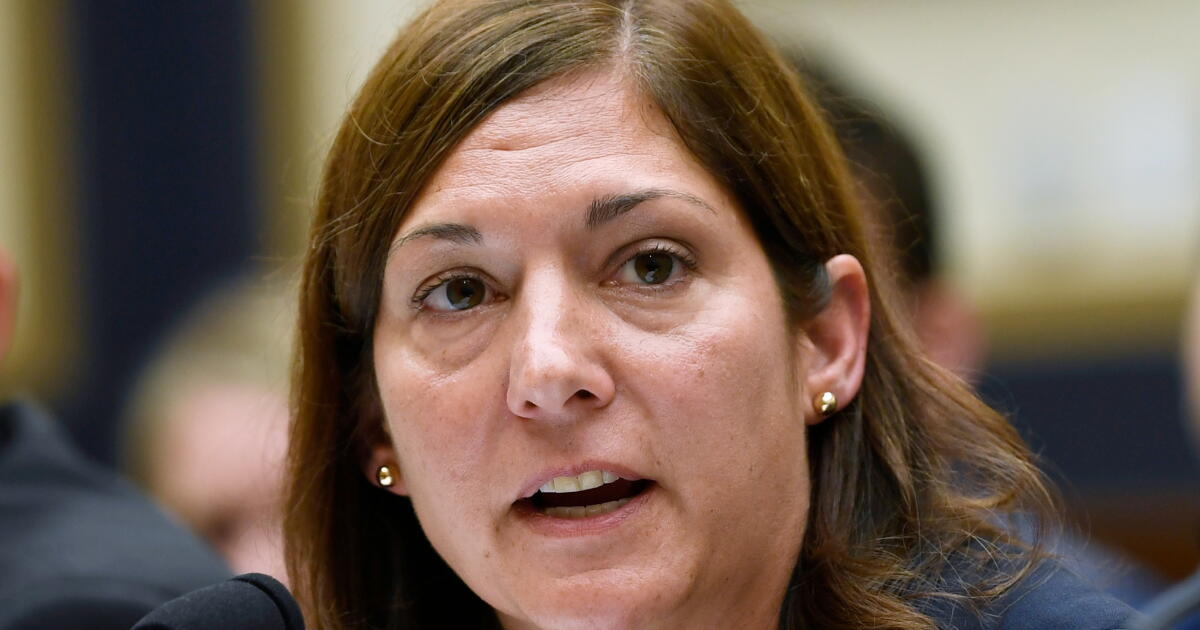
Source link

New law puts Kansas at vanguard of denying trans identities on official documents

Kansas is set to invalidate about 1,700 driver’s licenses held by transgender residents and roughly as many birth certificates under a new law that goes beyond Republican-imposed restrictions in other states on listing gender identities in government documents.

The new law takes effect Thursday. Democratic Gov. Laura Kelly vetoed the measure, but the Legislature’s GOP supermajorities overrode it last week as Republican state lawmakers across the U.S. have pursued another round of measures to roll back transgender rights.

The bill prohibits documents from listing any sex other than the one assigned birth and invalidates any that reflect a conflicting gender identity. Florida, Tennessee and Texas also don’t allow driver’s licenses to reflect a trans person’s gender identity, and at least eight states besides Kansas have policies that bar trans residents from changing their birth certificates.

But only Kansas’ law requires reversing changes previously made for trans residents. Kansas officials expect to cancel about 1,700 driver’s licenses and issue new birth certificates for up to 1,800 people.

“It tells me that Kansas Republicans are interested in being on the vanguard of the culture war and in a race to the bottom,” said Democratic state Rep. Abi Boatman, a transgender Air Force veteran appointed in January to fill a vacant Wichita seat.

Kansas’ new law enjoyed nearly unanimous GOP support. It is the latest development in what has become an annual effort to further roll back transgender rights by Republicans in statehouses across the U.S., bolstered by policies and rhetoric from President Trump’s administration.

Trump and other Republicans attack research-backed conclusions that gender can change or be fluid, which they frame as radical “gender ideology.” GOP lawmakers in Kansas regularly describe transgender girls and women as male, and say that in doing so they are protecting women.

Like other Republicans, Kansas Senate Majority Leader Chase Blasi said Trump’s reelection and other GOP victories in 2024 show that voters want “to return to common sense” on gender.

“When I go home, people believe there are just two sexes, male and female,” Blasi said. “It’s basic biology I learned in high school.”

Kelly supports transgender rights, but GOP lawmakers have overridden her vetoes three of the last four years. Kansas bans gender-affirming care for minors and bars transgender women and girls from female sports teams, kindergarten through college.

Transgender people can’t use public restrooms, locker rooms or other single-sex facilities associated with their gender identities, though there was no enforcement mechanism until this year’s law added tough new provisions.

Transgender people have said carrying IDs that misgender them opens them to intrusive questions, harassment and even violence when they show it to police, merchants and others.

In 2023, Republicans halted changes in Kansas birth certificates and driver’s licenses by enacting a measure ending the state’s legal recognition of trans residents’ gender identities. Though the law didn’t mention either document, it legally defined male and female by a person’s “biological reproductive system” at birth.

However, a lawsuit led to state court decisions that permitted driver’s license changes to resume last year.

Legislators in at least seven other states are considering bills to prevent transgender people from changing one or both documents, according to a search using the bill-tracking software Plural.

But none would reverse past changes.

The extra step by Kansas legislators reinforces a message “that trans people aren’t welcome,” said Anthony Alvarez, a transgender University of Kansas student who works for an LGBTQ+ rights group.

Kansas is likely to notify transgender residents by mail that their driver’s licenses are no longer valid and they need to go to a local licensing office to get a new one, said Zachary Denney, spokesperson for the agency that issues them.

The Legislature hasn’t earmarked funds to cover the cost, so each person will be charged for it — $26 for a standard license.

Alvarez already has had four IDs in four years as he’s changed his name, changed his gender marker and turned 21.

He’s always planned to stay in his native Kansas after receiving his history degree this spring.

But, he said, “they’re just making it harder and harder for me to live in the state that I love.”

Hanna writes for the Associated Press.

Source link

TSA says PreCheck still operational

The Transportation Security Administration said Sunday that its PreCheck program would remain operational despite an earlier announcement from the Department of Homeland Security that the airport security service was being suspended because of the partial government shutdown.

“As staffing constraints arise, TSA will evaluate on a case by case basis and adjust operations accordingly,” the agency said in a statement.

Airport lines seemed largely unaffected through midday Sunday, with security check line wait times listed as under 15 minutes for most international airports, according to TSA’s mobile app.

Amy Wainscott, 42, flew from the Destin-Fort Walton Beach airport in Florida to Dallas Love Field on Sunday and said she didn’t hear about the announced suspension until she had already gone through TSA’s PreCheck.

“When we got to the airport this morning everything was working like usual,” she said. “It didn’t seem like anything had changed.”

Jean Fay, 54, said she had no issues going through TSA PreCheck at the Baltimore airport for her 6 a.m. Sunday flight back home to Texas. She didn’t hear about the suspension announcment until she was changing planes in Austin on her way to Dallas Love Field.

“When I landed in Austin I started getting the alerts,” she said.

It was not immediately clear whether Global Entry, another airport service, would be affected. PreCheck and Global Entry are designed to help speed registered travelers through security lines, and suspensions would probably cause headaches and delays.

Since starting in 2013, more than 20 million Americans have signed up for TSA PreCheck, according to the Department of Homeland Security, and millions of those Americans also have overlapping Global Entry memberships. Global Entry is a U.S. Customs and Border Protection program that allows preapproved, low-risk travelers to use expedited kiosks when entering the United States from abroad.

The turmoil is tied to a partial government shutdown that began Feb. 14 after Democrats and the White House were unable to reach a deal on legislation to fund the Department of Homeland Security. Democrats have been demanding changes to aggressive federal immigration operations, central to President Trump’s deportation campaign, which have been widely criticized since the shooting deaths of two people in Minneapolis last month.

The security disruptions come as a major winter storm hit the East Coast from Sunday into Monday. Nine out of 10 flights going out of John F. Kennedy International Airport, LaGuardia Airport and Boston Logan Airport on Monday have been canceled.

Homeland Security previously said it was taking “emergency measures to preserve limited funds.” Among the steps listed were “ending Transportation Security Administration (TSA) PreCheck lanes and Customs and Border Protection (CBP) Global Entry service, to refocus Department personnel on the majority of travelers.”

“We are glad that DHS has decided to keep PreCheck operational and avoid a crisis of its own making,” said Geoff Freeman, president and CEO of the U.S. Travel Assn.

Before announcing the PreCheck shutdown, Homeland Security Secretary Kristi Noem said in a statement Saturday night that “shutdowns have serious real world consequences.”

One group of fliers will definitely be affected, according to TSA.

“Courtesy escorts, such as those for Members of Congress, have been suspended to allow officers to focus on the mission of securing America’s skies,” the agency said.

Airlines for America, a trade group representing major carriers, said Saturday night that “it’s past time for Congress to get to the table and get a deal done.” It also criticized the announcement, saying it was “issued with extremely short notice to travelers, giving them little time to plan accordingly.”

“A4A is deeply concerned that TSA PreCheck and Global Entry programs are being suspended and that the traveling public will be, once again, used as a political football amid another government shutdown,” the organization said.

Democrats on the House Committee on Homeland Security criticized the Department of Homeland Security’s handling of airport security after the initial announcement Saturday night. They accused the administration of “kneecapping the programs that make travel smoother and secure.”

Sen. Andy Kim, a New Jersey Democrat, said Noem’s actions are part of an administration strategy to distract from other issues and shift responsibility.

“This administration is trying to weaponize our government, trying to make things intentionally more difficult for the American people as a political leverage,” he said Sunday on CNN. “And the American people see that.”

Swenson writes for the Associated Press.
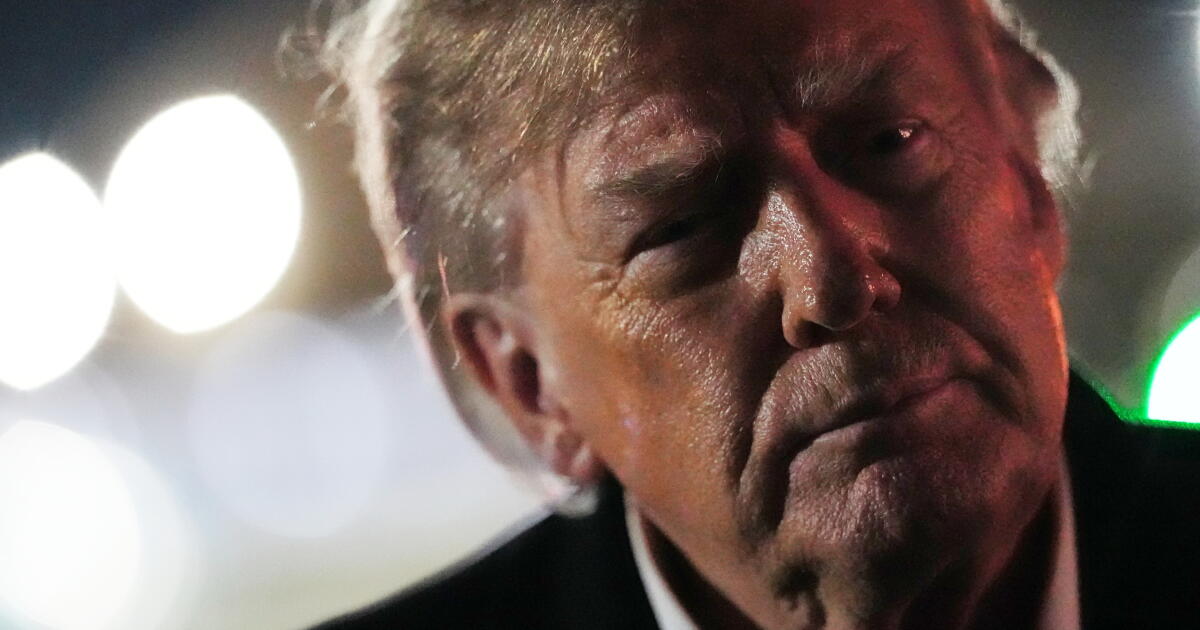
Source link