China said on Monday that a two-month extension of its trade truce with the United States would give both sides more time to assess the implementation of their existing arrangements and discuss further steps to resolve economic and trade disputes.
China’s Commerce Ministry confirmed that the truce would remain in place through January 10, saying the extension would provide a “relatively stable and predictable policy environment” for businesses and allow the two countries to continue their talks.
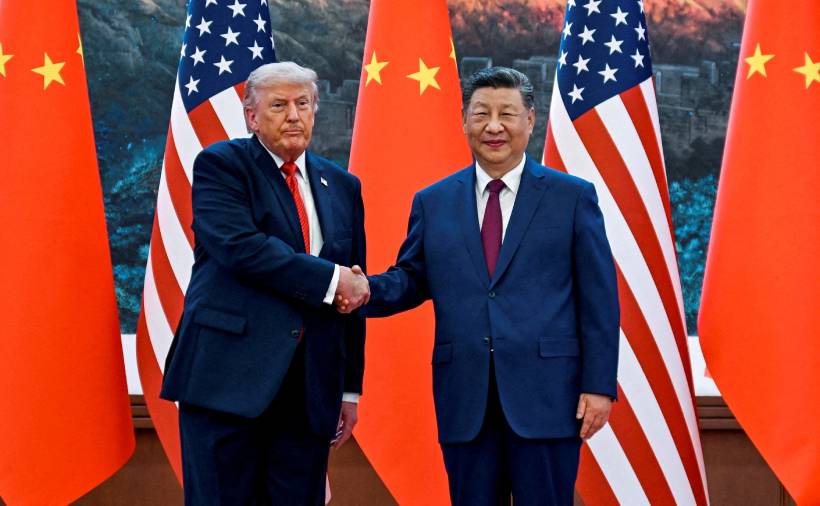
The extension was among the main outcomes of a summit between Chinese President Xi Jinping and US President Donald Trump in Washington last week, their second meeting this year.
Background
The United States and China have spent years imposing tariffs and other trade restrictions on each other, with tensions extending beyond tariffs to technology, investment, supply chains and market access.
Stay ahead of the geopolitical week.
MD Briefing delivers expert analysis across five global fronts — the Indo-Pacific, energy, geoeconomics, European security, and the Middle East — every Monday morning. Free.
The latest extension follows an agreement by the two sides to establish a trade council that will oversee discussions on a range of economic issues.
One of its first tasks will be to discuss reciprocal tariff reductions covering about $30 billion worth of goods, with the aim of maintaining more stable economic and trade relations between the two countries.
China’s Commerce Ministry said the arrangement would also create better conditions for Chinese exporters seeking access to the US market.
The two sides will hold regular discussions on investment opportunities and barriers, policy transparency and predictability, and concerns raised by businesses.
Why it matters
The extension gives US and Chinese companies more time to operate under a relatively predictable trade environment while negotiators work through remaining disputes.
Agriculture is one of the main areas covered by the latest arrangements. A White House list showed that China plans to reduce tariffs on a range of US agricultural products, including corn, wheat, dairy products and meat, although soybeans were not included.
The proposed cuts appear linked to a US-stated Chinese commitment to purchase $17 billion worth of agricultural products. China has already resumed large-scale purchases of US soybeans under an agreement reached last year that called for annual purchases of 25 million metric tons.
The countries will also establish an agriculture working group under the new trade council, with its first meeting expected before the end of the year.
Energy trade is another part of the agreement. China will import 10 million metric tons of US coal annually in 2027 and 2028, according to the White House. That would account for about 2% of China’s annual coal imports. US liquefied natural gas and oil were not included in the list.
The arrangements extend beyond traditional trade. The two countries have agreed to establish a communication channel for artificial intelligence related incidents and hold another dialogue by the end of November.
China will also consider approving foreign financial institutions, including US backed firms, to operate and open branches in the country. Washington and Beijing will meanwhile continue discussions on increasing direct flights between the two countries.
What’s next
The immediate focus will be on implementing the agreements reached at the presidential summit.
The agriculture working group is expected to meet before the end of the year, while the AI dialogue is due to continue by the end of November. The two countries will also use the new trade council to discuss tariffs, investment, market access and regulatory concerns.
The extension runs until January 10, giving negotiators another two months to evaluate whether the existing arrangements are being implemented and determine what further agreements can be reached.
Whether the two sides can turn the temporary truce into longer-term trade arrangements will depend on progress across the different areas covered by their negotiations, including tariffs, agricultural purchases, investment and technology.
With information from Reuters,