Airbus U.S. Space and Defense has been actively developing and iterating the technology for its Lakota Connector, an uncrewed, autonomous variant of the multi-mission UH-72B Lakota helicopter. This includes testing under Team Lakota Connector, that has brought together Shield AI, L3Harris Technologies, and Parry Labs in a prototyping phase for the U.S. Marine Corps.
TWZ’s Jamie Hunter spoke with Carl Forsling from Airbus U.S., at the AUSA 2026 trade event in Washington D.C. A former U.S. Marine Corps CH-46 Sea Knight and MV-22 Osprey pilot, Forsling explained the requirement for uncrewed logistics in contested theaters, and what’s next for Team Lakota Connector.
Airbus Talks Progress With Lakota Connector Cargo Drone
Maria Astorini, a retired character actress and a minor star, is 37 years late delivering her memoir. But the project, which she has tried her best to forget, has been pulled out from under the rug by her publisher. Forced to deliver a manuscript, Maria writes an autobiography clocking in at a shade over 200 pages.
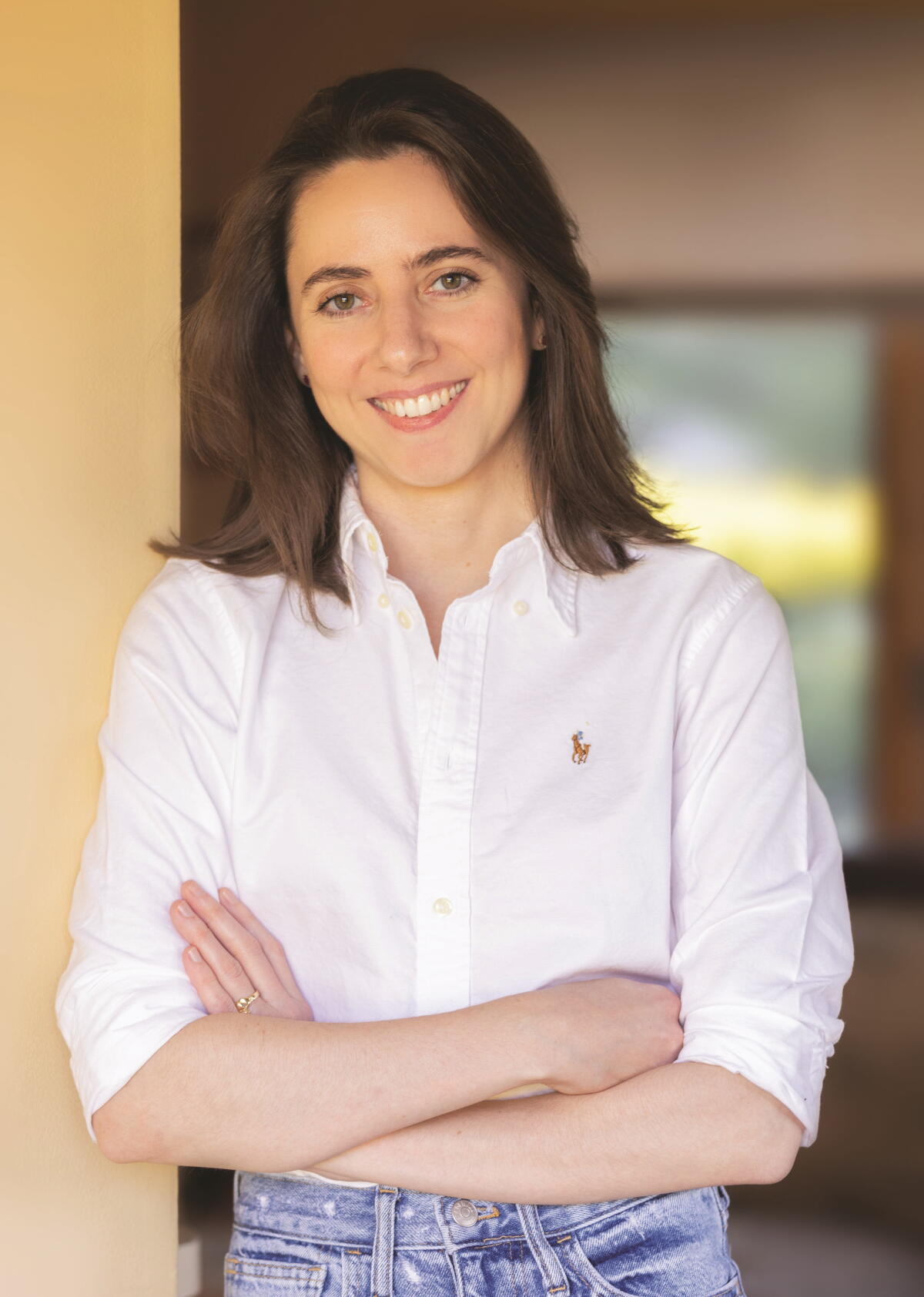
The result is Elizabeth Castellano’s second novel “Proof of Progress,” a wry, poignant and very funny twirl through a life that swerves past triumph and failure, boredom and joy, public life and private sorrow. I recently spoke with her about Bloomingdale’s, Calvin Trillin, and how cellphones are the enemy of good fiction.
You’re reading Book Club
An exclusive look at what we’re reading, book club events and our latest author interviews.
By continuing, you agree to our Terms of Service, which include arbitration and a class action waiver. You agree that we and our third-party vendors may collect and use your information, including through cookies, pixels and similar technologies, for the purposes set forth in our Privacy Policy such as personalizing your experience and ads.
✍️ Author Chat
”Proof of Progress” traces the life of your protagonist, Maria Astorini, from childhood to her mid-60s. It reminded me of something Bob Dylan wrote recently about growing older, which is that you finally get rid of the illusion that life is under your control.
For Maria, there is a lot of serendipity that feels like fate, of being in the right place at the right moment, or meeting the right person, which sends her off in a different direction. I like that in a novel. It was also helpful to be writing primarily about an era without phones, so that she’s able to meet a lot of people.
We’re seeing this a lot in contemporary narratives: writers setting their stories in pre-phone eras, so their characters can actually interact with each other.
She’s talking to people, she’s meeting people, so she’s able to be sent on different paths. Even meeting her husband probably wouldn’t have happened with the phone.
“Proof of Progress” is Elizabeth Castellano’s second novel.
(Harper Collins / Carl Timpone)
You have written a very funny book, and funny books don’t get the respect they deserve.
Anytime you have humor in a book, you’re not taken quite as seriously. Even in Barnes & Noble, when you look for humor, it’s on the back wall or on the floor. And that’s where you find the David Sedaris books, which is crazy. My last book was about a beach town, so I got lumped in with the beach read group. I had people who were looking for a fun beach read and then they picked up my book, and it’s about zoning code violations. I’m happy that this book is being marketed as literary and humorous. I’m in better shape in that sense.
It’s really hard to write funny. Or is it?
The best way I can describe it is like a stand-up comedian having a notebook full of jokes and anecdotes and she has to put together an HBO special. Sometimes I just had one line of something funny. I had all these ideas and thoughts and different things from old books that I was writing. I tried to put all of it together and find a character that could tell this story, and the through line that I could create from all of this material. So I wrote it backwards and out of order.
Who do you think is funny? Who do you like to read?
J.D. Salinger, David Sedaris, Maria Semple. I love Calvin Trillin. I think he’s a great writer.
Your protagonist is very late on a contract and has to rush to get the book written, which gives the narrative propulsion and momentum.
I had a two-book deal, so while I was working on the publicity for my first book, I raced to finish this book. And when I was finished, I realized it didn’t work and had to throw out the whole manuscript. I saved maybe six or seven little anecdotes from that original book. So it took another year to write. That was the inspiration for “Proof of Progress.”
Your writing career is a bit like Maria’s acting career, in that you chanced upon it.
I was a theater major. I don’t think I took one English course. Then I graduated right into the Recession of 2008. There were no jobs. Eventually, I applied to be an apprentice buyer at Bloomingdale’s, even though I hate shopping. That was the last resort. Then I decided, maybe I’ll be a writer, because it felt like something that I could do. I wrote a lot of things that were rejected before I wrote my first book, “Save What’s Left” [2023]. And that’s probably why I wrote Maria the way I did. We zig, we zag, we endure.
This Q&A was edited for length and clarity.
📰 The Week(s) in Books
Kyle MacLachlan’s new memoir is a funny, candid and self-aware reflection on his 40-year career in Hollywood.
(Christopher Patey / For The Times)
We loved him as Special Agent Cooper in “Twin Peaks” and as Jeffrey Beaumont in “Blue Velvet,” but according to Kyle Maclachlan’s new memoir, “Fictional Selves,” there is another unknown character: “Other Kyle,” the actor’s ever-present shadow figure. “There’s definitely another entity, an observer, the ego, the harder self,” MacLachlan tells Rachel Brodksy.
After a nine-year absence from fiction, John Green has returned with “Hollywood, Ending,” a darkly humorous show business cautionary tale that Green couldn’t have written “without spending a lot of time on film sets,” he tells Emily St. Martin. “I hope the book is a love letter to movies. But I also wanted to be honest about how difficult it is to make a work of art that, in order to be commercially successful, has to be loved by millions of people.”
Katya Suvorova’s memoir, “Ungrateful Immigrant Daughter,” is a “heart-wrenching tale of immigration” that “pulls back the velvety red curtain to reveal one story behind the oversexualized stereotypical post-Soviet mail-order bride narrative so ingrained in post-Cold War U.S. culture,” writes Diana Ruzova.
Finally, Vroman’s and Book Soup, two of L.A.’s most beloved bookstores, have been sold by longtime owner Joel Sheldon to tech executive Robert Hoffman, reports Suhauna Hussain.
📖 Bookstore Faves
Outpost Books is a new bookstore in South Pasadena.
(Simran Malik)
Walking into Outpost Books is like stepping into a smart book lover’s cozy den. With its southwestern-themed design and a well-curated selection of new and used books, the indie book store in South Pasadena already feels like home to this community of rabid book lovers. I spoke with owner Nicole Novembrino about her new store.
Why a bookstore?
I was a sales rep for a publisher of art books, but I looked at my life, wondering what I could do for a living that would give me real meaning and purpose. I love books, and so I decided to open a bookstore. It’s not easy, and you can second-guess yourself a million times along the way, or get a normal job. But I’m so glad I did it. Everyone in the neighborhood is so happy!
Why did you choose to open in South Pasadena?
I live in El Sereno nearby, and South Pasadena is such a great community. When we first opened, people were coming in and thanking us for opening in the neighborhood. There aren’t any other bookstores in this particular South Pasadena neighborhood. I definitely didn’t want to take any business away from other stores.
Pasadena loves its bookstores.
This is a very bookish community. The donations I’m getting from people are really smart volumes. I think I’ve had just one Nora Roberts book! The landlords are great, as well. They came to our opening and told me the store is all they could have dreamed of for the space, which is so sweet.
The kids section is really fun, with the tent and the fake tree stumps.
We have a lot of kids books with a southwestern theme. I’ve been collecting them over the years from my trips to the desert. You might find a book called “Armadillo Rodeo” in there.
How did you land on the western theme?
My mom is from New Mexico, so every family vacation was a trip to the Southwest, and I loved stopping and collecting things at the trading posts along the way. I wanted to give the store that kind of feel. I chose the name Outpost for that reason. It is a lived-in place where you can just hang out and find cool things and read.
Outpost Books, 1010 ½ Fair Oaks Ave., South Pasadena, (626) 399-0595
Menopause has been having a moment lately, and Washington is taking notice. On Sept. 16, the Senate held its first hearing on the dismal state of federally funded menopause research and vast gaps in treatment and care. Within 24 hours, the Department of Health and Human Services also convened pharmaceutical manufacturers and physicians to troubleshoot the alarming lack of availability of estradiol patches, an essential menopause hormone treatment, and the Food and Drug Administration held a full day of expert panels on female-dosed testosterone, which is currently only FDA-approved for men.
One week later, Health and Human Services joined the American Urological Assn. for a discussion about a silent killer of postmenopausal women: urosepsis from recurrent urinary tract infections. There is a simple solution — localized vaginal estrogen — and yet because of outdated guidelines and lack of clinician training, the medication is too often ignored or denied. Nor is the prescription routinely covered by Medicare, despite its well-established health and longevity benefits for women over age 65.
These are among the attempts to now, finally, address decades of policy failures — a refreshing change, quite frankly, given neither political party has ever prioritized menopause. That 2026 marks the year when menopause has entered the policy arena comes as little surprise to me. I’ve been beating this drum for years. Every aspect of daily life that menopause touches — the soaring cost of medical care, inadequate access to health insurance, extreme underinvestment in scientific research focused on women’s health, even the myriad ways midlife women are stretched to the limit caring for kids and aging parents — is smack in the middle of the political zeitgeist. These are the kitchen table issues on the minds of voters this election.
Menopause moment, meet the midterms.
Another issue rightly revealed by menopause is the chasm of public trust in government. As one of the four expert witnesses who testified at the Senate, I was heartened that it was a true bipartisan endeavor. But that’s a rarity these days in Congress, an institution rife with dysfunction. Our federal health agencies have become so shamelessly politicized they are on a collision course with science — from HHS’ overt moves to undermine childhood vaccines, to the decimation of leadership at the Centers for Disease Control and Prevention, which is struggling to respond to the crisis of measles outbreaks across the country.
My goal as a policy advocate is to help turn the tide on this country’s long record of neglect when it comes to menopause. Like many other women’s and reproductive health advocates, after the 2024 election l turned my attention to state legislatures — not just as a consolation prize but as a way to test what range of reforms were feasible and to get as many good laws as possible passed. It was the right move. Over the last two years, more than 60 bills have been introduced in 28 states — to do things like require private insurance and Medicaid to cover menopause care and treatment, improve clinician training and public education, and bolster antidiscrimination protection in the workplace. Ten of those states now have 21 laws on the books.
California is one and can claim real leadership. Among the bills passed by the Legislature, Assembly Bill 2270 from 2023-24 incentivizes continuing medical education on menopause for clinicians, the majority of whom receive little to zero training while in medical school and residency. The California Department of Corrections is now collaborating with medical experts to help bring menopause resources to incarcerated women in state prisons.
Newsom also just vetoed AB 1940, which would have codified menopause as a protected category in the state’s workplace antidiscrimination laws.
The Legislature has been especially deft at easing access to FDA-approved hormonal treatments, including testosterone, often used off-label by menopausal women: AB 82 ends the requirement to report prescriptions to the state’s tracking database; AB 1778 proactively declassifies testosterone as a controlled substance under state law, should there be action in Washington to do the same under federal law.
Although Newsom twice vetoed bills to mandate insurance coverage for menopause treatment — and deserved all the flak he received — the 2026-27 state budget includes a minor course correct: a $3.4-million “trailer bill” to invest in public education and make menopause treatments more affordable; Medi-Cal patients are not fully covered by the addendum, though, making it a toothless reform for those who need support the most.
Why should California’s menopause agenda, or that of the other 27 states that have introduced reforms, matter to the rest of the country? They offer useful models of what to do — or in the case of Medicaid exclusion, what not to do — in crafting meaningful policies. Perhaps more important, they offer a rationale that can help persuade the public; those who might balk at a congressional bill or federal policy, in part because of skepticism of the federal government or the current administration, can listen to and learn from other stakeholders, including governors and state lawmakers and activists.
Take for example the FDA decision in November 2025 to remove the long-critiqued “black box” warning on estrogen products for menopause. This was the culmination of a decade-long campaign by physicians, researchers and scientists — who had been waging the fight for accurate labeling well before the acronym MAHA ever existed and regardless of which party held power. Yet the very image of Health Secretary Robert F. Kennedy Jr. using his moment at the podium to credit the Trump administration’s deep commitment to women’s health posed a serious credibility challenge. Aligned and contemporaneous state reforms offered much-needed reassurance and clarity to many.
Trust in government is understandably at a low point, but this happens to be when menopause finally has caught the attention of policymakers at all levels of power. Some are taking long-overdue steps for women’s health, however implausibly. Let’s take the wins.
Jennifer Weiss-Wolf is the author of “When in Menopause: A User’s Manual & Citizen’s Guide.” She is executive director of NYU Law’s Birnbaum Women’s Leadership Center.
China said on Monday that a two-month extension of its trade truce with the United States would give both sides more time to assess the implementation of their existing arrangements and discuss further steps to resolve economic and trade disputes.
China’s Commerce Ministry confirmed that the truce would remain in place through January 10, saying the extension would provide a “relatively stable and predictable policy environment” for businesses and allow the two countries to continue their talks.
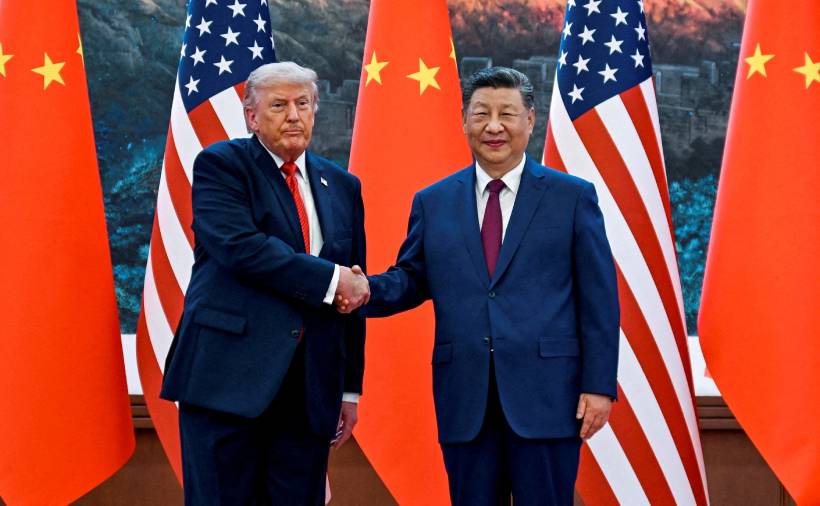
The extension was among the main outcomes of a summit between Chinese President Xi Jinping and US President Donald Trump in Washington last week, their second meeting this year.
Background
The United States and China have spent years imposing tariffs and other trade restrictions on each other, with tensions extending beyond tariffs to technology, investment, supply chains and market access.
Stay ahead of the geopolitical week.
MD Briefing delivers expert analysis across five global fronts — the Indo-Pacific, energy, geoeconomics, European security, and the Middle East — every Monday morning. Free.
The latest extension follows an agreement by the two sides to establish a trade council that will oversee discussions on a range of economic issues.
One of its first tasks will be to discuss reciprocal tariff reductions covering about $30 billion worth of goods, with the aim of maintaining more stable economic and trade relations between the two countries.
China’s Commerce Ministry said the arrangement would also create better conditions for Chinese exporters seeking access to the US market.
The two sides will hold regular discussions on investment opportunities and barriers, policy transparency and predictability, and concerns raised by businesses.
Why it matters
The extension gives US and Chinese companies more time to operate under a relatively predictable trade environment while negotiators work through remaining disputes.
Agriculture is one of the main areas covered by the latest arrangements. A White House list showed that China plans to reduce tariffs on a range of US agricultural products, including corn, wheat, dairy products and meat, although soybeans were not included.
The proposed cuts appear linked to a US-stated Chinese commitment to purchase $17 billion worth of agricultural products. China has already resumed large-scale purchases of US soybeans under an agreement reached last year that called for annual purchases of 25 million metric tons.
The countries will also establish an agriculture working group under the new trade council, with its first meeting expected before the end of the year.
Energy trade is another part of the agreement. China will import 10 million metric tons of US coal annually in 2027 and 2028, according to the White House. That would account for about 2% of China’s annual coal imports. US liquefied natural gas and oil were not included in the list.
The arrangements extend beyond traditional trade. The two countries have agreed to establish a communication channel for artificial intelligence related incidents and hold another dialogue by the end of November.
China will also consider approving foreign financial institutions, including US backed firms, to operate and open branches in the country. Washington and Beijing will meanwhile continue discussions on increasing direct flights between the two countries.
What’s next
The immediate focus will be on implementing the agreements reached at the presidential summit.
The agriculture working group is expected to meet before the end of the year, while the AI dialogue is due to continue by the end of November. The two countries will also use the new trade council to discuss tariffs, investment, market access and regulatory concerns.
The extension runs until January 10, giving negotiators another two months to evaluate whether the existing arrangements are being implemented and determine what further agreements can be reached.
Whether the two sides can turn the temporary truce into longer-term trade arrangements will depend on progress across the different areas covered by their negotiations, including tariffs, agricultural purchases, investment and technology.
Did Justin Bieber perform at problem-plagued MacArthur Park? Never say never.
An impersonator may have tricked a Las Vegas nightclub last year, but those at the park Tuesday appeared convinced of their brush with Bieber. L.A. County’s district attorney was too.
According to social media posts, the singer and a few band members set up on a grass lawn near a Central American fried chicken shop on 6th Street. He reportedly performed several songs, including the 2025 hit “Yukon.”
L.A. County Dist. Atty. Nathan Hochman on Tuesday night pointed to the “Yukon” clip as proof that park conditions were improving.
L.A. D.A. Nathan Hochman, center left, walks with First Assistant U.S. Atty. Bill Essayli on June 4 as L.A. police and federal agents conduct an operation targeting narcotics use at MacArthur Park.
(Allen J. Schaben/Los Angeles Times)
Bieber’s performance, he said in a post on X, was a “testament to the progress we are achieving to take back the park from drug dealers and enliven it for families.”
“[He’s] definitely on the invite list for next year’s Labor Day weekend picnic!” Hochman said.
The Times reached out to Bieber’s representatives to confirm the pop singer’s appearance but did not immediately hear back.
The pop star has been leaning in to more intimate performances, notably appearing on the Grammys for a stripped-down rendition of “Yukon” (while wearing boxers and black socks).
In April, he made his Coachella headlining debut, playing a nearly 90-minute set. For a large portion of the set, he took Beliebers — as his fans are known — down memory lane, sitting behind a laptop and singing along to his old music videos.
It took a field goal with 10 seconds left by star soccer player Alejandro Carranza to give King/Drew a 13-12 win over L.A. Cathedral last week. That’s a breakthrough win for King/Drew against a quality Southern Section opponent.
King/Drew is 2-2 in nonleague games and wants a return to the City Section Open Division playoffs. The Golden Eagles always seem to have lots of talent but have failed to reach the championship game of the City playoffs at the highest level.
This season there’s signs of progress on offense. Quarterback Gerard Torres has passed for 1,106 yards and eight touchdowns. Receiver Darr Muhammad has 26 catches and three touchdowns. King/Drew has lost to San Pedro and Culver City this season and has wins over Cathedral and Gardena.
There’s a showdown with Crenshaw on Oct. 16 to probably decide the Coliseum League title. King/Drew also travels to face Baltimore St. Francis Academy, where coach Joe Torres used to coach.
King/Drew needs to keep improving to reach the top four in the City playoffs.
This is a daily look at the positive happenings in high school sports. To submit any news, please email eric.sondheimer@latimes.com.