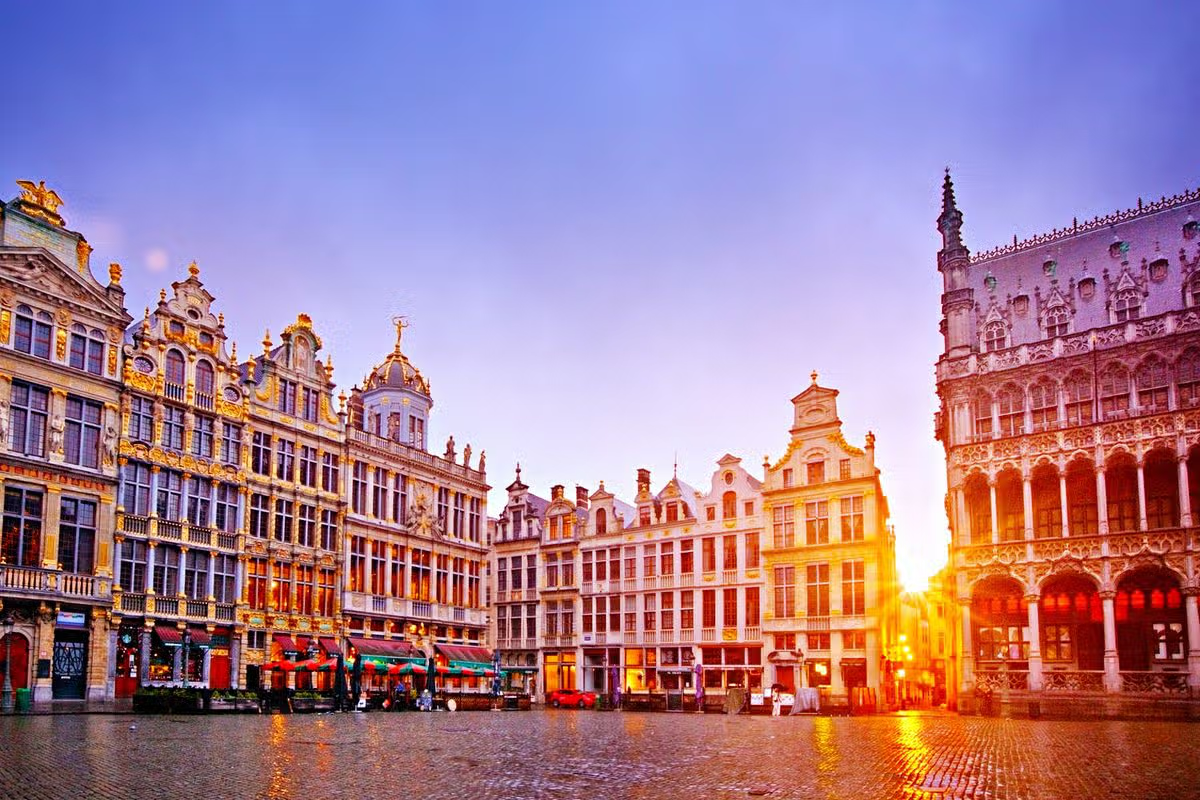
Brussels is an ideal destination for a short city break, thanks to its impressive medieval architecture, relaxed atmosphere and more than 100 museums

(Image: Getty Images)
A European city with a lot of history and beauty at odds with its negative reputation is quicker to get to from the UK via train than by plane.
New research from global travel booking site Omio has identified 25 European routes where travelling by train is actually faster than flying once airport transfers, security queues and boarding times are taken into account. While many holidaymakers automatically book flights for a weekend escape, the findings suggest they’re often overlooking rail journeys that are not only quicker, but also less stressful.
They’re also much less environmentally damaging, with the emissions per plane passenger typically several times higher than those of train passengers.
A trip from London to Brussels is one of the biggest examples of where rail beats air. The Eurostar takes just 125 minutes, making it 83 minutes faster than flying once airport transfers, security checks and boarding times are factored in. Tickets start from around £148, with passengers arriving directly in the heart of the Belgian capital.
Whether or not the city is worth a visit is a different matter. Brussels is, according to some people, a boring city.
“As much as I tried, I still could not shake the feeling that Brussels was undeniably boring,” one travel blogger recently wrote of Brussels following a trip there. Back in 2008, it was awarded the title of the world’s dullest city in a survey of international travelers, who judged it duller than Zurich and Warsaw.
Having made a short visit to the city in recent years, the criticism does seem a little just. Brussels does have a functional, workman-like feel to it, thanks to the huge number of governmental buildings. And yes, it does look like an AI picture generator’s attempt to ‘simulate a standard European capital’, as one online commenter complained.
However, there are plenty of redeemable qualities of Brussels. The atmosphere is pleasant enough, many of the buildings are beautiful, and it is home to two of the Continent’s great contributions to culinary culture – waffles and chips – even if there is a distinct Sunday afternoon feel to the place.
“Brussels is an ideal destination for a short city break, thanks to its impressive medieval architecture, relaxed atmosphere and more than 100 museums. Visitors can spend the day wandering the city’s historic streets before stopping for Belgian beer and world-famous chocolate. With average July temperatures of 23°C, it’s also an ideal city to explore on foot,” writes Omio.
Given Brussels’s closeness to the UK, a day trip is well on the cards. If you do go down that route, I suggest the following one-hour tour of the city:
Starting at the famed Manneken Pis statue depicting a urinating child (who had been dressed up in a miniature gown and hat to celebrate the city’s graduating students when I was there), dash to the Monument a Everard t’Serclaes, helping the reclining lady’s leg become even shinier with a quick, traditional good luck rub.
Pausing in the central Grand Place square for a moment, take in the opulent Baroque guildhalls and the neo-Gothic King’s House. Not wanting to waste any more time or spend six euros, read the first paragraph of the Grand City Museum’s Wikipedia entry while looking at its exterior.
Culturally enriched, next up was a portion of mayonnaise-covered frites eaten while looking at a René Magritte painting on the side of a house, before a crispy waffle powers you up the hill towards the Royal Palace. Glance back at the impressive view of the city’s rooftops as you barrel onto a coach and out of there, catching a glimpse of one of Auguste Rodin’s Thinkers through the window before quickly stopping to stand in front of ‘Belgium’s Eiffel Tower’, the futuristic Atomium statue.