SoFi Stadium is going strong. The deal that built it is in a smoldering heap.
A decade ago, Rams owner Stan Kroenke and Inglewood Mayor James T. Butts Jr. happily dug ceremonial shovels into the dirt at Hollywood Park, celebrating the impending construction of the world’s most expensive stadium.
Electronic billboards are seen along Century Boulevard in Inglewood on Tuesday, Oct. 20.
(Eric Thayer / Los Angeles Times)
Now they’re on opposite sides of a court fight that has spilled onto the Nov. 3 ballot and threatens further development on the nearly 300-acre site.
The feud started over billboards. Last year, Inglewood signed a deal with WOW Media to put electronic advertising all around the city — 60 digital signs carrying 108 screens. Some are bus-shelter-sized kiosks, while others are street displays up to 22 feet tall and positioned on sidewalks and medians.
Those present problems for SoFi Stadium, Intuit Dome and the Forum because they have their own advertising deals and sponsors who paid for exclusivity. Those venues collectively sued Inglewood and WOW Media to block the deal, raising this scenario in a court filing: “Will Pepsi want to sponsor the Super Bowl, knowing Coca-Cola could pay WOW to put up full-motion billboards next to the stadium?”
Skip Miller, lead attorney for the city, said the kiosks are “quite nice and blend in with the surrounding areas,” and that they are connected to a network that provides critical traffic and safety information to thousands of drivers and pedestrians.
Electronic billboards are seen on along Century Boulevard on Tuesday, Oct. 20, 2026 in Inglewood, CA.
(Eric Thayer / Los Angeles Times)
A judge sided with Inglewood, and an appeal is under way.
In the meantime, those opposed to the billboards are taking it to the voters. On the ballot is Measure BB — as in “Billboard Blight” — which would restrict billboard advertising on public property. Miller said the city will challenge it in court if it passes, calling it free-speech discrimination.
The signs generate as much as $7.4 million a year, according to Inglewood budget records.
A consultant hired by the Yes on BB campaign estimated the city’s digital kiosk deal with WOW Media would generate $280,000 to $1.1 million a year, roughly 0.1% to 0.5% of Inglewood’s $238-million general fund.
John Shallman, a Los Angeles-based political strategist managing the “Yes on BB” campaign, also pointed to the unusual length of the billboard deal, which is 20 years plus two 10-year options.
Rams owner Stan Kroenke, right, talks to team president Kevin Demoff before a game against the New York Giant at SoFi Stadium on Sept. 21.
(Allen J. Schaben / Los Angeles Times)
“It’s biblical in length,” Shallman said. “You go back 40 years. We didn’t even have the Internet. We didn’t have cellphones.”
The billboards are part of the fight, but there’s a lot more. Back when the development agreement was signed in 2015, the deal was that Hollywood Park — interchangeable here with Kroenke’s companies — would pay up front for all the improvements around SoFi Stadium and eventually be reimbursed by the city. That means all the road upgrades, water lines, streetlights and the like. Same for event-day police and emergency services.
Over the years, that ran up a significant bill. Kroenke’s companies now want $448 million from the city. Inglewood, which last year wired Kroenke $20 million, is demanding that money back.
So how could that chasm be so wide? A turning point came last month when Los Angeles County Superior Court Judge David K. Reinart ruled the 2015 development agreement “void from the beginning and unenforceable.”
To understand why the judge ruled that way, it’s important to go back a decade and examine how the agreement was constructed.
One of the appealing aspects of building an NFL stadium in Inglewood was the speed with which a development agreement could be assembled and approved. Los Angeles went 20 years without an NFL franchise, during which all sorts of stadium ideas were proposed and eventually died. One of the stumbling blocks for those was the environmental-review process, which could take months or even years.
But at that time in California, there was an opportunity for Inglewood to fast-track the process. Instead of negotiating a new development agreement — there was one from 2009, when Hollywood Park was still a racetrack — supporters of the NFL stadium could bring it to the Inglewood City Council as a voter initiative.
People cross Century Boulevard near an electronic billboard in Inglewood.
(Eric Thayer / Los Angeles Times)
The council then had the choice to either adopt the initiative word for word, or send it to voters. No new environmental review required. Sure enough, in February 2015, the council approved the initiative, 5-0.
Now Kroenke had an approved stadium plan and not just fancy renderings to bring to fellow NFL owners, who 11 months later gave the thumbs up to a state-of-the-art venue at Hollywood Park. There was a competing stadium plan in Carson backed by the San Diego Chargers and Oakland Raiders that was taking the same fast-track approach with its city.
Regardless, the Hollywood Park plan won and the stadium was ultimately constructed, a $5-billion marvel that in February will play host to its second Super Bowl. It has also played host to the World Cup, major concerts by Taylor Swift and Beyoncé, and will be the swimming venue for the 2028 Summer Olympic Games. The Chargers moved to Los Angeles as tenants in the stadium.
“Inglewood loves SoFi Stadium,” said Miller, the city’s attorney. “Nothing is ever going to happen to SoFi Stadium. … As far as the rest of Hollywood Park, the developer has to follow the law, just like any other developer. This developer, who’s a very powerful, very wealthy person, has to follow the law just like anybody else.”
That’s not something you would have heard in 2015 when Kroenke and the city were pulling in the same direction. Something happened in 2018 that changed the landscape in California, and gave Inglewood an argument for why it shouldn’t be required to reimburse the developer for nearly half a billion dollars in public improvements.
It was a court decision involving Moreno Valley, a city about 75 miles east of Inglewood that planned to build a major development through the same approval process that was used in Inglewood. But environmental groups challenged that in court and won. A judge determined that type of development agreement requires negotiations and public hearings, not just a voter initiative. The agreement was voided.
SoFi Stadium in Inglewood, home of the Los Angeles Rams, hosts events throughout the year.
(Eric Thayer / Los Angeles Times)
Meanwhile, everything was moving forward in Inglewood. SoFi Stadium was constructed. The big events rolled in. Promises made, promises kept.
All the while, there was the outstanding issue of the city paying back Hollywood Park for all those improvements, but that arrangement was configured to ensure Inglewood could do so without going into the red. The deal said the city could keep the first $25 million in tax revenue from the stadium every year, then use the revenue generated beyond that to reimburse Kroenke’s companies.
In May 2025, Inglewood made a payment of $20 million.
Two months later, pointing to the Moreno Valley decision, the city deemed the development agreement invalid and demanded its money back.
Hollywood Park found that especially galling because four times over the past decade the city signed assurances to Kroenke’s lenders that the money would be paid back — and three of those times were after the Moreno Valley decision.
In the view of Hollywood Park, Inglewood welcomed the jobs, tax revenue, increased property values and heightened prestige for a decade, then walked away from the deal when the bills came due.
“Now that it’s time for the city to essentially uphold its end of the bargain, now that it’s received all the benefits, it’s saying, ‘Well, actually, we consider this agreement void. Thank you for the stadium, thank you for everything else, but we’re not going to uphold our end of the deal,’” said John Quinn, outside counsel for Hollywood Park in the matter.
An electronic billboard on Century Boulevard in Inglewood.
(Eric Thayer / Los Angeles Times)
Hollywood Park’s argument is that it followed the rules in 2015 in getting the development agreement unanimously approved by the City Council, and the results — a bustling stadium district and development around it — speak for themselves.
The city’s side said it connected the dots on the Moreno Valley case only after the lawsuit was filed against Inglewood and WOW Media last year.
And the city is backing a ballot initiative of its own, Measure AT, which would eliminate a $15-million cap on the 10% admission tax on ticket sales the stadium pays. Venues with fewer than 20,000 seats, including Intuit Dome, would for the first time be charged a 2.5% admission tax on ticket sales.
The ballot measure could generate an additional $47 million to $50 million annually, a city of Inglewood impact report states. Olympic events at both venues in 2028 could be especially lucrative for the city.
Hollywood Park sees that as punishment for challenging the billboard deal.
Also on the ballot, the contentious Inglewood mayor’s race. Butts is running for a fifth term, and his main challenger is Gloria Gray, an Inglewood City Council member.
Meanwhile, Hollywood Park’s legal losses are stacking up. The judge last month rejected the argument that because Inglewood is a charter city, one that operates under its own constitution, it should abide by the original development agreement.
The city is billing the fight as a billionaire versus the people. Those representing Kroenke’s interests say Inglewood should honor its commitment and provide the reimbursements it long promised.
An attorney representing Hollywood Park says changing the rules midstream could have a chilling effect on future developments in California.
“It’s going to seriously discourage new development throughout the state, and we’re not just talking about stadiums,” said Quinn, chairman and founding partner of Quinn Emanuel Urquhart & Sullivan LLP. “We’re talking about all kinds of planning and zoning decisions — including affordable housing projects.
“This just creates a really damaging cloud of legal uncertainty over all development in California.”
Growing up without “two nickels to rub together,” John McKinney never thought he’d be a lawyer.
At the beginning of 2026, sitting in his office as one of the highest-ranking prosecutors in Los Angeles County, McKinney had no designs on trying to become L.A.’s city attorney.
But if he can beat progressive darling Marissa Roy next month and finish off an upstart campaign that barely had a pulse six months ago, McKinney would complete a lifelong underdog story that saw him go from working as a house painter and substitute teacher to pay for college to serving as the top lawyer for the second-largest city in America.
A highly regarded trial lawyer, McKinney, 58, claims an undefeated record in homicide trials and has won convictions in some of the region’s most infamous crimes, including the murder of beloved L.A. hip-hop star Nipsey Hussle. He reached his longtime perch in the district attorney’s office’s major crimes unit after a lifetime of struggle. Both of McKinney’s parents died before he was 5, and he was raised by his oldest sister in a cramped household with half a dozen other children in Passaic, N.J.
John McKinney speaks at a news conference at the Los Angeles Police Protective League in May.
(Kayla Bartkowski / Los Angeles Times)
McKinney beams with pride while discussing his hardscrabble East Coast upbringing — whether praising his sister’s hustle for working “six days a week,” or refusing to turn in his Yankees hat in a Dodger blue city. In interviews, he’ll sneak in a verbal jab at Roy, then finish the insult with a wry smirk. McKinney notes he’s been a prosecutor almost as long as his 34-year-old opponent has been alive.
“She’s never tried a case,” McKinney said. “When you’re running for city attorney overseeing trial lawyers and having to make high-impact decisions on whether to settle a case for $20 million or not, you should at least know what it’s like to go through a jury trial.”
Roy was part of the team that secured a $17-billion settlement from Meta in a landmark case this year, and has tried many cases decided by judges, rather than jury panels. She’s pushed back on McKinney’s barbs, noting he has no experience handling civil cases, a core component of the job.
McKinney has focused his campaign on lessening the city’s homelessness crisis by leveraging people into treatment, tackling quality-of-life crimes, and reducing the city’s out-of-control legal costs.
But he faces an uphill battle. Roy, a deputy state attorney general, has been campaigning for more than a year and raised more than twice as much money as McKinney. With the backing of both the county’s Democratic Party and the local Democratic Socialists of America chapter, Roy won June’s primary easily, outpacing McKinney by 15 percentage points. Both finished far ahead of City Atty. Hydee Feldstein Soto.
Marissa Roy, a deputy attorney general with the California Department of Justice, is running against John McKinney to become L.A.’s next city attorney.
(Gary Coronado/For The Times)
Los Angeles County Dist. Atty. Nathan Hochman leads a strong coalition of law enforcement support for McKinney, who has also been endorsed by four former city attorneys, two prior district attorneys and several City Council members, including Traci Park.
McKinney has emphasized the word “Democrat” in his ads, a nod to Roy’s attempts to cast him as the preferred choice of Republicans who won’t stand up to the Trump administration if elected. Although McKinney rubbed elbows with Republicans during efforts to recall then-Dist. Atty. George Gascón and employed fundraisers who worked with Trump, he says he “despises” the president and was disgusted by immigration raids in the city last year.
McKinney thinks Roy’s emphasis on fighting Trump speaks to a misunderstanding of the job. Across the country, it has been state attorneys general, not city attorneys, who have spearhead litigation against the White House, said McKinney, who dismissed the partisan attacks as a “misleading smear campaign.”
“Her lack of management experience and jury trial experience has not gone unnoticed by voters and her platform of wanting to turn the city attorney’s office into the country’s largest public interest law firm is out of alignment with the issues important to voters: public safety, homelessness and protecting taxpayer dollars,” he said.
Long before he was concerned about winning an elected office, McKinney was simply worried about survival.
The youngest of seven children, McKinney lost his mother to cancer when he was only 2. His father passed away unexpectedly three years later. His oldest sister, Ora, was recently divorced with three kids of her own but took in McKinney and his sister. He remained especially close to Ora — whom he described as his “mother, father and best friend” — until she passed away last year.
With his caretaker working nearly round the clock, McKinney said, he easily could have run in the streets with friends caught up in the crack cocaine boom of the 1980s. But McKinney said his sister’s determination inspired him to choose a better path.
“My sister made me believe there was really no limit to what I could do in life if I worked hard enough for it,” he said.
McKinney isn’t seeking sympathy, but believes sharing his backstory shows he’s “lived a life that mirrors a lot of the adversity Angelenos face every day.”
For much of his career in L.A., McKinney was seen as one of the district attorney’s office’s premier trial lawyers. He said he had no interest in management or politics until Gascón was elected in 2020. McKinney was one of several prosecutors to publicly criticize and sue Gascón. His involvement in the failed bid to recall Gascón put him in a political spotlight for the first time. He frequently spoke at recall events — which sometimes overlapped with rallies against Gov. Gavin Newsom and promoted conservative causes — and later joined the crowded field vying to replace Gascón in 2024.
Colleagues said McKinney has a history of being able to reach across ideological and cultural aisles. Bobby Grace, a veteran prosecutor who has worked with McKinney for decades, said he had a knack for getting people to take risks to take the stand in important cases.
“I think that’s where he made his reputation as a good trial lawyer,” Grace said. “To be successful, particularly in gangs, you’ve got to be able to convince witnesses who don’t want to come forward, and I think that was really his strength.”
Although he failed to gain traction in the race to unseat Gascón, finishing far behind Hochman, he caught the future district attorney’s eye and the two became allies. When Hochman took office, he put McKinney in charge of specialized prosecutions, giving him oversight of a wide range of cases, including cop killings, juvenile crimes, gang homicides and child abuse.
McKinney said he wasn’t even thinking about getting into the city attorney race until the middle of January, when a number of people approached him about entering.
City attorney candidate John McKinney, left, walks through Skid Row in downtown Los Angeles on July 1.
(Christina House / Los Angeles Times)
By March, McKinney was scrambling to get a campaign together, and Hochman was quick to lend the fundraisers and managers who helped him oust Gascón.
He soon ascended from nonfactor to legitimate contender. Frustrated with ballooning legal costs and her handling of a department data breach, the city’s powerful police union abandoned Feldstein Soto and backed McKinney. Independent expenditures — political interest groups that can spend unlimited amounts in campaigns if they don’t coordinate with candidates — doled out $3 million to support McKinney.
In total, records show those groups have spent nearly $5 million on McKinney. More than half of that money has come from a venture capitalist who has publicly praised Elon Musk and a political action committee run by Airbnb, the rental giant currently facing a lawsuit from the city for price gouging during the wildfires.
McKinney insists campaign support won’t influence his decision-making in office. He has vowed to sue Airbnb if it engages in price gouging, and he knows the Los Angeles Police Department is a major factor in the city’s rising litigation costs. Given his law enforcement background, he argues he’s better positioned to influence police than Roy.
“I think because they know I’m not coming at them from a vindictive point of view, trying to underfund them or undermine them, that my criticism will be taken for what it’s worth, which is to make them stronger, to make them more trusted and more effective,” he said.
Whereas Hochman often compared L.A. to crime-plagued “Gotham City,” McKinney acknowledges the city’s more recent struggles are not with violence, but with quality-of-life crimes: unchecked homeless encampments, street racing, animal abuse on Skid Row.
Walking around Skid Row this summer, McKinney spoke with several people who approached from tents and other jerry-rigged structures. He listened closely as they explained their struggles and pleaded for help in a part of the city few residents ever set foot in. He describes his approach to the city’s homeless crisis as one of “compassionate accountability.”
“Every person who is living on the street has had some tragic circumstance in their life,” he said that day.
McKinney acknowledged he can’t do anything about a lack of housing as city attorney, but he can better manage the way L.A. throws resources at the problem. That includes more sophisticated audits of community-based organizations that have contracts with the city to aid unhoused people, he said.
Ultimately, he does not want to punish people who are suffering, but thinks the city attorney’s office can use its power of prosecution to pressure homeless defendants suffering from addiction or mental health issues into treatment. The mission is a personal one for McKinney, who grew up with a schizophrenic nephew whose slow decline he watched for years.
“When I talk about compassionate accountability, it’s not just a campaign slogan for me,” he said. “It’s real. These are real people.”
Briton Freddie Slater will have his first experience of a Formula 1 car on a grand prix weekend when he drives for Audi in first practice in Mexico City on 30 October.
The 18-year-old will have a second outing a week later at the Sao Paulo Grand Prix.
Slater was the first driver to be brought into Audi’s driver development programme following the German company’s entry into F1 this season.
Allan McNish, Audi’s racing director and head of the driver development programme, said: “We have seen Freddie making great progress throughout recent years, both on and off the track.
“It is the right time for Freddie to step up.
“These appearances in Mexico and Brazil will give him valuable experience of a Formula 1 race weekend, and another chance to continue his development before he steps up to Formula 2 next season.”
Slater said: “Getting behind the wheel of an F1 car at a grand prix weekend is a big moment for me and something I’ve been dreaming of since I was a kid.
“I’ve learned a lot this year, and these free practice outings will be another opportunity to keep gaining on-track experience.”
Slater finished second on his debut in the Formula 3 championship this season and is moving up to Formula 2 in 2027 with the front-running Invicta team.
Invicta driver Rafael Camara is leading this year’s F2 championship and is moving up to F1 next season with the US-based Haas team.
Martin – a sometimes polarising personality with fans who have criticised his style and ability following a 17-game spell at Rangers last season – had been the target of anger following two wins in eight which left them 17th in League One and a point above the relegation zone.
Home defeats by Burton, Oxford and Peterborough were a world away from the Champions League quarter-final against Atletico Madrid in 2017.
That has little bearing internally at the club and BBC Sport can reveal the Foxes were working under a transfer embargo for five weeks in the summer.
It related to the EFL’s Salary Cost Management Protocol (SCMP) with an independent Club Financial Review Panel agreeing future Premier League distributions within Leicester’s SCMP calculation could not be used to increase their spending capacity.
It meant the club could not sign players until they brought money in, although it only disrupted the order of summer business.
Jeremy Monga and Abdul Fatawu were not sold until the middle of July and only after Monga left for Manchester City on 11 July were the Foxes able to bring in Conor Chaplin and Alex McCarthy five days later.
Four of the starting XI on Tuesday signed on deadline day and 66% of the players joined after the season started.
Leicester missed out on targets who were not willing to wait but Chaplin, McCarthy and Wes Burns were just three who were prepared to hold on to join Martin.
It is the relationships the head coach has built and something which has started to turn the tide at Seagrave.
Martin inherited a broken, expensive squad, which had lost the faith and connection with supporters and a dressing room which let egos get in the way and lacked work ethic.
In a different financial reality, it needed to be stripped back and, including loans and academy exits, 34 players left the club in the summer and 16 arrived.
Sources have told BBC Sport the atmosphere at the club has now markedly improved.
The £100m training ground is one of the best in the country – with a herb garden and golf course – but has been seen as part of the problem over the decline in standards.
Players have been allowed to become too comfortable but Martin has worked hard to change the culture and behaviours.
There is a blanket ban on mobile phones in the canteen and anyone breaking the rules is not fined, they run.
Players – and staff – have to run the length of the pitch and back in 35 seconds three times, with a 35-second break in between.
The same punishment is handed out for lateness, with Martin and his senior staff also adhering to it to set the standards.
Earlier this season players left tape and drinks at the swimming pool and were shown a picture the next day. The punishment was the same. Run.
It stopped me mid-scroll. In an Instagram reel, one DJ was mixing an upbeat track in a dark, packed room while another danced on a stage behind her, twerking perfectly on beat. Above them, a message flashed on a massive screen: “Love. Dance. And F— Ice.”
The crowd went wild, matching the energy of the two Los Angeles-based DJs who go by Mango and Ginger. The night looked so electric that I could feel the FOMO traveling through my body.
When I tapped the location tag, I assumed I was looking at an underground warehouse party in downtown L.A. or a venue in Hollywood. Instead, the party — known as If You See Me You See Me — was happening 120 miles south in San Diego. As a DJ and music lover, I knew I needed to get down there ASAP.
For many Angelenos, San Diego is the place to go for a peaceful weekend getaway — think scenic cliffs, serene beaches, fresh fish tacos and visits to Balboa Park and the San Diego Zoo. But it’s easy to sleep on its vibrant nightlife scene — and I don’t just mean the bars crowding the Gaslamp Quarter. The city is home to some of the most exciting late-night spaces, from hi-fi listening lounges to a cinematic Middle Eastern restaurant that feels straight out of Disneyland.
“People just aren’t aware,” says San Diego native Mo Perez, who as DJ Dopemo regularly packs out parties at North Park’s Bluefoot Bar and Lounge. “Then they come here and they’re like, ‘Wow, San Diego is really fun.’”
This is part of the reason why Sasha Marie, a longtime DJ and former member of the Soulection music collective, decided to continue hosting her event If You See Me You See Me, in partnership with Future Is Color, in her hometown of San Diego, even amid invitations to bring it to other cities. She invites DJs from around the globe, many of whom wouldn’t typically play in San Diego, to spin at the party.
“I feel like it’s important to show that something can be successful here,” she says.
Consider this your wake-up call to tap into San Diego’s nightlife scene, whether you want to go dancing or vibe to diverse sounds or have a cocktail in a one-of-a-kind atmosphere. These nine great spots are a sampling of how the city comes alive after dark.
Former Los Angeles mayoral candidate Rick Caruso declined once again to endorse either incumbent Mayor Karen Bass or challenger Nithya Raman in the Nov. 3 runoff election, but expressed what he called “extreme concern” about Raman’s plans to remove Police Chief Jim McDonnell.
The billionaire developer lost to Bass in the 2022 election, and was a staunch critic of the mayor for her response to the 2025 Palisades fire. Even so, he appeared with the mayor at his upscale Palisades Village shopping center Tuesday to promote a new program to streamline city utility services.
While declining to endorse Bass, Caruso commended the mayor by saying “she’s done her work, and she’s worked with the team, and I compliment this.”
“In comparison, Councilwoman Raman has made statements that we should all ask for an explanation to,” Caruso said, citing her plans to replace McDonnell. “I do show extreme concern when a candidate is talking about firing a chief of police.”
Raman’s campaign didn’t immediately respond to a request for comment.
At last week’s televised mayoral debate, Raman said that if elected mayor she would replace McDonnell, saying the LAPD appeared to be protecting federal Immigration and Customs Enforcement agents during their operations in L.A. Raman didn’t give a clear timeline of when she would act.
Bass has publicly backed the chief she hired two years ago, and warned that the Police Department could be thrown into disarray if he is removed before the 2028 Olympic Games.
Caruso applauded Bass’s support for McDonnell at Tuesday’s event.
“I don’t think we need LAPD being a lab experiment for the DSA,” Caruso said, referring to the Democratic Socialists of America, which has endorsed Raman. “It’s going to take L.A. in the wrong direction, and we should all be concerned about the direction she wants to take LAPD.”
When pressed by reporters about a possible endorsement, Caruso said, “I can’t answer that tonight or today. I’ll let you know.”
Caruso also declined to make an endorsement at a groundbreaking he attended with the mayor last month for the new Palisades Recreation Center, calling both Bass and Raman “tough choices.” Bass also sidestepped questions from The Times at the September event about whether she’d welcome Caruso’s endorsement.
Caruso funneled more than $100 million of his own fortune into his 2022 mayoral campaign, outspending Bass 11 to 1. Bass defeated Caruso by nearly 10 percentage points. Caruso didn’t run for the 2026 race, despite many expecting him to challenge Bass again.
Caruso said Tuesday that he and Bass haven’t always agreed on policy, but came together to help Pacific Palisades in a time of crisis. Caruso has played a prominent role in helping rebuild Pacific Palisades and Altadena following the fires.
The 67-year-old developer is behind popular L.A. malls, including the Grove and the Americana at Brand. He also owns Palisades Village, which first opened in 2018 and closed down after the fires destroyed much of downtown. Palisades Village reopened on Aug. 15, after 19 months and more than $100 million in renovations, Caruso said.
“I know what I’ve seen in the last year and a half, and the help she’s leaned in and given to this community,” Caruso said of Bass. “So, we did get together because it has to transcend politics, and we have to do the right thing.”
Bass and Caruso both acknowledged their longstanding relationship, dating back to Bass’s days in Sacramento, she said. The pair have been in constant communication since the 2022 mayoral race and started directly collaborating immediately after the Palisades fire, she said.
“My love for the city transcends politics, and I’m going to stand behind people that are doing right for the city and doing right for the people of the city that need the help the most,” Caruso said. “That’s why I’m standing here today.”
Caruso joined Bass Tuesday to announce Power Ready LA— an effort that will streamline how the Department of Water and Power delivers utility services to commercial and residential projects.
The effort will result in lower upfront costs for eligible housing and commercial projects, Bass said. It builds on an executive directive the mayor signed in April, which aims to cut delays, introduce tech automation and speed up building permits for residential and commercial development.
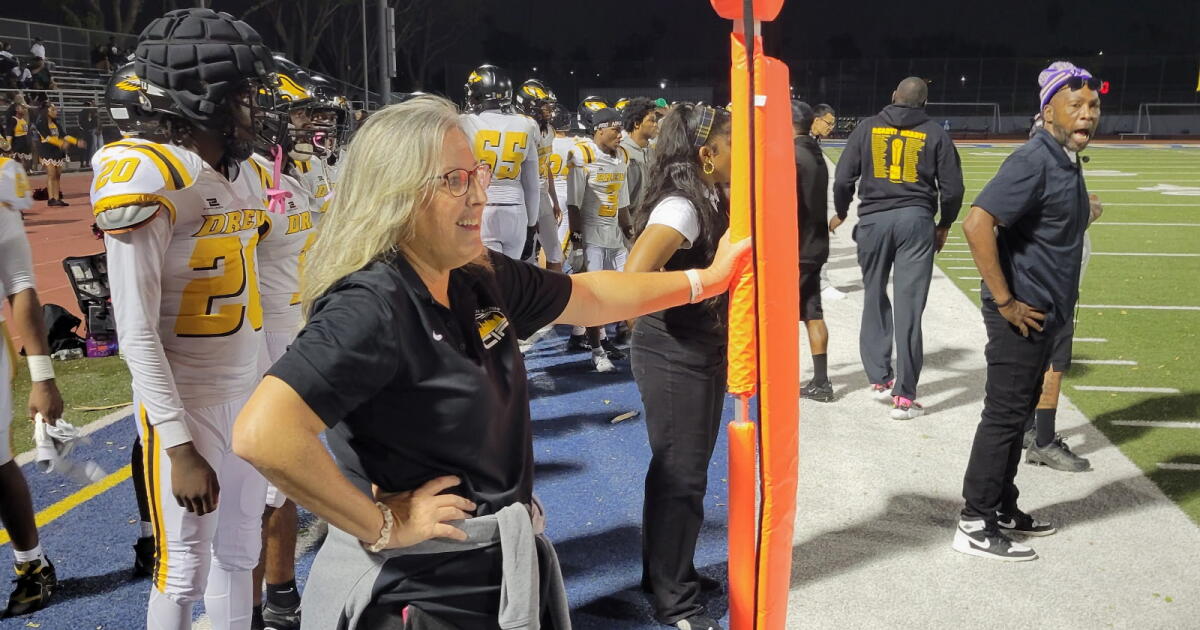
Vicky Lagos, the City Section commissioner, was watching last week’s King/Drew-Crenshaw football game on the sideline when she noticed problems with the chain crew.
She proceeded to become part of it, holding the down marker and helping educate the inexperienced students.
It was another example of her versatility and ability to improvise and intervene when needed.
NEXT MONTH the capital is set to get a HUGE new multi-million attraction with never- seen-before areas.
Opening on November 28, the £427million London Museum will be in Smithfield in the General Market.
The London Museum will open on November 28Credit: PAInside, there will be a number of different galleries documenting the history of the capitalCredit: London Museum
And the best thing about the new attraction is that it will be completely free to visit.
It will be the world’s largest city museum with three different spaces documenting the past 10,000 years of the capital with over seven million objects on display.
Sign up for the Travel newsletter
Thank you!
One area will be called ‘Real Time’ and feature a covered street where visitors can explore real time data about different parts of London.
In the second space, ‘Our Time’, will be the centre of the museum with events and activities including immersive theatre.
Around ‘Our Time’ there will also be 13 installations about London, a restaurant and a bookshop, with festivals and markets planned for the future too.
For extra fun, after-hours DJ sessions are also planned for Fridays and Saturdays.
There will even be an underground window through to Thameslink trainsCredit: London MuseumAnd at the weekends there will be late night DJ sessionsCredit: London Museum
The main gallery will then be known as ‘Past Time’ and can be found underground.
The gallery will take visitors through London’s history with exhibits including the recent ‘Piranhas’ artwork by Banksy as well as older pieces such as Charles I’s execution vest.
Notable other objects that will be on show at the museum will include the swimming trunks worn by Tom Daley for the 2012 London Olympics and Paul Simon from The Clash’s bass guitar, which he smashed on stage.
On the lower level of the museum there will also be a giant six-metre tall window that will let visitors look through to a tunnel where the Thameslink trains pass.
In 2028, the museum will open even more areas inside the Poultry Market building with galleries including ‘Temporary Time’, ‘Imagined Time’ and ‘Deep Time’.
This building will house the museum’s temporary exhibitions, collection stores and learning centre.
In 2028, another part of the museum will openCredit: London MuseumThis area will have more galleries for temporary exhibitions as well as a learning centreCredit: London Museum
In ‘Imagined Time’, there will be a platform hanging beneath the ceiling with different installations reflecting London’s past, present and imagined future.
The General Market first opened in 1883 as a meat market but has remained abandoned for the past 30 years.
The Mayor of London, Sadiq Khan, previously said: “The opening of the new London Museum will be a hugely significant moment both for London and internationally.
“Backed by one of the largest ever cultural investments in our capital, London Museum will attract millions of visitors and Londoners and reinforce our status as the cultural capital of the world.
“London Museum celebrates the past, creates opportunities in the present and will inspire future generations, as we continue to build a better London for everyone.”
Tuscany is often sold on Florence and Pisa, but a walled city I visited in late September stood out for its piazzas, rooftop views and brilliant food. With averages of 15°C in November and 12°C in December — and far fewer crowds — it’s ideal for a winter break.
One Italian city is often overlooked for the likes of Florence or Pisa(Image: Chloe Dobinson)
Nestled in the heart of Italy, Tuscany is celebrated for its gently rolling hills, charming medieval villages, vast vineyards and iconic Renaissance masterpieces. Boasting mouth-watering local food and a relaxed pace of life, the region has something for every holidaymaker seeking the very best of Italian culture.
Tourists can spend their mornings strolling through ancient towns, savour unhurried lunches with vineyard views, and watch the sun dip below the horizon with a glass of locally produced wine in hand. Having visited the region in late September, I find it equally worthwhile to head there in November and December as a winter getaway.
Average temperatures in the city are around 15°C in November and 12°C in December.
Tuscany is made up of 10 provinces, with its capital, Florence, celebrated for its extraordinary Renaissance heritage, iconic artwork and breathtaking architecture.
Other provinces include: Arezzo, Grosseto, Livorno, Massa-Carrara, Pistoia, Prato and Siena.
Florence and Pisa tend to be the first places that spring to mind when Tuscany is mentioned, yet one destination I discovered on my travels left a lasting impression — Lucca.
What is Lucca famous for?
The historic city walls
Among Lucca’s most treasured landmarks is its four-kilometre circuit of Renaissance walls, built between the 16th and 17th centuries. Originally constructed for defensive purposes, the walls today serve as a tree-lined public walkway, giving visitors the opportunity to stroll or cycle while soaking up sweeping views of the ancient city below.
Ensure our latest travel stories always appear at the top of your Google Search by making us a Preferred Source. Click here to activate or add us as a Preferred Source in your Google search settings
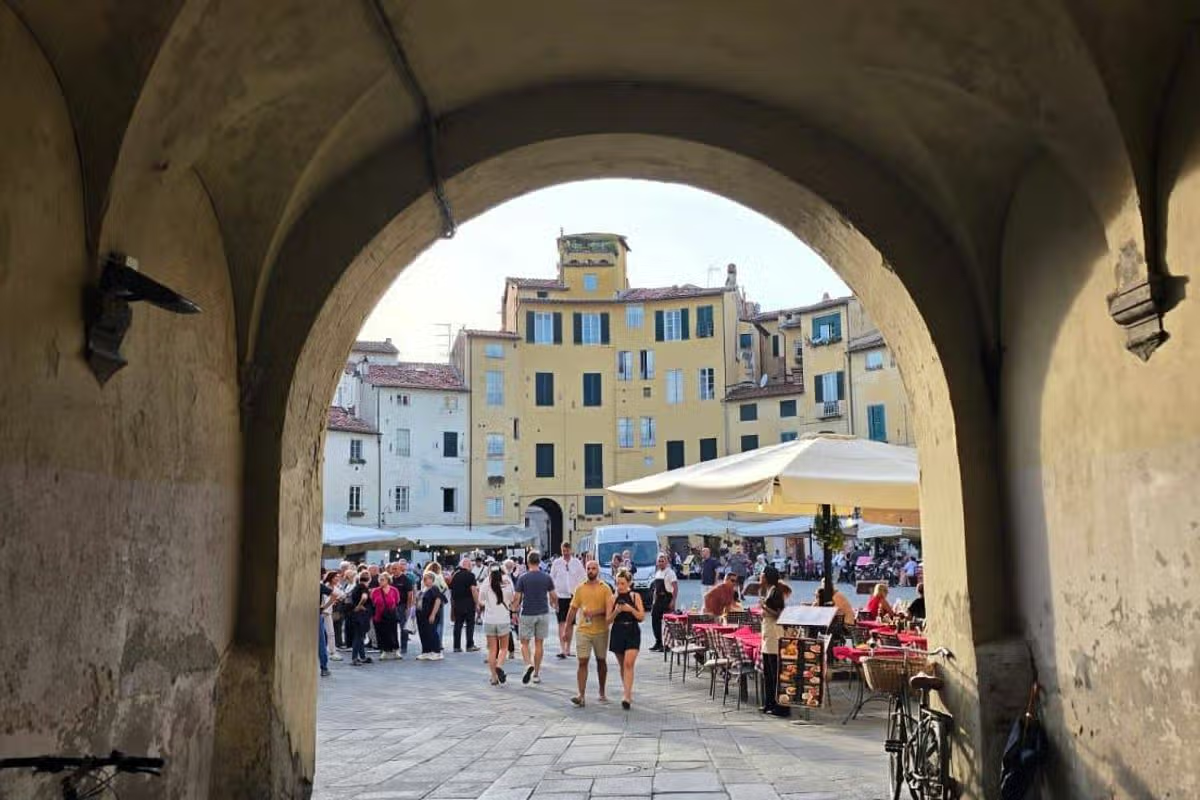
Piazza dell’Anfiteatro
Piazza dell’Anfiteatro stands as one of Lucca’s most striking landmarks. Constructed on the foundations of an ancient Roman amphitheatre, the oval-shaped piazza is surrounded by vibrant buildings, cafés and eateries, creating an idyllic spot to unwind and absorb the city’s ambience.
I stopped for lunch and took in the delightful views across the square. Prices here are typically a touch steeper, though that’s hardly surprising.
I opted for boar ravioli at €9.60 (£8.07). It might not seem expensive, but the serving was modest, leaving me rather peckish afterwards. Worth remembering when dining in a popular tourist area.
Torre Guinigi
The medieval Torre Guinigi ranks among Lucca’s most peculiar attractions, instantly recognisable for the oak trees flourishing in its rooftop garden. Visitors can ascend to the top for panoramic views over the city’s terracotta rooftops and the surrounding Tuscan countryside.
Lucca Cathedral
The Cathedral of San Martino is celebrated for its ornate Romanesque design, beautifully decorated marble frontage and impressive collection of sacred artworks.
Other significant religious sites include the Basilica of San Frediano, distinguished by its eye-catching mosaic exterior, and the Church of San Michele in Foro, positioned in a historic piazza at the city’s centre. When is the best time to visit Tuscany?
Lucca tends to be far less crowded during the winter months, making it an ideal period to discover its museums, historic churches and traditional eateries.
The city is perfectly suited to those who prefer to explore on foot. We covered the whole place in just half a day without relying on public transport, though a full day or longer is recommended if your schedule allows. That said, visitors should be ready for chillier temperatures and a higher likelihood of rain.
How to get to Lucca?
The most straightforward route from the UK to Lucca is to fly into Pisa, then continue onwards by train, taxi, or hire car.
By car, the trip typically takes around 30 to 45 minutes, depending on traffic.
By train, passengers can hop on a service from Pisa Centrale to Lucca railway station, with the journey usually taking around 25 to 30 minutes. Extra time should be factored in to travel from the airport to Pisa Centrale.
Direct return flights from London to Pisa are priced at around £31 in November and £32 in December (at the time of writing).
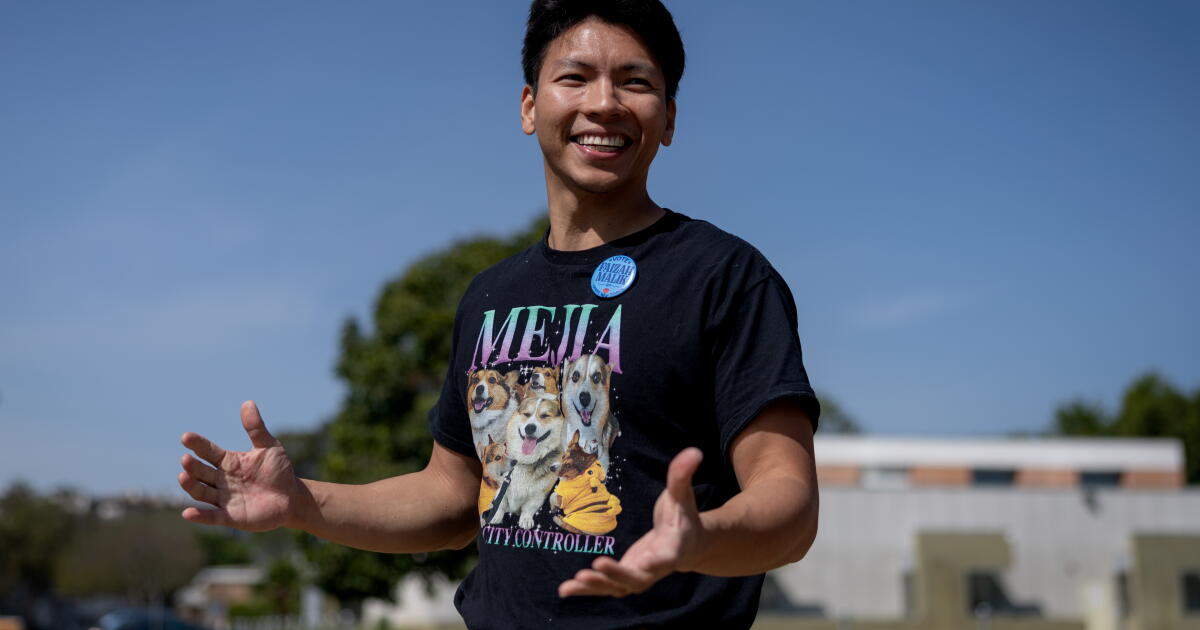
Dozens of groups have lined up behind the proposal, including the Trust for Public Land, TreePeople, Friends of the Los Angeles River and many others. At City Hall, the measure is backed by Rodriguez and several other council members as well as City Controller Kenneth Mejia.
Rodriguez and Mejia signed the ballot argument in favor of Charter Amendment PRK, as did Rev. Gregory Boyle, founder of Homeboy Industries, Nicole Chase, president and chief executive of the Boys & Girls Club of the San Fernando Valley, and several others.
Backers of the measure say the parks department provides an essential safety net for the city’s low-income residents, offering summer camps, sports activities and senior programs for free or at reduced prices.
When temperatures soar, the city’s recreation centers welcome residents who lack air conditioning. During emergencies, those facilities are converted into places of refuge from fires, floods or other disasters.
Despite those varied responsibilities, the department has been underfunded for years, said Tori Kjer, executive director of the Los Angeles Neighborhood Land Trust, who pushed for the measure to reach the ballot.
“If you talk to many Angelenos, they are unhappy with their local park, and that is because we have not funded it with the resources it needs,” she said.
Kjer said the department never recovered from the 2008 recession, when city leaders cut staffing by more than 25%, leaving it with about 1,500 workers last year. The city also began charging the department for the cost of water, electricity, trash pickup and other city services.
TUI is launching a new route from London Gatwick to Athens, recently named the top winter destination by Time Out, where temperatures can occasionally reach the low 20s on particularly sunny winter days.
TUI is launching a new route from London Gatwick to Athens, offering travellers a city break in a European capital that stays mild for much of the winter.
The Greek capital joins an expanded Gatwick network of 59 destinations. The German holiday company is also adding services to Palermo, Santiago de Compostela, Seville, Valencia, Tangier, Djerba and Mytilene.
Athens was recently named the top winter destination by Time Out. Writer John Ovans, who spent last winter there, said “the city never goes into full hibernation mode”.
He also suggested Athens could challenge Lisbon as Europe’s leading city for digital nomads, thanks to “cheap living, a warm lifestyle, and a gritty-glamorous vibe”.
While visitors should not expect summer heat, particularly sunny winter days can bring surprisingly mild temperatures. Ovans wrote: “On a good winter day you might get up to the high teens, or even low‐20s on rare extra sunny occasions.”
He recommended eating outdoors in the city’s squares, with awnings and gas heaters helping diners enjoy neighbourhoods such as Psirri, Plaka and Exarchia even on sunny days in January and February.
A spring visit also revealed a vibrant and exciting city, reports MyLondon. Although its iced freddo coffees and open-air cinemas are best enjoyed in warmer weather, many of Athens’ biggest attractions appeal throughout the year.
The Acropolis is worth the climb in any season, offering breathtaking views of the Parthenon and the city below.
Another highlight is the National Archaeological Museum, where exhibits include the Artemision Bronze and the Mask of Agamemnon. An extensive refurbishment is on the horizon.
For affordable lunches, Athens’ traditional workers’ canteens, historically known as inomagireia or simply magireia, serve hearty, home-style food.
These unpretentious venues dish up stews, soups and casseroles straight from heated trays or pans, making them a good option for budget-conscious visitors.
In the evenings, the city’s tavernas come alive whatever the season. Home-style dishes can be enjoyed alongside rakomelo, a warming spirit served as a digestif.
Across TUI’s wider network, the new routes will add 640,000 seats and open up previously unconnected destinations in Spain, Greece, Italy, Slovenia, Tanzania, Cape Verde and Morocco. Most services will operate two to three times a week.
TUI Airline chief commercial officer Peter Glade said: “Gatwick has played a central role in the development of Tui’s airline business in the UK for more than six decades. For generations of customers across London, the south and southwest of England, it has been the gateway to their holidays.
“Expanding our portfolio to 59 destinations is a natural next step as we continue to invest in one of the most important markets. The additional flying creates more opportunities for customers, supports continued growth in both package holiday and flight-only demand, and reinforces our long-term commitment to Gatwick.”
DEMONSTRATONS across France turned violent over the weekend with shops being looted and cars being set on fire – so is it still safe to travel to?
Here’s everything you need to know right now about travelling to Paris.
Some of the protests across France turned violent in cities like ParisCredit: GettyIn some cities, like Paris, fires were lit and shops were lootedCredit: Getty
Where are the riots?
The riots in France began on Saturday with demonstrations against rising living costs and declining public services being held across the last two days.
Some spiralled out of control resulting in fires and looting – it’s been called ‘some of the worst violence the country has witnessed for decades’.
Sign up for the Travel newsletter
Thank you!
Local authorities said that around 550,000 people took part in protests across France on Saturday, however it’s predicted there were as many as 800,000.
Over the weekend, 2,400 people were arrested for violence and looting.
In Paris, there was widespread damage to shops and businesses – protesters clashed with riot police, who turned tear gas and water cannon on the crowds.
Some groups lit fires in the street and torched vehicles.
On Sunday morning in Paris, the aftermath included smashed glass fronts of designer shops and clearing up rubbish and glass in the streets.
Other cities faced violence too like Marseille, Lille and Lyon, as well as Limoges where a 19th century town hall that survived the two World Wars was set alight and collapsed.
The French Prime Minister, Emmanuel Macron, is holding a crisis meeting today.
He said: “Those who looted will have to pay for the damage, and those who sought to bring down the Republic will be held accountable.”
Riot police were deployed to control the crowdsCredit: Getty
The FCDO does warn however that “demonstrations, political gatherings, or marches can take place with little or no warning, particularly in cities.
“Whilst most demonstrations are peaceful, if you’re near areas where they are taking place, you should remain aware of what is happening around you and follow the advice of the police and local authorities.”
Brits can continue to travel to and from Paris, but visitors should keep an eye on updates about the demonstrations and avoid large crowds.
Also allow extra time for possible road closures within the city.
Over the weekend, attractions like museums, and the Metro were limited, so check everything is open before planning visits.
President Macron said that ‘those who looted will have to pay for the damage’Credit: REUTERSThe aftermath shows burnt out bikes with rubbish and debris left on the streetsCredit: Getty
Are flights and trains still going to Paris?
Yes, flights and train travel including the Eurostar remain scheduled as usual.
If you are due to travel and have concerns, it may be worth contacting the operator to check if services are running normally.
What if I have a holiday to Paris booked?
As the Foreign Office has not warned against travel to France, there are no special circumstances in place for holidaymakers to cancel their trip and receive a full refund.
Can I cancel my trip?
If you do choose to cancel your trip, it is best to contact your airline, train operator or holiday provider.
There is no obligation for companies to refund bookings unless government advice changes.
Andres Perea scored a goal and Matt Freese had two saves for New York City FC on Saturday night in a 1-1 tie with LAFC.
Perea slammed home a header off a corner kick played in by Nicolás Fernández to make it 1-1 in the 59th minute.
NYCFC (8-12-10) is winless, with three losses, in its last five games.
Leo Walta, acquired Aug. 31 by LAFC on loan, scored his first career MLS goal in his fourth appearance. The 23-year-old midfielder put away a straightaway free kick from 30 yards out to open the scoring in first-half stoppage time.
Ally Sentnor scored the go-ahead goal in the 43rd minute as Angel City rallied from an early deficit behind three unanswered goals in a 3-2 win on the road against the Denver Summit on Saturday.
Denver forward Melissa Kössler’s tap-in off a corner kick gave Denver (10-10-8) the lead in the second minute. Midfielder Lindsey Heaps’ volley doubled the lead in the 18th. It was her fourth goal in the last three games.
Angel City responded with Sveindís Jónsdóttir scoring in the 32nd minute. Seven minutes later, Taylor Suarez scored to make it 2-2 before Sentnor scored four minutes later.
Gisele Thompson had two assists.
Angel City (13-8-7) is unbeaten in its last eight games.
Six weeks into the NFL season and Chargers versus the Kansas City Chiefs pits a winless team against an unbeaten one. Last season, when the Chargers swept the Chiefs, feels like a lifetime ago.
This game might not be as lopsided as it appears, considering these teams know each other so well. But these are rough times for the Chargers, who are still missing their two starting tackles and All-Pro safety Derwin James Jr. What’s more, it has been a terrible start for Justin Herbert, who has five touchdowns, seven interceptions, an anemic passer rating of 70.2 and has been sacked 17 times.
Conversely, Chiefs quarterback Patrick Mahomes is on a roll despite returning from last season’s devastating knee injury. He has nine touchdowns, two interceptions, a 106.2 rating and six sacks — almost two-thirds fewer than Herbert.
A big battle for Los Angeles will be on defense, as the Chargers have done a good job against the run and are facing Kansas City’s Kenneth Walker III, who has rushed for 537 yards at an average of 6.2 yards per carry.
Match of the Day’s Joe Hart and Danny Murphy analyse how Manchester City made it seven wins from seven in the Premier League with a 3-2 victory against Ipswich.
After the L.A. mayoral debate on NBC4 ended Tuesday, reporters rushed downstairs to a courtyard hoping to speak with the candidates or their surrogates.
Speaking for Mayor Karen Bass were Councilmember Monica Rodriguez and State Assemblymember Rick Chavez Zbur (D-Los Angeles). On the other side, speaking for Councilmember Nithya Raman, the sole spin doctor was Controller Kenneth Mejia.
“What Councilmember Nithya Raman did up there was show a better path, a better vision for what this city could be,” Mejia told reporters outside the NBC4 and Telemundo52 studios in Universal City.
Mejia isn’t just listed as Raman’s top endorser on her campaign website. He’s also her biggest cheerleader, and the only elected official at City Hall publicly supporting her mayoral bid. (Raman’s camp has contended throughout the campaign that endorsements are not necessarily a sign of how the electorate is feeling.)
Of all the elected officials out there, Mejia is an obvious ally for a politician like Raman who has been somewhat ostracized at L.A. City Hall since she announced her candidacy in February. Not a single council member — even her three fellow comrades in the Democratic Socialists of America — has endorsed Raman’s candidacy.
“When you’re in office, once you learn how status quo works and how to game it, you don’t want to change it,” Mejia told The Times, referring to the three DSA council members supporting Bass.
As for Mejia, he doesn’t mind being on the outside.
“It’s been lonely since I’ve been here [at City Hall],” he said.
“People have told me, ‘Kenneth you ruined your political career by endorsing Nithya,’” he said. “I’m honored to be the only one endorsing her … Karen Bass said the political establishment doesn’t like Nithya and I said, ‘So? I won by bucking political establishment.’”
Mejia has turned into an attack dog for Raman over the past few weeks. After endorsing her in July, he has showed up at news conferences with her and posts sometimes multiple times per day on social media supporting her or attacking the mayor.
Raman, meanwhile, has said she’ll open the books to Mejia.
If Raman wins, she will have a formidable City Hall ally in Mejia, who has not been shy about using social media to attack an assortment of political targets in and outside city government. On Friday, he announced that he had issued subpoenas to LA28, the private Olympic organizing committee, demanding financial records on the planning for the 2028 Games.
You’re reading the L.A. on the Record newsletter
Sign up to make sense of the often unexplained world of L.A. politics.
By continuing, you agree to our Terms of Service, which include arbitration and a class action waiver. You agree that we and our third-party vendors may collect and use your information, including through cookies, pixels and similar technologies, for the purposes set forth in our Privacy Policy such as personalizing your experience and ads.
A vote, but no endorsement
Fourteen members of the Los Angeles City Council have endorsed Bass (yes, that includes Raman, who subsequently decided to challenge the incumbent).
The sole holdout on the council, Traci Park, made her allegiances — soft as they may be — abundantly clear Wednesday at a town hall in Pacific Palisades when she said she would be voting for Bass but not endorsing her.
“I want some change too,” Park said, addressing her constituents about the mayor’s race. “But the alternative does not actually get us where we want to be. I think it actually impedes our progress.”
“I have deep concerns about the leadership and effectiveness of both candidates. I have personally been deeply frustrated and angry with our current mayor. We have tangled on some major policy issues. But always respectfully.”
Park said that as difficult as things may be now, they could get worse if Raman were elected.
The council member, who represents a large swath of L.A.’s Westside, said she is “very, very concerned” about a Raman mayoralty.
Park represents the Palisades, where the Palisades fire burned last year, destroying thousands of homes and killing 12 people.
Park told The Times in an interview that an endorsement of Bass would have represented “an affirmative statement of support earned based on agreement with someone’s records or positions or accomplishments.”
But Bass is someone Park can work with, the council member told The Times.
“I cannot say the same thing about Nithya Raman. That’s the problem. She doesn’t work with others. I think that deep frustration with her unwillingness to collaborate with others is reflected in the fact that no other council members at all are endorsing her,” Park said.
Bass goes to Ramanland
Bass went hard after Raman at this week’s NBC4/Telemundo 52 debate, accusing her of neglecting constituents in her district, which stretches from Silver Lake to the San Fernando Valley. She pushed even harder the following morning, appearing with some of those dissatisfied residents and business owners in Sherman Oaks.
Standing outside the Valley Inn Restaurant and Martini Bar, Bass said she reached out to Raman early on as mayor to warn her that some of her Valley constituents had contacted the mayor’s office to voice unhappiness with Raman. Bass said she told Raman she was going to meet with them.
“She essentially said to me that … she knew that they didn’t like her, that it was a feeling that was mutual, and to have at it if I want,” Bass said. “To me, I thought that was a strange way to respond.”
Raman spokesperson Liz Garcia denounced Bass’ comments as “bizarre and simply not true,” saying her boss has maintained positive relationships with her constituents. In a statement, she pointed to recent polling that showed Raman with an 8-point lead in the Valley.
“Nithya’s results in her district help explain why: She has reduced encampments, tents and RVs by 70% in her district over the past three years, helped businesses succeed, protected tenants, installed traffic safety upgrades and improved quality of life for residents,” Garcia said.
Raman has been pushing back against the mayor’s claims in other ways, noting that two-thirds of voters in the June 2 primary chose someone other than the incumbent.
During this week’s debate, Raman criticized Bass for boasting that she had given Sherman Oaks residents her personal cell number, saying it showed that regular government operations are dysfunctional.
Standing outside the martini bar, Bass acknowledged that her own staffers aren’t always happy about her generosity with her cell number. But things were worse when she was a member of Congress, she said.
“My cellphone was on my business card,” Bass said.
State of play
— BLOW FOR BLOW: The gloves came off in the final debate between Bass and Raman this week, with the two candidates trading verbal jabs over public safety, the Palisades fire and the fate of Police Chief Jim McDonnell. Meanwhile, here’s who three L.A. Times columnists believe won the debate.
— A MOVING TARGET: Raman has shifted her position on police hiring, public safety spending, the so-called mansion tax and other issues, causing some to question what she stands for. Raman has defended her various policy shifts, saying she made them after receiving new information or recognizing changed circumstances.
— CHIEF AMONG THEM: Raman and Bass have diverged over whether to keep Chief McDonnell. Raman said she would replace the chief if she becomes mayor, although she offered mixed messages on the timing. Bass said that McDonnell’s replacement before the 2028 Olympics could throw the LAPD into turmoil.
— GATES-GATE: Bass denounced Raman for saying the “gold standard” for the LAPD’s noncooperation with immigration enforcement took place during the tenure of former police chief Daryl Gates. Bass suggested Raman is not in touch with the city’s Black community, while Raman said the mayor had deliberately twisted her words.
— HOPE FOR HOUSING: Both Bass and Raman have been talking up their work on housing affordability. Bass said her administration has fast-tracked tens of thousands of units of affordable housing, while Raman has boasted of her success in enacting the strongest tenant protections in L.A. in 40 years.
— FIGHTING FRAUD: Los Angeles County voters are concerned about a host of voter fraud issues that could disrupt the Nov. 3 general election, even though they have a high degree of confidence in local elections officials, according to a new poll funded by the nonprofit California Community Foundation.
QUICK HITS
Where is Inside Safe? The mayor’s signature program did not have an operation this week.
On the docket next week: The final, pre-election campaign finance statements are due in Los Angeles runoff contests on Thursday.
Stay in touch
That’s it for this week! Send your questions, comments and gossip to LAontheRecord@latimes.com. Did a friend forward you this email? Sign up here to get it in your inbox every Saturday morning.
The heart of Screenland is cozying up to artificial intelligence.
The open space in Culver Steps typically hosts community events and movie nights. But on Wednesday, it turned into a job fair for companies looking to hire talent for AI studios.
Companies showed off their life-like AI videos, urging emerging talent — and out-of-work creatives — to join them as they worked to reinvent traditional filmmaking.
“It’s a great breeding ground for this new filmmaking,” Dave Clark, cofounder of AI film production studio Promise, said about Culver City. “To the independent filmmakers here, it’s time to take back power.”
The event was part of LA Tech Week, a citywide event organized by venture capital firm Andreessen Horowitz.
Culver City is already home to big names in Hollywood and technology like Amazon MGM Studios, TikTok, Apple, and Sony Pictures Entertainment. Recently, a growing cluster of AI studios, including Promise, TrueShort, Native Foreign, and PhantomX, are expanding in the neighborhood.
Luma AI, a $4-billion Palo Alto startup that makes generative AI video software, opened a facility in Culver City last year. The company’s Dream Lab occupies a 7,000 square feet space and employs a team of 13.
“Culver City is the future of AI and filmmaking,” Caroline Ingeborn, Luma AI’s chief operating officer, said in a statement.
The companies said they are drawn by the legacy studios they hope to rival. The fact that space is available and affordable thanks to the general decline of the entertainment business in L.A. also helps.
Proponents of AI see it as an antidote to high production costs and say it allows creatives to make films that otherwise would never be made. However, many in Hollywood, its unions, and the public at large are suspicious of the surge in AI use, worried it is stealing the work of human creatives and taking people’s jobs.
The new wave of AI filmmakers have accepted the rise of AI as inevitable, and are forging ahead, increasingly in Culver City.
The city is not opposed to it.
“We’re a hub for the creative economy that is continuing to evolve,” said Adam Troy, Culver City assistant city manager, in a statement. “We look forward to what’s next in the space and what businesses see their future here in Culver City.”
TrueShort moved into Culver City last month, taking over most of a 5,000-square-foot office space near Amazon’s studio. The AI studio has raised $17 million and employs about 45 people. Around 75% of them are creatives: filmmakers, editors, sound designers and composers.
Its streaming app hosts short-form true crime audio and video shows that are fully AI-generated. On average, a 10-minute episode costs about $10,000 to make and takes about 10 days to go from idea to release.
“The next Netflix or the next Disney is going to come out of AI this time,” said Nate Tepper, cofounder of TrueShort. “And, in a way, it kind of needs to be a startup because the big incumbents are not going to move as fast. They’re going to be afraid of backlash.”
The company outgrew its Santa Monica office and is now located near Culver Theater.
“It is cool being next to the other bigger lots like Sony and Amazon, only because it’s inspiring,” Tepper said. “We want the lot. We want to become the big studio.”
Culver City-based creative studio Native Foreign makes AI commercials for brands that are more open than Hollywood about AI use. It has done ads for Virgin and Toys R Us.
It made one of the first AI-animated shorts, “Critterz,” using OpenAI’s software and planned to help make a movie based on it, but OpenAI pulled out of the project and canceled its video-making AI model.
“We don’t have the kind of opportunities that maybe some huge huge studios and companies have, so we are able to bag above our weight with these tools,” Nik Kleverov, co-founder of the company, said on a panel at LA Tech Week.
Google-backed Promise is another Culver City-adjacent AI studio that’s a proponent of hybrid productions, where human actors work with AI specialists. The company uses AI to generate backgrounds, visual effects, and synthetic humans for its slate of films, but a lot of the performances are shot on soundstages across L.A. using actors.
In late 2024, the studio acquired Curious Refuge, an online AI school that teaches traditional artists and newbies to use generative AI tools for filmmaking. Promise moved close to Culver from Venice in June.
Excitement about AI grows even as the industry puts up guardrails to contain it. The actors’ guild SAG-AFTRA has secured special protection against fully synthetic performers in the union contract signed this year.
However, some Hollywood veterans point out that the industry has fought over technology before. Alex Cancado, who spent years in visual effects and has worked on over 80 movies, now works in the AI Studios division of Amazon MGM Studios.
Pitching the crowd of creatives on Wednesday, he said the transition from practical effects to computer graphics was equally fraught.
“It was a challenge getting CG to be accepted by directors and producers,” Cancado said.
Much of the buzz around AI use for big productions started with a conference in Culver City called “AI on the Lot,” which started in 2023. It has since grown to thousands of attendees.
The organization also sponsored the job fair on Culver Steps and a networking happy hour for media AI companies in Culver City. It estimates that AI media companies with $2 billion in backing have converged on the city.
Mike Gioia, a founder of AI on the Lot, attends City Hall meetings and is trying to build momentum around the concept of a “Culver cluster” — bringing more companies and individuals working in AI to the neighborhood.
“We want to make Culver City the capital of AI media,” said Gioia.
NEW YORK — Mayor Zohran Mamdani and top New York Democrats are calling on the owners of private parking lots to block federal immigration officers from using their properties as staging areas, days after immigration officers shot a man in the city.
In a Friday letter, Mamdani, Senate Democratic leader Chuck Schumer, House Democratic leader Hakeem Jeffries and dozens of state and local lawmakers told lot and garage owners that the city needs their “help at a critical juncture.”
“In solidarity with immigrant New Yorkers and in our shared commitment to the City we love, we ask that you do not rent, lend, or otherwise make your property available to ICE as a staging area for its enforcement operations,” the letter reads. “Make it known to ICE that it is not authorized to use your garages and lots.”
The plea came after immigration officers shot 28-year-old Dominican national Oscar Belgal during an arrest last week as he rode in a car with his young son. The shooting sparked protests and drew renewed attention to the federal government’s immigration crackdown.
The federal officers had been using a nearby private parking lot as a staging area before the shooting, according to Friday’s letter.
A spokesperson for the Department of Homeland Security slammed the letter in a statement that read: “Mayor Mamdani should be grateful to our brave law enforcement officers for cleaning up the streets of NYC since he won’t. Luckily, no terminated parking will stop ICE from deporting criminal illegal aliens to make New York safe again.”
Federal officials maintain the immigration officers believed their lives were in danger and opened fire only after Belgal smashed his car into two government vehicles and accelerated toward them.
New York City has previously barred outside law enforcement agencies such as DHS from setting up staging areas on city property unless they have a judicial warrant or qualify for certain “limited legal exceptions,” according to the letter. “But these laws govern City property, not the private lots and garages that you operate,” it adds.
Private businesses have at times found themselves in the middle of tense political fights over President) Trump’s administration’s immigration enforcement push.
In one instance, a Minnesota hotel that refused to let immigration officers stay there in January apologized after public criticism from DHS, saying the decision violated its internal policies. In another, protesters occupied the lobby of a Manhattan hotel they said was housing some immigration officers.