Venezuela’s National Assembly voted to back the 65-billion-barrel oil deal, despite no details being publicly released.
Published On 1 Sep 2026
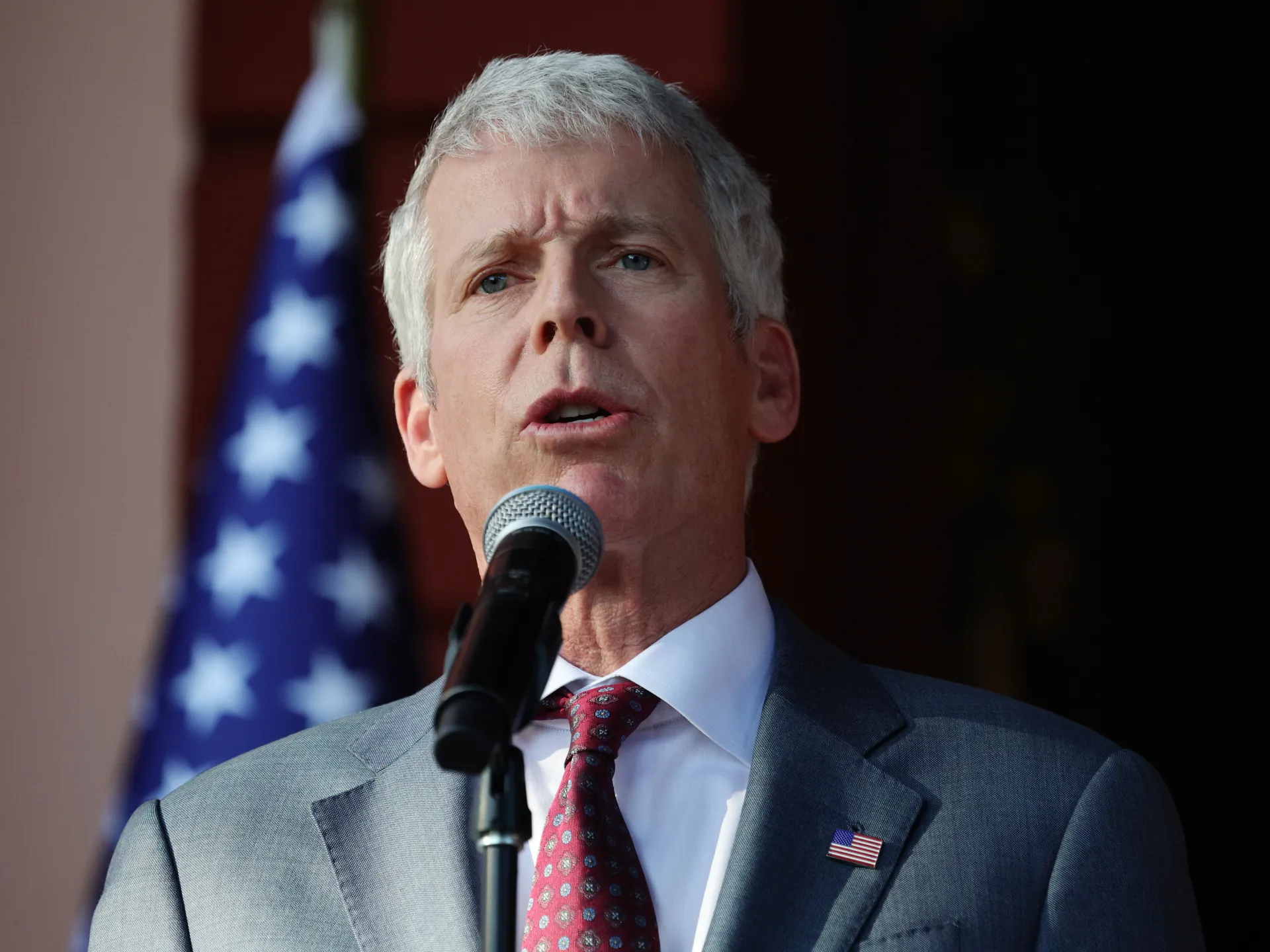
United States Energy Secretary Chris Wright is set to travel to Venezuela, after the South American country has approved a deal that will see the US seize effective control of a large portion of its oil reserves.
An anonymous US official told reporters that Wright will travel to Venezuela on Tuesday, as the administration of President Donald Trump presses forward with the controversial energy deal.
Recommended Stories
list of 3 itemsend of list
“First and foremost, it furthers the national interest of the United States,” the official said, adding that it is “critically important” for the US to be able to “to buy oil at cost reliably”.
Details are still emerging about the arrangement, likened by critics to deals imposed by colonial powers.
Still, the interim government of Venezuelan President Delcy Rodriguez has defended the agreement as a boon to her country’s beleaguered economy. The National Assembly, led by her brother Jorge Rodriguez, voted to back the measure on Tuesday.
“Support for the binational energy treaty between the Bolivarian Republic of Venezuela and the United States of America … is approved,” Jorge Rodriguez said.
But even within the National Assembly, there was pushback. Some opposition lawmakers abstained from the vote and denounced the fact that the terms of the agreement have yet to be published.
“We need and are obliged to know what is written in the fine print,” lawmaker Luis Emilio Rondon said, calling for “the full and complete text of what has been agreed”.
While details about the arrangement are still emerging, the deal is slated to give the US access to 65 billion barrels of proven oil reserves in Venezuela, about one-fifth of the country’s total.
As part of the deal, the US is expected to enter into a partnership with a private company to extract fuel from 17 large Venezuelan oil fields. The lease over the oil fields will run 100 years, according to reports.
The White House confirmed on Monday that it is partnering with North American Blue Energy Partners (NABEP), helmed by Venezuelan businessman Alejandro Betancourt who is a former ally of the late Venezuelan President Hugo Chavez.
The agreement would create a new company, wherein the US Defence Department would take a 35 percent ownership stake and the State Department would have the right to buy 20 percent of the oil produced at cost.
Betancourt has faced criminal investigations for alleged money laundering in Spain and Switzerland.
But a US official who spoke anonymously defended the partnership, arguing that Betancourt is not facing any criminal charges in the US.
“I’m not nominating anyone for sainthood here,” the official said. Instead, the official framed the deal as “a geopolitical opportunity to secure fields that primarily had largely been under the influence of Chinese and Russian companies”.
Asked about the possibility of democratic elections in Venezuela, the official said they were not feasible in the immediate future.
Periods of transition, the official added, “almost invariably requires you to work with elements of the existing structure, even as you are creating a new one”.
Separately, oil giant Chevron is expected to sign an agreement to expand operations in Venezuela on Wednesday.
Venezuela’s energy sector has become dilapidated, with critics blaming heavy US sanctions and government mismanagement.
While the Trump administration has pushed for greater international participation in Venezuela’s oil sector, some companies have expressed scepticism about investing there.
The 65-billion-barrel oil deal was announced on August 27 in a post on Trump’s Truth Social platform.
His administration has exercised increasing influence over Venezuela’s government, since it launched a January 3 military operation to abduct and imprison Venezuelan President Nicolas Maduro.
Trump and Maduro had frequently clashed. In the wake of Maduro’s abduction, Trump backed the socialist leader’s vice president, Rodriguez, to take over Venezuela’s government, holding her up as a model of cooperation.