Latin America

Cuba confirms talks with US officials, wants end to Trump’s energy blockade | Donald Trump News

A Cuban Foreign Ministry official said the exchange with Washington was ‘respectful and professional’ and devoid of threats.

The Cuban government has confirmed that it held recent talks in Havana with officials from the United States, as tensions remain high between the two countries over Washington’s energy blockade of the Caribbean country.

Alejandro Garcia del Toro, deputy director general in charge of US affairs at the Cuban Ministry of Foreign Affairs, said on Monday that the US delegation included assistant secretaries of state, and the Cuban delegation included representatives at the level of deputy foreign minister.

Recommended Stories

list of 4 itemsend of list

Garcia de Toro said that the US delegation did not issue any threats or deadlines as had been reported by some US media outlets.

“The entire exchange was conducted with respect and professionalism,” he said.

In comments reported by Cuba’s Communist Party newspaper Granma, Garcia del Toro emphasised that ending the three-month-old US oil blockade was “a top priority” for the Cuban government in the talks, and accused Washington of “blackmail” for threatening countries that export oil to Cuba with tariffs.

“This act of economic coercion is an unjustified punishment for the entire Cuban population,” he said.

“It is also a form of global blackmail against sovereign states, which have every right to export fuel to Cuba, in accordance with the principles of free trade,” he added.

US news outlet Axios reported on Friday that officials from US President Donald Trump’s administration held multiple meetings in Havana on April 10, including with Raul Guillermo Rodriguez Castro, grandson of former President Raul Castro. The meetings marked the first time that American diplomats had flown into Cuba since 2016 in a new diplomatic push.

According to reports, US officials laid out several conditions for negotiations with Cuba to continue, including the release of prominent political prisoners, an end to political repression, and liberalising the island’s ailing economy.

The Reuters news agency said that US proposals for Cuba also include allowing Elon Musk’s Starlink internet terminals into the country and providing compensation for Americans and US corporations for assets confiscated by Cuba after the 1959 revolution. Washington is also concerned about the influence of foreign powers on the island, a US official told the news agency.

Trump has hinted at military intervention in Cuba and warned of tariffs on any country that sells or supplies oil to Cuba. The fuel blockade has aggravated Cuba’s economic and energy crisis, leading to warnings of a humanitarian disaster.

Cubans have also braced for a possible attack following Trump’s repeated warnings that the country will be “next” after his war on Iran and the US military’s abduction of Venezuela’s President Nicolas Maduro in January.

Last week, Cuban President Miguel Diaz-Canel said that his country was prepared to fight if the US carried through on its threats.

The leaders of Mexico, Spain and Brazil on Saturday voiced concern over the “dramatic situation” in Cuba and urged “sincere and respectful dialogue”.

German Chancellor Friedrich Merz said on Monday there was no evident justification for the US to attack Cuba.

“The ability to defend oneself does not mean the right to intervene militarily in other states when their political systems do not match what others might have in mind,” he said.

Source link

Six women win 2026 Goldman prize, world’s top environmental award | Environment News

First all-women cohort of winners hails from Colombia, Nigeria, Papua New Guinea, South Korea, the UK and the US.

This year’s prestigious Goldman Environmental Prize has been awarded to six grassroots environmental activists from around the world for their efforts to fight climate change and save biodiversity.

For the first time since the prize was created in 1989 by philanthropists Richard and Rhoda Goldman, all recipients of the award are women: Iroro Tanshi, from Nigeria; Borim Kim, from South Korea; Sarah Finch, from the United Kingdom; Theonila Roka Matbob, from Papua New Guinea; Alannah Acaq Hurley, from the United States; and Yuvelis Morales Blanco, from Colombia.

Recommended Stories

list of 4 itemsend of list

Sometimes described as the “Green Nobel”, the Goldman Prize recipients are chosen from each of the world’s six primary regions. They each receive $200,000 in prize money.

“While we continue to fight uphill to protect the environment and implement lifesaving climate policies – in the US and globally – it is clear that true leaders can be found all around us,” said John Goldman, vice president of the Goldman Environmental Foundation.

“The 2026 Prize winners are proof positive that courage, hard work, and hope go a long way toward creating meaningful progress.”

A young woman wearing a broad hat holds a fish next to a river, smiling
Yuvelis Morales Blanco, winner of the 2026 Goldman Environmental Prize, shows a fish caught on a tour with fishermen along the Magdalena River in Colombia [Handout: Christian EscobarMora/Goldman Environmental Prize]

Morales Blanco, the winner for the region of South and Central America, fought some of the world’s biggest oil companies to successfully stop the introduction of commercial fracking into Colombia.

The 24-year-old grew up in a family of fishermen along the banks of the Magdalena River in the Afro-Colombian community of Puerto Wilches. “We had nothing but the river – she was like a mother who took care of me,” she said.

She began organising protests after a major oil spill in 2018, which forced the relocation of dozens of local families and killed thousands of animals. Her activism, which made her a target for intimidation and forced her to temporarily relocate, helped halt projects and elevate fracking as an issue in Colombia’s 2022 election.

Two of the other five recipients of this year’s prize have also focused their efforts on fighting fossil fuels, which are causing both global climate change and more localised pollution around the world.

Borim, the winner for Asia who started the Youth 4 Climate Action organisation, won a ruling from South Korea’s Constitutional Court that the government’s climate policy violated the constitutional rights of future generations, the first successful youth-led climate litigation in the continent.

Finch, Europe’s winner, told The Times newspaper she will use her prize money to keep fighting fossil fuels.

Together with the Weald Action Group, she fought oil drilling in southeastern England for more than a decade, securing the “Finch ruling” from the Supreme Court in June 2024, stating that authorities must consider fossil fuels’ impacts on the global climate before granting permission to extract them.

Two other recipients have fought against the destructive environmental impact of mining projects.

Papua New Guinea’s Roka Matbob, winner for Islands and Island Nations, led a successful campaign that saw the world’s second-largest mining company, Rio Tinto, agree to address environmental and social devastation caused by its Panguna copper mine, 35 years after it was closed following an uprising.

And the award recipient for North America, Acaq Hurley, from the Yup’ik nation in the US, successfully fought alongside 15 tribal nations to stop a mega- copper and gold mining project that threatened ecosystems in Alaska’s Bristol Bay region, including the largest wild salmon runs in the world.

Meanwhile, Nigeria’s Tanshi, Africa’s winner, rediscovered the endangered short-tailed roundleaf bat and has been working to save its refuge, the Afi Mountain Wildlife Sanctuary, from human-induced wildfires.

Source link

A match made in opposition: Venezuela’s Machado courts Spain’s right wing | News

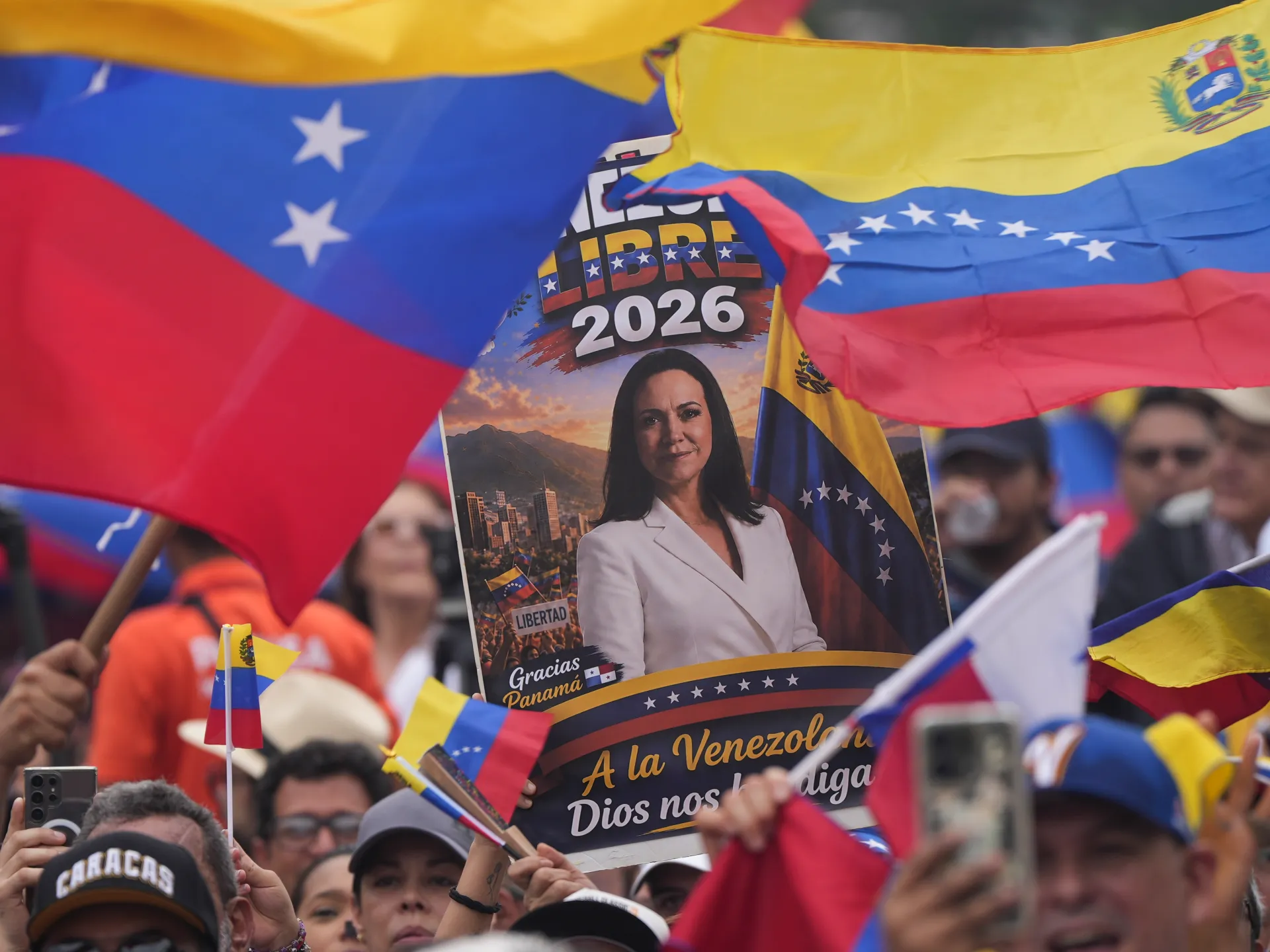
Madrid, Spain – Venezuela’s opposition leader Maria Corina Machado is aligned with Spain’s main right-wing party on its economic visions, but they are divided by social issues such as abortion, analysts say.

On a visit to Spain this weekend, Machado chose to snub an invitation to meet Socialist Prime Minister Pedro Sanchez and the left-wing coalition government officials.

Recommended Stories

list of 2 itemsend of list

The Nobel Peace Prize winner said she had chosen not to meet Sanchez because he was hosting a summit of left-wing leaders from Latin America in Barcelona.

“What has transpired in the past few hours at the meeting held in Barcelona with various political leaders from different countries is proof that such a meeting was not advisable,” Machado told a meeting in Madrid on Saturday.

Instead, she held a series of meetings with leaders from the opposition conservative People’s Party (PP) and the far-right Vox party.

Machado received a rapturous welcome from Alberto Nunez Feijoo, the PP party leader and Venezuelan emigres in Madrid, on Friday.

On Saturday, the Venezuelan opposition leader met Isabel Diaz Ayuso, the populist conservative Madrid regional leader, one of Sanchez’s fiercest critics and a possible rival to Feijoo.

Ayuso presented Madrid’s gold medal to Machado, while Madrid’s Mayor Jose Luis Martinez-Almeida – also of the PP – handed her the keys to the city before a rally with Venezuelan supporters.

Machado also met Santiago Abascal, the leader of Vox, in the Spanish capital.

Feijoo praised how Machado had championed freedom even at the cost of going into hiding in Venezuela away from her family.

“Spain knows well the value of freedom; it cost us dearly to obtain it. The generations of our parents and grandparents know what it is to live without freedom. That is why we cannot look the other way,” Feijoo said.

What divides Venezuela and Spain’s opposition?

Despite the cordial welcome, there are significant differences between Machado and Feijoo, commentators said.

A liberal conservative, who has said she is an admirer of Margaret Thatcher, Machado has been dubbed Venezuela’s “Iron Lady”.

She moved from the right politically to the centre-ground during the 2024 presidential campaign to attract voters in the middle ground.

As a conservative, Machado heads a Venezuelan opposition that is split and which also contains more liberal factions.

In contrast, Feijoo heads a well-organised conservative political party, which has only recently suffered divisions after the formation of the hard-right Vox party in 2013, analysts said.

Carlos Malamud, an expert on Latin America at the Real Elcano Institute, a think tank in Madrid, said the structure of both opposition groups was different.

“Machado is the leader of a small, disorganised opposition, while Feijoo is the head of the PP, which is a well-organised national political party,” he told Al Jazeera.

Malamud said Machado did not demonstrate the traits of a would-be Venezuelan president by refusing to see Sanchez.

“If Machado wants to be the president of Venezuela next year, she needs to be prepared to meet the head of the Spanish government, whoever that may be,” he explained.

“Perhaps the Venezuelan opposition sees the Spanish Socialist Party as being allied to (former Spanish prime minister) Jose Rodriguez Zapatero.”

Zapatero has played a controversial role in acting as a mediator between Spain and the government of former Venezuelan President Nicolas Maduro, who was abducted by the United States in January.

Maduro faces charges of narcoterrorism, conspiracy to commit narcoterrorism, drug trafficking, money laundering and corruption, which he denies.

Machado ‘more conservative’ on social issues

Malamud said one factor which unites Machado and Feijoo is that they came from political systems which suffered from polarisation.

“Venezuelan politics is the same as Cuban politics, or like Spanish. They all suffer from the same degree of polarisation,” he added.

Ana Ayuso, an investigator in Latin American affairs at the Barcelona Centre for International Affairs, said Machado shared the liberal economic theories of Feijoo, but they differed on social issues.

“She is in favour of freedom of trade and a small state, so she is quite liberal on economic affairs like Feijoo,” Ayuso told Al Jazeera.

“She is also closer to Isabel Diaz Ayuso in terms of economics, in terms of free trade and the participation of the state.”

“However, she is more conservative when it comes to social issues. Machado is against abortion, and religious affairs are important to her. She is close to the [Roman] Catholic Church. Feijoo supports the right to abortion.”

In an interview in 2024 with Spanish newspaper El Pais, Machado said she was against abortion but in favour of changing the law in Venezuela to allow abortion in cases of rape.

At present, the law in Venezuela allows abortion only when there is a risk to the life of the mother or child. Otherwise, it is illegal and can carry a jail sentence of up to two years.

“Machado does not have any similarities with Vox. Venezuela does not have a problem with immigration. Emigration is the problem,” added Ayuso.

She said the Venezuelan opposition leader had initially been a staunch supporter of US President Donald Trump, but he had shunned her in support of Delcy Rodriguez, the acting Venezuelan president.

Machado was now closer to Marco Rubio, the US secretary of state, who supported her cause within the MAGA movement, she added.

Source link

Argentina’s Milei backs US-Israel war on Iran in Jerusalem visit | US-Israel war on Iran

NewsFeed

Argentina’s President Javier Milei has reaffirmed strong alignment with the US and Israel during a visit to Jerusalem, backing their war on Iran.

His visit with Prime Minister Benjamin Netanyahu included new agreements and closer ties.

Source link

Peru says presidential election results due by mid-May after delayed count | Elections News

The EU’s election observer said the vote met democratic standards despite fraud allegations.

Peru’s presidential election result will not be finalised until mid-May, with challenged ballots from last Sunday’s vote still being reviewed, says the electoral authority.

With 93 percent of ballots counted, right-wing candidate Keiko Fujimori leads with 17 percent, according to officials.

Recommended Stories

list of 4 itemsend of list

Under Peru’s electoral system, the top two candidates advance to a second-round runoff. A close contest has emerged for second spot between left-wing candidate, Roberto Sanchez on 12 percent, and ultra-conservative Rafael Lopez Aliaga close behind on 11.9 percent.

The margin between the two widened slightly on Saturday to about 13,600 votes.

Yessica Clavijo, secretary general of the National Jury of Elections (JNE), said the delay was due to the review of more than 15,000 challenged ballots. About 30 percent concern the presidential race, the rest relate to legislative elections.

Lopez Aliaga, a former mayor of the capital Lima, has been the most vocal critic of the delay. He has alleged fraud without presenting evidence and called for the election to be annulled. He urged supporters of his Popular Renewal Party to protest on Sunday.

Sanchez also criticised the election process, telling reporters: “These serious organisational issues must be investigated and there must be appropriate sanctions”.

A record 35 candidates ran for president in Peru, a country that has faced years of political instability. Four of its last eight presidents have been impeached by Congress.

Voting was disrupted by delays in the delivery of election materials, forcing authorities to extend polling into Monday in parts of Lima.

Despite the setbacks, the European Union’s election observer mission said the vote met democratic standards. On Friday, prosecutors raided a warehouse belonging to the National Office of Electoral Processes (ONPE), the body responsible for organising the election. Four officials have been reported to the JNE over alleged offences linked to voting rights.

Source link

‘No regrets’: Venezuela’s Machado defends giving Nobel medal to Trump | Donald Trump News

Maria Corina Machado gave Trump her Nobel Peace Prize after the US leader captured Nicolas Maduro.

Venezuela’s main opposition leader Maria Corina Machado says she has “no regrets” about giving US President Donald Trump her Nobel Peace Prize medal.

Machado, the 2025 recipient of the prestigious prize, presented the medal that accompanies the prize to Trump when she met him at the White House in January, two weeks after he ordered US special forces to seize Venezuelan President Nicolas Maduro from Caracas.

Recommended Stories

list of 4 itemsend of list

Trump’s military operation to remove Maduro, who is currently detained in the US facing drug trafficking charges, is “something we Venezuelans will never forget”, she was quoted by AFP news agency as saying at a conference in Madrid on Saturday.

“There is a leader in the world, a head of state in the world, who risked the lives of his country’s citizens for Venezuela’s freedom,” she said.

Trump, who has long publicly coveted the Nobel Peace Prize, called Machado’s presentation of the medal at the time a “wonderful gesture of mutual respect”.

The Norwegian Nobel Committee, which honoured Machado for her tireless campaign to restore democratic rights in Venezuela and her struggle to achieve a peaceful transition from authoritarian rule, made clear after the handover that the prize is nontransferable and cannot be revoked, shared or transferred to others.

Machado, who had been living in hiding before leaving Venezuela in December to collect her prize in Oslo, said she was coordinating her return to the country with Washington.

US key to ‘democratic transition’

“I am speaking with the US government, and we are working in coordination, with mutual respect and understanding,” she said, adding that she believed Washington was “key to advancing a democratic transition” in Venezuela.

Trump has, however, publicly questioned Machado’s standing, calling her a “very nice woman” but saying she lacks “respect” within Venezuela. He has instead backed Maduro’s former vice president, Delcy Rodriguez, as the country’s interim leader.

Venezuela’s opposition last week called for presidential elections. Machado, who was banned from running in the disputed 2024 vote that returned Maduro to power, has not yet said whether she would stand in a future poll.

While in Spain, Machado declined a meeting with Prime Minister Pedro Sanchez, citing his hosting of a progressive leaders’ summit in Barcelona as proof the meeting was “not advisable”. Sanchez had said he was willing to meet her at any time.

This snub comes in contrast to her frequent encounters with Sanchez’s right-wing opponents.

Source link

Pressure mounts on Peru’s election authorities amid presidential race delay | Elections News

The vote count continues to determine who will join conservative Keiko Fujimori in Peru’s presidential run-off in June.

Calls to remove the head of Peru’s electoral authority have intensified as delays and alleged irregularities clouded the presidential vote count.

As of Friday, no clear challenger has emerged to face conservative frontrunner Keiko Fujimori in the June 7 run-off.

Recommended Stories

list of 3 itemsend of list

The general election was held on Sunday, but an extension was granted to accommodate for the difficulties in ballot distribution.

Pressure has mounted against the head of Peru’s National Office of Electoral Processes (ONPE), Piero Corvetto. Complaints over errors and logistical problems during Sunday’s election have been compounded by a slow tally that has rattled investor confidence and heightened uncertainty.

According to the ONPE, leftist Roberto Sanchez and ultraconservative former Lima Mayor Rafael Lopez Aliaga remain locked in a close battle for second place, separated by about 13,000 votes as of Friday.

With 93.3 percent of the ballots counted, Sanchez held 12.0 percent of the vote and Lopez Aliaga 11.9 percent.

Fujimori, meanwhile, remained firmly in first place with 17 percent, positioning her for the run-off. Final results could take up to two weeks, according to local election-monitoring group Transparencia.

The vote counting has been further delayed by the roughly 5 percent of ballots that were identified for review due to missing information or errors in polling station records, according to ONPE data. Those ballots will be reviewed by a special electoral jury before being included in the final count, officials said.

Business leaders and lawmakers from across the political spectrum have called on Corvetto to step down, arguing that a replacement should oversee the second round.

“Errors this serious have consequences,” Jorge Zapata, head of business chamber CONFIEP, told local radio station RPP.

Earlier this week, Corvetto acknowledged that there had been some logistical delays that forced voting to be extended by a day, mainly in Lima. Those delays triggered fraud allegations, notably from Lopez Aliaga, who has called for counting to be suspended. Corvetto has denied that any irregularities took place.

Even so, Peru’s top electoral court, the National Jury of Elections, filed a criminal complaint with prosecutors against Corvetto, citing alleged offences, including violations of voting rights. Representatives for Corvetto did not immediately respond to a Reuters request for comment.

An investigation is also under way after materials from four polling stations were found on a public road in Lima on Thursday, the police said. ONPE said on the social media platform X that the votes from those stations had already been recorded for counting.

European Union election observers said this week that they found no evidence of fraud.

Source link

Cuban president defiant amid US pressure and energy blockade threats | Conflict News

Miguel Diaz-Canel marks anniversary of socialist revolutionary declaration under threat of US attacks.

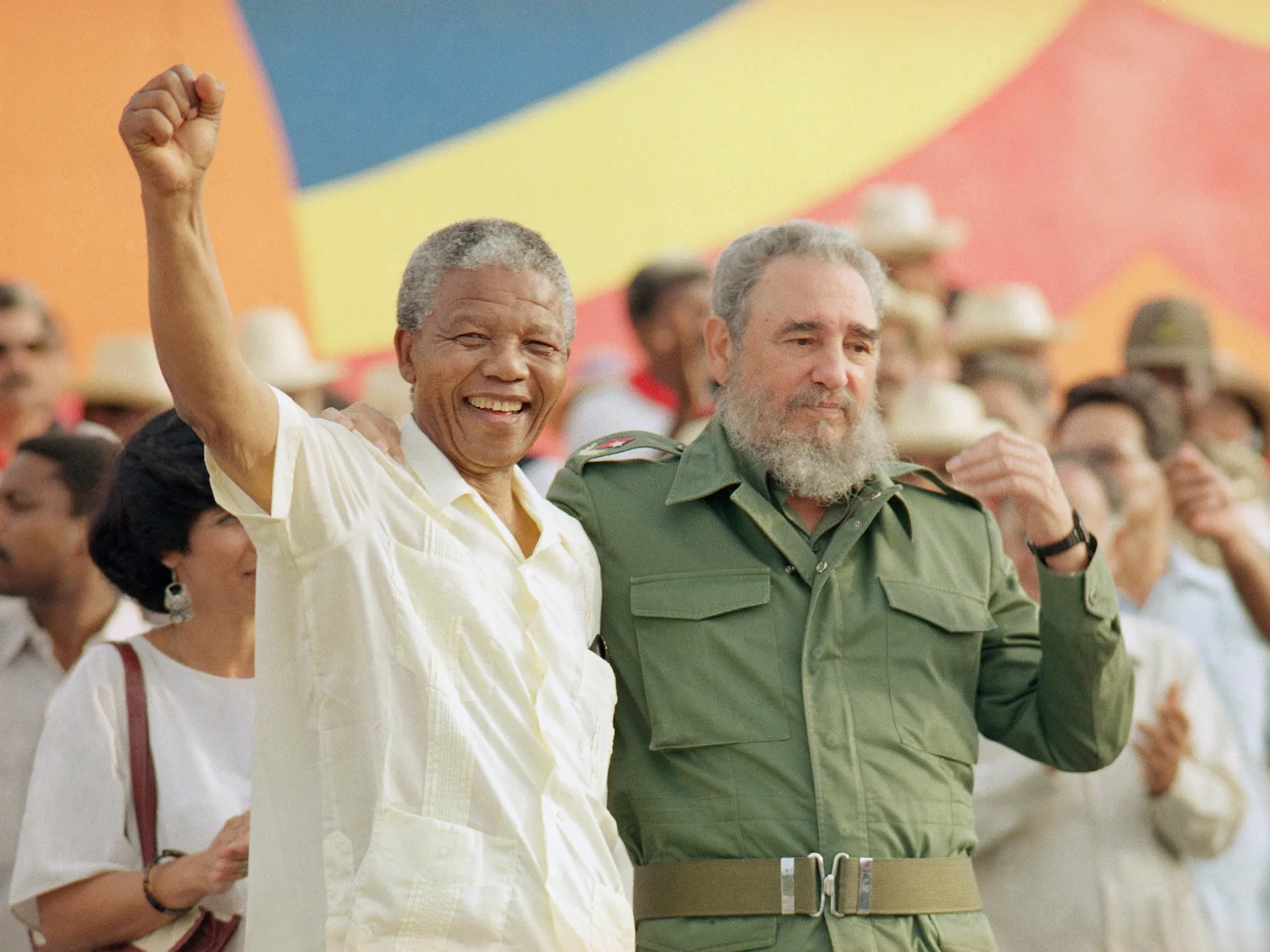
Cuban President Miguel Diaz-Canel has said that his country does not seek conflict with the United States but is prepared to fight if necessary, as Cuba marks the anniversary of its socialist revolutionary character amid the threat of US attacks.

Diaz-Canel struck a defiant tone on Thursday in remarks before a crowd marking the 65th anniversary of Fidel Castro’s declaration of the socialist nature of the Cuban Revolution and the failed invasion at the Bay of Pigs by forces aligned with the US the day after.

Recommended Stories

list of 3 itemsend of list

“The moment is extremely challenging and calls upon us once again, as on April 16, 1961, to be ready to confront serious threats, including military aggression,” Diaz-Canel said. “We do not want it, but it is our duty to prepare to avoid it and, if it becomes inevitable, to defeat it.”

President Donald Trump has threatened that the US could overthrow the Cuban government, a longtime source of ire for Washington, and has ratcheted up energy restrictions meant to squeeze the island’s economy.

“We may stop by Cuba after we finish with this,” Trump said earlier this week, stating that his attention could turn to Cuba after the end of the US-Israel war on Iran.

A US energy blockade and an end to oil shipments from Venezuela after the US abducted former Venezuelan President Nicolas Maduro in January have caused deteriorating conditions on the island. Fuel shortages and energy blackouts have roiled the island for weeks, heaping strain on workers and businesses.

Even before those increased restrictions, Cuba’s economy had suffered from decades of economic embargo from the US, along with economic mismanagement and political repression that prompted many Cubans to leave the country.

A vote at the United Nations in 2025 demanding an end to the US embargo passed with 165 votes in favour and seven against, including the US, Israel, Argentina, and Hungary. The resolution has been passed annually for more than 30 years.

“Cuba is not a failed state. Cuba is a besieged state,” Diaz-Canel said on Thursday. “Cuba is a state facing multidimensional aggression: economic warfare, an intensified blockade and an energy blockade.”

Source link

Brazil’s police open a probe into presidential candidate Flavio Bolsonaro | Courts News

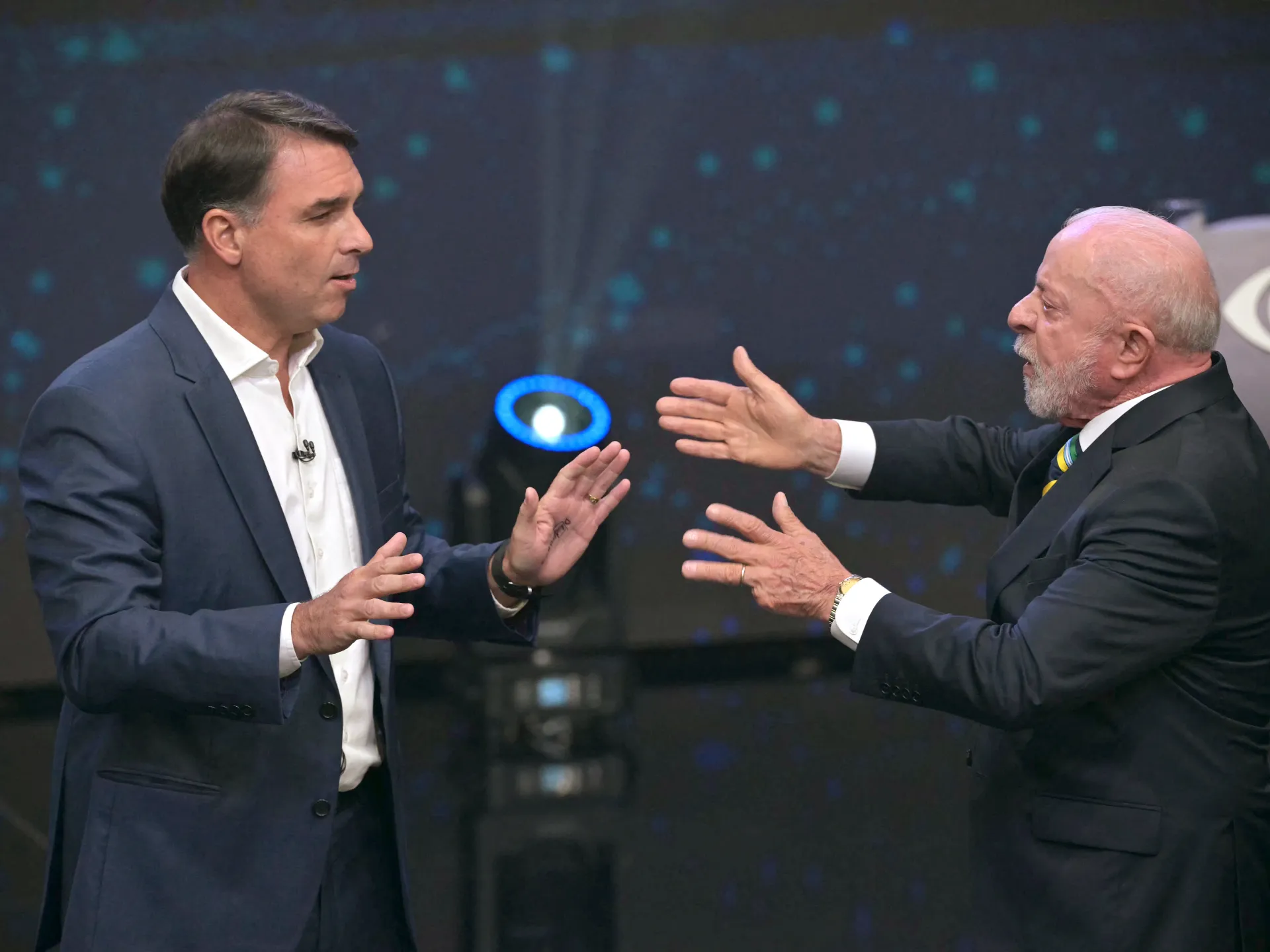
Brazil’s Supreme Court has ordered a probe into whether right-wing presidential candidate Flavio Bolsonaro issued defamatory statements about his election rival, President Luiz Inacio Lula da Silva.

On Wednesday, a decision from Justice Alexandre de Moraes was published, allowing the Federal Police to proceed with an investigation into posts Bolsonaro published in January.

Recommended Stories

list of 3 itemsend of list

Bolsonaro, at the time, responded to news that the United States had abducted Venezuelan President Nicolas Maduro with insinuations linking Lula to crimes.

“Lula will be exposed,” Bolsonaro posted on the social media platform X, with screenshots of a handcuffed Maduro and an article about Lula.

He then predicted that the left-wing alliance known as the Sao Paulo Forum would collapse in scandal.

“It is the end of the Sao Paulo Forum: international drug and arms trafficking, money laundering, support for terrorists and dictatorships, rigged elections,” Bolsonaro wrote.

There are limitations to the freedom of speech in Brazil, and under its penal code, defamation can be a criminal offence. Prosecutors have the option of seeking heightened penalties for defamation against presidents or heads of state.

The Federal Police have a period of 60 days to carry out their initial investigation.

But in a statement to local media, a spokesperson for Bolsonaro, a senator for Rio de Janeiro, denounced the probe as a violation of his rights.

“The senator limited himself to reporting facts and detailing crimes for which Nicolas Maduro was arrested and is being prosecuted internationally,” the statement said, adding that there was no “direct criminal accusation against” Lula.

Bolsonaro and Lula are currently in a neck-and-neck race for the presidency ahead of October’s general election.

A poll released this week from the research firm Quaest shows Lula slightly ahead in the first round of voting, with 37 percent of the vote compared with Bolsonaro’s 32 percent.

But if the race proceeds to a run-off, the frontrunner flips. Bolsonaro polls slightly ahead in a one-on-one contest against Lula, netting 42 percent support compared with the incumbent’s 40 percent.

The poll has a margin of error of about 2 percent, though, meaning the results are not conclusive. There is also nearly five and a half months until the first round of voting on October 4.

Both Bolsonaro and Lula are well-known quantities in Brazil’s political sphere.

For the 80-year-old Lula, this year’s race will see him run for a fourth term in office. Previously, he served as president from 2003 to 2011, and then he ran again in 2022, defeating Senator Bolsonaro’s father, Jair Bolsonaro, the incumbent president that year.

The elder Bolsonaro is currently serving a 27-year prison sentence for attempting to subvert the results of that election.

The margins were tight in the 2022 run-off, and then-President Bolsonaro refused to concede defeat, instead suggesting that there were “malfunctions” in the electronic voting machines that favoured Lula.

His supporters took to the streets to protest his loss, blockading roads and attacking police headquarters in the capital, Brasilia.

The unrest culminated in an attack on January 8, 2023, against government buildings in the capital, which was seen as an attempt to trigger a military uprising against Lula’s leadership.

Former President Bolsonaro was later convicted in September 2024 of plotting to stay in power, with prosecutors presenting evidence that he and his allies explored options including calling a new election and assassinating Lula.

The former president has denied wrongdoing and accused his adversaries of a political witch-hunt.

In December, his eldest son, Flavio, 44, entered the 2026 presidential race with his father’s endorsement. He has suggested he would seek his father’s freedom as part of his campaign.

Earlier this year, Lula vetoed a bill that would have lowered Jair Bolsonaro’s prison sentence. He has denounced his predecessor’s actions as a coup attempt.

Source link

US forces kill 4 people in latest strike on vessels in eastern Pacific | Donald Trump News

The killings mark the fourth US deadly strike in the past four days on vessels in the eastern Pacific Ocean.

The US military has killed four more people in its fourth deadly attack on vessels in the eastern Pacific Ocean over the past four days.

US Southern Command (SOUTHCOM) announced the attack in a social media post on Tuesday, alongside a video that showed a stationary boat with outboard engines being hit by a missile and exploding into a huge ball of flames.

Recommended Stories

list of 4 itemsend of list

SOUTHCOM, which is responsible for US military operations in Latin America and the Caribbean, claimed that the four people killed were “narco-terrorists”, but provided no evidence to support its claims.

Justification for the lethal attack, according to SOUTHCOM, was due to intelligence – details of which were not provided – that confirmed that “the vessel was transiting along known narco-trafficking routes in the eastern Pacific and was engaged in narco-trafficking operations”.

The latest killing of people on board vessels in international waters in the eastern Pacific Ocean and Caribbean brings the overall death toll to at least 175 since early September, when US President Donald Trump ordered the attacks to stop what the White House claims are Latin American cartels transporting drugs to the US.

Tuesday’s killings came after two people were killed in a US strike on Monday, and five people were killed in two separate strikes on Saturday, also in the eastern Pacific.

The Associated Press news agency reported that the US coastguard has suspended a search for one survivor from the two attacks reported on Saturday.

International legal experts and rights groups say the US military campaign amounts to “extrajudicial killings” in international waters and that the attacks have targeted civilian fishing boats.

Legal experts have said that if some vessels were involved in drug trafficking, those on board should face the law, rather than deadly attacks.

Critics have also questioned the effectiveness of the US military operation in part because the fentanyl behind many fatal overdoses in the US, which Trump has used to justify his campaign, is typically trafficked to the US over land from Mexico, where it is produced with chemicals imported from China and India.

Source link

Haiti’s Culture Ministry fires workers over citadel stampede that killed 25 | Government News

At least nine people have been arrested following the stampede, including police officers and ministry employees.

Haiti has begun three days of national mourning, following a deadly stampede at the Citadelle Laferriere in the northern part of the country.

At least 25 people were killed in the crush that formed at the entrance of the popular tourist site on Saturday, with some visitors pressing to exit while others pushed to enter.

Recommended Stories

list of 3 itemsend of list

On Tuesday, the Ministry of Culture and Communication announced that two government officials were fired in the aftermath of the stampede.

One, a director with the Institute for the Preservation of National Heritage, was accused of “serious negligence”. The other, who served in the Ministry of Culture and Communication, was criticised for “biased passivity”.

“The Ministry of Culture and Communication, without going into the details of the criminal investigation, believes that the tragedy at La Citadelle is the result of administrative negligence,” it said in a statement.

The government, it added, “will fully assume its responsibilities”, as the event “must outrage the public conscience”.

The tragedy marks one of several crises the Haitian government is facing as it approaches its first round of general elections later this year.

Already, nine suspects have been arrested in connection with the deadly stampede, including five police officers and two employees from the Institute for the Preservation of National Heritage.

The crush of people took place as a local DJ held an event at the citadel, a 19th-century fortress commissioned after the Haitian Revolution, when Haiti’s enslaved population overthrew French colonial rule.

Since its construction, the citadel has become a symbol of Haitian sovereignty.

But the stampede on Saturday was exacerbated by stormy weather conditions, as rain pummelled northern Haiti and participants at the event ran for cover.

Elsewhere in the country, approximately 12 people died due to the heavy downpours, and at least 900 homes and one hospital have been flooded.

The Haitian government has also been grappling with the threat of gang violence, particularly since the assassination of then-President Jovenel Moise in 2021.

His death left a power vacuum in the government that criminal networks have sought to exploit. Federal elections have been repeatedly postponed for much of the last decade.

Earlier this month, a United Nations-backed Gang Suppression Force began to arrive in the country to help address the violence.

From March 2025 through mid-January of this year, the UN has counted at least 5,519 gang-related deaths in Haiti. Roughly 16,000 people have been killed since 2022, and more than 1.5 million have been displaced.

Authorities called for more aid on Tuesday, as the violence continued. In the Marigot commune, seven people were killed and a police station was burned in an overnight gang attack.

Marigot Mayor Rene Danneau described the victims as informants who helped the police. He called on Haiti’s government to step in.

“We are asking the prime minister to take all necessary measures,” he told Radio Television Caraibes.

Source link

Historic but not enough? Colombia’s Gustavo Petro defends cocaine seizures | Drugs News

Pushing back on Washington

Petro, however, has highlighted his interdiction efforts as a means of refuting Trump’s claims that he has allowed cocaine to flow unchecked.

The subject reportedly came up during a call between the two heads of state in January. Petro suggested that Trump had been unfamiliar with the amounts of cocaine Colombia has seized.

“The United States doesn’t know anything about that,” he told CBS News after the call.

At other times, Petro has leaned on his interdiction record to push back on Trump’s hardline anti-narcotics policy.

In September, Trump and his allies announced a campaign to bomb boats suspected of carrying drugs, arguing the strategy was more efficient than interdiction.

“Interdiction doesn’t work,” US Secretary of State Marco Rubio said. “What will stop them is when you blow them up, when you get rid of them.”

Since then, the US military has bombed 47 boats, killing at least 163 people. Petro has condemned the strikes as “murders”, arguing they violate due process and international law.

He has also held up his own interdiction strategy as a more effective model.

When Colombia and the US led a joint maritime operation in February that resulted in nearly 10 tonnes of cocaine seized, Petro touted the outcome as proof that anti-narcotics efforts need not be lethal.

“The Colombian Navy seized the submarine without killing anyone,” Petro said during a cabinet meeting.

Still, experts have pointed out that Petro has bent to US demands in other areas.

While Petro had pledged not to target coca farmers, he announced in December that security forces would deploy drones to spray crops with glyphosate, an herbicide.

That plan — to forcibly eradicate coca crops by air — faced strong local opposition due to concerns over the herbicide’s health and environmental impacts.

Rueda said the move, which has yet to be implemented, signalled that Petro, like many presidents before him, had yielded to US pressure.

“The US government always wins,” said Rueda. “It always has more power over us, and we end up having to give in — and so does Petro.”

Whether Petro’s decision holds weight with his electoral base is less certain. While protests initially erupted in coca-growing regions, they subsided after meetings with his administration.

Rueda suspects officials reassured protesters they wouldn’t carry out the fumigations, which could have cost Petro in the upcoming elections.

“Petro’s decision highlights his inconsistencies when it comes to the policy he put forward,” Rueda said. “But in the end, the fumigations never happened, so the political impact likely wasn’t as significant as it could have been.”

Source link

Maradona’s childhood home becomes soup kitchen for those in need | Football News

The late Argentinian football legend’s childhood home has been converted into a soup kitchen serving those affected by President Javier Milei’s austerity measures.

At 523 Amazor street in Fiorito, a Buenos Aires suburb where the “Golden Boy” experienced extreme poverty growing up, locals can now receive meals and clothing assistance.

This neighbourhood of about 50,000 residents living in modest brick homes features numerous murals commemorating the career of the iconic number 10, who passed away in 2020 at the age of 60.

As a criminal negligence trial begins on Tuesday against the seven-member medical team responsible for Maradona’s final care following brain surgery, his childhood community continues his legacy of compassion.

Neighbours visit “Diego’s house” carrying containers that volunteers fill with chicken stew and other meals prepared in large cauldrons in the yard, while cumbia music – Maradona’s preferred genre – plays in the background.

“Diego would say there is a lot of hunger and we have to help, because the need is so great,” explained Diego Gavilan, who benefits from the kitchen’s services.

Gavilan, who collects cardboard and scrap metal, began visiting the soup kitchen after Milei implemented radical free-market reforms following his December 2023 election.

“You can’t make ends meet,” Gavilan noted.

Despite statistics showing poverty reduction under Milei, primarily due to decreasing inflation, family finances remain in crisis, according to Central Bank reports. Increased imports and plummeting consumption have resulted in more than 20,000 business closures.

Gavilan appreciates receiving assistance from Maradona’s former home: “He suffered so much hunger here as a child. For the people of the neighbourhood to receive a plate of food is special.”

The facility operates without dining accommodations. Volunteers prepare food over open fires in the yard, distributing it in bags to those waiting at the entrance.

Maradona frequently referenced his humble origins in an area without running water or paved streets. Sixty-six years after his birth, hardship remains visible on the faces of those queueing for food.

“People are going hungry,” said Maria Torres, one of the centre’s cooks, who believes Maradona would approve of his childhood home’s charitable repurposing.

Source link

US military kills two men in new strike on vessel in eastern Pacific | Crimes Against Humanity News

Latest attack brings death toll from US strikes on vessels in the Pacific and Caribbean to at least 170 since September.

The ⁠United States military has ⁠carried out another attack on a vessel in the eastern Pacific, killing two people, in the latest deadly strike by US forces on boats that Washington alleges have links to Latin American drug trafficking cartels.

US Southern Command (SOUTHCOM), which is responsible for Washington’s military operations in Latin America and the Caribbean, confirmed the attack in a post on social media late on Monday, claiming to have killed two “male narco-terrorists”, without providing any evidence.

Recommended Stories

list of 4 itemsend of list

SOUTHCOM claimed that, based on intelligence reports, the boat was “⁠transiting along known narco-trafficking routes ⁠in the ⁠Eastern Pacific” and was targeted with “a lethal kinetic strike” on the orders of US Commander General Francis L Donovan.

A grainy video clip released with the statement shows a stationary boat with outboard engines and what appear to be floats from fishing nets nearby. The boat comes under attack from the air and explodes into flames.

The attack marked the second day in a row that SOUTHCOM announced a deadly strike on boats in the Pacific. On Sunday, the US military said it blew up two boats in the eastern Pacific a day earlier, killing five people and leaving one survivor. It was not immediately clear what happened to the person who survived the attack, though SOUTHCOM said the US coastguard was notified.

With the attack on Monday, the US military has now killed at least 170 people in dozens of strikes on vessels in the eastern Pacific and Caribbean Ocean since September.

International law experts, human rights groups and regional governments have accused the administration of US President Donald Trump of carrying out extrajudicial killings in international waters, which have likely targeted civilians, often fishing crews, who do not pose an immediate threat to the US.

The Trump administration claims that such attacks are part of its war on drug trafficking cartels in Latin America, but has provided no solid evidence that any of the vessels targeted since last year have been involved in drug trafficking.

Source link

Brazilian ex-intelligence chief detained by US immigration authorities | Crime News

Brazilian media reports that Alexandre Ramagem fled the country after being convicted for involvement in a coup plot.

Brazilian media have reported that the country’s former intelligence chief, Alexandre Ramagem, has been detained by immigration authorities in the United States, where he had fled after being convicted in connection with a coup plot on behalf of former right-wing President Jair Bolsonaro.

CNN Brazil reported that Ramagem was arrested by US Immigration and Customs Enforcement (ICE) on Monday, citing Brazilian Federal Police and the Ministry of Justice and Public Security. The Brazilian outlet Globo reported that the arrest took place in Florida.

Recommended Stories

list of 3 itemsend of list

The Brazilian government has sought the extradition of Ramagem, who was sentenced to 16 years in prison for his involvement in efforts to keep Bolsonaro in power after he lost the country’s 2022 election to leftist challenger Luiz Inacio Lula da Silva.

Reports state that Ramagem fled Brazil in September, illegally crossing the border into Guyana before taking a plane to the US.

Globo reported that the Brazilian embassy in Washington, DC filed documentation with the US Department of State seeking his extradition on December 30, 2025.

Paulo Figueiredo, a political ally of Bolsonaro who lives in the US, said the detention was not related to Brazil’s extradition request.

“Ramagem was not arrested, but detained following a police approach in Orlando, initially for a minor traffic infraction and, subsequently, referred to ICE – a common procedure in Florida,” Figueiredo said in a social media post.

He added that Ramagem has a pending asylum application and is optimistic that he will be released “as soon as possible” rather than deported.

Al Jazeera is not able to verify the reason for Ramagem’s arrest by US authorities.

Bolsonaro himself is currently serving a 27-year prison sentence after being convicted in September.

His trial was depicted by Bolsonaro’s allies as a political witch hunt, and sparked the ire of US President Donald Trump, who placed large tariffs on Brazil and called for the trial to be thrown out. Trump later relaxed some of those tariffs following improved relations with President Lula.

Source link

Peru votes for ninth president in less than decade | Elections News

Voters to choose from 35 presidential candidates, including a comedian, a media baron and a political dynasty heiress.

Polls have opened in Peru’s presidential and legislative elections, with no clear frontrunner amid years of political instability.

Since 2018, Peru has seen eight presidents, with a high turnover rate marred by impeachments and corruption scandals, leading to voter disillusionment with weak governments.

Recommended Stories

list of 3 itemsend of list

Some 27 million Peruvians are eligible to vote on Sunday to pick the country’s ninth leader in a decade, with polling stations across the country opening at 7am (12:00 GMT) and closing at 5pm (22:00 GMT), with preliminary results expected shortly afterwards.

With 35 candidates on the presidential ballot, Peruvians will choose from a wide range of potential leaders, including a comedian, a media baron, a political dynasty heiress, and a hard‑line ex‑mayor who likens himself to a cartoon pig.

However, all major candidates continue to poll well below the 50 percent needed to win the election, making a June 7 run-off appear likely.

A fruit seller in Lima told the Reuters news agency that she was still undecided on who to vote for.

“Peru is a mess, and there’s no candidate worth voting for,” Gloria Padilla said.

Clothing merchant Maria Fernandez, 56, also shared the same sentiment.

“I wouldn’t vote for anyone. I’m so disappointed with everyone in power,” Fernandez told the AFP news agency.

“We’ve been governed by nothing but corrupt, thieving scoundrels,” she added.

The most well-known candidate is conservative Keiko Fujimori, who will make her fourth presidential bid after reaching the run-off in all three previous races.

While Fujimori has taken a position of guarantor of order and economic stability, her candidacy remains polarising due to her family legacy. Her father, former President Alberto Fujimori, was convicted of human rights abuses and corruption before he died in 2024.

On the eve of the election, Fujimori told the AFP news agency that she would “restore order” in her first 100 days if she were to win, sending the army into jails, deporting illegal migrants and strengthening security at the border.

At the other end of the political spectrum, Ricardo Belmont – a former mayor of the capital, Lima, running for the centre-left Civic Party Obras – was polling in second place.

Popular comedian Carlos Alvarez follows behind Belmont in pre-election polls and has campaigned on a platform of being tough on crime, as Peru’s homicide rate has more than doubled in the past decade.

Source link

At least 30 dead in stampede at Haiti’s historic Citadelle Laferriere | News

The fortress was packed before the annual celebration at the UNESCO World Heritage Site, authorities say.

At least 30 people have been killed in a stampede in the northern countryside of Haiti, according to authorities, who warned that the death toll could rise.

Jean Henri Petit, head of Civil Protection for Haiti’s Nord Department, said the stampede occurred on Saturday at the Citadelle Laferriere, an early-19th-century fortress built shortly after Haiti’s independence from France.

Recommended Stories

list of 4 itemsend of list

One of Haiti’s most popular tourist attractions, “La Citadelle” was packed with students and visitors who had come to participate in an annual celebration at the fortress, which was designated a World Heritage Site by the United Nations Educational, Scientific and Cultural Organization (UNESCO) in 1982.

Prime Minister Alix Didier Fils-Aime said in a statement that he “extends his sincere condolences to the bereaved families and assures them of his profound solidarity during this time of mourning and great suffering”.

He added that “many young people” were in attendance at La Citadelle’s celebrations, although it is unknown who died, and the prime minister’s statement did not give an estimate of the death toll.

Rescue operations continue

Petit said the stampede occurred at the entrance to the site, adding that the rain further exacerbated the disaster.

“The minister of Culture and Communication has confirmed the deaths of 30 people at the Citadelle Henri on Saturday, April 11, 2026,” Culture Minister Emmanuel Menard told the AFP news agency in a written message.

“The injured are currently receiving the necessary medical care, and a rescue team is searching for any missing persons,” Menard said, without giving an exact figure of those injured.

The deadly stampede comes as Haiti is grappling with widespread violence by gangs that have massacred civilians, as well as an increasingly deadly crackdown by security forces.

The island nation has also been the site of various disasters in recent years, including a 2024 fuel tank explosion that killed two dozen people, another fuel tank blast in 2021 that killed 90 people, and an earthquake that left some 2,000 people dead that same year.

Source link

Neymar has to prove his fitness for Brazil’s World Cup squad: Ancelotti | World Cup 2026 News

Brazil’s coach says Neymar could be in contention for the squad if he attains full fitness in the next two months.

Brazil coach Carlo ‌‌Ancelotti has left open the possibility of Neymar Jr earning a ⁠⁠place in his ⁠⁠26-man squad for the FIFA World Cup, saying the forward has two months to prove he has the required ⁠⁠qualities.

Ancelotti has consistently maintained that Neymar will be in contention if he is fully fit, but the attacker was excluded from Brazil’s ⁠⁠squad for last month’s warm-up matches against France and Croatia.

Recommended Stories

list of 4 itemsend of list

Neymar, Brazil’s all-time leading scorer with 79 goals, has not played for the national team since suffering a serious knee injury in October 2023 and has struggled ‌‌to maintain a consistent run of matches since returning to Santos last year.

Brazil’s 2-1 defeat to France in Boston prompted fans to chant Neymar’s name, but Ancelotti dismissed the reaction at the time, saying attention should focus on the players selected.

However, the Italian has suggested that the Santos forward remains part of his ⁠⁠thinking as Brazil assess their options in the run-up to ⁠⁠the World Cup, which runs from June 11 to 19 July in the United States, Canada and Mexico.

“He’s a great talent, and it’s normal that people think he can help us ⁠⁠win the next World Cup,” Ancelotti said in an interview with French newspaper L’Equipe.

“He’s currently being ⁠⁠evaluated by the CBF [Brazilian Football Confederation], by ⁠⁠me, and he still has two months to show that he has the qualities to play in the next World Cup.

“After his knee injury, Neymar has made a good comeback; ‌‌he’s scoring goals. He needs to continue in this direction and improve his fitness. He’s on the right track.”

Brazil are in Group C ‌‌alongside ‌‌Morocco, Haiti and Scotland in the World Cup and will begin their campaign on June 13 in New Jersey.

Source link

Peru holds presidential election amid a decade of political tumult | Elections News

Congress versus the presidency

Experts like Tuesta argue that the last decade of political instability has all but rendered Peru’s executive branch a secondary power.

By contrast, its unicameral Congress has expanded its might, though its members are largely unpopular among Peruvians.

Part of its influence comes from its impeachment powers. Peru’s Congress can remove presidents for “moral incapacity”, a catch-all term that has been used to denounce anything from undisclosed meetings to security crises.

Paulo Vilca, a researcher at the Institute of Peruvian Studies, explained that the shifting power dynamics have made it difficult for presidents to remain in office.

“In the past, we used to elect presidents for five years. Now, what’s more likely is that they will not last five years,” said Vilca.

But Peru’s unicameral Congress will come to an end this year. On Sunday, Peruvians will vote for a second congressional chamber, a Senate, for the first time since 1990.

Vilca argues that the congressional election may be even more important than this year’s presidential race. But it will also likely deepen Peru’s ongoing political crisis, he added.

He predicts that Congress’s chambers will soon be in conflict with each other, as well as with the president, in a three-way battle for power.

“It is very likely that those who are elected deputies, for example, will not be very satisfied with having a subordinate position in front of the Senate,” Vilca said. “So we’re going to move from a crisis of two to a crisis of three.”

Pedestrians pass campaign signs before the weekend's presidential election in Cuzco, Peru, Wednesday, April 8, 2026. (AP Photo/Martin Mejia)
Pedestrians in Cuzco, Peru, pass campaign signs on April 8 [Martin Mejia/AP Photo]

The Senate was eliminated in 1992 by the late President Fujimori, Keiko Fujimori’s father, after he dissolved Peru’s bicameral Congress and implemented military rule.

The younger Fujimori has sought to build on her father’s legacy, and her right-wing party, Fuerza Popular, has become a deciding force in the unicameral legislature.

Keiko Fujimori even pledged to use her party’s power to “govern from Congress” after her defeat in the 2016 presidential race.

Since then, analysts have argued that Fuerza Popular has led efforts to change governmental processes to maintain or expand its power, even at the expense of democratic participation.

One change that it championed and passed in 2025 requires parties to earn at least 5 percent of the overall vote and a minimum of seven seats in the lower chamber to maintain their official political registration. For the Senate, parties must get at least three seats and 5 percent of votes.

Critics have said the measure creates a nearly insurmountable threshold.

“This whole system has been designed by the parties that are currently in Congress. And in particular, the one that has controlled the Constitutional Committee all these years has been Fuerza Popular,” said Vilca.

“I think the purpose of designing this whole model has been to maintain a status quo, which the Fujimori wing has also created in the last five years.”

Vilca is not optimistic that a new Senate will resolve the erosion of power away from the presidency. If anything, he anticipates more conflicts to come.

“My most likely scenario is that the crisis continues,” he said, “that whoever is elected president will enter into confrontation with the Senate”.

Source link

Riot police push back protesters demanding higher wages in Venezuela | US-Venezuela Tensions

NewsFeed

Police pushed back protesters in Venezuela’s capital as they demanded an increase to the minimum wage of 130 bolivars ($0.27) per month. Earlier this week, Venezuela’s interim president, Delcy Rodriguez, promised ‘a responsible increase’ in salaries by May 1, but didn’t disclose the amount.

Source link

Ecuador hikes tariffs to 100-percent in feud with neighbour Colombia | Government News

The government of Ecuadorian President Daniel Noboa has surged its tariffs on the neighbouring country of Colombia to 100 percent, effective May 1.

On Thursday, Ecuador’s Ministry of Production issued a statement blasting Colombia for failing to adequately address drug-trafficking and border security.

Recommended Stories

list of 3 itemsend of list

It was the latest salvo in an ongoing cross-border dispute between the right-wing Noboa and his left-wing counterpart in Colombia, Gustavo Petro, who have been feuding for months.

“After noting the lack of implementation of concrete and effective measures regarding border security on the part of Colombia, Ecuador is obliged to take sovereign actions,” the Ministry of Production wrote in its statement.

It justified the tariff hike as a necessary incentive to “confront the presence of drug trafficking on the border”.

“For Ecuador, security, as well as the fight against corruption and drug trafficking, are a non-negotiable priority,” the ministry said. “This measure reaffirms the country’s commitment to protecting its citizens and safeguarding the integrity of its territory.”

Already, Noboa had slapped Colombia with 50 percent tariffs on its exports to Ecuador as of March. That, in turn, was a spike from a 30 percent tariff rate announced in January and implemented in February.

Just over an hour after the new tariff rate was announced, Petro responded on social media that Ecuador’s actions were causing the collapse of the Andean Pact, a regional free-trade agreement whose origins stretch back to the 1960s.

“This is simply a monstrosity, but it signifies the end of the Andean Pact for Colombia. We have no business there anymore,” Petro wrote.

He called on Colombia to shift its focus away from its Andean trading partners and towards Mercosur, a trade alliance helmed by Brazil, Uruguay, Paraguay, Argentina and Bolivia.

“The Foreign Minister must initiate the process for us to become full members of Mercosur and steer us — with greater vigor — toward the Caribbean and Central America,” Petro added.

The escalating tensions between Ecuador and Colombia come within the final months of Petro’s presidency. Elected in 2022, Petro is Colombia’s first left-wing president and a former rebel involved in the country’s six-decade-long armed conflict.

But his government has faced stiff opposition from right-wing political movements both domestically and abroad.

Leaders like Noboa and United States President Donald Trump have repeatedly condemned him for not doing enough to tackle the illicit drug trade, despite historic drug seizures during Petro’s term in office.

Just last November, Petro’s government seized a shipment of cocaine worth roughly $388m, the largest drug bust in a decade.

But Petro has also championed a policy he calls “Total Peace”, which involves negotiations with rebel groups and criminal networks to put an end to the country’s internal conflict.

Trump and Petro have been at odds over multiple issues, including US immigration policies and its boat-bombing campaign in the Caribbean Sea and eastern Pacific Ocean.

In September, however, the Trump administration took the extraordinary step of decertifying Colombia as an ally in its “war on drugs”, saying that it had “failed demonstrably” in its efforts.

Then, in October, Trump sanctioned Petro and his family, blaming the Colombian president for having “allowed drug cartels to flourish”.

Noboa has echoed Trump’s stance on several foreign policy issues, including its pressure campaign on another left-wing government, Cuba.

He was among the right-wing leaders in Latin America to join Trump’s “Shield of the Americas” coalition, designed to confront criminal networks and cartels in the region.

In announcing the initial volley of tariffs in January, Noboa claimed his country had shown a “genuine commitment” to combatting drug trafficking, while Colombia had not.

“We have made genuine efforts to cooperate with Colombia, even while facing a trade deficit exceeding $1bn annually,” Noboa wrote.

Colombia remains the world’s largest producer of cocaine, a persistent trend that has existed since before Petro’s presidency.

But other factors have aggravated tensions between the two neighbours.

On Wednesday, for instance, Ecuador recalled its ambassador from Colombia over statements Petro made about its imprisonment of left-wing politician Jorge Glas, calling the former vice president a “political prisoner”.

Noboa had warned earlier in the week that he considered such rhetoric an “assault on [Ecuador’s] sovereignty”. He had previously faced criticism for authorising a raid on Mexico’s embassy to arrest Glas, which prompted Mexico to sever its relations with Ecuador.

Petro, meanwhile, has accused Noboa of bombing close to the Colombian border, as part of joint military operations with the US. Colombian officials have said they recovered 27 charred bodies from the border region.

Since Ecuador first imposed its tariffs, Colombia has suspended cross-border energy sales, which have been vital in helping Ecuador’s government navigate electricity shortages prompted by recent droughts. It has also issued retaliatory tariffs on certain Ecuadorian products.

Source link