Latin America

Ecuador recalls its ambassador from Colombia over Jorge Glas comments | Government News

Ecuador has recalled its ambassador from Colombia over remarks related to a high-profile criminal case that has stirred tensions across Latin America.

The case in question is that of former Ecuadorian Vice President Jorge Glas, a left-wing figure currently serving a lengthy prison sentence for corruption.

Recommended Stories

list of 3 itemsend of list

This week marks the two-year anniversary of a controversial police raid that saw Ecuadorian authorities storm the Mexican embassy in Quito to arrest Glas, who had sought asylum in the diplomatic facility.

But the right-wing government of Ecuadorian President Daniel Noboa, which authorised the raid, has denounced criticisms of the Glas case as a violation of his country’s sovereignty.

Wednesday’s decision to recall Ambassador Arturo Felix Wong from Bogota is the latest sign of cross-border strife with Ecuador’s neighbour, Colombia, and its left-wing President Gustavo Petro.

In a local radio interview on Wednesday, Ecuador’s Foreign Minister Gabriela Sommerfeld confirmed that her country’s ambassador to Colombia had been recalled.

The criticisms of the Glas case, she added, were uncalled for. “It’s clearly a provocation because these kinds of messages come out of nowhere,” she said.

Her remarks echoed those of Noboa himself, who has led a months-long feud with the Colombian government.

“This country has waited years to see the corrupt answer to justice,” Noboa said in a social media message on Tuesday.

He denounced critics, like Petro, who consider Glas to be a “political prisoner” and warned that he considered such rhetoric to be a form of foreign interference.

“I wish to be emphatic: This constitutes an assault on our sovereignty and a violation of the principle of non-intervention,” Noboa said.

His statement appeared to be prompted by a series of social media posts Petro wrote on the anniversary of the Mexican embassy raid, which took place on April 5, 2024.

That episode resulted in Mexico breaking its diplomatic relations with Ecuador, a rupture that endures to this day.

Critics called the raid a violation of international law. Treaties like the 1961 Vienna Convention on Diplomatic Relations protect embassies and consulates from military and law enforcement actions without prior consent.

Glas had been sheltering in the Mexican embassy since December 2023, claiming he was facing political persecution in Ecuador.

After the raid, he was sentenced to an additional 13 years in prison for the misuse of public funds, in addition to prison terms for two prior corruption cases.

Glas was one of several politicians who were convicted as part of the Odebrecht scandal, which saw government officials across Latin America accused of taking bribes in exchange for issuing favourable contracts to certain business interests.

In 2017, Glas was sentenced to six years in prison for allegedly accepting bribes worth $13.5m, and in 2020, he faced an additional eight-year sentence. He has been barred from ever holding public office again.

Last September, Colombia granted citizenship to Glas. President Petro then called for Glas to be transferred into Colombian custody. He reprised that request in a social media post on Monday.

“I called for there to be no political prisoners in any country in the Americas. It is undeniable that Jorge Glas is a political prisoner,” Petro wrote in the first of two posts on the subject.

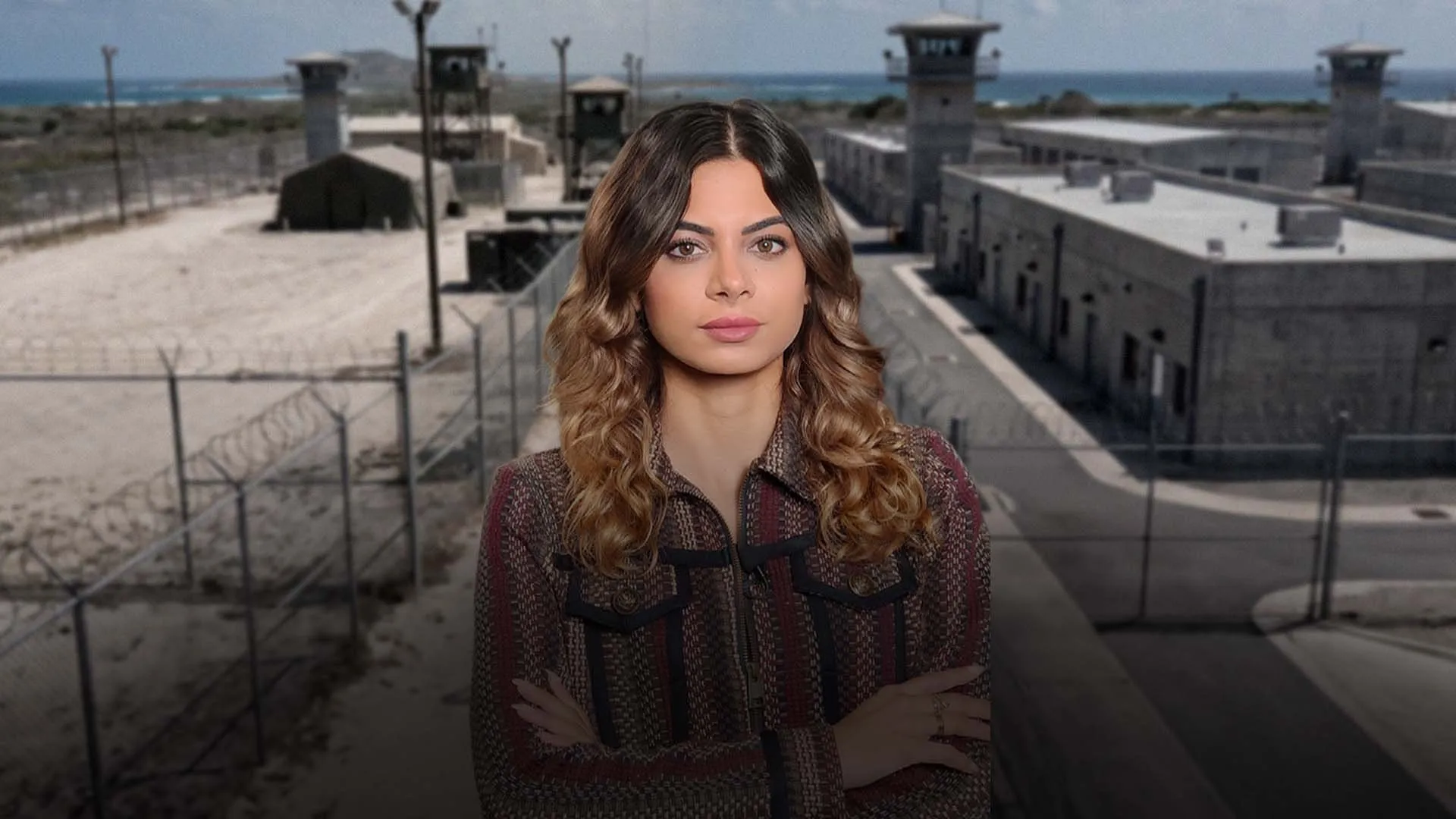
In the second, published the next day, Petro raised concerns about Glas’s health and wellbeing. The former vice president is serving his sentence in a maximum-security prison in Ecuador, El Encuentro.

“Jorge Glas is a Colombian citizen, and he is a political prisoner,” Petro said.

“I call upon international human rights organisations to safeguard his rights. His health condition now poses a threat to his life; due to his imprisonment, he has not received adequate sustenance and is currently suffering from severe malnutrition and muscle mass loss.”

Petro added that “allowing a person to starve to death” would constitute a “crime against humanity”.

The heated rhetoric between Petro and Noboa is part of a long-running spat between the two leaders.

Since March alone, Noboa has slapped Colombia with 50-percent tariffs, based on accusations it has been too lax in its fight against drug trafficking.

Petro, meanwhile, has accused Noboa of carrying out a bombing campaign near the Colombian border, resulting in the recovery of 27 charred bodies.

Noboa has been leading an aggressive, military-led anti-narcotics campaign with the support of United States President Donald Trump, who has similarly criticised left-wing governments like Petro’s for failing to tamp down on drug trafficking.

Noboa and Trump have grown close since the US president was sworn in for a second term in January 2025, and Ecuador’s policies towards regional governments and drug-trafficking have echoed those of the US.

Source link

Cuba releases over 2,000 prisoners amid mounting US pressure | Prison

NewsFeed

There have been emotional scenes in Cuba where 2,000 prisoners are being pardoned and released from jail. Authorities say it’s a “humanitarian gesture” for Holy Week, but it comes as the Trump administration intensifies pressure on Cuba over political prisoners.

Source link

Ten years since Panama Papers: What did they reveal, did anything change? | Panama Papers News

The Panama Papers, one of the biggest ever data leaks, revealed the vast scale of offshore financial networks used by the global elite.

On April 3, 2016, the International Consortium of Investigative Journalists (ICIJ) and the German newspaper Suddeutsche Zeitung released more than 11.5 million documents from the Panama-based law firm Mossack Fonseca. It exposed a network of offshore shell companies linked to the global financial elite, including current and former government leaders.

More than 350 journalists from over 80 countries worked in secrecy for more than a year to analyse 2.6 terabytes of leaked data then published their findings.

Here’s what we know about the Panama Papers ten years on, and whether the leak led to any changes.

What was the Panama Papers scandal about?

The 2016 Panama Papers scandal was about the leak of 11.5 million confidential documents including emails, contracts and banking statements from the law firm Mossack Fonseca.

The papers revealed a massive global network of offshore shell companies linked to some of the world’s richest people including politicians, business leaders and public figures, spanning countries from the United Kingdom to Russia, Australia to Brazil. They were using companies based in tax havens such as the British Virgin Islands, the Bahamas and Panama to move and store wealth away from the scrutiny of tax authorities.

About 214,000 entities were linked to individuals and companies in over 200 countries and territories. The documents covered from the 1970s up to 2016.

Who leaked the Panama Papers?

The Panama Papers were leaked by an anonymous whistleblower using the pseudonym John Doe, who initially shared the documents with Suddeutsche Zeitung, which then collaborated with journalists worldwide on reporting and releasing the findings.

P Vaidyanathan Iyer, managing editor at The Indian Express and one of the hundreds of journalists who worked on the Panama Papers, said that the process of identifying the information was like “looking for a needle in a haystack”.

“We were continuously, for about six to eight months, just reading data,” he told Al Jazeera.

“My team of three and I had a small cubicle to ourselves in the office, and we were cut off from the rest. Day and night, we were going through data, downloading documents onto our laptops and computers, which were all very secure, with restricted access. It was arduous work,” he added.

Who was exposed?

Hundreds of people, including more than 140 politicians, were identified as directors, shareholders or beneficiaries of offshore shell companies revealed in the Panama Papers. Among them were Mauricio Macri, then president of Argentina, and Petro Poroshenko, who was Ukraine’s fifth president from 2014 to 2019.

Other leaders, including former Pakistani Prime Minister Nawaz Sharif and former Icelandic Prime Minister Sigmundur Gunnlaugsson, were also named – all linked to ownership of shell companies in offshore tax havens.

What are offshore shell companies?

Offshore companies are legal entities incorporated in a jurisdiction outside the owner’s country of residence.

Shell companies, on the other hand, are entities that have “no real substantial business or operations in its place of incorporation or registered office,” Kehinde Olaoye, a professor of commercial law and business law associations at Hamad bin Khalifa University in Qatar, told Al Jazeera.

Shell companies are often used to create legal paperwork to cover for fraudulent or dodgy financial transactions. If they’re based in a country other than the owner’s, they’re offshore shell companies.

Are offshore shell companies illegal?

No. Offshore shell companies are not automatically illegal. The purpose of such companies is to create trusts, which then can be used to protect wealth or create estate planning.

However, “there is always a thin line between legitimate and illegitimate purposes” in using offshore shell companies, Olaoye noted.

“Usually, individuals and companies receive advice from financial advisers and legal advisers on how they can structure their business to take advantage of ‘favourable’ tax benefits,” she said.

Did anyone get in trouble for the Panama Papers?

A month after the Panama Papers were leaked, Iceland’s Gunnlaugsson resigned as prime minister following mass protests. According to the leaked documents, Gunnlaugsson and his wife allegedly established a company, Wintris, in the British Virgin Islands with the assistance of the Panamanian law firm. His resignation led to the fall of the Icelandic government at the time.

In 2017, Pakistan’s Supreme Court also disqualified then prime minister Sharif from office following the leaks, despite an earlier ruling that found insufficient evidence of corruption. The Panama Papers revealed that his children held several companies in the British Virgin Islands. In 2018, Sharif was banned from politics for life.

Mossack Fonseca, which had over 40 offices worldwide, also faced significant operational impacts following the leaks, including staff reductions, and ultimately shut down in 2018. Its co-founders, Jurgen Mossack and the late Ramon Fonseca, were acquitted by a Panamanian court, along with 26 others accused of setting up shell companies implicated in scandals in Brazil and Germany.

How much tax revenue has been recovered since 2016?

Between 2016 and 2026, governments worldwide recovered around $2bn in taxes, penalties and levies, according to the ICIJ. Countries such as the UK, Sweden and France each recovered between $200-250m, while others, including Japan, Mexico and Denmark, recovered around $30m each.

However, the amount that remains unaccounted for is significantly higher.

In India alone, the government brought forward close to 425 tax cases, according to Iyer.

“But the amount realised in taxes, which the government got back into its treasury was just about 150 crore rupees, which is around $16m. Whereas the total tax which was brought under investigation was about $1.5bn,” he noted.

Other countries, including Austria, Slovenia and New Zealand recovered between $1m and $8m.

Panama, the country where the leak was revealed, recovered about $14.1m.

Since the release of the Panama Papers, governments have taken steps to curb the misuse of shell companies by introducing new laws and regulations. They include the Corporate Transparency Act in the US, which requires the disclosure of “beneficial owners”—individuals who ultimately profit from offshore entities — as well as measures to improve information sharing between tax authorities.

The United Nations is also considering draft proposals for a Convention on Taxation. In addition, several nations have signed bilateral double-taxation treaties to reduce tax avoidance and prevent income from being taxed in multiple jurisdictions.

But gaps remain in the global tax system. There’s no one overarching international taxation principle that everyone needs to follow — and often there are overlapping treaties and agreements that allow those with the shrewdest financial advisors to choose, or shop, from among those pacts, based on whatever works best for them.

“The main challenge in international tax law is that there is no multilateral tax convention, which creates problems of tax competition and ‘treaty shopping’,” Olaoye said.

Source link

Russian tanker reaches Cuba amid critical energy shortage | Oil and Gas News

A Russian tanker has delivered enough fuel to meet Cuba’s energy needs for up to 10 days, following a three-month blockade.

A Russia-flagged tanker carrying 730,000 barrels of oil has docked in Cuba, marking the first time in three months that an oil tanker has reached the island nation.

The administration of United States President Donald Trump allowed the Anatoly Kolodkin to proceed despite an ongoing US energy blockade. The Aframax tanker entered the Bay of Matanzas – the country’s largest supertanker and fuel storage port – on Tuesday at daybreak.

Recommended Stories

list of 4 itemsend of list

The vessel, under US sanctions, entered Cuban territorial waters late on Sunday, not far from the US Navy base at Guantanamo Bay. The United States said it was allowing the tanker to deliver fuel for humanitarian reasons.

The Anatoly Kolodkin entered the Bay of Matanzas under clear skies and light winds at sunrise. Much of the nearby city – and the majority of Cuba – was without power when the tanker arrived at the port area.

Cuba has not received an oil tanker in three months, according to President Miguel Diaz-Canel, exacerbating an energy crisis that has led to seemingly endless blackouts across the country of 10 million people and brought hospitals, public transportation, and farm production to the brink of collapse.

Cubans, including Energy and Mines Minister Vicente de la O Levy, cheered the ship’s arrival. A shortage of petroleum has exacerbated a deep economic crisis, leaving the population mired in long blackouts and facing severe shortages of food and medicine.

“Our gratitude to the Government and People of Russia for all the support we are receiving. A valuable shipment that arrives amidst the complex energy situation we are facing,” de la O Levy wrote on X.

The fuel, if delivered, would give Cuba’s communist-run government breathing room amid growing pressure from the Trump administration, which has promised change in Cuba.

It will take days before the crude on board the Anatoly Kolodkin can be processed domestically and turned into motor fuel and refined products, such as diesel and fuel oil for power generation.

The ship is carrying Russian Urals, a medium sour crude, which is a good fit for Cuba’s ageing refineries.

Cuba produces barely 40 percent of its required fuel and relies on imports to sustain its energy grid. Experts say the anticipated shipment could produce about 180,000 barrels of diesel, enough to feed Cuba’s daily demand for nine or 10 days.

Cuba used to receive most of its oil from Venezuela, but those shipments have been halted ever since the US attacked the South American country and abducted its leader, Nicolas Maduro, in early January.

Source link

Venezuela’s ‘Chavismo’ movement faces a crossroads after US attack | US-Venezuela Tensions News

A new economic partner?

Libertad Velasco, a Chavista who grew up in the 23 de Enero neighbourhood, was only a teenager when Chavez came to power.

She went on to become one of the founding members of the youth wing of Chavez’s party, the United Socialist Party of Venezuela (PSUV). Eventually, she became the head of a government agency to expand access to higher education to members of vulnerable communities.

Still, Velasco described the period after Maduro’s abduction as a sort of awakening.

“It’s like we’re looking at ourselves without makeup,” Velasco said. “Now, everything is laid bare, revealed in its purest state, and we are beginning to recognise ourselves again.”

Since the US attack and Maduro’s removal, Velasco has thought deeply about her “red lines”: the ideals she feels should not be violated under the new government.

Standing up against invasive foreign powers remains one of her top priorities.

“I refuse to be colonised,” Velasco said. “For me, we shouldn’t have relations with Israel, and abandoning anti-imperialism is non-negotiable.”

Yet Velasco does not believe that the Venezuelan government has crossed that line yet. Rather, she is open to the prospect of the US as a trading partner to Venezuela, paying for access to its natural resources.

“It is a customer who should pay market price for the product they need. If Venezuela must act as a market player to lift people out of suffering, I can go along with that,” Velasco said.

Delia Braches in her home in Caricuao, Venezuela
Delia Bracho of Caricuao, Venezuela, says she has grown disillusioned with the Chavismo movement [Catherine Ellis/Al Jazeera]

But it is unclear whether that is happening. Critics point out that the Trump administration has demanded greater control over Venezuela’s natural resources. It has even claimed that Chavez stole Venezuelan oil from US hands.

Already, Venezuela has surrendered nearly 50 million barrels of oil to the US, with the Trump administration splitting the proceeds between the two countries.

Rodriguez, Venezuela’s interim president, has also agreed to submit a monthly budget to the US for approval.

Among Chavistas, there remains debate about whether the relationship with the US is beneficial or exploitative.

But economic recovery is an overwhelming priority for many Venezuelans of all political leanings. Under Maduro, Venezuela entered one of its worst economic crises in history. Inflation is currently at 600 percent, and living standards remain low.

Many Chavista loyalists blame US sanctions for their economic woes. Yet, analysts credit a combination of factors, including declining oil prices, economic mismanagement and pervasive corruption.

Delia Bracho, 68, lives in a district of Caracas called Caricuao, where water is delivered just once a week. Once a committed Chavista, she said her faith in the movement has faded.

Today’s movement, she explained, has been “ruined”, and she no longer wants anything to do with it.

“It’s like when you put on a pair of shoes,” she said. “They break, and you throw them away. Are you going to pick them up again, knowing they are no longer useful?”

Despite her initial fear after the US intervention, Bracho said she now feels cautiously optimistic that Venezuela might change for the better.

“It’s not that everything is fixed, but there is a different atmosphere — one of hope.”

Source link

Oil rises above $116 a barrel as Iran accuses US of preparing invasion | Oil and Gas News

DEVELOPING STORY,

Crude prices continue to climb as world faces its biggest energy crisis in decades.

Oil prices have surged to their highest level in nearly two weeks amid escalation on multiple fronts of the US-Israel war on Iran.

Brent crude, the global benchmark, rose more than 3 percent on Monday morning to top $116 a barrel.

Recommended Stories

list of 4 itemsend of list

The latest climb took the global benchmark to its highest point since March 19, when it briefly touched $119 a barrel.

The surge came after Iran said it was prepared for a US ground invasion, with the speaker of the country’s parliament warning that Tehran was waiting for the arrival of US troops to “set them on fire” and “punish” their regional allies.

Tehran’s warning came as the conflict deepened over the weekend, with the Iranian-backed Houthis launching missiles at Israel for the first time in the war, and Israel expanding its invasion of southern Lebanon.

Iran’s effective closure of the Strait of Hormuz in retaliation for the US-Israel war has disrupted about one-fifth of global oil and liquified natural gas (LNG) supplies, plunging the world into its biggest energy crisis in decades.

Oil prices have risen nearly 60 percent since the start of the war, driving up fuel prices worldwide and forcing numerous countries to adopt emergency measures to conserve energy.

Analysts have warned that oil prices are likely to keep rising unless maritime traffic returns to normal levels in the strait.

Greg Newman, the CEO the Onyx Capital Group, which began as an oil derivatives trading house, said that energy markets were only beginning to feel the fallout of the turmoil.

“Physical oil moves around the world in loading cycles , and Europe has taken around three weeks to really start feeling the effects of the oil shortage,” Newman told Al Jazeera.

“Brent is starting to reflect the reality, and we think it’s a steady rise from here towards $120 and beyond.”

Newman said the scale of the disruption had yet to be fully appreciated.

No one in the market has ever seen the outages we are now suffering from – physical premiums are the highest ever. There is still a sense that the macro world is not taking this seriously enough, but it is worse than anything that has come before it,” he said.

“The reality will come out in the economic numbers over the coming months.”

More to follow…

Source link

Meet the children left without parents under El Salvador’s emergency decree | Child Rights News

Mental health burdens

Ramirez is among the advocates who say children are suffering under the uncertainty and widespread detentions taking place in El Salvador.

In 2025, El Salvador had the highest incarceration rate in the world, with approximately 1.7 percent of its population in prison — roughly twice the rate of the next highest country, Cuba.

According to human rights organisations such as MOVIR, El Salvador’s youth are among the most seriously impacted by the downstream effects of mass incarceration, especially when their caregivers are imprisoned.

“There is a very grave situation with children,” said Ramirez. “There are many children who have been left without their parents, so those who used to provide for their basic needs are not there any more.”

As a result, experts say the affected children are experiencing psychological issues.

“Anxiety issues in these children have increased,” said a psychologist with Azul Originario, a nonprofit youth organisation based in San Salvador.

The psychologist often works with children whose parents have been abducted. She asked to remain anonymous for fear of reprisals, as NGO workers and critical voices have been intimidated, surveilled and, in some cases, arrested under El Salvador’s state of exception.

Rosalina González, 59, mother of Jonathan and Mario, who were detained under the state of exception on February 19, 2025, during ademonstration on March 8 2026 in San Salvador, El Salvador [Euan Wallace/ Al Jazeera]
Rosalina González, 59, protests for the release of her sons Jonathan and Mario, who were arrested under the state of emergency on February 19, 2025 [Euan Wallace/Al Jazeera]

“Sometimes they don’t want to do any physical activity or any studying,” she said.

“They don’t want to spend time with other children or go outside. They’re afraid of authorities, because some of them experienced the authorities taking their parents away.”

At a recent demonstration near San Salvador’s Cuscatlan Park, several families echoed those observations.

Among them was Fatima Gomez, 47, whose adult son was arrested in 2022. He left behind two daughters, ages 10 and three.

With their mother working full-time, Gomez has been taking care of the children. But she has noticed the eldest daughter seems traumatised.

“When she sees soldiers and police, she starts crying and runs inside,” Gomez said of the 10-year-old. “She says they are going to take all of us, too.”

Gomez had gathered with a crowd of men and women to demand the release of their loved ones.

Clutched in Gomez’s hands is a blue printed poster, emblazoned with her son’s face and a single word: “innocent”.

It flutters in a rush of wind from the passing traffic.

Source link

Mbappe nets for 10-man France in win against Brazil in World Cup warm-up | World Cup 2026 News

France beat Brazil 2-1 in a friendly in the United States, in what was a potential dress rehearsal for World Cup 2026 final.

France forward Kylian Mbappe showed no ill effects of his left knee injury when he broke free for a goal to give France an early lead on its way to a 2-1 victory over Brazil in a World Cup tuneup between two of the world’s top teams.

With a crowd of 66,215 heavily favouring Brazil, Mbappe and Hugo Ekitike gave France a 2-0 lead on Thursday on the same pitch where they will play their final group stage game of this summer’s World Cup, against Norway and Erling Haaland. Bremer cut the deficit to 2-1 in the 78th minute.

Recommended Stories

list of 4 itemsend of list

The friendly went off without any evident hiccups despite the simmering feud between the town of Foxborough and World Cup organisers over almost $8m in security costs. The sides reached an agreement two weeks ago in which the organising committee promised to make the payment in advance, and the town approved the necessary entertainment licence.

That was expected to be the last remaining obstacle to the world’s biggest sporting event arriving in this 20,000-person suburb tucked between Boston and Providence, Rhode Island, that swells to three times its size for New England Patriots games. To accommodate FIFA requirements, a grass field has replaced the artificial turf that had been used for the NFL’s Patriots and the New England Revolution of Major League Soccer.

The crowd was the second-largest to watch a football match at Gillette Stadium, behind only a 2007 friendly between Brazil and Mexico. It was speckled with fans in Brazilian yellow kits, with just a few French flags waving to celebrate Mbappe’s goal. (The media dining room was more neutral, with madeleines, macarons and eclairs alongside Brazilian brigadeiro, pudim and mousse de maracuja.)

Also in the house were Coach Joe Mazzulla and players from the NBA’s Boston Celtics, with forward Jayson Tatum taking part in the pregame coin toss alongside Massachusetts Governor Maura Healey.

A former Paris Saint-Germain and current Real Madrid star, Mbappe sprained his left knee in December but played through January before missing almost a month. He was used as a substitute in Real Madrid’s last two matches but started on Thursday.

Mbappe said on Monday that his injury was “truly behind me”. (Reports that said the team examined the wrong knee were false, Mbappe said at a news conference in Foxborough on Wednesday.)

And he showed it in the 32nd minute when Ousmane Dembele delivered a through ball that left no one between Mbappe and the goalkeeper. The 2018 World Cup champion and 2022 Golden Boot winner tapped it ahead once before chipping it over the keeper to make it 1-0.

France took a 2-0 lead in the 65th minute when Ekitike, Liverpool’s top scorer this season, converted on a pass from Michael Olise in the penalty area. Mbappe left for a substitute immediately afterwards.

After France’s Dayot Upamecano was sent off in the 55th minute for taking down a player with a clear path to the goal, a card that was upgraded from yellow to red on video review, Brazil cut the deficit to 2-1 when Bremer redirected a cross from Luiz Henrique past France keeper Mike Maignan.

The game also featured a mid-half “cooling break” that enabled players to rest and hydrate – even though the temperature in early spring New England was in the mid-60s (15 degrees Celsius).

After a heatwave during last year’s Club World Cup, FIFA announced that all games in the 2026 World Cup would include the break, regardless of the temperature on the pitch.

Should France and Brazil both win their groups at the World Cup, then the first time they can meet at the tournament will be in the final itself.

Source link

Venezuela’s Maduro set to appear in US court months after abduction | News

The Venezuelan leader, who is accused of plotting to traffic cocaine, denies all charges as part of an imperialist plot.

Former Venezuelan President Nicolas Maduro is set to return to a New York courtroom as he seeks to have his drug trafficking indictment dismissed.

Thursday marks the first time that Maduro and his wife, Cilia Flores, will be in court since a January arraignment at which he protested his abduction by United States military forces and pleaded not guilty to all charges against him.

Recommended Stories

list of 3 itemsend of list

Maduro, 63, and Flores, 69, remain jailed at a detention centre in Brooklyn. Neither has requested bail.

Judge Alvin Hellerstein has yet to set a trial date, though that could potentially be announced at the hearing.

Maduro, who has led Venezuela since 2013, was abducted in Caracas by US special forces on January 3.

His lawyer contends that Washington is violating the deposed leader’s constitutional rights by blocking Venezuelan government funds from being used to pay his legal costs.

The former president and Flores continue to enjoy some support in Venezuela, with murals and billboards across the capital, Caracas, demanding their return.

However, while Maduro’s ruling party remains in control, he himself has been gradually sidelined within the government led by acting President Delcy Rodriguez.

Rodriguez has removed key figures loyal to Maduro, including his longtime defence minister and attorney general. She has also reshaped state institutions, named new ambassadors, and dismantled core elements of the self-declared socialist project that has governed Venezuela for more than 20 years.

Accusations of helping Colombian rebels

US prosecutors have accused Maduro and several alleged associates of “narco-terrorism” and plotting to traffic cocaine into the United States. If convicted, the charges could carry maximum penalties of life in prison under US law.

Congress created the narcoterrorism statute 20 years ago to target drug traffickers who finance activities the US considers “terrorism”.

Since then, 83 people, including Maduro, have been charged with violating it.

According to the Reuters news agency, the 2006 statute at issue has produced four trial convictions. Two were later overturned over issues stemming from witness credibility.


Maduro is also accused of leading a conspiracy in which officials in his government helped move cocaine through Venezuela in collaboration with traffickers, including the Revolutionary Armed Forces of Colombia (FARC), which Washington labelled a terrorist organisation from 1997 to 2021.

Maduro and his fellow indicted officials have always denied wrongdoing, saying the US charges are part of an imperialist plot to harm Venezuela.

Source link

Oil prices rise higher as Iran denies US talks, dimming deescalation hopes | US-Israel war on Iran News

Brent crude tops $104 a barrel as hopes fade for deescalation in US-Israel war on Iran.

Oil prices have climbed higher amid fading hopes of deescalation in the Iran war following Tehran’s denial that talks with the United States are under way.

Futures for Brent crude, the international benchmark, rose nearly 2 percent on Thursday to top $104 per barrel after Tehran dismissed reports of direct negotiations with US President Donald Trump’s administration.

Recommended Stories

list of 4 itemsend of list

The rise comes after oil prices eased on Wednesday following reports that Trump had shared a 15-point plan for ending the war with Iran.

Asian stock markets opened lower on Thursday, with Japan’s Nikkei 225, South Korea’s KOSPI and Hong Kong’s Hang Seng Index all seeing losses.

Iranian Foreign Minister Abbas Araghchi said in an interview with state media aired on Wednesday that Tehran was not engaged in direct talks with Washington and has “no intention of negotiating for now”.

White House Press Secretary Karoline Leavitt warned on Wednesday that Iran would be “hit harder” than ever before if Tehran did not accept military defeat.

Iran’s effective closure of the Strait of Hormuz, a conduit for one-fifth of global oil supplies, and its attacks on energy facilities across the Middle East have prompted a surge in energy prices worldwide.

Oil prices are up more than 40 percent compared with before the US and Israel launched strikes on Iran on February 28, prompting numerous countries to implement fuel rationing and other energy conservation measures.

Market-watchers say prices are likely to rise further until shipping is free to traverse the strait, despite efforts by countries to bolster supply by tapping emergency stockpiles in coordination with the International Energy Agency.

While Tehran has repeatedly claimed that the strait is open to ships that are not aligned with its enemies, daily transits have all but collapsed since the start of the conflict.

Four vessels were tracked transiting the waterway via their automatic identification systems on Tuesday, down from an average of 120 daily transits before the conflict, according to maritime intelligence firm Windward.

Source link

Mexico will continue accepting Cuban medical workers despite US pressure | Donald Trump News

Mexican President Claudia Sheinbaum praises services from Cuban doctors, who often work in underserved rural areas.

Mexican President Claudia Sheinbaum has confirmed that her country will continue receiving Cuban medical workers, as part of a longstanding programme meant to build goodwill between the island and other Latin American countries.

Her remarks on Wednesday come as the United States pressures Latin American countries to sever their ties to Cuba’s medical programme.

Recommended Stories

list of 3 itemsend of list

Sheinbaum, however, told reporters during a news conference that the agreement was a benefit to Mexico. Thousands of Cuban medical workers have deployed there since 2022 to work largely in poor, rural areas.

“We have a very good agreement that’s also been a great help to us. It’s a bilateral agreement that’s been very beneficial for Mexico,” said Sheinbaum.

“It’s hard to get Mexican doctors and specialists to go out to many rural areas where we need medical specialists, and the Cubans are willing to work there.”

In February, the US passed a law that opens the door to sanctions on countries that continue to participate in the programme.

It called for the US secretary of state to issue a report within 90 days about which countries continue to pay the government of Cuba for the “coerced and trafficked labour of Cuban medical professionals”.

The move comes amid a wider push to further isolate Cuba and topple the government in Havana, a longtime target of US ire. So far, countries including the Bahamas, Honduras, Guatemala, Jamaica and Guyana have ended their participation in the Cuban medical exchange programme.

Cuba has long depicted the decades-old programme as a means of signalling solidarity with other countries. It has also become an important source of foreign revenue for the island nation, which has been under a restrictive US economic embargo since 1960.

The administration of US President Donald Trump, however, has depicted the programme as akin to forced labour.

“Basically, it’s human trafficking,” Secretary of State Marco Rubio told reporters in February.

“I mean, they’re barely even being paid. Their freedom of movement is tightly restricted. And we want these countries to understand that’s what they’re participating in.”

Experts at the United Nations have also raised similar concerns, including about the confiscation of passports, which the Cuban government justifies as a means of preventing trained doctors from fleeing the country after their state-sponsored studies.

The pressure on the Cuban medical missions is part of a broader push under Trump’s second term to seek regime change on the island.

By threatening tariffs on Cuba’s trading partners, Trump has largely cut the island off from accessing the foreign oil necessary to power its electrical grid.

Trump has also said that he hopes to “take” Cuba and install a new government that will be more pliant to US demands.

The Mexican government has tried to balance its friendly relations with Cuba with the US’s demands.

In the absence of energy shipments, Sheinbaum’s government has sent vessels with humanitarian aid to the island.

Source link

From Pakistan to Egypt, Iran war drives up fuel prices in the Global South | Business and Economy News

As the United States-Israeli war with Iran sends tremors through the global economy, the poorest members of the Global South are the most exposed to the fallout.

In Asia, Africa and the Middle East, developing economies are bearing the brunt of surging energy costs prompted by the closure of the Strait of Hormuz and attacks on oil and gas facilities across the Gulf.

Recommended Stories

list of 4 itemsend of list

From Pakistan to Bangladesh and Sri Lanka, through to Jordan, Egypt and Ethiopia, policymakers are facing the double whammy of being both heavily dependent on imported energy and having limited financial firepower to absorb the shock of spiking prices.

In Pakistan, which imports about 80 percent of its energy from the Gulf and has lurched between economic crises for years, authorities have scrambled to roll out measures to conserve fuel.

Facing the depletion of the country’s petrol and diesel reserves within weeks, officials have closed schools, introduced a four-day working week for government offices, ordered half of the country’s public sector employees to work from home, and slashed fuel allowances for official business.

Pakistani Prime Minister Shehbaz Sharif said last week that he had decided against a proposed hike in petrol and diesel prices before the Eid Al-Fitr celebration, saying the government would “bear the burden” of rising costs.

Sharif’s announcement came after the government had earlier this month approved a 55 rupee ($0.20) rise in the price of a litre (0.26 gallons) of petrol or diesel.

While government subsidies have helped cushion the blow for the public, there are fears that petroleum prices will surge and bring economic activity to a halt if the war drags on, said S Akbar Zaidi, the executive director of the Institute of Business Administration in Karachi.

“The overall shock is quite severe, although it has not been fully passed on to consumers and to industry,” Zaidi said.

“I expect the next few weeks to make things far worse once the disruption and price factors pass through.”

bangldesh
A man gets his motorcycle refuelled at a petrol station in Dhaka, Bangladesh, on March 9, 2026 [Munir Uz Zaman/AFP]

In Bangladesh, which imports about 95 percent of its oil and is expected to run through its fuel reserves within days, petrol pumps in some districts have run dry despite the introduction of fuel rationing.

Sri Lanka, which imports about 60 percent of its energy needs and is still reeling from an economic meltdown that began in 2019, has declared every Wednesday a public holiday and introduced a mandatory fuel pass for vehicle owners to conserve petrol and diesel, stockpiles of which are projected to run dry within weeks.

In Egypt, one of the biggest energy importers and among the most indebted economies in the Middle East, the government has ordered malls, shops and cafes to close by 9pm on weekdays and 10pm during weekends, and cut back on public lighting.

Facing growing pressure on public finances due to the government’s heavy subsidisation of fuel prices, Egyptian officials on March 10 announced price hikes of between 15 and 22 percent for petrol, diesel and cooking gas.

While acknowledging the burden on the public, Egyptian President Abdel Fattah el-Sisi said the move was necessary to avoid “harsher and more dangerous outcomes”.

“For a majority of developing economies, especially those already grappling with debt and high import dependence, they are facing a potent mix of inflation, currency pressures and fiscal strains,” said Yeah Kim Leng, a professor of economics at the Jeffrey Cheah Institute on Southeast Asia at Sunway University in Kuala Lumpur, Malaysia.

“The hardest hit are net energy and food importers, especially those with fragile macroeconomic foundations and pre-existing vulnerabilities that typified countries with low per capita income and high poverty rates,” Yeah added.

Pakistan, Bangladesh, Sri Lanka, Jordan, Senegal, Egypt, Angola, Ethiopia and Zambia are among the most at risk, according to a recent analysis by the Washington-based Centre for Global Development, which looked at factors including dependence on fuel imports, public debt levels and foreign exchange reserve/import ratios.

Currency depreciation

The weakening of many developing countries’ currencies against the US dollar – the result of investors buying the greenback amid heightened geopolitical uncertainty – has compounded the situation by further driving up costs.

“Countries such as Indonesia and the Philippines have already seen their currencies at near record lows even before the start of the conflict, making imports, including oil, much more expensive,” said Azizul Amiludin, a non-resident senior fellow at the Malaysia Institute of Economic Research in Kuala Lumpur.

Much as the fallout of the war poses particular challenges for governments in developing countries, the effect on citizens is disproportionate, too.

In less advanced economies, citizens spend much more of their pay cheques on fuel and food, leaving them more exposed to rising living costs.

At the same time, governments in developing countries have less capacity to provide a safety net for those at risk of falling through the cracks.

“In vulnerable economies, governments often attempt to shield their populations from price hikes by subsidising fuel and food,” said Yeah, the Jeffrey Cheah Institute professor.

“However, with depleted fiscal buffers and shrinking revenues, this becomes unsustainable. The ensuing austerity, combined with hyperinflation, can trigger widespread social unrest and a full-blown fiscal crisis.”

pakistan
Motorcyclists crowd a filling station and wait their turn to get fuel, in Lahore, Pakistan, on March 6, 2026 [K M Chaudary/AP]

With the US and Israel barely a month into their war and no clear timetable for its end in sight, many analysts expect things to get worse before they get better.

Khalid Waleed, a research fellow at the Sustainable Development Policy Institute in Islamabad, said rising transport costs would soon be felt at supermarket checkouts.

“Diesel is the backbone of Pakistan’s freight and agricultural economy,” Waleed said.

“Trucking costs have started climbing, and that will feed into everything from flour to fertiliser in the weeks ahead.”

Once Pakistan’s wheat harvest gets under way in April, food prices could spike well beyond their current levels, Waleed said.

“Combine harvesters, threshers, tractors for haulage from field to market, and the trucks that move grain from fields to flour mills and storage facilities all run on high-speed diesel,” he said.

“For a country where wheat flour is the single largest item in the food basket of the bottom two income quintiles, this is not a marginal concern,” Waleed added.

“If diesel prices stay elevated through April and May, Pakistan will harvest its wheat at the most expensive input cost in years, and that cost will transmit directly into food inflation at a time when households have almost no capacity left to absorb further price shocks.”

Source link

When are UEFA’s World Cup 2026 playoffs, and which nations are involved? | Sport News

The final qualification spots for the FIFA World Cup 2026 are about to be sealed via UEFA and intercontinental playoffs.

With the FIFA World Cup 2026 kicking off on June 11, the final spots that are still up for grabs are being fiercely fought by nations in qualifiers around the globe.

The last governing body to complete their continental playoff route is UEFA, with four European spots still up for grabs at the showpiece event.

Recommended Stories

list of 4 itemsend of list

Thereafter, FIFA’s Play-Off Tournament – an intercontinental competition – will provide the last-chance saloon for two more of the best non-qualified finishers from the other continental processes around the globe.

Al Jazeera Sport takes a look at UEFA’s final continental playoff path as that draws to a close.

Which UEFA teams are still in with a chance of World Cup qualification?

There will be more European teams than from any other continent at the World Cup: 16.

There are still 16 European teams, meanwhile, vying for the final four of the UEFA qualifying positions for the World Cup:

  • Italy, Northern Ireland, Wales, Bosnia and Herzegovina, Ukraine, Sweden, Poland, Albania, Slovakia, Kosovo, Turkiye, Romania, Denmark, North Macedonia, Czechia and the Republic of Ireland

Which UEFA teams have already qualified for the World Cup?

The 12 European teams that have already qualified for the World Cup are:

  • Germany, Switzerland, Scotland, France, Spain, Portugal, the Netherlands, Austria, Norway, Belgium, England, and Croatia

What is the pathway to the World Cup for the remaining UEFA teams?

The remaining teams are divided into four paths. Only the winner of each path will qualify:

Path A:

  • Italy vs Northern Ireland and Wales vs Bosnia and Herzegovina
    The winner of this path joins World Cup Group B (with Canada, Qatar, and Switzerland).

Path B:

  • Ukraine vs Sweden and Poland vs Albania
    The winner of this path joins World Cup Group F (with the Netherlands, Japan, and Tunisia).

Path C:

  • Slovakia vs Kosovo and Turkiye vs Romania
    The winner of this path joins World Cup Group D (with USA, Paraguay, and Australia).

Path D:

  • Denmark vs North Macedonia and Czechia vs Republic of Ireland
    The winner of this path joins World Cup Group A (with Mexico, South Africa, and South Korea).

When are the first set of UEFA playoffs for World Cup qualification?

The first round of pathway matches will be played by the 16 remaining teams on March 27, and are single-leg semifinals.

When are the second set of UEFA playoffs for World Cup qualification?

The second round of pathway matches will be played on March 31, with the four winners of each pathway final progressing to the FIFA World Cup 2026. These matches will also be played over a single leg.

How have the UEFA qualifiers reached this stage?

The four final UEFA qualifying places are being decided by the teams that were the 12 runners-up from the group qualifying stage and four based on performances in the UEFA Nations League.

How were the home teams decided for the UEFA playoffs?

The highest-ranked teams are hosting the semifinals. The hosts of the finals were determined by a draw.

Pressure on Italy as playoff hopefuls eye 2026 World Cup

There is no doubt that Italy are the biggest name not amongst those nations that have already qualified.

The four-time champions are seeking to avoid the ignominy of missing out on a World Cup for a third consecutive time.

The spotlight has been on the Italian domestic league, Serie A, for falling behind the other leagues on the continent with their clubs struggling to compete in European competitions.

There will be no greater evidence of Italian football’s fall from grace, however, than the failure to reach the finals.

“It’s undeniable that there’s nervousness,” coach Gennaro Gattuso said. “Only someone without blood running through their veins wouldn’t feel it.”

Will there be any more qualifiers for the World Cup after UEFA’s?

Yes. There is a different format for the intercontinental playoffs, which FIFA simply calls the Play-Off Tournament.

Two teams will advance from a field of six.

The lineup of teams was comprised of two nations from CONCACAF (Jamaica, Suriname) and one each from Asia (Iraq), Africa (DR Congo), South America (Bolivia) and Oceania (New Caledonia).

Source link

Asian stock markets plunge amid Trump’s ultimatum on Iran | Oil and Gas News

Key indexes in Japan, South Korea and Hong Kong tumble as Iran threatens attacks on energy infrastructure across region.

Stock markets in the Asia Pacific have fallen sharply amid US President Donald Trump’s ultimatum warning Iran to reopen the Strait of Hormuz or face the annihilation of its energy infrastructure.

Japan’s benchmark Nikkei 225 and South Korea’s KOSPI plunged 4 percent and 4.5 percent, respectively, in early trading on Monday.

Recommended Stories

list of 4 itemsend of list

In Hong Kong, the Hang Seng Index tumbled about 2 percent.

Australia’s ASX 200 dropped about 1.6 percent, while the NZX 50 in New Zealand dipped about 1.3 percent.

Futures on Wall Street, which are traded outside of regular market hours, saw moderate losses, with those tied to the S&P500 and the Nasdaq Composite down about 0.5 percent.

Oil prices remained volatile amid fears of further disruption to global energy supplies.

Futures for Brent crude, the international benchmark, rose more than 1.5 percent to top $114 a barrel, before easing to about $112 as of 02:00 GMT.

Trump on Saturday threatened to “obliterate” Iran’s power plants within 48 hours if Tehran does not end its effective blockade of the strait, through which about one-fifth of global oil and natural gas exports usually transit.

Tehran has pledged to completely close the waterway, which is still being transited by a small number of Chinese, Indian and Pakistani-flagged vessels, and launch retaliatory attacks on energy and water infrastructure across the region if Trump follows through on his threat.

Based on the timing of Trump’s warning on Truth Social, the deadline for his ultimatum is set to expire at 23:44 GMT on Monday.

Philippines
A woman stands beside a sign for prices at a gasoline station in Quezon City, Philippines, on March 19, 2026 [Aaron Favila/AP]

Trump’s threat has added to fears of a cascading global energy crisis as the US and Israel’s war on Iran approaches the one-month mark with no clear end in sight.

Oil prices have surged more than 50 percent since the start of the war, which began with US-Israeli strikes on February 28.

Analysts have warned that energy prices are likely to rise significantly further if the strait remains effectively closed, with some observers predicting oil to hit $150 or even $200 a barrel.

Trump on Sunday held a phone call with UK Prime Minister Keir Starmer to discuss the situation in the Middle East, including the effective closure of the strait.

The two leaders agreed that unblocking the strait is “essential to ensure stability in the global energy market”, Starmer’s office said in a statement.

Trump has provided conflicting messages about the goals of the war and how long it might last.

Hours before issuing his ultimatum on Saturday, Trump said that his administration was “very close to meeting our objectives as we consider winding down” military operations against Iran.

Israeli military spokesperson Lieutenant Colonel Nadav Shoshani last week told reporters that officials had detailed plans for at least three more weeks of war.

Source link

Emerging from latest blackout, Cuba says ready for any potential US attack | Oil and Gas News

US President Trump, who cut off oil supplies to Cuba after abducting Venezuela’s President Maduro, has threatened to take over the island-nation.

The Cuban government has said it is prepared for any potential United States attacks as the island-nation begins to recover from yet another blackout under a punishing oil blockade imposed by Washington that has pushed its economy to the brink.

Deputy Foreign Minister Carlos Fernandez de Cossio responded on Sunday to US President Donald Trump’s threats this week to take over Cuba, insisting that it had “historically been ready to mobilise as a nation for military aggression”.

Recommended Stories

list of 3 itemsend of list

“We don’t believe it is something that is probable, but we would be naive if we do not prepare,” de Cossio told NBC’s Meet the Press.

His comments were aired a day after the latest collapse of the country’s ageing nationwide grid that had left millions of people in the dark. Saturday’s outage was the second in the past week and the third in March.

The state-run Electric Union and the Ministry of Energy and Mines said some 72,000 customers in the capital, Havana, including five hospitals, had electricity again early on Sunday. But the number represented only a fraction of Havana’s total population of approximately two million.

The Cuban Electric Union, which reports to the Ministry of Energy and Mines, said the total disconnection of the national system was caused by an unexpected shutdown of a generation unit at the Nuevitas thermoelectric plant in Camaguey province, without providing details on the specific cause of the failure.

Cuba Blackout
People gather in the dark during a blackout in Havana, Cuba, on March 21, 2026 [Ramon Espinosa/AP Photo]

Trump, who started blocking oil from reaching the island after abducting Cuba’s ally, Venezuelan President Nicolas Maduro, early this year, has warned potential oil exporters that they could face high tariffs.

According to President Miguel Diaz-Canel, Cuba has not received oil from foreign suppliers for three months. The country produces barely 40 percent of the fuel it needs to power its economy.

On March 16, Trump escalated his rhetoric against Cuba, arguing the leadership was on the verge of collapse and saying he expected to have the “honour” of taking the country.

De Cossio denied that the nature, structure, or makeup of the Cuban government was up for negotiation in what Havana has called a “serious and responsible” dialogue with Washington launched earlier this month. He added that a change of the ruling system was “absolutely” off the table in discussions.

This week, General Francis Donovan, head of the US Southern Command overseeing armed forces in Latin America, told lawmakers at a US Senate hearing on Trump’s military action in the region that troops were not rehearsing for an invasion of Cuba or actively preparing to take over the Communist-run island.

But, he added, the US stood ready to address any threats to the US embassy, to defend its base at Guantanamo Bay, and aid US government efforts to address any mass migration from the island, if needed.

The Cuban government reportedly refused a request by the embassy in Havana to allow it to import diesel for its generators in response to the oil blockade, The Associated Press reported on Saturday, citing two US officials.

Source link

Latin American presidents criticise US actions | US-Israel war on Iran

NewsFeed

Latin American leaders met at the 10th Community of Latin American and Caribbean States (CELAC) Summit in Bogota on Saturday where Colombian President Gustavo Petro called for an immediate Middle East ceasefire to prevent a global economic crisis and ‘potential world war’.

Source link