Latin America

‘They want to colonise us’: Brazil’s Lula warns of foreign interference | Politics News

Brazilian President Luiz Inacio Lula da Silva has criticised what he called the return of a colonial approach towards developing nations during a summit in Colombia.

But while Lula did not mention United States President Donald Trump in his remarks, he gestured at actions undertaken by the Trump administration, including the January 3 abduction of Venezuelan leader Nicolas Maduro and the fuel blockade in Cuba.

Recommended Stories

list of 3 itemsend of list

“It’s not possible for someone to think that they own other countries,” Lula said, in an apparent reference to US policy.

“What are they doing with Cuba now? What did they do with Venezuela? Is that democratic?”

Lula delivered his remarks at Saturday’s summit for the Community of Latin American and Caribbean States (CELAC), which featured a high-level forum with delegates from Africa.

He told delegates that their countries had already experienced being plundered for gold, silver, diamonds and minerals.

“After taking everything we had, now they want to own the critical minerals and rare earths that we have,” Lula said, without specifying who “they” might be. “They want to colonise us again.”

The left-wing Brazilian president also criticised the ongoing war launched by the US and Israel against Iran.

He drew a parallel between that conflict, which began on February 28, and the US-led Iraq war, which began in 2003 on the pretext of eliminating “weapons of mass destruction”.

“Iran has been invaded under the pretext that Iran was building a nuclear bomb,” Lula said, before pivoting to the US campaign in Iraq, which resulted in the overthrow of Iraqi leader Saddam Hussein.

“Where are Saddam Hussein’s chemical weapons?” Lula asked. “Where are they? Who found them?”

A history of intervention

Washington’s history of intervention in Latin America goes back more than 200 years to when then-President James Monroe claimed the hemisphere as part of the US sphere of influence.

While large-scale, overt US involvement in the region mostly petered out after the Cold War, Trump has rekindled the legacy.

Since assuming office last year, Trump has launched boat strikes against alleged drug traffickers in the Caribbean, ordered a naval blockade on Venezuelan oil exports, and gotten involved in electoral politics in Honduras and Argentina.

Trump imposed a 50 percent tariff on Brazilian goods last year, citing the trial against the country’s former president, Jair Bolsonaro, as a motive. The US has also shown keen interest in Brazil’s rare earth deposits.

Then, on January 3, US forces abducted and imprisoned Venezuelan leader Nicolas Maduro, flying him to New York to face drug and weapons charges.

While such actions have thrilled right-wing leaders across the continent, they have raised fears among left-wing politicians, who have voiced grave concerns over what they see as US bullying.

“We cannot allow anyone to interfere and violate the territorial integrity of each country,” Lula said Saturday.

Frustration with the UN

Lula, who has said he will run for a fourth, nonconsecutive term in Brazil’s upcoming October elections, also criticised the United Nations for its inability to stop multiple conflicts around the world.

“What we are witnessing is the total and absolute failure of the United Nations,” he said, pointing to the situations in Gaza, Ukraine and Iran.

He called, once again, for reform of the UN Security Council, which is mandated with ensuring international peace and security. But it has failed to stop major conflicts because of the veto power of its five permanent members: China, France, Russia, the United Kingdom and the United States.

There have been decades of efforts to reform the Security Council. But they have all been unsuccessful.

Colombian President Gustavo Petro, whom the US Drug Enforcement Administration has designated a “priority target”, echoed Lula’s condemnation of the UN.

The body “is acting in impotence, and that is not what it was created for. It was created after World War II precisely to prevent wars. And yet, what we have today is war,” Petro said at the summit.

But the world needs the UN to provide climate solutions and curb global warming, Petro said.

“The more serious humanity’s problems become, the fewer tools we have for collective action. And that path leads only to barbarism.”

Relatively few presidents and prime ministers from Latin America and the Caribbean attended the summit in Colombia, a sign of the continent’s deep divisions.

Those present included the presidents of Brazil, Uruguay, Burundi and Colombia, as well as the prime ministers of Guyana and Saint Vincent and the Grenadines, along with deputy ministers, foreign ministers and ambassadors.

Source link

Colombia’s President Gustavo Petro under investigation in US for drug ties | Donald Trump News

Colombia’s President Gustavo Petro has been named in two separate criminal investigations led by prosecutors in the United States.

The New York Times was the first to report the existence of the two probes on Friday, citing sources familiar with the proceedings.

Recommended Stories

list of 3 itemsend of list

Media reports indicate that Petro is not personally the target of the investigations, which focus on drug-smuggling in Latin America.

But according to the Times, US attorneys in Brooklyn and Manhattan are looking into whether Petro met with drug traffickers and solicited donations from them for his 2022 presidential campaign. Al Jazeera has not independently verified the Times report.

By Friday afternoon, Petro had issued a statement denying the claims, which threaten to reopen the rift between the US and Colombia.

“In Colombia, there is not a single investigation into my relationship with drug traffickers, for one simple reason: I have never in my life spoken with a drug trafficker,” Petro wrote on the social media platform X.

He added that he told campaign managers to never accept donations from bankers or drug traffickers.

The investigations in the US, he argued, would ultimately exonerate him, and he blamed Colombia’s right-wing opposition for stirring controversy.

“So, the proceedings in the US will help me to dismantle the accusations of the Colombian far right, which is indeed closely linked to Colombian drug traffickers,” Petro said.

Petro has not been charged with any crimes, and the investigations are in their initial stages, according to the Times.

But experts say the timing of the report is significant, as it comes barely two and a half months before Colombia is set to hold a closely watched presidential election on May 31.

“If this would have happened a week before the first round, it would be election interference,” Sergio Guzman, director at Colombia Risk Analysis, a security think tank, told Al Jazeera.

“This seems to be more of a warning that shows how the US could influence the outcome of the election.”

Petro, Colombia’s first left-wing president, is limited to a single term in office, but the election is likely to be a referendum on his four years in office.

It will also be a test for Petro’s Historic Pact coalition, whose candidate, Ivan Cepeda, is currently leading in the polls.

Ivan Cepeda
Colombian presidential candidate Ivan Cepeda speaks at a rally in support of current President Gustavo Petro on February 3 [Nathalia Angarita/Reuters]

But United States President Donald Trump has repeatedly sought to boost the prospects of right-wing candidates in Latin America. He and Petro have been at loggerheads since Trump returned to office in January 2025.

Their feud came to a head in January after the US attacked Venezuela and abducted its president, Nicolas Maduro.

Shortly afterwards, a reporter asked if the US would take military action against Colombia. Trump replied: “It sounds good to me.”

To cool tensions, Trump and Petro held a call afterwards and agreed to meet.

Petro then visited the White House in early February to mend his often-combative relationship with Trump. While there, the Colombian delegation interacted with their counterparts, including Secretary of Defense Pete Hegseth and Secretary of State Marco Rubio.

Republican Senator Bernie Moreno, a longtime critic of Petro’s government, was also in attendance. Guzman believes the senator’s presence was significant.

“We don’t have a lot of straightforward answers about what were the commitments during that meeting, but Bernie Moreno did say that he wanted Petro not to be as involved in elections,” Guzman told Al Jazeera.

“And guess what? Petro is fully involved in the elections.”

The meeting also addressed collaborative efforts to combat drug trafficking, an issue core to Trump’s foreign policy.

Both presidents walked away from the meeting in good spirits, with Petro sharing a photo signed by Trump that read, “Gustavo – a great honor. I love Colombia.”

But Petro and Trump have long been at odds over how to tamp down on narcotics smuggling.

Colombia, the region’s largest producer of cocaine, has been criticised by the Trump administration for what it sees as soft-on-crime policies, including negotiations with armed groups.

Petro, meanwhile, has denounced the US for its lethal tactics, calling them tantamount to murder.

The US, for instance, has bombed at least 46 alleged drug boats and vessels in the Caribbean Sea and eastern Pacific Ocean. Some of the 159 people killed were Colombian citizens.

The US has also floated the idea of conducting military attacks in Latin America against suspected drug traffickers, and it recently began joint operations against gangs in Ecuador, Colombia’s neighbour.

A screen shows Colombian President Gustavo Petro and U.S. President Donald Trump shaking hands, as people attend a rally, called by the Colombian government, in support of Petro during his ongoing visit to the U.S., at Plaza Bolivar in Bogota, Colombia, February 3, 2026. REUTERS/Nathalia Angarita
A screen shows Colombian President Gustavo Petro and US President Donald Trump shaking hands at Plaza Bolivar in Bogota, Colombia, on February 3 [Nathalia Angarita/Reuters]

Analysts say actions like these have Latin American leaders on edge.

Trump’s aggressive manoeuvres suggest that the US president is willing to jeopardise “the sovereignty and peace of every nation” in his campaign against illicit drugs, according to Rodrigo Pombo Cajiao, a constitutional law professor at the Pontificia Universidad Javeriana.

Pombo Cajaio pointed to the US abduction of Venezuelan President Nicolas Maduro on January 3. Maduro was a longtime adversary of Trump, and he is currently being held in prison in New York on drug-related charges.

“Every political leader in the region has been put on notice” after that abduction, Pombo Cajiao said.

“As the world’s leading producer of cocaine, Colombia found itself at high risk of judicial prosecution” from the US, he added.

Currently, Petro’s Historic Pact is leading May’s presidential race. A GAD3 poll released this week suggested Cepeda is ahead in the polls with 35 percent voter approval, ahead of far-right candidate Abelardo de la Espriella, who had 21 percent.

Source link

Mexican military says 11 killed in raid targeting Sinaloa cartel leader | Crime News

Omar Oswaldo Torres, the leader of the Los Mayos faction of the Sinaloa criminal network, was detained in the raid.

Mexican authorities have revealed that 11 people were killed during a raid that resulted in the capture of Omar Oswaldo Torres, the leader of a faction of the Sinaloa Cartel.

In a social media post on Thursday, the Mexican Navy said the raid took place in Culiacan, part of the state of Sinaloa in northern Mexico.

Recommended Stories

list of 3 itemsend of list

It alleged that its personnel were attacked at the site of the raid and returned fire, killing 11 “assailants”. Their identities have yet to be released to the public.

“High-powered weapons and tactical equipment were seized at the scene,” the navy said in a statement.

The navy added that a woman identified as Torres’s daughter was also present during the operation, but she was released to her family due to a lack of connection to criminal activities.

Torres, known by the nickname “El Patas”, is the leader of the Los Mayos faction of the Sinaloa Cartel.

In recent years, Los Mayos have been in a fight with another faction, Los Chapitos. Each side is named for a different Sinaloa Cartel leader: Joaquin “El Chapo” Guzman and Ismael “El Mayo” Zambada, both of whom have been arrested and imprisoned in the United States.

Thursday’s raid comes as governments across Latin America seek to deliver US President Donald Trump tangible results in the fight against crime and drug trafficking.

Just this week, the Mexican government participated in a law enforcement operation with Ecuador and Colombia to arrest Angel Esteban Aguilar, the leader of the Los Lobos crime group.

A separate Mexican military operation in the state of Jalisco last month led to the death of Nemesio Oseguera, also known as “El Mencho”, the leader of the Jalisco New Generation Cartel.

Criminal groups responded with a burst of violence, including the erection of roadblocks and attacks on security force outposts across Mexico.

Critics have questioned the efficacy of the more militarised methods Trump has pressured Latin American leaders to use against cartel leaders.

Capturing or killing cartel leaders is sometimes referred to as a “decapitation strategy”, and the method is designed to weaken the structure of criminal networks.

But experts warn that the “decapitation strategy” risks increasing violence over the long term, as new conflicts emerge to fill the leadership vacuum.

Many also point out that such militarised approaches fail to address the root causes of crime, among them corruption and poverty.

Still, Trump has labelled groups like the Sinaloa Cartel “foreign terrorist organisations”, and has indicated he would consider taking military action on Mexican soil against such groups, despite concerns that such actions would violate Mexican sovereignty.

Trump told a summit of Latin American leaders earlier this month that he considered Mexico to be the “epicentre” of cartel violence.

“We have to eradicate them,” Trump said of the cartels. “We have to knock the hell out of them because they’re getting worse. They’re taking over their country. The cartels are running Mexico. We can’t have that.”

Mexican officials, meanwhile, have called on the US to stem the flow of illicit weapons into Mexico, to little avail.

Last year, the Supreme Court struck down a lawsuit from the Mexican government accusing US gun manufacturers of negligence, given that their products end up arming criminal networks in the Latin American country.

Source link

Cuba restores power after 29-hour blackout amid US oil blockade | Business and Economy News

The national power grid comes back on after Cuba’s 10 million people were plunged into darkness overnight.

Cuba has reconnected its power grid and brought online its largest oil-fired power plant, energy officials said, putting an end to a nationwide blackout that lasted more than 29 hours amid a United States move to choke off the island’s fuel supply.

After the country’s 10 million people had been plunged into darkness overnight, the Caribbean island’s national power grid had fully come back online by 6:11pm (22:11 GMT) on Tuesday. However, officials said power shortages may continue because not enough electricity is being generated.

Recommended Stories

list of 4 itemsend of list

In addition to cutting off oil sales to Cuba, US President Donald Trump has escalated his rhetoric against the Communist-run island, saying on Monday he could do anything he wanted with the country.

A US State Department official blamed the Cuban government for the grid collapse, calling blackouts a “symptom of the failing regime’s incompetence”.

Cuban President Miguel Diaz-Canel fired back at Washington, criticising its “almost daily public threats against Cuba”.

“They intend to and announce plans to take over the country, its resources, its properties, and even the very economy they seek to suffocate in order to force us to surrender,” Diaz-Canel wrote on social media on Tuesday night, shortly after power returned nationwide.

Cuba has yet to say what caused Monday’s nationwide grid failure, the first such collapse since the US cut off the island’s oil supply from Venezuela and threatened to slap tariffs on countries that ship fuel to the nation.

By midday on Tuesday, grid workers successfully fired up the Antonio Guiteras power plant, a decades-old behemoth that underpins the country’s power grid.

Daily blackouts

Electricity generation, hampered by dire fuel shortages and antiquated power plants, is still far below what is necessary to meet demand, providing scarce relief for Cubans already exhausted from months of blackouts.

Most Cubans, including those in the capital, Havana, were seeing 16 or more hours of blackout daily even before the latest grid collapse.

“It affects every aspect of our lives,” said Havana resident Carlos Montes de Oca, noting that the outages had thrown simple necessities such as food and water supply into disarray. “All we can do is sit, wait, read a book… otherwise the stress gets to you.”

Much of Cuba was overcast through the afternoon on Monday as a cold front neared the island, casting shadows on the solar parks that account for a third or more of daytime generation.

Cuba has received only two small vessels carrying oil imports this year, according to LSEG ship tracking data seen by Reuters on Monday. On Tuesday, a Hong Kong-flagged tanker that could be carrying fuel to Cuba resumed navigation after suspending its course weeks ago in the Atlantic Ocean, the data showed.

Cuba and the US have opened talks aimed at defusing the crisis, among the most acute since 1959, when Fidel Castro forced a US ally from power on the island.

Neither side has provided details of the ongoing negotiations, although Trump has portrayed Cuba as desperate to make a deal.

Cubans, no strangers to hardship, saw little choice but to stay calm.

“We still don’t have power at my house,” said Havana resident Juana Perez. “But we’ll take it in stride, as we Cubans always do.”

Source link

Rubio says Cuba needs to ‘get new people in charge’ as US ratchets pressure | Donald Trump News

Washington continues to block fuel to island nation, as Trump floats ‘doing something with Cuba very soon’.

United States Secretary of State Marco Rubio has said that Cuba “has to get new people in charge,” and the administration of US President Donald Trump continues to heap pressure on the island nation.

Rubio made the comment on Tuesday during an Oval Office event, saying Cuba “has an economy that doesn’t work in a political and governmental system”.

Recommended Stories

list of 3 itemsend of list

He spoke as the US has continued to impose a de facto fuel embargo on Cuba since the abduction of Venezuelan leader Nicolas Maduro. The threat of sanctions against any country that delivers fuel to the island has worsened a years-long economic crisis and stoked humanitarian fallout.

Rubio said that Cuba’s decision announced this week to let citizens living in exile invest and own businesses in the country did not go far enough.

“What they announced yesterday is not dramatic enough. It’s not going to fix it. So they’ve got some big decisions to make,” he said.

Rubio further said Cuba has survived “on subsidies” since the Cuban revolution in the 1950s, adding “the people in charge, they don’t know how to fix it”.

“So they have to get new people in charge,” he said.

Trump floats imminent action

For his part, Trump, who on Monday said he could “take” Cuba, and has previously floated a “friendly takeover” of the country, said on Tuesday that a new action was imminent.

“We’ll be doing something with Cuba very soon,” he said.

Last week, the US and Cuba announced they had entered into talks to end the pressure campaign.

Several US media outlets have since reported that the Trump administration is calling for President Miguel Diaz-Canel to step down, although no details have emerged about his possible replacement.

The US has maintained a decades-long trade embargo against Cuba and its communist government.

On Monday, a national power outage further underscored the dire situation on the island, where periodic blackouts have long been common.

By early Tuesday, power had been restored to two-thirds of the country, including to 45 percent of the capital Havana, which is home to 1.7 million people.

Source link

FIFA rejects Iran’s request to move World Cup matches from US to Mexico | World Cup 2026 News

The 2026 World Cup matches will be played as per schedule announced last year, the football organisation says.

The world’s top football organisation, FIFA, has said the 2026 World Cup matches will take place per the schedule announced last year, shutting down Iran’s hopes of having its matches moved from the United States to Mexico due to the ongoing US-Israeli war on Iran.

“FIFA is in regular contact with all participating member associations, including Iran, to discuss planning for the FIFA World Cup 2026,” the organisation’s statement said. “FIFA is looking forward to all participating teams competing as per the match schedule announced on 6 December 2025.”

Recommended Stories

list of 3 itemsend of list

Following the outbreak of the war on February 28, Iran’s participation in the games has been cast in doubt.

Last week, US President Donald Trump said Iran was welcome to come to his country for its matches, but added: “I really don’t believe it is appropriate that they be there, for their own life and safety.”

In response to Trump’s comments, Iran’s football team said in a post on social media that “no one can exclude Iran’s national team from the World Cup”.

More recently, on Monday, Iranian football chief Mehdi Taj said on social media that “when Trump has explicitly stated that he cannot ensure the security of the Iranian national team, we will certainly not travel to America”.

“We are currently negotiating with FIFA to hold Iran’s matches in the World Cup in Mexico,” Taj said.

Iran’s Ambassador to Mexico Abolfazl Pasandideh also condemned on Monday Washington’s “lack of cooperation regarding visa issuance and the provisions of logistical support” for the Iranian delegation.

The 2026 World Cup is set to be played in three countries for the first time ever: the US, Mexico and Canada.

The first game is scheduled for June 11, and will be played between South Africa and Mexico.

But when asked if Mexico could host Iran’s games, Mexican President Claudia Sheinbaum said on Tuesday that the country was prepared to host its first-round matches.

“Mexico maintains diplomatic relations with every country in the world, therefore, we will wait to see what FIFA decides,” Sheinbaum said.

Iran was the second Asian team, after Japan, to qualify for the World Cup, securing its place almost a year ago after topping its qualifying group.

They are currently scheduled to play New Zealand and Belgium in Los Angeles, and Egypt in Seattle.

Source link

Spain v Argentina ‘Finalissima’ match in Qatar cancelled amid conflict | Football News

The fixture, part of the Qatar Football Festival, has been cancelled amid the ongoing US-Israeli war on Iran.

The ‘Finalissima’ match between Spain ‌and Argentina that was scheduled to be held in Qatar later this month has ⁠been cancelled due ⁠to the conflict in the Middle East, UEFA said in a statement.

“It is a source of great disappointment to UEFA and the organisers that circumstances and timing have denied the teams of the chance to compete for this prestigious prize in Qatar,” UEFA said in a statement on Sunday.

The US-Israeli strikes on Iran have affected countries throughout the Gulf, disrupting travel ⁠in some of the world’s busiest transit hubs and forcing several sporting events to be cancelled due to safety concerns.

The contest between European champions Spain and Copa America winners Argentina was ⁠scheduled for March 27 at Doha’s Lusail Stadium, where fans would have had the opportunity to watch Lionel Messi go head-to-head with Lamine Yamal.

UEFA said they held discussions with the organising authorities in Qatar and concluded that the match could not take place due to the “current political situation” in the ‌region.

The Spain vs Argentina game was part of the Qatar Football Festival, as promoted by local organisers.

The five-day festival also included Egypt vs Saudi Arabia and Qatar vs Serbia on March 26; Egypt vs Spain and Saudi Arabia vs Serbia on March 30 and Qatar vs Argentina on March 31.

Serbia will now play Spain away instead.

“Serbia will face the current European champions, Spain, on away turf on March 27, and four ⁠days later they will host the Saudi Arabian national team,” the ⁠Football Association of Serbia said in a statement.

UEFA said they explored other feasible alternatives to play the Finalissima but they proved to be ‘unacceptable’ to the Argentinian Football Association (AFA).

UEFA first offered to stage the match ⁠at the Santiago Bernabeu with a 50:50 split of supporters in the stadium.

A second option was to stage the Finalissima over two legs – ⁠at the Bernabeu on March 27 and the second leg ⁠in Buenos Aires during an international window before the next Euros and Copa America.

However, the AFA rejected both options. UEFA said Argentina made a counter offer to play the game after the World Cup but Spain had no available dates.

“Ultimately, ‌UEFA sought a commitment from Argentina that, if a neutral venue in Europe could be found, the game could go ahead on 27 March… or on the alternative date of 30 ‌March. ‌This proposal was also rejected,” UEFA added.

The 2022 edition of the Finalissima was held at Wembley Stadium in London where Argentina beat Italy 3-0.

Source link

Brazil pulls visa of Trump adviser who asked to visit Bolsonaro in prison | Politics News

Brazilian President Luiz Inacio Lula da Silva says Darren Beattie was ‘prohibited from visiting’ Bolsonaro in prison.

The government of Brazil has revoked the visa of Darren Beattie, a far-right adviser to United States President Donald Trump who had planned to visit ex-President Jair Bolsonaro in his prison cell in Brasilia.

Brazilian President Luiz Inacio Lula da Silva confirmed on Friday that Beattie’s visa has been pulled. He equated it to the US pulling visas from Brazilian officials in Washington, DC.

Recommended Stories

list of 3 itemsend of list

Among them was Brazilian Health Minister Alexandre Padilha, whose US visa was revoked last year.

“That American guy who said he was coming here to visit Jair Bolsonaro was prohibited from visiting, and I forbade him from coming to Brazil until they release the visa for my health minister,” Lula said during an event in Rio de Janeiro.

Separately, Brazilian officials told news services, including the AFP, that Beattie had lied about the purpose of the visit on his visa request.

Bolsonaro is a far-right ally of President Trump, and he is currently serving a 27-year sentence for his role in a coup plot after Brazil’s 2022 election.

Friday’s decision shows the continued tension between the Brazilian and US governments, even as Trump and Lula have enjoyed warming relations.

Last August, Trump placed Brazil under heavy tariffs — some of the highest in the world — in protest against Bolsonaro’s prosecution. He demanded that the country’s legal system drop the case against Bolsonaro and accused Brazil of persecuting right-wing voices.

After Trump met Lula at the United Nations General Assembly in September and again at a summit for the Association of Southeast Asian Nations (ASEAN) in October, relations between the two leaders improved.

Lula also reached out by telephone in October in a bid to ease the cumulative 50-percent tariffs on certain Brazilian products. On November 20, Trump responded by issuing an executive order “modifying the scope of tariffs” on Brazilian exports like beef and coffee.

But speculation has remained high that Trump could again intervene in the country’s domestic politics to boost the prospects of the Brazilian right.

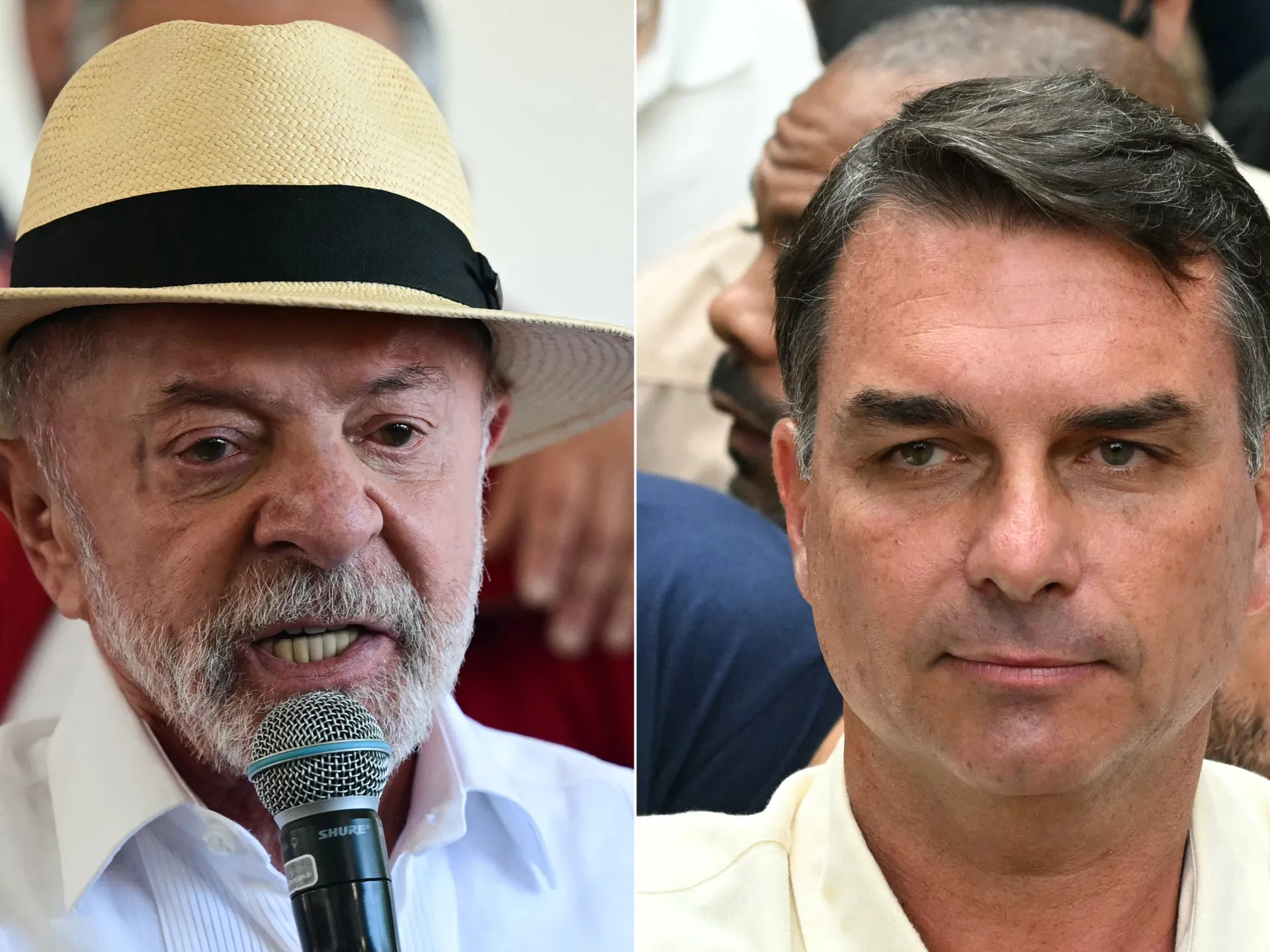
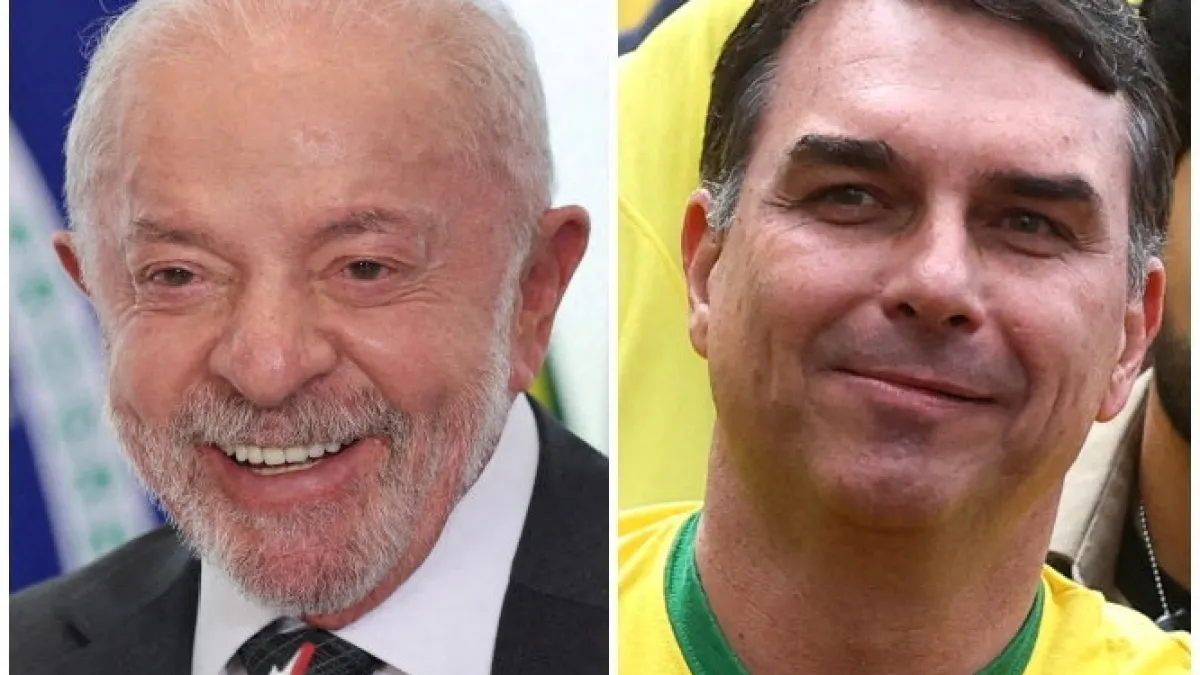
Brazil is set to hold a new presidential election in October, where Lula is facing off against Bolsonaro’s eldest son, Flavio.

Lawyers for the imprisoned Bolsonaro had asked the Brazilian Supreme Court to approve a visitation request from Beattie this week, but the court rejected that request on Thursday.

Beattie, a strong critic of Lula’s government, was fired during Trump’s first term in office following reports that he had attended a white nationalist conference.

Bolsonaro, meanwhile, was placed in intensive care on Friday, with hospital officials saying the 70-year-old had a “high fever, a drop in oxygen saturation, sweating and chills” linked to pneumonia.

Source link

Cuban President Diaz-Canel says talks held with US amid Trump threats | Miguel Diaz-Canel News

Miguel Diaz-Canel says discussions held to find solutions ‘through dialogue’ as Washington tightens oil blockade.

Cuban ⁠officials have ⁠held talks with the United States government to seek solutions to the crippling ⁠blockade imposed by Washington, President Miguel Diaz-Canel said, as the Trump administration’s threats to take over the Caribbean nation escalate.

“These talks have been aimed at finding solutions through dialogue to the bilateral differences ‌we have between the two nations,” Diaz-Canel said in a video aired on national television on Friday.

Recommended Stories

list of 3 itemsend of list

Diaz-Canel said “international factors have facilitated these exchanges”.

He said no petroleum shipments have arrived on the island in the past three months, which he blamed on the US energy blockade.

Critical oil shipments from Venezuela were halted after the US attacked the South American country and abducted President Nicolas Maduro.

Cuba’s western region was hit by a massive blackout last week, leaving millions without power.

The talks come days after President Donald Trump levelled his latest threat at Cuba, saying the White House’s plans for the Caribbean nation may include a “friendly takeover”.

‘Impact tremendous’

Diaz-Canel added that Cuba, which produces 40 percent of its petroleum, has been generating its own power but that it hasn’t been sufficient to meet demand.

He said the lack of power has affected communications, education and transportation, and that the government has had to postpone surgeries for tens of thousands of people as a result.

“The impact is tremendous,” he said.

The president added that the aim was “to determine the willingness of both parties to take concrete actions for the benefit of the people of both countries”.

“And in addition, to identify areas of cooperation to confront threats and guarantee the security and peace of both nations, as well as in the region,” he said.

For decades, severe US economic sanctions on Cuba have crippled its economy and cut it off from global trade. In response, Cuba has depended on oil supplies from foreign allies, including Mexico, Russia and Venezuela.

Source link

Oil stays above $100 a barrel amid Iran’s stranglehold on Strait of Hormuz | US-Israel war on Iran News

Energy markets remain on tenterhooks as the prospect of prolonged war in the Middle East grows.

Oil prices have again risen above $100 per barrel as energy markets see little relief amid the biggest disruption to global energy supplies in a generation.

Brent crude, the international benchmark, surged more than 9 percent on Thursday as traders weighed the prospect of weeks, or even months, of turmoil in energy markets as the United States and Israel wage war on Iran.

Recommended Stories

list of 4 itemsend of list

Brent futures, which are traded outside of regular market hours, were priced at $101.13 as of 03:00 GMT.

Asian stock markets, including exchanges in Tokyo, Seoul and Hong Kong, opened sharply lower on Friday, following steep losses on Wall Street overnight.

The latest surge in oil prices came after Iran’s Supreme Leader Mojtaba Khamenei pledged to maintain the effective closure of the Strait of Hormuz, which normally transports about one-fifth of global oil supplies.

In a statement read out on his behalf on Iranian state television, Khamenei described Tehran’s threats against shipping in the waterway as a “lever” that “must continue to be used”.

US President Donald Trump struck a similarly defiant tone on Thursday, posting on Truth Social that stopping Iran from getting nuclear weapons was of “far greater interest and importance” than rising oil prices.

‘Lack of tangible goals in this war’

Traffic through the strait has effectively ground to a halt due to Iranian threats, with only a handful of vessels passing through each day, many of them claiming links to China, Iran’s key economic partner.

According to the United Kingdom Maritime Trade Operations (UKMTO) centre, no more than five ships have passed through the waterway each day since the US and Israel launched joint strikes on Iran on February 28, compared with an average of 138 daily transits before the war. At least 16 commercial vessels have been attacked in the region since the start of the conflict, according to the UKMTO.

Tehran has claimed responsibility for several of the attacks, including a strike on Wednesday that crippled a Thai-flagged vessel off the coast of Oman.

Efforts to bring calm to the market have so far done little to tame prices, which are up nearly 40 percent compared with before the start of the war.

The International Energy Agency’s (IEA) announcement on Wednesday that member countries would release 400 million barrels of oil from emergency stockpiles drew a tepid response among traders eyeing a daily shortfall in global supplies estimated at 15-20 million barrels.

The US Department of the Treasury’s issuance on Thursday of a temporary licence authorising countries to purchase sanctioned Russian oil that has been stranded at sea also failed to move the market, with Brent crude staying above $100 a barrel after the Treasury announcement.

“The key problem is a lack of tangible goals in this war,” said Adi Imsirovic, an energy security expert at the University of Oxford.

“It makes it hard for oil traders to see the light at the end of the tunnel,” he said.

Trump has repeatedly floated the possibility of using the US Navy to escort commercial shipping through the strait, but the Pentagon has yet to conduct such operations amid concerns about the risks posed by Iranian attacks in the narrow waterway.

In an interview with CNBC on Thursday, US Energy Secretary Chris Wright said that Washington was “not ready” to provide navy escorts but that such operations could begin by the end of the month.

“It’ll happen relatively soon but it can’t happen now,” Wright said.

Source link

UN fact-finding mission warns of continued human rights abuses in Venezuela | Human Rights News

A United Nations fact-finding mission has concluded that “there are no indicators of structural reforms or change” to improve the human rights situation in Venezuela, despite the removal of its leader in January.

On Thursday, a member of the fact-finding mission, Maria Eloisa Quintero, delivered remarks (PDF) to the UN Human Rights Council questioning whether Venezuela’s leadership would face accountability for its record of human rights abuses.

Recommended Stories

list of 3 itemsend of list

She also pointed to ongoing abuses under the government of interim President Delcy Rodriguez, who was sworn into office on January 5.

“Civic and democratic space remains severely restricted. Civil society organizations, the few remaining independent media outlets, and political actors continue to face attacks, harassment or intimidation,” Quintero wrote in her statement.

“The prospects for full guarantees necessary for free and democratic elections remain remote.”

All told, the fact-finding mission found that at least 87 people have been detained since January.

Fourteen of them were journalists who were temporarily taken into custody while covering Rodriguez’s inauguration, and another 27 were reportedly arrested for celebrating the fall of Rodriguez’s predecessor, Nicolas Maduro.

The fact-finding mission revealed that at least 15 of the recent arrests involved children.

A violation of international law

Its report was one of the first international assessments of human rights under Rodriguez’s nascent presidency.

She took office after the United States launched a military operation in the early morning hours of January 3 to abduct Venezuela’s then-President Maduro. Previously, Rodriguez had served as Maduro’s vice president.

Maduro and his wife Cilia Flores currently remain imprisoned in New York, where they face charges of drug trafficking and weapons possession.

The US has backed Rodriguez’s ascent to the presidency. Both her government and that of US President Donald Trump have said there is no immediate plan to hold a new election in Venezuela, citing the need for stability.

Quintero emphasised that it was the view of the fact-finding mission that the US operation “violated international law”, echoing the legal consensus.

“While the Mission has reasonable grounds to believe that Nicolas Maduro is responsible for crimes against humanity committed against the civilian population, this does not justify an unlawful military intervention,” Quintero wrote.

Her remarks also pointed out that, while Maduro may be gone, the rest of his government remains.

That government has faced repeated accusations that it perpetrated violence against members of Venezuela’s political opposition and others deemed critical of the country’s socialist leadership.

“The legal instruments that have long served as a basis for political persecution remain fully in force,” Quintero said.

“State institutions that played a key role in the repression — and which have been identified in previous Mission reports — have not been reviewed or reformed.”

Human rights groups have collected thousands of reports of arbitrary detention, as well as torture and extrajudicial killings, under Maduro, who served as president from 2013 until January.

Members of Venezuela’s opposition have also called for the removal of the existing government, which they say fraudulently claimed victory in the 2024 presidential race, despite vote tallies indicating otherwise.

Limits to ‘positive’ steps

At first, Quintero said the fact-finding mission found that developments under Rodriguez “initially appeared encouraging”.

She pointed to “positive” steps like the release of political prisoners and passage of an amnesty law that would lift criminal penalties for dissidents facing certain criminal charges.

But the benefits of those steps, she said, were mitigated by irregularities. The amnesty law was narrow in scope — only addressing certain accusations, made within a specific time range — and the bill never received a full, public reading.

Meanwhile, the government has claimed to release more political prisoners than has actually been verified by local human rights groups.

Quintero added that the fact-finding mission also found that 30 officials from Venezuela’s Scientific, Criminal and Forensic Investigations Corps (CICPC) — part of the national police agency — were detained for failing to produce false evidence about the US’s attack on January 3.

Their family members, she indicated, also faced government retaliation. The fact-finding mission called for more changes to be made to address the continued human rights abuses.

“A far deeper and more enduring transformation is required so that the population can trust that the long years of repression and violence have truly come to an end,” Quintero wrote.

Instead, she warned that the existing “machinery” of repression is simply “mutating” to adapt to the new reality in Venezuela, post-Maduro.

Source link

Advocates push for major probe as US boat strikes in Latin America kill 157 | Donald Trump News

Washington, DC – In September, the United States began launching dozens of deadly military strikes against alleged drug-smuggling boats in the Caribbean Sea and eastern Pacific.

Nearly half a year later, remarkably little is known about the strikes. The identities of the nearly 157 people killed have not been released. Any purported evidence against them has not been made public.

Recommended Stories

list of 3 itemsend of list

But a group of United Nations and international law experts are hoping to change that on Friday, when they testify at the Inter-American Commission on Human Rights (IACHR).

The international hearing will be the first of its kind since the strikes began on September 2, and rights advocates hope it can help lead to accountability as individual legal cases related to the strikes proceed.

Steven Watt, a senior staff lawyer with the American Civil Liberties Union’s human rights programme, said the goal of the hearing will be threefold.

“Our ask will be to conduct a fact-finding investigation into what’s going on,” Watt said.

The second aim, he continued, would be “to assert or to arrive at a conclusion that there is no armed conflict here”, in what would be a rebuke to US President Donald Trump’s previous claims.

Finally, Watt said, he hopes the proceedings will yield long-sought transparency from the Trump administration on “whether or not they have a legal justification for these boat strikes”.

“We don’t think there are any,” Watt added.

‘We don’t know the names’

The experts set to testify at Friday’s hearing said the IACHR has a unique mandate to uncover the truth behind the US strikes.

The commission, based in Guatemala City, Guatemala, is an independent investigative body within the Organization of American States, of which the US was a founding member in 1948.

While the Trump administration has claimed it has a right to carry out the deadly attacks as part of a wider military offensive against so-called “narco-terrorists”, rights groups have decried the campaign as a series of extrajudicial killings.

They argue that Trump’s deadly tactics deny those targeted of anything that approaches due process.

Legal experts have also dismissed Trump’s claims that suspects in drug-related crimes are equivalent to “unlawful combatants” in an “armed conflict”.

Few details have emerged from the air strikes. Several families have come forward, however, to informally identify the dead as their loved ones.

Victims are said to include 26-year-old Chad Joseph and 41-year-old Rishi Samaroo, who were sailing home to Trinidad and Tobago when they were killed in October, according to relatives.

A complaint filed against the US government said both men travelled often between the islands and Venezuela, where Joseph found work as a farmer and fisherman, and Samaroo laboured on a farm.

The family of Colombian national Alejandro Carranza, 42, have also said he was killed in September when the US military attacked his fishing boat off the country’s coast.

The US has yet to confirm the victims’ identities, and only two survivors have ever been rescued in the 45 reported strikes.

A clearer picture of what happened will be a significant step towards accountability, according to experts like Watt.

“[The IACHR] is uniquely positioned to identify who all these persons are,” Watt said. “We just know the numbers from the United States. We don’t know the names or the backgrounds of these people.”

The IACHR has launched a range of human rights investigations in recent decades, including probes into the 2014 mass kidnapping of 43 students in Iguala, Mexico, and a series of murders in Colombia from 1988 to 1991 dubbed the Massacre of Trujillo.

The commission has also examined US policies, including extrajudicial detentions at Guantanamo Bay, Cuba, during its so-called “global war on terror”.

The IACHR has the power to seek resolutions to human rights complaints or refer them for litigation before the Inter-American Court of Human Rights.

Just last week, the court ordered Peru to pay reparations to the family of a woman who died during a government-led forced sterilisation campaign in the 1990s.

The Carranza family has filed its own complaint to the IACHR, and the families of Joseph and Samaroo have also lodged a lawsuit against the US in a federal court in Massachusetts.

Angelo Guisado, a senior staff lawyer at the Center for Constitutional Rights (CCR), said a fuller accounting of the US actions is needed to prevent future abuses. He is among the experts testifying on Friday.

“You can’t normalise assassinating fishermen off the coast of South America,” Guisado told Al Jazeera. “That’s just sadistic and an abomination to the rules-based order that we’ve created.”

“So we hope that the commission can do some investigation.”

A war against ‘narco-terrorists’?

One of Guisado’s goals for Friday’s hearing will be to unpack the Trump administration’s argument that the attacks are necessary from a national security standpoint.

Even before the US strikes began, the Trump administration began framing the Latin American drug trade as an existential threat to the US.

As part of that re-framing, the administration borrowed messaging from its “global war on terror”, taking the unorthodox approach of labelling several cartels “foreign terrorist organisations”.

Speaking last week at a meeting of Latin American leaders, White House security adviser Stephen Miller maintained there is no “criminal justice solution” to drug cartels.

Instead, he affirmed that the US would use “hard power, military power, lethal force, to protect and defend the American homeland”, even if that meant carrying out deadly operations throughout the Western Hemisphere.

Guisado, however, noted that the administration has admitted that the targeted boats were largely carrying cocaine, not the highly addictive fentanyl responsible for the majority of US drug overdoses.

He explained that the administration has done little to prove its claims that drug traffickers are part of a coordinated effort to destabilise the US.

Such hyperbolic language, Guisado added, could be used as a smokescreen to conceal illegal actions.

“When you invoke national security interest, it seems as if scrutiny and any legitimate analysis or condemnation gets pushed to one side in favour of an ersatz martial law,” Guisado said.

“The idea that you could just proclaim anyone a narcoterrorist and do whatever you want with them is just so repugnant to our system of fairness, justice and law.”

Watt, meanwhile, said he hopes the IACHR will draw a clear “line in the sand”, separating drug crimes from what is conventionally considered an armed conflict.

He also would like to see the IACHR clearly outline the US’s human rights obligations.

“But even if there was an armed conflict — of which there isn’t — the laws of war would prohibit the type of conduct that the United States is engaging in here,” Watt explained.

“It would be an extrajudicial killing. It would be a war crime.”

Transparency or accountability

Friday’s hearing will only be an initial step towards accountability, and critics question how effective the IACHR will ultimately be.

The US has regularly shrugged off human rights probes at international forums, and it is not party to entities like the International Criminal Court in The Hague, raising barriers to the pursuit of justice.

Despite being a member of the OAS, the US has also not ratified the American Convention on Human Rights, one of the organisation’s founding documents.

It is, therefore, unclear how binding any IACHR decisions could be, although Watt argued that it is “longstanding jurisprudence of the commission that the declaration imposes obligations on non-ratifying member states”.

Still, legal experts said Friday’s hearing may yield clarity on the Trump administration’s legal argument for the boat strikes.

The IACHR has said US government representatives are set to appear at the hearing.

To date, the US Department of Justice has not released the Office of Legal Counsel’s official reasoning for the boat strikes, considered the foundational legal document for the military actions.

A separate memorandum from that office addressed the US abduction of Venezuelan President Nicolas Maduro on January 3, which it framed as a drug enforcement action.

That memo touched on the boat strikes, but it only served to raise further questions about Trump’s rationale.

“This will be an opportunity for the United States to put its case before the commission,” Watt said.

“But of course, it depends on US cooperation,” he continued. “They’re going down there, but it’ll be interesting to see what they actually say”.

Source link

Which countries have seen the highest petrol prices since the Iran war? | US-Israel war on Iran News

Motorists around the globe are already feeling the impact of the United States and Israel’s war on Iran, with fuel prices sharply rising since the war began.

In the US, a gallon of regular petrol that averaged $2.94 in February now costs $3.58, marking a 20 percent increase, according to data from AAA Fuel Prices, a retail fuel price tracker from the American Automobile Association (AAA).

While each US state sets its own petrol prices, several states have surpassed $4 per gallon, with California exceeding $5 per gallon, the highest level it has been in more than two years.

Which countries have the sharpest petrol price increases?

According to data analysed from Global Petrol Prices, a data platform that tracks and publishes retail energy prices across approximately 150 countries, at least 85 countries have reported increases in petrol prices following the initial attacks on Iran by the US and Israel on February 28. Some nations announce price changes only at the end of each month, so higher prices are expected for many others in April.

Vietnam recorded the highest petrol price increase of nearly 50 percent, rising from $0.75 per litre of 95-octane on February 23 to $1.13 on March 9. Laos follows with a 33 percent increase, then Cambodia at 19 percent, Australia at 18 percent, and the US at 17 percent.

The table below shows the countries that have increased petrol prices at the pumps.

Asian countries pay the biggest price

Asia is disproportionately dependent on the Strait of Hormuz for the delivery of its oil and gas, which has been effectively closed since the start of the war. The strait joins the Gulf – also referred to as the Persian Gulf and the Arabian Gulf – to the Gulf of Oman and is the only passage for the region’s oil producers to the open ocean.

INTERACTIVE - Strait of Hormuz - March 2, 2026-1772714221

Japan and South Korea are among the most vulnerable, importing 95 percent and 70 percent of their oil from the Gulf, respectively.

Both East Asian nations have enacted emergency measures to stabilise their energy markets. On March 8, Japan instructed its oil reserve sites to prepare for a potential release of strategic reserves. The next day, South Korea introduced a maximum price cap on petrol and diesel for the first time in 30 years.

In South Asia, the impact of the war is more severe than in East Asia because countries like Pakistan and Bangladesh have much thinner financial buffers and smaller strategic reserves.

In an attempt to conserve energy, Bangladesh‘s government has ordered all public and private universities to close immediately. In Pakistan, government offices will now operate a four-day workweek, while schools have closed, and a 50 percent work-from-home policy has been enacted to save fuel.

In Europe, the Group of Seven finance ministers convened an emergency meeting to discuss rising prices, with French President Emmanuel Macron raising the possibility of releasing 20-30 percent of emergency strategic reserves to ease the pressure on consumers.

How high oil costs drive up the price of food

Oil prices and food prices move in lockstep, with energy prices affecting every stage of the food supply chain, from the fertilisers used in the fields to the trucks that carry food from field to supermarket shelf.

Rising oil prices also directly affect shipping and the cost of transport.

“The lifeblood of the global economy is transport,” economist David McWilliams told Al Jazeera. “It’s getting stuff from A to B – it’s a logistics problem, a supply chain problem, and ultimately transportation is the energy of the global economy.”

Fears of stagflation – increasing inflation and rising unemployment, which major oil shocks have historically summoned – are rising. Economists point to the crises of 1973, 1978 and 2008 as evidence that every significant spike in oil prices has been followed, in some form, by global recession.

In lower-income countries, where populations spend a far greater share of their income on food and import large quantities of grain and fertiliser, rising oil prices could rapidly translate into food shortages.

Interactive_Cost_OilPrices_Food-1773140062

What products are made from oil and gas?

Oil and gas are used for far more than just fuel. They are raw materials for thousands of everyday products.

Plastics, including water bottles, food packaging, phone casings and medical syringes, are all derived from crude oil.

Crude oil is also the hidden ingredient in synthetic fabrics such as polyester, nylon and acrylic, which are used to make everything from sportswear to carpets. It also underpins the cosmetics industry, as it is used to make products such as petroleum jelly (Vaseline), lipsticks and concealers.

Household items also rely on oil-based ingredients, with laundry detergents, dishwashing liquids, and paints all derived from petroleum products.

The global food supply is essentially built on natural gas in the form of fertilisers, used to enhance crop yields and ensure that food production can meet demand.

INTERACTIVE-CRUDE OIL-USED-MARCH 9-2026-1773138980

Source link

Press freedom declines in Americas, with US seeing sharpest drop: Report | Freedom of the Press News

A new report has expressed alarm at what it describes as backsliding press freedoms across the Americas, with the United States seeing the steepest decline.

The Inter American Press Association (IAPA) released its latest press freedom index on Tuesday, ranking last year as the lowest point for freedom of expression since the report began in 2020.

Recommended Stories

list of 3 itemsend of list

Researchers found that the Americas have experienced a “dramatic deterioration” in unrestricted speech, according to the report.

“This is one of the worst years for journalism in the region, marked by murders, arbitrary arrests, exile, and rampant impunity in countries such as Mexico, Honduras, Ecuador, Nicaragua, El Salvador, Guatemala, Colombia, Cuba, and Venezuela,” the report said.

It added that enhanced restrictions on free speech have occurred in countries of various ideological persuasions, whether right-wing or left-wing.

The US, however, was singled out as an area of “alarming decline”. In a ranking of 23 countries across the hemisphere, the US dropped from fourth place to 11th, indicating that journalists operate with increased restrictions.

Changes under President Donald Trump, who returned to office last year, were cited as a primary factor.

“Even though journalistic practice in the United States remains protected by the Constitution and laws, last year’s events saw the erosion of safeguards,” the report explained.

Trump, it said, had contributed to the “stigmatisation of critical journalism”. The report also pointed to developments like cuts to public media funding and the closure of Voice of America, a government-funded broadcaster, as detriments to the free press.

In total, the report tallied 170 attacks against journalists in the US last year, and it cited interactions with federal immigration agents as an area of concern.

The report also noted that Nicaragua and Venezuela continue to rank as “without freedom of expression”.

In Venezuela’s case, for instance, it cited the closure of more than 400 radio stations and the detention of 25 journalists in the wake of the controversial 2024 presidential election.

On a scale of 100, the report ranked press freedom in the country at 7.02. It remains in last place on the report’s list of 23 countries.

El Salvador also dropped in the index’s latest evaluation, now in 21st position on the press freedom list, just ahead of Nicaragua and Venezuela.

In an accompanying statement, Sergio Arauz, the president of the Association of Journalists of El Salvador (APES), denounced what he called the “escalating repression” under the government of President Nayib Bukele.

Arauz noted that 50 Salvadoran journalists had been pushed into exile in the last year amid a campaign of harassment by the government.

“There are no possibilities of practicing journalism fully without facing consequences when there is an Executive branch with virtually unlimited powers and no effective legal oversight,” said Arauz.

Since 2022, Bukele and his government have placed the country under a state of emergency that suspended key civil liberties and granted wide latitude to state security forces, in the name of addressing crime.

Tuesday’s report pointed to the state of emergency as a factor in undermining free speech, and also cited El Salvador’s new Foreign Agents Law, which gives the government the power to dissolve organisations that receive funding from abroad.

El Salvador is one of eight nations categorised in the index as “high restriction”, along with Ecuador, Bolivia, Honduras, Peru, Mexico, Haiti and Cuba.

The Dominican Republic, Chile, Canada and Brazil were ranked among the highest for protecting press freedoms.

Source link