Tehran warns that even limited strikes would trigger a response ‘several times greater’.
Published On 24 Oct 202624 Oct 2026
Iranian President Masoud Pezeshkian has blamed Washington for the unravelling of an interim deal aimed at ending the war with the United States and Israel, amid growing fears that the fighting could resume imminently.
In comments broadcast by Iranian Press TV on Saturday, But Pezeshkian also said that both sides should return to the deal and “conclude it”.
Recommended Stories
list of 3 itemsend of list
His remarks come amid growing fears that military action could resume as soon as this weekend, after US President Donald Trump said on Friday that he “may do another little Epic Fury”, using the codename of the US-Israeli war against Iran that started on February 28.
Iran’s Islamic Revolutionary Guard Corps (IRGC) has warned that even limited strikes would trigger a response “several times greater”, according to comments reported by the semi-official Fars News Agency.
Iranian Armed Forces Chief of Staff Ali Abdollahi said on Saturday that the US military would not be allowed in the Gulf “under any circumstances and at any time”. Abdollahi said Trump could only “dream” of seeing US forces enter the Gulf, adding that he would take his dream to the grave.
Trump has suggested he could take further military action against Iran, while Israeli Prime Minister Benjamin Netanyahu has said he remains committed to overthrowing the country’s government.
Both leaders face elections, with Israelis set to choose their next government on Tuesday. Meanwhile, Trump’s Republican Party faces crucial midterm elections on November 3, with Democrats potentially winning control of both the House of Representatives and the Senate. Such an outcome would be a major blow to Trump, who still has more than two years left in his final term in the White House.
Iranian government spokesperson Fatemeh Mohajerani said on Saturday that Tehran would not “wait for permission to defend itself”, adding that the country “seeks peace but will respond to any aggression with severe consequences”.
“Our position is clear: we do not flee from dialogue for peace, and we do not hesitate in defending the country. Those who harbour the illusion of destroying Iran must correct their calculations,” Mohajerani wrote in a memo.
Her comments came as Iranian judiciary chief Gholamhossein Mohseni Ejei met Supreme Leader Mojtaba Khamenei. The pair discussed how to tackle corruption and pursue compensation for Iranians affected by the US-Israeli war, among other issues.
Khamenei replaced his father as supreme leader after the latter was assassinated during the opening strikes of the war on February 28. He has not been seen in public since assuming the position in early March.
Parliament Speaker and chief negotiator Mohammad Bagher Ghalibaf was reported to have met Khamenei earlier this week.
Two years after United States voters delivered a stunning rebuke of the country’s Democratic Party by electing Republican President Donald Trump to a second nonconsecutive term, some of the party’s midterm candidates are reassessing stances on a host of hot-button issues.
Whether they have dialled it back on issues like transgender rights or ramped up efforts to oppose Israel’s genocidal war on Gaza, Democrats in some of the toughest midterm battleground races are responding to voter concerns – or even breaking outright with party leadership.
Those shifts have resonated with some voters, while others have been alienated as the party tries to find its footing in Trump’s second term and wrestle away control of both houses of Congress from Republicans.
But in the time since Trump defeated former Vice President Kamala Harris in 2024, Democratic divisions have only grown deeper. Establishment and self-described moderates within the party have struggled to hold back a rising tide of progressive populism as voters increasingly demand stronger, bolder policies.
That movement, powered by groups like the Democratic Socialists of America, has forced a reckoning over what it means to be a Democrat in Trump’s second term, leading to significant differences among candidates on policies that often depend on where they are running.
Here’s how – and why – the party has shifted:
Democrats’ shifting views on Israel
The most notable shift among Democrats has, arguably, been on Israel.
Three years after Israel launched its genocidal war in Gaza and killed more than 74,000 Palestinians following Hamas’s October 7, 2023, attacks, polls have suggested that Americans hold increasingly negative views on Israeli military actions.
A Pew Research Center survey conducted earlier this year suggested that 60 percent of US adults had an unfavourable opinion of Israel. That number is significantly higher – 80 percent – among US Democrats.
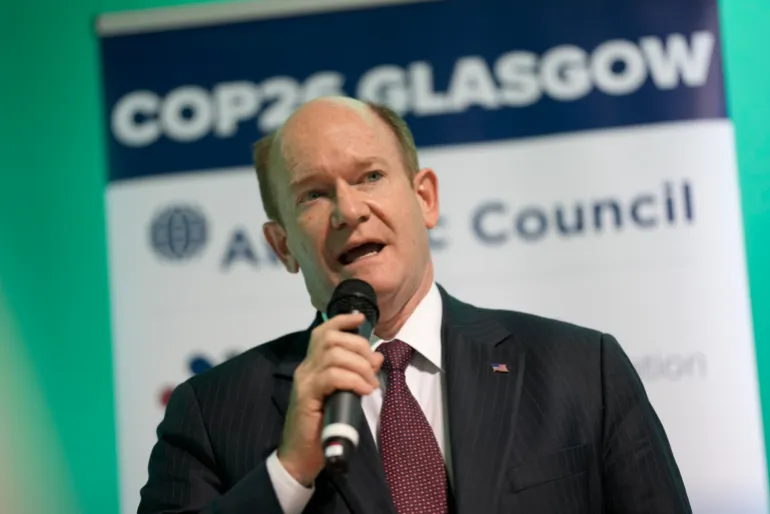
In response, some longtime Democratic supporters of Israel – including Senator Chris Coons, who is likely to chair the Senate Foreign Relations Committee if Democrats retake control of the Senate next month – have shifted, as voters, especially younger ones, demand greater accountability from the US ally.
US Democratic Senator Chris Coons of Delaware speaks at the COP26 UN Climate Summit in Glasgow, Scotland [Alastair Grant/AP Photo]
The moderate Delaware Democrat told Politico in an interview this month that he wants a “thorough reexamination” of the US-Israeli relationship and is even willing to impose sanctions on Israel’s prime minister, Benjamin Netanyahu.
It is a marked change in tone after Harris rejected calls to feature a Palestinian American speaker at the 2024 Democratic National Convention in Chicago.
Earlier this year, 40 Democratic senators voted in support of a motion that disapproved proposed military sales to Israel. Only seven Democratic senators voted with Republicans to block it.
But as a new Congress may include even more progressive voices demanding the US rethink its relationship with Israel, those calls would likely be met with stiff resistance from some in the Democratic leadership, including Senate Minority Leader Chuck Schumer.
The New York Democrat, who would likely become majority leader if Democrats retake the Senate, has said that the US “commitment to Israel’s security and defense must be ironclad”.
Have Democrats changed their positions on transgender rights?
Following years of attacks from Republicans, Democrats in tightly contested US House or Senate races have downplayed – or outright dismissed – support for the transgender community, mostly when it comes to the participation of transgender students in school sports.
In Ohio, Democratic Representative Marcy Kaptur ran an advertisement featuring her saying, “Boys should not play in girls’ sports”. And in North Carolina, Representative Don Davis released a television commercial in which the Democrat says there “should always be a safe and fair space for women and girls in sports”.
Next door in South Carolina, Democratic Senate candidate Annie Andrews, a doctor, said in a newly released advertisement that she opposes “biological men playing in women’s sports”.
Trump’s return to the White House was fuelled, in part, by a now-famous advertisement in the 2024 campaign that highlighted Harris’s support for transgender Americans.
“Kamala is for they/them,” a narrator said in the advertisement, referring to gender neutral pronouns used by some in the transgender and nonbinary community. “President Trump is for you.”
But the reassessment of transgender rights after the commercial’s airing is not taking place in every part of the party.
On Thursday at a “Students vs Billionaires” town hall in Portland, Maine, Representative Alexandria Ocasio-Cortez addressed concerns from a transgender college student who told the New York progressive that they felt “abandoned” by Democrats.
“They’re wrong”, Ocasio-Cortez said about some members of her party. “First and foremost, I want to just let you know how shameful and sorry I am that there are people out there that scare so easily after an election”.
The congresswoman added, “The moment you compromise the rights of a trans person in America, you compromise the rights of every citizen.”
What has changed on immigration and border security?
During former US President Joe Biden’s term, Democrats encountered near-daily attacks from Republicans on the country’s immigration system.
US Customs and Border Protection (CBP) recorded more than 8 million encounters at the US-Mexico border between 2021 and 2025, fuelling concerns among some voters that the Biden administration had ignored the issue.
In Texas’s closely watched Senate race, candidate James Talarico has positioned himself as a “border security Democrat”, advocating for stronger border enforcement and comprehensive immigration reform.
Third Way, a US-based organisation that pushes for moderate policies, said stances like Talarico’s resonate better with voters because they have taken a proactive, rather than a reactionary approach.
Democratic US Senate candidate James Talarico speaks at a campaign rally in Galveston, Texas, on Thursday [Mark Felix/AFP]
“I remember very clearly when Harris came out and spoke at the DNC in 2024; she… said we need order at the border and to have a strong immigration system”, Third Way’s senior political adviser, Lucas Holtz, told Al Jazeera.
“The problem is, after that, the Harris campaign really did not stick with that line in the sand… They stopped taking a stand on these issues, and more voters thought that she was too far to the left.”
“[Talarico] is making the case in a lot of his ads that the Biden administration failed on securing the border… It’s putting Republicans on their back foot in some of these races.”
But among progressives, Trump’s response to the nation’s immigration issue has also prompted a strong swing to the left.
After several high-profile incidents earlier this year – including federal immigration agents in Minneapolis, Minnesota, shooting dead US citizens Renee Good and Alex Pretti – calls to abolish, or drastically overhaul, US Immigration and Customs Enforcement (ICE) have gained momentum.
Left-leaning political groups and politicians have united behind a message of “abolish ICE”, which would dismantle the federal agency and end its enforcement authority.
Do Democrats support Medicare for All?
As cost-of-living issues remain paramount for voters, Democrats of all stripes have coalesced behind the need for more government intervention in the country’s healthcare system.
But how exactly the party addresses rising medical costs remains up for debate.
Some progressives, including Michigan Democratic Senate candidate Abdul El-Sayed, have championed policies like Medicare for All, which would expand the nation’s federal health insurance programme for seniors so all US citizens would be guaranteed healthcare.
US Senate Democratic candidate Abdul El-Sayed gestures to supporters during a campaign rally in Dearborn, Michigan [Rebecca Cook/Reuters]
Others running in more conservative states, like Andrews, have called for the return of Affordable Care Act subsidies that lapsed during Trump’s second term, as well as limits on health insurance companies’ profits.
Polling released by the independent health organisation KFF suggested that 66 percent of US adults now support Medicare for All, a 13-point increase from October 2020.
“Everybody’s going to have their own approach to this, but by and large, all Democrats want to move to a universal healthcare system in the best way possible”, Holtz said.
“We’re in agreement that we need to do better than what the Trump administration has done.”
Trump’s remarks come amid a fractious moment between the US president and the journalists who cover him.
Published On 24 Oct 202624 Oct 2026
United States President Donald Trump has confirmed he could move the White House press corps to a different location, possibly away from the executive residence.
In a social media post on Friday, Trump described reports that he planned to remove the White House press briefing room in favour of restoring a historic swimming pool located underneath as “Fake News”.
Recommended Stories
list of 3 itemsend of list
“I NEVER even thought to do such a stupid thing!” he wrote in a Truth Social post.
Trump, however, indicated he may relocate dozens of reporters who cover the White House “to a less obnoxious location”.
The New York Times on Tuesday reported that Trump had pitched his former press secretary, Karoline Leavitt, on an idea to move journalists out of the White House’s storied James S. Brady Press Briefing Room. That proposal did not move forward during Leavitt’s tenure, which ended on August 27.
Trump’s remarks come amid a fractious moment between him and the journalists who cover him.
Last month, Trump banned journalists from three US-based media outlets – CNN, MS NOW and POLITICO – from the White House, a move that proponents of free speech said violated First Amendment protections.
A US federal judge ruled that the order was likely unconstitutional, forcing the White House to restore the journalists’ access. The Trump administration continues to fight the ruling.
Trump has also regularly chided and denigrated members of the media he claims cover him unfairly.
The latest incident was during an Oval Office event on Tuesday when Trump attacked The Independent’s White House Correspondent Andrew Feinberg.
“What’s wrong with you? Are you a sick person? I actually think there’s something wrong with you”, Trump said as Feinberg tried to ask a question. The moment was amplified by the White House on social media.
If Trump opts to proceed with changes to the White House press briefing room, it would be the latest in a long list of controversial projects he has ordered that would transform the property.
Since returning to power last year, the US president has demolished the White House East Wing to construct a new ballroom, installed concrete pavers over the lawn centred in the White House Rose Garden and built a helipad on the South Lawn.
The Times reported Trump told aides he wanted to bring back a West Wing indoor pool constructed in 1933 for use by President Franklin D Roosevelt, who suffered from polio and often swam, according to his presidential library, to ease soreness.
In the 1970s, former President Richard Nixon had a floor constructed above the pool to accommodate a briefing room for the growing White House press corps. The pool remains beneath the floor of the briefing room.
Leavitt confirmed during a Friday interview that Trump was “flirting” with the idea of restoring the pool.
“He just, maybe, wants to restore it to all of its glory”, Leavitt said during an appearance on HBO’s “Real Time with Bill Maher”. “I don’t know if he’ll do it.”
The White House did not immediately return Al Jazeera’s request for comment.
Negotiators from Ukraine, Russia and the US are expected to meet in Abu Dhabi next month.
Published On 24 Oct 202624 Oct 2026
Ukraine says restrictions on its military’s Starlink satellite connections have been lifted after more than a week of disruption that hampered drone operations against Russian forces.
Defence Minister Yevhenii Khmara said on Saturday that Starlink and Starshield connections were stable on equipment travelling above 400 kilometres per hour (250 miles per hour). He credited talks with Washington and President Volodymyr Zelenskyy’s diplomacy.
Recommended Stories
list of 4 itemsend of list
Ukraine relies heavily on Elon Musk’s SpaceX satellite services for communications and drone missions. However, who ordered the restrictions remains unclear, with US President Donald Trump denying responsibility while defending Elon Musk.
The disruption further strained relations between Kyiv and Washington, already under pressure over Trump’s agreement to temporarily lift sanctions on Russian diesel and allow US imports.
Trump also called earlier this month for Ukraine to have a new president, then suggested on Monday that someone other than Zelenskyy should negotiate for Kyiv. The exchanges follow their public confrontation at the White House in February 2025.
Talks planned in Abu Dhabi
The lifting of the Starlink restrictions comes as the United States seeks to revive peace negotiations between Moscow and Kyiv. Negotiators from Ukraine, Russia and the US are expected to meet in Abu Dhabi in the first half of November, more than four years after Russia launched its full-scale invasion in February 2022.
Kremlin spokesman Dmitry Peskov confirmed the planned negotiations on Friday, while Zelenskyy also announced agreement on technical-level meetings.
It comes as Trump credited his wife, Melania Trump, with securing a local ceasefire in Oleshky, in southern Ukraine’s Kherson region, which Russian forces have occupied since 2022.
Subsequent Ukrainian and Russian statements putting the ceasefire’s start on October 27, with the humanitarian operation planned for October 29.
Deadly attacks continue
A Russian missile strike on Lozova, in Ukraine’s northeastern Kharkiv region, killed a man and wounded two others on Saturday, regional Governor Oleh Syniehubov said, while in northern Ukraine, a Russian attack on Chernihiv on Friday killed a man and wounded at least 25 people, local authorities said.
Shelling in Kramatorsk killed one person and wounded six, including three children, according to Donetsk officials. In nearby Sloviansk, attacks on Friday killed a 62-year-old woman and wounded four people, Mayor Vadym Lyakh said.
Ukraine reported strikes inside Russia on Friday and overnight into Saturday, including on Togliatti’s Togliattikauchuk petrochemical plant, a major synthetic rubber producer. Mayor Ilya Sukhikh confirmed industrial damage but reported no casualties.
Ukraine also said it struck Oryol’s Proton electronics plant, which it says makes missile components. Regional Governor Andrei Klychkov reported three deaths in an attack on an unidentified facility.
Authorities in Russian-occupied Crimea reported power cuts after overnight Ukrainian attacks.
Russia’s Defence Ministry said air defences intercepted a SCALP cruise missile, four Neptune missiles and 1,297 Ukrainian fixed-wing drones over 24 hours, TASS reported. The figures could not be independently verified.
Americans vote in the same elections, but the distance of a few streets or ZIP codes can drastically change a person’s opportunities in life.
From housing and healthcare to job opportunities, Al Jazeera’s Mohammad Qasem looks at what those inequalities reveal as Republicans and Democrats fight for control of Congress.
Pete Hegseth says the Pentagon dismantled 80 ‘propaganda cells’ operating under new names at 30 universities.
Published On 24 Oct 202624 Oct 2026
The United States Department of Defense has designated Confucius Institutes, Chinese-funded cultural centres on university campuses, as a threat to US national security.
US Defense Secretary Pete Hegseth announced the move on Friday in a video posted on social media, saying the Pentagon added the organisations to its list of institutions that threaten national security.
Recommended Stories
list of 3 itemsend of list
Washington has long accused the centres of serving as Chinese propaganda tools and has taken steps to crack down on them.
Hegseth said Confucius Institutes had operated in disguise after being restricted by Congress, calling them “sleeper organisations”.
“It turns out that 80 new propaganda cells across 30 universities had popped up using different names and different charters, but with the same mission: to steal intellectual property and to infiltrate the minds of American students,” he said.
In the video, Hegseth said that Chinese government-backed cultural programmes had infiltrated universities and reappeared in new guises despite congressional restrictions.
Over the past two months, the Pentagon has “systematically dismantled every single one of these organisations”, he said.
The Chinese embassy in Washington did not respond to Reuters’ request for comment.
Secretary of State Marco Rubio has urged Cubans to secretly work with the CIA to topple their government. His appeal followed President Trump’s threat to send warships to Cuba after the Iran war. A 10-month US blockade has led to power outages and water shortages.
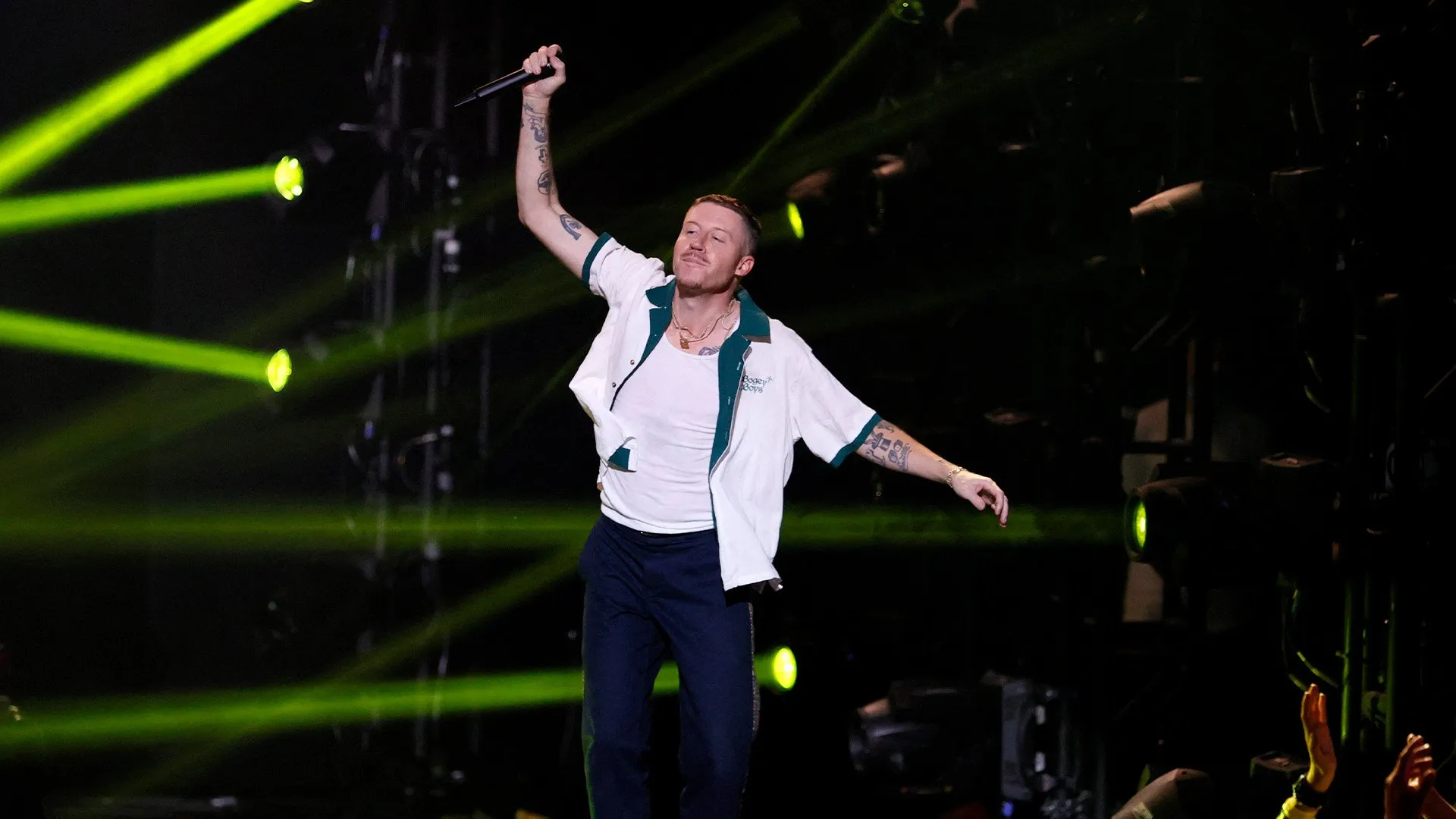
Macklemore says ‘being human is not complicated’ as he kicked off his Free Palestine tour on Thursday night. He returned to the stage for the first time since he was dropped as Ed Sheeran’s supporting act after making pro-Palestinian comments onstage.
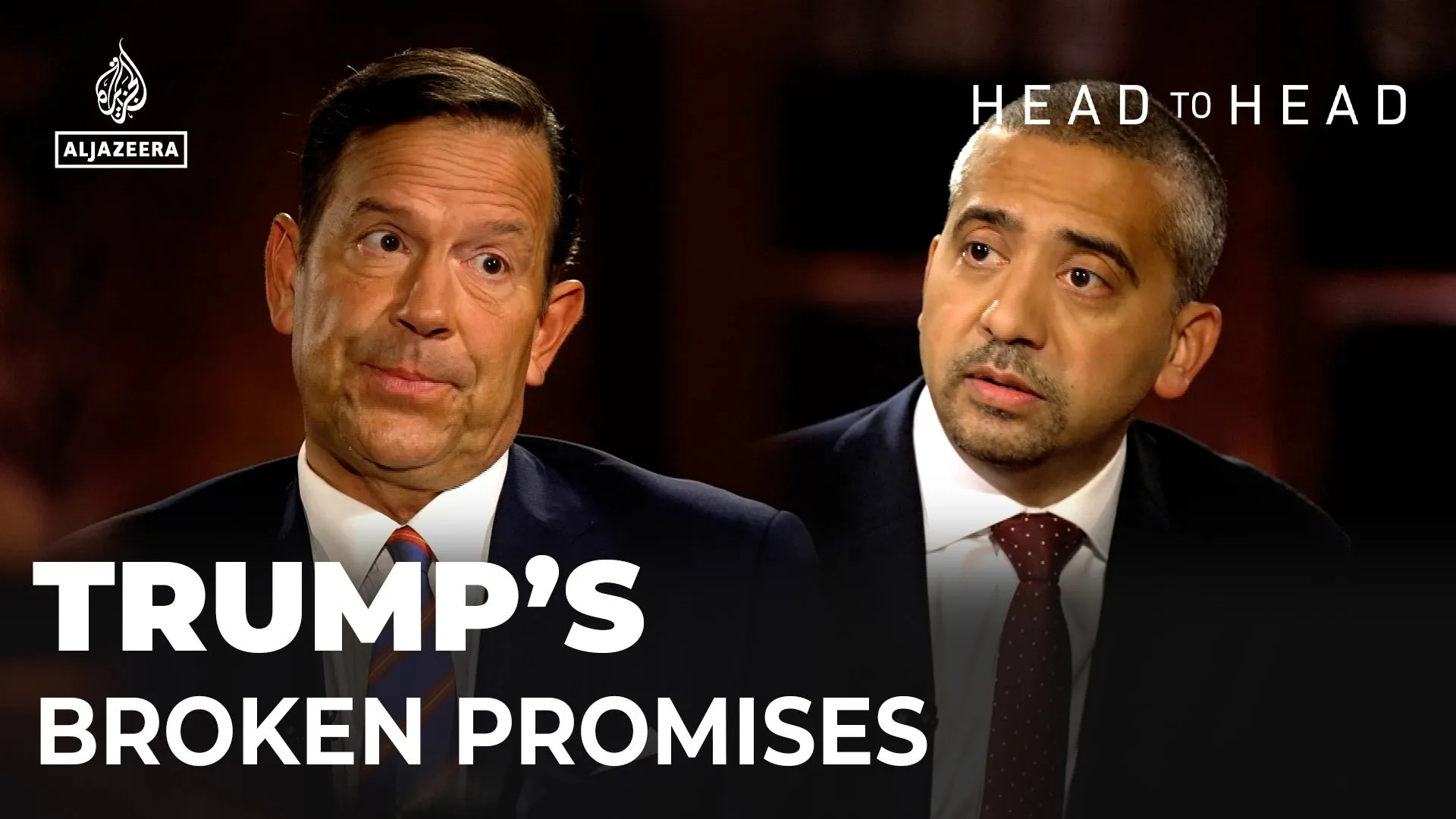
Mehdi Hasan debates ex-Trump adviser Steve Cortes on the economy, Trump’s immigration policies and Islamophobia.
With the US midterm elections approaching, the balance of power in Congress is at stake, and the outcome could shape the legacy of President Donald Trump’s second term. As Republicans face growing voter dissatisfaction, Trump’s record has become a central battleground in the fight to control Congress.
Trump faces mounting challenges, including low approval ratings, an unpopular war in Iran, high inflation and petrol prices, economic uncertainty surrounding his tariff policies, and widespread backlash over his immigration crackdown.
How does Trump’s second term measure up against the promises he made on the campaign trail?
In this interview, Mehdi Hasan goes head-to-head with Steve Cortes, a former Trump campaign adviser, who defends the president’s second-term agenda, including his economic and immigration policies, and Islamophobic rhetoric.
Joining the discussion:
Olivia Troye – Former homeland security and counterterrorism adviser to Vice President Mike Pence Mike Nellis – Democratic strategist and former senior adviser to Vice President Kamala Harris Rob Arlett – Former Trump campaign chair and political commentator
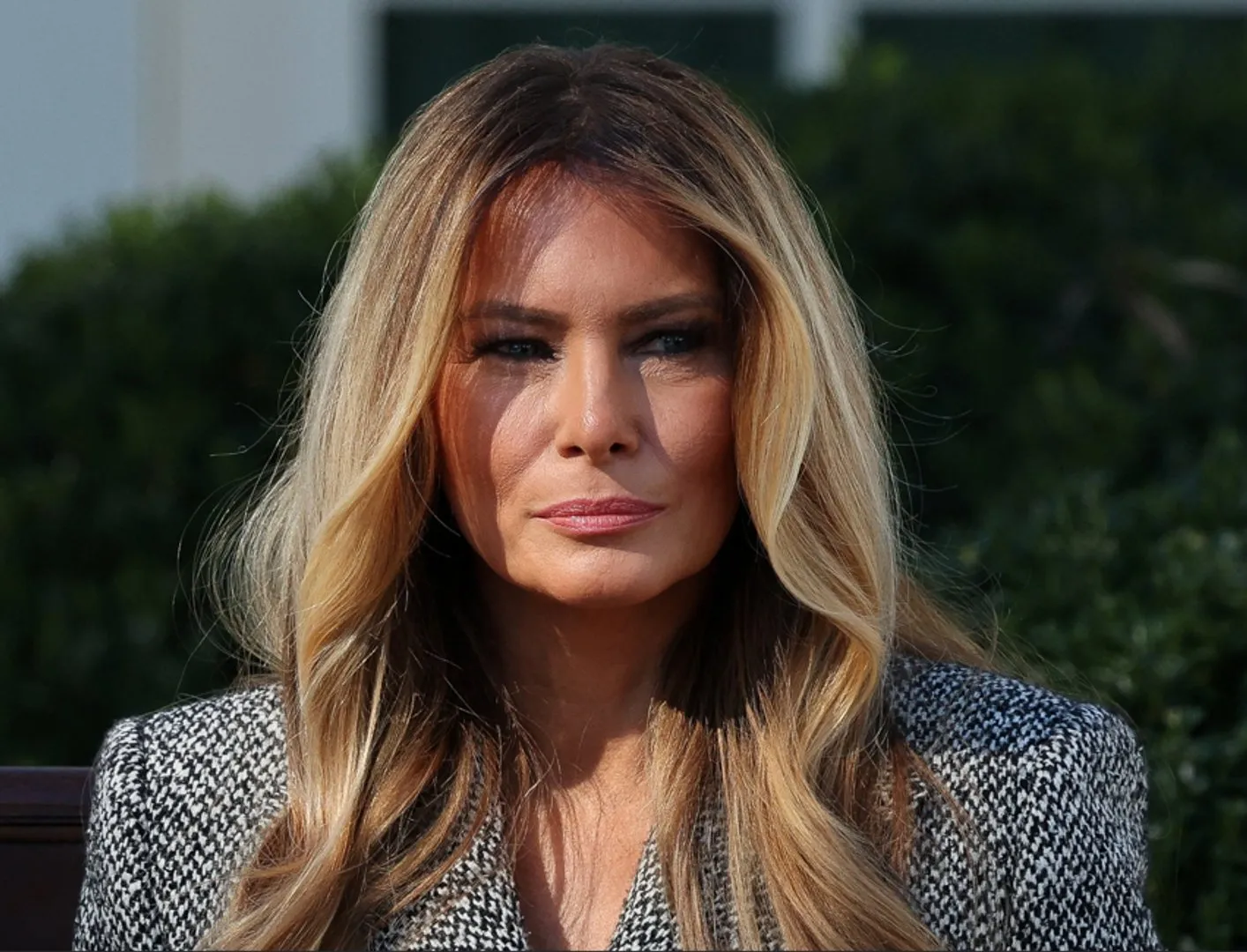
President Trump says it was First Lady Melania Trump’s initiative that led to a ceasefire between Russia and Ukraine in the Ukrainian city of Oleshky, which has been under Russian occupation for four years. The ceasefire is expected to begin in a week.
Lawyers for two accused officials say Department of Justice seeking to revive scandal before midterm vote.
Published On 23 Oct 202623 Oct 2026
Two former Federal Bureau of Investigation (FBI) agents have been charged in connection with a 2020 probe into a laptop belonging to former President Joe Biden’s son, Hunter Biden.
The former officials, Nikki Floris and Bradley Benavides, were charged with lying to Congress. They made their first court appearance in Washington, DC, on Friday.
Recommended Stories
list of 3 itemsend of list
Lawyers for the officials accused the Department of Justice of filing the charges to revive the salacious saga just days before the November 3 midterm vote, in which Republicans face an uphill battle against Democrats to maintain control of Congress.
A lawyer for Floris said she “served our nation as a dedicated FBI intelligence officer for nearly 20 years”, while accusing the Justice Department of building its case on hearsay.
“Yet today, the DOJ [Justice Department] has accused her falsely of a crime on the say-so of politicians, not on the facts,” the statement said.
“It’s no coincidence the government is filing these nonsense charges now, years later, on the eve of an election.”
Floris and Benavides had overseen the Foreign Intelligence Task Force (FITF) at the FBI when Hunter Biden’s laptop was found. The pair testified to Congress that the unit, which focuses on foreign interference in US elections, was not involved in the laptop investigation.
In a criminal complaint, federal prosecutors alleged the statements contradicted messages sent during the same period.
While launched by Trump during his first term, the FITF was heavily targeted by Republicans under former US President Joe Biden. They charged the unit was politically biased and used to cover up information about Biden’s laptop.
The unit was disbanded when Trump took office for the second time in January 2025.
Scandalous saga
The existence of the laptop became known in October of 2020, just weeks before Biden and Trump faced off in a presidential election.
Its strange origins, having been dropped off at a Delaware computer repair shop and apparently abandoned by Hunter Biden, prompted suspicion. Its contents were first reported on by the New York Post, based on information provided to Trump lawyer Rudy Giuliani.
Several former intelligence officials warned that the laptop had the hallmarks of a Russian disinformation campaign. However, the FBI later seized and verified that the laptop and its contents, including messages related to the younger Biden’s foreign business ties and explicit photos of his drug use, were authentic.
The laptop was later used to back federal gun and tax evasion charges against Hunter Biden, although no wrongdoing related to his business ties or connection with his father was found.
Trump FBI Director Kash Patel has pledged to investigate the agency’s conduct throughout Biden’s presidency. Critics have accused him of flagrant politicalisation.
“Lying to Congress by senior FBI officials strikes at the heart of our system. No one is above the law,” Patel said in a statement posted on X.
The Justice Department has historically sought to avoid public and overt investigative acts in the direct lead-up to an election that involve candidates or that risk influencing an outcome.
But officials in the last two weeks have made a series of bold moves in cases with political undertones, including a search of Democratic Representative Ilhan Omar’s house in an immigration fraud investigation.
The department also unsealed a corruption indictment on Thursday against powerful Democratic Virginia state Senator L Louise Lucas.
Mississippi released bodycam footage of the fatal shooting of 1-year-old Kohen Wiley, who was in a moving car when a police officer on a shoplifting call opened fire. The officer was cleared of criminal wrongdoing, but the boy’s family says the shooting was unjustified.
No confirmation from Russia or Ukraine as White House says ‘localised’ ceasefire to take effect in Russian-occupied Oleshky.
Published On 23 Oct 202623 Oct 2026
The White House has said First Lady Melania Trump has “secured a ceasefire” between Russia and Ukraine in the southern Ukrainian city of Oleshky.
Neither Russia nor Ukraine immediately confirmed the statement on Friday, which comes as the administration of US President Donald Trump has renewed diplomacy aimed at ending the war.
The approach has included upping pressure on Ukraine and handing several recent concessions to Russia.
“The situation in Oleshky is dire. Oleshky is a front-line war city on the brink of disaster,” Melania Trump said in a statement released by the White House.
“The people of Oleshky have limited electricity, live amid mined roads, and endure regular military attacks. It was abundantly clear that without my intervention, the possibility to bring humanitarian aid into the city and to evacuate the elderly would be impossible,” she said.
The First Lady added that her representatives worked directly with “Russian and Ukrainian leadership to define the terms of the localized ceasefire” and that civilian leaders from both countries will work together to grant humanitarian access to civilians in the city.
Oil prices have climbed towards their highest levels in five months as attacks on tankers in and around the Strait of Hormuz mount and efforts to end the United States-Israel war on Iran are deadlocked.
Brent crude, the international benchmark, rose by more than $2 to $110.85 a barrel on Wednesday, close to a five-month peak.
Recommended Stories
list of 4 itemsend of list
A day earlier, Iran’s Islamic Revolutionary Guard Corps (IRGC) said two tankers were “set ablaze” after hitting mines at what it called an illegal crossing point in the strait. Then, on Thursday, the IRGC said it hit seven more tankers although Washington dismissed the claim. In a statement, the IRGC said four of the vessels were transferring oil when they were targeted and caught fire overnight.
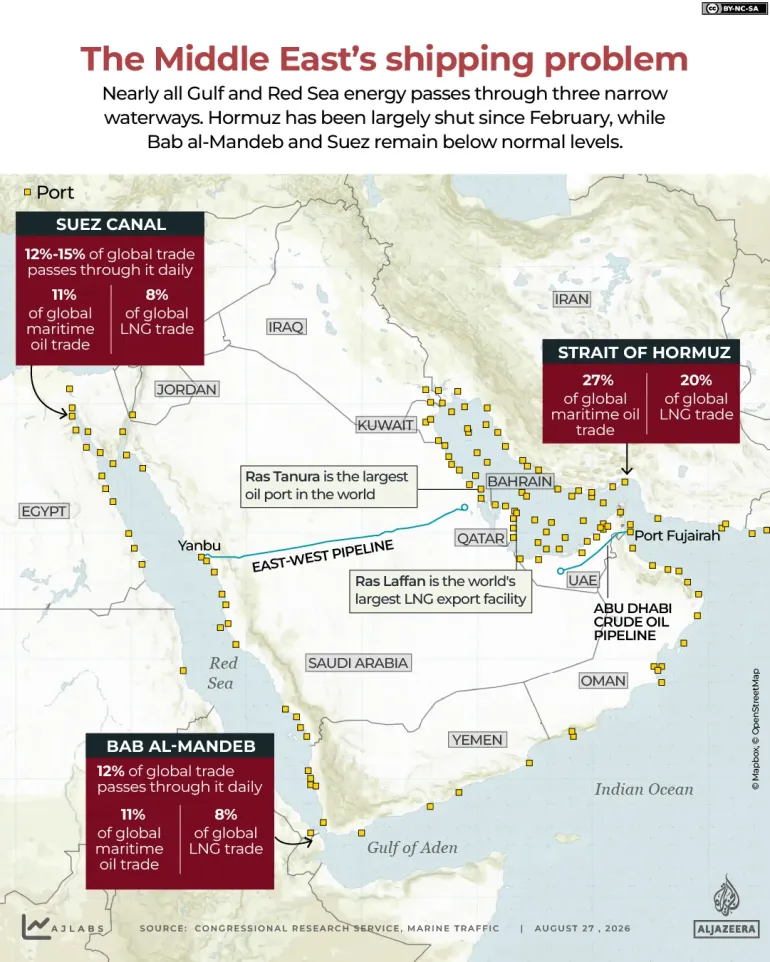
In September, the Houthis, an armed group also known as Ansar Allah (Arabic for Supporters of God), seized territory in Yemen close to the Bab al-Mandeb strait, a critical chokepoint into and out of the Red Sea and a gateway to Egypt’s Suez Canal.
The escalation came as the world’s emergency oil stocks, already tapped heavily since the Iran war began on February 28, sit at their lowest levels in decades.
Al Jazeera put a question to analysts: If fighting resumes in full, the Strait of Hormuz is shut off completely and Houthi attacks choke off Bab al-Mandeb, how long could the world’s reserves last?
Here’s what you need to know:
What emergency oil reserves are there?
Strategic oil reserves are stockpiles of crude oil and fuel held by governments or by companies on their behalf for use in a supply emergency.
The International Energy Agency (IEA), which was established in 1974 after the Arab oil embargo, coordinates most of them. Its importing members must hold at least 90 days of net imports. China and India are not members.
How much of the reserves has already been released this year?
A record amount.
On March 11, days after the start of the US-Israel war on Iran, the IEA’s 32 members agreed to make 400 million barrels available from emergency supplies, more than double the volume released after Russia’s full-scale invasion of Ukraine in 2022.
The US pledged 172.2 million barrels from its Strategic Petroleum Reserve (SPR) and Japan 79.8 million, according to IEA figures.
The SPR has since fallen to 283 million barrels, its lowest level since October 1982, according to the US Department of Energy.
Much of that oil was lent rather than sold and must be returned with extra barrels, according to the US Energy Information Administration.
How much oil is left?
Far less than before the war began in February, and not all of it can be used.
Aaron Kildow, a senior crude oil analyst at Sparta Commodities, told Al Jazeera that global strategic stocks excluding China and Iran have fallen by nearly 327 million barrels since the end of December 2025 with the US, Europe and Japan accounting for about 95 percent of the draw.
He estimated that leaves only about 400 million barrels of usable reserves worldwide, excluding China’s stockpile, which is unlikely to be exported, and Gulf stocks, which could be cut off by a total closure of Hormuz.
Nearly half of these available stocks are in Japan.
Europe has about 76 million barrels uncommitted, but members such as Germany are holding some back for a local emergency, Kildow said.
“Europe is the real wildcard, both on timing and willingness,” Kildow said.
Meanwhile, China’s onshore crude stocks stand at 1.13 billion barrels, down from 1.23 billion in late February but still enough for about 80 days of refinery intake, Muyu Xu, a senior crude oil analyst at the analytics firm Kpler, told Al Jazeera.
India’s reserves cover just eight days of its imports, the Reuters news agency reported.
What would a full closure of Hormuz and Bab al-Mandeb mean?
Before the war, about one-fifth of the world’s oil and liquefied natural gas supplies, or roughly 20 million barrels of oil a day, passed through the Strait of Hormuz.
Saudi Arabia has increased the amount of crude it transports from its oilfields in the east to its Red Sea port of Yanbu in the west via the East-West Pipeline, thereby bypassing Hormuz.
But there have been strikes on that pipeline, and tankers heading south from Yanbu must pass through Bab a-Mandeb, where the Iran-backed Houthis declared a blockade on Saudi shipping in July.
Only a confirmed 373,000 barrels a day of Saudi crude have transited Bab al-Mandeb so far this month, the lowest level since February, Xu said, with most Yanbu cargoes now heading north via Egypt instead.
If Hormuz were shut and the Houthis blocked all Saudi tankers, Gulf producers could export only through a few pipelines and Yanbu’s northbound route, Xu said.
That would leave about 7.5 million barrels a day of Middle Eastern crude, against 16.8 million now, a shortfall of about 9.3 million barrels a day, she estimated.
“If such attacks occur, the supply disruption could be even more severe and prolonged,” Xu said, referring to strikes on oilfields, terminals and pipelines.
[Al Jazeera]
So how long would reserves last?
Not for long – possibly just weeks, according to experts.
If Kpler’s estimated shortfall had to be covered entirely from the roughly 400 million usable barrels that Kildow identified, they could not, in practice, be released that fast. Japanese and South Korean reserves can move quickly, Kildow said, but US barrels are staged over three months, and Europe’s contribution is uncertain.
Chris Beauchamp, chief market analyst at IG Group, said the world was fortunate after the first closure. “The salient feature of March and beyond was how a crisis didn’t actually develop. We got away with it,” he said.
“I don’t think the global economy will be as lucky next time if there is a protracted conflict,” Beauchamp said. “A month or two is all we have.”
The world would not literally run out of oil. Instead, prices would rise until enough demand disappeared. “One hundred fifty dollars [per barrel] becomes a very distinct possibility, which then sees significant demand destruction,” Beauchamp said.
The sharpest squeeze would be on diesel, which is already nearly double the price of crude, the IEA said.
Refiners would compete for crude grades rich in diesel, “a cost that ultimately lands on consumers,” Kildow said.
Who would feel it first?
Asian importers with thin reserves.
Most Gulf exports in September and October went to Asian buyers, and India and Pakistan are among the most exposed, Kildow said, adding that their nearest alternative supply, from West Africa, is 25 to 28 days away by sea, compared with two days from Fujairah in the United Arab Emirates.
“The squeeze won’t hit uniformly. It lands fastest and hardest where reserves are thinnest and substitute supply is farthest away,” Kildow said.
Who would gain?
Oil producers far from the Gulf.
In the second quarter of this year, as the US-Iran war was under way, ExxonMobil reported earnings of $14.5bn, its highest in four years while Chevron posted $12bn, its best in six years and Shell more than doubled its earnings to nearly $10bn. Their profits are largely down to the high oil prices.
A second shock would send refiners scrambling for supplies from the US, Latin America, West Africa and Russia, Xu said.
“This would allow non-Middle Eastern producers to benefit from higher crude prices, potentially alongside lower transportation costs,” she said.
In August, US President Donald Trump said companies such as ExxonMobil and Chevron were “making too much money based on a shortage”.
Manchester United manager Michael Carrick is under growing pressure, but club legend Wayne Rooney takes aim at players.
Published On 23 Oct 202623 Oct 2026
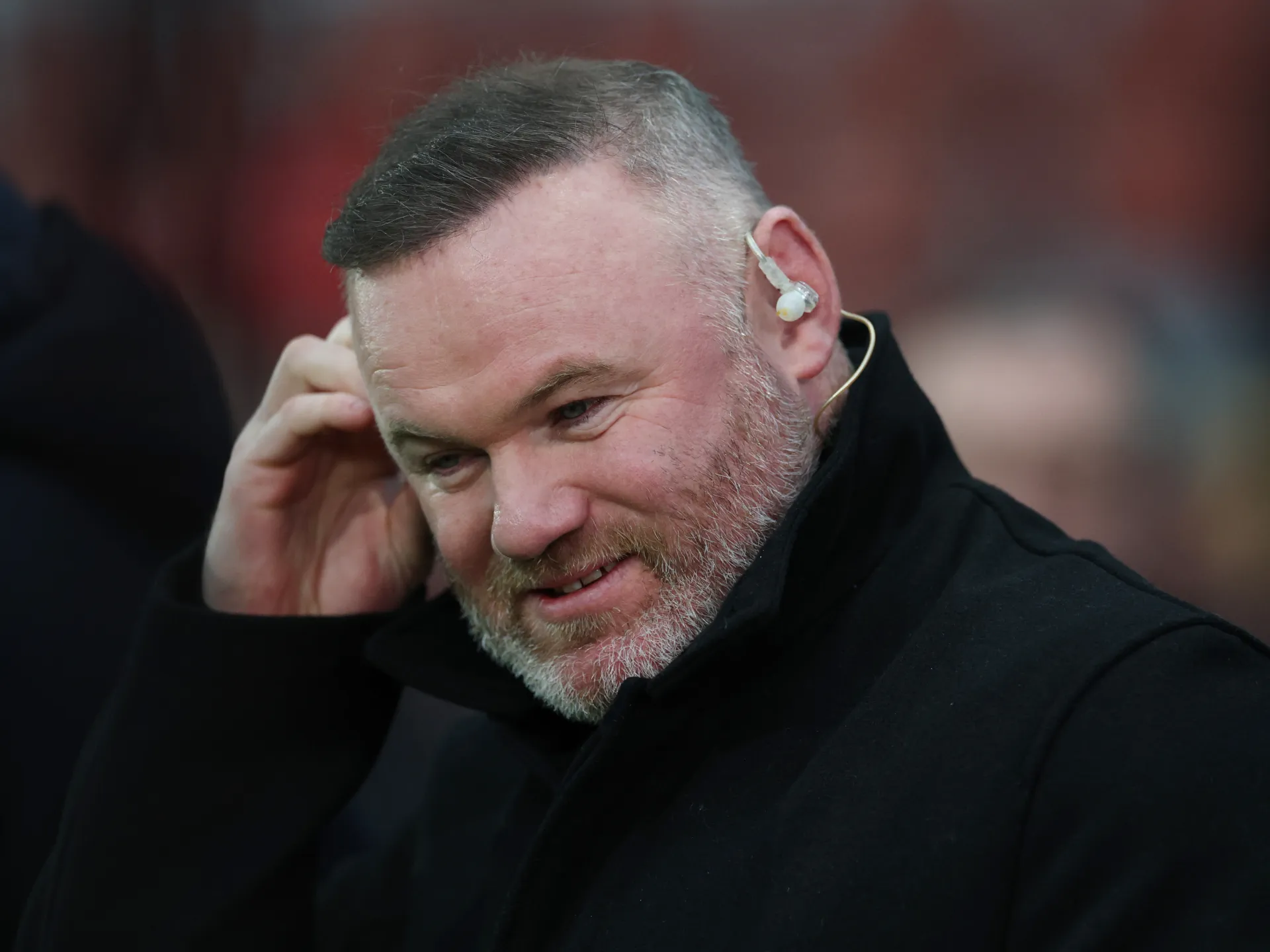
Manchester United great Wayne Rooney has labelled the current squad “babies” and “selfish” after a humiliating Champions League capitulation and post-match criticism by Bruno Fernandes of manager Michael Carrick.
Carrick’s men are 13th in the Premier League before Sunday’s visit by Bournemouth and could drop into the bottom three if results go against them this weekend.
Recommended Stories
list of 3 itemsend of list
With the club beset by infighting and off to their worst domestic league start for decades, Carrick was left clinging to his job after the 4-1 defeat at Como on Wednesday.
Deepening the sense of crisis, the captain Fernandes afterwards took aim at his manager’s tactics, saying United had to be more “brave”.
Defender Lisandro Martinez criticised the club’s board last week for not investing enough in the transfer market.
Rooney, United’s all-time leading goalscorer, said he was in “shock” and “disbelief” at the Como display.
A friend and ex-teammate of Carrick, former striker Rooney pointed the finger at the players.
“When Martinez came out, I said this is an absolute nightmare because it will rip the dressing room apart,” Rooney told The United Stand podcast on Thursday.
“That was the start. We’ve seen it now with Bruno and you’re going to see it with more players because these players, they don’t want to take responsibility.
“You can say whether Bruno was right or wrong in what he said but you have to take responsibility on the pitch. You have to take responsibility as a group of players.”
He added: “These players, they’re selfish. They don’t care about their teammates, don’t care about the manager, the staff or the fans; they care about themselves.
“If they’re not getting what’s right for them, they’re like babies and just throw their toys out of the pram and go and deflect the blame on to anyone else but themselves.”
The head of the Asian Football Confederation (AFC) says the body is endorsing Gianni Infantino for another term as FIFA president.
The AFC has 47 member confederations. Even if all the members do not follow Friday’s direction from Sheikh Salman bin Ibrahim Al Khalifa, those that do could be key to guaranteeing another mandate for Infantino, who leads the governing body of world football and is seeking a fourth term.
Recommended Stories
list of 4 itemsend of list
The FIFA election is in March. The deadline for candidates to file against Infantino is November 18, and so far, none has filed.
Sheikh Salman, speaking at the AFC’s extraordinary congress in Tokyo on Friday, embraced Infantino with a large hug in front of the membership as he delivered his endorsement.
“We affirm our full commitment to supporting you and your leadership as you seek a new mandate as the FIFA president.” Sheikh Salman said.
“You’ve visited a lot of countries in Asia. I’ve spoken to a lot of members within this continent. I know your feeling, and I think your commitment is clear as well.”
Addressing his remarks to Infantino, Sheikh Salman indicated not every AFC member would go along with the endorsement but most will.
“My feeling is, I’m sure, the feeling of most of my members,” the AFC president said. “And I’ve said that to you.”
A sudden about-face by AFC
This is an abrupt turnaround for Sheikh Salman. Just over two months ago, the AFC joined the football governing bodies of Europe and that of North and Central America in saying Infantino had committed a “fundamental breach of trust”.
Infantino apologised last week in Zurich to FIFA’s 37-member ruling council, which he chairs, for “mistakes” he made in assembling a now-scrapped $4.2bn plan to sell a stake in FIFA events, including the World Cup, to private investors.
Sheikh Salman referenced the differences with Infantino in his speech but glossed over any details.
“Gianni, I want to make it clear: Yes, we had some issues we spoke about in the past,” Sheikh Salman said. “But let’s not relate the two things together. I think the last few days we met in Zurich, you made it clear that there’s a true understanding between us.”
“The past I’m sure is part of our history,” he added, “We’ve all, I’m sure, learned important lessons from it. What matters now is how we move forward together. I think everyone has questions, and I’m sure the answers will be available, whether to us in Asia or the rest of the world. ”
Infantino’s electioneering around the globe
FIFA’s media office has been promoting Infantino’s travels around the world, seeking votes in exchange for millions of more dollars in financial support for small and large football countries.
“Thank you for being here,” Sheikh Salman said to Infantino. “I know you have been everywhere. I don’t know how you can do it. But I’m sure that you set a record for being in almost every country.”
Sheikh Salman then joked that, perhaps, Infantino had a “clone”.
That drew a laugh. But the largest applause came at the end of his brief address when he again repeated his support for Infantino.
“As one Asian family, we are ready to move forward, united in your support, Gianni,” Sheikh Salman added. “I want to make that clear today.”
Infantino accepts AFC’s support
Infantino took the podium after Sheikh Salman and kept his remarks light. But he did acknowledge some errors.
“When you do many things, you do – hopefully, as we did, many good things – you do some mistakes as well,” Infantino said. “The important, however, is, as you said, to learn, to learn always from the experience, from the mistakes, to apologise, to move ahead, to come together, to unite, to build for our future, for your future.”
The largest applause came as he mentioned how, under his leadership, millions more are flowing to FIFA’s patronage network.
“Before I started as FIFA president, each of you – some of you are still [here] and still remember that time – each of you was receiving $1m every four years” Infantino said. “As of the first of January of next year, it will be $25m.”
Thousands of Venezuelans have taken to the streets in several cities to demand free elections and other political changes, in the first nationwide opposition protest in nearly two years.
US President Donald Trump and acting President Delcy Rodriguez have said there would be elections, but no date has been set for a vote to decide on a successor for Nicolas Maduro, after the former Venezuelan president was captured by US forces in a military raid in January.
Recommended Stories
list of 4 itemsend of list
Opposition leader and Nobel Peace Prize winner Maria Corina Machado, who has been outside the country for nearly a year after living in hiding following a contested 2024 election, has said elections must take place by July 2027.
Her Vente Venezuela movement organised the protest, which took place in the capital Caracas and other cities, including Valencia, Maracay, San Cristobal and Maracaibo.
“Seeing this makes me happy because I know change is possible,” said 18-year-old cosmetology student Leosmary Hernandez, as she gathered with hundreds of others in northern Maracay. “I’ve been through so many hardships, so many problems because of the dollar, and difficulties studying. I have high hopes for my country and for our next leader and president, Maria Corina.”
“I went out to protest before, when things were much tougher, and I’m even less afraid today because I want my voice to be heard,” she added.
Since January 3, the country has been led by interim President Delcy Rodriguez of the long-governing United Socialist Party of Venezuela (PSUV).
PSUV leaders have been accused of carrying out human rights abuses against political dissidents, including arbitrary arrest, imprisonment and torture.
After the United States launched a military operation to abduct and jail former President Nicolas Maduro, the PSUV remained in power with the support of the White House.
US President Trump has backed Rodriguez’s leadership, despite her having been Maduro’s vice president.
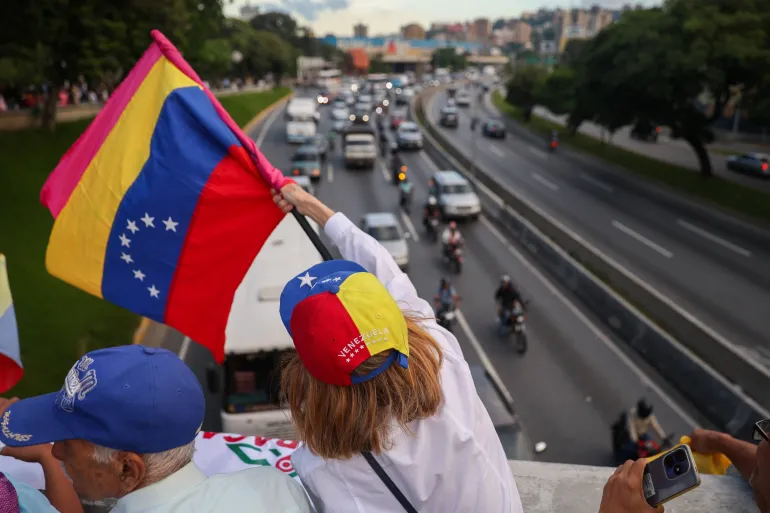
A supporter of Venezuela’s opposition waves a flag over a highway at a demonstration in Caracas to demand elections in 2027 [Fausto Torrealba/Reuters]
Minimal security presence
Venezuela’s socialist movement, in power since 1999 under late President Hugo Chavez and then Maduro, has in the past deployed security forces against protesters, but government forces had minimal presence at protest sites on Thursday, and in many smaller cities demonstrators dispersed before dark.
The ruling Socialist Party called for its supporters to march from Caracas’ Plaza Venezuela, the same place the opposition planned to gather two hours later, to a location near the presidential palace to commemorate Breast Cancer Awareness Month.
Interior Minister Diosdado Cabello, known for his close ties to the security services, was pictured on state television attending the march, while the opposition supporters moved their protest to a nearby location.
The negotiations, backed by the US, do not include Machado’s political movement, though she has said she will not stand in the way of their progress.
Machado’s proxy Edmundo Gonzalez Urrutia claims to have won the 2024 election according to vote tallies by the opposition. But the government, which never released full counts, backed Maduro, as did the country’s legal and electoral institutions.
Machado has for years sought US support, aligning with hawks in the Trump team who argued that Maduro, through alleged links to drug gangs, represented a direct threat to US national security. Maduro and his wife, Cilia Flores, are facing drug and torture charges in the US. They have pleaded not guilty.
High winds propelled the blaze across the army base in Wainwright, killing four soldiers and injuring dozens more.
Published On 23 Oct 202623 Oct 2026
A fire that killed four soldiers at a western Canadian military base was sparked by an exercise using live grenades, a military official said.
The deadly fire broke out on a grenade launcher range during military exercises on Saturday, with high winds propelling it across the base, Brigadier-General Vanessa Hanrahan, commander of the Canadian Forces Military Police Group, told reporters on Thursday.
“A subsequent change in wind direction and velocity significantly increased the fire’s intensity,” she added, with the flames spreading to a training area at the Wainwright military base in Alberta.
Due to the blaze being in the “permanent danger area” of the range, firefighters were unable to directly combat it, Hanrahan added.
The fire spread on Saturday afternoon during high-intensity combat training involving Charlie Company of the 3rd Battalion, Princess Patricia’s Canadian Light Infantry.
The military base lies in the prairies, a landscape of wide, open grasslands, rolling plains and scattered groves of trees.
About 84 soldiers were split between a grenade range and an area where they practised attacks on simulated enemy positions. The fire swept into the second training area.
Four soldiers died and 39 were injured, with 27 requiring hospitalisation. The incident was one of the worst peacetime tragedies for Canada’s military.
The soldiers and reserve members were participating in exercises ahead of a planned deployment to Latvia, where Canadian forces have their largest international military operation.
The Wainwright base is one of the largest bases operated by the Canadian Armed Forces. It regularly hosts training exercises involving military personnel from NATO countries.
During the final months of World War II and for several months in 1946, the base was used as an internment centre for German prisoners of war.
Tech-heavy Nasdaq falls 2.6 percent as debate rages over whether AI is a bubble.
Published On 23 Oct 202623 Oct 2026
US tech stocks have dropped sharply amid market jitters over the sustainability of companies’ enormous capital investments in AI.
The Nasdaq Composite, which is dominated by tech firms linked to the AI boom, fell 2.6 percent on Thursday, its steepest fall since the index tumbled 4.2 percent on June 5.
Recommended Stories
list of 4 itemsend of list
The broader S&P 500 slid 1.21 percent, the benchmark’s biggest drop since a 1.52 percent decline on July 29.
Apart from Apple, each of the “Magnificent 7”, which make up more than one-third of the overall market, saw substantial losses.
Meta dropped nearly 7 percent after it raised its projected capital spending for this year to $135bn to $145bn in its latest earnings report, even as the Facebook parent company’s net profit fell short of expectations.
Amazon fell 4.6 percent, while Nvidia dropped 4.4 percent.
Tesla and Alphabet both fell 3.1 percent, while Microsoft declined 2.2 percent.
Apple rose 1.2 percent.
The sell-off extended to other major tech players, including Intel and Advanced Micro Devices, both of which fell about 8 percent, and Broadcom, which slid 4.3 percent.
Rising oil prices since February, due to the fallout of the US-Israel war on Iran, added to the downbeat mood.
Brent crude futures rose 4 percent on Thursday and continued to climb on Friday morning, taking the international benchmark above $114.20 a barrel, its highest since May.
Stocks slip in Asian trading
Major stock markets in Asia opened lower on Friday, following the losses on Wall Street.
Japan’s benchmark Nikkei 225 fell more than 2 percent in morning trading before recovering some ground, while South Korea’s KOSPI dropped as much as 3.5 percent.
The Hang Seng Index in Hong Kong fell about 0.5 percent.
Jay Goldberg, a senior analyst at Seaport Research Partners in San Francisco, said the swings in the market appeared to be driven more by sentiment than underlying fundamentals.
“In short, nothing has changed. Investors have just decided to be afraid this week. Everyone I speak to points to a different cause for the downfall … It’s just a giant wall of worry,” Goldberg told Al Jazeera.
“There are legitimate concerns about the AI trade, but this level of shift in the markets is driven much more by investor sentiment than any tangible reason.”
US tech companies’ huge investments in AI have stoked intense debate about whether a market bubble is forming similar to the one that preceded the 2000 dot-com crash.
While some Wall Street analysts view current levels of investment in datacentres and graphics processing units as unsustainable, others argue that AI will revolutionise society to a degree that justifies the eye-watering sums involved.
Global AI investment is forecast to reach $2.7 trillion in 2026 and $3.6 trillion in 2027, according to technology insights company Gartner.
Less than two weeks before the midterm elections, some Michigan voters are still deciding between Republican Mike Rogers and Democrat Abdul El-Sayed in the race for a US Senate seat. At an event in Detroit this week, one voter questioned why El-Sayed won’t say his ‘real name.’
Homeland Security targets nine states in a push to identify voting fraud, a move critics denounce as tantamount to voter intimidation.
Published On 22 Oct 202622 Oct 2026
A United States federal judge has ordered the Department of Homeland Security (DHS) to halt operations aimed at finding non-citizen voters in nine states ahead of the midterm elections.
The ruling by US District Court Judge Araceli Martinez-Olguin said the investigations likely violate a provision of the Voting Rights Act that prohibits voter intimidation. She further said the DHS may have relied on flawed data in its investigations.
Recommended Stories
list of 3 itemsend of list
That leads to “an objectively reasonable fear of law enforcement entanglements that intimidates citizens from urging or aiding others in exercising their right to vote”, she wrote.
The order applies to federal efforts targeting California, Connecticut, Georgia, Missouri, Nevada, New York, Pennsylvania, Washington and Wisconsin.
The DHS has publicised what it has described as a push to identify individuals who have committed voter fraud, with some local offices posting photos of agents knocking on the doors of suspects.
The operations come as the administration of US President Donald Trump has sought to highlight instances of voter fraud ahead of the November 3 midterm vote.
While there are recorded instances of fraud in every election cycle, such isolated cases remain exceedingly rare.
There has been no evidence to indicate that non-citizen voters have influenced the outcome of any election at any level in the country.
In a statement following Thursday’s ruling, the DHS maintained that its investigations were aimed at “removing aliens who vote and dilute the votes of US citizens”.
“We have no plans to question or investigate people we believe to be US citizens,” it said.
In their lawsuit challenging the DHS’s efforts, the California Nurses Association and National Nurses United, along with the Voto Latino Foundation, San Francisco and Santa Clara County, said that some US citizens felt they were wrongly identified and questioned as part of the investigations.
A lawyer representing the groups said it was “clear from the start that DHS built its lists on bad data, never checked how often it was wrong, and recklessly sent agents to people’s homes weeks before an election”.
Benjamin Farley, the supervisory counsel for democracy defense at the National Immigration Law Center, said the ruling sent a strong message about voter intimidation ahead of the midterm vote.
“Yesterday’s decision is a clear rebuke of the government’s efforts to scare voters away from the polls this November and a reminder that all US citizens – regardless of color, place of birth, or the nationality of their family members – have the right to participate in American elections free of intimidation,” he said.
“No armed federal agent is going to stop us from casting our vote.”
United States President Donald Trump has long touted himself as a political outsider, someone who would expose the elites’ abuse of power and shift government focus from far-off conflicts to problems at home. Phrases like “drain the swamp” and “America first” have proved to be powerful rallying cries, sparking a whole cadre of “Make America Great Again” (MAGA) Republicans.
Halfway through his final term as president, though, Trump has backpedalled on many of those ideas, cosying up to the ultra-wealthy, sidelining investigations into convicted sex trafficker Jeffrey Epstein, and launching an ongoing war with Iran.
Recommended Stories
list of 3 itemsend of list
That about-face appears to be having a real impact on Republicans running in the US midterm elections in November, said Rina Shah, a geopolitical adviser and strategist and a former senior GOP congressional aide.
“In competitive races, some are quietly distancing,” Shah said, adding that they are “talking about gas prices, local issues, or [saying] ‘I’m focused on my district’ – because the Iran war and the Epstein drip are already showing up in attack ads and soft polling.”
Here’s what you need to know about whether the Republican Party has softened its stance on these issues.
Which Republicans have broken with Trump over the Epstein files?
During his 2024 presidential campaign, Trump said he would declassify troves of files kept by the Federal Bureau of Investigation (FBI) about Epstein and his global network of contacts. Trump’s future cabinet members, too, were enthusiastic about this, with Kash Patel, now head of the FBI, saying it was time to “put on your big boy pants and let us know who the pedophiles are”.
Yet a few months after taking office, Trump began dragging his feet, sparking a backlash from influential MAGA figures. Trump began calling the entire issue a “hoax” and saying Republicans were being duped by Democrats into calling for an investigation into Epstein’s network.
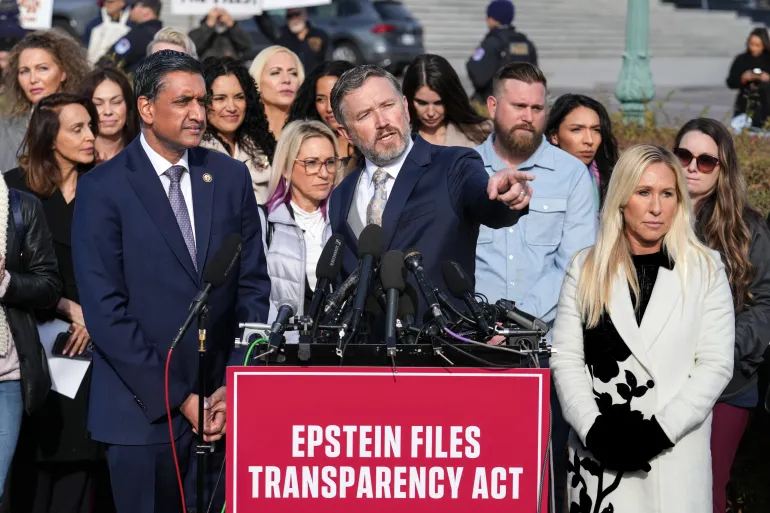
US Congressional Representatives Ro Khanna, Thomas Massie, and Marjorie Taylor Greene speak during a news conference as the US House of Representatives prepares to vote on the Epstein Files Transparency Act, at the US Capitol in Washington, DC, the United States on November 18, 2025 [File: J Scott Applewhite/AP]
Congress did eventually force the release of the files, with help from a handful of Republicans who broke with Trump. The Trump administration has released batches of the heavily redacted files, but has continued to withhold some. Meanwhile, all the Republican lawmakers who voted to mandate releases have paid a price for their insubordination, with three even losing their offices.
US Representative Marjorie Taylor Greene left her Georgia seat in January 2026, after publicly clashing with Trump over Epstein. Nancy Mace, a Republican from South Carolina, lost her bid to become the party’s candidate in her home state after Trump refused to endorse her. Colorado’s Lauren Boebert barely won the primary in her own contest after angering Trump by supporting calls for transparency from Thomas Massie, another Republican bent on exposing what the files held. Massie, of Kentucky, also drew Trump’s ire, which likely cost him the primary.
Republican presidential nominee Donald Trump participates in a fireside chat with media host Tucker Carlson at the Desert Diamond Arena, in Glendale, Arizona, the US, October 31, 2024 [File: Brendan McDermid/Reuters]
No more foreign wars?
Trump had long said he would be reducing foreign military involvement, breaking with the interventionist tendencies of other recent Republican presidents. Now he and his party face tough questions about the US-Israel war on Iran, which influential figures in the MAGA movement like political commentator Tucker Carlson have called a mistake, saying, “This is Israel’s war. This is not the United States’ war.”
Amongst disgruntled MAGA supporters, a narrative has emerged of Trump using the war to also distract from the Epstein issue. Massie, the former congressman, summed up the sentiment by saying, “Bombing a country on the other side of the globe won’t make the Epstein files go away.”
Trump has tried to downplay the war’s impact, but voters, even in the Republican Party, think he broke his own promise, driving the overall approval rating for the ratings-obsessed president down to record lows. “Seven months into an open-ended campaign with shifting goals,” said Shah, “that promise looks different to a lot of his voters.”
Few Republicans, however, have responded to that public sentiment with their votes in Congress, where Democrats have tried repeatedly to curtail Trump’s war on Iran by passing resolutions pointing out he failed to get the body’s approval.
In September, just seven Republican House members joined Democrats to pass an anti-war bill. In the Senate, similar efforts have been supported by just a handful of Republicans. Trump called the Republican lawmakers supporting the anti-war bills “unpatriotic,” and said, “They should be ashamed of themselves.”
As with the Epstein files, Trump took action against rebellious Republicans over the Iran war, for instance backing a rival of Senator Bill Cassidy, who voted in favour of the anti-war bill, in a primary in Louisiana that the Republican senator ended up losing.
What happened to Trump’s promise to “drain the swamp”?
One of Trump’s most appealing promises had been to purge the government of a “deep state” establishment he says is running the country without being accountable to the public on social issues, and fiscal and foreign policy.
Priscilla Chan, Meta founder Mark Zuckerberg, Lauren Sanchez, Amazon founder Jeff Bezos, Google CEO Sundar Pichai and Tesla CEO Elon Musk attend Donald Trump’s inauguration ceremony on January 20, 2025 [Chip Somodevilla/POOL/AFP]
In a way, Trump did keep that promise. An entire federal government division – the Department of Government Efficiency (DOGE) – forced tens of thousands of federal workers out of their jobs and dismantled institutions like the US Agency for International Development (USAID). The military threw out notions of racial, gender, and economic diversity. Everything from universities to the Smithsonian Institution was subjected to a campaign against an unqualified, diversity-obsessed elitist class.
But lobbying groups, including some supporting foreign governments, have been given a free hand, and ethics rules and watchdogs who would tackle political corruption have been weakened, said Shah, the Republican strategist.
At his presidential inauguration, Trump literally surrounded himself with the wealthiest people in the world, some of whom have gone on to play some part in his administration.




![[Al Jazeera]](https://i0.wp.com/occasionaldigest.com/wp-content/uploads/2026/10/INTERACTIVE-MIDDLE-EAST-iran-hormuz-shipping-aug-27-2026-1787815800-1788488337.webp?w=640&ssl=1)