NBA superstar LeBron James criticised by US President Donald Trump for disrespectful behaviour during national anthem.
Published On 22 Oct 202622 Oct 2026
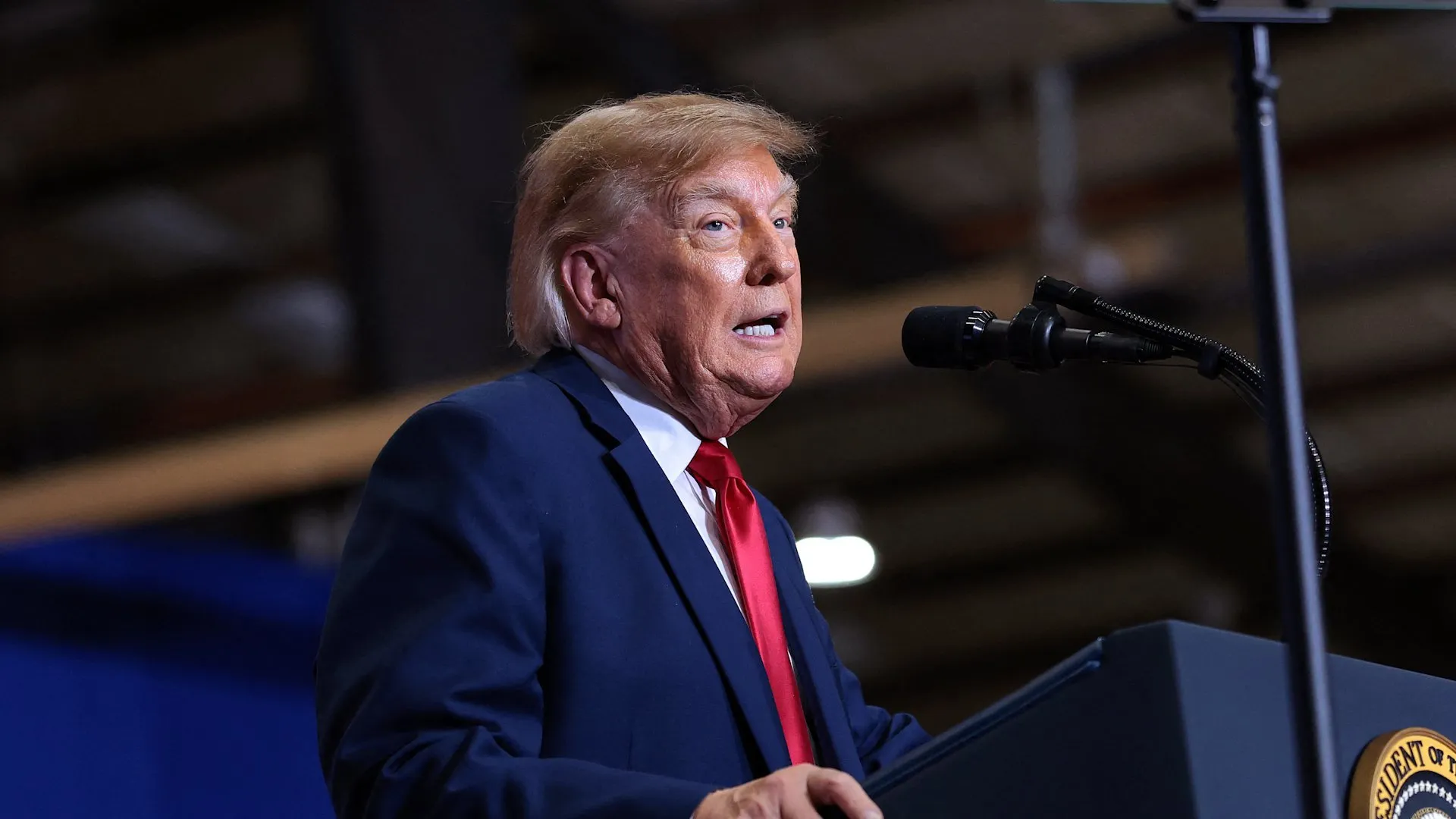
US President Donald Trump criticised National Basketball Association (NBA) superstar LeBron James on Thursday for what he called disrespectful behaviour during the singing of the US national anthem at a recent NBA game.
“While listening to our National Anthem, LeBron James disrespects our Country,” Trump said in a Truth Social post accompanied by a video showing James moving his body during the anthem.
Recommended Stories
list of 4 itemsend of list
“LeBron James should apologize to all of those Great American Warriors and Heroes who died for the American Flag, and all that our Country stands for!”
The clip Trump shared showed James standing in line with the members of the Philadelphia 76ers, swinging his arms in a warm-up-type stretch and performing basketball shooting movements.
A representative for the 76ers did not immediately respond to a request from Al Jazeera for comment.
Trump has repeatedly criticised athletes for their behaviour during pre-game renditions of the US national anthem, notably beginning with NFL quarterback Colin Kaepernick’s kneeling protest in support of racial justice.
Trump cancelled the planned White House visit of the Super Bowl champions Philadelphia Eagles in 2018 after the team disagreed with his call for players to stand during the anthem.
James became a leading voice in the Black Lives Matter movement in 2020 and has frequently supported progressive issues as he ascended to the top of the NBA’s all-time scoring list.
On trade, investment and innovation, leaders will work toward conclusion of a Canada-Turkiye Free Trade Agreement.
Published On 22 Oct 202622 Oct 2026
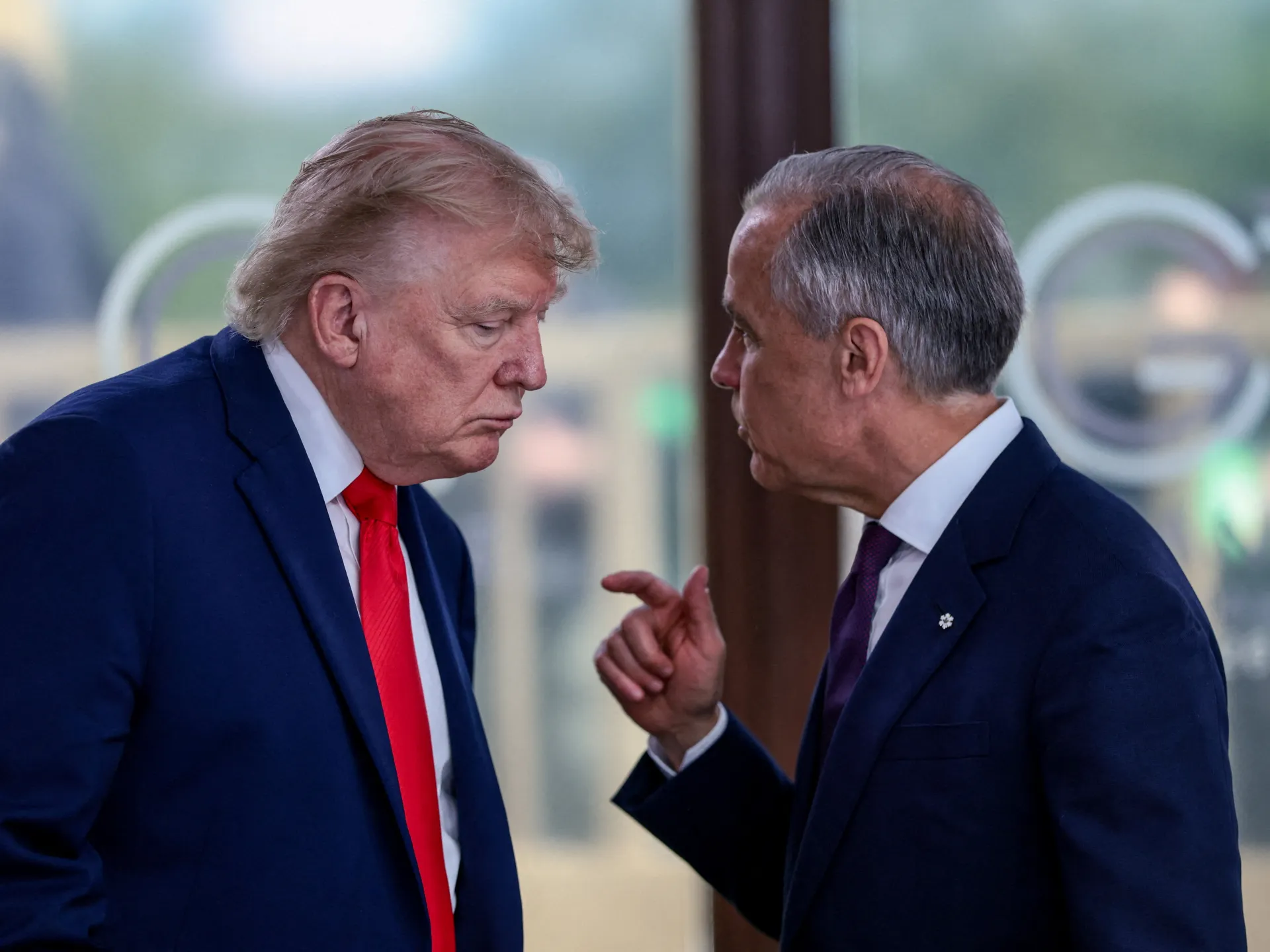
Canadian Prime Minister Mark Carney and Turkish President Recep Tayyip Erdogan have announced the launch of a Canada-Turkiye Strategic Partnership, backed by a three-year action plan.
“In an increasingly complex global security environment, rising geopolitical uncertainties, and evolving humanitarian challenges, a strong and resilient Canada-Turkiye partnership is essential, providing a foundation to mitigate shared threats and capitalise on new opportunities,” said a statement by the two leaders on Thursday.
This comes as Carney is on a two-day visit to Turkiye, seeking to forge a new partnership as Canada looks to reduce its dependence on the United States.
The partnership’s three-year action plan rests on four pillars: trade and investment; defence and security; energy; and ties between people, the statement said.
On trade, investment and innovation, the two leaders agreed to “work toward successful conclusion of a Canada-Turkiye Free Trade Agreement”, it said. They will also expand bilateral trade and investments in priority sectors including energy supply, defence production, aerospace, and Artificial Intelligence (AI).
On defence and security, the leaders “underlined their intent to deepen bilateral and multilateral cooperation”. They also agreed to “strengthen cooperation in support of peace and security in the Euro-Atlantic region and beyond including Ukraine, South Caucasus, and the Middle East, in particular Gaza”.
Meanwhile, energy ministers from both countries will work on areas such as LNG, nuclear energy and critical minerals.
‘Launching a new era’
Speaking to reporters in Ankara alongside Carney on Thursday, Erdogan said the two countries “hope to increase our trade volume, which currently stands at around $3 billion, to $5 billion initially and then to $10 billion through the steps we will take”.
He said the two sides had agreed to begin free trade agreement negotiations before the end of the year to boost trade and investment, adding that elevating Turkiye-Canada relations to the level of a strategic partnership would not be merely a symbolic step on paper.
“We have today overcome the disconnect that had persisted between Turkiye and Canada for many years. Now we are launching a new era between Turkiye and Canada,” he said.
Canadian and Turkish leaders will convene next month in Ankara for the first round of trade talks, the joint statement said.
Carney is on the first bilateral visit by a Canadian prime minister to Turkiye, although he travelled to Ankara in July to attend the NATO summit.
He was scheduled to meet with Erdogan and other officials before travelling to Istanbul for talks with Turkish business groups as the two countries seek to deepen trade ties.
The Canadian prime minister has sought to diversify partnerships and reduce reliance on the US amid an escalating trade war with President Donald Trump, marked by US tariffs on Canadian goods, retaliatory measures by Canada and statements questioning Canadian sovereignty.
Iran’s Islamic Revolutionary Guard Corps (IRGC) says renewed attacks by the United States could prompt Tehran to invade neighbouring countries and hit bases used in US military operations as part of its new “offensive” strategy.
The warning on Wednesday came amid escalating attacks on shipping in the Strait of Hormuz, a global energy chokepoint, and uncertainty over diplomatic efforts to end the nearly eight-month war.
Recommended Stories
list of 3 itemsend of list
“Our defence doctrine was previously defensive; we used to say that if a country attacks us, we will respond. Now we say that if a country attacks us, we will both respond and launch an offensive,” IRGC spokesman Hossein Mohebi said.
Washington ordered some diplomatic personnel to leave Saudi Arabia amid attacks from Yemen’s Houthis while US President Donald Trump has signalled that a decision on the conflict could come soon.
According to media reports, the US and Israel are planning potential attacks on Iran in the coming weeks.
As negotiations seem stalled and both sides exchange threats, could the region be heading towards another military escalation?
What is Iran’s new doctrine?
The IRGC on Wednesday announced a shift towards an “offensive and asymmetrical” defence doctrine, threatening to invade countries that launch attacks against it.
Mohebi said Tehran would no longer limit its military operations to retaliatory strikes.
Mohebi stressed that Iran’s missile stockpile has increased 1.5 times since the 12-day war between Iran and Israel in June 2025. He did not provide specific figures.
“The quality of the missiles has improved significantly, and their range, destructive power and accuracy in hitting targets have increased,” the spokesman said.
Moreover, Mohebi said Iranian forces were in the “stage of preparing to unveil the ‘father of all bombs’. This is something new for the enemy.”
Meanwhile, attacks in the Strait of Hormuz continued unabated.
The IRGC’s navy said on Thursday that four vessels it accused of being involved in illegal oil transfers were struck and caught fire in the northern Gulf. Three other vessels hit mines west of the strait, it added.
Before the war, one-fifth of the world’s oil and natural gas supplies passed through the Strait of Hormuz. While shipments through the strait are still below those levels, oil shipments from the region returned to pre-war levels last month as exporters found alternative ways to ship out their oil and gas, including using pipelines.
However, a flurry of recent attacks in the key waterway and the fighting between Yemen’s Houthis and its Saudi-backed, internationally recognised government, which has resulted in Houthi attacks on Saudi Arabia, have once again sent oil prices surging. Brent crude climbed above $110 a barrel on Thursday amid fears of further disruptions to regional energy supplies.
Why the shift?
Iran’s shift towards an offensive military doctrine reflects Tehran’s determination to make future US-Israeli attacks significantly more costly, according to analysts.
Negar Mortazavi, senior fellow at the Centre for International Policy, told Al Jazeera that Tehran was drawing lessons from the wars of 2025 and 2026 after its previous strategy of retaliation failed to prevent repeated attacks.
“Tehran now wants to establish a new equation: Any future attack on Iran will come at a much higher cost for the aggressors,” she told Al Jazeera.
Unable to match conventional US military capabilities, Iran is increasingly relying on asymmetric warfare, including missiles, drones and its leverage over the Strait of Hormuz, Mortazavi explained.
She said Tehran was pursuing a broader strategy aimed at imposing military, economic and political costs on Washington, including potentially influencing the November 3 US midterm elections.
(Al Jazeera)
“Iran wants to teach Washington a lesson: Attacking Iran comes with a high price, one that can even cost elections,” Mortazavi said, referring to US surveys that are predicting electoral losses for Trump’s Republican Party.
She added that Iranian officials were closely monitoring the elections, believing the economic fallout from the war could damage the Republican Party’s prospects of retaining control of Congress.
“The long-term objective is to establish deterrence so that future American administrations think twice before daring to attack Iran again,” she said.
Political analyst Rami Khouri said the doctrine was also intended to ensure that the consequences of attacks extend to the US, Israel and regional countries supporting their military operations.
“That’s one part of the strategy, that the suffering and the damage have to be equal and reciprocal,” Khouri, nonresident senior fellow at the Arab Center, told Al Jazeera.
Khouri argued that Tehran was also seeking to challenge what it views as longstanding Western domination of the region.
“The Iranians are actually working to try to end the colonial period,” he said.
He added that Iran’s strategy could extend the economic consequences of conflict far beyond the Middle East, affecting energy supplies, transportation, insurance costs and shipments of essential goods.
“The pain is going to go way beyond just the Middle East and Israel and the US and will hurt people in other parts of the world,” Khouri said.
What has the US said about resuming the war?
Trump has offered conflicting signals about Washington’s next steps.
On Wednesday, he said the US was no longer negotiating with Tehran and suggested developments were imminent. “We are going to have something one way or the other that’ll happen fairly soon,” he told reporters.
He also said Washington could end the war immediately but wanted a lasting outcome. “It’ll end very soon. We could leave now, but we want to make sure it lasts for a long time,” Trump said at a campaign rally in South Carolina.
Trump previously pledged not to attack Iran before the November 3 elections.
US Secretary of State Marco Rubio said this week that reaching a peace agreement is extremely difficult and insisted that Iran must stop targeting commercial shipping in the Strait of Hormuz.
Rubio has maintained that Washington will reject any agreement allowing Iran to develop nuclear weapons, which require highly enriched uranium. “The United States will not support any deal that creates a pathway for Iran to ever have a nuclear weapon,” he said on Wednesday.
Tehran insisted its right to enrichment is guaranteed under the Non-Proliferation Treaty.
Iran has offered a seven-day plan to restore shipping through the Strait of Hormuz in exchange for Washington ending its blockade of Iranian ports, easing sanctions and unfreezing Iranian assets.
Meanwhile, the US Department of State on Wednesday ordered nonemergency personnel and their families to leave Saudi Arabia after recent Houthi attacks.
The US embassy in Riyadh has warned of further attacks while American officials told the Reuters news agency that family members could be withdrawn from other Gulf missions.
State Department spokesman Tommy Piggott said departure orders for mission personnel across the Gulf have not been ordered, saying the current orders were for “employees and their family members in Saudi Arabia only”.
Israeli Prime Minister Benjamin Netanyahu reiterated on Sunday his pledge to topple Iran’s government, saying it was key to preventing it from rebuilding its nuclear programme and the “axis of resistance”, further raising prospects of an escalation.
Netanyahu made the comments as Israel’s longest-serving prime minister is locked in a tough battle to remain in power in Tuesday’s elections.
Is war imminent?
Analysts warned that renewed US-Israeli attacks on Iran are increasingly possible with both sides preparing for another confrontation despite the continued possibility of diplomacy.
“Another round of war seems to be approaching,” Mortazavi said.
“Both sides appear to be preparing for renewed confrontation while escalating tensions in the Strait of Hormuz increase the risk of a wider conflict,” she said.
Mortazavi added that the elections in the next two weeks in the US and Israel could influence the timing of military action but warned that the current trajectory appeared to favour escalation over negotiations.
Mohsen Rezaei, secretary of Iran’s Supreme National Security Council, on Wednesday said, “Everyone must know that any action against Iran comes at a cost.”
“If diplomacy can create this understanding, we prefer diplomacy, but if the war continues, Iran has the necessary means to sustain its response,” Rezaei said, according to the IRNA news agency.
Echoing Mortazavi, Khouri warned that another confrontation could be approaching although he said US threats might still be part of a negotiating strategy.
“I think imminent conflict is on the cards, but I don’t know if war is the right word to use,” Khouri told Al Jazeera.
He said renewed strikes could target Iran’s critical infrastructure, including electricity networks, transportation systems, bridges and essential services.
“We’re probably going to get some severe attacks on a few targets that will try to make life in Iran very difficult,” he said.
However, Khouri cautioned that Iran’s ability to withstand another major military offensive while inflicting comparable damage on its adversaries remained uncertain.
“It’s not clear if Iran has the ability to withstand major new assaults against it,” he said, while stressing that Tehran was unlikely to surrender to military pressure.
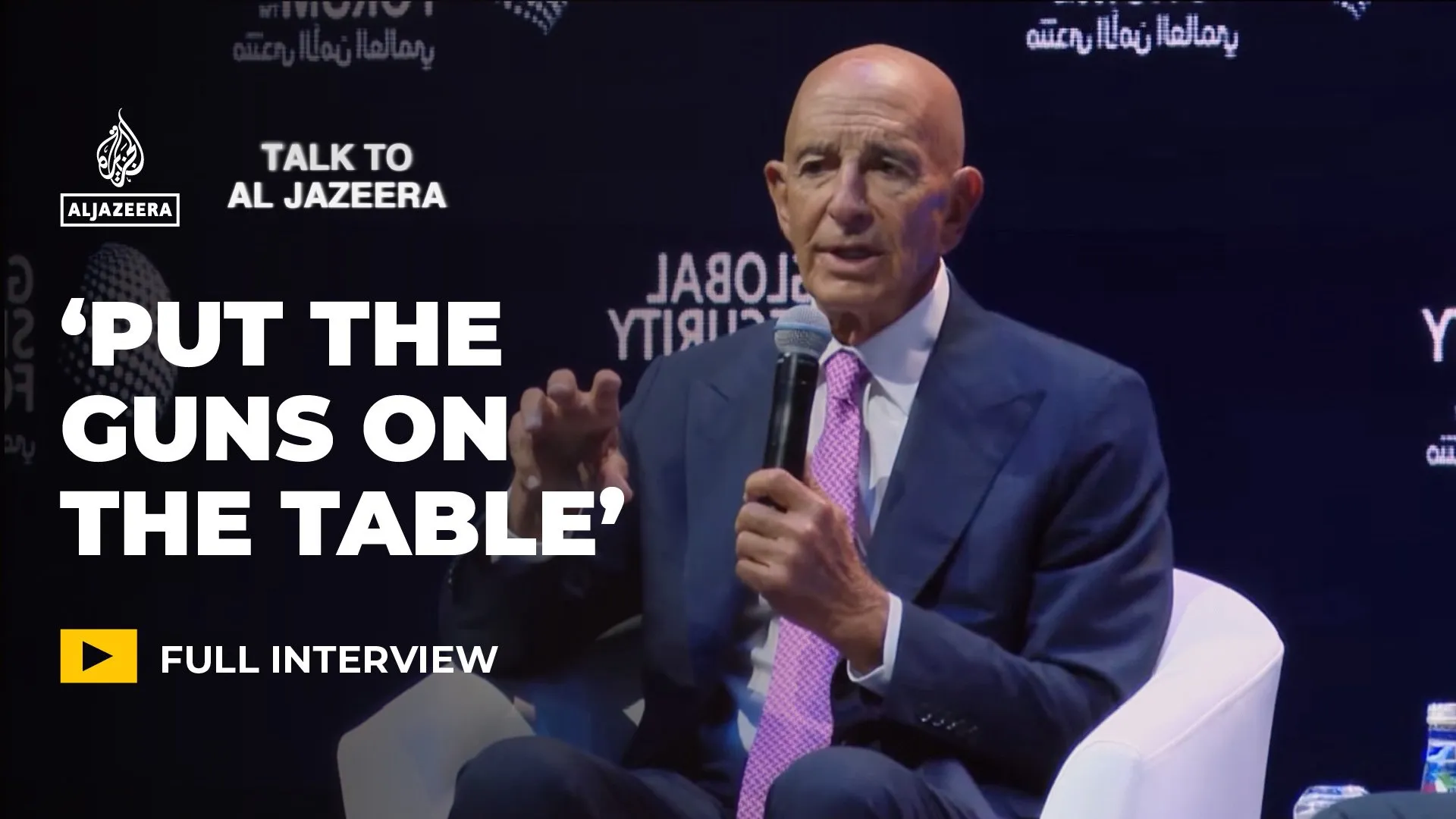
The US ambassador to Turkiye, Tom Barrack, says Washington’s relationship with the Middle East needs to change, from one of control to one of support.
The United States ambassador to Turkiye and special presidential envoy for Syria and Iraq says Washington’s relationship with the countries in the Middle East needs to change.
Tom Barrack says the US no longer seeks to dominate the region.
He won’t say whether the war in Iran was a mistake – but acknowledges the instability it caused has led to unintended consequences.
Barrack says President Donald Trump is against what he calls “forever wars”, and ending the US-Israel war on Iran will require a major compromise. According to him, each side will have to accept conditions it does not like.
However, he is worried that growing tensions could lead to miscalculation.
Barrack says trust is lacking between Washington and Tehran, and that is hampering talks to agree on a deal.
He tells Al Jazeera that countries in the region should not depend on the US to solve their problems and that they need to look out for themselves. He insists the Trump administration has not abandoned the region, but is rather re-examining its role.
Barrack admits that years of US involvement in the region demonstrate that intervention and regime change do not work. He says it is time to put down the guns and resolve disputes through negotiations and mutual respect.
US President Donald Trump praised a man who punched a protester at a midterm election rally held in Clemson, South Carolina. Trump thanked the assailant as the protester was being removed from the event.
‘I’m tired of people denigrating Muslims for being Muslims’
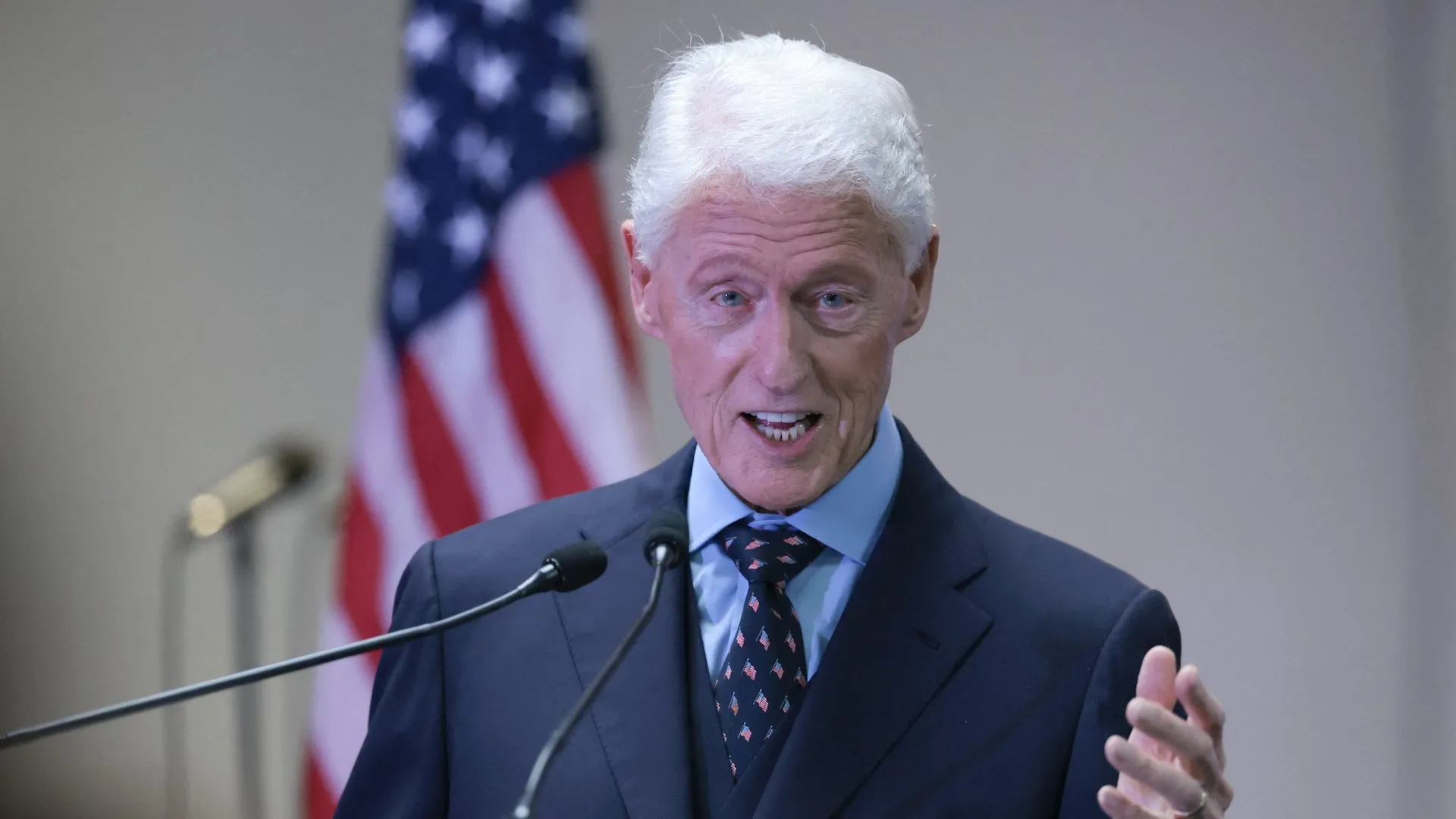
Former US President Bill Clinton quoted the Quran during a speech in Koinonia Worship Centre in Florida condemning discrimination against Muslims. Clinton recalled his daughter Chelsea introducing him to the verse.
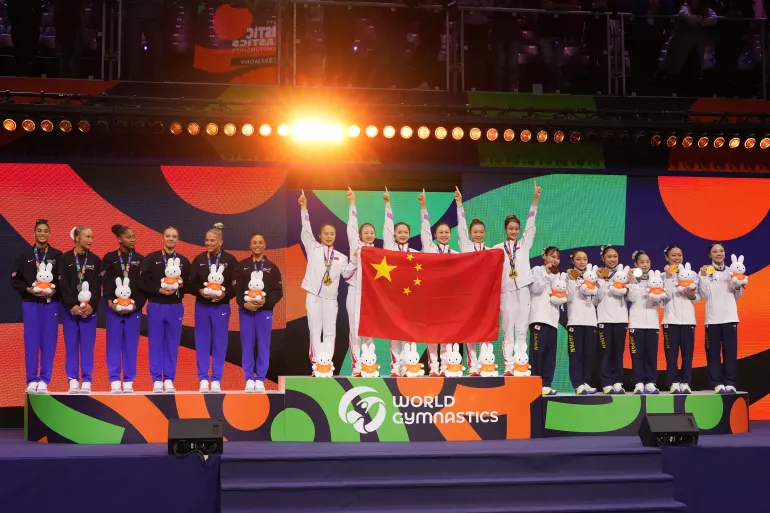
China finished 0.233 points ahead of the Americans, denying them a chance to win an gold eighth consecutive team gold.
Published On 22 Oct 202622 Oct 2026
China have denied the United States an eighth consecutive women’s team title at the Artistic Gymnastics World Championships as Qiu Qiyuan sealed a dramatic victory with the final routine.
Qiu needed to score more than 12.600 points in the closing floor routine to give her country gold and did just enough with 12.833 on Wednesday.
Recommended Stories
list of 4 itemsend of list
The USA last failed to win gold when they were beaten by Russia at the 2010 championships, but were left to count the cost of several errors on the balance beam in Rotterdam.
China, who also led the way in qualifying, finished with 165.764 points, edging out the Americans by 0.233 overall.
Japan were a further 1.468 points behind as they completed the podium ahead of fourth-placed France.
Silver medallists USA, from left, gold medallists China and bronze medallists Japan stand on the podium [Francisco Seco/AP]
USA superstar Simone Biles, a 23-time world champion including five times in the team competition, is taking a break from the sport and has not competed since the 2024 Paris Olympics, where she won three gold medals.
The reigning champions took a healthy lead at the halfway stage, helped by strong vault and uneven bars routines by Skye Blakely, the only gymnast on the team who was part of the quintet that won their seventh consecutive title in 2023.
But 18-year-old Caylor Dulcy stumbled on the beam, scoring just 12.333, as the Americans were outscored by more than four points on the apparatus by their rivals.
Zhang Qingying, who topped beam qualifying, in particular made them pay with a sparkling performance that earned her 15.066 points.
The Chinese were put under pressure on the floor, but Qiu held her nerve to secure their first women’s team world crown since 2006.
The championships continue in the Netherlands on Thursday as Japan’s Daiki Hashimoto defends his men’s all-around title, with a big challenge expected from his compatriot and Olympic champion Shinnosuke Oka.
Japan took the men’s team title on Tuesday, pipping Russia and China.
Zhang Qingying competes in the uneven bars [Francisco Seco/AP]
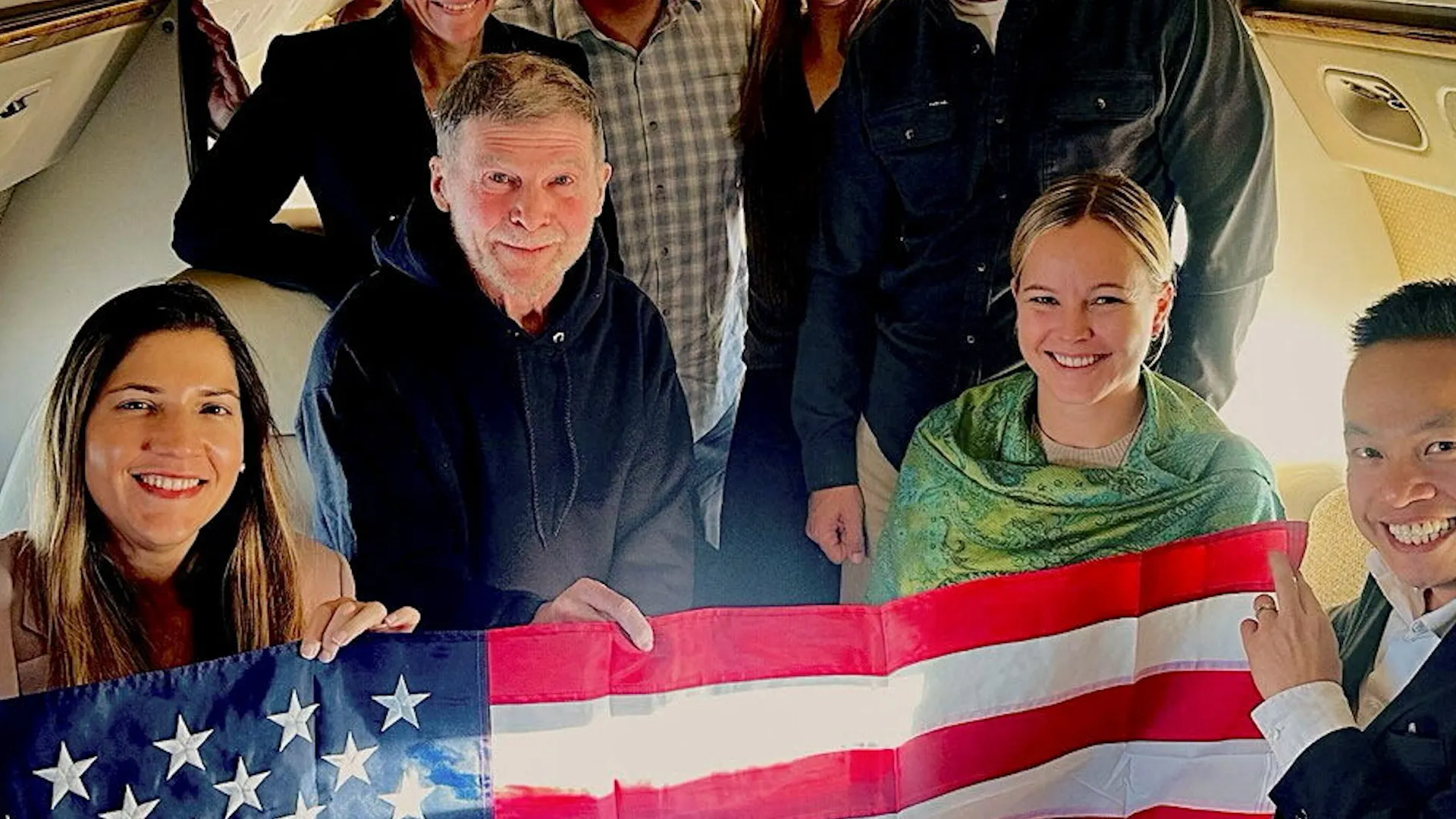
US citizen Stephen Hubbard has been freed from a Russian prison, four years after being convicted of being a mercenary for Ukraine, a claim he denies. The 74-year-old’s release coincided with US envoy Steve Witkoff’s visit to Russia to try and get Moscow to rejoin peace talks.
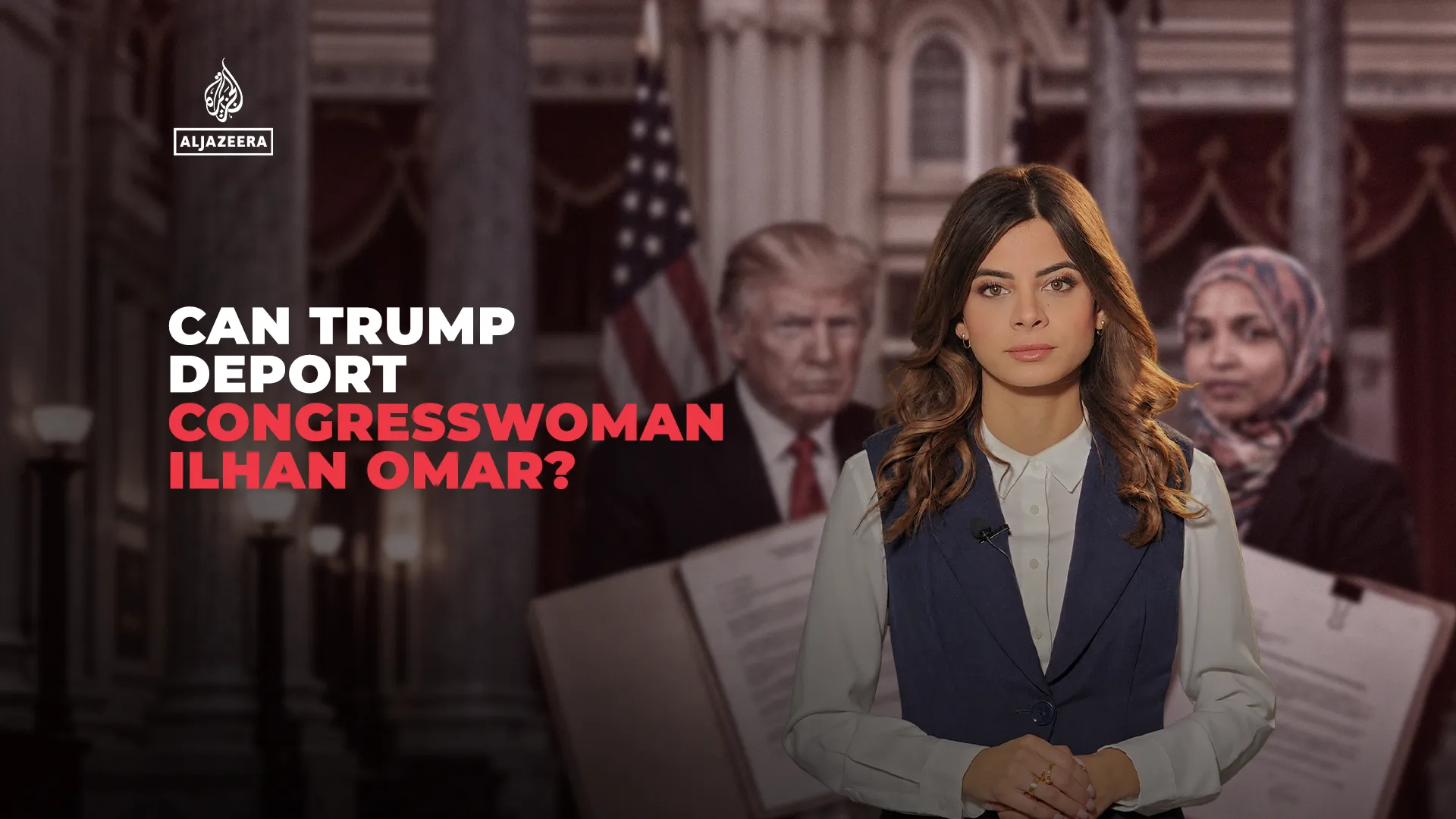
US President Donald Trump says Congresswoman Ilhan Omar could face jail or deportation as federal authorities investigate allegations surrounding her US citizenship. Omar denies wrongdoing and accuses the administration of political intimidation. With the midterm elections approaching, what could happen next?
Neil Bush says that he will vote for Democrat James Talarico due to reservations about Republican candidate Ken Paxton.
Published On 22 Oct 202622 Oct 2026
Neil Bush, brother of former Republican President George W Bush, has said that he voted for the Democratic candidate James Talarico in a crucial race for the United States Senate.
In a social media post on Tuesday, Bush said he voted for Talarico due to concerns about the Republican candidate, Texas Attorney General Ken Paxton.
Recommended Stories
list of 3 itemsend of list
Talarico and Paxton are in a tight race for Texas’s open Senate seat. Democrats are hoping to seize control of the 100-member Senate in the November 3 midterm elections, when 35 seats will be on the ballot.
Bush’s endorsement of Talarico is the latest sign of division among Texas Republicans.
Bush comes from a prominent Republican family: not only was his brother a president, but his father, the late George HW Bush, was too.
“My concerns about his judgment and conduct are hardly mine alone,” Bush wrote. “He was impeached by the Republican-controlled Texas House, although subsequently acquitted by the Texas Senate.”
To explain his decision, Bush pointed to Paxton’s divisive track record, including efforts to support President Donald Trump’s false claims about the 2020 presidential election.
“I have been deeply troubled by Paxton’s conduct as Texas Attorney General, particularly his decision to challenge the results of the 2020 presidential election in other states in an effort to help Donald Trump remain in power,” Bush said.
“I believe that effort was an affront to our democratic institutions and the peaceful transfer of power.”
His brother, the former president, has largely receded from political life and has declined to endorse candidates in recent elections. Before serving in the White House from 2001 to 2009, George W Bush was governor of Texas.
But George W Bush’s daughter Barbara Bush has also shown her support for Talarico by donating to a political action committee backing his campaign.
Texas has long been considered a Republican stronghold, and Democrats have not won a Senate race in the state since 1988.
But polls show Talarico locked in a close race with Paxton, who defeated incumbent Senator John Cornyn in the Republican Party’s primary run-off on May 26.
In a statement, Trump criticised Cornyn as “not supportive of [him] when times were tough”, while praising Paxton as a “MAGA Warrior”.
Some Republicans have expressed frustration over Trump’s intervention on Paxton’s behalf, given the vulnerabilities posed by his state impeachment and other scandals.
A Marist poll released on October 14 found Talarico winning 47 percent of the vote compared to 45 percent for Paxton.
All injured individuals were immediately transported to hospitals, civil aviation says updates to come.
Published On 22 Oct 202622 Oct 2026
One person has been killed and eight injured in an attack on Saudi Arabia’s King Fahd International Airport in the eastern city of Dammam, the country’s civil aviation authority announced.
All of the wounded, whose injuries range from minor to critical, were transported to hospitals to receive medical attention, the General Authority of Civil Aviation (GACA) said in a statement on Wednesday.
Recommended Stories
list of 3 itemsend of list
Earlier in the day, two people were killed after Saudi air defences intercepted a drone that was attempting to hit a facility at Saudi Aramco’s Shaybah oilfield, the Ministry of Energy said.
It was the latest in a series of assaults on Saudi airports as conflict intensifies between Houthi forces and the Saudi-backed internationally recognised Yemeni government.
Last week, the kingdom reported that a projectile strike on Riyadh’s King Khalid International Airport on October 11 killed one person and injured 11. On October 10, the civil aviation authority reported that a separate attack on the same airport claimed the lives of 12 people and injured more than 300.
On Wednesday, the US State Department ordered diplomats and family members to depart from its missions in Saudi Arabia amid the ongoing Houthi attacks. There are also plans to withdraw family members from a number of other US missions in the region, US officials told Reuters.
The US embassy in Riyadh issued a security alert on Wednesday about possible further attacks by the Houthis on Saudi Arabia.
The United States has accused Canadian politicians of trying to influence its midterm elections, pointing to Canada’s efforts to push back against President Donald Trump’s tariff campaign.
In a fact sheet released on Wednesday, the US embassy accused Canada of being dismissive of its allegations of election interference.
Recommended Stories
list of 3 itemsend of list
“The Canadian government brushes off concerns about potential interference in U.S. elections, even as its ministers and premiers openly describe plans to influence American politics in official documents and public appearances,” the fact sheet reads.
The two countries have been locked in a trade war since the start of Trump’s second term in 2025, with Canada responding to US tariffs with import taxes of its own.
But the US embassy identified public statements about the tariffs as being attempts to sway the November 3 midterm election.
Among the politicians singled out in the fact sheet was Canadian Industry Minister Melanie Joly. The fact sheet pointed to comments Joly made in August about responding to Trump’s tariffs.
“We’re also targeting products that will target states in the US. And so we’re being wise and strategic to put political pressure,” Joly said at the time.
The embassy also took issue with Joly’s meetings with Democratic officials in Boston and Chicago in September. When asked by a reporter what she thought might happen with regard to tariffs if Democrats won the midterms, she said, “That’s exactly why I’m meeting so many governors and potential presidential candidates.”
Joly has rejected the suggestion that her actions could amount to interference, saying Canada would never meddle in US elections. She said her meetings with US politicians, both Democratic and Republican, were about building Canada’s economy.
“Fundamentally, what I’ve done in the US is to attract investments,” she told reporters on October 14.
The embassy also pointed to Ontario Premier Doug Ford’s calls for retaliatory measures on US products, as well as his government’s advertising campaign against Trump’s tariffs, launched last year.
The campaign, which featured clips of former US President Ronald Reagan criticising tariffs in a 1987 radio address, prompted Trump to call off trade talks with Canada in October 2025.
While the embassy laid out several examples of Canadian officials trying to influence US trade policy, it didn’t explain how those efforts amounted to interference.
Other instances of alleged election interference included Liberal MP Anthony Housefather saying he had campaigned in Florida on behalf of Democratic Representative Debbie Wasserman Schultz, ahead of her primary election in August.
The fact sheet also accused individual Canadians of illegally participating in US elections, naming 11 people who had been charged or sentenced for voting between 2012 and 2024.
The sheet did not, however, present any evidence linking those citizens to a Canadian government effort to involve itself in US elections.
“All Canadians should refrain from attempting to participate in or influence U.S. elections in any way,” the US embassy’s statement said. “Americans decide America’s elections.”
The fact sheet comes a week after US Ambassador to Canada Pete Hoekstra said Washington was closely watching Canada for signs of interference ahead of the midterms.
“We’re monitoring it, we’re evaluating it and if some of it becomes election interference then America will respond to it,” Hoekstra said in a podcast interview on The Really Big Show, according to The Canadian Press.
The US and Canada have long been allies, but relations have frayed since Trump returned to office.
Not only has the Republican leader triggered a trade war with Canada, but he has also repeatedly threatened to make Canada a 51st state.
There have also been reports that separatist leaders from Alberta had sought support from Trump administration officials ahead of a failed referendum on the province’s independence this week.
Ahead of Monday’s provincial vote, Canadian Prime Minister Mark Carney addressed concerns about potential US interference in the referendum, saying Canada expected foreign governments to stay out of its elections.
“Our expectation is, to be absolutely clear, on foreign governments, United States included, is we don’t get ourselves involved in their elections, they don’t get themselves involved in our elections,” he told Global News.
Al Jazeera has reached out to the Prime Minister’s Office and Global Affairs Canada for comment, as well as the office of Ontario Premier Doug Ford and Industry Minister Joly.
US president has continued to support data centres in advance of midterms, despite growing opposition from Republicans.
Published On 21 Oct 202621 Oct 2026
United States President Donald Trump has said AI data centres should pay “dividends” to communities, in a shift before the midterm elections.
“If companies want to make their Data Centers popular, pay the community, and/or individuals within the community, a ‘dividend’” Trump said in a post on Truth Social on Wednesday.
Recommended Stories
list of 3 itemsend of list
The president’s comments come after he doubled down on his support for data centres, a stance seen as one of several political liabilities for Republicans in the run-up to the midterm election, as Trump’s approval rating has hit record lows.
Polls show dismal support for such centres amid concerns about the sprawling complexes’ water and energy use.
In the post, Trump advised companies that they could make the centres popular if they “pay the community, and/or individuals within the community, a ‘dividend’.”
“I have watched the process closely, and Data Centers that were highly unpopular in a certain area, have become extremely popular when a financial deal is struck,” he said. “MAKE DEALS, and get them built!!!”
Several top Republican candidates have opposed data centres before the midterm polls, with the issue emerging as an area of rare bipartisan consensus in advance of the November 3 vote.
Republican Senate candidates, including Ken Paxton in Texas, Mike Rogers in Michigan and John Husted in Ohio, have all called for more restrictions and oversight on the centres, in a reversal of earlier positions.
The issue featured prominently in a recent debate in Iowa, where Republican Senate Candidate Ashley Hinson said the local level should decide whether to build AI data centres.
Despite the shifting sentiment, Trump in late August issued an impassioned defence of data centres, decrying what he called “the anti-Data Center movement” as a gift to China.
“The only reason that communities throughout the USA should not want Data Centers is if they want to end up being backwards and poor,” Trump wrote at the time.
“If they want to be successful and rich, with far lower taxes and jobs all over the place, let Data Reign.”
Trump has taken several measures to accelerate data centre development, including issuing an executive order last year that called for measures to fast-track permitting and environmental review. The order promised to use federal land for the “expeditious and orderly development of data centers”.
Trump has also backed a voluntary pledge by AI companies to cover the full cost of the electricity data centres use, but has avoided supporting legally binding federal restrictions.
A Gallup poll conducted in March suggested that 71 percent of Americans opposed establishing AI data centres in their areas.
An ABC News/Washington Post/Ipsos poll released on Wednesday identified a similar rate of disapproval, with 72 percent of respondents saying that they opposed building new data centres in their communities.
Lander says dozens remain in Israeli custody after being detained while helping Palestinian farmers harvest olives.
Published On 21 Oct 202621 Oct 2026
United States Democratic congressional candidate Brad Lander says he has been released from Israeli military custody with a warning after being detained alongside dozens of volunteers helping Palestinian farmers harvest olives in the occupied West Bank on Wednesday.
But several dozen others, including rabbis and international volunteers, remain in detention, according to Lander, who called them to be released immediately.
“I’ve been released from IDF custody with a ‘warning,’ apparently because of my public profile,” Lander wrote on X. “I told them I wasn’t even a congressmember yet, just a nominee.”
Lander, a former New York City comptroller and mayoral candidate, was among approximately 80 volunteers detained by Israeli soldiers and police near the village of Nahalin, outside Bethlehem, according to the Israeli organisation Rabbis for Human Rights.
The group, which included American, Israeli, Palestinian, British and Canadian volunteers, had been accompanying Palestinian farmers for about two hours when Israeli forces arrived and informed them that they were in a closed military zone.
The volunteers were then taken to a police station, according to Rabbis for Human Rights.
The Israeli government has not responded to a request for comment.
This autumn, the Supreme Court will consider a question with potentially far-reaching consequences for civil rights in the United States: Who gets to enforce them? On November 30, the justices will hear a case over whether employees of federally funded universities can sue under Title IX over alleged workplace sex discrimination. The Trump administration has urged the court to rule that they cannot, arguing that Congress never gave university employees a private right to bring such claims.
The dispute is the latest front in a broader legal push to restrict the ability of individuals and advocacy groups to take rights violations to court themselves. In June, the Supreme Court declined to hear a challenge to a federal appeals court ruling that barred Arkansas United, an immigrant advocacy organisation, from suing to enforce protections for voters who need assistance at the polls. Across a growing number of cases, Republican-led states and the Trump administration are advancing the same basic principle: Unless Congress has clearly authorised private citizens to sue, enforcement should largely be left to the government.
That may sound like an arcane legal argument, but its implications are anything but. If individuals and civil rights groups cannot go to court when laws protecting them are violated, the power to decide which rights are actually enforced increasingly rests with the very government that may be violating, ignoring or choosing not to enforce them.
A private right of action allows individuals, or groups acting on their behalf, to file lawsuits to enforce rights protected by law. These lawsuits can seek compliance with the law or compensation for past violations. Private rights of action are not automatic under US federal and state law. Congress and state legislatures sometimes explicitly authorise private lawsuits. Where they have not, courts have had to determine whether a law implicitly allows individuals or groups to sue, or whether enforcement rests solely with government authorities.
In practice, private litigation has been an essential part of enforcing rights throughout much of US history. As University of Virginia School of Law Professor George Rutherglen writes in a 2015 law review article (PDF):
“The long history of civil rights, dating back to Reconstruction, makes them quintessentially private rights, whose exercise and enforcement should depend primarily on the initiative of the individuals who bear those rights. Public enforcement no doubt remains necessary, and it has an equally long and distinguished pedigree in civil rights law, but it cannot entirely displace individual control over individual rights.”
Proponents of private rights of action, such as AARP, consider them an effective tool for vulnerable individuals and groups to protect their rights when government agencies are unwilling or unable to act. Critics, such as the US Chamber of Commerce Institute for Legal Reform, however, argue that private lawsuits can encourage frivolous litigation.
These critics, often from the political right, have attempted to restrict private litigation through legal arguments against private causes of action. An example is the 2001 Alexander v Sandoval decision, in which a Supreme Court majority led by Justice Antonin Scalia ruled that Title VI did not provide a private right of action to enforce regulations prohibiting policies or practices with a disparate impact on protected groups – discrimination that can occur without clear evidence of intent.
The legal push against private rights of action has intensified in recent years. Republican-led states have increasingly challenged the doctrine of implied private rights of action, arguing that courts should reject private suits to enforce various types of rights. The Trump administration has also adopted this stance. When the court decided a 2021 voting rights case, Justice Neil Gorsuch submitted a one-paragraph concurrence, joined by Justice Clarence Thomas, questioning whether “the Voting Rights Act of 1965 furnishes an implied cause of action,” despite that issue not being raised in the case itself.
The conservative push to restrict private rights of action has extended to a variety of areas. In June, the Supreme Court ruled against Falun Gong practitioners who accused Cisco Systems of helping the Chinese government develop surveillance technology used to facilitate their persecution, concluding that they could not pursue those aiding-and-abetting claims under the federal laws they had invoked.
One of the most consequential implications of restricting private rights of action is the threat to voting rights. In the Arkansas United case, the Eighth Circuit ruled that the immigrant advocacy organisation did not have the right to sue on behalf of non-native English speakers over the right to have language assistance in the voting booth. The ruling concerned Section 208 of the Voting Rights Act of 1965. But it extended a much broader argument already adopted by the Eighth Circuit: that private individuals and advocacy organisations cannot sue to enforce key provisions of the Voting Rights Act. The Supreme Court’s refusal in June to hear Arkansas United left that ruling in place.
This argument has also been pushed by Republican-led governments in two redistricting and vote-dilution cases: Board of Election Commissioners v NAACP in Mississippi and Turtle Mountain Band of Chippewa Indians v Howe in North Dakota. In May, the Supreme Court vacated judgments in both cases and sent them back for reconsideration in light of its ruling in Louisiana v Callais, without resolving the private-enforcement question. That decision sharply raised the bar for some racial vote-dilution claims, endangering the voting power of Black, Hispanic and Native American communities across the US. At the same time, conservative-controlled governments are attempting to deny members and advocates for these communities the right to even bring some of these cases before the courts, arguing that only the Department of Justice can initiate action over such voting rights violations.
The broader danger is that, as private rights of action are curtailed, enforcement of federal law increasingly depends on decisions made by the executive branch.
The Trump administration is now pursuing a different means of restricting private enforcement. The Clean Air Act explicitly gives private citizens the right to bring certain lawsuits, yet the Justice Department has sought to intervene and dismiss a case brought against xAI over allegations that gas turbines at its power facility in Southaven, Mississippi, are violating federal environmental law and polluting surrounding communities. The facility powers xAI’s Colossus 2 data centre in nearby Memphis. In September, the Justice Department appealed to the Fifth Circuit and sought to halt the case. The department has argued that allowing the suit to proceed would threaten national security and the US pursuit of global leadership in AI. Here, the issue is not whether Congress created a private right to sue – it did – but whether the executive branch can nevertheless step in to stop such a case when it conflicts with its priorities.
Relying solely on the Justice Department to pursue such cases at the federal level is a particularly dubious proposition under the current administration. The department has also been weaponised to target political foes of President Trump. Its Civil Rights Division has been steered away from defending the rights of racial and ethnic minorities and refocused on cases brought by white plaintiffs alleging so-called “reverse discrimination”.
The Justice Department’s current politicisation may be reversed under a future administration. But even then, the erosion of private rights of action would leave the enforcement of civil and political rights increasingly dependent on a federal agency with limited resources and subject to political direction. For example, as Democracy Docket noted in 2024, of the 216 active voting rights and redistricting cases it was tracking at the time, only five were cases brought by the Justice Department. As Professor Rutherglen noted in his article, to rely primarily on government actors to enforce rights “is to transform the nature of those rights: from private to public, from individuals to groups, from legal control by plaintiffs to political control by administrators.”
Private rights of action are now being eroded, case by case. Politicians, civil liberties advocates and organisations must challenge this trend before more avenues for enforcement are closed off. Otherwise, protections won over decades may become increasingly dependent on the willingness of government authorities to uphold them, leaving those whose rights are violated with fewer ways to seek redress.
The views expressed in this article are the author’s own and do not necessarily reflect Al Jazeera’s editorial stance.
Amid escalating tensions with Ukrainian leader Volodymyr Zelenskyy, United States President Donald Trump has increased pressure on the Eastern European country to make a deal that would end the war with Russia.
Speaking at the White House on Tuesday, Trump doubled down on his efforts to blame the Ukrainian president for holding up peace efforts that would bring the years-long conflict to a close.
Recommended Stories
list of 3 itemsend of list
“Zelenskyy has to want to settle this war, and if he doesn’t, I think it’s going to be a very bad thing,” Trump said as he talked about Russia having an “unlimited” supply of people to send in the fight.
Moments later, the US president referenced a contentious Oval Office meeting he held with Zelenskyy in February 2025, shortly after returning to power.
Zelenskyy, Trump said, could have made a “better deal” then. “He’s going to have to want to make a deal, because I don’t think his people are going to stand for it any longer,” Trump told reporters.
On Tuesday, the Ukrainian president met US special envoy Steve Witkoff and European leaders in Oslo, Norway, to discuss ending Russia’s war.
In a post on social media after the meeting concluded, Zelenskyy said, without providing specifics, that his country has “some clear ideas on how to get to peace”.
“We are united with our European partners in this effort, and we want the Americans to take these ideas to the Russians,” Zelenskyy wrote. “One of the important ideas is to move to a potential trilateral meeting of the leaders to address the issues that only the leaders can do.”
The Ukrainian leader added that Witkoff would head to Russia on Wednesday, where peace discussions are expected to continue.
“Let’s see what Putin has to say,” Zelenskyy said.
When asked whether Russian President Vladimir Putin should meet Zelenskyy, Trump said there was “tremendous” hatred between the two leaders.
“It’s hard for them to be in the same room,” Trump said. “I don’t care how it’s done.”
Starlink controversy
Trump’s remarks come as the White House continues to squeeze Ukraine in order to force the country to cut a deal with Russia.
Last week, Ukrainian officials reported slowdowns with Starshield, the military-grade version of the Starlink satellite system, run by the aerospace company SpaceX.
Ukraine relies on the technology for communications and intelligence to prevent Russian attacks.
It is unclear who ordered restrictions that limit Ukraine’s access to Starshield. SpaceX CEO and Trump ally Elon Musk pointed a finger at the White House.
“Starshield systems are owned and controlled by the US government. Any limits on speed or usage are decided by the US military and ultimately POTUS,” he wrote on October 14.
The news agency Reuters also reported that the order came from inside the White House, citing two US officials and a Western official.
But a report in The Wall Street Journal on Tuesday claimed US officials had blamed Musk himself for the slowdown, saying the SpaceX CEO ordered it last week. Trump and US Defence Secretary Pete Hegseth have both denied that the government directed the restrictions, with Hegseth pushing responsibility towards SpaceX.
Building ties with Putin
Trump, meanwhile, has sought to ease the historically tense relations between Russia and the US.
In August 2025, Trump invited Putin to Alaska, the Russian leader’s first visit to US soil in a decade.
More recently, Trump has expressed openness this month to meeting with Putin and Chinese President Xi Jinping, as part of a trilateral discussion on denuclearisation.
Trump also announced this month that he struck a deal to obtain diesel from Russia, marking a stunning reversal of years of US pressure on Moscow’s economy.
The US president also waived new economic restrictions that would have been imposed under the Lindsey Graham Sanctioning Russia and Iran Act, a bipartisan law he signed one month earlier, in honour of a late senator.
It would have imposed sanctions on Russian officials, banks and tankers, as well as tariffs on countries that purchase Russian oil.
US Secretary of State Marco Rubio defended the decision on Tuesday, saying the law allowed the waiver through a provision embedded in the legislation.
“The president chose to use a national security waiver to not immediately implement those [sanctions and restrictions], because he recognises that these things have to be looked at in their totality,” Rubio said in an interview with India’s News18.
Rubio argued that Trump was engaged in a “balancing act” in deciding the extent of US-imposed economic restrictions and how they could impact the rest of the world.
“When you do that pressure, sometimes it spills over and has a negative impact on other countries,” Rubio said.
The lawsuit argues Trump bypassed Congress and misused a century-old law to impose sweeping tariffs on Canadian imports.
A US food importer is suing US President Donald Trump over his 50 percent tariffs on Canadian goods, arguing he lacks the legal authority to impose sweeping tariffs without congressional approval.
Gellert Global Group, a New Jersey-based company that imports Canadian cheese, filed the lawsuit on Tuesday in the US Court of International Trade in New York.
Recommended Stories
list of 4 itemsend of list
The company says the tariffs are driving up its costs and disrupting its relationships with suppliers on both sides of the border. Between September 16 and October 11, Gellert had paid more than $520,000 in duties, according to the complaint.
“Gellert Global Group has spent generations building trusted relationships with suppliers, customers and partners across the food industry,” said Thomas Gellert, the company’s co-chief executive officer, in a press release. “These tariffs disrupt those relationships overnight and create costs and uncertainty that ripple through the entire supply chain.”
The lawsuit challenges Trump’s decision to use a Depression-era law to impose tariffs on a wide range of Canadian products, including dairy products, furniture, clothing and wine.
The lawsuit argues that the law doesn’t apply to the Canadian policies the Trump administration says are discriminatory, since two of them “arose in response to the president’s own tariffs, while the third involves Canadian dairy policy governed by the US-Mexico-Canada Agreement (USMCA)”.
It also questions why Canadian cheese is being taxed over disputes involving alcohol and cars.
“No president should have the power to pull a dormant statute off the shelf and use it to impose sweeping tariffs or import bans without the limits Congress required,” said Sara Albrecht, chairman and CEO of the Liberty Justice Center, a nonprofit legal organisation that filed the suit on Gellert’s behalf.
The White House did not immediately respond to a request for comment, according to the Reuters news agency.
At the centre of the case is Section 338 of the Smoot-Hawley Tariff Act of 1930, which allows the president to impose tariffs of up to 50 percent on imports from countries found to discriminate against American businesses.
The provision had never been used until Trump invoked it this year.
The lawsuit argues that newer laws passed by Congress since then, such as Section 301 of the Trade Act of 1974, require investigations, public comment and other safeguards that Gellert says the Trump administration has bypassed, and that these override Section 338.
“The administration cannot skip those protections by reaching for a 1930 statute that no president had ever used to impose a tariff,” said Jeffrey Schwab, the Liberty Justice Center’s senior counsel and director of litigation.
In addition, the lawsuit says that even if Trump is allowed to use the older law, he hasn’t met its requirements, including waiting 30 days before tariffs can be collected on new products added to the list.
The administration only waited seven days to start collecting tariffs on cheese in September, according to the lawsuit.
Gellert is asking the court to declare the tariffs illegal, stop them from being collected, and order refunds with interest for importers who have been impacted.
The lawsuit marks the fourth major legal challenge to Trump’s tariffs.
In February, the US Supreme Court struck down most of the tariffs he imposed in 2025, and a trade court later ruled against a temporary 10 percent global tariff. A separate challenge to tariffs imposed over alleged forced labour in international trade is still pending.
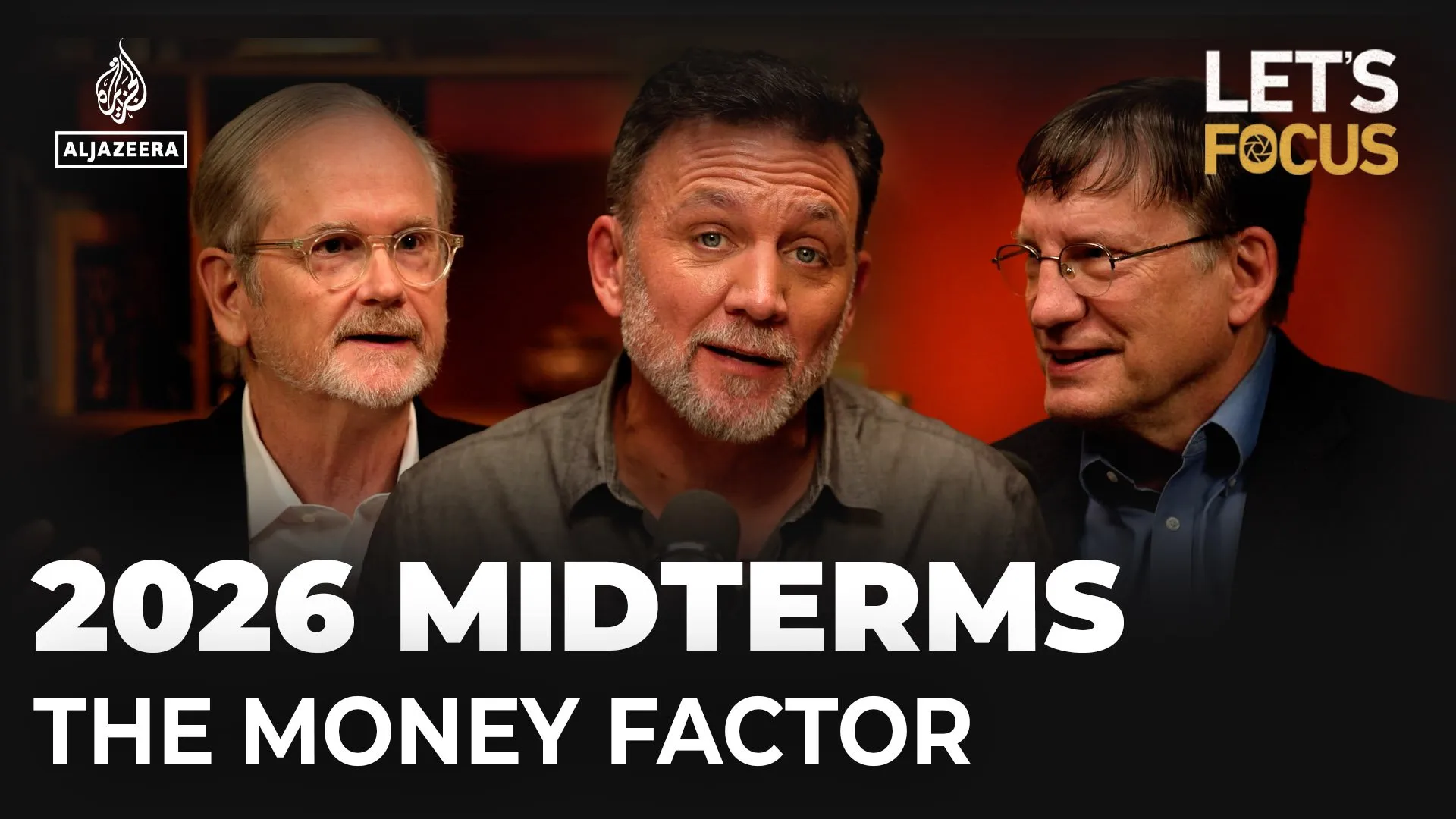
Who pays for US elections and what do they get? Josh Rushing asks Lawrence Lessig and Bradley Smith.
The 2026 midterm elections are on track to be the most expensive in the history of the United States, with a record $11.6bn in political advertisements alone. Independent expenditure-only political action committees, or super PACs, dark money and billionaire donors now shape who runs and who wins, yet voters of both parties say money has too much power.
Josh Rushing asks two leading experts who is paying, what they are buying and whether the system can change.
Contributors: Lawrence Lessig – Professor of law and leadership, Harvard Law School Bradley Smith – Professor of law, Capital University
The revocations targeted visa holders who had allegedly broken the law, or pose threats to national security.
Published On 20 Oct 202620 Oct 2026
The Trump administration has said it has revoked more than 300,000 visas issued to foreign nationals, claiming it has done so at a faster pace than any previous administration.
A spokesman for the US Department of State said on social media on Tuesday that the revocations targeted foreign nationals in the United States on visas who had broken the law, committed fraud or posed threats to national security.
Recommended Stories
list of 4 itemsend of list
“We have zero tolerance for foreigners here on visas who break the law, commit fraud, or undermine our national security,” Tommy Pigott, State Department spokesman, said in a post on the social media platform X.
The administration would continue taking action to secure US borders and protect national security, he added.
Al Jazeera has reached out to the State Department for comment.
In January, the department said it had revoked more than 100,000 visas, a record at the time.
The administration has also adopted a stricter policy on granting visas, with tightened social media vetting and expanded screening.
Rights advocates and human rights experts have condemned the Trump administration’s social media screening efforts, which they say threaten free speech and are akin to surveillance and the singling out of immigrants.
Voters in Alberta have chosen to remain part of Canada in a first-ever independence referendum.
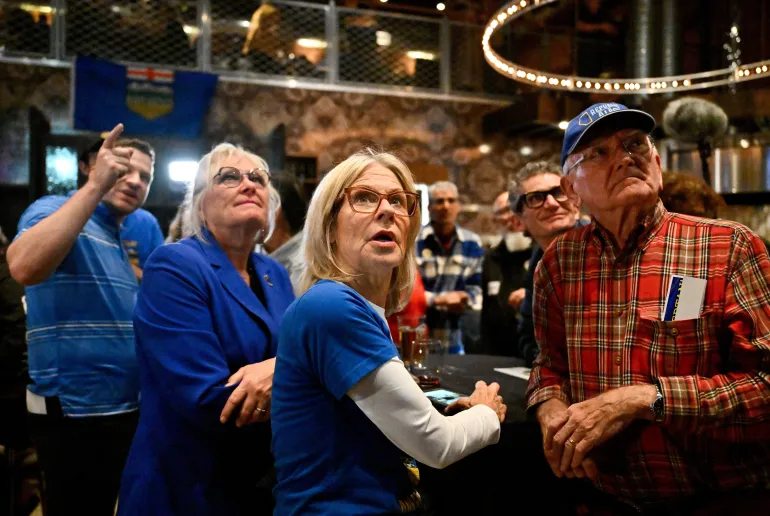
Canadian state broadcaster CBC News called the results of Monday’s vote late on the same day after 48 percent of the ballots counted showed overwhelming support for the “remain” side, with 76 percent opting to stay with Canada.
The result marks a major win for Prime Minister Mark Carney, who is facing a trade and political war with the United States amid US President Donald Trump’s higher tariffs and repeated suggestions of annexing the country.
On his way into a cabinet meeting on Tuesday morning, Carney called it a “great day.”
“I’m thrilled that Albertans have chosen unity. They’ve chosen to build together. They’ve chosen to continue to take care of each other, to move forward together with purpose,” he said.
But the result also comes as a disappointment for those Albertans seeking independence for the resource-rich region following years of grievances laid at Ottawa’s door. Here’s what we know:
Supporters of the Alberta Prosperity Project, a group that promotes independence from Canada, gather at a watch party on the day of a nonbinding referendum on Alberta sovereignty, in Edmonton, Alberta, Canada, October 19, 2026 [Jennifer Gauthier/Reuters]
What was the referendum about?
The nonbinding referendum was first announced in May following a campaign and petition by a group of Albertans who want to be an independent country.
While only about one-third of Albertans were found to be pro-independence in polls, Alberta Premier Danielle Smith argued in her announcement that a referendum was necessary to respect the 300,000 Albertans who had petitioned officials for it.
In the referendum, voters answered 10 questions, including whether the government should begin a binding process to seek independence from Canada. They also answered questions on immigration, access to provincial services like education, social care and healthcare, and voter identification requirements.
Prime Minister Carney had campaigned for Albertans to vote “remain”, saying last week at a rally in Calgary that separation would be “ a dangerous bluff that will lead to years of deep division”.
“There are some outside our borders who are working to break us so they can own us,” he said.
Researchers have pointed to possible online influence campaigns by both Russian and US entities that helped amplify the call for separation and allegedly shared misleading information. Alberta PM Smith told media in August that the online activity was under observation.
What have the reactions been?
Prime Minister Carney, who grew up in the region, said “Albertans made a clear choice” in a statement he made early on Tuesday.
“They chose unity, to build together, and to take care of each other,” he said, adding that “Canadians will move forward together with renewed purpose and high ambition.”
Alberta’s Premier Smith said she was pleased to see the results and that “Albertans have voted for a stronger Alberta in a united Canada.”
Separatist leaders from the groups Let Alberta Decide, the Alberta Prosperity Project and the Pathway to Independence said they will wait for all votes to be counted before conceding.
First Nations groups turned out in strong numbers to vote to remain with Canada, with one southern Alberta polling station in an area home to the Siksika Nation temporarily running out of ballots, local media reported.
Why is Alberta important, and why are there calls for independence?
Many Albertans have long complained that their critical natural resources are funding the government in Ottawa and the commercial hubs of Toronto and Montreal, but that the province does not receive proportionate benefits.
The province, with a population of 5.1 million, holds massive oil deposits. It also holds reserves of critical and rare-earth metals including lithium, titanium and zircon, which are essential for manufacturing many tech items, from smartphones to fighter jets.
Separatist movements, some of which even support Alberta joining the US, go back to the 1940s, following the discovery of oil reserves. Some of Alberta’s premiers have had spats with Ottawa over wealth distribution.
US President Trump has made remarks about Canada becoming a US state in recent months.
Last week, he told a political rally in the US state of Arizona that Canada will “end up being the 51st state, because it’s the only way it works”.
The two countries have been embroiled in a trade war since talks fell apart in August this year and they slapped each other with tit-for-tat tariffs.
Earlier this month, tech billionaire Elon Musk called for Alberta, Saskatchewan and Quebec to separate from Canada, saying “they’d be better off”.
But the matter of Alberta’s independence gained intense scrutiny last year after pro-separatists launched a petition to pressure the government.
Alberta, alongside other western provinces of British Columbia, Saskatchewan and Manitoba, have all complained about “western alienation” by the government in the centre.
Is it over for Alberta’s independence bid?
With separatism agitations running so far back, experts say the referendum will likely not end the movement altogether.
Ahead of the vote, some separatist leaders said they would pursue another referendum if necessary, arguing that the referendum shows that independence is legally possible.
“Regardless of what happens on Monday, we’ve already won,” Keith Wilson, co-leader of Let Alberta Decide, said at a rally last week.
Doha, Qatar — The United States is moving away from its traditional security-for-oil relationship with the Middle East and no longer seeks to dominate the region, senior US diplomat Tom Barrack has said.
However, it was not abandoning the Middle East, he added, speaking at the Global Security Forum in Doha on Tuesday — but rather reassessing its role, after years of attempts to reshape governments across the region.
Recommended Stories
list of 3 itemsend of list
“The US no longer wants to own,” said Barrack, who serves as US Ambassador to Turkiye and Special Envoy for Syria. “The bargain is not to control, but to not leave. We’re not leaving.”
Barrack acknowledged that regional countries were increasingly recognising the limits of US involvement.
“Everybody is saying: OK, I can’t rely on America to solve all my problems,” he said.
Barrack questioned the effectiveness of previous interventions, saying that the US had been involved in 23 regime changes across the wider Middle East.
“Every time we try and intervene, change the person or the regime, it seems to have been a mistake,” he said.
His comments come as Washington and Tehran try to negotiate an end to the US-Israeli war on Iran that has destabilised the region and disrupted global energy supplies.
Political analyst Luciano Zaccara described Barrack as probably “the most realistic of Trump’s allies” in his assessment of US involvement in the Middle East.
He told Al Jazeera that Barrack had effectively acknowledged that regime change, one of Trump’s stated objectives in the war on Iran, was unlikely to succeed.
Zaccara said Barrack’s reference to regime changes in the Middle East was an acknowledgement “that what the US has been doing in the region has not been working, regardless of which administration it was”.
According to Zaccara, Barrack had stopped just short of suggesting that Trump needed to retreat from “the maximalist demands” he had made of Iran.
US-Iran negotiations ongoing
Qatar says negotiations between Tehran and Washington are continuing despite growing fears of renewed fighting.
Ministry of Foreign Affairs spokesperson Majed al-Ansari, speaking separately at the Global Security Forum, said mediators were continuing to exchange messages between the warring parties, with regional partners involved in efforts to reach a deal.
“We are working between the parties, continuing our job as mediator with our partners and others in the region,” he said.
Al-Ansari said the lack of public information about the negotiations should not be interpreted as a lack of progress.
“The fact that we’re not hearing about it is a good sign that we’re doing our job properly,” he said.
The diplomatic efforts come as Iran’s seven-day proposal to end the war remains on the table, with the US yet to give its response.
The plan envisages reopening the Strait of Hormuz and resuming nuclear negotiations in exchange for US concessions, including lifting the naval blockade on Iranian ports and easing economic sanctions on Tehran.
Analyst Negar Mortazavi said the diplomatic door remained open, but negotiations were stalled over the terms and sequencing of an agreement.
“Tehran wants to end the war, but it is not prepared to surrender under military or economic pressure,” she told Al Jazeera on the sidelines of the forum in Doha.
The Strait of Hormuz remains a major flashpoint, with attacks on commercial shipping raising concerns over global energy supplies. Before the US-Israeli war on Iran, one-fifth of the world’s oil and gas supplies transited through the strait.
Mortazavi said the escalation was part of Tehran’s strategy to maintain leverage against Washington despite its military disadvantages.
“Iran’s leverage has diminished but has not disappeared,” she said. “Moving tankers is not the same as restoring safe, predictable and normal maritime traffic.”
According to Mortazavi, Tehran wants to increase the economic and political costs of the war for Trump, while signalling to future US administrations that military action against Iran carries consequences.
But she warned that continued escalation posed serious risks to Iran and the wider region.
“Ultimately, neither military escalation nor economic pressure is likely to produce Iranian capitulation,” she said.
Fighting in Yemen
Qatar’s Ministry of Foreign Affairs spokesperson also reaffirmed Doha’s support for Riyadh in the fighting against Yemen’s Houthi armed group, saying it backed Saudi Arabia in “defending their sovereignty against this attack”.
Fighting intensified in September after the Houthis seized areas along Yemen’s Red Sea coast, including the port city of Mocha. In response, forces loyal to Yemen’s internationally recognised government launched an offensive, dubbed “Dawn of Yemen”, on October 4, backed by Saudi air strikes.
The Houthis have retaliated with missile and drone attacks on Saudi airports, oil facilities and military installations. Strikes on Riyadh’s King Khalid international airport earlier this month killed at least 14 people and wounded hundreds.
Around 76 percent of voters in the Canadian province of Alberta have rejected a proposal to hold a referendum on independence, according to unofficial results. It’s a victory for Prime Minister Mark Carney but more than 300,000 backed the proposal, and separatists say their grievances remain.