With more than one million votes counted, about 76 percent supported remaining in Canada.
Published On 20 Oct 202620 Oct 2026
Alberta residents have voted to remain part of Canada in the province’s first-ever referendum on separation, in a much-needed win for Prime Minister Mark Carney as he attempts to unify the country amid an ongoing trade war with the United States.
With more than one million votes counted, about 77 percent supported remaining in Canada, compared with 23 percent who backed beginning a process that could lead to separation, early results showed on Tuesday.
Recommended Stories
list of 3 itemsend of list
The vote was not a direct referendum on independence but would have set oil-rich Alberta on a path towards a future vote on separation from Canada.
Carney welcomed the result and said Albertans had made a “clear choice” in favour of unity.
“They chose unity, to build together, and to take care of each other,” he said in a statement on X.
Jeffrey Rath, a top leader of the secessionist Alberta Prosperity Project, told reporters his push for an independent Alberta will “absolutely” continue, despite the result from Monday’s vote.
“We’ve learned a lot of lessons from this fight,” he said.
Alberta Premier Danielle Smith, a conservative, said she voted against independence but called the referendum to settle an issue that has divided the province.
She has said a win for the federalists would close the secession question.
Alberta has the world’s fourth-largest proven oil reserves, and much of the secessionist momentum has been driven by anger over oil industry management.
Smith has blamed Carney’s predecessor Justin Trudeau for igniting the secessionist fire, accusing him of trying to crush oil production to advance his pro-climate agenda.
Alberta’s independence push has also drawn sustained interest from the allies of US President Donald Trump, including Treasury Secretary Scott Bessent, who called Alberta Washington’s “natural partner”. Elon Musk, the world’s richest person and eminent Trump supporter, also posted on X that Alberta “should separate”.
Carney, who grew up in Alberta, has worked to improve relations between the province and Ottawa since taking office last year. He has partnered with Smith on advancing a new pipeline to export more Alberta bitumen overseas, a project considered a nonstarter during Trudeau’s tenure.
A group of parents claims local admission policy boosts Black and Latino students while constraining Asian applicants.
Published On 20 Oct 202620 Oct 2026
The United States Supreme Court has agreed to hear a case about the role of race in admissions to selective Maryland middle schools after a group of parents claimed policies discriminated against Asian students in favour of Black and Latino students.
The Supreme Court agreed on Monday to hear the parents’ plea on four academically rigorous “magnet” schools in Montgomery County, a suburb on the outskirts of Washington, DC, in the neighbouring state of Maryland.
Recommended Stories
list of 3 itemsend of list
The high court said it would weigh whether the parent group has enough evidence of discrimination for the case to move forward.
Lower courts previously dismissed the case because Asian-American students were not underrepresented at the specialised-curriculum schools compared with the pool of students that applied.
If the Supreme Court rules for the parent group, the Association for Education Fairness, it could revive the lawsuit.
The court is expected to hear arguments in the coming months and rule by June.
‘The Pandemic Plan’
The Montgomery County school district’s selection process was introduced in the 2021-2022 school year during the COVID-19 pandemic.
It screens all students for academic potential, and then implements a lottery to randomly assign students from that pool to receive enriched instruction at either a magnet school or a local school.
The suit alleged that the screening process makes it harder for Asian-American students, who the challengers said are clustered in “high-performing, low-poverty elementary schools”, to enter the lottery pool.
Part of the process ranks a student’s performance by comparing the student’s test scores against those of other students whose family incomes are at a similar level.
“Under the applicant pool benchmark, the government can set specific racial targets, hit them, and avoid even an inquiry into discriminatory intent,” so long as it has not explicitly called out race in its process, they wrote in their appeal to the Supreme Court.
Previously thrown out
The case was thrown out in 2022 by US District Judge Paula Xinis. She noted that the percentage of admitted Asian-American students exceeded the percentage of Asian Americans among all applicants to the magnet schools.
Xinis also found no evidence that the lottery policy was implemented with discriminatory intent.
The school system has consistently argued the new admissions policy, called the “Pandemic Plan” due to the timing of its release, is race-neutral.
“The Pandemic Plan is a colorblind lottery,” lawyers wrote in a brief asking the Supreme Court not to take up the case. “Nothing about the Pandemic Plan, its history, or its purpose is offensive to the Constitution.”
Supreme Court justices will now consider whether a group claiming to be targeted by a race-neutral policy must show it was disproportionately harmed to prove intentional discrimination.
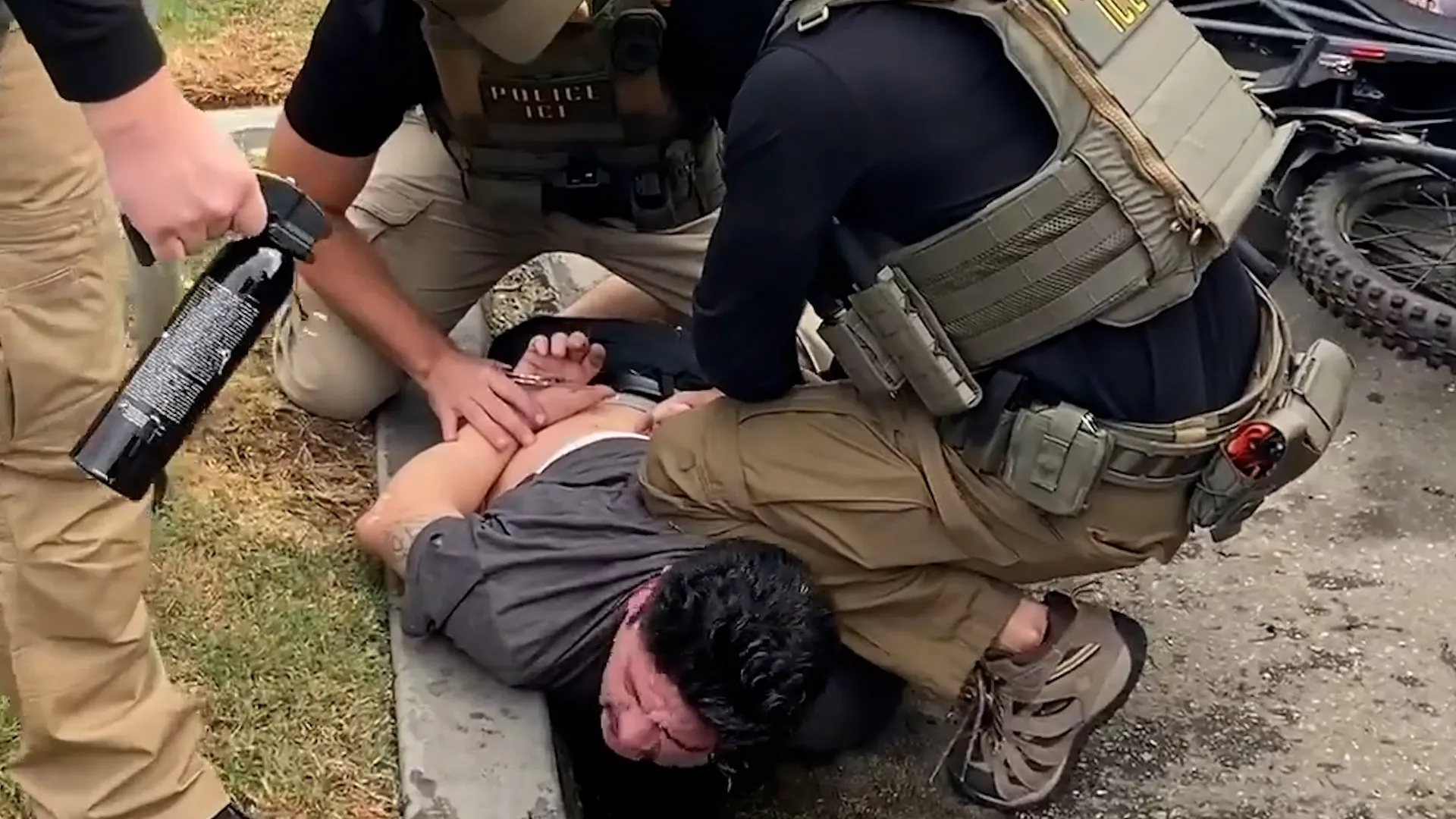
Video shows a man screaming in pain as ICE agents pin him down during an arrest in Long Beach, California. The family of Ricardo Gonzalez say he is a US citizen, and that ICE agents broke his arm during a wrongful arrest.
Hegseth has travelled to Israel to meet Netanyahu ahead of a closely contested election, Axios reported, citing sources.
Published On 20 Oct 202620 Oct 2026
US Defense Secretary Pete Hegseth has met with Israeli Prime Minister Benjamin Netanyahu during an undisclosed visit to Israel, according to Axios.
The meeting between the hawkish ally of US President Donald Trump and the veteran Israeli premier facing a knife-edge election occurred on Monday, Axios reported, citing two sources with knowledge of the matter.
Recommended Stories
list of 3 itemsend of list
The Reuters news agency could not immediately confirm the visit. The Pentagon and Israel’s embassy in Washington did not immediately respond to requests for comment, and there was no immediate indication of what they discussed.
Trump endorsement
President Trump took to his social media platform Truth Social on Sunday to endorse Netanyahu in next week’s parliamentary election, the first vote since the Hamas-led October 7 attacks in 2023 and Israel’s genocidal campaign in Gaza began.
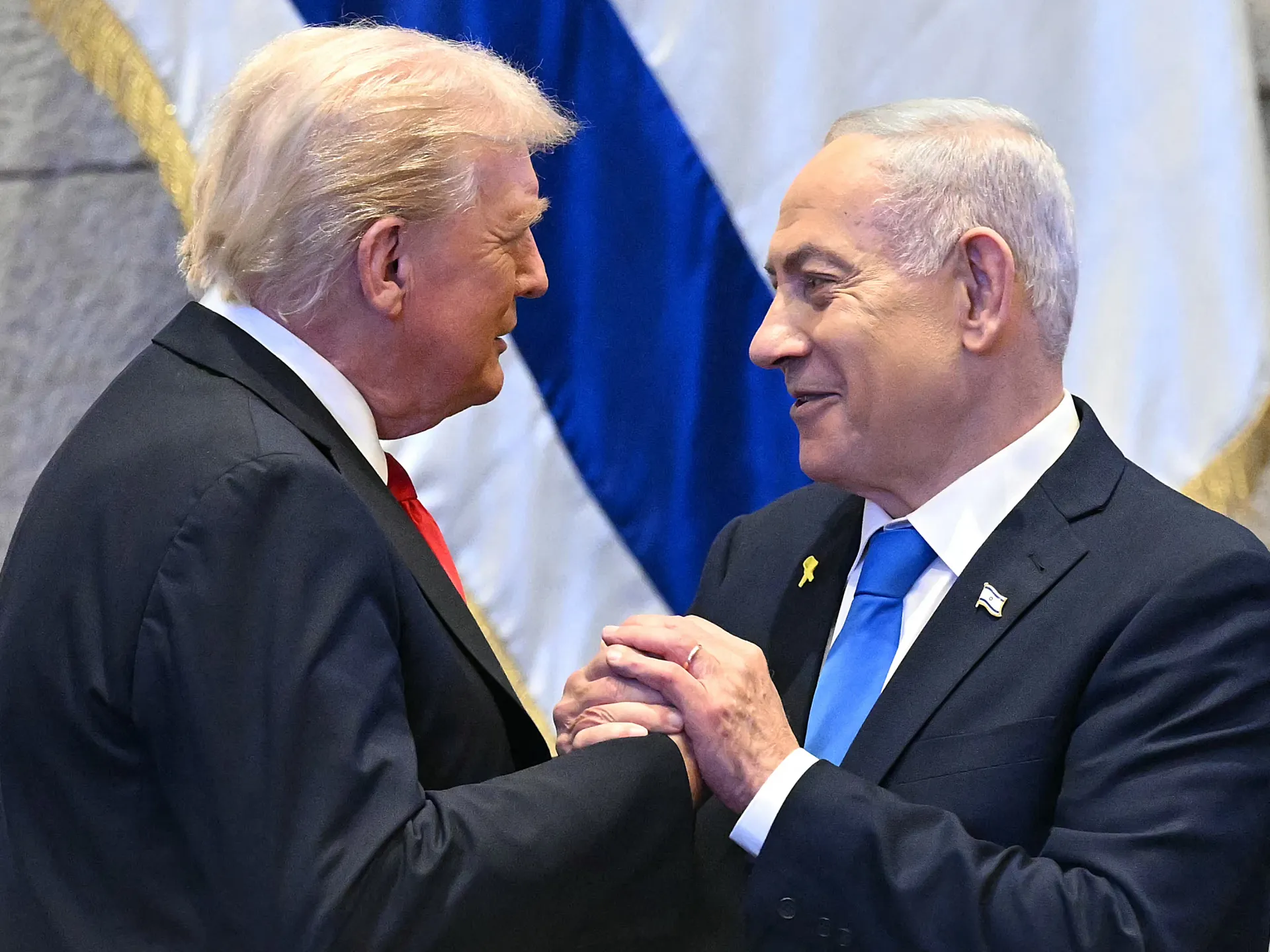
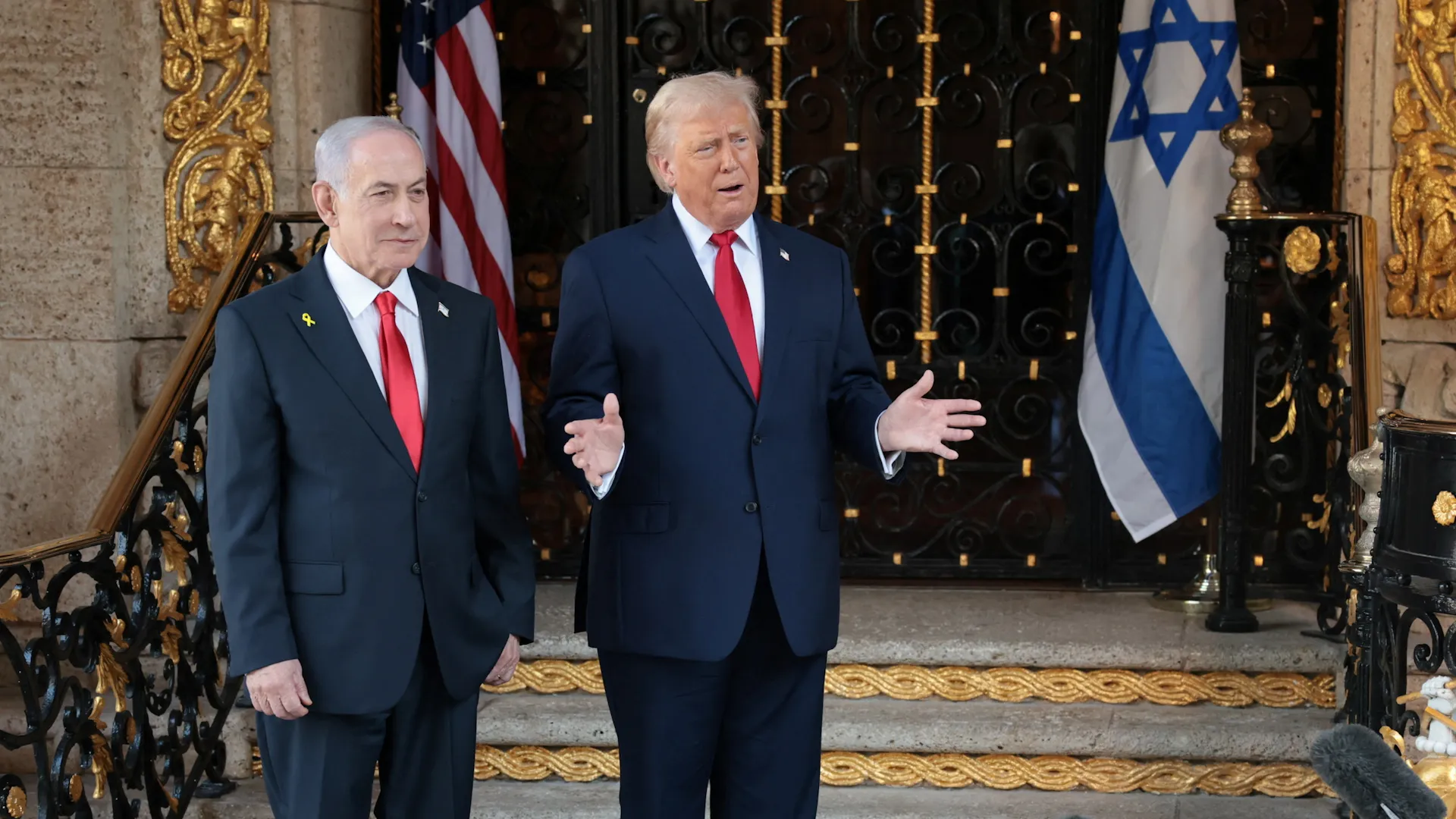
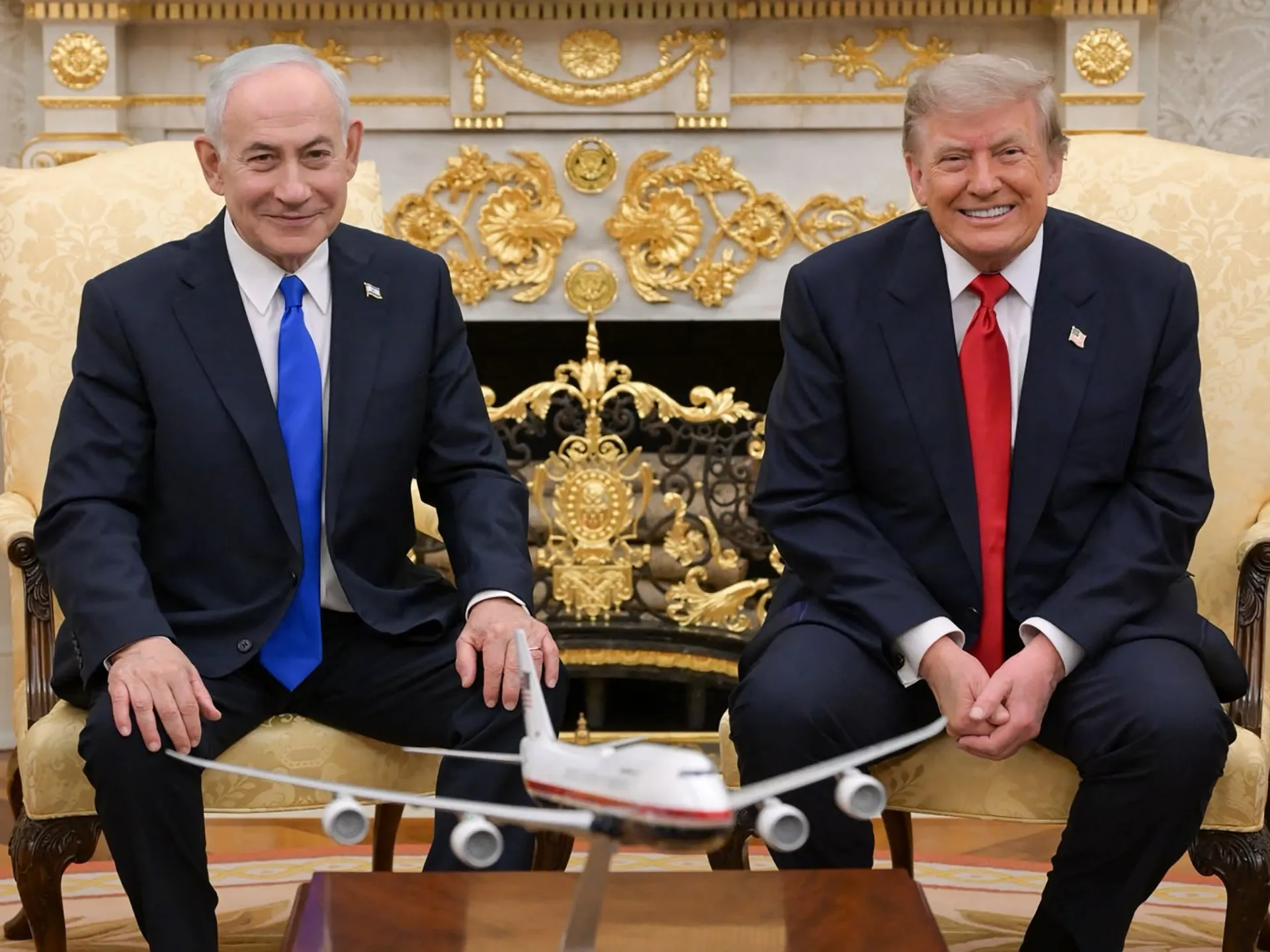
US President Donald Trump (R) and Israeli Prime Minister Benjamin Netanyahu shake hands [File: AFP]
Trump praised the prime minister for being an ally of the US in its war on Iran. He added that Netanyahu had his “Complete and Total Endorsement”.
“BIBI NETANYAHU WILL NEVER LET YOU DOWN!” Trump wrote.
Netanyahu’s religious-nationalist coalition is projected to lose its governing majority, although the opposition may also struggle to form a government, opinion polls suggest.
US Vice President JD Vance, however, declined to endorse Netanyahu in an interview earlier on Monday, saying he was not getting involved in Israeli elections.
“I endorse American candidates, and that’s where I’m focused on is the midterms,” Vance, who travelled to Budapest and endorsed Viktor Orban in Hungarian elections earlier this year, said in an interview with digital media outlet 2WAY.
“I’m not anti-endorsing him, but I’m not pro-endorsing him; I’m not getting involved in Israeli elections,” Vance said.
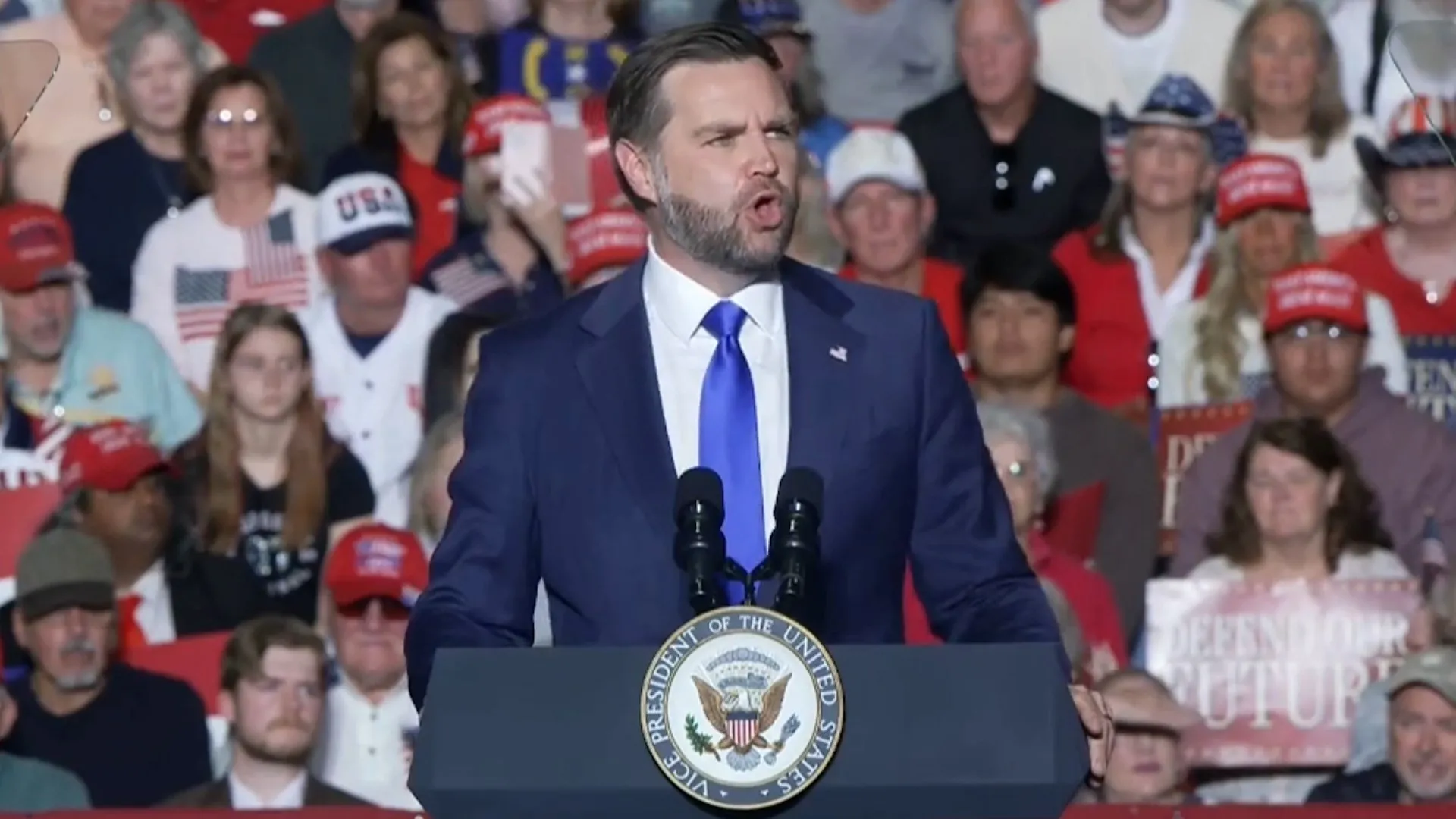
A protester demanding the release of the Epstein files interrupted US Vice President JD Vance at a North Carolina rally for Republican midterm candidates. After claiming illegal border crossings had fallen to zero, Vance joked that the protester was one who had slipped through.
First Lady Melania Trump has championed the executive action as a ‘transformative moment’ for US women’s health.
Published On 19 Oct 202619 Oct 2026
United States President Donald Trump has signed an executive order that will establish a dedicated women’s health division within the National Institutes of Health (NIH), as well as a White House task force focused on the subject.
During a signing ceremony in Washington on Monday, First Lady Melania Trump praised the initiative as setting “a new standard for women’s health in America”.
Recommended Stories
list of 3 itemsend of list
“This is a transformative moment for women in America. Beginning today, we will change the reality of women’s health,” she said.
“Previous generations fought for women’s rights. Our generation will fight to discover the cures that will ensure a woman can live her life in health and to the fullest.”
The newly minted project, spearheaded by the first lady, requires the new health division to be established within 90 days.
It aims to accelerate scientific discoveries, expand clinical access for women’s health and modernise care throughout every stage of a woman’s life.
The new division at the NIH will not replace the agency’s Office of Research on Women’s Health but will have a broader mandate beyond research, according to the White House.
Melania Trump gestured to “super intelligence, advanced biotechnology and groundbreaking therapies” as tools that offer a “unique chance to reinvent women’s healthcare”.
The first lady’s office has identified “five pillars” for innovation in the field. One involves funding targeted research to develop cures for diseases that affect women, such as endometriosis.
Another calls for a quicker timeline for “promising therapeutics” to reach female patients.
“In 2026, medical advances can do more than just prolong life,” said Melania Trump. “It should give women the freedom to live life to its fullest, to pursue our dreams, experience love, discover, create, travel and lead.”
The White House task force will be co-chaired by the newly cancer-free White House Chief of Staff Susie Wiles, as well as Health and Human Services (HHS) Secretary Robert F Kennedy Jr.
While Monday’s executive order mandates that the HHS must fund the administrative costs of the task force, the order itself does not include any specific funding targets or dollar amounts.
Experts have noted that Melania Trump has kept a relatively low profile during Trump’s second term.
Her public appearances have been fewer than during Trump’s first term, though she has stepped into the public spotlight to promote improvements to foster care and the role of technology, such as artificial intelligence in education.
During Trump’s first term, the first lady launched the “Be Best” campaign focused on child well-being, safe social media and countering opioid abuse.
But critics have questioned how effective Monday’s executive order might be, given the cuts Trump has made to the federal workforce since his second inauguration.
Thousands of employees have been laid off at the NIH alone, with Kaiser Health News reporting that its workforce is at its lowest level in decades.
The NIH was also given a deadline to slash spending by 35 percent across all of its divisions, amounting to a massive $2.6bn budget reduction.
In April 2025, the HHS drew widespread condemnation and a multi-state lawsuit after abruptly moving to terminate regional contracts for the Women’s Health Initiative, the nation’s largest longitudinal study on older women’s health at the time.
Critics warned that the move would jeopardise life-saving research on cardiovascular disease, cancer and osteoporotic fractures for senior women.
US federal prosecutors allege the defendant was in frequent contact with unnamed member of royal family.
Published On 19 Oct 202619 Oct 2026
An ex-OpenAI engineer accused of planting a recording device in an executive conference room at the AI company appears to have received considerable support from the Saudi government, United States prosecutors have said in a court filing.
Federal prosecutors allege that the defendant, Abdulrahman Alfozan, 35, was in frequent communication with an unnamed member of the Saudi royal family and that a Saudi military official paid for a one-way plane ticket for Alfozan’s wife and young son to return to Saudi Arabia after his arrest, according to the court document, made public late on Sunday.
Recommended Stories
list of 4 itemsend of list
Prosecutors made those allegations as they asked a federal judge to keep Alfozan in US custody to await trial, arguing he is a flight risk. Alfozan, a Saudi national and lawful permanent resident in the US, is scheduled to appear in federal court in San Francisco later on Monday.
The case has highlighted security challenges around sensitive AI research as companies and governments compete fiercely for an edge in the transformational technology.
“The defendant went to significant lengths to create customized, encrypted recording devices to secretly record highly sensitive meetings involving senior OpenAI personnel and executives, high-level business counterparts, and government officials, all while communicating with individuals of significance in Saudi Arabia and pursuing opportunities in — and making plans to travel to — Saudi Arabia,” prosecutors wrote in a detention memo.
The Saudi government media office did not immediately respond to a request for comment. A lawyer for Alfozan did not immediately respond to a request for comment.
The lawyer, William Pernik, previously asked for Alfozan to be released from custody, subject to conditions including location monitoring and surrendering his passport, and said Alfozan had spent the last 15 years in the US and had applied to become a citizen.
The lawyer said a planned trip by Alfozan to Saudi Arabia this month was booked before he was under investigation and was for “family and immigration reasons”, according to a court filing.
Investigation remains active
US prosecutors charged Alfozan last week with using an electronic device to intercept oral communications. Alfozan plugged a recording device into the back of a television in an executive conference room at one of OpenAI’s San Francisco buildings, according to a criminal complaint.
Meetings involving government officials took place in the conference room around the time the device was installed, according to the prosecutors’ detention memo.
Prosecutors said the investigation remains active and additional charges could be brought against Alfozan.
A member of the Saudi royal family sought to recruit Alfozan for an AI-focused role in Saudi Arabia, writing in one message, “Saudi needs you more then [sic] the US!” Alfozan replied, “100,” according to messages cited by prosecutors.
Before his arrest, Alfozan was scheduled to fly to Riyadh during a planned two-month parental leave. His wife told investigators that she and their son planned to move permanently to Saudi Arabia and that Alfozan eventually intended to join them, according to prosecutors.
In an Arabic-language interview on the Identity Capital podcast last month, Alfozan said that he visits Saudi Arabia three or four times a year, follows developments there and advises or mentors Saudi startups.
He said meeting Prince Mohammed bin Salman, then deputy crown prince, during a 2016 gathering with young Saudi tech workers in Silicon Valley persuaded him to learn at a top tech company before bringing those skills back home.
While Alfozan was working at Facebook, he and other Saudis in Silicon Valley formed a consulting initiative that linked Saudi public- and private-sector organisations with expertise in big data, the internet of things and machine learning.
OpenAI previously said it discovered the device on September 30 and referred the matter to the FBI.
Al Jazeera has reached out to the Saudi embassy for comment.
Chuck Schumer urges FCC to reject petition allowing AI robocalls ahead of key November midterm elections.
Published On 19 Oct 202619 Oct 2026
United States Senate Democratic leader Chuck Schumer of New York has urged the Federal Communications Commission (FCC) not to approve a petition by the conservative group Club for Growth to allow AI-generated robocalls ahead of the November midterm elections.
“Under this change, campaigns could use their opponents’ voice to send out a message that is, at best, disingenuous and, at worst, a blatant lie,” Schumer said on Monday.
Recommended Stories
list of 4 itemsend of list
The petition was originally filed on August 31, and the public comment period began on September 4 and expires on Monday.
Earlier this month, Anna Gomez, the Democratic member of the FCC, urged her colleagues not to allow consideration of the petition brought by the national conservative fiscal policy organisation.
Her concerns echoed Schumer’s. “[If] the FCC allows a dark money group to flood Americans’ phones with AI-generated robocalls they never agreed to receive, it would bring chaos so close to Election Day,” commissioner Gomez told the Reuters news agency at the time.
There is precedent for the concerns being raised. In the 2024 presidential election, ahead of the New Hampshire primary, voters received an AI-generated version in the voice of President Joe Biden, the then Democratic incumbent, telling them not to vote. The FCC said that a political consultant working with longshot primary challenger Dean Phillips was responsible.
At the state level, Louisiana, Tennessee and Vermont passed laws this year requiring disclosures for AI-generated campaign phone calls. While robocalls have been used in political campaigns for years, FCC rules prohibit such calls to cellphones without prior consent, but the restrictions do not apply to landlines.
Club for Growth’s president, David McIntosh, in a statement earlier this month, said that the group is asking for “the FCC to treat First Amendment-protected political speech the same way it already treats wireless calls about package deliveries, bank accounts, and doctor’s appointments”.
“There is no one at the FCC that has expressed any interest in moving to an order on this or any of the petitions, and there are zero plans to do so. The FCC seeks comment on petitions that come in as a matter of normal procedure,” a spokesperson for the FCC told Al Jazeera.
United States President Donald Trump has announced his official endorsement of Israel’s Prime Minister Benjamin Netanyahu’s election campaign after previously refusing to endorse anyone.
Trump posted on his Truth Social platform on Sunday that Netanyahu had been a “great warrior prime minister and an even greater partner for peace”, adding that Iran had been “systematically destroyed both militarily and financially, and unless they change their ways, rapidly, we will soon finish the job.”
Recommended Stories
list of 3 itemsend of list
“If Israel has the wrong Leader, which would be anyone other than Bibi, America will have to do this work ourselves, and I am not inclined to do so,” Trump wrote.
“Bibi Netanyahu has been Strong, Brave, and Brilliant in the face of tremendous opposition, including that coming from even Israel, itself. Despite all of that, he has endured and, in fact, he has thrived!”.
The president added that normal men and women would have “wilted” under the pressure that Netanyahu was under, but the Israeli prime minister “got stronger”.
“This is the kind of Partner that the United States of America is demanding of Israel, a Country for which it has done so much. Please let this Letter serve to represent my Complete and Total Endorsement of Bibi Netanyahu in his upcoming Race for Re-Election as Prime Minister of Israel. BIBI NETANYAHU WILL NEVER LET YOU DOWN!”, he added.
The Israeli election will be on October 27 . According to Israeli news outlet Haaretz’s tracker, as of Sunday, the opposition alliance led by the Yashar party of Gadi Eisenkot is expected to win the most seats, at 52, with Netanyahu’s Likud party-led coalition taking 51 of the 120 seats in the Knesset.
So far, no party is projected to secure an outright majority.
But Trump’s endorsement comes after he had previously shied away from fully backing Netanyahu’s election campaign.
Earlier this month, when asked twice by TIME magazine if Netanyahu should be given another term, Trump pivoted to his own popularity in Israel and Washington’s actions supporting Israel.
When asked on Thursday by the right-wing US news outlet, Newsmax, if he was planning to get involved in the Israeli elections, Trump said: “They’d like me to be. Yeah, they’d like me to be”.
When asked whether he trusted Netanyahu, Trump replied, “I don’t trust anybody, honestly”.
Still, Sanam Vakil, director of the Middle East North Africa programme at the British think tank Chatham House, explained that Trump’s endorsement of Netanyahu was “politically significant” because it comes after months of tension between the two leaders.
“It allows Netanyahu to reinforce his claim that he is indispensable to Israel’s relationship with Washington,” Vakil told Al Jazeera.
“However, its electoral impact should not be overstated. Israeli voters remain divided over Netanyahu’s leadership and the outcome of the Iran war. The endorsement may help consolidate his existing support, but it does not resolve the wider questions surrounding his record,” she added.
Andreas Krieg, senior lecturer at the school of security studies at King’s College London, said that Trump’s endorsement was a “political gift” to Netanyahu, whose electoral campaign is struggling.
But like Vakil, he cautioned against treating Trump’s endorsement as a game-changer.
“Netanyahu’s problems are structural, involving fragmented right-wing parties, disillusioned ultra-Orthodox voters and the legacy of October 7. Trump may mobilise reluctant Likud voters, potentially worth a seat or two in a close contest, but he cannot manufacture the coalition majority Netanyahu currently lacks,” Krieg told Al Jazeera.
What the endorsement means for the Iran war
Much of Trump’s endorsement has been heavily focused on the Iran war, at a time when many analysts suggest the US president might be looking to restart attacks, either before or after the midterm elections in early November.
The conflict, which began in February after the US and Israel launched attacks across Iran, is currently at a standstill.
The Strait of Hormuz, which once transported 20 percent of global crude, was effectively shut by Iran after the war started. A US naval blockade of Iranian vessels followed, as each country struck ships passing through the waterway that they accused of not complying with its orders. Oil traffic last month through the strait picked up to pre-war levels as the US Navy shepherded an increasing number of tankers. But a spate of Iranian attacks on vessels early this month has again hit crude exports through Hormuz.
On Monday morning, Brent crude futures stood at $107.57 a barrel, down slightly after reaching their highest since May 19 on Friday, when they briefly touched $110 a barrel.
Last month, Iran presented a proposal to Washington to reopen the waterway within seven days, but negotiations failed after the US did not address Tehran’s seven conditions, which included the lifting of sanctions and the ending of its naval blockade.
Foreign Minister Abbas Araghchi told Iranian media outlets on Sunday that the proposal remained on the table and, if Washington accepts Tehran’s conditions, the strait could reopen within six days, with talks resuming the following day.
At the same time, Araghchi, in a post on X on Sunday night, accused Netanyahu of wanting to restart attacks on Iran with the US to “stay out of jail”.
“Last time you wanted to ‘finish the job’, Iran emerged even stronger. Want to try your luck again? Be our guest. But be careful; we have unfinished jobs too,” he wrote.
“Netanyahu is driving America into another war to stay out of jail, whatever the consequences for Israel – let alone POTUS,” he added.
Krieg said Trump was prioritising the use of “coercive leverage” through his endorsement of Netanyahu but not necessarily “war over diplomacy”.
“The naval blockade is hurting Iran considerably and Washington believes time is working in its favour. Trump’s calculation is that Iran will eventually accept nuclear concessions and reopen Hormuz, without Washington having to offer significant concessions first,” he argued.
“His endorsement reinforces the military threat underpinning that strategy. But it does not mean diplomacy is finished. Trump still wants a deal he can present as a victory. The danger is that Tehran increasingly believes it must escalate to improve its bargaining position.”
What is next?
Vakil explained that, while Trump’s declaration of support for Netanyahu had signalled renewed political alignment with Israel and left the door open for future joint military action, it also makes it “harder for Trump to distance himself from the war or portray the US as having been reluctantly drawn into it”.
“He is explicitly taking ownership of the partnership and its military campaign against Iran. However, the endorsement does not necessarily mean that the two leaders have agreed on another operation, nor does it settle the question of who initially pushed hardest for war,” she said.
Vakil added that for Tehran, the statement will reinforce the belief of Iranian leaders that there is “little meaningful distinction between US and Israeli objectives.”
“At the same time, Trump’s suggestion that he is reluctant to confront Iran without Netanyahu could be interpreted as evidence of the limits of Washington’s appetite for another war.”
Meanwhile, while Trump has said that he would not attack Iran before the November midterms, several US media outlets have reported that the Pentagon has drawn up plans to relaunch attacks before voters head to the polls.
Last week, US news outlet Axios reported, citing both US and Israeli officials, that both Trump and Netanyahu had spoken about launching a major new operation against Iran ahead of the elections in both countries.
For Krieg, the likelihood that the US and Israel launch an attack on Iran remains low, assuming there is no Iranian strike that forces a response.
“The more dangerous window opens after November 3 [US midterms], when those electoral constraints disappear. Both militaries are preparing for that possibility. The greatest immediate risk is an uncontrolled escalation in Hormuz that forces Washington’s hand before either leader is politically ready,” he said.
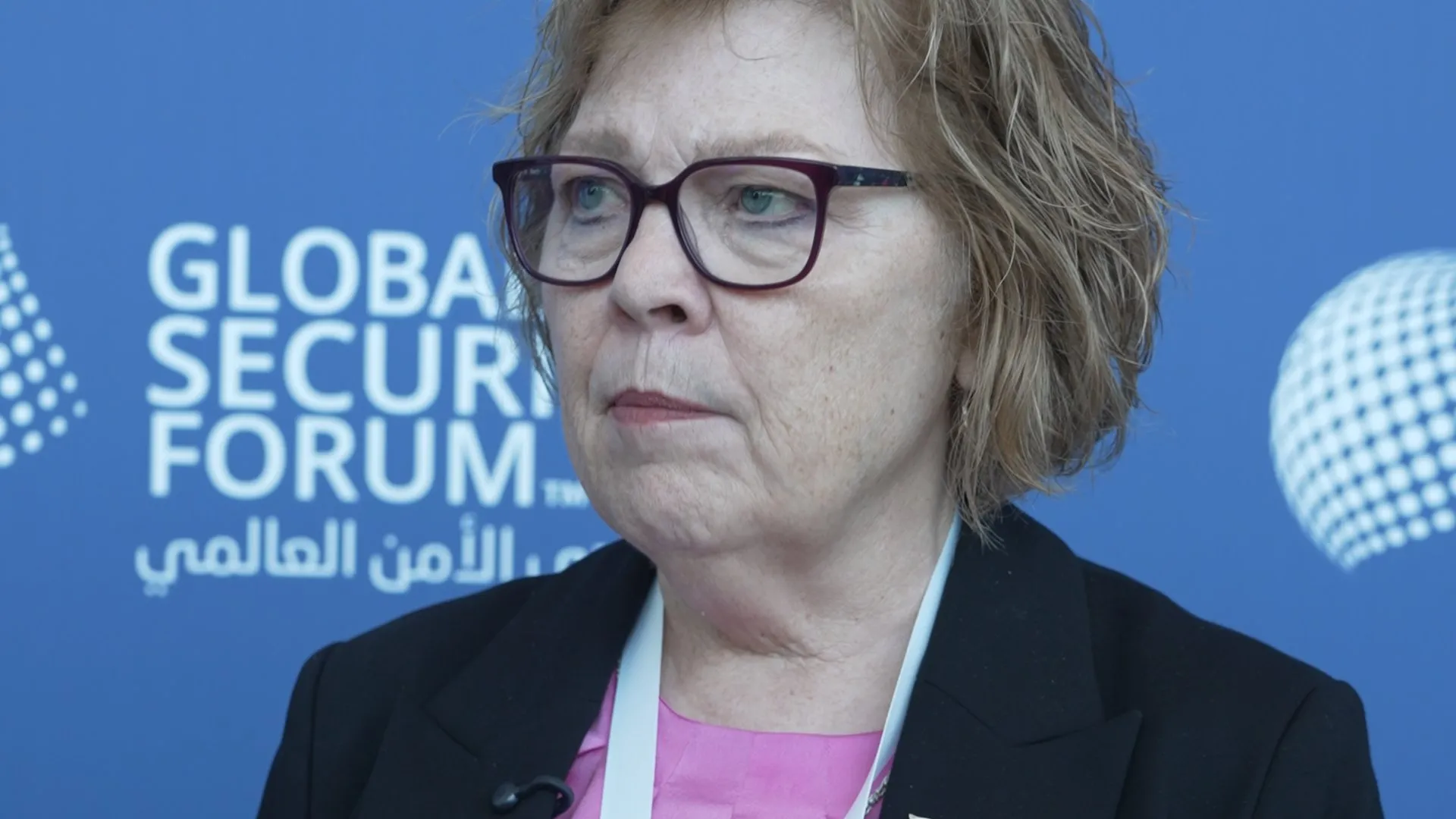
Barbara Leaf, former US Assistant Secretary of State for Near Eastern Affairs, tells Al Jazeera that public opposition to the war with Iran could threaten Republican control of Congress, as economic fallout fuels voter anger.
Doha, Qatar — Qatar’s deputy prime minister has warned that global energy shockwaves from the US-Israel war on Iran have yet to reach their peak, raising concerns about further disruption to supplies, international trade and economic growth.
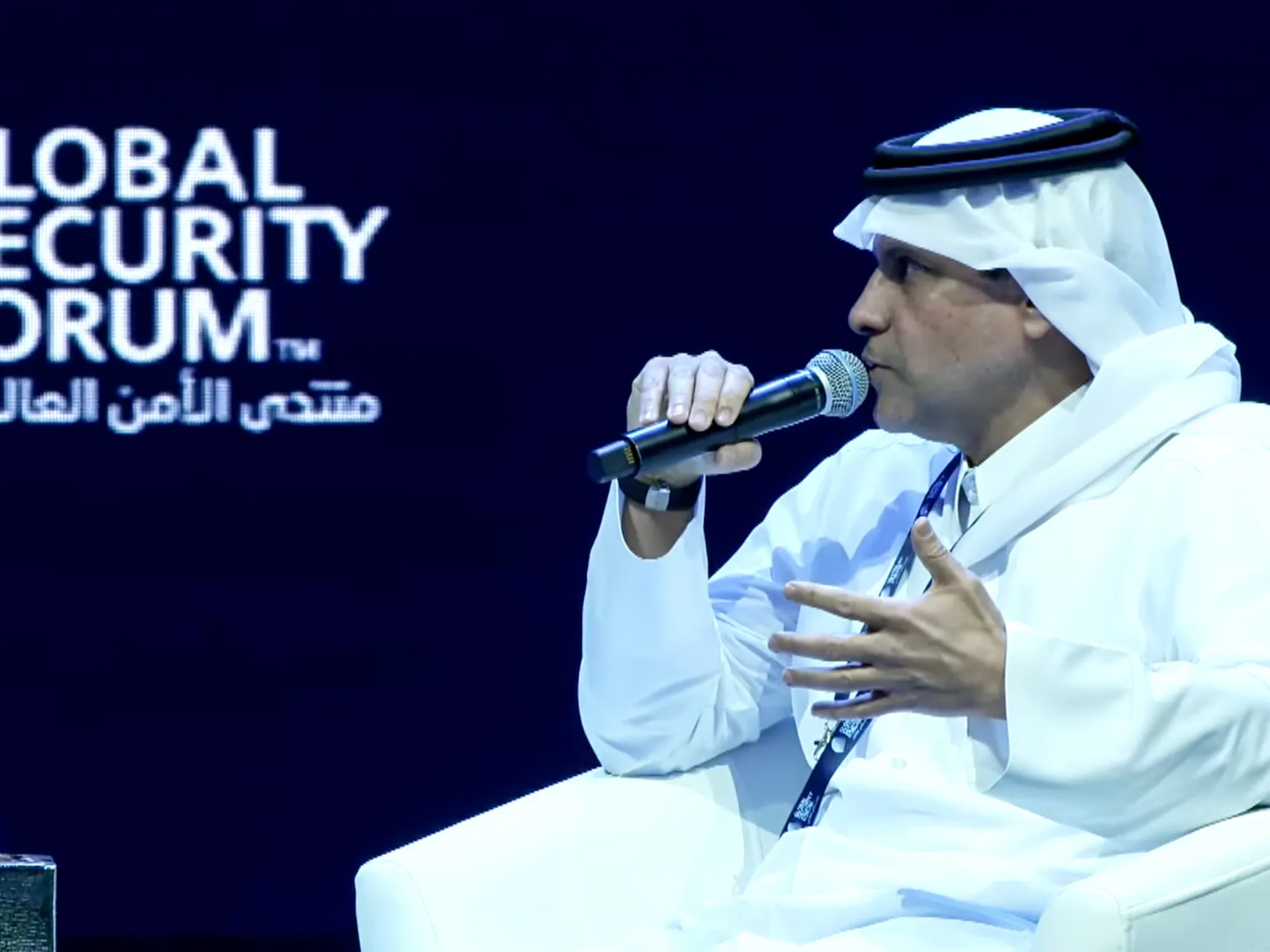
Speaking at the Global Security Forum in Doha on Monday, Sheikh Saoud bin Abdulrahman Al Thani, who also serves as Minister of State for Defence Affairs, identified several threats facing Qatar and the wider Gulf, including risks to sovereignty and disruptions to energy supplies.
Recommended Stories
list of 3 itemsend of list
“We haven’t reached the peak with respect to energy,” he said, warning of further repercussions “in the coming days and months”.
His remarks come amid continued instability in the Strait of Hormuz – a vital waterway for global oil and liquefied natural gas (LNG) shipments – following the US-Israeli attacks on Iran on February 28, and Tehran’s retaliatory strikes across the region.
Iranian strikes on Qatar’s Ras Laffan industrial complex in March damaged facilities, with repairs expected to take several years.
“We were surprised,” Al Thani said when asked about the attack, adding that there had since been “a lot of discussion with Iran”.
He said Qatar had drawn lessons from the strikes, “to make sure that all of our assets will be protected from any unexpected attack”.
Al Thani also warned against imposing tolls on ships passing through the Strait of Hormuz.
“Transit fees should not be applied,” he said, adding that uncertainty over the waterway would ultimately affect consumers worldwide.
‘We never stop our communication’
Despite the attacks, Al Thani said Qatar continued to maintain contact with Tehran.
“We never stop our communication,” he said, adding that the two countries remained in touch at different levels despite their disagreements.
He described Qatar’s relationship with Iran before the attacks as one of trust, pointing to their shared offshore gasfield and longstanding economic interests.
Al Thani expressed hope that mediation efforts involving Qatar, Pakistan and Oman would help produce an agreement between the United States, Iran and other parties, including Israel.
He said a sustainable settlement would require broader regional dialogue involving Gulf Cooperation Council (GCC) countries, Pakistan and Turkiye, in consultation with international allies.
“We need to build this on trust,” he added.
Al Thani also suggested developing economic ties with Iran to prevent future conflicts, citing cooperation between France and Germany following decades of hostilities.
“Iran is our neighbour. We need to find ways to live with them,” he said.
US defence ties
Al Thani also highlighted Qatar’s longstanding defence partnership with Washington, saying that “more than 90 percent” of attacks had been prevented through shared expertise and military capabilities developed over the past three to four decades.
He said Qatar was continuing to develop Al Udeid airbase, which hosts US forces and military personnel from other partner countries.
The base was itself targeted by Iran during the conflict, with Qatar reporting that it had shot down two Iranian warplanes during an attack in early March.
Al Thani also announced plans for a new regional defence partnership, saying Qatar was prioritising several aspects including air defence, counter-drone measures and cybersecurity.
“I’m happy to announce today also that soon we’re going to announce a new partnership,” he said, without naming the regional partners involved.
The deputy prime minister stressed that Qatar’s mediation efforts did not diminish its commitment to defending its territory.
“Mediation doesn’t mean that we should not be ready for any defensive action from our side,” he said.
Cuba is once again in the United States’s crosshairs. Washington’s operation in Venezuela at the start of the year is largely seen to have paved the way for a similar undertaking on the Caribbean island. Recent media reports have revealed US military activity nearby while US officials have repeatedly said they want “Cuba to be free”.
When and how the US may strike is still unclear. But indications are that the Cuban Revolution may be nearing its end. That is reason enough to pause and reflect on the outsized role this nation of 10 million has played on the world stage.
When thinking of the Cuban presence on the global geopolitical scene, the figure of Eshu, the most powerful spirit in Cuban Santeria comes to mind. Derived from the beliefs of the Yoruba people, Eshu is a divine messenger, the guardian of the crossroads and mediator between the past and the future.
In stories, Eshu is often portrayed as a mischievous elder, one whose antics are used to teach humility and morality. As a character, Eshu is a classic trickster, an archetype commonplace to many traditions that functions to challenge established norms, subvert power structures and reveal hidden truths.
It’s hard to imagine a more apt analogy for Cuba than Eshu, the trickster, foil to US hegemony. At its best, trickster Cuba forced an open debate on what kind of world we might aspire to and held the empire to account, at times even pushing the US towards its better angels, however begrudgingly. At its worst, it held up an uncomfortable mirror to US power.
It is a potent formula, one struck upon from the very earliest days of the revolution. In September 1960, just a year after taking Havana, Cuban leader Fidel Castro found himself visiting New York to address the United Nations General Assembly. Wary of his anti-imperialist rhetoric, a Cold War-obsessed US government put pressure on several prominent hotels to refuse service to Castro and his entourage. But the Cubans were not to be deterred. Instead, they went uptown to Harlem and found a place at the Hotel Theresa.
Photographers and TV camera people flocked there. A media sensation ensued. And Castro used the opportunity to draw comparisons between the plight of the Cuban delegation and that of Black Americans being refused service in the segregated South.
This landed like a bomb in the middle of the burgeoning civil rights movement. It was an awkward contrast, not just because of the optics but because of the location, not in the heart of Jim Crow, but in a liberal northern city, New York, the cradle of American civilisation. This was the first, but not the last time that Cuba, the trickster, would strike.
In the following years, the revolutionary government developed its programme of Cuban Internationalism, which inevitably stood as a counter to US soft power efforts in the developing world through organisations like the Peace Corps and USAID.
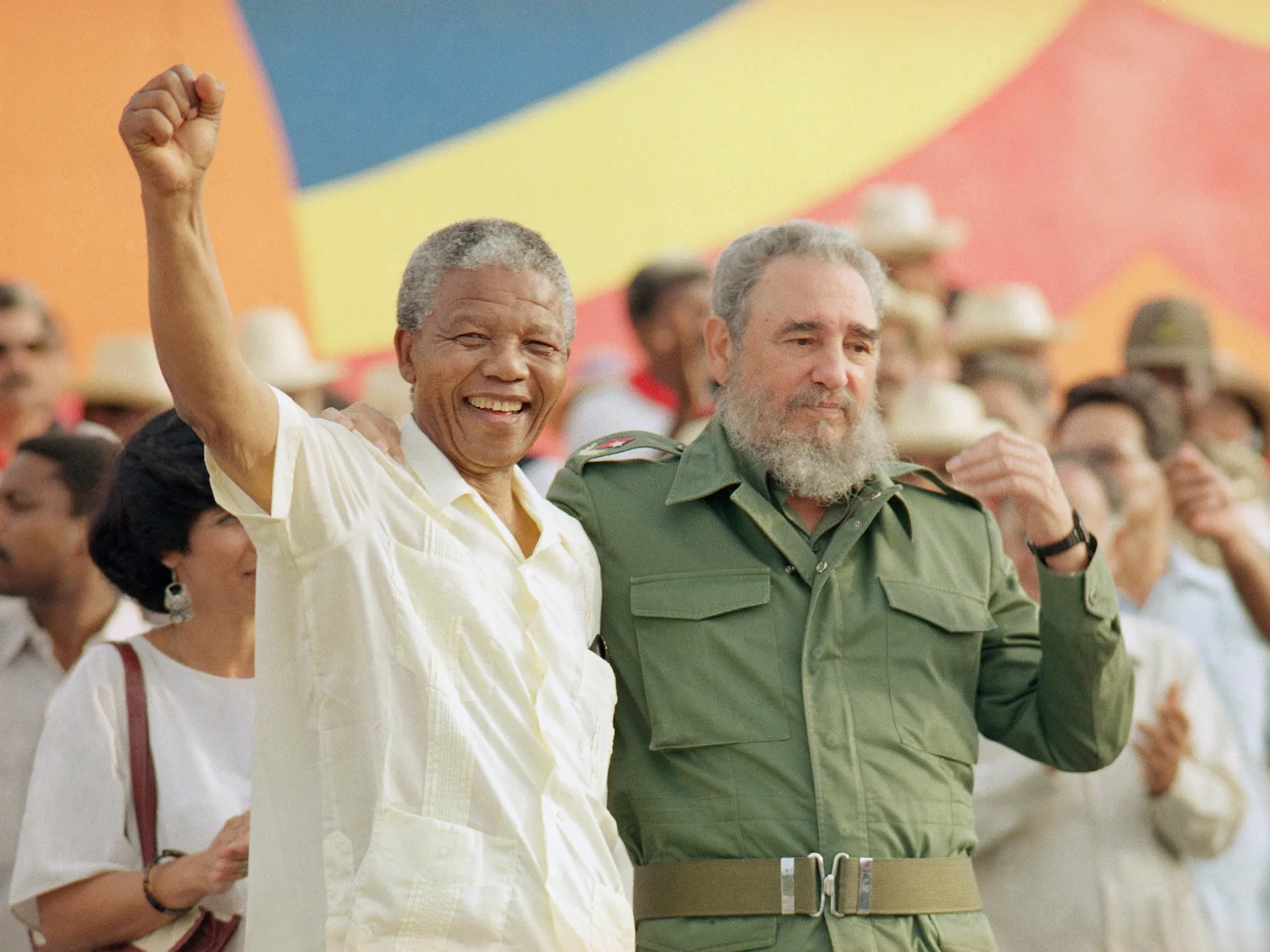
Cuba would send as many as 400,000 doctors, not to mention engineers, agricultural technicians and other professionals, to 164 countries across the world. This material solidarity garnered great affection for Cuba among many countries in the Global South, countries as disparate as Venezuela, South Africa and Vietnam, where characters like Castro and Che Guevara are as recognisable as national heroes like Simon Bolivar, Nelson Mandela and Ho Chi Minh. In these same countries, American leaders are remembered too, often in far less flattering terms.
Other examples of Cuba’s trickster antics abound. Perhaps most notable is the Cuban armed forces’ sound military defeat of the Bay of Pigs invasion, which, while carried out by Cuban exiles, was supported and funded directly by the CIA.
There is also the revolution’s support for the Palestinian liberation movement and the antiapartheid struggle even as the US provided diplomatic cover and military aid to Israel and the apartheid regime in South Africa.
From 1975 to 1991, more than 300,000 Cuban soldiers fought alongside forces in Angola, eventually emerging victorious in a proxy conflict with the US. Operation Carlota, as it was called, would not only liberate Angola and neighbouring Namibia, but it would precipitate the downfall of South African apartheid as well. According to former South African President Nelson Mandela, Cuba’s intervention in Angola “destroyed the myth of the invincibility of the white oppressor”.
Castro himself has carried the spirit of Eshu. The Cuban leader reportedly survived more than 600 assassination attempts and died of natural causes at the age of 90.
And there are the many ways that Cuba has defied the “third world” label so often foisted upon it by beating the US in literacy rates, infant mortality and life expectancy at various points in its revolutionary history.
But beyond all of this, there is the sheer fact of the revolution’s survival. For more than 60 years, the US has imposed a severe economic embargo against the island. The embargo – the world’s longest – has been intensified at various points, specifically after the fall of the Soviet Union as Cuba reeled from a profound economic crisis.
Despite this regime of maximum pressure from the world’s largest superpower, the revolution nevertheless persevered through the crisis of the 1990s by diversifying and liberalising the economy and by drawing upon its well-established programme of internationalism in the Global South. Not only that, but it managed a nationwide sustainable agricultural revolution in the process, a feat for any nation, but perhaps unsurprising for Cuba, given its trickster nature.
But tricksters also work in unexpected, even contradictory ways. Despite these accomplishments, the denial of political rights and the repression of the freedoms of expression and assembly have been the Cuban Revolution’s greatest failings.
Such dynamics have long been pointed to by detractors as evidence of Cuba’s inherent authoritarian nature. But in this regard, Cuba is not the US’s opposite, but rather its peer.
The US in 2026 is a country facing its own rash of unfreedoms: comical levels of corruption; the erosion of democratic institutions; the embrace of AI and the panopticon surveillance it enables; continual attacks on free speech, voting rights and the media; extrajudicial killings of US citizens by masked agents of the state; and an increasingly monarchical presidency. All of which is to say nothing about the spectre of the infamous detention facility at Guantanamo Bay, still home to 15 detainees from the “global war on terror”, raised once more in relation to President Donald Trump’s brutal immigration crackdown.
One cannot help but be struck by the ways that the Trump administration appears to emulate countries like Cuba or Russia or Iran that it rhetorically maligns.
But in this way, Cuba carries on in its role as the foil to American power. In its repression, it reflects the creeping authoritarian inclinations that characterise the Trump administration. Tricksters, after all, are themselves morally ambiguous. And if the greatest flaw of the US has always been that it fails consistently to live up to its most laudable ideals, then in this sense, it is no different to Cuba and its revolution.
With the US poised and ready and with the conditions in Cuba deteriorating rapidly, we may be witnessing the final days of the revolution. That begs the question: When the day comes that Eshu no longer guards the crossroads, what then? What becomes of the world when there is nothing but unquestioned empires and techno-feudal overlords? Without tricksters to confound their power, will we revert to the revanchist past or tumble into some kind of dystopian future?
If and when the revolution finally falls, there will no doubt be cheering on the streets of Miami. But there will be tears elsewhere – tears not just for the revolution, but for the alternative that it represented, however flawed. Perhaps if the US had listened more or differently, they would have heard the lesson that Eshu was trying to teach.
The views expressed in this article are the author’s own and do not necessarily reflect Al Jazeera’s editorial stance.
US President Donald Trump has issued an official endorsement of Israel’s Prime Minister Benjamin Netanyahu for the upcoming Israeli election. Al Jazeera’s Patty Culhane reports from Washington DC.
A grass fire, fanned by strong winds, is being blamed for the Canadian military base tragedy in Alberta. Four armed service members were killed during what was a training exercise with 19 reported in critical condition in hospital.
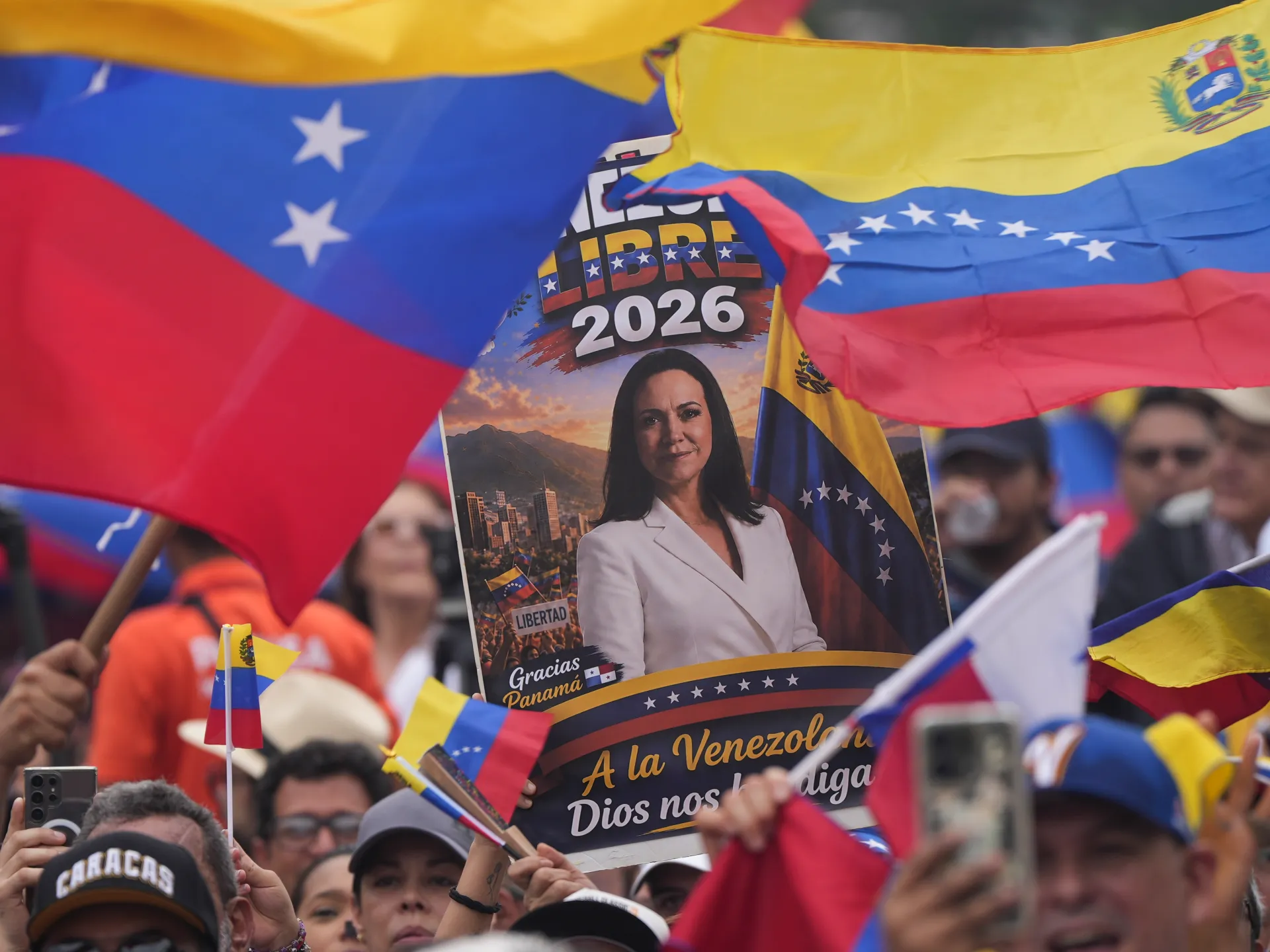
An alliance of Venezuelan opposition parties has reaffirmed its commitment to exiled Nobel Peace Prize laureate Maria Corina Machado as its leader.
On Sunday, members of the opposition’s Unitary Democratic Platform (PUD) agreed in a meeting in Caracas to “recognise and support the leadership of Maria Corina Machado”.
Recommended Stories
list of 3 itemsend of list
The coalition also renewed its demand for free elections in Venezuela, following a series of contested presidential votes in 2024 and 2018.
Sunday’s statement included 14 proposals for a democratic transition, including freedom for political parties, the release of all political prisoners and the safe return of those who went into exile.
The announcement also increases pressure on authorities to allow Machado’s return. She has been living in exile since leaving Venezuela last December to receive her Nobel Prize.
“The will of the Venezuelans must once again govern the destiny of our nation,” the opposition’s former presidential candidate Edmundo Gonzalez wrote on social media supporting the proposals.
“We will not accept political prisoners, persecution or a governing power that disregards the mandate of its citizens. Living in freedom and under a genuine constitutional order is a legitimate demand of our society.”
No election set
Venezuela has yet to declare a date for a new presidential vote. Since January 3, the country has been led by interim President Delcy Rodriguez of the long-governing United Socialist Party of Venezuela (PSUV).
PSUV leaders have been accused of carrying out human rights abuses against political dissidents, including arbitrary arrest, imprisonment and torture.
Still, after the United States launched a military operation to abduct and jail former President Nicolas Maduro, the PSUV has remained in power with the support of the White House.
US President Donald Trump has backed Rodriguez’s leadership, despite her having been Maduro’s vice president.
His administration has maintained an active role in Venezuela, exerting control over its oil resources and pressuring the Rodriguez government for reforms.
But critics point out that Trump has been reluctant to push Rodriguez for new elections, opting instead for a three-phase plan that focuses first on stabilising the country and economic recovery before pursuing a political transition.
Machado, meanwhile, has told The Financial Times she would like to see Venezuela hold elections by July next year.
“The US government and the Venezuelan people all agree that the only way to make this sustainable and a real victory is to turn Venezuela into a stable democracy,” she told the newspaper earlier this month.
A thwarted return
Venezuelan authorities blocked Machado’s repeated attempts to return to the country, according to her party, Vente Venezuela.
Machado has also reportedly attempted to petition the Trump administration for help re-entering Venezuela.
Separately, she gifted Trump her Nobel Peace Prize in January, during a visit to Washington, DC. Media reports, however, have suggested friction between the Trump administration and Machado.
In interviews with Reuters and Axios, US administration officials have anonymously expressed frustration with the opposition leader’s repeated efforts to return home, particularly after a pair of deadly earthquakes in Venezuela last July.
Axios quoted one official as calling Machado’s push “political opportunism”.
Machado, however, remains one of the most popular figures in Venezuela’s opposition.
In October 2023, Machado won the opposition coalition’s presidential primary, but in January 2024, Venezuela’s courts blocked her from running in the upcoming race.
The courts upheld a 15-year ban on her holding public office, reportedly due to her support of US sanctions against the Maduro government.
Gonzalez ultimately replaced Machado as the opposition candidate in the 2024 race. Maduro claimed victory for a third term as Venezuela’s president in that election cycle, despite widespread criticism that the vote did not meet democratic standards.
The opposition released vote tallies that appeared to show Gonzalez had won the race.
The US had recognised Gonzalez as the country’s rightful president-elect and denied the legitimacy of Maduro’s election claims.
Machado was previously removed from the National Assembly in 2014, due to her activism against the Venezuelan government.
A third round of talks between the Rodriguez government and the opposition began in Venezuela this month.
But instead of including Machado, the negotiations have involved members of the 2015 National Assembly, which was led by the opposition and dissolved under Maduro.
Still, in a statement this month, the US State Department praised the talks as aiding the Venezuelan government’s reform.
“Political reconciliation talks between the interim Venezuelan government and 2015 National Assembly representatives are producing tangible reforms in civil liberties and political rights, laying the groundwork for credible elections and a democratic transition,” the State Department said.
Cory Morgan has spent more than 25 years fighting for Canada’s oil-rich province of Alberta to become an independent country. On Monday, Albertans will head to the polls to vote on the issue for the very first time. But even if the answer is no, Morgan said he’s in it for the long haul.
“I would respect the will of the voters,” he told Al Jazeera. “If they’ve decided it’s not time to go that route yet, then so be it. But that doesn’t mean I’ll stop.”
Recommended Stories
list of 4 itemsend of list
Morgan, the founder of the advocacy organisation Pathway to Independence, is among a group of longtime separatists who have managed to push what was once a fringe idea onto the ballot.
Monday’s provincial referendum asks Alberta residents to weigh whether they would like to pursue a binding resolution in the future on the question of independence.
Polls indicate the pro-independence side has little chance of succeeding, with four of five people in the province saying they want Alberta to remain a part of Canada. But Morgan’s focus is on the one in five who don’t.
“That’s not a movement that’s leaving,” he said.
What the referendum will mean for the separatist movement and for Canada as a whole, however, is a more complicated question.
What exactly are Albertans voting on?
Monday’s ballot gives Albertans two options: to remain part of Canada or begin the legal process for holding a future referendum on separation.
A vote in favour of the second option doesn’t mean Alberta immediately becomes an independent country.
Any province that tries to secede would first have to go through complex negotiations with the federal government in Ottawa, other provinces and Indigenous peoples who live in and around Alberta.
Some separatist organisers have been using that distinction to encourage people to vote for the referendum — even if they don’t necessarily want independence.
“Strategic separatists and their leaders have been using that ambiguity, that lower-bar threshold, to entice folks to vote not to leave, but rather to send Ottawa a message that Albertans need to be heard,” said Jared Wesley, a political science professor at the University of Alberta.
He told Al Jazeera that the message may be resonating with some voters.
Data collected by Viewpoint Alberta, a University of Alberta-based research initiative, suggests that two-thirds of voters who support the referendum say they’re doing so for strategic reasons, to send a message to Ottawa.
These are people Morgan calls “reluctant separatists”, people who are “at the end of their rope” and simply want Ottawa to pay attention.
But Prime Minister Mark Carney has warned Albertans against this strategy.
“Don’t be fooled by the idea you can ‘send a message’ with your vote,” he told a pro-Canada rally in Calgary on Thursday. “This is not poker. A vote against Canada is a dangerous bluff that will lead to years of deep division and great uncertainty.”
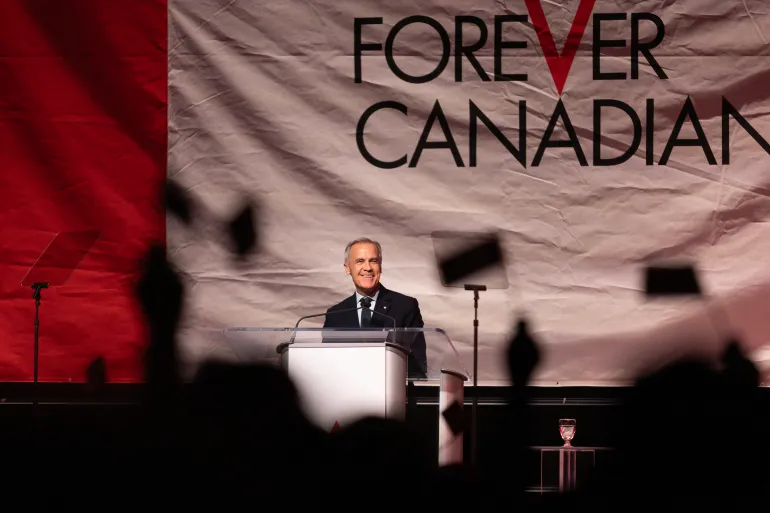
Canadian Prime Minister Mark Carney speaks at a rally hosted by the advocacy group Forever Canadian at the Edmonton Expo Center in Edmonton, Alberta, on Friday [AFP]
What’s driving Alberta’s separatist movement?
Monday’s referendum has been decades in the making. Separatists have long felt that Alberta, home to the world’s fourth-largest proven oil reserves, sends too much money to Ottawa, subsidising the rest of the country while receiving little in return.
They also take issue with federal energy policies that they feel limit the potential of the province’s oil industry.
For Morgan, the resentment stretches back to the 1980s when the National Energy Program was introduced by the government of Pierre Trudeau, former Prime Minister Justin Trudeau’s father.
The policy used price controls, taxes and ownership rules to keep Canadian energy affordable while directing more of Alberta’s revenues to Ottawa.
It has since become a central symbol of “Western alienation”, a term used to describe the sense of disenfranchisement felt among Canada’s westernmost provinces.
Those tensions resurfaced decades later under Justin Trudeau, whose term began in 2015. His climate policies, including a national carbon tax and a limit on emissions, angered Alberta’s oil sector.
“We’ve been fighting about the same things for 50 years,” said Morgan.
Then came the COVID-19 pandemic. Experts say demonstrations against health restrictions mobilised a new generation of conservative activists, breathing new life into Alberta’s separatist movement.
Trudeau ultimately resigned as Liberal Party leader and prime minister in 2025, amid sinking poll numbers. Carney was elected his replacement.
Last year, under growing pressure from separatist groups, Alberta Premier Danielle Smith’s government made it easier to start referendums, helping bring the question of Alberta’s independence onto the political agenda.
For Wesley, the moment is less about growing public support for independence and more about pressure from within Smith’s governing United Conservative Party, whose members show higher support for separation than Albertans generally.
“We’re having a referendum because Danielle Smith wants us to have a referendum,” Wesley said. “She is looking to solve internal party matters by throwing a question to the broader public.”
Though she called Monday’s referendum, Smith has said she opposes the independence effort, and on October 14, she announced she had voted against seceding.
“In my view, now is not the time to give up hope in our country, not when we have fought so long and come so far,” Smith said in a social media video, explaining her vote.
Alberta Premier Danielle Smith speaks at the Canada Strong and Free conference in Calgary, Alberta, on Friday [Ahmed Zakot/Reuters]
Could defeat make the movement stronger?
Smith’s political gamble has drawn comparisons with the 2016 Brexit referendum in the United Kingdom, including from Carney.
At the time, then-UK Prime Minister David Cameron called a vote over whether the country should leave the European Union, in hopes of settling a debate dividing his own Conservative Party.
Voters ultimately chose to leave the bloc, triggering years of political unrest.
But Ian Cooper, a political scientist who grew up in Alberta and now lives in Ireland, says a more useful comparison might be a different UK referendum in 1975, when British voters chose overwhelmingly to stay in what was then known as the European Economic Community.
That vote, he said, did little to deter those who wanted the country out.
“The activists who were in favour of Brexit — this is before anybody called it Brexit — they really played the long game,” he said. “It took them 25 years, but they finally achieved it.”
Cooper suspects that, even if Alberta separation is roundly defeated, separatists could take a similar approach, pursuing the issue over the long term to gain prominence and support.
“My impression is that they really are true believers, and it’s really ideologically driven,” he said.
If Monday’s separatist vote fails, Morgan said separatists would need to take a hard look at why they had fallen short and work towards making a stronger case for independence in the future.
He does not believe the underlying grievances can be resolved by working within the Canadian system or by electing a more sympathetic federal government.
Carney, who grew up in Alberta, acknowledged at Thursday’s rally that “the frustrations that many Albertans have felt are real”. He added that Ottawa had made people in the province feel “like our resources weren’t our own”.
The prime minister has tried, amid an ongoing trade war with the United States, to improve relations with Alberta, including through commitments to building a new pipeline to Canada’s west coast and major infrastructure projects.
Morgan admits that, for those whose goal is simply to get more leverage in Ottawa, “it’s pretty clear the movement has been effective”.
“We’ve seen more love from a federal prime minister in the last year than we’ve seen in the last 10,” Morgan said. “The problem though, when it comes to stubborn independence folks like me, is nothing has changed in the system.”
Prime ministers come and go, he added. “We’re just one election away from another hostile one.”
Separatist organiser Cory Morgan speaks to Alberta separatist supporters at a meeting by Let’s Talk Alberta in Calgary, Alberta, on October 13, 2026 [Todd Korol/Reuters]
Why the other referendum questions matter
But the referendum could also offer an opportunity to challenge the premise that Alberta’s grievances cannot be addressed within Canada.
The independence question is just one of 10 on Monday’s ballot. Other proposals include restricting temporary residents’ access to healthcare and education, as well as allowing Alberta to choose its own judges.
Smith has encouraged Albertans to vote in favour of the nine other proposals, arguing that they will give her more negotiating power in Ottawa.
“Many Albertans I speak with tell me they want to send Ottawa a message, and I would suggest the best way to do that is to give us a strong mandate on the other nine questions,” she said on social media.
If Albertans back those proposals but Ottawa refuses to make concessions, Cooper, the political scientist, said the movement would have fresh ammunition to argue that meaningful change within the current system is impossible.
“Buried in the nine other questions are the seeds for a future referendum,” Cooper added.
What could keep the movement alive?
Not everyone agrees, however, on whether the separatists can emerge from the vote as a united force.
Wesley explained that people have been drawn to the separatist cause for a variety of reasons.
If there’s a sense that independence is not a realistic prospect, there may be little to keep that group of activists together, he said. They could turn their attention to other conservative issues, such as immigration.
Other experts question whether Alberta’s separatist movement, which is united more by economic grievances than by a shared cultural identity, can endure the way Quebec’s has.
Just two weeks ago, the largely French-speaking province elected the separatist Party Quebecois, which has promised a third referendum on independence after Trump leaves office.
Morgan, however, argues that Alberta does have a distinct culture, shaped by generations of people who have moved to the province in search of prosperity.
“The type of person drawn to do that is often an individualistic type of person,” he said. “They want the opportunity to go out and succeed or fail on their own.”
“And that builds a kind of a distinct culture on its own, even if it’s not a long-built one, as you would see in a distinct area like Quebec with a linguistic difference or in another country.”
Even if Albertans reject separation, he believes the movement has succeeded in forcing Ottawa to take the province’s frustrations more seriously.
“Hopefully some people understand that eventually something has to give,” he said. “So whatever the results are … I do hope, at the very least, they’ve served as a wake-up call to a lot of people.”
In a social media post ahead of Israel’s October 27 election, Trump calls Netanyahu a ‘Strong, Brave, and Brilliant’ leader.
United States President Donald Trump has issued an endorsement of Israel’s incumbent Prime Minister Benjamin Netanyahu, who is facing a close race in parliamentary elections scheduled for October 27.
In a post on Truth Social on Sunday, Trump praised the Israeli leader for being an ally of the US in its war on Iran. He added that he was giving his “Complete and Total Endorsement” to Netanyahu.
Recommended Stories
list of 3 itemsend of list
“BIBI NETANYAHU WILL NEVER LET YOU DOWN!” Trump wrote.
The US president’s backing comes nine days before the Israeli election — and after speculation that it might not come at all.
Trump had refused to endorse Netanyahu earlier this month, when asked repeatedly about the Israeli leader’s job performance in an interview with Time magazine.
Instead, when pressed by his interviewer, Trump avoided the subject, shifting the focus instead to his own popularity or security in the Middle East.
The two leaders have met more than a half dozen times since January 2025, but there have been reports of disagreements, including over the war against Iran and other conflicts.
In June, Trump acknowledged calling Netanyahu “f***ing crazy” in a phone conversation where he expressed frustration about Israel’s attacks on Lebanon.
Trump had reportedly asked Netanyahu not to take further action in Lebanon, in an apparent attempt to preserve a short-lived April ceasefire with Iran.
The two leaders had jointly launched a war against Iran on February 28, but the conflict has cost Trump domestic support.
The war has upended the global oil and gas supply, with no clear end in sight.
A Pew Research Center poll found this month that roughly two-thirds of US voters disapprove of Trump’s handling of the war, which has driven up consumer fuel prices and raised concerns about draining military stockpiles.
Trump’s Republican Party is facing a critical midterm election on November 3 that will decide whether it maintains control of the US Congress, as well as other key state and local offices.
Experts have speculated that Trump’s prior reticence to endorse Netanyahu may have come from public perception that Israel may have coaxed the US into the war.
Netanyahu’s Likud Party and its far-right coalition are also facing the prospect of losing the October contest to an opposition bloc led by Yashar party head Gadi Eisenkot.
In his endorsement on Sunday, Trump said it was only a matter of time before Iran would have attacked both the US and Israel.
The war, Trump argued, had already left Iran “systematically destroyed, both Militarily and Financially, and unless they change their ways, rapidly, we will soon finish the job”.
“If Israel has the wrong Leader, which would be anyone other than Bibi, America will have to do this work ourselves, and I am not inclined to do so,” Trump wrote.
“Bibi Netanyahu has been Strong, Brave, and Brilliant in the face of tremendous opposition, including that coming from even Israel, itself.”
Remember the FIFA Peace Prize awarded to United States President Donald Trump six months before the World Cup? Well, it is now close to being scrapped, which would make the US president its first and only winner.
Less than a year after FIFA President Gianni Infantino extolled Trump in the US capital while presenting the award at the World Cup 2026 draw, several members of the FIFA Council are questioning its merit and have demanded changes, including scrapping the award.
Recommended Stories
list of 3 itemsend of list
The calls for scrutiny come at a time when Infantino faces ongoing criticism for his World Cup sell-off plan, which also led to calls for his removal from office.
So what was the prize about, and why might it be scrapped? Here’s a look:
What is the FIFA Peace Prize?
On November 5, football’s global governing body announced a new annual award called the “FIFA Peace Prize – Football Unites the World”.
FIFA said the award was created to “reward individuals who have taken exceptional and extraordinary actions for peace”.
Trump thanked FIFA and called the award “one of the great honours of my life”.
He and Infantino are close allies, and the FIFA chief had made it clear that he thought Trump should have won the Nobel Peace Prize for his efforts to broker a ceasefire in Israel’s genocidal war on Gaza.
“This is your prize. This is your peace prize,” Infantino said at the glitzy, celebrity-studded ceremony at Washington, DC’s Kennedy Center.
Infantino has repeatedly spoken about football as a unifier for the world, but the prize is a departure from the federation’s traditional focus on sport.
Critics pointed out that the recognition came less than 24 hours after the Trump administration carried out a deadly air strike in the Caribbean.
Two months later, the US and Israel launched their war on Iran, assassinating Supreme Leader Ali Khamenei in Tehran and hitting nuclear and military sites around the country.
The US-Israel war on Iran has gone on for months with Trump saying this week that he will not attack Iran again before the November 3 midterm elections in the US.
Why might FIFA scrap the award?
Several FIFA member nations demanded the discontinuation of the award during Thursday’s FIFA Council meeting in Zurich, Switzerland, according to reports in British media.
Others called for the prize to no longer be handed out to politicians.
As a result, FIFA’s 22-member Football Social Responsibility Committee was tasked with assessing the merits of the award. It is expected to make a recommendation before the next council meeting in Doha, Qatar, on December 16.
Debbie Hewitt, a FIFA vice president and president of the English Football Association, told the media at the council briefing that the committee “will consider, first of all, how the peace prize came about, whether it should have come about, whether it should have been awarded in the way that it was, who made that decision and whether or not it should be taken out or whether it should be reformed”.
What has FIFA said?
Al Jazeera has reached out to FIFA for comment and was referred to Infantino’s statement on it: “For the FIFA Peace Prize, it was decided that the Football Social Responsibility Committee will be tasked to analyse it, provide a proposal, and also, there, a decision will be taken at the next FIFA Council meeting.”
Has the FIFA Peace Prize faced opposition?
Yes.
In October, the Norwegian Football Association (NFF) made parallel filings with FIFA committees in relation to three recent issues, one of which was related to the awarding of the FIFA Peace Prize.
“The purpose is to raise these issues formally with the appropriate bodies, to have them examined, relevant evidence obtained and accountability for the conclusions reached,” the NFF said in a statement.
The NFF has repeatedly raised questions about the award, and in April, its president, Lise Klaveness, said FIFA should scrap its peace prize to avoid getting drawn into politics.
“We want to see it abolished. We don’t think it’s part of FIFA’s mandate to give such a prize. We think we have a Nobel institute that does that job independently already,” Klaveness said.
Earlier, human rights group FairSquare filed a complaint with the FIFA Ethics Committee, accusing Infantino of breaching his duty of neutrality by supporting Trump.
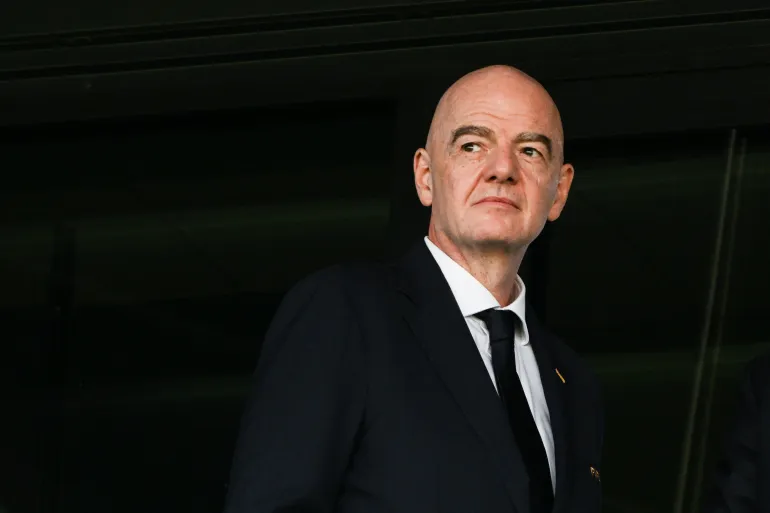
Infantino has been under severe pressure since he announced a plan in July to open premium FIFA competitions, such as the World Cup, to private investors [Omar Marques/Getty Images]
‘Mockery’ of FIFA human rights policy
The criticism of the award isn’t limited to football associations.
In late April, Australia midfielder Jackson Irvine said football’s credibility as a force for good has been undermined by FIFA, and he accused FIFA of making a mockery of its human rights policy.
“As an organisation, you would have to say decisions like the one that we saw awarding this peace prize makes a mockery of what they’re trying to do with the human rights charter and trying to use football as a global driving force for good and positive change in the world,” Irvine told the Reuters news agency in an interview.
“Decisions like that feel like they just set us back in the perceived market of what football currently is, especially at the top level, where it’s becoming so disconnected from society and the grassroots of what the game actually is and means in our communities and in the world.”
Craig Mokhiber, a former United Nations official who has campaigned to suspend Israel from world football over its genocidal war in Gaza, called the award to Trump a “truly shameful development”.
Infantino has refused to take action against Israel, arguing that football “cannot solve geopolitical” issues.
“Not satisfied with two years of FIFA complicity in genocide in Palestine, Infantino and his cronies have now invented a new ‘peace prize’ in order to curry favour with Donald Trump,” Mokhiber told Al Jazeera.
He added that the award also aims to “obscure” Trump’s “disgraceful record” of support for Israel, his deadly strikes on vessels in the Caribbean Sea and “gross violations of human rights” inside the US.
Growing pressure on Infantino
The scrutiny around the FIFA Peace Prize follows the recent backlash Infantino has faced.
Infantino has been under fire since his announcement in late July that he wanted to open FIFA’s premium competitions, such as the World Cup, to private investors.
That plan was ultimately abandoned in the face of widespread criticism with a rebellion led by the European governing body UEFA, the Asian Football Confederation and CONCACAF, which runs the sport in North and Central America and the Caribbean.
Infantino has headed FIFA since 2016 and is running for re-election in March despite calls for him to stand down in the wake of the $4.2bn plan to sell a 20 per cent commercial stake in the World Cup.
US secretary of state says Ukraine has requested access to military-grade version of Starlink for strikes deep inside Russia.
Published On 18 Oct 202618 Oct 2026
United States Secretary of State Marco Rubio has said Starshield, the military-grade version of the Starlink satellite service, is currently unavailable to Ukraine, but a request from Kyiv to access the system for attacks deep inside Russia is “under discussion”.
Speaking to reporters on Saturday, Rubio stressed Starshield’s distinction with Starlink, the internet service provided by Elon Musk’s SpaceX.
Recommended Stories
list of 3 itemsend of list
“Starlink is a commercial product, okay? And so it’s regulated and handled as a commercial product. Starshield is a defence product, a military product,” said Rubio, in comments released by the Department of State.
“They’ve asked for access to it in order to conduct deep strikes inside of Russia. They do not have access to it at this moment,” he added. “That’s under conversation.”
Launched in 2022 and provided to the US government, Starshield is designed for military use as it allows for deeper encryption to process sensitive information. SpaceX says it is primarily used by US defence agencies and other “government partners”.
Last week, Ukrainian officials said restrictions on Starlink terminals had slowed some drones on the battlefield, as Ukraine tries to hold back Russian forces in their nearly five-year war.
In his comments at Joint Base Andrews in Maryland, Rubio also rejected Ukrainian President Volodymyr Zelenskyy’s suggestion that the reported disruption to Starlink services in Ukraine on Wednesday was deliberate.
“Well, I don’t know what Zelenskyy said. I’m not sure Zelenskyy knows what he’s talking about, but it wasn’t deliberate. We have nothing to do with that,” Rubio said.
Zelenskyy said on Saturday that the satellites are not tracking antennas on flying objects travelling faster than 161 kilometres per hour (100 miles per hour). This is affecting Ukrainian drones in their defence against Russian jet-powered drones and in their own medium-range attacks, he added.
Rubio said the US had not ordered Starlink speeds to be reduced and that the service had reportedly been restored to its previous level.
“No one at the White House ordered anyone to slow down internet or slow down speed so that certain drones couldn’t use it,” he said, calling the reports “categorically false”.
The remarks came as US President Donald Trump drew criticism from Democrats and Republicans after waiving sanctions on Russia and countries that buy its oil and gas, days before the restrictions were due to take effect under a law he signed last month.
Zelenskyy also criticised the sanctions waiver on Saturday, saying easing pressure on Russia would encourage further attacks.
“Financial rewards for [President Vladimir] Putin – all of this only encourages him to keep attacking,” Zelenskyy posted on social media, urging the US to maintain pressure on Moscow.
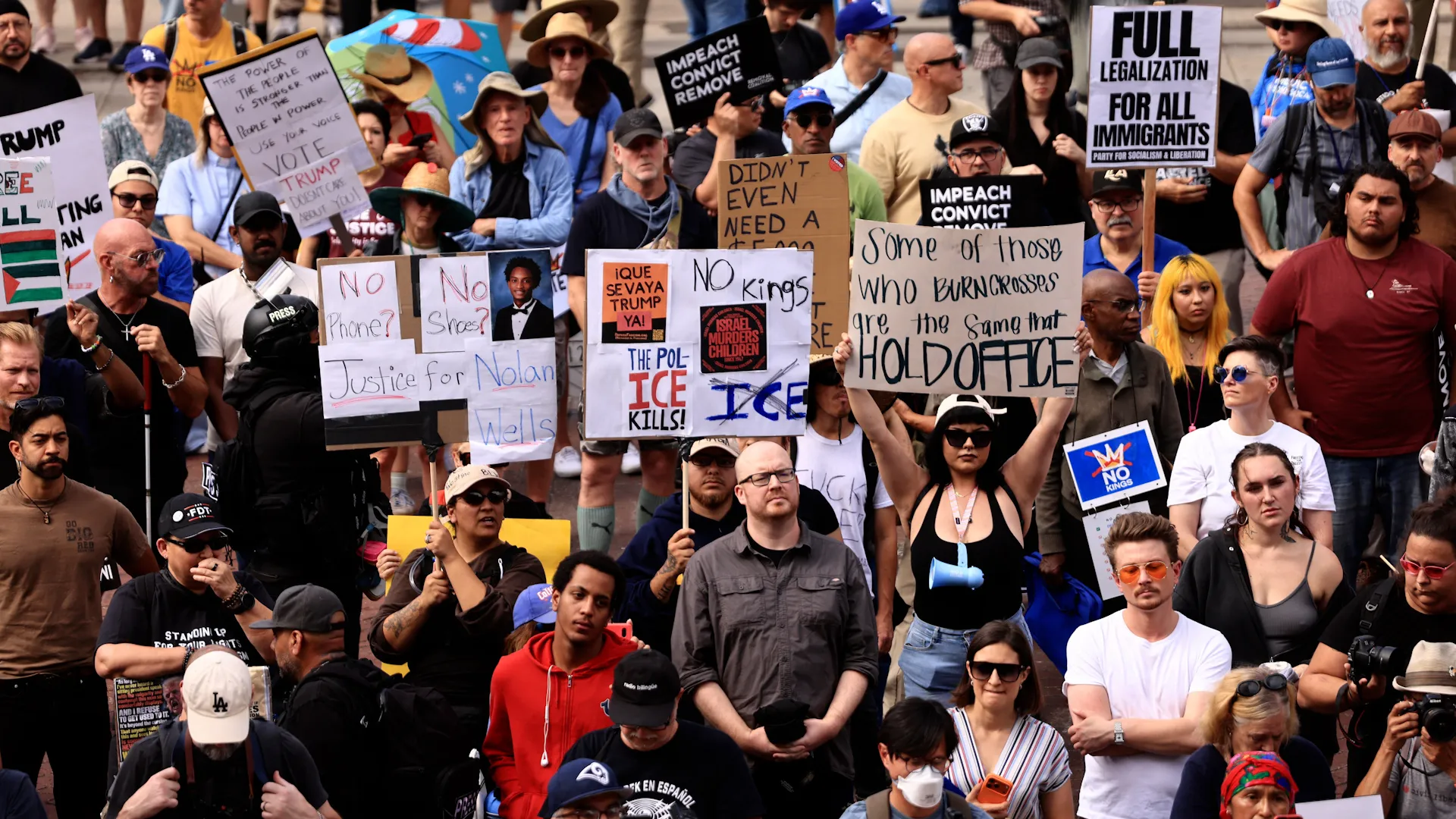
Thousands rallied across the US against President Donald Trump in ‘No Kings’ demonstrations, a movement that opposes what it sees as Trump’s abuse of power. Demonstrators urged people to vote early ahead of November’s midterm elections.
Williams scored 26 points as the Golden State Valkyries came back to take the lead at home against the Atlanta Dream.
By AFP and The Associated Press
Published On 18 Oct 202618 Oct 2026
Gabby Williams scored a game-high 26 points, including four key free throws in the final 78 seconds as the Golden State Valkyries held off the Atlanta Dream 68-64 in game one of the WNBA Finals.
Williams, runner-up to Atlanta’s Angel Reese in Defensive Player of the Year voting, has emerged as an offensive force for the Valkyries in the playoffs and carried the scoring load on a tough shooting night for the hosts, who did not have another player score in double figures on Saturday.
Reese blocks the shot from Williams during the game [Noah Graham/Getty Images via AFP]
The French star took some time to warm up, going scoreless in the first quarter as the Valkyries got off to a tentative start in front of a raucous crowd at Chase Center.
“Once we all started having fun and the excitement got out, we started to kind of find our way,” Williams, who erupted for 16 points in the second quarter, said in an on-court interview.
“There was a lid on that basket tonight, but that’s why we rely on our defence,” she said.
Golden State trailed by one with 1 minute and 18 seconds remaining when Williams seized the rebound off a miss by Atlanta’s Allisha Gray and was fouled by Reese.
Williams made both free throws to put the Valkyries up 65-64 and added another pair of free throws to seal the win with 4.1 seconds left.
“It came down to getting stops and that’s been our bread-and-butter all year,” noted Williams, whose team has allowed 335 fewer points than any other in the WNBA this season. “That’s why we harp on it so much, because we’ve built such great defensive habits.”
Gray, the Dream’s leading scorer, returned after missing two games with a hand injury and scored 19 points, but she was scoreless in the fourth quarter, when Atlanta made just two of their 19 attempts from the floor.
Angel Reese of the Atlanta Dream reacts after the 68-64 loss [Ezra Shaw/Getty Images via AFP]
Reese added 14 points and 12 rebounds, and Rhyne Howard scored 12 for Atlanta.
Atlanta scored just two in an overall eight-point fourth quarter, where Gray was scoreless over the final 10 minutes and Reese scored all of her 14 points in the first half.
“I don’t think they really did anything,” Reese said. “Maybe that was just on me; I wasn’t aggressive enough with the ball and trying to get the ball and get to my spot. I’m definitely going to do a better job of that next game.”
The Valkyries will host game two of the best-of-seven series on Monday.
Both teams are chasing a first WNBA title. The Dream have come up empty in three prior trips to the Finals, most recently in 2013.
The Valkyries, who last year became the first WNBA expansion franchise to reach the playoffs in their inaugural season, are now contending for the title in their second.
Golden State Valkyries players celebrate at the end of game one [Jeff Chiu/AP Photo]