US & Canada

Gunfire reported by vessel in Strait of Hormuz | US-Israel war on Iran

NewsFeed

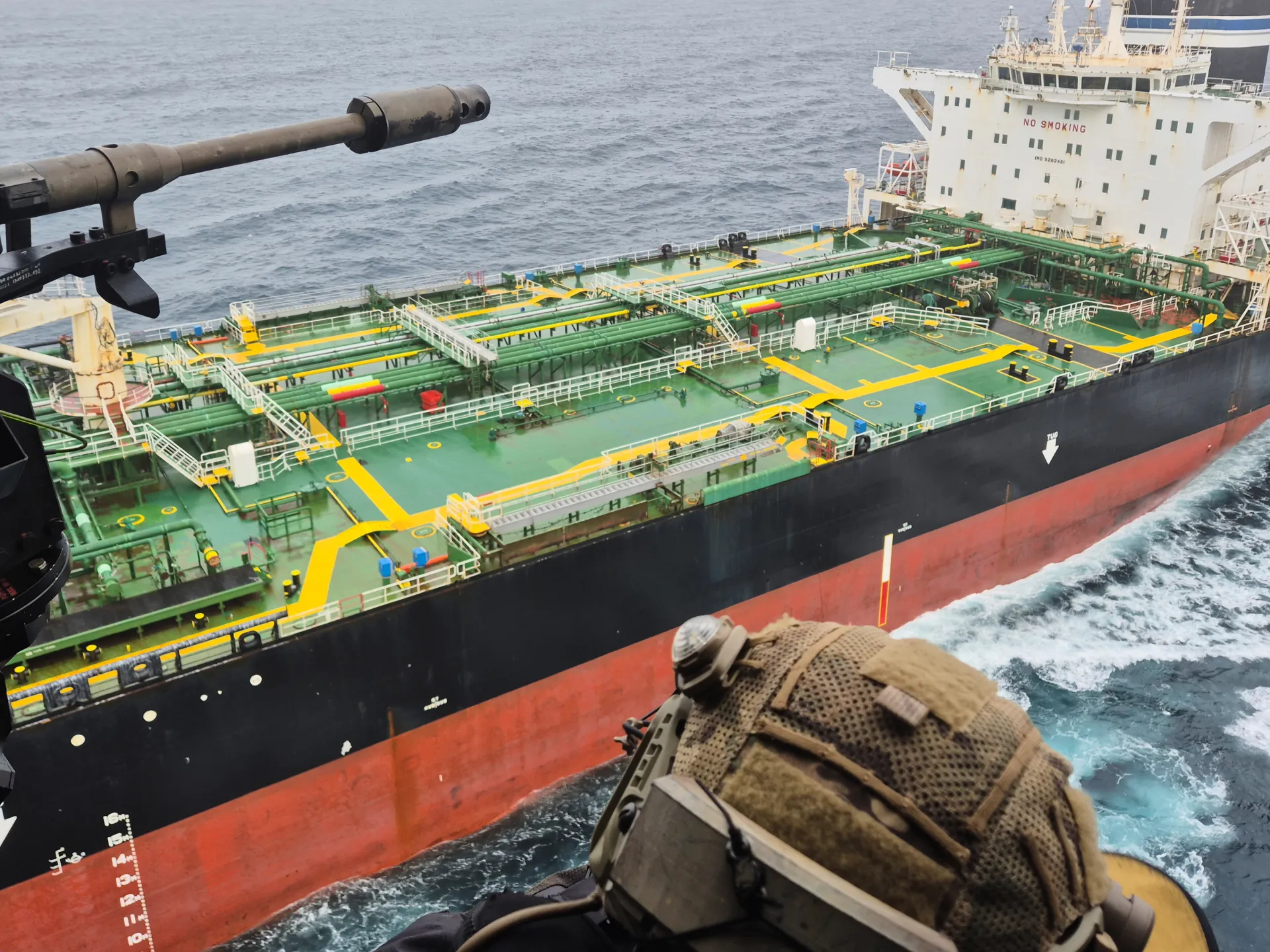
A maritime agency reported that a tanker was fired on by gunboats in the Strait of Hormuz. The United ⁠Kingdom ⁠Maritime Trade Operations agency says it received a report ⁠of a tanker being fired upon by what it ‌said were two gunboats linked to Iran’s Revolutionary Guard Corps. The vessel and ‌its crew were reported safe.

Source link

Iran closes Strait of Hormuz again over US blockade of its ports | US-Israel war on Iran News

Reports of Iranian gunboats opening fire on a tanker in strait, after Tehran said it is closing the waterway until the US lifts the blockade of its ports.

Iran says it has closed the Strait of Hormuz again, calling the decision a response to a continued blockade of its ports by the United States.

The Iranian military on Saturday said control of the strategic waterway, through which 20 percent of the global oil flows, has “returned to its previous state”, with reports saying Iranian gunboats fired at a merchant vessel as it attempted to ‌cross.

Recommended Stories

list of 4 itemsend of list

The closure of the strait came hours after it was reopened, with more than a dozen commercial ships passing through the waterway, after a US-mediated 10-day ceasefire deal was reached between Israel and Lebanon.

The Islamic Revolutionary Guard Corps (IRGC) on Saturday said in a statement, cited by the Iranian media, that the ongoing US blockade of Iranian ports represented “acts of piracy and maritime theft”, adding that the control over Hormuz is “under the strict management and control of the armed forces”.

“Until the US restores full freedom of navigation for vessels travelling from Iran to their destinations and back, the status of the Strait of Hormuz will remain tightly controlled and in its previous condition,” it said.

By 10:30 GMT on Saturday, no fewer than eight oil and gas tankers had crossed the strait, but at least as many ships appeared to have turned back, having begun to exit the Gulf, the AFP news agency reported.

The toing and froing over the strait cast doubt on US President Donald Trump’s optimism the day before, that a peace deal to end the US-Israel war on Iran was “very close”.

Trump had celebrated the reopening of the strait on Friday, but warned the US attacks would resume until Iran agreed to a deal, which included its nuclear programme.

“Maybe I won’t extend it,” Trump told reporters on board Air Force One about the temporary ceasefire agreement in place. “So you’ll have a blockade, and unfortunately we’ll have to start dropping bombs again.”

Asked whether a potential deal could be made in this short timeframe, Trump said: “I think it’s going to happen.”

But Iran says no date has been agreed for another round of peace talks, accusing the US of “betraying” diplomacy in all negotiations.

The conflicting and changing reports about the strait and how much freedom ships have to transit through it have deterred many vessels from crossing, according to John-Paul Rodrigue, a maritime shipping specialist at Texas A&M University.

“Ships have been attempting transit since the announcement, but it looks like many of them are heading back because the situation is unclear,” Rodrigue told Al Jazeera. “There is contradictory information being issued by all parties.”

Reporting from Tehran, Al Jazeera’s Tohid Asadi said “uncertainty is the name of the game” as far as the Strait of Hormuz is concerned.

“Iran is looking for a comprehensive end to the war across the region, security assurances, sanctions relief, the unfreezing of frozen assets, regional relations – and on top of all of that – the nuclear dossier and Iran’s stockpile of highly enriched uranium,” he said.

“But right now, uncertainty is the name of the game. The fragile situation makes it hard to talk about the possibility of successful negotiations down the road.”

Source link

Pakistan PM, army chief wrap up key trips in push for more US-Iran talks | US-Israel war on Iran News

Field Marshal Asim Munir leaves Tehran while premier Shehbaz Sharif heads home from Turkiye amid hopes of another round of US-Iran talks.

Pakistan’s army chief and the prime minister have wrapped up separate diplomatic visits aimed at advancing efforts to end the United States-Iran conflict, with Field Marshal Asim Munir leaving Tehran and Prime Minister Shehbaz Sharif returning from Turkiye.

Munir met Iran’s leadership and peace negotiators during a three-day visit to Tehran, a Pakistani military statement said on Saturday.

Recommended Stories

list of 4 itemsend of list

The visit demonstrated Pakistan’s “unwavering resolve to facilitate a negotiated settlement… and to promote peace, stability and prosperity,” the military said ahead of expected US-Iran talks in Islamabad in the coming days.

Munir held talks with the country’s president, foreign minister, parliament speaker and head of Iran’s military central command centre.

Parliament Speaker, Mohammad Bagher Ghalibaf, and Foreign Minister, Abbas Araghchi, led the Iranian delegation to Islamabad for peace talks with the US last week, the highest level face-to-face contact between Washington and Tehran in decades.

Those talks ended without agreement, and a ceasefire is due to expire on April 22.

But diplomacy has continued, with Pakistan’s Prime Minister, Shehbaz Sharif, visiting Saudi Arabia, Qatar and Turkiye to push the peace process.

His three-country trip concluded on Saturday, with Sharif and Foreign Minister Ishaq Dar departing a diplomacy forum in Antalya, according to statements from both officials.

“I leave Antalya [Turkish city] with fond memories and a renewed commitment to further strengthening the enduring fraternal bonds between our two nations, and to continuing our close cooperation to advance dialogue and diplomacy for lasting peace and stability in the region,” Sharif posted on X.

The flurry of diplomacy comes as further negotiations are expected in Pakistan in the coming days as Islamabad intensifies contacts with regional and global leaders in an effort to sustain momentum towards a US-Iran deal.

Pressure for a deal between the two countries has grown after Iran reimposed restrictions on the Strait of Hormuz, hours after its reopening following the start of a ceasefire in Lebanon. Tehran accused the US of violating a deal to reopen the strategically important waterway.

Donald Trump has said a second round of talks with Iran could be held in Pakistan in the coming days. The New York Post reported that Trump praised Munir, saying he was “doing a great job”.

Reporting from Islamabad, Al Jazeera’s Kamal Hyder said Munir landed back home on Saturday as Pakistan prepared for another round of US-Iran talks expected “within the next few days”.

“We have also seen a lot of praise from the Trump administration on social media, praising the Pakistani leadership. So all eyes are on Islamabad. Serious differences remain, but there is a flurry of diplomatic activity and a hope and expectation that some sort of breakthrough may happen,” he said.

Source link

Trump seeks ‘resolution’ of his $10bn lawsuit against IRS, spurring concern | Donald Trump News

Court filings have indicated that lawyers for President Donald Trump are seeking a resolution with the Department of Justice over a $10bn lawsuit he filed against the Internal Revenue Service (IRS).

But the trouble, critics say, is that such a settlement would leave Trump essentially negotiating with an executive branch under his control.

Recommended Stories

list of 3 itemsend of list

Friday’s court filing, however, emphasises the efficiency of seeking a settlement.

In the document, Trump’s lawyers call for the case to be paused for 90 days to allow a resolution to be hammered out.

“This limited pause will neither prejudice the parties nor delay ultimate resolution,” the filing says. “Rather, the extension will promote judicial economy and allow the Parties to explore avenues that could narrow or resolve the issues efficiently.”

How did the case start?

The case stems from an incident that began in 2017, when a worker named Charles “Chaz” Littlejohn was re-hired as a contractor through the government consulting firm Booz Allen.

While working on IRS files, Littlejohn stole copies of Trump’s tax returns, which had been the source of prolonged public scrutiny.

Until Trump, every president since Richard Nixon had released their tax returns as a gesture of transparency. Trump, however, claimed he could not, citing ongoing audits.

The tax returns Littlejohn stole were ultimately released to the media, and in 2020, The New York Times released a series of articles that showed Trump paid no income taxes in 10 of the 15 preceding years.

Other years, he paid relatively small sums, like $750, because he reported more losses than gains. ProPublica also ran stories based on the leaked tax returns, highlighting inconsistencies and Trump’s low tax payments.

Privacy law protects taxpayer information from being released by the IRS without explicit permission. Littlejohn was sentenced to five years in prison in 2024.

But in late January of this year, Trump filed a lawsuit arguing that he, his businesses and his sons Eric and Donald Jr had suffered “significant and irreparable harm” from the leaks.

The defendants in the lawsuit were the IRS and its overseeing body, the Treasury Department, both of which are part of the executive branch.

“Defendants have caused Plaintiffs reputational and financial harm, public embarrassment, unfairly tarnished their business reputations, portrayed them in a false light, and negatively affected President Trump and the other Plaintiffs’ public standing,” the lawsuit reads.

Questions of ethics and legality

But experts have warned that the lawsuit contains flaws that would normally prompt the Justice Department, also under Trump’s control, to seek dismissal.

The lawsuit, for instance, arrives at its whopping $10bn sum by supposedly tallying up media references to Trump’s leaked tax returns.

However, experts say the formula for damages is calculated by the number of unauthorised disclosures by a government employee, not by media re-printings.

Then there is the question of Littlejohn’s employment status. He was an outside contractor, not a government employee.

Trump also has to contend with the two-year statute of limitations in the case. The lawsuit contends that “President Trump did not discover the numerous violations” of his tax returns until January 29, 2024.

But critics point out he had posted on social media about his tax information being “illegally obtained” as far back as 2020, when The New York Times published its series.

Opponents say the lawsuit should be dismissed or at least delayed until Trump is no longer president. Otherwise, they argue it represents a conflict of interest, with Trump fundamentally negotiating with his own administration for a payout.

Controlling ‘both sides of the litigation’

Trump himself has acknowledged that such a payment would “never look good”. But he has justified the sum by saying it would be donated to charity.

“Nobody would care because it’s going to go to numerous very good charities,” he said in February.

Even that, legal experts argue, could run afoul of the Emoluments Clause in the US Constitution, which prohibits the president from profiting off his position, apart from his salary.

Government watchdogs have attempted to stop a settlement from unfolding. On February 5, for instance, the group Democracy Forward filed an amicus brief arguing the court should act to prevent an abuse of power.

“This case is extraordinary because the President controls both sides of the litigation, which raises the prospect of collusive litigation tactics,” the brief explains.

“To treat this case like business as usual would threaten the integrity of the justice system and the important taxpayer and privacy protections at the heart of this case.”

But the $10bn IRS lawsuit is not the only case Trump is seeking to settle with his own government. In 2023 and 2024, Trump filed administrative complaints seeking compensation for federal investigations he considered to be unfair.

One complaint concerns an FBI investigation into alleged Russian interference in the 2016 election, and the other is about the FBI’s raid of Trump’s Mar-a-Lago estate after he refused a subpoena to return classified documents.

For those complaints, Trump is reportedly seeking additional damages to the tune of $230m.

Source link

US judge blocks Justice Department bid to seize voter data in Rhode Island | Donald Trump News

Ruling is latest loss for Trump administration, which has sought access to state voter data ahead of the US midterms.

A federal judge in the United States has dismissed a Department of Justice lawsuit seeking to access voter data from Rhode Island.

The decision on Friday was the latest loss for the administration of President Donald Trump, which has sought to access voter data in dozens of states across the country.

Recommended Stories

list of 3 itemsend of list

In the ruling, US District Court Judge Mary McElroy sided with election officials and civil rights groups, writing that the Justice Department does not have the authority “to conduct the kind of fishing expedition it seeks here”.

Rhode Island Secretary of State Gregg Amore praised the ruling in a statement afterwards.

“The executive branch seems to have no problem taking actions that are clear Constitutional overreaches, regularly meddling in responsibilities that are the rights of the states,” Amore wrote.

“But the power of our democratic republic, built on three, coequal branches of government, is clearer than ever before.”

The Justice Department has sued at least 30 states for their voter information, maintaining it needs the information to secure election security. State officials have said that turning over the data raises an array of privacy concerns.

Under the US Constitution, state officials administer elections. Only Congress can pass laws related to how states oversee voting.

But Trump has sought to transform election administration, claiming that voting has been marred by widespread fraud.

In particular, Trump has continued to maintain that the 2020 election, in which he lost to former President Joe Biden, was “stolen”.

No evidence has ever been put forward to support the claims.

Federal judges have rejected attempts in California, Massachusetts, Michigan and Oregon to force the states to hand over voter files to the federal government. At least 12 states, however, have willingly provided or pledged to provide voter information to the Trump administration.

The push for voter information is one of several actions that have raised concerns over how the Trump administration will approach the midterm elections in November, which will decide the makeup of the US Congress.

He is currently calling on Republicans to pass the so-called SAVE America Act, a bill that would create higher documentation standards for voters to prove their citizenship when registering to vote and casting ballots.

The majority of Republican lawmakers have embraced Trump’s claim that the law is needed to prevent non-citizens from registering to vote, despite studies showing that instances of voter fraud are glancingly rare.

Critics say the measure would risk disenfranchising millions of voters, particularly those who have legally changed their names, which is a common practice in US marriages.

Source link

World reacts to Strait of Hormuz reopening amid US-Iran conflict | US-Israel war on Iran News

Iran’s Foreign Minister Abbas Araghchi and United States President Donald Trump have said that the Strait of Hormuz is open to commercial vessels.

Araghchi declared on Friday that the strategic waterwat was “completely open” in line with the ceasefire between Israel and Lebanon that took effect the previous day.

Recommended Stories

list of 3 itemsend of list

Trump affirmed on social media that the strait was open, later claiming that Iran had agreed to “never close the Strait of Hormuz again”. However, he also posted that the US naval blockade on Iranian ports would “remain in full force”.

In parallel, France and the United Kingdom hosted a meeting in Paris involving about 40 countries, which agreed to play a role in restoring freedom of navigation in the Strait of Hormuz once the US-Israeli war on Iran stops.

The blocking of tankers from using the strait, through which about 20 percent of the world’s crude flows on a typical day, has led to a global surge in fuel prices.

World leaders have welcomed the news with cautious optimism amid mixed messages from the US and Iran:

United States

“The Strait of Hormuz is completely open and ready for business and full passage, but the naval blockade will remain in full force and effect as it pertains to Iran, only, until such time as our transaction with Iran is 100% complete,” Trump wrote on Truth Social.

Minutes later, he issued another post saying the US Navy’s blockade on Iranian ships and ports “will remain in full force” until Tehran reaches a deal with the US, including on its nuclear programme.

Later, Trump told the news agency AFP that a deal to end the war on Iran was “close”, saying there were “no sticking points” left between Washington and Tehran.

Iran

Foreign Minister Abbas Araghchi posted on X that the strait was “declared completely open” and would remain open for the remaining period of the 10-day Israel-Lebanon ceasefire, which took effect overnight Thursday into Friday.

Some Iranian state media reports later appeared to contradict Araghchi’s announcement, with a senior military official telling state media that only nonmilitary vessels would be allowed to transit with permission from the Iranian Islamic Revolutionary Guard Corps (IRGC) Navy.

The Fars news agency, which is close to the IRGC, noted a “strange silence from the Supreme National Security Council”, the de facto top decision-making body in the country, as the status of the new supreme leader, Mojtaba Khamenei, remains unknown.

United Kingdom

UK Prime Minister Keir Starmer cohosted a summit on a potential military mission to secure the Hormuz Strait with French President Emmanuel Macron in Paris on Friday, with about 30 to 40 countries participating in person or by video conference.

On the sidelines, Starmer cautiously welcomed news of the strait’s reopening but said it must become “both lasting and a workable proposal”.

He said the UK and France would lead a “strictly peaceful and defensive” multinational mission to protect freedom of navigation as soon as conditions allow.

France

Speaking after the gathering, Macron said, “We all demand the full, immediate and unconditional reopening of the Strait of Hormuz by all parties.”

“We all oppose any restrictions or system of agreements that would, in effect, amount to an attempt to ⁠privatise the strait – and, of course, any toll system,” he added.

Macron’s office said roles for members of the international coalition working to reopen the strait could include “intelligence, mine-clearing capabilities, military escorts [and] communication procedures with coastal states”.

Germany

Chancellor Friedrich Merz said Germany could contribute mine clearance and intelligence capabilities to the international mission, but would need parliamentary support and a ″secure legal basis″ such as a UN Security Council resolution.

He said he wanted US involvement in the international mission to secure shipping through the Strait of Hormuz. “We believe this would be desirable,″ he said.

Trump later appeared to rebuff his overtures, saying on social media that he had received a call from NATO, but declined its assistance in no uncertain terms.

Finland

Finnish President Alexander Stubb, who participated in the Paris summit, said on X, “We welcome Iran’s announcement on opening the Strait. Lasting solutions require diplomacy,”

United Nations

United Nations Secretary-General Antonio ⁠Guterres on ⁠Friday welcomed the opening ‌of Strait of Hormuz by Iran ⁠and said ⁠it was “a ⁠step in the ⁠right ⁠direction”.

International Maritime Organisation

Arsenio Dominguez, secretary-general of the UN shipping agency said, “We are currently verifying the recent announcement related to the reopening of the Strait of Hormuz, in terms of its compliance with freedom of navigation for all merchant vessels and secure ‌passage.”

Shipping companies

The Norwegian Shipowners’ Association said several things had to be clarified before any ships can transit the strait, including the presence of mines, Iranian conditions and practical implementation.

“If this represents a step towards an opening, it is a welcome development,” said Knut Arild Hareide, CEO of the association, which represents 130 companies with some 1,500 vessels.

A spokesperson for Germany’s Hapag-Lloyd Shipping Company said, “We are now beginning to assess the new situation and the risks involved … For the time being, therefore, we are still refraining from passing through the strait.”

In a statement, Denmark’s Maersk said: “We have noted the announcement. The safety of our crew, vessels and customers’ cargo remains our priority. Since the outbreak of the conflict, we have followed the guidance of our security partners in the region, and the recommendation so far has been to avoid transiting the Strait of Hormuz.

“Any decision to transit the strait will be based on risk assessments and close monitoring of the security situation, with the latest developments also included in the ongoing assessments.”

Markets

Oil prices plunged after Iran’s announcement that passage for commercial vessels would remain “completely open” for the duration of a 10-day ceasefire in Lebanon.

“This news is having an immediate impact on markets,” said Kathleen Brooks, research director at XTB. “This is the biggest development so far during the ceasefire, and it gives hope that the war will end soon, and supply chains will return to some normality.”


Source link

US Congress extends controversial surveillance power under FISA for 10 days | Privacy News

The measure has long been criticised for allowing US intelligence agencies to collect citizen data without a warrant.

The United States Congress has temporarily extended a controversial surveillance law which allows federal intelligence agencies to collect the data of foreigners, including their contacts with US citizens.

The move allows a provision of the Foreign Intelligence Surveillance Act (FISA) to continue until April 30. The short-term extension was passed by the House of Representatives and approved by the Senate on Friday.

Recommended Stories

list of 3 itemsend of list

The patch comes after President Donald Trump’s efforts to secure a more lasting extension broke down.

Section 702 of FISA allows the National Security Agency (NSA) and other intelligence services to collect data from foreigners outside of the country.

That could include their interactions with US citizens, a prospect that has alarmed rights advocates.

Collecting such data, which can include correspondence on email and telecommunications platforms, typically requires a warrant approved by a court.

The process has been described by critics as a “backdoor search” that circumvents existing privacy laws.

Speaking after Friday’s vote, Senate Majority Leader John Thune said there was still some openness to reforming the law.

“We’ve got to pivot and figure out what can pass, and we’re in the process ⁠of figuring out how to do that here,” he told reporters.

Supporters of reform, who stretch across party lines, have long sought to repeal or amend Section 702.

While FISA was initially passed in 1978, Section 702 was added as an amendment in 2008.

The addition came amid the US’s “global war on terror”. But during its approval, revelations emerged that the administration of former US President George W Bush had already used the tactics Section 702 legalised.

Supporters, including Trump, maintain that reforming the provision would lead to a lapse in national security.

“I have spoken with many in our Military who say FISA is necessary in order to protect our Troops overseas, as well as our people here at home, from the threat of Foreign Terror Attacks,” Trump wrote in a Truth Social post on Wednesday.

He has pushed for the law to be extended for 18 months without changes. That effort initially appeared on track in the House but was ultimately scuttled by pushback from within Trump’s own Republican Party.

Among the detractors was Republican Congressman Thomas Massie, who has been a regular critic of Trump.

“I will be voting NO on final passage of the FISA 702 Reauthorization Bill if it does not include a warrant provision and other reforms to protect US citizens’ right to privacy,” he wrote ahead of the House vote.

Source link

Shipping firms seek clarifications before crossing Hormuz | US-Israel war on Iran News

Shipping companies said several things had to be clarified, including the presence of mines, Iranian conditions, practical implementations.

Shipping companies have cautiously welcomed Iran’s announcement that the Strait of Hormuz is open but said they would require clarifications, including about the risk of mines, before vessels move through the entry point to the Gulf.

Iran’s Foreign Minister Abbas Araghchi said on Friday that the Strait of Hormuz was open to all commercial vessels during a 10-day Lebanon ceasefire accord, prompting a fall in oil and other commodity prices while stock markets rose.

Recommended Stories

list of 4 itemsend of list

All commercial ships, including United States vessels, can sail through the strait, although their plans need to be coordinated with Iran’s Islamic Revolutionary Guard Corps, a senior Iranian official told the Reuters news agency.

Transit would be restricted to lanes which Iran deemed safe, adding that military vessels were still prohibited, the official said.

“We are currently verifying the recent announcement related to the reopening of the Strait of Hormuz, in terms of its compliance with freedom of navigation for all merchant vessels and secure passage,” said Arsenio Dominguez, secretary-general of the United Nations shipping agency, the International Maritime Organization.

The Norwegian Shipowners’ Association said several things had to be clarified before any ships could transit the strait, including the presence of mines, Iranian conditions and practical implementation.

“If this represents a step towards an opening, it is a welcome development,” said Knut Arild Hareide, CEO of the association which represents 130 companies with some 1,500 vessels.

Shipping association BIMCO cautioned members on returning to the strait.

“The status of mine threats… is unclear and BIMCO believes shipping companies should consider avoiding the area,” said Jakob Larsen, BIMCO’s chief safety and security officer.

The threat posed by mines in parts of the strait is not fully understood, and avoidance of the area by ships should be considered, a US Navy advisory on Friday, seen by Reuters, also said.

German shipping group Hapag-Lloyd on Friday said it was working for its ships to sail through the strait “as soon as possible”, but added that several questions remained.

“Our crisis committee is in session and will try to resolve all open items with the relevant parties within the next 24-36 hours,” it added.

Its Danish peer Maersk said it was closely monitoring the security situation and would act based on its risk assessment.

France’s CMA CGM and Norwegian oil tanker group Frontline declined to comment.

A recent route imposed by Tehran through its territorial waters near Larak Island would present navigational challenges even if vessels were not required to pay a toll, and would raise questions regarding compliance and insurance, said Matt Wright, lead freight analyst at data intelligence firm Kpler.

US President Donald Trump on Friday said Iran had agreed to never close the strait again, and that it was removing sea mines from it.

One of the world’s most important maritime chokepoints, disruption in the strait has forced shipping companies to suspend sailings, reroute cargo and rely on costly workarounds to keep goods moving in and out of the Gulf.

Source link

Iran war’s big winners: Wall Street, weapons firms, AI and green energy | Business and Economy News

The International Monetary Fund has downgraded its global growth forecast for 2026 from 3.3 to 3.1 percent, citing the impact of the United States-Israeli war on Iran and the shutdown of the Strait of Hormuz on the world economy.

The war has damaged energy infrastructure across the Gulf, while critical exports like oil, gas, chemicals and fertiliser remain largely stranded by Iran’s shutdown of the strait and the subsequent US naval blockade of Iranian ports.

Recommended Stories

list of 4 itemsend of list

In the worst-case scenario of a prolonged war, the IMF said global growth could fall to 2.5 percent in 2026, with low-income and developing economies hit the hardest by soaring commodity and energy prices. The global shipping and logistics industry is facing a separate crisis.

But every economic crisis also has beneficiaries: despite the dire macroeconomic outlook, some corners of the global economy are thriving on the uncertainty.

Here’s a look at five industries that are doing well either despite – or because of – the darkening economic outlook.

Wall Street investment banks

Global investors have been on a rollercoaster since the start of US President Donald Trump’s second term last year. The president’s erratic decision-making, where he often issues an ultimatum one day and then changes it the next, has led traders to coin the term “TACO trade”, where TACO stands for “Trump Always Chickens Out”.

The recent volatility has made some investors anxious, but it’s been a boon to investment banks, which make millions in commissions and revenue from the surging volume of trade, according to Sean Dunlap, a director of equity research at Morningstar Research Services.

“Clients want to reposition, so they trade frequently,” he told Al Jazeera. “Spreads tend to increase, which increases the profitability for trade intermediaries like banks.”

First-quarter results for 2026 – released this week – showed that Morgan Stanley reported a profit of $5.57bn, up 29 percent year on year, while Goldman Sachs reported a profit of $5.63bn, up 19 percent year on year.

JP Morgan Chase also reported major gains, with first-quarter earnings of $16.49bn, up 13 percent year on year. The banks all cited high levels of trading, deal-making, and “robust client engagement” as the reasons behind surging profits.

The boomtime for banks could reverse course, however, if volatility persists for too long, Dunlap warned, because investors may become increasingly cautious and less willing to borrow money to make trades.

Prediction markets

As mainstream Wall Street banks reap profits, the crypto-based prediction platform Polymarket has been earning upwards of $1m a day since the start of the month by letting users make peer-to-peer bets on everything from sports tournaments to elections.

Polymarket has been doing well since the start of the war, but it revised its fee structure on March 30 to cash in even more on its popularity.

Rival platforms like Kalshi, Novig and Robinhood also follow the same business model, but Polymarket has been the standout winner of 2026 because it controversially allows users to bet on the outcome of conflicts like the Iran war.

Polymarket revised its fee structure on March 30 to cash in on its popularity. The change has already netted the platform more than $21m in fees since April 1, up from $11.6m for all of March and $6.23m for all of February, according to DefiLlama, a website that provides data analysis for decentralised finance platforms.

If the current trend continues, Polymarket could make $342m in fees this year alone, according to DefiLlama’s analysis.

Anonymous users have also made millions correctly predicting the dates of major events like the US-Iran ceasefire, but the outcomes for rank-and-file users are typically less impressive.

Researchers found that the top 1 percent of Polymarket users captured 84 percent of all trading gains, according to a new report released this month analysing 70 million trades from 2022 to 2025. The returns are so high that US federal regulators have pledged to crack down on insider trading in prediction markets following suspiciously well-timed bets on Iran war outcomes.

Aerospace and defence

Unsurprisingly, the aerospace and defence industries are booming this year due to major conflicts in Ukraine, Iran, Sudan, Gaza and Lebanon and a surge in global defence spending.

About half of the world’s countries have increased their military budgets over the past five years, according to an April report from the IMF, which means they are also buying everything from drones to missiles — more than ever before. Demand is growing particularly fast in Europe, where NATO countries have committed to raising defence spending to 5 percent of gross domestic product (GDP) by 2035.

The defence industry has, in turn, seen major gains on the stock market. The MSCI World Aerospace and Defence Index – which tracks aerospace and defence stocks across 23 global markets – reported net returns of 32 percent year on year at the end of March.

The defence index outpaced the MSCI World Index, which tracks 1,300 large and mid-cap companies across the same 23 markets. The index, which gives a broader overview of global stock markets, reported net returns of 18.9 percent over the same period.

Artificial intelligence

Last year, the United Nations Trade and Development (UNCTAD) office predicted that the AI industry would grow from $189bn in 2023 to $4.8 trillion by 2033, and the Iran war does not seem to have dented the outlook.

“Despite the shocks from the Iran war, we’re still seeing resilience in a lot of sectors like artificial intelligence and renewable energy,” said Nick Marro, lead analyst for global trade at the Economist Intelligence Unit.

One metric for the AI boom has been the high volume of semiconductor chips still being exported out of East Asia, he said. At the top of the chart is chipmaking powerhouse Taiwan, which reported record-breaking merchandise exports of $80.2bn in March, up 61.8 percent year on year, according to EIU analysis.

The surge was led by exports to the US, which grew by 124 percent year on year, the EIU said.

Taiwan Semiconductor Manufacturing Company, the world’s top chipmaker better known by its acronym “TSMC,” on Thursday posted a net income of 572.8 billion New Taiwan Dollars (NTD) ($18.1bn) for the first three months of 2026 – up 58 percent year on year in NTD.

Another metric, initial public offerings or “IPOs,” also shows that the industry is confident for the moment, with industry leaders Anthropic and OpenAI both planning to go public this year.

Renewable energy

The Iran war has highlighted the need to transition from fossil fuels not only for environmental reasons, but also for reasons of energy security. The war marks the third major energy shock this decade, following the COVID-19 pandemic and the 2022 Russian invasion of Ukraine.

The Iran war has “boosted” renewable energy “given the urgency to switch away from fossil fuels and diversify towards renewable sources,” Marro of the EIU said.

Even before the Iran war began, the International Energy Agency reported that global governments were already taking active measures to invest in renewable energy for geopolitical reasons.

According to an IEA report released this month, “150 countries have active policies to advance renewable and nuclear deployment, 130 have energy efficiency and electrification policies, and 32 have policies to incentivise supply chain resilience and diversification across critical minerals and clean energy technologies.”

The Iran war has triggered another flurry of policymaking in Asia, which typically buys 80 to 90 percent of the oil and gas that transits through the Strait of Hormuz. Since the shutdown, the region has been struggling to find alternative sources of energy, forcing governments to deploy emergency measures like fuel rationing and price caps.

South Korea, Thailand, India, Cambodia, Indonesia, Vietnam and the Philippines have all announced a variety of measures from tax breaks for at-home solar panels to commissioning new renewable energy projects – and even restarting nuclear reactors.

The surge in policymaking has been good for the renewable industry. The S&P Global Clean Energy Transition Index, which tracks 100 companies that produce solar, wind, hydro, biomass and other renewable energy across emerging and developed markets, is up 70.92 percent year on year.

Source link

Rapper d4vd arrested on suspicion of murdering 14-year-old girl | Crime News

Arrest comes after police found the body of Celeste Rivas in a car registered to the musician last year.

American rapper David Anthony Burke, known by his stage name d4vd, has been arrested on suspicion of murdering a 14-year-old girl whose dismembered body was found in a car registered to him.

Los Angeles police took the 21-year-old singer into custody on Thursday “for the murder of Celeste Rivas”, the city’s police department said in a statement. He is being held without bail.

Recommended Stories

list of 3 itemsend of list

Burke’s arrest comes seven months after police uncovered Rivas’s badly decomposed body in the trunk of an impounded Tesla registered in his name.

Investigators found two black bags in the vehicle – one holding a decomposed head and torso and the other containing other body parts, according to a court filing. An autopsy revealed that Rivas “appeared to have been deceased inside the vehicle for an extended period of time before being found”. The discovery occurred one day before Rivas would have turned 15.

The LA County District Attorney’s office will review the case against Burke on Monday for formal charges, according to police.

Burke’s lawyers issued a statement saying they would “vigorously defend” his “innocence”.

“Let us be clear – the actual evidence in this case will show that David Burke did not murder Celeste Rivas Hernandez and he was not the cause of her death,” lawyers Blair Berk, Marilyn Bednarski and Regina Peter said in a statement quoted by NBC News.

Burke, from Queens, New York, shot to internet fame in 2022 when his Romantic Homicide became a breakout hit on TikTok.

Last year, the musician cancelled the last part of his US and European tours amid growing fallout from the investigation into Rivas’s death.

Source link

US panel approves Trump’s design for massive arch in Washington, DC | Donald Trump News

The proposed 76-metre arch would tower over other iconic landmarks in Washington, DC, and has attracted scrutiny.

United States President Donald Trump’s goal of erecting a colossal arch in Washington, DC, has taken another step forward, with a key agency approving his proposed design for the monument.

The US Commission of Fine Arts, whose members were appointed by Trump, gave its go-ahead to the president’s design for a lofty 76-metre-high (250-foot) arch.

Recommended Stories

list of 3 itemsend of list

If given final approval, the arch would be built on Memorial Circle, between the Arlington National Cemetery and the Lincoln Memorial. It would tower above other landmarks in the national capital.

White House spokesperson Davis Ingle hailed the commission’s approval as a “step in accomplishing President Trump’s promise to the American people from the campaign trail — to Make America Safe and Beautiful Again”.

But the arch has faced criticism, including for potentially obscuring views of the national cemetery, a resting place for war veterans.

Public Citizen Litigation Group is representing some Vietnam War veterans in a lawsuit against the proposed construction, which they argue needs congressional approval.

Even the vice chair of the Commission of Fine Arts, James McCrery II, suggested that Trump’s proposed “Triumphal Arch” ditch the winged statue and eagles on its top. He also opposed the lions at its base, pointing out that African animals are “not a beast natural to the North American continent”.

The enormous arch is another effort by the US president to leave his mark on the physical landscape of Washington, DC.

In January, he told reporters he wants the arch to be the “biggest one of all”. The commission still needs to vote on final approval for the proposal after reviewing updated designs.

Current plans show the arch would be significantly larger than the Lincoln Memorial, which is 99 feet (30 metres) tall, and about twice as tall as the famous Arc de Triomphe in Paris, which the design resembles.

The phrases “One Nation Under God” and “Liberty and Justice for All” would be written in gold lettering atop either side of the monument.

About three out of every four people who delivered public comments about the project expressed opposition, many of them citing its enormous size.

But the arch is one of several Trump projects that have received public pushback.

Trump has sought to paint the granite of the Eisenhower Executive Office Building white, and his allies plan to close the Kennedy Center for the Performing Arts, a national theatre complex, for two years of renovations, after adding Trump’s name to the exterior.

One of the most permanent changes so far has been the abrupt demolition of the White House’s East Wing, in order to make room for an enormous ballroom, long one of Trump’s priorities.

But that project is likewise entangled in legal battles, with critics arguing that congressional approval is required.

On Wednesday, Judge Richard Leon clarified that construction on underground structures at the ballroom site could continue, as part of an exemption he previously allowed for national security concerns.

But he maintained his short-term injunction against construction on the ballroom itself, batting down Trump’s position that the whole project should proceed.

“Defendants argue that the entire ballroom construction project, from tip to tail, falls within the safety-and-security exception and therefore may proceed unabated,” Leon wrote in Thursday’s ruling.

“That is neither a reasonable nor a correct reading of my Order!”

The president responded on social media by calling Leon an “out of control Trump hating” judge. Leon was appointed in 2002 under Republican President George W Bush.

Source link

People in Beirut wary of trusting Israel will uphold Lebanon ceasefire | Newsfeed

NewsFeed

Lebanon’s residents say they are wary of trusting that Israel will abide by the ceasefire agreement announced by US President Donald Trump. Al Jazeera’s Justin Salhani reports from Beirut where residents tell him they are not celebrating.

Source link

Netflix cofounder Hastings to step down after it lost Warner Bros deal | Entertainment News

The company’s stock plunged about 8 percent on the news of Hastings’s departure.

Netflix Chairman Reed Hastings is leaving the streaming service he cofounded 29 years ago as the company regains its footing after it lost its $72bn deal for Warner Bros Discovery to Paramount Skydance.

In a letter to investors released on Thursday, Netflix said Hastings will not stand for re-election at its annual meeting in June and plans to focus on philanthropy and other pursuits.

Recommended Stories

list of 4 itemsend of list

The company’s stock plunged about 8 percent on the news of Hastings’s departure. The cofounder is credited with helping to revolutionise how movies and television shows are delivered in homes, upending Hollywood’s business model.

“Netflix is growing revenues double-digits, expanding margins in 2026 and gushing free cash flow,” said LightShed Partners media analyst Richard Greenfield. “While the Q1 was uneventful financially, the departure of Reed Hastings has spooked investors.”

Netflix reaffirmed in a 14-page shareholder letter that its mission remains “ambitious and unchanged” – to entertain the world, providing movies and series for many tastes, cultures and languages. The company’s full-year outlook remained unchanged.

The company did not say how it plans to spend the $2.8bn termination fee it received after losing the Warner Bros movie studio and HBO, and lifted its earnings per share to $1.23 in the first quarter compared with 66 cents per share in the same quarter last year.

Revenue rose to $12.25bn, an increase of 16 percent from the year-ago period, modestly exceeding analyst forecasts of $12.18bn.

Netflix, which long told investors that a Warner Bros acquisition was a “nice to have, not need to have” proposition, highlighted areas of future growth.

The company said its investment in expanding its entertainment offerings, with video podcasts and live entertainment – such as the World Baseball Classic in Japan – is driving engagement.

It plans to use technology to improve the user experience and improve monetisation, as advertising revenue remains on track to reach $3bn in 2026 – a twofold increase from a year ago.

Source link

US State Department restricts visas for those who ‘support adversaries’ | Migration News

The State Department in the United States has announced it is restricting visas for “individuals from countries in our hemisphere who support our adversaries in undermining America’s interests in our region”.

Thursday’s statement underlined that 26 individuals had already seen their visas stripped as part of the policy.

Recommended Stories

list of 3 itemsend of list

The State Department’s stance comes as President Donald Trump seeks to expand US influence across the Western Hemisphere, as part of a platform he calls the “Donroe Doctrine”, a riff on the 19th-century Monroe Doctrine.

Since taking office for a second term, Trump has taken an aggressive stance towards stopping drug trafficking across the Americas, threatening economic penalties and military action for noncompliance.

He has also sought to check China’s growing sway over the region, as an increasing number of Latin American countries tighten their bonds with the Asian superpower.

The State Department explained that the expanded visa restrictions would penalise those who “knowingly direct, authorise, fund, or provide significant support to” US adversaries in the Western Hemisphere.

“Activities include but are not limited to: enabling adversarial powers to acquire or control key assets and strategic resources in our hemisphere; destabilising regional security efforts; undermining American economic interests; and conducting influence operations designed to undermine the sovereignty and stability of nations in our region,” the statement added.

The language was vague, never mentioning China or the campaign against drug-trafficking cartels.

But it continues a trend under the Trump administration to revoke visas from foreign critics and political opponents.

Last year, for instance, the administration sought to revoke visas for pro-Palestine protesters, claiming their presence could have foreign policy consequences for the US.

More recently, the administration has terminated the immigration visas for at least seven individuals with familial ties to the Iranian government or individuals connected to the 1979 Iranian revolution.

Revoking visas

The statement on Thursday did not identify the 26 individuals facing visa restrictions as part of the expanded policy.

But it cited the same authority under the Immigration and Nationality Act that the Trump administration has used to attempt to deport pro-Palestine student protesters last year.

Under the law, the entry of foreign nationals can be restricted when the secretary of state has reason to believe they pose “potentially serious adverse foreign policy consequences for the United States”.

While the administration has abandoned deportation efforts against some of the targeted individuals, at least two, Mahmoud Khalil and Badar Khan Suri, continue to face expulsion.

More recently, the administration has terminated the immigration visas for at least seven individuals with familial ties to the Iranian government or individuals connected to the 1979 Iranian revolution.

Already, some figures in Latin America have seen their visas revoked over political disagreements with the US.

In July, Brazilian officials involved in the prosecution of former right-wing President Jair Bolsonaro saw their US visas withdrawn. They included Brazilian Supreme Court Justice Alexandre de Moraes, a frequent target of right-wing ire.

Then, in September, the Trump administration stripped Colombian President Gustavo Petro of his visa after he made an appearance at the UN General Assembly that was critical of US policy.

The State Department, at the time, denounced Petro for “reckless and incendiary actions”. He was later invited to visit the White House in February, as part of a detente with Trump.

Visa restrictions have been part of Trump’s larger policy to exert pressure on foreign groups and limit immigration into the US.

Earlier this year, the administration enacted immigrant visa bans on dozens of countries, citing both national security and alleged stresses on social services.

Trump has also sought to take a more militaristic approach towards Latin American governments it deems as adversarial, referring to the whole of the Western Hemisphere as the US’s “neighbourhood”.

In January, the US launched an attack on Venezuela that culminated in the abduction and imprisonment of Venezuelan leader Nicolas Maduro, and it has also initiated an ongoing fuel blockade against Cuba.

Some of Trump’s actions in the region have been deadly. The Venezuela attack left dozens of Cubans and Venezuelans killed. And since September, the Trump administration has conducted at least 51 lethal strikes on alleged drug-smuggling boats in the eastern Pacific Ocean and Caribbean Sea.

The death toll in that campaign has reached at least 177 people. Rights groups have decried the attacks as extrajudicial killings.

But the Trump administration has labelled multiple drug cartels as “foreign terrorist organisations” and has argued they are seeking to destabilise the US through the drug trade.

Source link

Hegseth says US blockade to continue, ready for new attacks on Iran energy | Donald Trump News

United States Pentagon Chief Pete Hegseth has said the military blockade of Iran’s ports will continue “as long as it takes”, saying Washington remained “locked and loaded” to attack Iran’s energy facilities.

The US Pentagon chief spoke on Thursday as a tenuous pause in fighting agreed to last week has continued. On Monday, President Donald Trump announced the military would blockade Iran’s ports in the Strait of Hormuz and the Persian Gulf after US-Iran talks in Pakistan failed to reach a breakthrough.

Recommended Stories

list of 3 itemsend of list

Hegseth struck an aggressive tone as he maintained the US military was monitoring Iran’s military movements during the pause in fighting, which currently is meant to extend through early next week.

“We are reloading with more power than ever before…even more importantly, better intelligence than ever before,” Hegseth said.

“As you expose yourself with your movement to our watchful eye, we are locked and loaded on your critical dual-use infrastructure, on your remaining power generation and on your energy industry,” he said.

Still, the Pentagon chief said the US prefers to resolve the conflict, which began with US-Israeli attacks on Iran on February 28, through diplomacy.

“You, Iran, can choose a prosperous future, a golden bridge, and we hope that you do for the people of Iran,” he said. “In the meantime and for as long as it takes, we will maintain this blockade, successful blockade, but if Iran chooses poorly, then they will have a blockade and bombs dropping on infrastructure, power and energy.”

On Wednesday, a Pakistani delegation arrived in Tehran to coordinate a new round of talks. While both sides have indicated they remained open to further negotiations, Major-General Ali Abdollahi, the commander of the Khatam al-Anbiya Central Headquarters of the Islamic Revolutionary Guard Corps (IRGC), warned that the US blockade could end the current pause in fighting.

White House spokesperson Karoline Leavitt, meanwhile, indicated the US maintained a positive outlook on future talks.

“At this moment, we remain very much engaged in these negotiations, in these talks,” she said.

But reporting from Tehran on Thursday, Al Jazeera’s Ali Hashem says deep-seated distrust remains. The US under Trump twice attacked Iran amid ongoing indirect talks over Iran’s nuclear programme, a fact that has cast a long shadow over the most recent bout of diplomacy.

“Clearly, there have been several messages conveyed to the Iranians. But rather than consolidating a feeling of trust and optimism, it seems that it’s already shaken,” he said.

“We saw a platform closely associated with the foreign ministry tweeting today, quoting a source saying that whatever is being demonstrated or said in the media regarding the optimism is just hype, and this is used for PR and it’s for President Trump to use in the markets,” he said.

Iran’s speaker of parliament, Mohammad Bagher Ghalibaf, who led the Iranian delegation in the talks with Iran, told his Lebanese counterpart on Thursday that a ceasefire in Israel’s invasion and ongoing bombardment of Lebanon is “as important” as the pause in fighting in Iran.

A Lebanon ceasefire has emerged as one of the main sticking points in talks, which also include control of the Strait of Hormuz and the future of Iran’s nuclear programme.

‘We will use force’

Speaking during the news conference on Thursday, General Dan Caine, the chairman of the Joint Chiefs of Staff, said so far, 13 ships leaving Iranian ports have turned around in response to US military warnings.

“If you do not comply with this blockade, we will use force,” Caine said.

Admiral Brad Cooper, the head of US Central Command (CENTCOM), meanwhile, said the US is using the wear to rearm and reposition its forces.

“We’re rearming, we’re retooling, and we’re adjusting our tactics, techniques and procedures. There’s no military in the world that adjusts like we do, and that’s exactly what we’re doing right now during the ceasefire,” said.

During questions with reporters, Hegseth also shot down reports that China was planning to send weapons to Iran amid the pause in fighting. Hegseth said Washington had received assurances from Beijing that this was not the case.

Hegseth also used a large portion of the news conference to attack US press coverage of the war, which the Trump administration is receiving criticism for its shifting objectives and justifications for launching the conflict.

Hegseth called the coverage “incredibly unpatriotic”.

Source link

Why the Iran war did not go according to US plans | US-Israel war on Iran

The developments following the 12-day war between Iran and Israel did not lead to de-escalation, but rather to a redefinition of the conflict on a much broader scale. While volatile negotiations between Tehran and Washington continued, the gap between the two sides’ expectations deepened. Ultimately, this gap led to a decision at the White House based on an optimistic assessment: To enter a limited conflict and force Iran into a rapid retreat.

But the battlefield quickly shattered that assumption. The war that was meant to be short, controlled, and manageable turned into a 40-day war of attrition, one that not only failed to achieve the initial objectives of the United States but imposed heavy military, economic, and political costs.

The key question is: What caused this deep disconnect between initial assessments and reality? To answer that question, this article focuses on pre-war miscalculations and decisive variables during the conflict.

1- Incorrect generalisation of the 12-day war experience

Washington assumed Iran’s behavioural pattern from the short war with Israel would repeat, but this time the level of direct US involvement was far higher. Iran adjusted its response accordingly, most notably by playing the Strait of Hormuz card. According to published reports from a US situation room meeting on February 12, General Keane, chairman of the Joint Chiefs of Staff, warned of the risks of closing the strait, but Trump rejected the general’s assessment and assumed Iran would surrender before reaching that point. On the ground, however, the Strait of Hormuz became a decisive factor in disrupting both economic and military calculations.

2- Neglecting Iran’s strategic shift

The US still assumed Iran’s main target would be Israel, but this time Tehran focused on US bases across the region. The UAE, Bahrain, Kuwait, Qatar, Saudi Arabia and Jordan were placed directly on Iran’s target list.

3- Miscalculating Iran’s military and defensive capabilities

Iran’s gradual advances in missile technology, operational precision and air defence systems were not sufficiently accounted for in Washington’s calculations. The US did not believe Iran’s air defences could down its fighter jets or that Iranian missiles could disable the advanced radars at Gulf Arab states’ bases. Battlefield developments revealed a real leap in Iran’s offensive and defensive capabilities, imposing high costs on the US Air Force and seriously challenging its air superiority.

4- Wrong predictions about Iran’s domestic situation

One of Washington’s key assumptions was the outbreak of instability or internal collapse. Intelligence reports from December led them astray, convincing Trump that with widespread assassinations and the activation of public protests, Iran lacked the necessary resilience. In practice, however, a state of war led to social cohesion and strengthened the spirit of resistance. The reason lies in the “civilisational variable”, the role of historical identity and behavioural patterns within Iranian society, which, in times of crisis, through modern activism and mass street presence, shape national resistance. Washington mistook a “battle for national survival” for “political protests”.

5- Underestimating the cohesion of the “axis of resistance”

The US expected Iran-aligned groups to play a marginal role, but their operational coordination drastically increased battlefield complexity. The “axis of resistance” lined up in a unified front against the US, while NATO failed to provide effective support for Washington, revealing fractures in Washington’s traditional alliances when faced with costly crises.

6- Growing domestic and international pressure

The continuation of the war was met with opposition inside the US – from media criticism by former Trump supporters and figures like Tucker Carlson to human rights protests over attacks on civilians, particularly the Minab school tragedy, which quickly eroded the moral legitimacy of the operation in global public opinion, including within the US.

Meanwhile, the expansion of the war into the region caused oil prices to surge past $120, raising serious concerns and analyses about $200 oil, placing heavy economic pressure on US households.

On the international stage, the veto of Bahrain’s proposed resolution by Russia and China, along with the independent stances of some Western allies, dramatically increased the political cost of the war for Washington.

7 – Signs of fractures within US military decision-making structures

Command disagreements grew increasingly severe. The widespread dismissal of senior generals – including the army chief of staff and several other commanders – in the middle of the war was like a major earthquake at the Pentagon. This was no simple administrative reshuffle; it reflected a deadlock in modern military doctrine, which negatively impacted operational continuity.

Taken together, these errors – from misreading Iran’s behaviour and strategic evolution to ignoring simultaneous domestic and international pressures – placed the US in a position where accepting Iran’s terms after 40 days to begin negotiations became the only realistic option.

In the end, this war stands as a clear example of strategic deadlock: Where the gap between optimistic initial estimates and battlefield realities fundamentally alters the course of events.

It is an experience that will likely be discussed and revisited for years to come in Washington’s strategic circles.

The views expressed in this article are the author’s own and do not necessarily reflect Al Jazeera’s editorial stance.

Source link

Is Iran’s economy buckling under war pressure or holding up? | US-Israel war on Iran

The Iran war has deepened the damage to its sanctions-hit economy, but oil revenues have provided a crucial cushion.

The US has spent decades trying to squeeze Iran economically.
Six weeks into the Middle East conflict, Tehran is still standing.
US and Israeli attacks on infrastructure, industry and trade have damaged Iran’s sanctioned economy even further.

But oil revenues have kept flowing, giving the regime a financial cushion.

The Strait of Hormuz is now at the centre of this economic battle; whoever controls it controls the pressure.

At the negotiating table, sanctions relief, billions in frozen assets and war reparations are all at stake.

Meanwhile, millions of Iranians are bearing the brunt of inflation, shortages and a collapsing currency.

Source link