US & Canada

Pakistan army chief in Tehran to advance next round of US-Iran talks | US-Israel war on Iran News

Sources tell Al Jazeera that Pakistani mediators are hopeful about a breakthrough on Iran’s nuclear programme.

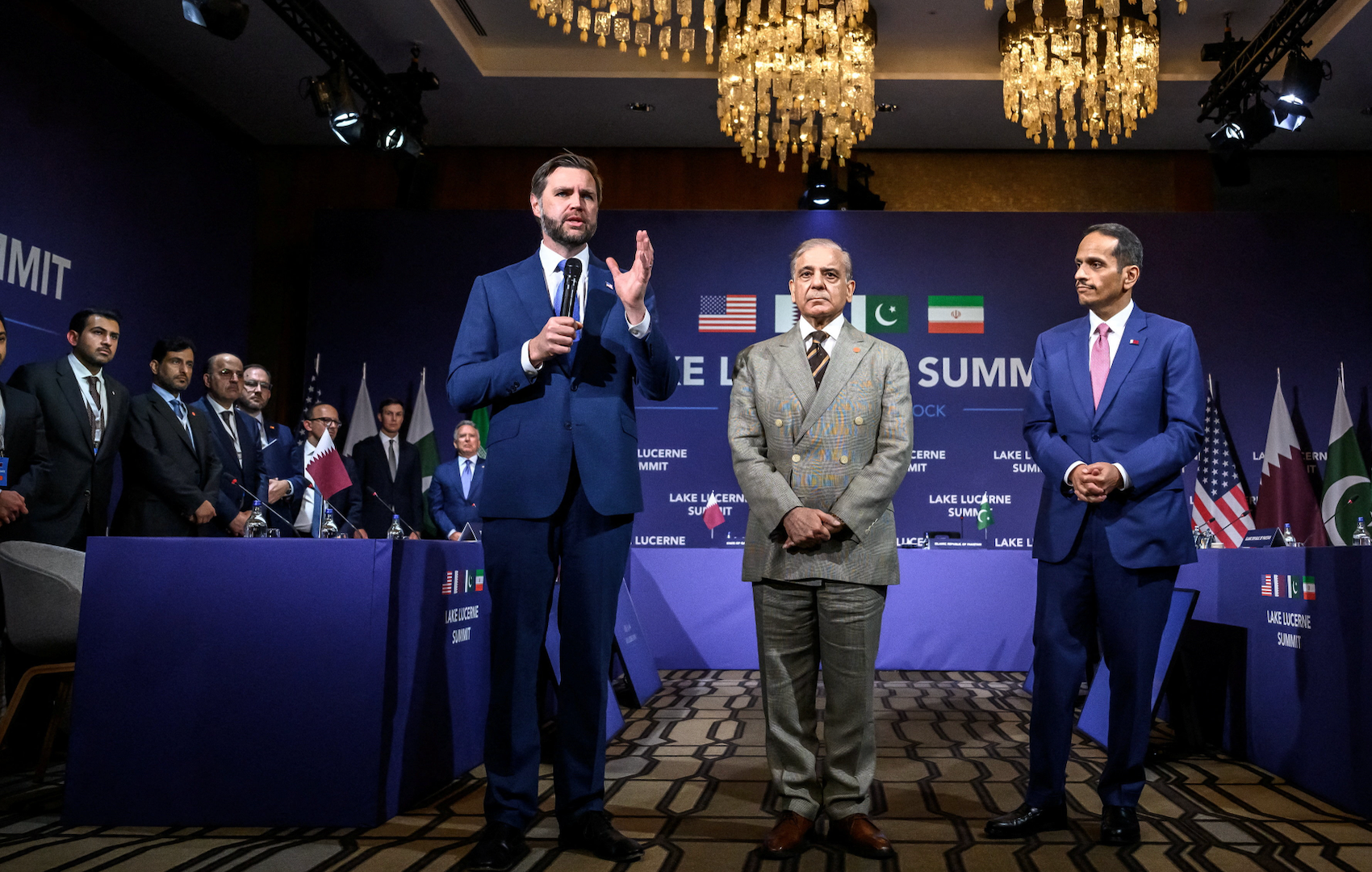
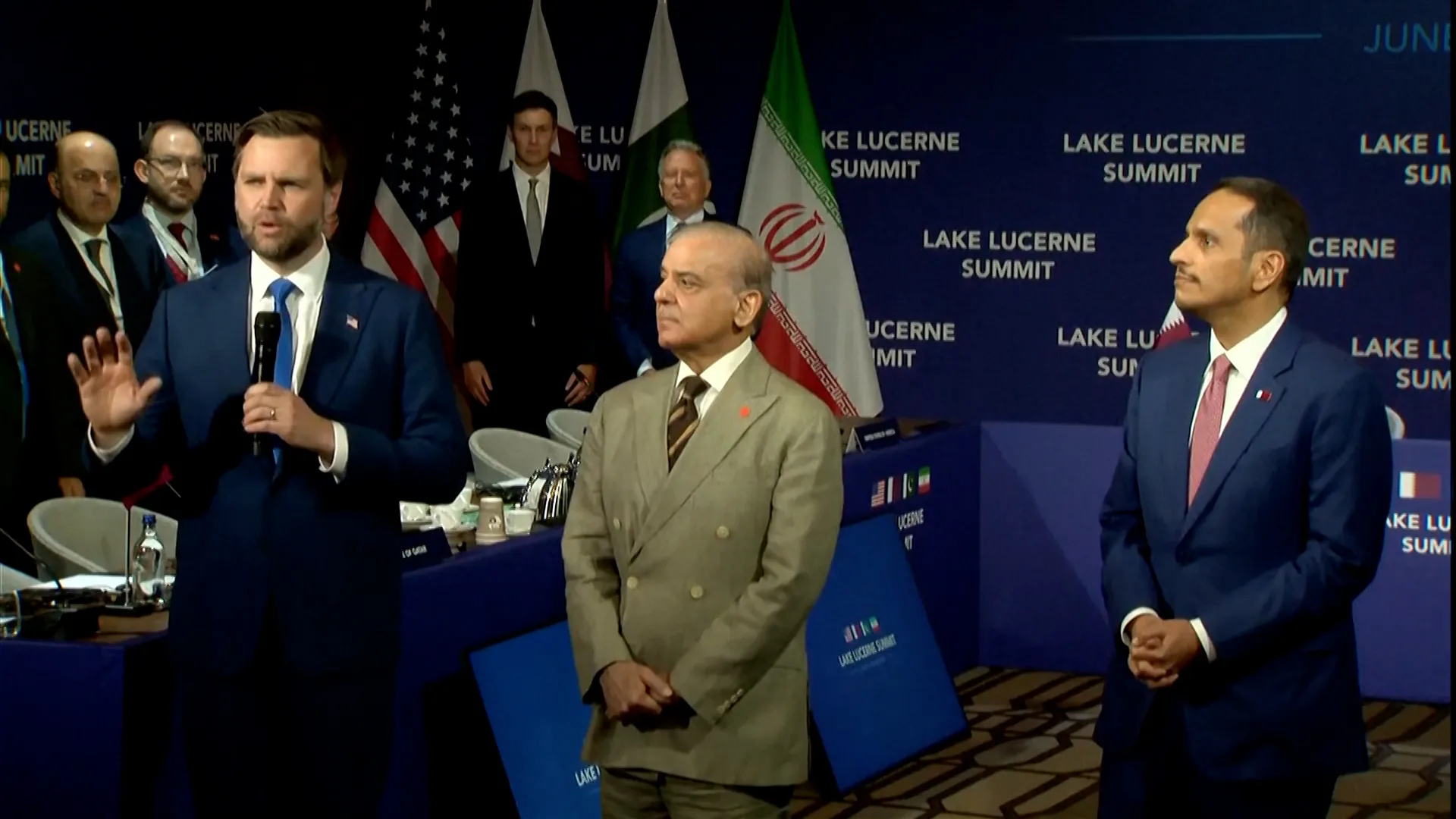
A high-level Pakistani delegation has travelled to Iran to hold talks focused on arranging a fresh round of negotiations between Iran and the United States, a week before their fragile truce is due to expire.

Pakistan Army Chief Asim Munir is heading the delegation that arrived in Tehran on Wednesday evening, according to Iranian state media. It said he came with a new message from the US and plans to coordinate a second round of US-Iran talks, after an initial round in Islamabad ended on Sunday without a deal to end the war.

Recommended Stories

list of 3 itemsend of list

Pakistan’s Interior Minister Mohsin Naqvi is also joining mediation efforts in Tehran, while Pakistan’s Prime Minister Shehbaz Sharif is in Saudi Arabia for the first stop in a four-day Gulf tour.

Pakistan’s diplomatic blitz comes as competing US and Iranian sea blockades strain tensions – and the global economy – but amid indications of progress towards a deal to end the war, which has killed 3,000 people in Iran and spiralled across the Middle East.

“The urgency is being driven by the ceasefire expiring on April 22, and Pakistani officials are hoping they can get that extended,” said Al Jazeera’s Kimberly Halkett from Islamabad. “Sharif will try and convince regional partners to also use their leverage to convince the US to participate in new talks with Iran and make sure there is no diplomatic line-crossing.”

Washington ‘feels good’ about potential deal

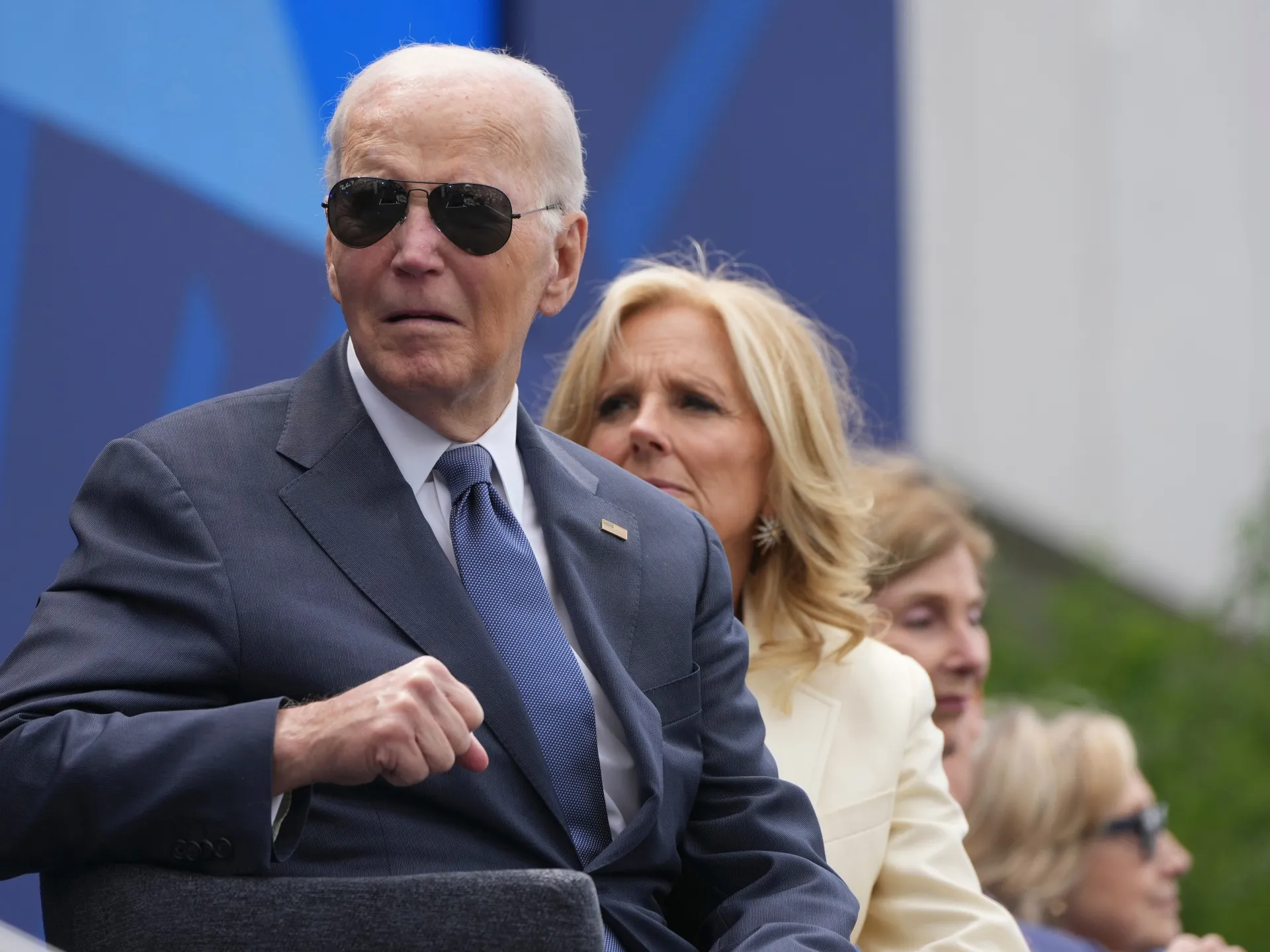
The latest mediation appears bolstered by optimistic comments from US President Donald Trump, who said the world should brace for an “amazing two days” as the war with Iran is close to over.

Trump also said his negotiators were likely to return to Pakistan, thanks largely to the “great job” Munir was doing to moderate the talks.

White House press secretary Karoline Leavitt later reiterated that additional talks with Iran would likely go forward in Islamabad. “We feel good about the prospects of a deal,” she told reporters on Wednesday.
Nevertheless, the US military said its naval blockade on all Iranian ports was still in effect, with US forces “present, vigilant and ready to ensure compliance”.

The blockade, which Iran’s military slammed as a violation of the ceasefire, turned nine ships away as of Wednesday, according to US Central Command.

The commander of Iran’s joint military command, Ali Abdollahi, threatened to halt trade in the region if the US did not lift its blockade. He also warned Iran would retaliate by blocking trade through the Red Sea along with the Gulf and Sea of Oman.

‘Detractors on all sides’

Mediators in the conflict are pushing for a compromise on three main sticking points – Iran’s nuclear programme, control of the Strait of Hormuz, and compensation for wartime damages.

Iran’s Foreign Minister spokesman Esmaeil Baghaei has said Iran is open to discussing the type and level of its uranium enrichment, but his country “based on its needs, must be able to continue enrichment”, according to Iranian state media.

Sources told Al Jazeera that Pakistani mediators are optimistic about a potential major breakthrough on the nuclear front, which is the reason for Munir’s rare diplomatic trip.

“It looks like there is some agreement in the making, but we’ve been cautioned by sources [close to the mediation effort] that there are detractors on all sides,” said Al Jazeera’s Osama Bin Javaid from Doha.

He said the detractors include elements “in Tehran, in Washington, DC, and biggest of them all, according to Pakistani sources, is Israel, which does not want a peace deal and wants a perpetual war in the region”.

Source link

What is Trump-backed SAVE America Act and what could it mean for US vote? | US Midterm Elections 2026 News

Washington, DC – United States President Donald Trump has been unambiguous about his desire for Congress to pass the SAVE America Act, a sweeping voting law that supporters say will boost election security and that detractors say risks disenfranchising millions of voters.

The push has gained new urgency, with the US Senate continuing debate on the law following a two-week recess.

Recommended Stories

list of 3 itemsend of list

The president has said the bill, which at its core would create higher documentation standards for proving citizenship when registering to vote and casting a ballot, is his top priority ahead of the midterm elections in November, which will determine which party controls the Senate and the US House of Representatives.

The bill has near-total support from Republicans, with Democrats remaining largely unified in opposition. It passed in the Republican-controlled House of Representatives in February along party lines.

The measure has since remained stalled in Congress, where Republicans control 53 out of 100 seats, short of the 60 votes it will likely need to pass.

That is, unless party leaders move to change the chamber’s longstanding rules, a transformative approach considered a”nuclear” option that will reverberate for years to come.

Here’s what to know.

What would the SAVE America Act do?

The version of the Safeguard American Voter Eligibility (SAVE) America Act passed by the House in February would require voters to provide proof of citizenship – a birth certificate or passport – when registering to vote. It would also implement stricter voter identification requirements for individuals casting ballots, whether by mail or in person.

Under the US Constitution, states administer elections, and currently have different processes for registering voters and confirming citizenship. Voting by noncitizens is already illegal, and all people registering to vote attest they are US citizens under threat of perjury.

The bill does not provide any funding for the new verification processes, which would be effective immediately upon the bill being signed into law.

The legislation would also require all states to run their voter rolls through a US Citizenship and Immigration Services (USCIS) “Alien Verification Eligibility” system to identify potential noncitizens already enrolled.

It would include criminal penalties for election officials who register voters without the required documentation.

What has Trump said about the SAVE Act?

The US president has long maintained that elections in the country are marred by widespread fraud, including noncitizen voting, despite there being no evidence to support these claims.

Even the conservative Heritage Foundation, which has influenced many of Trump’s policies, has found only exceedingly rare instances of voter fraud over decades of US elections.

Trump’s focus on election administration dates back to his 2020 loss to former US President Joe Biden, which he continues to maintain was the result of the vote being “stolen”. Again, no evidence has emerged to back those claims.

The president has called the SAVE America Act “one of the most IMPORTANT & CONSEQUENTIAL pieces of legislation in the history of Congress, and America itself”.

In March, he vowed not to sign any other bills into law until the legislation was passed. He has further vowed not to endorse any Republicans who do not support the legislation.

Trump also told members of his party in March that passing the bill would “guarantee” their success not only in the midterm elections but in the years to come.

Several top Republicans have embraced Trump’s messaging, with US House Speaker Mike Johnson saying opponents of the legislation “want illegal aliens to vote in our elections”.

What have critics said about the SAVE Act?

Critics have said the bill would be tantamount to widespread voter disenfranchisement, creating onerous barriers to address what several studies show to be the fleetingly rare problem of noncitizens registering to vote.

Several studies have shown that about 11 percent of eligible voters do not have access to birth certificates, while 52 percent do not have valid passports. All told, a recent study by several election-monitoring groups found that about nine percent of eligible voters in the US do not have easy access to documents proving citizenship, accounting for about 21.3 million people.

Several groups, including the Bipartisan Policy Center, have argued the legislation risks doing more damage than good. Data from a USCIS voter verification system, which some states already use to identify noncitizens in their voter rolls, found that only 0.04 percent of reviewed cases were flagged as potential noncitizens.

But as noted by the Bipartisan Policy Center, evidence indicates that the rate may be considerably lower, pointing to a review by Travis County, Texas that found that a quarter of the voters flagged by USCIS had actually provided proof of citizenship.

In another example, a review of all registered voters in Utah from 2025 to 2026 found only a single instance of a noncitizen registered to vote out of more than two million voters. There were no confirmed instances of a noncitizen actually voting.

Top Democrats have echoed those criticisms, while charging that Trump is seeking to influence the outcome of the midterms as part of what they call a years-long effort to politicise voting administration.

“The only thing Republicans are trying to save with this legislation is their own skin in the next election,” Chuck Schumer, the top Democrat in the Senate, said earlier this week.

Could it affect women and name changes?

A main point of contention for opponents of the legislation is the additional barriers it could create for individuals, primarily women, who changed their last names after marriage or for other reasons.

An estimated 69 million women in the US lack easy access to documentation linking their current legal names to those at birth, according to the League of Women Voters, which has been a leading opponent of the bill.

The requirement for extra documentation for some married women creates inherent inequality in the system, the organisation has argued.

The law would further create extra barriers for individuals who move regularly, including members of the military, and those who have been afflicted by disruptive life changes, including natural disasters, opponents have argued.

How does this relate to the filibuster?

The so-called “filibuster” is a procedural rule in the Senate that can be used to require 60 votes to pass most bills, as opposed to a simple majority of 51 votes in the 100-seat chamber.

Parties in the minority have long used the rule to temper the party in the majority, with Republicans and Democrats rarely holding a filibuster-proof 60 seats.

Being a rule of the Senate’s own making, it could be easily scrapped by the party in power. However, doing so has long been seen as a “nuclear” option. While it would offer short-term benefits to the majority party, it would undermine the same party if it becomes the minority in future elections.

Nevertheless, Trump has heaped pressure on Republican leaders in the Senate to scrap the rule, writing on Truth Social in March, they need to “Kill the Filibuster”.

What happens next?

Debate remains ongoing in the Senate over the legislation, but major shifts in support are seen as extremely unlikely.

Republicans are unlikely to bring the legislation to a vote if they do not have the support for it to pass.

Currently, there is no plan to hold a vote to do away with the filibuster, which would require only a simple majority.

Lawmakers have also not yet pursued other, more incremental procedural manoeuvres to pass the bill without 60 votes.

Source link

South Africa appoints former apartheid-era negotiator as US ambassador | Donald Trump News

Roelf Meyer will replace the South African ambassador who was expelled from the US by President Donald Trump in 2025.

South Africa has appointed Roelf Meyer, who helped negotiate the end of white minority rule in his country in the 1990s, as the next ambassador to the United States, according to local media.

Meyer’s appointment is seen as a sign that Pretoria is aiming to improve its relations with Washington following a “turbulent year”, according to the South African Broadcasting Corporation.

Recommended Stories

list of 4 itemsend of list

South Africa has gone without diplomatic representation in Washington, DC, since March 2025, when US President Donald Trump expelled Ambassador Ebrahim Rasool for his criticism of the Make America Great Again (MAGA) movement.

Posting on social media at the time, US Secretary of State Marco Rubio accused Rasool of being a “race-baiting politician” who hates the US and Trump.

Rubio’s post linked to a story by US conservative news site Breitbart that reported on a talk Rasool gave on a webinar organised by a South African think tank. Rasool had spoken in academic terms of the Trump administration’s crackdown on diversity and equity programmes, as well as immigration, and mentioned the possibility of a future US where white people would no longer be in the majority.

South African President Cyril Ramaphosa (CL) and Former Minister and constitutional negotiator Roelf Meyer (CR) looks at attendees during the first National Convention at the University of South Africa (UNISA) in Pretoria on August 15, 2025. The first National Convention marks the start of the National Dialogue (a chance where all South Africans come together to discuss the country's challenges) at local meetings, national discussions and public platforms aimed at shaping a better future for the next thirty years. (Photo by Phill Magakoe / AFP)
South African President Cyril Ramaphosa, centre left, and former minister and constitutional negotiator Roelf Meyer, centre right, during the first National Convention at the University of South Africa, Pretoria, in August 2025 [File: Phill Magakoe/AFP]

Trump last year also issued an executive order freezing most foreign assistance to South Africa amid the country’s legal action at the International Court of Justice over Israel’s genocide in Gaza and the passage of a controversial South African law aimed at correcting historic racial disparities in land ownership.

Tensions escalated further when Trump then launched a refugee programme for white South Africans, whom the US president claims face government-led persecution in their home country.

Meyer, 78, is a seasoned negotiator with experience working under pressure. As a member of South Africa’s white Afrikaans minority, he once served as a minister under the apartheid Nationalist Party government.

He rose to prominence in the 1990s, during the final days of apartheid, as the Nationalist Party held talks with the African National Congress (ANC) to end segregation and white minority rule. The talks paved the way for South Africa’s first democratic elections in 1994.

As the chief negotiator, Ralph had become acquainted with South Africa’s current president, Cyril Ramaphosa, who was then an ANC negotiator.

Meyer himself later joined the ANC in 2006.

He is set to take up the post as US ambassador once all protocols are complete in Washington, DC, according to Ramaphosa’s office.

Source link

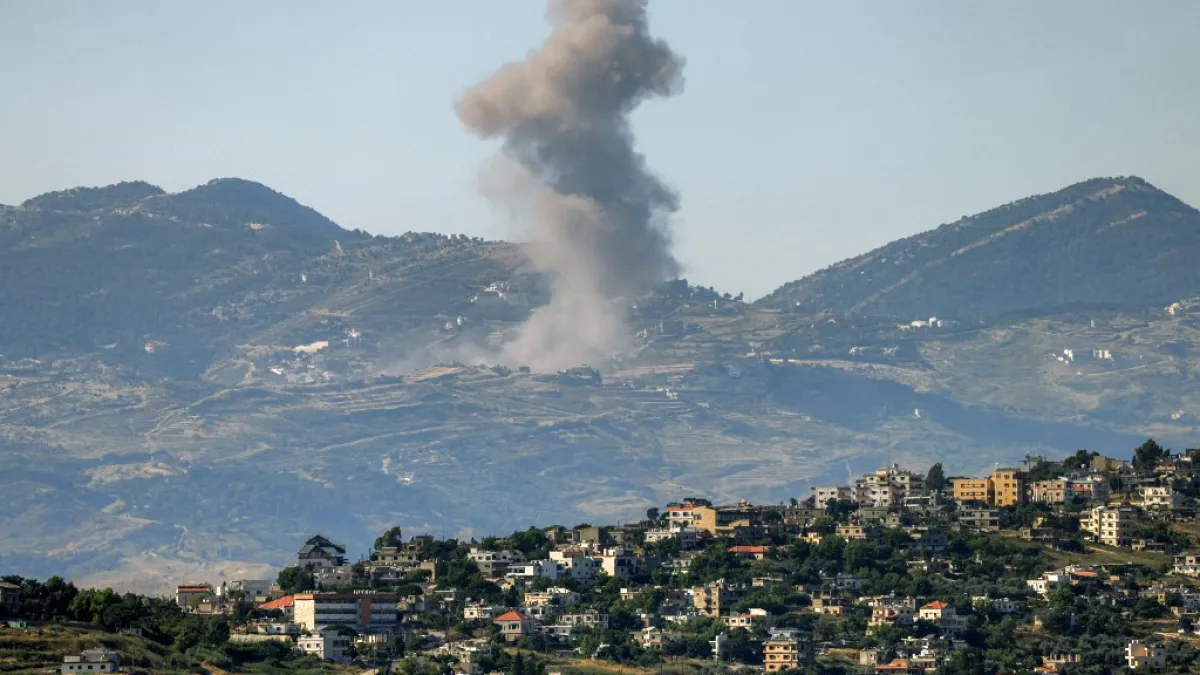
Israel and Lebanon hold direct talks for first time in decades | Israel attacks Lebanon

NewsFeed

After the first direct talks in decades, Israel and Lebanon have agreed to begin ongoing negotiations for the ‘security of both countries’. Al Jazeera’s Mike Hanna explains why US Secretary of State Marco Rubio sees this ‘milestone’ meeting as just the ‘start of the process’.

Source link