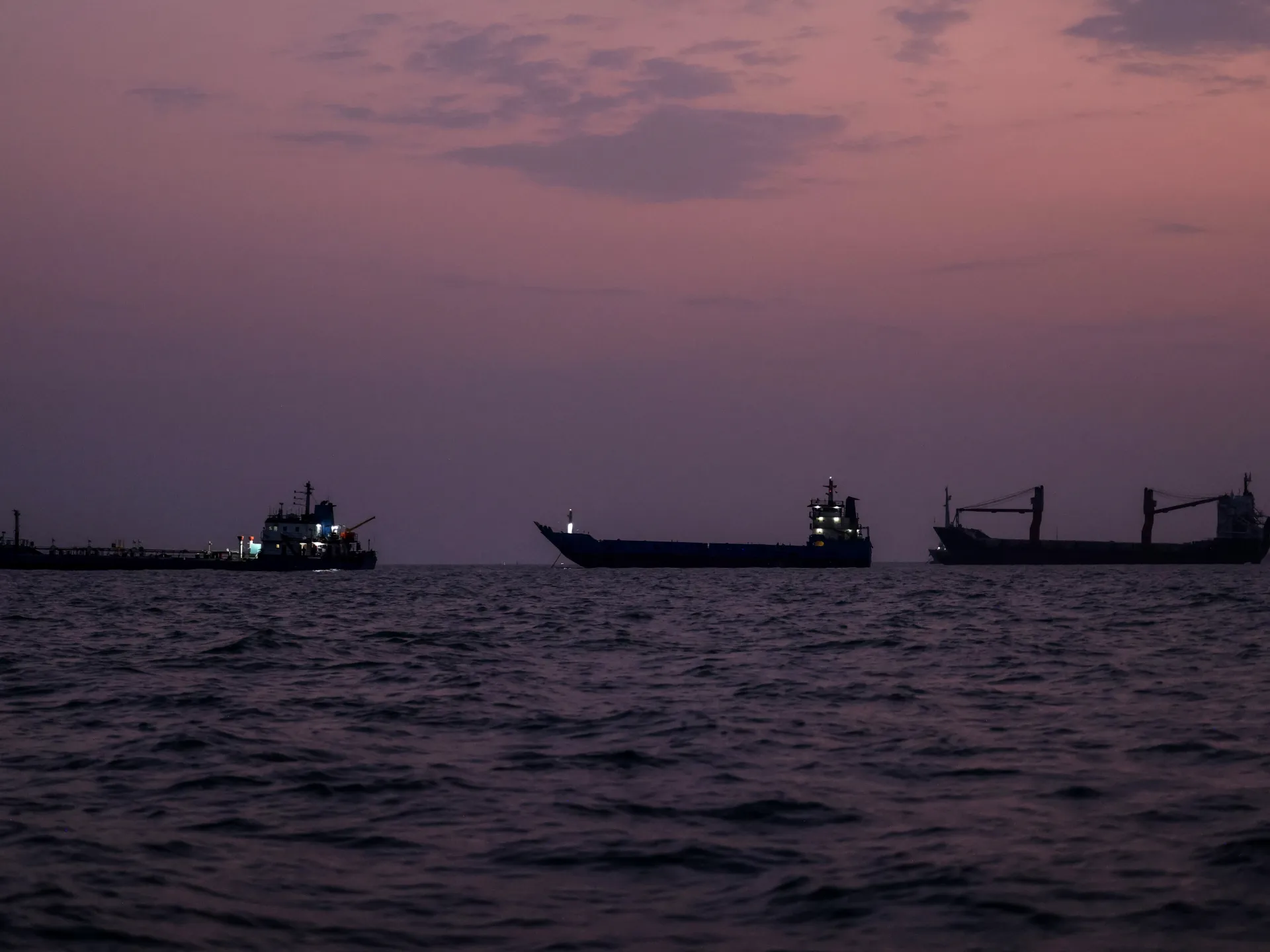
An oil spill off the UAE coast has prompted beach closures after a crude oil tanker reportedly struck an Iranian-laid naval mine in early October. The UAE says containment efforts and environmental assessments are underway.
Secretary of State Marco Rubio has urged Cubans to secretly work with the CIA to topple their government. His appeal followed President Trump’s threat to send warships to Cuba after the Iran war. A 10-month US blockade has led to power outages and water shortages.
Oil prices have climbed towards their highest levels in five months as attacks on tankers in and around the Strait of Hormuz mount and efforts to end the United States-Israel war on Iran are deadlocked.
Brent crude, the international benchmark, rose by more than $2 to $110.85 a barrel on Wednesday, close to a five-month peak.
Recommended Stories
list of 4 itemsend of list
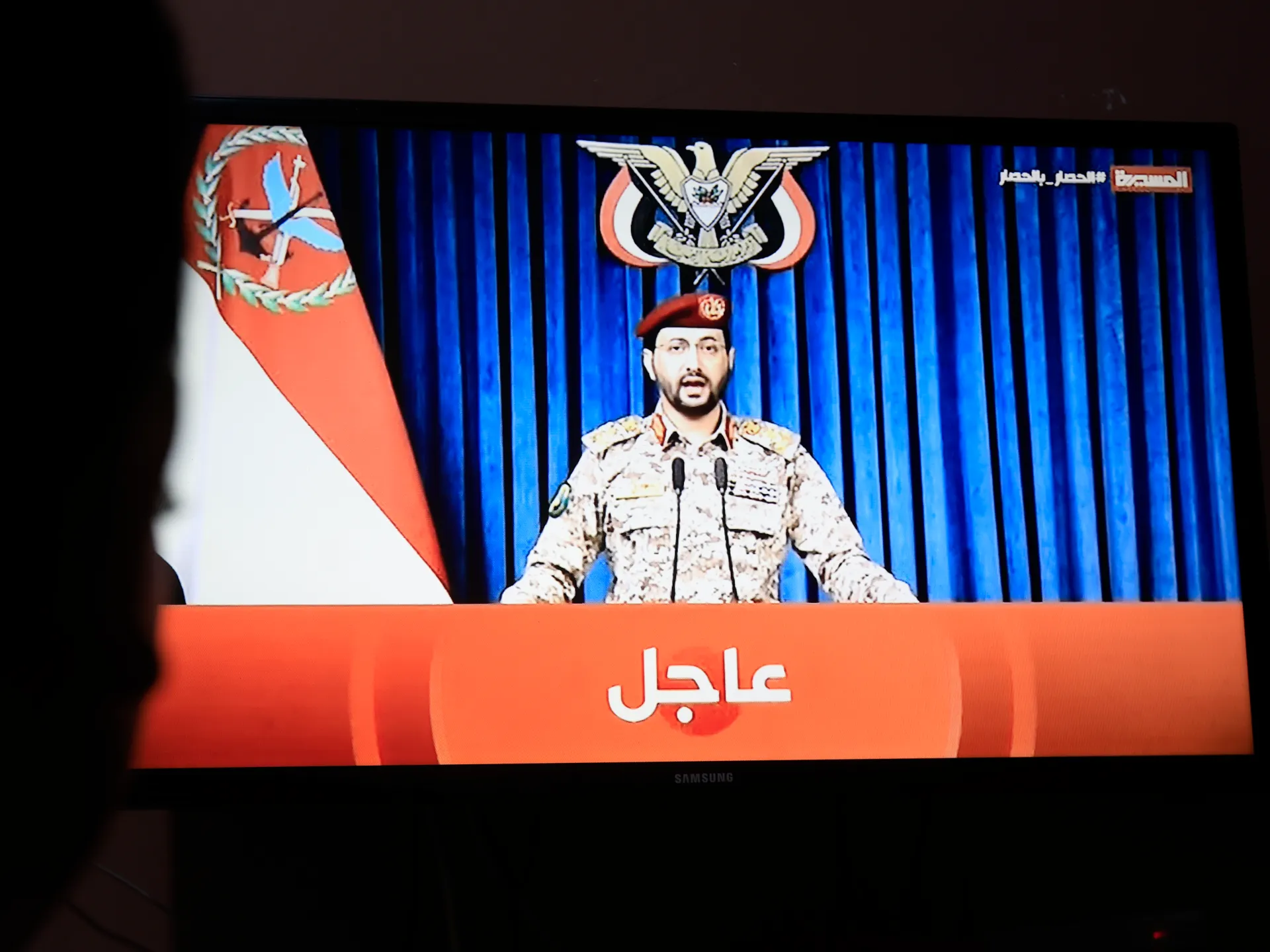
A day earlier, Iran’s Islamic Revolutionary Guard Corps (IRGC) said two tankers were “set ablaze” after hitting mines at what it called an illegal crossing point in the strait. Then, on Thursday, the IRGC said it hit seven more tankers although Washington dismissed the claim. In a statement, the IRGC said four of the vessels were transferring oil when they were targeted and caught fire overnight.
In September, the Houthis, an armed group also known as Ansar Allah (Arabic for Supporters of God), seized territory in Yemen close to the Bab al-Mandeb strait, a critical chokepoint into and out of the Red Sea and a gateway to Egypt’s Suez Canal.
The escalation came as the world’s emergency oil stocks, already tapped heavily since the Iran war began on February 28, sit at their lowest levels in decades.
Al Jazeera put a question to analysts: If fighting resumes in full, the Strait of Hormuz is shut off completely and Houthi attacks choke off Bab al-Mandeb, how long could the world’s reserves last?
Here’s what you need to know:
What emergency oil reserves are there?
Strategic oil reserves are stockpiles of crude oil and fuel held by governments or by companies on their behalf for use in a supply emergency.
The International Energy Agency (IEA), which was established in 1974 after the Arab oil embargo, coordinates most of them. Its importing members must hold at least 90 days of net imports. China and India are not members.
How much of the reserves has already been released this year?
A record amount.
On March 11, days after the start of the US-Israel war on Iran, the IEA’s 32 members agreed to make 400 million barrels available from emergency supplies, more than double the volume released after Russia’s full-scale invasion of Ukraine in 2022.
The US pledged 172.2 million barrels from its Strategic Petroleum Reserve (SPR) and Japan 79.8 million, according to IEA figures.
The SPR has since fallen to 283 million barrels, its lowest level since October 1982, according to the US Department of Energy.
Much of that oil was lent rather than sold and must be returned with extra barrels, according to the US Energy Information Administration.
How much oil is left?
Far less than before the war began in February, and not all of it can be used.
Aaron Kildow, a senior crude oil analyst at Sparta Commodities, told Al Jazeera that global strategic stocks excluding China and Iran have fallen by nearly 327 million barrels since the end of December 2025 with the US, Europe and Japan accounting for about 95 percent of the draw.
He estimated that leaves only about 400 million barrels of usable reserves worldwide, excluding China’s stockpile, which is unlikely to be exported, and Gulf stocks, which could be cut off by a total closure of Hormuz.
Nearly half of these available stocks are in Japan.
Europe has about 76 million barrels uncommitted, but members such as Germany are holding some back for a local emergency, Kildow said.
“Europe is the real wildcard, both on timing and willingness,” Kildow said.
Meanwhile, China’s onshore crude stocks stand at 1.13 billion barrels, down from 1.23 billion in late February but still enough for about 80 days of refinery intake, Muyu Xu, a senior crude oil analyst at the analytics firm Kpler, told Al Jazeera.
India’s reserves cover just eight days of its imports, the Reuters news agency reported.
What would a full closure of Hormuz and Bab al-Mandeb mean?
Before the war, about one-fifth of the world’s oil and liquefied natural gas supplies, or roughly 20 million barrels of oil a day, passed through the Strait of Hormuz.
Saudi Arabia has increased the amount of crude it transports from its oilfields in the east to its Red Sea port of Yanbu in the west via the East-West Pipeline, thereby bypassing Hormuz.
But there have been strikes on that pipeline, and tankers heading south from Yanbu must pass through Bab a-Mandeb, where the Iran-backed Houthis declared a blockade on Saudi shipping in July.
Only a confirmed 373,000 barrels a day of Saudi crude have transited Bab al-Mandeb so far this month, the lowest level since February, Xu said, with most Yanbu cargoes now heading north via Egypt instead.
If Hormuz were shut and the Houthis blocked all Saudi tankers, Gulf producers could export only through a few pipelines and Yanbu’s northbound route, Xu said.
That would leave about 7.5 million barrels a day of Middle Eastern crude, against 16.8 million now, a shortfall of about 9.3 million barrels a day, she estimated.
“If such attacks occur, the supply disruption could be even more severe and prolonged,” Xu said, referring to strikes on oilfields, terminals and pipelines.
[Al Jazeera]
So how long would reserves last?
Not for long – possibly just weeks, according to experts.
If Kpler’s estimated shortfall had to be covered entirely from the roughly 400 million usable barrels that Kildow identified, they could not, in practice, be released that fast. Japanese and South Korean reserves can move quickly, Kildow said, but US barrels are staged over three months, and Europe’s contribution is uncertain.
Chris Beauchamp, chief market analyst at IG Group, said the world was fortunate after the first closure. “The salient feature of March and beyond was how a crisis didn’t actually develop. We got away with it,” he said.
“I don’t think the global economy will be as lucky next time if there is a protracted conflict,” Beauchamp said. “A month or two is all we have.”
The world would not literally run out of oil. Instead, prices would rise until enough demand disappeared. “One hundred fifty dollars [per barrel] becomes a very distinct possibility, which then sees significant demand destruction,” Beauchamp said.
The sharpest squeeze would be on diesel, which is already nearly double the price of crude, the IEA said.
Refiners would compete for crude grades rich in diesel, “a cost that ultimately lands on consumers,” Kildow said.
Who would feel it first?
Asian importers with thin reserves.
Most Gulf exports in September and October went to Asian buyers, and India and Pakistan are among the most exposed, Kildow said, adding that their nearest alternative supply, from West Africa, is 25 to 28 days away by sea, compared with two days from Fujairah in the United Arab Emirates.
“The squeeze won’t hit uniformly. It lands fastest and hardest where reserves are thinnest and substitute supply is farthest away,” Kildow said.
Who would gain?
Oil producers far from the Gulf.
In the second quarter of this year, as the US-Iran war was under way, ExxonMobil reported earnings of $14.5bn, its highest in four years while Chevron posted $12bn, its best in six years and Shell more than doubled its earnings to nearly $10bn. Their profits are largely down to the high oil prices.
A second shock would send refiners scrambling for supplies from the US, Latin America, West Africa and Russia, Xu said.
“This would allow non-Middle Eastern producers to benefit from higher crude prices, potentially alongside lower transportation costs,” she said.
In August, US President Donald Trump said companies such as ExxonMobil and Chevron were “making too much money based on a shortage”.
Some countries in the region say it infringes on their rights.
Libya’s eastern parliament has walked back its objection to an agreement with Turkiye, demarcating boundaries in the Mediterranean Sea.
Its rival administration, the internationally recognised Government of National Unity, signed the deal seven years ago.
The ratification has revived a simmering dispute over exploring a potentially gas-rich region. Greece, Cyprus and Egypt were quick to object, with Athens referring the issue to the UN Security Council.
They say Libya and Turkiye are ignoring their sovereign rights.
So what are the geopolitical implications of this deal in the eastern Mediterranean?
Presenter: Mohammed Jamjoom
Guests:
Sinan Ulgen – Chairman of the Centre for Economic and Foreign Policy Studies
Maria Gavouneli – Professor of international law at the National and Kapodistrian University of Athens
Tarek Megerisi – Director of Informmi, a geopolitical research and advisory firm
French president meets Crown Prince Mohammed bin Salman in Riyadh to discuss energy, security, and infrastructure as cost-of-living protests rage at home.
Published On 21 Oct 202621 Oct 2026
French President Emmanuel Macron visited Riyadh on a surprise “solidarity” visit, making him the first Western leader to touch down in Saudi Arabia since the Houthis intensified their attacks this month.
The unannounced trip comes as Saudi Arabia agreed to supply extra diesel to France “for as many months as necessary”, the Elysee Palace told the AFP news agency on Wednesday.
Recommended Stories
list of 3 itemsend of list
The visit aims to “demonstrate France’s solidarity with the kingdom in the face of the attacks carried out by the Houthis against its territory, and to continue efforts undertaken on securing and diversifying hydrocarbon supplies”, the French presidency said earlier.
The diplomatic push follows days of rioting in France, fuelled by the cost of living, especially as the US-Iran war and Iran’s blockade of the Strait of Hormuz have kept energy prices high.
Faced with criticism of his Gulf tour at home, Macron told reporters he was just “doing his job” in a bid to “ease tensions” over petrol prices, one of the causes of social unrest in France.
“There must be no sign of febrility,” he said. “I am fulfilling my role. I am at my post.”
Macron met Saudi Crown Prince Mohammed bin Salman in the Saudi capital, and the two agreed to consult on expanding security cooperation and on infrastructure projects to bypass the blockaded strait, the palace said.
It did not say how much extra diesel Saudi Arabia would supply.
Macron’s Gulf tour
The deal follows pledges secured earlier in Macron’s Gulf tour. The presidency said on Tuesday that the United Arab Emirates had committed to about 100,000 tonnes a month, with a further 100,000 tonnes monthly to be secured in Bahrain.
Together with Saudi deliveries, France now has commitments for 295,000 tonnes a month, just more than 10 percent of its consumption, it said.
Meanwhile, France is also sending military assets to Saudi Arabia, under an earlier agreement, to help protect the Red Sea port of Yanbu, which has come under attack from the Iran-backed Houthis, an armed group also known as Ansar Allah (Arabic for Supporters of God).
The United Kingdom also announced on Tuesday that it would deploy fighter jets to help shield the kingdom. Both countries say their support is purely defensive.
Analysts say the moves protect Saudi oil exports that matter to Europe’s energy markets and bolster the Gulf alliance as the US shows reluctance to offer direct military help. They also carry risks, analysts say, potentially drawing the two European states into the protracted Saudi-Houthi conflict.
The decision has drawn sharp criticism from left-wing politicians and environmentalists.
Published On 21 Oct 202621 Oct 2026
The United Kingdom’s government has approved a natural gas project off the coast of Scotland, as the Labour government seeks to balance its climate goals with energy security concerns.
Energy Minister Miatta Fahnbulleh said on Wednesday that the Jackdaw gasfield would begin supplying energy to UK homes by the end of the month and would help to boost the country’s energy security.
Recommended Stories
list of 3 itemsend of list
The government said the North Sea project would increase UK gas production by about 6 percent at its peak.
Prime Minister Andy Burnham said the decision will “protect hundreds of jobs and help keep millions of homes warm”, but stressed it would not hinder the government’s targets on renewable energy.
The government also announced a New Energy Wealth Fund, which will invest in renewable and low-carbon energy projects as part of the green transition.
The fund has been established with an initial 2 billion pounds ($2.7bn), with plans to raise additional funds through tax revenues from North Sea oil and gas.
Higher energy prices amid the Russia-Ukraine war and the United States-Israel war on Iran have weighed on households and businesses, dragging on Britain’s economy.
Fahnbulleh told UK radio station LBC that the development of Jackdaw would not bring down household energy bills.
“I think it’s really important that we’re honest about this,” Fahnbulleh said.
“That was not a consideration in the decision because it won’t mean cheaper bills. This was about energy security.”
The announcement has drawn criticism from left-wing politicians and environmental groups.
Zack Polanski, the leader of the opposition Green Party, described the decision as “climate vandalism”.
“Surreal to hear [the] energy secretary try and say this is a ‘pragmatic decision’,” Polanski wrote in a post on X.
“It will do nothing to lower bills. It will do lots for the profits of the oil and gas companies. And will continue us further down the path of floods and wildfires.”
Environmental group Greenpeace said the decision showed “the toxic grip fossil fuel lobbyists still hold over our energy policy”.
“True pragmatism means severing our reliance on expensive oil and gas that leaves British households broke, supercharges extreme weather, and leaves our energy security at the mercy of petrostates,” said Ami McCarthy, head of politics at Greenpeace UK.
Voters in Alberta have chosen to remain part of Canada in a first-ever independence referendum.
Canadian state broadcaster CBC News called the results of Monday’s vote late on the same day after 48 percent of the ballots counted showed overwhelming support for the “remain” side, with 76 percent opting to stay with Canada.
The result marks a major win for Prime Minister Mark Carney, who is facing a trade and political war with the United States amid US President Donald Trump’s higher tariffs and repeated suggestions of annexing the country.
On his way into a cabinet meeting on Tuesday morning, Carney called it a “great day.”
“I’m thrilled that Albertans have chosen unity. They’ve chosen to build together. They’ve chosen to continue to take care of each other, to move forward together with purpose,” he said.
But the result also comes as a disappointment for those Albertans seeking independence for the resource-rich region following years of grievances laid at Ottawa’s door. Here’s what we know:
Supporters of the Alberta Prosperity Project, a group that promotes independence from Canada, gather at a watch party on the day of a nonbinding referendum on Alberta sovereignty, in Edmonton, Alberta, Canada, October 19, 2026 [Jennifer Gauthier/Reuters]
What was the referendum about?
The nonbinding referendum was first announced in May following a campaign and petition by a group of Albertans who want to be an independent country.
While only about one-third of Albertans were found to be pro-independence in polls, Alberta Premier Danielle Smith argued in her announcement that a referendum was necessary to respect the 300,000 Albertans who had petitioned officials for it.
In the referendum, voters answered 10 questions, including whether the government should begin a binding process to seek independence from Canada. They also answered questions on immigration, access to provincial services like education, social care and healthcare, and voter identification requirements.
Prime Minister Carney had campaigned for Albertans to vote “remain”, saying last week at a rally in Calgary that separation would be “ a dangerous bluff that will lead to years of deep division”.
“There are some outside our borders who are working to break us so they can own us,” he said.
Researchers have pointed to possible online influence campaigns by both Russian and US entities that helped amplify the call for separation and allegedly shared misleading information. Alberta PM Smith told media in August that the online activity was under observation.
What have the reactions been?
Prime Minister Carney, who grew up in the region, said “Albertans made a clear choice” in a statement he made early on Tuesday.
“They chose unity, to build together, and to take care of each other,” he said, adding that “Canadians will move forward together with renewed purpose and high ambition.”
Alberta’s Premier Smith said she was pleased to see the results and that “Albertans have voted for a stronger Alberta in a united Canada.”
Separatist leaders from the groups Let Alberta Decide, the Alberta Prosperity Project and the Pathway to Independence said they will wait for all votes to be counted before conceding.
First Nations groups turned out in strong numbers to vote to remain with Canada, with one southern Alberta polling station in an area home to the Siksika Nation temporarily running out of ballots, local media reported.
Why is Alberta important, and why are there calls for independence?
Many Albertans have long complained that their critical natural resources are funding the government in Ottawa and the commercial hubs of Toronto and Montreal, but that the province does not receive proportionate benefits.
The province, with a population of 5.1 million, holds massive oil deposits. It also holds reserves of critical and rare-earth metals including lithium, titanium and zircon, which are essential for manufacturing many tech items, from smartphones to fighter jets.
Separatist movements, some of which even support Alberta joining the US, go back to the 1940s, following the discovery of oil reserves. Some of Alberta’s premiers have had spats with Ottawa over wealth distribution.
US President Trump has made remarks about Canada becoming a US state in recent months.
Last week, he told a political rally in the US state of Arizona that Canada will “end up being the 51st state, because it’s the only way it works”.
The two countries have been embroiled in a trade war since talks fell apart in August this year and they slapped each other with tit-for-tat tariffs.
Earlier this month, tech billionaire Elon Musk called for Alberta, Saskatchewan and Quebec to separate from Canada, saying “they’d be better off”.
But the matter of Alberta’s independence gained intense scrutiny last year after pro-separatists launched a petition to pressure the government.
Alberta, alongside other western provinces of British Columbia, Saskatchewan and Manitoba, have all complained about “western alienation” by the government in the centre.
Is it over for Alberta’s independence bid?
With separatism agitations running so far back, experts say the referendum will likely not end the movement altogether.
Ahead of the vote, some separatist leaders said they would pursue another referendum if necessary, arguing that the referendum shows that independence is legally possible.
“Regardless of what happens on Monday, we’ve already won,” Keith Wilson, co-leader of Let Alberta Decide, said at a rally last week.
New Delhi, India — United States Secretary of State Marco Rubio has arrived in India for a two-day visit, during which he is set to tour the Jamnagar refinery complex in Gujarat, owned by billionaire Mukesh Ambani’s Reliance Industries, a major player in global oil markets.
Reliance’s crude refinery in Prime Minister Narendra Modi’s home state is the world’s largest single-site refinery. In many ways, Reliance Industries’ businesses sit at the crossroads of the ongoing global energy crisis.
The conglomerate is central to Washington’s efforts to punish Russian energy buyers, while also trying to contain oil prices amid the war on Iran, on top of rising diesel costs in the US, where a crucial midterm election looms. Reliance has also only recently committed to a major investment in the US, which President Donald Trump’s administration has cited as an example of its successes in luring global capital.
Rubio is skipping the capital, New Delhi, at a time when the US-India bilateral relationship has been rocky, strained by a string of friction points — and an elusive trade deal.
So why is the top US diplomat visiting the world’s largest single-site oil refinery?
Secretary of State Marco Rubio shakes hands with US Consul-General in Mumbai Yuriy Fedkiw as he disembarks from a plane after arriving at Mumbai airport in India, October 20, 2026 [Kylie Cooper/Reuters]
Where is Rubio visiting?
After meetings in Mumbai, India’s financial hub in the western state of Maharashtra, Rubio will fly to Jamnagar in neighbouring Gujarat, near the Gulf of Kutch. Jamnagar opens into the Arabian Sea and is home to Reliance Industries’ refining complex, a major hub for crude processing and fuel exports, which processes 1.4 million barrels per day (bpd).
Rubio had visited India earlier this year too, but this trip “is a little more business-focused”, the US ambassador to India, Sergio Gor, told reporters last week. A readout from Rubio’s office noted that he would “meet with business leaders to promote opportunities for commercial investment and economic cooperation”.
“[At Jamnagar] he will meet some of the folks at Reliance,” Gor said.
The Reliance Industries oil refinery in Jamnagar, Gujarat, India, on July 31, 2021 [Bloomberg]
What’s in Jamnagar?
The world’s largest single-site oil-refining complex has a combined crude-processing capacity of 1.4 million bpd. That is nearly 1.5 percent of global refining capacity, according to the company.
The complex comprises two refineries: the original facility, commissioned in 1999 with a capacity of 660,000bpd, and a second, export-oriented refinery commissioned in 2008, adding 580,000bpd, which operates in a special economic zone.
Jamnagar imports crude from international suppliers and exports refined products to global markets. The refinery can process heavy, sulphur-rich crude that many facilities cannot handle efficiently, converting oil into higher-value products.
Reliance said last month that the complex has processed more than 216 crude grades, claiming to be “perhaps the only refinery to achieve this feat”.
The Jamnagar refinery’s capacity is also driving a sharp revival in imports of Venezuelan crude — taken over by the US earlier this year after abducting then-President Nicolas Maduro — as Washington seeks to reshape global oil trade.
Reliance is expected to account for roughly 350,000bpd to 370,000bpd of the October intake, according to estimates from analytics firm Kpler. “We will talk with Reliance about refining more Venezuelan crude,” Rubio told reporters in brief remarks on Tuesday.
Secretary of State Marco Rubio, right, with US Ambassador to India Sergio Gor, in Mumbai, October 20, 2026 [Kylie Cooper/Reuters]
Why is the refinery significant for global energy supplies?
Reliance is a central player in keeping global oil markets stable, as one of the world’s biggest suppliers of refined petroleum products. In September, for instance, six of the seven large cargo ships that docked at European Union ports carrying oil products were bearing Reliance goods.
Reliance’s biggest export is diesel, which Trump has been particularly worried about, with prices reaching historic highs in the US ahead of midterm elections early next month.
Though the data on exports by category is not public, an analysis by the Reuters news agency from trade sources noted that Reliance Industries exported 21.66 million tonnes of refined petroleum products in the first half of 2025 from Jamnagar. Diesel accounted for the largest share at 9.81 million tonnes, followed by petrol at 6.14 million tonnes and jet fuel at 2.06 million tonnes.
Europe accounted for the biggest share of the company’s exports, making up 28 percent of Reliance’s refined products during the period. Buyers include BP, ExxonMobil, Glencore, Vitol and Trafigura.
The Jamnagar refinery also shipped about $143m worth of oil products to the US last month, according to data cited by the Centre for Research on Energy and Clean Air (CREA), a think tank in Finland.
CREA noted in its report that the EU’s ban on importing petroleum products made from Russian crude from January 2026 does not adequately prevent products from refineries in third countries from entering Europe when those refineries also process Russian crude. The Jamnagar refinery is a prime example of that loophole.
Rubio’s visit to the refinery also comes as Trump faces his worst approval ratings amid inflation and rising fuel prices ahead of the midterm election in November. Just about 31 percent of Americans are happy with Trump’s performance – the lowest-ever number in his two terms, according to a Reuters/Ipsos survey.
The Trump administration has also reportedly been pushing Ukraine’s President Volodymyr Zelenskyy to stop strikes on Russian energy facilities, which have rattled the global fuel markets.
Why the refinery is important for the Russia-Ukraine war
Since the start of Russia’s full-fledged war on Ukraine in February 2022, India has emerged as the second-largest buyer of Russian oil after China. And Reliance is driving that surge in imports. While only 3 percent of its oil was sourced from Russia before 2022, that share rose to 50 percent by 2025.
So when Trump imposed an additional 25 percent tariff on Indian goods in August 2025 to punish New Delhi for the purchase of Russian oil, Reliance was directly affected. It cut back on Russian crude imports significantly in subsequent months, but it still made up a third of the oil processed by Jamnagar’s refinery during the July-September 2026 quarter.
That was under threat when the Trump administration appeared poised to impose a 100 percent tariff on Indian goods because of continued Russian oil imports, under a new law passed last month.
But Trump has since suspended those proposed tariffs, easing concerns for India and Reliance.
Rubio has said India has been diversifying its import mix away from Russian crude, even as it still buys millions of barrels of Russian oil every day. “You’ve got countries like India, for example, that have voluntarily diversified their energy portfolio, but are still getting a substantial amount of energy from Russia because it’s hard to pivot from one day to the next,” Rubio said on Sunday.
“But they’re also an important ally and partner of the United States.”
Is Reliance also investing in the US?
Yes, India’s richest man, Mukesh Ambani, the chairman and managing director of Reliance Industries, is investing in the US, primarily through energy-related projects.
It is backing America First Refining’s planned oil refinery at the Port of Brownsville in Texas, also the first major US refinery in about 50 years, announced by Trump in March.
The refinery is expected to cost $3bn to $4bn and process about 60 million barrels of US crude annually. Reliance has signed a 20-year agreement to buy a large share of the facility’s output, with operations expected to start around 2029.
In November 2024, Reliance’s US subsidiary also acquired a 21 percent stake in helium explorer Wavetech Helium for $12m as part of its low-carbon energy strategy.
Last month, Trump announced that India’s Essar Group — an oil major with knee-deep ties to Russia — is planning an $18bn integrated steel investment in the US through its subsidiary, Mesabi Metallics.
Didn’t Trump’s ally just lock horns with Ambani?
Despite Reliance’s investments in the US and Rubio’s upcoming visit to the Jamnagar facility, Elon Musk, the world’s richest man who is also a key Trump ally, recently hit out at Ambani.
His Starlink space telecommunications firm has struggled for years to secure a licence to operate in India.
In a series of X posts recently, Musk accused Prime Minister Narendra Modi’s government of stalling Starlink’s entry to favour market leader Ambani’s telecom firm, Jio. Musk taunted Ambani directly, addressing him as “Prime Minister Ambani” and asking whether he would “consider allowing Starlink to compete”. Starlink, Musk wrote, was being blocked by “oligarchs” protecting their “monopolistic chokehold” on Indians.
In a statement issued on X, Reliance said it has “never feared competition” and has “grown in an India that welcomes investment and innovation, homegrown or international”.
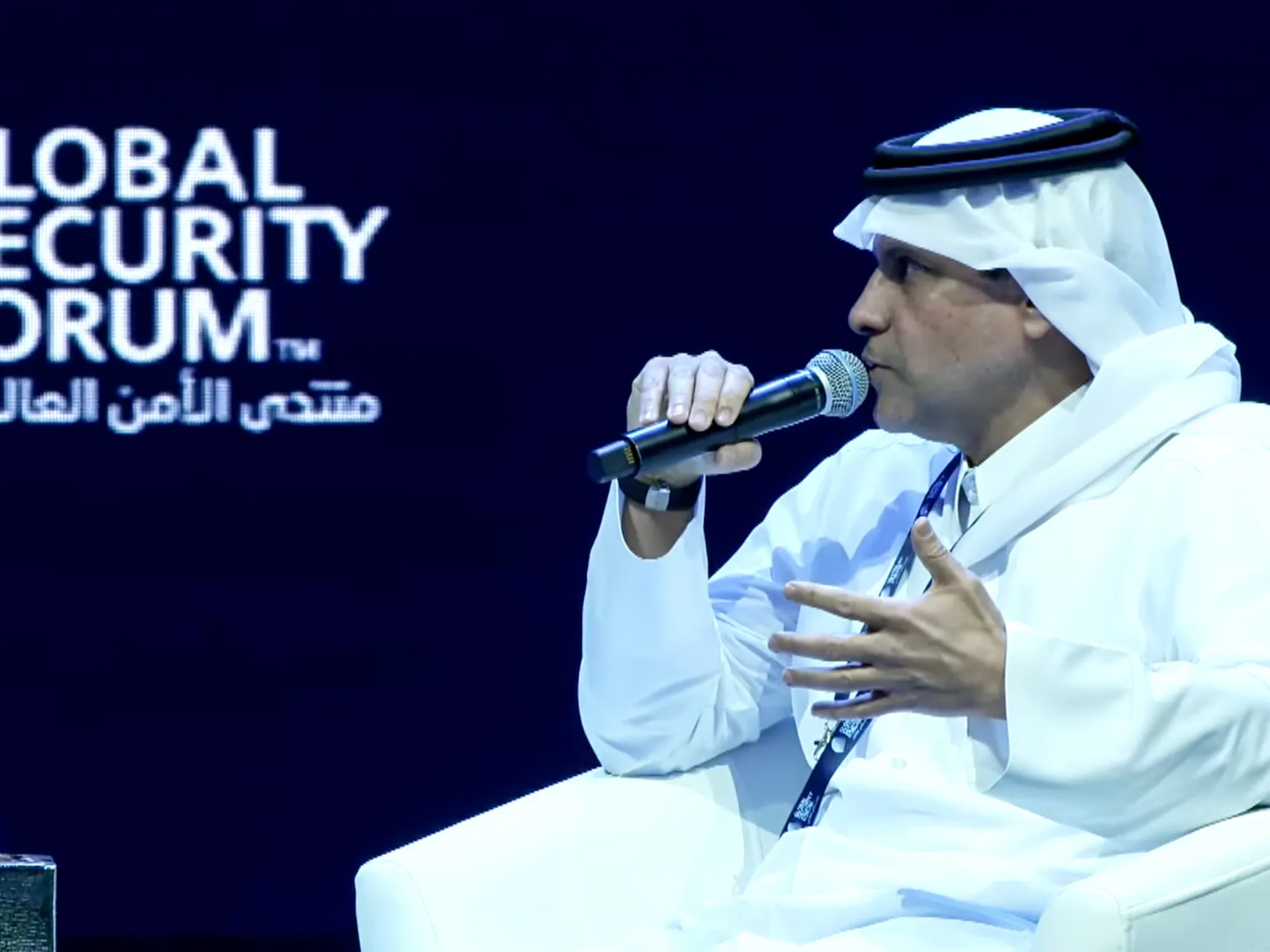
Doha, Qatar — The United States is moving away from its traditional security-for-oil relationship with the Middle East and no longer seeks to dominate the region, senior US diplomat Tom Barrack has said.
However, it was not abandoning the Middle East, he added, speaking at the Global Security Forum in Doha on Tuesday — but rather reassessing its role, after years of attempts to reshape governments across the region.
Recommended Stories
list of 3 itemsend of list
“The US no longer wants to own,” said Barrack, who serves as US Ambassador to Turkiye and Special Envoy for Syria. “The bargain is not to control, but to not leave. We’re not leaving.”
Barrack acknowledged that regional countries were increasingly recognising the limits of US involvement.
“Everybody is saying: OK, I can’t rely on America to solve all my problems,” he said.
Barrack questioned the effectiveness of previous interventions, saying that the US had been involved in 23 regime changes across the wider Middle East.
“Every time we try and intervene, change the person or the regime, it seems to have been a mistake,” he said.
His comments come as Washington and Tehran try to negotiate an end to the US-Israeli war on Iran that has destabilised the region and disrupted global energy supplies.
Political analyst Luciano Zaccara described Barrack as probably “the most realistic of Trump’s allies” in his assessment of US involvement in the Middle East.
He told Al Jazeera that Barrack had effectively acknowledged that regime change, one of Trump’s stated objectives in the war on Iran, was unlikely to succeed.
Zaccara said Barrack’s reference to regime changes in the Middle East was an acknowledgement “that what the US has been doing in the region has not been working, regardless of which administration it was”.
According to Zaccara, Barrack had stopped just short of suggesting that Trump needed to retreat from “the maximalist demands” he had made of Iran.
US-Iran negotiations ongoing
Qatar says negotiations between Tehran and Washington are continuing despite growing fears of renewed fighting.
Ministry of Foreign Affairs spokesperson Majed al-Ansari, speaking separately at the Global Security Forum, said mediators were continuing to exchange messages between the warring parties, with regional partners involved in efforts to reach a deal.
“We are working between the parties, continuing our job as mediator with our partners and others in the region,” he said.
Al-Ansari said the lack of public information about the negotiations should not be interpreted as a lack of progress.
“The fact that we’re not hearing about it is a good sign that we’re doing our job properly,” he said.
The diplomatic efforts come as Iran’s seven-day proposal to end the war remains on the table, with the US yet to give its response.
The plan envisages reopening the Strait of Hormuz and resuming nuclear negotiations in exchange for US concessions, including lifting the naval blockade on Iranian ports and easing economic sanctions on Tehran.
Analyst Negar Mortazavi said the diplomatic door remained open, but negotiations were stalled over the terms and sequencing of an agreement.
“Tehran wants to end the war, but it is not prepared to surrender under military or economic pressure,” she told Al Jazeera on the sidelines of the forum in Doha.
The Strait of Hormuz remains a major flashpoint, with attacks on commercial shipping raising concerns over global energy supplies. Before the US-Israeli war on Iran, one-fifth of the world’s oil and gas supplies transited through the strait.
Mortazavi said the escalation was part of Tehran’s strategy to maintain leverage against Washington despite its military disadvantages.
“Iran’s leverage has diminished but has not disappeared,” she said. “Moving tankers is not the same as restoring safe, predictable and normal maritime traffic.”
According to Mortazavi, Tehran wants to increase the economic and political costs of the war for Trump, while signalling to future US administrations that military action against Iran carries consequences.
But she warned that continued escalation posed serious risks to Iran and the wider region.
“Ultimately, neither military escalation nor economic pressure is likely to produce Iranian capitulation,” she said.
Fighting in Yemen
Qatar’s Ministry of Foreign Affairs spokesperson also reaffirmed Doha’s support for Riyadh in the fighting against Yemen’s Houthi armed group, saying it backed Saudi Arabia in “defending their sovereignty against this attack”.
Fighting intensified in September after the Houthis seized areas along Yemen’s Red Sea coast, including the port city of Mocha. In response, forces loyal to Yemen’s internationally recognised government launched an offensive, dubbed “Dawn of Yemen”, on October 4, backed by Saudi air strikes.
The Houthis have retaliated with missile and drone attacks on Saudi airports, oil facilities and military installations. Strikes on Riyadh’s King Khalid international airport earlier this month killed at least 14 people and wounded hundreds.
Riyadh postpones flagship investment conference until 2027, orders government staff to work from home.
Published On 20 Oct 202620 Oct 2026
Saudi Arabia’s Future Investment Initiative (FII) conference has been postponed until next year, according to a statement on the official website, as deadly strikes by the Iran-backed Houthis against the kingdom continue.
The annual event was due to start next week on October 26 and run through October 29, with a date next year to be announced “very soon”, the statement released on Tuesday said.
Recommended Stories
list of 3 itemsend of list
FII Institute chief executive officer Dr Maha Bint Mishari Al Saud said the decision “comes from a deep commitment to our partners, members, speakers and delegates”.
“Because this is our landmark tenth edition, we want to ensure it delivers the full scale, extraordinary quality, and unforgettable impact that our community has come to expect and truly deserves,” she said.
Informally dubbed “Davos in the Desert”, a nod to the World Economic Forum’s annual meeting in Switzerland, the state-backed conference showcases the kingdom’s ambitious investment plans in a bid to attract billions of dollars needed to fund its economic transformation away from hydrocarbons towards tourism, sport and technology.
Expected speakers included: Alphabet & Google’s president and chief information officer, Ruth Porat; Goldman Sachs Group chairman and CEO David Solomon; and BlackRock chairman and CEO Laurence Fink, according to the FII website.
Smoke and flames rise from King Khalid International after Yemen’s Houthis said they attacked the airport in Riyadh, Saudi Arabia, on October 8, 2026, in this screengrab obtained from a social media video [Reuters]
Fighting between a Saudi-led coalition supporting Yemen’s internationally recognised government and the Iran-aligned Houthis has escalated in recent weeks.
The Houthis, also known as Ansar Allah, have hit military, energy and civilian infrastructure across Saudi Arabia, including Riyadh’s international airport, killing at least 18 people and injuring hundreds more.
Government staff to work from home
Government agencies in the Saudi capital, Riyadh, have told employees to work from home, one worker and two consultants told the AFP news agency, as the city comes under repeated attack from the Houthis.
The Kingdom Centre, a 99‑storey tower in downtown Riyadh that houses the International Monetary Fund’s regional office, also requested workers stay away until further notice.
On Sunday, an employee of a government agency in the capital received a message saying, “It has been decided to implement remote work from Monday to Thursday this week”. The message added: “We ask everyone to continue their activities as normal.”
Companies based in the King Abdullah Financial District, which hosts offices of major United States firms, have also asked employees to work from home, according to other sources.
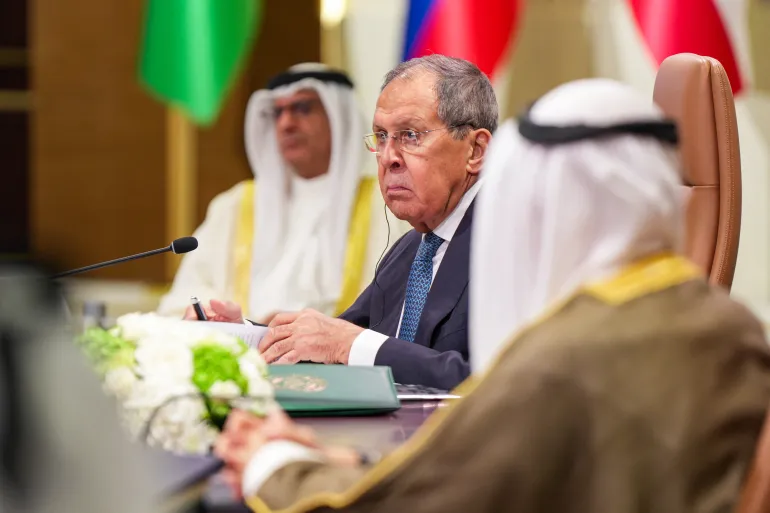
Tehran, Iran – Russia’s Foreign Minister Sergey Lavrov is due to meet with senior Iranian officials in Tehran to discuss the war with the United States and efforts to end it.
Lavrov landed in the Iranian capital on Monday afternoon on his first visit to Iran since February 2025. Moscow said the trip was part of efforts to ease months of tension, since the US and Israel launched their war on Iran on February 28. The Russian minister is scheduled to hold talks with President Masoud Pezeshkian and Foreign Minister Abbas Araghchi later on Monday.
Recommended Stories
list of 3 itemsend of list
On Sunday, Lavrov was in Bahrain, which was heavily targeted by Iran during the war, to participate in a strategic dialogue session between Russia and the Gulf Cooperation Council (GCC).
He was urged by GCC members to use Moscow’s influence with Tehran to press for “serious dialogue” and restore shipping through the Strait of Hormuz, which has been severely disrupted by attacks on commercial vessels.
GCC chief Jasem Al-Budaiwi said member states had faced more than 7,000 Iranian missiles and drones since the start of the war.
In the council’s closing statement, the six Arab countries said they wanted Iran’s nuclear and missile programmes, as well as its support for regional armed groups, to be included in future talks to end the war.
Nikita Smagin, an analyst and researcher on Iran and Russia’s role in the Middle East, said Lavrov’s trip reflects Moscow’s efforts to maintain working relations with all countries in the region.
He said Lavrov also wants to maintain Russia’s status as a mediator, despite the impact of the Ukraine war on its global reputation.
“The timing of visits to the Gulf monarchies and Iran, taking place almost simultaneously, is a deliberate signal: Moscow wants to show that it approaches relations with all these countries on broadly equal terms and is equally interested in cooperation with each of them,” Smagin said.
How does Russia fit in?
Lavrov told GCC ministers in Manama that the region was once again teetering on the brink of a full-scale war and Russia wanted to establish a regional architecture for “collective security”.
He said this could include combining initiatives from countries in the region, along with those put forward by Russia and China, with the aim of restoring maritime traffic and achieving lasting peace. The Russian foreign minister urged other regional states such as Iraq and Jordan, which have also been hit by Iranian strikes, to participate.
Lavrov expressed support for the Memorandum of Understanding (MoU) signed between Iran and the US in June, which later collapsed, as a framework for reducing tension.
Iran has said it wants a return to that agreement, and for Washington to honour a finalised bilateral deal between Iran and Oman to manage territorial waters in the Strait of Hormuz. This has been opposed by the US, which has established its own route in the waterway for shipping.
Intelligence reports cited by US media said that Russia and China are providing military support to Iran in the form of satellite imagery for targeting purposes and components for weapons.
But US President Donald Trump contradicted those reports last week, saying Moscow and Beijing would have “too much to lose” if they helped Iran.
Russia’s Foreign Minister Sergei Lavrov (C) attends the 9th Joint Ministerial Meeting of the Strategic Dialogue between the Gulf Cooperation Council (GCC) and the Russian Federation in Manama on October 18, 2026. [Fadhel Madan/AFP]
Mixed intentions
Russia’s position on the Iran war is somewhat unusual, said Smagin. It has a partial interest in the conflict continuing, as higher oil prices and the severe restrictions on Iranian oil reaching China all benefit Moscow.
“Russia and Iran have been competing primarily for the Chinese market, so China is now effectively forced to buy Russian oil at higher prices because Iranian supplies are largely unavailable,” he said.
Smagin added that Russia does not want the conflict to escalate further, as the consequences could be unpredictable, but its leverage over either Iran or the US to influence the course of the conflict remains limited.
Russia will continue to expand relations with Tehran, Smagin said, including through Caspian Sea trade, and limited military cooperation with Iran.
“These efforts appear to be aimed less at generating economic returns than at expanding Russia’s political influence over Iran and the course of events,” he said.
Military strikes by Iran and the US to wrest control of the waterway have continued, with the US midterm elections approaching on November 3 .
In comments to the media, Trump threatened to “soon finish the job” with Iran, to which Iranian Foreign Minister Araghchi replied: “We have unfinished jobs too.”
Doha, Qatar — Qatar’s deputy prime minister has warned that global energy shockwaves from the US-Israel war on Iran have yet to reach their peak, raising concerns about further disruption to supplies, international trade and economic growth.
Speaking at the Global Security Forum in Doha on Monday, Sheikh Saoud bin Abdulrahman Al Thani, who also serves as Minister of State for Defence Affairs, identified several threats facing Qatar and the wider Gulf, including risks to sovereignty and disruptions to energy supplies.
Recommended Stories
list of 3 itemsend of list
“We haven’t reached the peak with respect to energy,” he said, warning of further repercussions “in the coming days and months”.
His remarks come amid continued instability in the Strait of Hormuz – a vital waterway for global oil and liquefied natural gas (LNG) shipments – following the US-Israeli attacks on Iran on February 28, and Tehran’s retaliatory strikes across the region.
Iranian strikes on Qatar’s Ras Laffan industrial complex in March damaged facilities, with repairs expected to take several years.
“We were surprised,” Al Thani said when asked about the attack, adding that there had since been “a lot of discussion with Iran”.
He said Qatar had drawn lessons from the strikes, “to make sure that all of our assets will be protected from any unexpected attack”.
Al Thani also warned against imposing tolls on ships passing through the Strait of Hormuz.
“Transit fees should not be applied,” he said, adding that uncertainty over the waterway would ultimately affect consumers worldwide.
‘We never stop our communication’
Despite the attacks, Al Thani said Qatar continued to maintain contact with Tehran.
“We never stop our communication,” he said, adding that the two countries remained in touch at different levels despite their disagreements.
He described Qatar’s relationship with Iran before the attacks as one of trust, pointing to their shared offshore gasfield and longstanding economic interests.
Al Thani expressed hope that mediation efforts involving Qatar, Pakistan and Oman would help produce an agreement between the United States, Iran and other parties, including Israel.
He said a sustainable settlement would require broader regional dialogue involving Gulf Cooperation Council (GCC) countries, Pakistan and Turkiye, in consultation with international allies.
“We need to build this on trust,” he added.
Al Thani also suggested developing economic ties with Iran to prevent future conflicts, citing cooperation between France and Germany following decades of hostilities.
“Iran is our neighbour. We need to find ways to live with them,” he said.
US defence ties
Al Thani also highlighted Qatar’s longstanding defence partnership with Washington, saying that “more than 90 percent” of attacks had been prevented through shared expertise and military capabilities developed over the past three to four decades.
He said Qatar was continuing to develop Al Udeid airbase, which hosts US forces and military personnel from other partner countries.
The base was itself targeted by Iran during the conflict, with Qatar reporting that it had shot down two Iranian warplanes during an attack in early March.
Al Thani also announced plans for a new regional defence partnership, saying Qatar was prioritising several aspects including air defence, counter-drone measures and cybersecurity.
“I’m happy to announce today also that soon we’re going to announce a new partnership,” he said, without naming the regional partners involved.
The deputy prime minister stressed that Qatar’s mediation efforts did not diminish its commitment to defending its territory.
“Mediation doesn’t mean that we should not be ready for any defensive action from our side,” he said.
Cory Morgan has spent more than 25 years fighting for Canada’s oil-rich province of Alberta to become an independent country. On Monday, Albertans will head to the polls to vote on the issue for the very first time. But even if the answer is no, Morgan said he’s in it for the long haul.
“I would respect the will of the voters,” he told Al Jazeera. “If they’ve decided it’s not time to go that route yet, then so be it. But that doesn’t mean I’ll stop.”
Recommended Stories
list of 4 itemsend of list
Morgan, the founder of the advocacy organisation Pathway to Independence, is among a group of longtime separatists who have managed to push what was once a fringe idea onto the ballot.
Monday’s provincial referendum asks Alberta residents to weigh whether they would like to pursue a binding resolution in the future on the question of independence.
Polls indicate the pro-independence side has little chance of succeeding, with four of five people in the province saying they want Alberta to remain a part of Canada. But Morgan’s focus is on the one in five who don’t.
“That’s not a movement that’s leaving,” he said.
What the referendum will mean for the separatist movement and for Canada as a whole, however, is a more complicated question.
What exactly are Albertans voting on?
Monday’s ballot gives Albertans two options: to remain part of Canada or begin the legal process for holding a future referendum on separation.
A vote in favour of the second option doesn’t mean Alberta immediately becomes an independent country.
Any province that tries to secede would first have to go through complex negotiations with the federal government in Ottawa, other provinces and Indigenous peoples who live in and around Alberta.
Some separatist organisers have been using that distinction to encourage people to vote for the referendum — even if they don’t necessarily want independence.
“Strategic separatists and their leaders have been using that ambiguity, that lower-bar threshold, to entice folks to vote not to leave, but rather to send Ottawa a message that Albertans need to be heard,” said Jared Wesley, a political science professor at the University of Alberta.
He told Al Jazeera that the message may be resonating with some voters.
Data collected by Viewpoint Alberta, a University of Alberta-based research initiative, suggests that two-thirds of voters who support the referendum say they’re doing so for strategic reasons, to send a message to Ottawa.
These are people Morgan calls “reluctant separatists”, people who are “at the end of their rope” and simply want Ottawa to pay attention.
But Prime Minister Mark Carney has warned Albertans against this strategy.
“Don’t be fooled by the idea you can ‘send a message’ with your vote,” he told a pro-Canada rally in Calgary on Thursday. “This is not poker. A vote against Canada is a dangerous bluff that will lead to years of deep division and great uncertainty.”
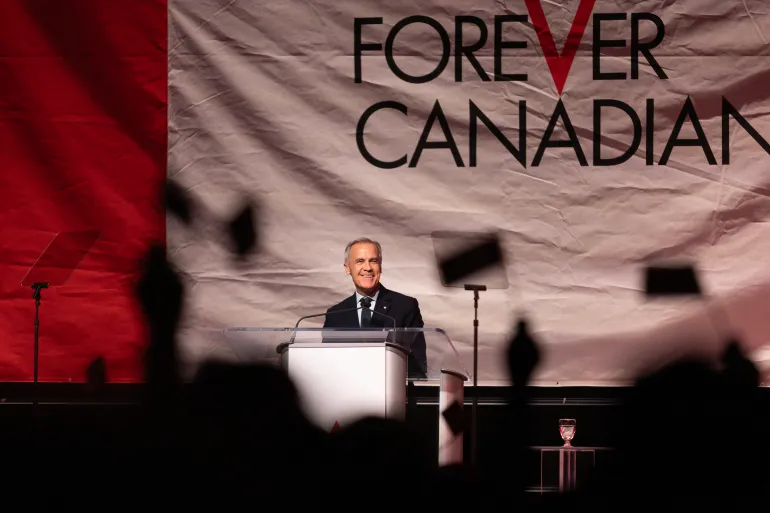
Canadian Prime Minister Mark Carney speaks at a rally hosted by the advocacy group Forever Canadian at the Edmonton Expo Center in Edmonton, Alberta, on Friday [AFP]
What’s driving Alberta’s separatist movement?
Monday’s referendum has been decades in the making. Separatists have long felt that Alberta, home to the world’s fourth-largest proven oil reserves, sends too much money to Ottawa, subsidising the rest of the country while receiving little in return.
They also take issue with federal energy policies that they feel limit the potential of the province’s oil industry.
For Morgan, the resentment stretches back to the 1980s when the National Energy Program was introduced by the government of Pierre Trudeau, former Prime Minister Justin Trudeau’s father.
The policy used price controls, taxes and ownership rules to keep Canadian energy affordable while directing more of Alberta’s revenues to Ottawa.
It has since become a central symbol of “Western alienation”, a term used to describe the sense of disenfranchisement felt among Canada’s westernmost provinces.
Those tensions resurfaced decades later under Justin Trudeau, whose term began in 2015. His climate policies, including a national carbon tax and a limit on emissions, angered Alberta’s oil sector.
“We’ve been fighting about the same things for 50 years,” said Morgan.
Then came the COVID-19 pandemic. Experts say demonstrations against health restrictions mobilised a new generation of conservative activists, breathing new life into Alberta’s separatist movement.
Trudeau ultimately resigned as Liberal Party leader and prime minister in 2025, amid sinking poll numbers. Carney was elected his replacement.
Last year, under growing pressure from separatist groups, Alberta Premier Danielle Smith’s government made it easier to start referendums, helping bring the question of Alberta’s independence onto the political agenda.
For Wesley, the moment is less about growing public support for independence and more about pressure from within Smith’s governing United Conservative Party, whose members show higher support for separation than Albertans generally.
“We’re having a referendum because Danielle Smith wants us to have a referendum,” Wesley said. “She is looking to solve internal party matters by throwing a question to the broader public.”
Though she called Monday’s referendum, Smith has said she opposes the independence effort, and on October 14, she announced she had voted against seceding.
“In my view, now is not the time to give up hope in our country, not when we have fought so long and come so far,” Smith said in a social media video, explaining her vote.
Alberta Premier Danielle Smith speaks at the Canada Strong and Free conference in Calgary, Alberta, on Friday [Ahmed Zakot/Reuters]
Could defeat make the movement stronger?
Smith’s political gamble has drawn comparisons with the 2016 Brexit referendum in the United Kingdom, including from Carney.
At the time, then-UK Prime Minister David Cameron called a vote over whether the country should leave the European Union, in hopes of settling a debate dividing his own Conservative Party.
Voters ultimately chose to leave the bloc, triggering years of political unrest.
But Ian Cooper, a political scientist who grew up in Alberta and now lives in Ireland, says a more useful comparison might be a different UK referendum in 1975, when British voters chose overwhelmingly to stay in what was then known as the European Economic Community.
That vote, he said, did little to deter those who wanted the country out.
“The activists who were in favour of Brexit — this is before anybody called it Brexit — they really played the long game,” he said. “It took them 25 years, but they finally achieved it.”
Cooper suspects that, even if Alberta separation is roundly defeated, separatists could take a similar approach, pursuing the issue over the long term to gain prominence and support.
“My impression is that they really are true believers, and it’s really ideologically driven,” he said.
If Monday’s separatist vote fails, Morgan said separatists would need to take a hard look at why they had fallen short and work towards making a stronger case for independence in the future.
He does not believe the underlying grievances can be resolved by working within the Canadian system or by electing a more sympathetic federal government.
Carney, who grew up in Alberta, acknowledged at Thursday’s rally that “the frustrations that many Albertans have felt are real”. He added that Ottawa had made people in the province feel “like our resources weren’t our own”.
The prime minister has tried, amid an ongoing trade war with the United States, to improve relations with Alberta, including through commitments to building a new pipeline to Canada’s west coast and major infrastructure projects.
Morgan admits that, for those whose goal is simply to get more leverage in Ottawa, “it’s pretty clear the movement has been effective”.
“We’ve seen more love from a federal prime minister in the last year than we’ve seen in the last 10,” Morgan said. “The problem though, when it comes to stubborn independence folks like me, is nothing has changed in the system.”
Prime ministers come and go, he added. “We’re just one election away from another hostile one.”
Separatist organiser Cory Morgan speaks to Alberta separatist supporters at a meeting by Let’s Talk Alberta in Calgary, Alberta, on October 13, 2026 [Todd Korol/Reuters]
Why the other referendum questions matter
But the referendum could also offer an opportunity to challenge the premise that Alberta’s grievances cannot be addressed within Canada.
The independence question is just one of 10 on Monday’s ballot. Other proposals include restricting temporary residents’ access to healthcare and education, as well as allowing Alberta to choose its own judges.
Smith has encouraged Albertans to vote in favour of the nine other proposals, arguing that they will give her more negotiating power in Ottawa.
“Many Albertans I speak with tell me they want to send Ottawa a message, and I would suggest the best way to do that is to give us a strong mandate on the other nine questions,” she said on social media.
If Albertans back those proposals but Ottawa refuses to make concessions, Cooper, the political scientist, said the movement would have fresh ammunition to argue that meaningful change within the current system is impossible.
“Buried in the nine other questions are the seeds for a future referendum,” Cooper added.
What could keep the movement alive?
Not everyone agrees, however, on whether the separatists can emerge from the vote as a united force.
Wesley explained that people have been drawn to the separatist cause for a variety of reasons.
If there’s a sense that independence is not a realistic prospect, there may be little to keep that group of activists together, he said. They could turn their attention to other conservative issues, such as immigration.
Other experts question whether Alberta’s separatist movement, which is united more by economic grievances than by a shared cultural identity, can endure the way Quebec’s has.
Just two weeks ago, the largely French-speaking province elected the separatist Party Quebecois, which has promised a third referendum on independence after Trump leaves office.
Morgan, however, argues that Alberta does have a distinct culture, shaped by generations of people who have moved to the province in search of prosperity.
“The type of person drawn to do that is often an individualistic type of person,” he said. “They want the opportunity to go out and succeed or fail on their own.”
“And that builds a kind of a distinct culture on its own, even if it’s not a long-built one, as you would see in a distinct area like Quebec with a linguistic difference or in another country.”
Even if Albertans reject separation, he believes the movement has succeeded in forcing Ottawa to take the province’s frustrations more seriously.
“Hopefully some people understand that eventually something has to give,” he said. “So whatever the results are … I do hope, at the very least, they’ve served as a wake-up call to a lot of people.”
United States Secretary of State Marco Rubio is to visit India in the coming week, but he will not set foot in the capital, New Delhi.
Instead, on Monday, Rubio will hold talks with Indian External Affairs Minister Subrahmanyam Jaishankar in Mumbai, India’s financial hub, and then visit an oil refinery in Jamnagar in the western state of Gujarat, according to a statement from the US Department of State.
Recommended Stories
list of 4 itemsend of list
His itinerary sparked a political storm after the US ambassador to India said Washington expected Jaishankar to travel to meet Rubio, prompting opposition leaders to accuse the government of allowing India’s top diplomat to be “summoned” on home soil.
The spat comes as relations between the two countries are strained over trade, tariffs and India’s purchases of Russian oil.
So why is Rubio avoiding New Delhi, and why has it caused such upset? Here’s what you need to know:
What is Rubio doing in India?
He plans to discuss trade, energy and investment.
Rubio is arriving on Sunday from Samarkand, Uzbekistan, where he has been meeting with five Central Asian states at the C5+1 summit.
In India, he is due to meet senior officials to discuss the US-India strategic partnership and energy cooperation and hold talks with business leaders, the State Department said.
Indian Ministry of External Affairs spokesperson Randhir Jaiswal appeared to confirm the agenda, stating on Friday that the Mumbai talks would cover energy, trade and investment, defence, and critical and emerging technologies.
In Jamnagar, Rubio is to visit the world’s largest single-site refinery, operated by billionaire Mukesh Ambani’s Reliance Industries, and attend a reception hosted by the Ambani family, according to The Hindu newspaper.
Rubio and his wife, Jeanette Rubio, appear with Ambassador to India Sergio Gor, also the US special envoy for South and Central Asia, at the Taj Mahal in Agra, India, on May 25, 2026 [Julia Demaree Nikhinson/Pool via Reuters]
Why isn’t Rubio going to New Delhi?
No official reason has been given.
Rubio was in the Indian capital in May for a meeting of foreign ministers of countries in the Quad, a group consisting of the US, India, Japan and Australia.
The State Department has framed his upcoming trip around energy and investment, and the second stop on Rubio’s India visit, Jamnagar, is one of the world’s most important energy hubs.
The visit also comes as fuel prices bite in the US before next month’s midterm elections.
Business Standard, an Indian financial daily, said the Jamnagar stop was significant because Reliance is the biggest buyer of Venezuelan crude oil besides the US at a time when Washington has been urging India to buy more.
Since US forces seized Venezuelan President Nicolas Maduro in January and took essential control of the country’s oil industry, the US government has marketed Venezuelan oil to buyers abroad.
Reliance is also investing in a new refinery in Texas, the first to be built in the US in 50 years, which Trump hailed as a $300bn deal when he announced it in March, Business Standard reported.
Villagers sit outside the Jamnagar refinery, run by the Indian business conglomerate Reliance Industries, in Jamnagar, India [File: Manish Swarup/AP]
What did the US ambassador say, and why has it caused upset?
Speaking at the Bloomberg New Economy Forum in New Delhi on Thursday, US Ambassador to India Sergio Gor said Rubio would meet Indian government officials in Mumbai, and Washington “expected” Jaishankar and others from New Delhi to travel there to see him.
Earlier in the week, however, Jaiswal had not confirmed the trip or explained why Rubio was skipping New Delhi, telling reporters the Indian government would announce it “at the appropriate time”, The Hindu newspaper reported.
Jairam Ramesh, a general secretary of the opposition Indian National Congress party, wrote on X that the ambassador’s statement was “quite extraordinary”.
Rahul Gandhi, leader of the opposition in parliament’s lower house, also took to X to comment, writing on Friday that Rubio had “summoned his employee to Mumbai”.
Congress MP Pawan Khera went further.
“A foreign government summoning India’s External Affairs Minister on Indian soil is a new low, even by the Modi Government’s standards,” he wrote on X, referring to Prime Minister Narendra Modi.
Why are US-India relations strained?
Mainly because of Trump’s tariffs and Russian oil.
In August last year after a round of trade talks broke down, the US hit most Indian goods with a 50 percent tariff. Under a framework the two sides agreed in February, that rate fell to 18 percent, however.
Since then, negotiations have stalled.
This month, Indian Finance Minister Nirmala Sitharaman said the talks had “plateaued”, according to The Hindu.
On Thursday, Trade Minister Piyush Goyal said the “first tranche” of a deal was in its final stages but India would not sign until its exporters had an edge over rivals such as Bangladesh, Vietnam and Indonesia, according to the Reuters news agency.
Other points of friction have emerged.
Last week, US Labor Secretary Keith Sonderling announced that his department was suspending eight companies – including the Indian IT giants Infosys, Tata Consultancy Services, Wipro and HCL – from a labour certification scheme that is a key step for employers seeking green cards for their foreign staff.
Sameer Lalwani, a senior fellow in the South Asia Program at the Carnegie Endowment for International Peace, wrote this week that Indian public opinion of the US has hit a record low, citing US engagement with Pakistan and the US-Israel war on Iran, which he said had pushed India back towards Russian oil.
Despite that, he argued, defence and technology cooperation has quietly deepened, and bilateral trade grew by almost 12 percent in 2025 to nearly $240bn.
In his view, “perceptions of the political relationship have deteriorated faster than its strategic foundations.”
A sanctions law had threatened to make matters worse.
Last month, Trump signed the Lindsey O Graham Sanctioning Russia and Iran Act, which could impose tariffs of up to 100 percent on goods from the five largest importers of Russian oil or gas.
India, one of the world’s biggest buyers of Russian oil, had warned Washington that new tariffs could hurt bilateral ties. Trump signed an executive order seeking to waive the sanctions on Friday as he tries to ease high oil prices before the November 3 US elections.
Fuel theft cited in Baniyas-Homs leak as gas export line in Hasakah catches fire.
Published On 15 Oct 202615 Oct 2026
Two pipelines carrying gas and oil products were damaged in separate incidents in Syria, state media reported, the latest disruptions to the country’s energy infrastructure following a series of suspected sabotage attacks.
The state-owned Syrian Petroleum Company announced the damage on Thursday, according to the Syrian Arab News Agency (SANA). The incidents add to a number of attacks on Syria’s oil and gas network in recent months, as the government tries to revive its energy sector.
Recommended Stories
list of 2 itemsend of list
An explosion struck the Jbessa gas pipeline in southern Hasakah province in the late afternoon, hours after damage to a pipeline transporting oil products from the coastal city of Baniyas to Homs caused a fuel leak.
The company said the gas pipeline had been targeted in a “sabotage attack”, according to SANA.
Neither SANA nor the company named a suspect or group responsible for the attacks.
Repairs under way
Oday al-Satouf, head of the company’s media office, told SANA that a hole was found in the Baniyas-Homs pipeline in the Hadida area, west of Homs. Crews isolated the affected stretch and secured the surrounding area, he said, closing valves on either side of the damaged section. Repairs have begun, while other teams monitor the area for safety. State media said the leak was believed to be linked to an attempted fuel theft.
Al-Satouf said gas would continue to reach power stations through alternative arrangements, and that domestic gas supplies were unaffected, according to SANA.
A man fills a container with petroleum for heating at home in Suwayda, Syria [File: Elke Scholiers/Getty Images]
A string of incidents
More than a week ago, the company said an oil pipeline near Tal Hamis in the northeastern province of Hasakah was damaged in a sabotage attack. It added that authorities had arrested those responsible.
In late September, a fire broke out on a gas pipeline between al-Shoula and Deir Az Zor in the east, halting gas flows from the Jbessa plant to power stations, SANA reported. Hisham al-Saleh, a gas sector official at the company, said gas pressure in the area fell as crews worked to extinguish the blaze.
Syria has been working to restore its energy infrastructure and increase domestic oil production. That includes resuming operations at oil fields in Hasakah to supply refineries in Homs and Baniyas. In January, the petroleum company announced plans to transport crude from recently recovered fields to the two refineries as part of efforts to revive the sector.
Recent US-Greenland-Denmark agreement excludes mining or drilling rights while reinforcing Greenland’s sovereignty.
Published On 14 Oct 202614 Oct 2026
Denmark has demanded that US resource exploration in Greenland respect the island’s laws amid President Donald Trump’s claim that oil, gas and mineral extraction will soon begin there.
The Danish Foreign Ministry reaffirmed on Wednesday that last month’s agreement between Denmark, Greenland and the US did not alter the rules for extraction.
Recommended Stories
list of 3 itemsend of list
The agreement “does not grant investors from the US any preferential treatment” over investors from other NATO and EU countries when it comes to access to natural resources in Greenland, the ministry said.
In a post on Truth Social, US President Trump called the semi-autonomous Danish territory “our new and beautiful Greenland”.
“Massive Oil, Gas, and Mineral Exploration is getting ready to begin,” he wrote, without providing details.
What the deal covers
Trump, Danish Prime Minister Mette Frederiksen and Greenland’s Prime Minister Jens-Frederik Nielsen signed the 10-page agreement on the sidelines of the United Nations General Assembly in New York on September 22, ending months of tensions over Trump’s threats to control Greenland.
The deal allows the US to “modernise and expand” its activities at the Pituffik Space Base, a remote US military installation in northwest Greenland.
It also paved the way for two new military bases and Trump’s “Golden Dome” missile defence system, while reaffirming Danish sovereignty and Greenlanders’ right to self-determination.
It did not allocate any rights for mining or drilling.
Greenland’s ban
Greenland banned uranium mining and all future oil exploration in 2021.
Its government is reviewing whether a Texas firm, Greenland Energy, can use permits that predate the ban.
The company said in August it planned to drill for oil in 2027 at an untested basin on Greenland’s east coast, although it lacked its own permit.
Danish security policy adviser Jacob Kaarsbo said Trump’s comments could signal that his desire to control Greenland remains unchanged.
“It is extremely dangerous to view this agreement between the Trump administration and Denmark as something that has altered Trump’s intentions,” he said.
Mikkel Olesen, a senior researcher at the Danish Institute for International Studies, told Al Jazeera that details regarding mining and exploration rights remained unclear and that information coming mostly from the US side should be taken “with a grain of salt”.
Richard Weitz, a fellow at the NATO Defense College in Rome, said Trump “backed down and settled for less” than he sought, but still “got pretty much everything he wanted, except formal annexation”.
Economists divided on Fed rate hike as inflation creates uncertainty in run-up to US midterm elections in a tense market.
United States consumer prices jumped in September in the final inflation report before the midterm elections, increasing chances of an interest rate hike later this month.
Annual inflation accelerated to 3.7 percent, up from 3.4 percent in August. On a monthly basis, prices rose by 0.6 percent, according to the Consumer Price Index report released by the Labor Department’s Bureau of Labor Statistics (BLS) on Wednesday.
Recommended Stories
list of 4 itemsend of list
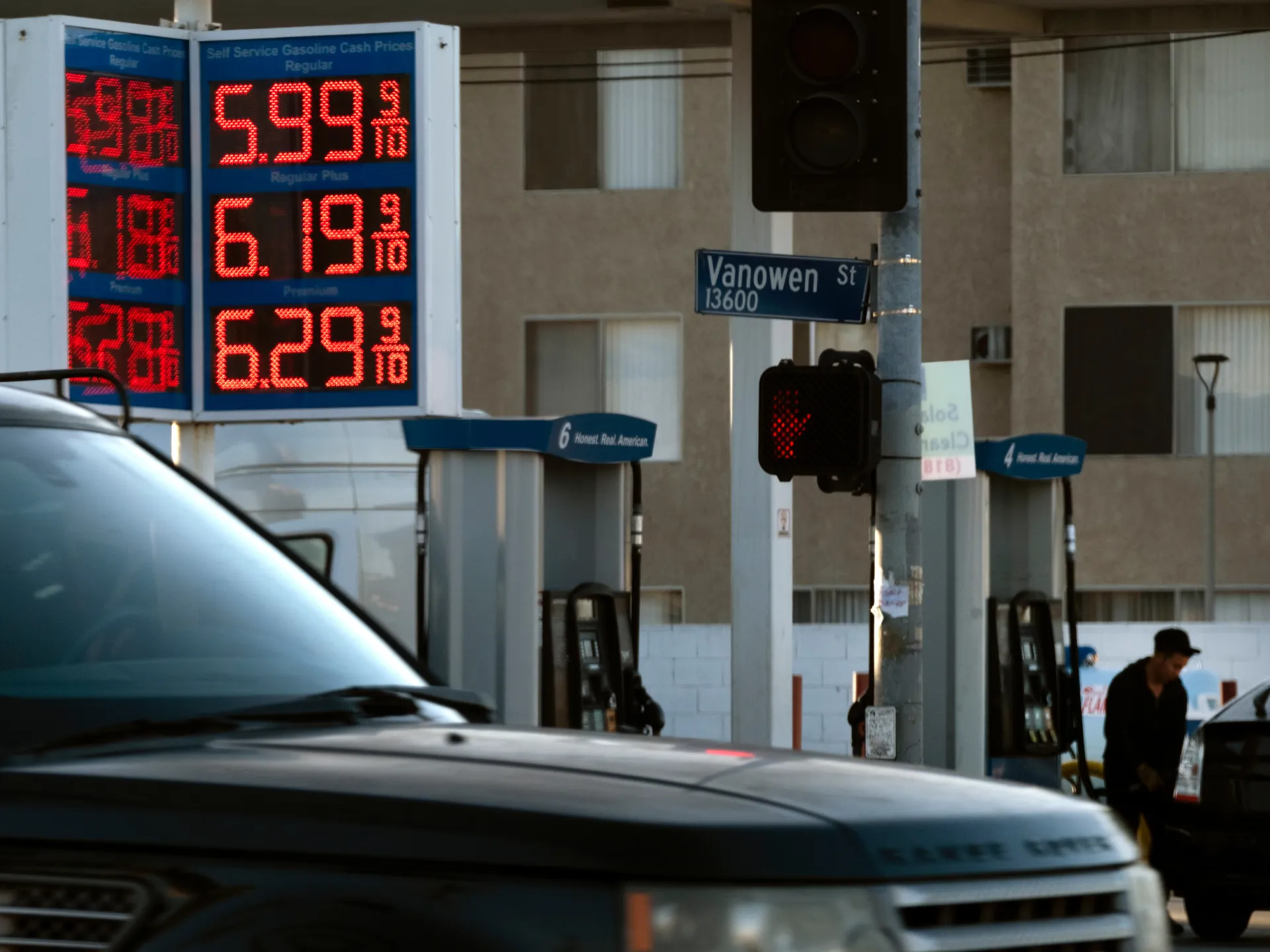
Petrol prices led the surge as tensions between the US and Iran, as well as Russia and Ukraine, weighed on global energy prices. Petrol prices rose 9.1 percent in September, accounting for more than half of the CPI monthly increase, according to the BLS. They were up 34.2 percent from the same time a year ago.
“The directionless war in Iran continues to disrupt global supply chains, driving up the prices of food and fuel,” Kyle Moore, chief economist at The Century Foundation, an economic think tank, said in a statement provided to Al Jazeera.
Petrol prices have continued to climb. The average price for a gallon of petrol is $4.33 ($1.14 per litre), compared with $4.31 a month ago, according to the American Automobile Association (AAA), which tracks daily petrol prices. Diesel prices are higher, at $6.29 per gallon (1.66 per litre), compared with $6.23 a month ago.
In a post on X, Patrick DeHaan, head of petroleum analysis for GasBuddy, said, “2026 has now seen more days with average gas prices over $4/gal than any year before: 158 days.”
Shelter costs also jumped 0.4 percent from the previous month, following a 0.3 percent increase in August. Food costs were a bright spot in the report, remaining unchanged overall.
Food away from home, including restaurant meals, rose 0.2 percent, but that increase was offset by a 0.1 percent decline in food-at-home prices, which track grocery costs.
At the grocery store, poultry prices jumped 0.7 percent, fruit and vegetable prices rose 0.5 percent, and juice prices increased 1.1 percent. However, milk prices dropped 2.1 percent and beef prices fell 0.9 percent.
Amid heavy investment in AI infrastructure, prices for computer software and accessories have jumped 28 percent from the same time last year.
“The AI boom is playing a huge part, and we have all read about the hundreds of billions being poured into data centers, AI firms, and models,” Rami Cassis, principal of Parabellum Investment, said in comments provided to Al Jazeera.
Fed pressures
The inflation data comes days before the US Federal Reserve’s interest rate decision later this month. Last month, the US central bank raised rates by 25 basis points, bringing the target range to 3.75–4.00 percent, the first hike in three years.
Economists are divided over whether the Fed will raise rates again or hold them steady. According to CME FedWatch, which tracks the likelihood of monetary policy decisions, there is a 52.9 percent chance that rates will remain in the 3.75–4.00 percent range, while a 47.1 percent chance of a quarter of a percentage point hike that would bring them to 4.00–4.25 percent.
The inflation data puts pressure on Republicans before the midterm elections on November 3. A recent Reuters/Ipsos poll showed that about 78 percent of Americans blamed US President Donald Trump’s policies for price increases.
US markets trended downward following the inflation report. The Nasdaq fell 0.8 percent and the S&P 500 dropped 0.6 percent, while the Dow Jones Industrial Average was roughly flat in midday trading.
The Saudi Arabia-led coalition fighting in Yemen has said its forces intercepted another ballistic missile launched by the Houthis towards the Saudi capital, Riyadh, as the city reels from attacks that have killed at least 14 people in recent days.
In a statement on X, Turki Al-Maliki, the spokesperson for the coalition, said the Houthis fired one ballistic missile at Riyadh and two towards Khamis Mushait, a city in the southwest.
Recommended Stories
list of 4 itemsend of list
All three were “intercepted and destroyed”, he said.
Residents of Riyadh reported several powerful explosions on Monday night, moments after a text message to their phones warned of an aerial threat.
The Houthis, who control Yemen’s most populous areas, including the capital, Sanaa, said their target in Riyadh had been King Khalid International airport.
Yahya Saree, a Houthi military spokesman, said the group had also sent a drone towards a military airbase at Khamis Mushait, near the Yemeni border. He again warned international airlines and travellers “against operating flights to airports” in Saudi Arabia, except in the holy cities of Mecca and Medina, saying the facilities were “unsafe”.
The renewed attacks came as King Khalid International airport in Riyadh remains closed after a Houthi attack on Saturday that killed at least 13 people and wounded more than 300 others. Another strike on Sunday killed one person and wounded 11.
Saudi authorities said the airport would remain closed until this Saturday, and airlines have canceled flights. The Houthis have also struck Saudi oil facilities.
The attacks come as the Houthis fight forces aligned with Yemen’s internationally recognised government for control of the country. The Saudi-led coalition has carried out an air campaign against the Houthis and backed the government’s ground forces. The fighting erupted amid regional tensions set off by the United States and Israel’s war on Iran.
Speaking at an energy conference in Riyadh, Saudi Arabia’s Energy Minister Prince Abdulaziz bin Salman Al Saud said the attacks on airports over the last week have tested the kingdom’s resilience.
“The events of recent weeks are serious,” the minister said. “Our response must be equally serious.” He added that Vision 2030, Crown Prince Mohammed bin Salman’s plan to diversify the Saudi economy, “must continue. Investment must continue”.
Saudi authorities have meanwhile opened an investigation into why the country’s air defences failed to stop the barrage, according to two regional officials who spoke to The Associated Press on condition of anonymity. An initial inquiry found that the Houthis first launched several drones to clear a path for a mix of cruise and ballistic missiles, which then reached the airport, the officials said.
The Houthis possess ballistic missiles with warheads that can change direction in flight, posing a challenge to the Patriot interceptors and other systems the Saudis rely on.
One official told AP that investigators also wanted to know why the defences had not given earlier warning of an attack in which missiles and drones flew more than 1,000km, or 620 miles, to reach Riyadh.
US President Donald Trump separately criticised the Houthis but gave no indication that Washington would intervene. “Well, the Houthis are misbehaving very badly. No good,” he told reporters when asked what he planned to do about the group.
A Houthi official warned that US involvement would bring retaliation.
“If the US becomes involved in the aggression against Yemen, we will not deliberate over the decision to respond; rather, there will be a swift and painful response targeting the US and all its interests in the region,” Mohammed al-Bukhaiti, a member of the Houthis’ political bureau, told the AFP news agency.
Al-Bukhaiti also warned “all employees and workers at Saudi oil facilities and airports to stay away from these sites, as they have become legitimate targets”.
The attacks have put events scheduled in Riyadh this month under pressure, including the kingdom’s flagship investment conference and the WPC Energy Congress, where several top oil executives were dropped from the programme.
The United Arab Emirates’s national carrier Etihad Airways announced on Monday that it was cancelling all flights to and from Riyadh until next week. It also suspended flights to Dammam and Jeddah.
Bahrain’s national carrier Gulf Air said it, too, was cancelling all Riyadh flights until Saturday.
US operator Delta announced it would delay the launch of direct flights from Atlanta to Riyadh, scheduled for October 23.
As the United States maintains a naval blockade of Iran’s ports and imposes more sanctions on its oil exports, Tehran is confronting another problem: billions of dollars in revenue from previous oil sales that it says have gone missing.
A spokesperson for Iran’s judiciary said in September that a network of oil intermediaries known as “trustees” owed the Iranian government between 10 billion euros ($11bn) and 11 billion euros ($12bn). That figure was equivalent to half of the total oil revenue projected in Iran’s government budget for the current fiscal year.
Recommended Stories
list of 3 itemsend of list
US officials, including Treasury Secretary Scott Bessent, have tied Iran’s struggles to access oil revenues as evidence that its economic pressure campaign is having an effect. In August, Bessent said that “Iran’s shadow banking system was buckling” under pressure from the US campaign against the country, which has been ramped up as Washington seeks a way to force Tehran to capitulate in the war between the two countries, launched by the US and Israel in late February.
So who are the oil intermediaries, why does Iran depend on them, and what has happened to the billions of dollars they owe? Let’s take a closer look.
The debt, and the crisis it has created for the Iranian government, both stem from an oil-sales arrangement Tehran adopted in 2012 in response to US sanctions targeting Iranian oil exports.
American and European sanctions targeting Iranian oil sales and revenue collection began in 2012. The stated rationale behind both sets of measures was that revenue from oil sales helped finance Iran’s nuclear programme and that restricting Iranian oil exports could prevent the programme from advancing.
In response, the Iranian government devised a way to circumvent international sanctions on its oil sales. Unable to sell oil through the Oil Ministry and receive the proceeds through the Central Bank, it began selling oil to domestic buyers or using it to settle outstanding obligations to institutions and organisations owed money by the state.
This arrangement gave rise to a network of oil intermediaries often referred to in Iran as the “trustee network”. Rather than selling all its oil through official government channels, the state entrusted crude oil to institutions, individuals and companies to sell on its behalf. The proceeds were supposed to be transferred to the government’s treasury, with the sellers or recipient institutions subsequently recovering their agreed costs and outstanding claims. Some institutions sold the oil themselves, while others contracted private trading companies to handle the sales.
The Oil Industry Pension Fund, established for retired Oil Ministry employees familiar with the oil-sales process, was among the first institutions to receive crude oil for sale. Other recipients included Khatam al-Anbiya Construction Base, a major hub for large-scale infrastructure projects. Even the municipal police received payments owed to them by the government in the form of crude oil.
Effect of the nuclear deal
Even in those early experiments, discrepancies emerged between the revenue expected from oil sales and the amounts sellers actually deposited into the government’s treasury. These discrepancies eventually gave rise to some of Iran’s largest economic corruption cases.
The accounting discrepancies and the government’s inability to recover money from private sellers entrusted with Iranian oil persisted until 2016, when the Joint Comprehensive Plan of Action (JCPOA) nuclear deal was signed and when sanctions on Iranian oil sales were lifted. The government was subsequently able to regain control over oil sales.
Individuals who had sold Iranian oil but failed to return the proceeds were imprisoned. With the ability to sell oil again through legal and transparent channels, the government was able, for a time, to manage its oil revenues and spending with greater control.
How did money from oil sales go unreturned?
After US President Donald Trump withdrew the United States from the JCPOA in 2018 during his first presidential term, the Iranian government once again had to rely on private oil traders to sell its oil. But the problems associated with selling oil through intermediaries rather than official state channels, including delays in returning revenues, accounting discrepancies, debts owed by oil sellers to the government, and the occasional seizure of Iranian oil shipments at sea, once again constrained the government’s ability to manage its oil revenues.
Moreover, the US expanded its sanctions beyond Iranian government institutions and interests, adding bank accounts involved in transactions with the Iranian government, currency-exchange offices, companies, and individuals to its sanctions lists. As a result, the time between individuals participating in Iran’s oil-trading network and being sanctioned themselves, along with their assets and companies, and having their accounts blocked or frozen grew progressively shorter.
This contributed to an accumulation of debts owed by sanctioned oil traders – no longer able to access their accounts – to the government. It also left Iran with little choice but to expand its private oil-sales network. That meant increasing the number of people involved in trading Iranian oil, reducing the volume of oil allocated to each individual or company and, ultimately, increasing the risk that the proceeds would not be returned.
Iranian officials have also accused trustees of exploiting the sanctions workarounds to enrich themselves.
The billions of dollars owed by private oil sellers to the Iranian government are a combination of outstanding payments, disputed financial obligations and allegations of corruption. Iran’s judiciary chief recently addressed the issue, warning that oil sellers who refuse to return the proceeds from oil sales will face legal action. But such warnings do not change the sanctions environment or remove the obstacles that prevent some oil sellers from returning the money.
Sunday’s strike on King Khalid International airport kills a Pakistani national.
Published On 12 Oct 202612 Oct 2026
A projectile has struck Saudi Arabia’s King Khalid International airport, killing one person and injuring 11, according to the country’s civil aviation authority.
The General Authority of Civil Aviation (GACA) identified the deceased in Sunday’s attack as a Pakistani resident and said the injured were transferred to several hospitals for medical care.
Recommended Stories
list of 3 itemsend of list
The strike on terminals 3 and 4, which serve domestic flights, occurred a day after a Houthi missile hit the airport, killing 12 people and wounding more than 300, according to the Saudi-led coalition fighting Iran-backed Houthi rebels in Yemen.
India’s embassy in Saudi Arabia said one of its citizens died on Sunday of injuries sustained in Saturday’s attack, which would bring the toll to 13.
Following Sunday’s attack, GACA said damage assessments and safety inspections of the airport were under way.
A witness on board a taxiing aircraft at the airport told the Reuters news agency that a projectile struck the tarmac next to several parked planes at about 8:30pm (17:30 GMT) on Sunday, causing a fire.
The witness said the aircraft returned to the gate, where the passengers disembarked and were told to leave.
The Riyadh airport has been struck four times in the past five days. Houthi attacks on King Khalid airport on Thursday killed at least three Saudi citizens, including a pilot, according to GACA.
The airport has been closed since Saturday’s attack, which was the deadliest in the country since the US-Israel war on Iran began in late February.
The Houthis claimed responsibility for the strikes before Sunday’s.
The airport attacks have escalated the war in Yemen and threaten to draw in the US military. US President Donald Trump says he is weighing whether to join the fight against the Houthis.
The escalation puts further pressure on global oil supplies and prices, as well as on commercial shipping through the Bab al-Mandeb strait off the Yemeni coast, a crucial alternative waterway to the Strait of Hormuz.
Trump had said he intends to speak with Saudi Crown Prince Mohammed bin Salman, who is seeking help against the Houthis, but there were no signs on Sunday that the US president had followed up on his claim.
There are fears that US intervention could prompt the Houthis to halt shipping through Bab al-Mandeb, further restricting the flow of oil out of the Gulf.
The rebels seized key areas along the strait last month. The Saudi-led coalition, backing forces loyal to Yemen’s internationally recognised government, has been trying to seize them back.
Russia to supply 300,000 tonnes of diesel immediately, followed by 1.5 million more, as prices soar amid the Iran war.
Published On 9 Oct 20269 Oct 2026
United States President Donald Trump said that Russia has agreed to supply 300,000 tonnes of diesel fuel to global markets amid discussions with Russian President Vladimir Putin.
“I have just concluded a highly successful discussion with President Vladimir Putin, of Russia, wherein it was agreed that Russia will immediately supply over 300,000 Tons of Diesel Fuel to the American and Global Marketplace, another 500,000 Tons during the month of November, and 1,000,000 Tons immediately thereafter,” Trump said in a post on his Truth Social platform.
Recommended Stories
list of 4 itemsend of list
The president added that Russia would deliver an additional 3 million tonnes of fuel “within a short period of time”. He said that the country would supply 500,000 tonnes in November.
An envoy for Russian President Vladimir Putin, Kirill Dmitriev, praised cooperation between Russia and the United States on diesel and energy in a post on X shortly after.
“Russia-US cooperation on diesel and energy will benefit the world,” Dmitriev wrote on X.
Petrol price pressures
The deal comes despite Ukrainian air strikes, which have taken more than half of the country’s oil refining capacity offline, according to claims made by Ukraine’s Ministry of Defence on Sunday.
The move also comes as prices of diesel, used in agriculture, heating homes and trucking goods, are near record highs ahead of the November 3 congressional elections that will determine control of Congress.
Diesel prices have been elevated in recent months but have started to decline. The average price for a gallon is $6.27 ($1.66 per litre), according to the American Automobile Association (AAA), which tracks daily petrol prices. That’s down $0.10 from this time last week, but up $5.94 from this time one month ago.
Diesel prices, which can drive inflation, are up 70 percent since the US and Israel’s war on Iran began this year, despite two high-profile recent moves by Trump to boost supplies of the fuel: pressuring allies to release emergency reserves and expanding access to tax-exempt red-dyed diesel, which is normally used for farm equipment.
The wars in Iran and Ukraine have triggered an unprecedented global fuel supply crunch.
United States President Donald Trump has said that he does not intend to bomb Iran again until the November midterm elections, even though several US media outlets have reported that the Pentagon has drawn up plans to relaunch attacks before that vote.
Trump has been accused of misdirection on the issue in the past. The US launched its initial attacks on Iran on February 28, as talks with Iran were ongoing and despite Trump saying just the day before that he had not made any decision. One year previously, the US struck Iran towards the end of Israel’s June 2025 12-day war, despite Trump saying he would announce a decision about attacks “in two weeks”.
Recommended Stories
list of 4 itemsend of list
Still, striking Iran ahead of the midterm elections would be risky for the administration as the war remains deeply unpopular with Americans.
Resuming the war afterwards may have less of a negative impact on Trump, who is not eligible to run for another term as US president anyway.
Here’s what we know about Trump’s plans.
In the past two days, The New York Times, The Wall Street Journal and other publications have reported claims by unnamed officials that the Pentagon has drawn up plans to attack Iran before the midterms, if authorised to do so.
On Wednesday, US publication Axios cited US and Israeli officials saying the Pentagon has instructed US Central Command (CENTCOM) to prepare for imminent major combat operations. The Atlantic also reported along similar lines.
What has Trump said?
On Thursday, Trump posted on his Truth Social media platform that he will not order a resumption of strikes on Iran before November 3, when the US midterm elections will be held.
“I want to make it clear to everybody that, while Iran is in very bad condition…we will not be attacking Iran at any time prior to the Midterm Elections to be held in the United States on November 3rd,” he said.
The president added that the US is presently “having productive discussions” with the Iranian side. However, that was also the case on February 28, the day the US and Israel first struck Iran, triggering the war.
Trump did not make any reference to preparing for potential military operations, nor did he provide more details on the state of talks.
Why might Trump be hesitant about resuming bombing before the midterms?
Trump and Republicans are worried about a voter backlash against the war at the polls. The US war on Iran is intensely unpopular domestically as Americans have had to grapple with surging prices of gas, food and other basic commodities because of the crisis in the Middle East.
Since the start of the war, surveys have shown that large numbers of Americans did not approve of striking Iran.
Now, about 65 percent of Americans say they “disapprove” of the way in which Trump has handled the Iran war overall, according to a Pew Research Center poll released on Thursday. Trump stated at the start of the war that it would go on for just a few weeks, however, it is now into its eighth month.
According to Pew, most Americans now believe the war will continue for at least another year. Even Republican or more conservative-leaning voters are growing more negative about the war, its poll found.
The conflict has also severely affected Trump’s personal ratings and eroded support for Republicans. A Reuters/Ipsos poll on Thursday found that only 30 percent of his supporters were enthusiastic about voting in the midterms, compared with 48 percent of Democratic voters.
About 13 percent of those who voted for Trump in 2024 say they are not sure who to vote for in the congressional elections.
Delaying attacks until after the elections could potentially shield Republican candidates from voter backlash, analysts say.
While analysts say Trump will see a good performance at the polls as approval for renewed strikes, a Republican defeat at the polls could equally further incentivise him to hit Iran again as he will calculate that he has little to lose at that point.
While that could further affect Trump’s ratings, the president is not eligible to run in the next presidential election in any case.
Will the US restart the war after the midterms?
In recent weeks, the US president has threatened to “end” the war with force after the elections as talks with Iran have dragged on.
At a Republican convention in September, he accused Iran of trying to affect the outcome of the midterms and said that conflict “is going to end immediately after the elections”.
In an interview with Time magazine two weeks ago, he also said it would be “possible” to ramp up bombing in Iran after the elections, but declined to elaborate. Analysts say his comments were designed to calm voters, while at the same time warning Iran of potential aggression after the vote.
Last week, the US military dispatched about 7,000 sailors and 2,000 Marines aboard several ships now sailing to the Middle East amid threats of new attacks from Trump. The vessel formation included the USS Theodore Roosevelt carrier strike group.
The deployment increases the number of US troops in the region to 20,000, alongside hundreds of aircraft and at least three carrier strike groups.
In the past, US troop build-up in the Middle East and the Caribbean has subsequently resulted in military action.
In June, Washington and Iran signed a ceasefire agreement that quickly broke down over control of the Strait of Hormuz.
Trump has repeatedly said that the US has the upper hand in the strait, citing more oil exports and Iran’s weakened economy. He has also voiced aversion to a deal with Tehran over management of Hormuz, but said he might consider it because “they’re willing to offer us anything to stop”.
Washington rejected a recent proposal from Iran to reopen the strait based on certain conditions it wants the US to meet, including the lifting of sanctions, unfreezing Iranian assets and guaranteeing an end to attacks. Last week, Foreign Minister Abbas Araghchi said Iran was considering a counterproposal from the US.
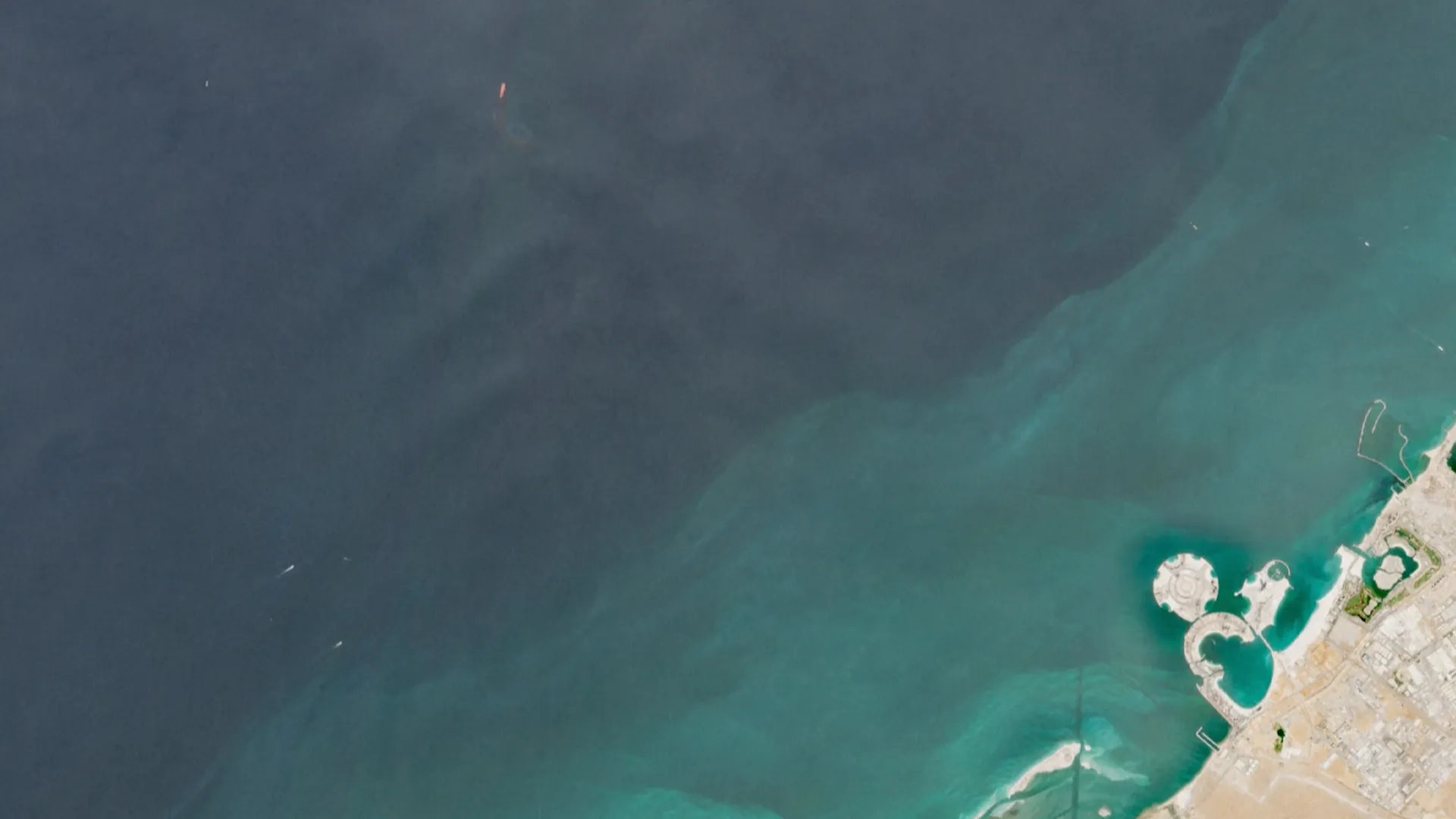
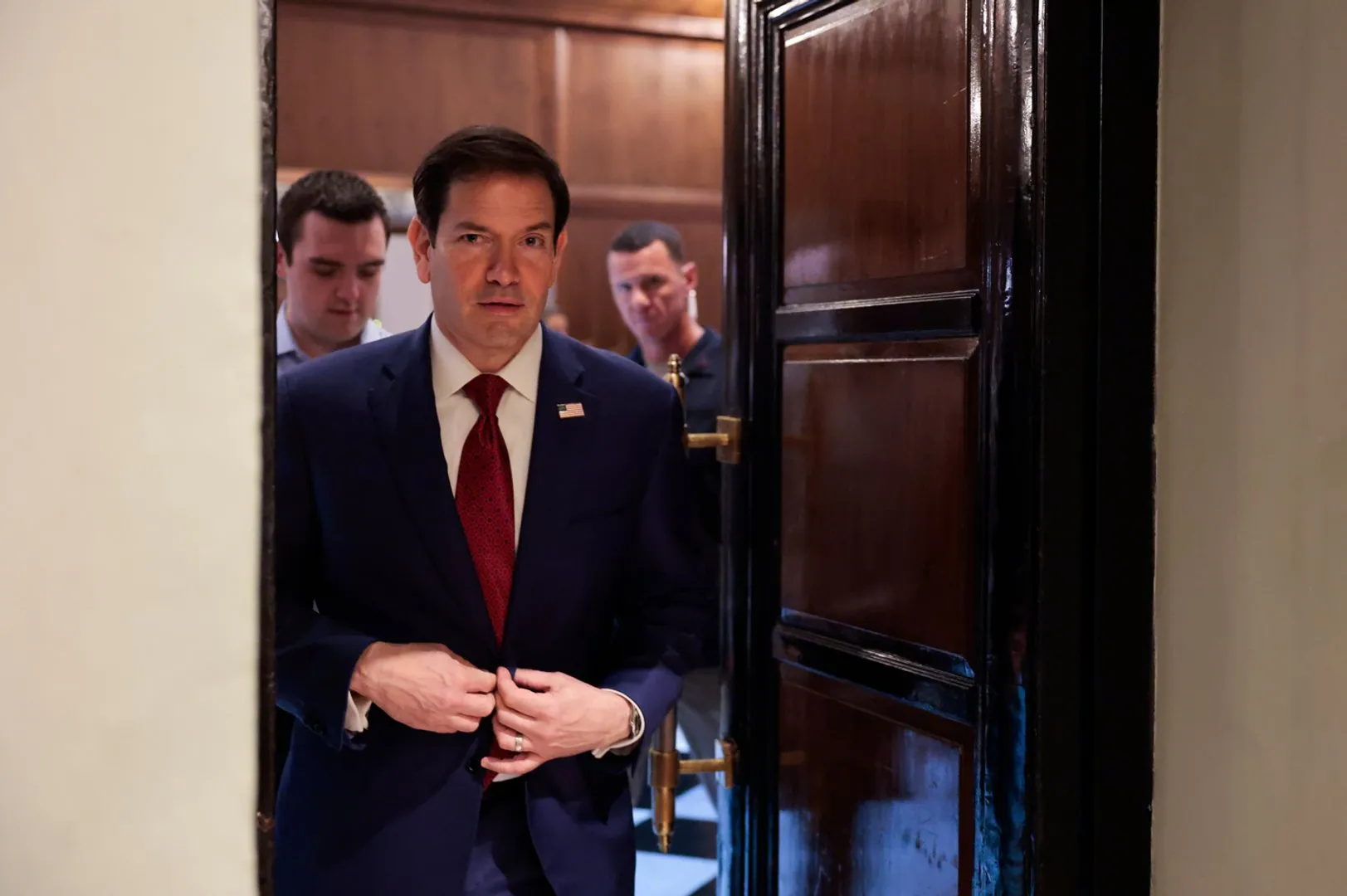
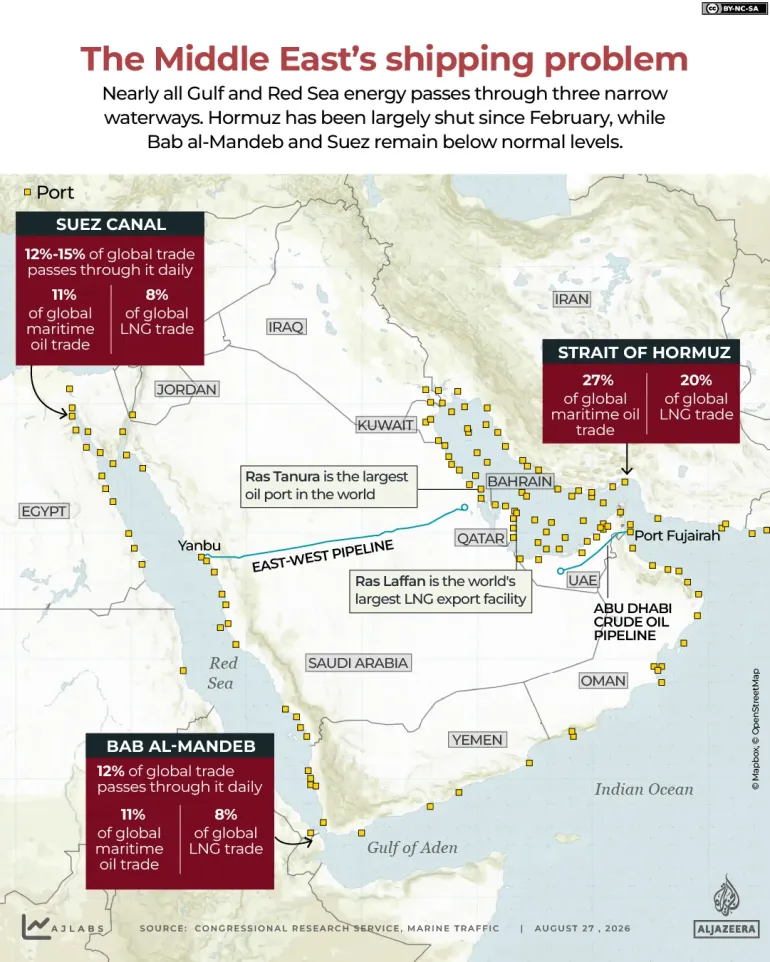
![[Al Jazeera]](https://i0.wp.com/occasionaldigest.com/wp-content/uploads/2026/10/INTERACTIVE-MIDDLE-EAST-iran-hormuz-shipping-aug-27-2026-1787815800-1788488337.webp?w=640&ssl=1)
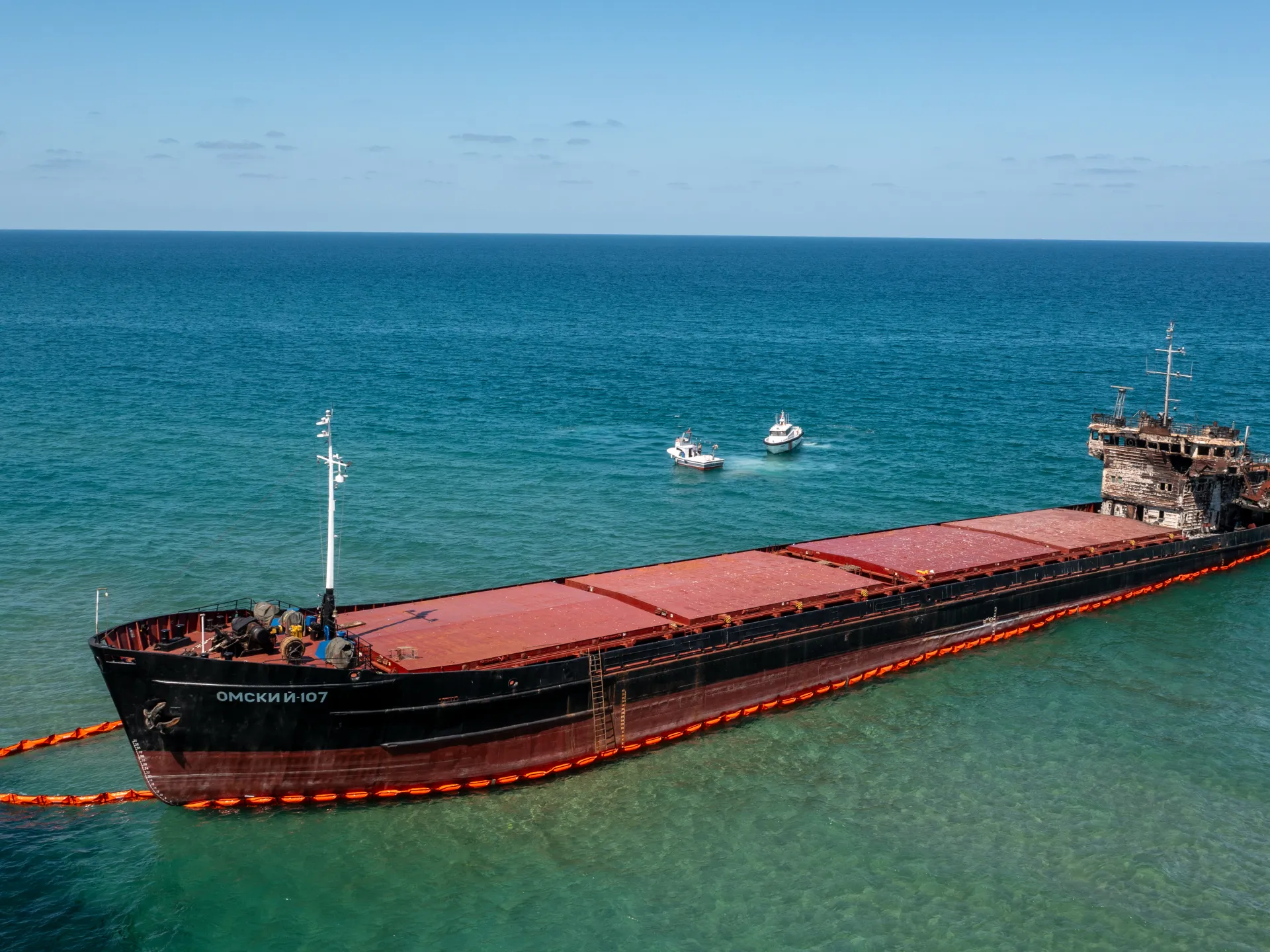

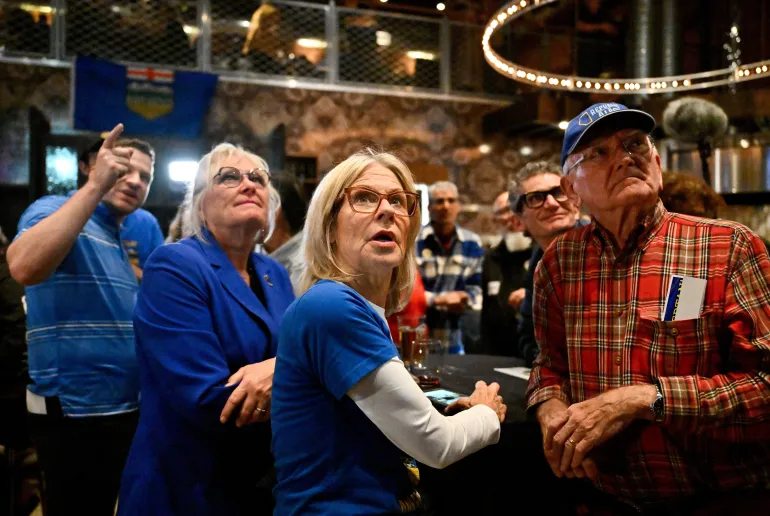

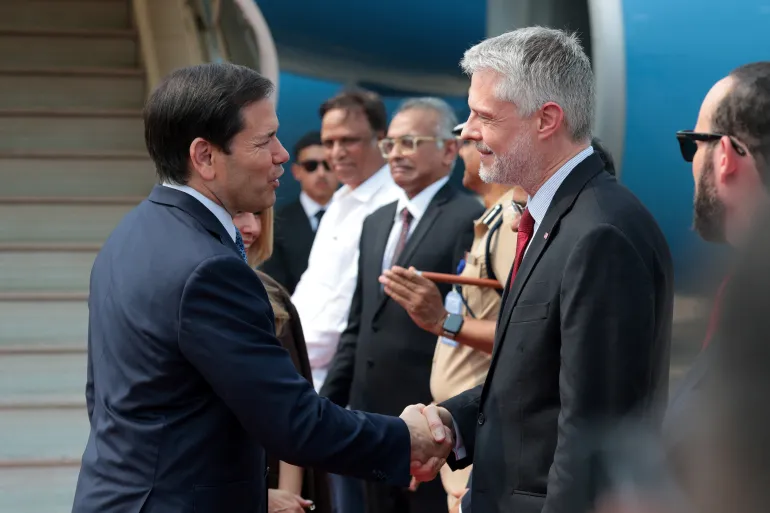


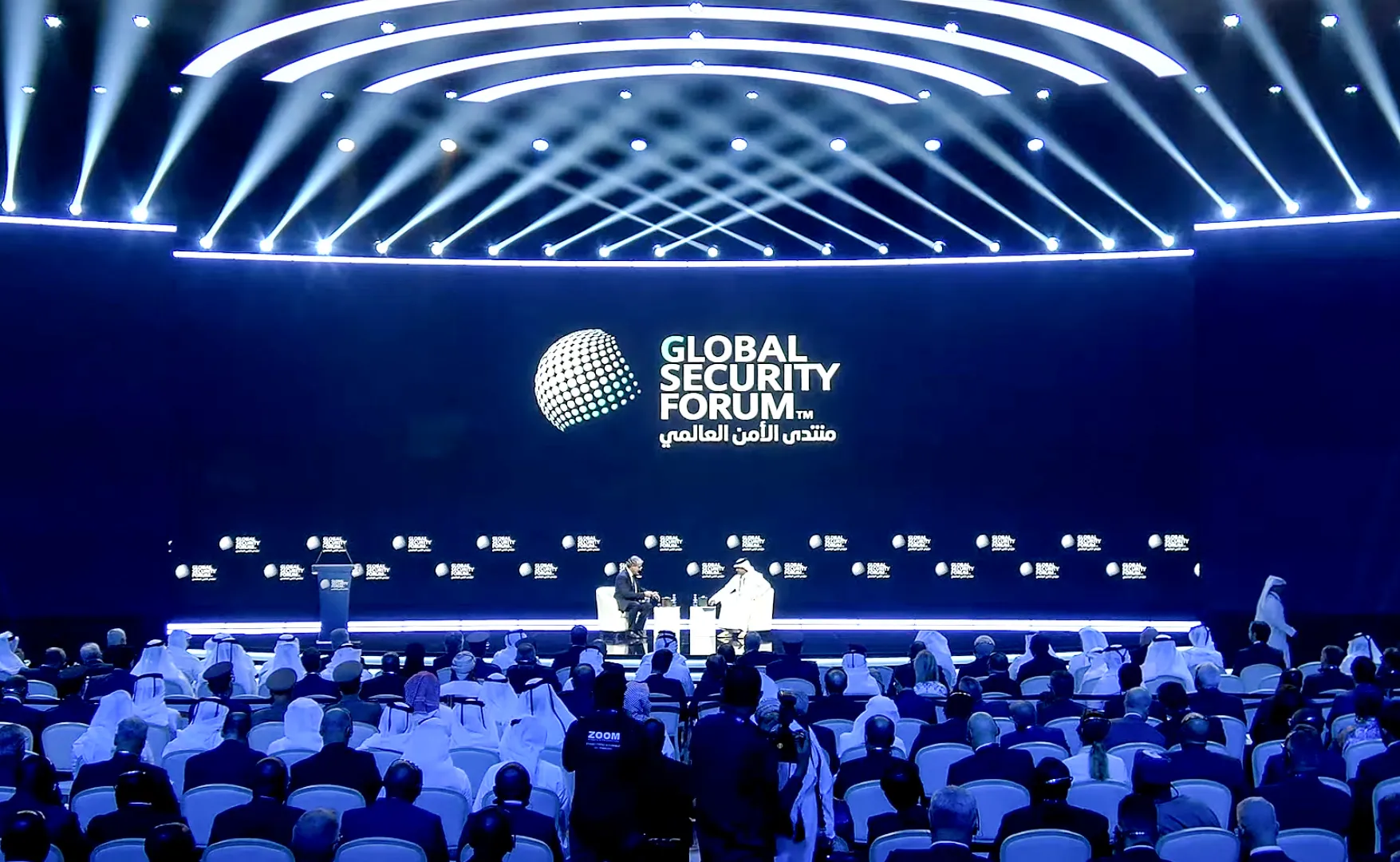
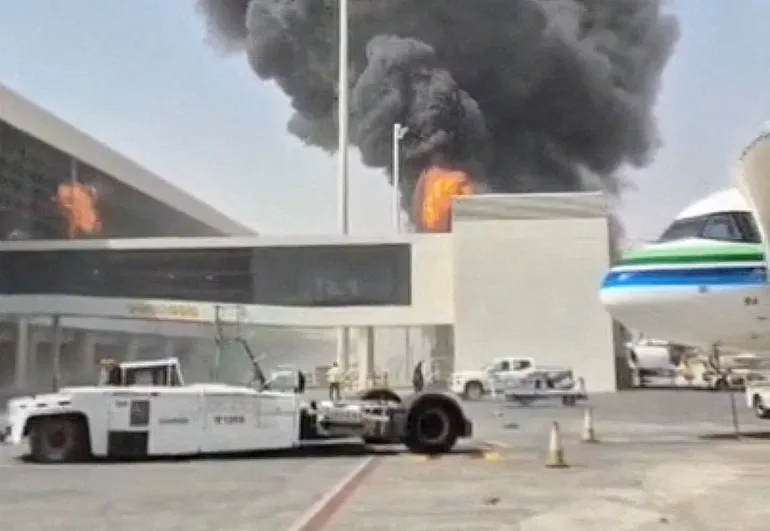
![Smoke and flames rise from King Khalid Airport, after Yemen's Iran-backed Houthis said they attacked the airport, in Riyadh, Saudi Arabia, October 8, 2026, in this screengrab obtained from a social media video [Reuters]](https://i0.wp.com/www.aljazeera.com/wp-content/uploads/2026/10/2026-10-12T233040Z_1811944814_RC231OANP5EH_RTRMADP_3_IRAN-CRISIS-SAUDI-YEMEN-WARNINGS-1792451959.jpg?w=640&ssl=1)