Oil and Gas

Energy prices may take ‘months’ to normalise, despite ceasefire: Analysts | US-Israel war on Iran News

Even though a fragile ceasefire between Iran and the United States and Israel has been announced, it’s going to be a long time before prices of oil and gas come back to pre-war levels, experts say.

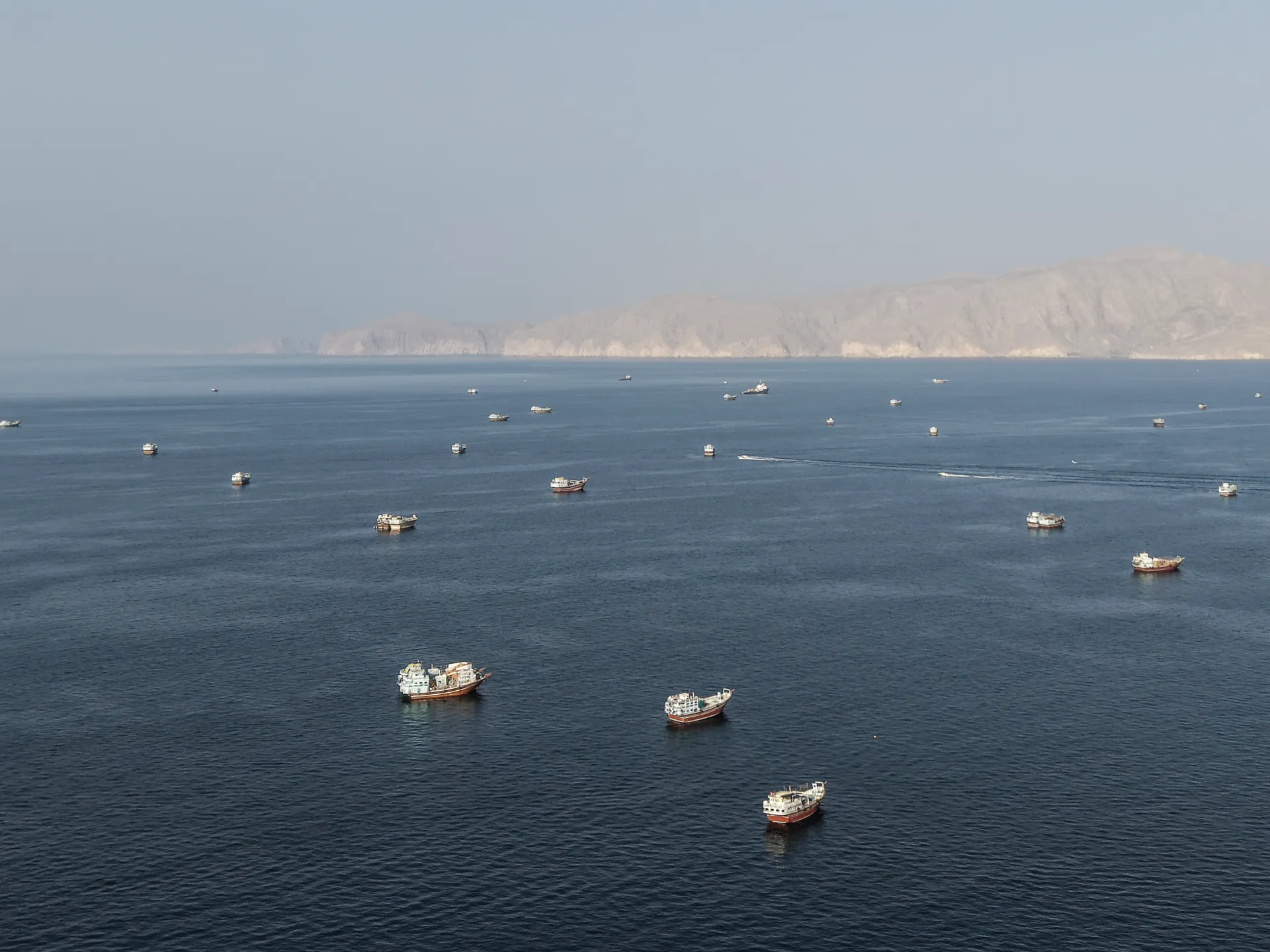
In response to the US-Israeli attacks, Iran choked off the Strait of Hormuz, the narrow channel linking the Gulf to the Gulf of Oman, through which roughly 20 percent of the world’s oil and gas exports pass from the Middle East, mainly to Asia and also to Europe.

Recommended Stories

list of 4 itemsend of list

It also attacked energy infrastructure in several Gulf countries, leading to soaring prices of not just energy but also of byproducts like helium, used in a range of products like tiles used in homes and semiconductor equipment. Fertilisers that rely on some of these inputs were hit too, impacting sowing seasons.

As a result, consumers the world over, but particularly in developing countries of Asia and Africa, have felt the brunt of those shortages and soaring prices. The question on many minds: Now that there is a ceasefire in place, how quickly will prices normalise?

“Anyone who tells you they know the answer to that question is lying,” said Rockford Weitz, professor of practice in maritime studies at The Fletcher School at Tufts University. “It’s too early to tell when we return to normal.”

There needs to be a predictable and stable flow of cargo through the strait before markets can stabilise, experts say.

“What we’re seeing is the biggest disruption in the history of global oil markets,” said Weitz.

Before this conflict, approximately 120-140 ships passed through the Strait of Hormuz every day. On Wednesday, only five vessels crossed the strait, while seven passed through the waterway on Thursday.

That shows why “to get back to normal is going to be a while”, Weitz told Al Jazeera. “And it’s too complicated to know at this stage when that will happen, as it requires collaboration with the great powers [US, China and Russia], but also regional powers [UAE, Saudi Arabia, India and Pakistan]. It’s hard to say when it will end, as there are so many parties who can make it not happen.”

There is also some concern that developments, like Iran charging a toll fee to allow ships to pass through and skyrocketing insurance fees, will keep oil prices high.

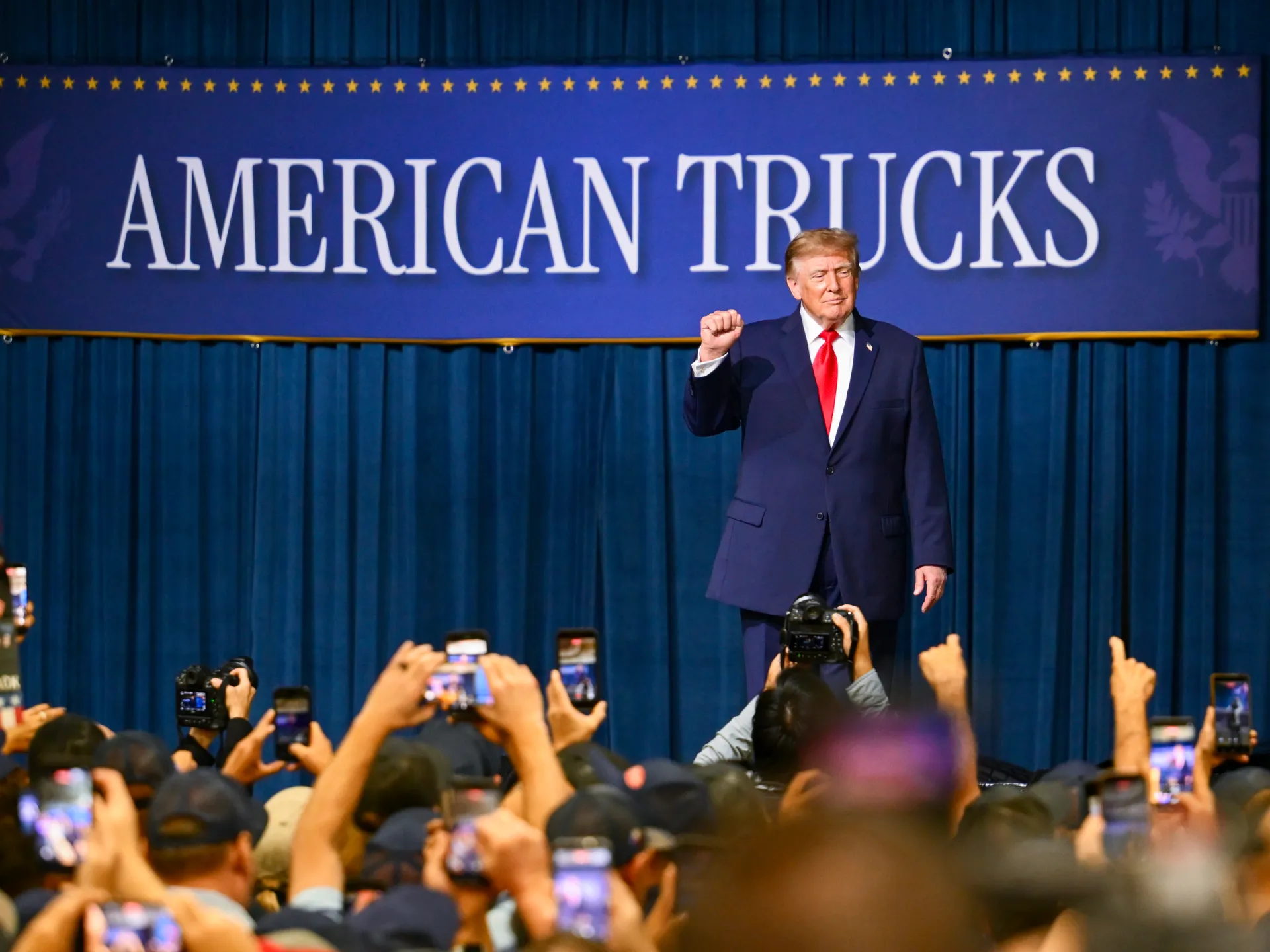
“There are reports that Iran is charging fees to tankers going through the Hormuz Strait,” US President Donald Trump wrote on TruthSocial Thursday.

“They better not be and, if they are, they better stop now.”

But experts agree that those fees, rumoured to be about $2m per vessel, are not enough to move the needle on oil prices.

“What is causing oil prices to rise is not insurance. It’s about getting tankers through. Tolls won’t be the cost driver,” said Weitz.

‘Signs of strain’

Some of that reality was on display with the reopening of the strait, showing “signs of strain just hours after the ceasefire was announced”, said Usha Haley, W Frank Barton Distinguished Chair in international business at Wichita State University.

Compounding that problem was the fact that some countries, including Iraq, had shut down production because of limited storage capacity, further taking oil supplies offline.

“That will take weeks and months to reopen,” Haley added.

“It’s going to be a contested reopening … LNG [liquefied natural gas] will take months to rebalance because of the hits to infrastructure, and can take three to six months to normalise if everything else remains normal. And it’s not.”

INTERACTIVE - Strait of Hormuz - March 2, 2026-1772714221

Slower growth

On Thursday, International Monetary Fund managing director Kristalina Georgieva warned that the fund will downgrade its forecast for the world economy next week from the current expectation of 3.3 percent. “Growth will be slower – even if the new peace is durable,’’ Georgieva said.

While the war has hit most economies, “it hasn’t really affected the two primary [US] targets – Russia and China. Russia, in fact, has benefitted enormously, and Chinese ships have been allowed to go through,” said Haley.

The US has hit Russia with multiple sanctions for its war on Ukraine, including capping sales of Russian oil to undercut its income stream. Similarly, the first Trump administration put tariffs on China and curbed US exports of certain high-end technology, measures that were held up under the administration of former US President Joe Biden and further ratcheted up by Trump last year with his tariffs blitz.

But amid the war on Iran and the effective closure of the Strait of Hormuz, the US temporarily eased some sanctions on Russian oil, and countries desperate for crude have since paid far higher prices to Moscow than the subsidised energy that President Vladimir Putin’s government was previously offering them.

“We [the US] really need to decide what we want to do long-term, who our targets are. There’s got to be some coherence to what we want to do.”

For now, “an overhang of greater risk premium of supplies out of the Gulf means oil prices will remain higher than what they were before the attack started”, said Rachel Ziemba, adjunct senior fellow at the Center for a New American Security.

While it’s possible that some of the blocked oil and oil products could be released soon, providing a short boost of supplies in the coming days and weeks, “that would be a temporary support” and is still conditional on the ceasefire holding and converting to a broader deal, said Ziemba.

For now, she’s keeping an eye on Iraq to see if it strikes a side deal with Iran. Iraq, long a proxy battleground between the US and Iran, can produce at least 3.5 million barrels of oil per day, production that it had shut off because of limited storage capacity, said Ziemba.

Should that come back online, it will help oil flows and, eventually, prices. But the uncertainty of the truce and the history of attacks on Iraq mean that the future of the country’s oil production remains unclear. “In that environment, who wants to invest in scaling up production?” Ziemba wondered.

Source link

Can global supply chains recover from the Iran war? | US-Israel war on Iran

Conflict upends flow of critical raw materials for manufacturing, aviation and technology.

The United States and Iran may have agreed to a ceasefire for now, but the world’s supply chains will continue to feel the effects.

Beyond oil and gas, Iran’s near closure of the Strait of Hormuz has blocked shipments of critical raw materials from the Gulf.

Petrochemicals, helium and aluminium are just some of the products that have not been able to reach manufacturing hubs around the world.

Many everyday items are affected, from plastic packaging to the advanced semiconductors in our smartphones.

How will our supply chains recover, and can they become more resilient to global shocks?

Source link

What is Iran’s Strait of Hormuz protocol and will other nations accept it? | US-Israel war on Iran News

The Strait of Hormuz, which links the Gulf to the Gulf of Oman, has held global attention since Israel and the US began their war on Iran in February.

Until fighting began, the narrow channel, through which 20 per cent of the world’s oil and liquefied natural gas (LNG) supplies are shipped from Gulf producers in peacetime, remained toll-free and safe for vessels. The strait is shared by Iran and Oman and does not fall into the category of international waters.

Recommended Stories

list of 4 itemsend of list

After the US and Israel began strikes, Iran retaliated by attacking “enemy” merchant ships in the strait, effectively halting passage for all, stranding shipping, and creating one of the worst-ever global energy distribution crises.

Tehran continued to refuse to re-open the strait to all traffic at the start of this week, despite US President Donald Trump’s threats to bomb Iran’s power plants and bridges if it did not relent. Trump backed away from his threat on Tuesday night when a two-week ceasefire, brokered by Pakistan, was declared.

That followed a 10-point peace proposal from Iran that Trump described as a “workable” basis on which to negotiate a permanent end to hostilities.

As part of the truce, Tehran has now issued official terms it says will guide its control of the Strait going forward. The US has not directly acknowledged the terms ahead of talks set to begin in Islamabad on Friday. However, analysts say Tehran’s continued control will be unpopular with Washington, as well as other countries.

During the crisis, only a few ships from specific countries deemed friendly to Iran and those which pay a toll have been granted safe passage. At least two tolls for ships are believed to have been paid in Chinese yuan, in what appears to be a strategy to weaken the US dollar, but also to avoid US sanctions. China, which buys 80 percent of Iran’s oil, already pays Tehran in yuan.

Here’s what we know about how shipments will work from now on:

INTERACTIVE - Strait of Hormuz - March 2, 2026-1772714221
(Al Jazeera)

Who is controlling the strait now?

On Tuesday, Iran’s Foreign Minister Abbas Aragchi said Iran would grant safe passage through the strait during the ceasefire in “coordination with Iran’s Armed Forces and with due consideration of technical limitations”.

On Wednesday, the Islamic Revolutionary Guard Corps (IRGC) released a map of the strait showing a safe route for ships to follow. The map appears to direct ships further north towards the Iranian coast and away from the traditional route closer to the coast of Oman.

In a statement, the IRGC said all vessels must use the new map for navigation due to “the likelihood of the presence of various types of anti-ship mines in the main traffic zone”.

Alternative routes through the Strait of Hormuz have been announced by Iran's Islamic Revolutionary Guard Corps (IRGC), providing new entry and exit pathways for maritime traffic.
Alternative routes through the Strait of Hormuz have been announced by Iran’s Islamic Revolutionary Guard Corps (IRGC), providing new entry and exit pathways for maritime traffic [Screen grab/ Al Jazeera]

It is unclear whether Iran is collecting toll fees during the ceasefire period.

However, Trump said on Tuesday the US would be “helping with the traffic buildup” in the strait and that the US army would be “hanging around” as the negotiations go on.

The Strait will be “OPEN & SAFE” he posted on his Truth Social media site on Thursday, adding that US troops would not leave the area, and threatening to resume attacks if the talks don’t go well.

It’s not known to what extent US troops are directing what happens in the strait now.

Delhi-based maritime analyst C Uday Bhaskar told Al Jazeera that there is a lot of “uncertainty” about who can sail through the strait, and that only between three and five ships have transited since the war was paused.

How does Iran’s 10-point plan affect the Strait?

Among Tehran’s main demands listed on its 10-point plan are that the US and Israel permanently cease all attacks on Iran and its allies – particularly Lebanon – lift all sanctions, and allow Iran to retain control over Hormuz. The plan has not been fully published but is understood to be a starting point for talks.

Iranian media say Iran is considering a plan to charge up to $2m per vessel to be shared with Oman on the opposite side of the strait. Other reports suggest Iran could charge $1 per barrel of oil being shipped.

Revenues raised would be used to rebuild military and civilian infrastructure damaged by US-Israeli strikes, Tehran said.

Oman has rejected the idea. Transport minister Said Al-Maawali said on Wednesday that the Omanis previously “signed all international maritime transport agreements” which bar taking fees.

Interactive_Iran_US_Ceasefire_April8_2026

What does international law say about tolls on shipping?

Critics of Iran’s plan to charge tolls say it violates international law guiding safe maritime passage, and should not be part of a final ceasefire agreement.

The United Nations Convention on the Law of the Sea (UNCLOS) says levies cannot be charged on ships sailing through international straits or territorial seas.

The law allows coastal states to collect fees for services rendered, such as navigation assistance or port use, but not for passage itself.

Neither the US nor Iran has ratified that particular convention, however.

Even if they had, there could be ways to get around this law anyway. Analyst Bhaskar told Al Jazeera that if Iran instead charged fees to de-mine the strait and make it safe for passage again, that could be allowable under maritime laws.

There is no precedent in recent history of countries officially taxing passage through international straits or waterways.

In October 2024, a United Nations Security Council report alleged that the Iran-backed Houthis in Yemen were collecting “illegal fees” from shipping companies to allow vessels to pass through the Red Sea and the Bab-el-Mandeb strait, where it was targeting ships linked to Israel during the Gaza war.

Last week, a top adviser to Supreme Leader Mojtaba Khamenei suggested the Houthis could shut the Bab al-Mandeb shipping route again in light of the war on Iran.

INTERACTIVE - Bab al-Mandeb strait red sea map route shipping map-1774773769
(Al Jazeera)

How might countries react to a Hormuz toll?

Tolls for passage through the Strait of Hormuz would likely most affect oil and gas-producing countries in the Gulf, but ripple effects will spread to others as well, as the current supply shocks have shown.

Gulf countries, which issued statements calling for the reopening of the passage and praising the ceasefire on Wednesday, would also face a continuing degree of uncertainty, analysts say, as Iran could again disrupt flows in the future.

Before the ceasefire was announced, Bahrain had already proposed a resolution at the UN Security Council calling on member states to coordinate and jointly reopen the passage by “all necessary means”. It was backed by Qatar, the UAE, Saudi Arabia, Kuwait and Jordan. On April 7, 11 of 15 UNSC members voted in favour of that resolution.

But Russia and China vetoed the resolution, saying it was biased against Iran and did not address the initial strikes on Iran by the US and Israel.

Beyond the region, observers say the US is unlikely to accept indefinite toll demands by Iran as part of the negotiations expected to begin on Friday.

A toll to pass through the Strait of Hormuz “is not going to go down well with President Trump and his expectations that the strait should be open for everyone”, Amin Saikal, a professor at the Australian National University, said.

Other major powers have also voiced opposition. Ahead of the ceasefire, Britain had begun discussions with 40 other countries to find a way to reopen the strait.

Practical realities in the strait might see a different scenario play out with ship owners losing millions each day their vessels remain stranded seeking to get them out quickly and undamaged experts say. They are more likely to comply with Iran, at least for now.

“If I were the owner of a VLCC [very large crude carrier] which weighs about 300,000 tonnes, whose value could be a quarter billion dollars…I would believe the Iranians if they said we have laid mines,” Bhaskar said.

Source link

Iran agrees to open Strait of Hormuz for two-week US ceasefire | US-Israel war on Iran

NewsFeed

Iran’s Foreign Minister Abbas Araghchi says ‘if attacks against Iran are halted,’ then Iran agrees to the terms of the two-week ceasefire with the US, announced by Donald Trump. Al Jazeera’s Mohamed Vall explains the response from Tehran and how the Strait of Hormuz will be opened.

Source link

From 9pm shutdowns to remote work: Egypt cuts fuel amid power crisis | US-Israel war on Iran News

The US-Israel war on Iran has sparked a global fuel crisis as thousands of tankers carrying crucial deliveries of oil and liquefied natural gas (LNG) remain stranded on either side of the Strait of Hormuz, currently under a blockade imposed by Iran.

On Saturday, Egypt’s government said it is among the “best-performing” countries in tackling the crisis because of the measures it has implemented to save on fuel.

Here is what we know about the steps Egypt is taking and whether other countries are doing the same.

Why has the Iran war caused an energy crisis?

Pressure on oil and gas markets is mounting due to the almost complete halt to shipping through the Strait of Hormuz as well as air strikes on and around key energy facilities in the Gulf as the United States-Israel war on Iran enters its sixth week.

One-fifth of the world’s oil and LNG is shipped from producers in the Gulf through the Strait of Hormuz in peacetime. This is the only route from the Gulf to the open ocean.

On March 2, two days after the US and Israel began strikes on Iran, Ebrahim Jabari, a senior adviser to the commander in chief of Iran’s Islamic Revolutionary Guard Corps (IRGC), announced that the strait was “closed”. If any vessels tried to pass through, he said, the IRGC and the navy would “set those ships ablaze”. Since then, traffic through the strait, carrying cargoes including 20 million barrels of oil each day, has plunged by more than 95 percent.

Now, Tehran is allowing just a handful of tankers through after reaching agreements with some countries to do so.

Besides this, energy infrastructure in the Middle East has suffered damage over the course of the war.

On March 24, QatarEnergy declared force majeure on some of ⁠its long-term LNG supply contracts after an Iranian attack on Qatar’s Ras Laffan LNG facility – the largest in the world – wiped out about ⁠17 percent of the country’s LNG export capacity, causing an estimated $20bn in lost annual revenue and threatening supplies to Europe and ⁠Asia.

All of this disruption has sent energy prices soaring. On Tuesday, global oil benchmark Brent crude was around $109 per barrel, compared to around $65 per barrel right before the war started.

How is Egypt tackling the energy crisis?

Egypt’s Petroleum Ministry has announced rises in fuel prices ranging from 14 percent to 30 percent.

On March 28, Egyptian Prime Minister Mostafa Madbouly’s office told a press conference that the country’s energy import bill had increased from $1.2bn in January to $2.5bn in March.

Egypt is both one of the region’s largest energy importers and among its most heavily indebted economies. While domestic gas and oil account for the majority of its total energy supply, the country still relies on imported fuels, especially refined oil products and some natural gas, from Israel and the Gulf states.

Madbouly announced measures Egypt is taking to mitigate this and preserve state energy resources.

  • From March 28, shops, malls and restaurants are closing at 9pm (19:00 GMT) every day for one month, except Thursdays and Fridays.
  • On Thursdays and Fridays, the closing time will be 10pm (20:00 GMT).
  • Fuel allocations for government vehicles will be reduced by 30 percent.
  • Street lighting and street advertisement lighting will be cut by 50 percent.
  • From April 1, eligible employees will work remotely on Sundays, the first day of the working week. Some essential services, such as pharmacies, grocery stores and tourist facilities, will be exempted from this.

Which other countries have introduced energy conservation measures?

Besides Egypt, other countries are also taking steps to save energy.

Last week, Malaysia ordered civil servants to work from home to save energy in government offices.

In mid-March, it was revealed that government offices in the Philippines had moved to a four-day work week, officials in Thailand and Vietnam were being encouraged to work from home and limit travel, and Myanmar’s government had imposed alternating driving days.

Pakistan, which imports about 80 percent of its energy from the Gulf, announced on Monday of this week that markets and shopping malls would close at 8pm (15:00 GMT) across the country, except in Sindh province. The government’s statement added that food outlets would close at 10pm (17:00 GMT), which is also when marriage ceremonies at private properties and houses must end.

Bangladesh has reduced working hours for government and private workers and banking services hours in a bid to conserve electricity.

In Sri Lanka and Slovenia, authorities have introduced fuel rationing and purchase limits to manage shortages and soaring costs.

Source link

Can Africa tackle the oil shock from the Iran war? | US-Israel war on Iran

African nations are scrambling to secure oil and gas as the Iran war disrupts supplies from the Middle East.

The war in Iran has created an energy shock in Africa.

The continent relies heavily on oil and gas imports from the Middle East.

Much of this supply is currently stuck on tankers near the Strait of Hormuz, which is closed.

Countries including Kenya, Ethiopia and Zambia are reporting shortages.

Africa’s largest oil refinery in Nigeria is pumping out crude at maximum capacity, but that’s nowhere near enough to meet the continent’s needs.

In addition, Africa’s energy infrastructure has suffered from years of underinvestment.

So, what choices do governments have to contain the crisis?

Source link

Where are Iran’s power plants that Trump has threatened to destroy? | US-Israel war on Iran News

US President Donald Trump has issued a direct ultimatum to Iran: reopen the Strait of Hormuz by 8pm Eastern Time in the United States on Tuesday, April 7 (midnight GMT on April 8), or face the destruction of national power plants and bridges.

This echoes an earlier March 21 ultimatum in which he threatened to attack Iran’s power plants – “the biggest one first” – if the strait was not fully reopened within 48 hours.

President Trump has since extended that deadline several times, citing progress in negotiations he claims the US is having with Iran to end the ongoing war. Iran denies it is holding direct talks with the US.

While Trump has made grand statements such as “they’re going to lose every power plant and every other plant they have in the whole country”, he has not mentioned specific targets.

The US president has also threatened to destroy the country’s bridges. Over the weekend, a US-Israeli strike hit the B1 bridge in the city of Karaj, west of Tehran. The major highway link, described as the tallest bridge in the Middle East, had been scheduled to be inaugurated soon. It sustained significant damage in the strike.

Legal experts say that targeting civilian sites amounts to “collective punishment”, which is prohibited under the laws of war.

Where are Iran’s power plants?

Iran operates hundreds of power plants which, together, form one of the largest electricity systems in the Middle East, supplying energy to 92 million people.

Most of the country’s power plants are close to major population centres and industrial hubs. The majority of Iran’s population lives in the western half of the country, with Tehran, Mashhad and Isfahan the three largest cities.

INTERACTIVE - Iran population density - FEB26, 2026-1772104770
(Al Jazeera)

Iran has a mixture of gas, coal, hydro, nuclear and oil-fired power plants, but most are gas-fired. In the north and centre of the country, clusters of gas-fired plants supply electricity to the country’s largest population centres, including Tehran, Karaj, Isfahan and Mashhad.

Another major concentration of power plants lies along the Gulf coast. These plants sit close to major gasfields and ports, allowing large thermal stations to run on abundant natural gas.

The coast is also home to the Bushehr Nuclear Power Plant, Iran’s only nuclear power facility, which has a capacity of 1,000MW. The US and Israel have repeatedly hit this nuclear power plant, raising risks of radioactive contamination far beyond Iran’s borders, the state-run Atomic Energy Organisation of Iran (AEOI) has warned.

bushehr
A satellite image shows new reactors under construction at the Bushehr site in Iran in this handout image dated January 1, 2025 [Maxar Technologies/Handout via Reuters]

Iran also operates a handful of hydropower dams concentrated along the Karun River, the country’s most important source of hydroelectric generation.

Electricity generated from all these plants is fed into a national transmission network operated by Iran Grid Management Company, which distributes power to cities, industries and homes across the country.

The map below shows all of Iran’s power stations with a capacity of 100MW or more.

A 100MW power plant can typically supply electricity to roughly 75,000 to 100,000 homes, depending on consumption patterns.

Iran’s largest power plant by capacity is the Damavand Power Plant located in the Pakdasht area, roughly 50km (31 miles) southeast of Tehran, with a capacity of some 2,900MW, enough to power more than two million homes.

Which are Iran’s most important power plants?

Iran’s largest power plants include:

  • Damavand (Pakdasht) Power Plant – Near Tehran.
    Fuel: Natural gas (combined-cycle).
    Capacity: 2,868MW.
  • Shahid Salimi Power Plant – Neka, along the Caspian Sea coast.
    Fuel: Natural gas.
    Capacity: 2,215MW.
  • Shahid Rajaee Power Plant – Near Qazvin.
    Fuel: Natural gas.
    Capacity: 2,043MW.
  • Karun-3 Dam – Khuzestan Province.
    Fuel: Hydropower.
    Capacity: 2,000MW.
  • Kerman Power Plant – Kerman.
    Fuel: Natural gas.
    Capacity: 1,912MW.

Other smaller but strategically important power plants include:

  • Ramin Power Plant – Ahvaz, Khuzestan.
    Fuel: Gas.
    Capacity: 1,903MW.
  • Bushehr Nuclear Power Plant – On the Gulf.
    Fuel: Nuclear.
    Capacity: 1,000MW.
  • Bandar Abbas Power Plant – Near the Strait of Hormuz.
    Fuel: Oil.
    Capacity: 1,330MW.

How does Iran generate its electricity?

Iran’s electricity system relies heavily on large thermal power plants fuelled by natural gas. The country has one of the world’s largest natural gas reserves, and this fuel forms the backbone of its power system.

In 2025, 86 percent of Iran’s electricity came from natural gas.

Oil-fired plants provide a smaller share, generating roughly seven percent of electricity. Some power stations switch to diesel or fuel oil when natural gas supplies are tight, especially during winter demand peaks.

INTERACTIVE - How does Iran generate its electricity - April 3, 2026-1775478160
(Al Jazeera)

Hydropower accounts for about five percent of electricity. Large dams on rivers such as the Karun River generate power by using flowing water to spin turbines.

Nuclear energy contributes around two percent of the country’s electricity, mainly from the Bushehr Nuclear Power Plant, Iran’s only operational nuclear reactor.

Renewables such as solar and wind play a very small role, together accounting for less than one percent of electricity generation.

Overall, more than 90 percent of Iran’s electricity comes from fossil fuels, making it one of the most gas-dependent power systems in the world.

Source link

Vietnam’s gig workers slammed by rising fuel costs amid fallout of Iran war | Business and Economy News

Ho Chi Minh City, Vietnam – After a long day of ferrying passengers to and fro recently, e-hailing driver Nguyen was dejected to find he had spent half of his earnings on fuel.

“I drove for around seven or eight hours, making around 240,000 Vietnamese dong [$9.11] and then I paid 120,000 Vietnamese dong [$4.56] on petrol,” Nguyen, a motorcyclist who connects with passengers via the locally developed super-app Be, told Al Jazeera, asking not to be identified by his real name.

Recommended Stories

list of 4 itemsend of list

“I can’t survive with this amount of money in the city.”

In Vietnam, the ripples of the US-Israel war on Iran are hitting many gig workers hard.

The Southeast Asian country normally sources about 80 percent of its crude oil from Kuwait, but shipments have dried up amid Iran’s effective blockade of the Strait of Hormuz, driving up fuel prices.

Diesel prices have more than doubled, while petrol prices have risen almost 30 percent, making getting from point A to point B an increasingly expensive proposition in cities such as Ho Chi Minh City, home to more than 7 million motorcycles.

“Because the petrol price is so high, so many drivers are turning off the app, going home and just not working,” Nguyen said.

“After today, I will turn off the app and stop working for a few days to see if the price goes down or if the government is helping in any way.”

Govi
A Be driver picks up a passenger at Thu Duc Metro Station in Ho Chi Minh City, Vietnam, on March 30, 2026 [Govi Snell/Al Jazeera]

Vietnam’s government has rolled out a series of emergency measures to cushion the blow for citizens.

Prime Minister Pham Minh Chinh last month announced that an environmental tax on diesel, petrol, and aviation fuel would be suspended until April 15 to help stabilise prices.

Nguyen Khac Giang, a Vietnamese-born visiting fellow at the ISEAS-Yusof Ishak Institute in Singapore, said authorities had been forced to act to stave off rising disgruntlement among citizens.

“There are a lot of complaints and frustrations about rising living costs, because gas prices are everything in Vietnam,” Giang told Al Jazeera.

“It’s not only necessary in terms of making the population feel relief about the rise of gas prices, but at the same time, it will keep the macroeconomic stability intact, given the turbulence outside Vietnam.”

Despite the government sacrificing an estimated $273m in revenue via the tax cut, signs of strain are mounting across the economy.

Public transportation is stretched to capacity in major cities, while domestic carriers such as Vietnam Airlines and Vietjet Air have slashed flights.

“As a very, very open economy, Vietnam is super vulnerable to international shocks,” Giang said.

Gig workers have been particularly exposed due to the double whammy of heavy fuel consumption and minimal labour protections.

“Their income is changeable due to factors beyond their control,” Do Hai Ha, a research fellow at the University of Melbourne who has studied Vietnam’s gig platforms, told Al Jazeera.

“They have no chance to negotiate with the platforms.”

Many drivers have had no choice but to work longer hours as they are “excluded from labour protection, so there’s no guarantee in terms of minimum wages or overtime pay”, Do said.

A commuter refuels at a Ho Chi Minh City petrol station on March 27. Govi Snell _ Al Jazeera_-1775367397
A commuter refuels at a petrol station in  Ho Chi Minh City, Vietnam, on March 27 [Govi Snell/Al Jazeera]

Companies, too, are feeling the crunch.

Anh Dao, who collects fares on Ho Chi Minh City’s bus route 13, said the bus operator has been losing money due to the surge in diesel prices, despite raising ticket prices by 3,000 Vietnamese dong ($0.11).

“As we already signed the contract, we cannot just stop running the buses,” Ahn told Al Jazeera.

For one fisherman in the coastal region of Binh Thuan, about 200km (124 miles) from Ho Chi Minh City, rising fuel costs have prompted a frantic search for cheaper options to power his basket boat.

“Now that fuel prices are rising, it’s having a big impact,” the fisherman told Al Jazeera, asking not to be identified by name. The middlemen he does business with have been citing weak demand to justify offering lower prices for his catch, he said.

“What I was usually able to sell for 800,000 Vietnamese dong [$30] is now only selling for 650,000 Vietnamese dong [$24],” he said.

Families kept apart

For some low-income families, the rising costs are reshaping daily life in other ways.

After a weeklong trip to the Mekong Delta region, Uyen Pham, a communications manager for the Saigon Children’s Charity, said she has seen the strain firsthand.

“Several parents noted that the cost of bottled cooking gas has nearly doubled,” Pham told Al Jazeera.

“Most of our beneficiary families have always relied on wood-fired stoves or a hybrid of wood and gas to save money. With the recent price hike, they are now strictly limiting their gas usage even further, relying almost entirely on wood to cut every possible expense.”

For many parents, the rising fuel costs have also meant less time with family.

“Many parents in remote areas must leave their children with grandparents to work in cities,” Pham said.

“Rising fuel prices directly increase their commuting costs, while manual labour wages remain stagnant. This pinches their take-home pay and, in some cases, reduces how often they can afford to travel home to see their children.”

For the government in Hanoi, the price volatility has intensified the focus on greater energy independence, Giang, the visiting fellow, said.

“The longer-term question this crisis has enacted is a very important question about the strategic autonomy of Vietnam in terms of energy dependencies, especially when we are a net importer of oil,” he said.

Policymakers will need to “more aggressively accelerate Vietnam’s energy independence by building more refineries,” Giang said, “because now we only have two refineries, which is not enough for the Vietnamese market.”

With long-term solutions likely to take years to come to fruition, authorities are scrambling for short-term fixes.

Commuters wait for the train at Thu Duc metro station. Govi Snell_ Al Jazeera. 30_03_-1775367388
Commuters wait for the train at Thu Duc Metro Station, in Ho Chi Minh City, Vietnam, on March 30, 2026 [Govi Snell/Al Jazeera]

Late last month, Vietnam’s prime minister and a delegation from the Ministry of Industry and Trade visited on the Nghi Son Refinery and Petrochemical Complex, the country’s largest refinery, in Thanh Hoa, a coastal city about 1,500km (932 miles) north of Ho Chi Minh City.

During their visit, officials said the refinery, which supplies about 40 percent of Vietnam’s petrol needs, would urgently need to find alternative sources of crude, as current supplies were expected to run out by the end of May.

The war on Iran also appears to be reshaping at least some domestic investment.

Vingroup, Vietnam’s largest conglomerate, last month informed authorities that it wanted to halt plans to build the country’s largest liquefied gas-fired power plant and put the funds towards a renewable energy project instead, according to a letter reported by the Bloomberg and Reuters news agencies.

In the letter, the company cited “the significant risk of high fuel prices for LNG power projects” due to the war.

In the meantime, Duy, who works at a cafe tucked behind a Ho Chi Minh City petrol station, is feeling some relief after the government’s fuel tax cut, which authorities projected would reduce petrol prices by about one-quarter and diesel prices by about 5 percent.

“I usually pay 100,000 Vietnamese dong [$3.80] a week on gas, but at the peak of the high prices a few days ago, it was almost double that,” she told Al Jazeera.

“It affected my income.”

Additional reporting by Nguyen Hao Thanh Thao

Source link

OPEC+ agrees to hike oil output, warns of slow recovery after attacks | OPEC News

The rise is largely symbolic as some key members are unable to raise ​production amid the US-Israel war on Iran.

The Organization of the Petroleum Exporting Countries (OPEC) has agreed to increase oil output quotas by 206,000 barrels per day for May, a rise that is largely symbolic as some of its key members are unable to raise production due to the US-Israeli war on Iran.

The war has effectively blocked the Strait of Hormuz – the world’s most important oil route – since the end of ⁠February and cut exports from OPEC+ members Saudi Arabia, the United Arab Emirates (UAE), Kuwait and Iraq.

Recommended Stories

list of 3 itemsend of list

In a statement on Sunday, eight members of OPEC+, including Saudi Arabia, Russia, Iraq, the UAE, Kuwait, Kazakhstan, Algeria, and Oman, agreed to increase May quotas during a virtual meeting.

“The countries will continue to closely monitor and assess market conditions, and in their continuous efforts to support market stability,” the statement read.

“The eight countries also expressed concern regarding attacks on energy infrastructure, noting that restoring damaged energy assets to full capacity is both costly and takes a long time, thereby affecting overall supply availability,” it added.

While the quota increase represents less than two percent of the supply disrupted by the closure of the strait, OPEC+ sources told the Reuters news agency that the pledge had signalled readiness to raise output once the waterway reopens.

Crude prices have surged to a four-year high amid the war, close to $120 a barrel, leading to higher prices for transport fuels.

On Thursday, JPMorgan said oil prices could spike above $150, an all-time high, if oil flows through the Strait of Hormuz remain disrupted into mid-May.

May’s increase is the same as the eight members had agreed on for April at their last meeting on March 1. But amid the war, oil supply disruption on record is estimated to have removed as much as 12 to 15 million bpd or up to 15 percent of global supply.


INTERACTIVE - Different types of crude oil - March 13, 2026-1773391867
(Al Jazeera)

With the strait still closed, Iran has allowed some countries in the region to use the waterway.

Iran has said Iraq was exempt from any transit restrictions through the strait, with shipping data on Sunday showing a tanker loaded with Iraqi crude passing through the waterway.

Oman’s Foreign Ministry announced on Sunday that deputy foreign minister-level talks were being held with Iran to discuss ⁠⁠options to ensure the smooth transit of vessels through the Strait ‌‌of Hormuz.

US President Donald Trump threatened to escalate attacks and target Iranian civilian infrastructure, including bridges and power plants, if the Strait of Hormuz is not reopened by Monday.

Source link

Can Russia help fill the global energy gap? | US-Israel war on Iran

Higher crude prices due to the disruption in the Strait of Hormuz have helped Russia earn more from energy exports.

One nation that’s hoping to gain from the United States-Israel war on Iran is Russia, the world’s third largest oil producer. Higher crude prices due to the disruption in the Strait of Hormuz have allowed Russia to earn more from its oil and gas exports. A sanctions waiver announced by the US is also helping Moscow.
But its revised budget plans are at risk after repeated Ukrainian attacks on its ports and oil refineries. Russia has banned petrol exports to protect against domestic fuel shortages. So can Russia help fill the global energy gap, or is its capacity already under threat?

Source link

Russian tanker reaches Cuba amid critical energy shortage | Oil and Gas News

A Russian tanker has delivered enough fuel to meet Cuba’s energy needs for up to 10 days, following a three-month blockade.

A Russia-flagged tanker carrying 730,000 barrels of oil has docked in Cuba, marking the first time in three months that an oil tanker has reached the island nation.

The administration of United States President Donald Trump allowed the Anatoly Kolodkin to proceed despite an ongoing US energy blockade. The Aframax tanker entered the Bay of Matanzas – the country’s largest supertanker and fuel storage port – on Tuesday at daybreak.

Recommended Stories

list of 4 itemsend of list

The vessel, under US sanctions, entered Cuban territorial waters late on Sunday, not far from the US Navy base at Guantanamo Bay. The United States said it was allowing the tanker to deliver fuel for humanitarian reasons.

The Anatoly Kolodkin entered the Bay of Matanzas under clear skies and light winds at sunrise. Much of the nearby city – and the majority of Cuba – was without power when the tanker arrived at the port area.

Cuba has not received an oil tanker in three months, according to President Miguel Diaz-Canel, exacerbating an energy crisis that has led to seemingly endless blackouts across the country of 10 million people and brought hospitals, public transportation, and farm production to the brink of collapse.

Cubans, including Energy and Mines Minister Vicente de la O Levy, cheered the ship’s arrival. A shortage of petroleum has exacerbated a deep economic crisis, leaving the population mired in long blackouts and facing severe shortages of food and medicine.

“Our gratitude to the Government and People of Russia for all the support we are receiving. A valuable shipment that arrives amidst the complex energy situation we are facing,” de la O Levy wrote on X.

The fuel, if delivered, would give Cuba’s communist-run government breathing room amid growing pressure from the Trump administration, which has promised change in Cuba.

It will take days before the crude on board the Anatoly Kolodkin can be processed domestically and turned into motor fuel and refined products, such as diesel and fuel oil for power generation.

The ship is carrying Russian Urals, a medium sour crude, which is a good fit for Cuba’s ageing refineries.

Cuba produces barely 40 percent of its required fuel and relies on imports to sustain its energy grid. Experts say the anticipated shipment could produce about 180,000 barrels of diesel, enough to feed Cuba’s daily demand for nine or 10 days.

Cuba used to receive most of its oil from Venezuela, but those shipments have been halted ever since the US attacked the South American country and abducted its leader, Nicolas Maduro, in early January.

Source link

What can nations do to make up for the ongoing energy shortfall? | US-Israel war on Iran

The Middle East conflict has cut off 20 percent of the world’s fuel supply. Countries are scrambling for alternatives.

The disruption in the Strait of Hormuz has cut access to one-fifth of the world’s oil and gas supply, leaving many countries scrambling for alternatives.

So what can they rely on to make up for the shortfall in a quick time?

Many Asian countries are turning to coal, reopening shuttered plants and expanding production.

Policymakers say immediate energy needs supplant environmental concerns.

Others are hoping to turn to renewables. Solar power is now the cheapest form of electricity in many parts of the world. But renewables, especially wind, have faced hostility from the Trump administration.

Source link

The war in Iran: Key takeaways from Al Jazeera’s interview with Marco Rubio | US-Israel war on Iran News

US Secretary of State Marco Rubio has said that talks with Iran are under way through intermediaries and that Washington will continue its military campaign until Tehran abandons its nuclear and missile programmes.

He warned on Monday that the Strait of Hormuz will be kept open “one way or another” and that US war objectives could be achieved “in weeks, not months”.

Recommended Stories

list of 2 itemsend of list

He also said the United States would welcome political change in Iran if the opportunity arose, but said it was not an official objective. Rubio criticised some NATO allies for refusing US access to bases during the war, and said Washington is closely watching developments in Cuba and Venezuela.

Here are the key takeaways from Rubio’s exclusive interview with Al Jazeera’s Hashem Ahelbarra:

Marco Rubio says talks with Iran are happening

Much of the communication between Tehran and Washington is indirect and through intermediaries, but Rubio insisted that it is ongoing.

He said there are “messages and some direct talks going on between some inside of Iran and the United States, primarily through intermediaries”, adding that the US president “always prefers diplomacy, always prefers an outcome”.

His comments come as US President Donald Trump escalated his rhetoric on social media, threatening to “obliterate” Iran’s energy infrastructure if a ceasefire is not reached soon, Al Jazeera’s Kimberly Halkett reported from Washington.

“Taken together, Rubio’s statements and Trump’s posts suggest the US is pursuing a dual-track approach: keeping diplomatic channels open through intermediaries while simultaneously increasing military and economic pressure on Iran,” she said.

US demands Iran abandon nuclear and missile programmes

Rubio said Iran must abandon its nuclear weapons ambitions and stop producing missiles and drones that can threaten countries across the Gulf region, and insisted “The Iranian regime can never have nuclear weapons.”

He said Iran’s missile programme poses a direct threat to countries across the Gulf, and claimed “These short-range missiles that they’re launching, they only have one purpose, and that is to attack Saudi Arabia and the UAE and Qatar and Kuwait and Bahrain.”

Rubio said Iran could pursue civilian nuclear energy, but not in a way that would allow it to quickly develop a nuclear weapon.

“What they cannot have is a system that allows them to quickly weaponise it,” he said. “They have to abandon all these weapon programmes and all their nuclear ambitions.”

However, Hassan Ahmadian, an assistant professor at the University of Tehran, questioned the narrative that Iran poses an offensive threat in the region.

“When was the last time Iran attacked its neighbours over three centuries?” Ahmadian asked, arguing that Iran’s military strategy is shaped by deterrence in an asymmetric conflict.

“Why is it doing this now? Because it’s the underdog in an asymmetric war that it wants to shield itself by expanding.”

Ahmadian added that Iran has been a central focus of US policy for years.

“With the break of two wars in less than a year, we have experienced, Iran has been on the table in different US administrations – all options are on the table,” he said.

Strait of Hormuz will be kept open ‘one way or another’

Rubio said the US would not accept Iran claiming sovereignty over the Strait of Hormuz and warned that the waterway would remain open regardless of Iran’s actions.

“Not only is the sovereignty over the Strait of Hormuz not acceptable to us, it won’t be acceptable to the world.”

“It sets an incredible precedent … nations can now take over international waterways and claim them as their own.”

“The Strait of Hormuz will be open … It will be open one way or another,” he said, adding that otherwise, Iran would “face real consequences” from the US and other countries.

Iranian analysts suggested the closure of the strait is a temporary wartime measure and could be reversed once the conflict ends.

“It’s opened partially,” Ahmadian said, adding “I think there is no Iranian interest to not open it beyond the war.”

“It’s an asymmetric way of putting pressure on Americans, just as they are bombing Iran, and so after the war there would be no need,” Ahmadian explained. “There will be an arrangement, according to the Iranians, with the GCC [Gulf Cooperation Council] countries to reopen it and see how things are managed.”

War objectives will be achieved ‘in weeks, not months’

Rubio said the US military campaign is progressing quickly and outlined the military objectives Washington is trying to achieve.

“Those objectives are the destruction of their air force, which has been achieved, the destruction of their navy, which has largely been achieved.”

“A significant reduction in the number of missile launchers… and we are going to destroy the factories that make those missiles and those drones.”

“We are well on our way or ahead of schedule.”

“We will achieve them in weeks, not months.”

“That’s a matter of weeks. I’m not going to tell you exactly how many weeks, but a matter of weeks, not months.”

Rubio says status of Iran’s new supreme leader is uncertain

Asked by Al Jazeera about his thoughts on Iran’s new Supreme Leader, Mojtaba Khamenei, Rubio said his status remains unclear.

“We don’t even know he’s in power. I know they say he’s in power. No one has seen him. No one has heard from him,” Rubio said.

“It’s very opaque right now. It’s not quite clear how decisions are being made inside of Iran.”

Iran’s leadership change is not an objective of the military operation

The US secretary of state suggested the US would welcome political change in Iran, though he said it was not the official objective of the military operation.

“We would always welcome a scenario in which Iran was led by people that had a different view of the future,” Rubio said. “If that opportunity presents itself, we’re going to take it.”

He said the Iranian people “deserve better leadership” and indicated Washington would not oppose a change in government if it occurred.

“Do we think the people of Iran deserve better leadership than what they’ve gotten from the clerical regime? One hundred percent,” Rubio said. “Would we be heartbroken if there was a change in leadership? Absolutely not.”

He also suggested the US would be willing to play a role if political change became possible.

“If there’s something we could do to facilitate that, would we be interested in participating? Of course.”

However, analysts said Washington’s position on regime change appears to have shifted over time.

“Originally bringing down the government was the goal; there has been a constant drawdown from that,” Paul Musgrave, a professor of government at Georgetown University in Qatar, told Al Jazeera.

“And now we have President Donald Trump on Truth Social saying he is negotiating with elements of what could become a new regime, so there is a lot of confusion here, but it is no longer the number one goal. It’s not something they are laying out,” he noted.

Rubio criticises NATO allies and warns alliance may be reviewed

Rubio said some NATO countries denied the US use of airspace and bases during the conflict and suggested Washington may need to reassess the alliance after the war.

“We have countries like Spain, a NATO member that we are pledged to defend, denying us the use of their airspace and bragging about it, denying us the use of their bases.”

“And so you ask yourself, well, what is in it for the United States?”

“If NATO is just about us defending Europe from attack, but them denying us basing rights when we need them, that’s not a very good arrangement.”

“All of that is going to have to be re-examined.”

Source link

Trump wants to ‘take Iran’s oil’: Can he, and what would that mean? | US-Israel war on Iran News

United States President Donald Trump said on Sunday that he wishes to “take the oil” in Iran, as the US-Israel war against Iran enters its second month.

On Monday, President Trump threatened to target Iran’s energy infrastructure, including oil wells, if Tehran does not reopen the Strait of Hormuz, which has been under a de facto Iranian blockade for weeks, triggering a global energy crisis.

The Trump administration has unveiled no clear goal behind its military campaign against Iran, one of the world’s biggest oil producers and under US sanctions for decades.

Here is more about what Trump says, how much oil Iran has, and whether Trump could take it.

What has Trump said about Iran’s oil?

Trump told the Financial Times that his “preference would be to take the oil” in Iran and that US forces could seize Iran’s export hub at Kharg Island.

Kharg is a 22-square-kilometre (8.5-square-mile) coral outcrop in Iran’s Bushehr province. Closely guarded by the Islamic Revolutionary Guard Corps (IRGC), entry to the island is restricted to those with official security clearance.

Kharg processes 90 percent of Iran’s total oil exports, handling approximately 1.5 million barrels every day.

On March 14, Trump announced that the US Air Force had bombed Iranian military facilities on the island.

“For reasons of decency, I have chosen NOT to wipe out the Oil Infrastructure on the Island. However, should Iran, or anyone else, do anything to interfere with the Free and Safe Passage of Ships through the Strait of Hormuz, I will immediately reconsider this decision,” Trump wrote on Truth Social.

Critics say the Trump administration was emboldened by the success of its brazen military operation in January to abduct Venezuelan President Nicolas Maduro from Caracas. Washington says it is now in control of Venezuela’s oil exports.

Earlier this month, Trump claimed that 100 ⁠million barrels of Venezuelan oil had been brought to refineries in Houston, Texas in the US. He added that ⁠an additional 100 ⁠million barrels of Venezuelan ⁠oil were on the way.

Ties between Venezuela, which has the world’s largest proven reserves of crude oil, and Washington had deteriorated under former President Hugo Chavez, who decided to nationalise the oil sector. Relations collapsed further under Maduro, who succeeded Chavez in 2013. Venezuela’s current interim president, Delcy Rodriguez, has since opened the sector for private investment.

How much oil does Iran have?

Iran is one of the world’s biggest oil producers.

The country holds the world’s second-largest proven natural gas reserves and the third-largest crude oil reserves, according to the United States Energy Information Administration.

Iran holds around 24 percent of the Middle East’s and 12 percent of the world’s proven oil reserves, with about 157 billion barrels of proven crude oil.

It is the ninth-largest oil producer globally, and the fourth-largest within the Organization of the Petroleum Exporting Countries (OPEC), producing about 3.3 million barrels of crude oil per day.

Before the war, Iran was exporting around two million barrels of crude and refined fuel each day, though its exports dropped dramatically after Trump slapped sanctions on Iran in 2018 during his first term in power. The Iran nuclear deal signed under US President Barack Obama in 2015 – the Joint Comprehensive Plan of Action (JCPOA) – placed limits on Iran’s nuclear programme in exchange for sanctions relief in place for decades.

The US cut diplomatic ties with Iran after pro-Washington ruler Shah Mohammad Reza Pahlavi was toppled in the 1979 Islamic Revolution and the subsequent hostage crisis involving US citizens.

Can the US seize Iranian oil?

The Pentagon is preparing for limited ground operations in Iran, potentially including raids on Kharg Island and coastal sites near the Strait of Hormuz, according to US officials quoted by the Washington Post newspaper.

The plans, which fall short of a full invasion, could involve raids in special operations and by conventional infantry troops, the newspaper reported on Saturday.

However, even if the US invades or occupies Kharg Island, this would not give the US access to Iranian oil.

In order to access Iranian oil, the US would have to occupy Iran’s oil production sites and refineries. In essence, the US would need to occupy mainland Iran.

INTERACTIVE-IRAN-OIL-MAP-JUNE 17, 2025-1772104794
(Al Jazeera)

What would it mean if the US were to take Iranian oil?

In 2023, Iran’s gross domestic product (GDP) was around $457.5bn, according to World Bank data.

In the same year, Iran’s net oil export revenues were estimated at $53bn.

That export figure is equivalent to roughly 12 percent of Iran’s GDP, although export revenues and GDP are not directly comparable.

At the same time, if the US were to lift sanctions on Iranian oil after seizing it, it could lead to a flow of more Iranian oil into global markets, bringing down oil prices.

Iran is one of the most heavily sanctioned countries in the world. The US first imposed sanctions on Iran in November 1979, after Iranian students stormed its embassy in Tehran and took Americans hostage. The hostage crisis ended when dozens of US citizens were released after more than a year.

The US-Israeli war on Iran has sent global oil prices soaring. Benchmark Brent crude rose to more than 3 percent on Monday to $116 a barrel – the highest level in nearly two weeks. The oil price was about $65 per barrel before the war.

Has the US tried to interfere in Iranian oil before?

Yes; this is not the first time the US has shown an interest in Iranian oil.

In 1953, the government of Mohammad Mossadegh, Iran’s first democratically elected prime minister, was toppled in a CIA-orchestrated coup after he nationalised the British-controlled firm Anglo‑Iranian Oil Company (AIOC), the predecessor of modern-day BP.

Washington framed the operation – codenamed “Operation Ajax” – as a Cold War necessity to keep Iran and its energy reserves out of Soviet hands.

The coup restored and entrenched the shah’s rule, a turning point that still haunts Iran’s relationship with the West.

Neighbouring Iraq’s oil revenue is still effectively under US control more than two decades after the US invaded the Middle East nation. Iraq’s oil revenues are deposited into an account at the Federal Reserve Bank in the US before making it to Baghdad.

Source link

Oil rises above $116 a barrel as Iran accuses US of preparing invasion | Oil and Gas News

DEVELOPING STORY,

Crude prices continue to climb as world faces its biggest energy crisis in decades.

Oil prices have surged to their highest level in nearly two weeks amid escalation on multiple fronts of the US-Israel war on Iran.

Brent crude, the global benchmark, rose more than 3 percent on Monday morning to top $116 a barrel.

Recommended Stories

list of 4 itemsend of list

The latest climb took the global benchmark to its highest point since March 19, when it briefly touched $119 a barrel.

The surge came after Iran said it was prepared for a US ground invasion, with the speaker of the country’s parliament warning that Tehran was waiting for the arrival of US troops to “set them on fire” and “punish” their regional allies.

Tehran’s warning came as the conflict deepened over the weekend, with the Iranian-backed Houthis launching missiles at Israel for the first time in the war, and Israel expanding its invasion of southern Lebanon.

Iran’s effective closure of the Strait of Hormuz in retaliation for the US-Israel war has disrupted about one-fifth of global oil and liquified natural gas (LNG) supplies, plunging the world into its biggest energy crisis in decades.

Oil prices have risen nearly 60 percent since the start of the war, driving up fuel prices worldwide and forcing numerous countries to adopt emergency measures to conserve energy.

Analysts have warned that oil prices are likely to keep rising unless maritime traffic returns to normal levels in the strait.

Greg Newman, the CEO the Onyx Capital Group, which began as an oil derivatives trading house, said that energy markets were only beginning to feel the fallout of the turmoil.

“Physical oil moves around the world in loading cycles , and Europe has taken around three weeks to really start feeling the effects of the oil shortage,” Newman told Al Jazeera.

“Brent is starting to reflect the reality, and we think it’s a steady rise from here towards $120 and beyond.”

Newman said the scale of the disruption had yet to be fully appreciated.

No one in the market has ever seen the outages we are now suffering from – physical premiums are the highest ever. There is still a sense that the macro world is not taking this seriously enough, but it is worse than anything that has come before it,” he said.

“The reality will come out in the economic numbers over the coming months.”

More to follow…

Source link

US-Israel war on Iran: What’s happening on day 29 of attacks? | US-Israel war on Iran News

Tensions continue to rise with Iran warning a ‘heavy price’ will be paid after Israeli attacks on nuclear and industrial sites.

President Donald Trump said he is “very disappointed” with NATO’s response to the United States-Israeli war on Iran, accusing the alliance of failing to support Washington despite years of US military spending on its allies.

Meanwhile, Iran warned a “heavy price” will be paid after Israeli attacks on nuclear and industrial sites, with Tehran accusing the US and Israel of “playing with fire” by targeting energy infrastructure. Iran also said there was no radioactive leak following attacks on two nuclear facilities.

The warnings come as fighting and tensions continue to escalate across the Middle East, with growing fears of a wider conflict.

Here is what we know:

In Iran

  • Israel hits Tehran: Israel’s military said it launched attacks on Iranian “regime targets” early Saturday.
  • Hopes for Iran talks this week: US envoy Steve Witkoff said he expects meetings with Iran “this week” and is waiting for Tehran’s response to a 15-point peace plan.
  • Iran pledges “heavy price” for plant strikes: Iran’s Foreign Minister Abbas Araghchi said Tehran would exact a “heavy price for Israeli crimes” after attacks on nuclear sites and two of the country’s largest steel factories.
  • Iran feels “forced” into talks: Al Jazeera’s Mohamed Vall, reporting from Tehran, said many Iranians believe they are being pushed into negotiations that are not in their favour, with the sense that “the Americans are bombing their way towards a negotiation table.” Rather than relying on US or Israeli promises, he said Iran is relying on “its missiles, its drones, and the resolve of its soldiers”.
  • Russia likely aiding Iran with satellite intelligence: Al Jazeera’s Mansur Mirovalev reported Iran is likely receiving data on US military assets from Russia’s Liana spy satellite system, according to a space programme expert.

War diplomacy

  • Trump criticises NATO over Hormuz: Trump said NATO allies “weren’t there” when asked to help secure the Strait of Hormuz, despite the US spending “hundreds of billions” protecting them. “I’ve always said NATO is a paper tiger. And I always said we help NATO, but they’ll never help us.”
  • Possible Pakistan meeting: Turkiye said talks with Pakistan, Saudi Arabia, and Egypt could take place in Pakistan this weekend as Islamabad mediates between Iran and the US.
  • UN nuclear watchdog urges “restraint”: The International Atomic Energy Agency repeated its call for “restraint” in the Middle East war after Israel struck two Iranian nuclear facilities, including a uranium processing plant.
  • “Regime change” unlikely: The war is unlikely to lead to “regime change” in Iran, said German Chancellor Friedrich Merz. “If that’s the goal, I don’t think you’ll achieve it. It’s mostly gone wrong” in past conflicts, he said, pointing to the Afghanistan war.

In the Gulf

  • Saudi Arabia intercepts missile: Saudi Arabia said it “intercepted and destroyed” a missile targeting the capital Riyadh. Meanwhile, at least 12 US military personnel were wounded, including two seriously, in an Iranian attack on an airbase in the kingdom, The Associated Press and Reuters news agencies reported on Friday.
  • United Arab Emirates: The UAE’s Ministry of Defence reported that air defence systems and fighter jets intercepted and shot down incoming missiles and drones from Iran.
  • Kuwait: Though experiencing some slower nights recently, residents in Kuwait say they have grown accustomed to the disruption of alarms sounding throughout the night.

In the US

  • US aims to finish war in “weeks”: Secretary of State Marco Rubio said Washington expects to complete its Iran war objectives in the “next couple weeks”, leaving Iran “weaker”.
  • US soldiers wounded: More than 300 American soldiers have been wounded since the start of the war on February 28, US Central Command said.

In Israel

  • Direct attacks: Israel continues to face significant incoming fire on multiple fronts. Iran launched a missile salvo that struck a busy commercial street in Tel Aviv.
  • Man killed: Israeli emergency responders said a man was killed in Tel Aviv on Friday, and several others were wounded across the country after the military reported missiles fired from Iran.

In Lebanon, Yemen, occupied West Bank

  • Houthis warn they’ll join the fight: Yemen’s Houthi rebels warned they would enter the war if attacks on Iran continue or if more countries join the conflict. The Houthis have in the past attacked shipping in the Red Sea in response to regional conflicts, but have so far not intervened in this war.
  • Israel expands ground war in Lebanon: Israeli troops entered Khiam and clashed with Hezbollah near Tyre as Israel pushes to create a “security zone” up to the Litani River. Hezbollah said it attacked Israeli tanks and fired at a warplane over Beirut.
  • Israel cites Hezbollah threat: Al Jazeera’s Rob McBride, reporting from Amman, said Israel is using the threat from Hezbollah in the north to justify expanding its ground incursion into southern Lebanon to push Hezbollah back and create a “buffer zone”.
  • Hezbollah escalation: Hezbollah forces have fiercely resisted the Israeli advance, claiming to have carried out 82 operations against Israeli troops within 24 hours.
  • West Bank violence continues: Israeli forces killed three Palestinians in the occupied West Bank, including a 15-year-old boy in Dheisheh refugee camp and two men in Qalandiya.

Oil, food, and gas crises

  • Strait of Hormuz: To prevent a “massive humanitarian crisis”, the United Nations has established a new task force led by Jorge Moreira da Silva. It aims to ensure ships carrying fertiliser and raw materials can safely cross the strait, warning that maritime trade disruptions could severely affect global agricultural production and humanitarian needs.
  • Egypt imposes business curfew: Egypt has ordered shops, restaurants, and shopping malls to close at 9pm (19:00 GMT) from Saturday, hoping to curb energy bills that have more than doubled because of the Iran war.
  • Overnight queues in Ethiopia: Many Ethiopians slept in their cars in hours-long queues for petrol as shortages caused by the war began to take their toll. The Horn of Africa country is particularly vulnerable as it imports all its petrol, primarily from the Gulf.
  • Tea stuck in Kenya: Between 6,000 and 8,000 tonnes of tea worth $24m is stuck at Kenya’s port of Mombasa because of the war, trade officials said. About 65 percent of the East African tea market has been affected by the war that began on February 28. This is happening because the war is disrupting shipping routes through the Red Sea and the Strait of Hormuz, which are key routes for trade between Asia, the Middle East and Europe.

Source link

How important are the Gulf economies to the world? | US-Israel war on Iran News

Impact of US-Israeli war on Iran poses serious risks beyond energy sector.

The US-Israeli war on Iran is hitting Gulf Arab nations hard – but with a wider impact in today’s interlinked world.

As well as global oil and gas supplies, Gulf states play a critical role in many economies.

So how are they connected – and what could be at risk?

Presenter: James Bays

Guests:

Nikolay Kozjharnov – Research associate professor in energy security at the Gulf Studies Center at Qatar University

Cornelia Meyer – Macroeconomist and oil and gas specialist

Torbjorn Soltvedt – Associate director at global risk intelligence company Verisk Maplecroft

Source link