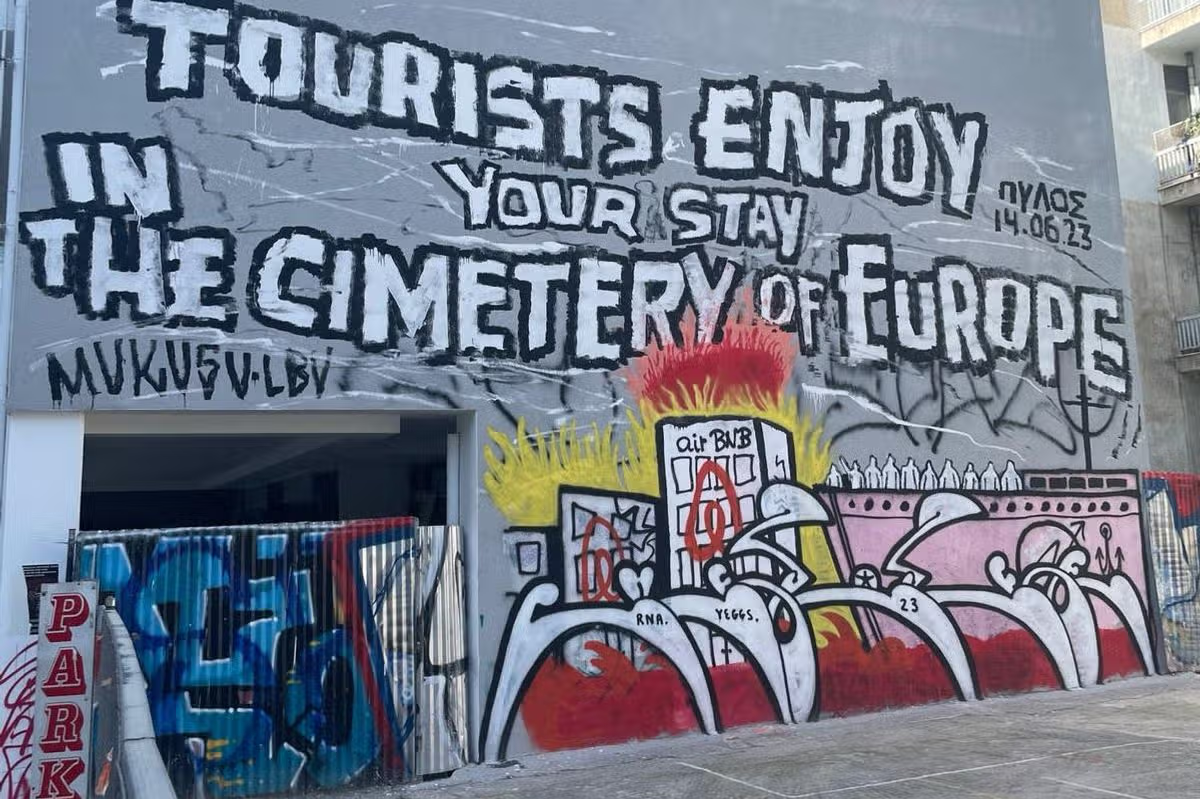
The Greek capital of Athens is, perhaps, the liveliest, most energy-filled and funnest city I have ever visited. But it is also one where locals are struggling to see a future

Athens’ walls are filled full of stridently anti-tourist graffiti(Image: Olivia)
“100% I will leave. I think of leaving every day.”
The words of Stella, a renters’ union member who is slowly but surely being ground down by one of Europe’s great cities.
When I visited Athens in the spring, I fell hard for it. The city is an energy-filled network of roads and alleyways, taken up with pedestrians, moped drivers and cars jostling for space. The sprawl stretches to the Parnitha, Hymettus, Penteli and Egaleo mountains on three sides, and the sea on the other. All four corners can be seen from the top of Mount Lycabettus, which rises 277m above Athens, letting climbers come up for air and a respite from the intensity down at street level.
It is home to some of the world’s best collections, not least at the National Archeological Museum. I snuck in to see treasures including the Mask of Agamemnon before it shuts, potentially for years, while David Chipperfield gets busy expanding and upgrading.
Outside museum opening hours, recommended activities include filling your pockets with Dreamies to befriend the impressive cat population, and watching a film at one of Athens’ 60-or-so open-air cinemas. The Thision not only serves ice-cold sour cherry drinks, it allows guests to light up and gaze at the Acropolis framed perfectly above the cinema screen.
From this tourist’s perspective, it is a dream to visit. Fun, hot, cheap and friendly.
But for many living in Athens, the city is quickly becoming a place they don’t recognise and no longer love.
The disquiet is obvious as soon as you arrive. ‘F**k Airbnb’ graffiti is everywhere, as are anti-Israel tags that more than border on the anti-semitic. On the random weekend I visited in June, the streets were taken over by tens of thousands of protesters – a very common occurrence.
As seen through the eyes of a Londoner, where political action is minimal, everything is increasingly clean and consumerism dominates every inch aside from the parks, Athens feels much more real. On Saturday mornings, markets fill streets virtually free from major chains. On Saturday nights, way past midnight, you can walk into a taverna to have a five-piece band serenade you and a waiter apologise that they ‘only have home-cooked food’.
But this perspective is a tourist’s one. It is not shared by Athenians.
“Athens is becoming more and more unfriendly. The places we used to hang out, they’re being destroyed, one by one. Soon I won’t be able to recognise it,” Stella tells me.
A local friend agrees. “It’s not like it used to be,” he says as we walk by a shiny coffee shop, a queue of tourists waiting for an iced freddo.
In the years following the Greek debt crisis, anarchists ruled much of the city. Their stronghold was Exarcheia. Chains were hounded out. Buildings converted into squats. Police rarely dared to tread there, particularly not on the anniversary of Alexandros Grigoropoulos’s death: the teenager murdered by police at the leafy intersection of Mesolongiou and Tzavella Streets.
Things began to change, and quickly, when Kostas Bakoyannis was elected mayor in 2019. He vowed to transform Exarcheia into a ‘model’ neighbourhood. Police went in, flushing out drug dealers and asylum seekers who had long received shelter in squats run by passionate locals.
This feeling of things changing has deeper roots. After winning independence from the Ottomans in 1833 and becoming Greece’s new capital the year after, what had been a ruined village of 4,000, where locals sheltered in tents beneath the Acropolis, took off. Its population had grown tenfold by 1870, tripling again over the following 25 years.
A century and a bit on, and it’s nearing four million. Many live in five or six-story polykatoikia apartment blocks that shot up in the 1930s, when the government encouraged locals to exchange their land for a stake in new builds. Today, these ‘antiparochi’ families remain major landlords.
This, according to Stella, is where the real battle for the soul of Athens is being fought. “Xarchia, where I work, used to be the most leftist area. It is famous for anarchy, but now it is a tourist area. It is a ghost of itself,” she said.
Looser property laws have allowed many home-owning Athenians to get in on the action, renting out their places on platforms such as Airbnb. Now, in the small central Athens area alone, there are thousands of holiday properties of this nature. Encouraging so many normal Athenians to become holiday let landlords means they’re much less likely to “bite the hand that feeds”, according to Stella. Or in other words, vote for parties and policies that stop the spread of holiday rentals.
And if they don’t, then Athens will become more unaffordable. According to the OECD, house prices in Greece increased by 69% between 2017 and 2024. A much faster growth rate than incomes. As a percentage of their total disposable income, Greeks now face the highest housing costs in Europe, north of 35%. In just 12 months from 2022, rent rocketed 11% across the country.
If those who make Athens the city that it is can no longer afford to live there, as many already can’t, then it loses what makes it so great.