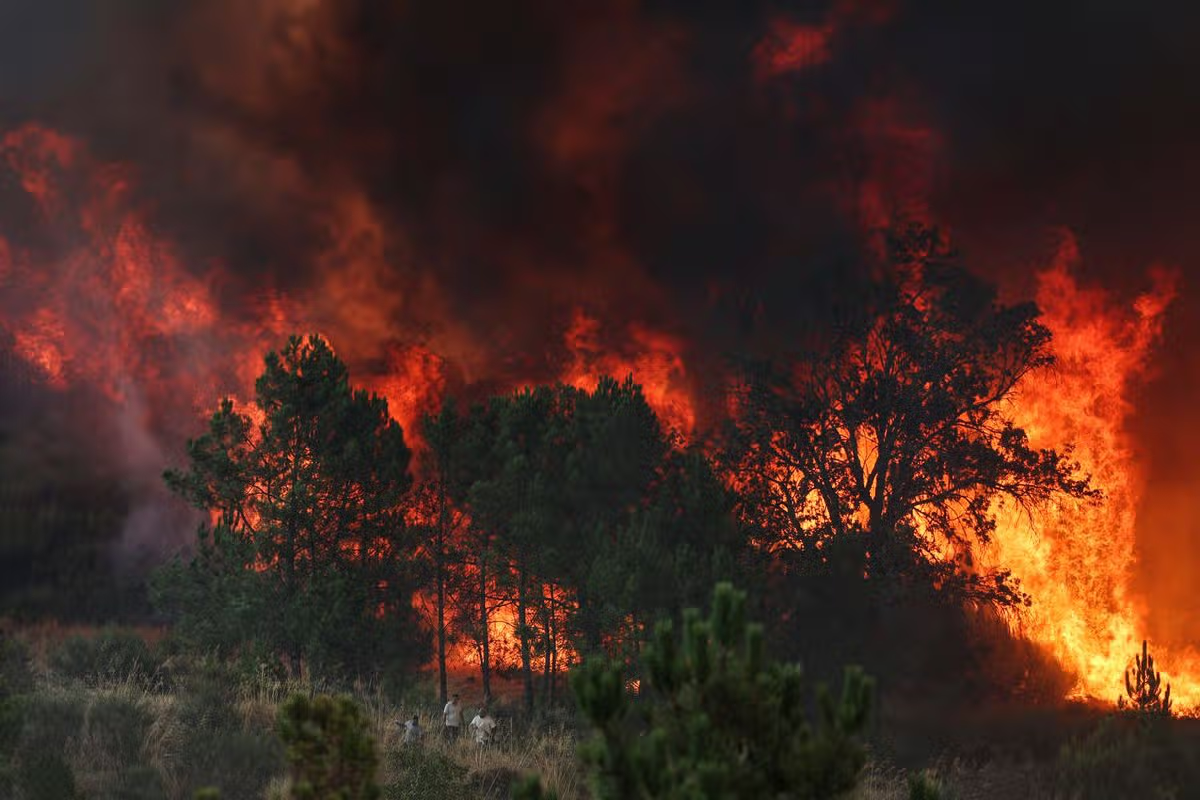
The Foreign, Commonwealth and Development Office (FCDO) has issued an urgent travel warning to Brits heading to Portugal this summer

Portugal is often affected by wildfires (stock image)
Brits heading to Portugal are facing an urgent travel alert this summer. The warning, issued by the Foreign, Commonwealth and Development Office (FCDO), comes amid devastating wildfires sweeping through parts of the European nation.
More than 1,000 firefighters are tackling the blazes just north of Porto. Euronews reports that authorities have declared a red heat alert across the country, a firm favourite with British holidaymakers. Approximately 2.5 million Brits travel to the country annually.
An extreme high temperature warning has been put in place by the Portuguese Institute for Sea and Atmosphere, covering Porto and regions to the north and east of the coastal city. In all, 12 of the nation’s 18 districts are on alert, from Thursday 2 July until at least Saturday 4 July, with a ‘persistent spell of extremely high temperatures, both daytime highs and overnight lows’.
The remaining six regions are under orange alert, heightening the wildfire threat. This has triggered a warning from the FCDO. It says: “There is a high risk of wildfires during the summer season from April to October.”
It continues: “There is an increased risk of wildfires from April to October when the weather is hot and dry. Wildfires can start anywhere in Portugal.
“Wildfires are highly dangerous and unpredictable. The Portuguese authorities may evacuate areas and close roads for safety reasons.”
You should: “Starting a fire, even if it is by accident, is illegal and you could get a fine or a prison sentence. For information about active wildfires and forecasts, visit the Portuguese Met Office website for information on Portugal and Madeira.”
The Minister of Internal Administration has suggested the possibility of deliberate criminal activity behind the widespread blaze, which broke out overnight.
“Night-time does not usually provide conditions for ignitions to occur, and yet there were two ignitions at around 02:00–03:00 in the morning,” said Luís Neves, speaking to journalists in Torres Novas. He added that ‘everything indicates that there was, in fact, human involvement, criminal behaviour’.