Before taking any travel trip, it’s vital that you’re aware of any rules that are in place for the country you’re visiting, as a harmless habit can catch you out and land you a hefty fine

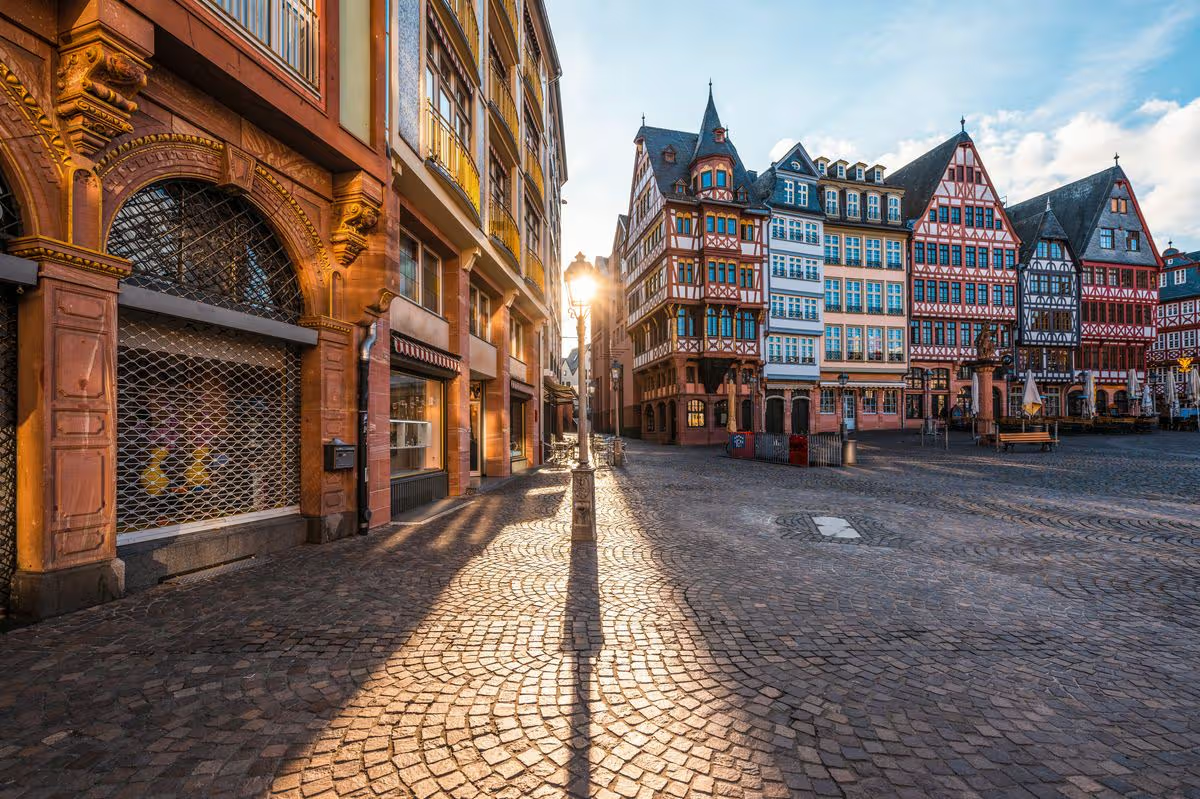
There’s a strict travel rule in this popular European destination (Image: Getty Images)
Jetting off abroad is always exciting, but if you’re visiting a popular European destination, there’s a little-known rule you need to be aware of.
Taking photos while wandering the quaint streets of a European town or capturing snaps of the city’s famed landmarks comes second nature to holidaymakers when exploring somewhere new. And afterwards, many tourists look forward to sharing their snaps on social media, but this harmless habit could land you in trouble, alongside a hefty fine.
Travellers planning a trip to Germany are being warned about the country’s strict rules on taking photos in public and sharing them on social media. While tourists have every right to take photos while visiting Germany, there are regulations on publishing or sharing images of people without their consent, even if the photo was taken in a public place, under the Art Copyright Act (KUG).
READ MORE: UK Foreign Office issues travel warning for country popular with 400,000 BritsREAD MORE: ‘I’m a TUI expert – Tenerife’s best city has £5 wine and 24C weather in April’
Simon Hood, a travel expert and Executive Director of John Mason International, explained: “Taking a photograph of a stranger and publishing or distributing this without their permission is illegal in Germany. Even if a person’s face is not in the picture, if they can be recognised by their tattoos, clothes, or the context of the photo, this is still disallowed.
“The regulations are complicated, for example, posting photos of strangers at public events such as parades, sports events and demonstrations are allowed, as long as they are not specific photos of the crowd. The Federal Court of Justice judge cases individually and ultimately determines what is and isn’t unlawful.”
Fines for sharing an unauthorised image online can range from £850 (€1,000) upwards, Simon added. “With this in mind, it’s best to ask those in-frame before posting a photo that includes them.”
Family Law Attorney Stephen Bardol explained the rule further: “From a family law perspective, this topic is often underestimated, especially when children appear in photos. Many assume that posting a photo of someone else is a harmless act, such as during travel, holidays or at family celebrations. But the fundamental rights of the image and privacy protection in Germany are often highly violated here.
“If a person can clearly be identified in a photo, posting the photo is no longer a decision for the person posting the photo, but rather a consent, privacy and interference with the fundamental rights of others.”
Stephen added that the situation can become much more complex when children are involved. He said: “The fact that a child cannot fully understand what the publication of their photo on the internet implies, eg, where it will be accessible, for what period of time and who will have access to it, and most of all the possibility that the picture will be shared or re-published by other users, means that the protection of children is greater than that of adults.”
He advised: “Tourists who are visiting Germany should be careful when taking photos, especially of families with small children. Posting a photo of a square where the families are only visible in the background is one thing, but posting a photo of a single child or a single family is an entirely different matter.”
Do you have a travel story to share? Email webtravel@reachplc.com