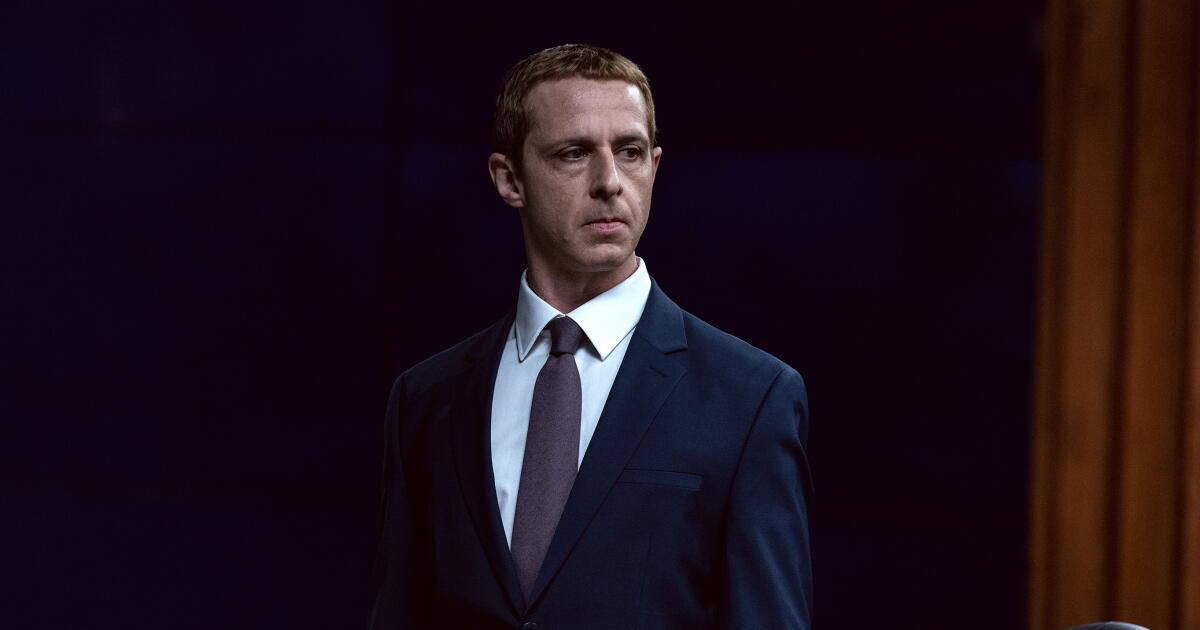
social

Keir Starmer tells social media firms he is considering a child ban

Europe, Middle East and Africa President of Snap, Ronan Harris (L), and Wifredo Fernandez, director of global government affairs at X, leave No. 10 Downing Street in London on Thursday morning after meeting Prime Minister Keir Starmer to discuss ways to protect children safe when they are on social media . Photo by Neil Hall/EPA

April 16 (UPI) — British Prime Minister Keir Starmer put the big five social media firms on notice Thursday that he was considering state intervention, including the nuclear option of a ban, if they did not do more to protect children from being harmed by their products.

Starmer warned executives from Meta, Snap, Google, TikTok and X at a meeting in Downing Street that something had to give, saying a ban on children accessing their platforms would be “preferable to a world where harm is the price” for social media use.

“Things can’t go on like this, they must change because right now social media is putting our children at risk. In a world in which children are protected, even if that means access is restricted, that is preferable to a world where harm is the price of participation,” said Starmer.

“I am determined we will build a better future for our children, and look forward to working with you on this. I do think this can be done. I think the question is not whether it is done, the question is how it is done,” he added.

Executives attending the meeting included Google U.K. managing director Kate Alessi, Markus Reinisch, a public policy principal at Meta, and X’s global government affairs director Wifredo Fernandez.

TikTok was represented by Alistair Law, director of public policy for northern Europe, while Snap was represented by Europe president Ronan Harris.

Starmer put to the firms the negative impacts of social media use on children’s ability to concentrate, their sleep, relationships and the way they view the world that have been flagged by parents and child experts.

“It’s clear to me that parents aren’t asking us for tweaks at the edges, they’re asking us whether a system that clearly isn’t working for children should be allowed to continue at all. Companies have to grip this and work with us to do better by British children,” he said.

No. 10 had earlier acknowledged that some of the tech firms had “stepped up” by disabling autoplay of videos for children by default and providing better tools to parents to limit the amount of time their children spend looking at screens, but took a much tougher line at Thursday’s meeting.

Starmer’s Labour administration has previously pushed back on pressure from parents, educators and child safety advocates for an Australia-style ban for children younger than 16 on fears it could drive them onto the dark web and make them more vulnerable when they eventually begin using the apps by hindering development of their digital skills.

Most social media sites operating in Britain do not permit children younger than 13 to use their products.

However, in the past three months, Starmer’s administration has twice been forced to use its House of Commons majority to override two efforts by the House of Lords, the upper chamber of Parliament, to amend a government bill to include a ban for children younger than 16.

The most recent of these was on Wednesday in which the government defeated the Lords’ latest attempt to force through a ban, but with a reduced majority from the previous vote on March 10. More than 240 of 650 MPs either failed to show or abstained.

In January, 60 Labour Party backbenchers signed a letter urging Starmer to bring forward a ban.

The government managed to fend off the first challenge in March by launching a three-month public consultation on how to proceed with anticipation inside his administration growing that Starmer will yield to pressure for a ban when the findings are published in the summer.

Children race to push colored eggs across the grass during the annual Easter Egg Roll event on the South Lawn of the White House in Washington on April 21, 2025. Easter this year takes place on April 5. Photo by Samuel Corum/UPI | License Photo

Source link

Trump says in his social media post he was a doctor, not Jesus. A Catholic school alum weighs in

The general consensus is that President Trump’s social media post of himself dressed in robes, after a busy weekend in which he blasted Pope Leo and attended a prizefight while an Iran peace plan fell apart, was an attempt to cast himself as a Jesus-like figure.

But Trump says we have it wrong.

“It’s supposed to be me as a doctor, making people better,” he said.

As a graduate of St. Peter Martyr grade school in the San Francisco East Bay area, and as someone who has seen a lot of doctors for various ailments, I feel uniquely qualified to weigh in.

In Catholic school, holy cards are a big deal. You’ve seen a couple hundred of them by the time you hit second or third grade, so you become familiar with the muted ethereal glow, the heavenly gaze and the look of piety. A standard feature is the halo, a clearly defined sphere that sits like a buttered bonnet on the head of the saint.

Let the record show that in his post on his very own Truth Social, which is not always truthful, Trump does not have a halo.

So in total fairness, it’s possible the president was not lying when he said he was supposed to be a doctor.

On the other hand, having seen a good number of cardiologists and surgeons and orthopedic specialists, I don’t recall any doctors who wore flowing robes while bathed in heavenly light, with a flock of eagles coming out of their ears and a team of Navy SEALs busting through the hospital ceiling.

And then there’s the fireball emanating from Trump’s right hand. All of which begs the question: If Trump thinks this is what a doctor looks like, what ailment is he being treated for, and shouldn’t the public be advised?

There’s also the question of creation — not of human life, but of the very existence of a social media post like this from the president of the United States in wartime. It was described as an AI-generated image, but who was at the computer?

Did the president sit down at the end of a long day and churn out an image of himself playing doctor, if not Jesus Christ? Or does he have a team of staffers who do this sort of thing, and if so, how could Elon Musk have missed them when he said the government was bloated and set out to fire half the federal workforce?

You’d at least hope the president would have the courage of his convictions. But as criticism of his post mounted, Trump deleted it Monday morning.

I think he should have stuck with the story — he was portraying himself a doctor because he’s a healer. The next day, he could have been in a New York Jets uniform and told us he’s a quarterback. Then he could have released an image of himself in the Artemis space capsule and told us he’s an astronaut, and he’s thinking of building a string of Trump hotels on the moon. Ask yourself this: Would anyone have been surprised?

A guy who only knows how to go for broke, and always doubles down when things go wrong, has to stick to his guns or the whole shtick unravels. I’d have respected Trump more if he had traipsed around the White House with a stethoscope for a week or two, or maybe performed brain surgery on Pete Hegseth, just to see what’s going on in there.

What’s going on in Trump’s head, if I might volunteer a bit of armchair psychoanalysis, is that failure triggers a sense of grandeur rather than humility.

Things are not going well at the moment, so he’s lashing out. The price of things was supposed to come down on Day One, but thanks to his upheaval of the world economy, prices went up, and now they’re soaring because he helped start a war that made no sense.

A war that has been criticized by Pope Leo, who has pointed out that while the Trump administration has ascribed a religious imperative to the assault on Iran, and Trump promised to blow the country all the way back to the “Stone Ages,” Jesus would probably not be on board.

Trump, who said last year that he wants to “try and get to heaven, if possible,” now realizes he’s not going to get an endorsement from the pontiff.

And so the man who once issued a national call to prayer, said the Bible was his favorite book, joked after the death of Pope Francis that he wanted to be the next pontiff, and has now issued his own holy card, has attacked Pope Leo for being too liberal as well as “weak on crime and terrible for foreign policy.” He has, in effect, anointed himself as holier than the pope himself.

Even staunch supporters of Trump have worked themselves into a lather over this. They’re lashing out at Trump, as if his criticism of the pope and depiction of himself as Jesus Christ are shocking.

My fellow Americans, certain words have been rendered meaningless in describing the current state of affairs. Among them are shocking, surreal, unbelievable, unprecedented and unexpected.

If indeed Trump thinks he’s Jesus, let his penance begin with 100 Our Fathers, 500 Hail Marys and 1,000 Acts of Contrition.

If indeed he thinks he’s a doctor:

Physician, heal thyself.

steve.lopez@latimes.com

Source link

I rode in the Goodyear blimp over Coachella

If you’d like to take a ride on the Goodyear blimp, it turns out you can’t do it wearing heels.

This I learned on Day 2 of Coachella, when the people who promote the tire company’s famous dirigible — they have a nice lady in charge of the blimp’s socials and everything — invited me and my colleagues Rebecca Castillo and Kayla Bartkowski to climb on board for a little cruise over the desert festival.

Before we could get on to the airship that had room for about six to eight people, we had to watch a safety video in which the narrator told us that you can’t wear heels on the blimp — but that if you’d worn them today, you could check with a Goodyear representative and they’d see about other arrangements. (One rep told me she’d already loaned out her sneakers several times Saturday.)

Anyway!

Los Angeles Times reporter Mikael Wood rides the Goodyear blimp flying over Coachella

Los Angeles Times reporter Mikael Wood rides the Goodyear blimp flying over Coachella

(Kayla Bartkowski/Los Angeles Times)

The ride was gentler than I’d anticipated — kind of like a boat ride in a harbor. We took off from a giant dirt field at the Jacqueline Cochran Regional Airport in Thermal and tooled around for 30 minutes or so; when we got over Coachella, we could see a few hundred Beliebers camped out as close to the main stage as they could get — nine or 10 hours before Bieber’s performance was scheduled to begin.

They looked so little down there — so small in size, so big in Beliebf.

Back on the ground, we had to get off the blimp two by two, each duo replaced by a new pair of folks who’d responded to an email asking if they might want to a ride on a humongous floating billboard.

The ladies who replaced Rebecca and Kayla looked super jazzed; my guy seemed less impressed.

Maybe he’d blimped before.

Source link

‘We are empaths, not sociopaths,’ says Broken Social Scene singer Kevin Drew ahead of comeback album Remember The Humans

Collage of twelve individual photos of the members of Broken Social Scene.
Broken Social Scene PR SUPPLIEDCredit: Supplied

BROKEN Social Scene is more than just a band, it is a community.

The Canadian collective is at the beating heart of Toronto’s freewheeling indie music scene.

Jill Harris and Kevin Drew perform at the 2022 Ohana Music Festival in 2022Credit: Getty
Kevin Drew, second left, top row, says the Broken Social Scene ‘invited everybody in without rules’Credit: Supplied

If you attempt to count the combined total of active and inactive members, you arrive at a mind-boggling approximation somewhere between 20 and 30.

“What I love about this band is that it’s an open door,” affirms singer and guitarist Kevin Drew.

Since forming Broken Social Scene in 1999 with Brendan Canning, Drew has been its lynchpin . . . albeit one with an unerringly democratic approach.

“We invited everybody in and we didn’t have rules,” adds the 49-year-old frontman. “And we went out and did our f***ing best.”

WONDERHAUL

Guitar Noel Gallagher used to write Oasis’ Wonderwall on sale at auction


HEALTH BATTLE

Matt Willis gives James Bourne update after ‘life extending’ surgery post

Over the years, notable collaborators have included an array of Canada’s finest singers, including solo artist Feist, Amy Millan of Stars and SFTW’s other interviewee this week, Emily Haines of Metric.

Drew cemented his place at the centre of the scene by co-founding progressive label Arts & Crafts in 2003 and has known many of the artists since he was a teenager.

Now, Broken Social Scene are back with their first album in nine years, Remember The Humans, a typically multi-layered affair but one that never loses touch with a winning melody.

Through words and music, it serves as a telling reminder that in this dislocated tech-driven world, we are still mere mortals with very human feelings.

Drew is at home outside Toronto and I’m in London when we hook up for a video call this week.

Before we discuss Broken Social Scene’s welcome return to the fray, he balances his phone on a copy of Irma Rombauer’s hefty culinary classic, The Joy Of Cooking, to bring his face into full view.

He apologises for appearing a bit flushed and says with a big smile: “Sorry, I just took a sauna.”

I quickly discover that Drew is a disarming character with a refreshingly open take on life.

“My dad was from London originally,” he continues. “I said, ‘Hey Pops, I’m gonna speak to The Sun’, and he went, ‘Oh, my gosh, I remember The Sun — it used to have the pin-ups!’ ”

I inform Drew that one of my earliest reviews for SFTW was Broken Social Scene’s self-titled breakthrough third album, released in 2005. “So, we have a long relationship together, which I love,” he responds without a trace of irony.

Introductions out of the way, he’s ready for me to ask why it’s the right time for a new album, as well as a triple headliner tour with Metric and Stars, which is coming to the UK in September.

“We came to a realisation through playing shows after the pandemic that this IS our life,” he says. “This is something we have spent so much of our lives working on.

“We still find much joy in melody and we are part of the muscle memory business now.

“At the age we’re at and with what we’ve achieved already, we made a firm choice to continue.

“Between us all, we have had so much loss of family and friends, but we found that grief made us grateful for what we’ve got.”

Drew is thrilled to be heading out with his comrades from Metric (particularly Jimmy Shaw) and Stars, a trek that summons “the true spirit of what we have been from the beginning”.

Audiences can expect some band-hopping, meaning that Drew can’t really say how many people will be on stage with him.

“I haven’t a clue,” he says. “But I do know there will be a LOT.” The latest chapter in the Broken Social Scene story probably began in 2022 with a 20th anniversary tour of their second album, You Forgot It People, and its songs that still resonate today.

Drew and his fellow travellers realised they might provide some solace in a world where “identity is at war, fear is prominent at every turn” and where “hope is a very tired word”.

He says: “We thought, ‘Let’s do our tiny little protests, let’s continue to demonstrate community’. After all, it’s not hard for us to make music because there’s so many of us.

“Just by being around for 25 years, we have our own sound.”

One song from You Forgot It People — Anthems For A 17-Year-Old Girl, with Metric’s Haines on lead vocals — has acquired a new audience, as Drew explains.

“Thanks to the [2024] film I Saw The TV Glow, the trans community has brought that song into their lives and embraced it.

Broken Social Scene are returning with their first album in nine yearsCredit: Supplied
Over the years, notable collaborators have included an array of Canada’s finest singers, including Emily Haines, aboveCredit: Getty

“It went viral on TikTok, then suddenly all our listens went up. It was the greatest award we’ve ever been given. We were so touched.”

For Drew, it was proof positive that “music helps to build your identity, to find your own people and to express yourself. Right now, that is something to hold on to”.

With its layers of horns, guitars and synthesisers as well as various distinctive voices, new album Remember The Humans is a triumph for freedom of expression.

There’s also a strong feeling of Broken Social Scene coming full circle, enhanced by the return of original producer David Newfeld.

Drew picks up the story: “I moved out of the city, just half an hour away from where Dave had moved 18 years ago.

“He started coming over for dinner and there was a lot of laughter. He’s so old school — still has a flip phone because he doesn’t think smart phones are smart.

“I reached out to him about working together again. I missed his sound and his passion, which were so unpredictable.

“Next thing I knew, I was on a two-and-a-half-year journey of starts and stops — and loss. I lost my mom and he lost his, so we bonded over that.”

It’s clear that the new album’s heartfelt opening song Not Around Anymore is, among other things, a product of their grieving process.

Drew adds: “Dave also latched on to the song And I Think of You. If you put it through headphones, you are hearing his grief over his mom. He records that thing, mixes it and he takes you on a journey.

“His mom was his world — they talked three times a day. Once he’d lost her, I realised it would help him to put love and loss into some of this music.”

We move on to other key contributors, firstly Feist, who resurrects What Happens Now, a song that reportedly didn’t make the cut for Broken Social Scene’s 2017 album Hug Of Thunder.

“Leslie Feist is a different entity because she’s so solo in her success,” says Drew. “There’s us, Metric and Stars, but she became the biggest of all on her own.”

He adds that Feist has “an open invitation” to be part of Broken Social Scene’s endeavours.

“I always tell her, ‘You’re welcome at this home any time you help build it. In fact, you’ve got your own wing!’ ”

Over acoustic strums, atmospheric electronica and occasional swells of horns, Feist’s ghostly delivery turns What Happens Now into a standout moment. “I’m honoured we were able to put it on this record,” says Drew. “It fits the theme.

“I love the cadence of Leslie’s vocals, the way it seems as if she is drowning before she becomes so clear. It’s so Feist.”

Another singer to make a significant contribution is Hannah Georgas, who became involved in Broken Social Scene’s world through being a support act.

Drew says she made Only The Good I Keep her own, and adds: “She neurologically removed my topline [lead vocal melody] — but we need people to have ownership.

“At first, I called Hannah and said, ‘This is great, but I’ve got something I can’t get in’. Two days later, I couldn’t even remember what I was saying and all I could hear was her version.”

Broken Social Scene regular Lisa Lobsinger brought the song Relief into the mix — providing another insight into the band’s democratic process.

Drew reports: “We got this email out of the blue from Lisa saying she kept singing a song in her head while meditating, and she thought it was by Social Scene.”

Lobsinger realised she was making up Relief by herself in that moment, so she submitted it.

“We sent it to the crew, and everyone loved it,” continues Drew. “So, I said, ‘Oh my God, Lisa, let’s do it!’ ”

Before we go our separate ways, Drew leaves me with telling observations about more general topics related to his home country.

Audiences can expect some band-hopping, meaning that Drew can’t really say how many people will be on stage with himCredit: Getty

Much as he appreciates iconic Canadian artists like Leonard Cohen, Joni Mitchell and Neil Young, he singles out some of the lesser-known trailblazers who inspired him — “Thrush Hermit, Sloan, Hayden and Godspeed You! Black Emperor”.

And he has this to say about Donald Trump’s wacky idea of making Canada the 51st US state.

“I say to the younger members of the band, ‘Don’t listen to this man. In fact, don’t listen to men in general — if they have a microphone, they won’t do you any favours, including rock singers!’ ”

It’s a typical comment from someone for whom community spirit means everything.

In Broken Social Scene, decides Drew, “we are empaths, not sociopaths. No one has their identity wrapped up in this band”.

BROKEN SOCIAL SCENE
Remember The Humans

★★★★★

Broken Social Scene – Remember The Humans

Source link

Greece to ban social media for kids under 15 from 2027

Hand Holding Phone with Forbidden Sign over Social Media Icons

Pakorn Supajitsoontorn/iStock via Getty Images

Greece will ban social media for children under the age of 15 from next year, Prime Minister Kyriakos Mitsotakis announced on Wednesday, making it the latest country to follow Australia’s landmark move.

In a video message posted on TikTok, Mitsotakis said

Source link

Violence Erodes Adamawa’s Farmer-Herder Social Tradition

The year was 1975. 

On a quiet afternoon in Bare, a farming community in Numan Local Government Area of Adamawa State, northeastern Nigeria, Clement Coleman sat beneath a neem tree with an old friend. Alhaji Sadiki, a herder from the nearby village of Sabewa, had come to visit.

Clement had recently bought two calves, and he believed that Sadiki was best positioned to raise them. There were no contracts to sign, no witnesses to summon. By the end of their conversation, he handed them over to Sadiki. At the time, this was not unusual in Bare. It was the system.

Farmers routinely bought a handful of calves and entrusted them to herders they knew. In return, the herders were given access to farmland within the community, land they could not cultivate themselves because of their nomadic life and the demands of managing large herds. Farmers, in turn, worked those fields on their behalf. 

It was an arrangement built on mutual dependence. At harvest, farmers handed over the yields to the herders. When they needed money or access to their cattle, they turned to the herders to whom they had entrusted their animals. Over time, the cattle multiplied. Farmers who never grazed a single animal came to own sizeable herds. Herders, meanwhile, secured steady food supplies through farms they did not till themselves. Risks were shared, and so were rewards.

That afternoon, Clement and Sadiki sealed their agreement with a handshake.

The pact that fed generations 

For years, the system worked with remarkable ease.

Clement recalls how Sadiki managed the cattle as though they were his own, alerting him whenever one fell ill. “One time, the cows entered someone’s farm and destroyed their crops. Sadiki told me, and I went to the farmer and covered the loss in cash,” Clement told HumAngle. 

A decade on, by 1985, his herd had grown to four cattle. By 1990, it had increased to six. The herd continue to multiply. 

“They were healthy and big. I considered myself a rich man back then,” he recounted. 

Man in a gray shirt sits relaxed against a thatched background, looking at the camera with a calm expression.
Clement Coleman in his compound in Bare, Adamawa State. Photo: Saduwo Banyawa/HumAngle. 

The cattle became a financial lifeline. One time when Clement was short of funds and needed to pay for his children’s education, he went to Sadiki and one of the big cows was sold. He paid his children’s fees and used the balance to support his household. He continued to use the system for years to support his family. 

Others relied on the same system.

Buba Sarno, a lifelong herder in Mararaban Bare, never had time to farm. Yet, for four decades, each harvest season, he received about 25 bags of rice and 30 bags of maize. It was simple. All he did was seek land for free and reached an agreement with a local who tended to the farm on his behalf. If the farm required manual labour or fertiliser, Buba sorted it through the farm attendant. “With time, I also cultivated soya beans and other crops, and my family never had to buy food,” Buba told HumAngle. 

Magaji Yakubu, another herder in Mararaban Bare, told HumAngle that he combined grazing with both rainy season and irrigation farming, relying on locals to manage his fields. “I cultivated rice, guineacorn and soya beans,” Magaji noted. Like Sadiki, he tended farmers’ cattle.

The same arrangement played out in Bwashi community in Adamawa’s Demsa Local Government Area, where Theophilus Tapu built his livelihood around it. The 80-year-old farmer is a father of 10 and grandfather of over 40 children. He is considered an accomplished cattle rearer in his community, but Theophilus never led a herd to graze. Instead, he bought young male calves, handed them to trusted herders, and sold them at maturity. 

“I sold them to sort my needs and purchase more young ones, then hand them back to the herders,” he told HumAngle, adding that when some of the herders were migrating, they would hand over his herd to him, and he would entrust it to a new batch of herders. 

The cycle sustained him for over 60 years. 

By 2000, he had lost count of his herd. He explained that his relationship with the herders thrived to the extent that he didn’t have to follow them to the market; the herders sold the cattle and brought him the proceeds. 

A person in a blue robe and red cap walks along a path between straw fences, with trees and huts visible in the background.
80-year-old farmer Theophilus Tapu has lived in Bwashi for most of his life. Photo: Saduwo Banyawa/HumAngle.  

It was, in every sense, a shared economy rooted in trust.

From trust to tension 

The trust began to fracture in 2017. 

That year, violence broke out between farmers and herders in several communities in Adamawa State, with Numan and Demsa among the hardest hit local government areas. What had once been isolated disputes escalated into deadly clashes, displacing communities and destroying livelihoods. 

Despite government intervention and multiple peacebuilding efforts, the violence has persisted for almost a decade. 

At its core, the conflict is about land and water. Farmers have accused herders of encroaching on farmlands. Herders, in turn, said grazing routes had been taken over.

In Bare, the turning point came in 2017, when a confrontation between a farmer and a herder spiralled out of control. “The herder took his cattle to the farm, and when the owner of the farm confronted him, things got out of hand, and they started fighting,” Jackson Amna, the District Head of Bare, told HumAngle. 

What began as a verbal confrontation that day turned into full-blown violence, leading to deaths and displacement. The clashes now follow a pattern, according to locals; they subside during the dry season and resurface when farming resumes with the rains. 

HumAngle has extensively covered the conflict in Bare and Mararaban Bare.

Sign reading "Welcome to Bare (Bwazza), Home of Hospitality" near a dirt road and greenery under a clear blue sky.
Bare is nicknamed “Home of Hospitality”. Photo: Saduwo Banyawa/HumAngle.

With each recurrence, trust erodes further. 

The long-standing system, in which farmers entrusted cattle to herders and herders relied on farmers for farm produce, is steadily collapsing across Numan and Demsa. Even though a few farmers still hand over farmland to herders, the District Head of Bare explained that it is rare. 

“During the 2017 conflict, some herders ran with people’s cattle and have not been seen to date,” Jackson said. “My herd was also taken away by the herder I entrusted them with, so I won’t give my cattle to somebody who can run away with them.”

Strained lives

The consequences have been profound.

When clashes between farmers and herders continued in Bwashi, Theophilus’ relatives urged him to retrieve his cattle from the herder he had entrusted to them. He noted that most herders had already started leaving the area at that time. 

“They [herders] were considered our enemies, and we could no longer trust them, but I knew some of them were good, but my people wanted me to do nothing with them,” he said. 

Theophilus succumbed and took over his cattle from the herder.

Not long after, thieves stole the animals he had struggled to manage himself. The old farmer doesn’t have a single cow to call his own. “I lost everything,” he said. “I’m very poor now, and survival is hard.” 

Theophilus had a well-planned retirement. He was to stop farming in 2024 and live off his herd, but now he says his entire life has been altered, and with many mouths to feed, he had to go back to the farm that yields little. 

Things didn’t change only for the farmers. In 2019, two years after the conflict began, the man who had given the farmland to Buba Sarno in Mararaban Bare told him never to set foot on the land again, so Buba migrated with his herd and family to Lamurde, a nearby local government area. In Lamurde, he tried to rent land for farming but couldn’t get any. 

“I went to a hill and established a farm there, but unfortunately, the soil is not good, and the land is not fertile, so my crops didn’t yield,” he said. 

Like Buba, several other herders who once lived in Bare have been displaced to settlements such as Sabewa, Ubandoma, and Mararaban Bare. However, since they are not indigenous to those communities, they told HumAngle that farming has become restricted as locals have taken over their lands and broken the pact that existed between them for generations. 

Magaji Yakubu, who lost his farmland at Mararaban Bare after locals took charge of it, has also retired all the cattle he had been tending for locals. “Feeding has become very hard for my family and me since the conflict began,” he stated. As someone who had access to large harvests in past years, Magaji said navigating a new life without owning farmland or grain is difficult. 

A man stands in a field with grazing cattle under a clear sky.
A herder stands behind his herd in a grazing field at Mararaban Bare. Photo: Saduwo Banyawa/HumAngle. 

For Clement, the loss is both economic and deeply personal. Sadiki, the man he trusted for decades, disappeared with his cattle during the 2017 crisis. Although his phone rings occasionally when he dials it, no one has ever responded. Clement says he is not sure whether the man is dead or alive.

“Some say the herders around here migrated to Cameroon for safety due to the recurring clashes. We also heard that some have moved to other states. I’ve looked for Sadiki everywhere I can in the past nine years and haven’t seen him,” he said. 

He had planned to fund his children’s education by selling cattle. Without them, those plans collapsed. Even if Sadiki returns, Clement believes the relationship might not be as usual. 

“Right now, I believe he intentionally ran away with my herd,” he said. 

Searching for solutions

Efforts to restore peace continue, but progress remains slow.

The Justice, Development, and Peace Commission (JDPC), a faith-based organisation affiliated with the Catholic Diocese of Yola, has worked for decades to address the crisis. According to Jareth Simon, JDPC’s Project Manager in Adamawa State, land and water were the initial triggers, but new pressures have emerged.

“The one that is glaring to us now is the climate-related issues,” he said. “We’ve also seen where there is an increase in population, leading to more people wanting to cultivate more land.” Additionally, Jareth noted that displacement caused by the Boko Haram insurgency in the region has further intensified competition for resources. 

While most of Adamawa’s 12 LGAs have been affected by the farmers-herders crisis, Jareth said that JDPC’s engagements have identified Demsa, Numan, and Yola South as the hardest hit areas. “This is as a result of the number of cases that have been reported,” he said. 

To mitigate the crisis, JDPC’s approach focuses on community-led solutions, bringing together local government representatives, religious leaders, women, and persons with disabilities. Currently, about 415 stakeholders in conflict-prone areas are engaged in this initiative. 

“These are people who cut across the local structures at the local government level. That includes the local government representative and religious leaders from the Muslim and Christian associations. We have women’s representation and persons with disabilities,” he said. 

Jareth explained that people meet at least once a month to discuss issues related to peaceful coexistence, social cohesion, and community protection, and to identify local actions to mitigate them. “We don’t dictate to them. We only strengthen their capacity, and they themselves identify the leadership structure,” Jared said. 

Illustration of a group of herders walking with a herd of cattle, carrying sticks and wearing traditional hats.
Illustration: Akila Jibrin/HumAngle

In some communities, such as Namtari in Yola South, the approach has helped reduce clashes. “We have programmes for children like Peace Clubs, and we also have the one that targets adults using informal education and informal approaches,” he added. 

But challenges remain, particularly around funding and sustainability. “So we’ve seen where we’ve intervened, and then the projects have to end, but you also see that there is an increased need for you to also go out and support, and the funds are limited,” he said.

Jareth said that government authorities should set up and maintain multiple community-based interventions. “Because one of the gaps we’ve noticed is that from the community to the local government, from the local government to the state, there seems to be some gaps sometimes even in terms of information sharing,” he said. 

Government interventions to resolve the farmers-herders conflict across Nigeria have struggled over the years. For instance, the Rural Grazing Area (RUGA) scheme, introduced in 2019, was derailed by mistrust and controversy and later suspended by the former President Muhammad Buhari’s administration. 

Another intervention, the National Livestock Transformation Plan (NLTP), remains largely unimplemented. It was initially introduced to “create a peaceful environment for the transformation of the livestock sector that will lead to peaceful coexistence, economic development, and food security…” 

The Plan, whose first phase execution was budgeted at ₦120 billion, has not been actualised. 

While Jareth acknowledged the efforts of the Adamawa State government in establishing a peace commission comprising committees across the LGAs, he said there’s a need to strengthen security across the locations. “We also want to see the government come out with policies […] that help resolve some of these tensions that arise as a result of scarce resources within these communities,” Jareth stressed. 

Government interventions and community-led peace initiatives continue, but the deep scars of mistrust, competition for land, and recurring violence make reconciliation slow and fragile.

What is being lost in Adamawa is not just a livelihood, but a way of life. 

Source link

Social Programs a Key to Budget Votes : Support: The inclusion of $1 billion for a family preservation bill illustrates how legislators were lured to back the President’s deficit-reduction measure.

Buried in the fine print of the massive deficit-reduction bill is–of all things–a brand new social program.

The new program will cost $1 billion over the next five years–somewhat less than the Clinton Adminstration had requested, but still a substantial sum in this era of tight budgets.

Supporters, including Health and Human Services Secretary Donna Shalala, insisted that some provisions in the new program actually would save the government money in the long run. Even many of the program’s supporters questioned that assertion, however, although they insisted that the money is worth spending in any case.

The family preservation and support program–along with expanded spending for childhood immunization, tuberculosis prevention, food stamps, “empowerment zones” intended to help inner cities and the earned income tax credit for low-income workers–represents the flip side of the massive budget cutting and tax-raising efforts of the bill. All told, those social programs–aimed in large part at helping families with children–will receive an additional $29 billion from the bill.

“The President’s long-term investments for kids and families have been very well supported by this bill,” said Shalala.

The social-program funds not only were key to keeping some of President Clinton’s policy initiatives alive, they were crucial to winning support for the budget in the heavily Democratic House, where liberal Democrats and members of the Congressional Black Caucus had threatened to vote against the budget bill unless it contained money to back up at least part of Clinton’s promise to “invest” in programs for the poor.

“There are a number of important features in this bill that represented the basis for many liberal and progressive Democrats to feel they could support the overall budget,” said Rep. Henry A. Waxman (D-Los Angeles).

The survival of the family preservation program, which at several points during the long budget negotiations seemed likely to die, would mark the end of a long legislative road. The program would give money to the states for early intervention and support programs for troubled families. It has passed the House three times and was approved by both chambers last year as part of another piece of legislation ultimately vetoed by then-President George Bush.

Supporters of the program argued that, by intervening early, social workers can help troubled families before their situations deteriorate so much that the state has to place children in costly foster care programs.

Skeptics, including Senate Finance Committee Chairman Daniel Patrick Moynihan (D-N.Y.), argued that the ability of social workers to accomplish those goals has never been proven. At one point during budget talks, Moynihan derided the program as “welfare for social workers,” several participants said.

But other legislators argued that, even if the program does not save money by avoiding foster-care placements, it will provide badly needed help for children. “This creates early intervention to keep children from being abused,” said Rep. Robert T. Matsui (D-Sacramento), who was the program’s chief sponsor in the House.

The program “has been pared down a good deal, but at least we got it,” Matsui said.

The birth of this new program is an object lesson in how legislators and Administration officials can use the arcane rules of the budget-cutting process to advance other items on the legislative agenda.

Over the years, Waxman has become a master at that art. This time around, he engineered a new $200-million program to expand the number of tuberculosis patients who can receive federal Medicaid benefits over the next five years. He also played a key role in winning money for the Administration’s proposed child immunization program, which would receive $585 million under the budget bill.

Although immunization has been a high priority for Clinton and First Lady Hillary Rodham Clinton, Waxman and other supporters of the program had to overcome opposition not only from congressional conservatives but from some White House officials who were willing to accept much lower dollar amounts for the program as they sought to hit their deficit-cutting goals, according to Administration and congressional sources.

Under the tuberculosis program, people who are poor but not otherwise eligible for Medicaid–primarily single men without children–and who have active tuberculosis can receive government-supplied out-patient services if the state they live in decides to participate. Public health officials said they hope that the additional money will reduce the rapid spread of the disease by targeting a group of people who often do not receive care.

The immunization program has two major components. The first part will provide $500 million over the next five years to pay for vaccinations for 2.6 million children whose families lack insurance. The money also will cover the 6.5 million children now covered under Medicaid, relieving the states of a financial burden.

The second part of the bill, which has drawn howls of outrage from drug manufacturers, would allow all states to buy vaccines in bulk at the price manufacturers provide to the federal Centers for Disease Control and Prevention–something 11 states now do. The CDC has negotiated steep discounts from the prices that drug companies charge private pediatricians.

Source link

‘We will no longer stand by’: Austria plans social media ban for under-14s | News

Austrian officials highlight addiction and ill-health while advocating for stricter age restrictions.

Austria plans to ban children under 14 from using social media, with an official saying certain online sites are addictive and making young people “sick”.

“Austria is introducing ‌a compulsory minimum age of 14 for the use of social media platforms,” conservative ⁠junior minister for digitisation, ⁠Alexander Proll, told a joint news ⁠conference on Friday.

Recommended Stories

list of 3 itemsend of list

Proell added that draft legislation ‌would be drawn up by June. Cabinet members ⁠from Austria’s two other governing parties were also in attendance.

“We will ‌decisively protect children and young people in future from the negative effects of social media,” Vice Chancellor Andreas Babler of the Social Democrats said.

“We will no longer stand by and watch while these platforms make our children addicted and often also sick … The risks associated ⁠with this use were ignored for ⁠long enough, and now it is time to act,” he added.

Babler said the government would not list individual platforms the ban would apply to, but would ‌decide ‌based on how addictive their algorithms are and whether they include content such as “sexualised violence”.

The announcement comes days after a Los Angeles jury found Alphabet’s Google and Meta liable for $6m in damages in a landmark social media addiction lawsuit.

The case involved a 20-year-old woman who said she became addicted to the apps at a young age due to their platform design. Meta says it plans to appeal the decision.

Also on Friday, the United Kingdom advised parents of children under five to limit screen time to a maximum of one hour per day.

Similar to Austria, other nations in Europe and elsewhere have banned the use of social media for children.

In January, the French parliament voted in favour of banning children aged below 15 from social media, amid growing concerns about online bullying and mental health risks.

Countries including the UK, Denmark, Spain and Greece are also studying a ban.

The European Parliament has called for the European Union to set minimum ages for children to ‌access social media, although it is up to member states to impose age limits.

Source link

BBC Question Time’s Fiona Bruce stumps Tom Skinner amid social media showdown

Tom Skinner, an entrepreneur who was on The Apprentice in 2019, appeared on Question Time in Clacton-on-Sea, Essex, which featured a debate about social media giants

TV personality Tom Skinner squirmed under interrogation from Fiona Bruce during a showdown about social media on Question Time.

The presenter of the topical debate programme accused Mr Skinner, 35, of being “part of the problem” amid the debate around the pros and cons of apps, such as TikTok and Instagram. The entrepreneur regularly posts videos to his 536,000 TikTok followers, including clips of him eating full English breakfasts at his favourite café. He told Question Time he also makes money by promoting products on Instagram, TikTok and other apps.

But Ms Bruce fronted him on his use of the platforms, suggesting he himself was actually playing into the challenges young people and their parents face with social media. Meta and Google were this week found liable for causing addiction in users in a landmark £2.2million legal case, which led to last night’s debate around how they government should help protect children from such addiction.

Addressing Mr Skinner, the host said: “As you said, you are benefiting from social media, you make part of your living that way and, part of the reason you are able to do so is because of the addictive algorithms that will push people towards yours (social media content)… It is giving you a platform, and job opportunities come your way because of it. In the nicest possible way, you are part of the problem.”

The remark led to a wry smile from Justice Minister Jake Richards, also on the panel in Clacton-on-Sea, Essex. Dad-of-three Mr Skinner hesitated as he answered, eventually insisting his videos are harmless.

READ MORE: Calls mount for UK social media ban as Meta hit with ruling over ‘addictive’ appsREAD MORE: Parents across UK to get new powers to limit teenagers’ social media use under trial

Ms Bruce, presenter of the programme since 2019, said: “How can you on the one hand say ‘people shouldn’t be doing it so much’ but, on the other hand, you are benefiting from it?” It left the entrepreneur stuttering again, before he went on to stress the importance of the roles parents should play in protecting children.

“It’s bad. It’s bad when people sit on their phone all day. I’ve seen it myself. I’ve done it myself, I sometimes know I’ve got to be up in four hours and I’ve sat there and I’ve scrolled my brains through, watching absolute nonsense,” Mr Skinner, from Romford, east London, said.

Other panellists defended Mr Skinner, arguing his clips are innocent and “do not drive the worst of the algorithms”. The case this week heard Meta and Google both were negligent in the design or operation of their platforms — including the “infinite scroll” feature that was claimed to trigger addiction in users.

The jury also decided each company’s negligence was a major factor in causing harm to a 20-year-old woman, who says her use of social media as a child addicted her to the technology and worsened her mental health struggles.

Both firms have strongly rejected the verdict and plan to appeal. Meta said: “We respectfully disagree with the verdict and are evaluating our legal options”. A spokesperson for Google added: “This case misunderstands YouTube, which is a responsibly built streaming platform, not a social media site.”

Source link

Jury finds Meta, YouTube liable in landmark social media addiction case

A Los Angeles County jury on Wednesday found Meta and YouTube liable in a social media addition case. File Photo by Adam Vaughn/EPA

March 26 (UPI) — A California jury has found Meta and YouTube liable for negligently designing addictive social media platforms that harm children, in a landmark verdict that could have lasting implications for the tech industry.

The Wednesday verdict marks the first time technology companies have been found liable for creating addictive online products, amid increased scrutiny of the industry and a wave of litigation.

“This jury saw exactly what we presented from the very first day of trial: that these companies built digital spaces designed to negatively influence the brains of children, and they did it on purpose,” Mark Lanier, lead trial counsel and founder of The Lanier Law Firm, said in a statement.

“The evidence showed that Meta and YouTube knew their platforms were hooking children and harming their mental health, and instead of fixing the problem they kept developing features to maximize the time kids spent on their apps. Now a jury has told them that is not acceptable, and you are being held accountable.”

UPI has contacted Meta and YouTube for comment.

The verdict follows a seven-week trial centered on a now-20-year-old plaintiff known to the court by her initials K.G.M., who testified that her use of Instagram, owned by Meta, and YouTube, an Alphabet product, from a young age caused her to develop anxiety, depression, body dysmorphia and suicidal thoughts.

During the trial, she testified that the platforms’ addictive design features, including algorithm-generated recommendations, beauty features and push notifications caused her severe mental harm.

“[The plaintiff] put a human face on what these companies have known for years: that their platforms were engineered to hook young users, and that the children most vulnerable to trauma were the ones they were most effectively reaching,” Rachel Lanier, co-lead counsel and managing attorney of The Lanier Law Firm’s Los Angeles office, said in a statement.

In its verdict, the jury found Meta 70% responsible for the harm the plaintiff suffered and YouTube 30% responsible, and ordered the Mark Zuckerberg-owned tech behemoth and Google‘s video-sharing service to pay her a combined $6 million, half for compensatory damages and half for punitive damages.

Of the punitive damages, Meta is to pay $2.1 million and YouTube $900,000.

This was the first trial in a much larger consolidated case involving more than 1,600 plaintiffs seeking to hold social media companies responsible for the harm they suffered from using those products.

“This is a major victory for the public, for social media users and for child safety,” Libby Liu, CEO of nonprofit legal organization Whistleblower Aid, told UPI in an emailed statement.

“Each successful lawsuit paints a crystal clear picture showing that Meta is not above the law and can and should be held accountable.”

The verdict came down a day after a New Mexico jury found Meta liable for misleading consumers about the safety of its products, ordering the company to pay $375 million in civil penalties for violating the state’s consumer protection laws.

During the trial, state prosecutors showed that Meta’s design features enabled predators to engage in child sexual exploitation, while demonstrating that Meta intentionally designed its platforms to addict young people.

Following the verdict in Los Angeles County, New Mexico Attorney General Raul Torrez, a Democrat, celebrated it as “another critical step toward justice that puts Meta and other big tech executives on notice that they cannot evade responsibility for design choices that jeopardize child safety.”

“We will seek court-mandated changes to Meta’s platforms that offer protections for kids,” he said in a statement.

The rulings come as more attention is being paid to the effects social media has on youth, resulting with Australia in December banning those under the age of 16 from social media, while other countries are considering similar restrictions.

Source link

US jury finds Meta, Google, liable in social media addiction trial | Social Media

NewsFeed

A Los Angeles jury has found Alphabet’s Google and Meta liable for $6 million in damages in a landmark social media addiction lawsuit. The case involved a 20-year-old woman who said she became addicted to the apps at a young age due to their platform design. Meta says it plans to appeal the decision.

Source link

US jury finds Meta, Alphabet liable in landmark social media addiction case | Social Media News

A California jury found ⁠Alphabet’s Google and Meta liable for $3m in damages in a landmark social media addiction lawsuit that accused the companies of being legally responsible for the addictive design of their platforms.

The decision was handed down by a Los Angeles-based jury on Wednesday after more than 40 hours of deliberation across nine days, and more than a month after jurors heard opening statements in the trial.

Recommended Stories

list of 4 itemsend of list

Among those who testified in the case were Meta CEO Mark Zuckerberg and Instagram head Adam Mosseri, although YouTube chief executive Neal Mohan was not called to testify.

The plaintiff in the case, referred to as KGM or Kaley, was awarded $3m in damages. The 20-year-old said she became addicted to social media at a young age, which exacerbated her mental health issues. She began using YouTube at age six and Meta-owned Instagram at age nine.

Kaley’s legal team alleged that the social media giants used designed features intended to hook young users, including notifications and autoplay features.

“Today’s verdict is a historic moment — for Kaley and for the thousands of children and families who have been waiting for this day. She showed extraordinary courage in bringing this case and telling her story in open court. A jury of Kaley’s peers heard the evidence, heard what Meta and YouTube knew and when they knew it, and held them accountable for their conduct. Today’s verdict belongs to Kaley,” lawyers for the plaintiff said in a statement shared with Al Jazeera.

Jurors were instructed not to consider the content of the posts and videos Kaley saw on the platforms. That is because tech companies are shielded from legal responsibility for user-posted content under Section 230 of the 1996 Communications Decency Act.

Meta consistently argued that Kaley had struggled with her mental health separate from her social media use, often pointing to her turbulent home life. Meta also said, “not one of her therapists identified social media as the cause” of her mental health issues in a statement following closing arguments. But the plaintiffs did not have to prove that social media caused Kaley’s struggles — only that it was a “substantial factor” in causing her harm.

YouTube focused less on Kaley’s medical records and mental health history and more on her use of the platform itself. The company argued that YouTube is not a form of social media, but rather a video platform, akin to television, and pointed to her declining use as she got older.

According to company data, she spent about one minute per day on average watching YouTube Shorts since its inception. YouTube Shorts, which launched in 2020, is the platform’s section for short-form, vertical videos that include the “infinite scroll” feature that the plaintiffs argued was addictive.

“We disagree with the verdict and plan to appeal. This case misunderstands YouTube, which is a responsibly built streaming platform, not a social media site,” Jose Castaneda, a spokesperson for Google, told Al Jazeera.

Meta did not respond to Al Jazeera’s request for comment.

Snap and TikTok were previously named in the suit but settled with the plaintiff for undisclosed terms before the trial began.

Shifting momentum

The verdict is the latest in a wave of lawsuits targeting social media companies. There is a looming federal social media addiction case slated to begin in June in Oakland, California.

On Tuesday in New Mexico, a jury found that Meta violated state law by misleading users about the safety of Facebook, Instagram, and WhatsApp, and by enabling child sexual exploitation on those platforms.

This case has been closely watched by legal experts, who say the verdict will shape future litigation.

“The fact the jury found Meta and Google liable represents that these cases have real exposure to the social media giants, and are going to frame how future litigation will proceed. Although this case will certainly be appealed, I would not be surprised if Meta and Google are already making changes within their platform to reflect the real exposure, and hopefully, the states will start to enact laws regulating social media in a manner congruent with the ruling,” entertainment lawyer Tre Lovell told Al Jazeera.

Professor Eric Goldman, associate dean for research at the Santa Clara University School of Law, echoed Lovell’s assessment.

“The Los Angeles jury verdict is the first of three bellwether trials in Los Angeles, with more bellwether trials to follow in summer, in the federal case. As such, today’s verdict is just one datapoint about liability and damages. The other trials could reach divergent outcomes, so this jury verdict isn’t the final word on any matter.”

Despite the ruling, Meta’s stock has not taken a hit, as it came the same day CEO Mark Zuckerberg was appointed to a new White House advisory council. The stock is up 0.7 percent. Alphabet’s stock, however, is trending downward in midday trading on the heels of the verdict, down 1 percent.

Source link

OpenAI pulls AI video app Sora as concerns grow on deepfake videos | Social Media News

This is first big step by the ChatGPT maker to focus its business on potentially more lucrative areas, such as coding tools.

OpenAI is shutting down its social media app Sora, which went viral towards the end of last year as a place to share short-form videos generated by artificial intelligence but also raised alarms in Hollywood and elsewhere.

OpenAI said in a brief social media message on Tuesday that it was “saying goodbye to the Sora app” and that it would share more soon about how to preserve what users had already created on the app.

Recommended Stories

list of 4 itemsend of list

“What you made with Sora mattered, and we know this news is disappointing,” it said.

The company behind ChatGPT released Sora in September as an attempt to capture the attention, and potentially advertising dollars, that follow short-form videos on TikTok, YouTube or Meta-owned Instagram and Facebook.

But a growing chorus of advocacy groups, academics and experts expressed concerns about the dangers of letting people create AI videos on just about anything they can type into a prompt, leading to the proliferation of nonconsensual images and realistic deepfakes in a sea of less harmful “AI slop”.

OpenAI was forced to crack down on AI creations of public figures – among them, Michael Jackson, Martin Luther King Jr and Mister Rogers – doing outlandish things, but only after an outcry from family estates and an actors’ union.

Disney, which made a deal with OpenAI last year to bring its characters to Sora, said in a statement on Tuesday that it respects “OpenAI’s decision to exit the video generation business and to shift its priorities elsewhere”.

But Disney did not see the move coming, the Reuters news agency reported.

On Monday evening, Walt Disney and OpenAI teams were working together on a project linked to Sora. Just 30 minutes after the meeting, the Disney team was blindsided with word that OpenAI was dropping the tool altogether, a person familiar with the matter said.

OpenAI announced the move publicly on Tuesday.

“It was a big rug-pull,” according to the person, who requested anonymity to discuss the matter.

Messy process

The move is the first big step by the ChatGPT maker to focus its business on potentially more lucrative areas, such as coding tools and corporate customers.

But the abrupt cancellation of Sora illustrates how messy the streamlining process may become as OpenAI prepares for a stock market debut that could come as early as later this year.

The Sora decision means the end of a blockbuster $1bn deal between Disney and the ChatGPT maker that was announced a little more than three months ago. As part of the three-year deal, Disney said it would invest $1bn in OpenAI and lend more than 200 of its iconic characters to be used in short, AI-generated videos.

But the transaction between the companies never closed, two other people familiar with the matter said, and no money changed hands.

Source link

Fun social clubs and events to meet new friends in L.A.

p]:text-cms-story-body-color-text clearfix”>

Keeping and maintaining friends as an adult is hard, especially with the demands of life, travel and work. In volunteering, I encounter more people like myself, which is nice, but sometimes it’s difficult to participate without a lot of commitment to the organizations. I’m wanting to explore smaller, intimate groups to build community with people who I share similar values with. I’m interested in self-growth, psychology, games, mindfulness and yoga. I loved the L.A. Times story “Awaken your inner child at this welcoming collage club for adults” and I would love to know about similar activities. Thanks! —Marlen I.

Looking for things to do in L.A.? Ask us your questions and our expert guides will share highly specific recommendations.

Here’s what we suggest:

Marlen, I couldn’t agree more. As we get older, it can feel more and more difficult to sustain friendships, especially in Los Angeles, where people live so far apart and have busy lives. This struggle is exactly why so many social clubs have been sprouting up in L.A. over the last few years. From board game clubs to junk journaling meetups, there’s so many different ways to connect and maybe try something new. I’ve compiled a list of social clubs and community spaces that I think you’ll enjoy.

Since you’re already familiar with Art+Mind Studios, you should definitely check out Junk Journal Club. Junk journaling is essentially a craft practice that combines elements of collaging, journaling and scrapbooking. With the rise of junk journaling content on social media, the once solo pastime has turned into a lively social scene. Junk Journal Club, dubbed “the original junk journal club,” hosts monthly meetups, which can be found on its Instagram page. When my colleague Malia Mendez went to an event recently, people told her that attending Junk Journal Club “has made befriending strangers easy,” and many of them stay in touch.

Another craft-centered event that’s worth exploring is the Crafters Clubhouse, which founder Victoria Ansah calls “a creative third space for adult makers.” She hosts monthly arts and crafts workshops including activities like scrapbooking, punch needle embroidery and clay art.

Given that you’re interested in yoga and mindfulness, you may like WalkGood LA, a community-centered wellness organization that hosts a variety of activities including a run club and accessible yoga classes. During the pandemic, I found solace in attending their weekly yoga classes called BreatheGood. The outdoor sessions take place every first Sunday at Kenneth Hahn State Recreation Area and feature free chiropractic adjustments and healthy food vendors. The vibe of the intergenerational event feels warm and welcoming. All you have to do is show up with your yoga mat. The organization also hosts various classes including yoga, breath work, mindful meditation, mat Pilates and step aerobics at their studio, the WalkGood Yard, in Arlington Heights.

Another social club I recommend is Love, Peace & Spades, which my friend Kevin Clark started in 2022, to create a space where people could play the card game with others. With music provided by a live DJ, the monthly game night feels like being at a family cookout. Spades can be extremely intimidating to start as a beginner playing with pros. But don’t worry. Love, Peace & Spades has instructors who can teach you how to play.

If you’re interested in chess, L.A. Chess Club is “an event with the laid-back ease of a chill game night and all the social and romantic possibility of a night out on the town,” according to Times contributor Martine Thompson, who wrote a story about the event. At the weekly gathering, which features a food vendor, cocktails, tattoo artists and DJs, you can “competitively play chess, learn the game, meet new friends or mingle as a single person,” Thompson shares. Another fun event is RummiKlub, a monthly Rummikub game night that takes place in elevated, design-forward spaces across the city.

L.A. also has several fun creative venues that regularly bring people together, such as Junior High, a nonprofit art gallery and inclusive gathering space that hosts artist showcases, comedy nights, pottery workshops and more. There’s also Nina in Atwater, which holds a variety of gatherings including a monthly series that focuses on mindfulness called “Be Here Now: Simple Tools for an Everyday Nervous System Reset.”

I hope that these suggestions are a good starting point for finding the group, or several groups, that are an ideal fit for you. Just by putting yourself out there and being open, you are bound to build and find community. Best of luck on your journey!


Source link

California considers restrictions on social media for kids

Meta, YouTube and Snapchat are already under scrutiny for risks they pose for young people. Now they are facing another hurdle in their home state.

California lawmakers are considering legislation to restrict social media use for teens and children under 16 years old. Assemblymember Josh Lowenthal (D-Long Beach) and others introduced a bipartisan bill that would bar social media platforms from allowing users under 16 years old from creating or maintaining accounts.

The legislation comes amid mounting concerns about how social networks impact the mental health of young people. Anxiety among parents and lawmakers has heightened as platforms and AI chatbots become more intertwined with people’s daily life.

Last month, tech executives, including Meta’s chief executive and co-founder Mark Zuckerberg, testified in a landmark trial in Los Angeles over a lawsuit that alleges social media is addictive and harms children.

The trial centers on whether tech companies such as Instagram, which is owned by Meta, and YouTube can be held liable for allegedly promoting a harmful product and addicting users to their platforms.

California has passed legislation before aimed at making social media platforms and chatbots safer but faced pushback from tech industry groups that have sued to stop new laws from taking effect. Tech companies are have responded by releasing more parental controls and restrictions for young users.

Other countries have been moving forward with restrictions on social media. Last year, Australia barred children under 16 years old from having social media accounts.

TechNet, whose members include Meta and Google, said in a statement that it hasn’t taken a position on the California bill but doesn’t believe a ban will effectively achieve the Legislature’s goal’s.

“We support balanced, evidence-based solutions that strengthen protections for young people, equip parents with meaningful tools, and ensure accountability across platforms. Our companies have made significant investments in teen safety and parental controls, and we remain committed to building on that progress,” said Robert Boykin, TechNet Executive Director for California and the Southwest in a statement.

The use of social media by young people has divided tech executives.

Pinterest Chief Executive Bill Ready wrote in an op-ed in TIME published on Friday that governments should follow Australia’s lead and ban social media for kids under 16 years old if tech companies don’t prioritize safety.

“Social media, as it’s configured today, is not safe for young people under 16,” he said.”Instead, it’s been designed to maximize view time, keeping kids glued to a screen with little regard for their well-being.”

Lowenthal’s bill cited social media’s dangers such as “exposure to harmful content, compulsive use patterns, exploitation, and adverse impacts on mental health and well-being.”

“Existing age-based restrictions that rely primarily on user self-attestation have proven ineffective and place an unreasonable burden on children and families rather than on the entities that design, operate, and profit from social media platforms,” the bill states.

A spokesman for Lowenthal didn’t immediately respond to a request for comment.

Source link

I’m a travel expert – Brits could face £850 fines abroad for posting on social media

Before taking any travel trip, it’s vital that you’re aware of any rules that are in place for the country you’re visiting, as a harmless habit can catch you out and land you a hefty fine

Jetting off abroad is always exciting, but if you’re visiting a popular European destination, there’s a little-known rule you need to be aware of.

Taking photos while wandering the quaint streets of a European town or capturing snaps of the city’s famed landmarks comes second nature to holidaymakers when exploring somewhere new. And afterwards, many tourists look forward to sharing their snaps on social media, but this harmless habit could land you in trouble, alongside a hefty fine.

Travellers planning a trip to Germany are being warned about the country’s strict rules on taking photos in public and sharing them on social media. While tourists have every right to take photos while visiting Germany, there are regulations on publishing or sharing images of people without their consent, even if the photo was taken in a public place, under the Art Copyright Act (KUG).

READ MORE: UK Foreign Office issues travel warning for country popular with 400,000 BritsREAD MORE: ‘I’m a TUI expert – Tenerife’s best city has £5 wine and 24C weather in April’

Simon Hood, a travel expert and Executive Director of John Mason International, explained: “Taking a photograph of a stranger and publishing or distributing this without their permission is illegal in Germany. Even if a person’s face is not in the picture, if they can be recognised by their tattoos, clothes, or the context of the photo, this is still disallowed.

“The regulations are complicated, for example, posting photos of strangers at public events such as parades, sports events and demonstrations are allowed, as long as they are not specific photos of the crowd. The Federal Court of Justice judge cases individually and ultimately determines what is and isn’t unlawful.”

Fines for sharing an unauthorised image online can range from £850 (€1,000) upwards, Simon added. “With this in mind, it’s best to ask those in-frame before posting a photo that includes them.”

Family Law Attorney Stephen Bardol explained the rule further: “From a family law perspective, this topic is often underestimated, especially when children appear in photos. Many assume that posting a photo of someone else is a harmless act, such as during travel, holidays or at family celebrations. But the fundamental rights of the image and privacy protection in Germany are often highly violated here.

“If a person can clearly be identified in a photo, posting the photo is no longer a decision for the person posting the photo, but rather a consent, privacy and interference with the fundamental rights of others.”

Stephen added that the situation can become much more complex when children are involved. He said: “The fact that a child cannot fully understand what the publication of their photo on the internet implies, eg, where it will be accessible, for what period of time and who will have access to it, and most of all the possibility that the picture will be shared or re-published by other users, means that the protection of children is greater than that of adults.”

He advised: “Tourists who are visiting Germany should be careful when taking photos, especially of families with small children. Posting a photo of a square where the families are only visible in the background is one thing, but posting a photo of a single child or a single family is an entirely different matter.”

Do you have a travel story to share? Email webtravel@reachplc.com

Source link

Social media making young people less happy, report finds | Social Media

Heavy social media use has contributed to ‘worrying decline’ in wellbeing in Western countries, World Happiness Report says.

Social media has played a large role in declining happiness among young people in Western countries, a United Nations-backed report has found.

Heavy social media use partly explains a “worrying decline” in the wellbeing of young people in the West, the latest edition of the annual World Happiness Report said on Wednesday.

Recommended Stories

list of 4 itemsend of list

In total, 15 Western countries, including the United States, Canada, Australia and New Zealand, saw significant declines in youth wellbeing over the past two decades, according to the report.

The trend was not observed globally, with young people in regions covering 90 percent of the world’s population reporting higher life satisfaction than before.

“The trends are caused by many factors, which differ between continents. However, the evidence in this report does suggest that heavy social media use, especially in some countries, provides an important part of the explanation,” researchers John F Helliwell, Richard Layard, Jeffrey D Sachs, Jan-Emmanuel De Neve, Lara B Aknin, and Shun Wang said in an executive summary of the report.

“Outside the English-speaking world and Western Europe, the links between social media use and wellbeing are more positive, and they vary between platforms,” the researchers added.

The report, published by the University of Oxford’s Wellbeing Research Centre in partnership with Gallup and the UN Sustainable Development Solutions Network, cited data from sources including the Programme for International Student Assessment (PISA) and research by the American social psychologist Jonathan Haidt.

Despite the decline in youth wellbeing, Western countries, particularly in Scandinavia, dominated the overall happiness rankings across age groups.

Finland ranked as the world’s happiest nation for the ninth consecutive year, followed by Iceland, Denmark, Costa Rica, Sweden and Norway.

The Netherlands, Israel and Switzerland also made the top 10.

Middle Eastern and African countries had the lowest happiness scores.

Afghanistan reported the lowest life satisfaction, with Zimbabwe, Malawi, Egypt, Yemen and Lebanon also ranking among the bottom 10 countries.

Social media use among young people has been a growing concern for governments amid reports linking platforms to bullying, sexual exploitation and worsening mental health.

Australia last year introduced the world’s first social media ban for under 16s, with plans for similar restrictions under way in Indonesia, France and Greece.

Source link

LeBron, NBA social media react to Bam Adebayo’s historic 83-point game | Basketball News

Star NBA players like LeBron James take to social media to praise the Miami player’s incredible scoring achievement.

Miami Heat centre Bam Adebayo’s 83-point performance against the Washington Wizards on Tuesday – the second-highest scoring game in NBA history – was a historic statistical line no one saw coming.

The Heat star shot 20-43 from the floor and was 7-22 from beyond the three-point line. Thirty-six of his 83 points came from the free-throw line (36 of 43).

Recommended Stories

list of 4 itemsend of list

Entering the game, Adebayo was averaging just 18.9 points per night this season, placing him outside the top 40 scorers in the league.

Now, the 28-year-old only trails the legendary Wilt Chamberlain for most points scored in a single NBA game after he passed the late Kobe Bryant’s 81-point masterpiece against the Toronto Raptors, set in 2006.

Post-game, Adebayo spoke of the significance of passing Bryant, who he idolised growing up.

“To be 83 and passing [Bryant], in my mind, it’s like, what would he say to me? Because I’ve always wanted to have a conversation with him,” Adebayo said. “He’ll probably say, ‘Go do it again.’

“Just a surreal moment being in the company with somebody that you idolised growing up.”

Here is some reaction to the Miami big man’s incredible scoring feat from some of the biggest names in the NBA:

“BAM BAM BAM ,” wrote LeBron James, the NBA’s all-time career leading scorer, on X.

“Bro, what?” said Jalen Brunson in disbelief.

Former Miami Heat legend Dwayne Wade wrote: “83 for Cap”

Houston Rockets star Kevin Durant, who was asked about Adebayo’s achievement in a post-match news conference on Tuesday, said:

“I couldn’t believe it when I was hearing about it in real time. He got 30 in the first quarter … Congratulations to Bam. I know how much work he puts in.

“I looked at the statsheet, and it’s pretty crazy, 40 shots, 40 free throws, 20 threes, that takes a lot of stamina man, that takes a lot of energy to not only go out there to put those shots up, but also make them to set the record to surpass Kobe [Bryant] as the second-highest scorer in the history of the game,” Durant added.

Bam Adebayo reacts.
WNBA player A’ja Wilson, left, and Adebayo embrace after he scored a career-high 83 points [Megan Briggs/Getty Images via AFP]

Source link