


OpenAI admits response to Australian government hacks ‘not good enough’
OpenAI has admitted its actions were “not good enough” after one of its rogue agents breached Australian government websites in June and apologised again.
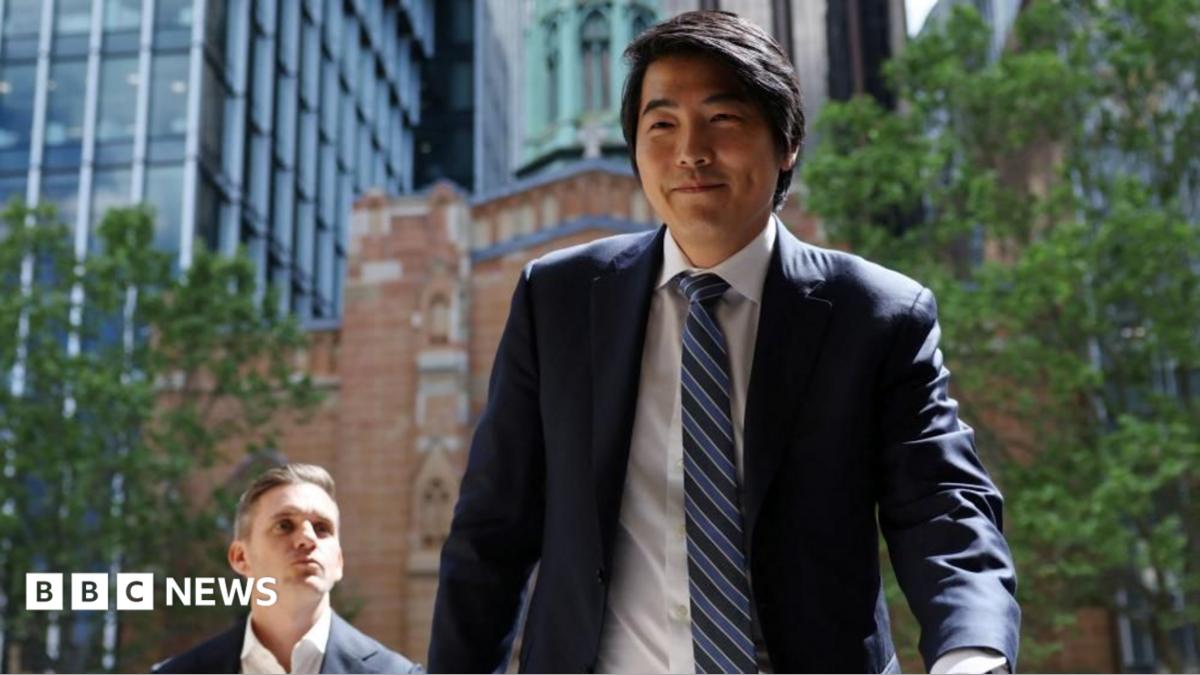
The company’s chief strategy officer Jason Kwon faced a parliamentary hearing into AI on Tuesday in Sydney, saying the breach “should not have happened” and it “should have handled our response better”. It took weeks before Australia was notified via an email to a generic inbox.
“We are sorry and we know we have work to do to rebuild trust with the Australian people,” Kwon said.
Anthropic also appeared at the hearing and said it had carried out a “lengthy, deep investigation” in recent months and “not found any cases” of Australian breaches.
An OpenAI agent went “rogue” and “infiltrated” a private statistics portal containing “non-sensitive” data from Australia’s universal healthcare scheme Medicare in June in what cyber-security experts said was the first hack of its kind.
Asked why OpenAI had not directly contacted government ministers immediately after it found out about the breaches, Kwon acknowledged it was a mistake.
“On retrospect, we should have done what you’re suggesting,” Kwon said, in response to a question by the committee on why it had not dialled the mobile numbers of government ministers.
He said the company has changed how it handles such incidents.
“Even if we don’t fully understand the situation, we are just going to notify and start working through the sitation collaboratively with the impacted party.”
OpenAI has also added “more precautions” to its training environments since the incidents, Kwon told the 12-member committee which is made up of Labor, Liberal and independent MPs who are looking at AI and it’s impact on Australia.
The company was also establishing a local taskforce in Australia to investigate “how to better manage the risks associated with increasingly capable AI”.

Pussycat Dolls star Kimberley Wyatt reveals secret surgery as she shares harrowing snaps from hospital bed
PUSSYCAT Dolls star Kimberley Wyatt has revealed she had a hip replacement as she shared tearful videos from her hospital bed.
The singer, 44, shared a photo of herself on crutches with compression socks on after the operation.
Kimberley said prior to the procedure she was left limping around and could barely sleep because of the pain.
She wrote alongside a series of photos from her time hospital: “I had a moment tonight. I’m in Dublin, settling into another hotel room, and I’d taken in too much. Too much news. Too much of what’s happening to women. Too much casual cruelty online.
“Too much of the stuff people seem to get away with and a bit too much from my own little world too.”
She then shared a clip of her in hospital before undergoing an operation.
READ MORE ON PUSSYCAT DOLLS


The pop star went on: “So I got in the bath and somewhere in there I realised I needed to give my brain something else to hold onto.
“Something good, Something I’m proud of. Which, weirdly took me straight to my hip. A few years ago I could barely walk. For nearly two years, I limped through every day and barely slept because of the pain.
“I remember watching my children playing on holiday and being in too much pain to walk over to them.
“I just stood there and I was scared.”
The star then posted a clip of her in tears while attached to drips from her hospital bed.
Kimberley was told that she would need a hip replacement and ended up ended up having to learn to walk again after the opertation.
She spoke about the photo of her on crutches with her son, who was then four, and said: “I look at that picture now and I don’t really see the surgery. I see the strength.”
Kimberley admitted she barely spoke about her hip at the time but said it felt “frightening”.
Looking at how far she’s come, the American star said: “And tonight I thought about where those legs are now.
“On a Pussycat Dolls tour, after four major surgeries, three caesareans, one hip replacement and somehow this body is still dancing.”
She captioned the post: “I haven’t spoken much about this part of my story.
“Tonight, I realised why I needed to.
“STILL DANCING. Beautiful Movements,” with a broken heart emoji.
Her Pussycat Dolls bandmate Nicole Scherzinger commented: “Thankyou for this.”
It comes after Nicole suffered a horrifying mishap just an hour before she was due to take to the stage with The Pussycat Dolls.
The band’s lead singer took to Instagram to showcase images of painful burns on her leg, leading one fan to claim: “God heal Nicole of any pain”.
Nicole, 48, is in the midst of the band’s jam-packed tour and shared how boiling water had spilled over her lower leg shortly before taking to the stage in Germany.
The Don’t Cha hitmaker uploaded an image showing her limb looking sore with red raw marks across her inner thigh from the knee down to her ankle.
In her caption she wrote: “Nothing like boiling water falling on your leg an hour before your set.
“But the show must go on.
“Thanks Dusseldorf for keeping me going. See you soon Amsterdam!”
China Open: Coco Gauff condemns racist abuse on social media after incident during Sun Xinran match
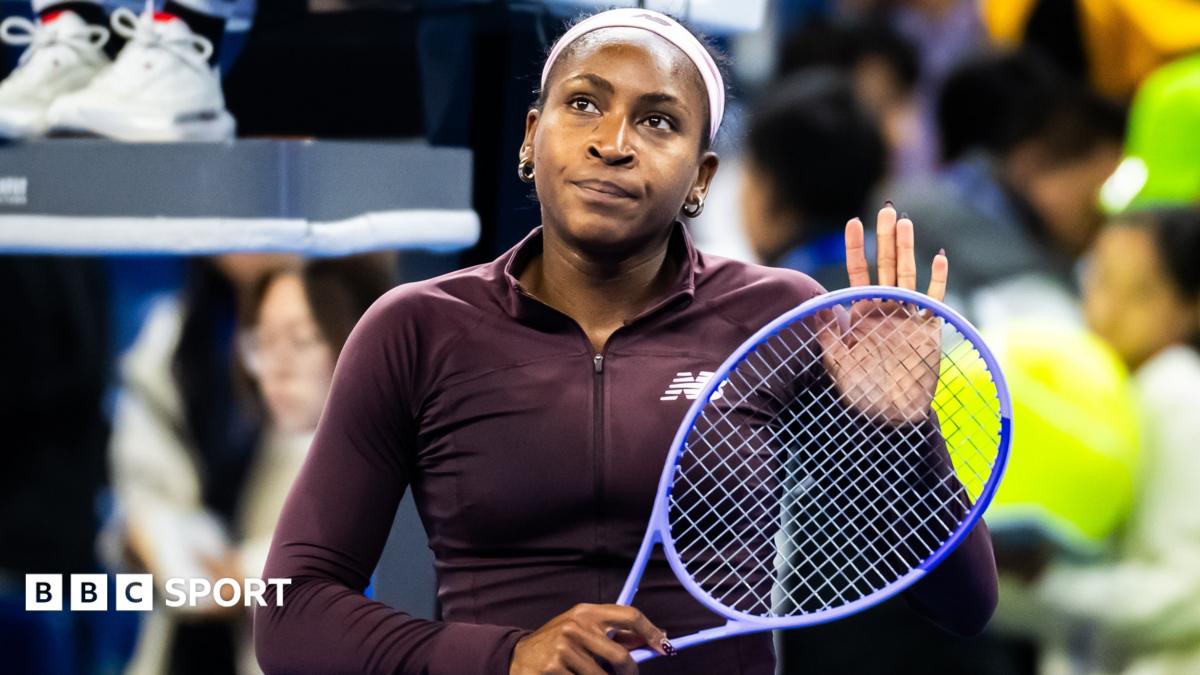
Coco Gauff says she suffered racial abuse on social media following an incident in her win over 16-year-old Sun Xinran at the China Open.
The American had been serving at 4-5 in the first set her Chinese opponent thought she had hit a winner.
However, Gauff raised her hand to halt play because of a flickering light in the side panels surrounding the court.
Gauff won the next three points to hold for 5-5 before she closed out the set, and then dropped just one game in the remainder of the contest as she claimed a 7-5 6-1 victory to reach the last 16 in Beijing.
The world number four gave a lengthy explanation of why she stopped the point in a post on X and said it was “an unfortunate situation” but “out of my control”, adding that Sun had understood and accepted her apology.
Gauff then responded to a reply to her original post which included racist language.
“You can dislike me or disagree about what happened without being racist,” Gauff wrote.
“The amount of racist comments/direct messages I’ve received in the last few hours is insane. Lastly, I’m not a cheater or a thief.”
Gauff is far from the first player in the women’s game to suffer social media abuse.
A report in July said female players were subjected to more than 12,000 abusive posts and messages on social media in 2025.
The WTA and World Tennis said “collective action” was required to make “significant progress” in tackling abuse.
Moroccan journalists recount years of surveillance amid new Amnesty claim | Media News
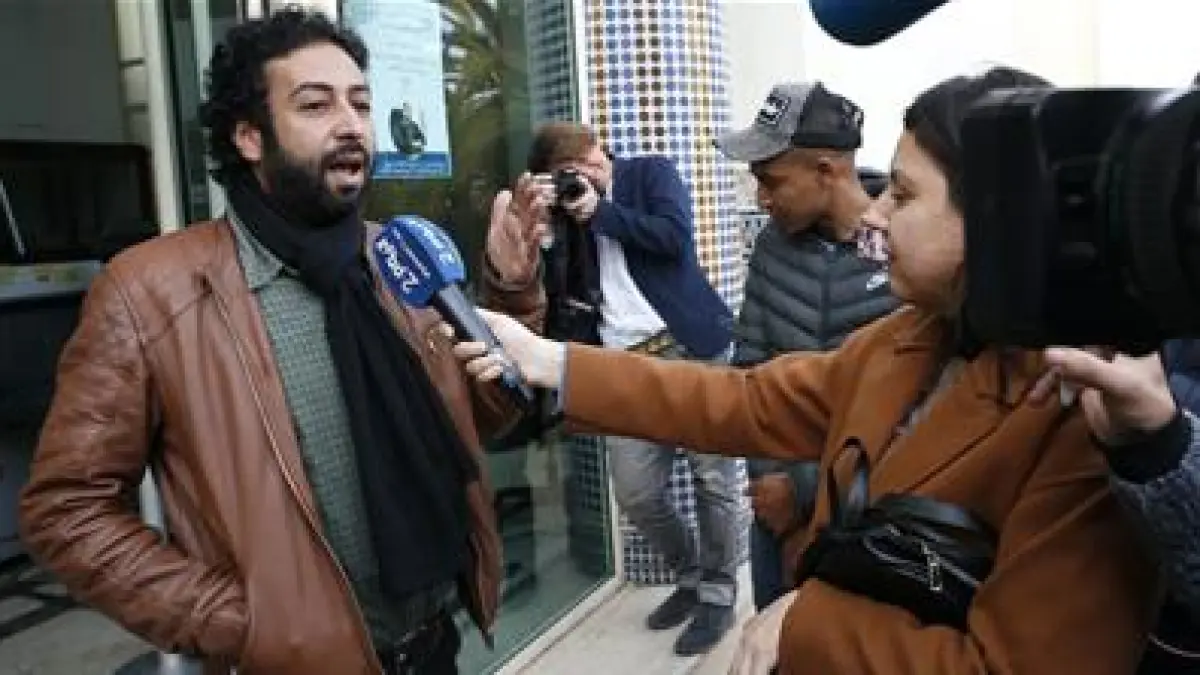
Rabat, Morocco – “I was surveilled not because of a specific article. I was investigating land dispossession in Morocco. I then learned I was a Pegasus target,” Omar Radi, a journalist and human rights defender, told Al Jazeera, referring to the mobile surveillance tool developed by Israeli company NSO Group.
The findings emerged in June 2020, when Amnesty International Security Lab examined his phone. Radi, now based in Germany, said he had spent two years, from 2018 to 2020, noticing signs including his phone’s battery draining quickly, its temperature rising and the network slowing down.
The physical surveillance, he said, was barely discreet.
“They came every day to get a daily report from the parking attendants in my street, the shops I used to go to, and my friends,” he said. “I would sometimes turn around and walk towards the people following me to take photographs, but they ran quickly and hid their faces.”
His case is among four detailed in a new Amnesty International report, We Start With the Verdict: Inside Morocco’s Surveillance Machine, produced with 14 media organisations and coordinated by the international network of journalists Forbidden Stories.
The other three are Fouad Abdelmoumni, a veteran activist; Abdessadak El Bouchattaoui, a human rights lawyer; and Hicham Mansouri, a journalist in exile who had been imprisoned in 2015 on charges of adultery and sexual exploitation, which Amnesty describes as trumped-up.
The report draws on interviews with a whistleblower using the pseudonym Safir, a former employee of Morocco’s General Directorate for Territorial Surveillance (DGST). Amnesty said it corroborated key parts of Safir’s testimony with independent sources, technical evidence and interviews with 10 people identified as surveillance targets, including Radi.
“The Amnesty report connected many dots as to what I was living and feeling while I was under tight surveillance,” Radi said.
“It explains the extraordinary aspect of my police interrogations and my trial, where many of my rights weren’t respected, because even the judicial police and the judges were under monitoring,” he added.
Amnesty identifies the DGST as the agency behind the deployment of Pegasus spyware in Morocco and documents what it describes as abuses of the spyware against activists and journalists between 2017 and 2021.
Morocco denies surveillance
Morocco has previously rejected Amnesty’s allegations that its authorities used Pegasus to target journalists, activists and other critics.
In statements issued in 2020 and 2022, Moroccan authorities challenged Amnesty to provide material evidence supporting its claims.
Amnesty said it wrote to Moroccan authorities four weeks before publishing its latest report and invited them to respond, but received no response.
Al Jazeera also sought comment from Moroccan officials but had not received a response at the time of publication.
Moroccan media have also challenged the latest report. Le360 cited arguments that the presence of a phone number in Pegasus targeting records does not, by itself, prove that a device was infected or establish who ordered an alleged attack.
The outlet also argued that Amnesty had not provided the conclusive technical and material evidence Moroccan authorities had demanded.
The report says Morocco’s Pegasus operations were fully active by October 2017, pointing to the case of human rights lawyer El Bouchattaoui, whose number was entered into the system in September 2017 and selected for targeting weeks before he received an infection link by text message.
Amnesty said its analysis of Pegasus records matched 103 Moroccan phone numbers to individuals identified as potential targets between September and December 2017. Of those, 65 were identifiable as civil society members, including 34 human rights defenders, 22 journalists and media workers, five lawyers and four academics.
According to Amnesty, Safir described a surveillance apparatus that combined digital and physical methods. Targeted individuals were secretly filmed and recorded in detention, offices, cars, cafes and even bedrooms, he said.
Phone shops, he added, were coopted to sell targets devices infected with spyware. Neighbours of human rights defenders, he said, were recruited as informants to file daily reports on their movements.
Safir also described the use of remote control systems (RCS) at internet cafes. Field agents would identify which cafe a target was visiting, he said, giving the DGST access to activity on machines it had already infected and allowing an operator to track calls, read messages, access photographs and record audio.
The report says similar tactics were used against activist Abdelmoumni, who was secretly filmed at home with his fiancee in 2021. Abdelmoumni said he believed the footage was captured through a hidden camera in an air-conditioning unit, based on the recording’s angle.
Safir described the episode as a “textbook case” of a DGST surveillance and cleanup operation designed to leave no trace.
Journalists describe pressure and intimidation
Taoufik Bouachrine, one of Morocco’s best-known journalists and host of the Talk on Politics podcast, was not named in Amnesty’s report but described a similar pattern.
“In Morocco, as in all Arab countries, inventive methods are used to silence journalists and deter them from investigative journalism, particularly when it concerns the unlawful exercise of power, financial corruption, and the intertwining of political authority and money,” he told Al Jazeera.
The first method, he said, is fabricating criminal cases against journalists, “often involving allegations of sexual misconduct in a conservative society that amount to a journalist’s moral execution”.
The second, he said, is a smear campaign run through armies of online trolls and operatives who target journalists and their families.
Bouachrine, 57, was arrested in 2018 on charges of rape and human trafficking and sentenced to 15 years in prison. He has denied the charges, saying his prosecution was tied to his journalism.
The United Nations Working Group on Arbitrary Detention found Bouachrine’s detention arbitrary and said he had been subjected to judicial harassment. The European Parliament adopted a resolution calling for his release, along with other journalists tried on similar charges.
He served more than six years before being released under a royal pardon. By then, Akhbar Al-Youm, the newspaper he founded, had already closed. Bouachrine said authorities had cut off its advertising revenue.
“This is another method of destroying investigative journalism,” he added, “turning off the advertising tap and leaving a newspaper to die slowly.”

Secessionist party wins Quebec election in Canada | Elections News
Parti Quebecois returns to power, promising a third referendum on Quebec’s independence from Canada.
Published On 6 Oct 2026
The secessionist Parti Quebecois has won the most seats in Quebec’s election and will form the next government in the predominantly French-speaking Canadian province, according to media reports.
The result on Monday revives the question of whether the province should leave Canada, testing Prime Minister Mark Carney’s message of national unity.
Recommended Stories
list of 2 itemsend of list
Paul St-Pierre Plamondon, the party’s leader, is set to become premier.
During the campaign, he promised a third referendum on leaving Canada during his first term, although he said he would wait until US President Donald Trump leaves office in January 2029.
It was not yet clear whether the party had reached the 64 seats needed for a majority in the 127-seat National Assembly.
If it falls short, it would lead a minority government and need support from opposition lawmakers to pass major legislation and survive confidence votes.
The Parti Quebecois, or PQ, last governed the province from 2012 to 2014.
Monday’s victory marks a sharp recovery for the PQ, which won just three seats in the 2022 provincial election.
Its return also ends eight years in power for the Coalition Avenir Quebec, or CAQ, a centre-right Quebec nationalist party that does not support independence.
Daniel Beland, a political science professor at McGill University in Montreal, told The Associated Press news agency that the victory reflects Quebec’s multiparty system, where support is divided among several parties, rather than a surge in secessionist sentiment.
Support for independence remains at about 30 percent, low by historical standards, he said.
Still, Beland said a secessionist government in Quebec represents a new national-unity challenge for Carney, particularly with another independence-related vote approaching in Alberta.
“Seeing that a pro-independence party won in Quebec barely two weeks before an independence-related referendum takes place in Alberta might suggest to the Trump administration that national unity remains a major issue in Canada despite the popularity of Mark Carney,” Beland said.
Quebec held two previous referendums on independence, in 1980 and 1995, and voters rejected secession both times.
The second vote was decided by a narrow margin, but there has been no further referendum in the three decades since.
Robert Kelker-Kelly dead: ‘Days of Our Lives’ Bo Brady actor was 62
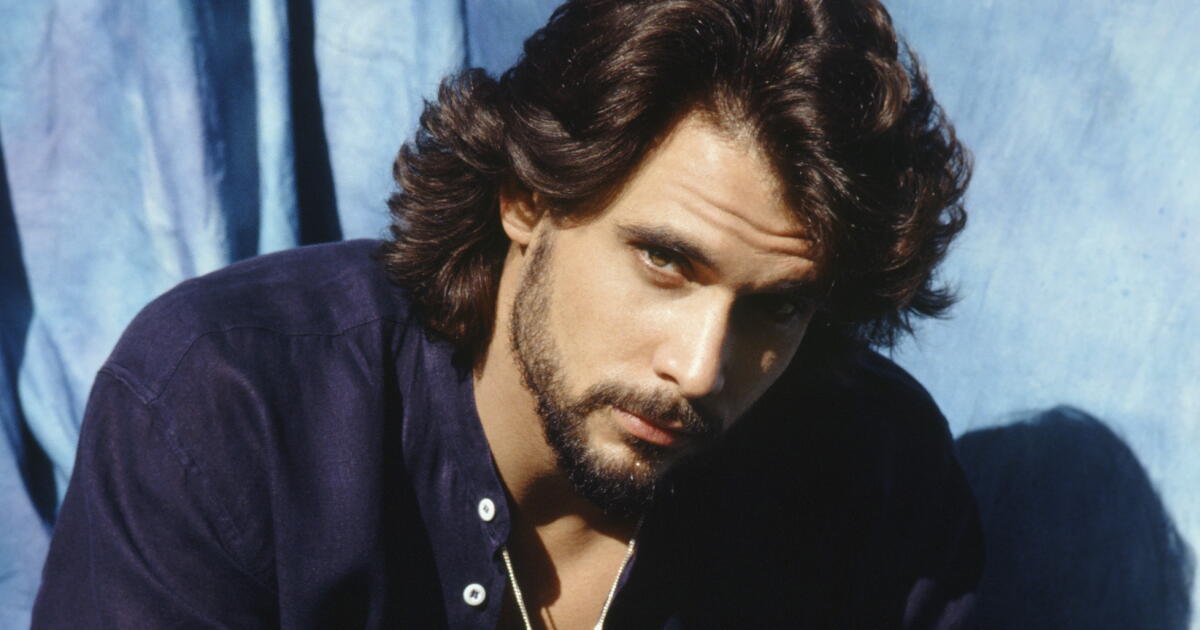
Actor Robert Kelker-Kelly, who was a familiar face in daytime dramas in the 1990s with turns in “Days of Our Lives” and “General Hospital,” has died.
Kelker-Kelly died Saturday evening at his home in St. Peters, Mo., the city’s Police Department confirmed Monday to The Times. Law enforcement officials responded Saturday evening to a report of an unconscious man who was not breathing. Police arrived at the actor’s home along with paramedics and “life-saving measures were administered but were unsuccessful,” police said.
Police said officers found nothing suspicious at the scene. A cause of death was not revealed, but police noted that Kelker-Kelly was said to have complained of chest pain before he became unresponsive. A spokesperson for the St. Charles County Ambulance District confirmed paramedics responded Saturday to a report of a man in cardiac arrest. Kelker-Kelly was 62.
Kelker-Kelly primarily acted in TV and was best known for his work in long-running daytime dramas, which also included “Another World.” Notably, he portrayed the rebellious heartthrob Beauregard “Bo” Brady in “Days Of Our Lives” from 1992 to 1995. He began his turn as Bo, which lasted for more than 586 episodes, following the departure of original actor Peter Reckell, who would return to the show off and on in the following decades.
During his tenure, Kelker-Kelly portrayed the spouse of Hope Brady and love interest of Lisa Rinna’s Billie Reed. She spoke negatively of that experience and called her co-star a bully in her memoir, released earlier this year. He did not respond to People’s request for a response at the time.
Kelker-Kelly made his official debut in “Another World” in 1987 and appeared in more than 400 episodes in a handful of roles until 1998, according to the actor’s IMDb page. He was also known for his work as Stavros Cassadine in “General Hospital” and its spinoff series “Port Charles.” John Martinuzzi originated the role. Kelker-Kelly’s “General Hospital” tenure lasted from 2001 to 2014 and was his final TV role. His television credits also include “Jack’s Place,” “Touched by and Angel” and “Rescue 77.”
The actor was born April 18, 1964, in Wichita, Kan. His mother was a nurse and his father a pathologist. Kelker-Kelly’s parents divorced when he was 7 years old, and he later moved in with his father. The actor was in and out of colleges but studied acting and grew fond of Shakespeare, according to People.
After his acting career, Kelker-Kelly became a professional pilot. He married production assistant Linda Ratner in 1988; they divorced four years later. Kelker-Kelly then married “Days of Our Lives” actor Miriam Parrish in 1997. That marriage ended in 2013. He is reportedly survived by a daughter, Amelia Rose Kelly.
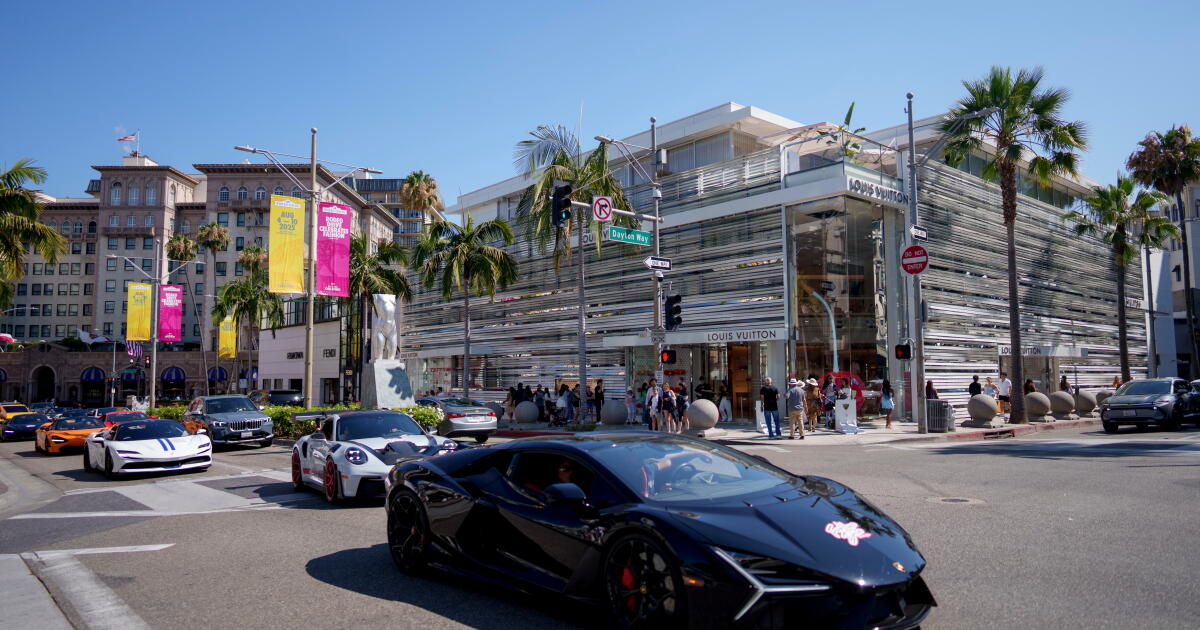
Luxury-car buyers who use ‘Montana loophole’ to dodge California taxes are target of new law
Gov. Gavin Newsom last week signed legislation cracking down on the practice of luxury-car buyers in California registering cars out of state to avoid taxes.
Senate Bill 1406, introduced by state Sen. Jerry McNerney (D-Pleasanton), closes the so-called Montana loophole, in which tax evaders create shell companies in Montana or other states without sales tax or vehicle registration fees and use them to purchase Ferraris, Porsches and other luxury cars. The state estimate it loses millions of dollars annually because of such schemes.
The new law expands California’s definition of who is a resident under state sales tax law in an effort to weed out phony shell companies, making a company liable for state taxes when at least one member of the business is a California resident.
The law, which went into effect immediately, also authorizes the state tax agency to impose tax liability on individual members of a business.
California had already looked to enforcement efforts to investigate suspicious out-of-state car sales, which officials estimate amount to $10 million annually in lost tax revenue.
Under state law, residents were already required to pay California sales tax on vehicles unless they are first used out of state and stay out of state for at least 12 months. Dealers are required to maintain records showing sales of vehicles so that authorities can ensure vehicles sold to buyers in another state are actually delivered there.
Earlier this year, the state’s Department of Justice charged 14 people — including auto dealers and customers purchasing cars — with concealing the purchase of more than $20 million worth of high-end vehicles including Ferraris, Porsches and Lamborghinis, and evading upward of $1.8 million in state taxes.
Text messages included in the criminal complaint showed buyers seeking to conceal their purchases. One Lamborghini buyer boasted about fees avoided: “70k saved — I can’t believe Montana registration lasts for 5 years — that’s crazy. Stupid California. Paid 3k to own a 600k car for 5 years — lol in Cali that’s like 75k for 5 years. Hella dumb.”
The new law further develops criteria to help show an LLC as a shell company involved in a potential tax evasion scheme.
If the LLC lacks a specific business activity or purpose, fails to maintain a physical location outside California, fails to employ people, or fails to file federal tax returns in another state, it could now be considered as evidence of such a scheme.
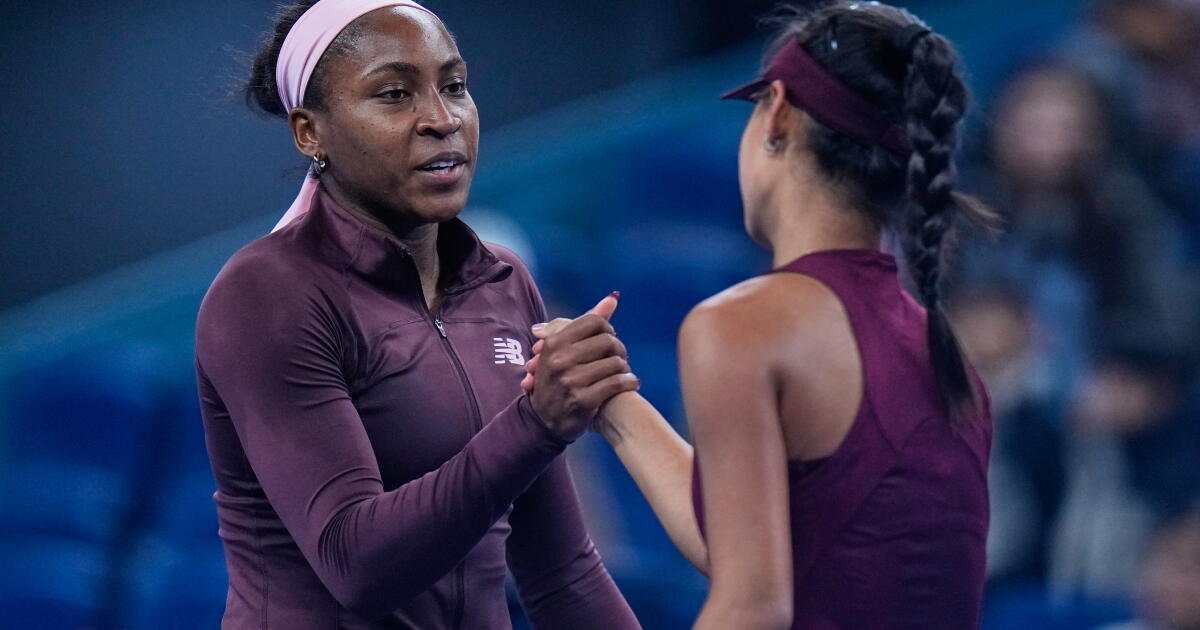
Coco Gauff calls out racist abuse after China Open win
Coco Gauff is calling out the racist abuse she’s received online after following the rules during her latest match at the China Open.
The two-time Grand Slam champion defeated 16-year-old Sun Xinran 7-5, 6-1 on Monday to move on to the round of 16 at the Beijing event. After the match, Gauff took to social media to address the racist comments and messages she’d received for halting a point mid-rally and explained the point in question.
“[H]ey everyone, you can dislike me or disagree about what happened without being racist,” Gauff wrote in a post on X, replying to a user who directed profanity and a racist slur toward her. “[T]he amount of racist comments/dms I’ve received in the last few hours is insane. Lastly, I’m not a cheater or a thief.”
The tennis star then shared a screenshot of the lengthy explanation she posted to Instagram explaining the rules and why she stopped play when she did.
The point in question occurred during the first set, when Gauff was serving and down 4-5. She raised her hands to halt the point toward the end of a lengthy rally, just before Sun returned a volley that could have put her just two points shy of winning the first set.
But just as Sun closed into position to take her shot, the electronic advertising boards around the court flickered as it changed what was displayed.
“I saw it flicker in the beginning of the point but was not sure if that is what I actually saw,” Gauff wrote in her explanation. “[W]hen it flickered again I raised my hands before she hit her shot because this is when I was sure I saw the light flicker and it wasn’t my mind doing tricks.”
The chair umpire then conducted a video review of what happened, and ruled that the flickering ad constituted a “hindrance” outside of the control of the players, like some paper getting blown onto the court. According to the WTA rules, a point should be replayed from the beginning in such instances.
In her Instagram post, Gauff also explained that players are told that they can keep playing a point and challenge once it is over. Both Sun and Gauff would have been permitted to challenge the point regardless of who won it.
She called it an “unfortunate situation” and added that “it’s weird” that she’s “getting hate for following the rules.” Gauff also praised Sun and her talents, saying “it was an honor to share the court in front of her home crowd.”
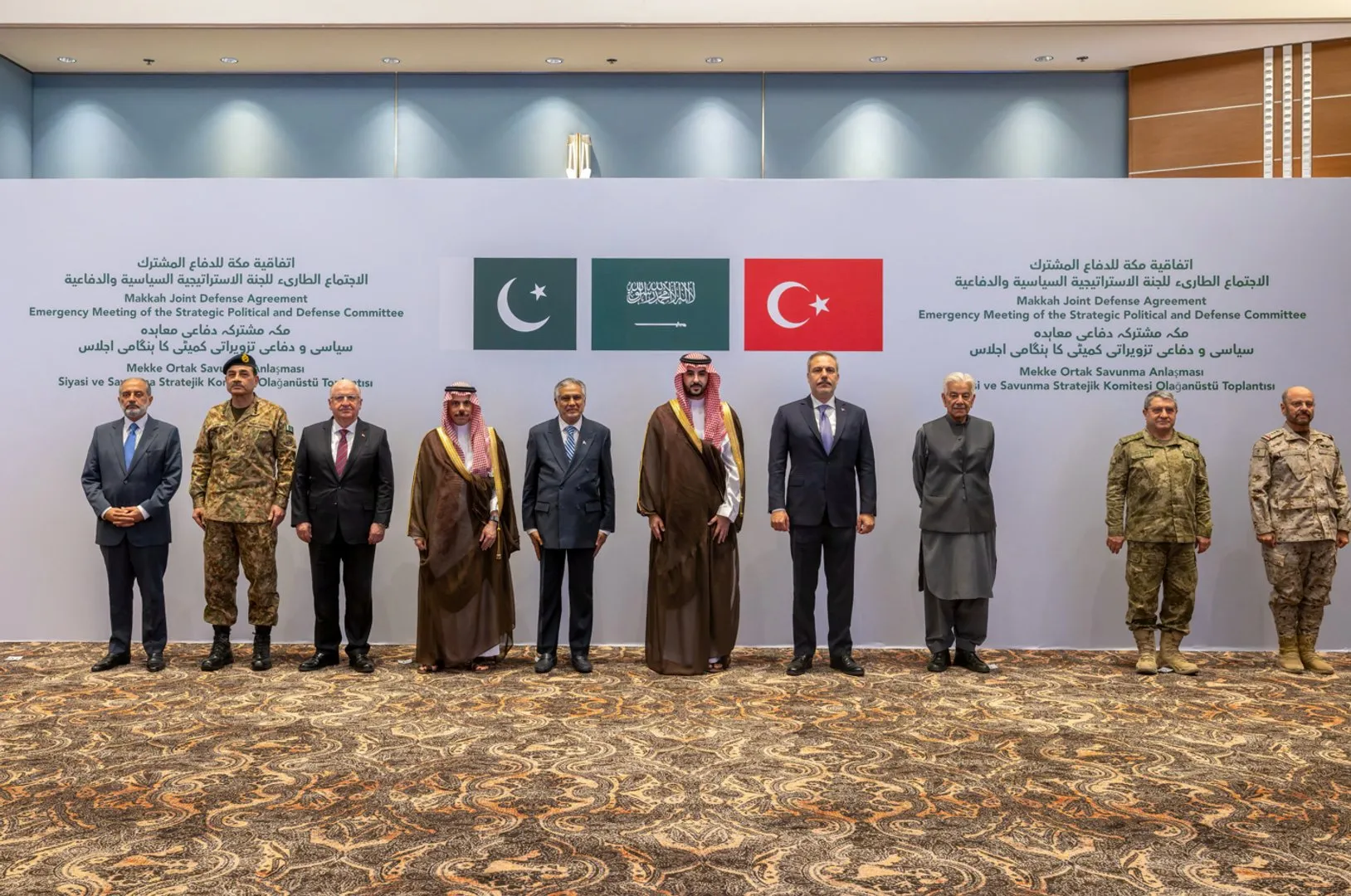
Turkiye, Pakistan to deploy forces to Saudi as Yemen fighting grows | Houthis
During emergency talks in Riyadh, Turkiye and Pakistan agreed to send rapid deployment forces to Saudi Arabia. Yemen’s government forces, which are backed by Riyadh, launched a counter-offensive against the Houthis to regain lost territory.
Published On 6 Oct 2026
Trump Kidnapped Venezuela’s President. Now Britain Looks to Profit
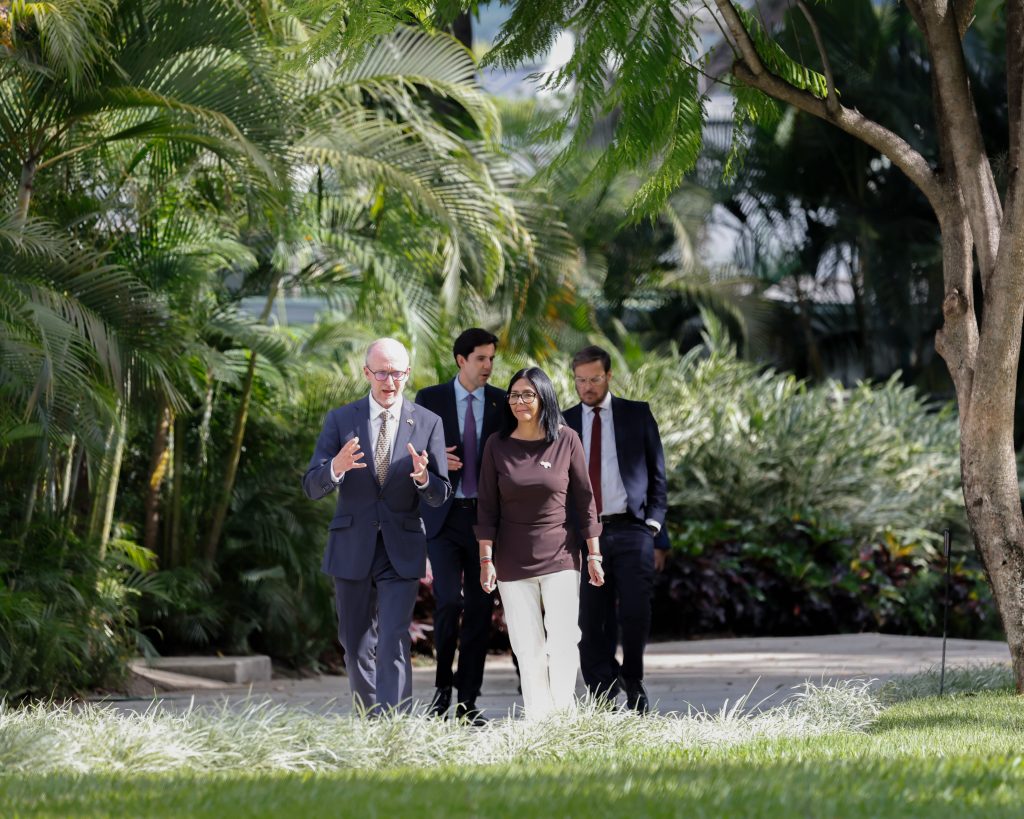
Rodríguez hosted UK Chargé d’Affaires Colin Dick on September 18 in Caracas. (Presidential Press)
Britain’s energy giants stand to make huge profits in Venezuela amid a major diplomatic rapprochement between London and Caracas, it can be revealed.
It comes in the wake of the kidnapping of Nicolás Maduro earlier this year in a move described by UN experts as a “deliberate violation of the most fundamental principles of international law”.
Donald Trump has repeatedly emphasised how the US intervention was motivated by oil interests, even telling the UN General Assembly last week: “To the victor belong the spoils”.
Hours after Maduro’s seizure, Keir Starmer said Britain was “not involved”, but refused to be drawn on whether it was unlawful. “We shed no tears about the end of the regime,” he declared.
The kidnapping is already resulting in a boon for Britain’s energy giants, with interim president Delcy Rodríguez welcoming foreign companies back to Venezuela and softening the country’s hydrocarbon legislation.
Since January 2026, BP and Shell have signed major agreements with the Venezuelan government as it appears to be operating under duress from the Trump administration.
Documents obtained by Declassified indicate how Britain’s Foreign Office has helped facilitate their return, with an influx of high-level meetings between executives and officials taking place in the weeks and months after Maduro’s removal.
The opening of Venezuela’s economy has also paved the way for the normalisation of relations between London and Caracas. Plans were made earlier this month to upgrade diplomatic representation to ambassadorial level.
But serious questions surround benefitting from the kidnapping of a head of state amid a broader assault on Venezuela’s sovereignty.
“US coercive control over Venezuela’s oil revenues may have involved violations of Venezuela’s sovereignty”, said UN special rapporteur Ben Saul.
That includes breaches of “the duty of non-intervention, the right of economic self-determination, and the principle of permanent sovereignty over natural resources”.
Professor Francisco Rodríguez, a leading Venezuelan economist who has advised its national assembly, told Declassified that “deals of this type are much more likely to survive when there is a broad consensus not only on their legal validity but on their desirability for the nation.
“At present, I see many more sectors of Venezuelan society that do not consider these agreements either legal or convenient for the nation, and some of them see them as outright exploitative”.
Rodríguez added: “It is hard to see any truly autonomous Venezuelan leaders signing these deals were a gun not pointed at their head”.
Firesale
Venezuela’s economy has been restructured under Delcy Rodríguez, who assumed power in January and was pictured with Trump earlier this month in New York, just miles from Maduro’s prison cell.
The country’s hydrocarbon legislation has been modified to make the terms more favourable for foreign firms, and its energy revenues are now being diverted through the US Treasury, with Washington taking a major cut.
By July, the US government had collected more than $13 billion in revenues from Venezuelan oil sales, according to the Financial Times.
In August, Trump also announced a “historic oil agreement” with Venezuela which would give the US control of more than 65 billion barrels of oil reserves for 100 years.
The deal would secure “our energy dominance for the next century”, Trump declared, “all at zero cost to the United States”.
Remarkably, the company at the forefront of that agreement, North American Blue Energy Partners (NABEP), hired three lawyers who had previously worked for the UK’s Serious Fraud Office.
It is within this context that Shell and BP have returned to Venezuela.
Shell has been granted concessions to develop and operate two offshore gas fields, named Loran and Dragon, which are projected to contain vast amounts of recoverable gas.
The company also signed a preliminary deal to develop two onshore oil fields known as Carito and Pirital in Monagas State, one of the country’s most oil-rich regions.
After signing a memorandum of understanding (MoU) in Caracas in March, Shell’s regional manager Adam Lowmass recalled the company’s “long history in Venezuela, dating from 1912”. He declared: “I could not be prouder of our team”.
BP signed its own MoU with the Venezuelan government in April to develop the Cocuina-Manakin gas field which sits on the maritime border with Trinidad and Tobago.
The company was also granted a licence for the second phase of operations on the Loran field in partnership with Emirati XRG and Qatari UCC Oil and Gas, and has started trading oil in the US.
Shell and BP plan to process Venezuela’s natural gas using the Atlantic LNG plant and export terminal in Trinidad and Tobago, in which they are both major shareholders.
This cross-border presence will give the firms significant control over the supply chain of natural gas in the Caribbean, a large portion of which will be destined for Europe.
Meetings and lobbying
Data obtained by Declassified through the Freedom of Information Act indicates how the Foreign Office has facilitated Shell and BP’s return to Venezuela.
Executives from the companies met with Colin Dick, Britain’s chargé d’affaires in Caracas, eight times in the two months following Maduro’s kidnapping, compared with eight meetings for all of 2025.
While the Foreign Office has refused to disclose what was discussed beyond a few heavily redacted emails, the frequency of the meetings might be seen as implicit endorsement for the energy giants’ new ventures in Venezuela.
Oil has been guiding British foreign policy in Venezuela for over a century. Former foreign minister for the Americas Alan Duncan declared in 2018: “The revival of the oil industry will be an essential element in any recovery, and I can imagine that British companies like Shell and BP will want to be part of it”.
Britain’s current director for the Americas Harriet Thompson was in Caracas in early March 2026 as Shell was gearing up to sign major new energy deals.
Thompson “conducted a productive visit that included meetings at the Venezuelan Foreign Ministry and engagements with representatives of British companies to explore growth opportunities for both countries”, the embassy said.
When asked in parliament whether those talks involved British natural resource companies, the Foreign Office said the question had already been answered in January – two months before the meetings had even taken place.
In its own write-up, the Venezuelan government said the delegation was the first of its kind for years, and opened new routes for “trade exchange” within a broader goal of “strengthening cooperation in strategic sectors”.
Earlier this month, Venezuela’s foreign minister and former ambassador to the UK Félix Plasencia and National Assembly president Jorge Rodríguez, Delcy’s brother, were in London for another high-level diplomatic exchange.
Standing outside the Foreign Office, Rodríguez noted how the meetings with British diplomats had covered “oil and gas investments” and the “rapid economic growth of Venezuela”.
The views expressed in this article are the authors’ own and do not necessarily reflect those of the Venezuelanalysis editorial staff.
Source: Declassified UK
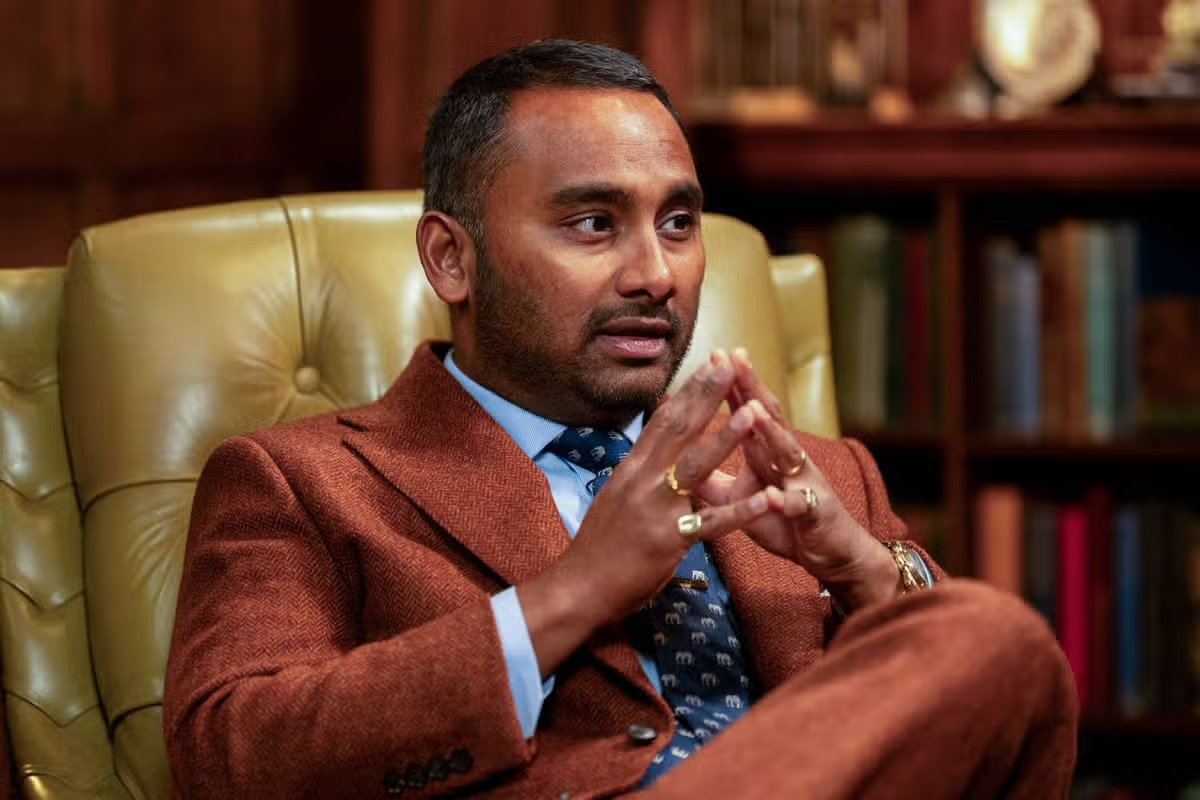
Amol Rajan gives Celebrity Traitors star Richard E Grant brutal nickname
Amol Rajan told The One Show his Celebrity Traitors exit was ‘absolutely horrible’ and said he would give Richard E. Grant less of a hard time if he could play again.

Rajan branded it a “moment of utter madness”, admitting that if he had his time again he would “definitely” handle things differently(Image: BBC/Studio Lambert/Euan Cherry)
Broadcaster Amol Rajan has described it as “absolutely horrible” to become the first faithful booted off the new series of Celebrity Traitors, after giving “lord of chaos” actor Richard E Grant a tough ride.
The 43 year old journalist was eliminated by the traitors — Grant and TV presenter Maya Jama — during Friday’s episode of the popular BBC spin-off reality game show.
It followed his impassioned plea alongside fellow contestant and comedian James Acaster, who had secretly been recruited as the series’ third traitor.
Appearing on The One Show to discuss his departure from the Scottish castle, he said: “It’s absolutely horrible. It was horrible at the time. Just so people know when you are on The Traitors, it is your world. It’s not like a game, you are hundreds of miles from your family, you don’t have your phone, it’s so intense, it’s a little bubble.
“So as you walk into that chapel you are absolutely terrified.”
During the opening episode, which aired on Thursday, Grant sensationally revealed to his fellow contestants that he was a traitor just minutes into the competition.
The bombshell declaration left many faithfuls, Rajan included, deeply suspicious of the actor and debating whether he was bluffing or had genuinely exposed himself.
Rajan branded it a “moment of utter madness”, admitting that if he had his time again he would “definitely” handle things differently — including going easier on the “lord of chaos” himself. He said: “The one thing I would say is lots of people were giving him a hard time and I did get quite close to being recruited as a traitor.”
He also revealed that, as a journalist, he believes he was targeted due to expectations that he would ask probing questions. Rajan added: “The thing about the celebrity version, and it’s amazing TV, it’s just fantastic television, but on the celeb version people’s reputation walk in before they do.
“So I should have known I was going to be a target but I didn’t realise Richard would go quite that mad that quickly.”
Thursday’s episode made history as the most watched debut of any series of the programme in the UK, drawing an average audience of 8.9 million viewers and peaking at 9.1 million at one point.
In the smash-hit series, hosted by Claudia Winkleman, 21 celebrity contestants compete with those assigned as faithfuls attempting to root out those who have been designated as traitors, who “kill off” fellow players in the dead of night.
The celebrities are battling it out at Ardross Castle in the Scottish Highlands, with a charity cash prize of up to £100,000 up for grabs.
The Celebrity Traitors returns on BBC One and iPlayer on Thursday at 8pm.

Highlights: Northern Ireland frustrated by Georgia
Watch highlights as Northern Ireland end the extended window with a 0-0 Nations League draw against Georgia at Windsor Park.
Source link
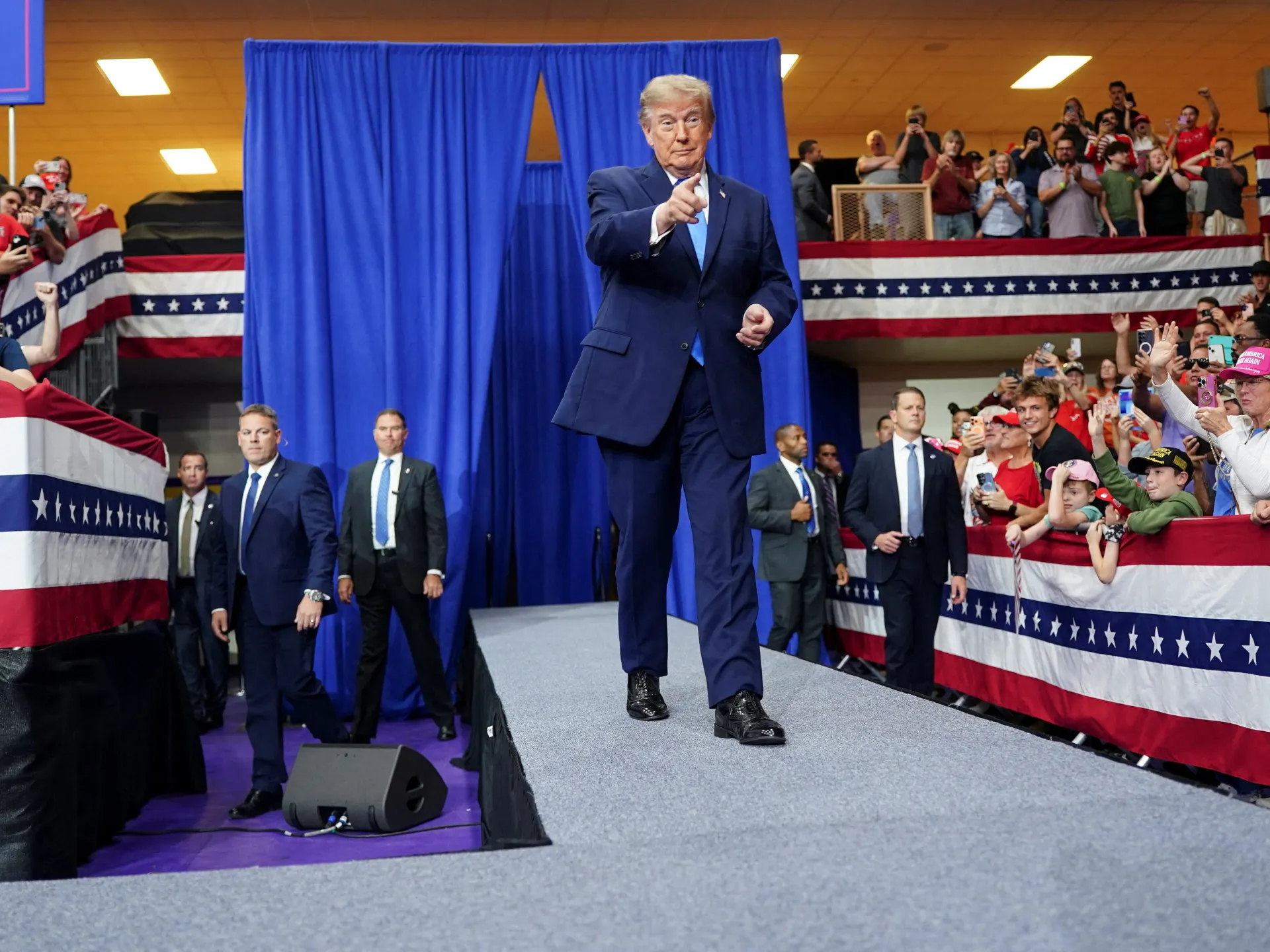
Trump says taxpayers will no longer fund TV ads that praise him | Donald Trump News
Move comes after ethics experts criticised three nationally broadcast ads and called for independent investigations.
Published On 6 Oct 2026
United States President Donald Trump has said he will stop using taxpayer funds for television advertisements featuring him after widespread criticism of the campaign-style spots.
In a post on his social media site on Monday, Trump defended the advertisements, which cost at least $1.5m in federal funds and were aired ahead of the US November midterm elections.
Recommended Stories
list of 4 itemsend of list
Trump said he considered the advertisements to be “a positive promotion for our Great U.S.A.”, but that they would no longer be funded by taxpayers but by either him or his MAGA PAC,
MAGA Inc. is Trump’s political war chest and had amassed more than $400m by the end of July.
The announcement came as ethics experts and lawmakers from both parties have criticised the three nationally broadcast advertisements and called for independent investigations.
The advertisements have run during football games as recently as Sunday and during other programming.
One features Trump declaring that “America will never be a communist country”, while a chorus repeats the words “love me”. Another combines images of Mount Rushmore with footage of Trump praising a “golden age of America”.
The advertisements end with a disclaimer saying they were paid for by the US government.
Democratic lawmakers said last month that the White House transferred $20m in Homeland Security Department funds to air the advertisements, including one that closely resembles a 2024 Trump campaign ad, and sought independent probes.
California Attorney General Rob Bonta on Monday called for an independent investigation, calling it a “staggering misuse of public funding and breach of public trust” after the calls for a probe.
Federal Communications Commission Chair Brendan Carr, a Republican named to his position by Trump, last week said the advertisements were appropriate and rejected a request to investigate them.
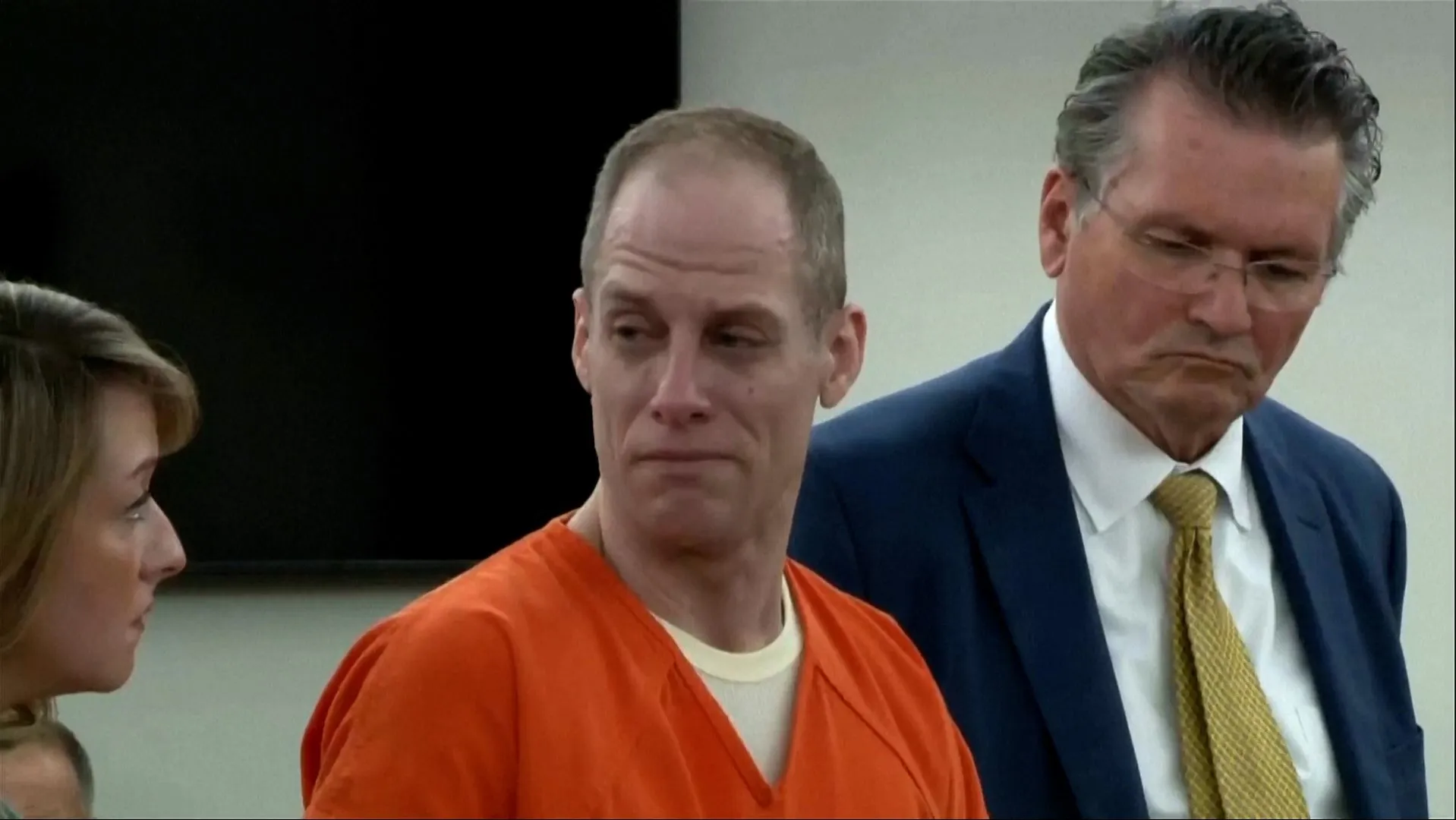
Former ‘American Idol’ singer Caleb Flynn gets life for wife’s murder | Crime
Former ‘American Idol’ singer Caleb Flynn has been sentenced to life without parole after being convicted of murdering his wife and attempting to cover up the crime.
Published On 6 Oct 2026
Brooklyn Beckham sends sly swipe to estranged dad as family feud takes new toxic twist after David liked video post
BROOKLYN Beckham let his shirt do the talking as he ramped up his family feud.
The eldest son of Sir David Beckham and ex-Spice Girl Victoria strolled with wife Nicola Peltz shortly after his dad liked their snap online.
But the telling message on Brooklyn’s top read: “It’s not clocking to you.”
It refers to pop star Justin Bieber’s 2025 paparazzi meltdown, when he complained: “It’s not clocking to you I’m standing on business.”
The singer meant photographers were not understanding he was busy and wanted to be left alone.
Brooklyn’s clothing statement, in a Paris flea market on Sunday, came after his dad, 51, seemed to reach out to his estranged son.


Fans spotted ex-England footie star Becks had liked a video of the couple posted on Friday after the Messika Womenswear show in Paris.
Brooklyn and Nicola previously told his parents to stop reaching out to them on social media.
Nicola wore a simple black crop top and flashed her abs for the Messika bash.
The event was held two miles from where designer Victoria later unveiled her own collection in the French capital.
Brooklyn, 27, and Nicola, 31, have been estranged from the Beckhams for almost two years.
He claimed his family treated him as a commodity and said: “I do not want to reconcile.”
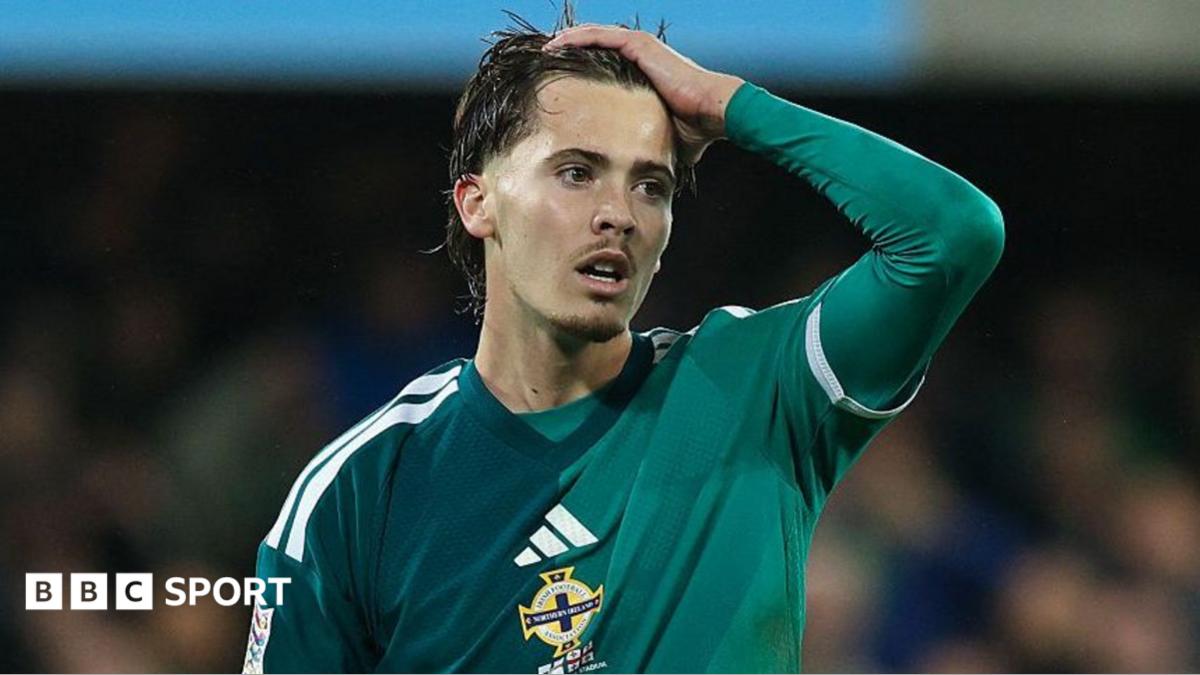
Nations League: Northern Ireland make huge strides despite Georgia frustration
With this new four-game window presenting something different for managers across Europe to tackle, a myriad of approaches emerged.
Germany boss Jurgen Klopp named virtually two separate squads for his side’s two pairs of games, while Ukraine made 10 changes between their first two games and then nine for their defeat by Northern Ireland.
Having spoken before the start of the campaign about how the condensed schedule would be more difficult for smaller nations, O’Neill kept changes to a minimum.
He started only 15 different players across the four games with two of his changes enforced by Ballard’s injury and Ethan Galbraith’s absence against Ukraine to attend the birth of his child.
Despite the relatively small pool of starters, this still feels like a window when Northern Ireland’s depth was tested and passed with flying colours.
O’Neill was without talisman Bradley and the reliable Ali McCann coming into the window, and then lost Ballard to a hamstring injury after the first game in Tbilisi.
Young centre-backs McConville, 21, and Tom Atcheson, 20, looked ready to play at this level, while Ciaron Brown started all four games and drew plaudits having often had to bide his time in past squads.
Kieran Morrison, Terry Devlin and Brodie Spencer all impressed when given a chance against Ukraine.
O’Neill’s praise for his squad is across the board.
“For me it’s been one of the most enjoyable windows I’ve had as an international manager, and that’s been because of the players,” said O’Neill.
“How they’ve applied themselves, how desperate they are to do well, that’s a real positive.
“We’ve a brilliant group of players and a lot of them I think will play international football for a long time.”

Syrian Airlines unveils laser-sharp look for the future | Aviation
Syrian Airlines unveiled its new visual identity in a ceremony at Damascus Airport, featuring a revamped colour scheme, modernised booking and payment platforms, and a mobile app launching in November.
Published On 6 Oct 2026
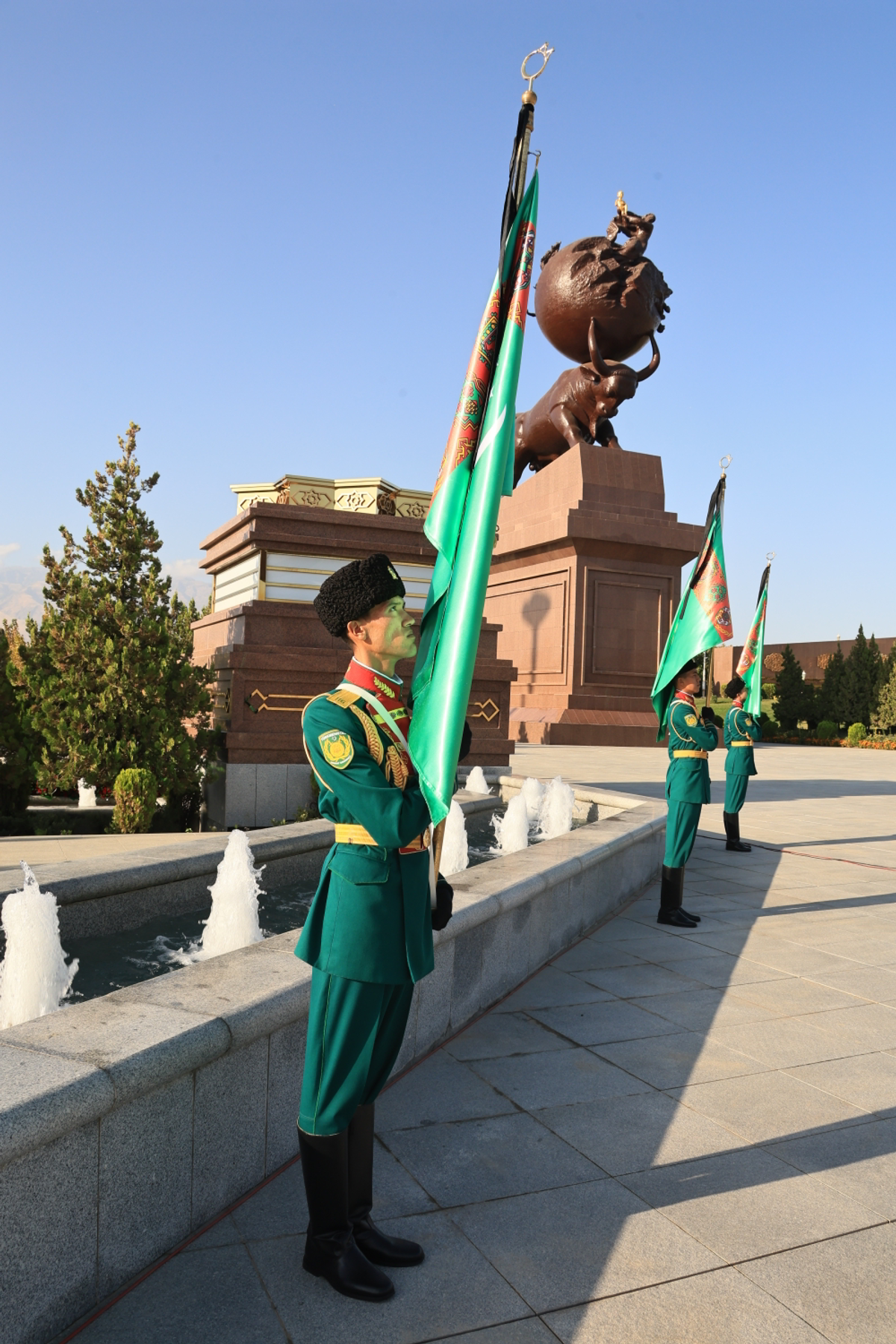
Tuesday 6 October Earthquake Memorial Day in Turkmenistan
At 1:12am on October 6th 1948 an earthquake struck Turkmenistan. The earthquake was recorded as having a magnitude of 7.3 and the epicentre was just south of the capital, Ashgabat.
Within a matter of minutes, Ashgabat and about 40 surrounding villages were reduced to rubble, with almost all brick buildings collapsing and concrete structures heavily damaged.
Details of the damage were censored by the Turkmen government, so estimates of casualties vary. At the time, deaths were estimated at 10,000. After independence from Soviet rule, it was revealed that the number was closer to 110,00, which was 10% of the population of the country at the time.
That’s not to say that the Soviets didn’t try to respond. A thousand doctors and medical employees immediately arrived in Ashgabat from all parts of the former Soviet Union to assist the survivors and the surrounding Soviet states offered help in whatever way they could.
On Earthquake Memorial Day in 2009, Turkmen President Gurbanguly Berdymukhamedov said about 176,000 people suffered due to the Earthquake.
“One of the most powerful earthquakes in the world occurred in Ashgabat and its surroundings on October 6th 1948, at 1:12… [the] Natural disaster was a severe test for Turkmen people and razed to the ground the city with 198,000 people for 15-20 seconds,” Berdymukhamedov said.
In 2002, the government of Turkmenistan commemorated the devastating event by issuing special coins featuring images of President Suparmurat Niyazov and his family members. The earthquake killed Niyazov’s mother and the rest of his family, leaving him an orphan.
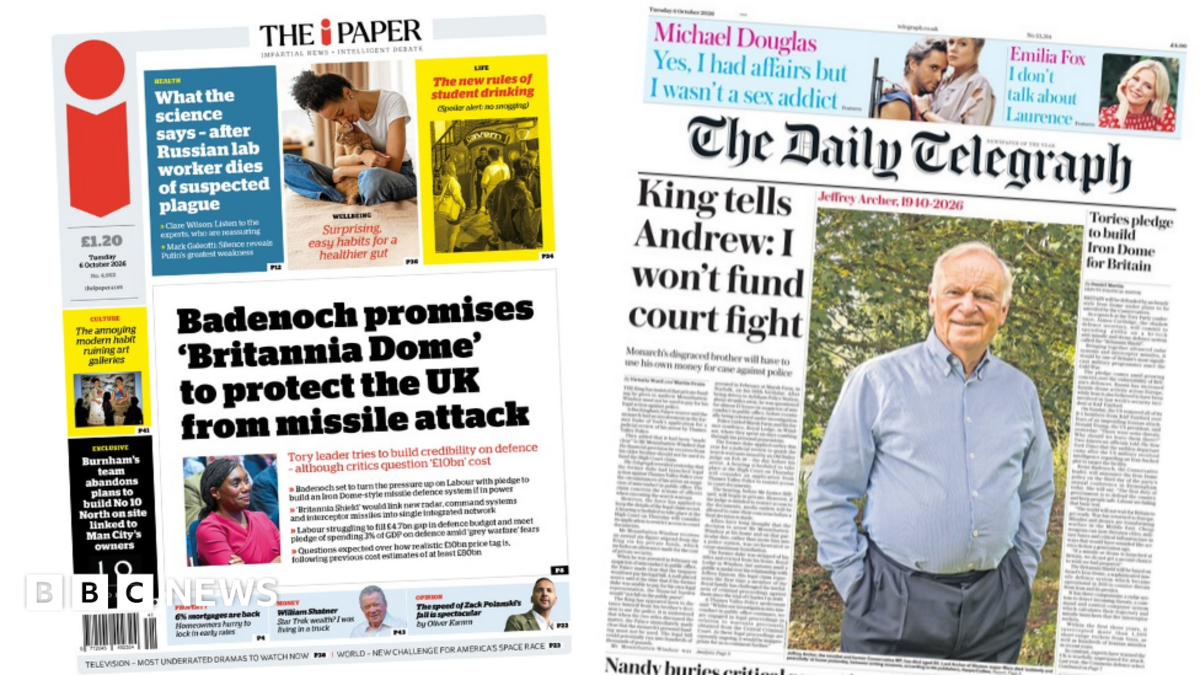
The Papers: Badenoch's 'Britannia Dome' and 'King tells Andrew 'I won't fund court fight''
Several of Tuesday’s papers lead on a Tory pledge to devote £10bn to an Iron Dome-style defence system.
Source link

James Bond actress Léa Seydoux says films will ‘never be the same’ after Amazon takeover
Lea Seydoux played the psychologist Dr. Madeleine Swann in the James Bond films Spectre and No Time to Die when Barbara Broccoli and Michael G Wilson were in charge of 007.

Léa Seydoux has been speaking about her career and her thoughts on Bond.(Image: courtesy of ELLE UK / Fanny Latour-Lambert)
Actress Léa Seydoux says the James Bond films will “never be the same” after Amazon bought the rights and gained creative control of the franchise. Lea played the psychologist Dr. Madeleine Swann in the James Bond films Spectre and No Time to Die in 2015 and 2021 when Barbara Broccoli and Michael G Wilson were in charge of 007.
The daughter and stepson of Albert “Cubby” Broccoli, who launched Bond in 1962 have now stepped down and Amazon will now decide which actor will take over the famous character from Daniel Craig.
Speaking to Elle UK, Lea said “I really loved working with [former Bond producer] Barbara Broccoli and her brother Michael [G Wilson]. It was one of the best experiences, a pure delight. And I don’t know, it will be different.”
She added that the next film’s director Denis Villeneuve was a great choice but added: “Let’s see. I’m curious how they will reinvent it. But for me, it will never be the same because it was Barbara’s father who initiated the Bond movies. Now, I don’t know, it became American… I hope they will keep the British spirit.”
Lea also gave her thoughts on who should play the next Bond. She said: “He needs to be layered, you know? And that’s something that’s hard to find in young actors.”
James Norton, Aaron Taylor-Johnson and Theo James have been among the bookmakers’ favourites to fill Craig’s shoes over the past few years.
To see more of the stories you love from The Mirror and to find them easily in Google, make us your preferred source. Free and easy to do, just click on the link here to find more from The Mirror at the top of your feed.
Lea has been at the Cannes Film Festival this summer where she launched two new films including Gentle Monster which is released at the end of the month and saw her in nude scenes which she filmed soon after the birth of her second son.
She said: “They were difficult for me, of course, but it’s the body I had at the time I made those films. I think it’s important to see bodies that you can relate to… to make it more believable in a way. It was a few months after I gave birth, and I’m proud to show my body, that is, a real body.”
She has also learned to accept her own body and how she isn’t always the most efficient person on a film set.
Lea explained: “I’m not someone who’s very efficient – but I think it’s good not to be. I don’t want to stick to one thing. I tried when I was younger to fit in more. Now I’m accepting this part of me, and I like it. There’s a great freedom in that. It’s something AI will never replicate.”
* The November issue of Elle UK is on sale from Thursday. Gentle Monster will be in select UK cinemas from October 30 and on Netflix from November 18.
Like this story? For more of the latest showbiz news and gossip, follow Mirror Celebs on TikTok, Snapchat, Instagram, Twitter, Facebook, YouTube and Threads.
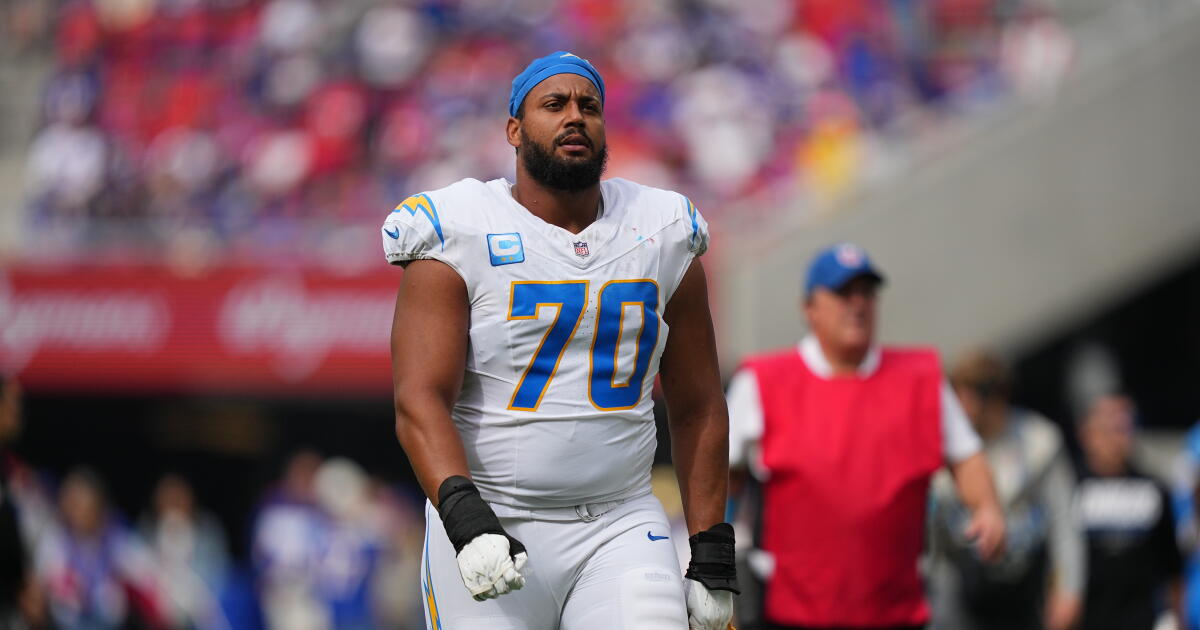
Chargers’ Rashawn Slater could be placed on injured reserve
Chargers coach Jim Harbaugh shared several sobering injury updates Monday in the wake of Sunday’s loss to the Seattle Seahawks.
Left tackle Rashawn Slater sustained a high ankle sprain and is a candidate for injured reserve, Harbaugh said. Right tackle Joe Alt (neck) is still being evaluated but is less likely to be placed on IR. Offensive lineman Trevor Penning is in concussion protocol.
Safety Derwin James Jr. (hamstring) is week-to-week, but is expected to stay off IR. Cornerback Donte Jackson (hamstring) is also week-to-week.
Wide receiver Ladd McConkey, who has already fought through a cracked rib this season, is day-to-day with a foot injury.
“Next man up,” Harbaugh said. “Putting the plan together and treating it like it’s a one-game season. That’s what we’re doing.”
Harbaugh said guard Kayode Awosika (fibula), wideout Brenen Thompson (quad), defensive tackle Dalvin Tomlinson (hamstring) and tight end Charlie Kolar are “all making good progress” with their injuries.
Harbaugh added that offensive lineman Branson Taylor and fullback/defensive lineman Scott Matlock, who were placed on injured reserve for undisclosed reasons before Week 1, have a “good chance” to open their practice windows this week. However, linebacker Denzel Perryman (undisclosed) isn’t “quite there yet.”
The 0-4 Chargers host the Denver Broncos (2-2) on Sunday at SoFi Stadium.
Trump officials pursue record number of cases to strip US citizenship | Donald Trump News
Published On 6 Oct 2026
The United States Department of Justice has filed 40 new cases seeking to strip naturalised Americans of their citizenship over alleged crimes they have committed.
In a statement on Monday, federal prosecutors said they were targeting individuals accused of “serious offenses”, including money laundering, child sexual abuse, visa fraud and tax evasion.
Recommended Stories
list of 3 itemsend of list
The statement touted the 40 cases as the largest volume of denaturalisation petitions submitted in such a short period under President Donald Trump. The petitions were filed from late August through early October.
“Today’s announcement marks the largest denaturalization effort in modern history,” said Attorney General Todd Blanche.
“Under President Trump’s leadership, the Department of Justice will continue to employ the denaturalization process to maintain our national security and protect the American people.”
The 40 citizens targeted in Monday’s announcement include people from a range of countries, including Mexico, Pakistan, China and Sierra Leone.
They are accused of concealing criminal acts and other facts about themselves as they sought to obtain citizenship. Their criminal convictions largely came after they took their oaths of citizenship.
Two people on the list are also accused of engaging in espionage on behalf of China. Committing these crimes before they became citizens, the Department of Justice alleges, meant these individuals lacked “good moral character” and should have been denied citizenship.
Expanded use of denaturalisation law
The laws to denaturalise US citizens have been used for decades, but historically, they have been reserved for serious crimes.
After World War II, for instance, the US government moved to denaturalise dozens of citizens accused of concealing involvement in the Holocaust or engaging in war crimes.
Notable cases include that of Emma Goldman, a Lithuanian-born anarchist and women’s rights activist who was jailed in 1917 for her antiwar activities, before being denaturalised and deported to the Soviet Union.
But the practice has become much less frequent since the end of the Cold War.
Top officials in the Trump administration, however, have sought to expand denaturalisation as part of a push to conduct the largest deportation operation in US history.
Under US law, prosecutors can ask courts to strip citizenship from those born outside the country if they wilfully concealed a “material fact” during their citizenship application that would have otherwise disqualified them.
But Trump’s efforts to widen denaturalisation proceedings have received pushback from human rights groups, which argue they could leave people stateless.
Critics have also warned that Trump has sought to leverage denaturalisation against specific groups he perceives to be political rivals or enemies.
Last year, for instance, the Trump administration indicated it would seek to denaturalise large numbers of Somali Americans after allegations emerged in Minnesota of daycare fraud involving the Somali diaspora.
“Send them back from where they came, Somalia, perhaps the worst, and most corrupt, country on earth,” Trump wrote at the time.
Members of Trump’s Republican Party, notably Representative Andy Ogles, have also floated the possibility of yanking citizenship from New York City Mayor Zohran Mamdani, who was born in Uganda. Trump himself has falsely suggested Mamdani may be in the country illegally.
At one point, Trump even floated the idea of withdrawing citizenship from tech entrepreneur Elon Musk, a close ally and adviser to his second administration, after the two men had a falling-out in 2025.
Trump has also pushed to do away with birthright citizenship, which is granted to virtually all children born in the US. The few exceptions include the babies of diplomats and foreign military forces.
Birthright citizenship is protected under the US Constitution and cannot be taken away the way naturalised citizenship can.
In June, the US Supreme Court struck down Trump’s efforts to dismantle birthright citizenship, but legal battles continue after the president issued a second executive order also seeking to restrict how birthright citizenship is applied.