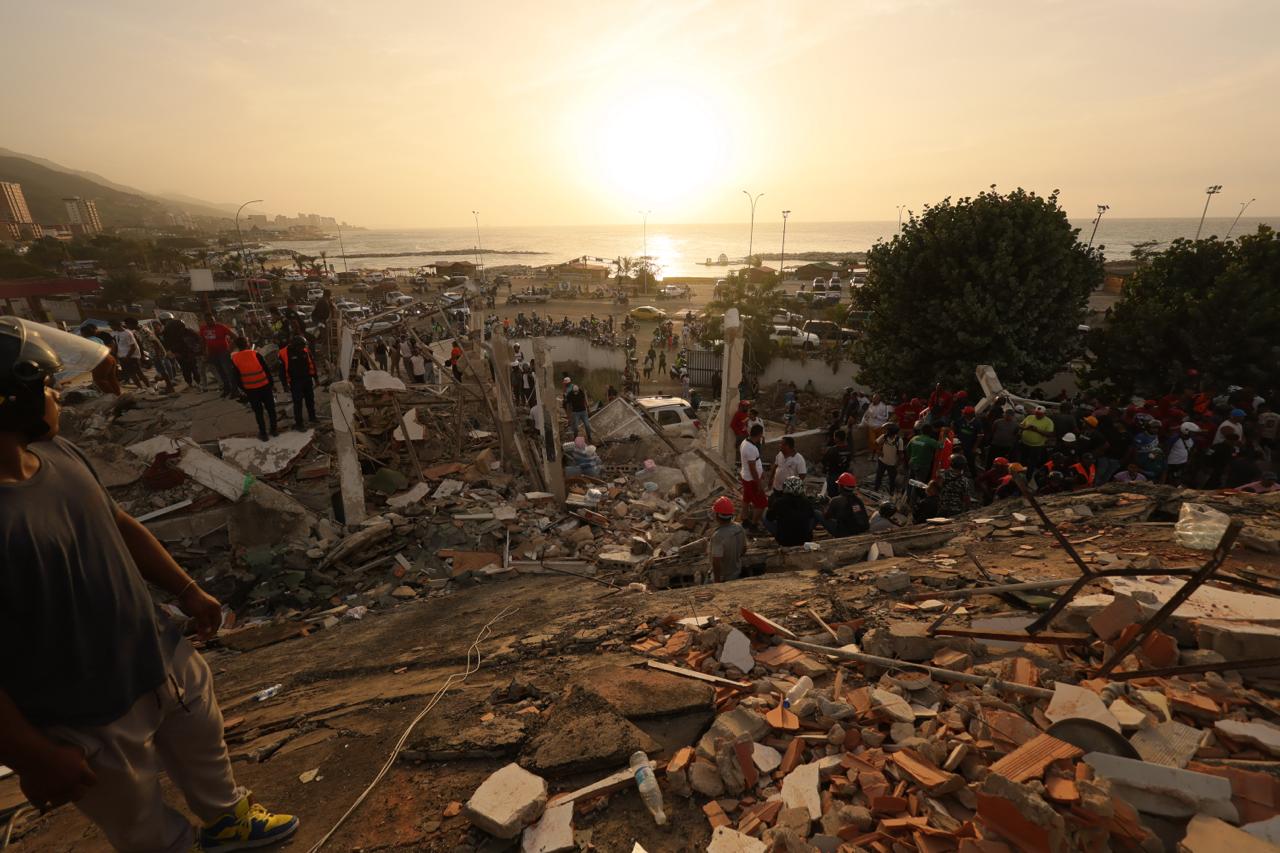
Venezuela’s reconstruction is hampered by persistent US sanctions and frozen assets. (Rome Arrieche)
Caracas, July 17, 2026 (venezuelanalysis.com) – A group of US Congress members addressed a letter to President Donald Trump advocating an immediate removal of sanctions against Venezuela in the wake of its recent double earthquake.
“These economic restrictions are severely hampering urgent relief efforts, and will continue to threaten Venezuela’s recovery and long-term reconstruction if allowed to remain in place,” the text read.
The missive was signed by 14 representatives from the Democratic Party, including Jesús García, Ilhan Omar, and Alexandria Ocasio-Cortez. They cited the United Nations estimates of earthquake damage as high as US $37 billion, roughly a third of Venezuela’s current GDP.
“The existing sanctions regime on Venezuela has far-reaching indiscriminate effects,” the legislators continued. “The removal of sanctions will allow state institutions to more effectively coordinate and deliver emergency healthcare, shelter and food.”
The letter was backed by a number of NGOs, including Just Foreign Policy, Demand Progress, and Peace Action.
Venezuela was rocked by near-simultaneous 7.2- and 7.5-magnitude earthquakes on June 24 that caused widespread destruction in north-central regions. The coastal state of La Guaira was the worst hit, with hundreds of collapsed buildings. The latest official death count stands at nearly 5000.
Since 2017, Washington has levied wide-reaching sanctions against Venezuela, targeting key sectors such as banking, mining, trade, and especially the oil industry. Coercive measures against Venezuela’s all-important energy sector have caused revenue losses estimated at more than US $20 billion per year. The sanctions regime imposed during Trump’s first administration was largely kept in place by the Joe Biden White House.
Venezuela’s GDP contracted by three-quarters between 2014 and 2020, with 88 percent of the contraction taking place under the US economic blockade. In recent days, hundreds of scholars have also demanded the lifting of coercive measures against Venezuela.
Despite pledges of assistance following the devastating tremors, the Trump White House has not entertained any sanctions relief, issuing only a four-month license allowing earthquake relief-related transactions.
However, the US representatives called the measure “entirely insufficient” due to their limited scope and overcompliance from financial institutions.
They urged the Trump administration to “do everything to facilitate Venezuela’s access to its frozen assets abroad.” Venezuelan leaders have called on Washington and its allies to lift sanctions and unfreeze assets for reconstruction efforts. Acting President Delcy Rodríguez penned a letter to UK King Charles III requesting the release of around US $4.5 billion in Venezuelan gold held by the Bank of England.
The US and European allies are estimated to hold over $10 billion in other assets, including frozen bank accounts and roughly $5 billion in IMF-issued Special Drawing Rights (SDR). In contrast, US offers of post-earthquake humanitarian aid have only totaled $386 million.
Since the January 3 military strikes and kidnapping of Venezuelan President Nicolás Maduro, the Trump administration has seized control of Venezuelan export revenues, particularly from oil sales. Secretary of State Marco Rubio claimed the acting Rodríguez administration must submit a “budget request” before accessing its own funds.
Trump has repeatedly stated that the US has recouped the costs of the January 3 operation “many times over” from its undisclosed cut taken from Venezuelan oil proceeds. Economist Francisco Rodríguez has found a significant delay in Washington’s disbursement of Venezuelan funds.
The Trump administration also took advantage of the June 24 natural disaster to significantly expand its military footprint in the Caribbean nation. The Southern Command confirmed the presence of more than 900 servicemen on Venezuelan territory by the end of June.
US forces have taken over air traffic coordination, communications, and security operations at the Simón Bolívar International Airport, while two US warships have established a “command-and-control node” at La Guaira port.
Edited by Lucas Koerner in Caracas.