



White

White House freezes new Medicare enrollments for hospice, home health

The Trump administration on Wednesday pursued new efforts in a sweeping initiative to root out fraud in federal health programs, including announcing a nationwide six-month freeze on some new Medicare enrollments and warning states to actively investigate Medicaid fraud or risk losing funding.

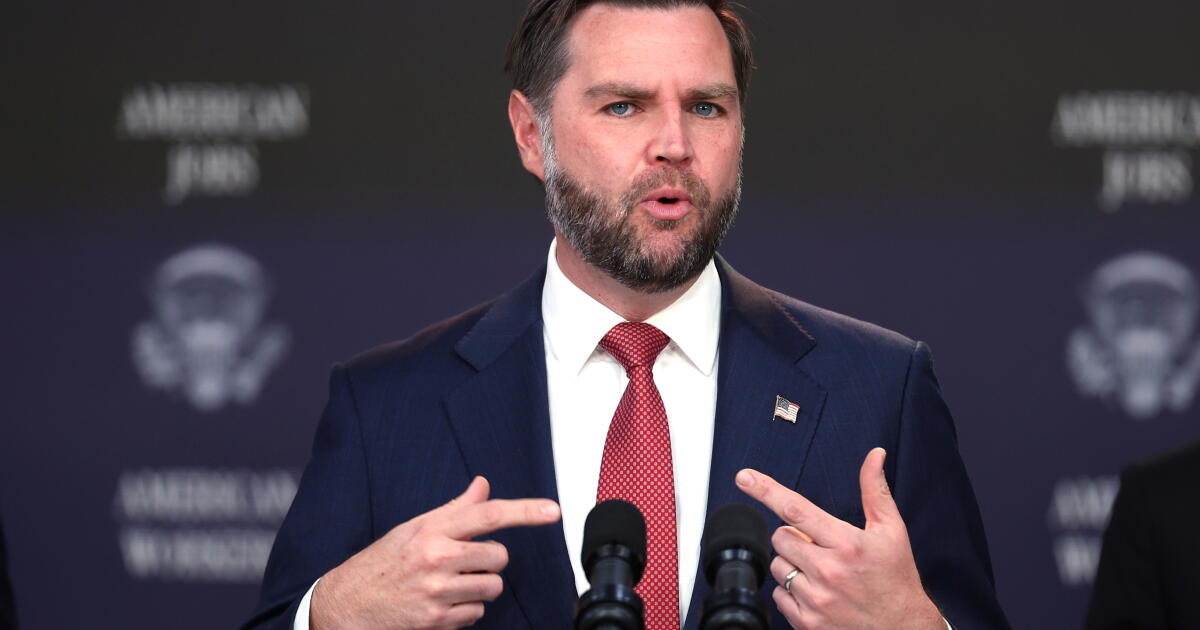
The moves are related to Vice President JD Vance’s anti-fraud task force, which has been accelerating its messaging before the November elections. The panel set up by Republican President Trump seeks to crack down on potential misuse of public money.

The most significant step Wednesday came from the Centers for Medicare and Medicaid Services with a nationwide six-month moratorium on all new Medicare enrollments by providers of hospice and home care.

“We’ve seen systemic and deeply troubling fraud in the hospice and home health space, with bad actors exploiting some of our most vulnerable Medicare patients and stealing money from the American taxpayer,” the agency’s administrator, Dr. Mehmet Oz, said in a statement. “Today we’re shutting the door on fraud — preventing new bad actors from entering Medicare while we aggressively identify, investigate, and remove those already exploiting them.”

The Department of Health and Human Services’ internal watchdog has sent letters to state attorneys general warning them to vigorously investigate possible fraud or risk losing federal money.

People across the United States have raised concerns about rising healthcare costs and barriers to access, sometimes from the federal government’s actions. New work requirements in Medicaid, for example, are expected to strain hospitals around the country and result in millions of enrollees losing their health coverage.

Several alleged fraud schemes have been prosecuted in the hospice and home health care categories, and states have acknowledged that it is a legitimate concern. But some have pushed back on the administration’s aggressive tactics and raised concerns that the catchall efforts could needlessly punish law-abiding providers that are trying to serve patients.

What the freeze does

The administration contends the enrollment freeze and other actions it is taking will help prevent potential fraud in Medicaid and Medicare and preserve funding and resources for people most in need. Under the six-month pause, existing hospice and home health care providers will continue to operate as usual. But the Medicare and Medicaid agency said it will “intensify targeted investigations, deploy advanced data analytics, and accelerate the removal” of providers in the category that are suspected of fraudulent activity.

Such a freeze is not unprecedented, said Tricia Neumann, a senior vice president and executive director for the program on Medicare policy at the healthcare research nonprofit KFF. She said President Clinton’s Democratic administration also imposed a temporary moratorium on home health agencies.

“A brief moratorium gives the administration time to crack down on true fraud and prevent new fraudulent entities from popping up,” she said.

Maine becomes a focus

Vance, a potential 2028 White House hopeful, has used the high-profile assignment from Trump to remind Americans struggling with high costs that he is trying to claw back taxpayer dollars. Vance has promoted the task force’s work during campaign stops for Republican candidates and is expected to focus on the effort Thursday in Maine, where there are closely watched primary races on June 9.

Oz said earlier in the year that he was calling for corrective action on alleged fraud in government health programs in Maine, a request characterized by the state’s Democratic governor, Janet Mills, as a “political attack.”

Federal investigations and oversight

In recent months, the Medicare and Medicaid agency has suspended payments to hundreds of hospice and home care agencies in Los Angeles over alleged fraud and issued another six-month moratorium on suppliers of durable medical equipment, prosthetics, orthotics and certain other supplies in Medicare.

The administration also has approached at least five states with investigations into potential healthcare fraud and halted about $243 million in Medicaid payments to one of them, Minnesota, over fraud concerns. Last month, Oz announced his agency would add to that oversight by requiring all 50 states to share how they planned to revalidate some of their Medicaid providers.

In at least one case, the administration has erred in its accusations against states. In April, the Medicare and Medicaid agency acknowledged to the Associated Press that it made a significant error in figures it used to help justify a fraud inquiry in New York. The acknowledgment deepened doubts about the administration’s methods and raised a common criticism about the second Trump administration — that it tends to attack first and confirm the facts later.

Swenson and Price write for the Associated Press. Swenson reported from New York. AP writer Geoff Mulvihill in Haddonfield, N.J., contributed to this report.

Source link

Man charged in White House correspondents’ dinner attack pleads not guilty

A man accused of storming the White House Correspondents’ Association dinner while armed with guns and knives pleaded not guilty on Monday to charges that he attempted to kill President Trump and fired a shotgun at a Secret Service officer who tried to stop the attack.

Cole Tomas Allen was handcuffed and shackled and wearing an orange jail uniform when he appeared in federal court for his arraignment. Allen didn’t speak during the brief hearing. One of his attorneys entered the plea on his behalf.

Allen’s lawyers are asking U.S. District Judge Trevor McFadden to disqualify at least two top Justice Department officials from direct involvement in prosecuting him because they could be considered victims or witnesses in the case, creating a potential conflict of interest.

Acting Atty. Gen. Todd Blanche and U.S. Atty. Jeanine Pirro were attending the event when Allen ran through a security checkpoint and fired a shotgun at a Secret Service officer, authorities said. In a court filing last week, Allen’s attorneys argued that it creates at least the appearance of a conflict of interest for Blanche and Pirro to be making any prosecutorial decisions in the case.

McFadden, a Trump nominee, didn’t rule from the bench on that question but asked Allen’s attorneys to elaborate on the possible scope of their recusal request. Defense attorney Eugene Ohm said the defense likely would seek to disqualify Pirro’s entire office from involvement in the case. Ohm acknowledged that a bid to disqualify the entire Justice Department would be unlikely.

“That would be quite a request,” the judge said.

McFadden gave prosecutors until May 22 to respond in writing to the defense’s request. The judge asked the government to specify whether it believes Pirro and Blanche could be considered victims in the case.

“That might add some clarity here,” McFadden said.

In their filing, Allen’s attorneys suggested that the appointment of a special prosecutor might be warranted.

Allen is scheduled to return to court on June 29.

A Secret Service officer was shot once in a bullet-resistant vest during the April 25 attack at the Washington Hilton hotel, which disrupted and ultimately prompted an early end to one of the highest-profile annual events in the nation’s capital. The officer fired five shots but didn’t hit anybody, authorities said.

Allen, 31, of Torrance, was injured but was not shot.

Besides the attempted-assassination count, Allen also is charged with assaulting a federal officer with a deadly weapon and two additional firearms counts. He faces a maximum sentence of life in prison if convicted of the attempted assassination charge alone.

Allen was placed on suicide watch after his arrest, but jail officials removed him from that status after several days. Allen’s attorneys complained that he had been unnecessarily confined in a padded room with constant lighting, repeatedly strip searched and placed in restraints outside his cell.

Allen told FBI agents that he didn’t expect to survive the attack, which could help explain why he was deemed to be a possible suicide risk, a Justice Department prosecutor has said.

Allen was outfitted with an ammunition bag, a shoulder gun holster and a sheathed knife when he took a photo of himself in his room at the hotel just minutes before the attack, according to prosecutors. In a message that authorities say sheds light on his motive, Allen referred to himself as a “Friendly Federal Assassin” and alluded obliquely to grievances over a range of actions by Trump’s Republican administration.

Authorities have alleged that Allen on April 6 reserved a room for himself at the Hilton where the event would be held weeks later under its typical tight security. He traveled by train cross-country from California, checking himself into the hotel a day before the dinner with a room reserved for the weekend.

Trump was rushed off the stage by his security team at the Saturday night event and appeared at the White House two hours later, still in his tuxedo, to talk about the attack and the suspect.

“When you’re impactful, they go after you. When you’re not impactful, they leave you alone,” the president said. “They seem to think he was a lone wolf.”

Kunzelman writes for the Associated Press.

Source link

Suspect in White House correspondents’ dinner attack seeks exclusion of top Justice Dept. officials

A man charged with attacking the White House Correspondents’ Assn. dinner is seeking to disqualify top Justice Department officials from direct involvement in prosecuting him because they could be considered victims or witnesses in the case, creating a potential conflict of interest.

Acting Atty. Gen. Todd Blanche and U.S. Atty. Jeanine Pirro were attending the April 25 event at the Washington Hilton when Cole Tomas Allen allegedly ran through a security checkpoint and fired a shotgun at a Secret Service officer.

In a court filing late Thursday, Allen’s attorneys argued that it creates at least the appearance of a conflict of interest for Blanche and Pirro to be making any prosecutorial decisions in the case.

“As this case proceeds closer to trial, the country and the world will continue to wonder — how can the American justice system permit a victim to prosecute a criminal defendant in a case involving them?” defense attorneys Eugene Ohm and Tezira Abe wrote.

Ohm and Abe, who are assistant federal public defenders, suggested that the appointment of a special prosecutor might be warranted. They urged U.S. District Judge Trevor McFadden, a Trump nominee assigned to Allen’s case, to disqualify Pirro, Blanche and possibly other Justice Department officials from direct involvement in the investigation and prosecution.

“Both heard gunshots, which presumably forced them to duck below the tables with the rest of the occupants. They were quickly evacuated. Shortly thereafter, they learned that law enforcement believed the target was certain administration officials,” Ohm and Abe wrote.

Pirro said her office will respond to the defense lawyers’ arguments in its own court filing.

“We will not tolerate people who come to the District of Columbia to engage in antidemocratic acts of political violence; and we will prosecute all such acts to the fullest extent of the law,” Pirro said in a statement.

Allen is scheduled to be arraigned Monday on charges in an indictment handed up Tuesday by a grand jury in Washington.

The charges include attempting to assassinate President Trump, who is a longtime friend of Pirro’s. Blanche served as a personal attorney for Trump before joining the Justice Department last year.

Blanche, through a spokesperson, referred a request for comment to Pirro’s office.

Allen also is charged with assaulting a federal officer with a deadly weapon and two additional firearms counts. He faces a maximum sentence of life in prison if convicted of the attempted assassination charge alone.

The Secret Service officer who was shot once in a bullet-resistant vest fired his own weapon five times without hitting anybody. Allen, 31, of Torrance, was injured but was not shot.

Kunzelman writes for the Associated Press.

Source link

Disneyland Paris visitors slam ‘eyesore’ white boards at Sleeping Beauty Castle

Several Disneyland Paris visitors have gone online this week to share photos of the ‘eyesore’ white construction board that’s been put in front of the Sleeping Beauty Castle while refurbishment work happens

The iconic Sleeping Beauty Castle is one of the main attractions at Disneyland Paris, with many visitors excited to get their first glimpse of it when they go there. However, many have been left “gutted” as the main bridge and central archway entrance are currently closed for a major refurbishment scheduled to last until late September 2026.

Several Disneyland Paris visitors took to Facebook groups this week to share photos of the ‘eyesore’ white board that was put in front of the Sleeping Beauty Castle. They said they were left ‘devastated’ that this would be their family’s first experience at Disney and that it would now be ‘ruined’.

One person shares a wrote on Wednesday (May 6): “Not being funny but they could have at least got a feature wall maybe to represent the bridge. This is not a little refurbishment, Disney planned this and definitely have the money to make it more attractive whilst the park is still open to visitors paying a lot of money.”

Another agreed: “I’d be so devastated if this was my first and only time being able to go to Disney. Everyone wants pics in front of the castle. It’s a lot of money to be paying and for many a once in a lifetime holiday and yes while you’re not paying just to get a photo at the castle that is a big part of the experience for many.

“Gutted we can’t get our annual photo in front of it this year but lucky enough to have gotten three photos in front of it so far.”

A third chimed in: “Actually gutted. We’ve booked for June. Why is this being done in the summer months when logically it will be busier period. Surely it makes more sense to do in the winter.”

Despite the complaints, many Disney fans argued you could still get nice pictures of the castle behind the boards.

One person wrote: “We got a picture this morning behind the boards, and a nice empty bridge too.”

Content cannot be displayed without consent

While another added: “You can still get lovely pictures, if not better from the side.”

Another person also showed people what the castle looked like at night during the fireworks. They wrote: “We have just got back from being in the reserved viewing area for the fireworks this evening. I know a lot of people wanted to see what the view is like.

“To be honest we didn’t even look at the boards. They’ve moved the area backwards so you’re looking up and none of the projection is limited. Honestly we still had the best time.”

It seems Disney could have listened to the complaints, as an online post from today (May 7) shows the white board decorated to blend in with the castle. However, some people are doubting if it’s real until more posts emerge.

The post was captioned: “They have officially decorated the white wall, and it definitely looks prettier.”

One person replied: “Is this real? If so it looks a million times better and has made me feel so much happier about our trip in a couple of weeks. I know everyone is going on about photos but I don’t care about getting the perfect shot-it’s about the impact for my two girls walking up to the castle for the first time in their lives and getting that first impression and ‘wow’ factor.”

Another asked: “Is this real or AI?”

Disneyland Paris has been contacted for comment.

Source link

Walbert Ureña stymies White Sox as Angels capture series win

Travis d’Arnaud hit a three-run homer, Walbert Ureña threw six innings of two-hit ball, and the Angels defeated the Chicago White Sox 8-2 on Wednesday.

The Angels won a series for the first time since April 10-12 at Cincinnati. The Angels (15-23) are 2-7-2 in series this season.

D’Arnaud’s 396-foot shot off Noah Schultz (2-2), the backup catcher’s first homer of the season, kicked off a five-run second inning for the Halos. After Bryce Teodosio doubled on a ball that got past right fielder Jarred Kelenic, Zach Neto hit a stand-up RBI triple.

Mike Trout brought one more across with an infield popup that second baseman Chase Meidroth lost in the afternoon sun for a single.

Jorge Soler and Jo Adell were hit by back-to-back pitches from reliever Osvaldo Bido with the bases loaded to bring in two runs in the fourth.

Ureña (1-3) allowed one run, struck out five and walked three in his second quality start of the season. Brent Suter, Drew Pomeranz and Chase Silseth completed a four-hitter.

Meidroth had two hits for Chicago (17-20). Standout rookie Munetaka Murakami, who is tied for the major league lead with 14 home runs, struck out four times for the second time this season.

Schultz allowed seven hits and seven runs in 3⅔ innings. He had allowed a total of six earned runs in four previous starts this year.

Up next for the Angels: Open a three-game series at Toronto on Friday with LHP Reid Detmers (1-2, 4.28) facing Blue Jays RHP Dylan Cease (2-1, 3.05).

Source link

Mike Trout homers, Angels escape jam to beat the White Sox

Mike Trout, Jorge Soler and Zach Neto hit home runs, Ryan Zeferjahn worked out of a bases-loaded jam in the ninth inning and the Angels held on for a 4-3 victory over the Chicago White Sox on Tuesday night.

Zeferjahn hit a batter and walked two in the ninth before retiring Edgar Quero on a groundout for his first save this season and his third in 10 career opportunities. The right-hander struck out rookie home run leader Munetaka Murakami — tied with the Yankees’ Aaron Judge at 14 — with a runner on first to get the final out in the eighth.

Trout hit his 11th homer of the season and the 415th of his career with one out in the first off Erick Fedde (0-4) after Chicago scored two runs off Sam Aldegheri in the top half.

Soler followed with his eighth homer one out later to tie it 2-2.

Neto homered for the first time since April 10, a tiebreaking two-out shot in the fifth for his sixth of the season. Trout walked for the second time before scoring from first on a double by Nolan Schanuel to make it 4-2 and chase Fedde. Trout reached base four times with a single in the eighth.

Neto ended an 0-for-23 slump with a third-inning single before getting picked off.

Chase Meidroth hit his second homer leading off the seventh against Sam Bachman to get Chicago within 4-3. Both Colson Montgomery and Miguel Vargas extended their on-base streaks to 18 games for the Sox.

José Fermin (1-1) pitched a scoreless fifth for the win. Aldegheri gave up two runs on four hits in four innings in his sixth career start.

Fedde yielded four runs on six hits in 4 2/3 innings.

The top four hitters in the Angels’ lineup drove in a run for the first time since June 18, 2021, against the Tigers.

Source link

White House East Wing debris dumped at nearby golf course has toxic metals, a report says

Debris from the demolition of the White House East Wing that was dumped at a nearby public golf course has tested positive for lead, chromium and other toxic metals, the National Park Service said.

An interim report by a Virginia engineering firm says the toxic metals, along with PCBs, pesticides, petroleum byproducts and other chemicals were detected at levels above laboratory reporting limits in soil at the East Potomac Golf Links, a historic golf course that President Trump plans to renovate.

The park service began dumping debris from the East Wing onto the golf course in October, and more than 810,000 cubic feet of excavated soil had been transported to the site as of last month, the report by Jacobs Engineering Group Inc. said. The report was requested by the park service.

The nonprofit DC Preservation League has sued the Trump administration, arguing that the dumping was unlawful and possibly hazardous. The group also is challenging the Republican administration’s takeover of the golf course, about two miles southeast of the White House, and others in the city.

The suit is one of several legal battles challenging Trump’s extraordinary efforts to put his mark on public spaces in the nation’s capital, including renaming and shuttering the Kennedy Center and building a 250-foot-tall triumphal arch near the Lincoln Memorial.

At the end of last year, a separate group of preservationists filed a lawsuit seeking to prevent the administration from demolishing the East Wing so it could build a ballroom, a project slated to cost $400 million.

A spokesperson for the Interior Department, which oversees the park service, said in an email Tuesday that the soil removed from the White House “was tested multiple times by multiple parties, and this project passed all standards set by law.”

Although the agency does not comment on litigation, “this thorough process was followed to ensure the transfer was safe for the public,’’ the email said.

The Preservation League’s executive director, Rebecca Miller, said Tuesday that experts were still analyzing the engineering report. The group also is concerned about whether the Trump administration is complying with federal laws including the National Historic Preservation Act and the National Environmental Policy Act, she said.

Debris from the East Wing demolition is so prevalent that it causes golfers to detour around piles of it, Miller said. “If you Google you’ll see lots of photos of golfers walking past it,” she said in an interview.

The Trump administration’s plans to renovate the 105-year-old course to make it a professional-level course would permanently alter its historic character and layout, Miller said.

A federal judge told the government on Monday not to cut down more than 10 trees without first providing notice amid the legal dispute.

U.S. District Judge Ana Reyes said during a remote hearing that she wasn’t going to issue a temporary restraining order just yet, but she indicated she would take a harsh view of any major alterations made without prior notice.

Democracy Forward, a national legal organization that is co-representing the Preservation League, said in a press release that “further scrutiny will be required related to potential toxins that were dumped at East Potomac Park by the administration as part of the destruction of the East Wing of the White House.”

Test results released by the government “suggest the Defendants dumped a cocktail of contaminants — and despite indications of the refuse’s contents, they continued dumping it,” the group said.

Kevin Griess, the superintendent of the National Mall and Memorial Parks for the park service, said during Monday’s court hearing there was no immediate plan to begin tree removal but added that a safety assessment was underway.

Trump, an avid golfer, also plans on renovating a military golf course just outside Washington that has been used by past presidents going back decades.

In its statement, the Interior Department said it is “committed to continuing the relationships we have built with the local golf communities to ensure these courses are safe, beautiful, open, affordable, enjoyable, accessible, and world-class for people living in and visiting the greatest capital city in the world.”

Daly and Fields write for the Associated Press.

Source link

Video: Trump says Iran should ‘wave the white flag’ | Donald Trump

NewsFeed

US President Donald Trump said Iran should ‘wave the white flag of surrender’ in the war, and accused Iran’s leaders of playing games in negotiations. He also said higher oil prices are a ‘small price to pay’ to keep Iran from having a nuclear weapon.

Source link

GOP bill would fund $1 billion in White House security upgrades for Trump’s ballroom

Senate Republicans have added $1 billion in White House security upgrades to legislation that would fund immigration enforcement agencies, a proposed boost for President Trump’s ballroom project after a man was charged with trying to assassinate him at the White House Correspondents’ Assn. dinner last week.

The GOP bill released late Monday would designate the money for the U.S. Secret Service for “security adjustments and upgrades” related to the ballroom project, which Trump and Republicans have been pushing since Cole Tomas Allen allegedly stormed the April 25 media dinner at the Washington Hilton with guns and knives. The legislation says the money would support enhancements to the ballroom project, “including above-ground and below-ground security features,” but also specifies that the money may not be used for non-security elements.

White House spokesperson Davis Ingle praised Republicans for including the money for the “long overdue” project, saying it would “provide the United States Secret Service with the resources they need to fully and completely harden the White House complex, in addition to the many other critical missions for the USSS.”

The money is part of a larger bill to pay for Immigration and Customs Enforcement and Border Patrol, as Democrats have been blocking funds for both agencies since mid-February. Congress passed bipartisan legislation to fund the rest of the Homeland Security Department on April 30 after a record-long shutdown, but Republicans are using a partisan budget maneuver to push through the ICE and Border Patrol dollars on their own. The House has not released its bill yet, but the Senate is expected to start voting on its version of the legislation next week.

It is unclear exactly how the $1 billion would be used, and the amount far exceeds the proposed $400 million for construction of the ballroom. The White House has said in court documents that the East Wing project would be “heavily fortified,” including bomb shelters, military installations and a medical facility underneath the ballroom. Trump has said it should include bulletproof glass and be able to repel drone attacks.

The National Trust for Historic Preservation has sued to block construction of the project, but a federal appeals court said last month that it can continue in the meantime.

The White House has said that private money would pay for the construction but public money would be used for security measures. Some Republicans have suggested that public money pay for all of it, arguing the security breach at the dinner shows the president needs a secure place to host events.

“It would be insane” to hold the dinner at a hotel again, said Republican Sen. Lindsey Graham of South Carolina, who introduced a bill to pay for the ballroom’s construction with Sen. Katie Britt, R-Ala.

Democrats have said they will oppose any efforts to pay for the ballroom.

“While Americans are struggling to make ends meet as a result of President Trump’s failed policies, Republicans are focused on providing tens of billions of dollars for the President’s vanity ballroom project and cruel mass deportation campaign,” said Illinois Sen. Dick Durbin, the top Democrat on the Senate Judiciary Committee, which oversees the U.S. Secret Service.

Jalonick writes for the Associated Press. AP writer Darlene Superville contributed to this report.

Source link

Trump’s drugmaker deals may save economy $529B over 10 years, White House says

White House economists estimate that President Trump’s deals with pharmaceutical companies to drop some of their U.S. prescription drug prices to what they charge in other countries could save $529 billion over the next 10 years.

The analysis obtained by the Associated Press includes the first economy-wide projections behind a policy at the core of Trump’s pitch to voters going into November’s midterm elections for control of the House and Senate. Democratic lawmakers have been doubtful about the savings claimed by Trump and these new numbers are likely to trigger additional questions about the data.

Cost-of-living issues are at the forefront of voters’ concerns and higher energy prices tied to the Iran war have deepened the public’s anxiety. Trump has tried in part to address affordability concerns by focusing on his efforts to cut deals with companies so that the cost of prescription drugs in the U.S. would no longer be dramatically higher than in other affluent nations.

“Now you have the lowest drug prices anywhere in the world,” Trump said at a Friday rally before a crowd of seniors in Florida. “And that alone should win us the midterms.”

The analysis was done by administration officials for the White House Council of Economic Advisers. They also estimated that federal and state governments could save a combined $64.3 billion on Medicaid during the next decade because of what Trump calls his “most favored nation” policy on drug prices.

Few of the details of the deals struck by the Trump administration and 17 leading pharmaceutical companies have been made public, making it hard to independently verify the projected savings. The White House analysis sought to estimate the prospective savings as more medications come onto the market and fall under Trump’s framework — with one model in the report tallying the possible savings at $733 billion over a decade.

Trump and his Department of Health and Human Services have touted his drug-pricing deals as transformative and urged Congress to codify their principles into law. Democratic lawmakers have challenged the administration’s claims of savings. Senate Finance Committee Ranking Member Ron Wyden, D-Ore., and 17 Senate Democrats in April proposed a measure requiring the administration to disclose the terms of the agreements signed by pharmaceutical companies.

“If these deals are so great, why is the Trump administration afraid of showing them to the public?” Wyden said when announcing the measure. Health Secretary Robert F. Kennedy Jr. said his team would share details that didn’t include proprietary information or trade secrets.

The White House said it has not shared the text of the agreements because they include highly sensitive data that could move financial markets.

The potential savings estimated by the Trump administration would be substantial as Americans spent $467 billion on prescription drugs in 2024, according to the most recent government data available. The analysis is premised on the idea that foreign countries would also pay more for their prescription drugs, which would diversify drugmakers’ sources of revenue and preserve their ability to innovate with new treatments.

Outside economists have caveated that any savings might not flow directly to patients, many of whom already pay discounted prices for their drugs through their insurance coverage.

The Congressional Budget Office in October 2024 estimated that a plan similar to what Trump ended up adopting could reduce prescription drug prices by more than 5%, though the decrease “would probably diminish over time as manufacturers adjusted to the new policy by altering prices or distribution of drugs in other countries.”

The scope of the savings claimed by the Trump administration are likely to intensify the scrutiny by Democrats, who counter that any price reductions would be offset by higher costs for prescription drugs not covered by the “most favored nation” framework. One of their main critiques is that pharmaceutical companies have increased their profit margins while working with the administration.

In April, staff working for Sen. Bernie Sanders, I-Vt., released an analysis that looked at 15 of the companies that have agreed to this drug-pricing plan and found that their combined profits jumped 66% over the past year to $177 billion. The report noted that the tax cuts Trump signed into law last year “exempted or delayed many of the most expensive drugs” from price negotiations with Medicare.

The Trump administration has countered that they consider Sanders’ critique to be flawed, saying that it’s based on the list prices for pharmaceutical drugs instead of the actual price that patients pay.

Boak writes for the Associated Press.

Source link

Judge asks why jail placed suspect in White House correspondents’ dinner attack on suicide watch

A federal magistrate judge on Monday pressed a jail official to explain why a man charged with trying to storm the White House Correspondents’ Assn. dinner and attempting to kill President Trump was placed on restrictive suicide watch after his arrest.

Officials at the city jail in Washington removed Cole Tomas Allen from its designated “suicide status” over the weekend after his attorneys complained that he had been unnecessarily confined in a padded room with constant lighting, repeatedly strip-searched and placed in restraints outside his cell.

But the relaxed conditions didn’t satisfy U.S. Magistrate Judge Zia Faruqui’s concerns that Allen may have received disparate, punitive treatment in violation of his due process rights. Faruqui noted that the D.C. jail routinely houses convicted killers and others charged with violent crimes without placing them on 24-hour lockdown.

“It could drive a person crazy to be in that situation,” he said.

Faruqui apologized to Allen over his confinement conditions. In response to a news report on that apology, U.S. Atty. Jeanine Pirro criticized him in a social media post that said Faruqui “believes a defendant armed to the teeth and attempting to assassinate the president is entitled to preferential treatment in his confinement compared to every other defendant.”

Allen’s lawyers said he wasn’t showing any suicidal risk factors after his arrest. But a jail psychiatrist evaluated him and initially concluded that he posed a suicide risk, according to Tony Towns, acting general counsel for the city’s corrections department.

“Every case is different, your honor,” Towns said.

Allen was moved into protective custody after the jail lifted the suicide prevention measures. His attorneys didn’t object to his new confinement status. They had asked the magistrate to cancel Monday’s hearing, but Faruqui forged ahead with it due to his “grave concerns” about Allen’s treatment in jail.

Allen was injured but was not shot during the April 25 attack at the Washington Hilton, which disrupted one of the highest-profile annual events in the nation’s capital.

Allen was armed with guns and knives when he ran through a security checkpoint and pointed his weapon at a Secret Service agent, who fired back five times, authorities said. Pirro has said that Allen fired a shot that struck the agent’s bullet-resistant vest.

Allen later told FBI agents that he didn’t expect to survive the attack, which could help explain why he was deemed to be a possible suicide risk, said Justice Department prosecutor Jocelyn Ballantine.

Allen, 31, of Torrance, is charged with attempted assassination of the president and two additional firearms counts. He faces up to life in prison if convicted of the assassination count alone.

Defense attorney Eugene Ohm said Allen was prohibited from having anything in his cell. He asked for a Bible and a visit from a chaplain but hasn’t received either, according to Ohm.

Kunzelman writes for the Associated Press.

Source link

Iran Ceasefire Means Trump Needs No Congressional Approval To Continue War: White House

The 60-day clock for President Trump to seek congressional approval for further military actions against Iran was stopped by the April 7 ceasefire, a senior White House official claimed to The War Zone Friday morning. As we previously noted, the president faced a deadline today under the War Powers Resolution of 1973 to obtain permission from Congress to continue fighting.

The White House decision comes as the now-paused war is at a stalemate, with both sides believing they can outlast the other. Meanwhile, Trump is considering options for a new round of strikes while Iranians say they have presented new plans for working toward a peace deal.

“For War Powers Resolution purposes, the hostilities that began on Saturday, February 28 have terminated,” the official told us, speaking on condition of anonymity to discuss the matter. “Both parties agreed to a two-week ceasefire on Tuesday, April 7 that has since been extended. There has been no exchange of fire between U.S. Armed Forces and Iran since Tuesday, April 7.”

The administration’s statement today follows War Secretary Pete Hegseth’s Congressional testimony yesterday that “the 60-day clock pauses or stops in a ceasefire.”

🚨🛑🚨
US Defense Secretary Pete Hegseth says a ceasefire could pause the 60-day war powers deadline, but Senator Tim Kaine argues the law may not allow it.
Source::CNN news pic.twitter.com/NfzHb79NEC

— Naki (@Naki_BK8) May 1, 2026

Under the War Powers Resolution, the use of armed forces should be terminated within 60 days unless Congress has declared war or voted to approve a 30-day extension. Since Trump formally notified Congress about the Iran war on March 2, that deadline fell today. Even though several other presidents have simply ignored the War Powers Resolution, the Trump administration is now arguing that the measure doesn’t really apply to their operation just yet.

It remains unclear how or if Congress will react. It adjourned yesterday for a week-long recess. On Thursday, the Senate rejected the latest of many resolutions intended to halt the war, The Washington Post noted

Republican lawmakers appear to be deferring to Trump on the issue of the War Powers Resolution. Senate Majority Leader John Thune, R-S.D., told The Associated Press on Thursday that he doesn’t plan on a vote to authorize force in Iran or otherwise weigh in.

“I’m listening carefully to what the members of our conference are saying, and at this point I don’t see that,” Thune said.

Republican Sen. Kevin Cramer of North Dakota said he’d vote for an authorization of war if Trump asked for it. But he questioned if the War Powers Act, passed during the Vietnam War era as a way for Congress to claw back its power, is even constitutional.

“Our founders created a really strong executive, like it or not like it,” Cramer said.

In a post on X, Republican Sen. Susan Collins of Maine, who joined with nearly all Democrats for the vote, said Trump’s authority as commander in chief is “not without limits.”

The 60-day deadline “is not a suggestion; it is a requirement,” she said, adding that further military action “must have a clear mission, achievable goals, and a defined strategy for bringing the conflict to a close.”

As I have said since these hostilities with Iran began, the President’s authority as Commander-in-Chief is not without limits. The Constitution gives Congress an essential role in decisions of war and peace, and the War Powers Act establishes a clear 60-day deadline for Congress…

— Sen. Susan Collins (@SenatorCollins) April 30, 2026

UPDATES

Iran says that it has “delivered its latest proposal for negotiations based on efforts to end the war to Pakistan,” the official Iranian IRNA news outlet reported on Friday.

“Iran handed over the text to Pakistan – a mediator for negotiations with the United States – on Thursday evening,” IRNA stated, without providing any details about what it entailed.

​Iranian Foreign Ministry Spokesperson Esmaeil Baqaei emphasized in a television interview “that ending the war and establishing a sustainable peace remain Tehran’s main priorities in negotiations with the United States,” according to IRNA.

However, how much the new proposals will move the needle is unclear. Trump’s major demand is that Iran give up its nuclear ambitions. Baqaei’s comments followed those yesterday by Iran’s Supreme Leader, Ayatollah Mojtaba Khamenei, that seem to be in opposition to Trump’s demand. Khamenei said that his country will protect its “nuclear and missile capabilities” as a national asset and that the only place Americans belong in the Persian Gulf is “at the bottom of its waters.”

As we noted yesterday, the injured Iranian supreme leader rarely communicates publicly and Trump claims there is a fracture in Tehran’s government, making negotiations difficult. The schism in Iranian leadership should come as no surprise. This is exactly what we predicted could happen before the war even started.

Pakistan has been serving as an intermediary between the U.S. and Iran. Talks in Islamabad on April 11 concluded without reaching an agreement to end the war.

Iran submitted a revised negotiation proposal to the United States through Pakistani mediators on Thursday, IRNA news agency reported on Friday.

Foreign ministry spokesman Esmail Baghaei earlier said Tehran seeks a durable peace in talks with Washington, even as senior clerics… pic.twitter.com/UwdvXeVDOU

— Iran International English (@IranIntl_En) May 1, 2026

While details of the new plan are unknown, CNN International Diplomatic Editor Nic Robertson said that from talking to sources, it could involve a situation where the U.S. lifts its blockade of Iranian ports at the same time Iran ends its closure of the Strait of Hormuz.

At the 11th hour in Pakistan Iran’s proposal arrives – will it go far enough for the US President – here’s what we know about it pic.twitter.com/j7r4QB5sUB

— Nic Robertson (@NicRobertsonCNN) May 1, 2026

U.S. Central Command commander Adm. Brad Cooper and Joint Chiefs of Staff Chairman Gen. Dan Caine briefed President Trump Thursday night for 45 minutes “on new operational plans for potential strikes against Iran,” Axios reported on X, citing two senior American officials.

As we noted yesterday, CENTCOM has prepared three options, according to Axios. They include: 

  • “Short and powerful” waves of strikes on Iran, likely including infrastructure targets. 
  • “Taking over part of the Strait of Hormuz to reopen it to commercial shipping. Such an operation could include ground forces,” one source told the outlet.
  • A “special forces operation to secure Iran’s stockpile of highly enriched uranium.” As we have reported in the past, such an operation faces tremendous challenges and great risk for a questionable chance of success.

“President Trump has all the cards as negotiations continue, and he always has all options at his disposal to ensure that Iran can never possess a nuclear weapon,” White House deputy press secretary Anna Kelly told us Friday morning in response to our query about the briefing. CENTCOM declined comment and the Joint Chiefs have not responded to our request.

מפקד פיקוד מרכז של צבא ארה”ב האדמירל בראד קופר וראש המטות המשולבים הגנרל דן קיין תדרכו הלילה את הנשיא טראמפ במשך 45 דקות על תכניות מבצעיות חדשות לתקיפות אפשריות נגד איראן, כך לפי שני בכירים אמריקנים https://t.co/p4GOe8rdAf

— Barak Ravid (@BarakRavid) May 1, 2026

Addressing one of those options listed by Axios, Iranian MP and member of the negotiation delegation Mahmoud Nabavian warned that if Iranian leaders are assassinated in any attack, leaders of Persian Gulf nations “will be killed and their palaces destroyed.”

Iranian MP and member of the negotiation delegation Mahmoud Nabavian states that if Iranian leaders are assassinated in any attack, all of the complicit despots in the Persian Gulf will be killed and their palaces destroyed. pic.twitter.com/JUioYttQtc

— Seyed Mohammad Marandi (@s_m_marandi) May 1, 2026

While Israel has managed to meet its military objectives against Iran, leaving the Islamic Republic with highly enriched uranium would be a huge mistake, a senior military official told the Israeli Ynet media outlet.

The air force established an “Iran Department,” and the goals that had been set were achieved, the anonymous official told the publication.

“Now we will see whether another ‘clarification’ is needed to make them sit down for negotiations,’” the senior military official told the outlet, adding that “without a solution to the issue of uranium enrichment and the nuclear program, it will be one major failure.”

Israel Air Force chief exits with warning: no nuclear deal with Iran would be ‘a major failure’

Maj. Gen. Tomer Bar is ending 39 years in uniform after leading the Israel Air Force through October 7, internal reservist turmoil, his…https://t.co/AOAmxFbB64 pic.twitter.com/xwsLRe3Zyn

— Ynet Global (@ynetnews) May 1, 2026

An Iranian official claims that last night, “small enemy drones appeared to assess the country’s air defense, and Iran’s air defense responded decisively.”

“The Islamic Republic must respond offensively to the presence of micro-drones so that the enemy does not make such a mistake again,” said Ali Khodarian, Iranian National Security Commission of the Parliament Member. He did not say whose drones flew over Iran.

The War Zone cannot independently verify that claim, but this would be very much in line with preparations for resuming the air war. Stimulating an enemy’s air defense network via decoy drones would provide critical intelligence on the enemy’s electronic order of battle, including the status and locations of threat emitters and Iran’s ability to respond.

JUST IN: Iranian National Security Commission of the Parliament Member, Khodarian:

“Last night, small enemy drones appeared to assess the country’s air defense, and Iran’s air defense responded decisively. The Islamic Republic must respond offensively to the presence of… pic.twitter.com/pri0iBauOd

— Sulaiman Ahmed (@ShaykhSulaiman) May 1, 2026

Khodarian’s comments follow video emerging on social media last night showing Iranian air defenses firing over Tehran.

In a major sign of growing cooperation between Israel and Gulf nations spurred by the war, Israel “sent sophisticated weapons systems — including an advanced laser — to the United Arab Emirates to help defend the Gulf monarchy from a ferocious onslaught of Iranian missiles and drones,” Financial Times reported.

Israel sent the UAE a version of its Iron Beam laser defense system, FT stated, citing one person familiar with the deployment and another with knowledge of the preparations to operate the system.

As we have previously explained, Iron Beam is a trailer-mounted weapon using directed-energy to destroy targets, including rockets, mortars, and drones. Reports described the system as firing “an electric 100-150 kW solid-state laser that will be capable of intercepting rockets and missiles.”

It was first deployed by Israel earlier this year to defend against incoming Hezbollah projectiles from Lebanon. 

Israel also provided UAE with its lightweight Spectro surveillance system, “which helped the Gulf nation detect incoming drones, especially Shaheds, from as far as 20km away,” the publication stated. The system “integrates a wide range of digital imaging, high-definition optical sensors and advanced lasers, providing simultaneous multi-spectral observation capabilities and enabling ultra-long-range detection,” according to the Israel manufacturer Elbit

In addition to Iron Dome, #Israel dispatched a version of the Iron Beam laser-based air defense system to the United Arab Emirates during the recent fighting with #Iran to help protect the Gulf nation from missile and drone attacks. https://t.co/AAuUpfxyxK

— Jason Brodsky (@JasonMBrodsky) May 1, 2026

A satellite image emerging on social media purports to show that Iran is continuing to load oil onto tankers at Kharg Island.

“No sign yet Tehran has run out of storage, despite baseless claims from the White House,” Javiar Blas, energy and commodities columnist at Bloomberg stated on X. 

As we previously reported, Trump suggested that Iran’s oil infrastructure could “explode” in about three days because of mechanical and geologic issues exacerbated by the blockade.

Transits of the Strait of Hormuz continue to decline during the ongoing closure by Iran and U.S. blockade of Iranian ports.

As of April 30, “Hormuz crossings reduced to seven transits, split between four commercial and three non-commercial movements, with direction broadly balanced at four west-to-east versus three east-to-west,” the global trade intelligence firm Kpler stated on X. “Only two laden west-to-east crossings were recorded, under Pakistani and Comoros flags carrying [refined petroleum] and dry bulk, while higher-risk tonnage remained limited with just three shadow or sanctioned vessels observed and the rest assessed low-risk.”

No new physical attacks have been recorded since April 22, Kpler added, with permissive passages continuing.

Strait of Hormuz | Daily Vessel Crossings

As of 30 April, Hormuz crossings halved d/d to seven transits, split between four commercial and three non-commercial movements, with direction broadly balanced at four west-to-east versus three east-to-west.
Only two laden west-to-east… pic.twitter.com/y5Mc39xarg

— Kpler (@Kpler) May 1, 2026

The UK Maritime Trade Operations (UKMTO) group says strait transits have fallen by more than 90%, leaving 850 merchant ships and around 20,000 sailors trapped inside the Gulf and unable to leave. 

The Royal Navy maritime monitoring team has warned that shipping through the Strait of Hormuz has fallen by more than 90 per cent, with 850 merchant ships and around 20,000 sailors trapped inside the Gulf and unable to leave. Click image for more.https://t.co/XgKDZjSzql

— UK Defence Journal (@UKDefJournal) May 1, 2026

Despite a ceasefire, Israel said it has continued attacking Hezbollah positions in southern Lebanon.

Troops from the Paratroopers Brigade, Givati Brigade, Commando Brigade, and the Fire Brigade (214), under the command of the 98th Division, have operated in recent weeks in the area of the town of Bint Jbeil to clear the area of Hezbollah infrastructure and eliminated its fighters, the IDF said on Telegram.

“During the operations, the troops dismantled more than 900 terrorist infrastructure sites, located hundreds of weapons, and eliminated more than 200 terrorists in close-quarters combat and precise airstrikes.”

“After it was identified as booby-trapped, the Israeli Air Force struck and dismantled the stadium as part of the division’s efforts to locate and dismantle infrastructure used for terrorist purposes,” IDF claimed. “The IDF will continue to operate against threats to the citizens of the State of Israel and IDF forces, in accordance with the directives of the political echelon.”

IDF Division 98 completed a large-scale clearing operation in southern Lebanon. Hundreds of Hezbollah infrastructure sites destroyed, over 200 terrorists eliminated, and massive weapons stockpiles seized.

A town stadium rigged by Hezbollah as a booby-trapped compound was among… pic.twitter.com/l0SGpZXI1h

— Open Source Intel (@Osint613) May 1, 2026

Contact the author: howard@thewarzone.com

Howard is a Senior Staff Writer for The War Zone, and a former Senior Managing Editor for Military Times. Prior to this, he covered military affairs for the Tampa Bay Times as a Senior Writer. Howard’s work has appeared in various publications including Yahoo News, RealClearDefense, and Air Force Times.


Source link

White House says funds to pay TSA and other Homeland Security workers will ‘soon run out’

The White House is warning Congress that funding to pay Department of Homeland Security personnel will “soon run out,” sparking new threats of airport disruptions and national security concerns as the House slow-walks legislation to end what has been the longest-ever lapse in agency funding.

In a memo late Tuesday to lawmakers, the Office of Management and Budget said money that President Trump tapped to pay Transportation Security Administration and other workers through executive actions will be exhausted by May. It called on the House to quickly approve the budget resolution senators approved in an all-night session last week that would pave the way for full funding for the department.

“DHS will soon run out of critical operating funds, placing essential personnel and operations at risk,” the memo said.

The pressure from the Trump administration could help House Speaker Mike Johnson, whose narrow Republican majority has been stalled out, tangled in internal party disputes on a range of pending issues, including the Homeland Security funding. They have left the chamber at a virtual standstill.

The House was expected to vote as soon as Wednesday on the Senate budget resolution that is designed to unlock a multistep process to eventually fund the department. But by midday, House action again screeched to a halt. The administration has warned GOP lawmakers off making changes that could prolong passage.

“Restoring funding for the Department of Homeland Security has never been more urgent, as demonstrated by recent events,” the memo said, a nod to the situation over the weekend when a man armed with guns and knives tried to storm the annual White House correspondents’ dinner that Trump, the vice president and top Cabinet officials were attending.

Homeland Security shutdown is longest ever

Homeland Security has been operating without regular funds for more than two months after Democrats refused to fund Immigration and Customs Enforcement and Border Patrol without changes to those operations after the deaths of Americans protesting Trump’s deportation agenda.

While immigration enforcement workers have largely been paid through the flush of new cash — some $170 billion — that Congress approved as part of Trump’s tax cuts bill last year, others, including TSA, have had to rely on Trump’s intervention through executive action to ensure their paychecks.

But with salaries topping $1.6 billion every two weeks, Homeland Security Secretary Markwayne Mullin said recently, those funds are drying up.

More than 1,000 TSA officers have quit since the shutdown began, according to Airlines for America, the U.S. airlines trade group that called Wednesday on Congress to fully fund the agency.

“The urgency to provide predictable and stable funding for TSA is growing stronger by the day,” the group said in a statement. “Time and time again, our nation’s aviation workers and customers have been the victim of Congress’ failure to do their jobs.”

Complicated budget strategy ahead

House and Senate Republicans have embarked on a go-it-alone strategy, attempting to approve funds for Immigration and Customs Enforcement and Border Patrol without Democrats. They want to provide $70 billion for those immigration operations for the remainder of Trump’s term to ensure no further interruptions.

It’s a cumbersome process, the same that was used last year to approve Trump’s tax cuts bill, that will play out over several weeks.

The Senate launched the process last week, and is now waiting on the House to act. Once that budget resolution is approved, both the House and Senate are expected to draft the actual funding bill, a process that can take weeks.

In the meantime, Johnson is next expected to quickly turn this week to legislation that would fund the other parts of Homeland Security, including TSA, the Coast Guard and other agencies.

That bipartisan bill has support from Democrats and already passed the Senate a month ago, when Republicans reluctantly agreed to carve out the immigration-related funds that Democrats had opposed. But it has been stalled out in the House, as Republicans in that chamber disagreed with the Senate’s approach.

Mascaro writes for the Associated Press. AP writer Rio Yamat in Las Vegas contributed to this report.

Source link

White House hails ‘two kings’ as King Charles delivers pointed remarks | Donald Trump

NewsFeed

King Charles III has hailed US-UK ties at a state dinner in the White House after speaking at a joint session of Congress in a rare appearance by a British monarch. The visit marks 250 years since American independence, and comes amid strains over the war on Iran.

Source link

José Soriano’s scoreless innings streak ends as Angels lose to White Sox

Drew Romo hit the first two home runs of his career as the Chicago White Sox beat the Angels 5-2 on Tuesday night. It was the fifth loss in a row for the Angels.

Colson Montgomery homered in the second off Angels starter José Soriano (5-1), ending his shutout streak at 25 2/3 innings. The right-hander gave up three runs and six hits over five innings, raising his major league-leading ERA from 0.24 to 0.84.

Davis Martin (4-1) outpitched Soriano, giving up one run and seven hits in 5 2/3 innings. Martin struck out seven and walked one.

Sean Newcomb fanned three in 1 1/3 scoreless innings and Seranthony Domínguez worked a hitless ninth for his seventh save.

Josh Lowe homered for the Angels, and Jo Adell had an RBI single.

Source link

White House withdraws hospitality executive as nominee to lead the National Park Service

President Trump is withdrawing his nomination of a hospitality company executive to lead the National Park Service, the White House announced Monday.

The withdrawal of nominee Scott Socha comes as the park service has been shaken by widespread firings as part of the Trump administration’s pledge to sharply reduce its size.

Socha said in a statement that he was dropping out of consideration for the post for personal reasons.

The park service is currently overseen by an acting director, agency comptroller Jessica Bowron. It did not have a Senate-confirmed director during Trump’s first term, when it was led by a series of acting directors.

Socha is president for parks and resorts at Buffalo, N.Y.-based Delaware North, which has service contracts with numerous parks and describes itself as one of the world’s largest privately owned entertainment and hospitality companies. A White House spokesperson had said when he was nominated in February that Socha was “totally qualified” to execute Trump’s plans for the park system.

But some conservation groups had questioned whether Socha’s private sector work provided the experience he would need to oversee hundreds of national parks and monuments that range from the Statue of Liberty and other cultural sites to remote sites in the Utah desert.

The Associated Press sent email messages to the White House and the Interior Department seeking comment on Socha’s withdrawal.

Thousands of employees have been fired or otherwise left the park service since Trump took office.

Emily Douce with the National Parks Conservation Assn., an advocacy group, said Monday that the next director for the service needs to “undo the damage.”

“It’s very unfortunate that our parks have gone more than a year without a permanent director at a time when they need strong, steady leadership the most,” Douce said.

The Republican administration’s proposed budget for next year would reduce staffing to 9,200 employees. That’s down almost 30% compared to 2025 levels.

The park service’s operating budget would be cut by more than $1 billion, to $2.2 billion, for the 2027 fiscal year that starts in October.

Similar cuts proposed for 2026 were blocked by lawmakers in Congress after park supporters and former employees warned the administration’s proposal would have effectively gutted the agency.

The administration also has faced blowback for the removal or planned removal of national park exhibits about slavery, climate change and the destruction of Native American culture. In February, a federal judge said an exhibit about nine people enslaved by George Washington must be restored at Washington’s former home in Philadelphia after the Trump administration had taken it down.

Administration officials have said they are removing “disparaging” messages under an order last year from Trump. Critics accuse it of trying to whitewash the nation’s history.

Under Trump’s interior secretary, Doug Burgum, the park service has started charging millions of international tourists who visit U.S. parks each year $100 each to visit sites including Yellowstone and Grand Canyon. The service also has put Trump’s image onto its annual passes for U.S. citizens, drawing a lawsuit from environmentalists who said the move was illegal.

Brown writes for the Associated Press.

Source link

‘White Lotus’ Season 4: Bonham Carter exit, Cannes backdrop, more news

Nearly five years on from its premiere, every morsel of information about Mike White’s addictive HBO series is still met with feverish excitement. And its upcoming fourth season is no exception: After previous visits to Hawaii, Italy and Thailand, the Emmy-winning series is checking into digs on the French Riviera, with its backdrop none other than the Cannes Film Festival.

Just as closely watched has been the string of starry casting announcements — and one very high-profile departure, Helena Bonham Carter, who departed the show shortly after production began. According to an HBO spokesperson, “With filming just underway on Season 4 of ‘The White Lotus,’ it had become apparent that the character which Mike White created for Helena Bonham Carter did not align once on set. The role has subsequently been rethought, is being rewritten and will be recast in the coming weeks. HBO, the producers and Mike White are saddened that they won’t get to work with her, but remain ardent fans and very much hope to work with the legendary actress on another project soon.”

The road to a new “White Lotus” season is always a twisty one, as executive producer David Bernad recently told The Envelope. He also shared details on the season’s themes, other key cast members and how the production plans to maneuver around tourists. Here‘s what we gleaned from our chat.

A bad French hotel restaurant experience changed everything: Bernad and White spent a week scouting in France but weren’t sold until one fateful night. “Mike and I went to meet a friend for dinner at a hotel in the South, which will remain nameless. The maître d’ was so rude and they called security on us,” says Bernad. However, once inside, the staffer continued to be dismissive of them and the show. “The whole season crystallized in that moment, and as we were leaving, Mike’s like, ‘I know exactly what we’re going to do and we’re doing it in the South of France.’ It was the most productive dinner I’ve had,” he says.

Helena Bonham Carter attends the UK Premiere of "Agatha Christie's Seven Dials" on January 13, 2026 in London, England.

Helena Bonham Carter, the first actor cast in Season 4, became the first to exit, HBO confirmed Friday. Her character will be reimagined and recast.

(Dave Benett / WireImage)

Other countries were in contention: Choosing each season’s swanky location is always a “conundrum,” says Bernad, who shared that he and White initially planned a multicountry European tour. “We were starting in France, then we were going to Spain, then Ireland. But once we had that moment in the South of France at that restaurant, Mike said, ‘I don’t want to see anymore.’ So the rest of the trip was canceled,” says Bernad.

Cannes and its history form the season’s backdrop: One of the show’s familiar sights during the first three seasons has been swelling waves dramatically crashing against rocks, but you’ll see something different in Season 4. “A lot of those shots will be replaced by Cannes, the city itself and the glamour of the festival,” says Bernad. Also, the focus won’t be confined to the present but also pay tribute to the past. “It’s also the storied history and glamour of the festival, and we’re going to be tipping our hat to French cinema throughout,” he adds.

Vincent Cassel 2024 in Cannes, France.

Cast member Vincent Cassel at Cannes with “The Shrouds” in 2024.

(JB Lacroix / FilmMagic)

The season’s theme is “really intentional”: Bernad says he’s known the Season 4 theme since they realized the hit show would be ongoing. “We’ve always had an idea that this season would explore the arts and fame, celebrity and the spiritual journey of being an artist, so we focused on countries that had a long relationship with the arts,” he says. Fashion’s influence is also key as “Dior permeates through the entire season,” he says, adding that French designers and artists are doing pieces for the show that lean into “the painful, existential journey of what it means to be an artist.”

No Hollywood star cameos: With Cannes as the backdrop, you might think A-listers like George Clooney or Anne Hathaway will be wandering through a “White Lotus” scene. Nope. “The show lives in the universe of ‘White Lotus’ so we’re not doing cameos, we’re not doing celebrity,” says Bernad. “In that universe, there are references to real people, but everything is its own world.”

Kumail Nanjiani

Kumail Nanjiani is among the Americans in the international cast.

(Michael Buckner / Variety via Getty Images)

The Season 4 cast is eclectic… and still evolving: Ironically, the exiting Bonham Carter was the first person cast for Year 4. “Mike always had her in mind as we started this process, and we built the cast around her,” says Bernad. While we wait for her revised character to be recast, an array of international artists are set to appear, including Brits (Steve Coogan and Dylan Ennis), Americans (Sandra Bernhard, Chris Messina, Kumail Nanjiani, Chloe Bennet, Ari Graynor, Heather Graham and Rosie Perez), French (Vincent Cassel, Corentin Fila, Nadia Tereszkiewicz and Laura Smet), Canadians (Alexander Ludwig), Norwegians (Tobias Santelmann), Swedes (Frida Gustavsson) and Australians (Caleb Jonte Edwards). It’s no surprise that multiple language interpreters will be on set, says Bernad.

One White Lotus hotel isn’t enough: “What’s cool and unique this season is there’s going to be two hotels so not everyone is staying at the same hotel,” says Bernad. In fact, while the White Lotus Cannes is a beautiful property — the Hotel Martinez in Cannes will be used for filming — the more coveted place to stay is the White Lotus du Cap, filmed at the Airelles Chateau de la Messardière in Saint-Tropez. “That starts to play into the theme and story about ego and narcissism and how we view ourselves as it relates to how the world views us,” explains Bernad, adding filming at Paris’ Mandarin Oriental Lutetia will also double for some of the Cannes action.

The Airelles Chateau de la Messardière in Saint-Tropez will stand in for the "White Lotus du Cap."

The Airelles Chateau de la Messardière in Saint-Tropez will stand in for the “White Lotus du Cap.”

(Jarry/Tripelon / Gamma-Rapho via Getty Images)

Filming in a high tourist area is a “Jenga tower”: Previous seasons were shot in more remote, secluded locations, but that’s not the case for the fourth season. “We’re shooting in the South of France during a very peak tourist time, and it has been the most challenging season so far,” says Bernad. “It’s like making a Jenga tower work with all the crazy dates in the South of France and things that are booked out.”

Production is the longest ever: Shooting at multiple hotels isn’t new for the show, but in previous seasons, “we would stay in a hotel and we would shoot it out and then we’d move on to the next hotel,” explains Bernad. This time, it’s more of a puzzle that will make Season 4 the longest production schedule ever for the show. “We’re going to be shooting, leaving and then returning [to properties]. We’ll shoot in the spring, and then we’re going to come back in the fall when high season’s over,” he says.

Besides a great hotel, another major factor exists in securing a location: Besides finding the perfect property that will look great on camera and lining up a variety of schedules, a “White Lotus” location “has to be a place we want to live for a year,” says Bernad. “Because it is a year and it is relentless work … I think Tanya [Jennifer Coolidge] says at one point, ‘At this age, you just want to feel comfortable,’ and that’s us.”

Source link

What does Trump shooting at White House dinner mean for World Cup security? | World Cup 2026 News

A high-profile shooting incident that targeted United States President Donald Trump at the White House Correspondents’ Association dinner has raised security concerns about the country’s role as cohost of the FIFA World Cup 2026.

US authorities said on Sunday that the gunman accused of trying to storm the dinner was targeting Trump and members of his administration.

Recommended Stories

list of 3 itemsend of list

The suspect — who was armed with a shotgun, a handgun, and multiple knives — rushed a US Secret Service checkpoint at the Washington Hilton hotel and managed to shoot a law enforcement officer, although the suspect himself was not struck by gunfire.

The incident is seen as a major breach of security by football fans around the globe, millions of whom will follow their teams at the World Cup tournament, which the US will cohost June 11-19 with Canada and Mexico.

Here’s what fans and experts are saying about the incident and how it could affect their safety at the World Cup:

Will the Trump shooting impact World Cup security?

With the US hosting the majority – 78 of 104 – fixtures, it is expected to see an influx of five to 10 million football fans from around the world, many of whom have expressed concerns for their teams’, as well as their own, safety following the targeting of Trump.

“Their [US] own security service allowed a single person with a shotgun into the most secure building in the world, and missed every shot at him. How are the players going to be safe?” a fan wrote in a social media post.

Others questioned how fans and other members of the public will be safe during the tournament if the country’s president has come under attack.

This is not the first time Trump has been involved in an attempted assassination; he was injured in a shooting at a campaign rally in Pennsylvania in July 2024, and in September 2025, a suspect was convicted of plotting to kill Trump while he was playing golf in Florida a year earlier.

However, security analyst Massimiliano Montanari believes the shooting in the US capital will have “no impact” on security preparations for the World Cup.

“It’s undeniable that this shooting creates additional concerns, but with or without this shooting, the US Secret Service is keeping the highest level of attention on the president,” Montanari told Al Jazeera.

“The world is in a moment of immense pressure; several international turmoils are happening at this time, and the shooting will not change the perception of fans coming to the US,” he added.

“The US has very strong security and counterterrorism experience; I’m sure all necessary measures are in place.”

FIFA did not respond to Al Jazeera’s request for comment on World Cup security in the aftermath of the shooting in Washington.

How will Trump’s presence affect security and fan experience at the World Cup?

Fans critical of the US and its lax gun laws, which lead to hundreds of mass shootings across the country each year, say the latest security breach highlights the country’s failure to control gun violence.

Comments on social media ranged from fans questioning the US as a host to calling for the matches in the country to be cancelled altogether due to security risks.

Mass shootings are a common occurrence in the US. In 2026, the country has seen more than 126 incidents which have resulted in more than 3,100 deaths and 5,300 injuries so far, according to Gun Violence Archive, a non-profit research group.

Some critics also wondered if Trump’s likely presence at World Cup games will endanger fans and negatively impact their experience at the tournament.

“I presume Donald Trump will attend the World Cup at some point as the President of the host nation,” Kate Wilton, a social media user, noted in a post on X. “If he’s an assassination risk, surely him attending is a security risk to all those attending?”

US President Trump shares a close relationship with FIFA President Gianni Infantino and was present at the World Cup draw on December 5, 2025.

Later that month, Trump’s attendance at the US Open men’s tennis final delayed the start of the match, as hordes of tennis fans struggled to get through security checkpoints.


INTERACTIVE AR15 rifle mass shooting ar-15-1725524403
[Al Jazeera]

What does ICE presence at World Cup mean for fans?

The White House shooting also invoked a broader conversation regarding national security in the US, which has seen immigration-related crackdowns across various states.

The Trump administration’s push for mass deportation, as well as its efforts to tighten legal immigration pathways, have spurred concerns about whether the World Cup’s international audience might be targeted by US immigration authorities.

In February, US Immigration and Customs Enforcement (ICE) acting Director Todd Lyons confirmed to a committee in the House of Representatives that his agency would be on the ground for World Cup events. When questioned about visitor concerns, he declined to commit to pausing ICE operations at the matches.

“Fans should be treated as guests and clients of the event, not as a potential threat or as criminals,” Montanari, who heads the International Centre for Sport Security (ICSS), said of the border patrol agents’ presence.

He emphasised that any security officials on the ground must be deployed as discreetly as possible.

“Major global sporting events like the World Cup must remain sporting events and not security events,” he explained, adding that the elements of safety, security and service must work cohesively.

Montanari emphasised that at the previous World Cup in Qatar, where he is currently based, fans were not discriminated against for their nationalities or backgrounds, something that upcoming iterations of the event must emulate.

“I think at any World Cup, the key success factor will be the level of international or regional cooperation; no country can deliver a safe major sporting event without that.

“Securing an event is not just about securing venues, but protecting the overall community, and this involves strong partnership with the government, the business community, and civil society — a holistic effort everyone has to put together.

Last week, the American Civil Liberties Union (ACLU) and Amnesty International, along with more than 120 civil society groups, issued a “travel advisory” for foreigners attending the 2026 FIFA World Cup in the US due to the “deteriorating human rights situation in the US and the absence of meaningful action and concrete guarantees from FIFA, host cities, or the US government”.

The US Senate has taken the first steps towards reopening the Department of Homeland Security (DHS) – which has been partially shut down since mid-February after Democrats demanded immigration-enforcement policy changes following fatal shootings of two protesters by federal agents. The Senate approved a budget framework that would fund immigration enforcement agencies, despite opposition from the Democrats.

Source link

Myleene Klass turns up the heat in white bikini as she recreates iconic I’m A Celeb jungle shower look 20 years on

MYLEENE Klass is back in the swim of things in a white bikini — 20 years after famously wearing one in the I’m A Celebrity jungle shower.

The presenter, 48, wore the simple two-piece in the sea in a South Africa photoshoot.

Myleene Klass fronts the new Freemans Holiday Shop campaign Credit: Freemans/Roger Weber
Myleene’s white bikini matches the one she wore in the I’m A Celebrity jungle shower Credit: Freemans/Roger Weber
Myleene in the shower in I’m a Celebrity Get Me Out of Here, 20 years ago Credit: Rex

The design is for Freemans.com — after her first range for them sold out last year.

Myleene first wore her most famous look during a stint on the ITV1 show in 2006, on which she was a runner–up behind winner Matt Willis, 42.

She then returned to the jungle to compete in 2023’s first all-stars series, I’m A Celebrity… South Africa, which she won.

She previously said she had no idea the 2006 swimwear — later auctioned for £7,500 for charity — would cause a stir and bought it in a rush before the show.

read more on myleene klass

RED HOT

Myleene Klass shows off incredible figure in a red bikini during Cape Town trip


STAR’S HELL

Fan who sent Myleene Klass pistol in terrifying stalking campaign is locked up

She admitted last year: “I remember one of the show’s producers looking at my bikinis in the hotel before I went to camp.

“One was covered in stripes, and they said, ‘We’ll have to stop at the shops as that’s probably going to strobe on camera’.

“I ran into the shop en route to the jungle and asked the shop assistant for the plainest bikini she had. Best $40 I ever spent!”

Myleene’s first range for Freemans sold out last year Credit: Freemans/Roger Weber
The beauty’s famous white bikini cost her just $40 Credit: Freemans/Roger Weber
Star Myleene won I’m A Celebrity… South Africa’s first all-stars series in 2023 Credit: Freemans/Roger Weber

Source link

DOJ asks trust to drop White House ballroom suit after WHCA shooting

April 26 (UPI) — The Trump administration asked the National Trust for Historic Preservation on Sunday to end its legal challenge to President Donald Trump‘s ballroom following Saturday’s arrest at the White House Correspondents’ Association Dinner, saying its lawsuit “puts the lives of the president, his family and staff at grave risk.”

“Enough is enough. Your client should voluntarily dismiss this frivolous lawsuit today in light of last night’s assassination attempt on President Trump,” Assistant Attorney General Brett Shumate of the Justice Department’s Civil Division said in a letter to the National Trust for Historic Preservation’s lawyers.

Cole Tomas Allen, 31, of Torrance, Calif., was arrested Saturday night at the annual White House Correspondents’ Association Dinner hosted at the Washington Hilton Hotel with Trump, his family, members of his Cabinet and many others in attendance.

U.S. Secret Service agents apprehended the suspect — armed with a shotgun, a handgun and knives — who allegedly rushed a Secret Service checkpoint in the hotel’s lobby, authorities said.

Law enforcement and the suspect exchanged gunfire, resulting in an agent sustaining an injury when shot in the bullet-resistant vest. The injured agent and the suspect, who was not struck by gunfire, were transported to a local hospital for treatment.

Trump has been locked in a monthslong legal battle with the preservation organization over his plans to construct a $400 million donor-paid ballroom where the East Wing of the White House once stood.

The National Trust for Historic Preservation argues that the Trump administration needs congressional approval for the project and its financing mechanism, while the Justice Department argues the project is legally authorized and that, now that construction has begun, completing it is necessary for the security and the safety of the president.

A federal judge has sided with the preservation organization, ruling that Trump needs congressional approval for the plan to proceed. After the judge earlier this month permitted only below-ground construction for security purposes, the D.C. Circuit issued an administrative stay allowing the project to continue while the government’s appeal proceeds, with oral arguments scheduled for June 5.

Calls of support from the White House and Republicans have increased following Saturday’s incident, with Trump stating in a press conference that night, “We need the ballroom.”

In his letter on Sunday, Shumate said the ballroom would mean the president would no longer need to leave the White House to attend large gatherings.

He said the National Trust for Historic Preservation has until 9 a.m. Monday to dismiss the lawsuit or the Justice Department will move to dismiss the case “in light of last night’s extraordinary events” and state that the preservation organization opposes the motion.

UPI has asked the National Trust for Historic Preservation for comment.

Source link

White House correspondents’ dinner becomes the news as reporters take cover

A night devoted to celebrating the 1st Amendment and journalism turned into a breaking story of its own.

The attendees at the White House Correspondents’ Assn. dinner Saturday took cover under the tables in the Washington Hilton ballroom when they heard gunshots outside, which led to the evacuation of President Trump and many of his Cabinet officials at the gala.

But instinct kicked in swiftly, and many of the journalists in the crowd of 2,600 people were using their phones to capture video. Uploading pictures to social media was a challenge as the internet coverage in the ballroom was poor, but they would eventually provide a detailed chronicle of the night.

“I reached for my phone as soon as I could and started shooting video to capture as much of the moment as I could,” said Sara Cook, a CBS News producer and press association board member seated on the dais near the president, First Lady Melania Trump and Vice President JD Vance, who were hustled out while a SWAT team swarmed the stage.

“I could hear Secret Service officers saying, ‘Where is it coming from?’” Cook said. “They seemed to be quite confused onstage about exactly what was happening, where the threat was coming from and if there still was a threat.”

Authorities identified the suspect as Cole Tomas Allen, a 31-year-old teacher from Torrance. He was apprehended after rushing a security checkpoint one floor above the ballroom. Law enforcement officials said Allen was armed with a shotgun, a handgun and multiple knives.

After guests were told the evening program would not proceed, many of the TV anchors and correspondents in the crowd headed to their Washington studios. Many didn’t wait. CNN’s Wolf Blitzer, who was returning from a restroom on the floor where the incident occurred, delivered an eyewitness account from the Hilton lobby using a Webex app on a smartphone.

There was at least one fog-of-war moment as well. CNN anchor Kaitlan Collins reported on air that the armed suspect was killed by the Secret Service, attributing it to security for Education Secretary Linda McMahon. She had to correct the report after Fox News said Allen was alive and detained by agents.

“CBS Evening News” anchor Tony Doukopil and CBS News editor-in-chief Bari Weiss walked several blocks from the Hilton to waiting vehicles that took them to the network’s offices and studios on M Street. (Weiss granted a reporter’s request to go behind the scenes to observe the news-gathering operation.)

Four people around a desk.

Matt Gutman, Nancy Cordes, Tony Dokoupil and Bari Weiss at the CBS News Washington bureau on April 25, 2026.

When Doukopil and Weiss arrived at the bureau, CBS News national correspondent Matt Gutman and Nancy Cordes, chief White House correspondent, were already on the air with a special report, showing video shot by its journalists in the ballroom.

Doukopil joined his colleagues, all still dressed in formal wear, and took over the coverage. The newsroom soon filled with executives and producers arriving from the Hilton, several dressed in long gowns and carrying their high-heeled shoes.

CBS News President Tom Cibrowski stood over a large multiview screen, monitoring his network’s broadcast alongside the competition.

When Cibrowski was on the floor of the ballroom when the commotion began, he texted his family to let them know he was OK. He then called David Reiter, the executive producer of special events for CBS News, to alert him that they would be breaking into regular programming on the network, a rarity lately with so many 24-hour news sources available.

Reiter left his seat at a Broadway show and headed to the CBS News studios on the west side of Manhattan to get the feed on the air.

Weiss walked over to the Washington set and consulted with Doukopil, Cordes and Gutman during a break, providing a bipartisan list of government officials and activists who were subjected to politically motivated violence in recent years. She settled in at a workspace to turn out a memo to staff, acknowledging the rapid work of getting its images from inside the ballroom on the air.

“This is what we do,” wrote Weiss, a digital entrepreneur who has dealt with criticism over her lack of experience in TV news since taking on her high-profile role in October. “Most importantly, we are thankful that everyone is safe.”

Later, she led a lengthy meeting to plan further coverage, which included Norah O’Donnell interviewing Trump for Sunday’s edition of “60 Minutes.”

After Doukopil finished his special report, he was off to prepare a segment to air on “CBS Sunday Morning.”

“It’s very strange to go from drinking wine to drinking coffee,” Dokoupil said as he departed the set.

Every journalist in the ballroom left with a story.

Tom Llamas, anchor of “NBC Nightly News,” was seated next to Secretary of State Marco Rubio when Secret Service agents pulled Rubio and his wife away as White House officials were evacuated. Llamas had to alert the agents that another, less high-profile Cabinet member, Energy Secretary Christopher Wright, and his wife were at the table as well.

Llamas made his way from the hotel to the NBC News bureau with “Meet the Press” moderator Kristen Welker and veteran Washington correspondent Andrea Mitchell. The anchor took over the network’s special report and felt compelled to explain his attire.

A man in a tuxedo and bow tie.

“NBC Nightly News” anchor Tom Llamas reports on the shooting at the dinner on April 25, 2026.

“It is unusual to come on the air in a tuxedo, but this is a very unusual night,” he told viewers.

Llamas praised the performance of his peers who have seen the image of their profession take a beating in recent years.

“There was a while there, we did not know what was going on,” he said. “For all the crap that is written about our industry, I saw people jump into action immediately, and it was incredible. I was proud of all my colleagues.”

The canceled dinner created a predicament for MS NOW and NBC News, which both planned lavish after-parties late Saturday evening. Many of the big-name on-air talent stars and executives expected to attend were working on the story.

After a half-hour of deliberations, both networks decided their parties would go on. But planned stunts for the MS NOW soiree at DuPont Underground — such as a performance by a university drum line — were scrapped.

NBC’s event at the home of the French ambassador was billed as “The After Party.” A text message told attendees to expect a more subdued affair described as “a gathering for people who wanted to convene, eat and drink and be with community.”

Privately, one network executive explained why the festivities moved forward. “Nobody died,” he said.

Source link

Shooter’s path to White House press gala prompts security questions

An attack on the White House correspondents’ dinner by a gunman who came within feet of the ballroom where President Trump sat raised immediate questions about the night’s security protocol — and the future of large, high-profile events in a country with easy access to firearms and increasingly high political tensions.

The man breached metal detectors in front of the Washington Hilton ballroom and sprinted dozens of feet ahead before exchanging fire with federal agents. Shots were fired in an anteroom that had not an hour before seen thousands of guests, including senior government officials, streaming through.

A manifesto allegedly written by the suspect described his targets as members of the Trump administration, ranking from the highest to the lowest — but said he was willing to “go through” any guest standing in his way in order to kill the president’s aides.

The attempted attack on a room full of dignitaries underscored domestic unrest in Trump’s second term and deepened questions about how to effectively create security in a modern era of lone actors, online radicalization and mass shootings. It was the third known time an attempted assassin has come close to Trump since his 2024 presidential campaign began.

Acting Atty. Gen. Todd Blanche on Sunday called the U.S. Secret Service response a “massive security success story.” But within hours of the incident, bipartisan leaders of the House Oversight Committee demanded a hearing on the agency’s security plans for the dinner.

In the manifesto sent to his family, the alleged gunman, Cole Tomas Allen, of Torrance, marveled at a lack of security.

“No damn security. Not in transport. Not in the hotel. Not in the event,” he wrote. “I walk in with multiple weapons and not a single person there considers the possibility that I could be a threat.”

The Hilton, in a ritzy Washington neighborhood, has long hosted the White House correspondents’ dinner. It is the same hotel where President Reagan and three others were shot in 1981.

The shooting caused terror among guests, some of whom noted they had expected more security to enter the event and Trump was whisked offstage within the first minute of shots being fired. While the event has traditionally hosted sitting presidents in the past, Trump’s decision this year to appear for the first time since taking office made the event particularly high profile.

His presence, alongside Vice President JD Vance and much of the Cabinet and line of succession, brought with it added security protocols and personnel — raising questions over whether the storied dinner and its guests of congressional members, diplomats and mid-level officials would have been even more susceptible to attack without Trump in attendance.

Trump on Sunday said it is “tough” to secure a hotel in the middle of a city with “buildings all around and hotel rooms on top,” but praised the Secret Service and law enforcement officers. One officer was shot, not fatally.

Talking to reporters after the incident Saturday night, Trump swiftly likened it to the attempt on his life by a gunman in Butler, Pa., during the 2024 presidential campaign, and suggested that it justified his controversial plans to construct a fortified ballroom on the White House grounds. He called the hotel “not a particularly secure building,” though he later said the room was “very, very secure.”

Plans to reschedule the dinner are under review. White House Correspondents’ Assn. President Wiejia Jiang of CBS News said the organization’s board would meet to assess what had happened.

Blanche said Sunday an investigation into what had happened was ongoing. He had attended a reception before the dinner on the first floor of the hotel hosted by CBS News, one of many that did not require any security check by law enforcement authorities.

“The first takeaway, or the takeaway that should be obvious, is that the system worked. And that we stopped the suspect, and we stopped him as soon as he tried to do what he was trying to do,” Blanche said on NBC’s “Meet the Press.”

But the attack raises a question about whether presidential security protocols are effective for modern tactics, or whether the country is “in a new domain” in which those procedures no longer meet the nature of the possible threats, said Neil Shortland, director of the Center for Terrorism and Security Studies at the University of Massachusetts Lowell.

Federal investigators should examine what the security policies were, what type of attacks they were designed to prevent, and whether that protocol was out of date, Shortland said.

“Did you follow the policy is a great question,” he said. “Was the policy correct in this modern day and for this modern situation is a separate question.”

The country is facing “the most complex threat environment in our nation’s history,” particularly from lone actors who are often radicalized online, Sam Vinograd, a former official at the Department of Homeland Security, said on CBS’ “Face the Nation.”

“It can be true that law enforcement and intelligence professionals prepared exhaustively for last night,” she said Sunday. “But it can also be true that in this moment, in this security environment, the paradigms of the past may not be sufficient to meet the moment.”

That raises the “need to rethink what it is going to take to actually secure these mass gatherings,” she said.

Trump appeared to voice the same idea Saturday evening, telling reporters, “Today, we need levels of security that probably nobody’s ever seen before.” He went on to say that “this is why we have to have” the East Wing ballroom, which he described as drone-proof and having bulletproof glass.

Kris Brown, president of the gun control organization Brady — which is named after Reagan’s press secretary, James Brady, who was shot in the 1981 attack — said lawmakers should instead consider passing legislation to help prevent gun violence.

“Not every public event can take place in the ballroom, in that kind of protection — nor can we afford to live in a society where our solution to gun violence is to barricade our public officials, our children, away in fortresses,” Brown said.

About 2,000 journalists, dignitaries and other guests attended the event, rushing through rain to enter using multiple hotel entrances. They were asked to show their tickets as they walked past security guards, but there was no check-in procedure or ID check. A Times reporter was waved toward the entrance without showing a ticket as she tried to get it out of her purse.

Inside, guests milled about on multiple levels where pre-dinner receptions were occurring. Hotel guests mingled with the crowd, granted full access to the hotel’s amenities, including its boutiques and restaurants.

Two protesters briefly took over a small red carpet where guests were lined up to take professional photos; Times reporters saw a third woman dressed in a formal gown and shouting protest slogans being escorted out by security guards after apparently having entered the event.

Guests were required to flash their tickets to go down an escalator to the ballroom level, then present the ticket before walking through metal detectors and having bags searched ahead of the ballroom entrance.

Allen, who had reserved a room as a hotel guest, said in his manifesto obtained by the New York Post that security was far less stringent than he had expected. Two U.S. officials told The Times that the contents of the manifesto are authentic.

“I expected security cameras at every bend, bugged hotel rooms, armed agents every 10 feet, metal detectors out the wazoo. What I got (who knows, maybe they’re pranking me!) is nothing,” he wrote.

He noted that security guards appeared to be focused on protesters and arrivals outside, writing, “apparently no one thought about what happens if someone checks in the day before.”

It is possible that steps to further restrict access to the ballroom level, keep guests away from the event location and check attendees’ identities outside could have provided additional security, said Erin Kearns, director of law enforcement partnerships at the National Counterterrorism Innovation, Technology and Education Center.

“The lesson that can be taken away is just thinking about how to harden and strengthen security at future events when you have so many high-profile people,” she said.

The hotel was a “soft target” with a makeshift perimeter, and there were “almost zero intervention points” where the shooter could have been apprehended before arriving, Shortland said. That was partly because he traveled by train, which does not have security screenings.

Authorities should also examine whether Allen was known to authorities and, if so, whether intelligence operatives could have pieced together his train travel and arrival in the president’s orbit, Shortland said.

The attempted shooting added to a growing list of instances of political violence in the United States. Last year, one Minnesota state legislator and her spouse were killed by a gunman while another lawmaker and his wife survived; the conservative activist Charlie Kirk — whose wife, Erika, was in attendance Saturday — was shot and killed at a speaking event; an arsonist attacked the residence of Pennsylvania Gov. Josh Shapiro.

Some of that violence has been directed toward Trump, something he frequently talks about. He was injured in the Butler incident, but has used his survival to argue that God saved him so he could become president. Two months later, a Secret Service agent shot at a gunman pointing a rifle on Trump’s golf course as the president golfed.

On Feb. 22, an armed man was shot and killed after entering the secure perimeter around Trump’s Mar-a-Lago home, when the president was in Washington.

“It’s always shocking when something like this happens. It’s happened to me a little bit,” Trump said Saturday.

Source link