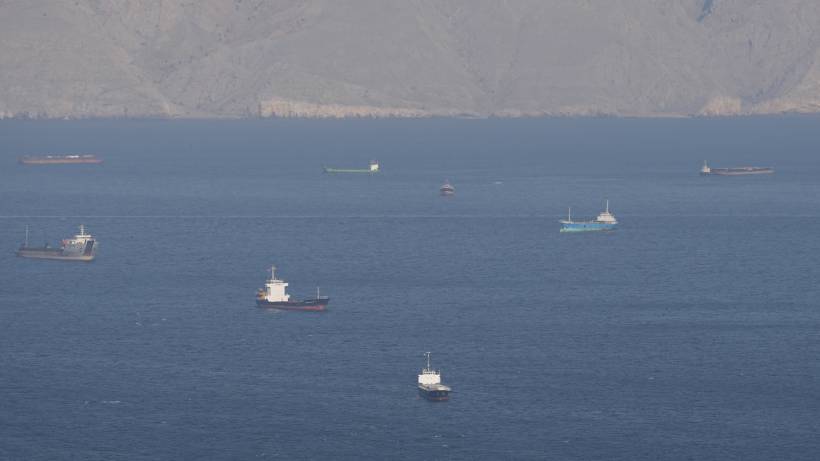
The conflict between the United States and Iran intensified on Monday, with both sides launching fresh military strikes that raised fears of a broader regional crisis threatening global energy supplies, maritime security and critical civilian infrastructure. While oil prices briefly climbed above $90 a barrel amid renewed disruption in the Strait of Hormuz, attacks on desalination facilities also highlighted a dangerous expansion of the conflict beyond military targets.
Despite the escalating violence, both Washington and Tehran signalled they remain open to diplomacy, suggesting that negotiations have not been completely abandoned even as the war enters a more volatile phase.
US and Iran Exchange Fresh Strikes
Iran’s Revolutionary Guards (IRGC) said they had launched missile attacks against U.S. military assets across the Middle East after another night of American bombardment targeting several Iranian cities.
According to Iran, ballistic missiles targeted U.S. military facilities at Jordan’s Aqaba Airport, Kuwait’s Al Adiri Camp and Ali Al Salem Air Base, as well as American positions in Syria. Bahrain also activated air raid sirens, while Kuwait reported intercepting hostile drones during the attacks.
Stay ahead of the geopolitical week.
MD Briefing delivers expert analysis across five global fronts — the Indo-Pacific, energy, geoeconomics, European security, and the Middle East — every Monday morning. Free.
Meanwhile, U.S. Central Command confirmed it had carried out a ninth consecutive night of strikes against Iran, saying the operations were intended to degrade Tehran’s capability to threaten commercial shipping through the Strait of Hormuz.
Iranian media reported explosions in several cities, including Tabriz, Chabahar, Konarak, Bandar Mahshahr and Bandar Imam Khomeini, with at least one person killed and several others wounded.
President Donald Trump defended the latest strikes, describing them as retaliation for the deaths of U.S. service members in recent Iranian attacks.
Hormuz Shipping Faces Renewed Disruption
The Strait of Hormuz, through which roughly one fifth of global oil supplies normally pass, remains at the centre of the confrontation.
The IRGC claimed two oil tankers had exploded after attempting to navigate what it described as an unsafe route through the strategic waterway. Tehran did not provide details about the vessels or casualties, and the reports could not be independently verified.
Separately, the United Kingdom Maritime Trade Operations (UKMTO) agency reported that a commercial vessel off the coast of Oman had been struck by an unidentified projectile, leaving the ship adrift though its crew remained safe.
Shipping disruptions pushed Brent crude briefly above $90 per barrel as traders worried that prolonged instability in Hormuz could significantly reduce global oil exports.
The renewed uncertainty comes after vessel traffic through the strait had already fallen sharply in recent days, with many shipping companies delaying voyages or rerouting vessels due to security concerns.
Civilian Infrastructure Becomes a New Battlefield
Beyond energy markets, the conflict is increasingly threatening essential civilian infrastructure.
Kuwait confirmed that one of its desalination plants was attacked for a second consecutive day, causing a fire. Desalination facilities provide the majority of drinking water across Gulf countries, making them among the region’s most critical infrastructure assets.
Iran has accused the United States of previously striking one of its own desalination facilities and warned that any attacks on Iranian civilian infrastructure would trigger reciprocal action against similar installations across the Gulf.
The targeting of water infrastructure represents a significant escalation, raising humanitarian concerns alongside military and economic risks.
Diplomacy Remains on the Table
Despite intensifying military operations, officials from both countries suggested diplomacy has not been completely abandoned.
U.S. Secretary of State Marco Rubio said Washington would continue targeting Iranian capabilities as long as Tehran threatened international shipping but stressed that the United States remained open to a diplomatic solution.
Iran’s Foreign Ministry echoed that position, stating diplomacy remains one of the country’s instruments for pursuing national interests despite ongoing hostilities.
Tehran also confirmed that Iran’s interior minister would travel to Pakistan, which has served as an important intermediary between the two sides since the conflict began, although Iranian officials described the visit as focused primarily on bilateral relations.
Political Pressure Mounts in Washington
The conflict is also creating growing domestic challenges for the White House.
U.S. gasoline prices climbed above $4 per gallon on Monday, reversing declines seen after the temporary ceasefire reached earlier this year. Rising fuel costs have historically carried significant political consequences for American administrations and could become a major issue ahead of November’s congressional midterm elections.
Trump defended the military campaign by arguing that Iran had suffered severe damage and insisted the United States had effectively secured control over the Strait of Hormuz, despite continued Iranian attacks across the region.
Why It Matters
The latest escalation illustrates how the conflict is evolving beyond conventional military strikes into a broader campaign targeting global trade routes and critical infrastructure. While the Strait of Hormuz remains the world’s most important energy chokepoint, attacks on desalination plants introduce a new humanitarian dimension that could directly affect millions of civilians across the Gulf.
At the same time, continued disruptions to commercial shipping threaten global oil markets, supply chains and inflation at a time when many economies are already grappling with elevated energy costs.
What’s Next
The coming days will determine whether the conflict enters an even more dangerous phase. Iran appears determined to maintain pressure on U.S. forces and commercial shipping while signalling it could expand attacks against civilian infrastructure if American strikes continue.
Washington is likely to sustain military operations aimed at securing freedom of navigation through the Strait of Hormuz while attempting to deter further Iranian retaliation. However, any successful attack on major oil facilities, shipping lanes or water infrastructure could trigger a broader regional crisis involving additional Gulf states.
Although both sides continue to leave the door open for negotiations, the cycle of retaliation has significantly reduced the prospects for an immediate diplomatic breakthrough. Until meaningful talks resume, the Gulf is likely to remain one of the world’s most volatile flashpoints, with global energy markets and regional stability hanging in the balance.
With information from Reuters.