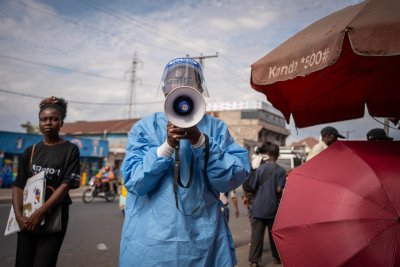

Uganda on Tuesday declared itself Ebola-free on Tuesday as the virus spreads through the Democratic Republic of Congo. File Photo Marie Jeanne Munyerenkana/EPA
July 29 (UPI) — Uganda has declared itself Ebola-free, as the virus continues to spread in neighboring the Democratic Republic of Congo.
Uganda’s Foreign Ministry made the declaration Tuesday, saying Uganda discharged its last confirmed Ebola patient on June 16.
“The declaration follows the successful completion of all outbreak response measures and confirms that there has been no further transmission of the virus,” the ministry said in a statement.
Uganda declared an Ebola outbreak on May 15, after infected individuals crossed into Uganda from the DRC.
A total of 20 people were infected in Uganda’s outbreak, including 15 Congolese nationals and five Ugandans — four health workers and a driver. Two patients died from the virus, according to ministry statistics.
Despite the declaration, the ministry said the risk of Ebola importation remains high due to the ongoing outbreak in the DRC.
Minister Chris Baryomunsi urged residents online to remain alert and continue to observe health measures.
“We shall continue to support our brothers and sisters in DRC to contain the Ebola disease there,” he said.
The outbreak that affected Uganda and remains ongoing in the DRC is caused by the Bundibugyo virus, with the first suspected case reported involving a DRC health worker on April 24. The health worker later died.
There is no approved vaccine for the Bundibugyo virus.
According to the World Health Organization, there were 3,262 cases and 1,437 deaths to the outbreak, making it the largest outbreak caused by the Bundibugyo virus to date.
The United Nations health agency said the outbreak in the DRC continued to “intensify” with sustained transmission, increasing mortality and ongoing geographic spread within the country.
“Although no new cases have been reported outside the Democratic Republic of the Congo, persistent transmission in areas connected by major national and cross-border mobility corridors continues to sustain a high risk of regional spread,” the WHO said earlier this week.