DRC

Ebola treatment centre rebuilt after being torched by protesters in DRC | Ebola

NewsFeed

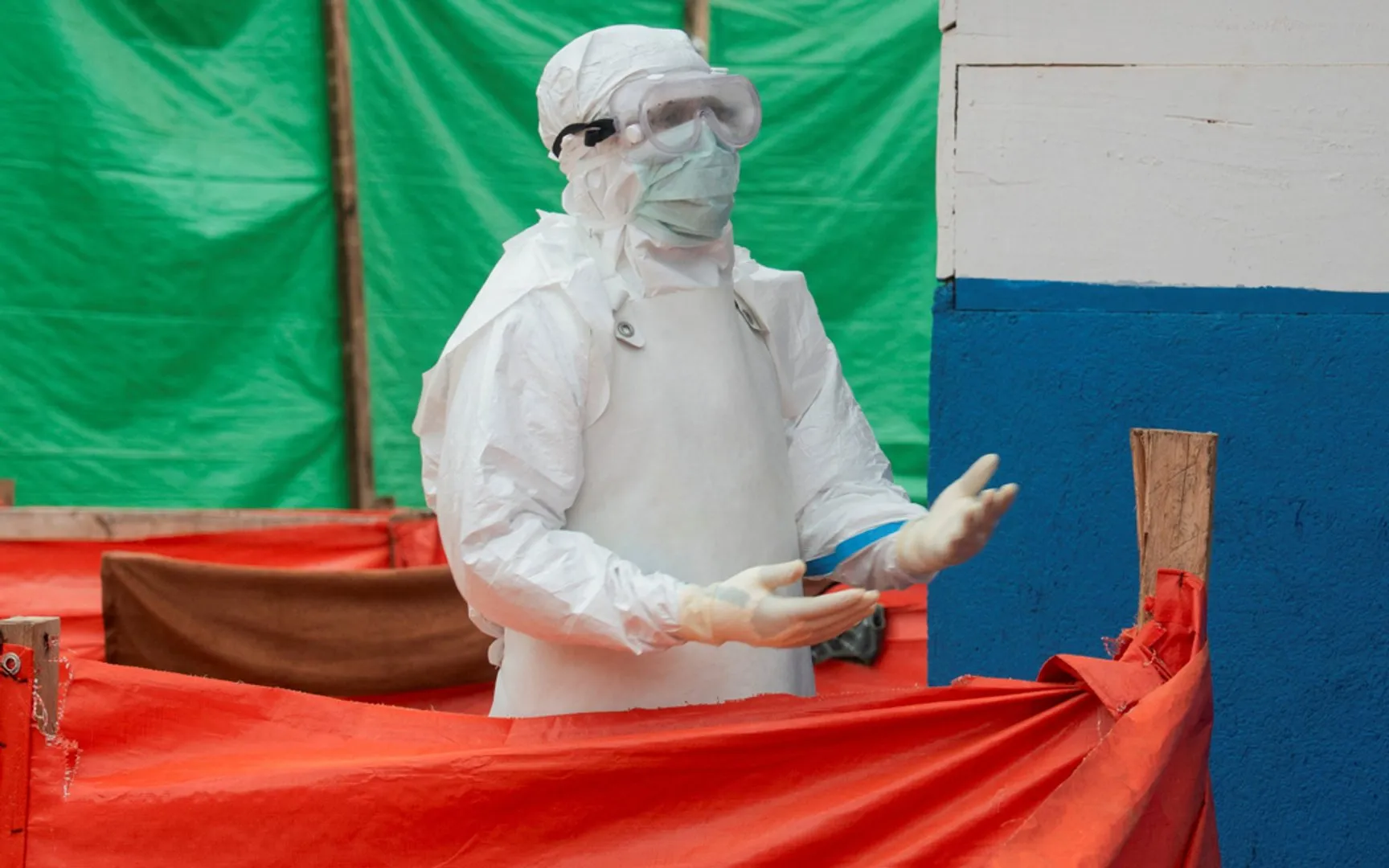
Workers in eastern DR Congo are rebuilding an Ebola treatment centre that was burned by protesters earlier this month, as health officials warn misinformation is driving families to hide sick relatives. The Congolese government confirmed over 1,000 suspected cases and at least 220 deaths since the outbreak was declared.

Source link

Doctor buried after he died treating Ebola patients in DRC | News

NewsFeed

Loved ones and healthcare workers gathered for the burial of a doctor who died after treating Ebola patients in the Democratic Republic of Congo. Fears among frontline medical teams are growing as the outbreak worsens, with more than 900 suspected cases of the virus.

Source link

Violence and overcrowding hampers Ebola response in DRC | Ebola News

NewsFeed

Authorities are finding it difficult to contain the Ebola outbreak in Democratic Republic of Congo as cases continue to spread. Hospitals are overwhelmed and treatment facilities are struggling to cope with the growing number of patients. Response efforts have also been disrupted by attacks on medical facilities.

Source link

ADF Terrorists Kill 17 Civilians in Eastern DRC

At least 17 civilians were killed in an attack by rebels of the Allied Democratic Forces (ADF) in the Ituri province of the Democratic Republic of Congo (DRC). On Tuesday, May 19, the ADF terrorists operated for hours in the Alima locality before moving on to maim locals in the neighbouring villages of Peleki, Manyama and its environs, where houses were set ablaze.

Peresi Mamboro, the coordinator of the Congolese New Civil Society of Babila-Bambomi, commented on the situation, saying, “The casualty figure of the ADF incursion yesterday at 20 hours now stands at 17 dead. The enemy passed in Peleki before burning several houses in Manyama and its environs. This figure is still provisional because the enemy continues to roam as a free electron in the zone.” 

Horror is being visited on several areas of Mambasa territory, and, faced with this situation, civil society is calling on the population to reinforce its vigilance. “We call on the population to be vigilant while denouncing all suspicious movement,” Peresi Mamboro said.

The ADF combatants have been intensifying their attacks in the region and have already crossed the national road number 44 on the Biakato-Mambasa highway, near the hills of Alima village, before dispersing in several directions after the attack.

“After the attack, the assailants broke into two groups. One group returned to the east, passing through the office of the Congolese national police in Alima, while one other group took the direction to the west of Babila-Babombi by passing through Alima stadium avenue,” Zephani Kataliko, a human rights defender in the Babila-Babombi chiefdom, noted.

This recent attack has reignited panic and fear in Mambasa territory, which has also faced a resurgence of violence attributed to the ADF over the past weeks. In several villages, families continue to flee to areas deemed safer, while travel is severely disrupted on certain roads due to fears of rebel ambushes.

Local actors fear that, in the absence of sustained military operations and reinforced control over the movements of armed groups, the ADF may consolidate its presence in the forest zones of Babila-Babombi.

Seventeen civilians were killed by the Allied Democratic Forces (ADF) rebels in Ituri province, Democratic Republic of Congo.

The attack occurred on May 19, affecting the Alima locality and nearby villages, with rebels setting houses on fire and continuing unchecked in the area.

Local civil authorities report that the violence has led to increased fear and panic, prompting calls for civilian vigilance and denunciation of suspicious activities. The recent attack is part of a surge in ADF aggression, disrupting travel and prompting mass displacement as families flee to safer zones.

The assailants split into groups after the attack, complicating the security situation. Concerns are rising that without decisive military intervention, the ADF may establish a stronger foothold in the Babila-Babombi forest regions.

Source link

Death Toll Rises to 118 in Fresh Ebola Outbreak in Eastern DRC

The recent Ebola outbreak in the eastern Democratic Republic of Congo (DRC) has resulted in a rising death toll, reaching 118 fatalities on Monday, May 18, which is a significant jump from the 80 deaths recorded just two days earlier. This outbreak is the 17th recorded Ebola virus epidemic in the DRC and has been described as a matter of international emergency by the World Health Organisation (WHO).

Patrick Muyaya, the DRC government spokesperson, announced that two additional health zones have been identified as impacted by the virus. These include Nyankunde in the Irumu territory of Ituri province. A suspected case has also emerged in Goma, the chief town of North Kivu.

The outbreak is now affecting multiple geographic areas, including Mongwalu, Rwampara, Bunia, Nyankunde in Ituri, as well as Butembo-Katwa and Goma in North Kivu. 

Butembo, a commercial town in North Kivu, was severely impacted during the Ebola Zaire strain outbreak from 2018 to 2020. Goma, which has been under the control of the M23 rebels since early 2025, serves as a significant regional transit hub on the border with Rwanda and Uganda.

The Bundibugyo Ebola strain, noted as the 17th epidemic in the DRC, was declared on May 15. Complete sequencing of the viral genome confirms that it is a genetically distinct variant from previous Bundibugyo outbreaks in 2007 and 2012, originating directly from an animal reserve, according to Jean-Jacques Muyembe, director of the DRC National Institute of Biomedical Research.

On May 17, after the WHO declared the epidemic an international public health emergency, the British organisation Oxfam also estimated that the global number of infections currently stands at 400.

The recent Ebola outbreak in the eastern Democratic Republic of Congo (DRC) has seen a significant rise in fatalities, reaching 118 deaths. It marks the 17th epidemic in the region and has been declared an international emergency by the World Health Organisation.

The outbreak affects several areas, including Nyankunde, Goma, Mongwalu, Rwampara, and Bunia. The outbreak was declared on May 15, involving a genetically distinct Bundibugyo strain.

According to WHO, the global infection count is around 400, indicating a need for coordinated health measures.

Source link

WHO Raises Concerns Over Resurgence of Ebola Virus in DRC

The World Health Organisation (WHO), a United Nations specialised agency, has declared the resurgence of the Ebola epidemic in the Democratic Republic of Congo (DRC) a case of international concern. Following the declaration of the 17th Ebola epidemic in Ituri province on Saturday, May 16, the WHO announced that the resurgence is attributed to the Bundibugyo strain found in both the DRC and Uganda. 

Tedros Ghebreyesus, WHO’s Director General, said the declaration is based on several elements, notably the high level of positivity of the first samples of tests, the already documented propagation outside Congolese borders, as well as the absence of a vaccine or approved treatment against the specific strain. He noted that the current epidemic does not meet the criteria for a pandemic emergency at this time. 

The recent Ebola virus outbreak is occurring in an area of the country plagued by violence against civilians, which is linked to the Allied Democratic Forces (ADF) rebels, who continue to inflict suffering on the local population despite ongoing joint military efforts by the Congolese armed forces and the Ugandan Peoples Defence Forces (UPDF). In addition to the joint operations, various local militia groups are also active, including the Cooperative for the Development of Congo (CODECO), the Zaire faction, the Convention pour la Revolution Populaire (CRP), and others. This situation has deteriorated the humanitarian conditions in this region of the DRC, leading to a significant displacement of people.

However, the government of Rwanda, through its Ministry of Health, has said it is closely monitoring the resurgence of the Ebola epidemic in the DRC’s Ituri province, noting that no cases of the virus have been detected in Rwanda so far. The government noted that it has taken some measures, including increased vigilance on border posts with the DRC.

“As a precautionary measure, Rwanda has reinforced the testing and vigilance at entry points situated along the border with the DR Congo. Health teams have been mobilised, and the surveillance systems have been reinforced in order to ensure early detection and a rapid intervention in case of need”, the Rwanda Ministry of Health announced in a statement dated May 17.

Sabin Nsanzimana, the country’s Minister of Public Health, who is also an epidemiologist, noted that his ministry would continue to collaborate with national, regional, and international partners to protect the health and security of the Rwandan population.

The epidemic in Ituri province arose nearly six months after the Congolese government announced the end of the 16th Ebola epidemic in Kasai province on Dec. 1, 2025. Following the recovery of the last patient on Oct. 19, 2025, no cases were recorded during the subsequent 42 days.

However, Roger Kambathe, DRC’s Minister of Public Health, Hygiene, and Social Welfare, rejected speculations in the country’s socio-political circles that the resurgence of the Ebola virus is due to negligence on the part of relevant health infrastructure and authorities. During a press conference on Saturday, May 16, the minister addressed accusations of failure in the sanitary surveillance system to manage alerts about the new Ebola epidemic in Ituri.

“You have said something that surprises me. You have said: ‘What did not work, the epidemic has been here for one month and you did not react’. I want to remind you that there was a patient, a nurse, who died in Bunia of an illness which was not reported. I gave the date: 24th April,” the minister said, clarifying that the corpse was eventually transferred to Mungwalu, where local traditional funeral rites caused the propagation of the virus.

“It was during the funeral ceremony that people were crying, thinking that the nurse died from a mysterious disease and touching the corpse, that cases of the virus started appearing,” Roger noted, adding that the first official notification of the virus was on May 5. “This first social notification was through social networks.”

“Three days afterwards, our teams made the official notification. Samples were taken”, the minister continued and stressed that the first analysis did not permit the identification of the particular Ebola strain. “We first researched the Zaire strain, but the results were negative.”

He also said samples were eventually sent to the national biomedical research institute in Kinshasa for complementary analyses, “and it was before yesterday that we received the confirmation of another strain. Thus, I do not know why you say ‘what did not work?’”.

Samuel argued that “there is a rule called ‘7-1-7’: be alerted in 7 days, intervene immediately, and post the diagnosis promptly. And that is what was done”. He assured that response measures are currently in place, particularly through logistics and aerial resources. Between May 8 and May 17, aircraft were already dispatched. This spans just under nine days, and the minister stated that the issue does not lie with the system.

One day before the official government communication on May 16, Jean Kaseya, the Director General of the Africa Centres for Disease Control and Prevention, warned of the high risk of regional spread of the epidemic. Faced with the situation, a high-level regional meeting was convened with the health authorities of the DRC, Uganda, and South Sudan, as well as several international partners, including the WHO and the United Nations International Children’s Emergency Fund (UNICEF).

According to Jean, who is in charge of the African Union’s health agency, the efforts would be centred on strengthening epidemiological surveillance, laboratory capacities, infection control, community engagement, and transborder coordination.

In a related development, measures to fight against the virus are being intensified in Ituri province. At least five tons of medical supplies were sent to Bunia on Sunday, May 17, to support teams fighting the virus. The material arrived at Murongo airport aboard a humanitarian flight, coordinated by the WHO and its partners. On arrival in Bunia, Anne Ancia, WHO representative in DRC, confirmed that the logistical support aims to urgently reinforce response capacities in the zones affected by the epidemic. According to her, the situation requires rapid mobilisation and coordination to prevent the disease from spreading further in the province, which is already weakened by insecurity and population displacement.

“We call on the population to collaborate with the health teams, to rapidly report suspected cases and to respect preventive measures. The response cannot succeed without the involvement of the community”, Anne Ancia charged. The equipment, including individual protective gear, tents, and hospital beds, would enable intensified frontline interventions, strengthened prevention, and infection control to protect communities in the affected zones.

This medical assistance comes while several suspected cases and deaths linked to Ebola have been reported in certain health zones of Ituri, notably in Rwampara and Bunia, forcing the health authorities to reinforce the surveillance and prevention measures. On the ground, medical teams continue community sensitisation, follow-up contacts, and the installation of health control mechanisms to limit the chain of transmission.

Source link

DRC struggling to contain Ebola outbreak as cases spread | News

NewsFeed

The Democratic Republic of Congo has faced repeated Ebola outbreaks, but insecurity in the eastern part of the country is making this most recent outbreak difficult to control.

Neighbouring countries have already reported some cases, and the World Health Organization has said the outbreak’s real impact is yet to be seen.
The Democratic Republic of Congo has faced repeated Ebola outbreaks, but insecurity in the eastern part of the country is making this most recent outbreak difficult to control.

Neighbouring countries have already reported some cases, and the World Health Organization has said the outbreak’s real impact is yet to be seen.
Al Jazeera’s Hamza Mohamed explains.

Source link

WHO declares Ebola health emergency in the DRC, Uganda

Medical workers check temperatures at the Mpondwe border point with DR Congo, near Bwera, Uganda, on May 9, 2019. File Photo courtesy the WHO

May 17 (UPI) — The World Health Organization has declared a public health emergency of international concern in reaction to an Ebola outbreak in Uganda and the Democratic Republican of the Congo.

Health officials believe the disease, also known Ebola hemorrahagic fever, has killed dozens of people in the two countries in recent days. In the DRC’s Ituri province, there have been 336 cases and 88 deaths possibly linked to the disease. Eight cases have been confirmed.

Cases have also been suspected in Kampala, Uganda.

The WHO declared the public health emergency Saturday, one day after confirming the existence of an outbreak. The international health organization, which is an arm of the United Nations, said the outbreak doesn’t meet the criteria of a pandemic, but the spread of the virus could be bigger than currently known.

“There are significant uncertainties to the true number of infected persons and geographic spread associated with this event at the present time,” the WHO said.

This Ebola outbreak has been linked to the Bundibugyo virus, making it particularly challenging to treat. Unlike the Ebola-zaire strains of the virus, there are no approved approved therapeutics or vaccines for the Bundibugyo strain, the WHO said.

Source link

WHO declares Ebola outbreak in DRC a global health emergency | World Health Organization News

An Ebola outbreak caused by the rare Bundibugyo strain has killed dozens in Democratic Republic of the Congo and is spreading into Uganda, raising fears of regional transmission. Health officials say instability and shared borders are complicating containment efforts as the World Health Organization declares a global health emergency.

Source link

South American migrants deported to DRC say facing pressure to return home | Migration News

Rights advocates have accused the Trump administration of using third-country deportations to intimidate asylum seekers and migrants.

Fifteen South American migrants and asylum seekers recently deported from the United States to the Democratic Republic of the Congo (DRC) say they are facing pressure to return to their countries of origin, despite concerns for their safety.

Women from Colombia, Peru and Ecuador told the Reuters news agency that, since being deported to the Central African nation last week, they have been given no credible options other than going back to their home countries.

Recommended Stories

list of 3 itemsend of list

“We feel pressured to agree to go back to our country, regardless of the risks,” a 29-year-old Colombian woman, who asked to remain anonymous out of fear of reprisals, told Reuters.

The group arrived in the DRC last week as part of a controversial third-country agreement with the administration of US President Donald Trump.

Since returning to the presidency for a second term, Trump has implemented hardline measures to restrict immigration to the US and expel immigrants already in the country, some of whom have legal status.

Among the 15 South Americans who were deported to the DRC, some say they had sought asylum — a legal immigration process — in the US after fleeing persecution in their home countries.

The 29-year-old woman, for example, wrote in her asylum application in January 2024 that she left Colombia after being kidnapped and tortured by an armed group, as well as suffering abuse at the hands of her ex-husband, who was a police officer.

A US immigration judge ruled in May 2025 that she was more likely than not to be tortured if she was sent home, according to court records reviewed by Reuters.

The AFP news agency also reported that a 30-year-old Colombian woman named Gabriela only learned that she was being sent to the DRC a day before last week’s flight. During a 27-hour trip, the hands and feet of the deportees were shackled.

“I didn’t want to go to Congo,” she told AFP. “I’m scared; I don’t know the language.”

Immigration advocates have said that third-country deportations are an effort to intimidate migrants and asylum seekers into agreeing to leave the US.

Such removals involve sending immigrants to places with which they have no familiarity. Many, including the DRC, are known for human rights concerns or are sites of active conflict.

“The goal is clear: Put people in a place so unfamiliar that they give up and agree to return home, despite the immense risk they face there,” said Alma David, a US-based lawyer representing one of the asylum seekers in the DRC.

Source link

DRC government, M23 rebels commit to protect civilians, aid deliveries | Conflict News

After talks in Switzerland, the two sides also made progress on a protocol for ceasefire oversight.

The government of the Democratic Republic of the Congo (DRC) and rival M23 rebels have agreed to ease aid deliveries and release prisoners, as mediators push to resolve a years-long conflict that has persisted despite multiple peace deals.

The two sides announced the measures in a joint statement shared by the US Department of State on Saturday, following five days of talks in Switzerland.

Recommended Stories

list of 3 itemsend of list

“The parties agreed to refrain from any action that would undermine the principled delivery of humanitarian assistance within the territories impacted by the conflict,” said the statement.

Both sides also pledged not to target civilians and to facilitate medical care for the wounded and sick as they noted progress on a protocol for humanitarian access and judicial protections.

They agreed to release prisoners within 10 days as part of efforts “to continue building confidence”.

In addition, the parties signed a memorandum of understanding for a ceasefire monitoring mechanism that will “begin conducting surveillance, monitoring, verification, and reporting on the implementation of the permanent ceasefire between the parties”.

Since 2021, the M23, backed by Rwanda, has seized territory in eastern DRC, a region ravaged by more than 30 years of conflict.

While the two sides signed a United States-brokered peace agreement in December, fighting has continued, most recently reaching the highland areas of South Kivu, according to media reports.

In a statement last week, Human Rights Watch accused the parties of blocking aid deliveries and stopping civilians from fleeing the South Kivu highlands.

“Civilians in South Kivu’s highlands are facing a dire humanitarian crisis and live in fear of abuses by all parties,” said Clementine de Montjoye, senior Great Lakes researcher at Human Rights Watch.

The latest round of talks, held in the Swiss Riviera town of Montreux, included representatives from Qatar, the US, Switzerland, the African Union (AU) Commission, and Togo serving as the AU mediator.

Source link